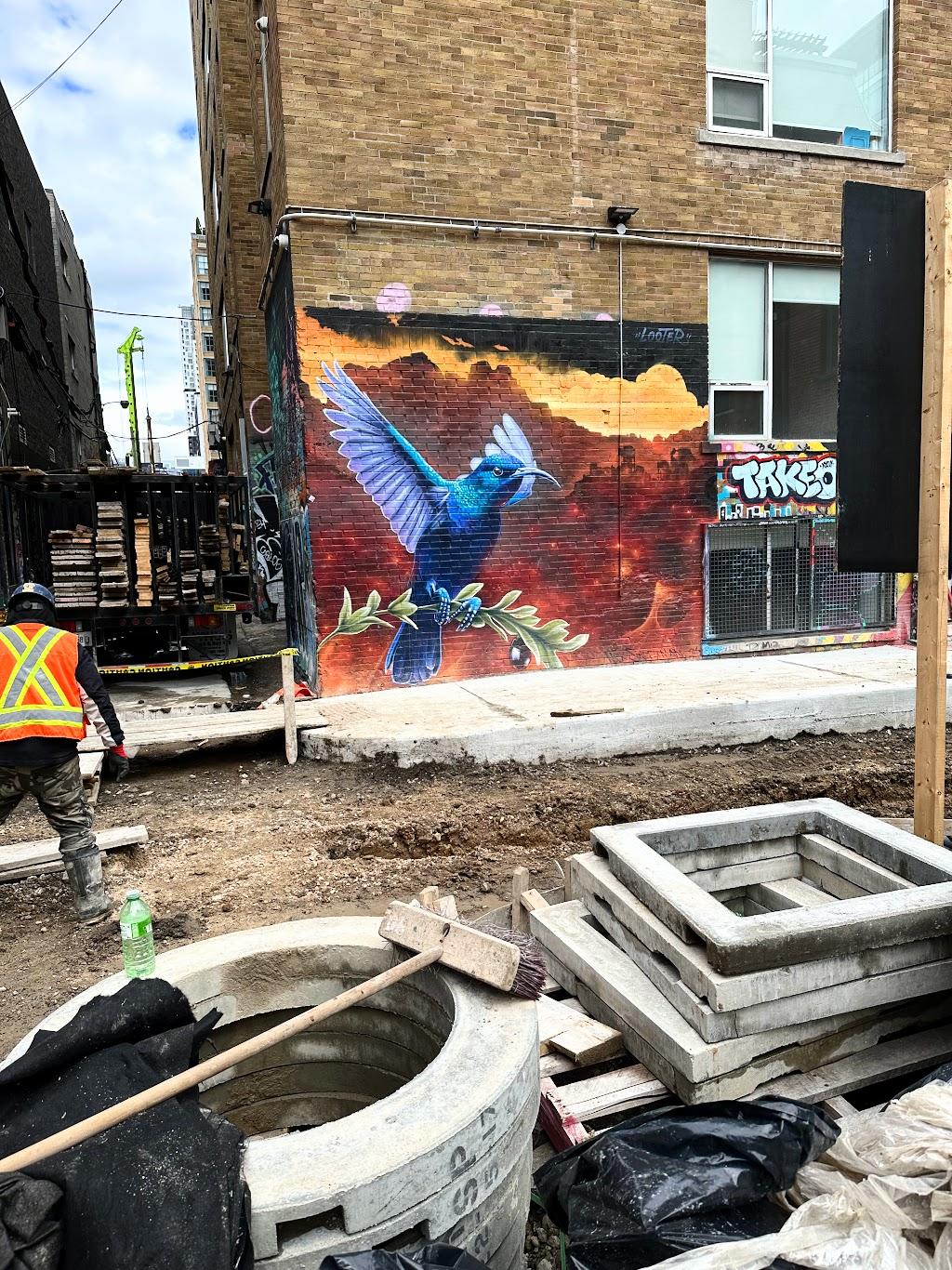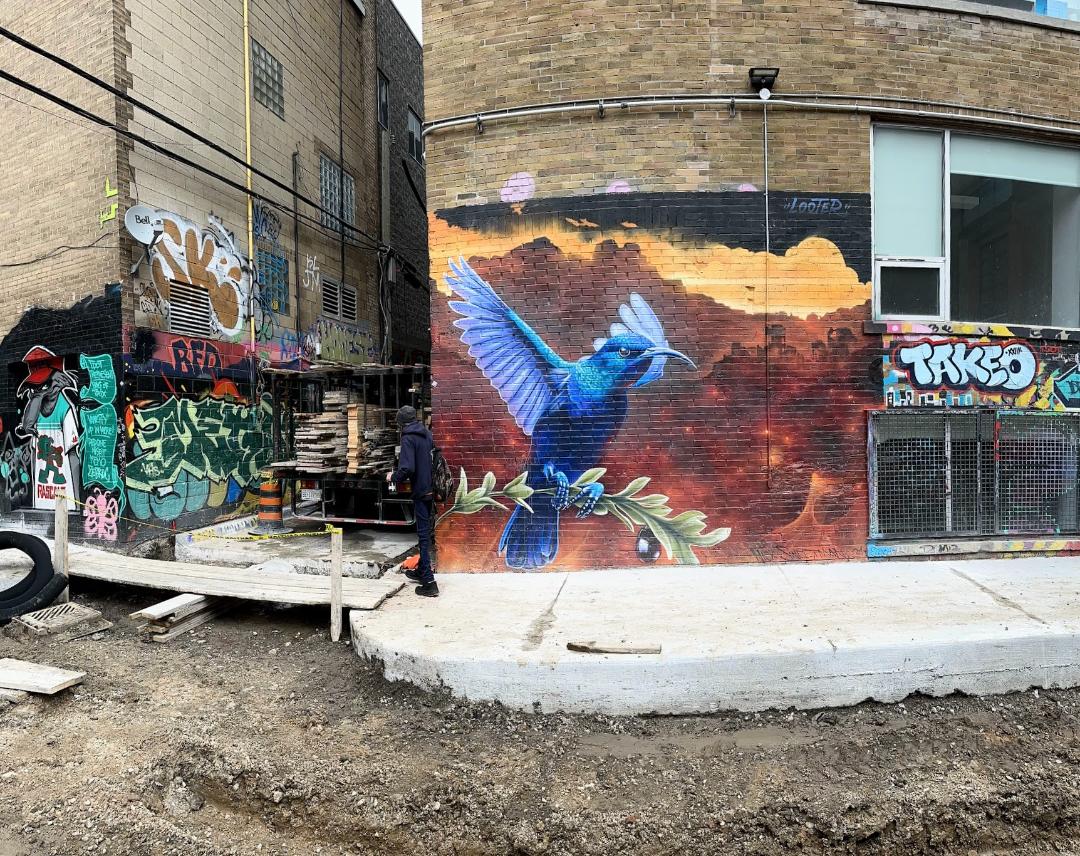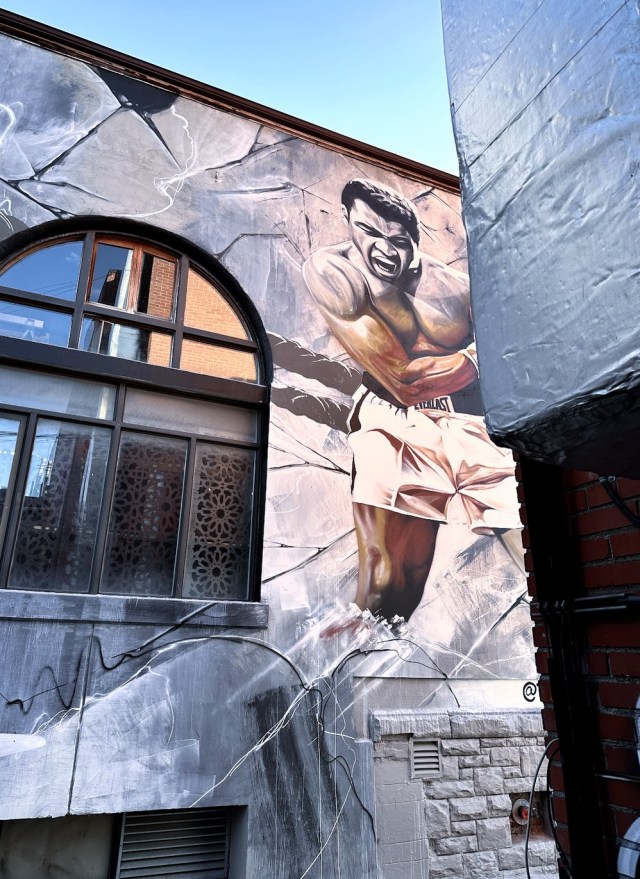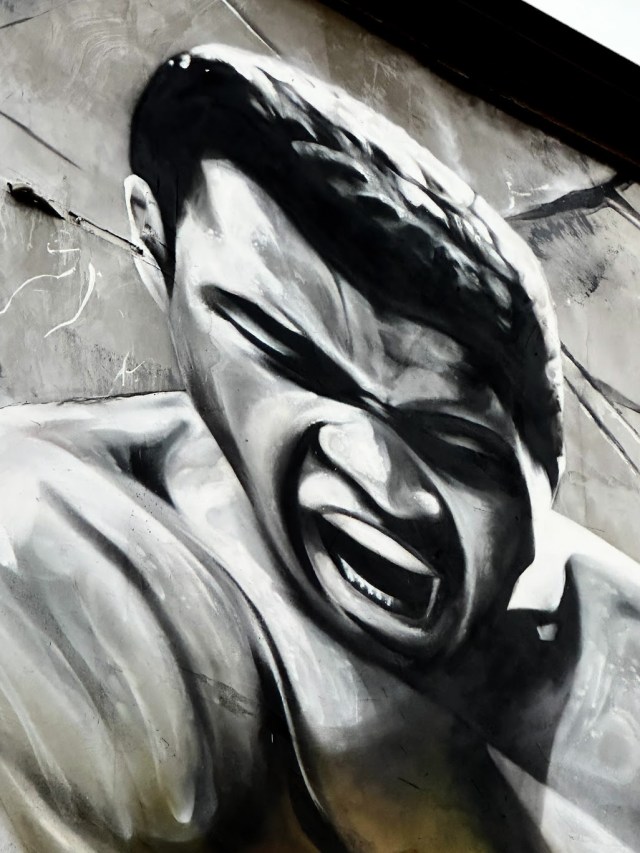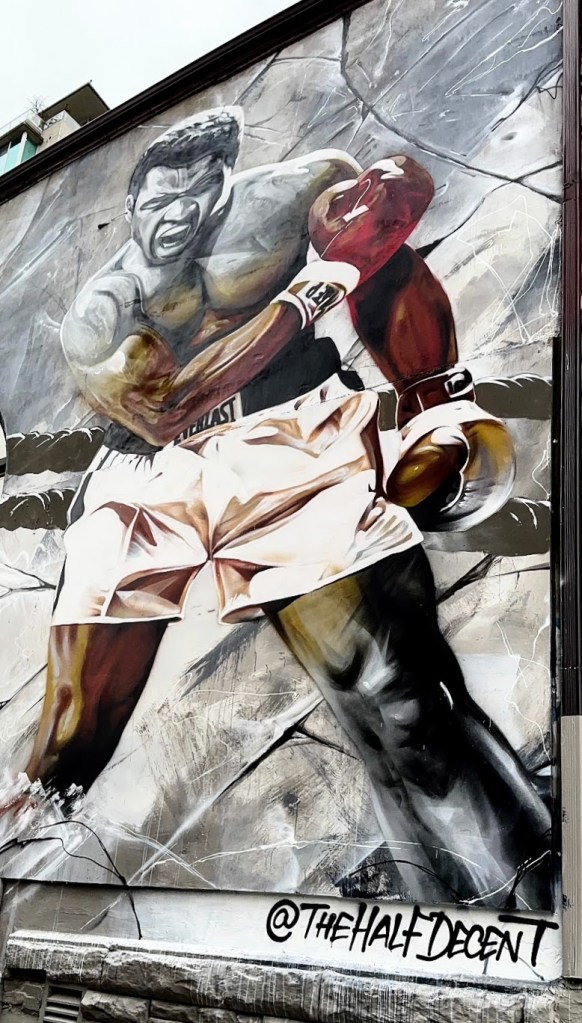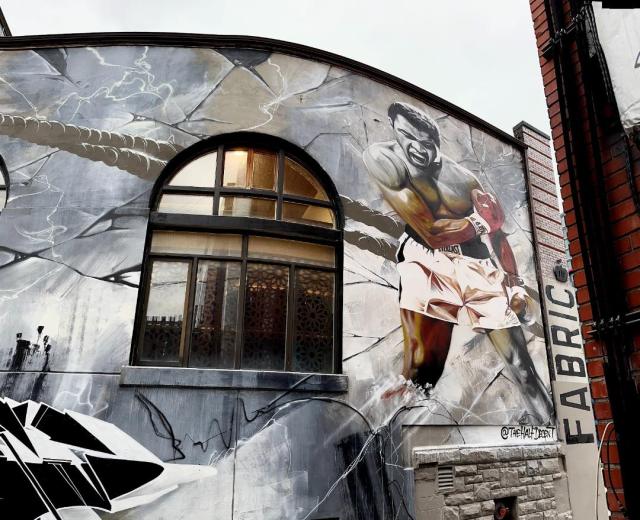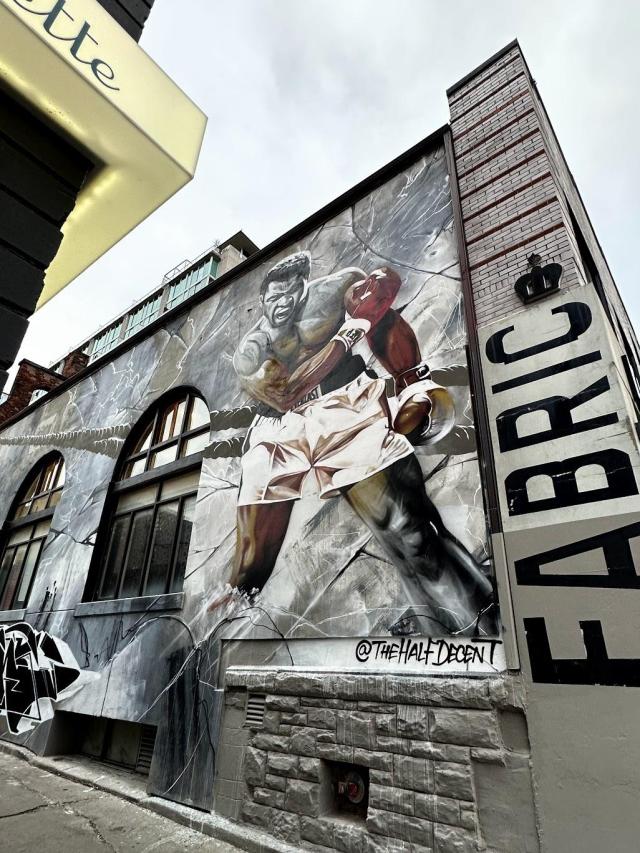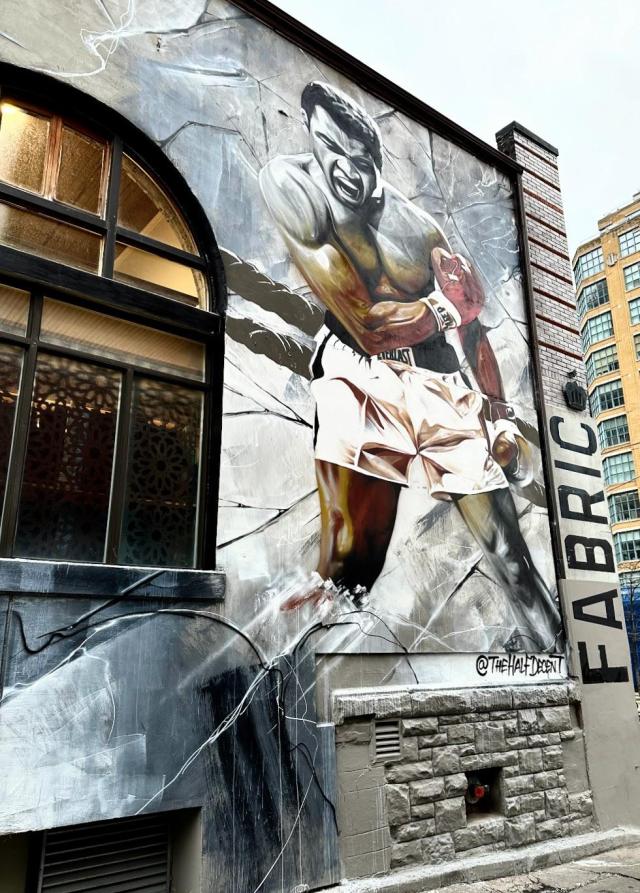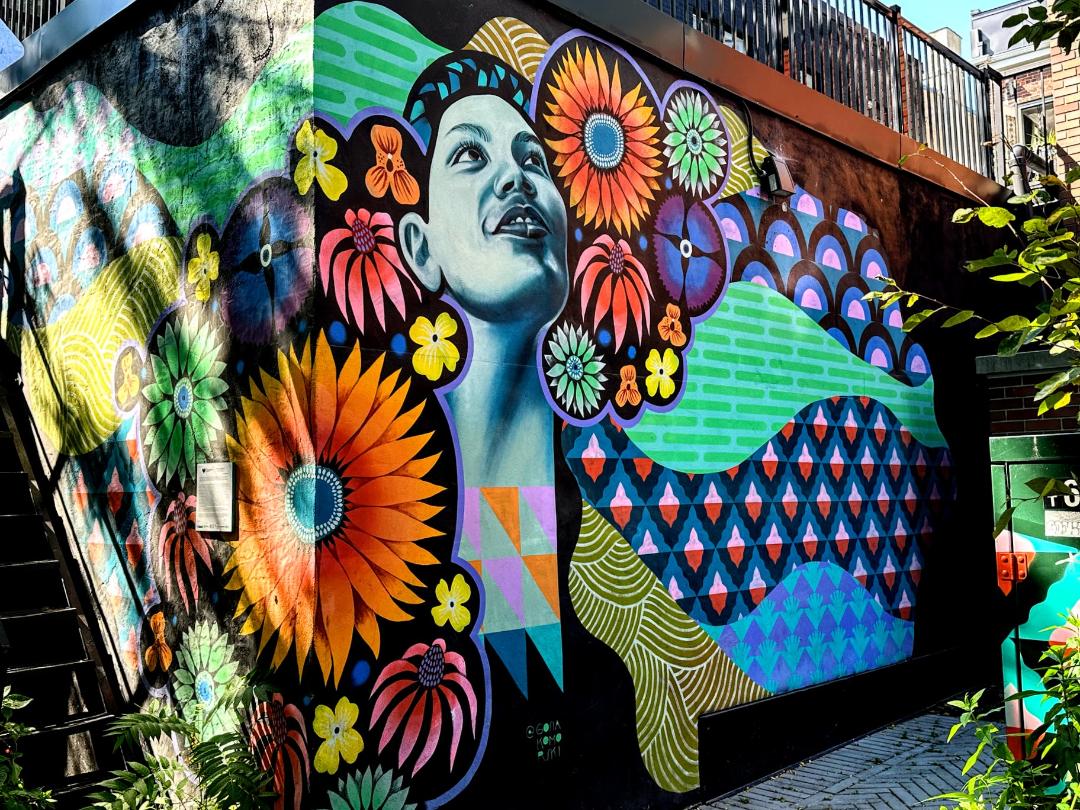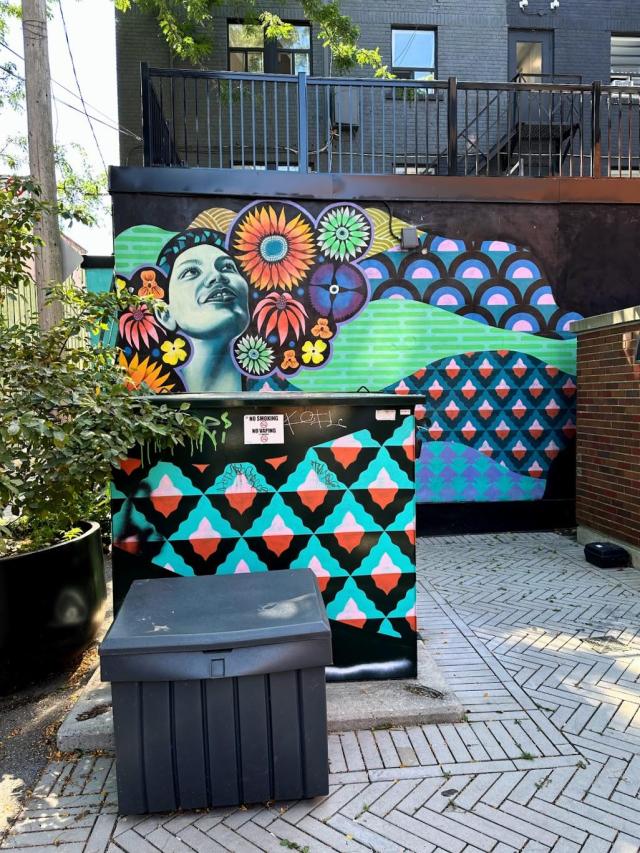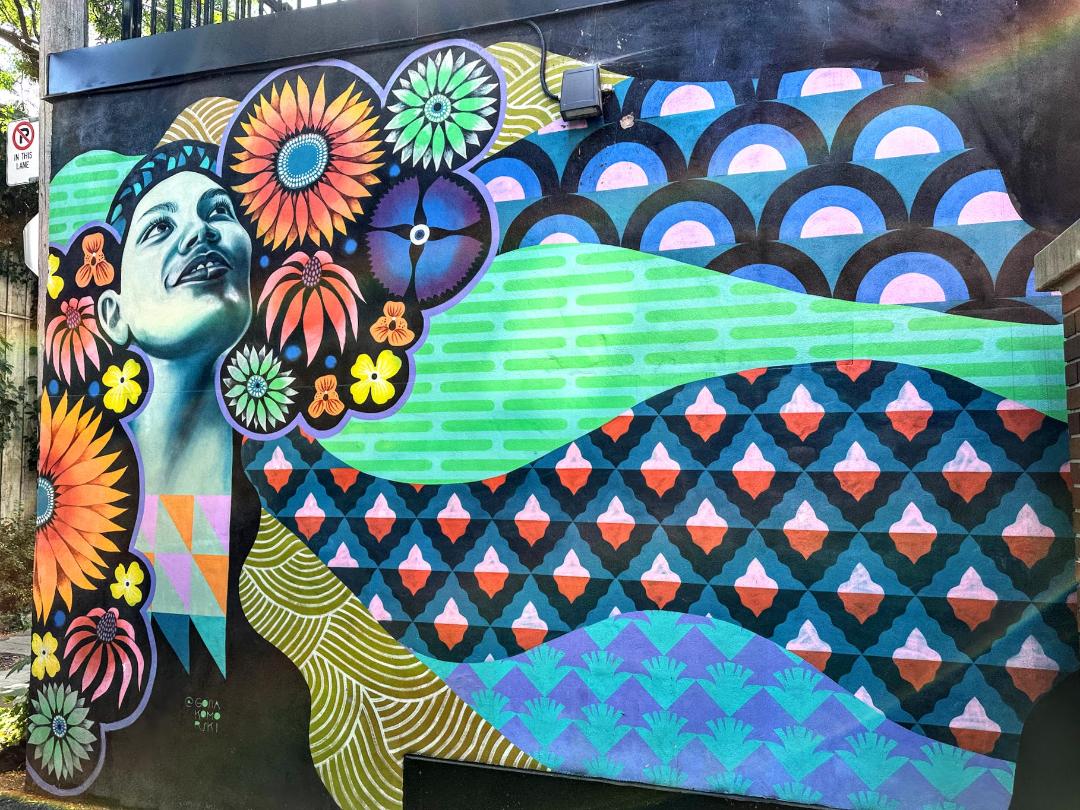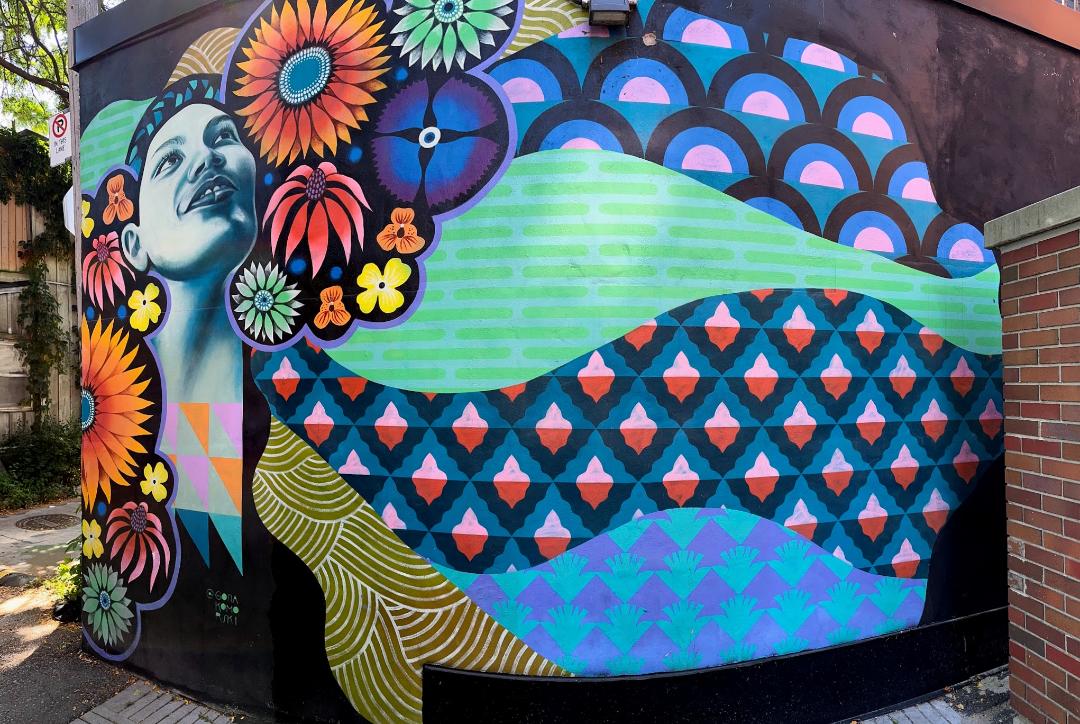
Cassius Clay, knocked out Sonny Liston for his first world title in boxing.
On March 6, 1964
Cassius Clay changed his name to Muhammad Ali
At the Ali/Liston (1964) fight was a photographer, Neil Leifer.
Leifer took what became an iconic photograph. You can buy a print from the photographer’s website, if you can afford it.
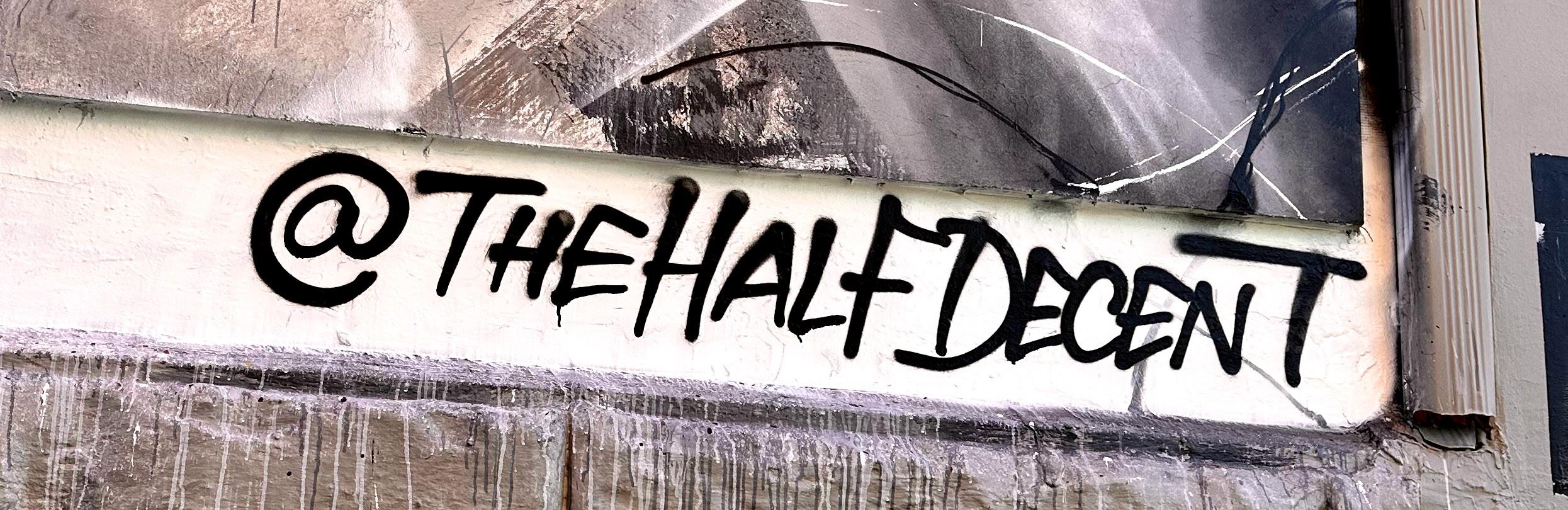
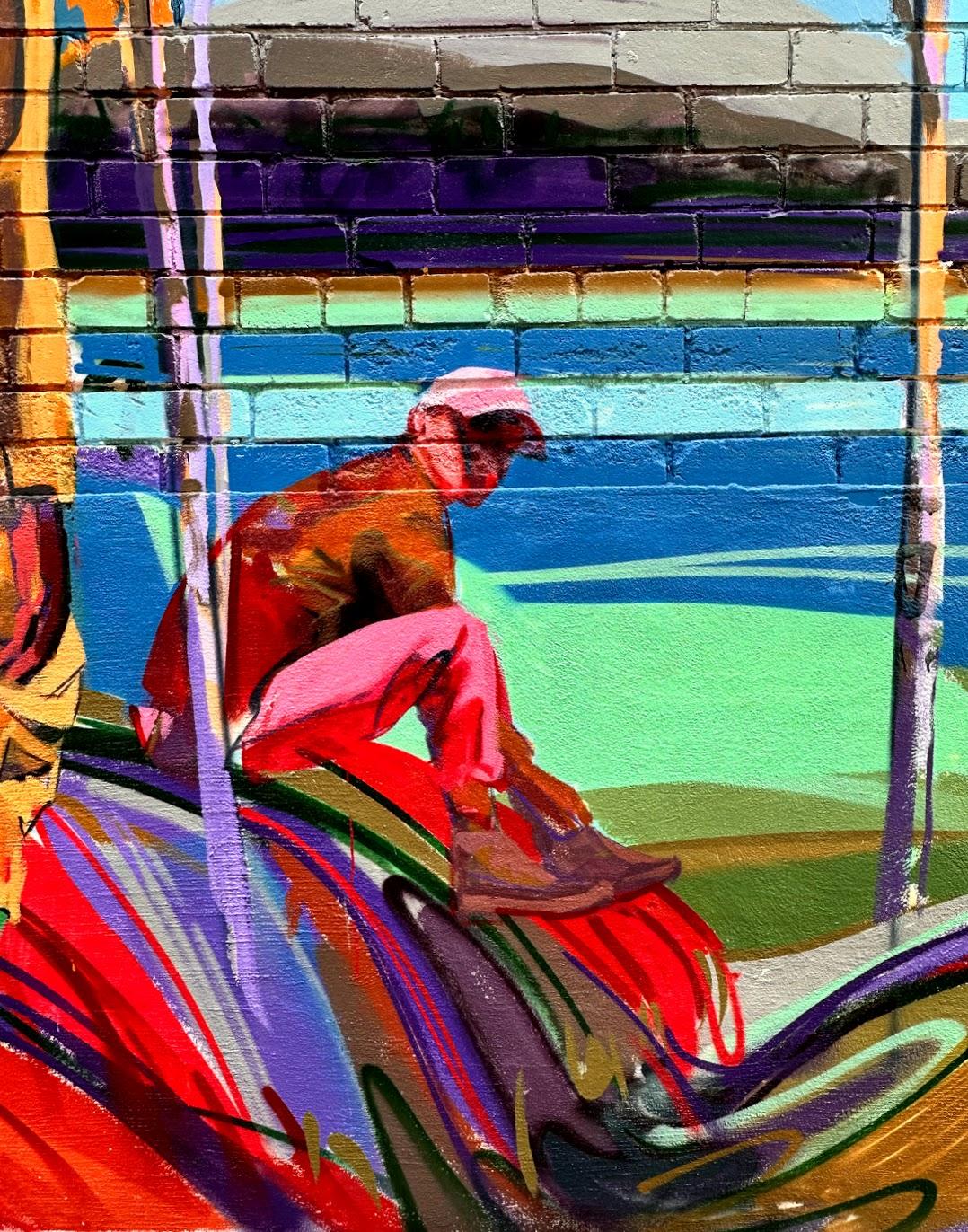
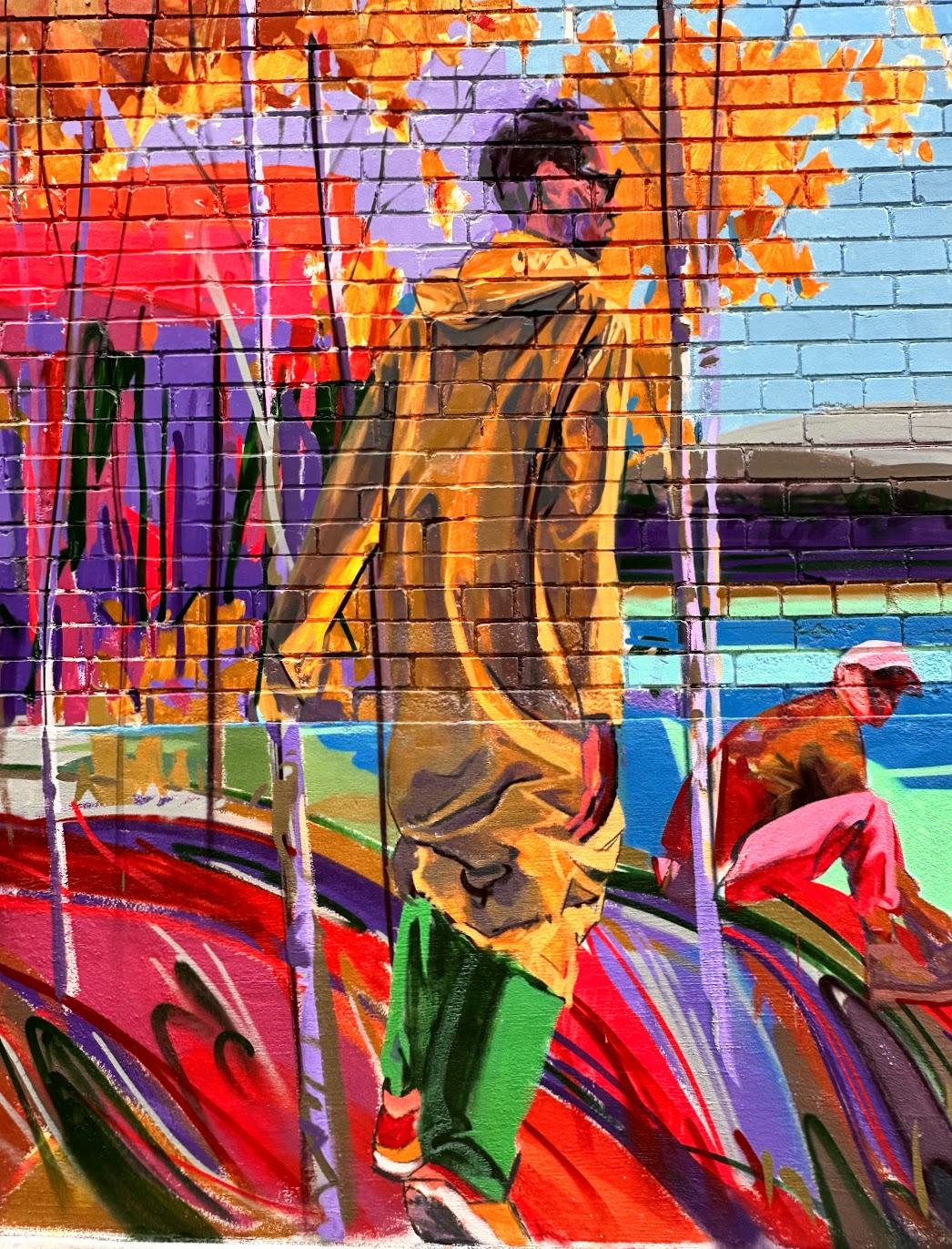
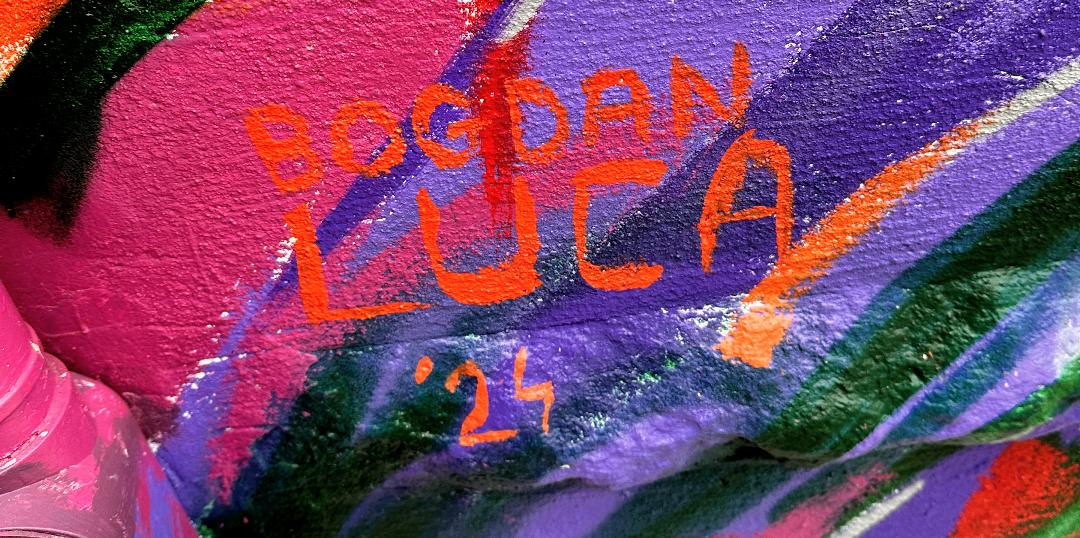
Artist, The Half Decent, painted a massive mural of it in a narrow ally that was impossible to get a straight on shot in.
The above slide show was taken from the most straight across vantage point, the indent for a fire escape.
Float Like A Butterfly, Sting Like A Bee
That is a statement made famous by Ali.
I designed the costumes for a movie "Strange Justice", a docu-drama of the Anita Hill/Clarence Thomas United States senate hearings. The actor playing Clarence Thomas was Delroy Lindo. We were shooting backwards a decade, so I had his suits custom tailored. A suit was ready to be fit the day he arrived for prep. The fitting went well, but he had 1 request. Could I make the pockets really deep, to fit his large hands? I took hand measurements and sent the alterations to the tailor, with a special note about the pockets. Everything runs on a last minute seat of your pants timing in film. The suit was picked up from the tailor the night before he played. The morning Delroy played, I got called to his winnie*. He was livid. His hands would not fit into his pockets. They barely made it half way to his wrist. I walked to set with him while he tore a small strip off me. I had failed his simple request.
He didn't play again for 2 more days. So I personally took the suit into the tailor, who had not and still refused to make the pockets bigger. It was a tailoring no-no. I can be quite "assertive" when needed, and the pockets were corrected.
A couple of days after that I got called to his winnie, again. He looked me square in the eyes, and sincerely apologized for his behaviour about the pockets.
I said something like.. aww that's okay.
He said - When someone makes a sincere, honest and heart felt apology to you, you need to sincerely accept the apology, if in fact you are accepting it.
Eyes locked, I said Delroy, I honestly accept your apology, and I thank you for it. He said he appreciated my acceptance. We were best buddies on the shoot after that. He would hold talking on his phone to wish me a good morning, air high fives across a parking lots and always genuine smiles.
On the last day of the shoot, he gave gifts to some of the crew. I still remember him handing me a tiny jewelry box, opening it to find a marquesite & sterling bee brooch inside. I looked up and thanked him, all the while thinking “Sting like a bee- Float like a butterfly, sting like a bee".
I still have the brooch, and I cannot see an image of Ali without thinking of Delroy Lindo, and that honest apologies are 2 sided.
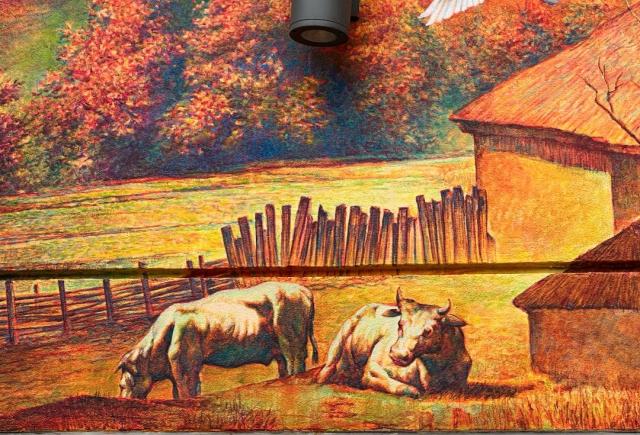
I close with a slideshow of demented angled shots form the narrow alley.
I went back to the alley a second time, as I had the warm filter on, accidentally. The alley was still narrow.
Pics taken by Resa – 2024
Toronto, Canada
The Artist:
winnie* – a Winnebago motor home used for stars’ dressing rooms on location shoots.
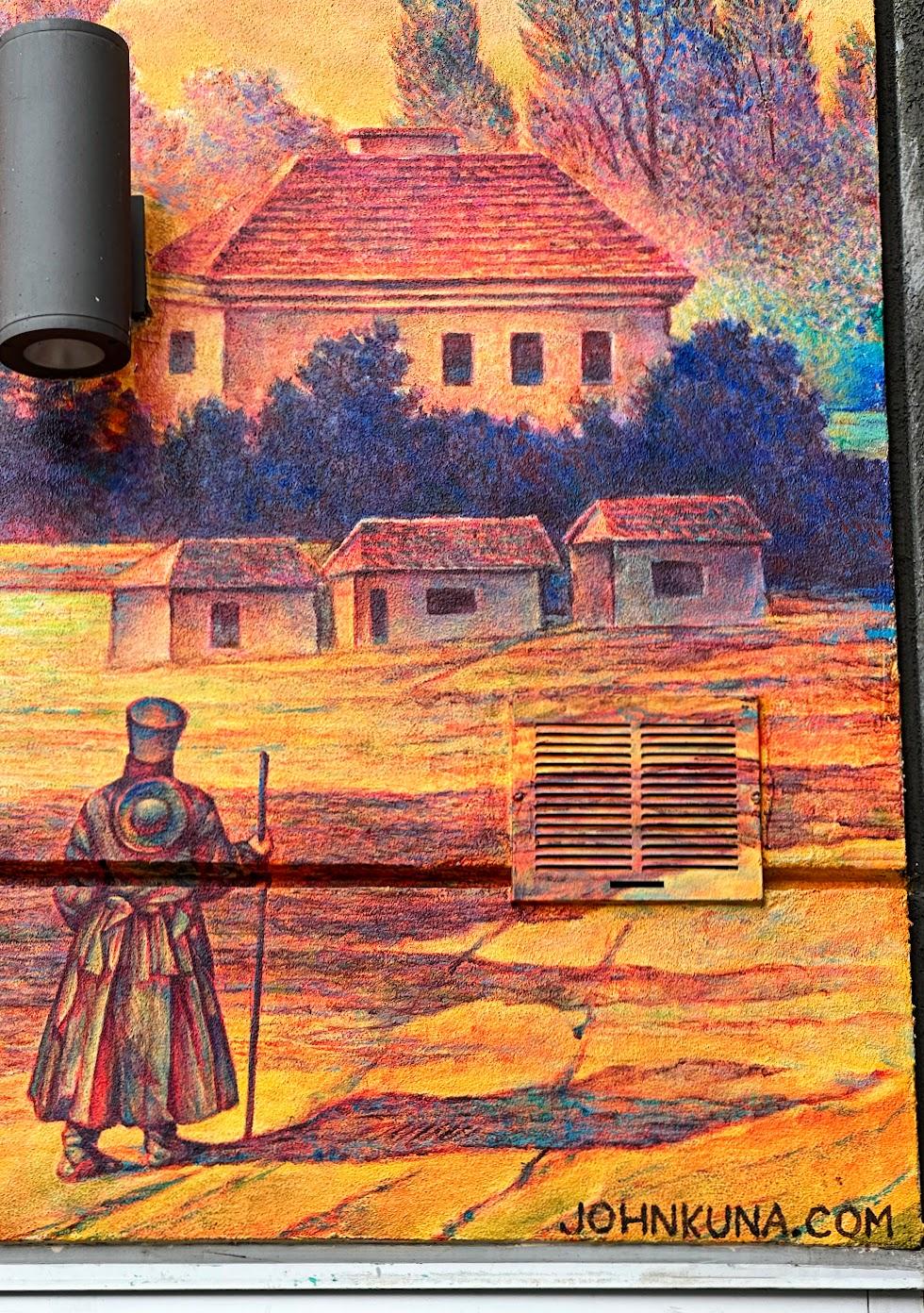
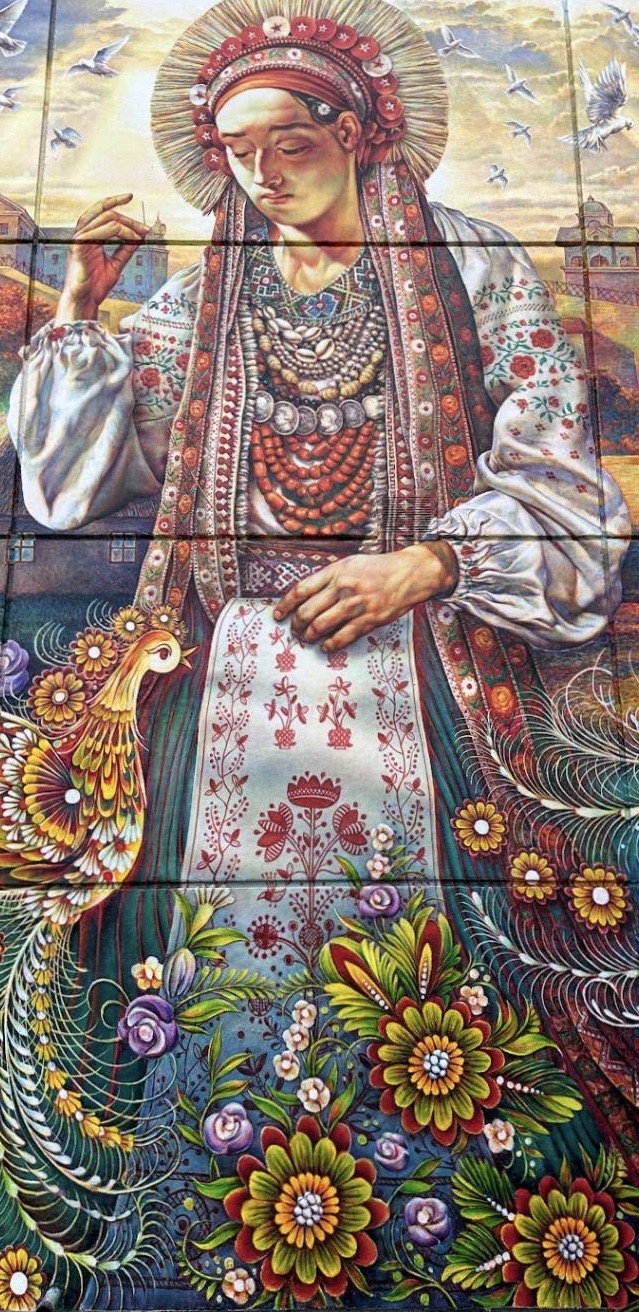
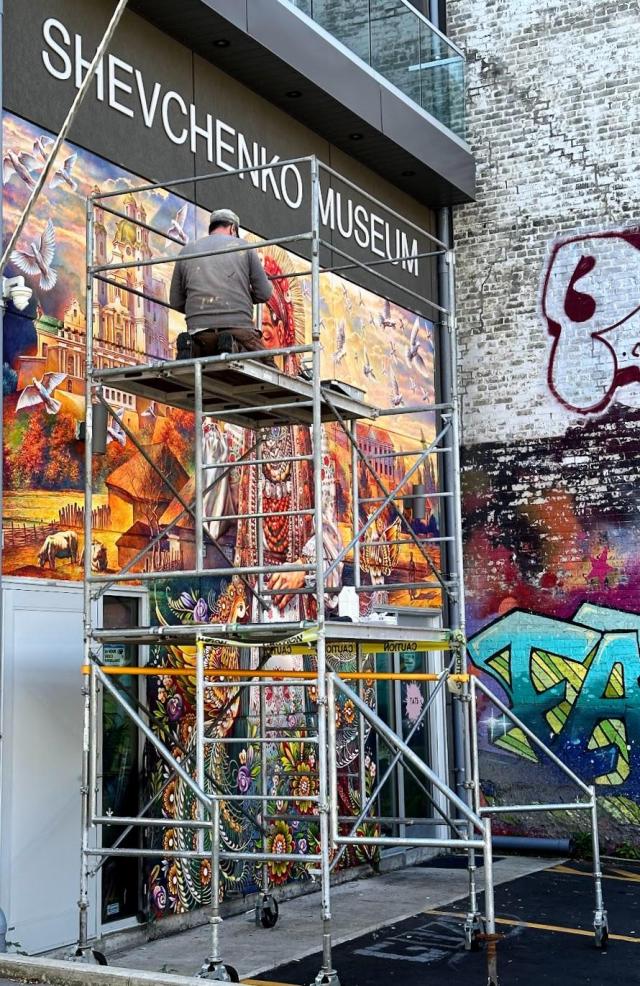
In one of my alley wanderings I came upon this fabulous mural, albeit unfinished.
I kept returning. It remained unfinished, but the scaffolding (in slideshow below) kept moving.
Artist at work on the mural.
If I could just get a shot of her face!
I shot on 4 visits, scaffolding et all
On one visit, I met the business owners next door. From them, I learned that the mural had been started about a year and a half earlier, but the artist had been in an accident.
His injuries required lengthy healing, and he had just recently returned to work on the mural.
Finally one day in November, it was finished. I shot over a hundred pics. Unfortunately, I had to return in December.
I told Trent the day had been dark with black clouds, and the pics came out really warm. I would return on a brighter day.
Confession; like an idiot I accidentally had the camera on a warm setting.
All in all I must have returned to the site 8 times.
Returning to the unfinished mural had become like reading a great book, and I was sad when it was finished.
I love intricate murals, as there is so much detail to take pics of.
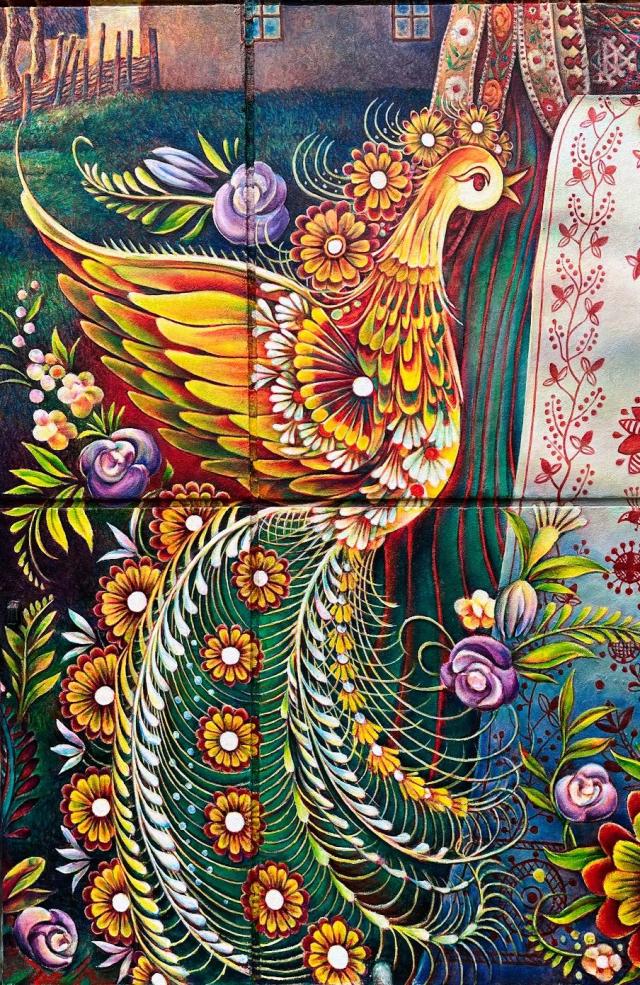
The slideshow on the right, presents the details I languished in.
I was going to pick a fave, but I kept changing my mind.
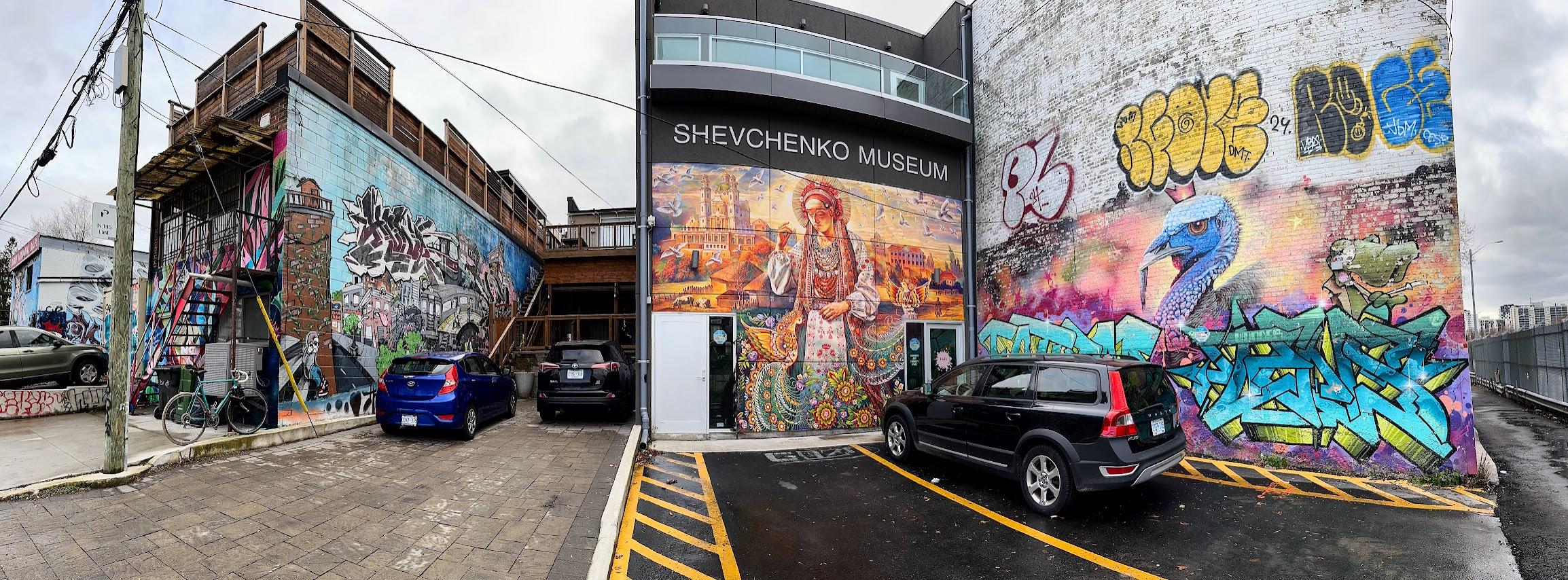
At some point I realized it was the back door to the Schevchenko Museum. The sign was always there, but I ignored it because it was all about the mural, for me.
About the Schevchenko Museum
Taras Schevchenko (1814 – 1861) Ukrainian artist, poet & thinker. Once imprisoned by Russia for his views, his rich creative legacy remembers him.
I was dazed by the collection of images and history on the website. I’ll be visiting over the winter months.
Left: Self portrait – click on portrait to visit museum website.
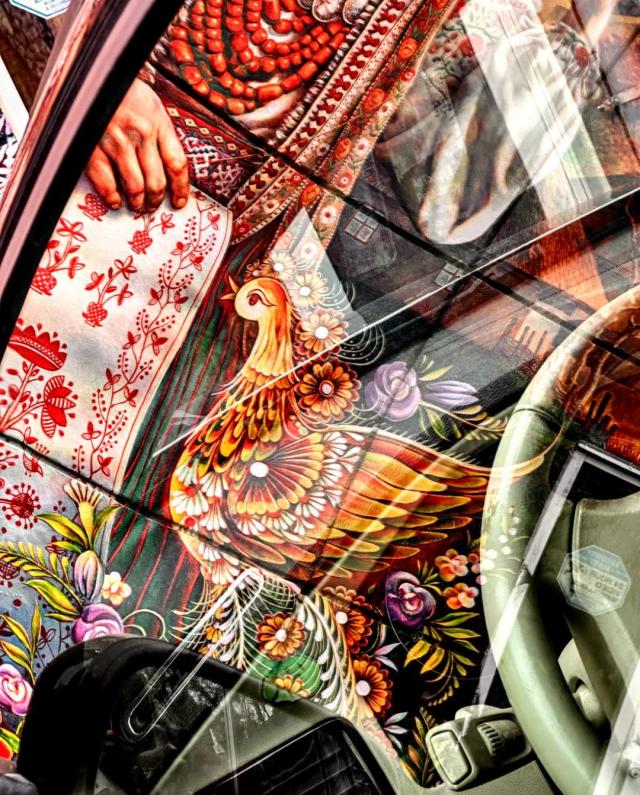
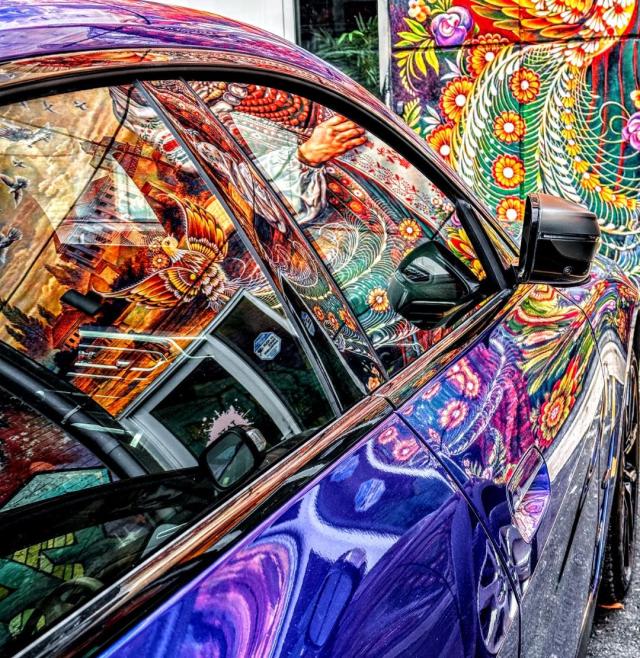
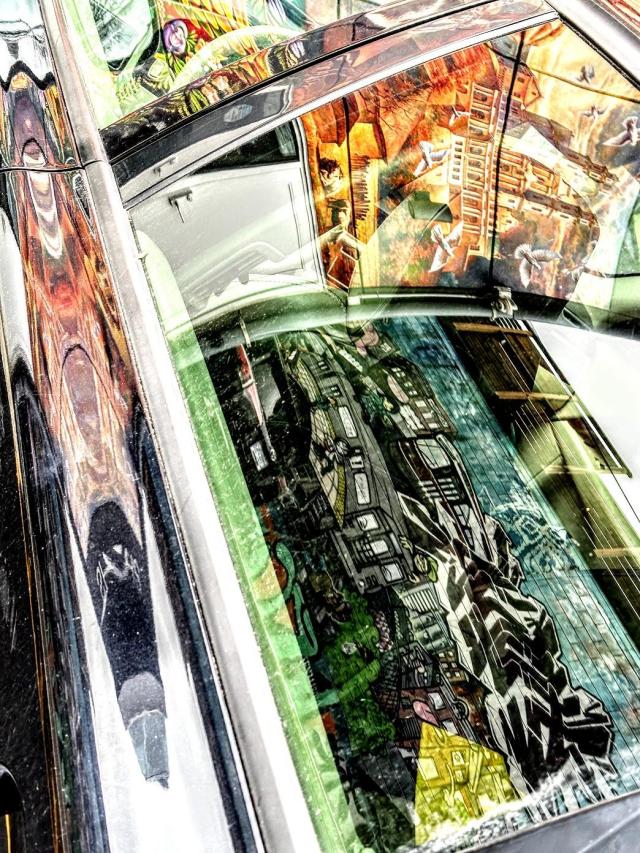
There were always cars parked on the site.
Sometimes they were clean (ish), and I was able to get some cool reflections.
The greenish one at the end is actually reflecting next door artwork.
Thank You to Trent for this Song!
A Million Miles Away
V1 He said, “You’re a threat” As his tanks gathered on the borderline
He said, “You must be stopped!” As his missiles started flying
He shook his fist And his countrymen fell in line
“It’s us or them” And our babies started dying
Chorus
V2 Another town, another city Turned to rubble over night
In darken cellars the children With each bomb blast, shake in fright
Refugees and wounded Walk and crawl the road of flight
Is anybody out there To listen to our plight?
Chorus
It’s a million miles away
CHORUS
How’s your work? And how’s the weather? How’s your mom and dad?
The traffic sucks It started raining So things have been real bad (1) So things are really bad (2)
My pickup’s dirty The dog’s on the couch Tik Tok has been a bore
The football game On my 80-inch TV Was postponed for some stupid war A million miles away
About the Song in Trent’s Words
Another new song, and, yes, another dark one. The four-note motif that runs through the verse might remind you of “Carol of the Bells”. I was thinking of the music that that carol was based on, Shchedryk, a Ukrainian New Years song arranged by composer Mykola Leontovych. Those four notes, though, are thought to be ancient, going back to before Christianity was introduced to Ukraine.
By this motif you may guess that the “he” in the first verse is “Putin” and the country being invaded is “Ukraine”. You are partially right – it is inspired by that war, but the idea is any war, particularly a war where a dominant power invades a lesser one, and how people here can care less about the lives lost. Anyway, I will let the song speak for itself, except that I want to say I think I did a pretty good job channeling my inner “Bob” on the first chorus…
There had been some cool alley finds on this hot day, but not a real prize.
Then I turned into a shady alley, sweet smelling and comforting.
It was a Healing Garden.
Turns out this alley is one of 2 Healing Gardens. A concept designed by artist Monica Wickeler & Indigenous artist Nyle Miigizi, the alley is filled with native plants and healing medicines. The Anishinaabe Nation’s story of the gift of Jewelweed was handed down to Nyle from his grandmother, Verna Patronella Johnston.
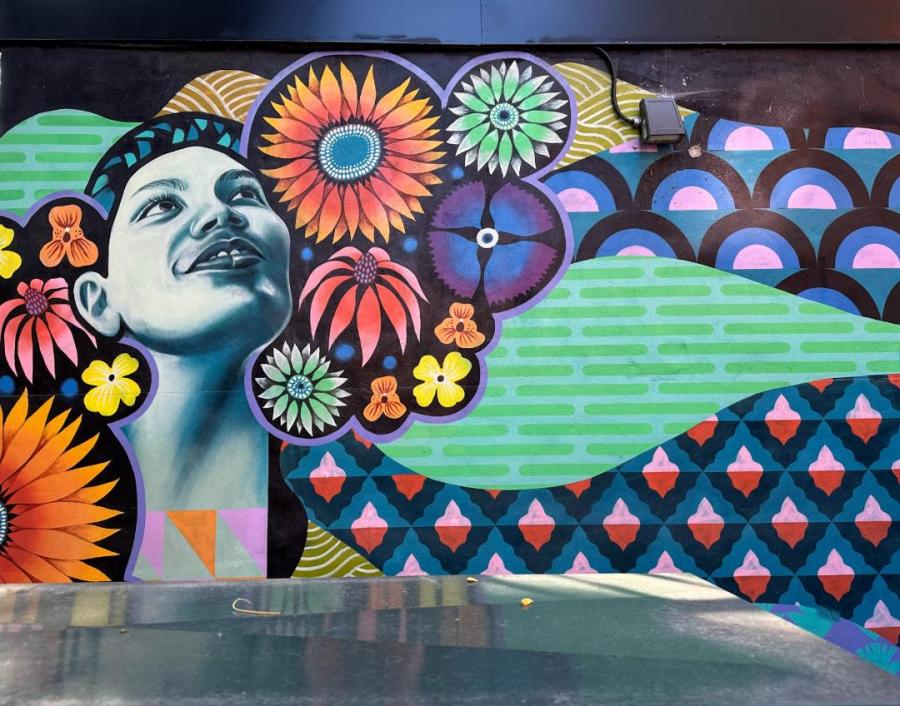
Mural artist Gosia Komorski was hired to paint.
Healing… we can all use some right now.
Best to be whole and positive, as we go into what seems will be a hectic new year.
Now it’s winter, but I fully intend to find the other Healing Garden, in late spring when the herbs are happening.
Pics taken by Resa – August 30, 2024
Toronto, Canada
Mural Artist:
If you click on the document below, you can read about the project. Pardon for the sloppy shot!
This song is not about a Healing Garden, but it feels like one. (Yes, the image is moving!)
Recently, wandering the urban forest, I espied a patch of colour. Turning the corner, a stunning autumn hued tarn with hikers appeared.
Instantly, I thought of Lauren Scott, and her love of country hiking. The next thought was “Isn’t she writing a children’s book? It must be almost finished.”
Well, I asked her. Turns out YES! Cora’s Quest is just released! As we are having an endless postal strike in Canada, I purchased the EBook.
The Blurb
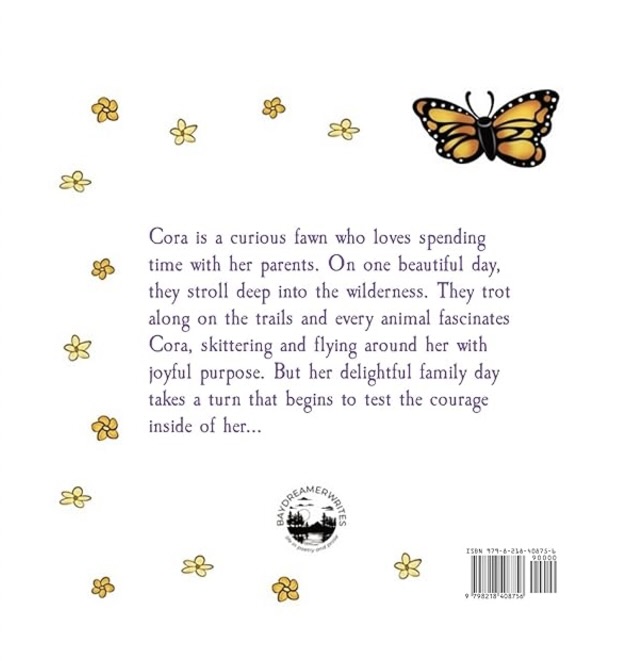
Cora is a curious fawn who loves spending time with her parents. On one beautiful day, they stroll deep into the wilderness. They trot along on the trails, and Cora finds other animals fascinating. They skitter and fly around her with joyful purpose. Every unique sound catches her attention, stirring her curiosity to discover just where that sound came from. But suddenly her delightful family day takes a turn that begins to test the courage inside of her…
I know Lauren is unhappy with how the Ebook formatting came out. She got one from amazon. I got mine from Kobo. Yes, it is not perfect, but it’s all there.
Geared to 2- 5 year old children, this sweet and loving story, complete with enchanting illustrations by Chris Mendez, is the type of book a child might want to hold, carry around or even take to bed.
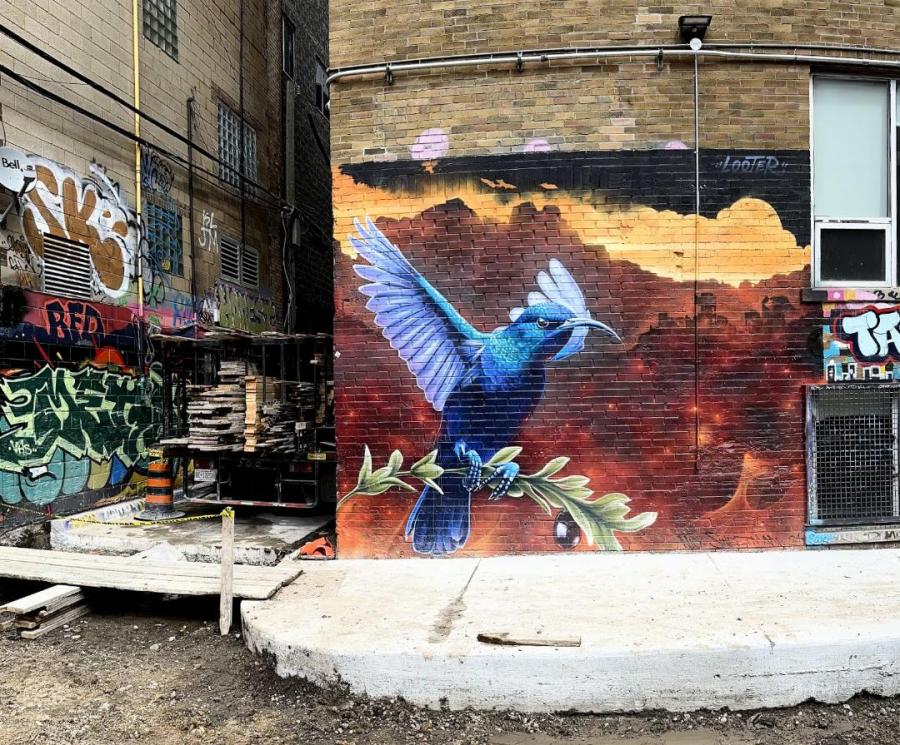
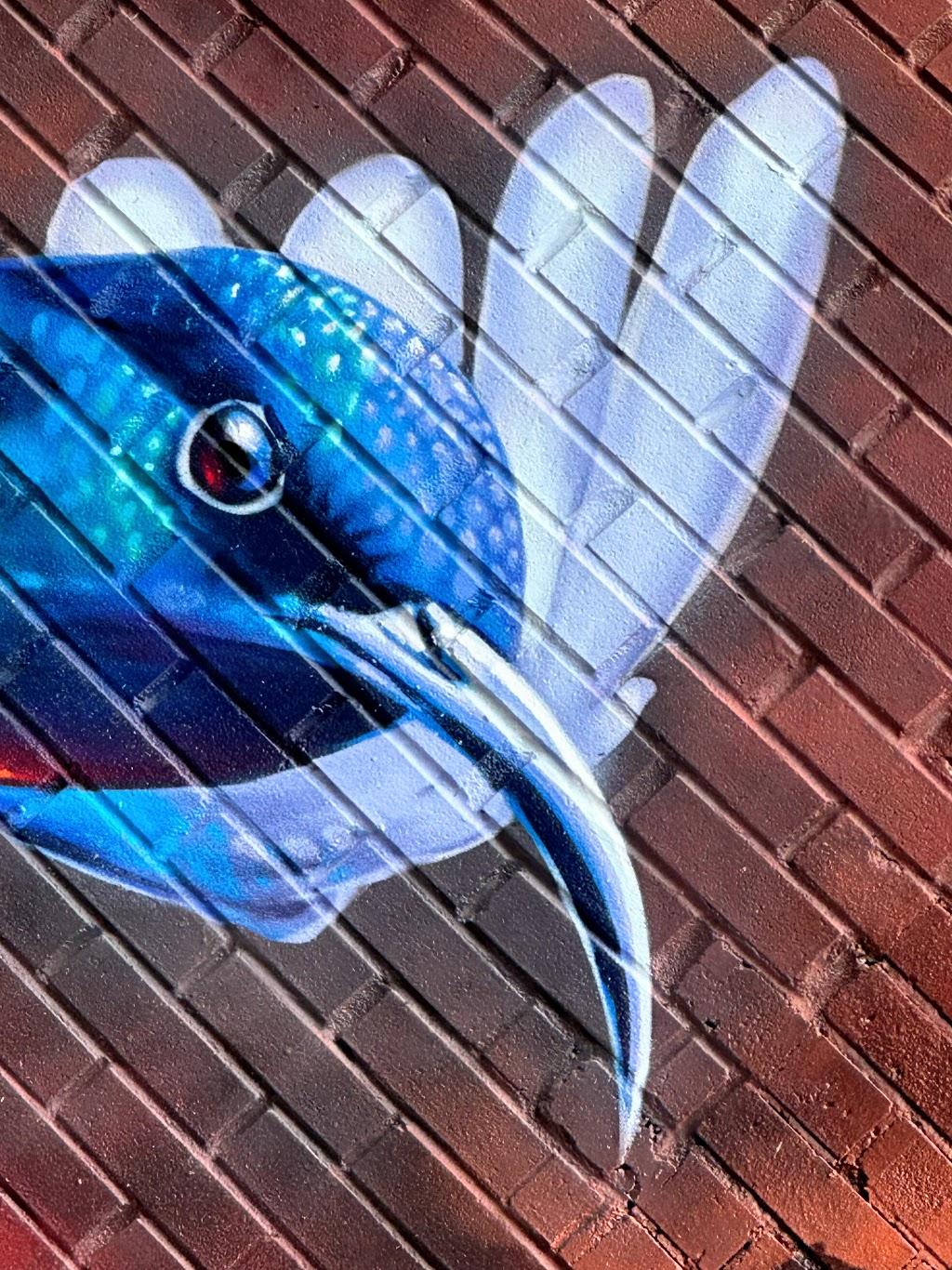
In this 9th & last post showcasing The Painted House, we finish viewing the exterior. The east side begins with this gorgeous bird.
Then a cool head,
…..leads to a flower with an eye, then continues in Slide Show below.
The flower with eye is before April Showers,
..which is seen far right, then chicken w/head & mushroom cap cat.
Then a diver with Endangered Species, odd guy & fish w/face in stomach..
The guy of ?
Sunflower women is next to the entrance,
..guarded by thistle head?
I adore the Sunflower Woman.
Enter the backyard by Thistle Head, to find a floral back wall w/skeleton. Note the dog door on far left! This is the entrance to the house, and appeared in Kitchen segment.
The Backyard has its own post. Then we come around to the west side of the house, in Slide Show.
West side.
Colourful face (sun came out!)
An Elicser character offers…
Colourful Face some grapes.
The final image is a tropical scene.
A painted walkway,
..leads us out the front gate. Bye, bye Painted House! You were a lot of fun.
Pics taken by Resa – August 11, 2024
Toronto, Canada
Artists, in order of appearance:
@life_inthestreets
@bkez
@oblsk1
@mac.the.maker
SOWL
@whatismorty
Anika Becker
@nixostreetart
To view all Painted House Posts, Click on the Doors Face on the Sidebar
Resa – So, Rebecca, in this last Self Portraits post, we are headed to the Netherlands, 17th century, to visit another artist that I had never heard of. Had you heard of Judith Leyster before this post?
Rebecca – Yes – just recently. I discovered her when I travelled virtually to the Rijksmuseum. Judith Leyster was featured in their Women of the Rijksmuseum exhibit two years ago. It was an eye-opening experience to discover her work.
Resa – Very Cool, I’m excited to se what you’ve dug up!
Once Forgotten Dutch Master
Judith Leyster, the once-forgotten Dutch master, has experienced a resurgence in recognition. She was commemorated in a Google Doodle, her artwork achieved higher- than-expected prices at auction, and she was featured in the most prestigious chamber of the Rijksmuseum.
Who Was Judith Leyster
A remarkable Dutch painter of the 17th century, Judith Leyster was born 1609, in Haarlem, Netherlands. The daughter of a brewer, she displayed a precocious talent for painting from a young age.
By the age of 24, Leyster had achieved the remarkable feat of becoming a member of the Haarlem painters’ guild, marking her official recognition as a masterful artist. She was one of the rare professional women painters of her time, being one of only two women accepted as a master in Haarlem’s painters’ guild during the entire 17th century Netherlands.
Leyster’s artistic talent quickly gained recognition, and she became known for her lively and expressive compositions, often depicting genre scenes, portraits, and still life paintings. Her work radiated a sense of spontaneity and skillful use of light and shadow, showcasing her technical prowess and innovative approach to painting.
Leyster’s artistic pursuits defied conventions, as she ventured beyond the typical subject matter embraced by Dutch painters of her time. Her work encompassed a diverse range, and she was among the pioneering artists who explored and popularized the domestic genre scene, portraying everyday life with a fresh perspective.
In the early 1630s, before her marriage to the lesser-known artist Jan Miense Moleanaer, Leyster produced some of her most significant works. However, despite her talent and dedication to her craft, her contributions to art history remained largely unrecognized until the late 19th century.
Judith Leyster Rediscovered
The rediscovery of Leyster’s significance in the art world came about during a lawsuit between an art dealer and his vendor.
It was revealed that many works attributed to her contemporary and rumoured rival, the great Dutch painter Frans Hals, were, in fact, Leyster’s creations that had been incorrectly credited. This significant discovery brought long-overdue attention to Leyster’s remarkable talent and her influential role in shaping the Dutch Golden Age of art.
It is remarkable how the true authorship of artworks can be uncovered through careful examination and historical investigation. The discovery of Leyster’s initials hidden beneath a faked signature of Frans Hals in “The Happy Couple” (aka The Carousing Couple) serves as a testament to her enduring impact on art history and the need for ongoing reassessment of attributions.
This revelation not only sheds light on Leyster’s artistic contribution but also prompts a re-evaluation of artworks attributed to her contemporaries. It further underscores the significance of ongoing research in uncovering the often overlooked achievements of pioneering artists.
Resa – When searching for other female artists from the past whose art has been misattributed, I found an intriguing article (July/2024) inDaily Art Magazine. The article cites 5 female artists.
“This systematic misattribution essentially meant the erasure of women from the art historical canon, which eventually resulted in their erasure from history itself.”
Rebecca, do you think it’s possible that as art experts and historians uncover yet more misattributed art that we could see some famous paintings by famous artists, the Rembrandts, Da Vincis, et al being reattributed to women?
Rebecca – You have asked a very insightful question, Resa! It’s certainly possible. As more art is studied works that have been misattributed may be finally recognized as contributions of women artists. It would be a significant shift in how we view art history. I truly believe that we are now embarking on an extraordinary exploration of art history. It gives me great comfort that we are seeking to foster a richer and more equitable understanding of the artistic legacy we inherit. I am glad that you mentioned the Daily Art Magazine. It is one of my go-to places to learn about art.
Judith Leyster’s Self Portrait: A Glimpse into the Artist’s World
Judith Leyster’s self-portrait offers a glimpse into her life and artistry. Created before her admission to the guild in 1633, the portrait encapsulates a moment of confident creativity and engagement. Leyster’s self-assured expression, characterized by a confident smile and parted lips as if to speak, exudes a sense of self-assurance and mastery. The casual pose, with one arm nonchalantly resting on the back of her chair, hints at the artist’s ease and comfort in her own studio.
It is difficult to photograph art. I captured many works beautifully. However, this painting was the finale of the show, and was heavily lit with warm light. Shot on an angle, the lighting was evaded, and it seems to be closer to many photos of it. Still, it seems no 2 photos are the same.
The liveliness and freedom evident in Leyster’s brushwork mirror her spirited approach to art, capturing a fleeting pause in her work as she glances toward a potential visitor. This subtle interaction suggests a moment of connection with a viewer, possibly a patron, inviting them to share in the experience of a work in progress.
In this self-portrait, Judith Leyster not only presents herself as a skilled artist but also provides a glimpse into the vibrant and dynamic world of creativity that she inhabited.
Today, Judith Leyster is celebrated for her creative spirit, artistic innovation, and lasting impact on the history of art. Her legacy continues to inspire and engage art enthusiasts and scholars around the world.
Resa – Well, Rebecca, so ends our series on Self Portraits. It’s been a pleasure and an honour having you here withme. Thank You!
I look forward to your return, to discuss some engravings on paper by Catherine Brandinn and Geertruydt Roghman. These are of utmost interest as the images depict the working poor, not a big subject of artists in those times.
Rebecca – Thank you, Resa! It has truly been a privilege to explore these amazing women through “Making her Mark” with you. Your photographs allowed me to virtually experience the joy of viewing these paintings. Thank you for celebrating and honouring these artists. Their resilience and creativity continue to inspire and empower us today, even as they provide a vital legacy for future generations of women in the arts.
I’m eagerly anticipating our next discussion on the engravings by Catherine Brandinn and Geertruydt Roghman, as the portrayal of the working poor offers a unique and important perspective that, I believe, deserves more attention in the art world.
As you say so eloquently, “Art Remembers Us.”
Click on X to see research links& a fabulous video on her
You must be logged in to post a comment.