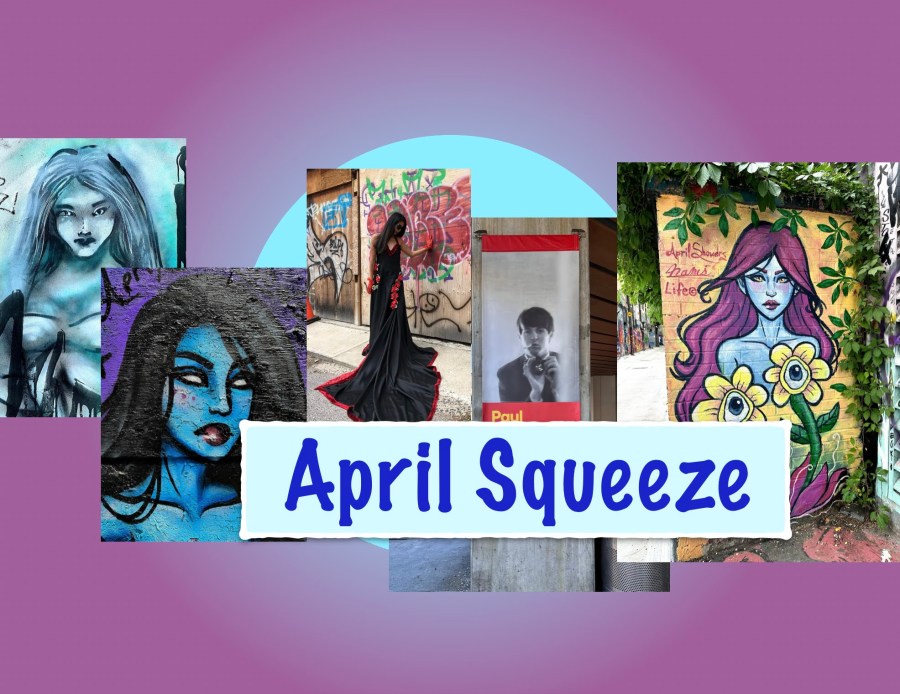
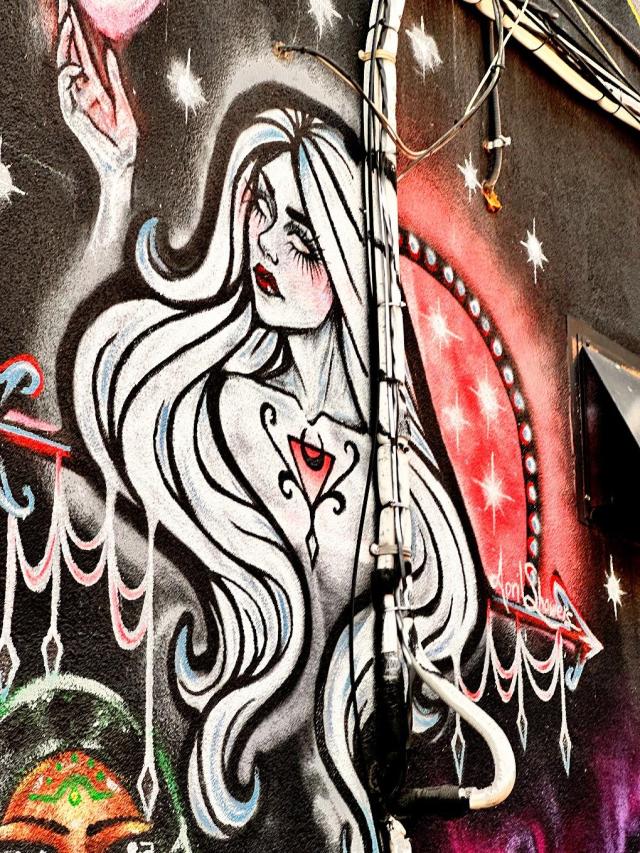
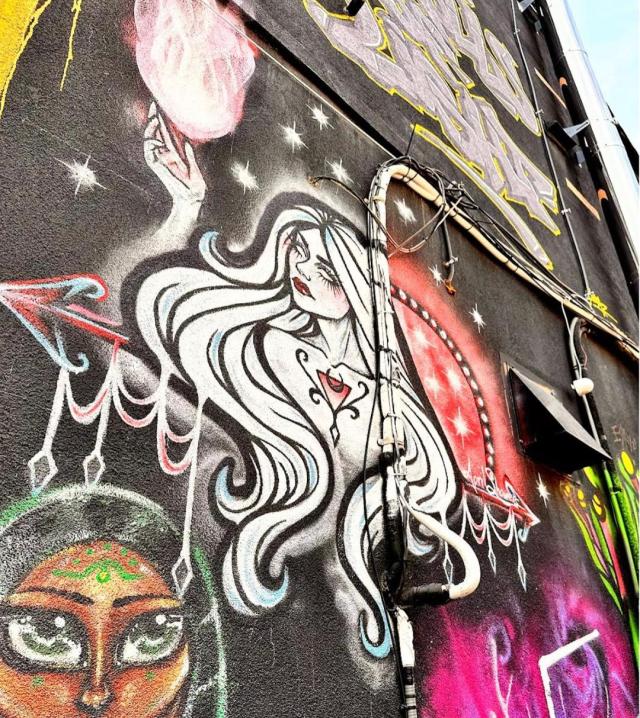
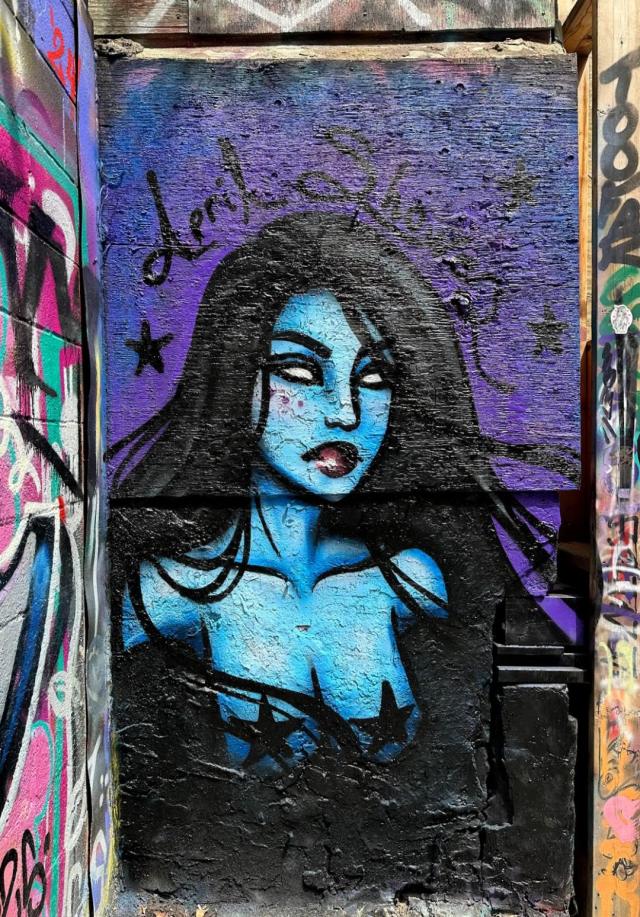
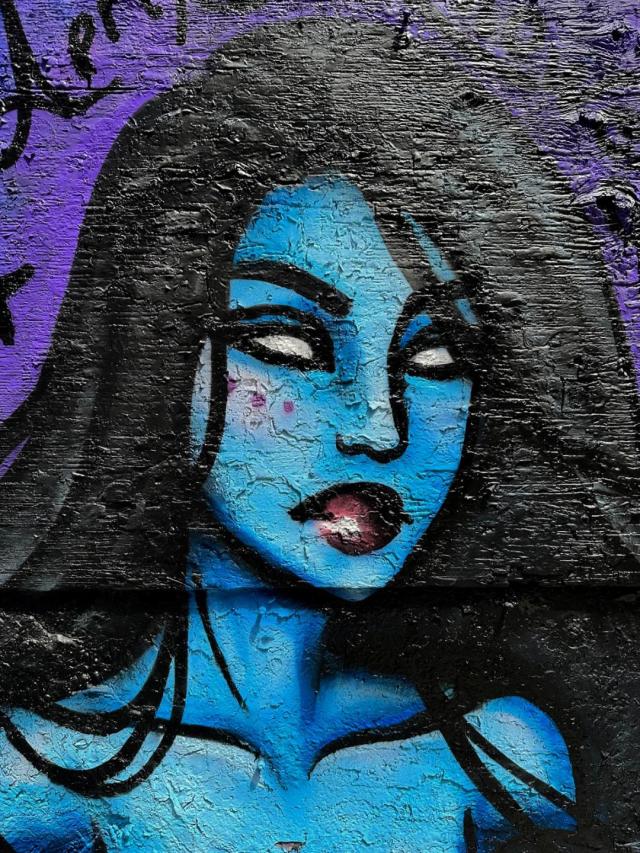
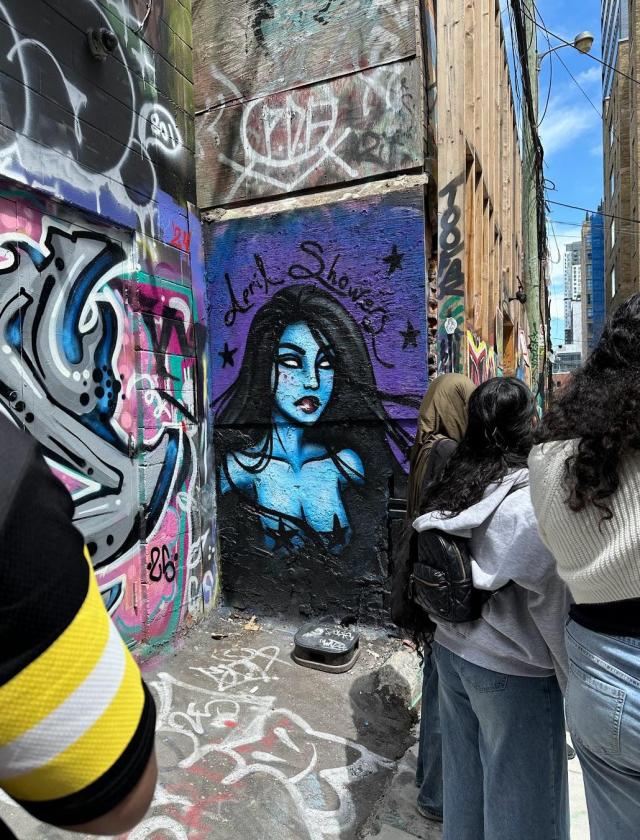
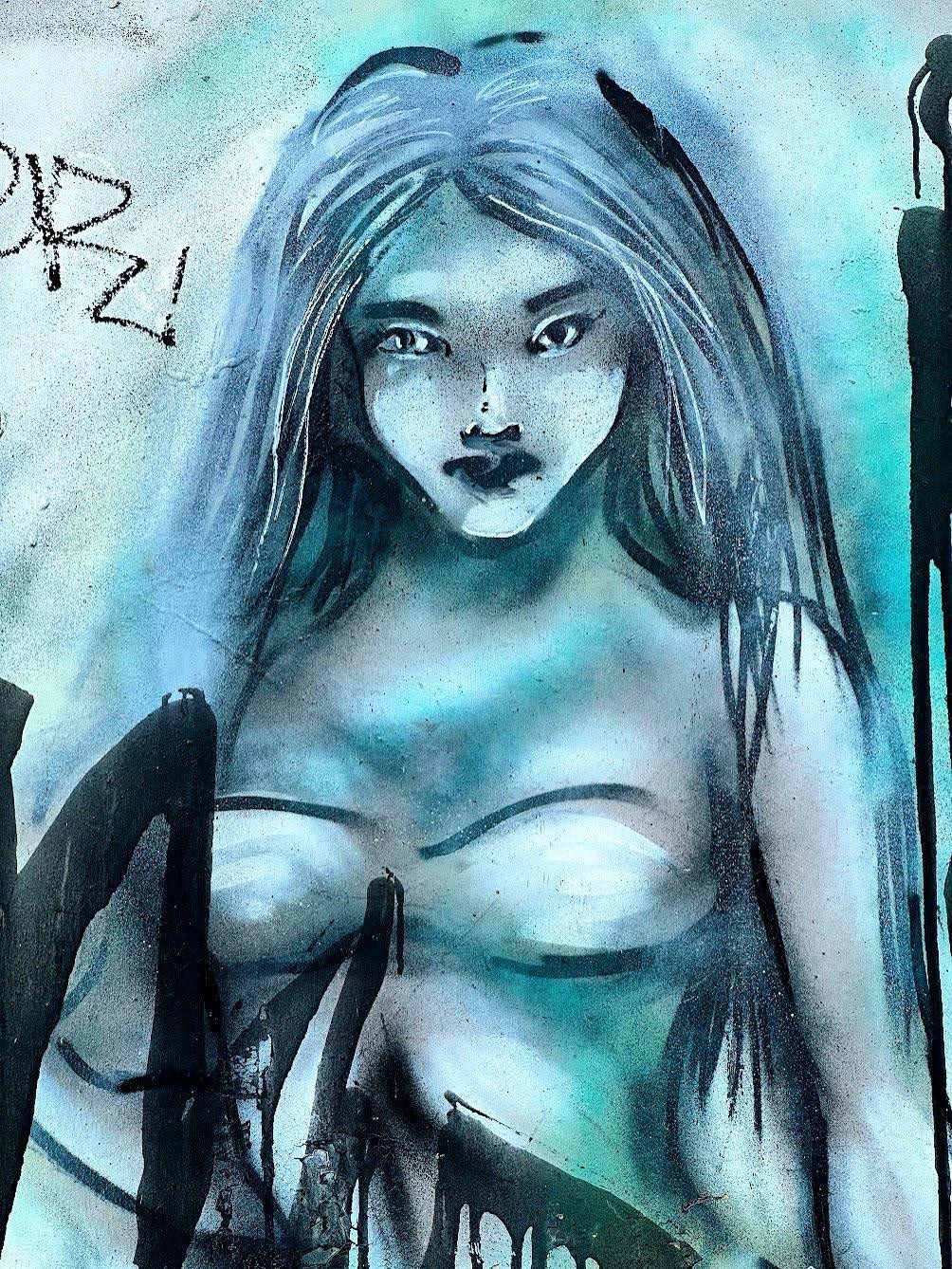
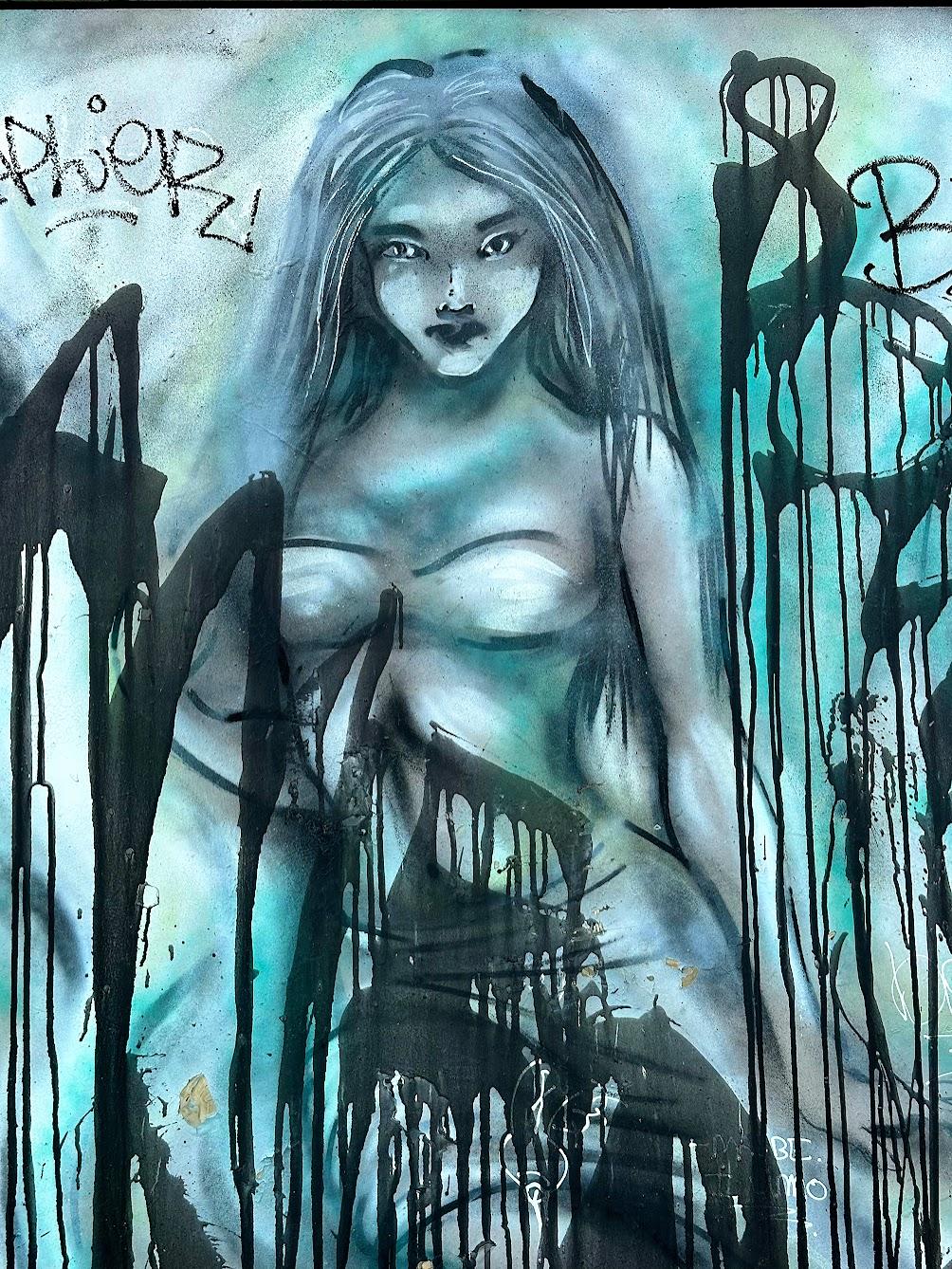
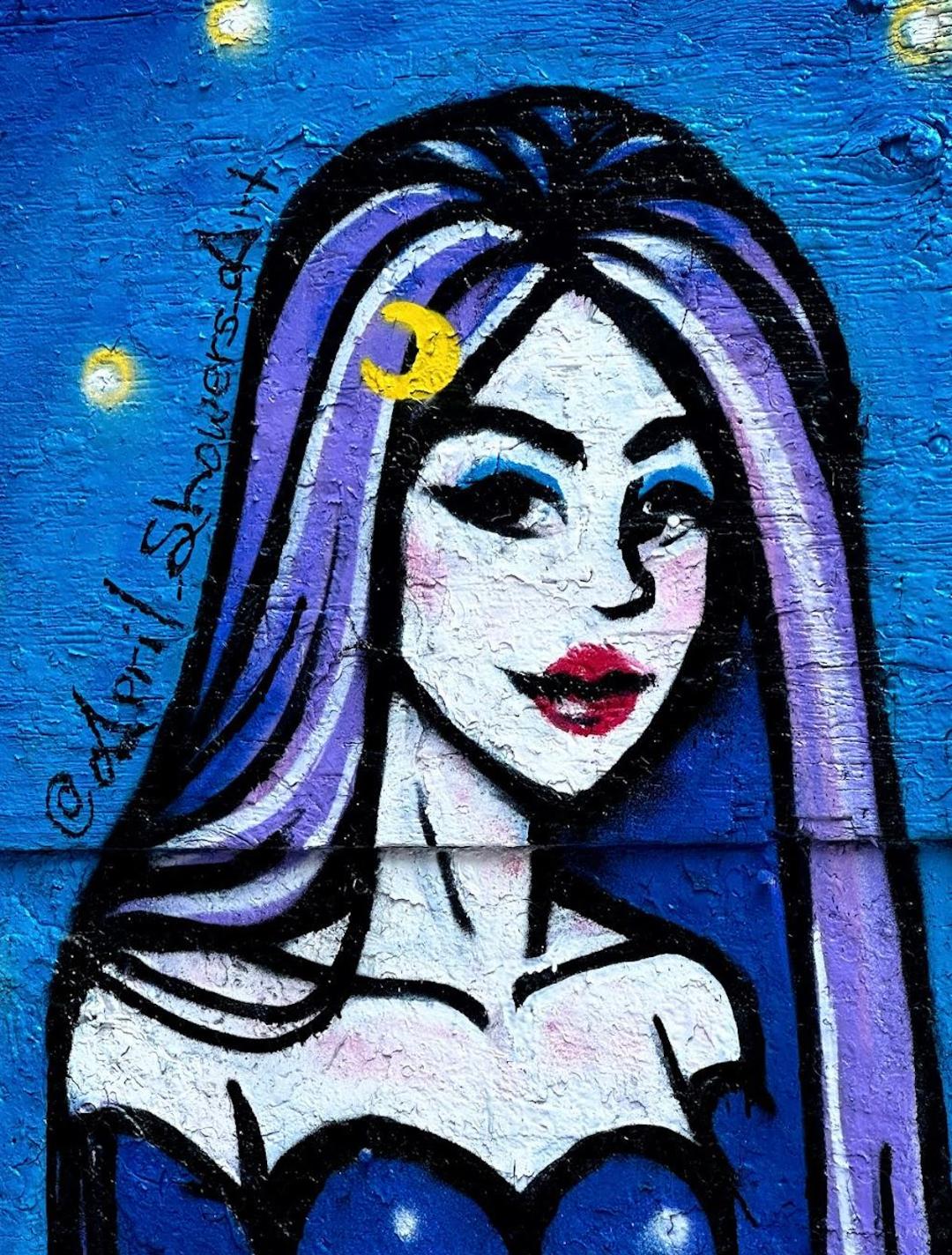
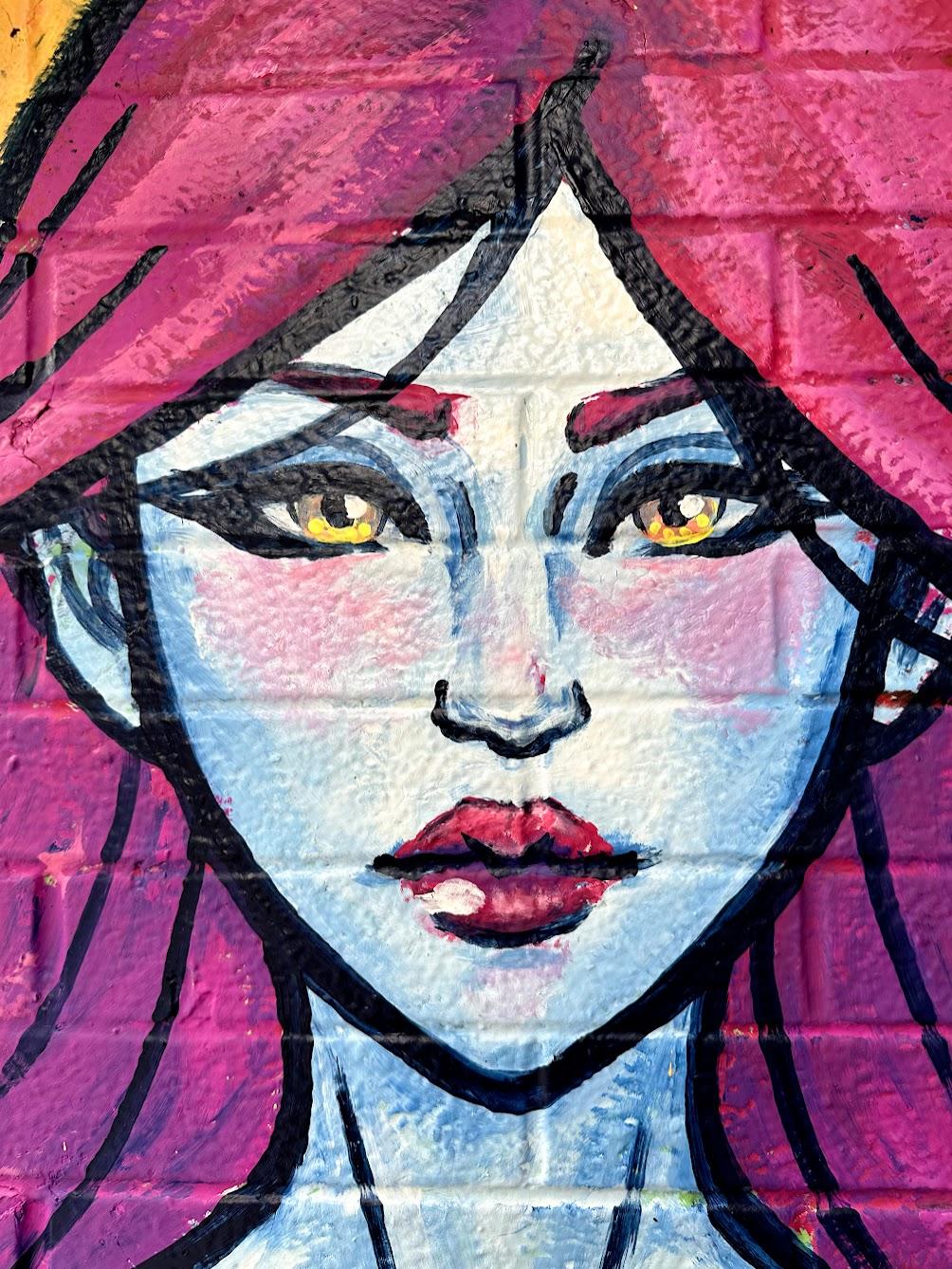
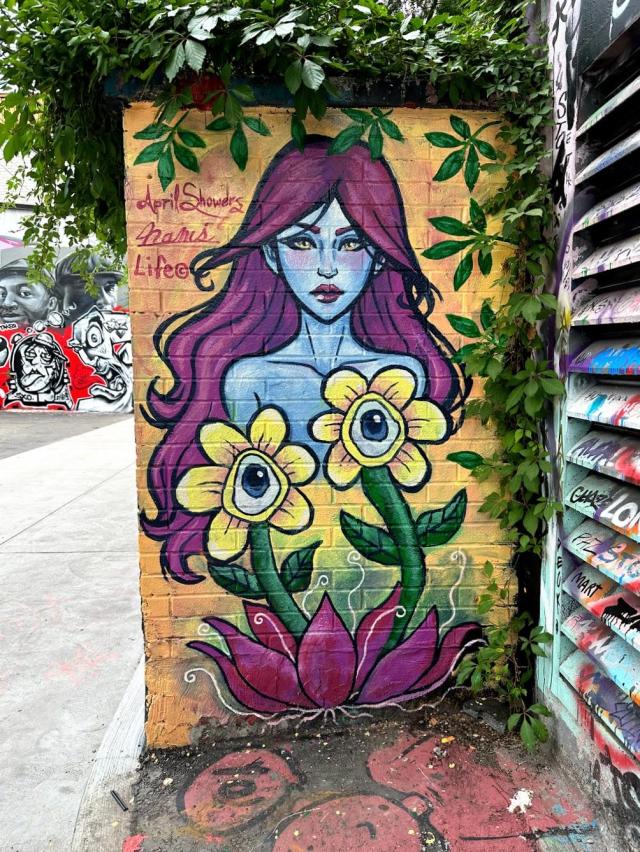
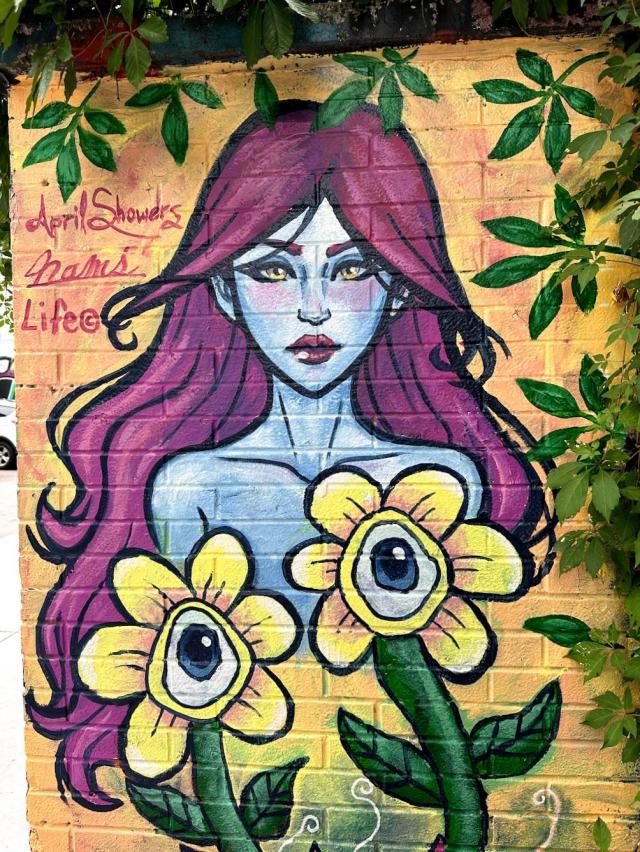
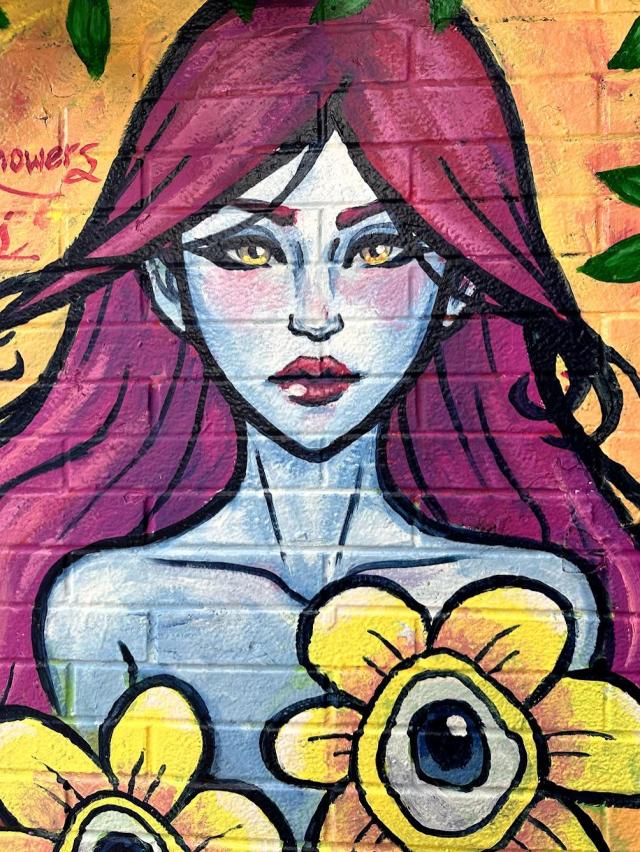
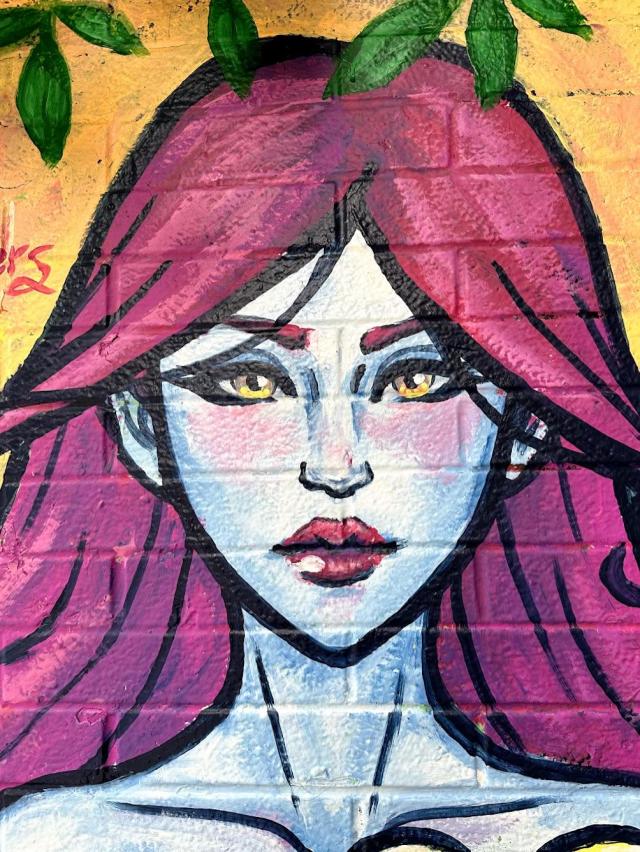
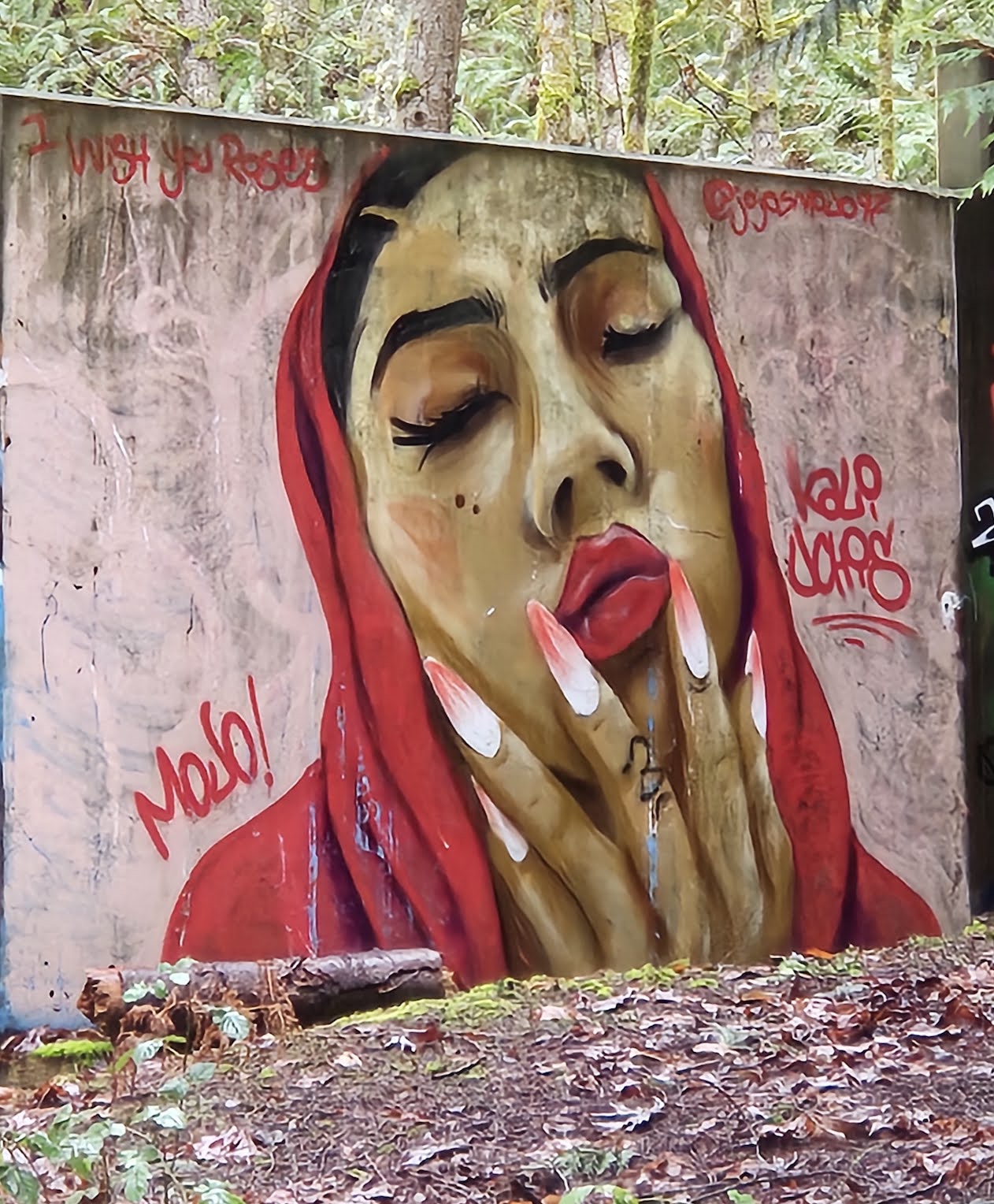
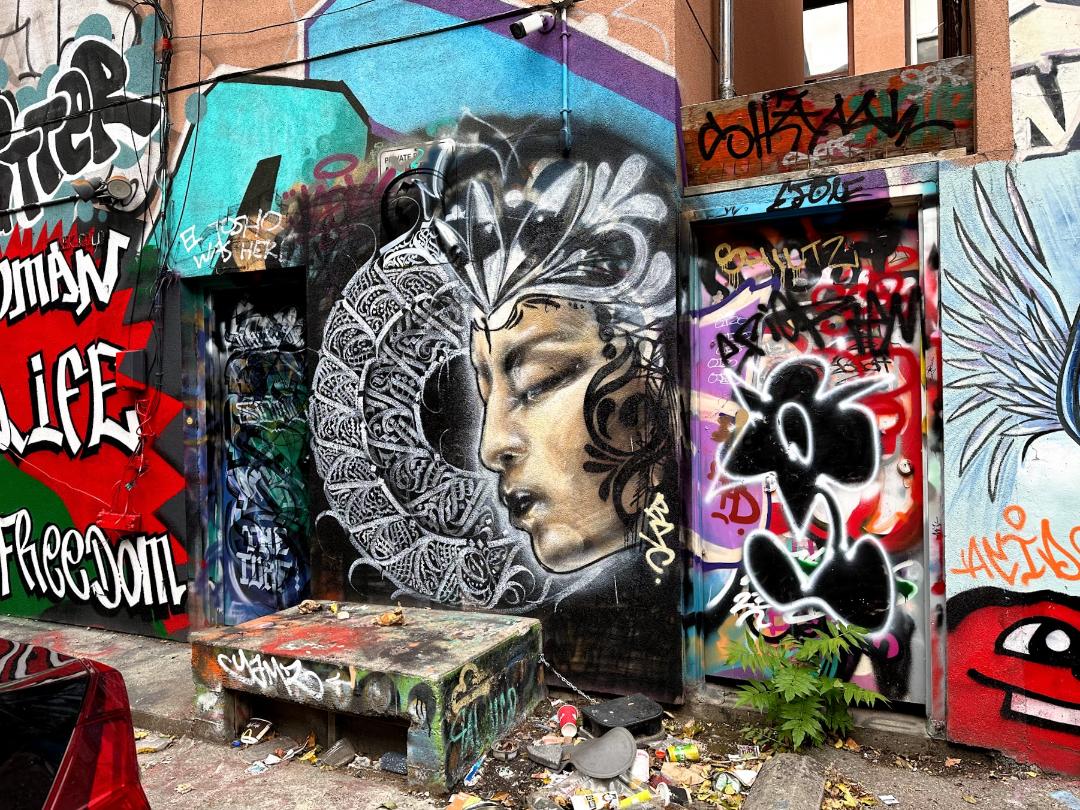
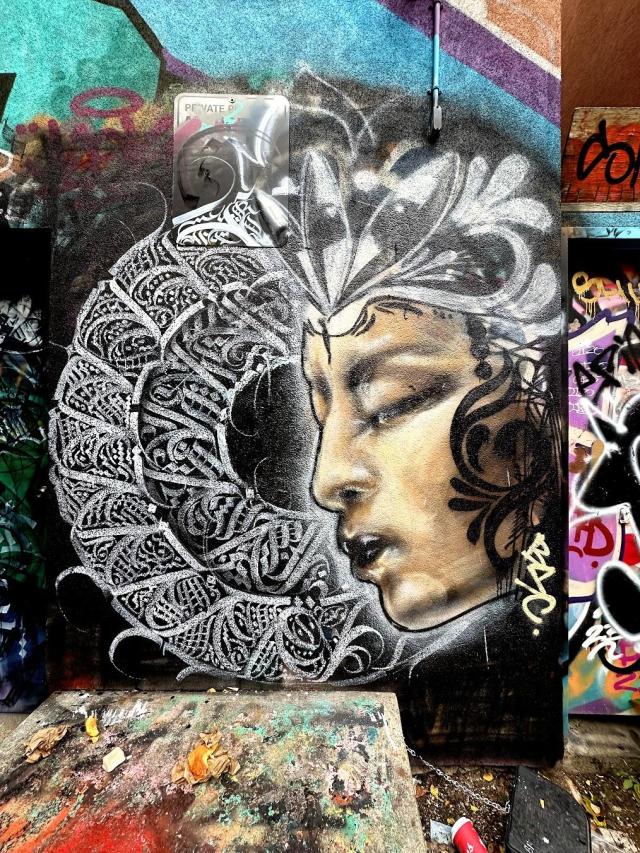
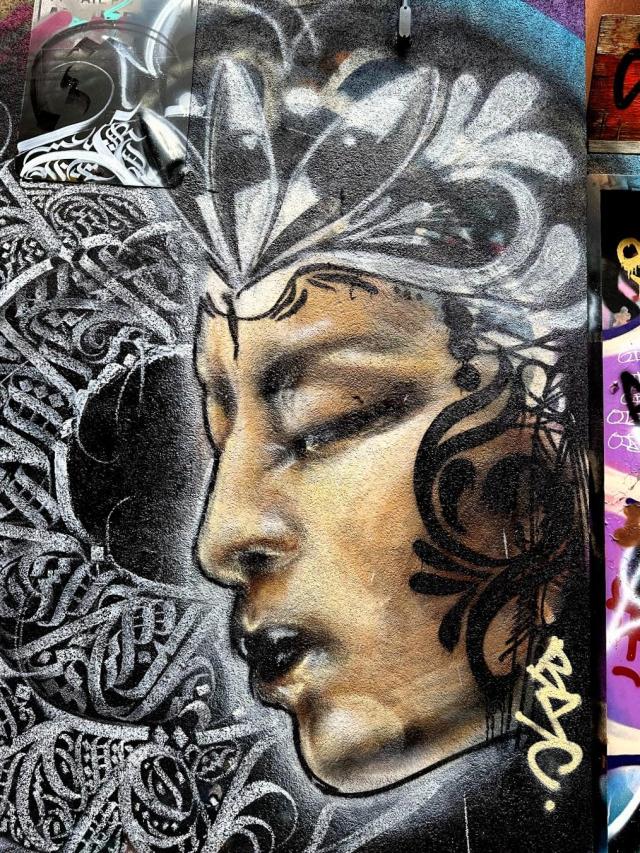
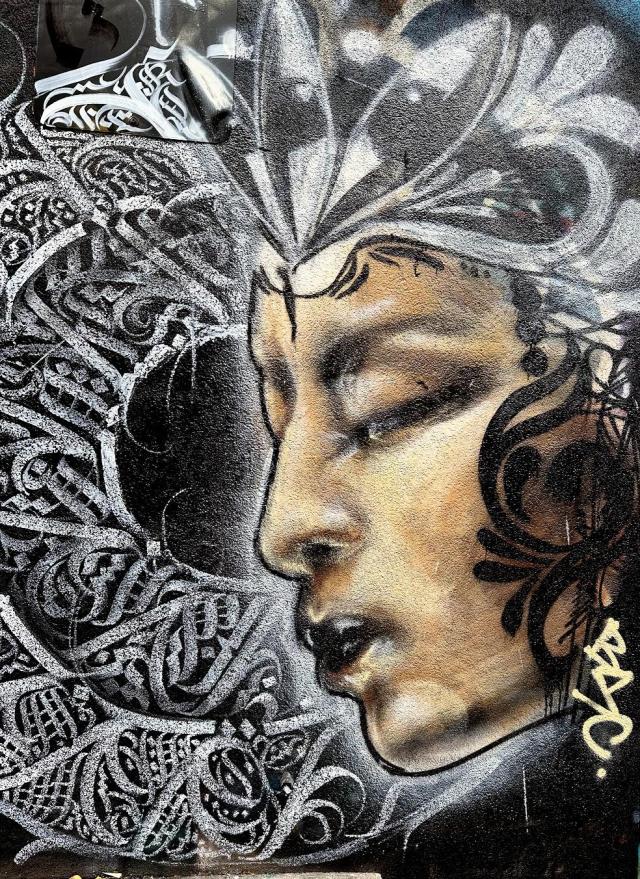
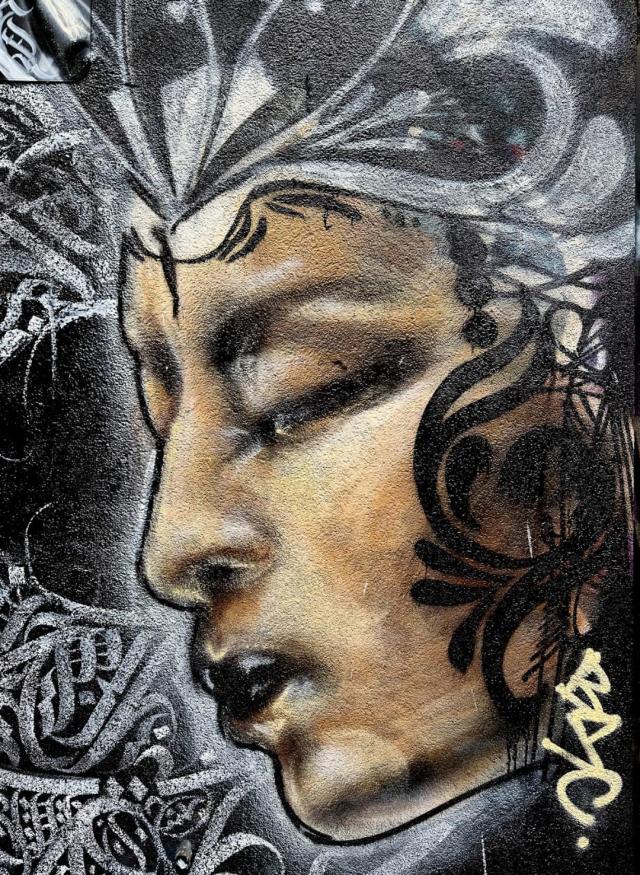
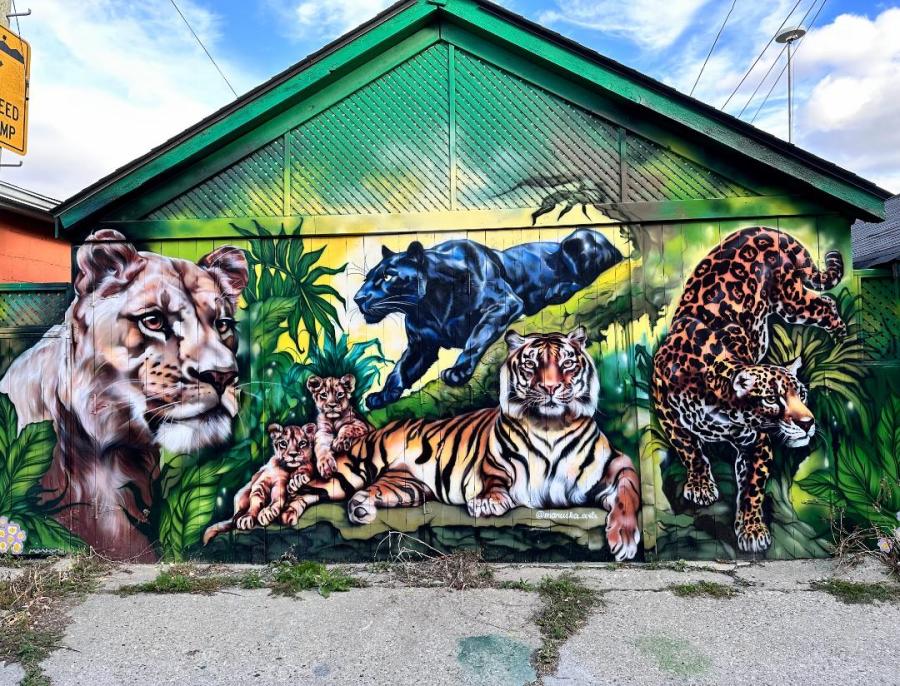
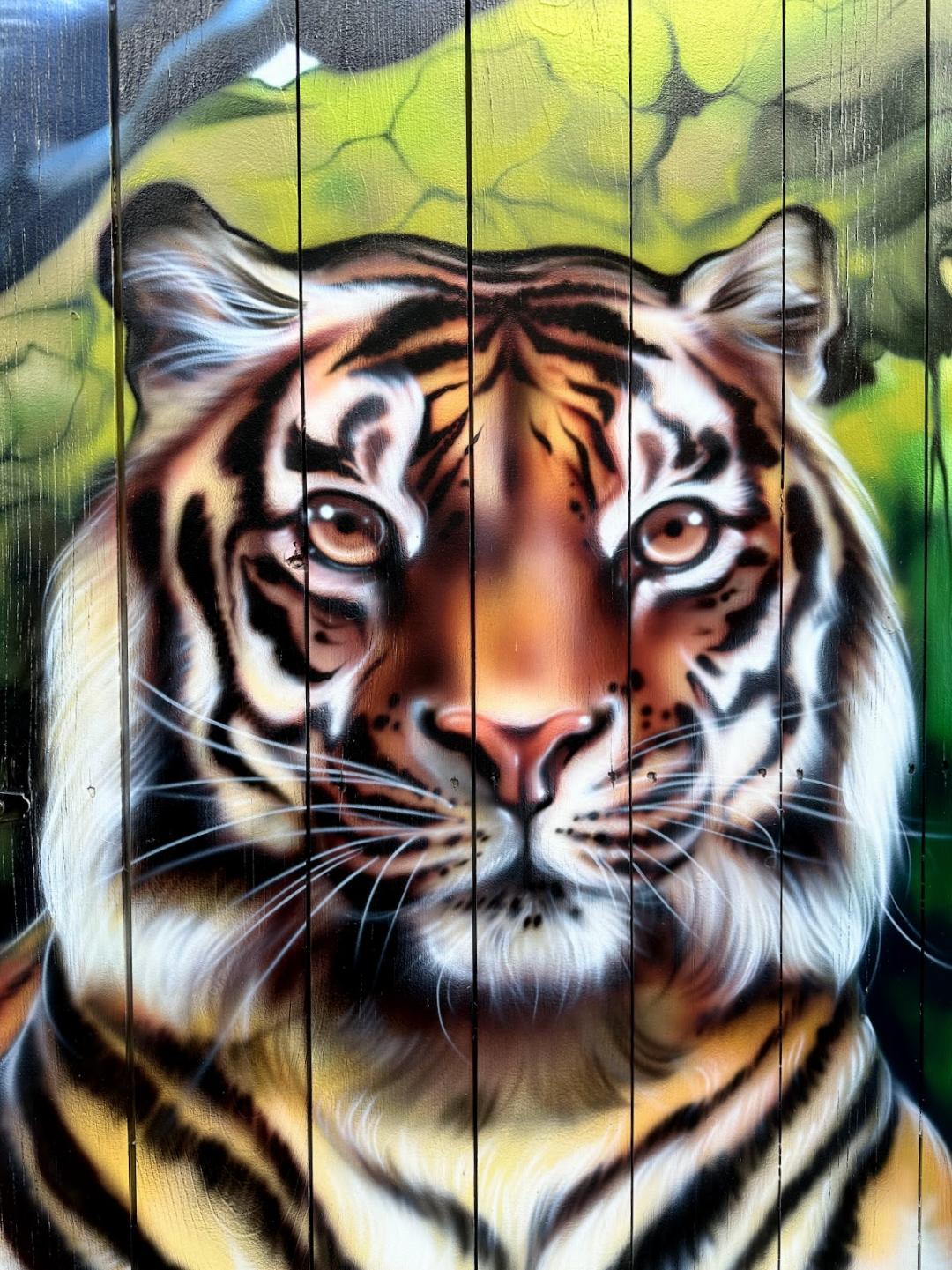
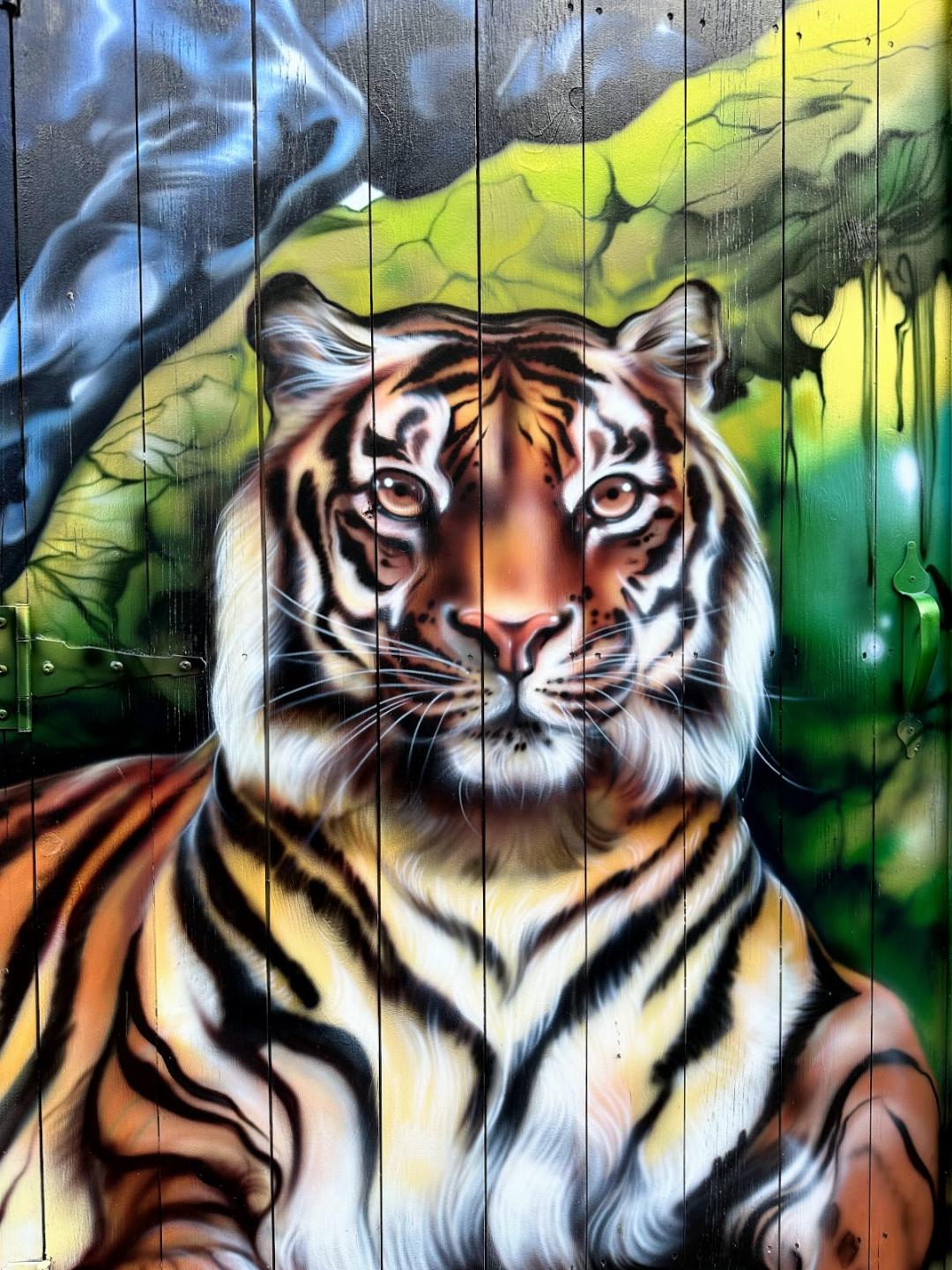
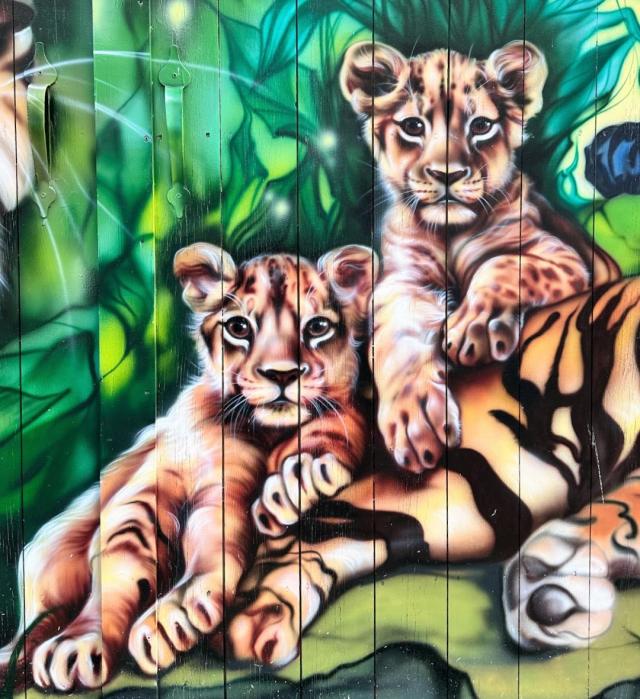
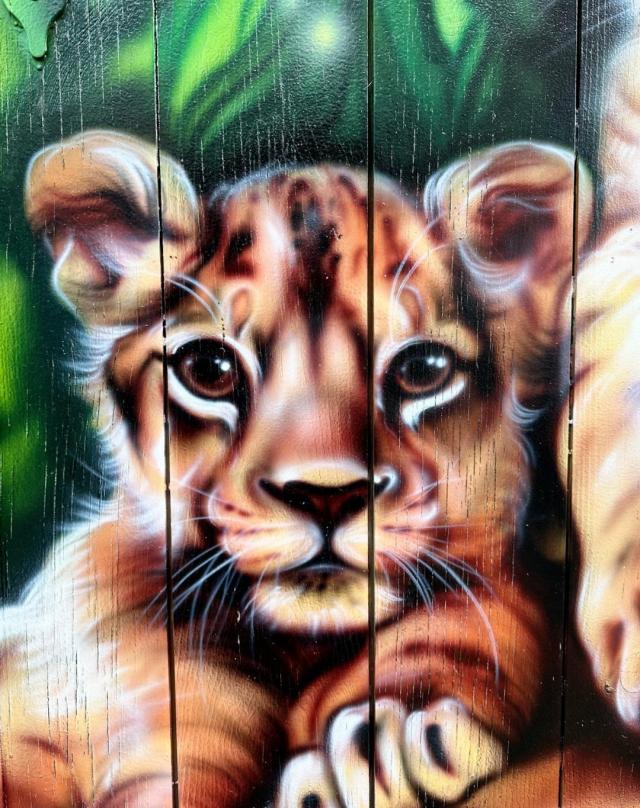
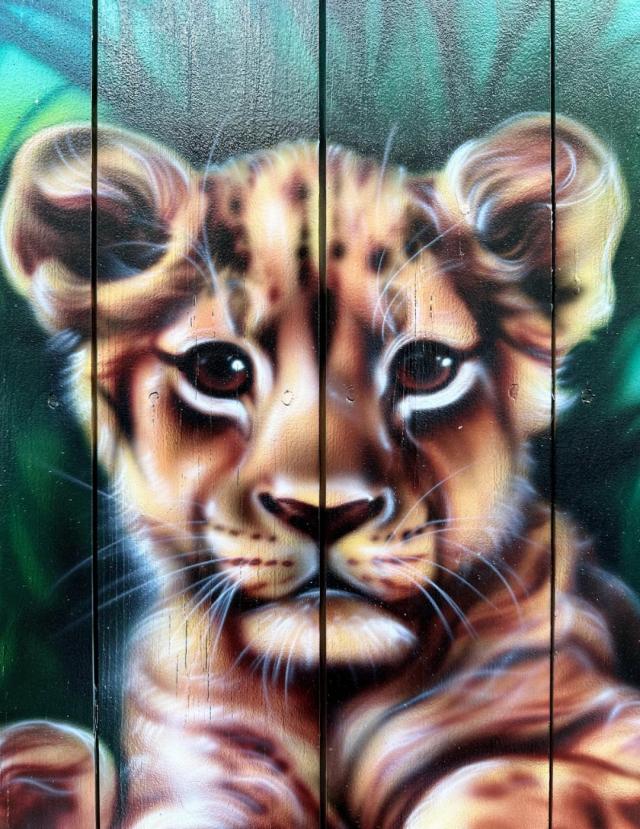
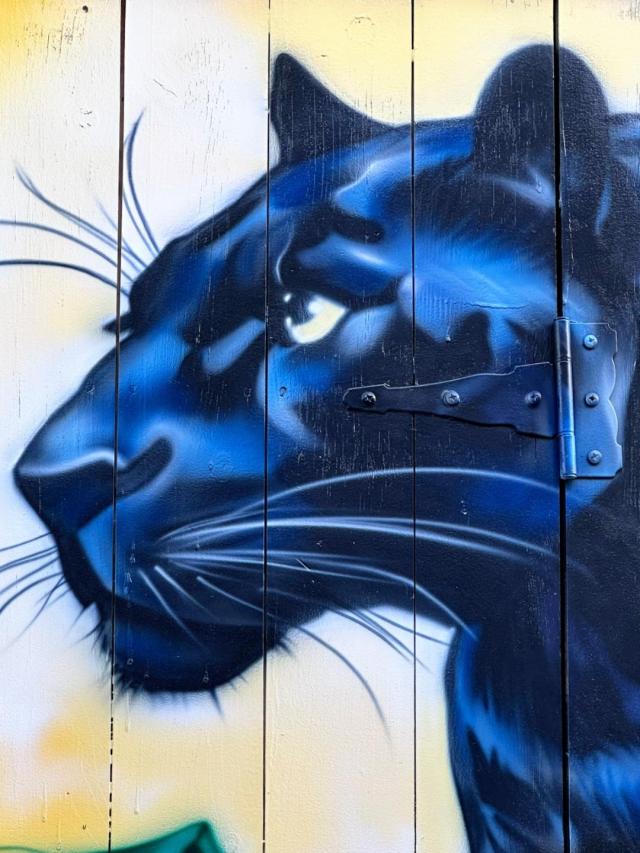
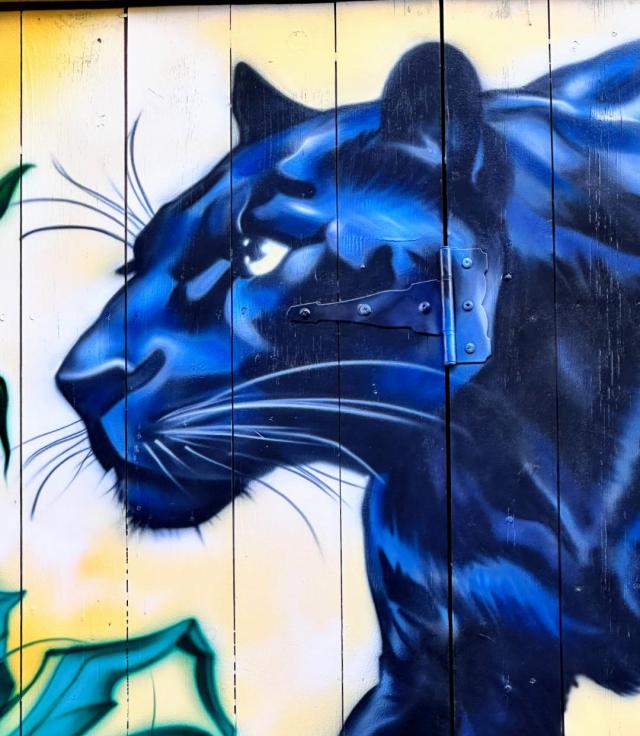
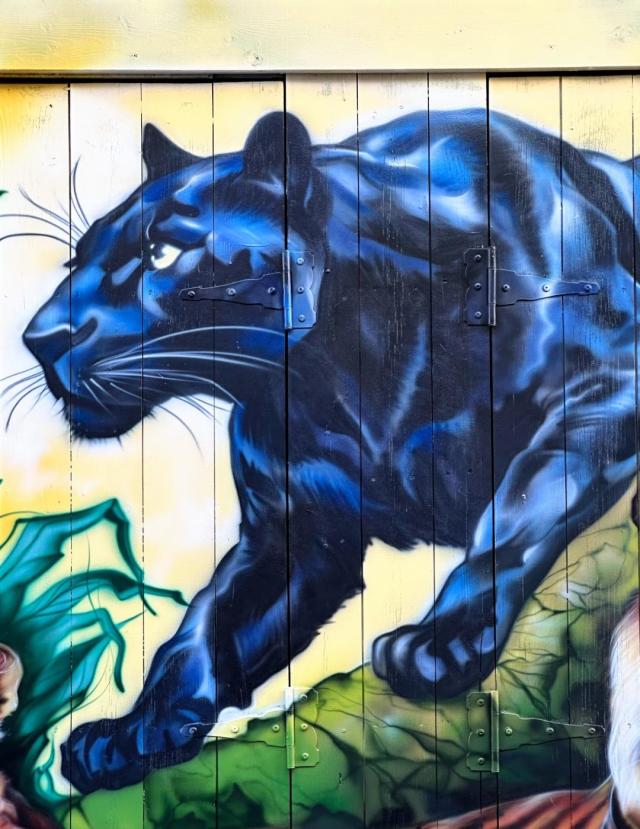
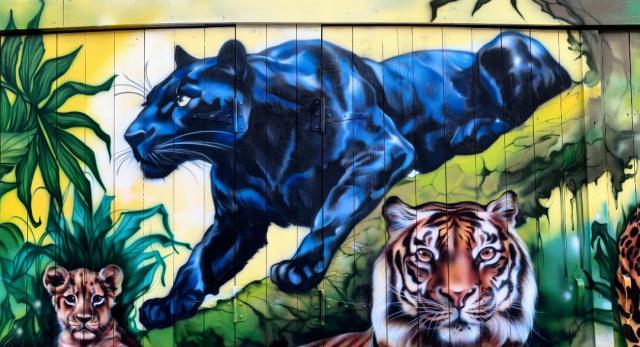
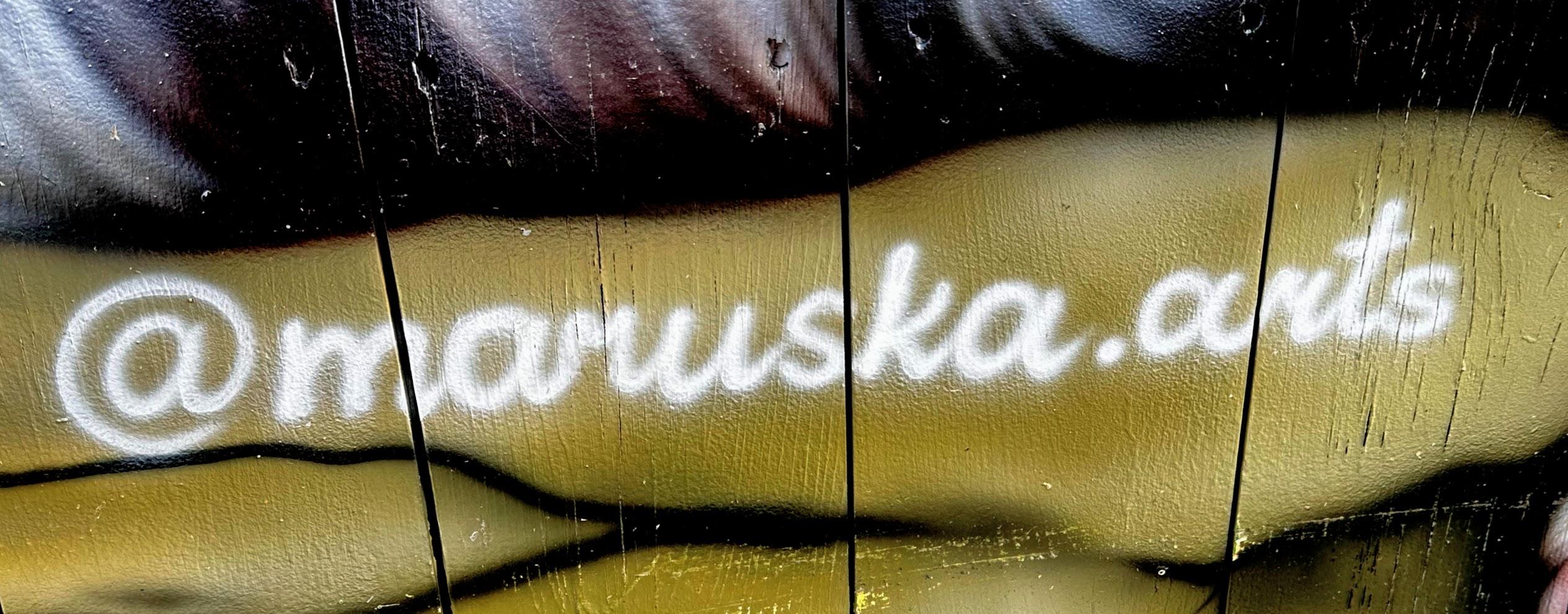
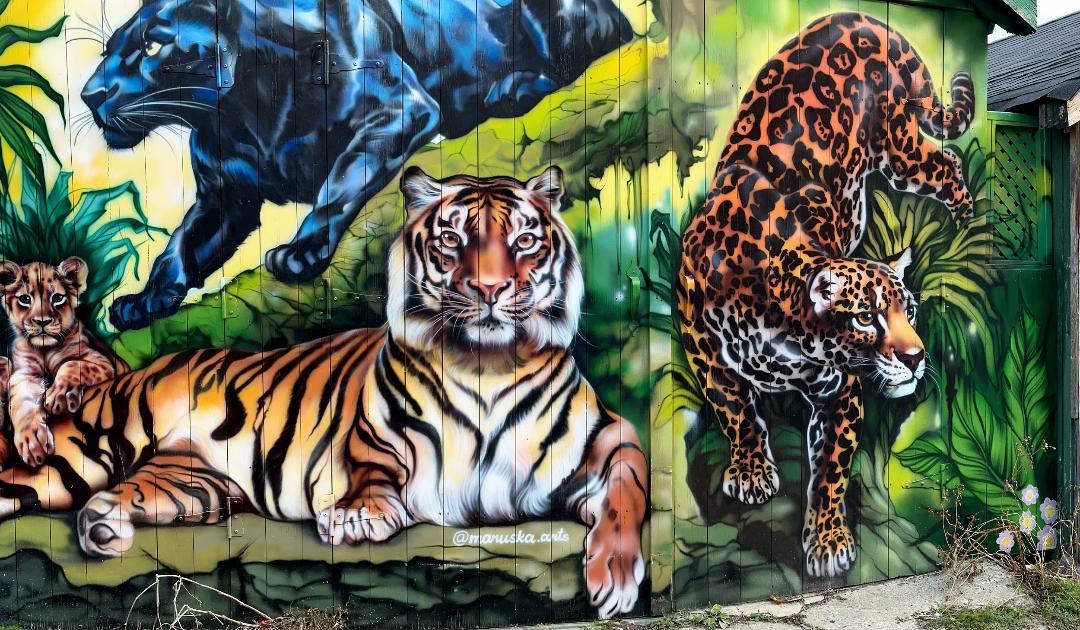
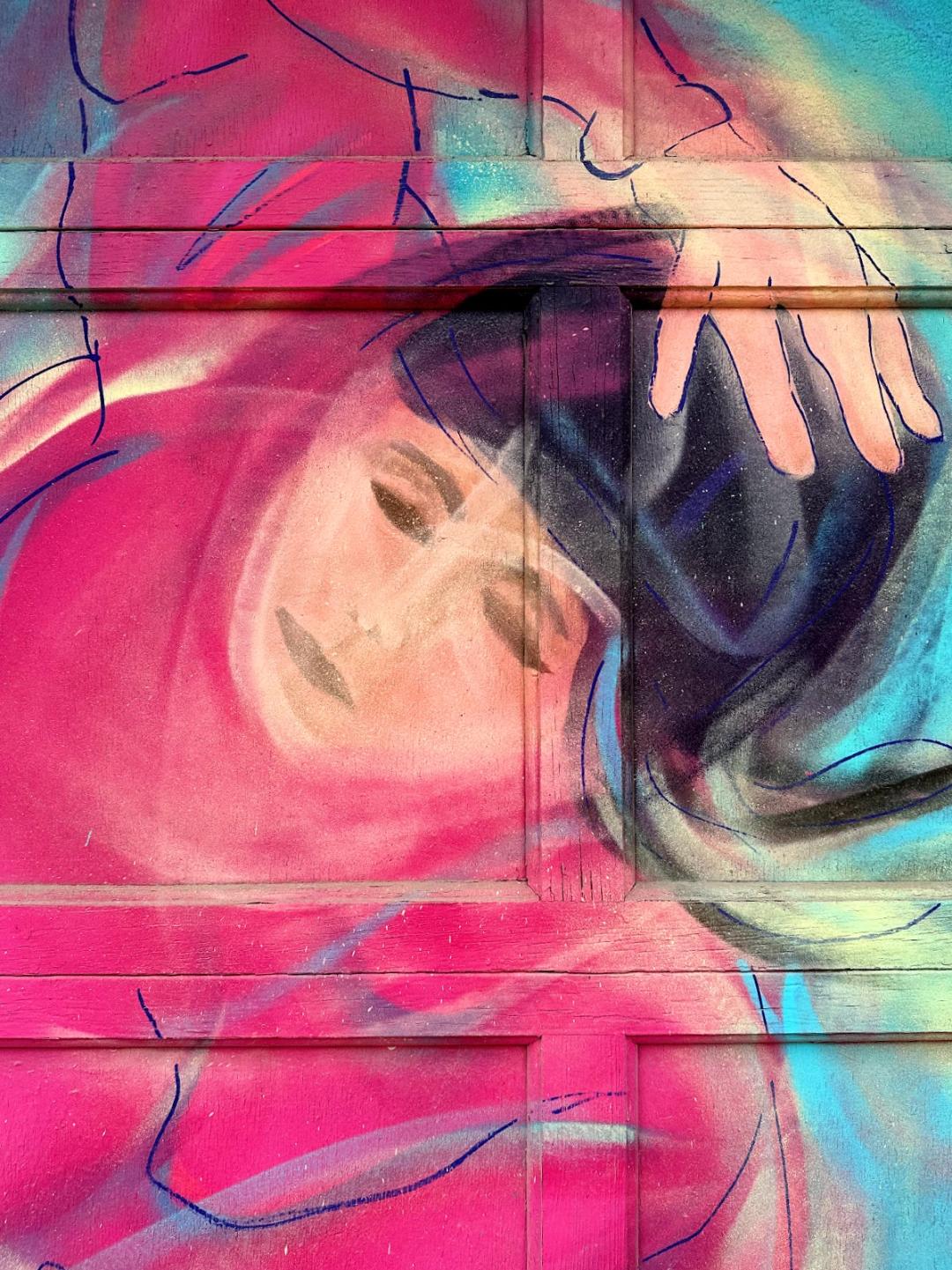
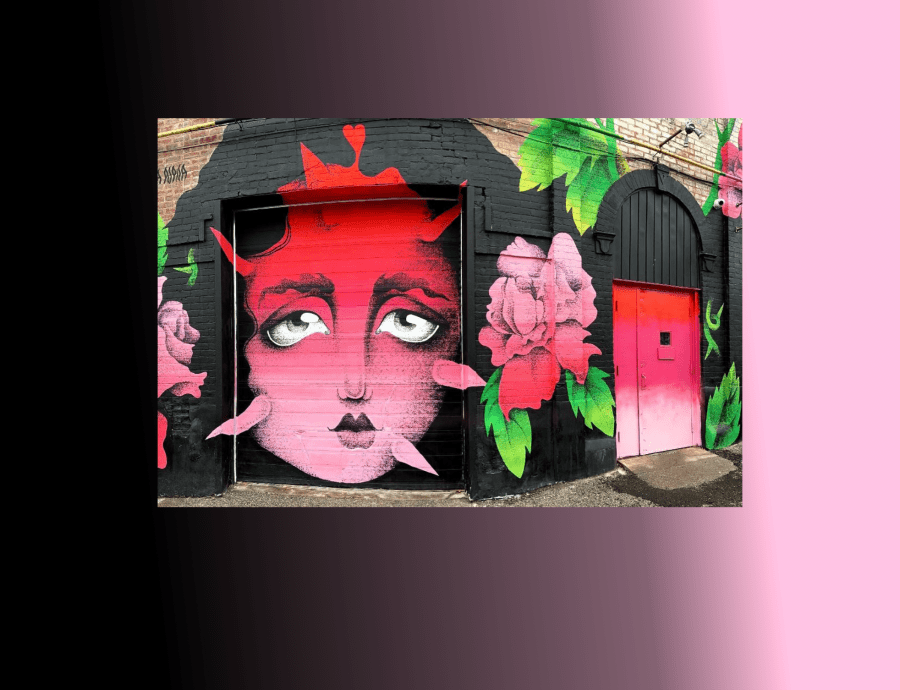
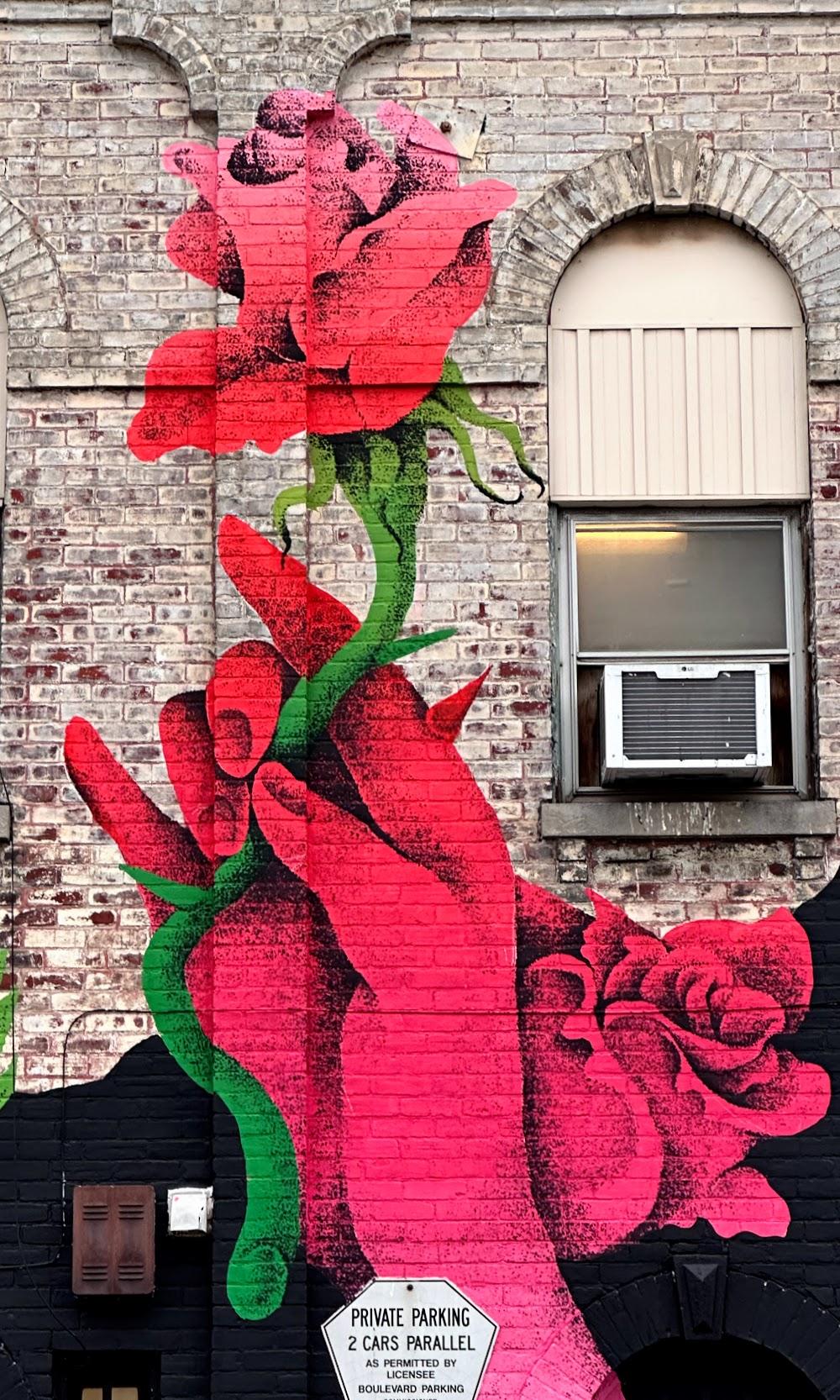
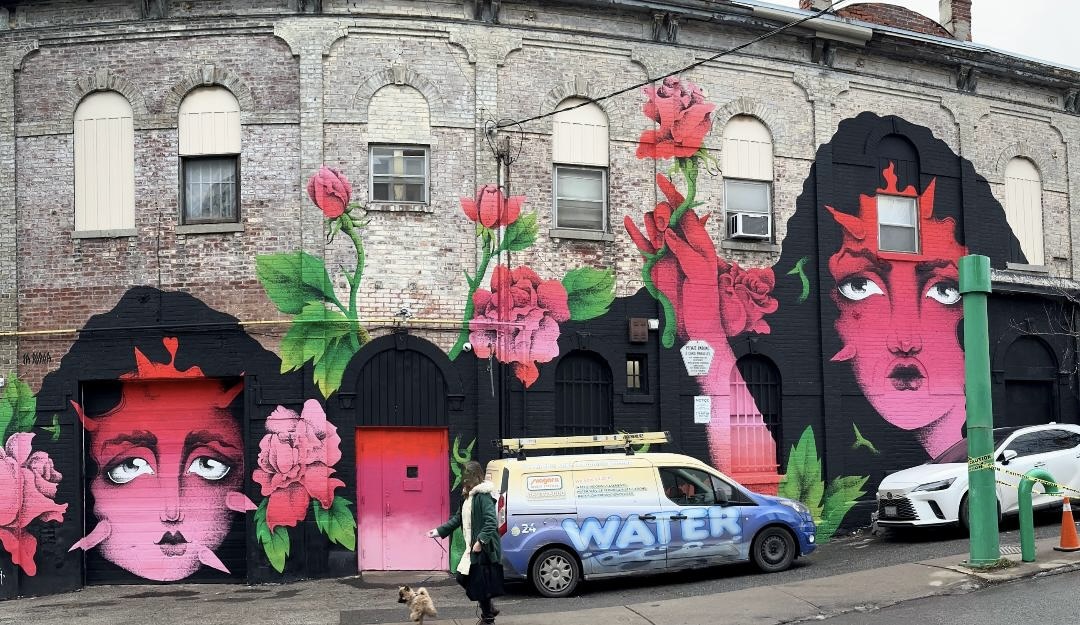
April Showers paints her beauties in the worst spots.
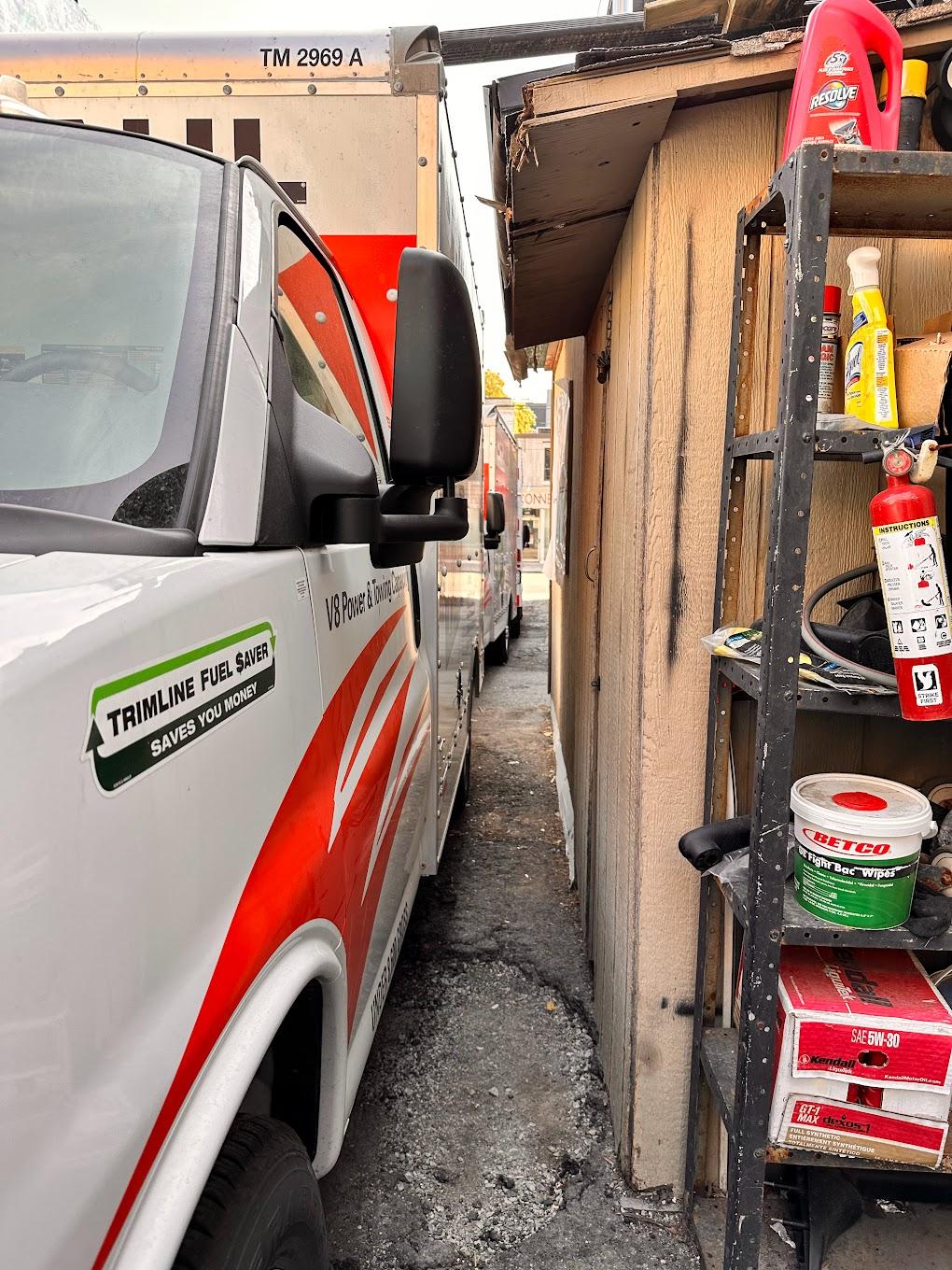
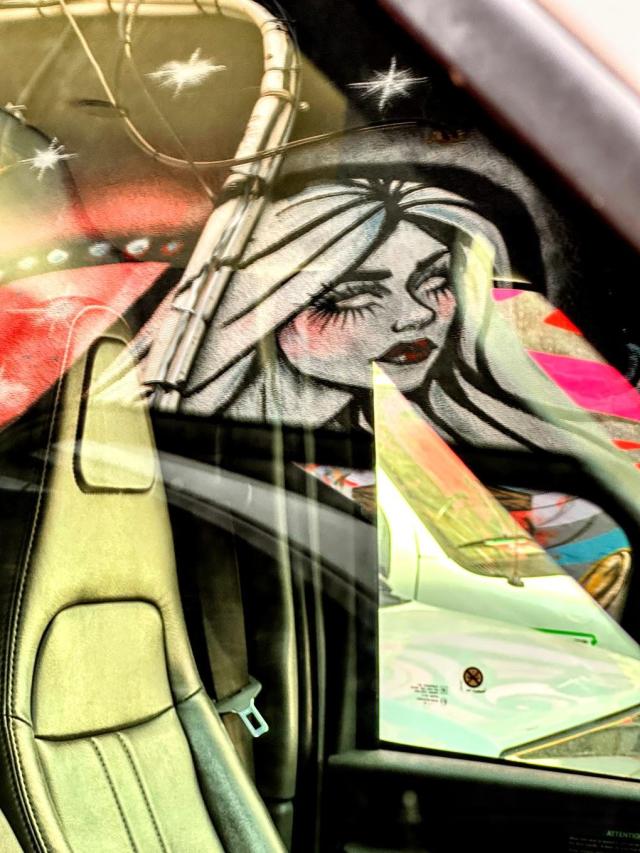
This one was at a truck rental parking place. Yes, I almost got stuck squeezing through.
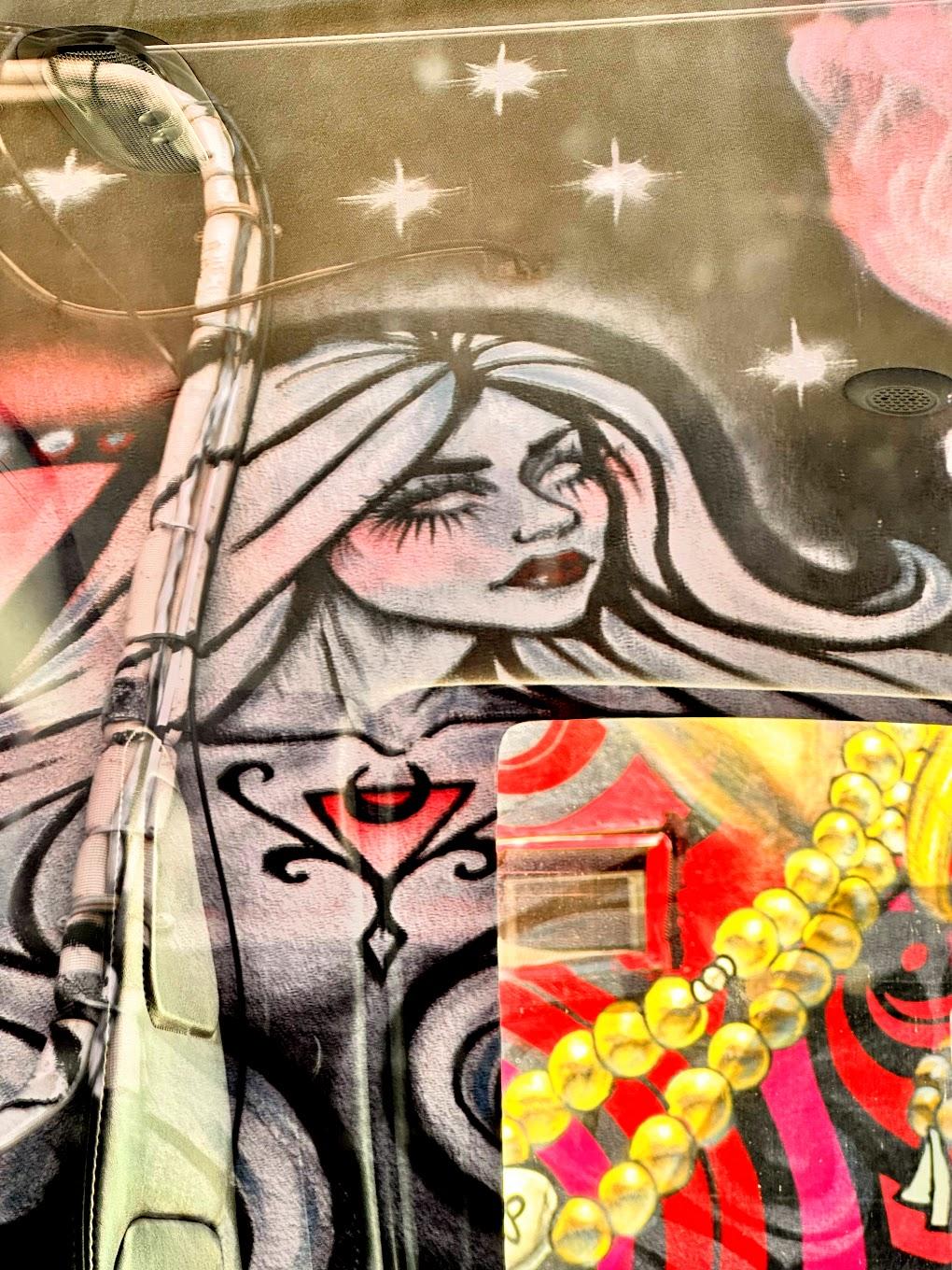
Of all the graf tagged onto the wall, all I wanted was the April Showers face. The best I could do in a 2 foot slot was some demented up angles and truck window reflections.
And now, I am squeezing through from here, until middle/late April. This is my last post until then.
But, I will be visiting when I can.
Not sure who this artist is.
It’s a fine mess.
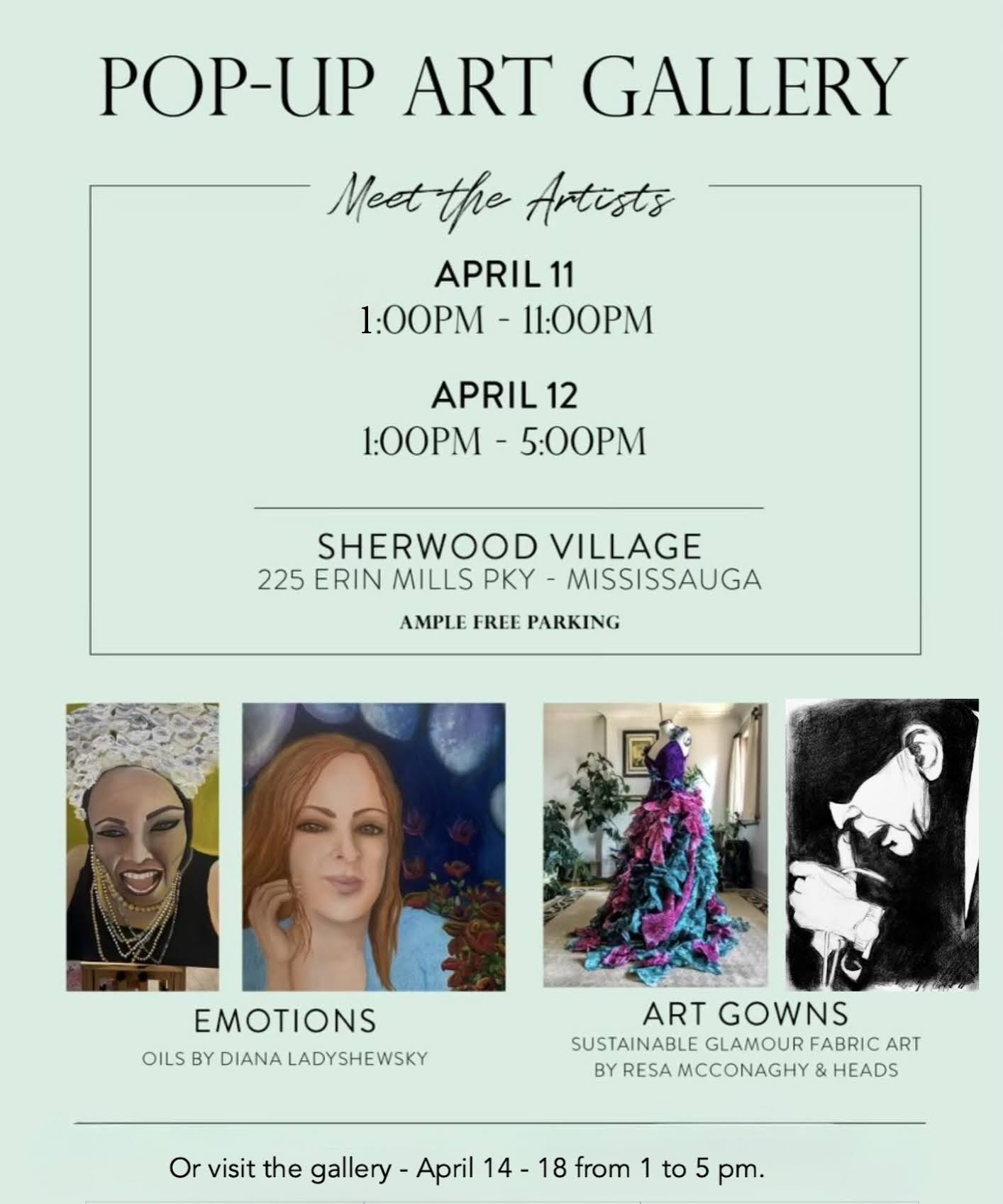
It’s because I got involved in an ART SHOW. YAY!
So, like April Showers, I’ll be sharing my beauties, but in a nice place.
But if I could, I would have a fashion show in an alley filled with graffiti.
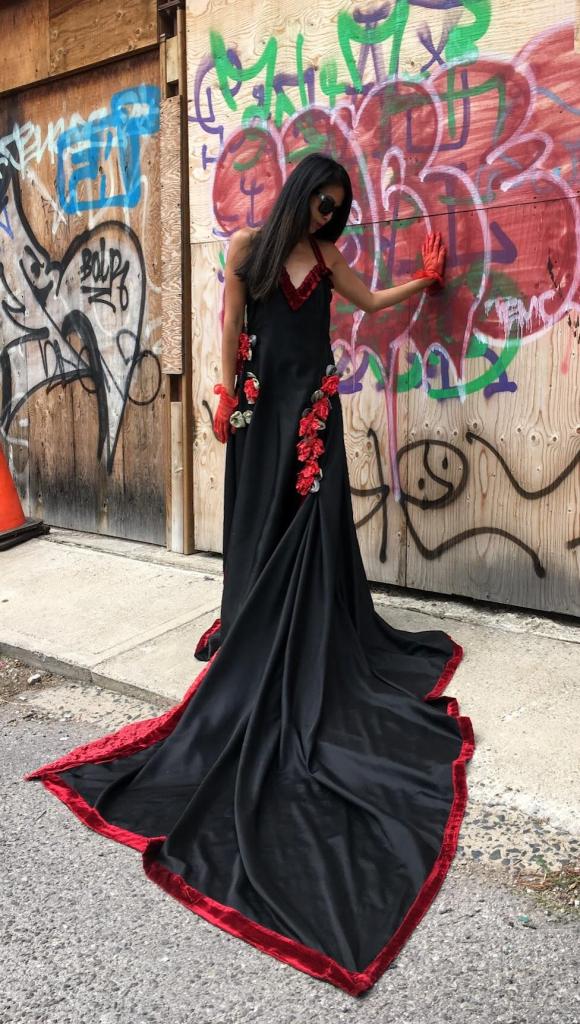
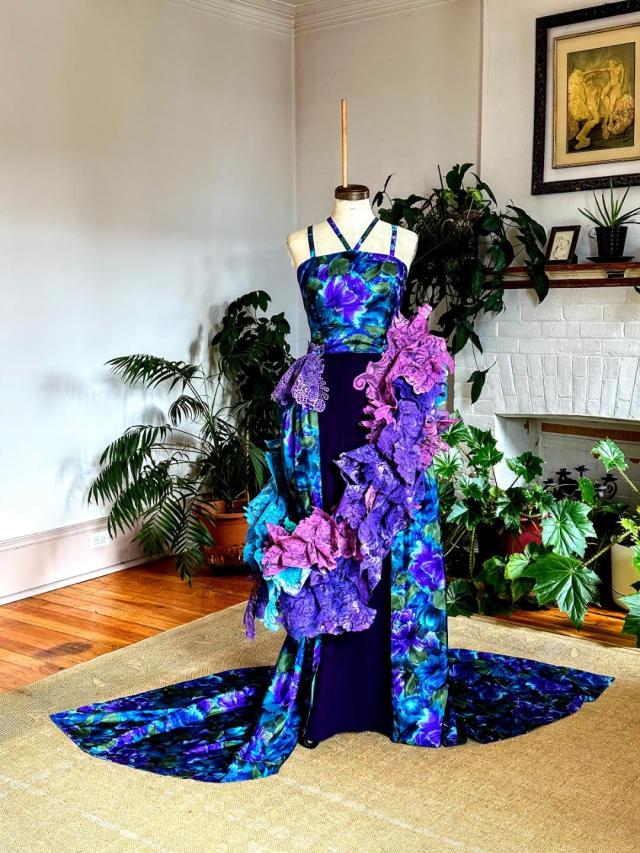
Jennifer models VELVET TANGO
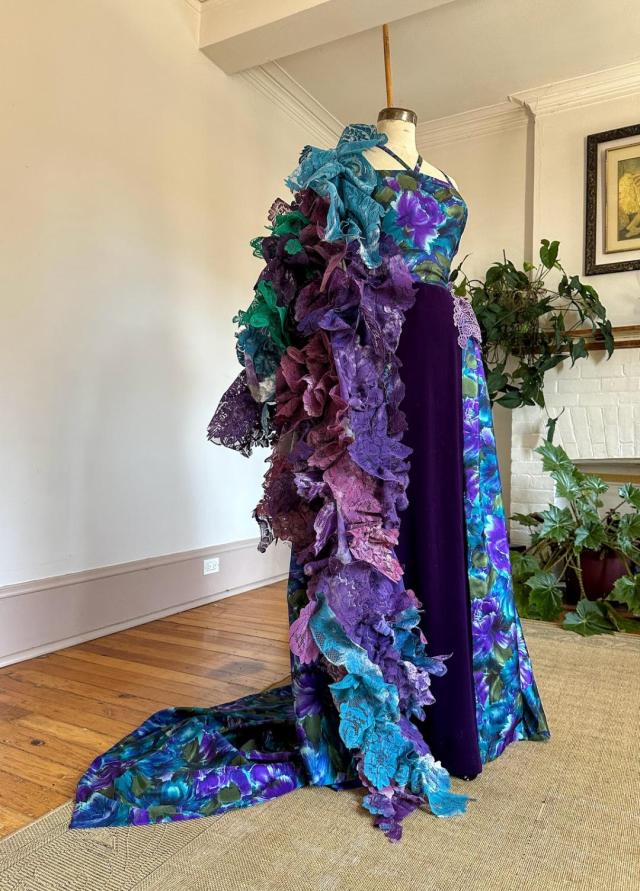
There’s nothing like finding beauty in the roughest places; like Velvet Tango, the Art Gown I made for Holly House of Heart in a tagged up alley.
April Showers will bring art & flowers, and I’ll have lots to share with you!
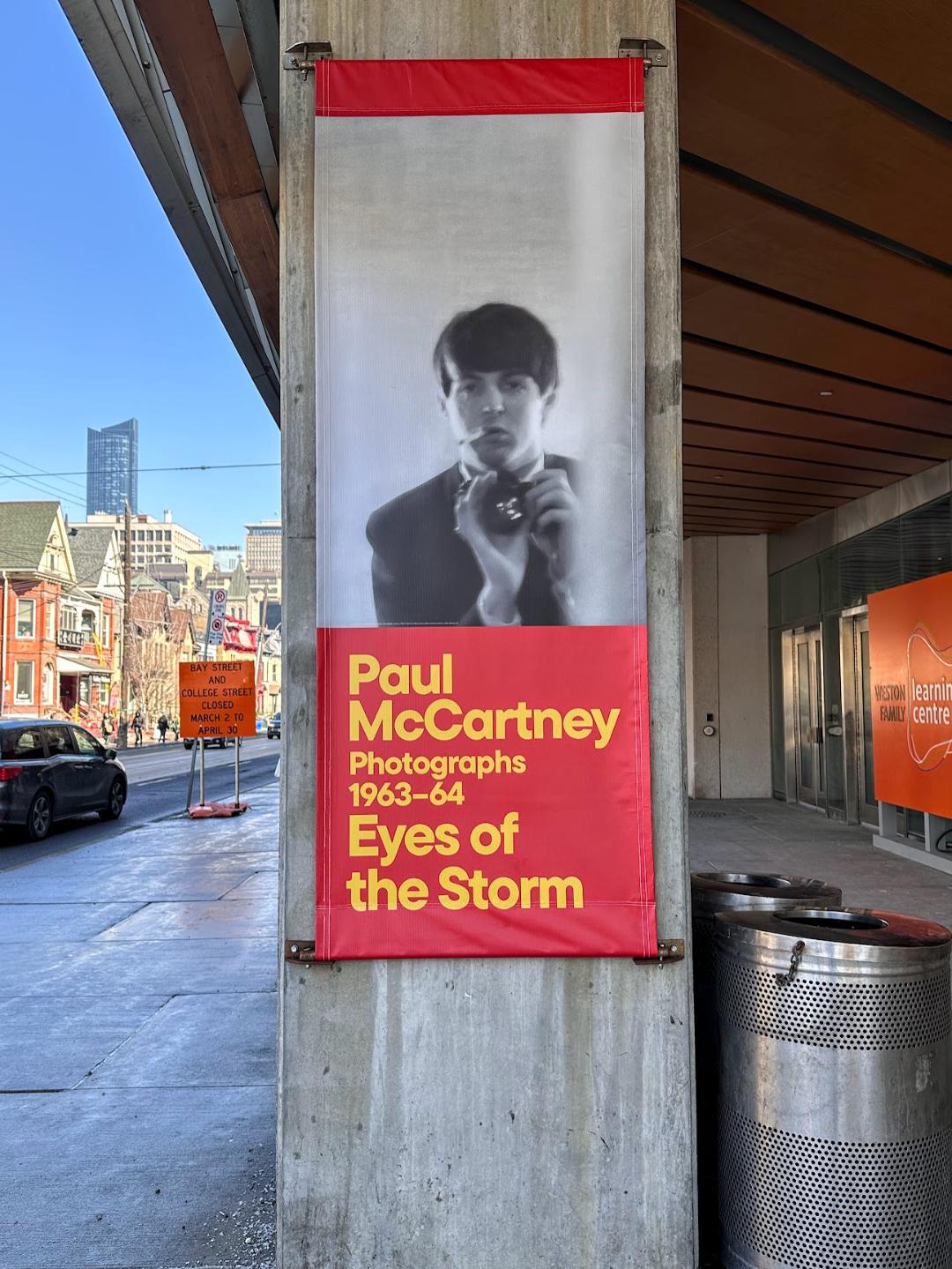
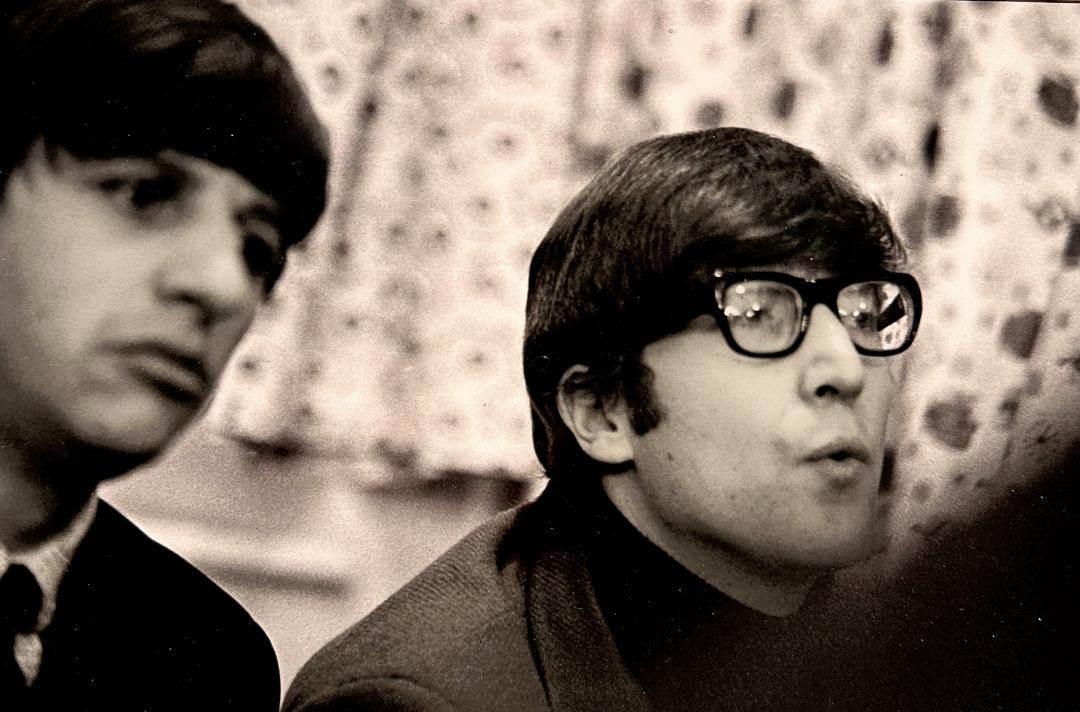
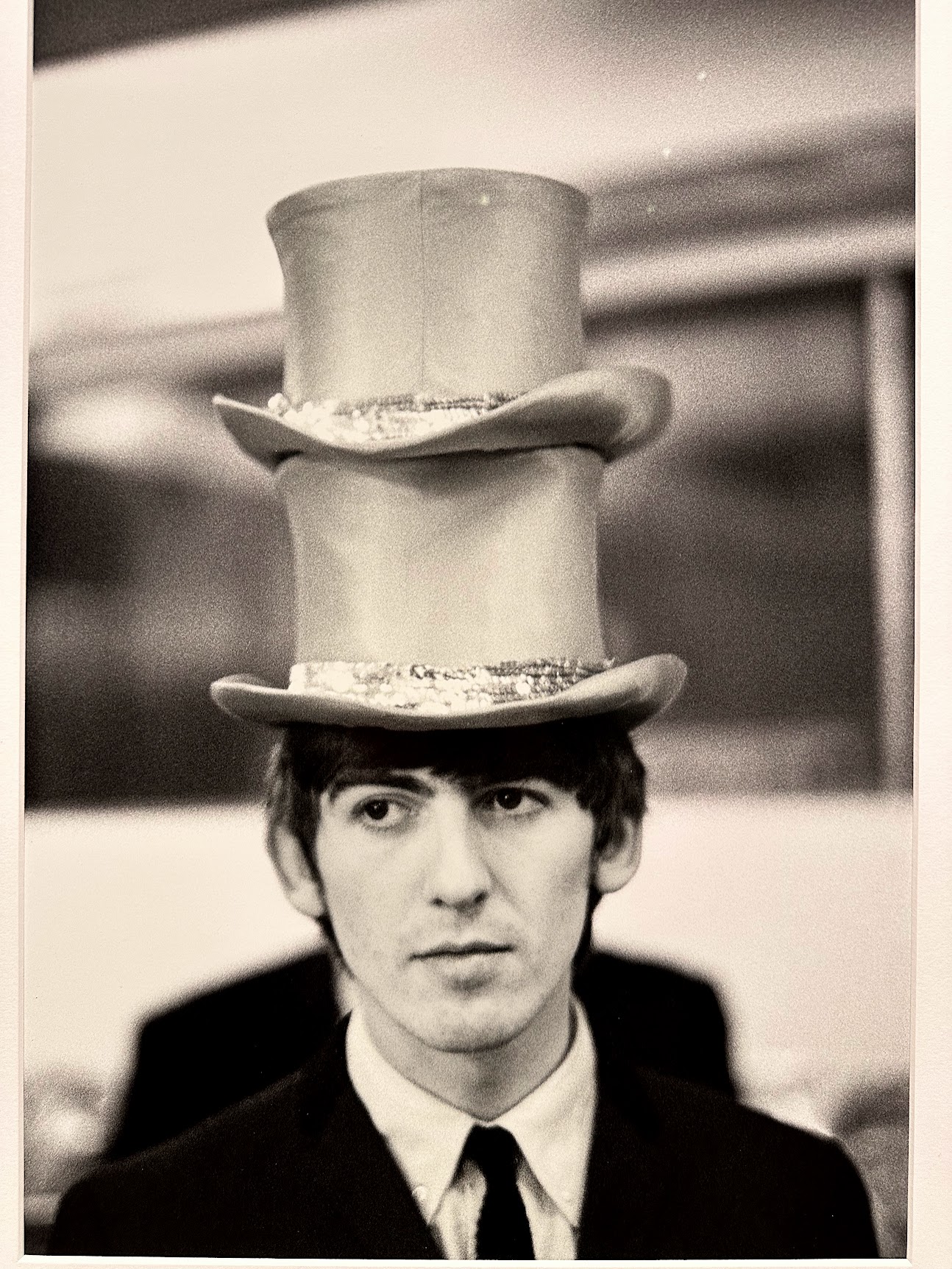
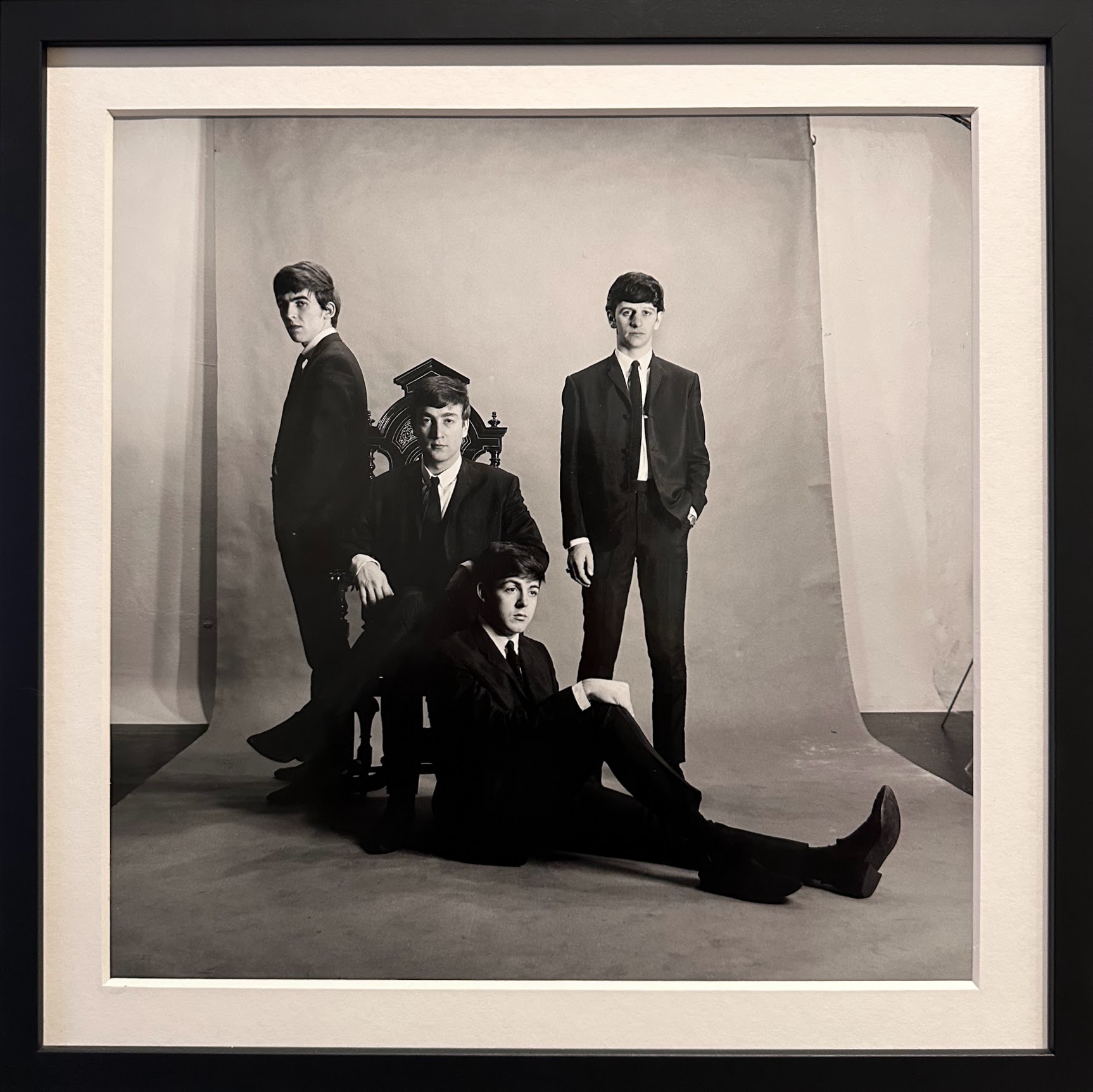
Of the plethora, I’m mostly super excited to share the show of Paul McCartney’s amateur pics from 1963-64.
Our blog pal MATT is going to be on board for that!
There’s pics Paul took of the other Beatles, of America through the limo & train windows and some colour shots from Miami.
The show was SPLASHTACULAR!
There were also a few old professional promo shots.
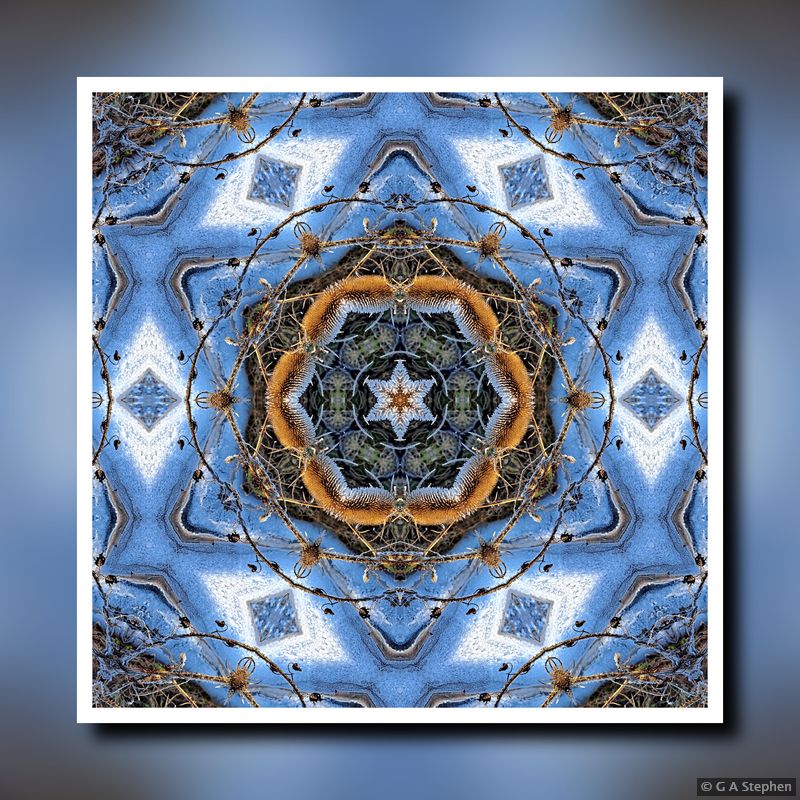
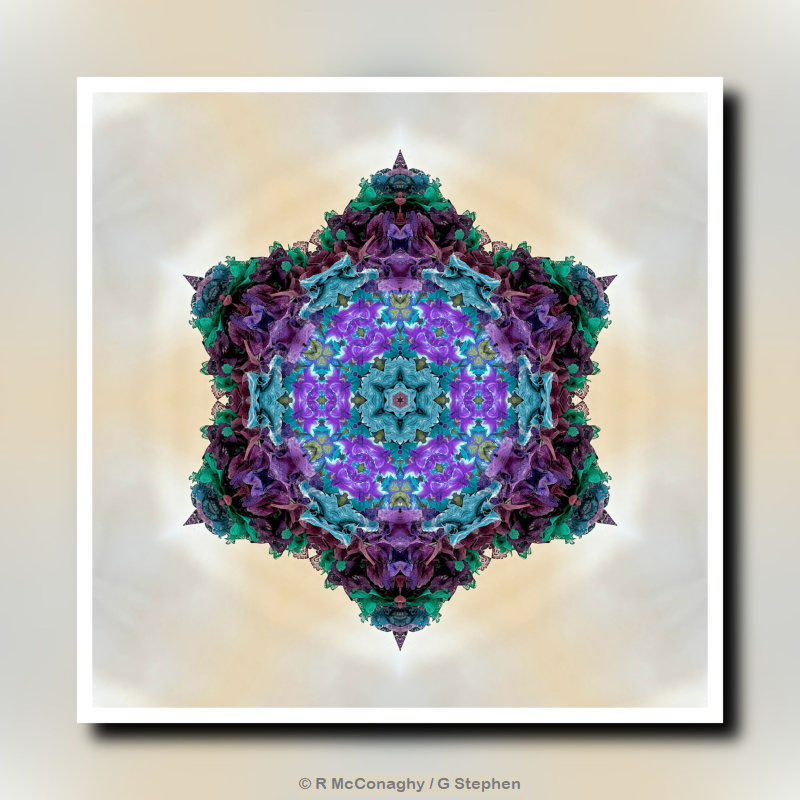
Check out this Spectacular Mandala by Graham Stephen ofMandala Vihara!
Mandala – a geometric figure representing the universe in Hindu and Buddhist symbolism.
Vihara – a Buddhist monastery and place of religious education.
For many years I have been a fan of Graham’s mandala art. Every so often on my art hunts, I’ll find something that is not a full mandala, but mandala-ish, and I think of Graham.
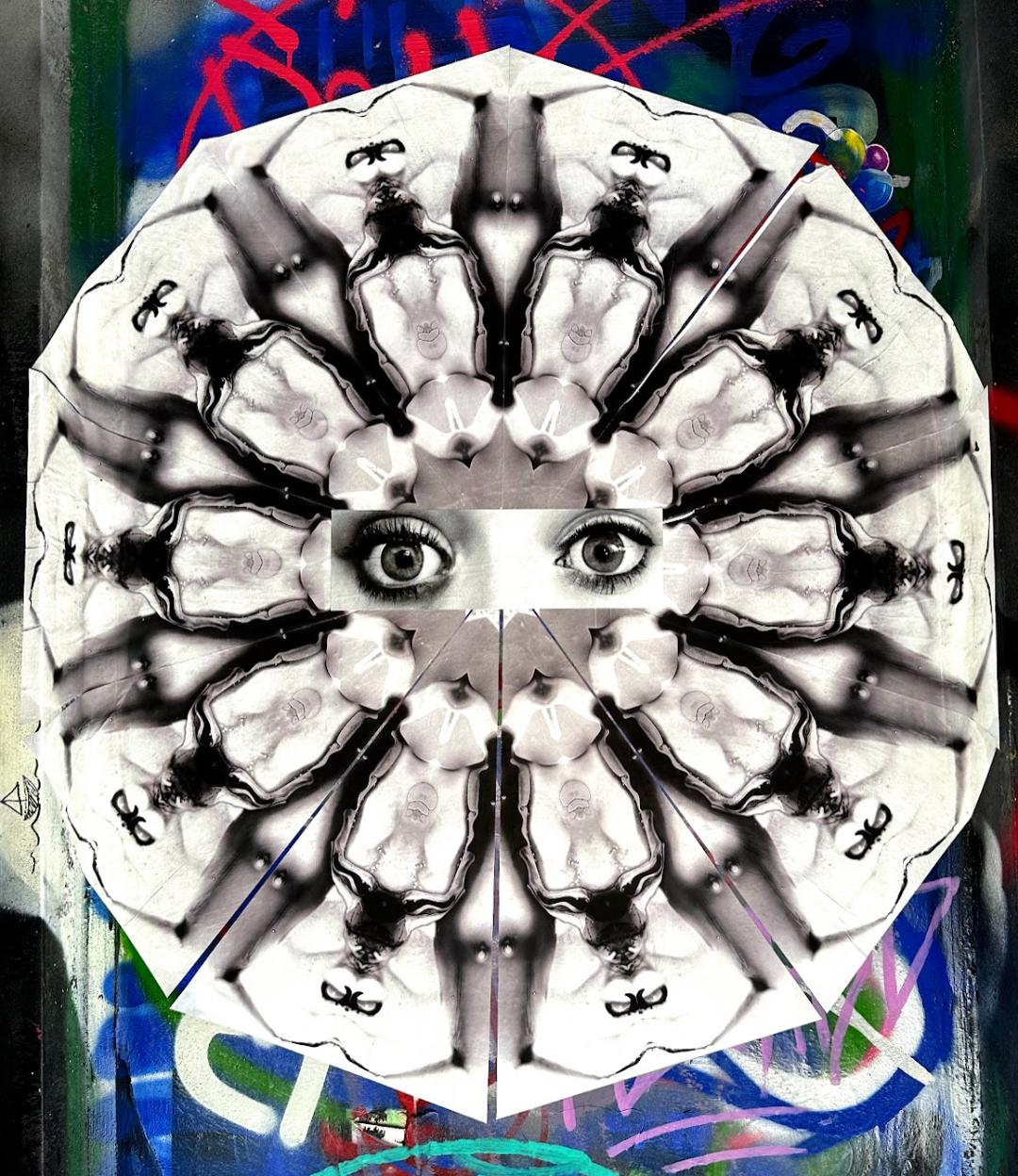
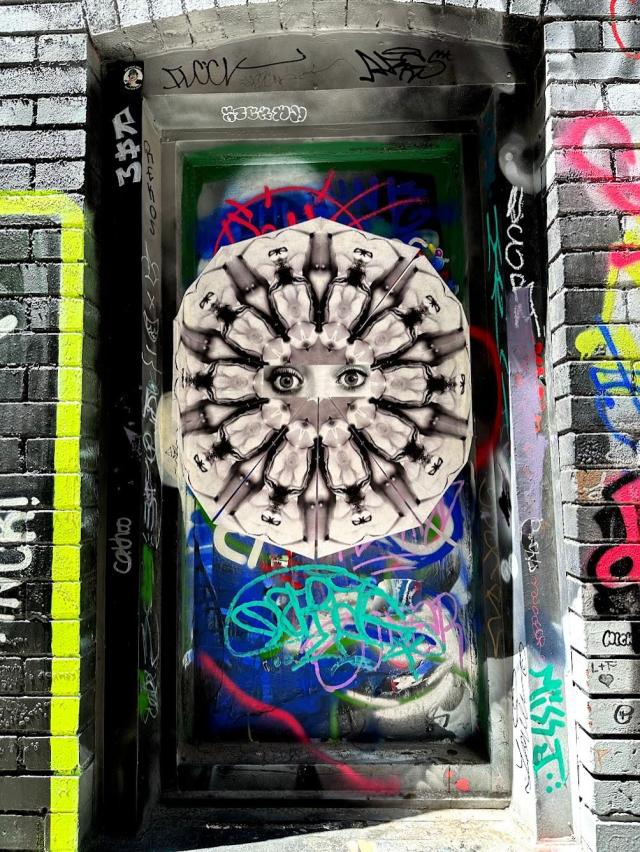
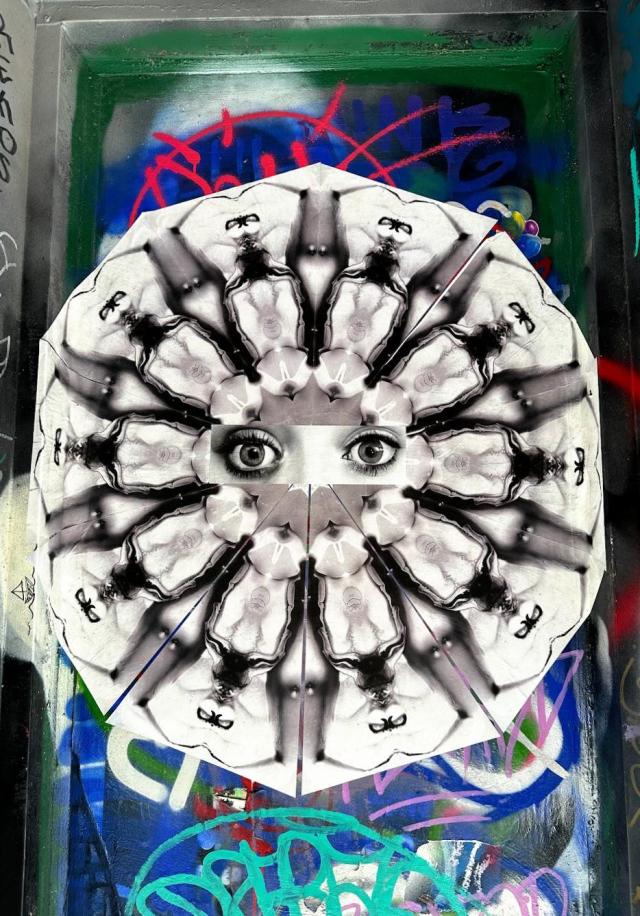
It was upon finding this mandala-ish paste-up with eyes in the centre, that I considered a mandala theme post, and dedicating it to Graham.
Better, why not involve him?
I asked, he agreed and said “Looking forward to seeing your collection of street mandalishes + 1 gowndala.”
Wait until you see this “Gowndala”!
Mandala-ishes Collection
We chat with Graham as the collection is shown.
Resa – What drew you into making your gorgeous mandalas?
Graham – The intricately beautiful sand mandalas created by Tibetan Buddhist monks have long fascinated me. After spending days laboriously creating those wonderful designs, with great non-attachment the monks sweep away the sand in an act symbolic of Impermanence.
Resa – That is of keen interest to me, as the ephemerality of street art is what drives me to it.
Graham – So, about seven years ago when I happened to come across some mandalas online created from digital photographs, the thought arose that that could be a fun thing to try. The best part turned out to be being able to lose yourself in the creative process.
Graham – That applying orders of rotational symmetry to various real-life scenes of nature, architecture, and so on, should give rise to such an endless variety of outcomes is also rather satisfying. And then there is the aspect of pareidolia — it can be fun looking for unexpected forms such as faces created by the new alignments of the rearranged slices of reality.
Graham – Digital mandalas may seem to be more durable than their Tibetan sand counterparts, but at some stage they too will, inevitably, be long forgotten. At another level, and as with any image on the web, their existence is only fleeting — being reborn each time the page is viewed and then dissolving back into emptiness when the viewer clicks away…
Resa – You pair quotes with your mandalas.Are the quotes you pair with your mandalas inspired by the mandala? ie: you have the mandala then search for a quote that works, OR do you have a quote and then are inspired to make the mandala to go with it?
Graham – Actually, neither! This part of the process is surrendered to chance. When it comes to drafting a post, the mandala just gets paired up with the next unused item from my collection of quotes. Sometimes they complement each other, sometimes they contrast, and at other times there may seem to be no apparent connection — the unpredictability of the random juxtaposition is a bit of fun, with echoes of the “cut-up” technique of Dadaism.
Resa – Oooo, I love that!
Resa – Do you purposely take a photo of something because it will make a fab mandala?
Graham – Rarely. In practice I tend to review all the shots afterwards when editing a series of photographs and select one or two of any that might be suitable.
I began looking for mandala-ishes everywhere, indoors and outdoors.
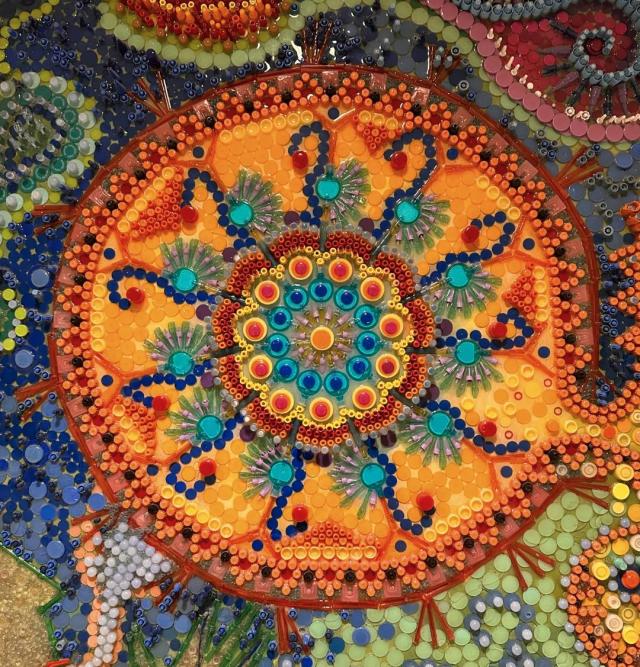
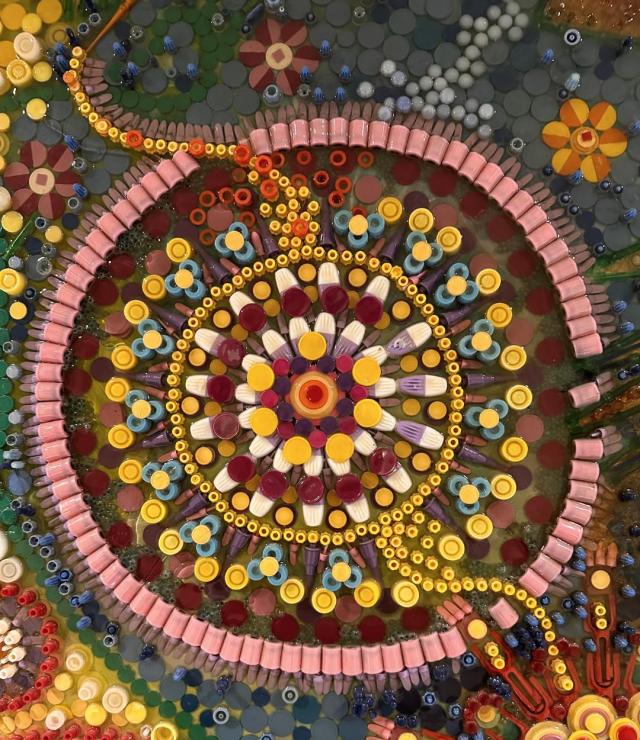
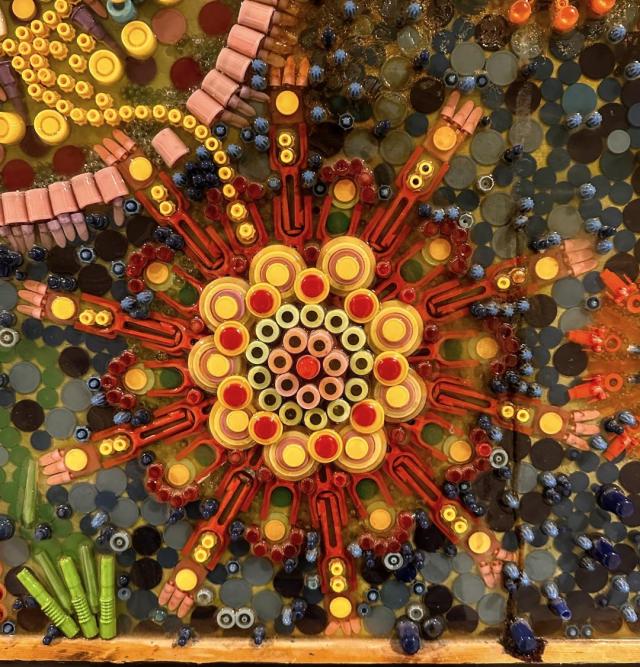
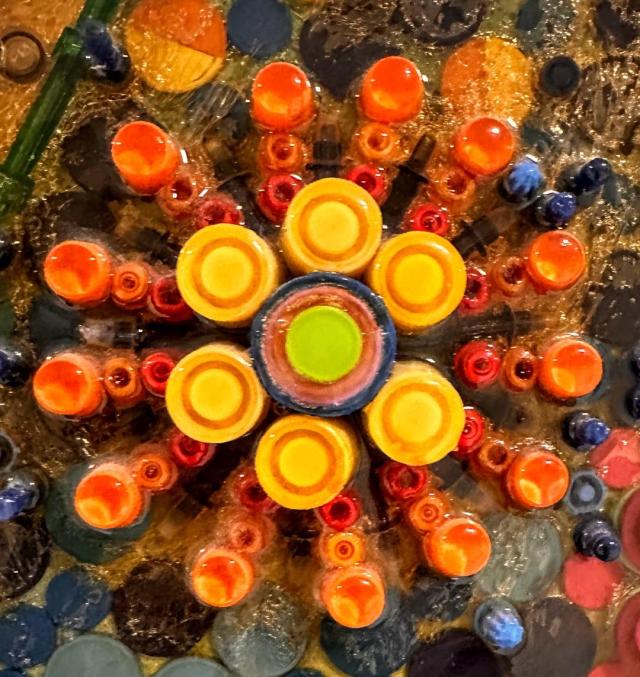
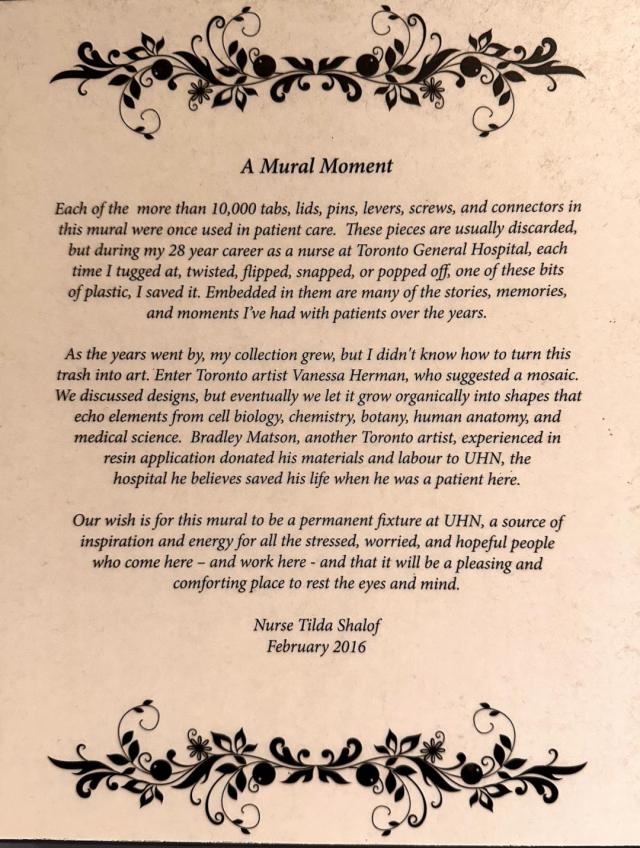
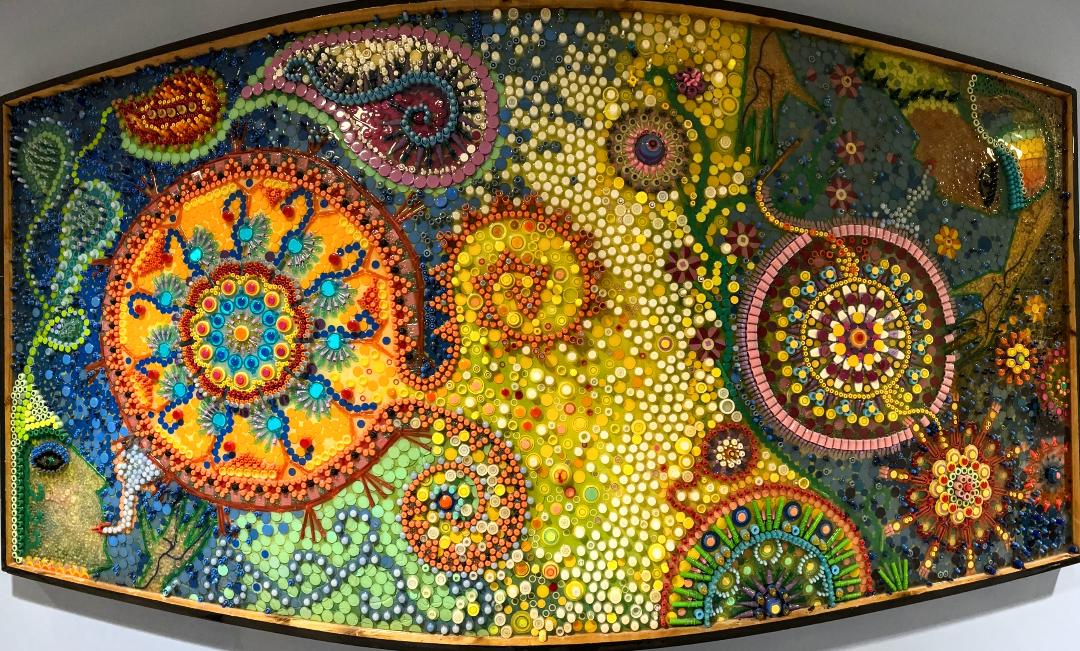
I have unfortunately been visiting a friend at the Toronto General Hospital over the last couple of weeks. In the hallway is a Mosaic Mural made from 10,000 tabs, lids, pins, levers, screws and connectors collected over 28 years by nurse Tilda Shalof.
Within the mosaic are several mandala-ishes . Those, and information on the mosaic can be seen in the slide show above. Below is the entire piece.
Très ishmandala-ish
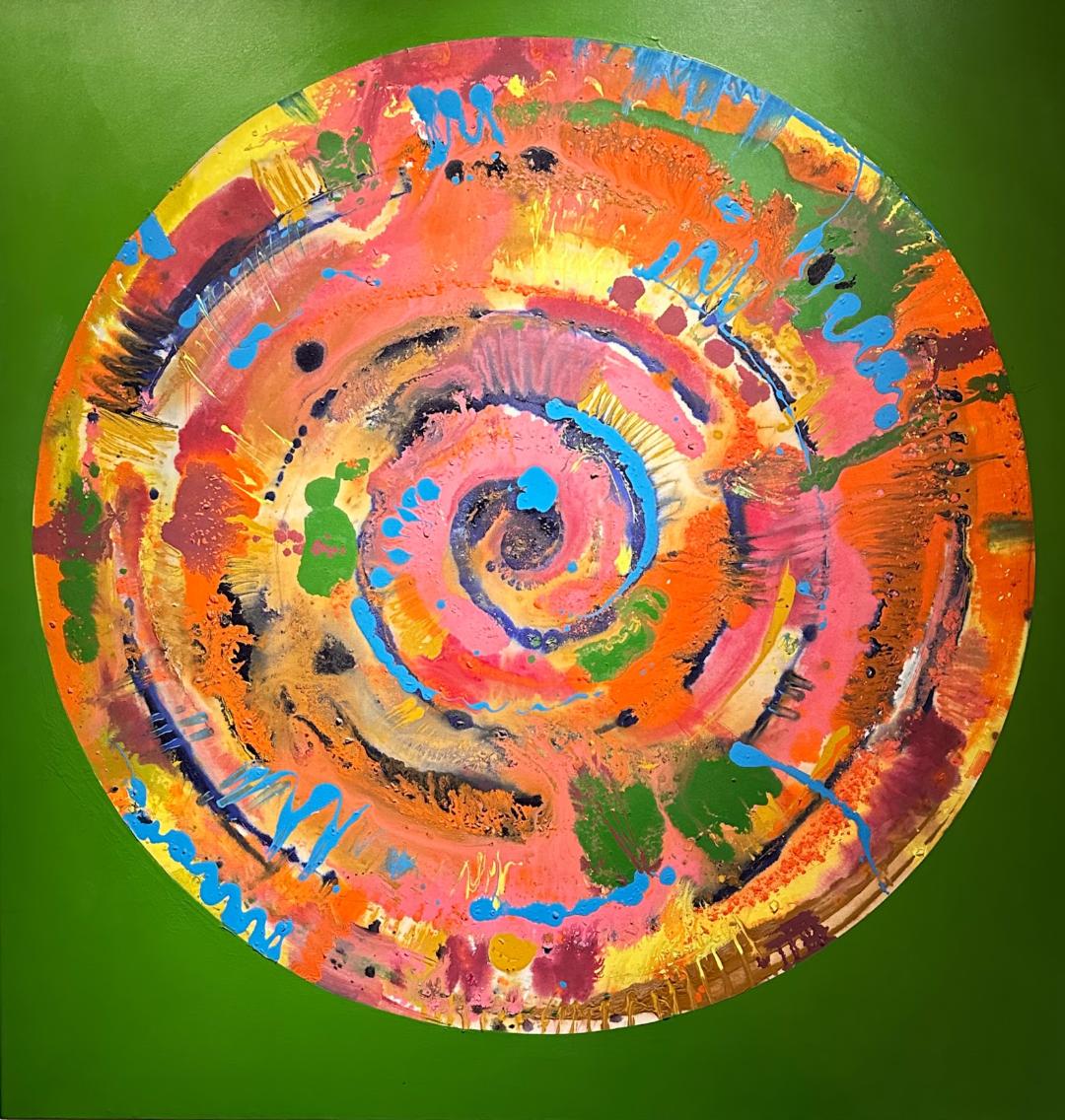
Colour Swirl – Acrylic on Canvas – 1968
The above work of art by Gordon Rayner was hanging in a random hallway, in a converted warehouse/factory filled with artsy retailers.
The Most Beautiful Mandala … Ever!
Lilac Fan Dance is Thunder’s (aka Dale) dedicated Art Gown.
Thinking the texture and colours would make a cool Mandala, I sent 3 pics of her to Graham.
He chose the first one saying,
Graham – “as that one had a nice bit of plain background to the left to create a bit of negative space around the result.”
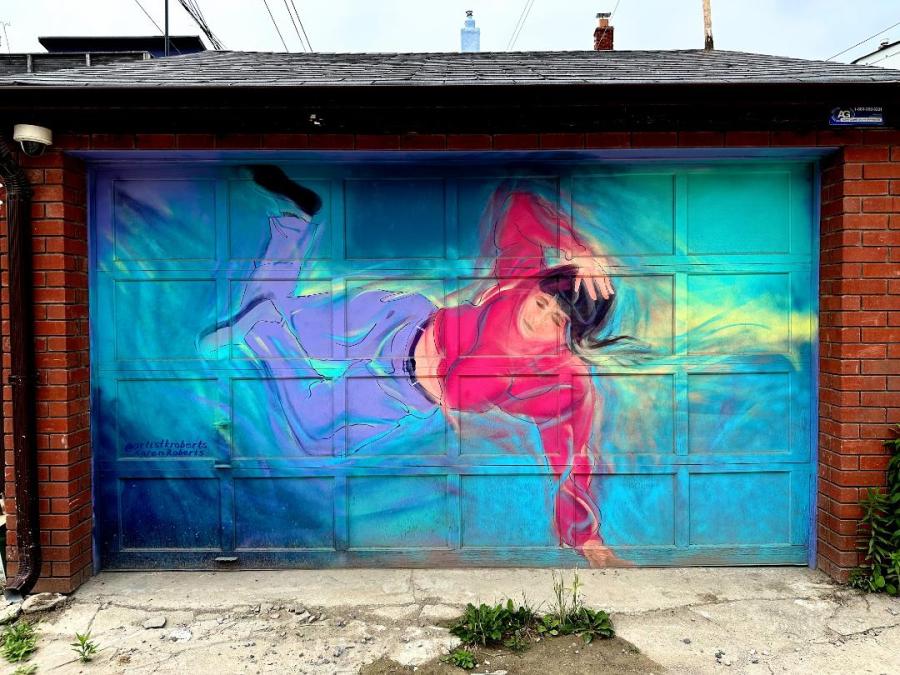
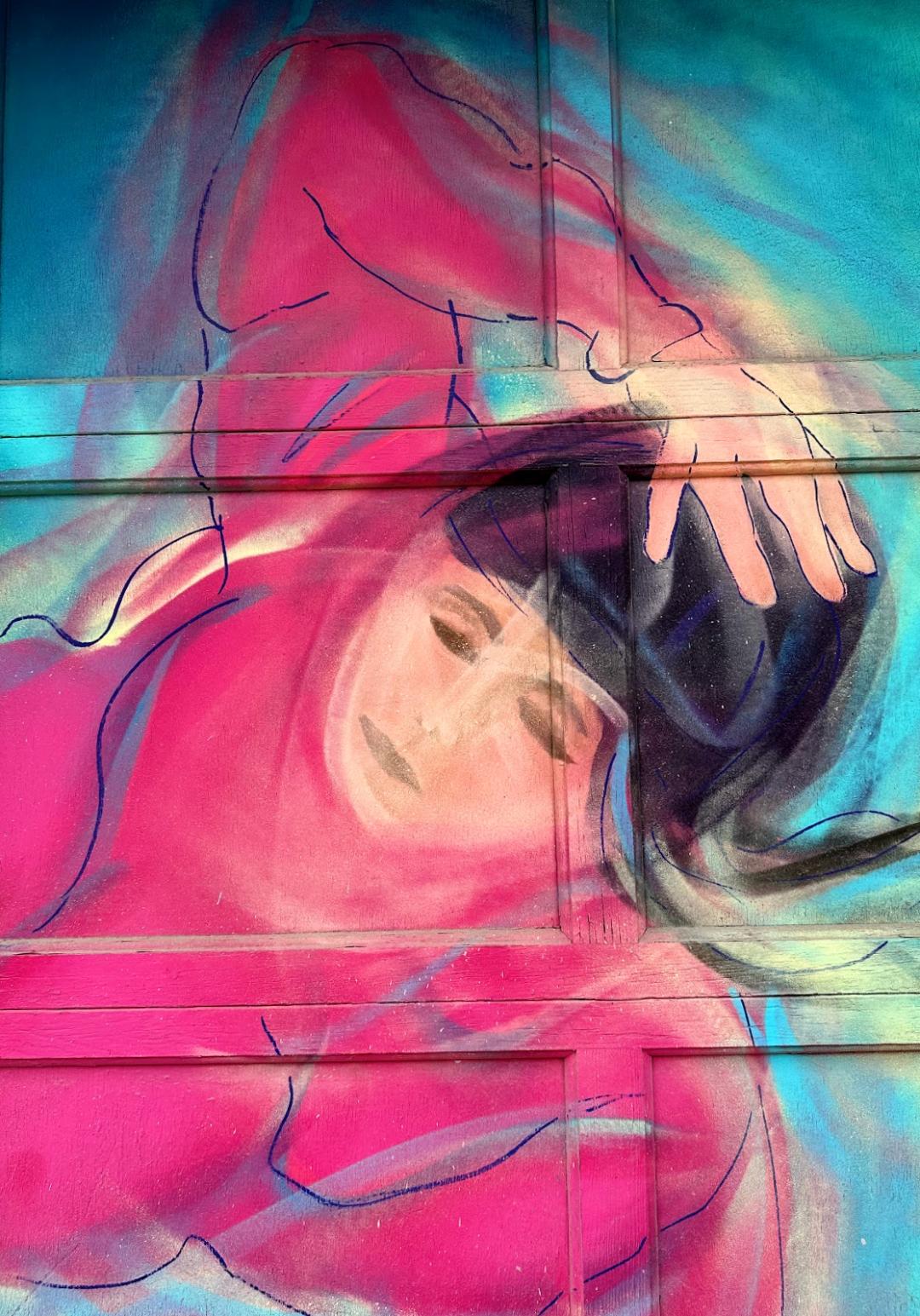
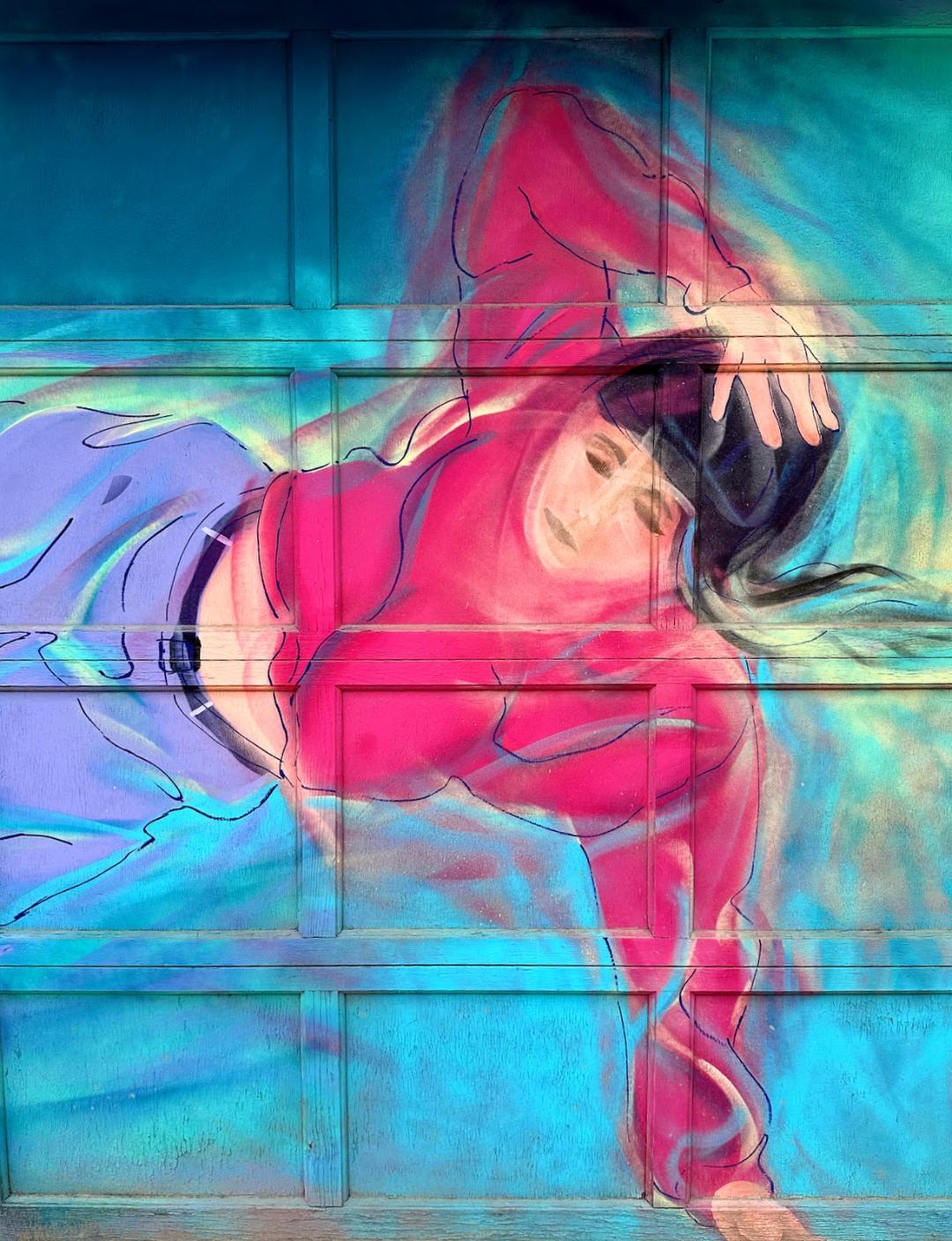
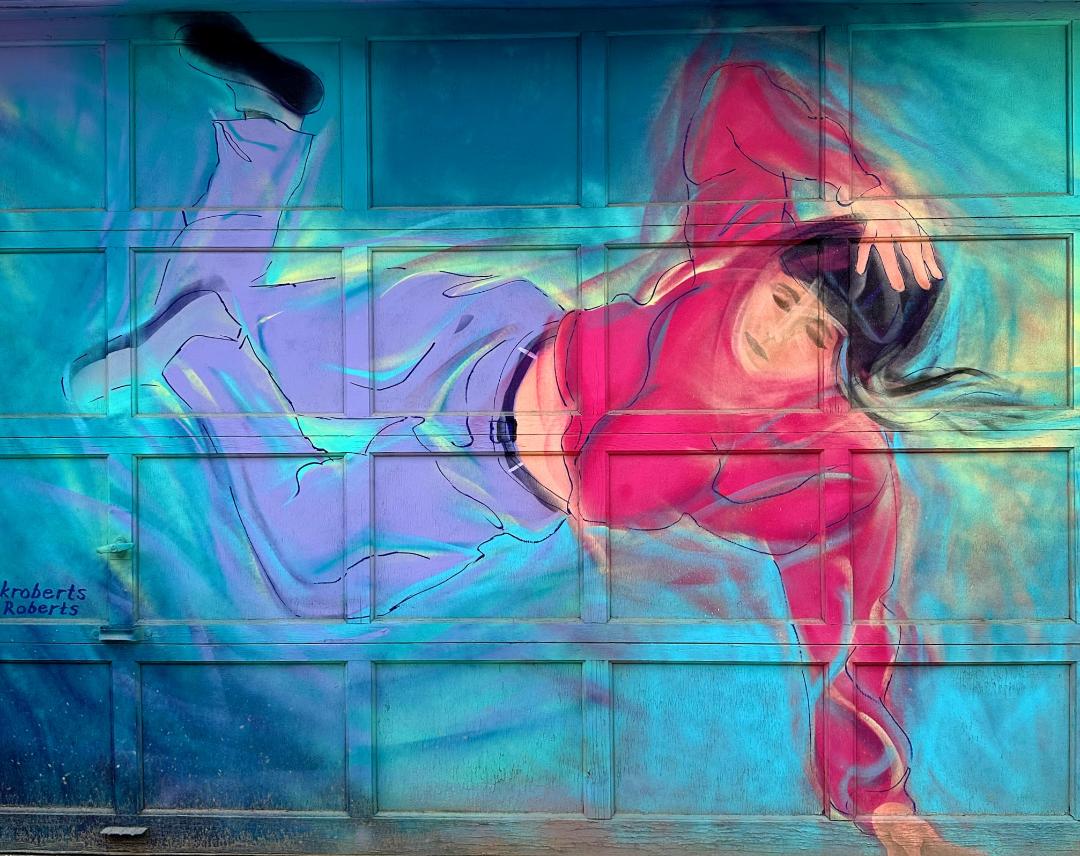
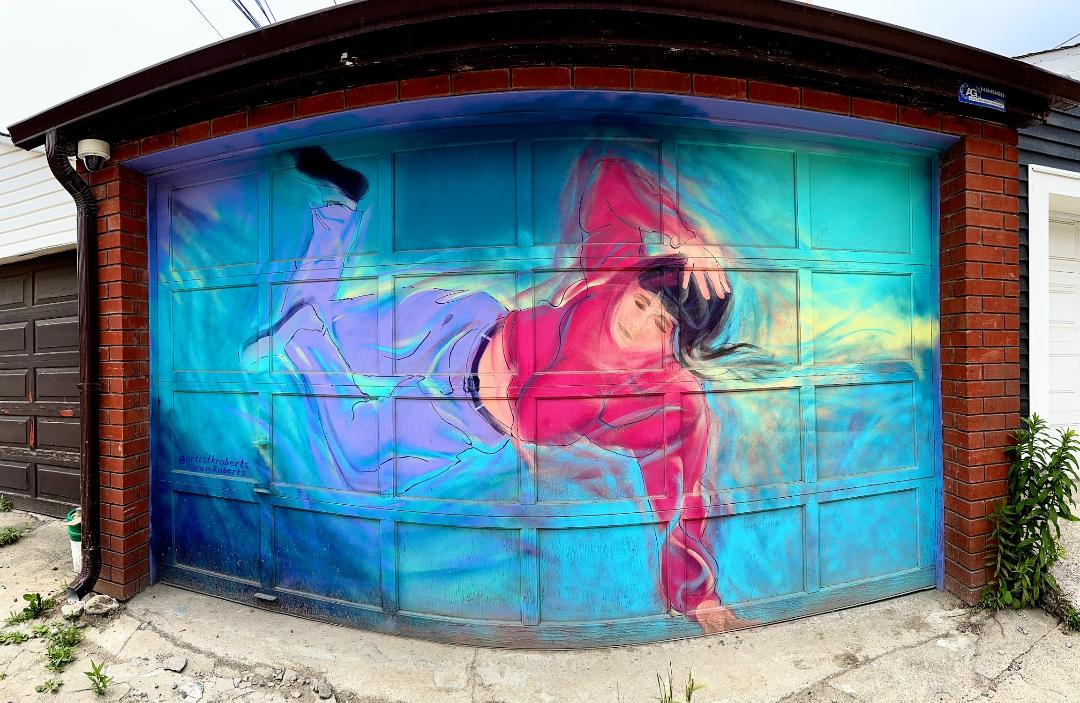
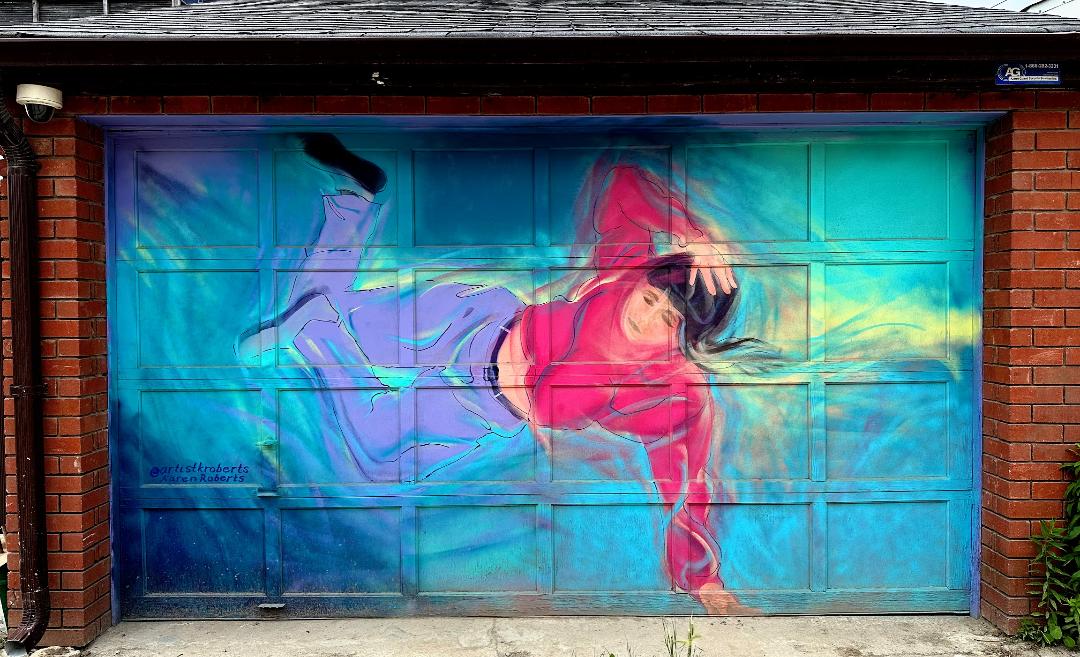
Resa – That image is like me & many …blogging, trying to keep up.
Yvette – That really could apply to blogging, and keeping up during a busy season.
Yvette – I also think it could apply to life – and just enduring a challenging season. There is a certain contentment I feel in that art – with a certain suffering or enduring and I think in another way there might be a hint of performance burnout – ?
Resa – I also think it can apply to life.
Yvette – Especially when you see the full photo – or is that part of the contentment feel- the balancing on one arm and the placement of that other arm is a bit athletic, sure, strong, poised, and in motion – and that adds to it.
Yvette – Oh and the other elements/principles in that photo street art – we have the soft blue going across the body into the green – giving us this horizontal split that syncs with the body – other line designs stand out – like the hair being in sync with the background and other line design.
Yvette – And you know, the legs stood out on the third look – that is a strong pose – to be sideways – are those “eagle” legs? either way – that is why this feels strong and poised and enduring –
Resa – Thank you, Yvette! What a wonderful interpretation of this piece of art.
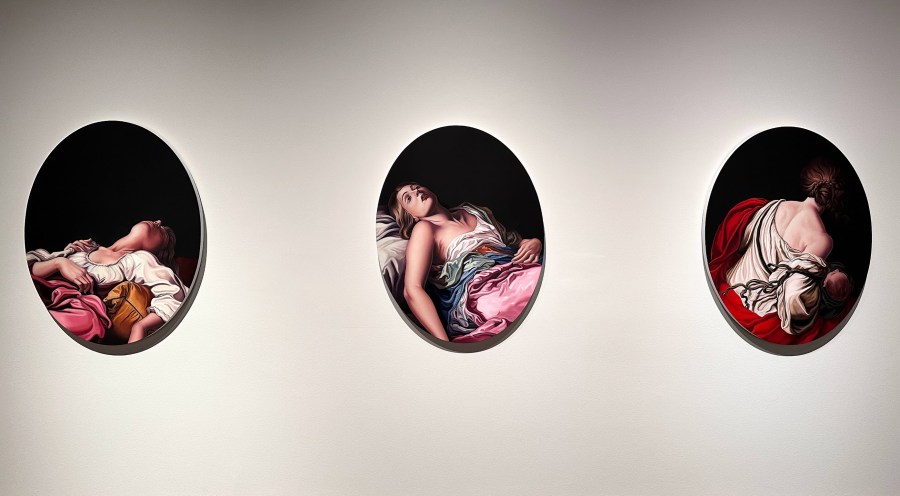
“Reworking familiar imagery is just my way of giving history a second look.” – Jesse Mockrin
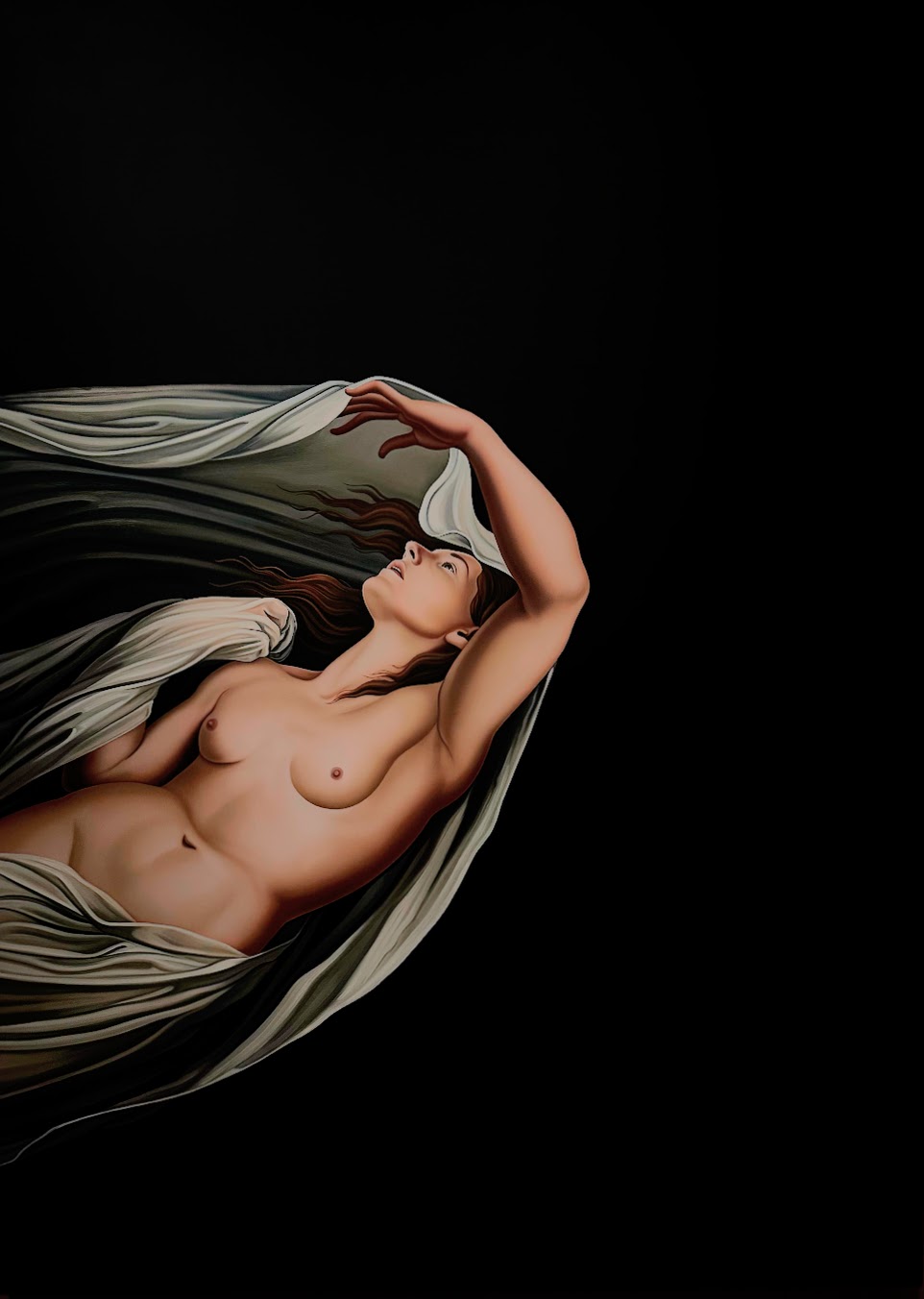
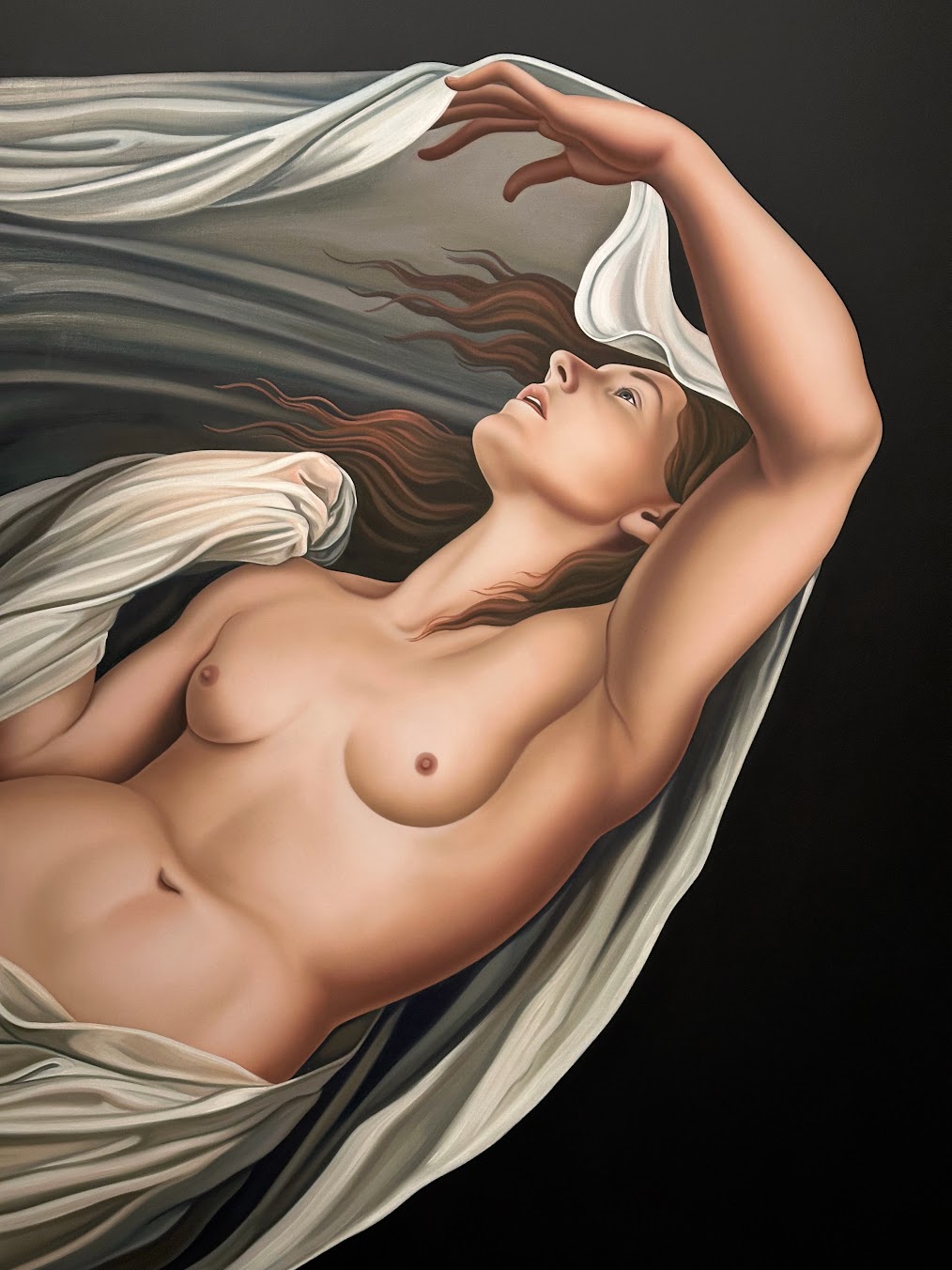
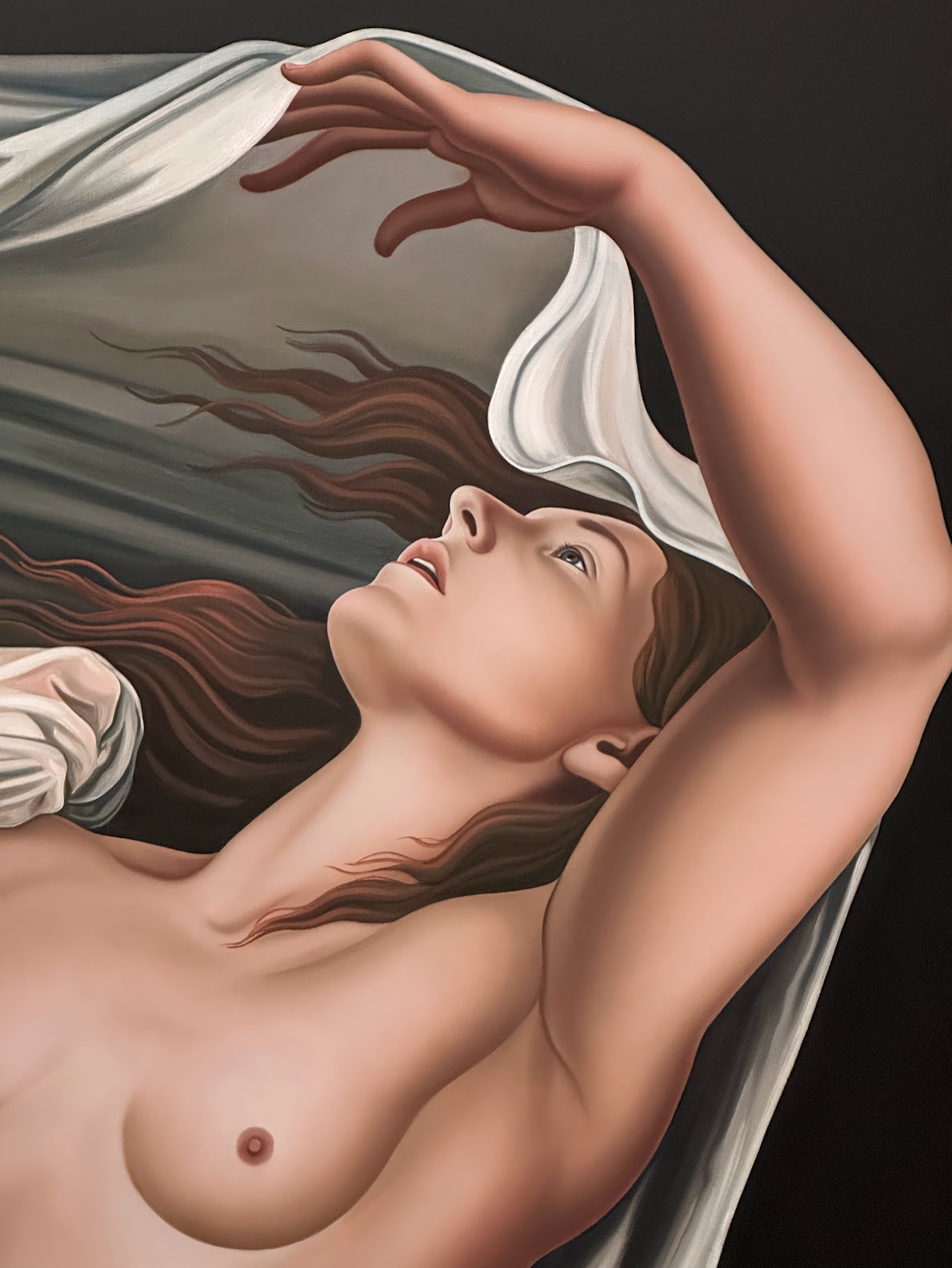
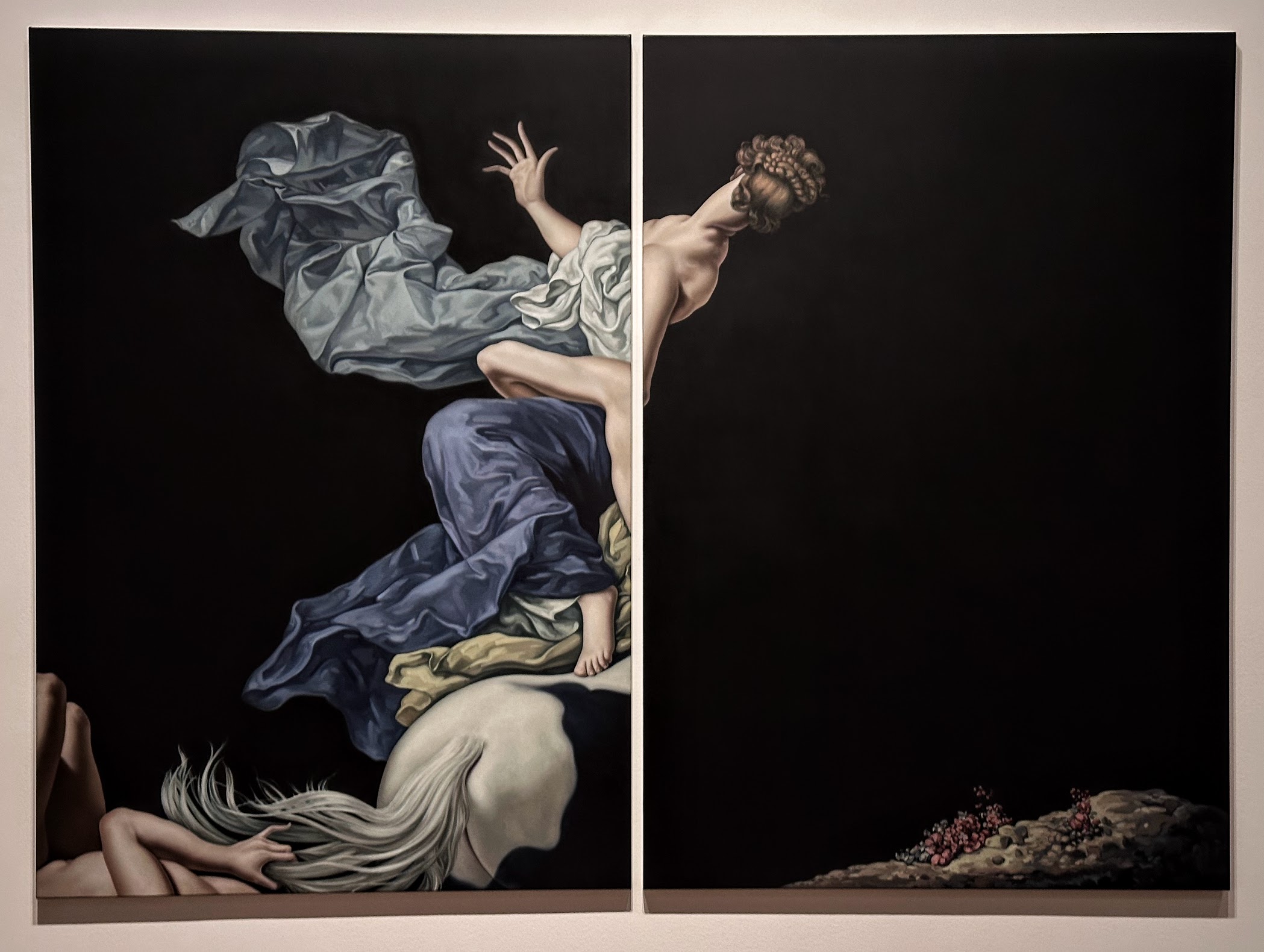
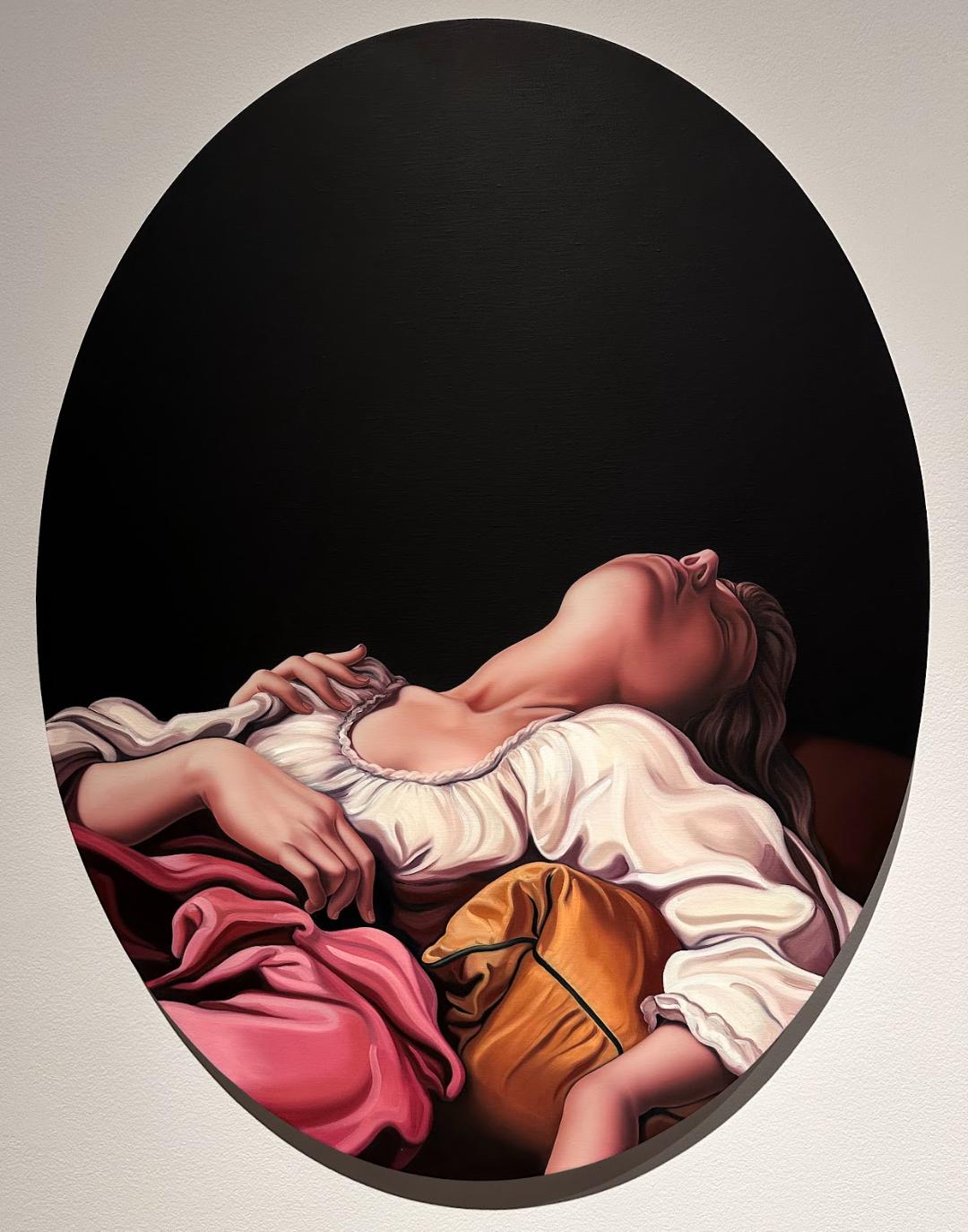
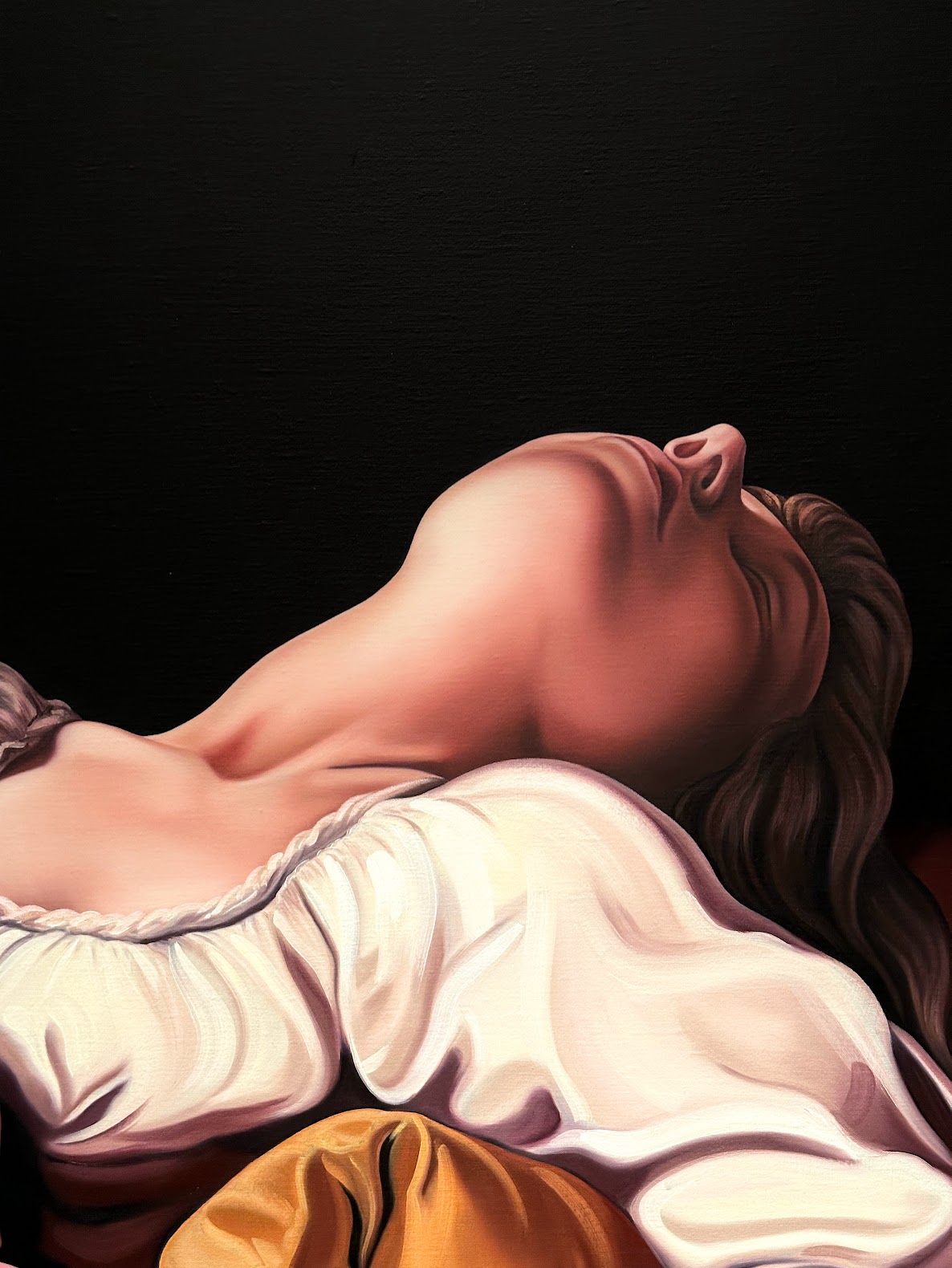
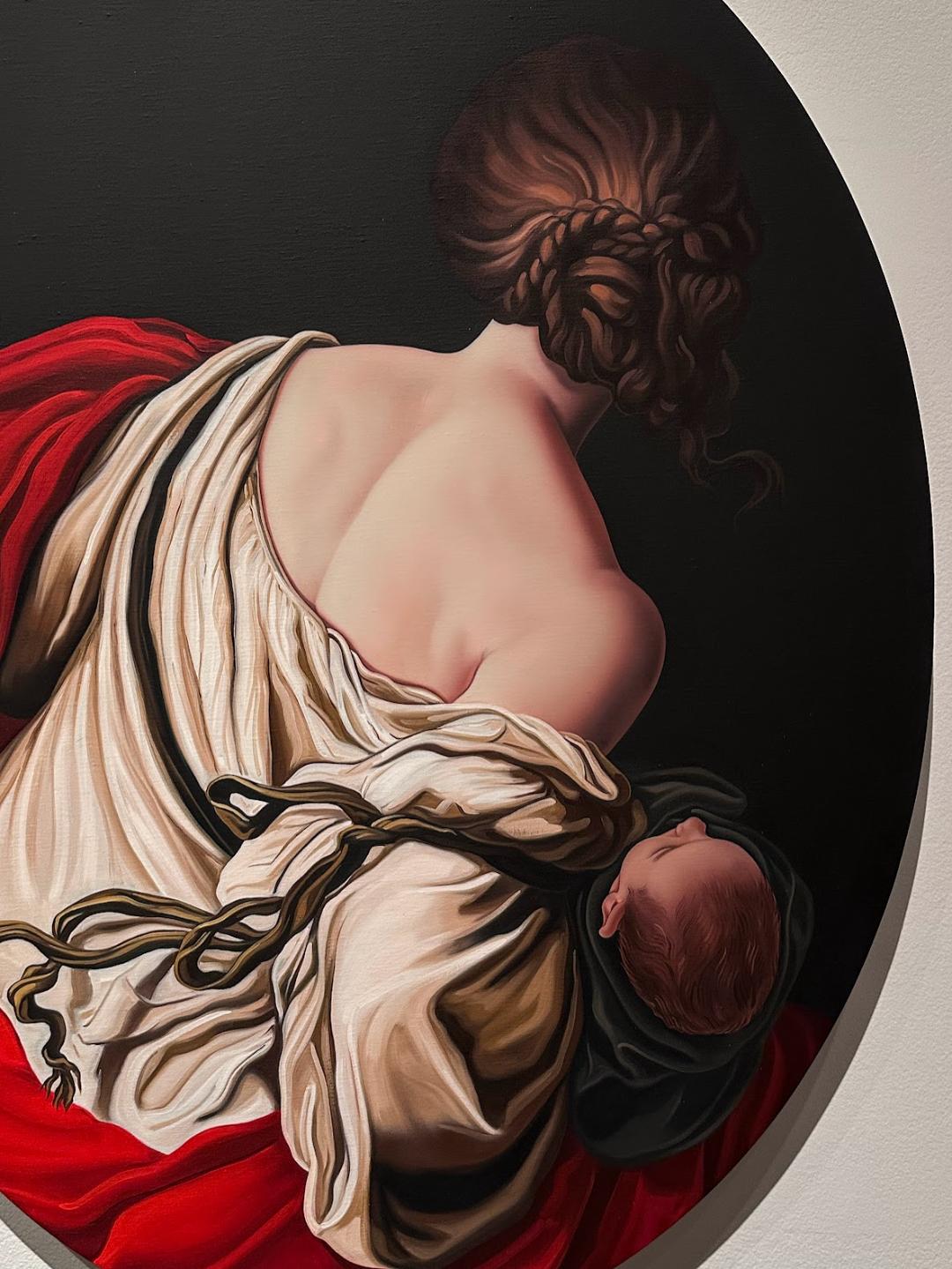
Only Sound Remains – oil on linen
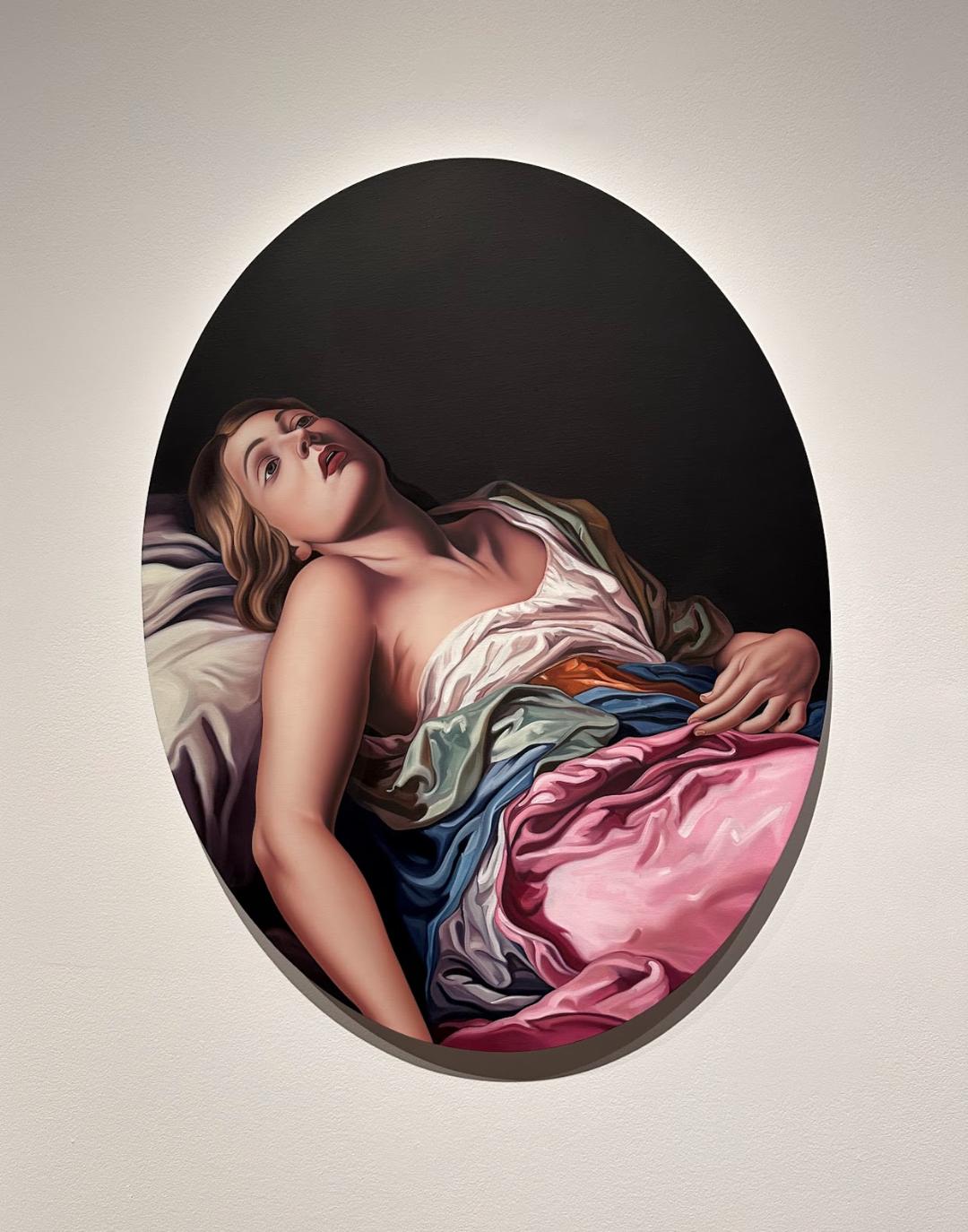
Based in Philadelphia, this artist examines Renaissance and Baroque artists’ art, with an eye on the survival of traditional narratives and beliefs in contemporary society. She then intervenes with her own modern canon.
Jesse Mockrin’s paintings “respond to histories of sexual violence and cruel treatment of women over millennia of myth and story, offering interventions and moments of resistance.”
Collectively, the paintings in ECHO highlight “an ongoing battle for bodily autonomy”.
The above painting is based on the Greek and Roman myth of Echo and Hera.
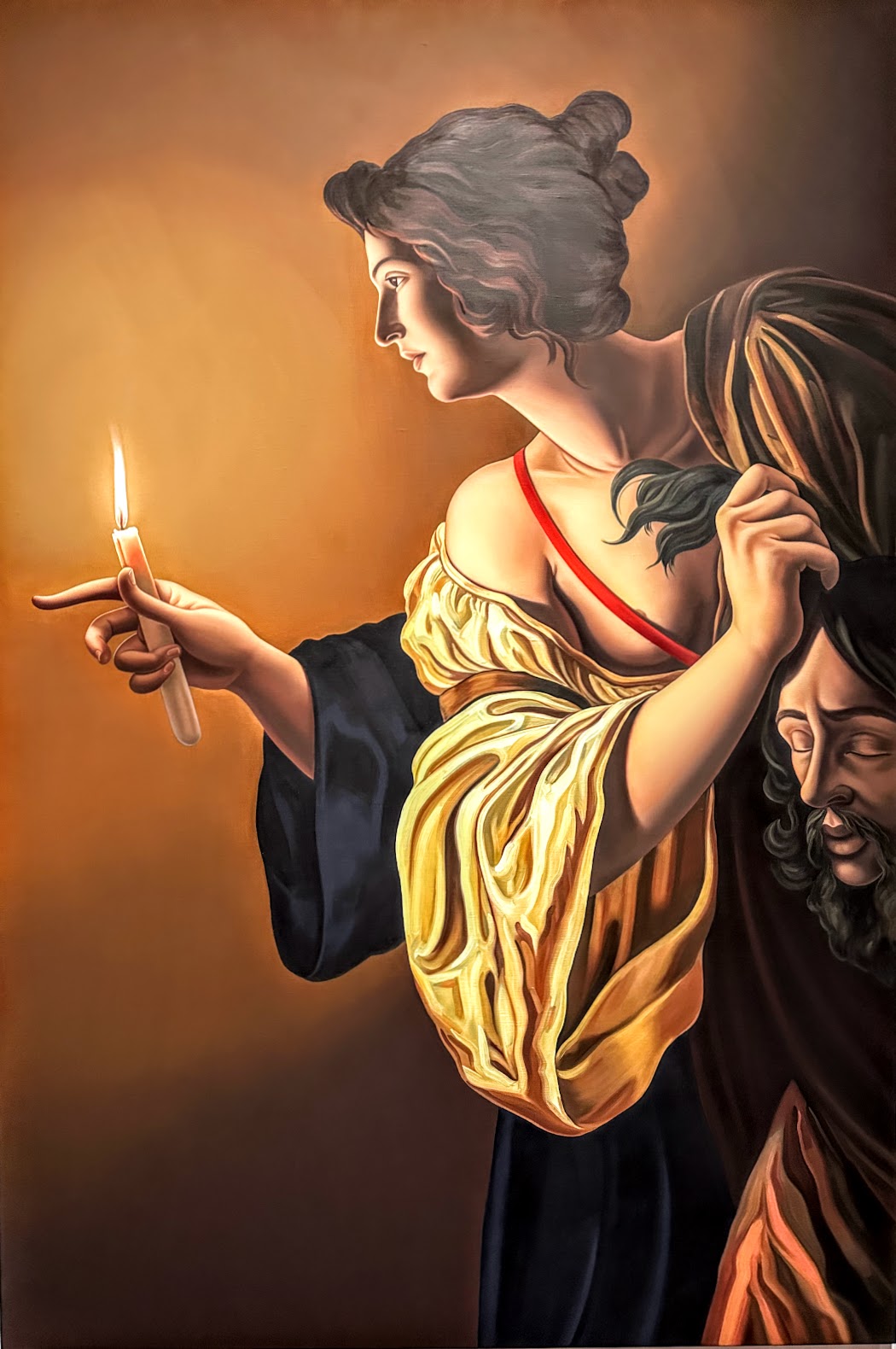
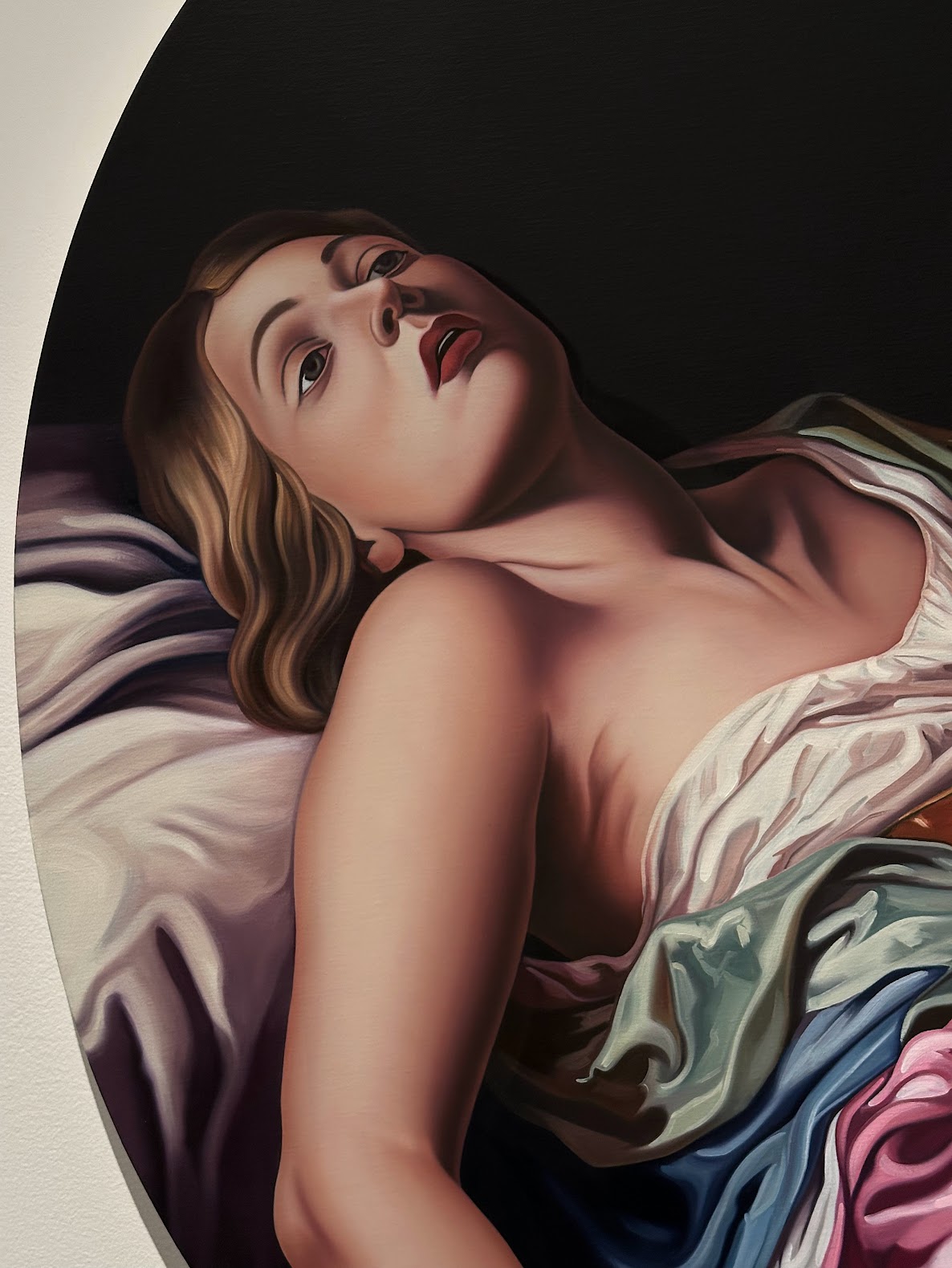
By Her Hand – oil on linen
The biblical widow and heroine, Judith, beheads Assyrian General Holofernes and saves her people. This was a popular subject for artists in the 15 & 1600’s due to the “stark contrast between Judith’s femininity and the aggression of her violence.”
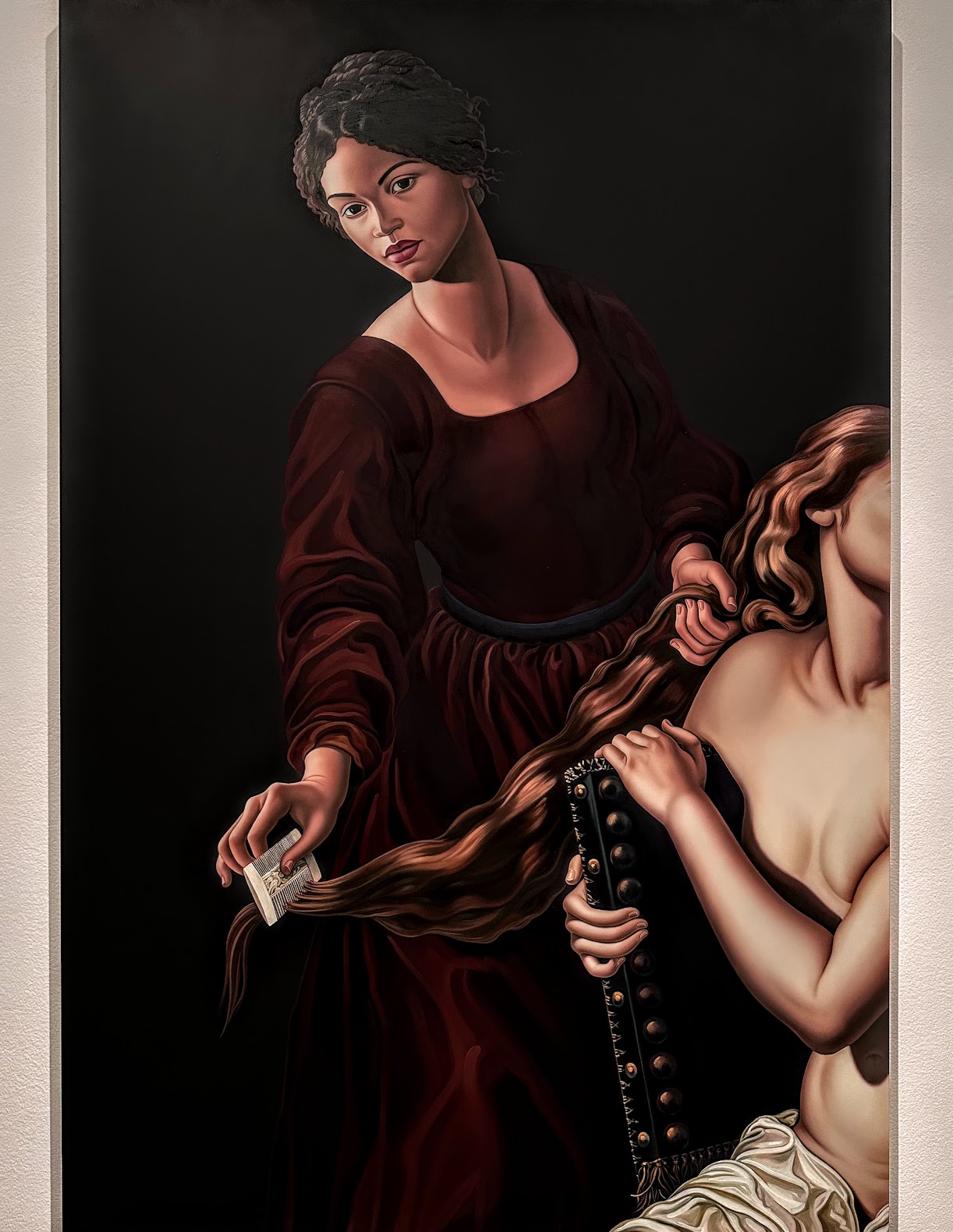
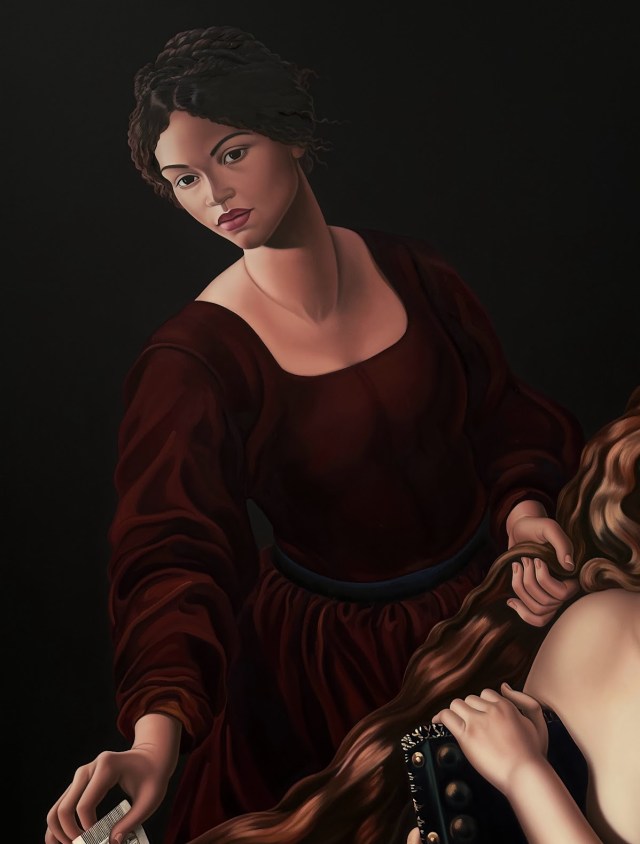
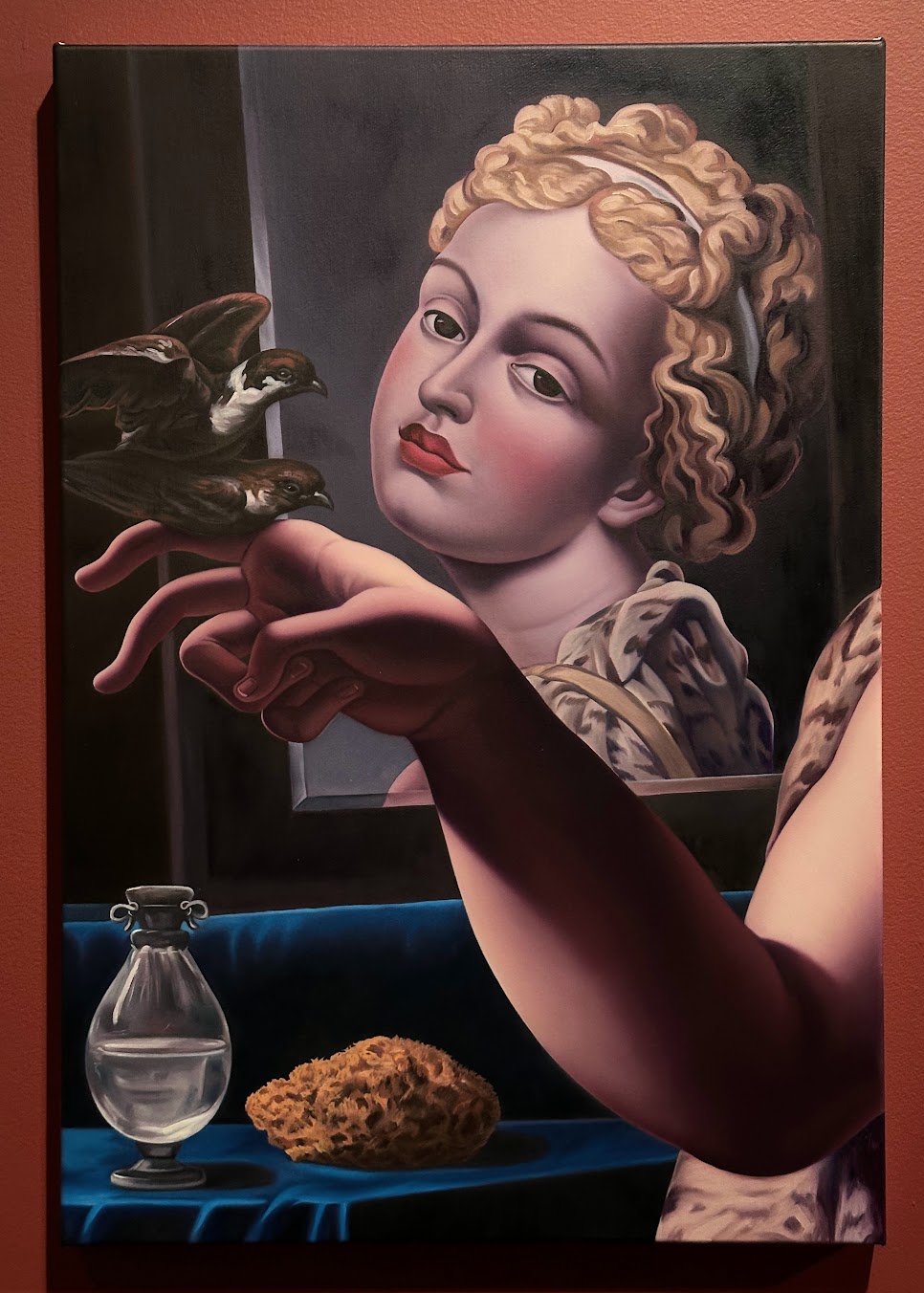
Behold/Beholden – oil on linen
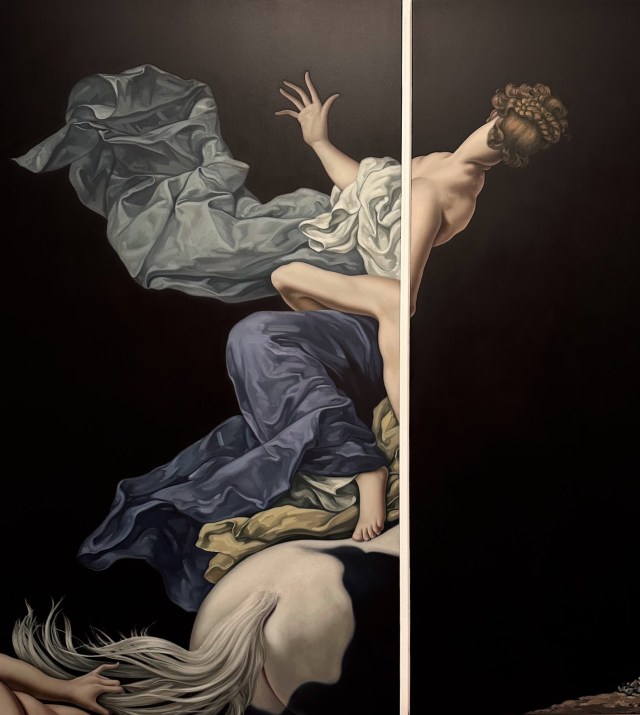
Mockrin builds up thin glazes of oil paint, a European Renaissance developed technique. “she crops her composition sharply, hiding critical elements of a story and leaving conflict unresolved.”
Unvarnished, her paintings have an eerie flatness.
In mid-stream – oil on canvas
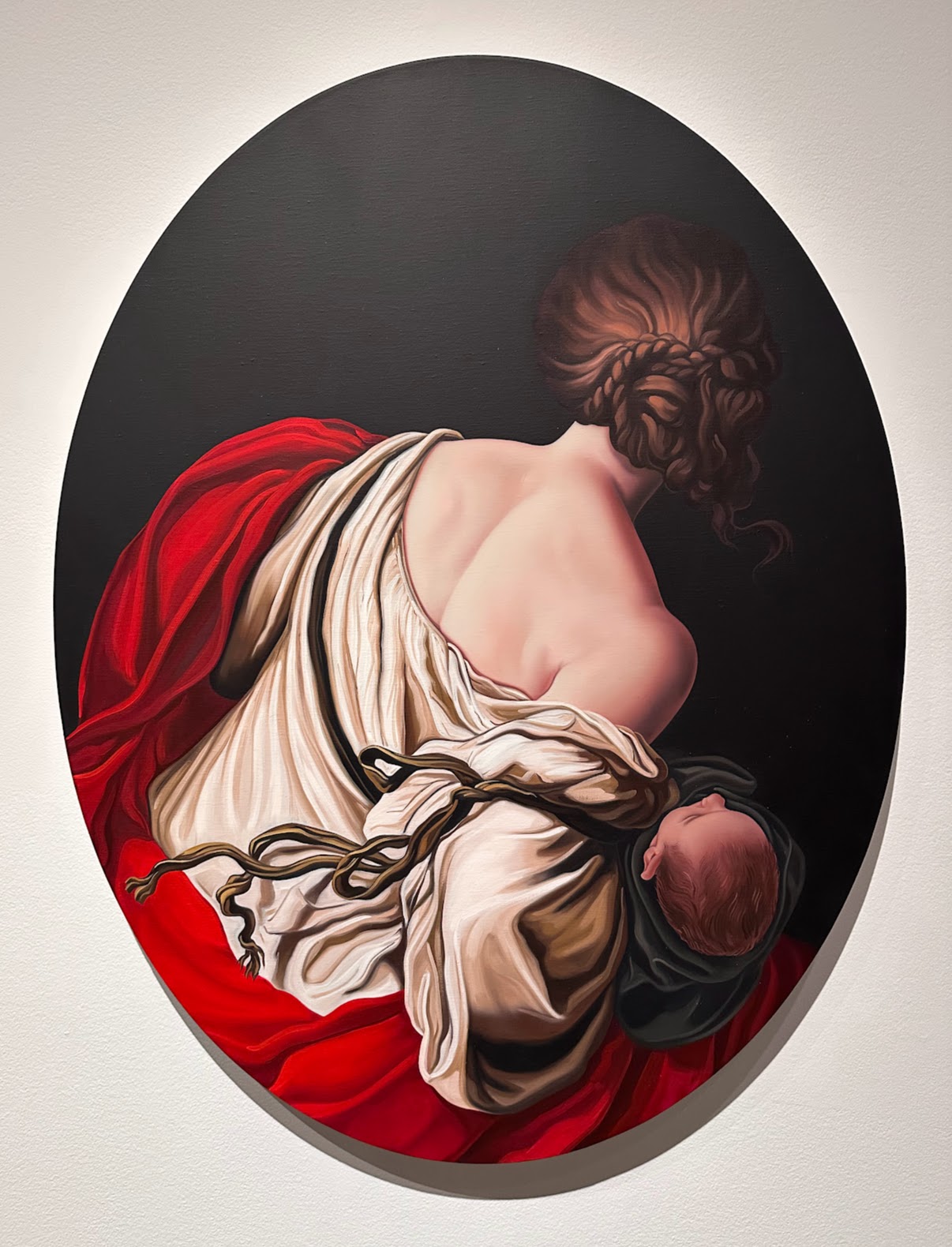
“Grasping, pulling, lifting …. I am drawn to the ways that Baroque painters build drama and tension into their compositions.”Jesse Mockrin
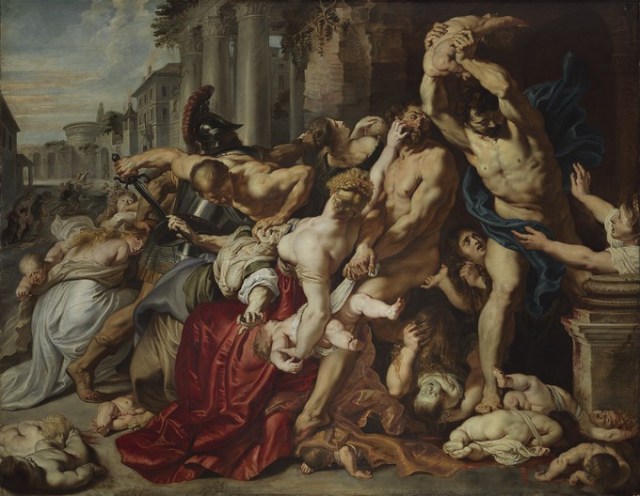
Based on Ruben’s The Massacre of the Innocents, the woman in the right panel is based on one of the mothers protecting her children.
Painted circa 1610, The Massacre of the Innocents resides in the AGO’s collection. The photo on the left is an allowable share from the AGO. Click on the image to visit the page, and a larger version of the masterpiece..
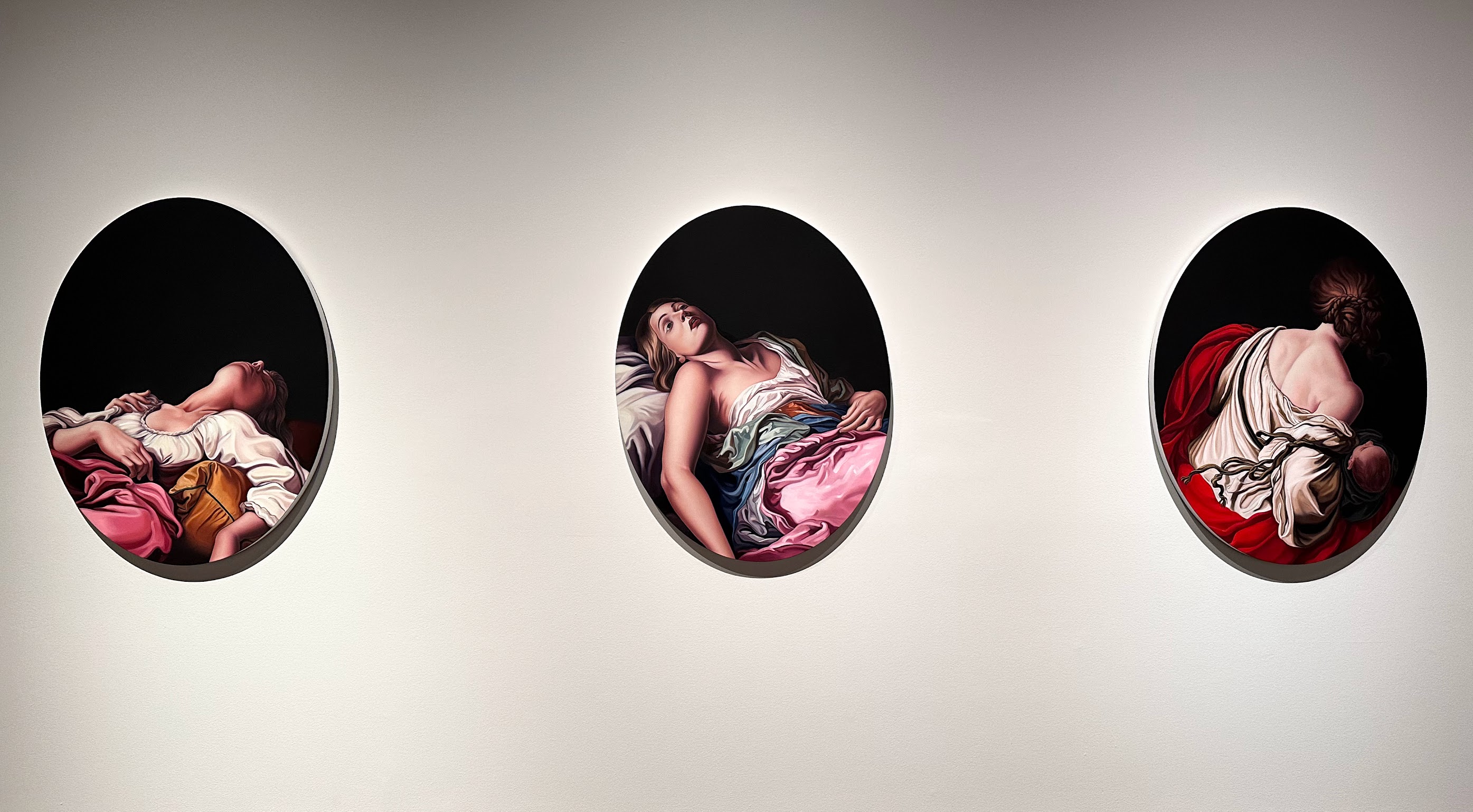
In the Book of Genesis – Rachel and Leah were both married to Jacob.
Leah had many children. After many years of yearning to be a mother, Rachel had 2 sons. She died giving birth to the second child.
Longing – oil on linen
Lovesick – oil on linen
A cry is heard – oil on linen
“It’s very emotional and very real, her longing for a child and then her tragic death as a result of it.”
“We think we’re not that similar to these characters, but they were just people, same as us.” – Jesse Mockrin
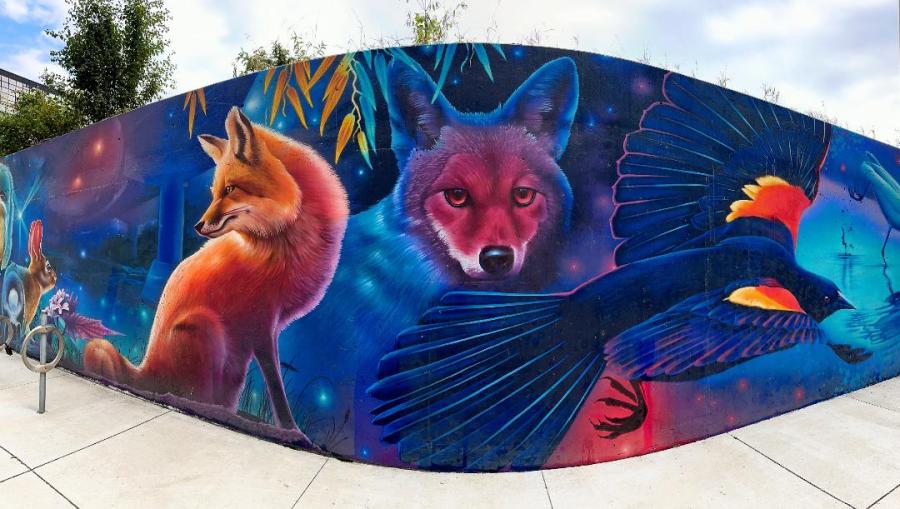
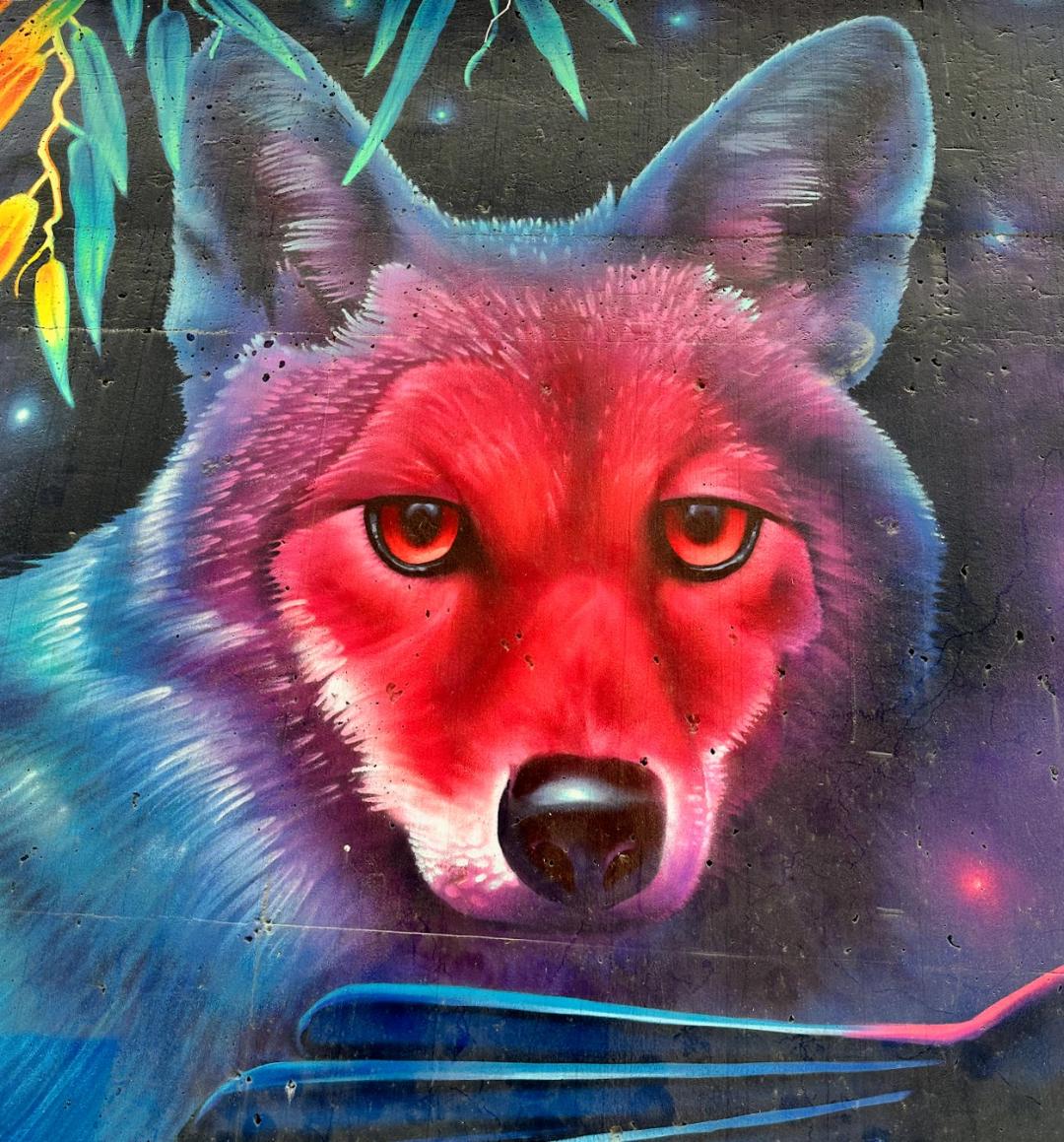
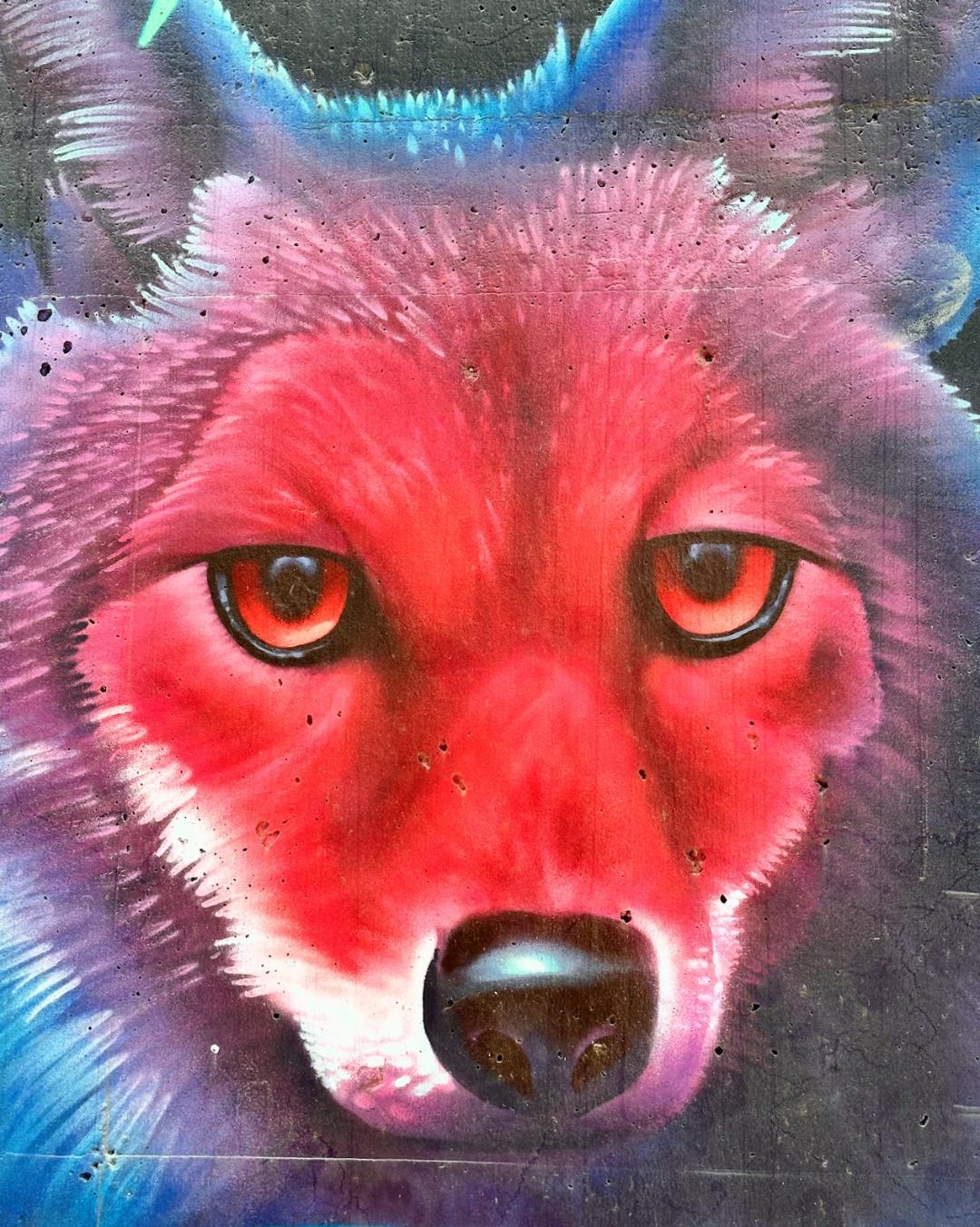
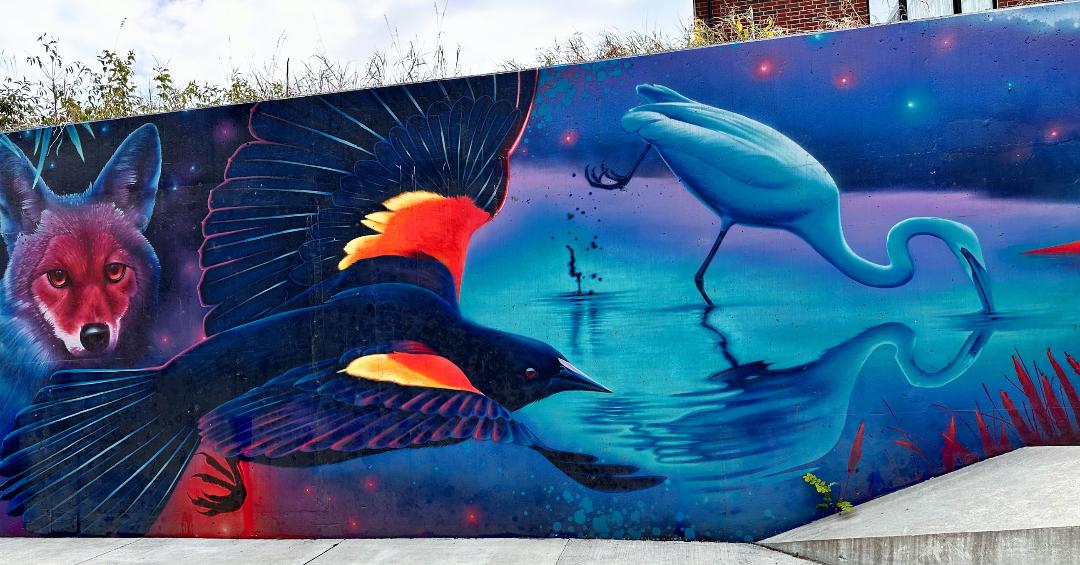
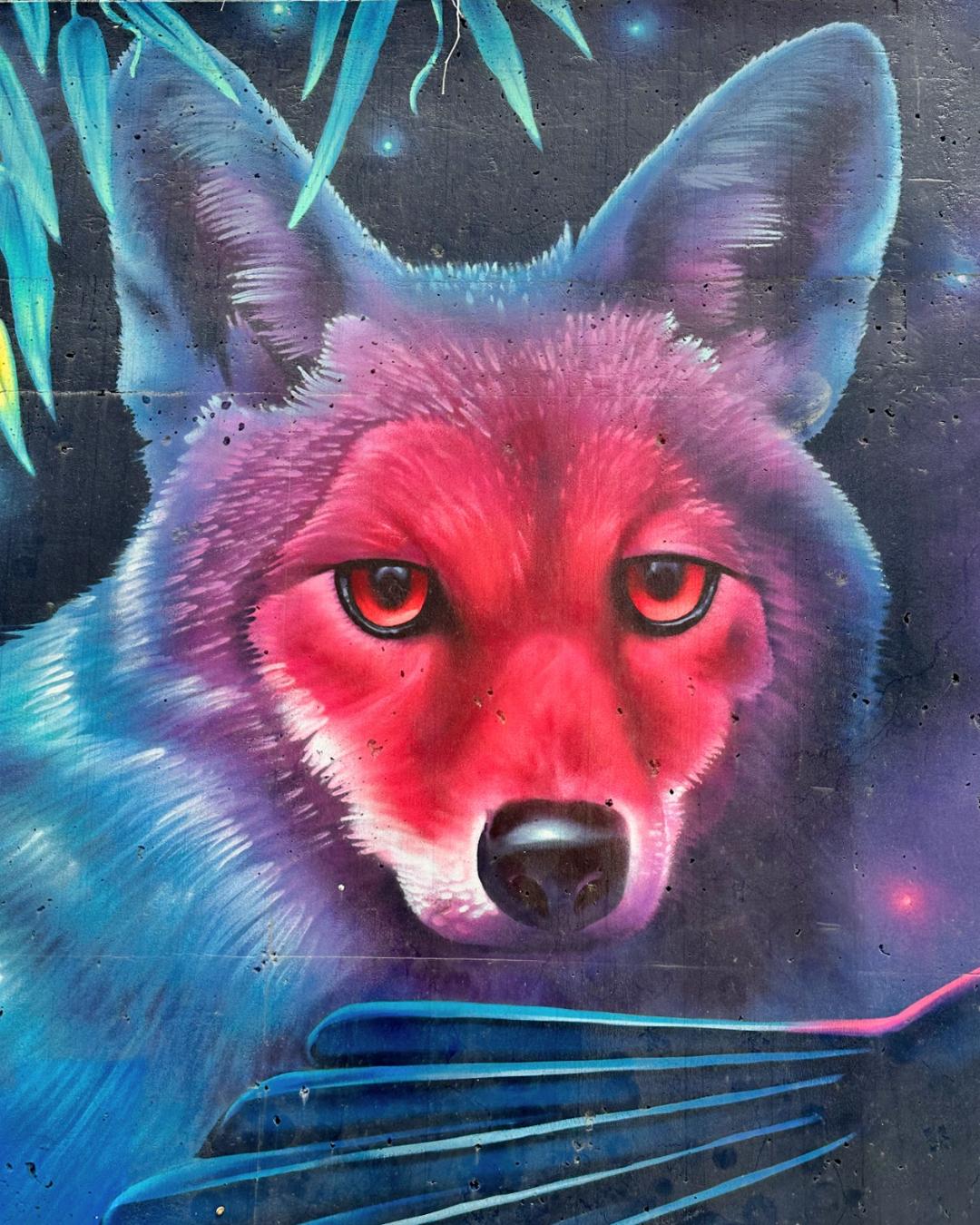
Okay, I thought this was a wolf, but turns out it’s a coyote.
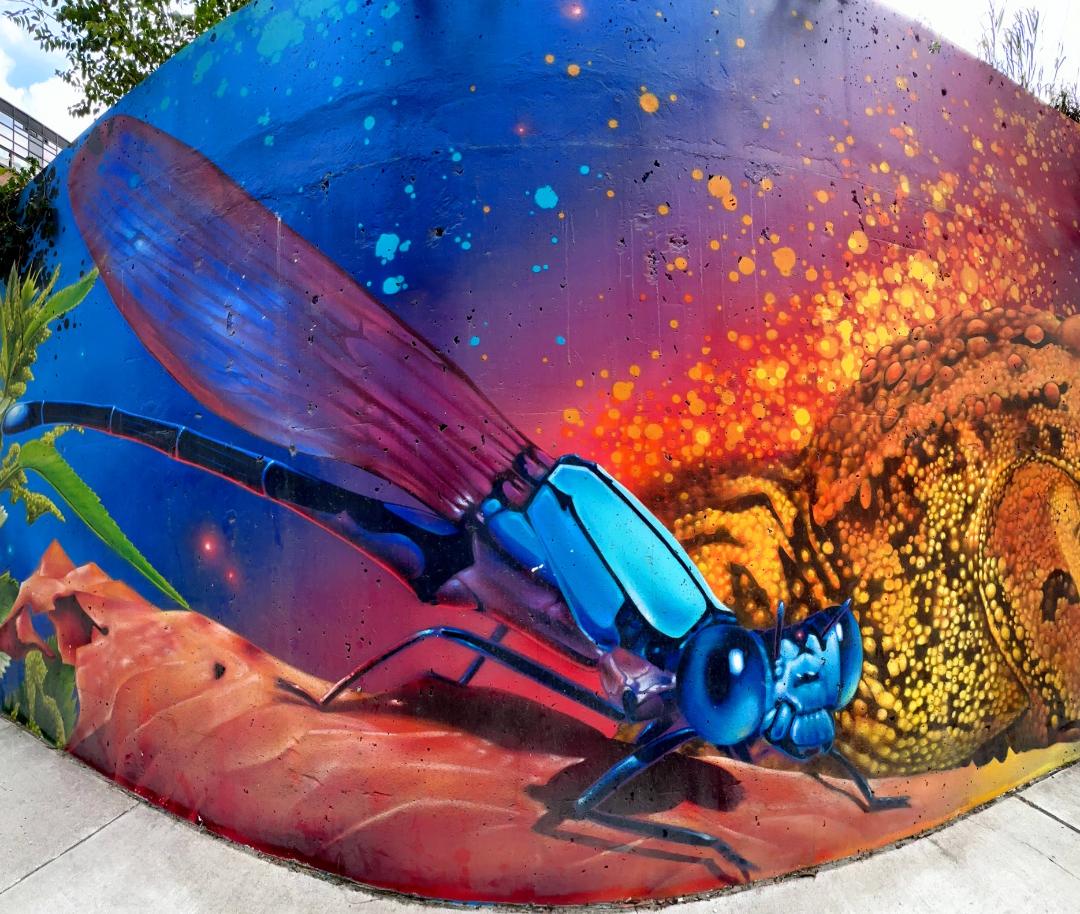
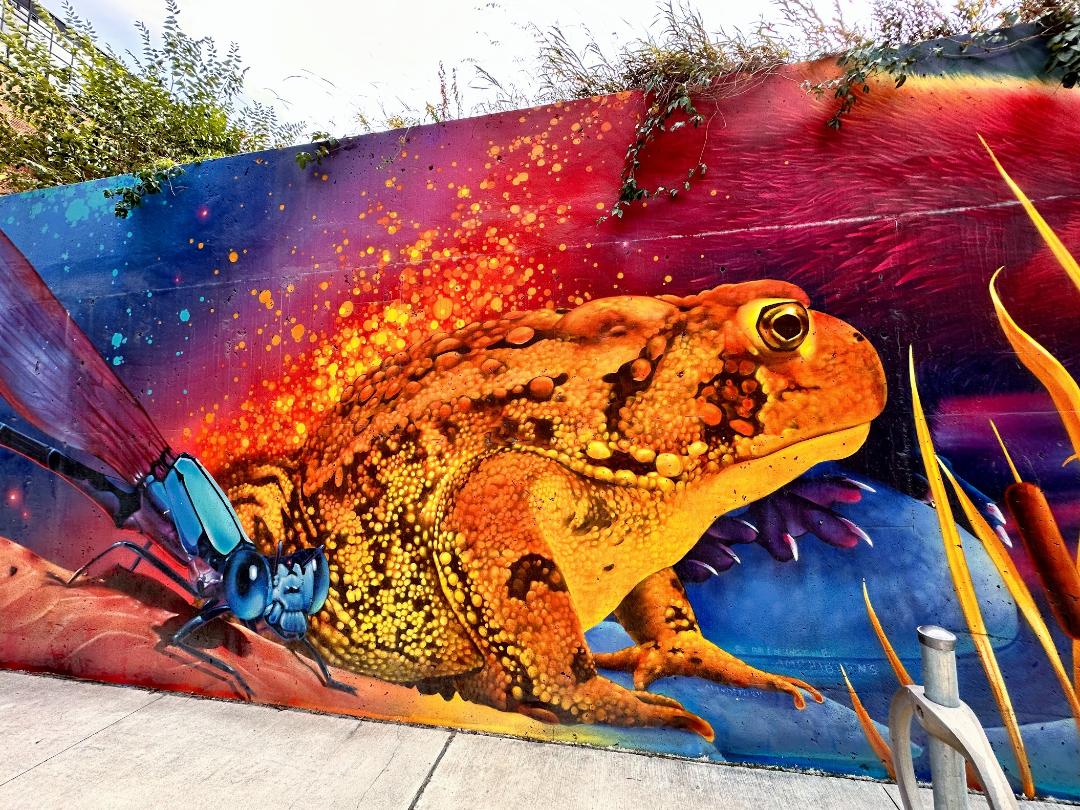
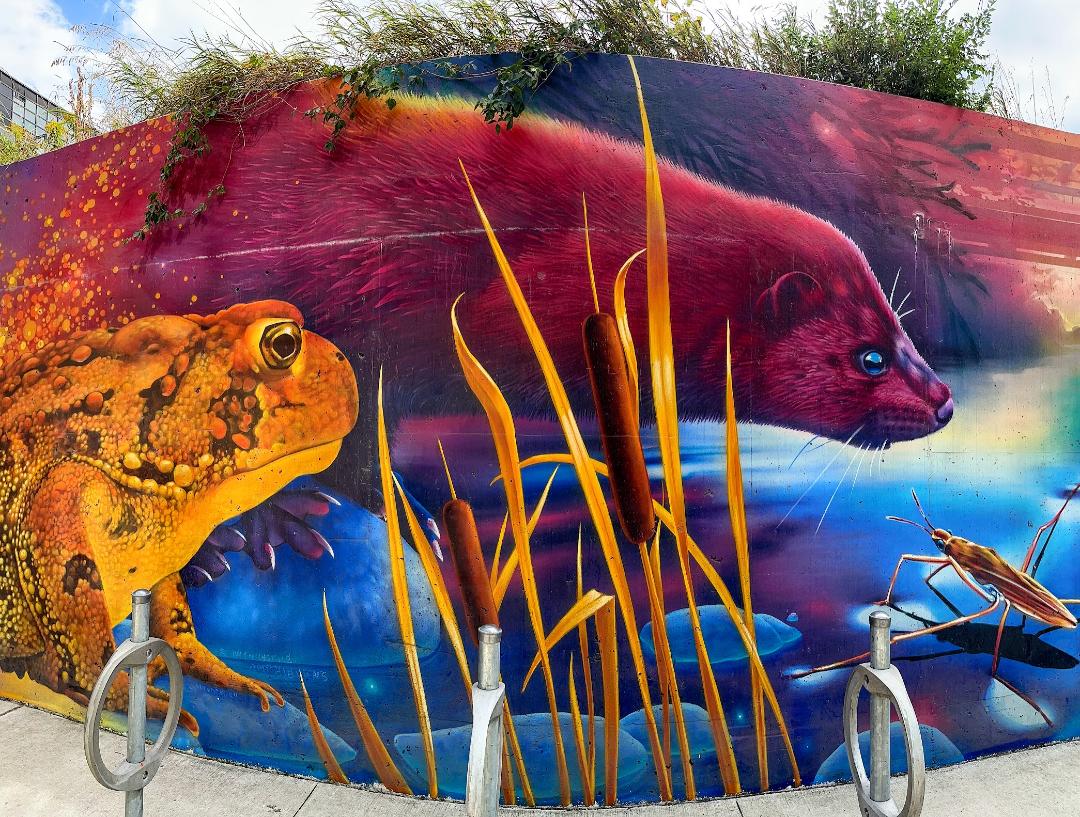
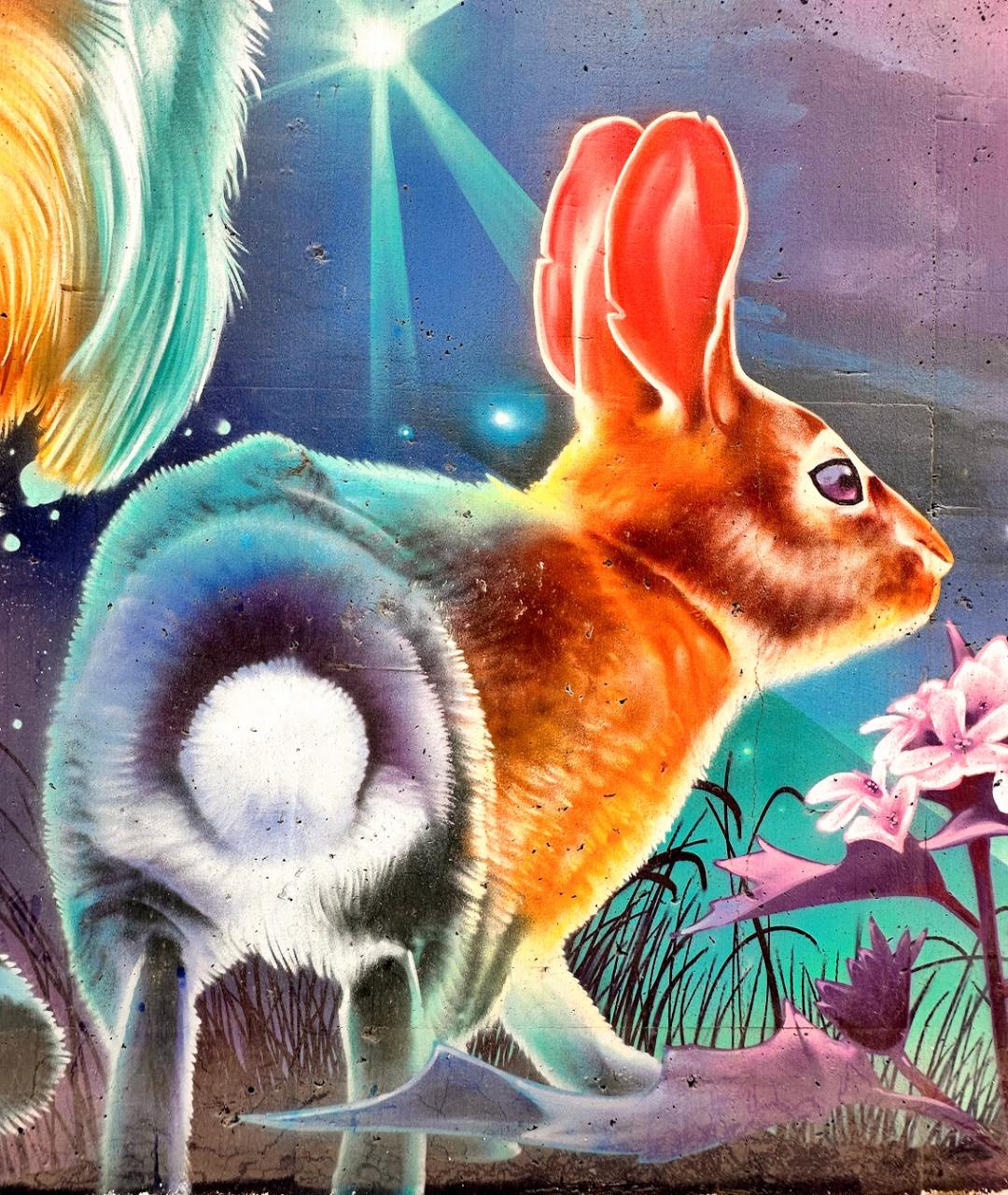
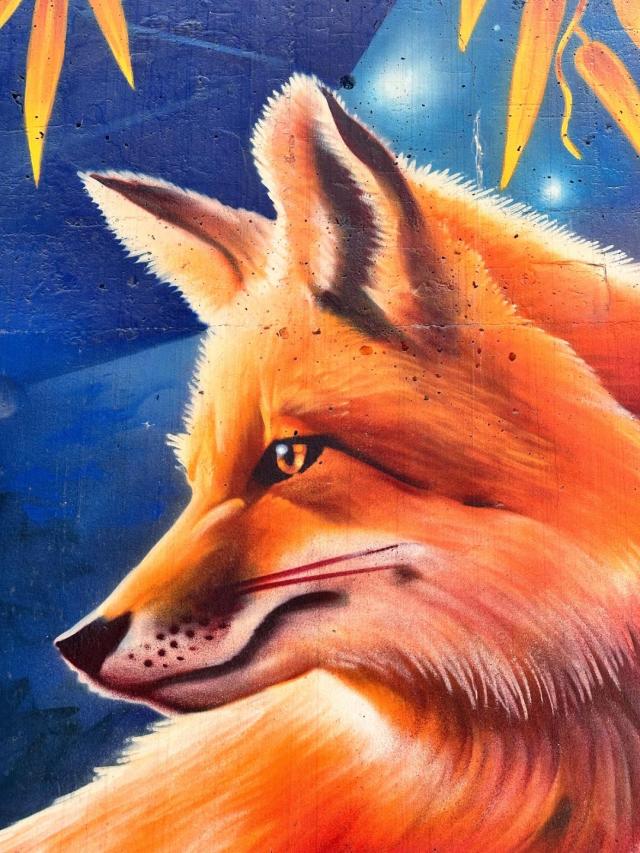
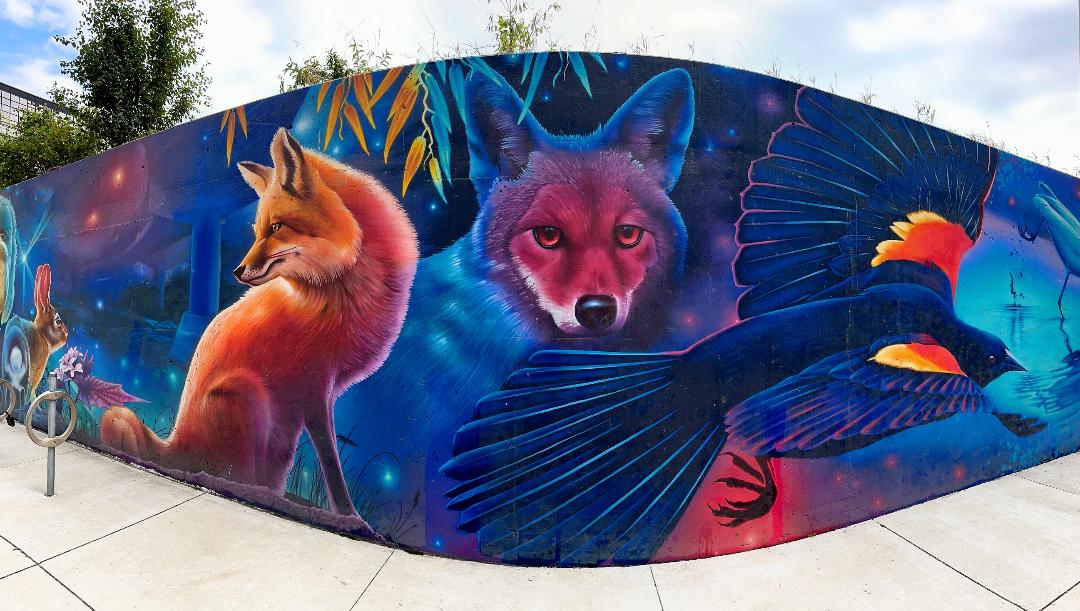
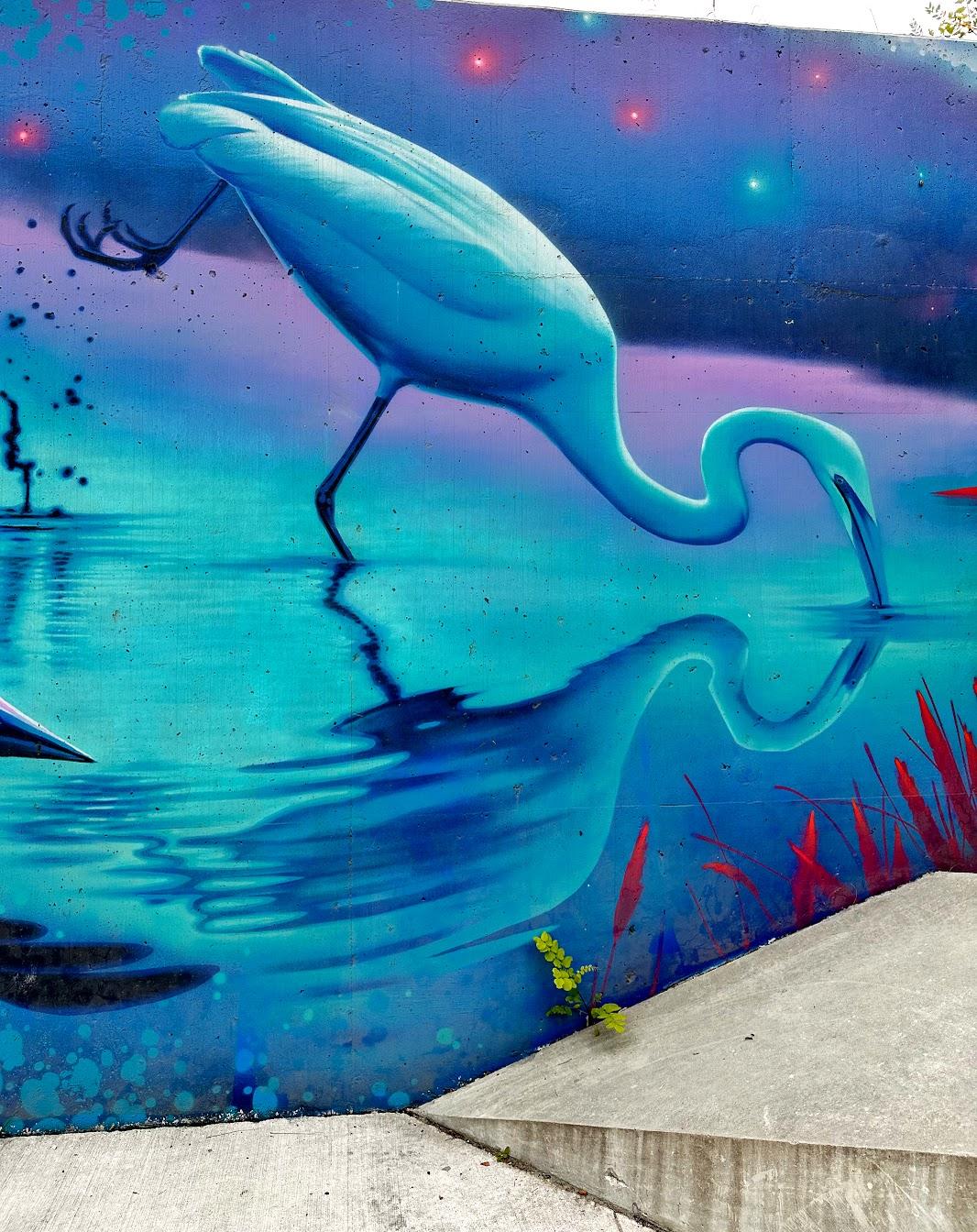
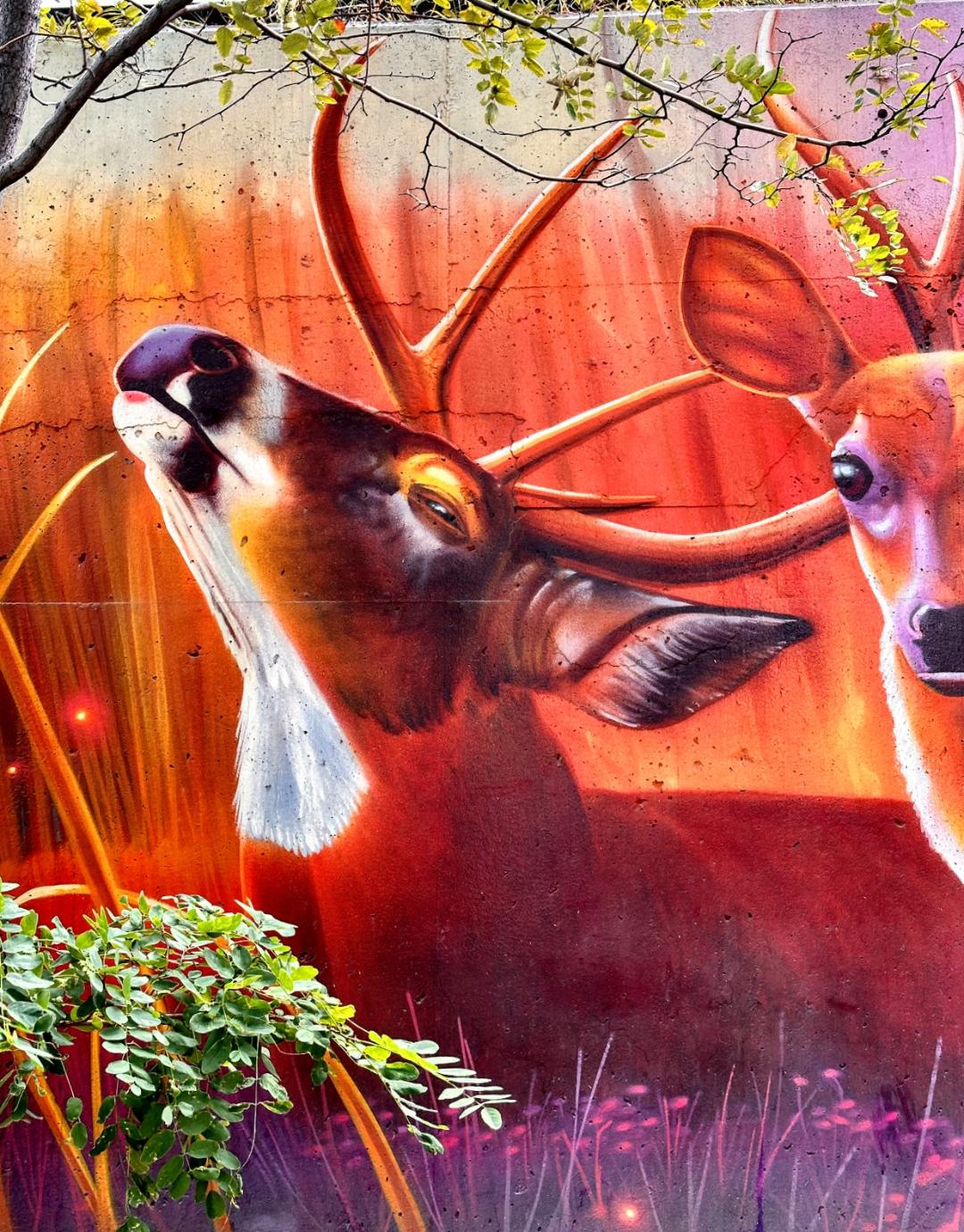
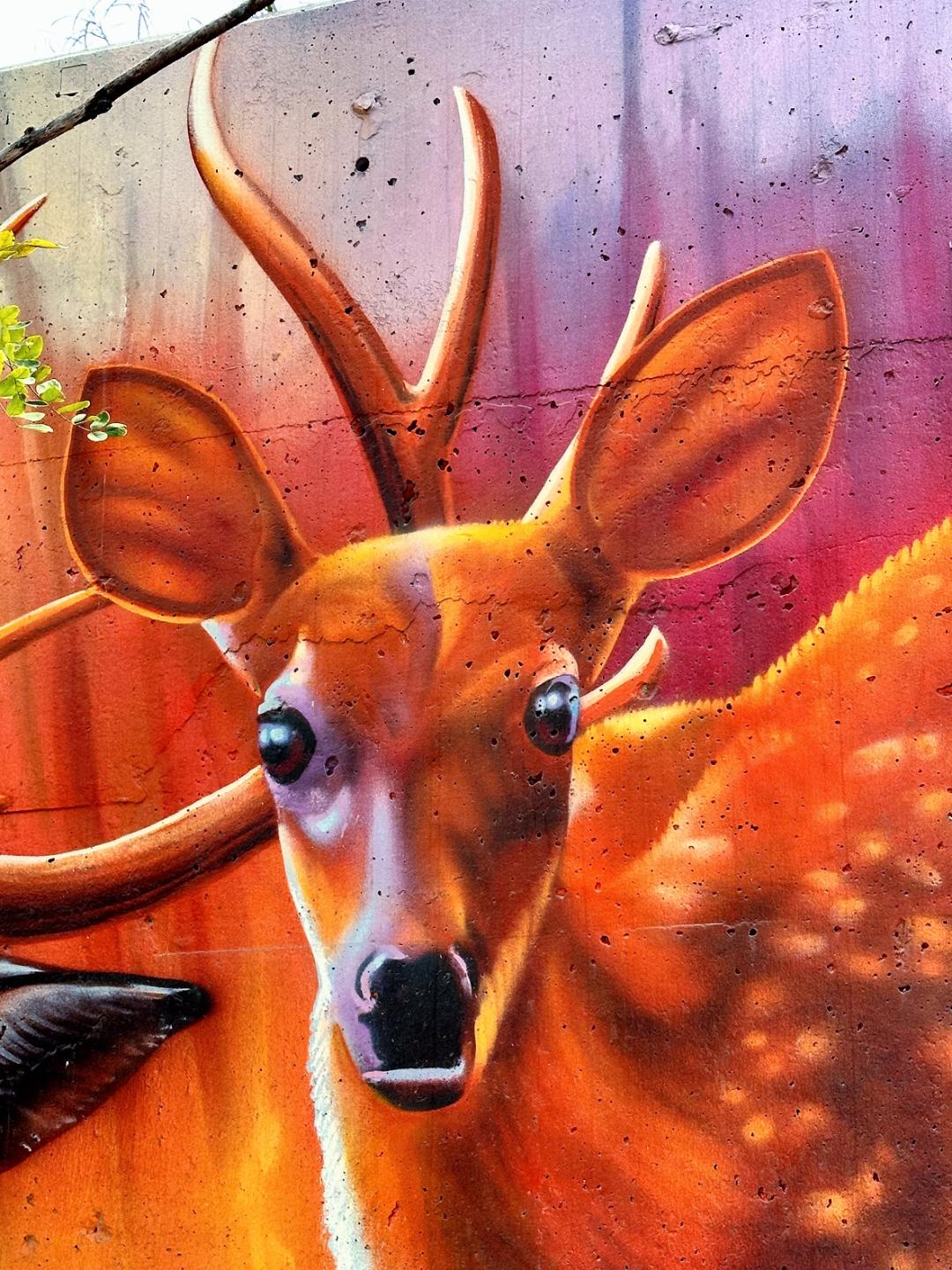
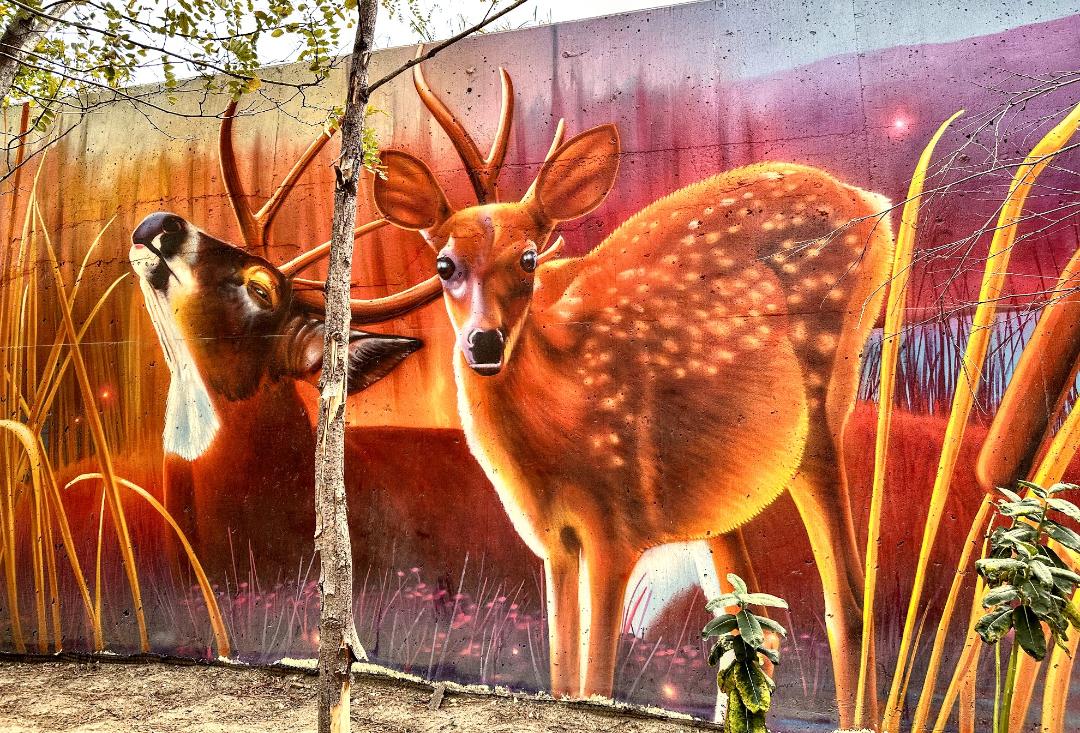
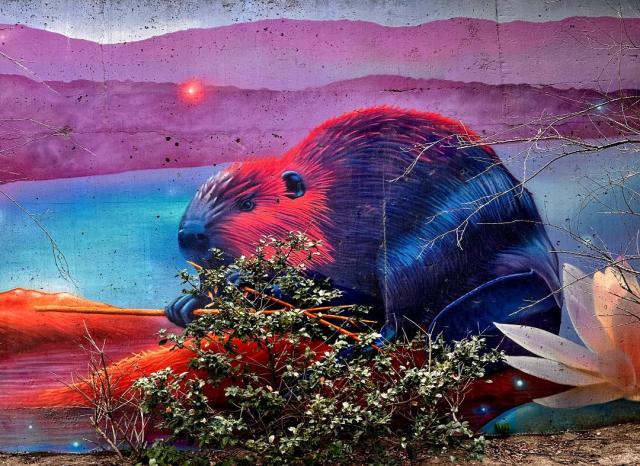
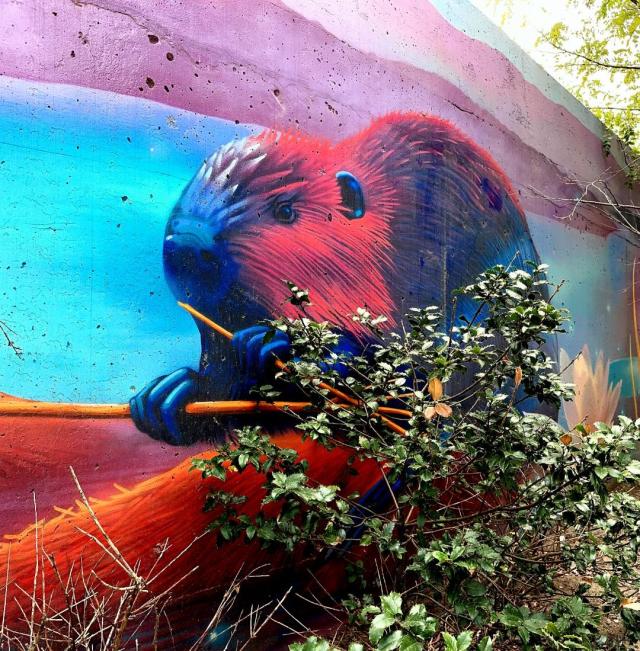
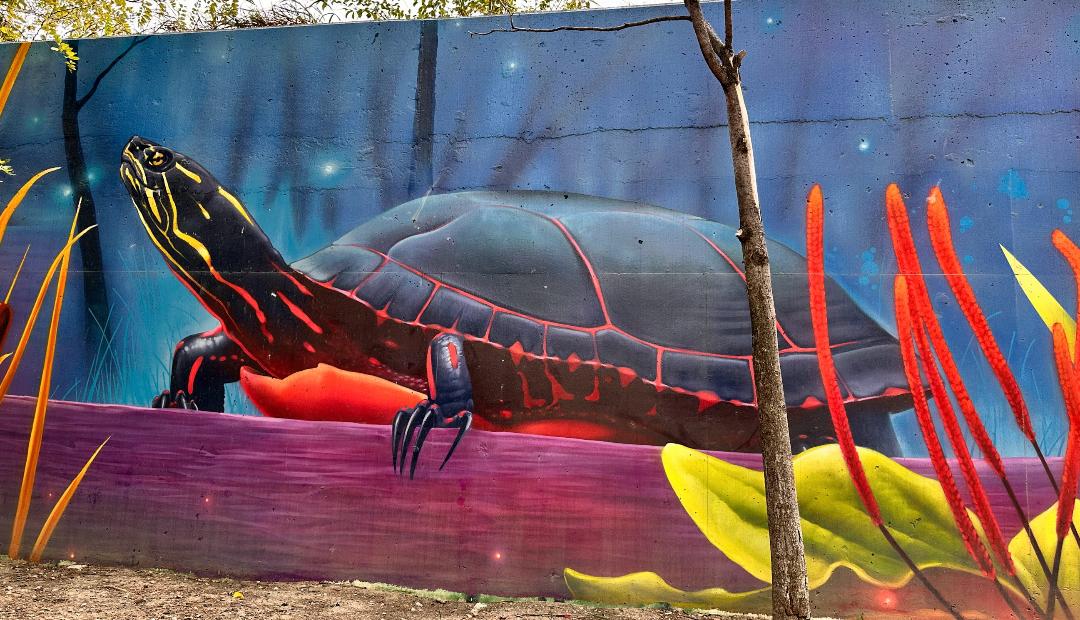
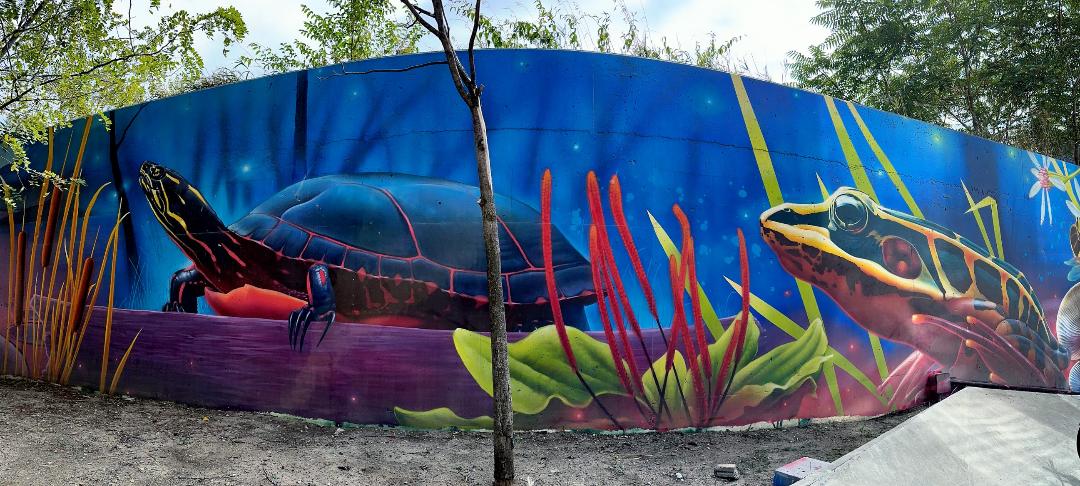
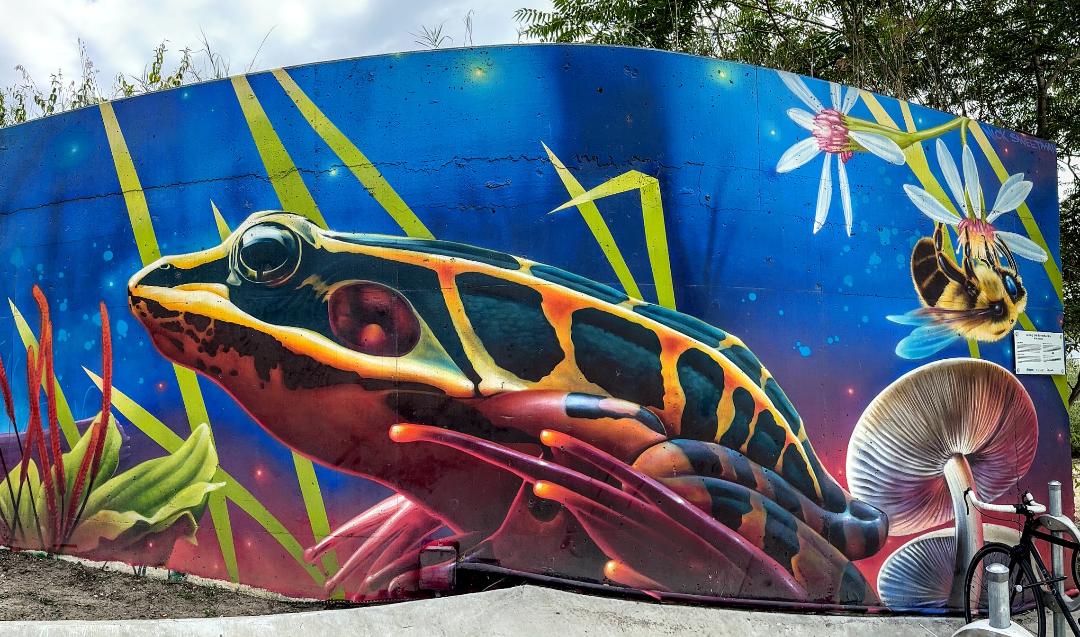
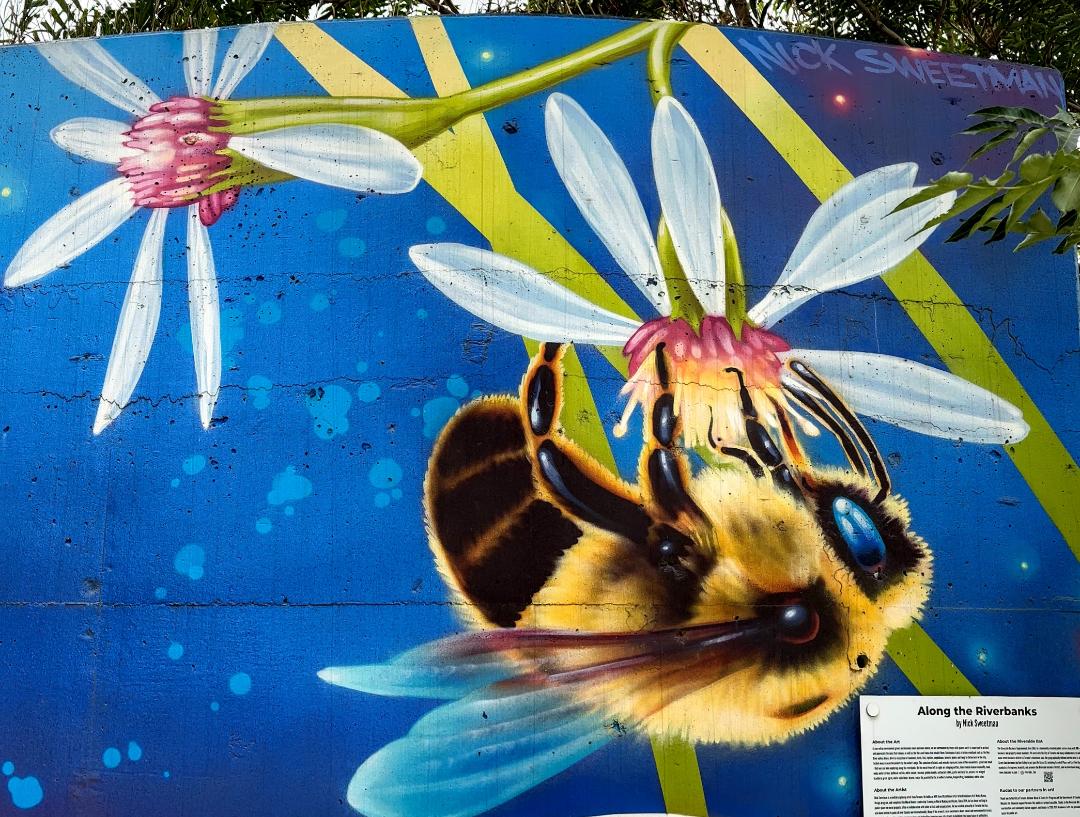
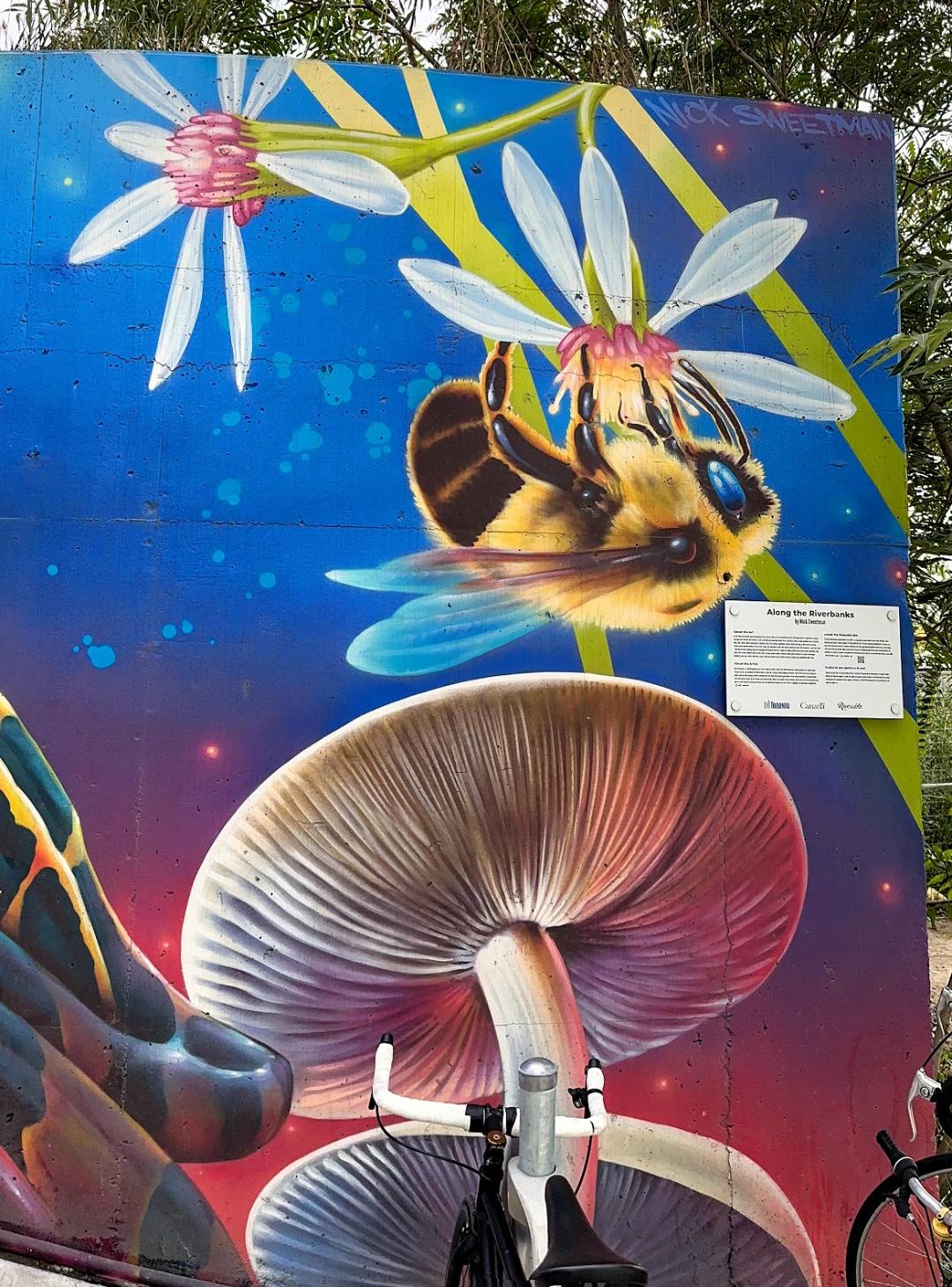
This spectacular mural is on a retaining wall by the Don River. I’m guessing 100 ft. long anyway.
Viewing from left to right: The bits of green behind the Blue Fronted Dancer Damsel Fly are stinging nettle.
Toad
Mink
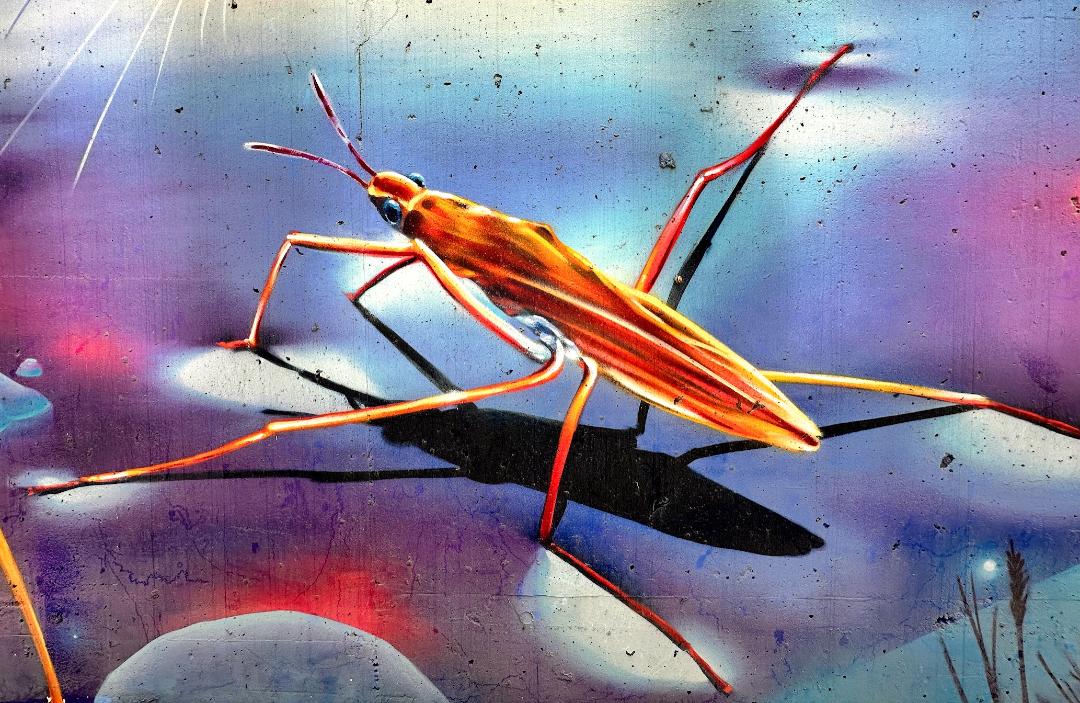
Water Strider
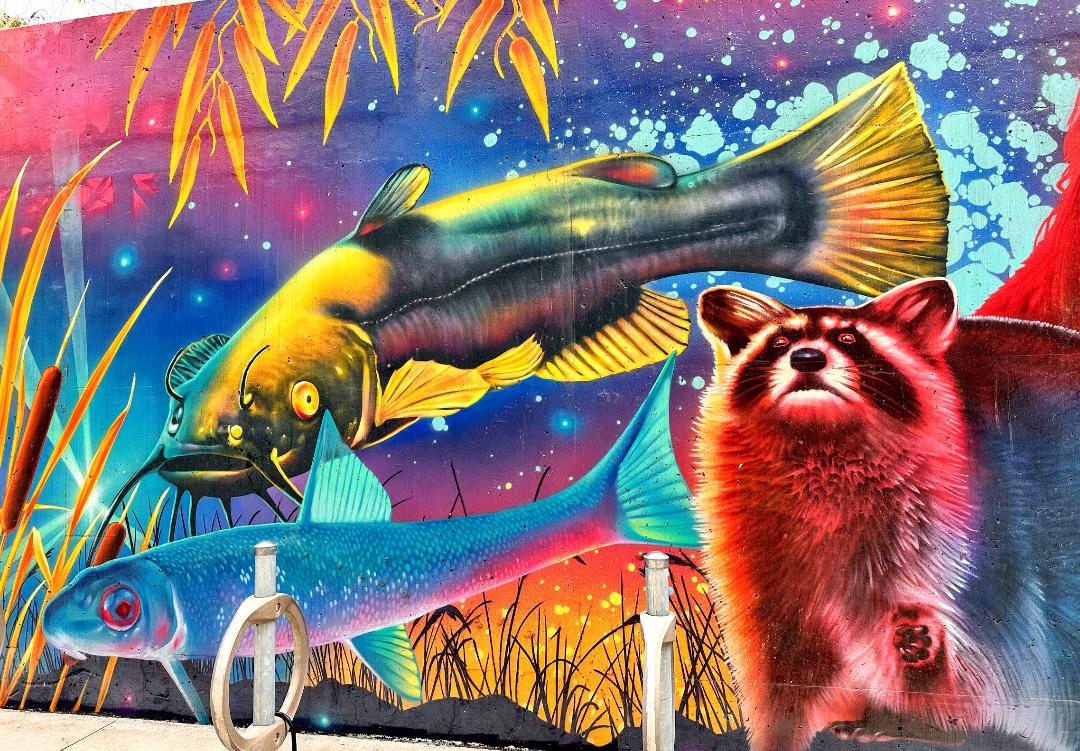
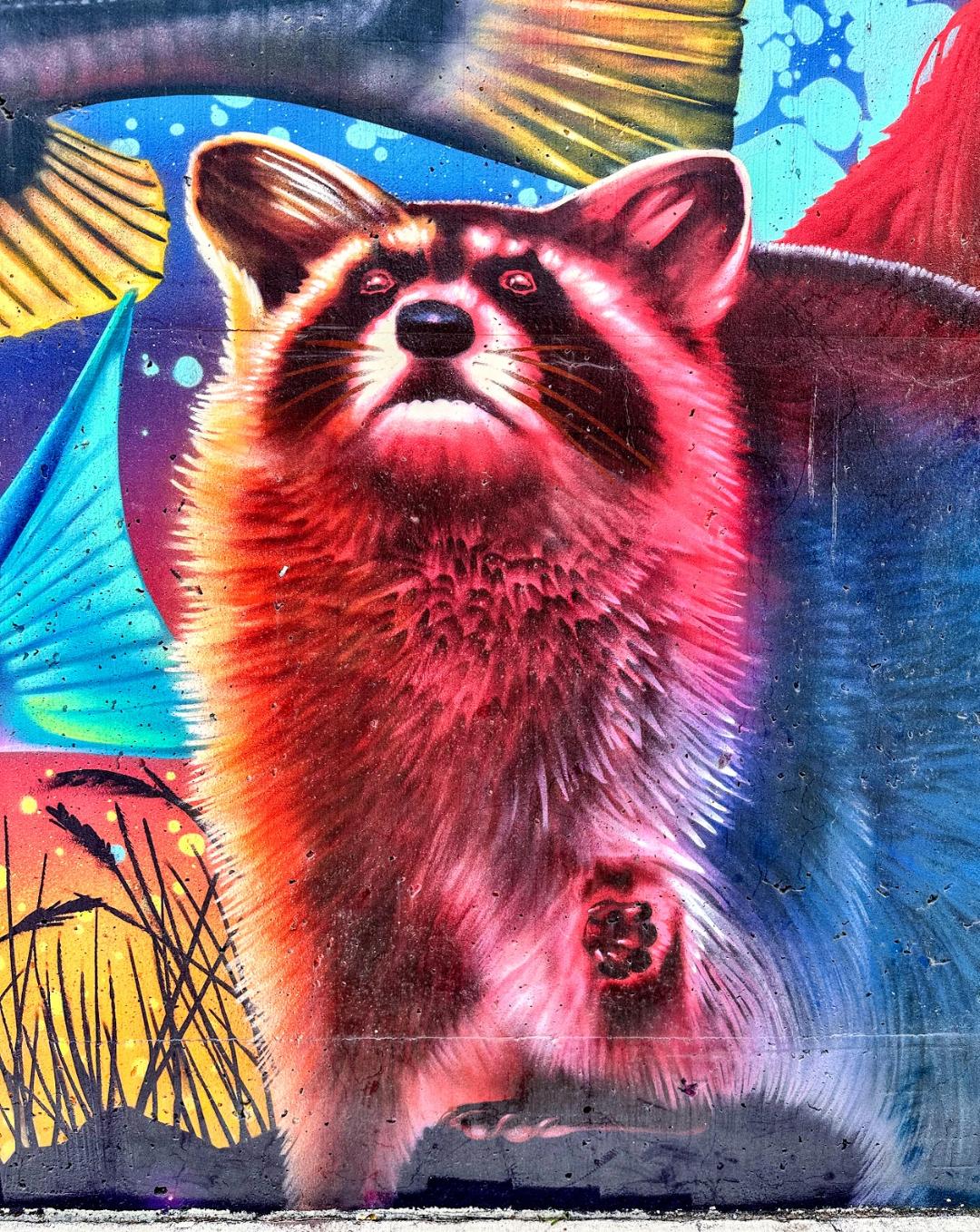
Bullhead Catfish, White Sucker and Raccoon
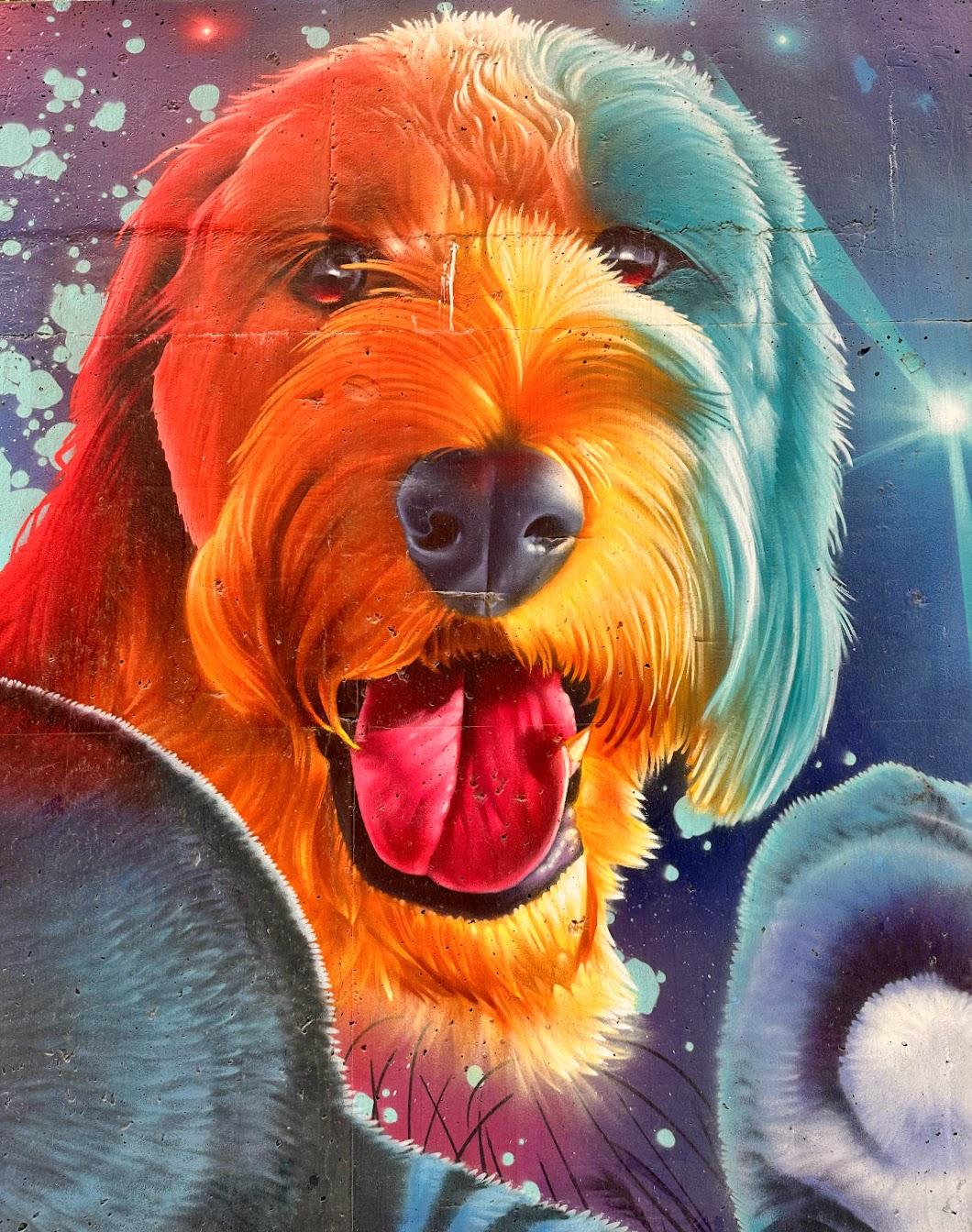
The terrifying and wildly wild Golden Doodle
Cottontail Rabbit
Fox
Coyote
Red-winged Blackbird and Great Egret
White-tailed Deer
Beaver with Water Lily behind it.
Painted Turtle
Broadleaf Plantain in centre
Leopard Frog
Bumblebee with White Astor
As I mentioned at the beginning, I thought this was a wolf. I had done a song with Tim about my Wolf Tree and the Wolf moon. I thought – YAY, I can use it here. Coyote not a wolf, I’m using it anyway. I can’t sing, but I’m singing anyway.







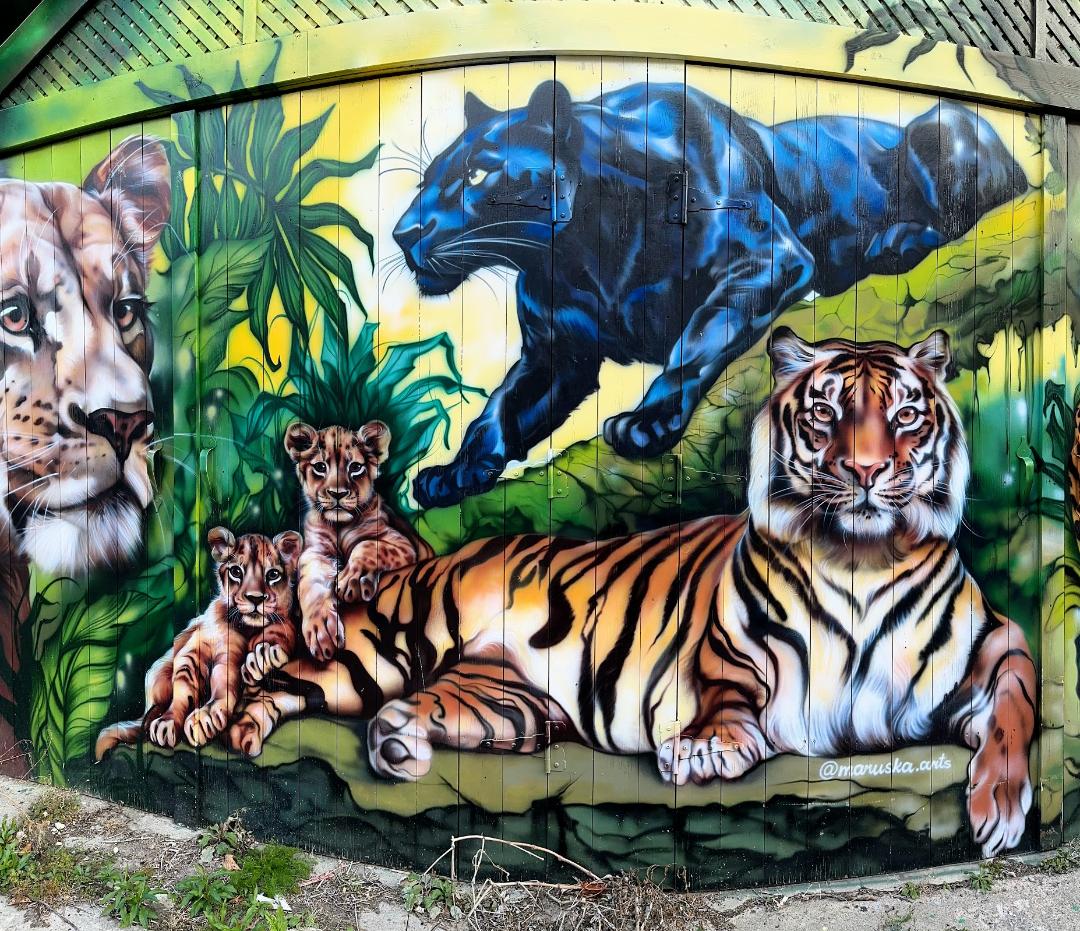
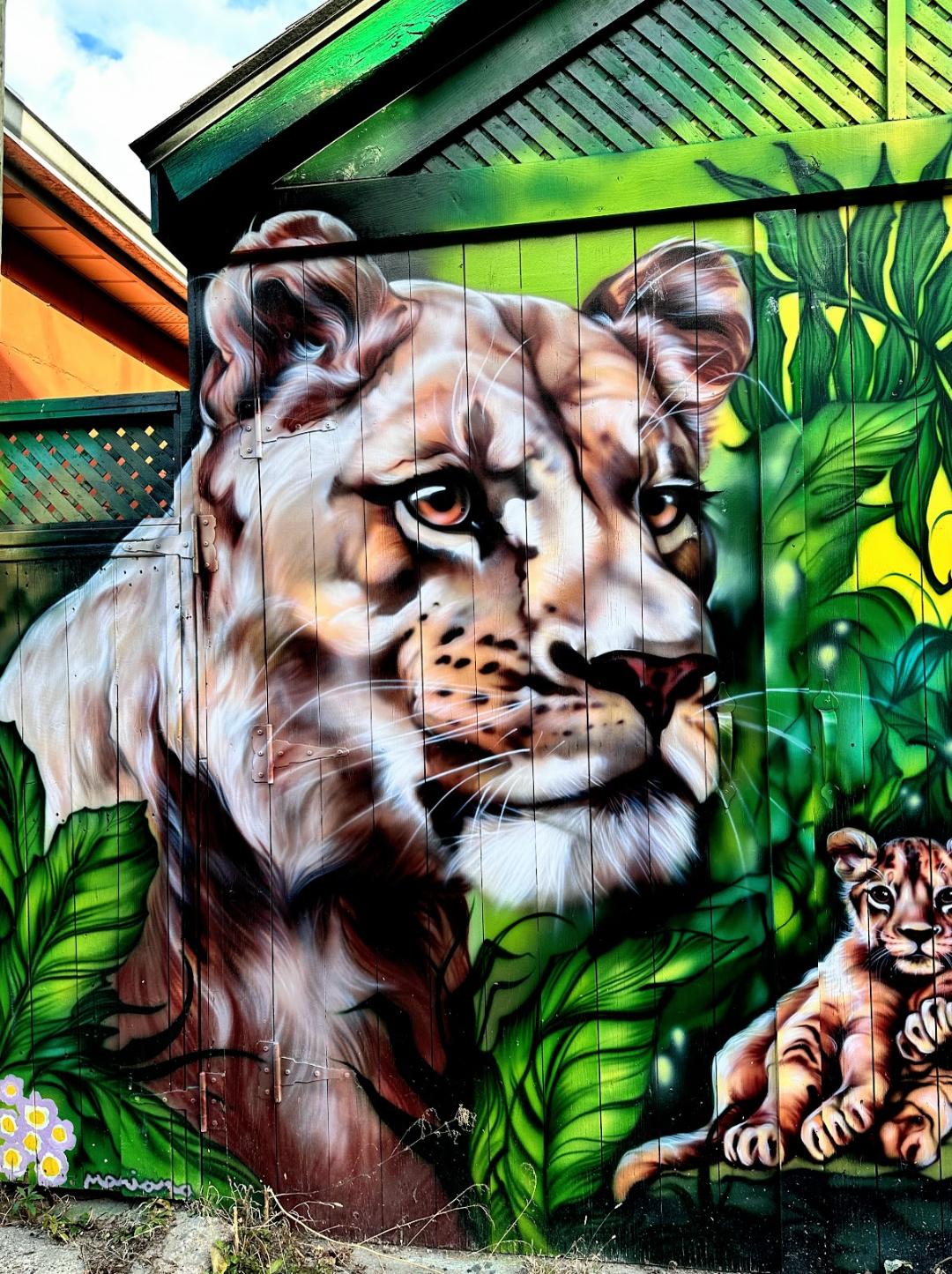
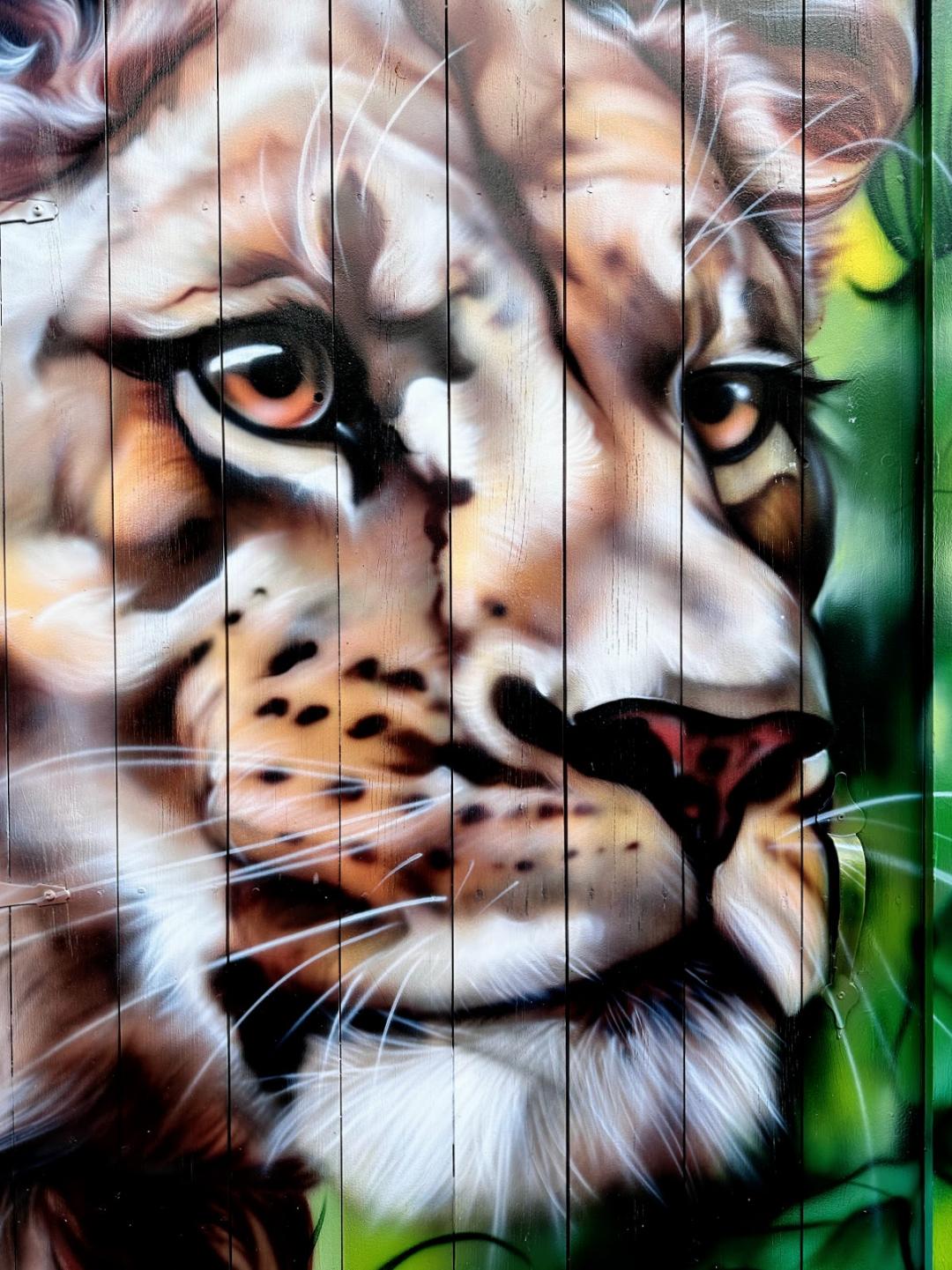
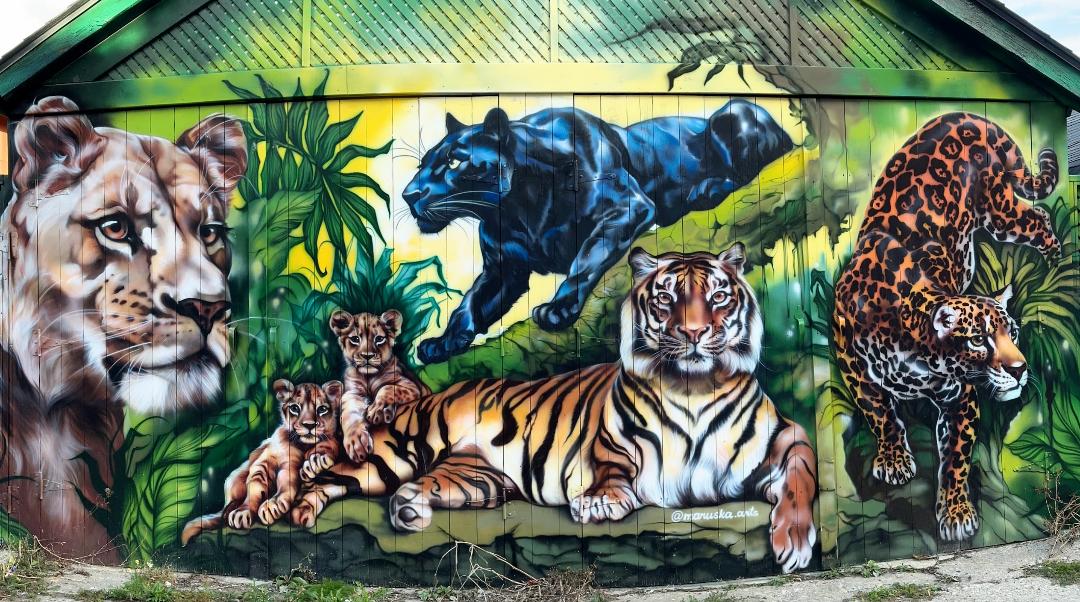





 Graffiti Lux Art & More
You must be logged in to post a comment.