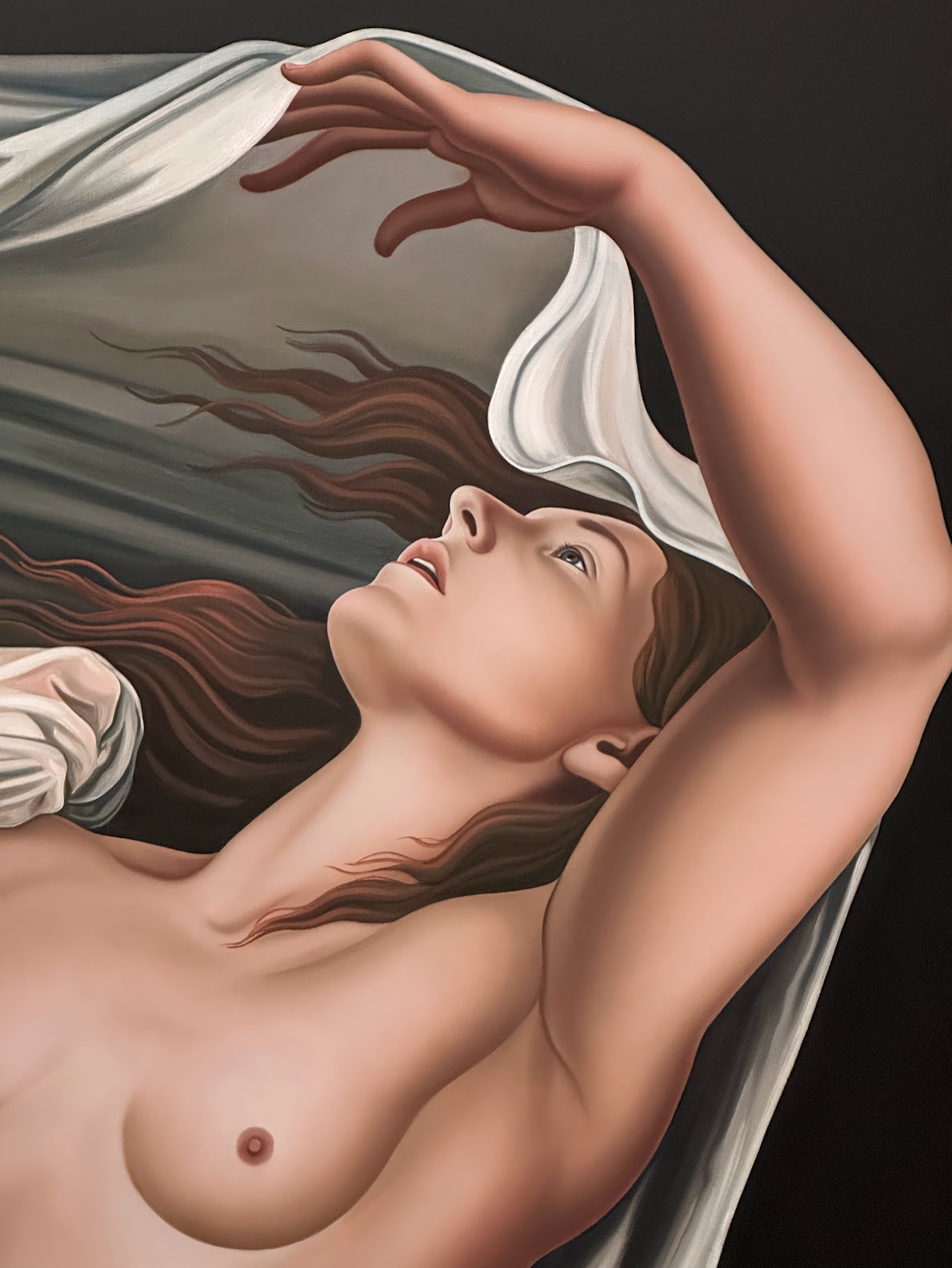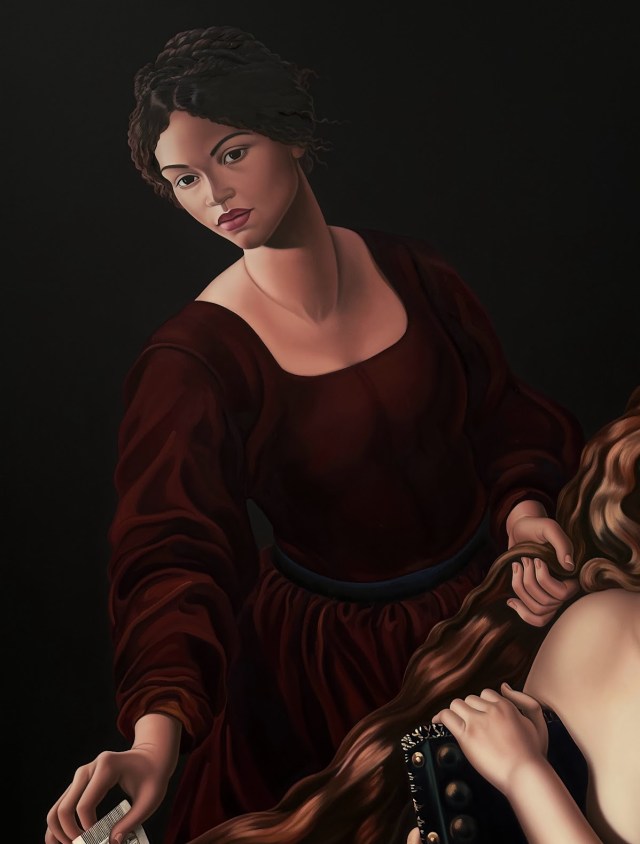
Jesse Mockrin 2 – Witchy Women

In Botanicals

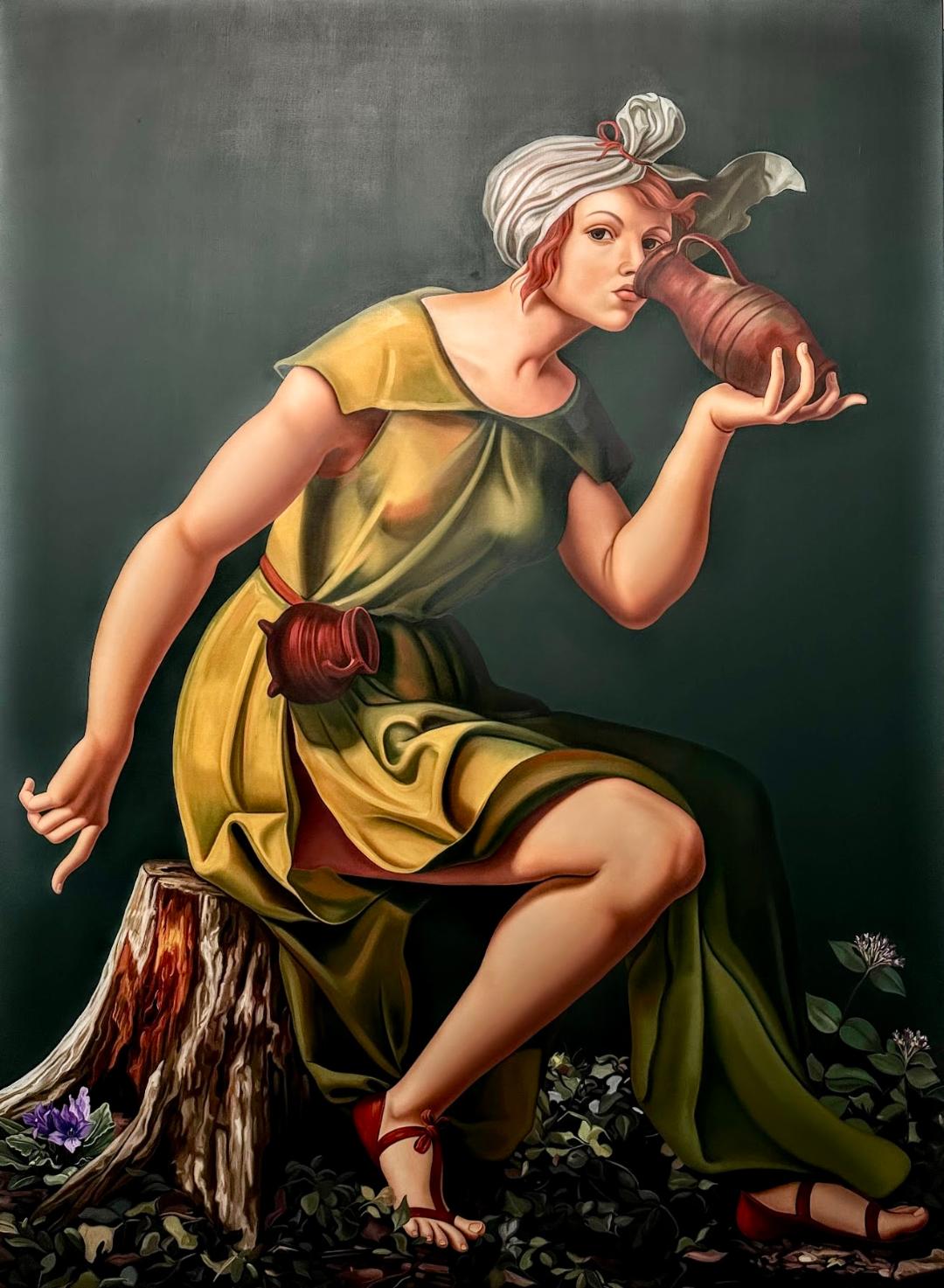
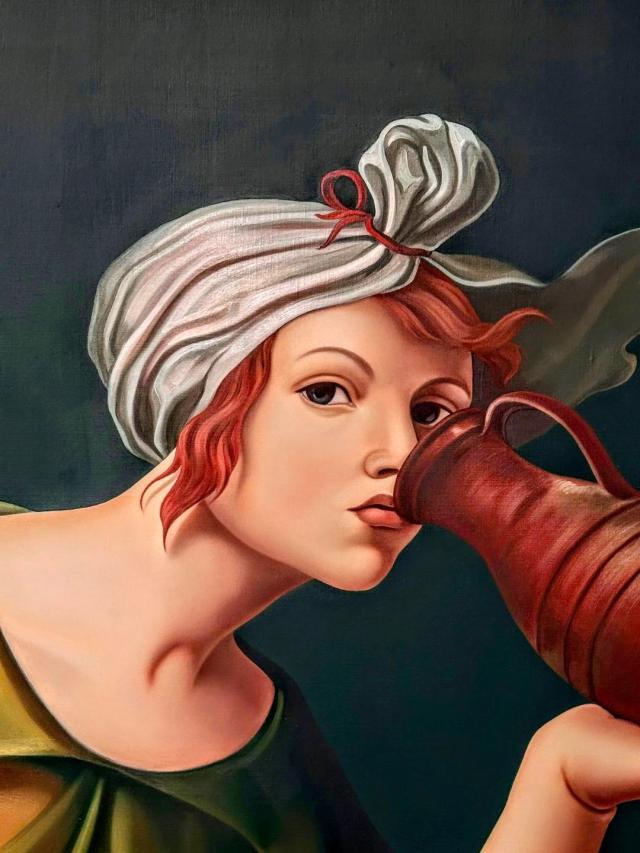
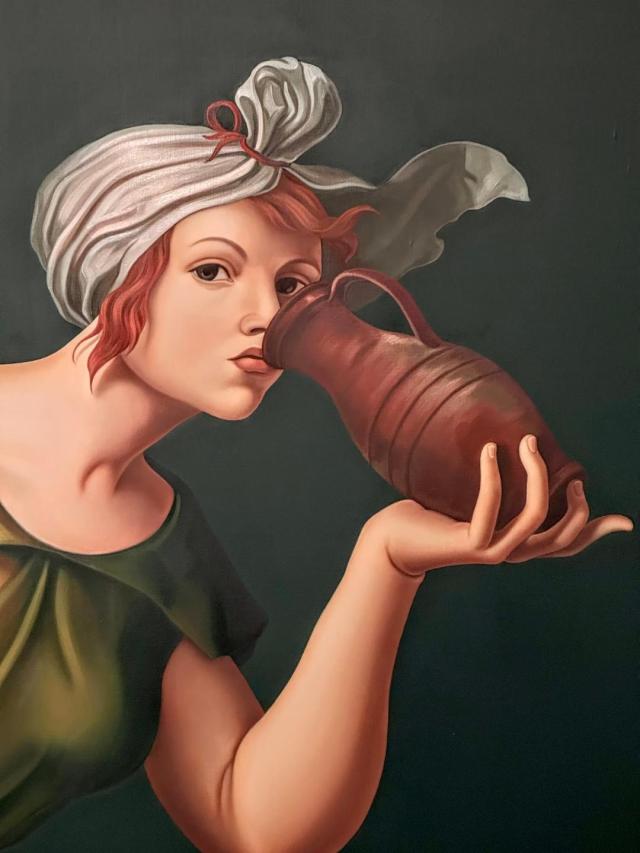
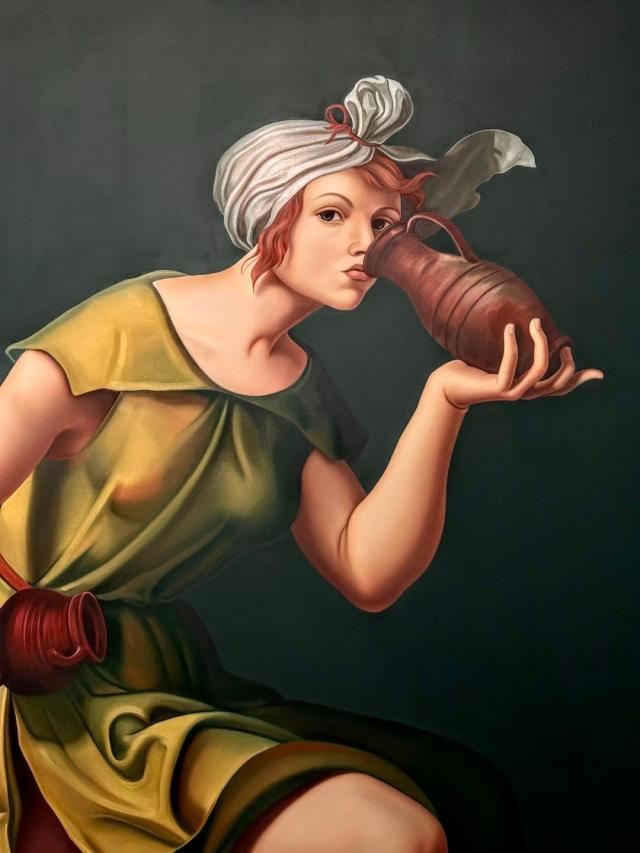
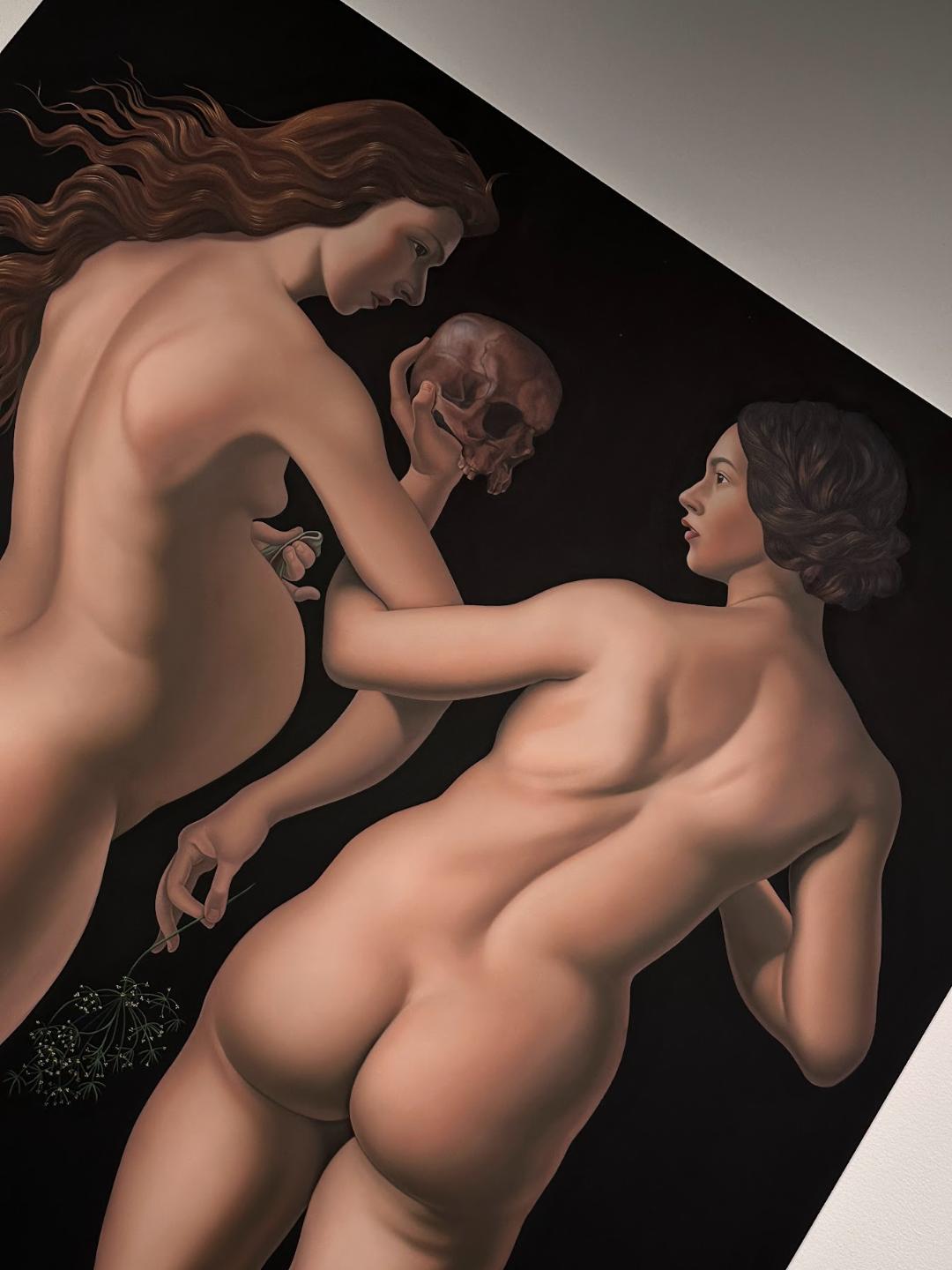
Old Magic (2025) Oil on Linen

“In the late Middle Ages (1300-1500 CE), these practices were criminalized, and women who worked with plant medicine were rebranded as witches.

Witches became an archetype for story telling.
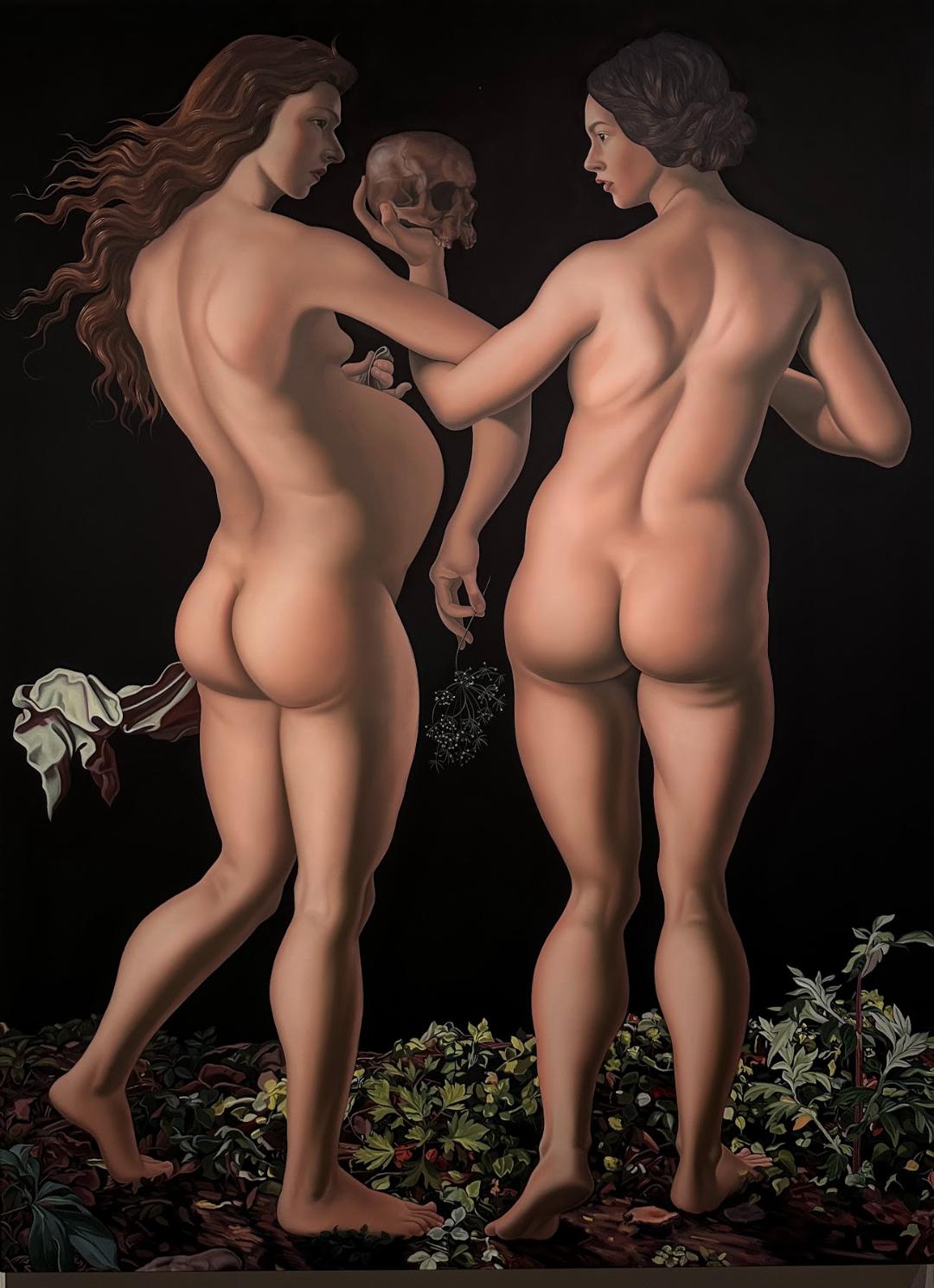
Forbidden Fruit (2025) Oil on Linen

In her recent paintings of witchy women, Mockrin depicts lush, fertile landscapes replete with plants women used to promote menstrual health, sexual health, and for abortion.”

Botanicals included mandrake, mugwort, fennel and dittany.

In Myth

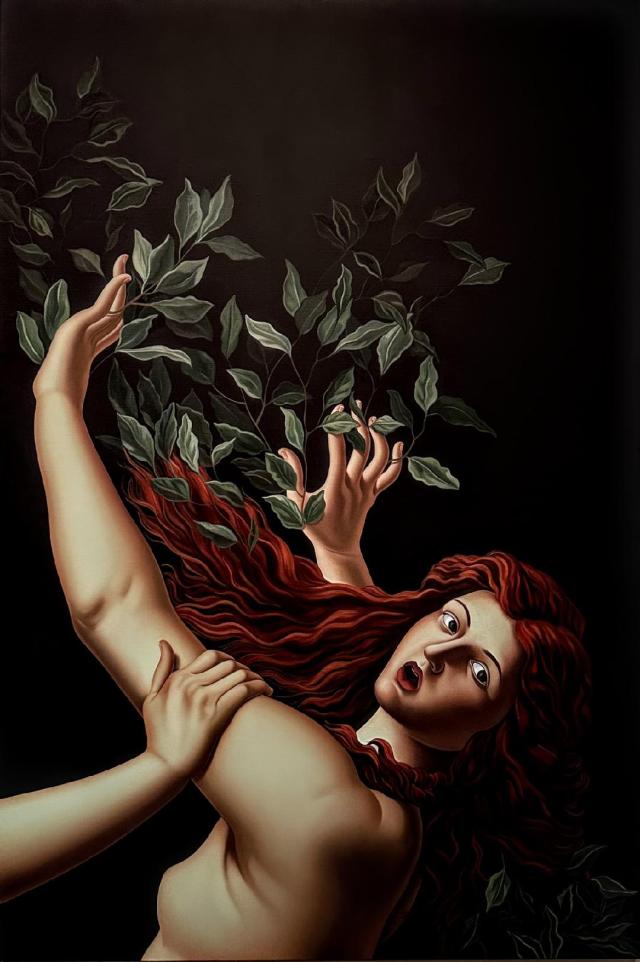
Daphne is a river nymph from ancient Greek Mythology.
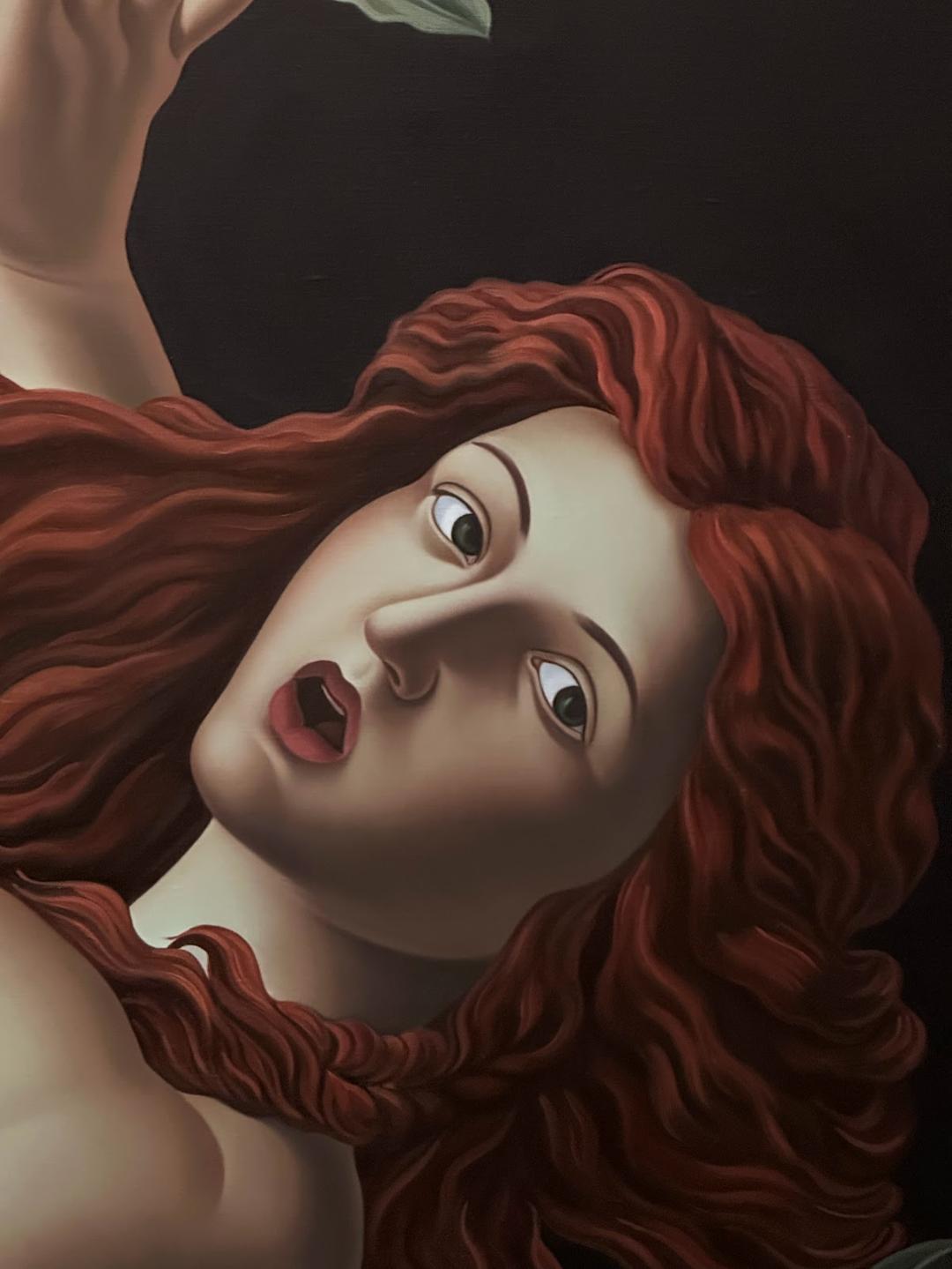
She was the daughter of the river god Peneus.
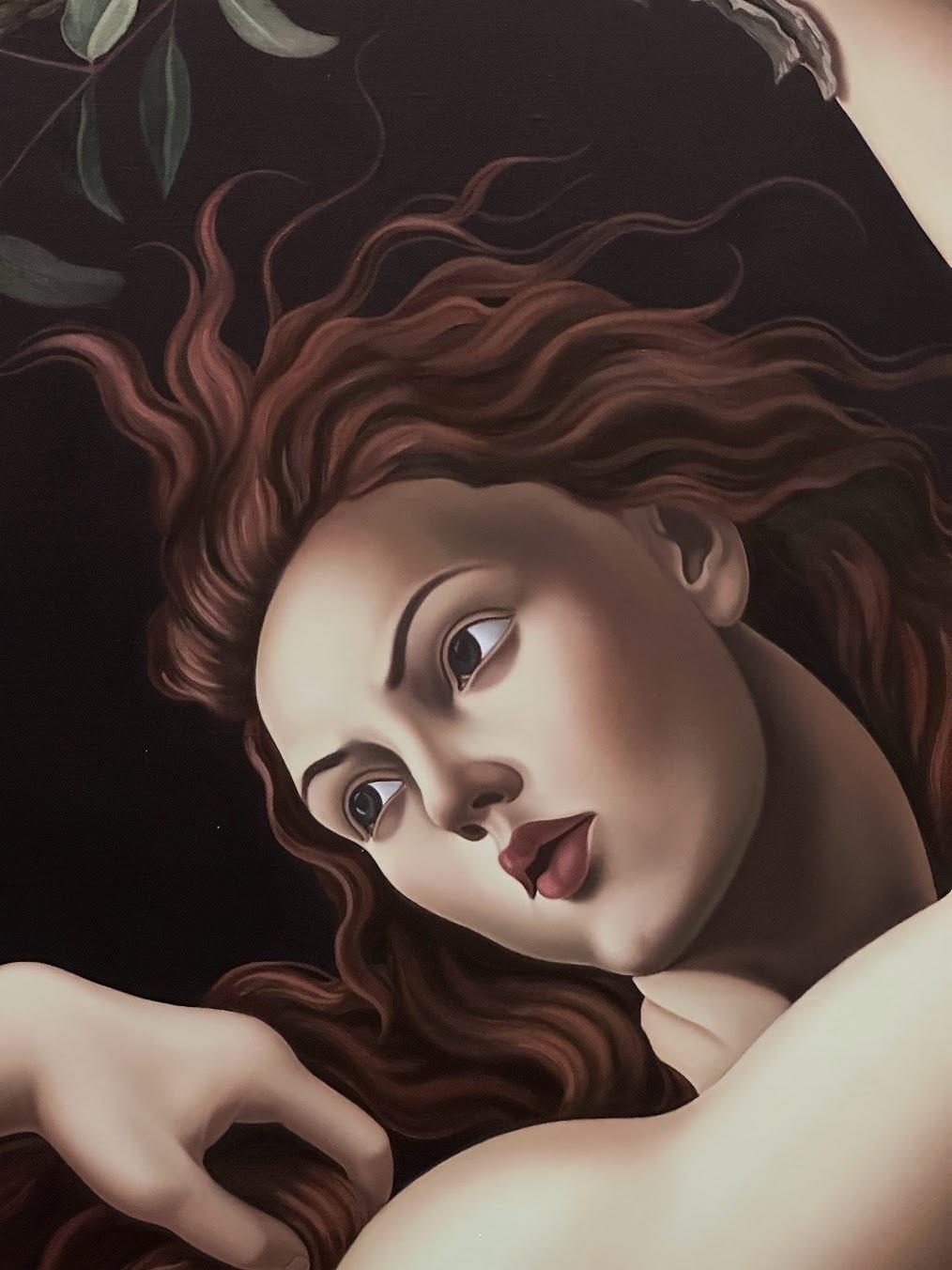
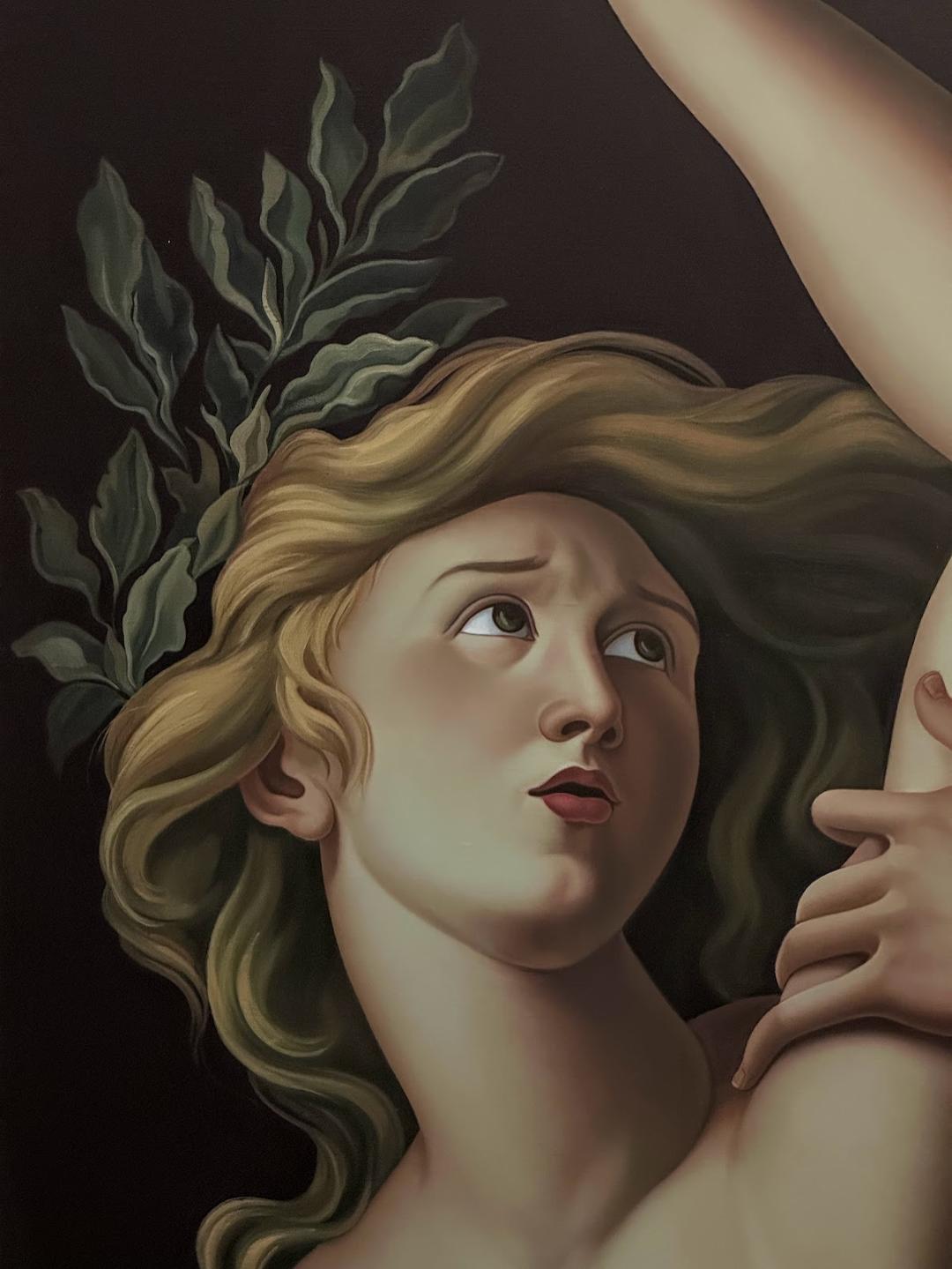
Daphne “took a vow of chastity and rejected all romantic advances toward her.

The god Apollo fell in love with the river nymph, and when she rejected him, he attempted to rape her.

Daphne ran to the banks of her father’s river, begging him for help.

Intending to protect his daughter from Apollo’s violence, Peneus transformed her forever into a laurel tree.

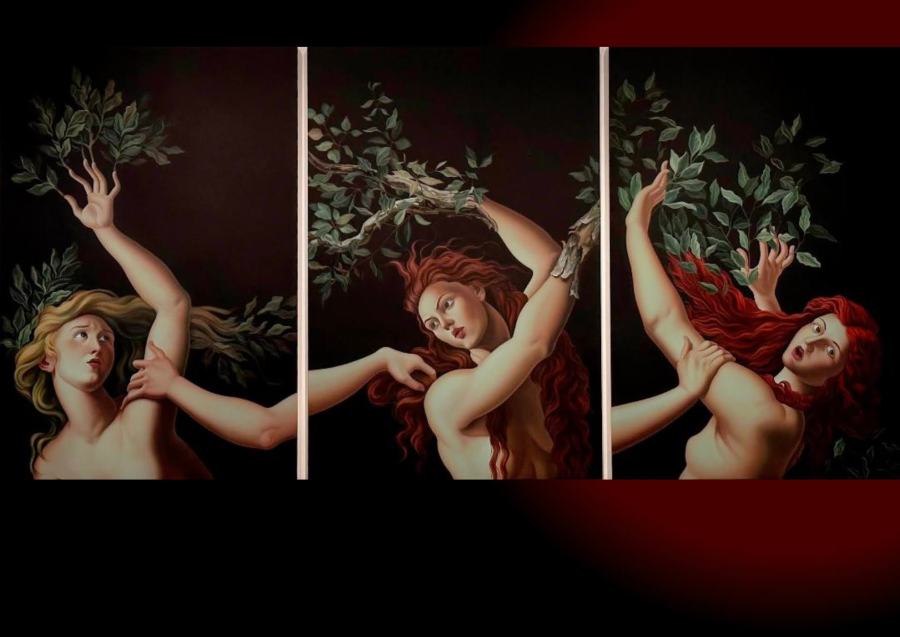
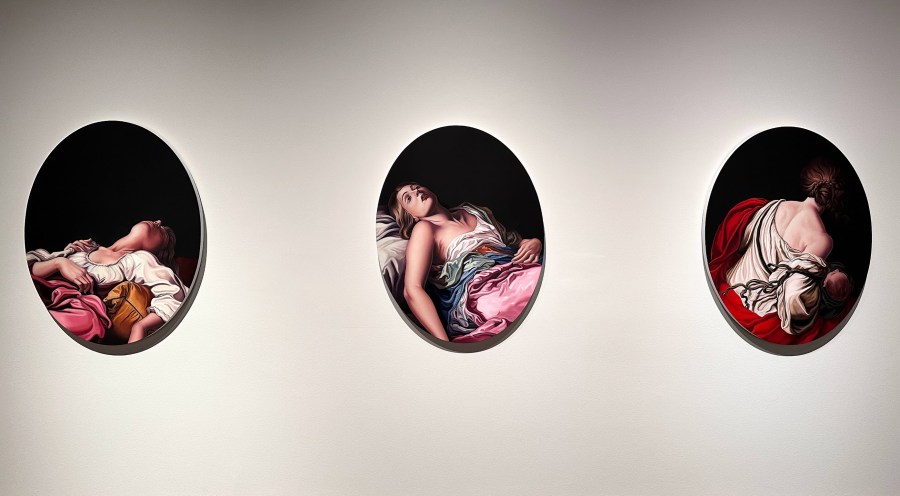
I’m intrigued by how Mockrin depicts Daphne as 3 different faces.
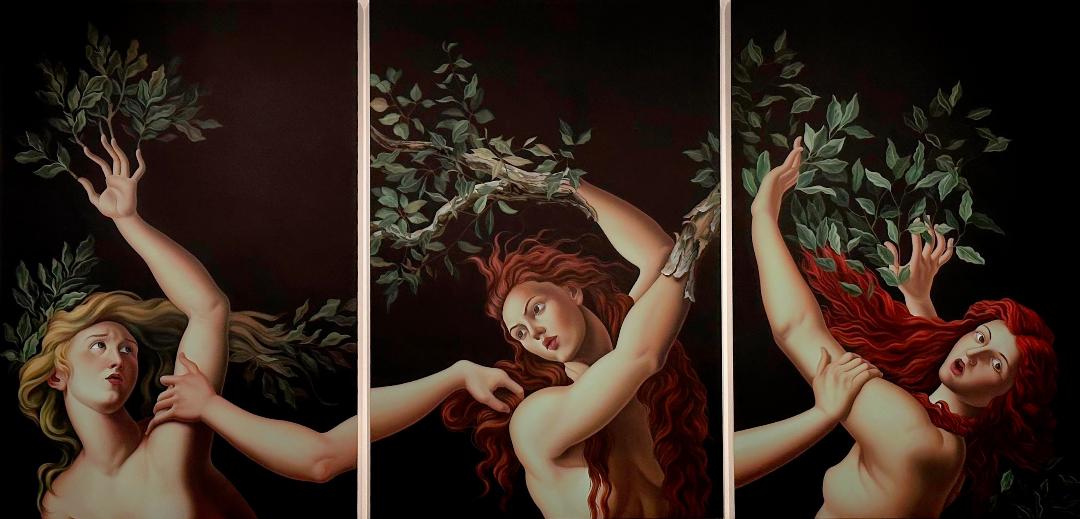
A Story told this many times becomes a forest (2024) Triptych – Oil on Linen

Turns out it is 3 stages of transforming – right to left. It comes originally from a poem by Sophia Stid (2020) DAPHNE PURSUED BY APOLLO.
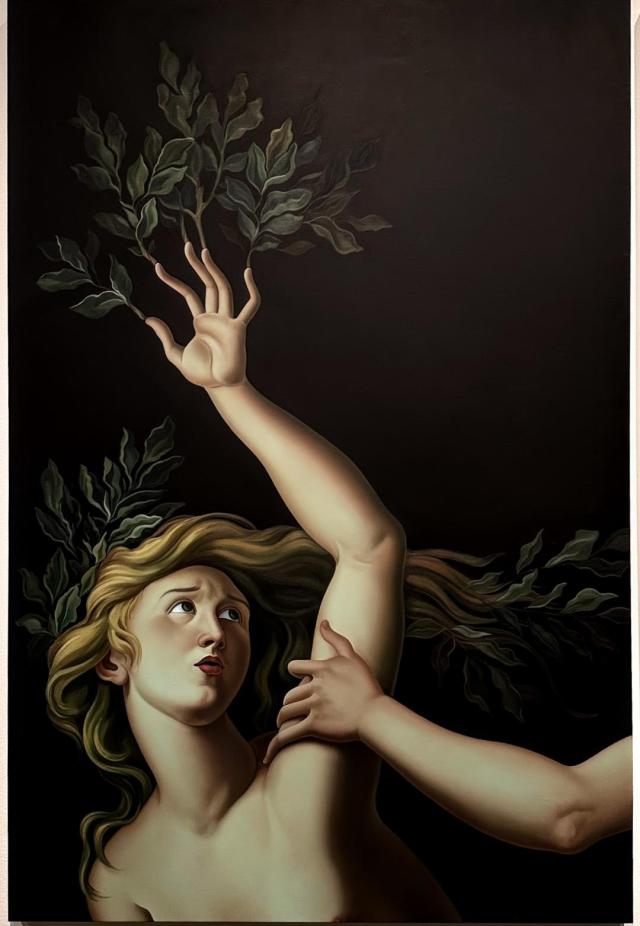
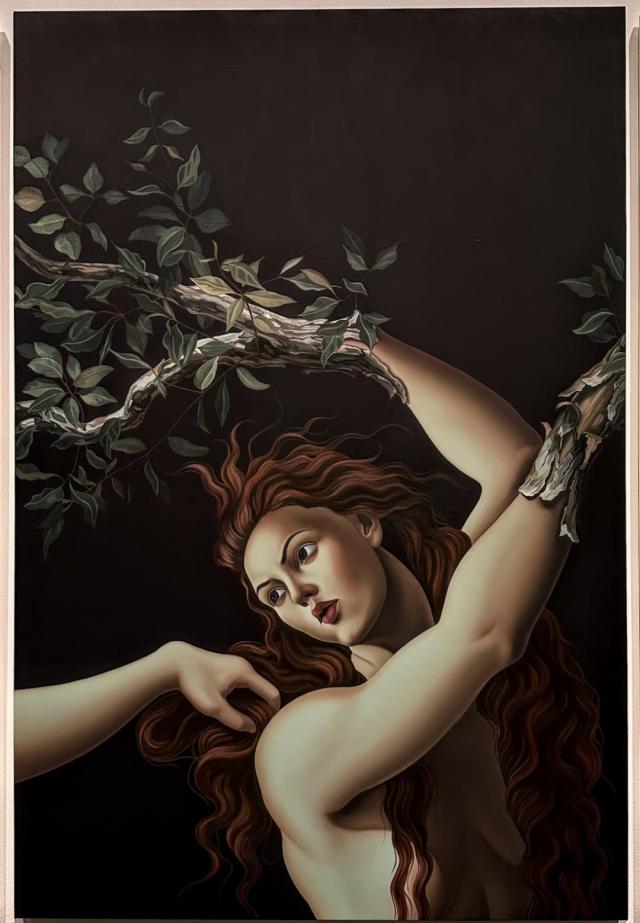
The polestar of Mockrin’s painting is Daphne’s face. Apollo is banished to the outside of the frame.

A Greek and Roman myth, it resembles the tale of Daphne.
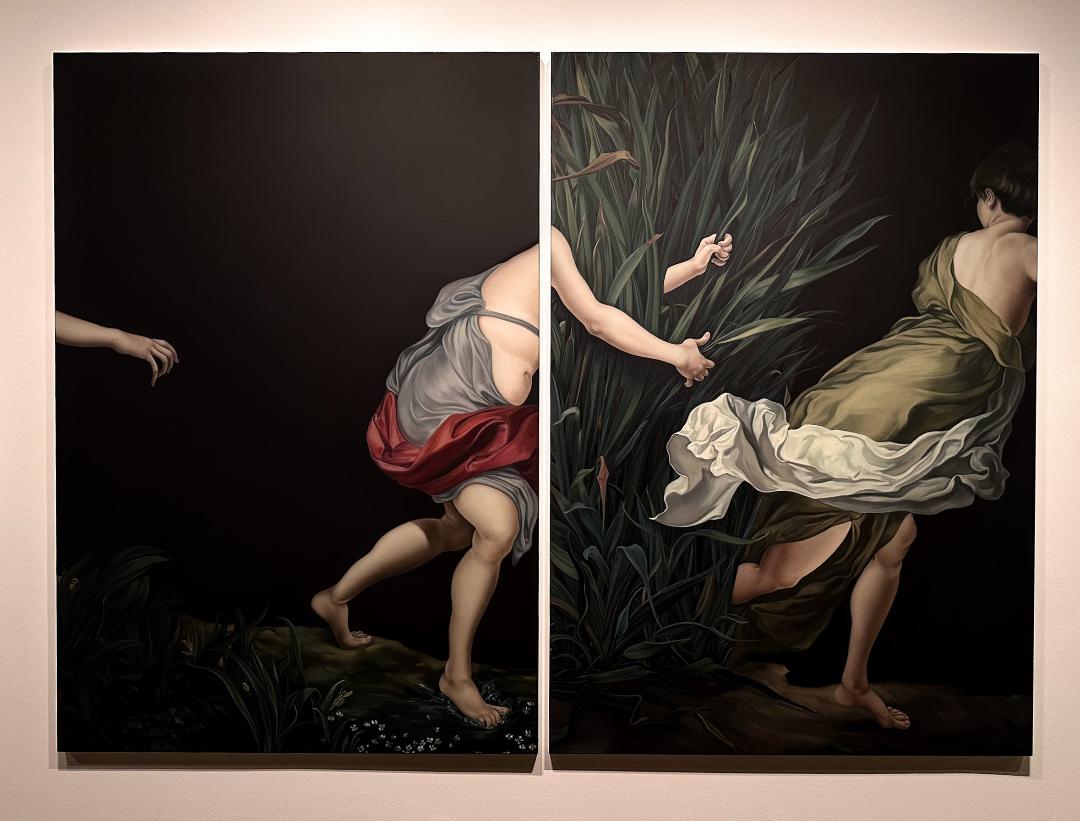
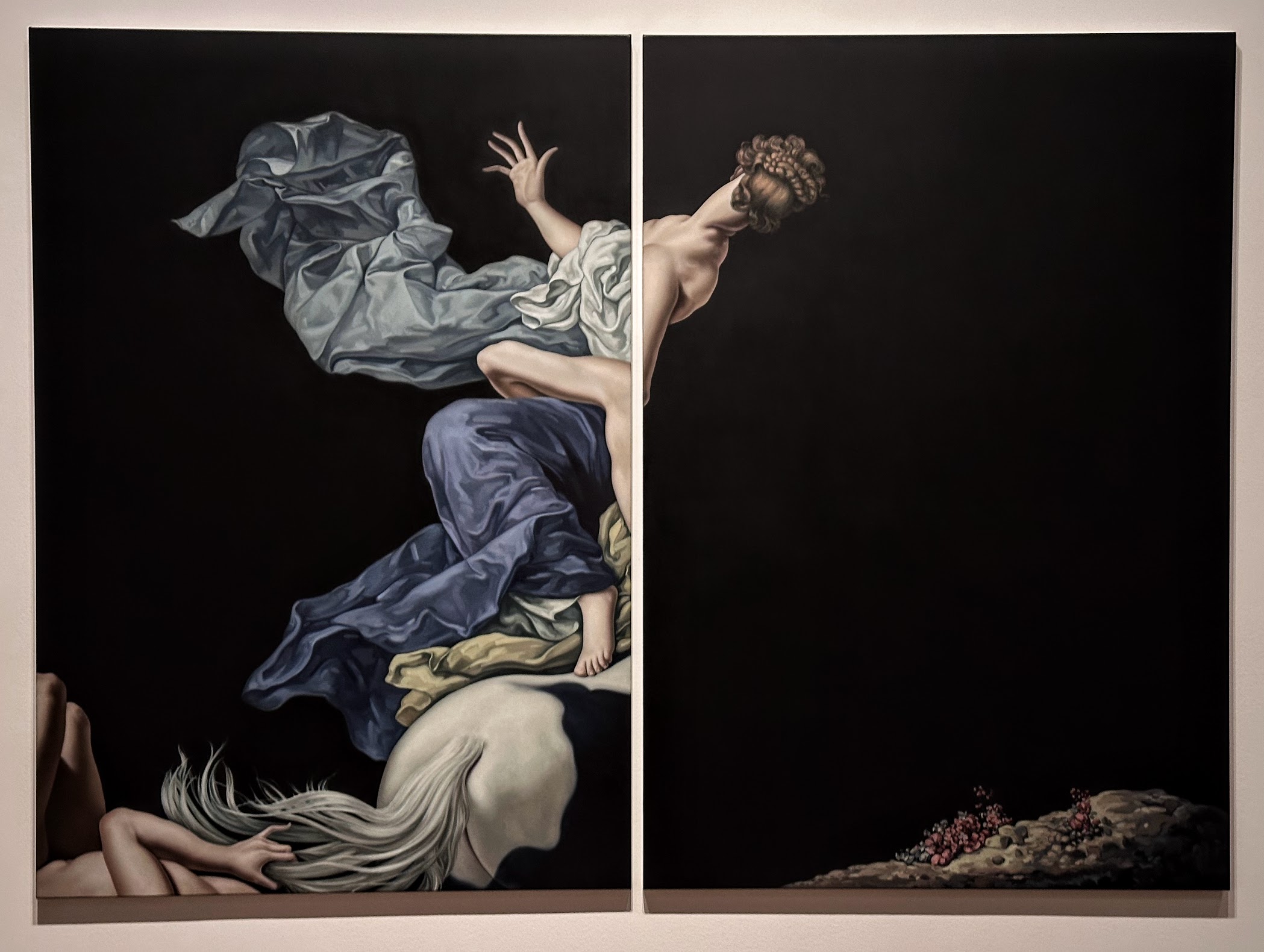
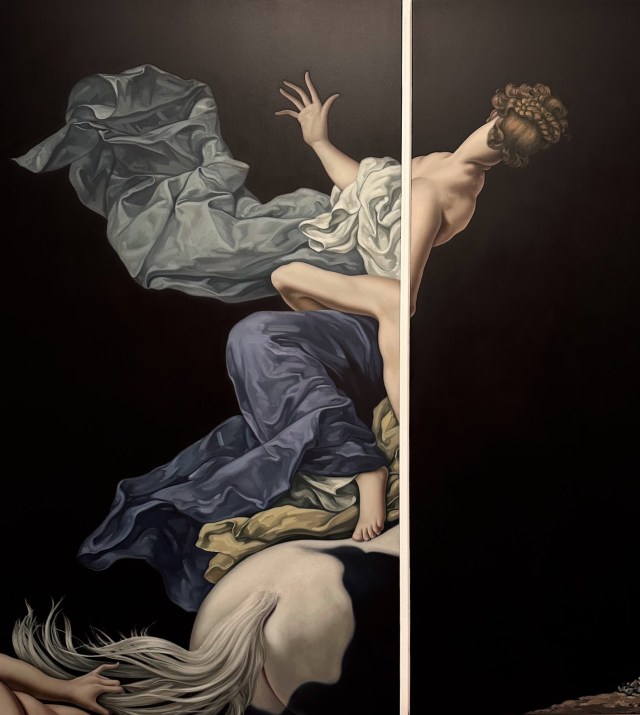
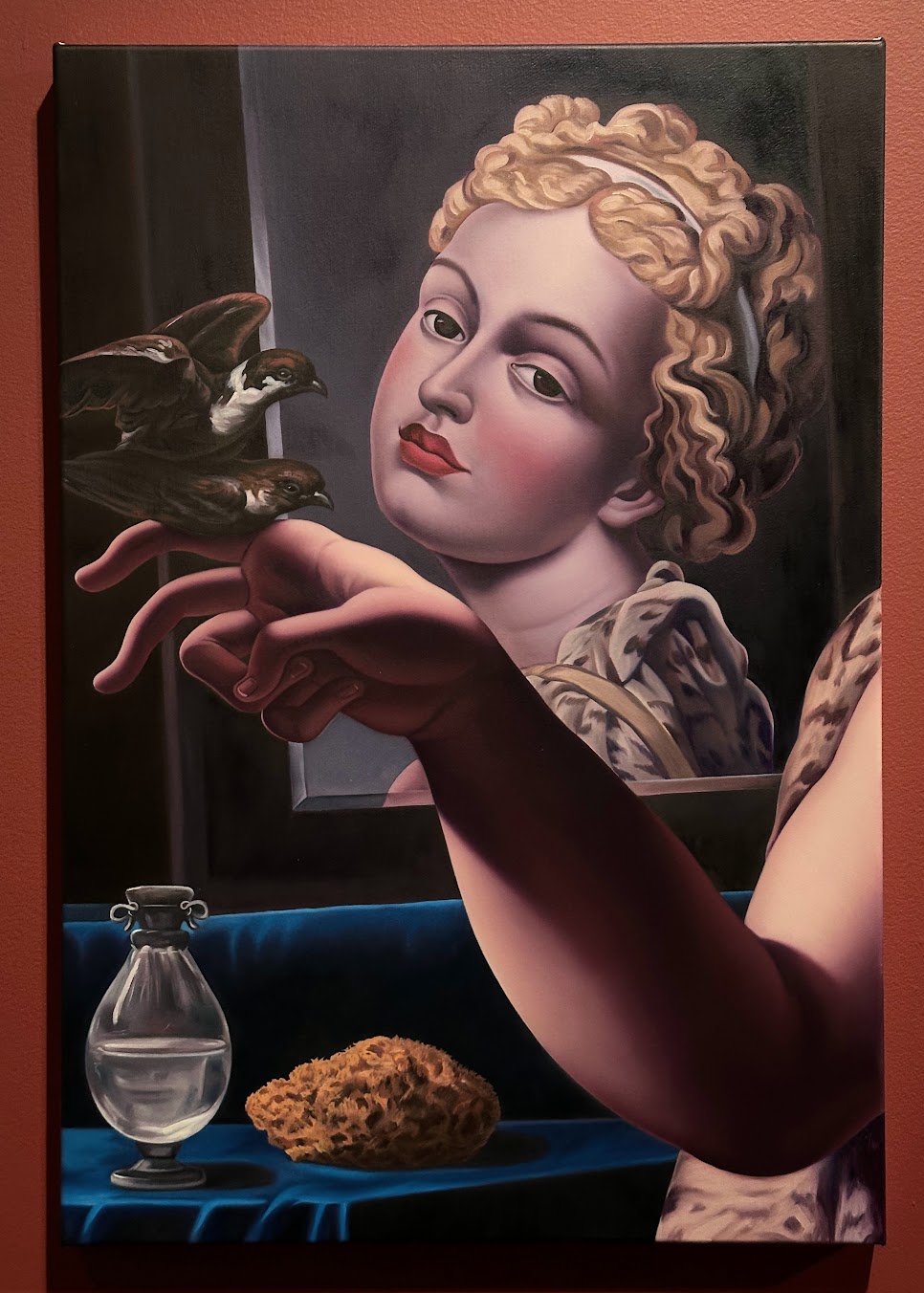
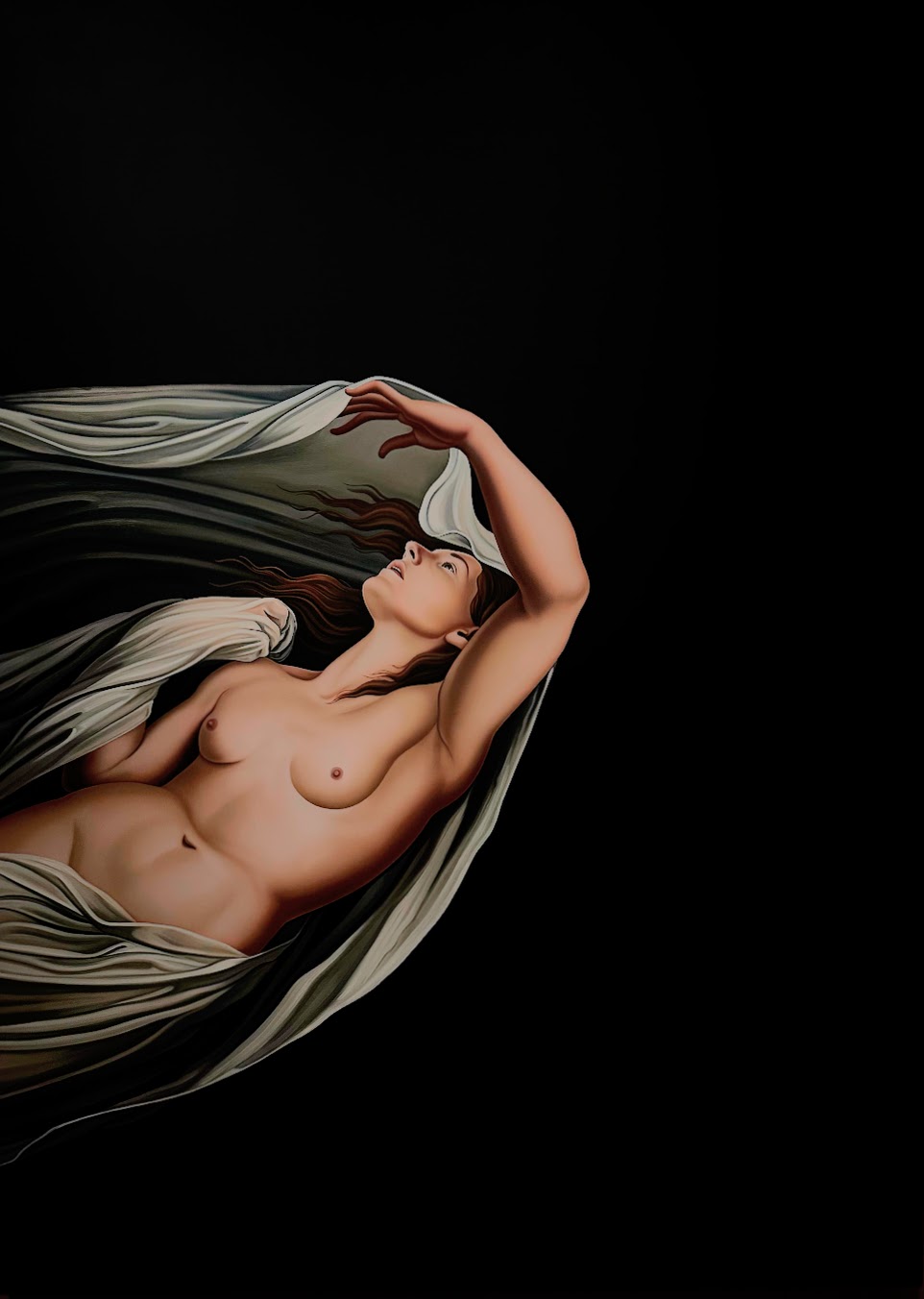
Syrinx (2018) Oil on Canvas

“Srynx ran from the satyr Pan, who tried to rape her.

As she approached the shore of a river, she called out to her river nymph sisters for help.

They transformed her into a crop of reeds, which Pan cut to fashion a flute from her.
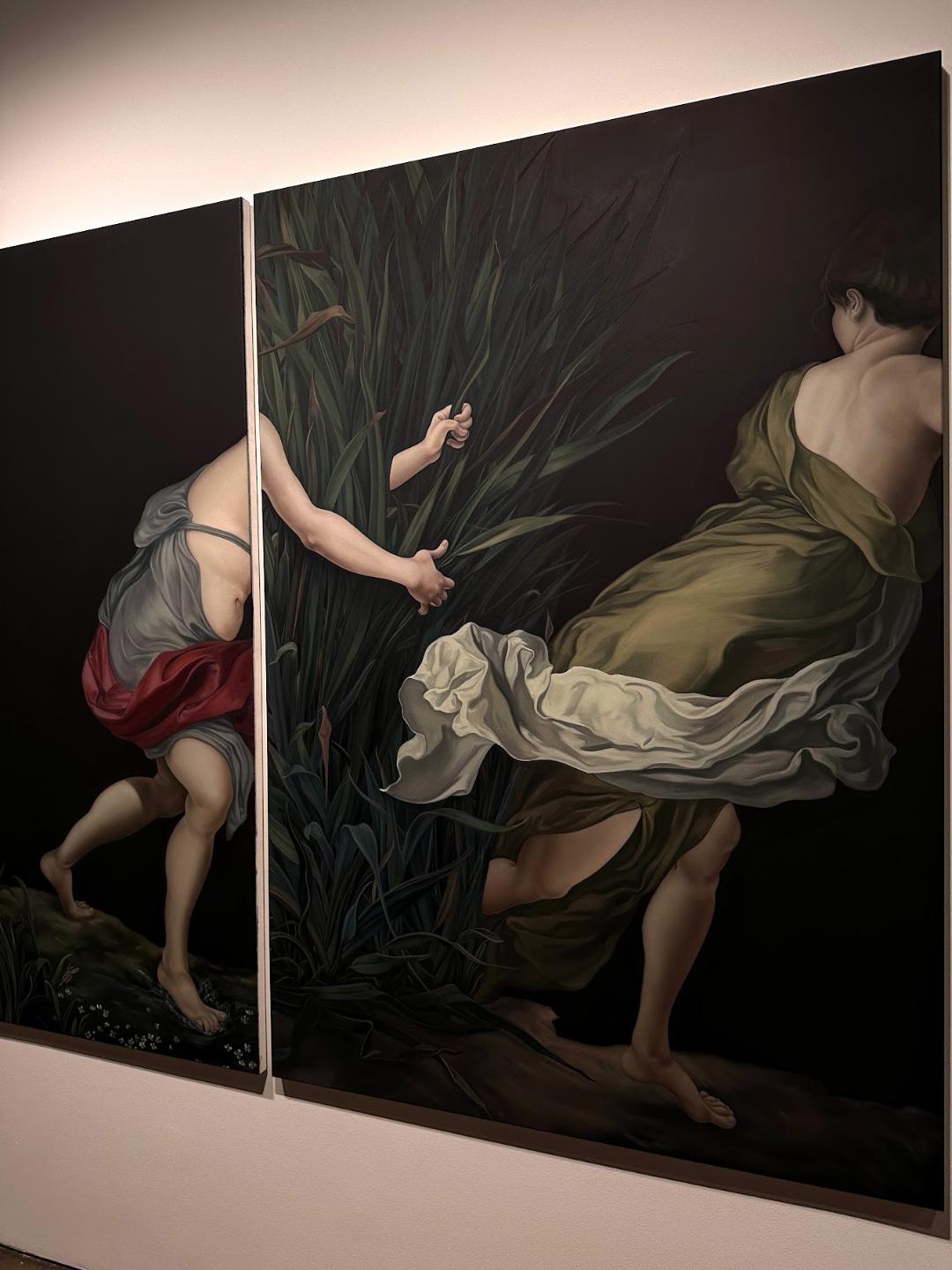
Even the invention of wind instruments was used to justify sexual violence in the ancient world”.
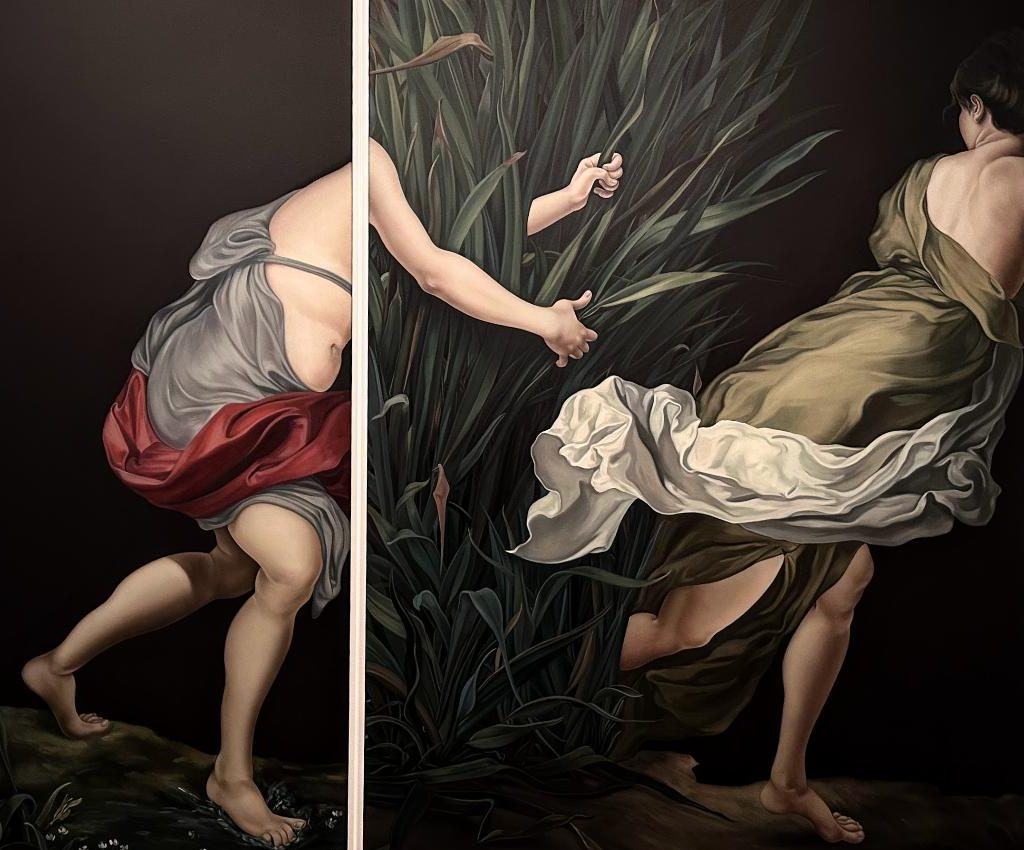
Sexual violence and even the invention of wind instruments…? I didn’t find further info re; that statement, but…
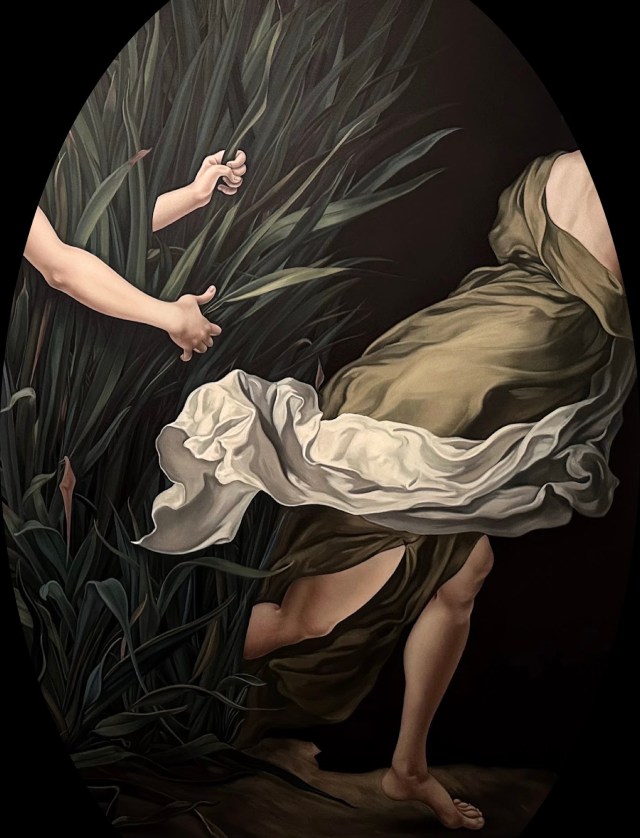
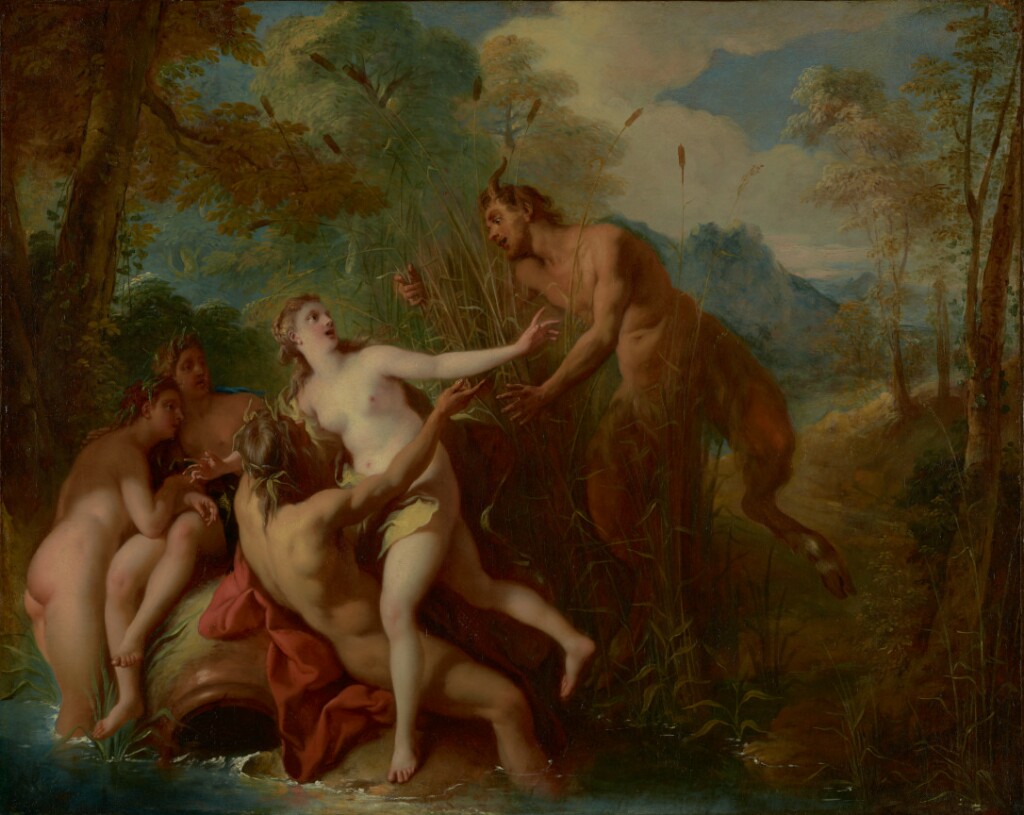
Oil on canvas – 1722/24

I did stumble upon a painting of Pan chasing Srynx, by – Jean-François de Troy. The free download (& more info) is from the Getty Museum. Click Srynx on the left to view the page.

Could not resist a compare image of Jesse Mockrin’s vision, with Jean-François de Troy’s.
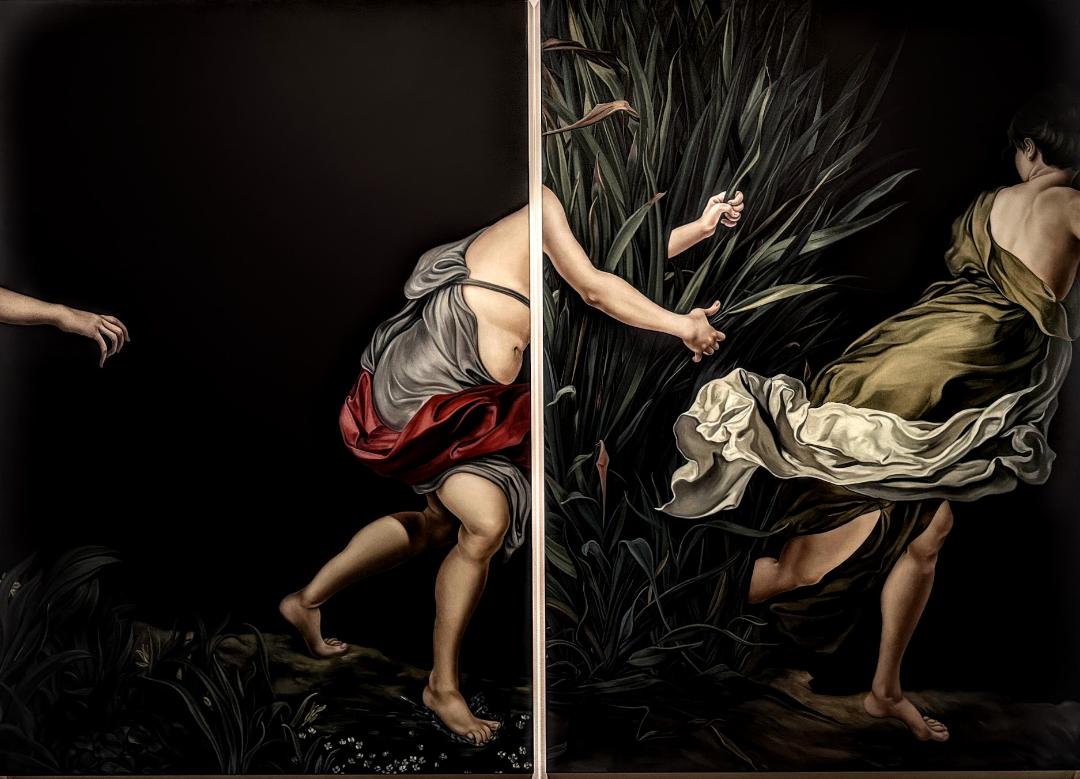
Pics taken by Resa – May 14, 2024

Art Gallery of Ontario, Toronto, Canada

Source: Getty Images – Flag Art Foundation & Art Gallery of Ontario – “Bold italics in quotes are from the plaquards by the paintings”.
The Art of Jesse Mockrin – pt.1

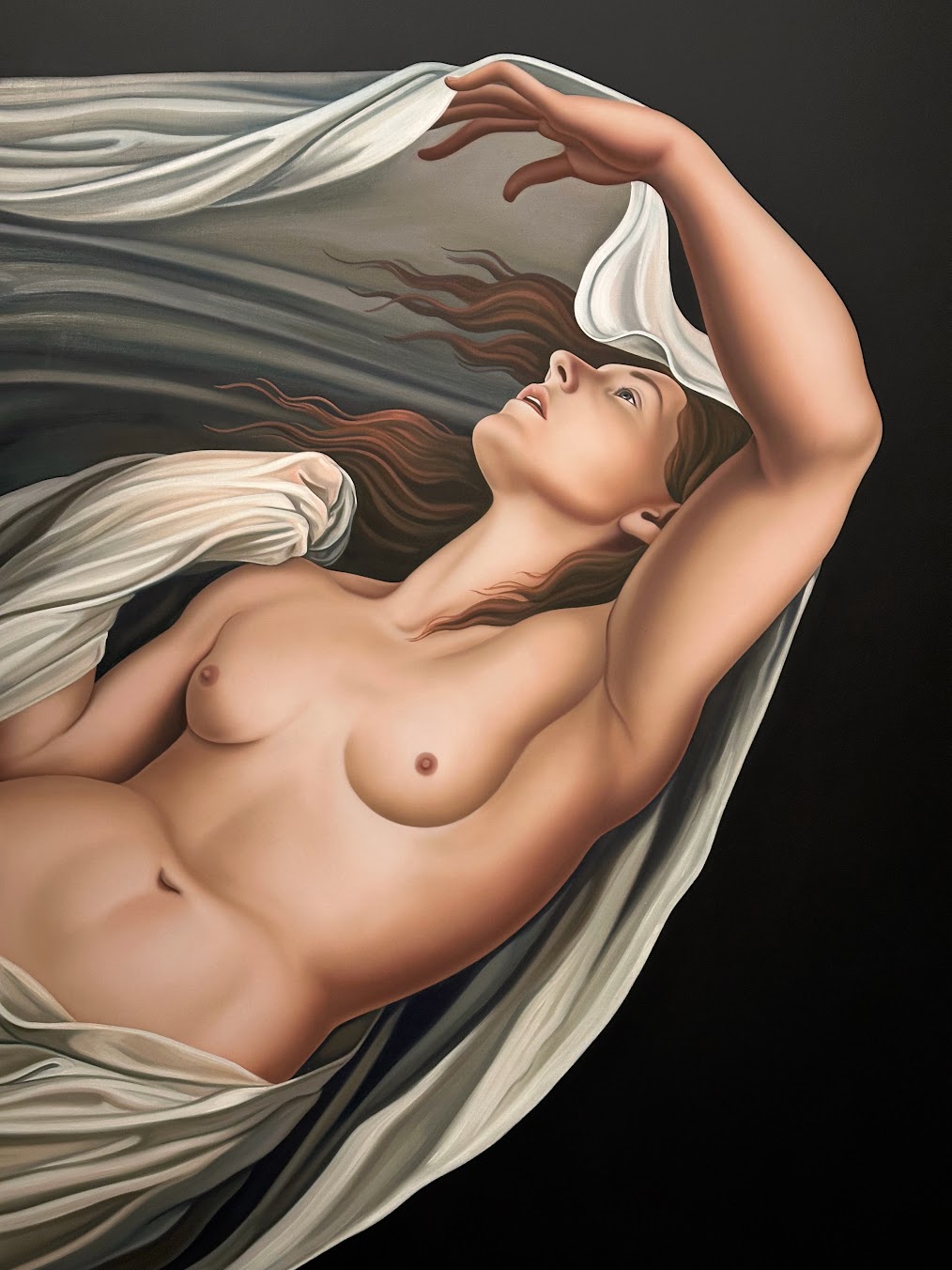
ECHO

“Reworking familiar imagery is just my way of giving history a second look.” – Jesse Mockrin

Only Sound Remains – oil on linen

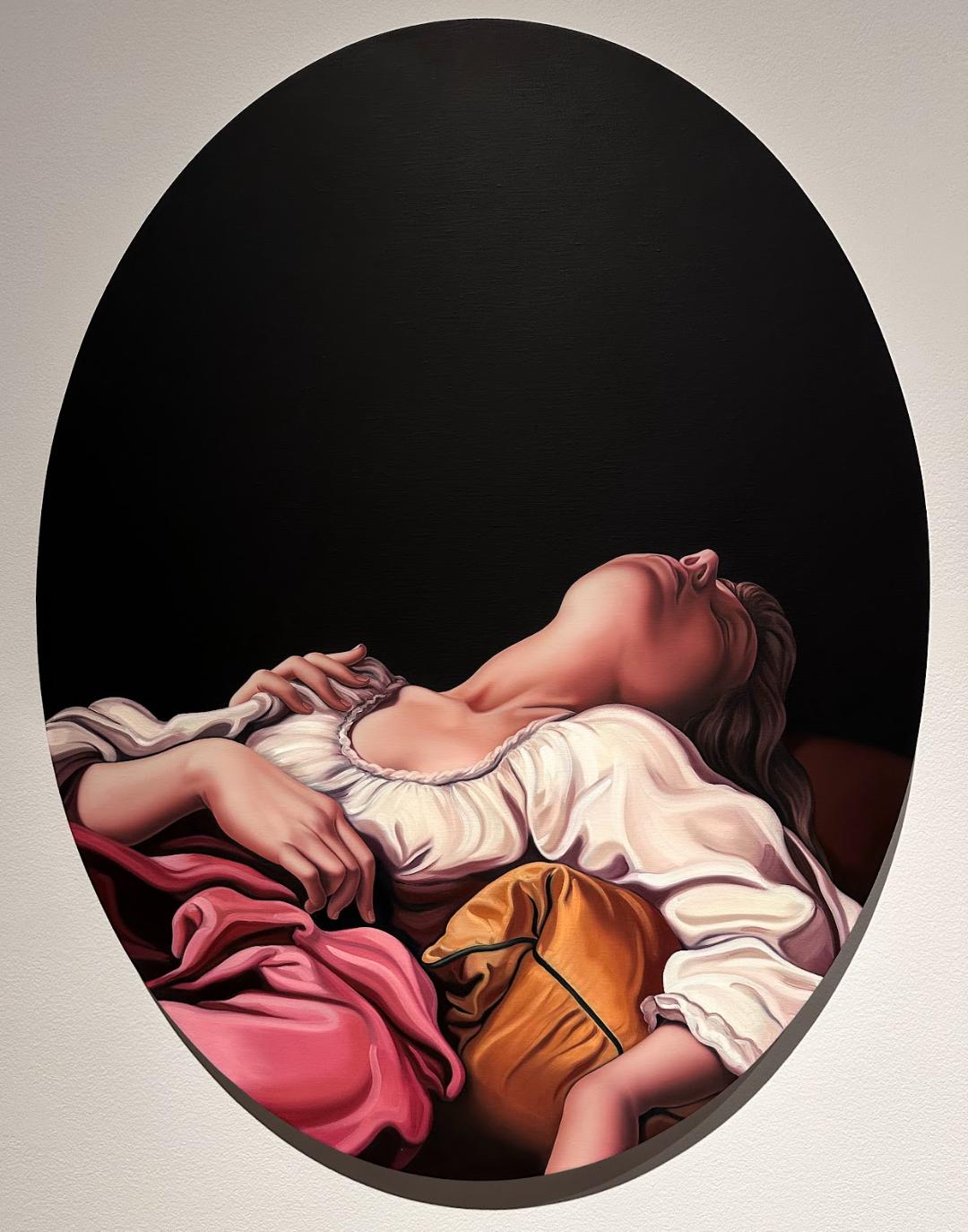
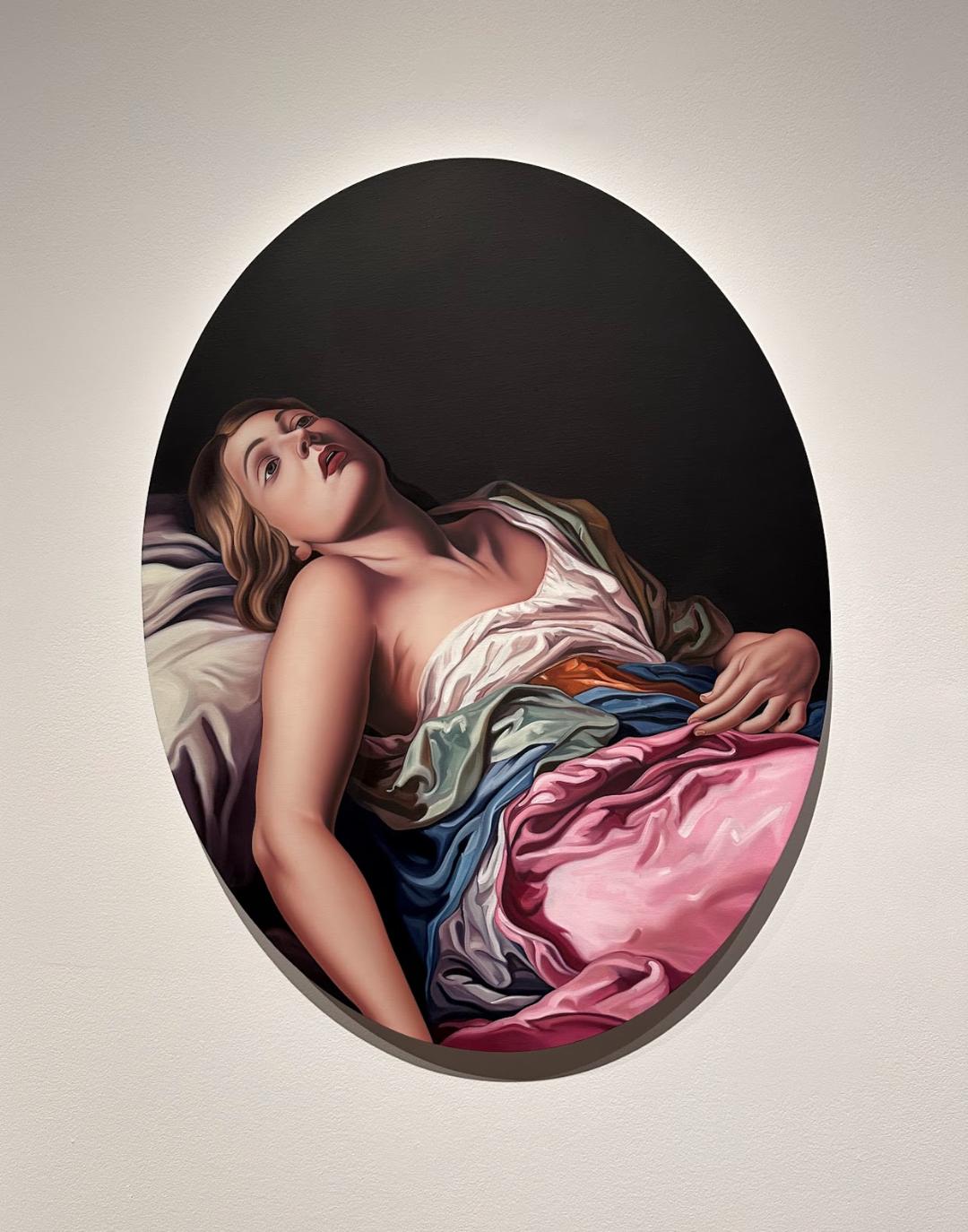
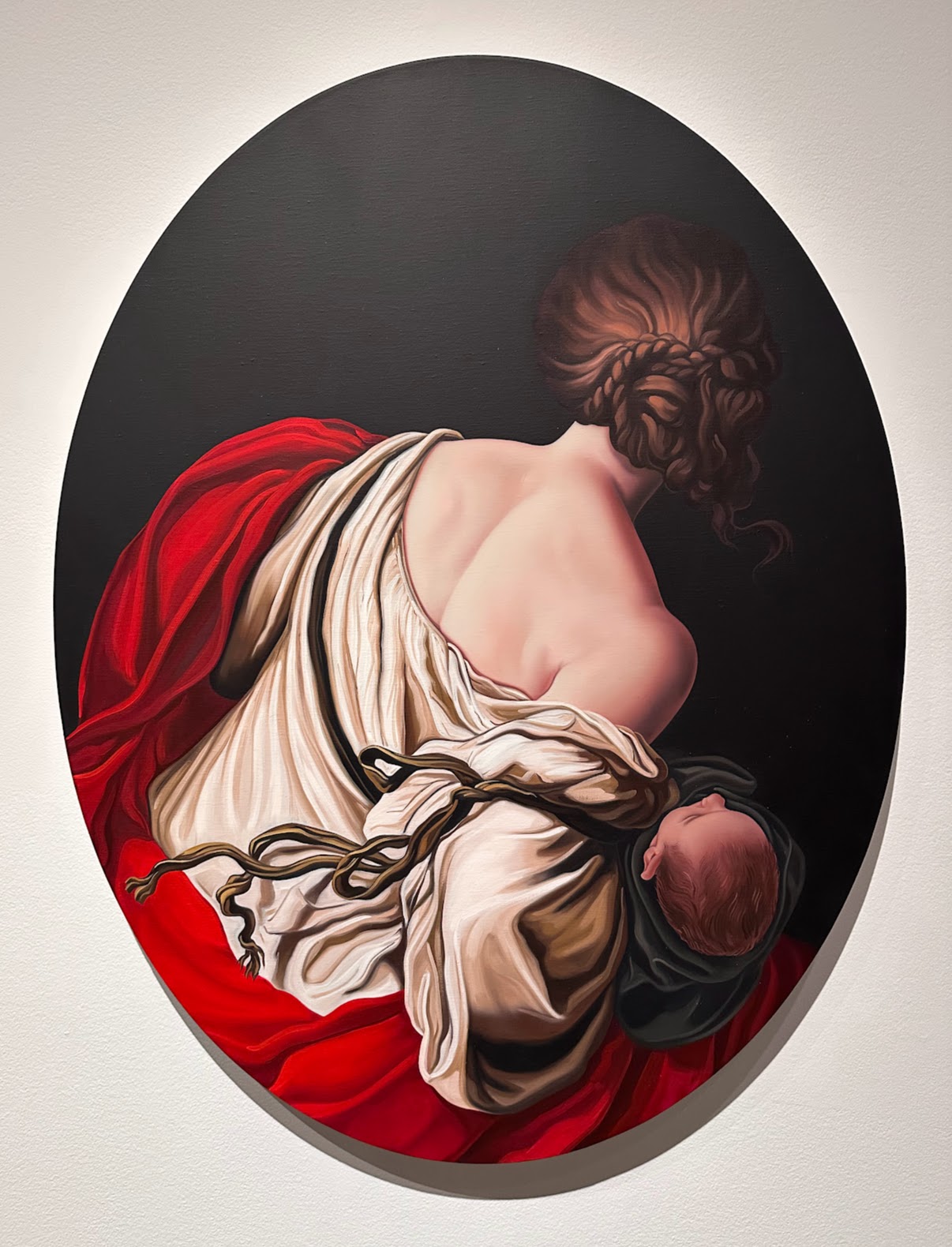
Based in Philadelphia, this artist examines Renaissance and Baroque artists’ art, with an eye on the survival of traditional narratives and beliefs in contemporary society. She then intervenes with her own modern canon.

Jesse Mockrin’s paintings “respond to histories of sexual violence and cruel treatment of women over millennia of myth and story, offering interventions and moments of resistance.”

Collectively, the paintings in ECHO highlight “an ongoing battle for bodily autonomy”.

The above painting is based on the Greek and Roman myth of Echo and Hera.

By Her Hand – oil on linen

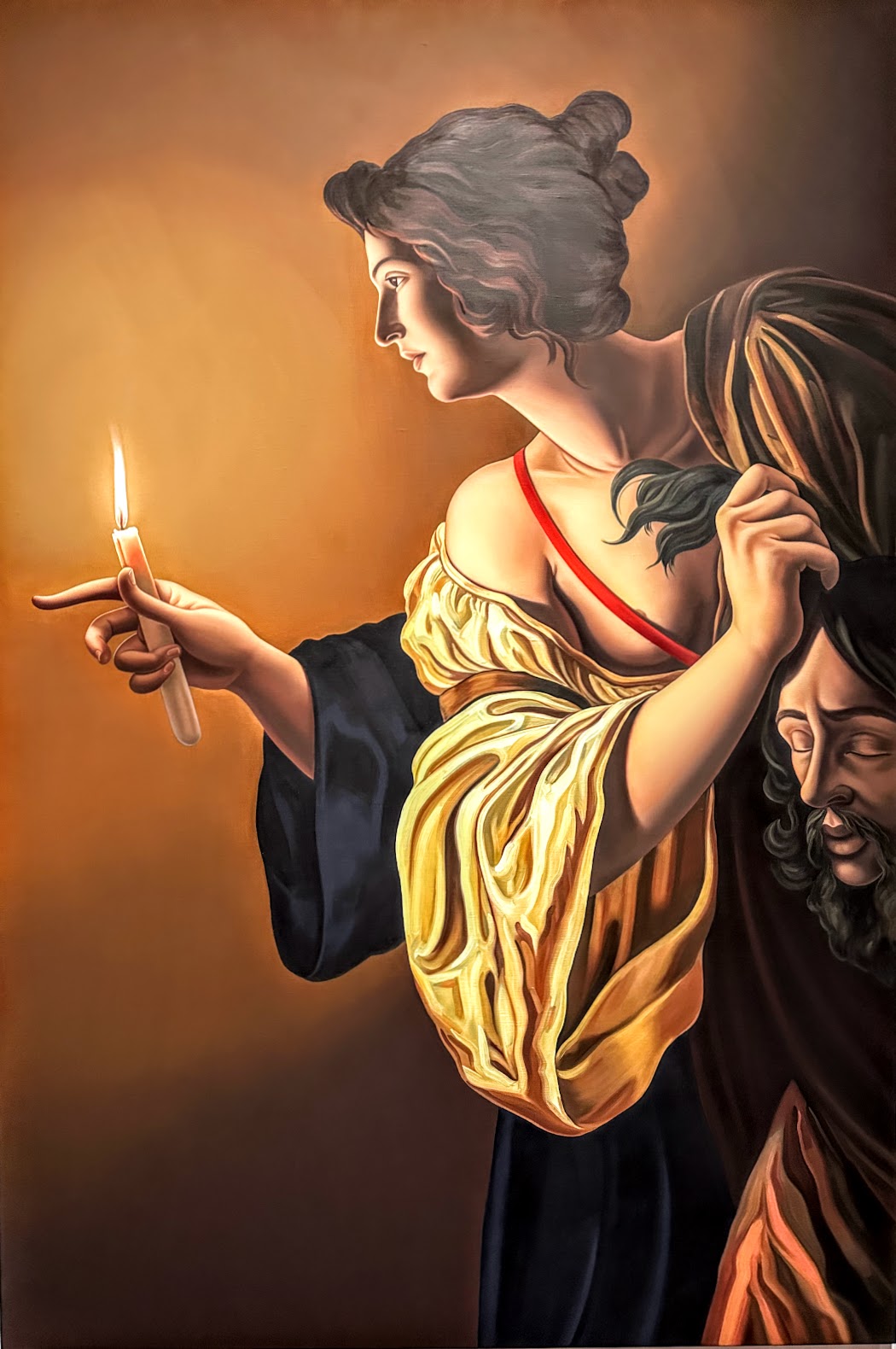
The biblical widow and heroine, Judith, beheads Assyrian General Holofernes and saves her people. This was a popular subject for artists in the 15 & 1600’s due to the “stark contrast between Judith’s femininity and the aggression of her violence.”

Behold/Beholden – oil on linen

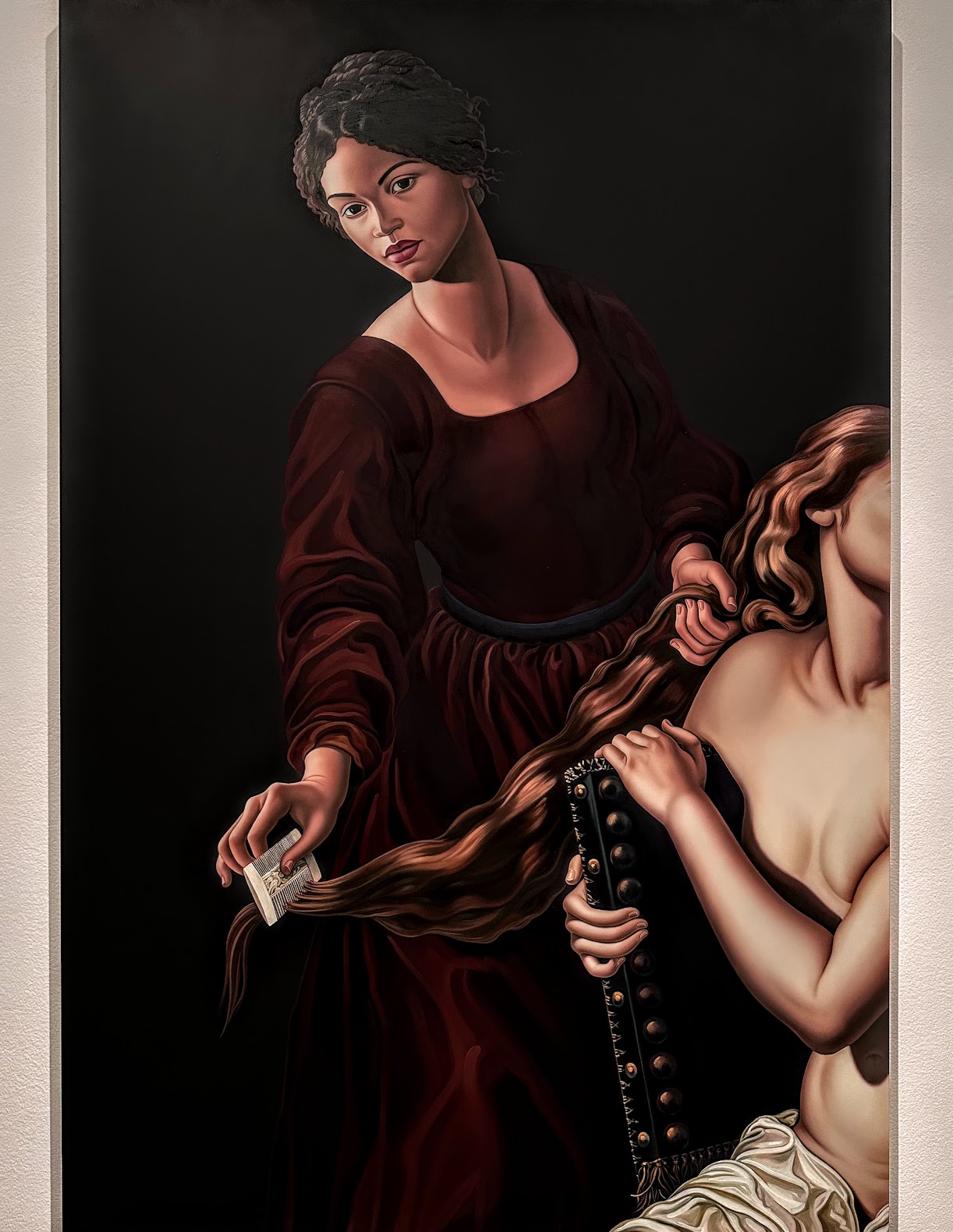
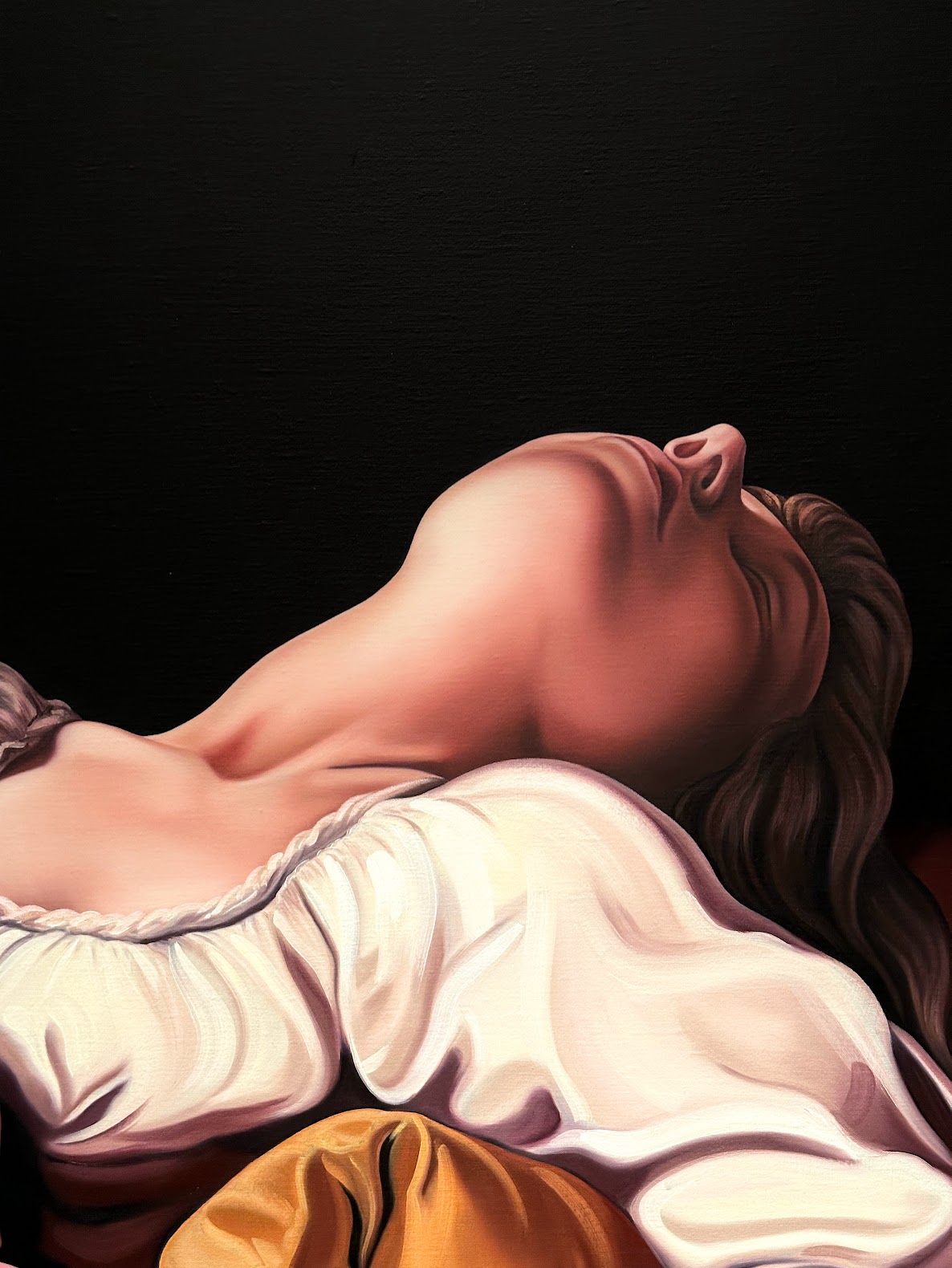
Mockrin builds up thin glazes of oil paint, a European Renaissance developed technique. “she crops her composition sharply, hiding critical elements of a story and leaving conflict unresolved.”

Unvarnished, her paintings have an eerie flatness.

In mid-stream – oil on canvas

“Grasping, pulling, lifting …. I am drawn to the ways that Baroque painters build drama and tension into their compositions.” Jesse Mockrin

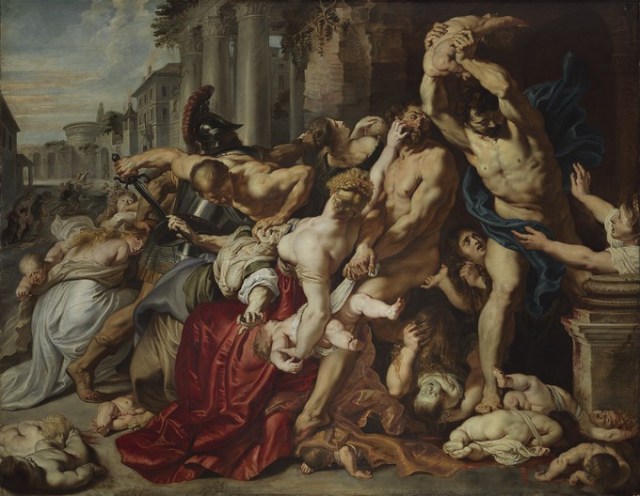
Based on Ruben’s The Massacre of the Innocents, the woman in the right panel is based on one of the mothers protecting her children.

Painted circa 1610, The Massacre of the Innocents resides in the AGO’s collection. The photo on the left is an allowable share from the AGO. Click on the image to visit the page, and a larger version of the masterpiece..

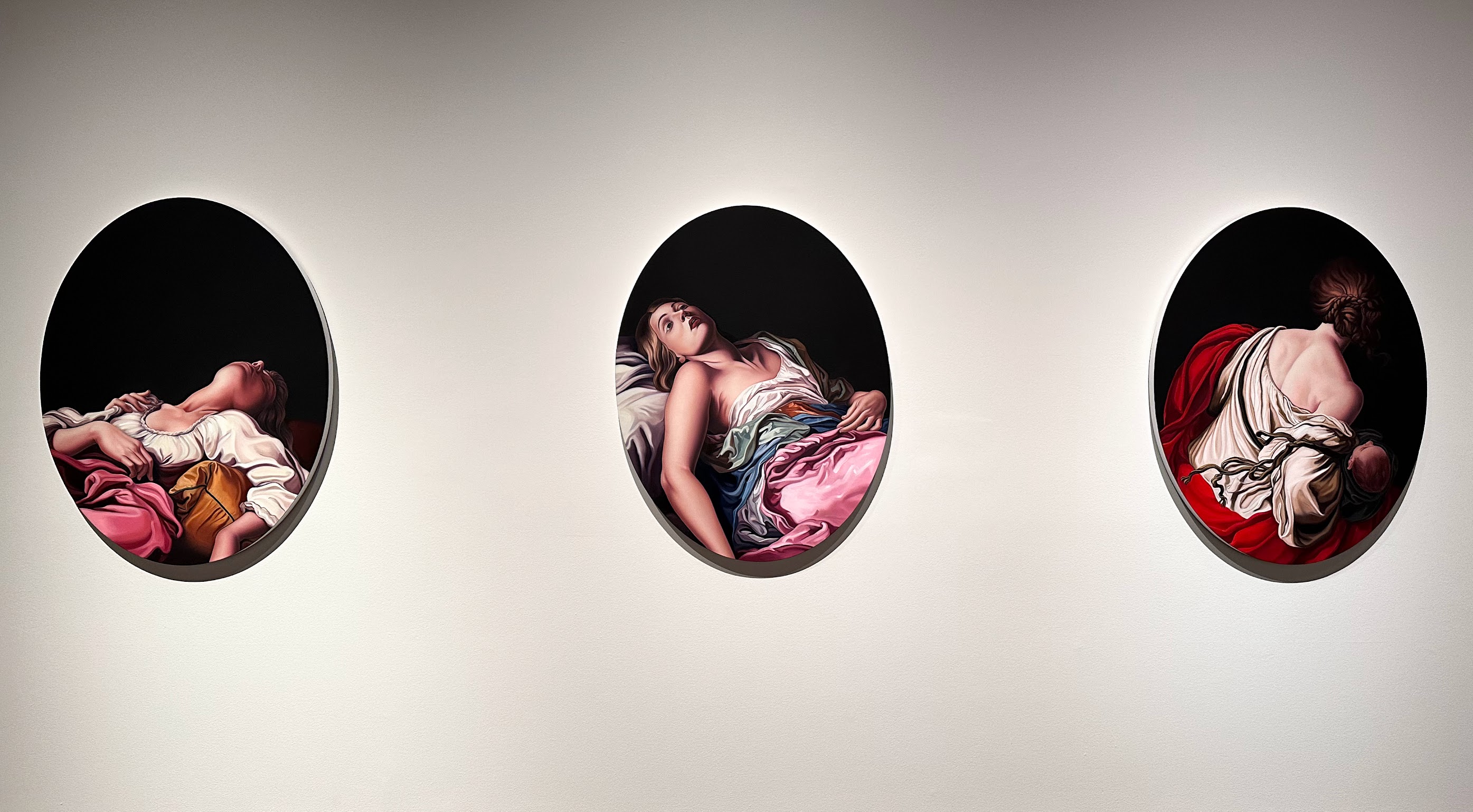
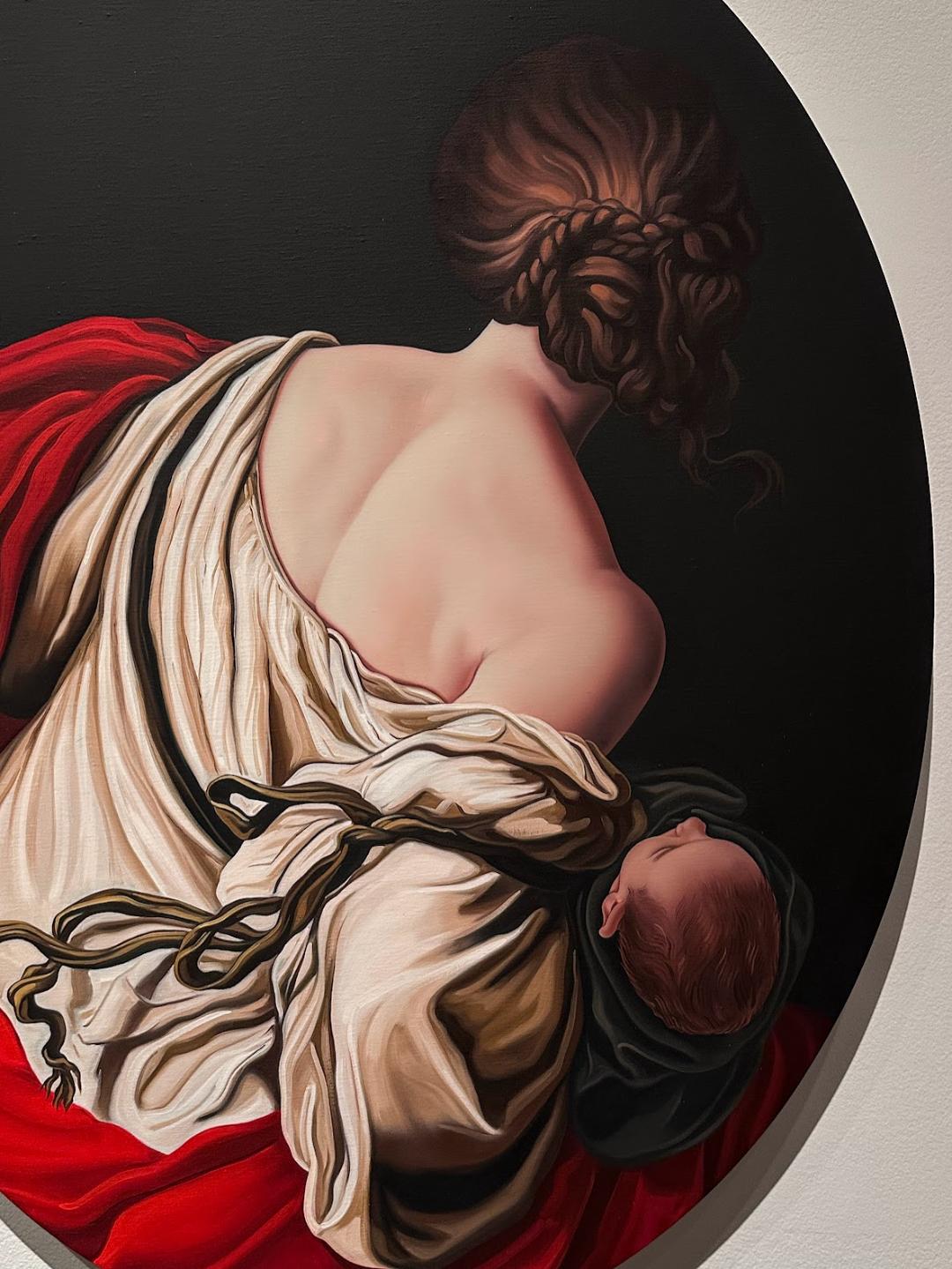
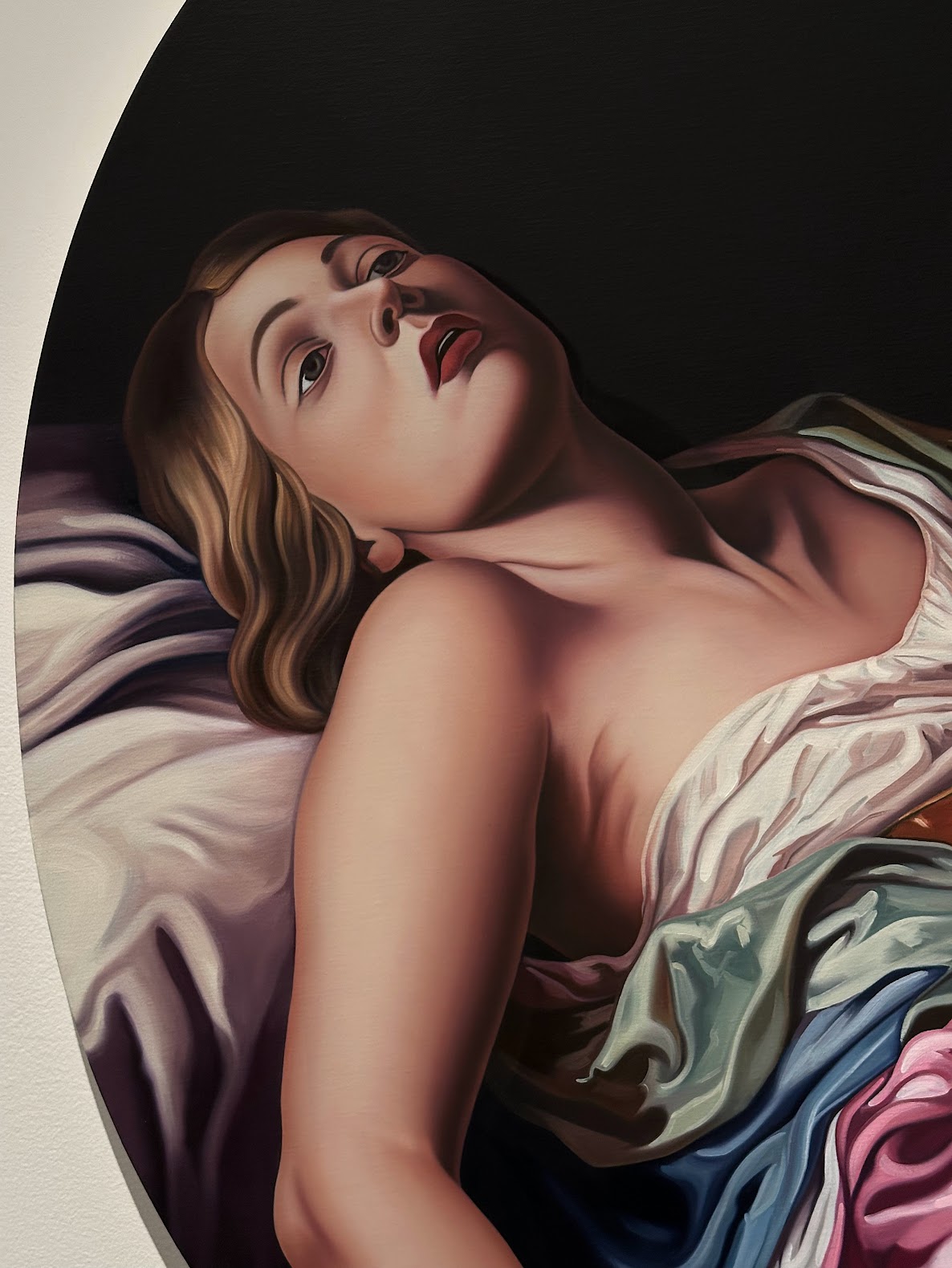
Leah had many children. After many years of yearning to be a mother, Rachel had 2 sons. She died giving birth to the second child.

Longing – oil on linen
Lovesick – oil on linen
A cry is heard – oil on linen

“It’s very emotional and very real, her longing for a child and then her tragic death as a result of it.”

“We think we’re not that similar to these characters, but they were just people, same as us.” – Jesse Mockrin

Exhibition – oil on cotton

Pics taken by Resa – December 9, 2025

Art Gallery of Ontario, Toronto

“Quotes in bold are by Jesse Mockrin”

“Quotes in italics are from the AGO”

All source is from the AGO