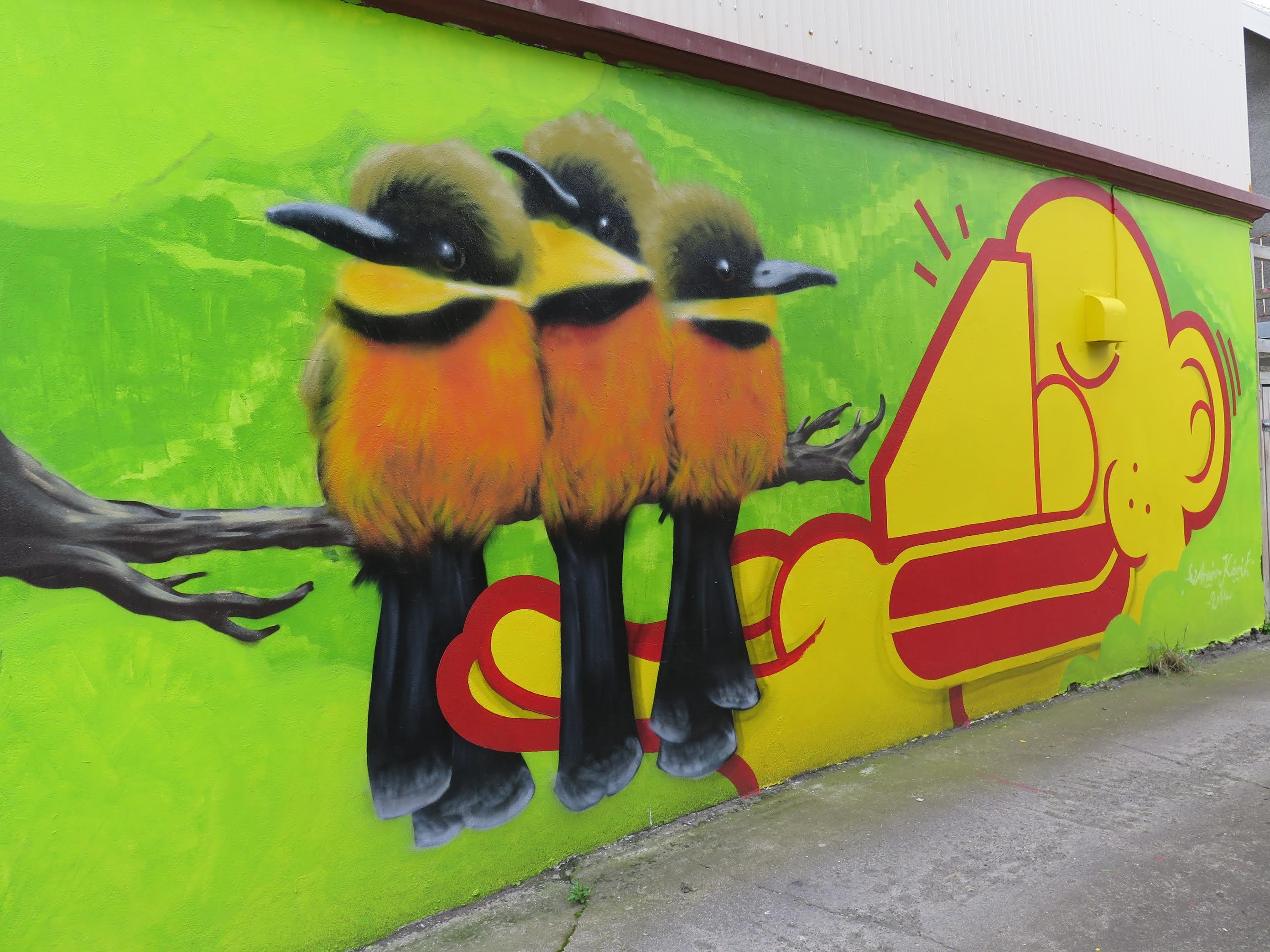
The bird on the dead man’s legs is a San Pedrito (Puerto Rican Tody), an endemic bird on the island found nowhere else in the world.
This slideshow requires JavaScript.
“The heart was painted with lots of detail. Perhaps there is an analogy of the heart with the flower since both need air; the plants through transpiration, and humans through respiration.”
He financed the town with bonds & charged the people rent. The company did all the maintenance and kept the houses, landscaping and parks clean & pristine.
Then came a recession. He cut wages. but didn’t cut rents. This started the rail-road strikes. Pullman was reviled, became called despicable & un-American. Now, over 100 years later, some of these houses are still in use.
“Reference: Old little Ticket Office where train tickets were sold….It is still placed in front of the actual Tren de la costa Station. San Fernando Buenos Aires Argentina.”
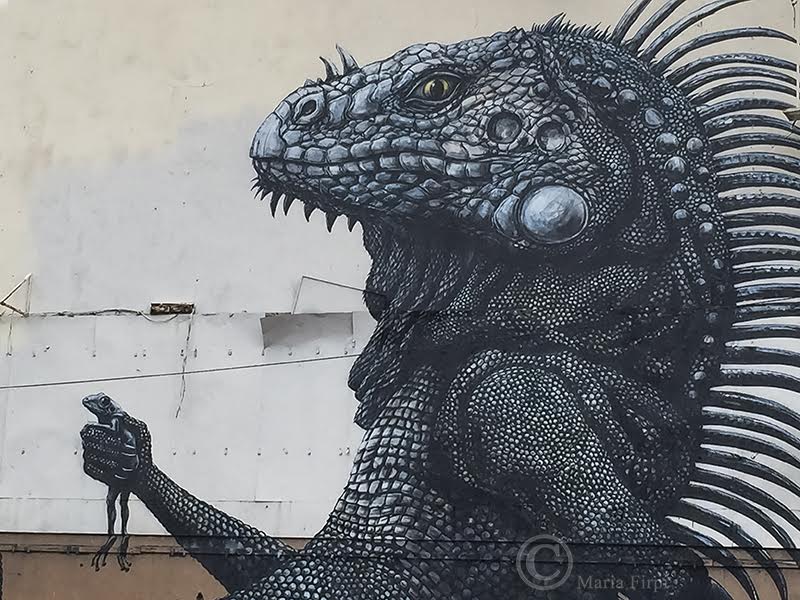
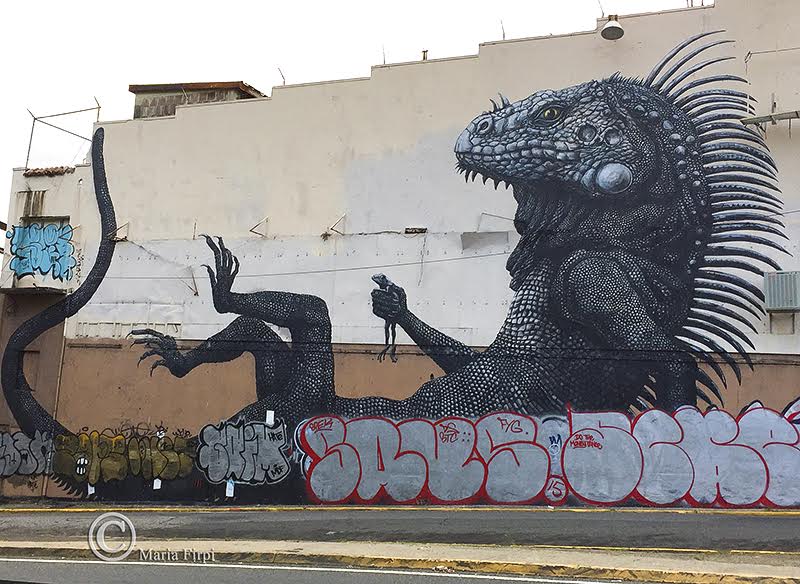
“This mural has very good technique. It depicts a Green Iguana, officially declared as an ‘invasive species’ on the island. The unknown artists of this mural painted the Iguana as a huge monster holding a Coqui Frog in its hand. “
“Here you can see the detail of the Iguana holding the Coqui Frog. The truth of the matter is that Green Iguanas do not attack Coquis, so at the time this mural was painted, there was a misconception of the Green Iguana and the reptile, which has been stigmatized ever since. The Green Iguana is a beautiful reptile and its diet is strictly vegetarian. I love Green Iguanas and will do anything to rescue and protect them from being harmed.”
“This mural was painted on an exit to a highway. It depicts two black women surrounded by Caribbean Monarch Butterflies. Puerto Rico is very proud of its African influence and heritage on the island. Several famous black artists have had a major influence in the arts, and this mural pays a homage to black women.“
“The mural is slowly deteriorating, nevertheless it still has great detail. Caribbean Monarch Butterflies are unique because they don’t migrate and are native to the Caribbean region. They are slightly smaller than the Canadian ones but have the same colors and morphology.”
You must be logged in to post a comment.