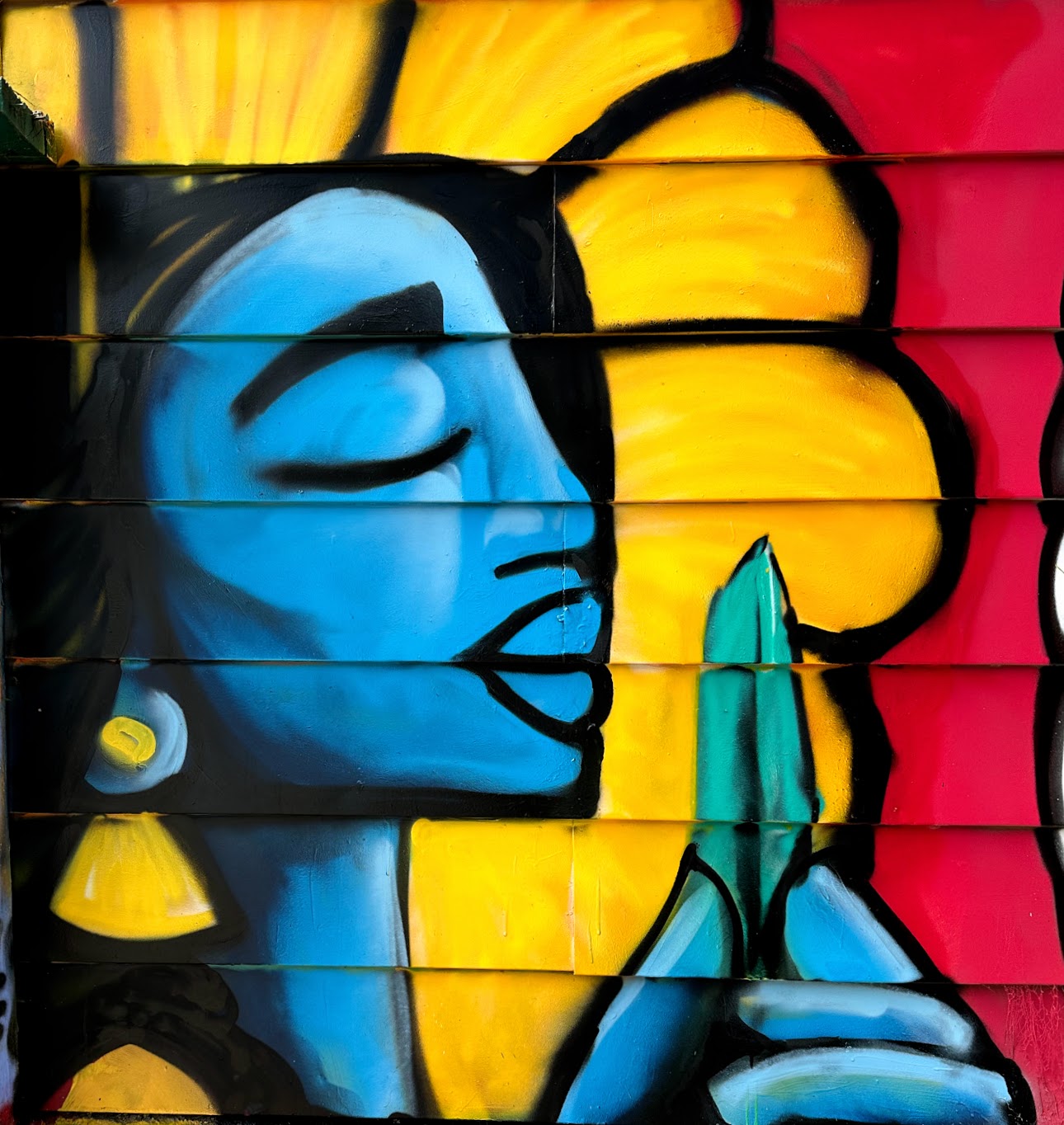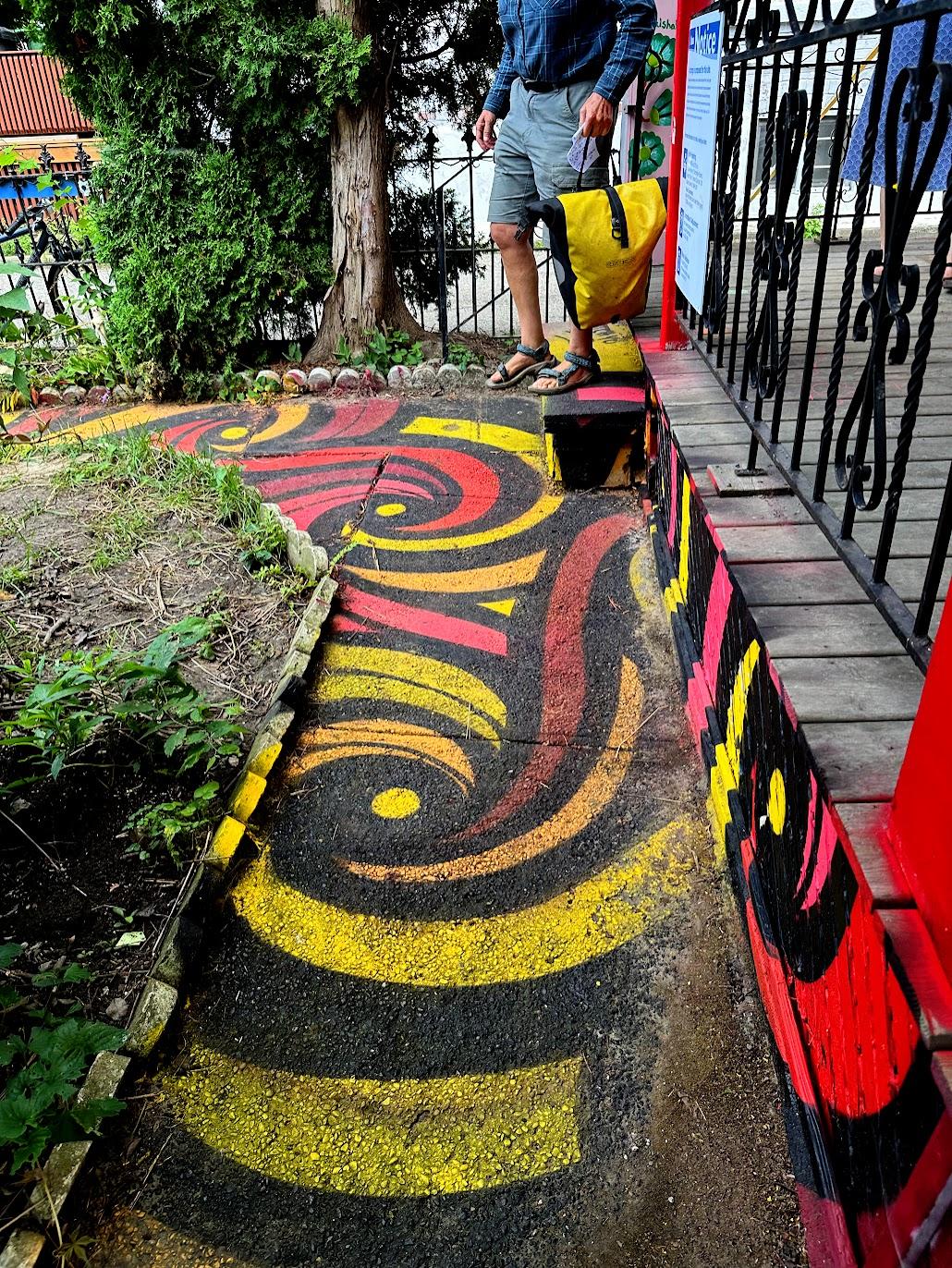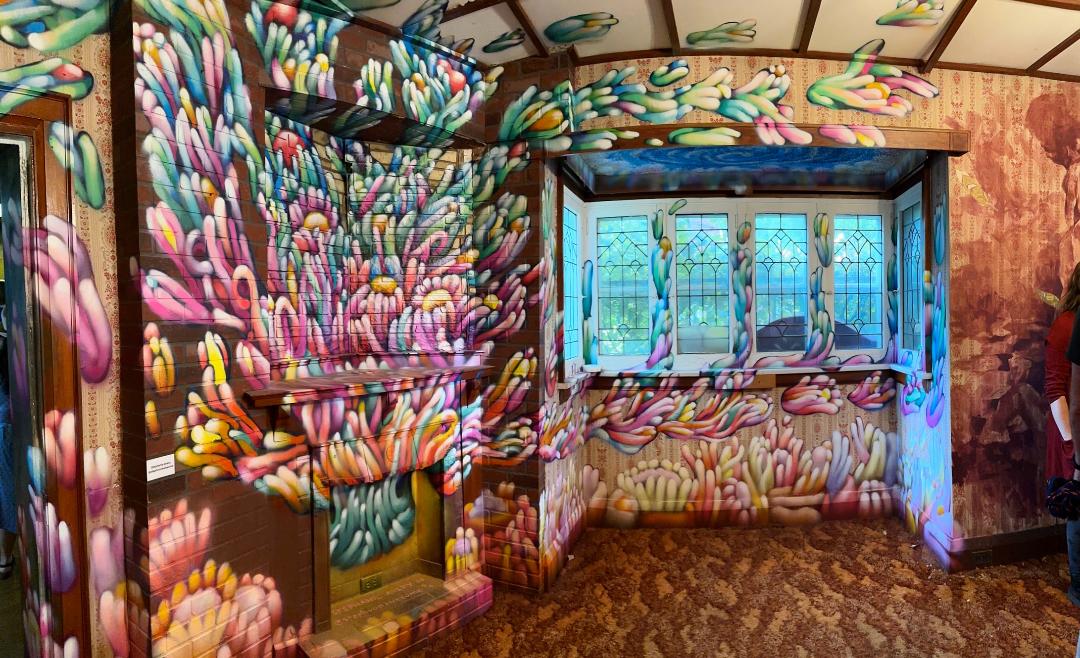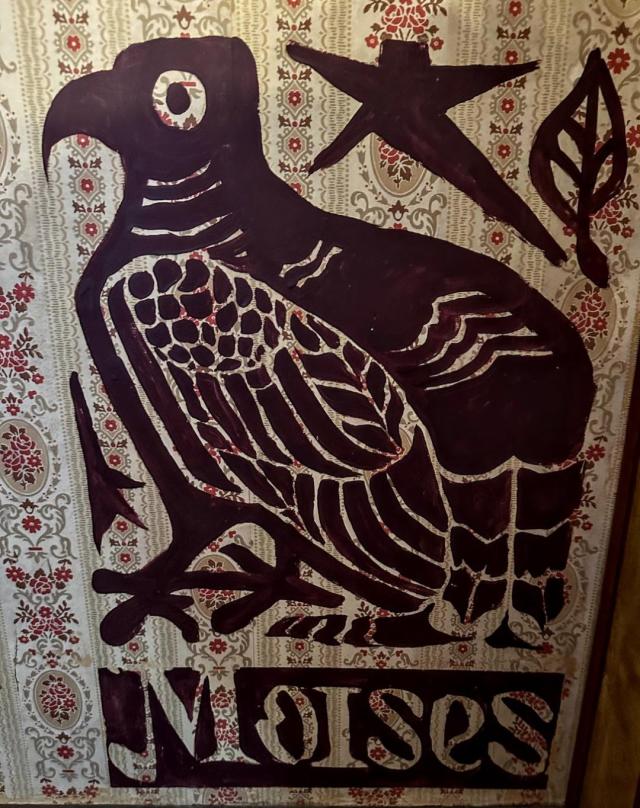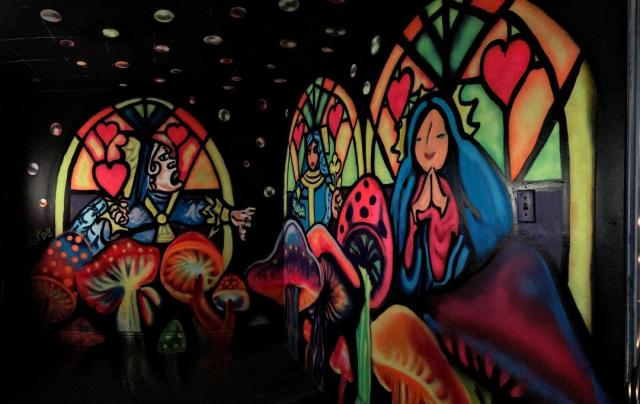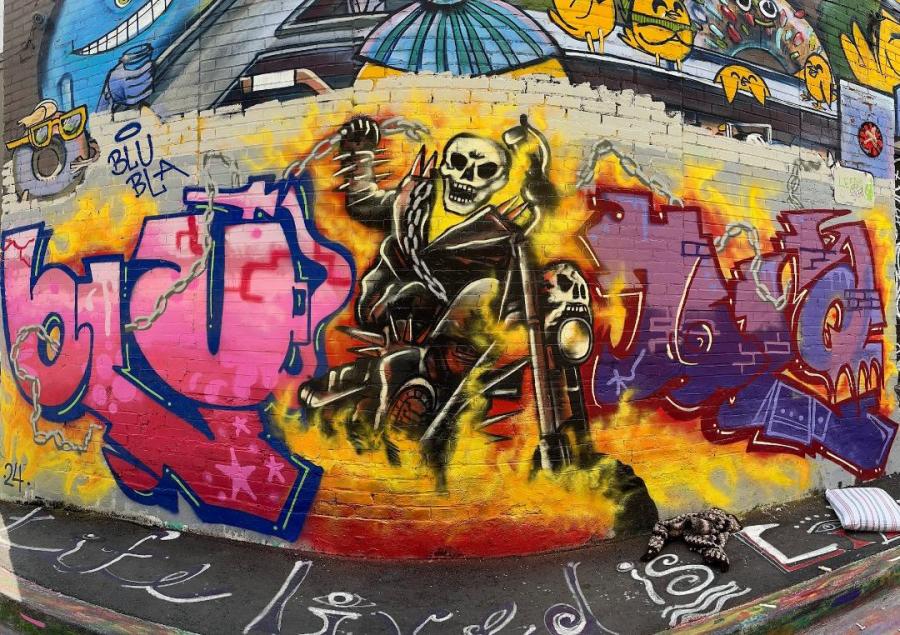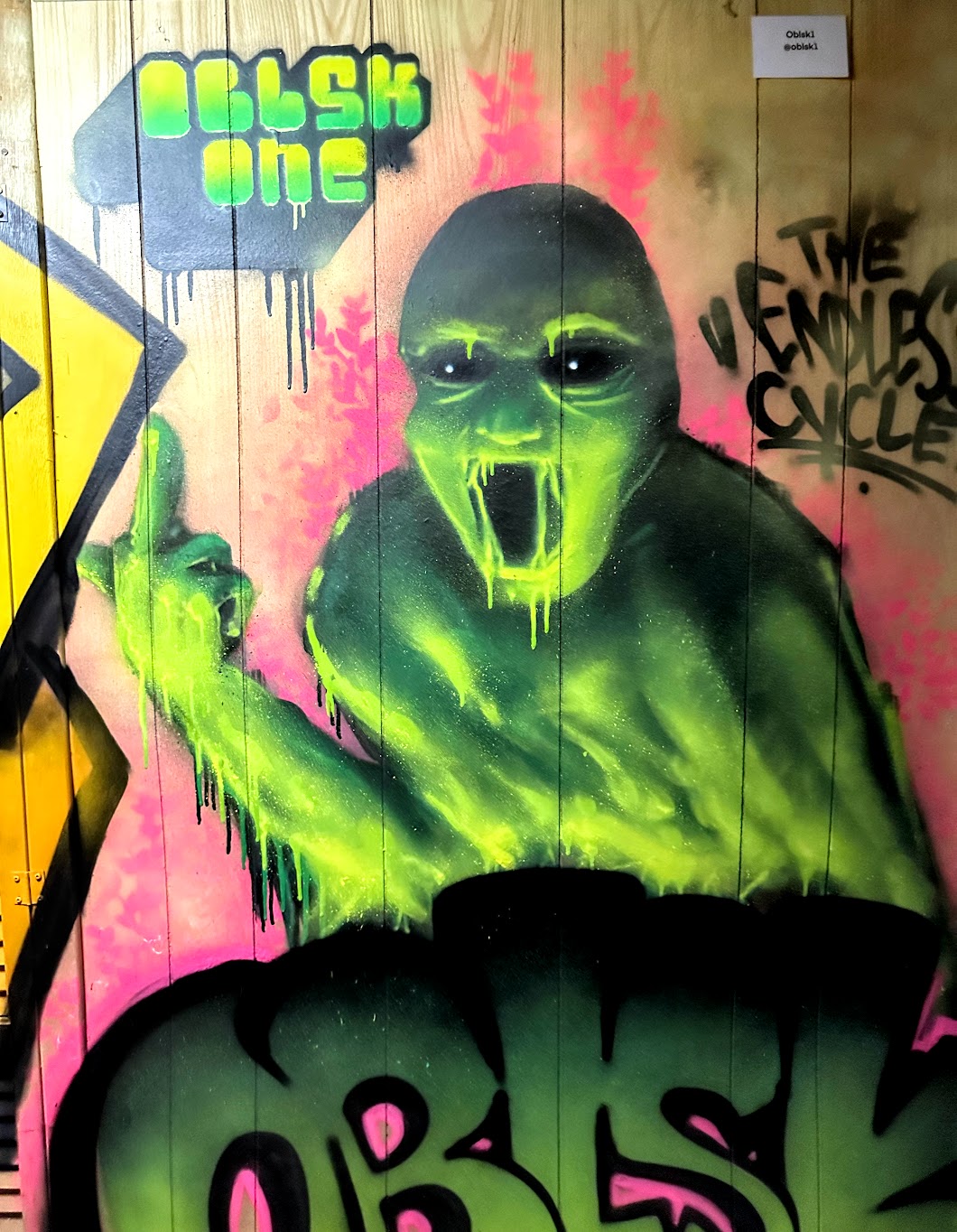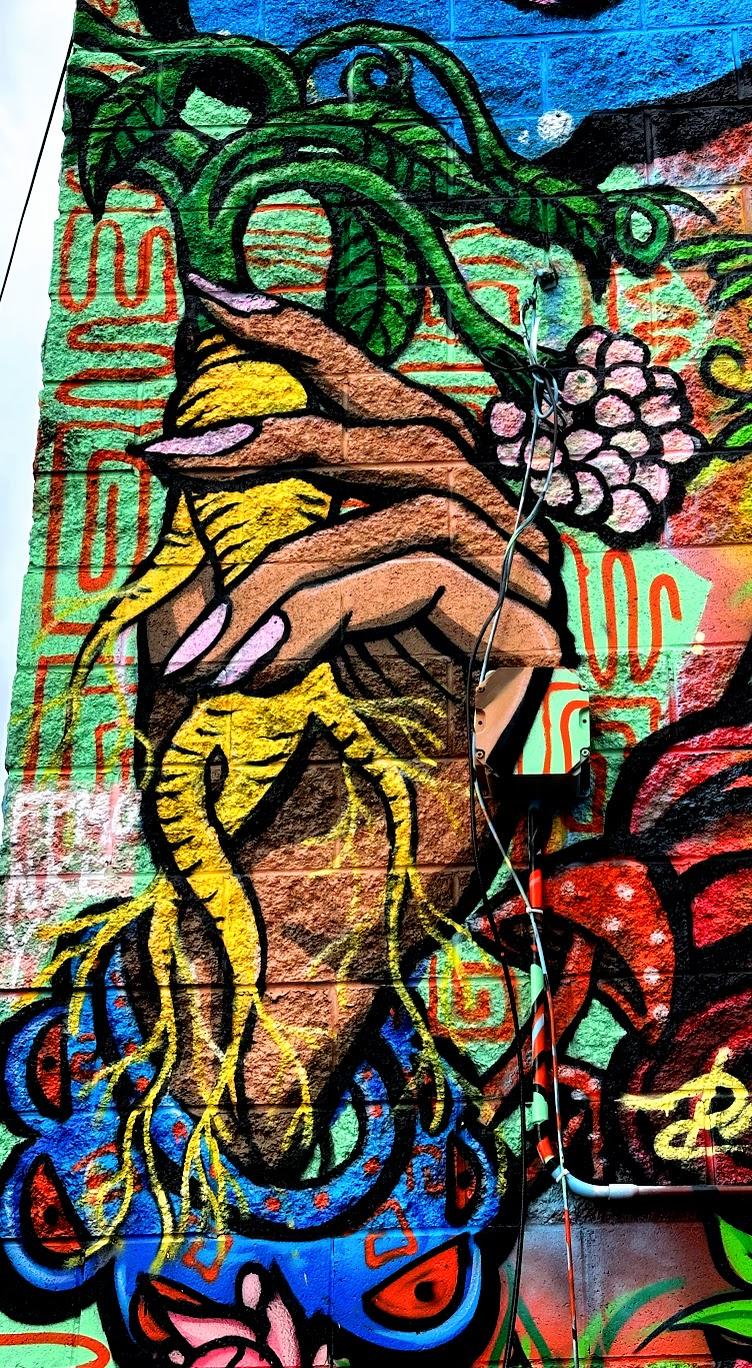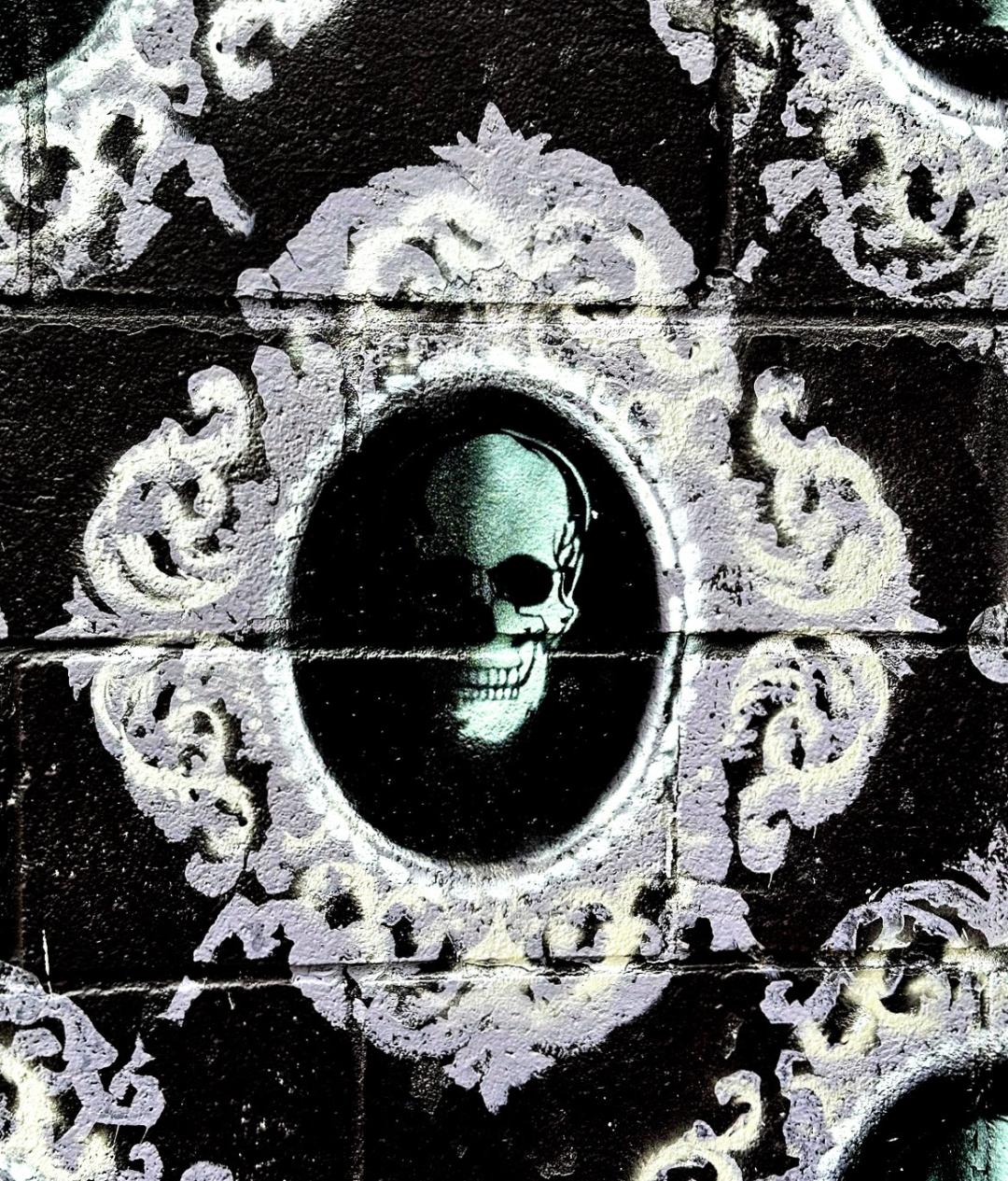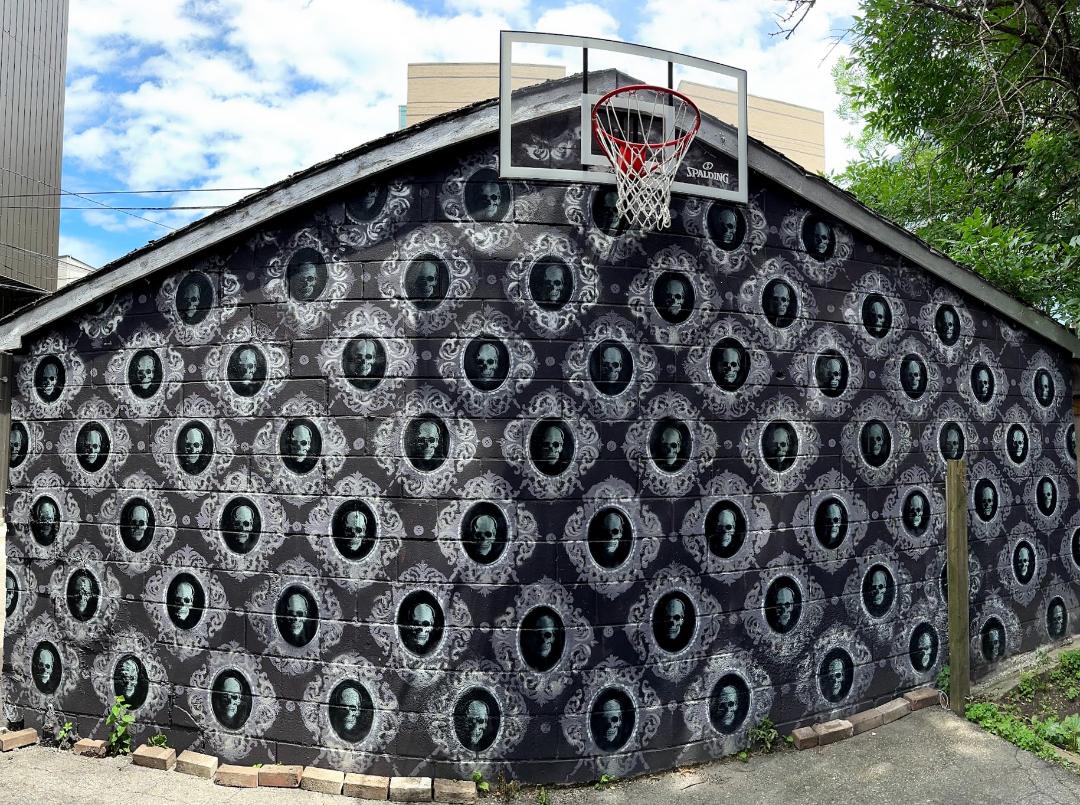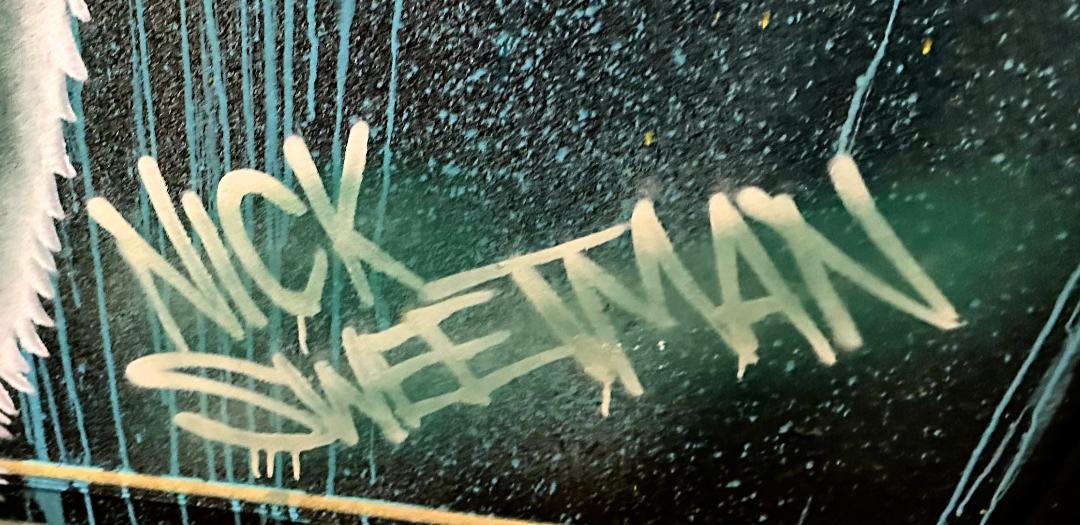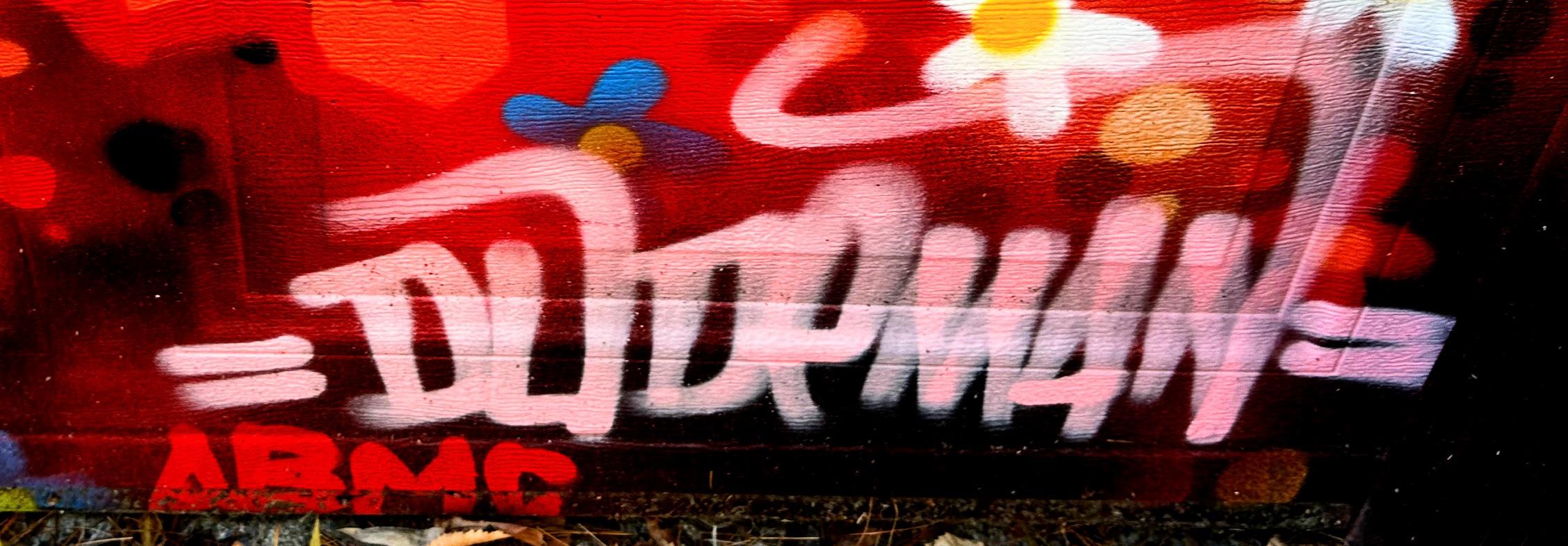
In this second last post of the Painted House, we look at the remainder of the interior.
Main Floor
Bathroom
This is a difficult painting to capture, as the bathroom was about 5′ wide, tops.
I used the zoom-out feature to shoot it.
……which accounts for most of the distortion seen in the slideshow.
Dining Room
Living Room
The art was painted over wall paper in the living room. In a couple of pieces, the art was integrated with the wall paper, as seen in. the slideshow.
Second Floor
Bedrooms
This was a Jackson Pollack + (sort of) all over paint with installation. This is a tiny room, and the most popular with the kids.
“Put that back! Don’t touch that! I want this! No, it’s part of the art! Waaaaaa!, Don’t go there! I want the bear! Put the bear back!,etc.”
Not a guy, part of the art.
I got out of that room fast, but not before I nabbed a shot of me in the splattered mirror.
The master bedroom was done in faux stained glass effect, and partly shown in in the post September of The Painted House series. The third bedroom was featured in Bedroom of TPH series
All 8 (9th coming soon) of The Painted House posts are easily available to view by clicking on the diptych doors art, second from the top on the sidebar.
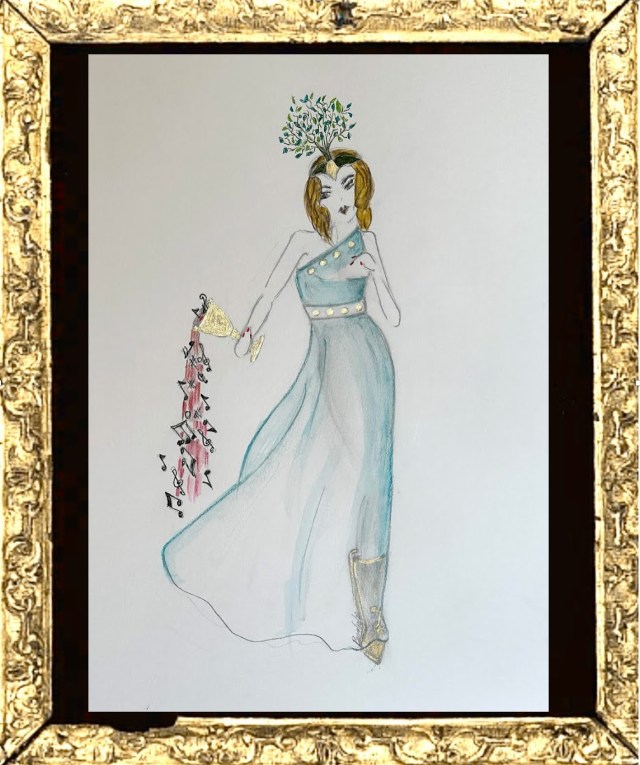
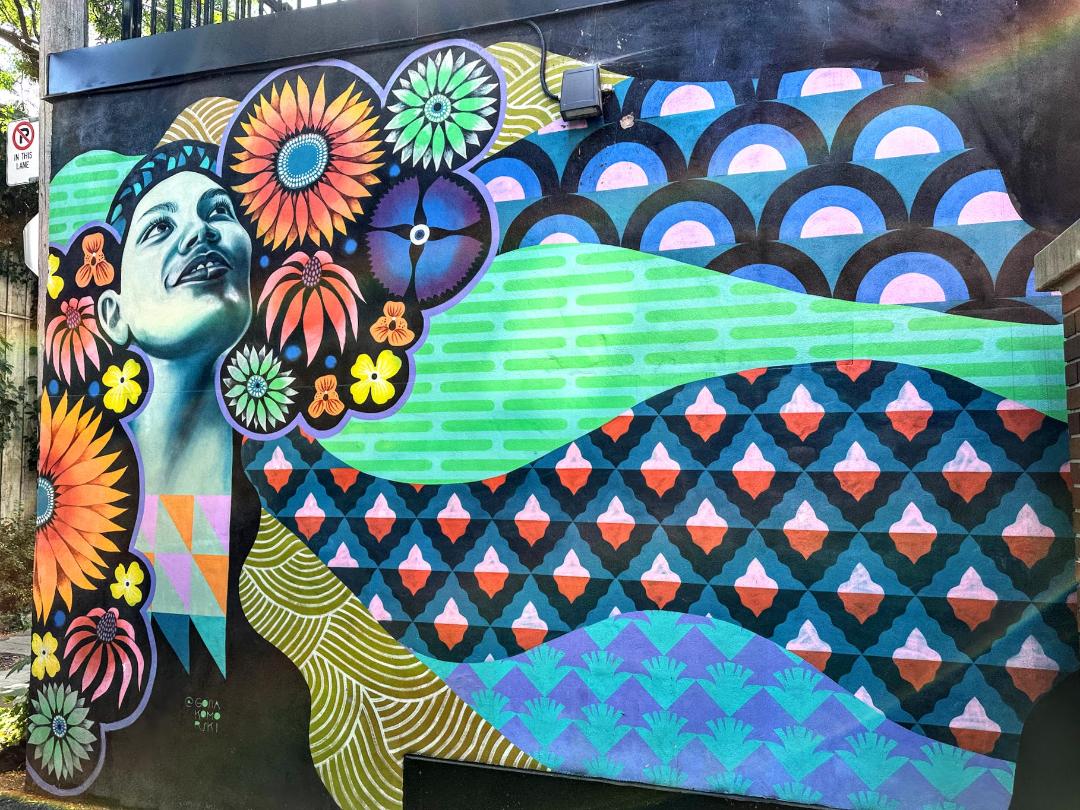
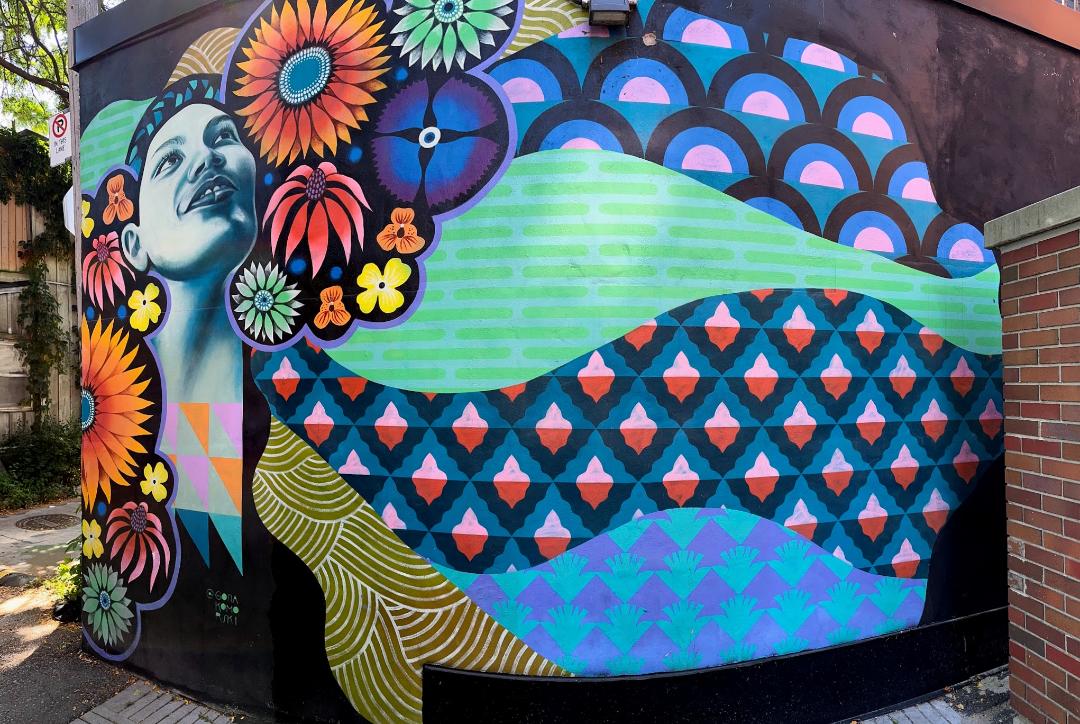
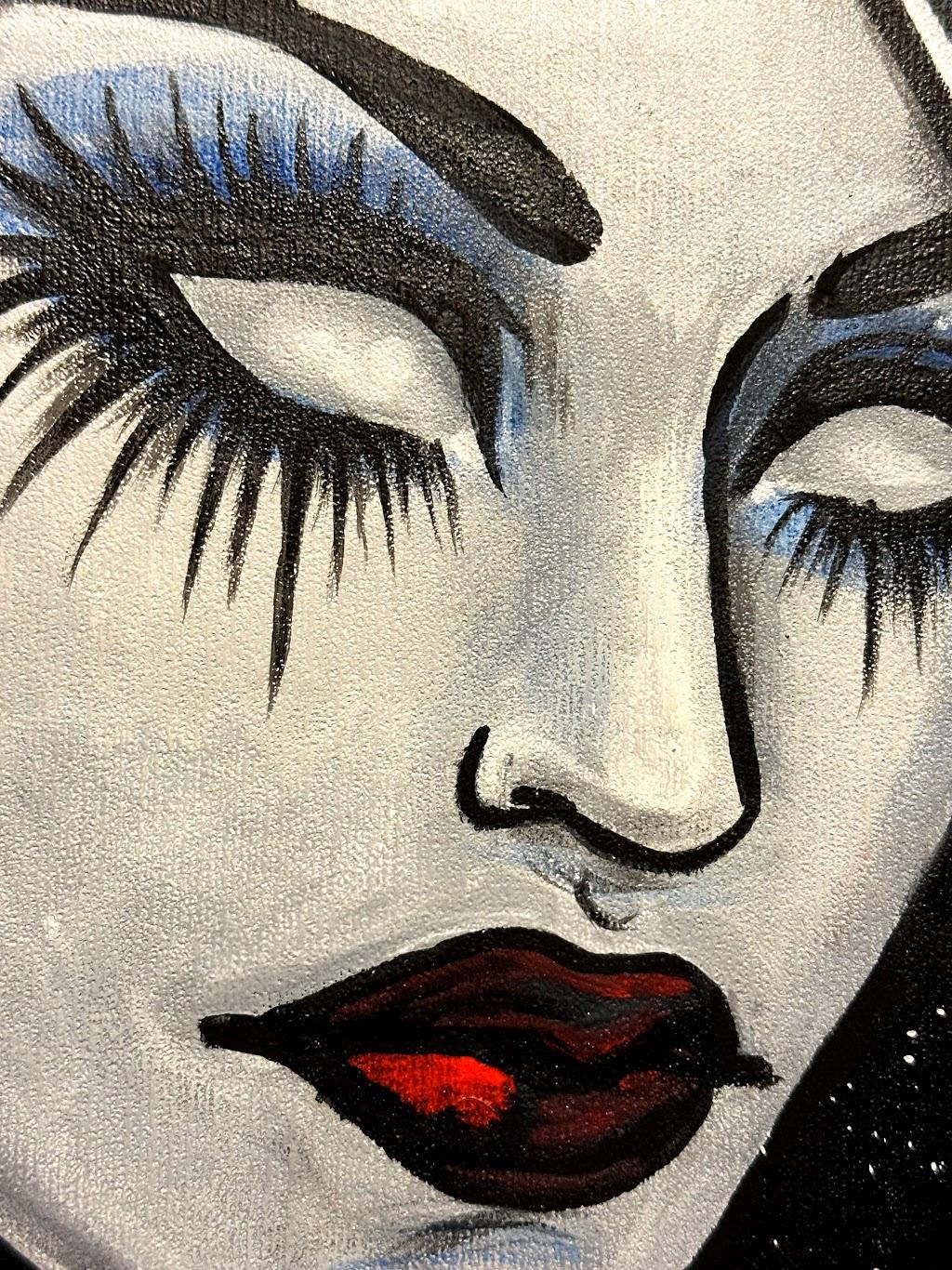
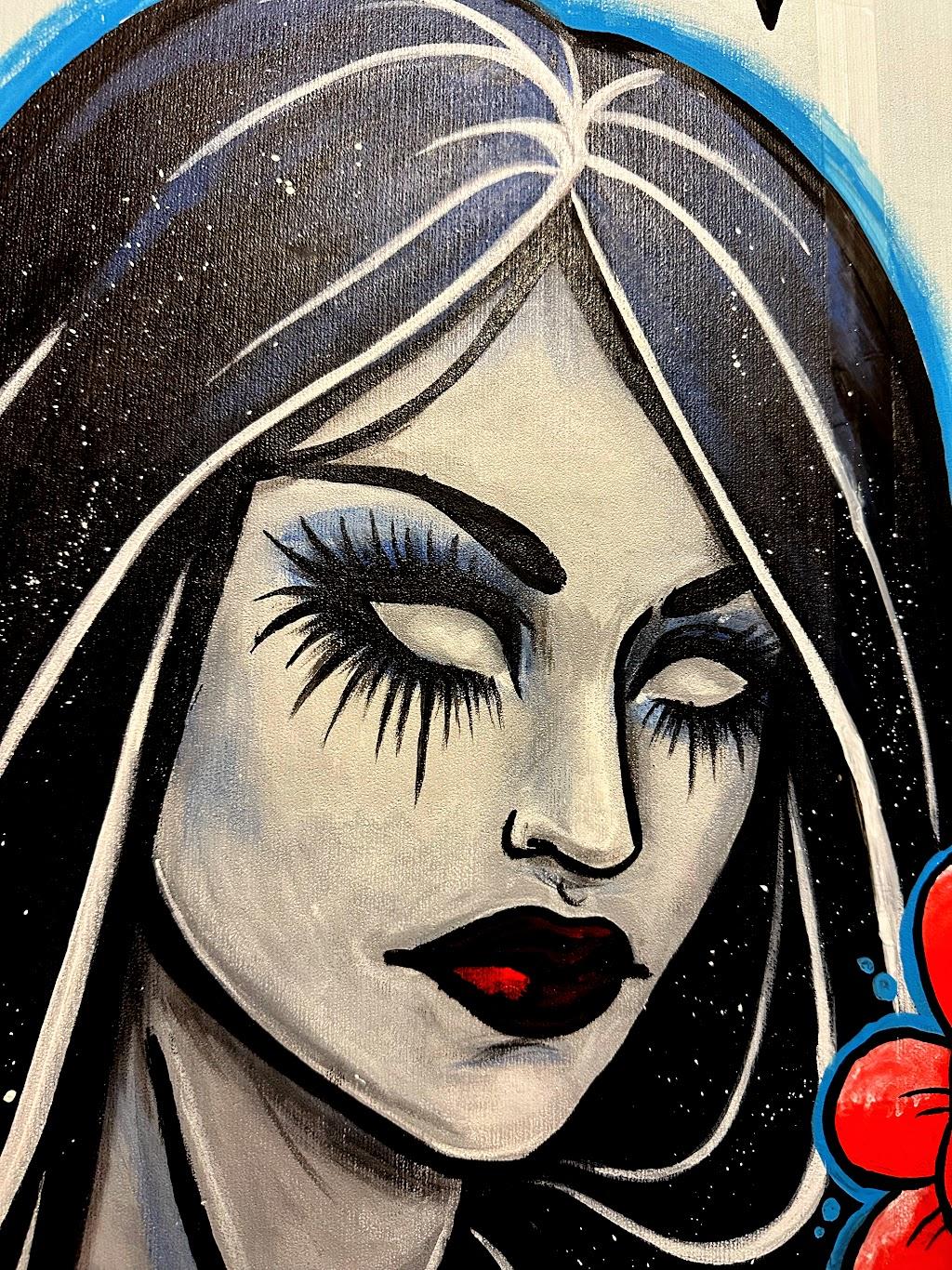
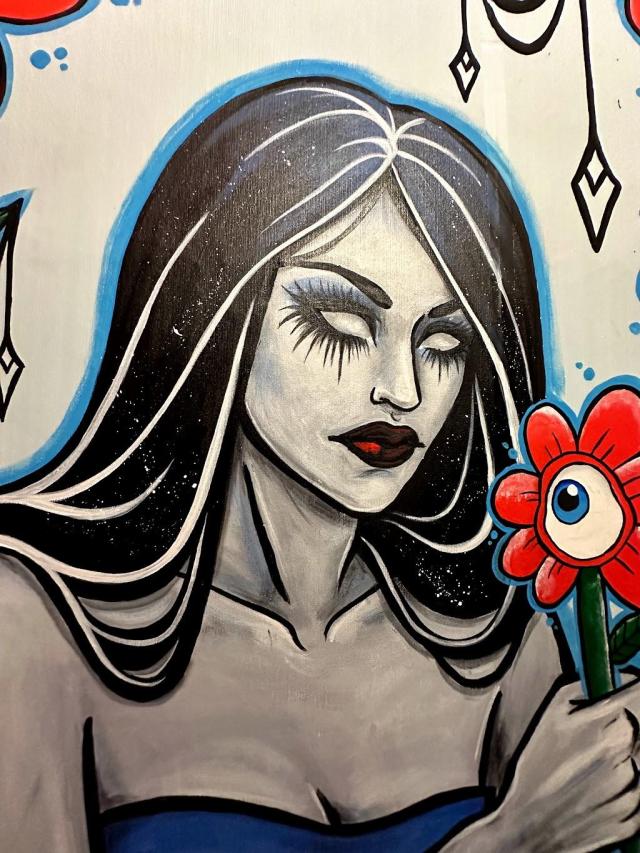
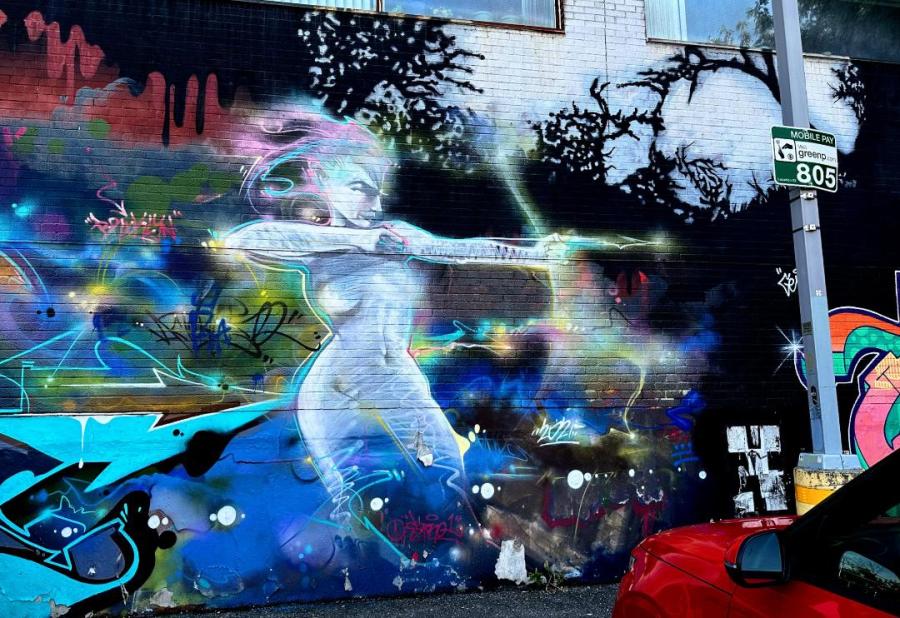
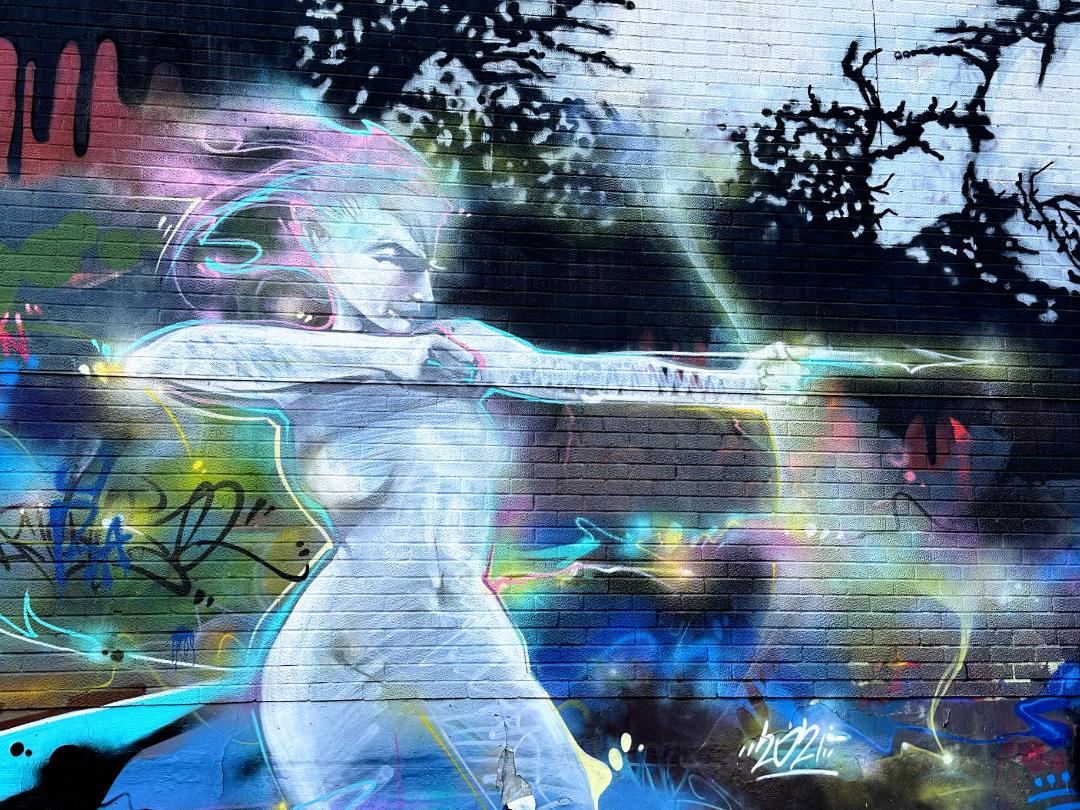
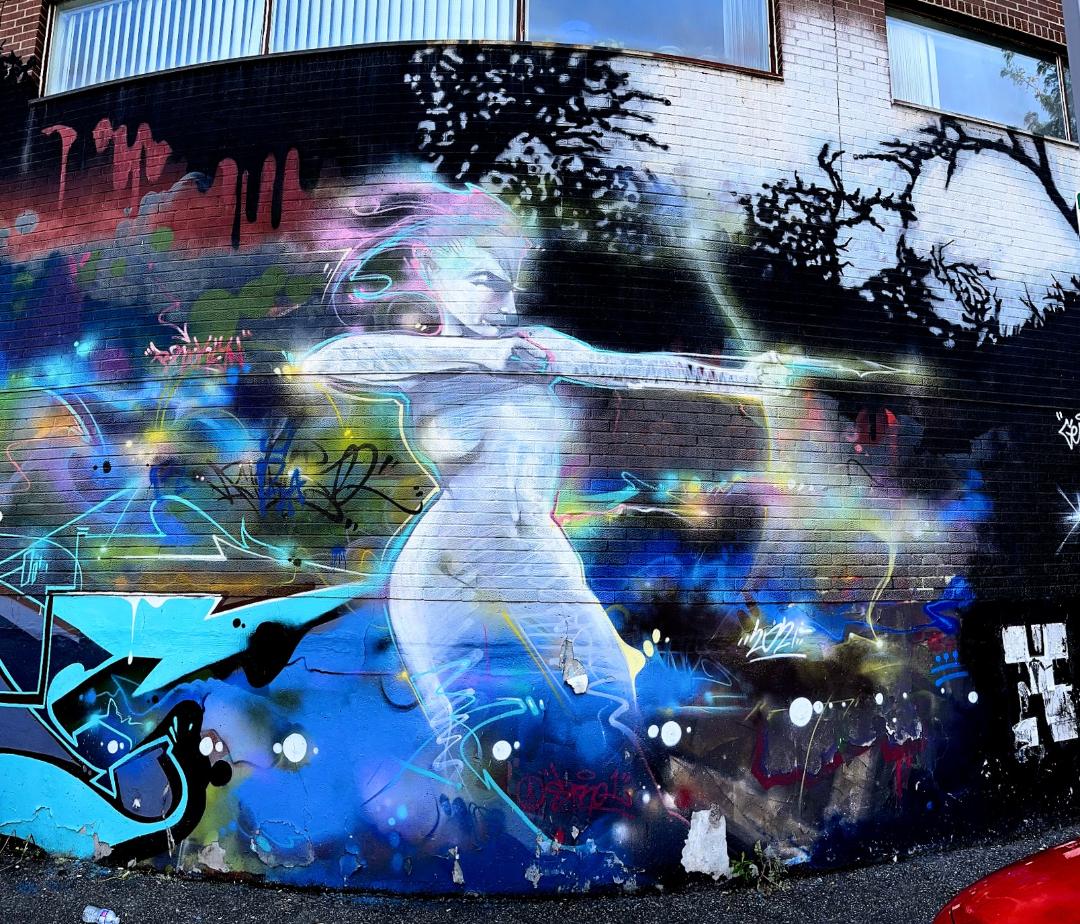
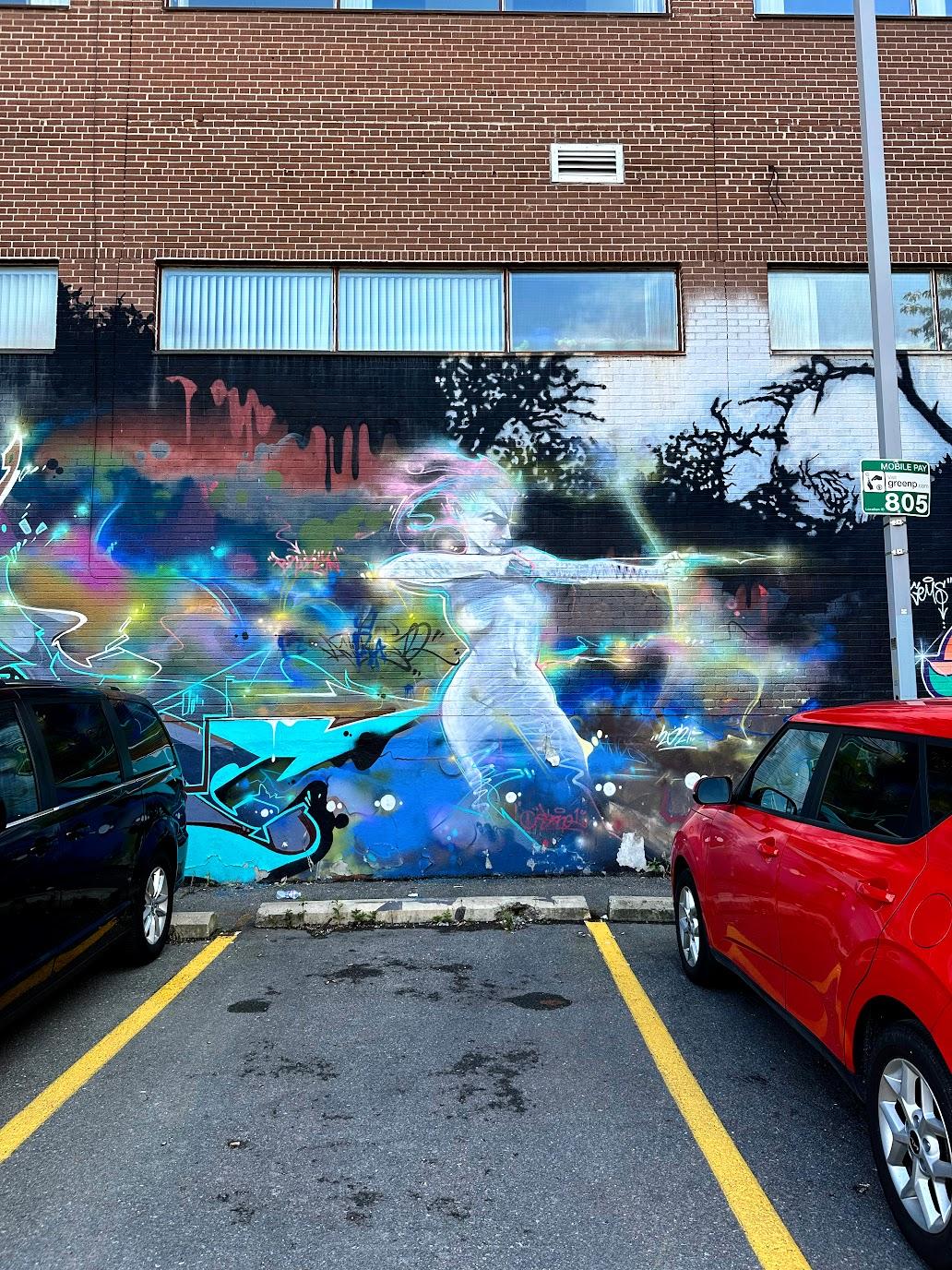
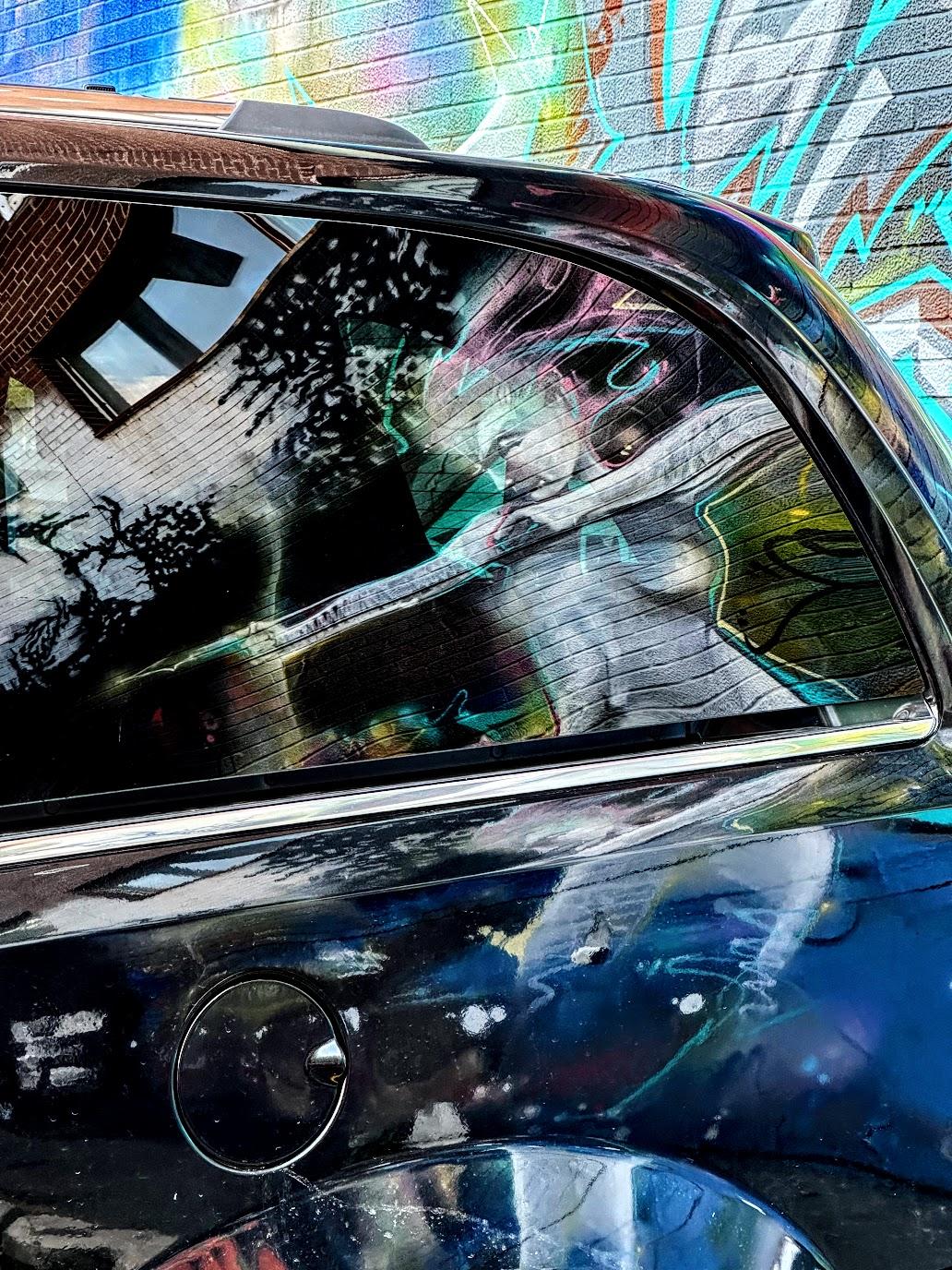
Then again, I have read a bit about Artemis, and almost nothing about Diana.
This piece is 3 years old.
I’m crazy about it.
The abstract background is killer.
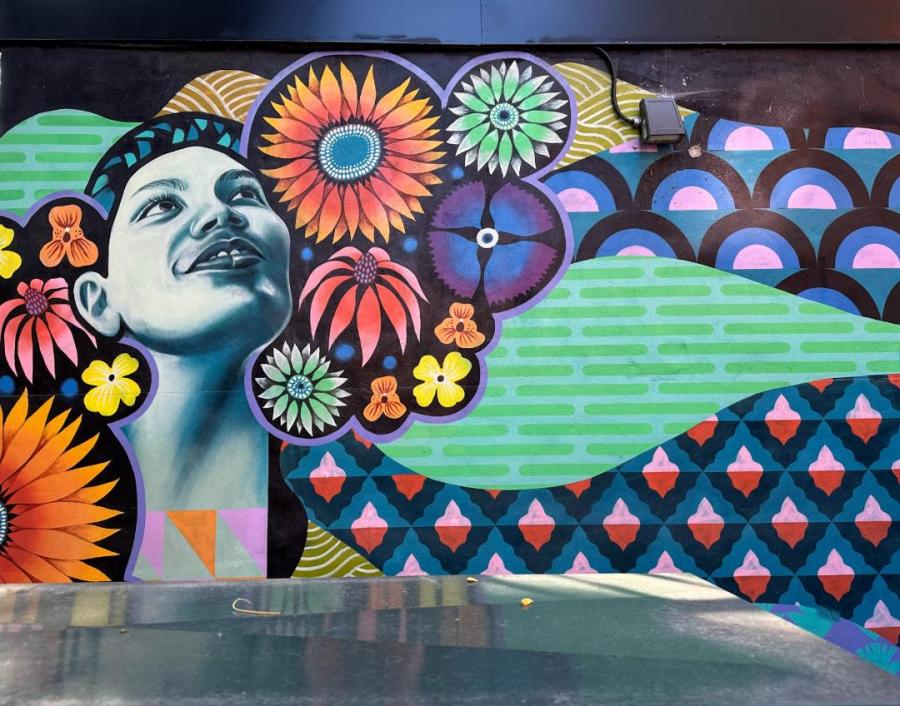
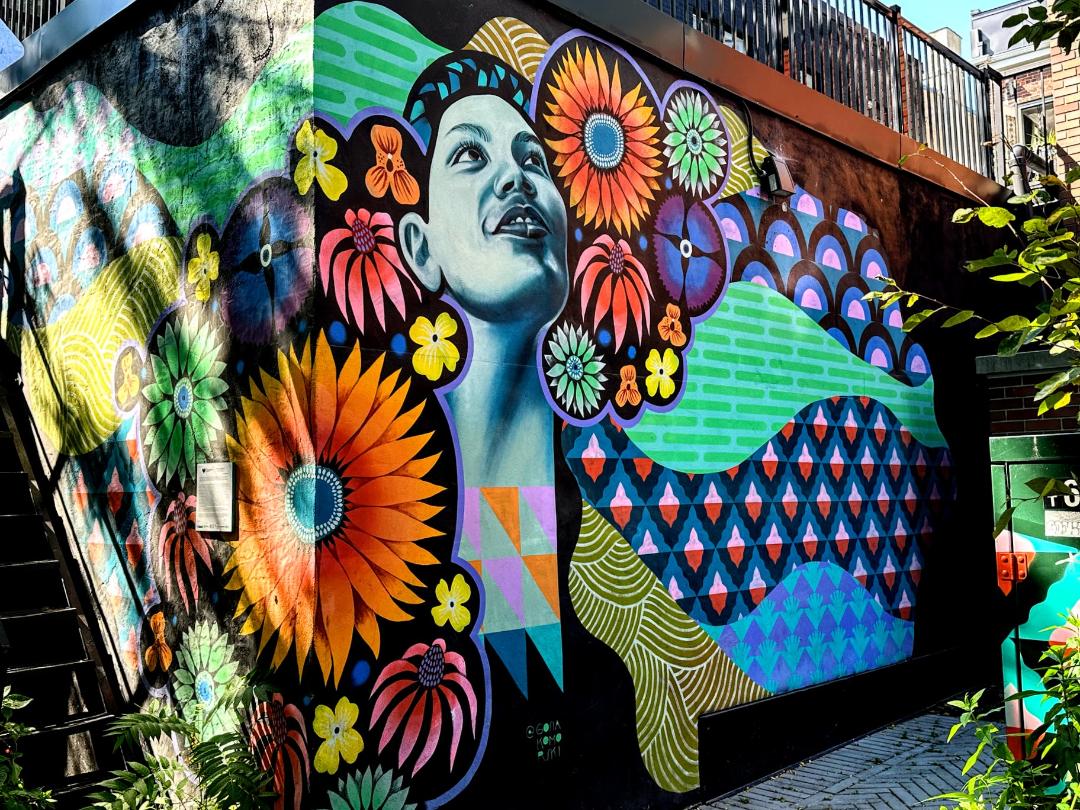
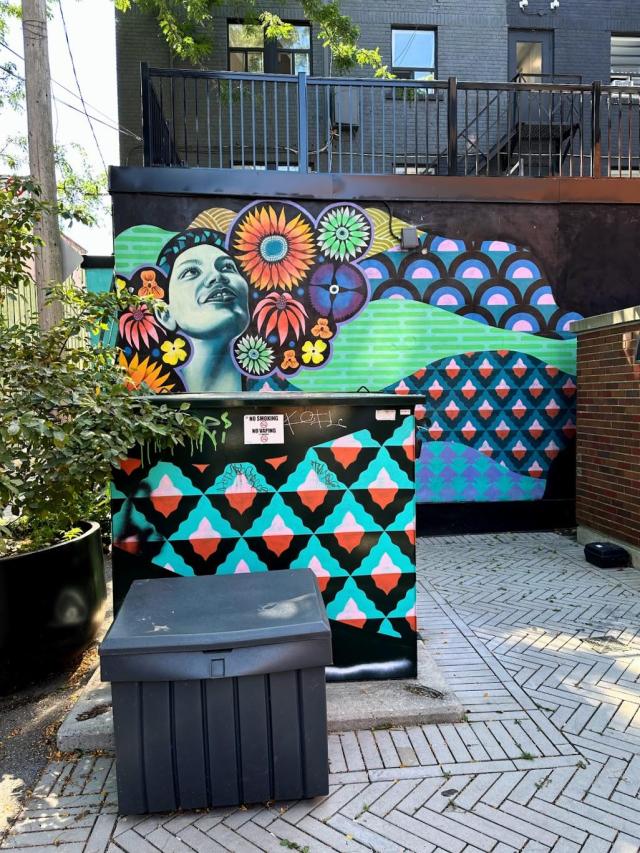
Artemis or Diana – In the end I see an amazing Power Woman.
BONUS
Recently Dan Anton over at No Facilities posted a series on his visit to the Heinz Museum, in Pittsburg.
A Woman’s Place (the name being grist for the mill) is one of the exhibits. Fabulous and important women of Pittsburg featured in the exhibit are: Mary Schenley, Nellie Bly and Ava Duvernay.
Other notable women of Pittsburg include: Mary Cassatt, Martha Graham, Gertrude Stein, Mary Dee Dudley and Mary Cardwell Dawson.
What better time is there to talk about breasts than breast cancer awareness month?
"Boobs. Boobies. Tits. Hooters. Knockers. Jugs. Breasts. We celebrate them; we revile them. They nourish us; they kill us. They have fascinated us since prehistoric times." - Merril D. Smith
I got this book from my local library. I was tickled pink that Merril,a 5 aces poet IMHO, whose blog I follow, put this encyclopedia together. As well as the Preface, Acknowledgements, Introduction and Chronology of Selected Breast Events, she wrote 17 of the entries.
Danae – Painting by Artemisia Gentileschi -1612
Renewed thrice, I approached it a few pages at a time whenever I lounged in my favourite chaise.
I learned a lot of big medical words, and the physiological and the psychological lessons on the breast that comes with that. I also gleaned a lot about breasts in terms of cultural history from: Art to Wonderbra, Barbie Dolls to Slaves as Wet Nurses, Eating Disorders to Hollywood, Flappers to Mythology and 137 other entries.
Old sketch of Resa – unsigned
This book enlightens with a societal purview, that runs through the ages. As encyclopedic entries give only a general overview, each entry is followed by extra and more detailed reading available on each topic.
This is not a picture book, so don’t run out and get it because you want to see lots of images of breasts. If that’s the aim, you might as well just grab an issue of Playboy (an entry in the book & reviewed by said magazine), or visit any online site of breast repute.
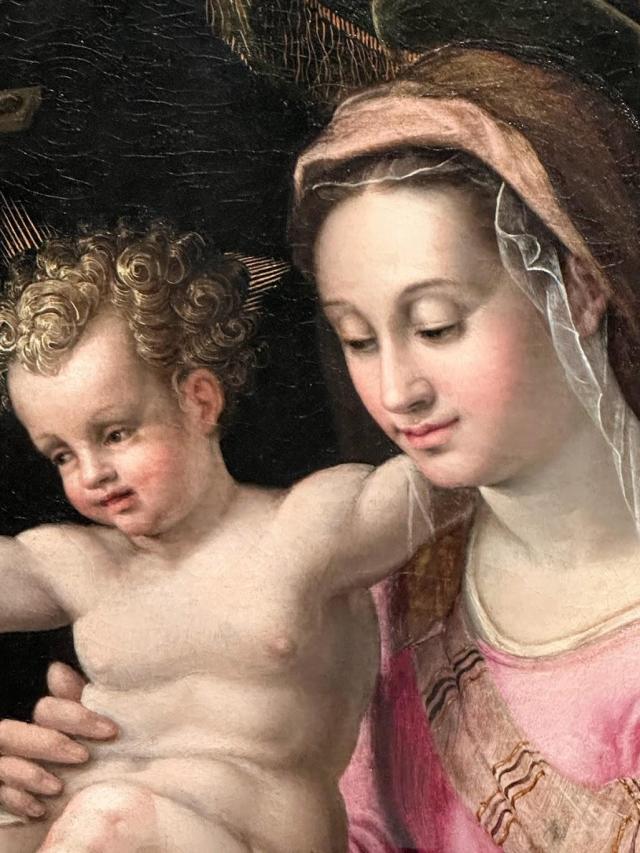
However, every so often there is a photo insert that helps make a point. One such picture is a black & white detail of Jean Fouquet’s (circa b.1420 – d.1481) painting Virgin and Child from the Melun Diptych.
I was keen to learn from the encyclopedia that the model for this painting was Agnès Sorel, celebrated beauty and mistress of King Charles VII of France.
Having decided to use a representation of this painting: I went online, found hundreds of pics of it, many variations on it and discovered that you can buy prints of this painting at Walmarts.
I’m wondering – Did Mr. Fouquet actually ever look at Agnes’ breasts, or was one of them growing out of an armpit?
It wasn’t always about big boobs
Breasts actually have a purpose. They were not always culturalized primarily as sexual objects, as they are in modern western culture. Here, much money is to be made in the plastic surgery realm, and the trend has spread to non western cultures. Other times and societies have looked at them differently from practical, to fertility symbols and with different eyes on beauty.
Pink Ribbon Campaigns
.. is one of the entries in the encyclopedia. I found this entry eye opening in a way I hadn’t envisioned.
Two things that stood out, in terms of Breast Cancer awareness, are that:
The Pink campaign began with The Susan G. Komen Breast Cancer Foundation, with the ubiquitous Pink Ribbon becoming the official symbol in 1992. Since then support, awareness and survivorship has increased many fold.
Over the last 2 decades, “Pink Ribbon” products have become big business with little oversight, engaging in “Pink Washing”. So please make sure to investigate where your money is going if donating.
AI
Published in 2014, everything still holds true to today. However, due to rapid changes in technology there is one topic not covered in this encyclopedia. That would be AI’s cultural influence on breasts. I’d love to read what Merril would write about that!
This is Emily Pellegrini. She is the most famous AIwoman in the world, currently. She has Facebook & TicTok accounts.
Merril D. Smith, PhD, holds a doctorate from Temple University.
She is the author or editor of several books including: Encyclopedia of Rape, Women’s Roles in Eighteenth-century America and Sex and Sexuality in Early America.
You must be logged in to post a comment.