They were not royalty, but may have painted for royalty.
Their parents worked for royalty, were politicians, acclaimed artists or important clergy. These aristocrats wielded economic, political, and social influence. They were fortunate ones, before and during the rise of a European middle class due to the industrial revolution.
Louise-Adéone Drölling
French – 1797 – 1831
Young Woman Tracing a Flower – Circa 1820-22
Louise-Adéone‘s father, Martin Drölling, and older brother, Michel Martin Drölling, were celebrated artists in their day. At the age of 15 she was encouraged to begin painting.
In 1819, Louise-Adéone married architect Jean-Nicolas Pagnierre. Widowed in 1822, she remarried Nicholas Roch Joubert in 1826. Joubert, chief tax officer of Paris, was the son of politician and former bishop Pierre-Mathieu Joubert. They had two daughters, Adéone Louise Sophie, and Angélique Marie.
Louise-Adéone Drölling, aka Madame Joubert won a Gold Medal from Salon des Amis des Arts, for her above painting; Young Woman Tracing a Flower. Thought be a self portrait, it later became part of the distinguished collection in the Gallery of La Duchesse de Berry.
I have found conflicting dates of her Gold Award – 1824, 1827 or 1831.
Marguerite Gérard
French – 1761 – 1837
Motherhood Circa 1795-1800
Marguerite Gérard attained much wealth and real estate during her life, despite remaining unmarried.
In 1775 she moved from Grasse to Paris and lived with her sister’s family. Her sister was married to the popular Rococo painter Jean-Honoré Fragonard. Here she had financial freedom and was trained in art as Fragonard’s unofficial apprentice.
By her mid 20’s, Gérard had achieved a signature style.This involved precise details made with subtle and blended brush strokes, inspired by 17th-century Dutch genre paintings. However, she made it her own by focusing on females in intimate domestic settings.
Young Woman Embroidering – Circa 1815-20
In the 1790’s, once the Salons were opened to women, she exhibited often, winning three medals.
Over the course of her successful fifty years, Gérard survived the French Revolution and Napoleonic Wars.
Her paintings were acquired by luminaries such as Napoleon and King Louis XVII.
Her small-scale, portable canvases appealed to many wealthy collectors, who preferred to display her small scale still life and genre paintings in their homes, over large historical canvases.
The numerous engraved versions of Gérard’s paintings made them accessible to less affluent art lovers and helped increase her reputation.
Gérard did not always follow convention, turning down a place at the French Royal Academy.
Catherine Lusurier
French – 1753 – 1781
Portrait of a Woman Drawing
Catherine Lusurier died at the young age of 28 years old. There is not a lot known about her, and only a few known signed paintings are accounted for.
Her mother, Jeanne Callot, was a dressmaker, while her father Pierre was a milliner. Apprenticing under her uncle,Hubert Drouais (1699-1767), her work bears his stylistic influence. Her paintings are predominantly portraits of children and artists.
A Catherine Lusurier work recently headlined Christie’s Old Masters and 19th Century Paintings, selling from a Private Collection. Sold Without Reserve at 3.11 million dollars, it exceeded the pre-sale high estimate.
Amélie Legrand de Saint-Aubin
French – 1797 – 1878
Portrait of an Artist Drawing a Landscape in her Sketchbook – 1831
Amélie Legrand de Saint-Aubin, the eldest daughter of Pierre Jean Hilaire Legrand de Saint-Aubin (1772–1839) and Denise Marie Claudine Legrand (1772–1855), was born in Paris. After training and studying in the Women Only Studio with Charles Meynier, Amélie Legrand de Saint-Aubin‘s Rococo style portraits and history paintings grew in popularity.
Portrait of an Artist Drawing a Landscapein her Sketchbook is of a long standing tradition of women artists picturing women painting art.
Political changes from the French Revolution resulted in women being allowed to exhibit in the French Salon. Amélie Legrand de Saint-Aubin went on to exhibit at 17 salons over the course of her career.
Around 1831, she began teaching, offering private lessons. She never married.
“This stunning portrait recently joined the AGO’s permanent collection and made its debut as part of the exhibition Making Her Mark: A History of Women Artists in Europe 1400 – 1800. “
Marie-Guillemine Benoist
French – 1768 – 1826
Portrait of a Lady Circa 1799
Marie-Guillemine was born in Paris. Her mother was Marguerite-Marie Lombard and her father, René Laville-Leroux, a royal administrator for the ancien régime state. Marie and her sister, Baroness Larrey, (1770–1842), studied art from Élisabeth Vigée-Lebrun. Later they studied under Jacques-Louis David.
Her first exhibition was in 1784, at an annual 1 day show in Paris – Exposition de la Jeunesse.
Until the Louvre Salon became open to all exhibitors in 1791, where Benoist was one of 22 women presenting, she showed yearly at the Exposition de la Jeunesse.
At the Salon in 1804, she won a medal, whereby France’s new Emperor, Napoleon Bonaparte, ordered multiple commissions.
Other than her Salon successes, which are in the French state collection, Benoist’s work, including Portrait of a Lady was attributed to a man; in her case, Jacques Louis David.
Like many women artists of her day, their posthumous fate was to be overlooked, forgotten and/or effaced.
Mary Beale
English – 1633 – 1699
Portrait of a Woman with a Black Hood -Circa 1660
Mary Beale was the daughter of a clergyman, John Cradock, so it seems natural that much of her portraiture is of churchmen. It is not sure who she trained under, but she received considerable guidance from Peter Lely
In London, she moved in intellectual circles. By, and into the 1670s she was in demand as a portrait artist, earning enough money to support her family of four.
After several years of mundane civil service; Mary’s husband, Charles Beale, left his monotonous job to become her full time studio manager.
Much has been learned from the many notebooks he kept.
One example: Charles recorded that in 1677 Mary completed 90 commissioned portraits. There were 31 female sitters and 34 male. The women and girls were mostly either titled or gentry. Men and boys were gentry or of “middling sort.”
Rosalda Carriera
Italian – 1673 – 1757
Portrait of a Woman – Circa 1720’s
Rosalba Carriera was born in Venice to Andrea Carriera, a lawyer, and lacemaker, Alba Foresti. Taught to make lace by her mother, little is known of her artistic training. She is renowned for pastel portraiture and allegories.
In 1720, during a stay with French banker Pierre Crozat in Paris, Rosalba created portraits of Louis XV as a child, and members of the French aristocracy. Here she developed a friendship with Antoine Watteau, who influenced her work.
Rosalba is one of the originators of the Rococo style in Italy and France.
Her greatest patron, Augustus III of Poland, collected more than 150 of her pastels. He also sat for her in 1713.
In 1746 she lost her sight, but her work continued to influence many other artists.
I’ve merely highlighted these women’s lives. There is so much more to know about our trailblazing sisters, who went before us.
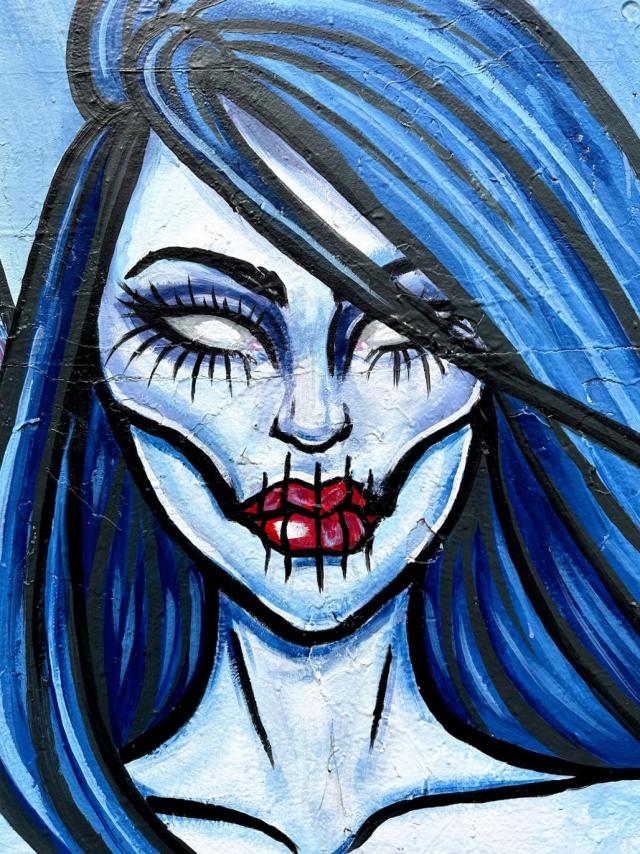
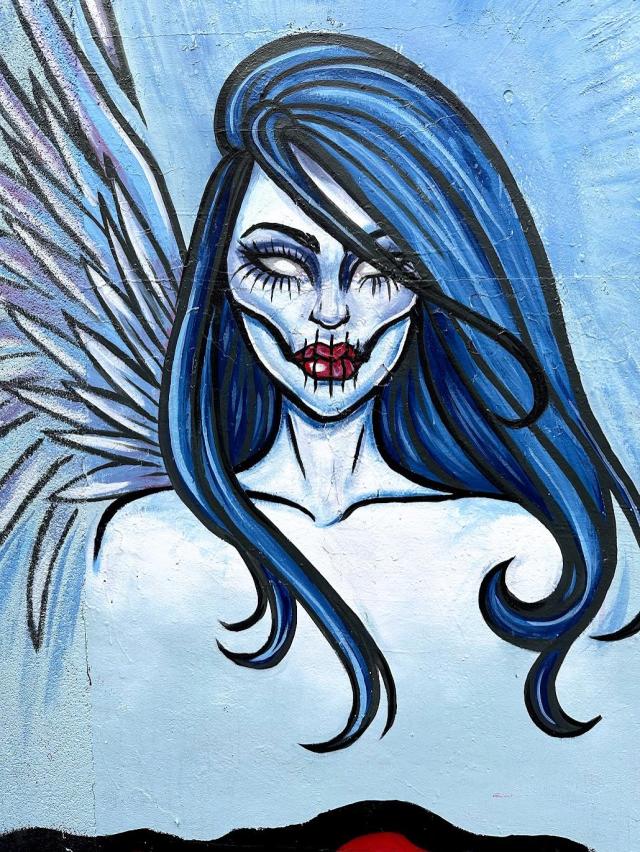
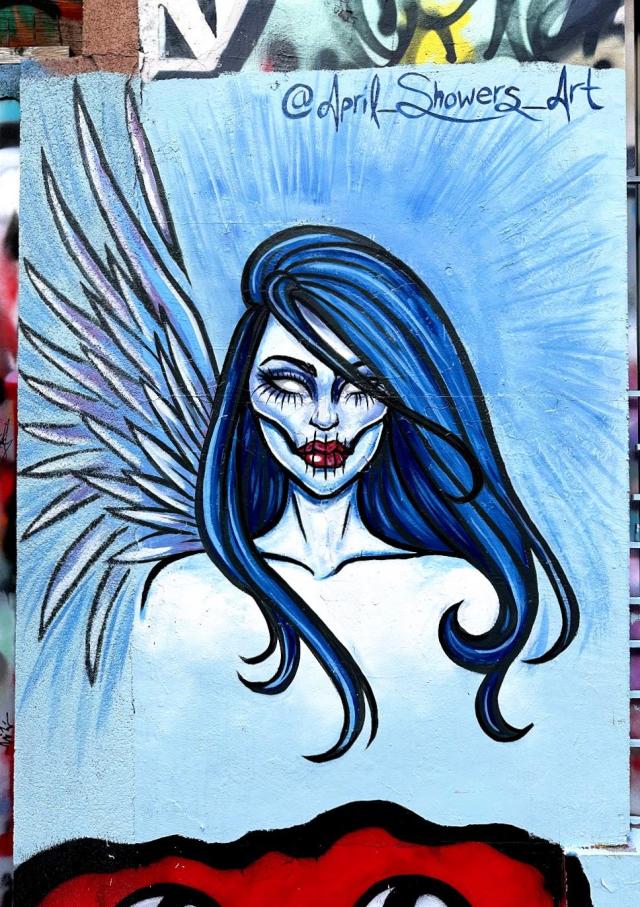
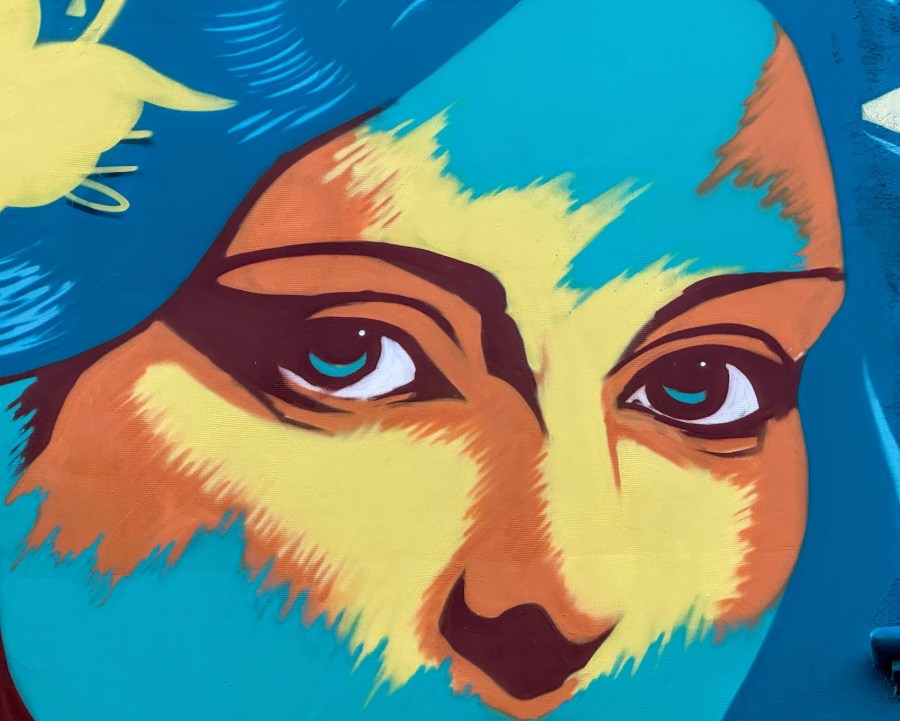
This reminds me of an antique coral & white cameo ring I have.
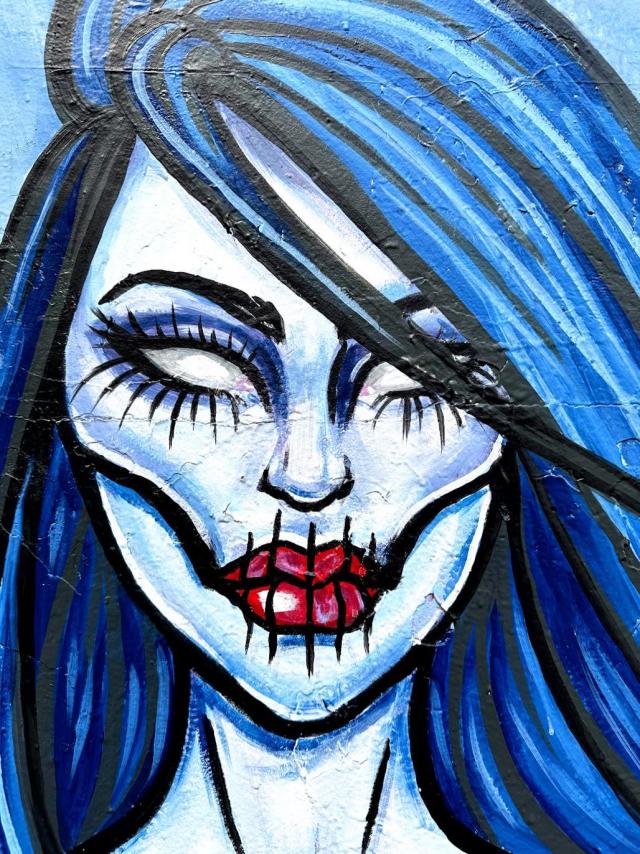
I like it in blue, too.
The profile is characteristic of a cameo carving.
The face, set in a circle, is cameo-like.
They were wildly popular with the Victorians, a renaissance from the Renaissance,
… in a Victorian garden.
Pics taken by Resa – June 27, 2025
Toronto, Canada
The Artist:
So, you might ask outside of the fact that the band’s name is Cameo and that there is a blue hue to much of the video, what it has to do with Victorian or Renaissance cameos?
Nothing, but it’s got a great beat you can dance to and Larry Blackmon’s red cod piece is outstandingly hilarious!
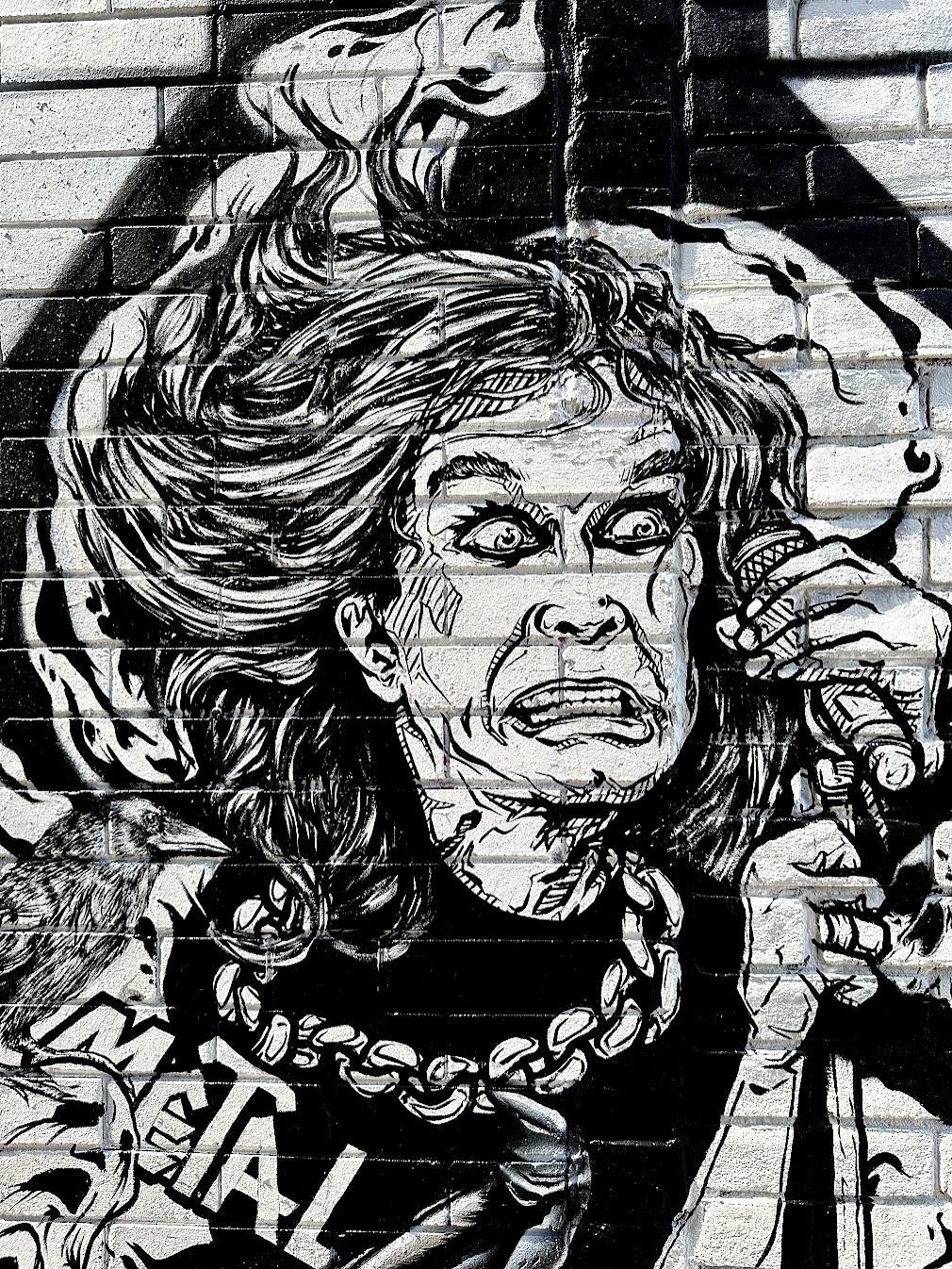
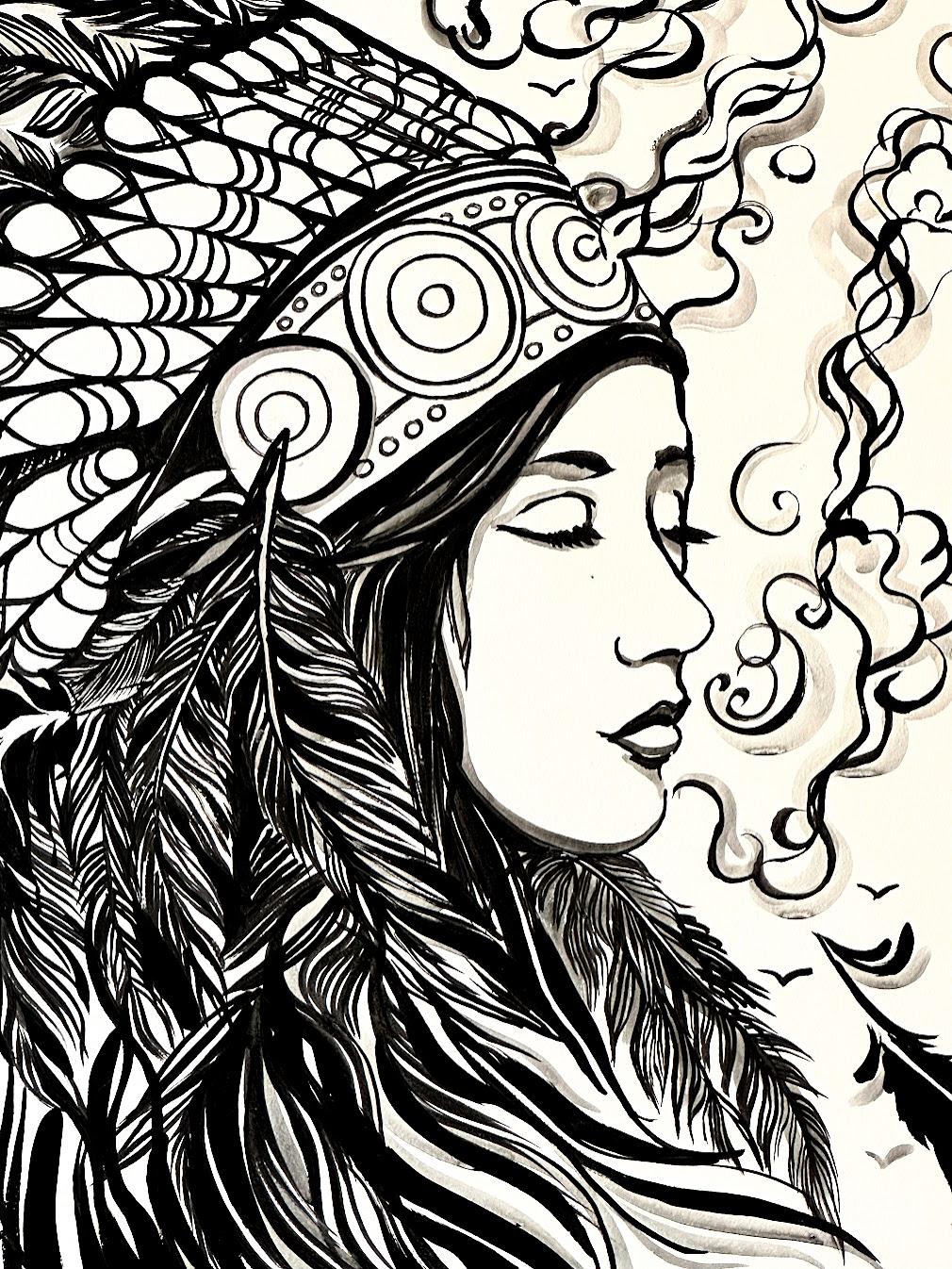
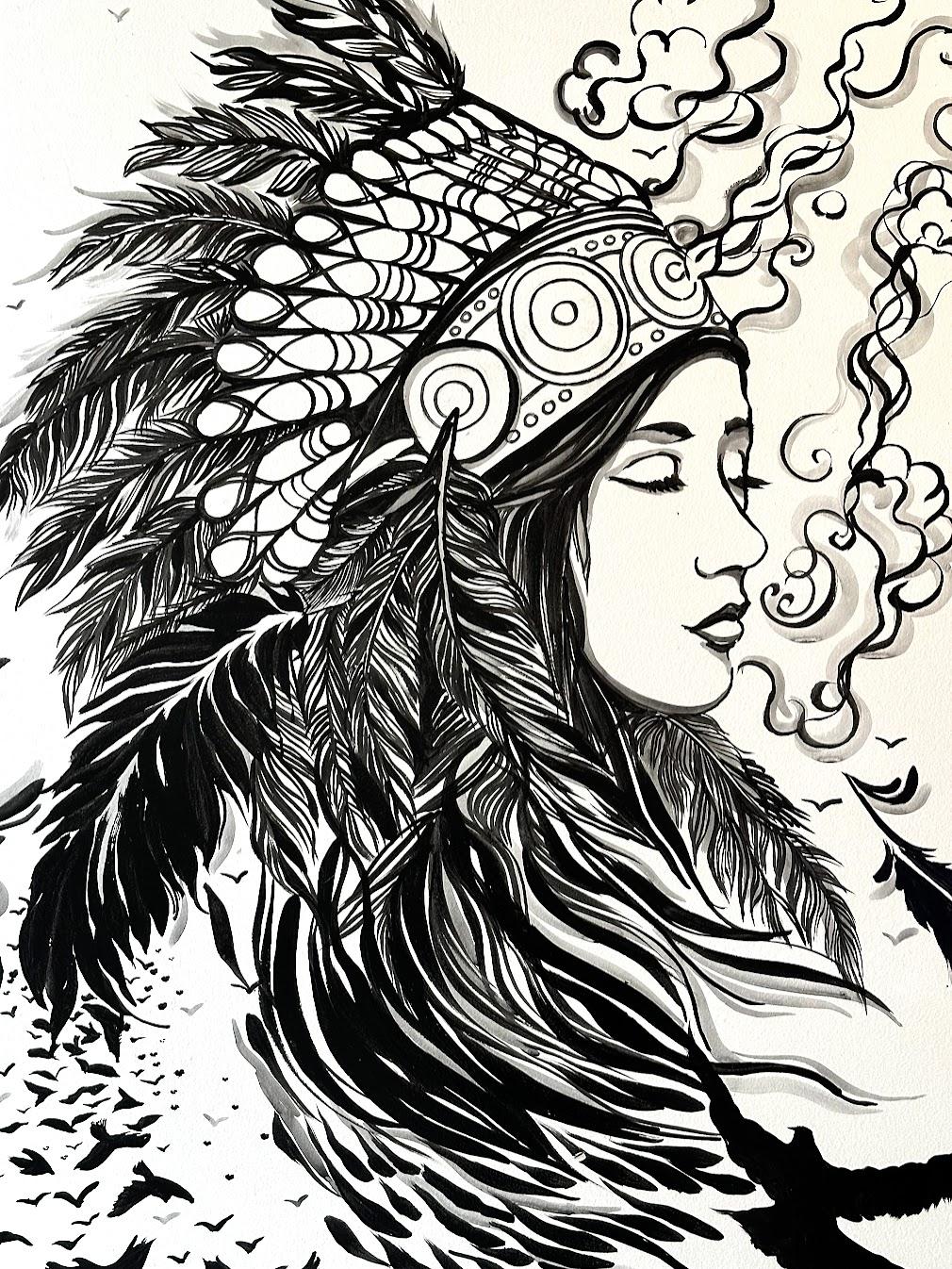
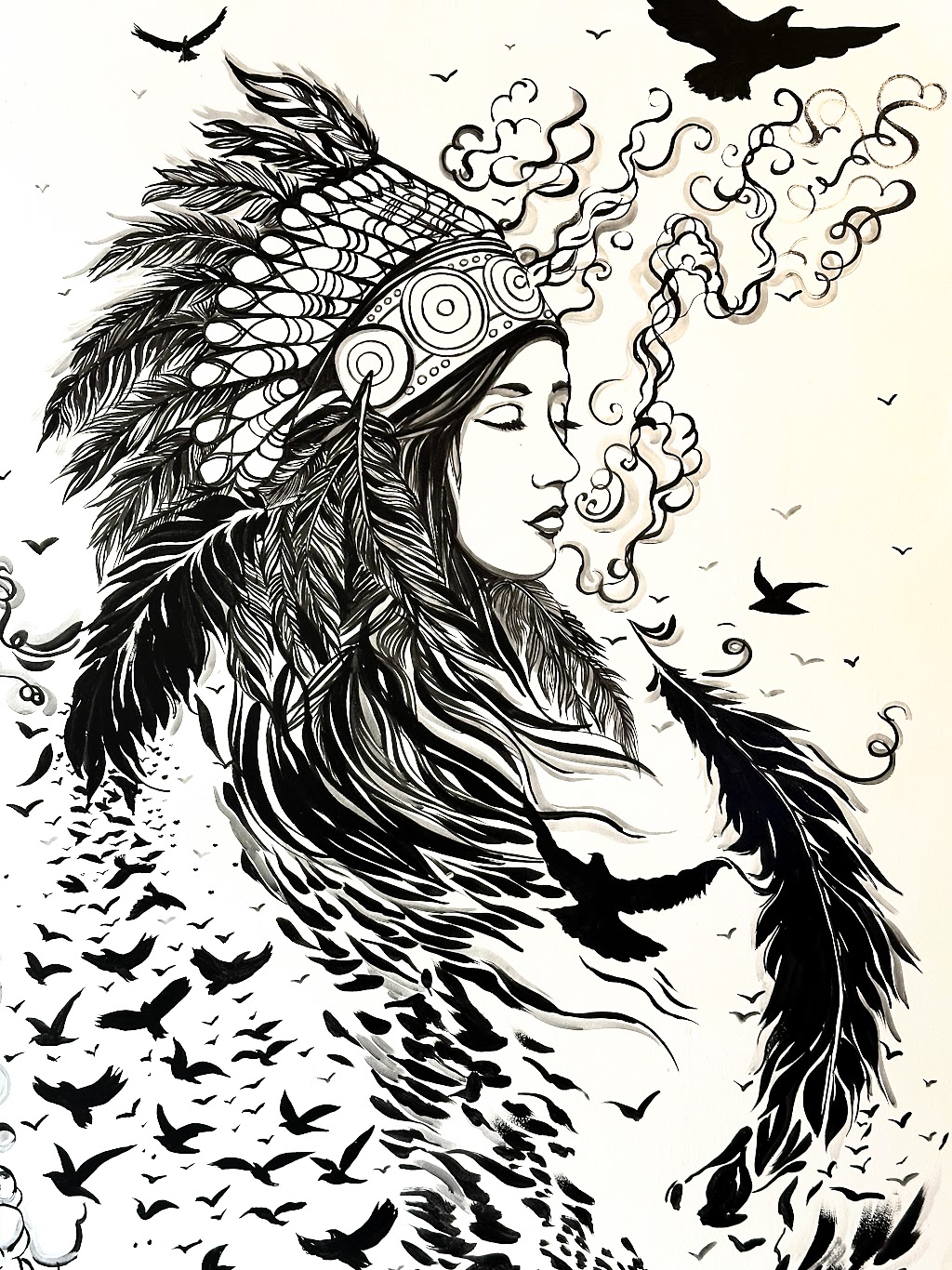
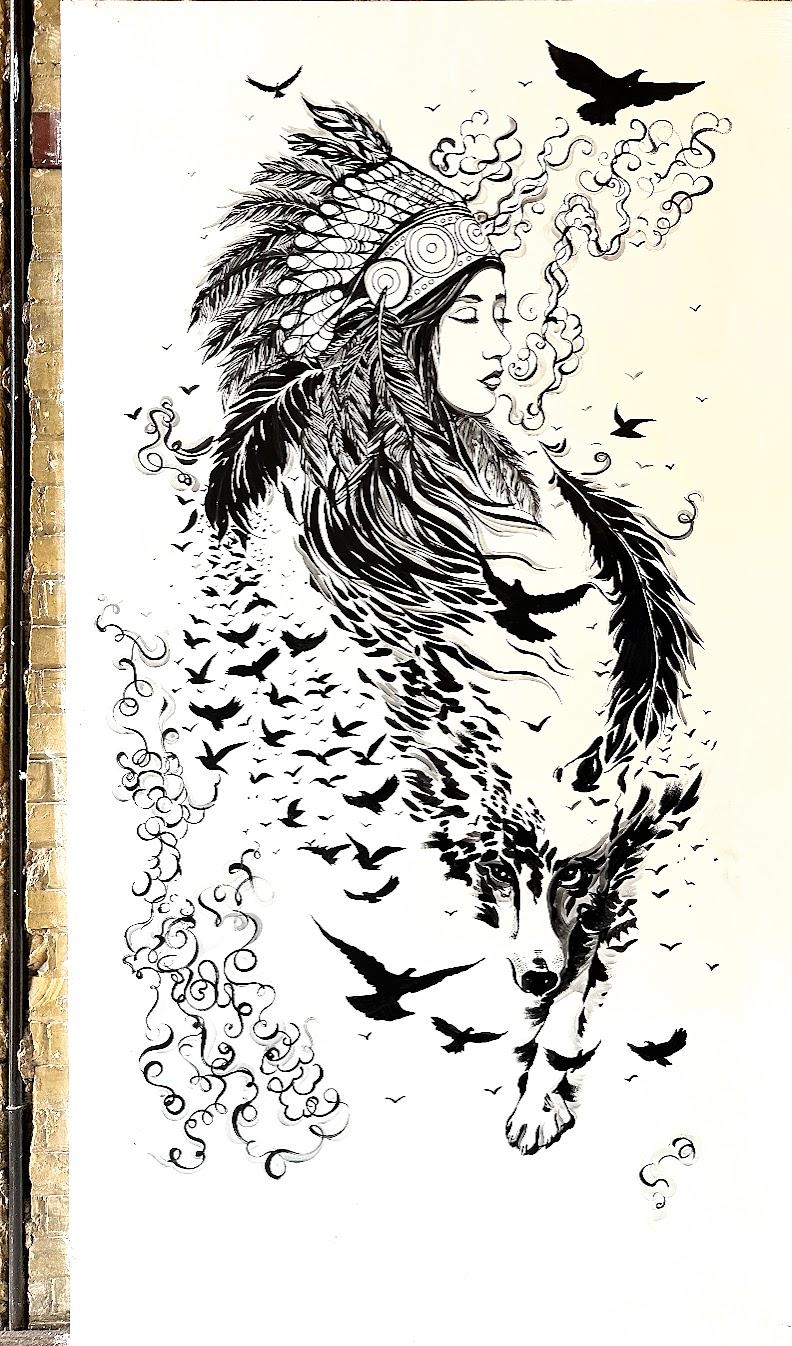
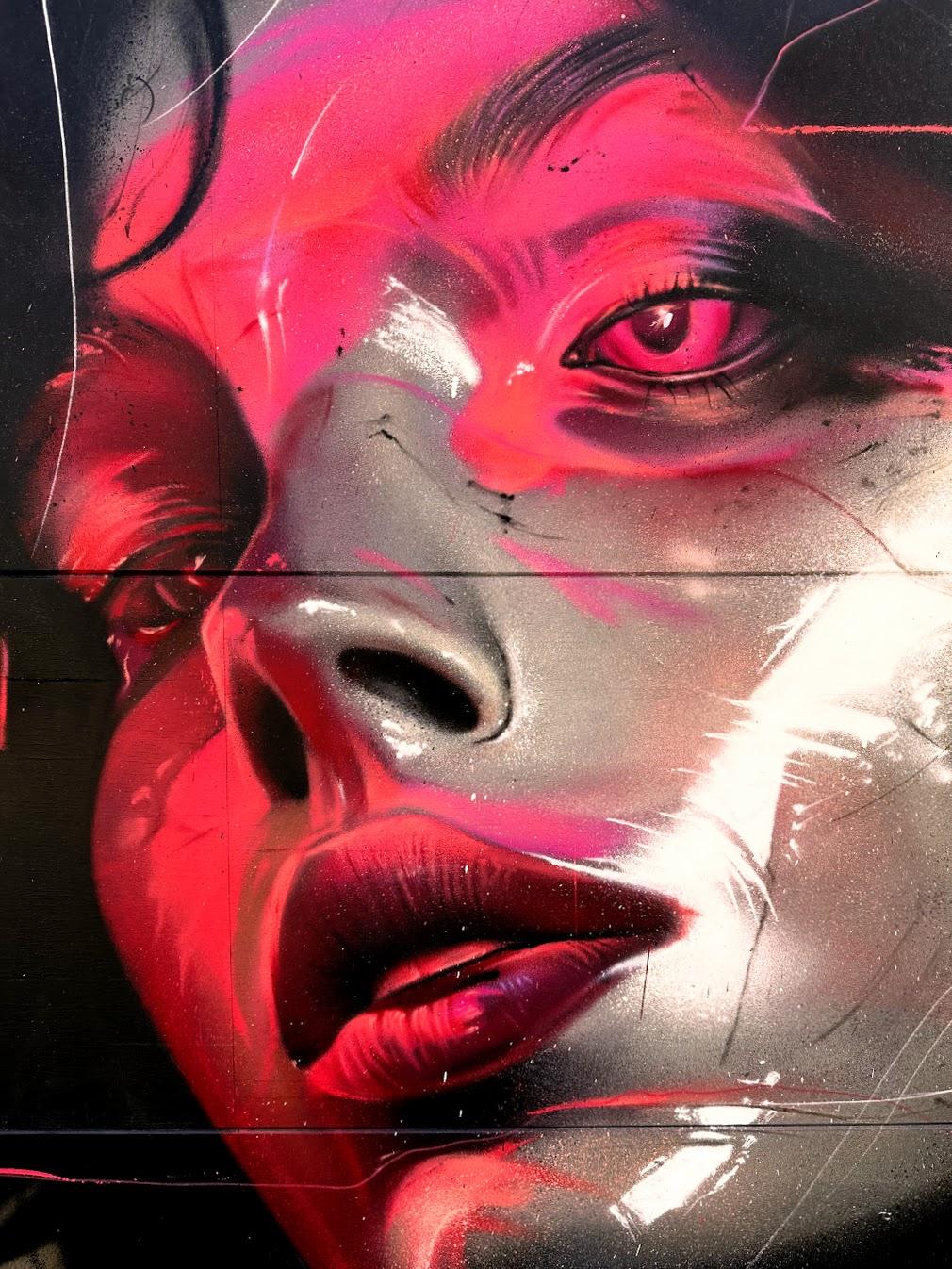
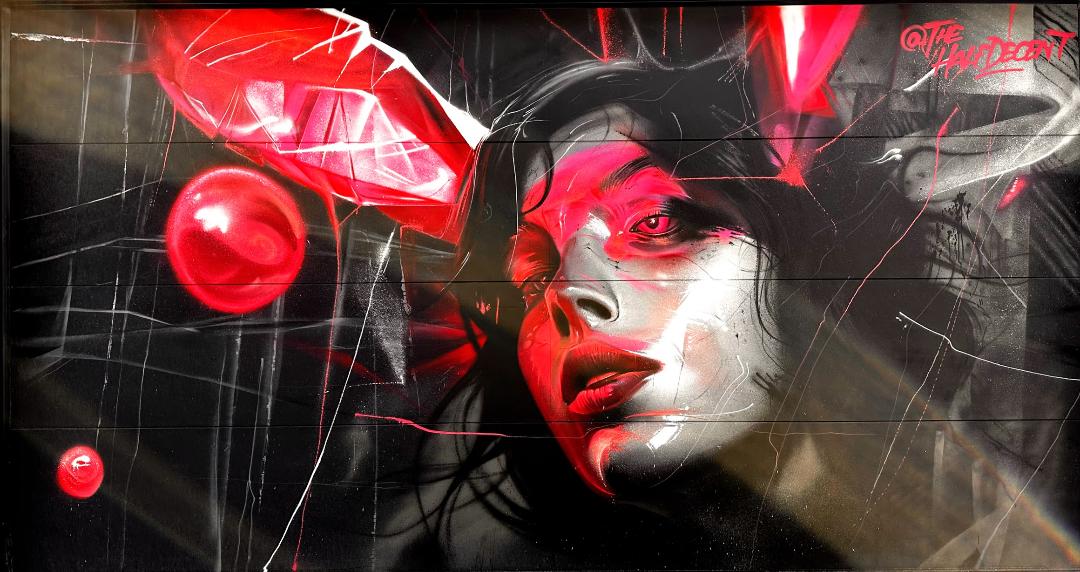
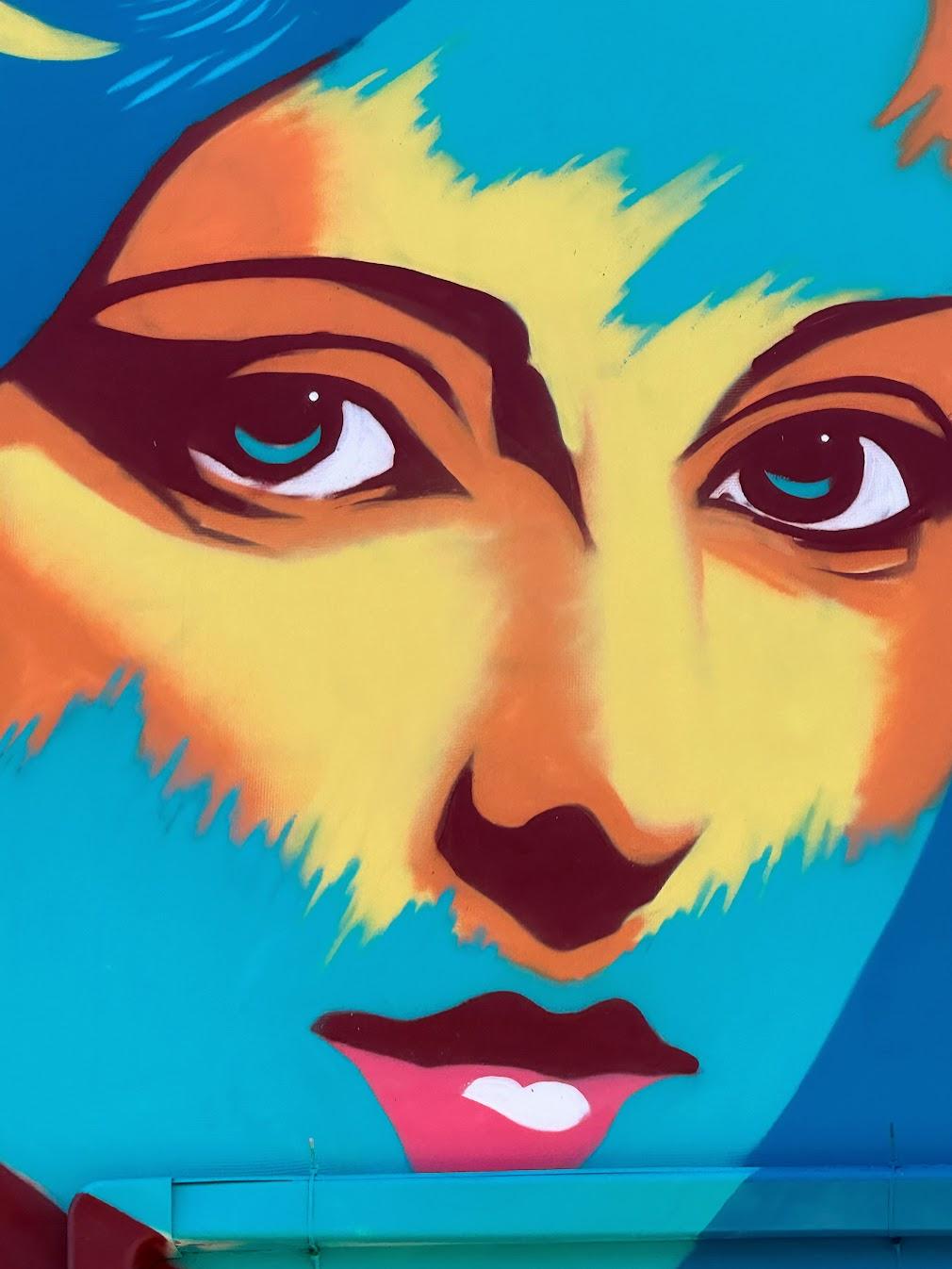
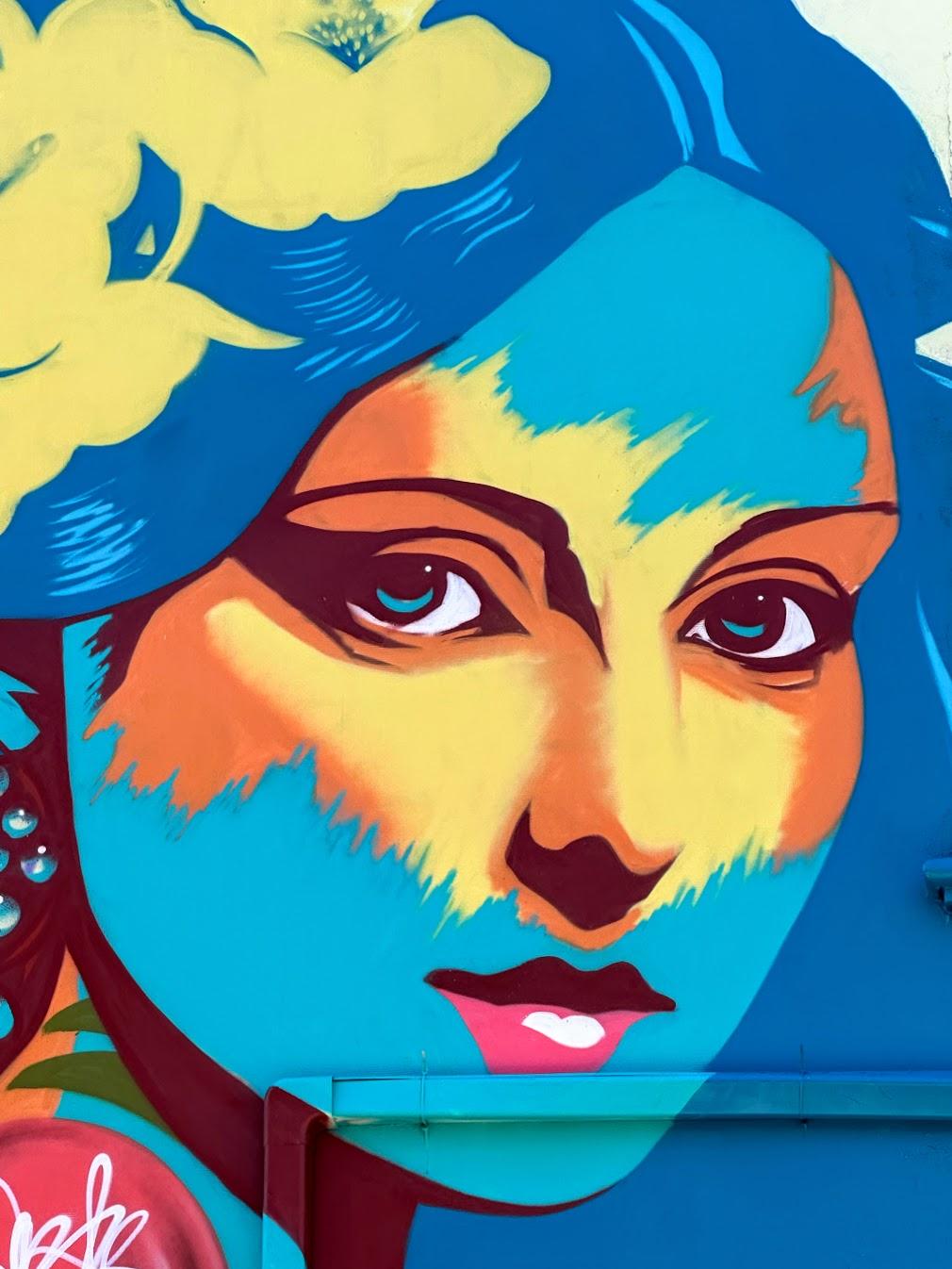
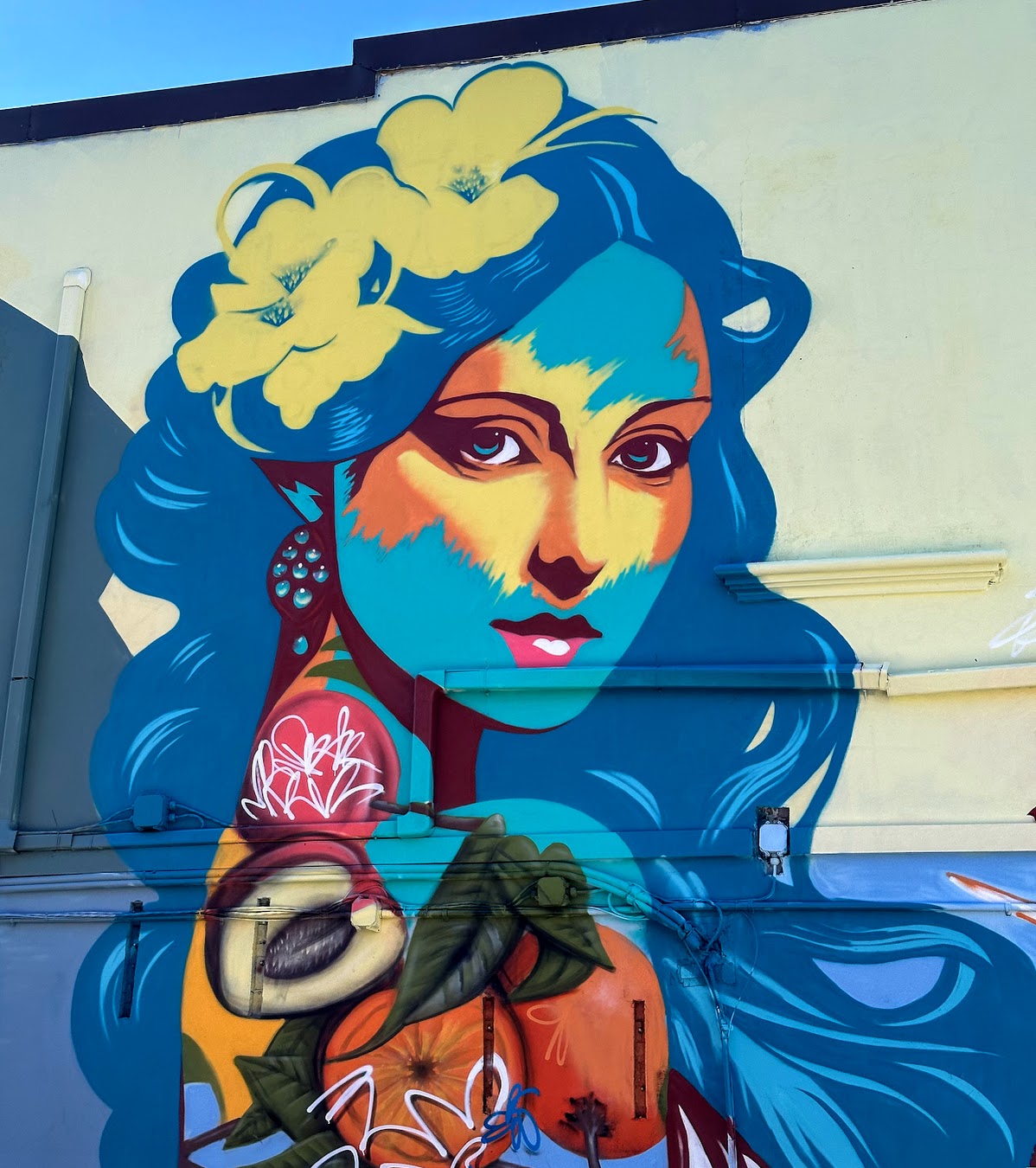
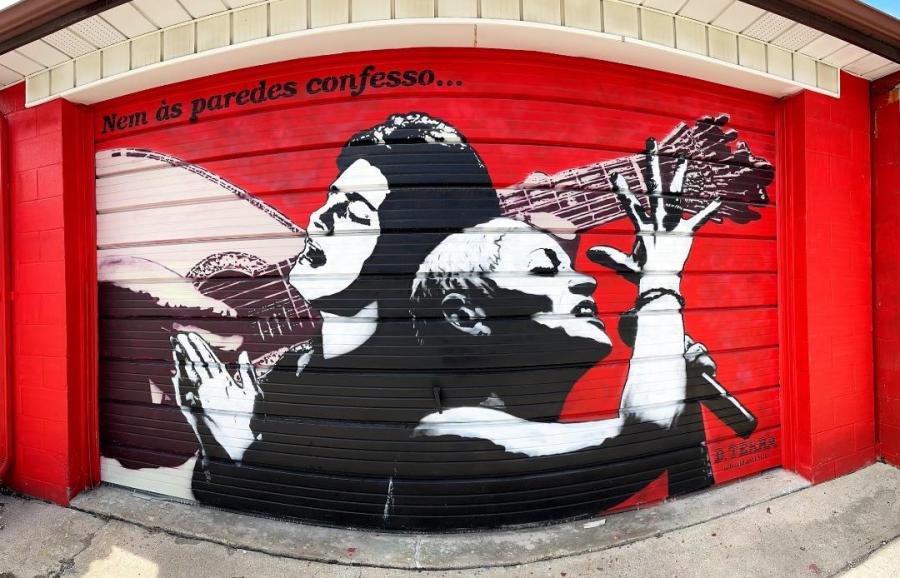
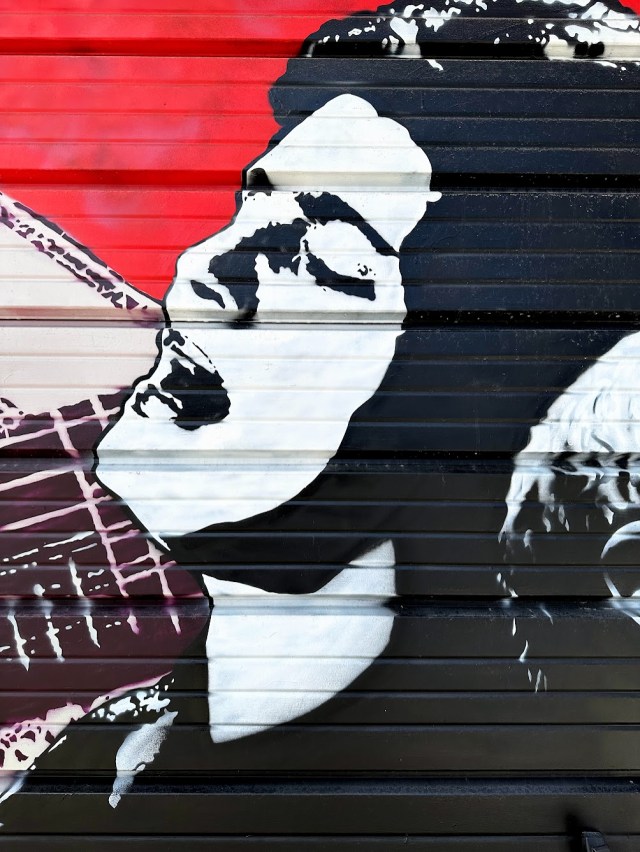
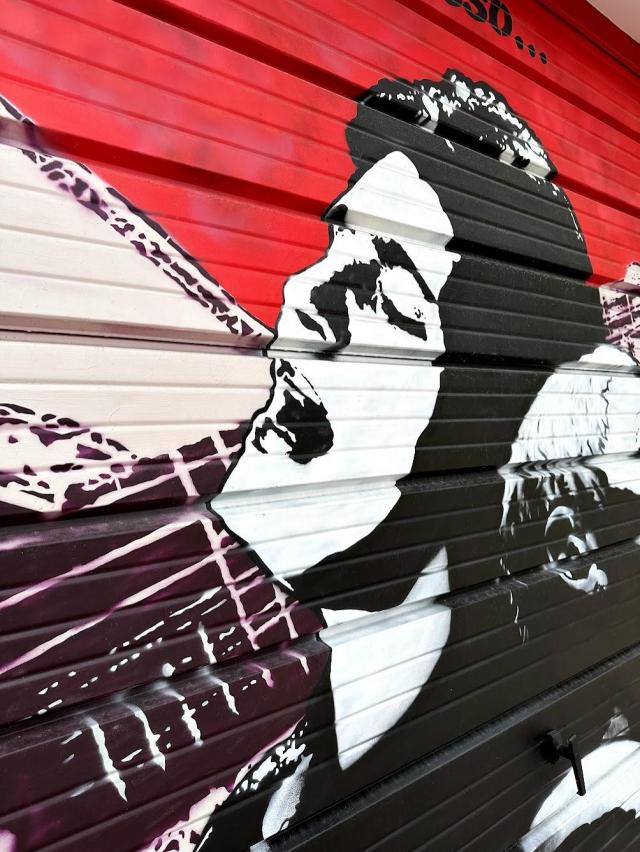
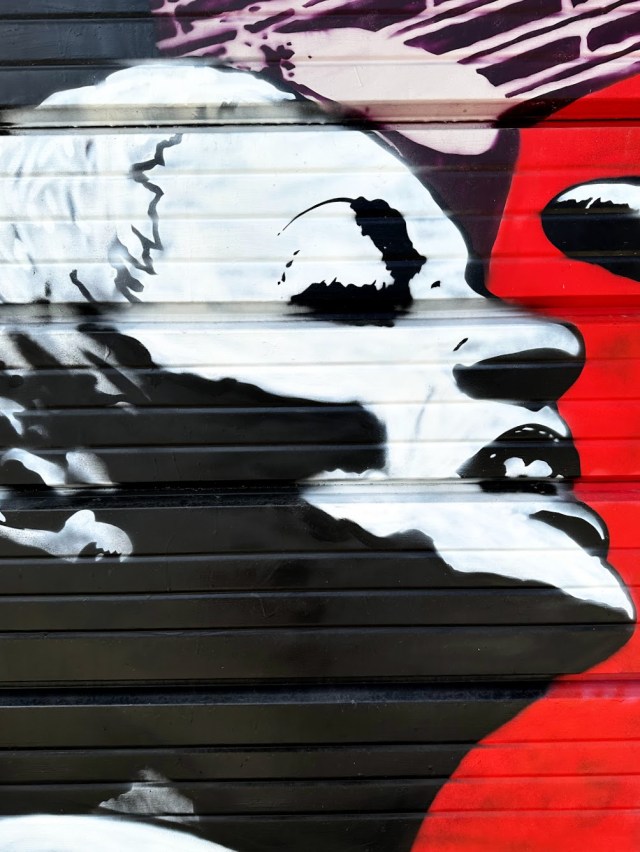
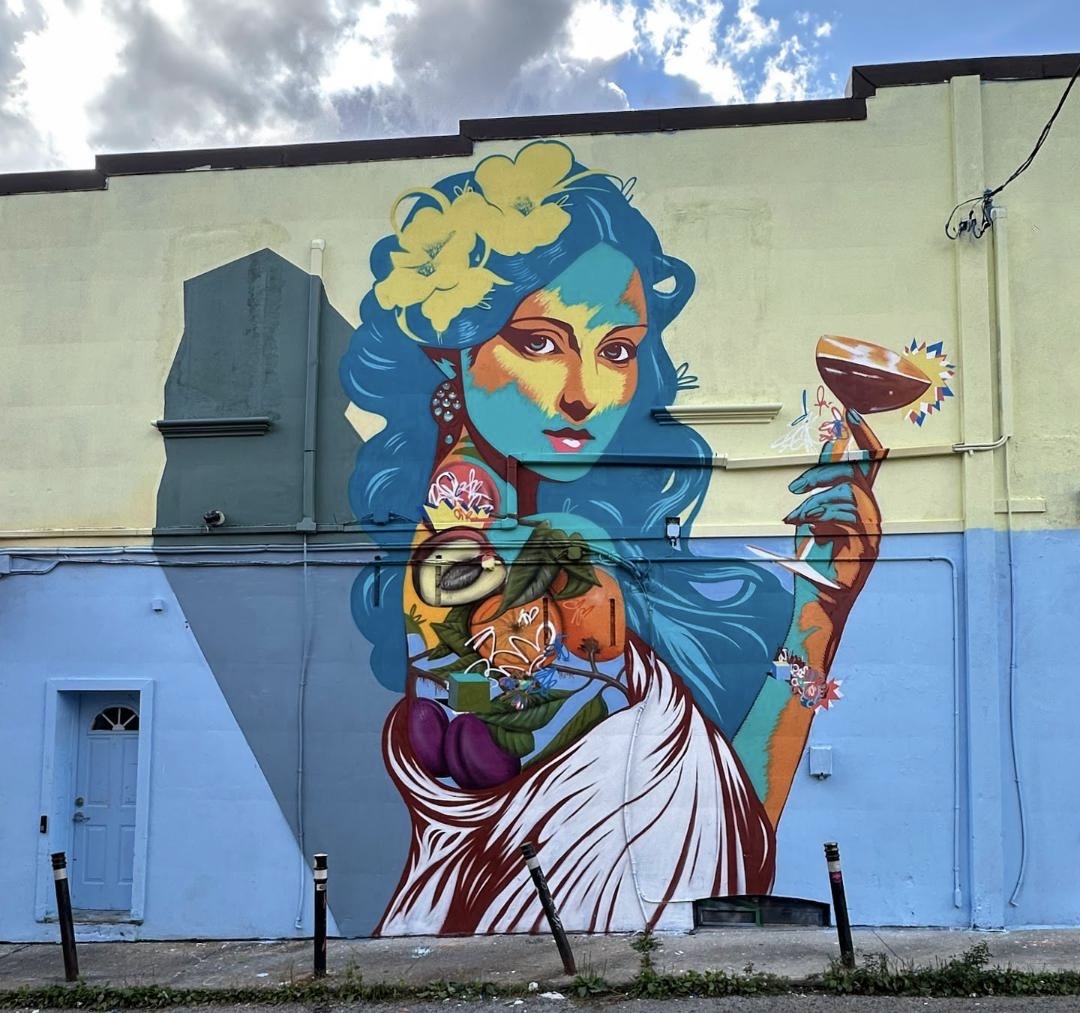
That was my first thought upon seeing this stunning painting.
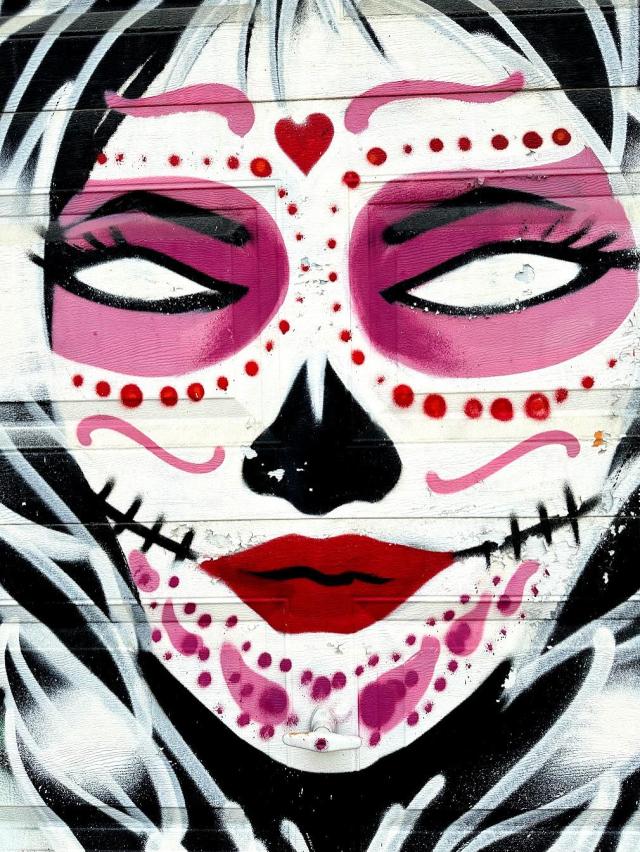
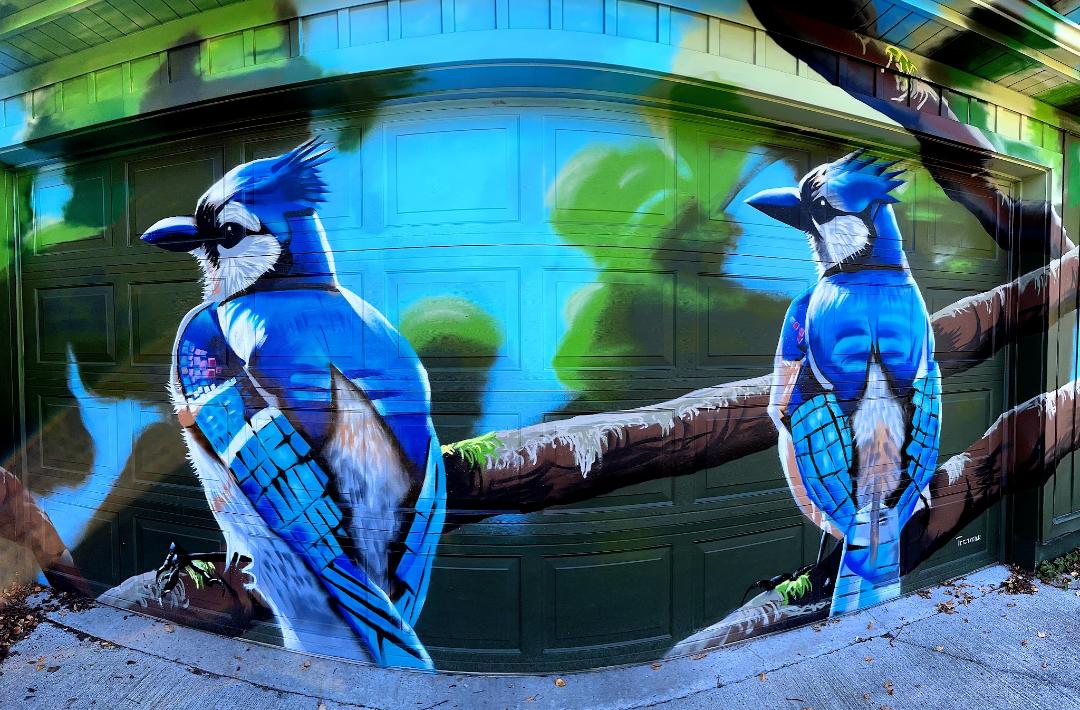
I found this a most difficult image to capture.
The squares on the garage door create a grid that has to be aligned while shooting. Focus is required, but there were these 2 interesting guys who engaged me in a chat.
Anyway, turned out one lives across the street from my B-i-L. That led to more chat.
The other guy lives across the alley from this art. He said he was there when the artist was painting it.
He asked the artist if she was painting Joan of Arc.? She said she hadn’t thought about it.
Pics taken by Resa – June 27, 2025
Toronto, Canada
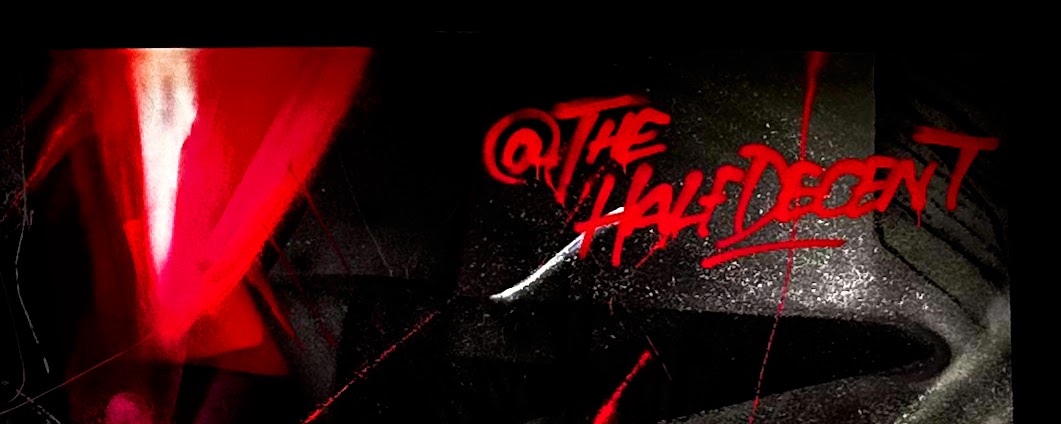
The Artist:
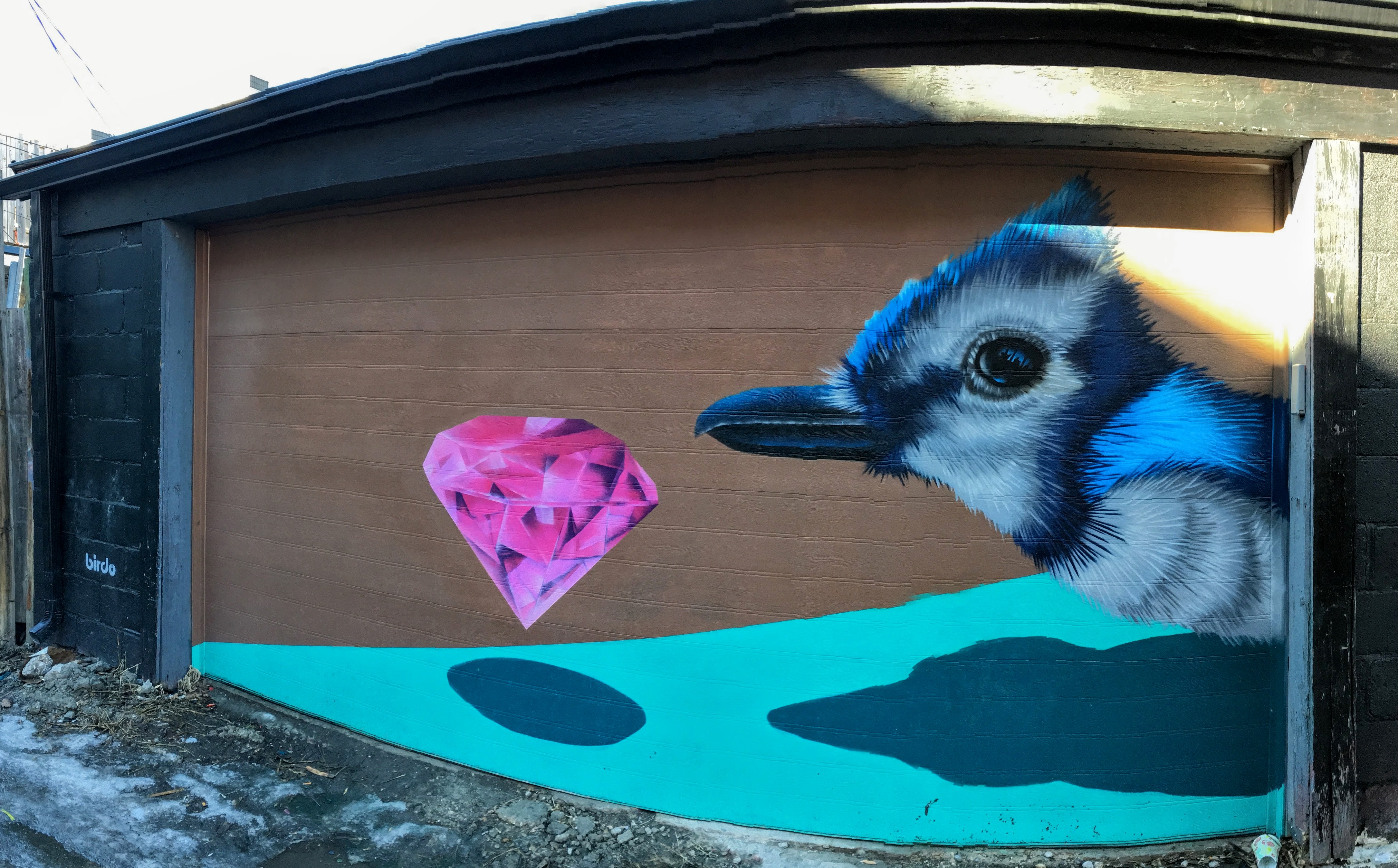
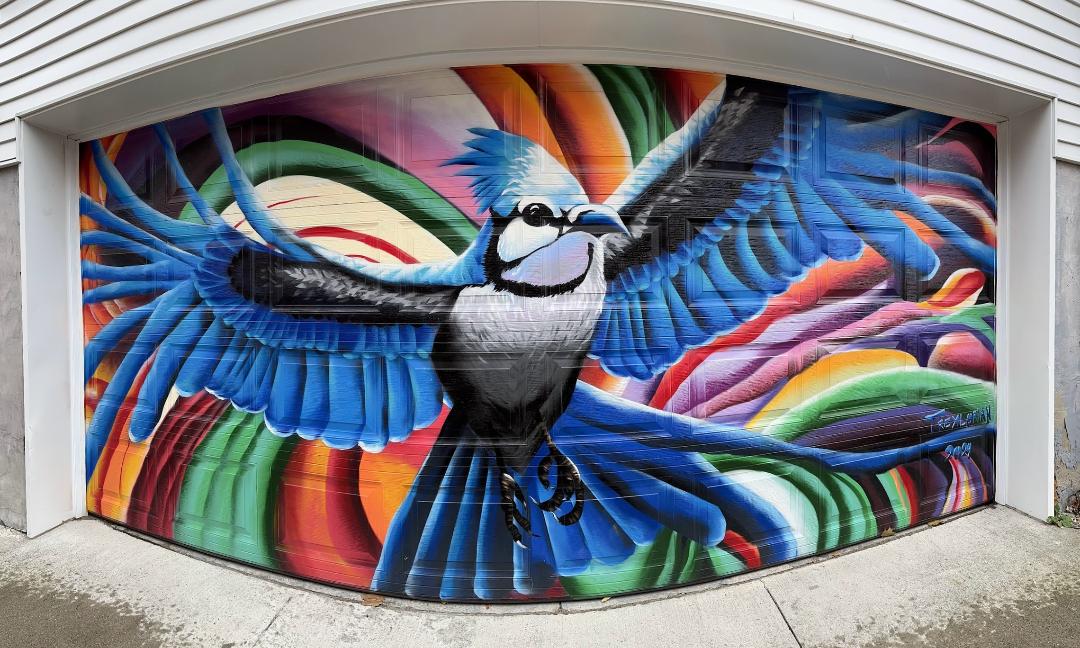
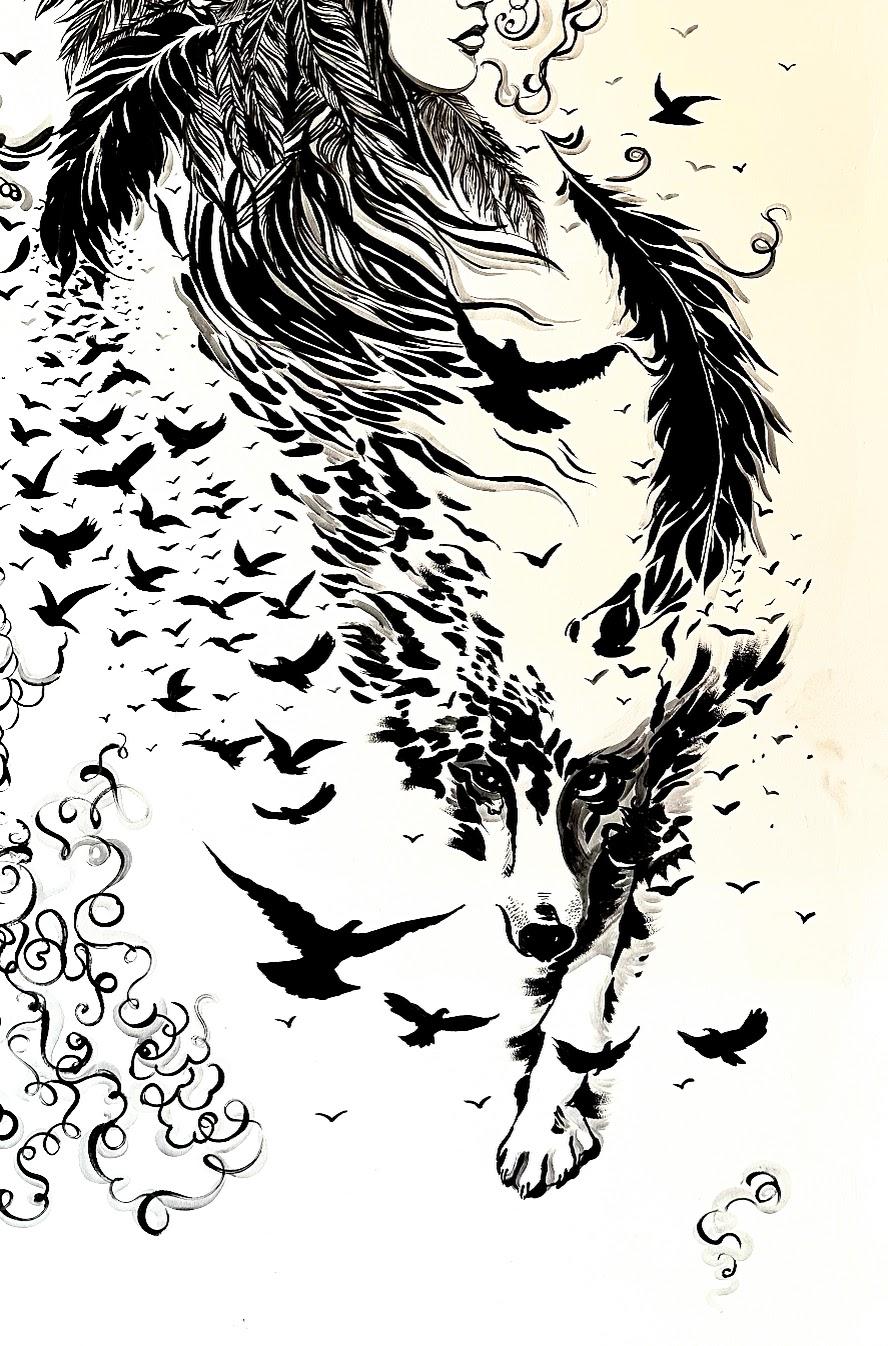
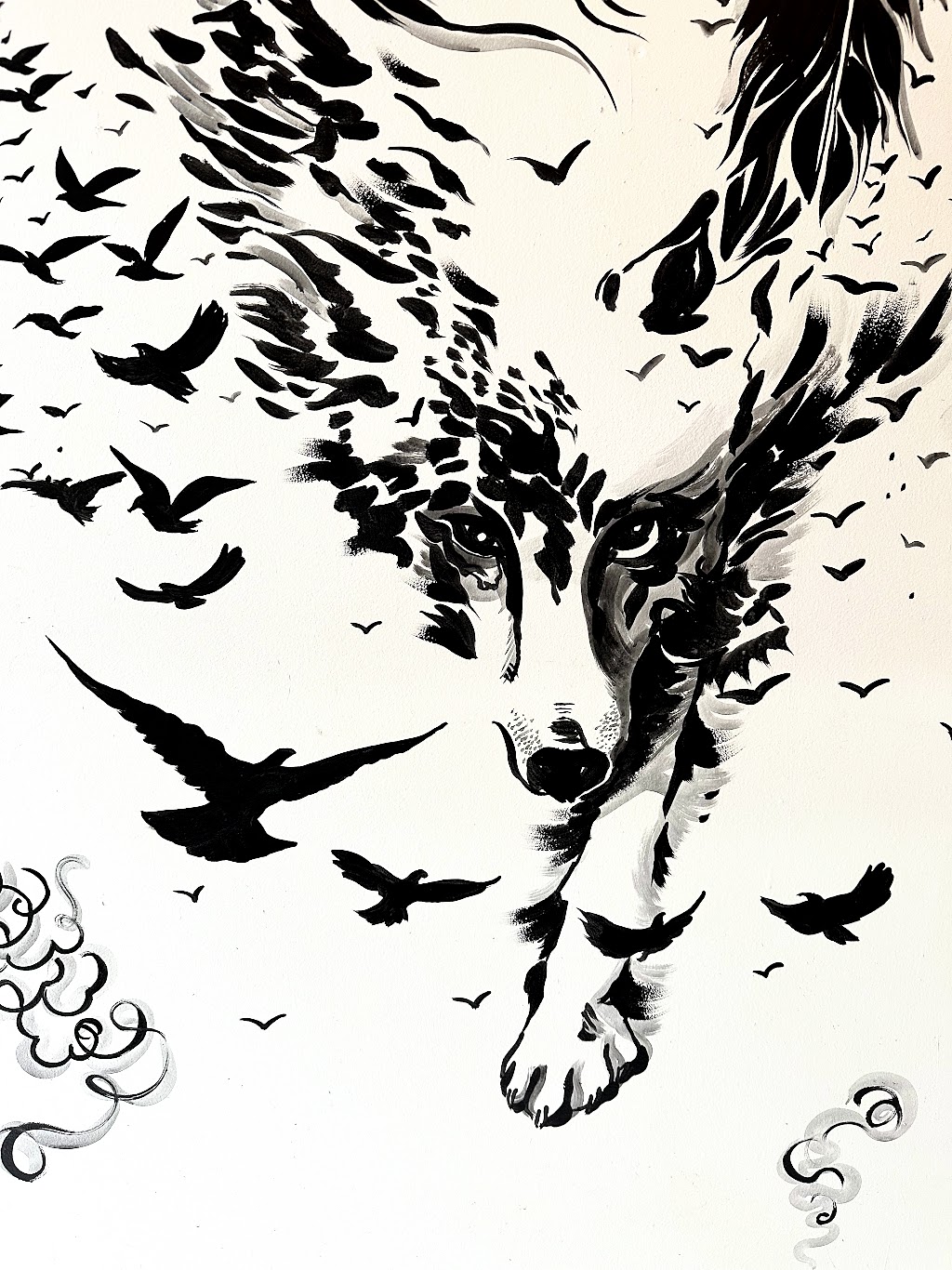
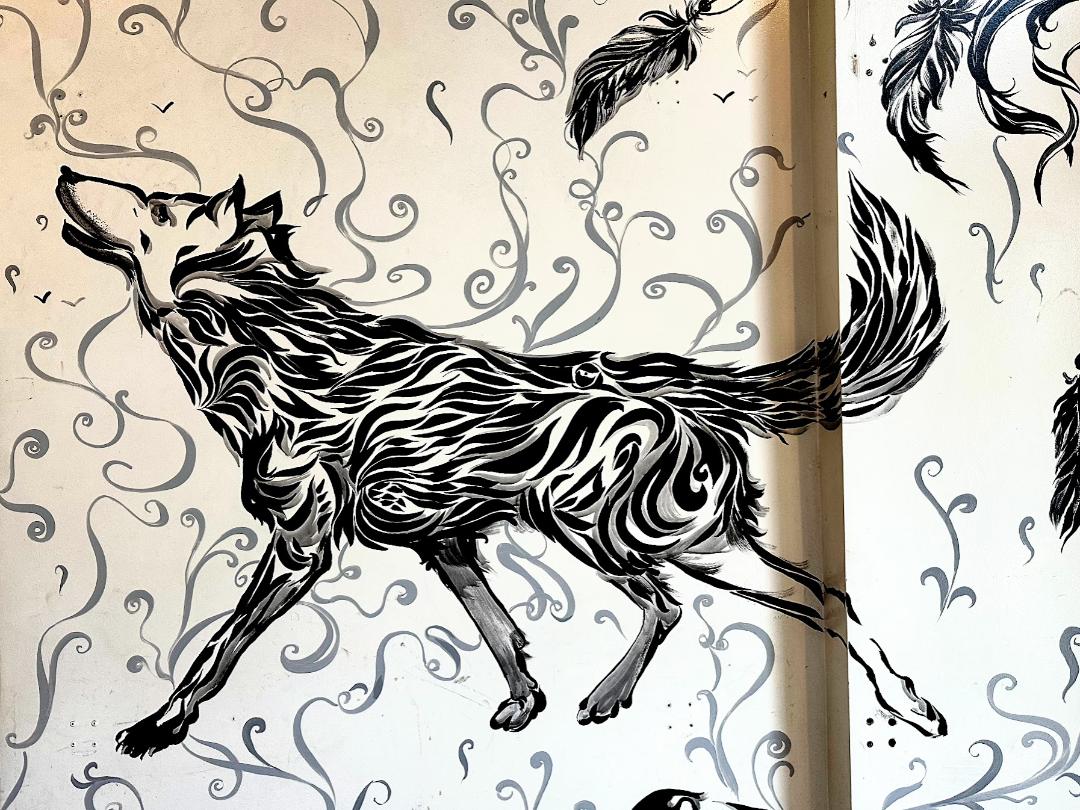
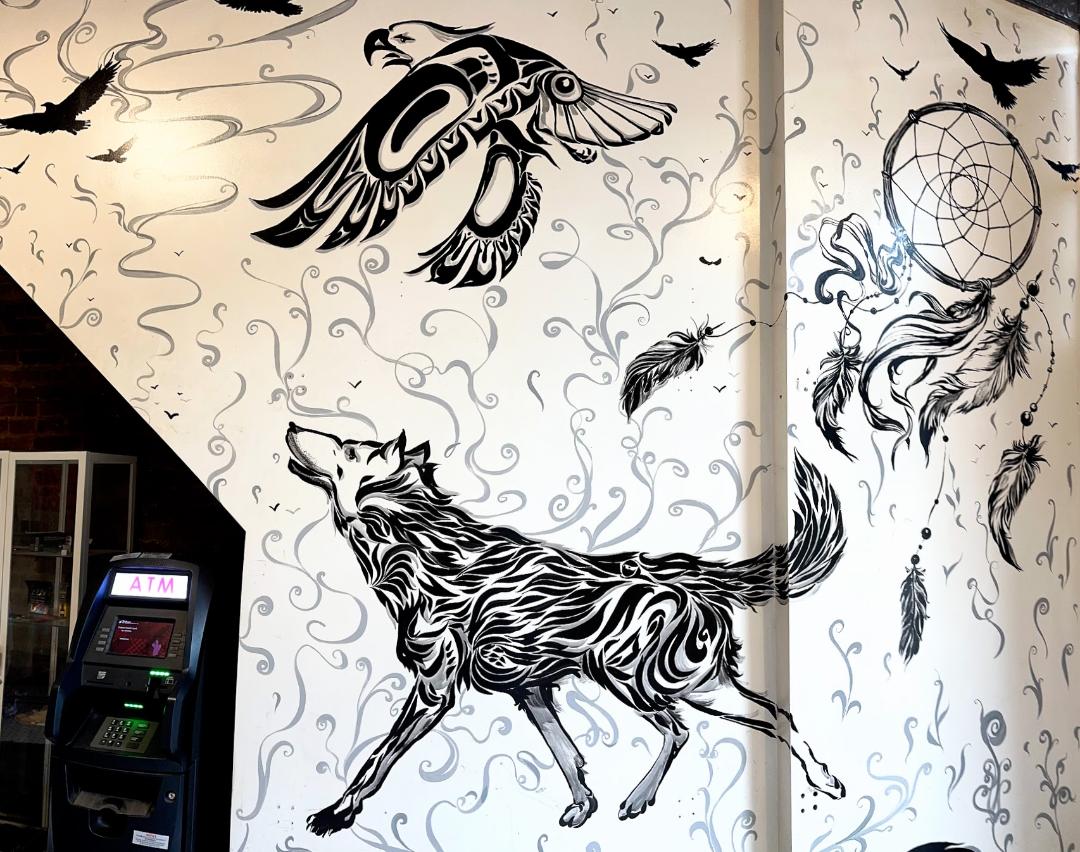
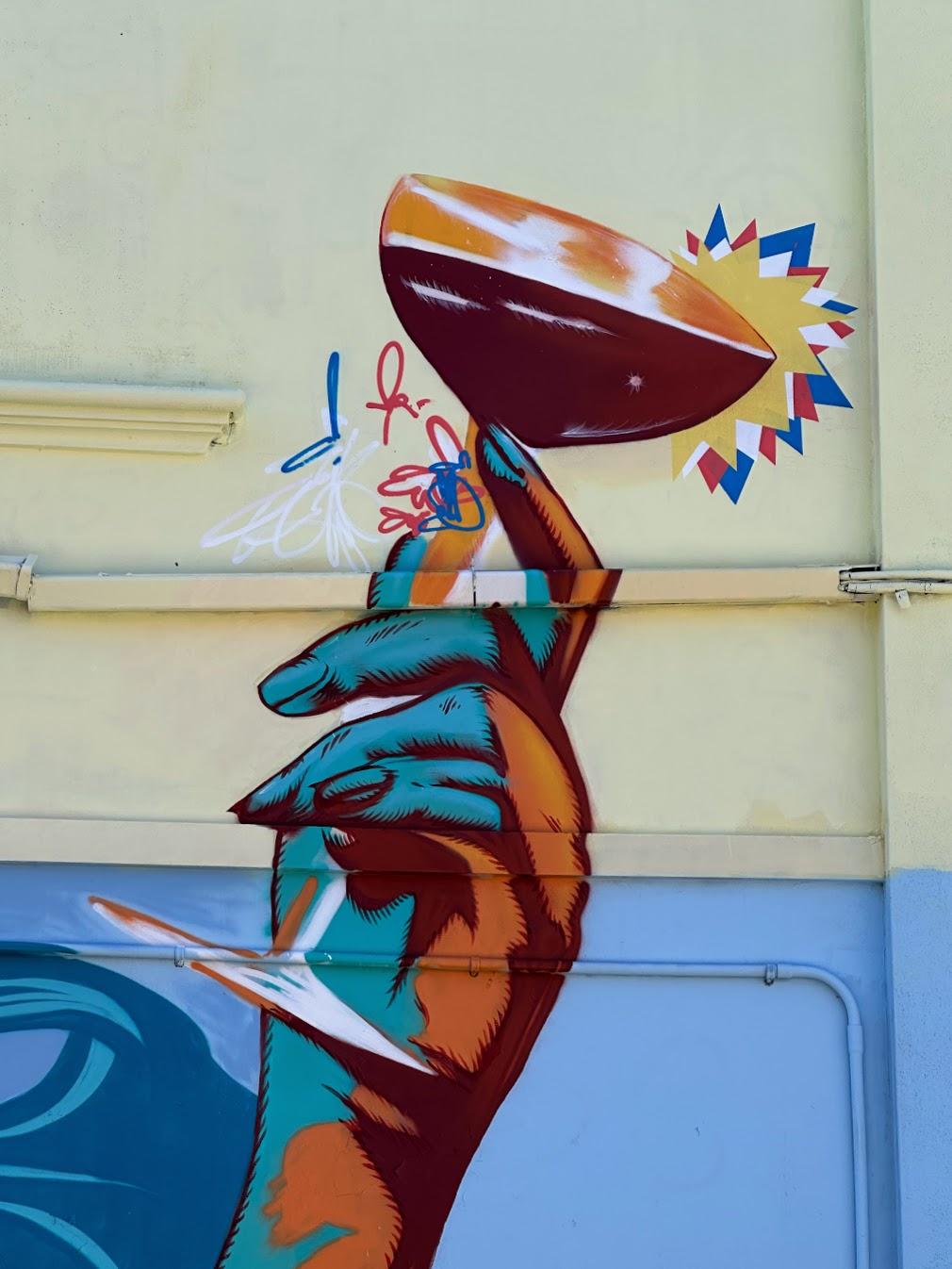
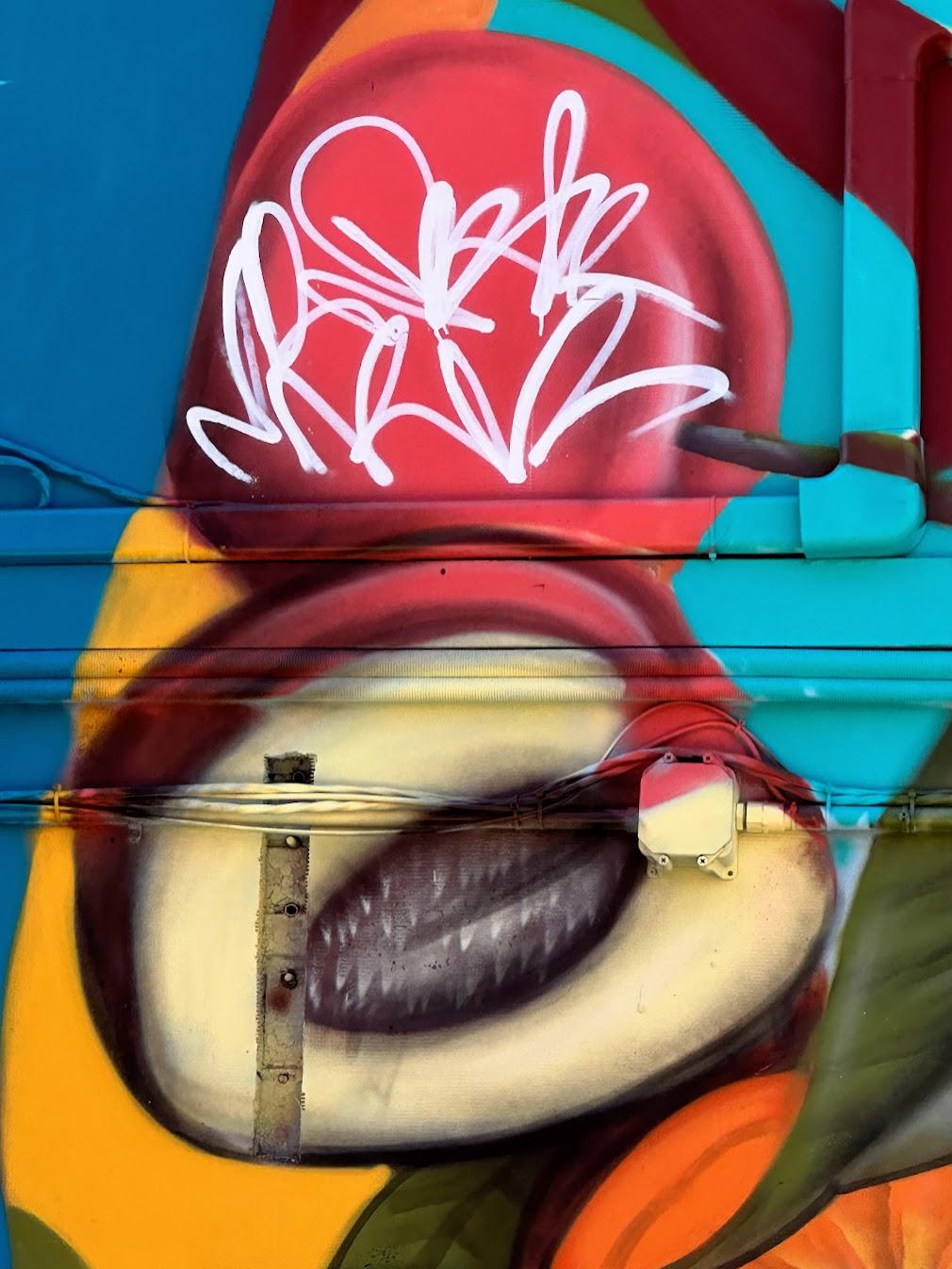
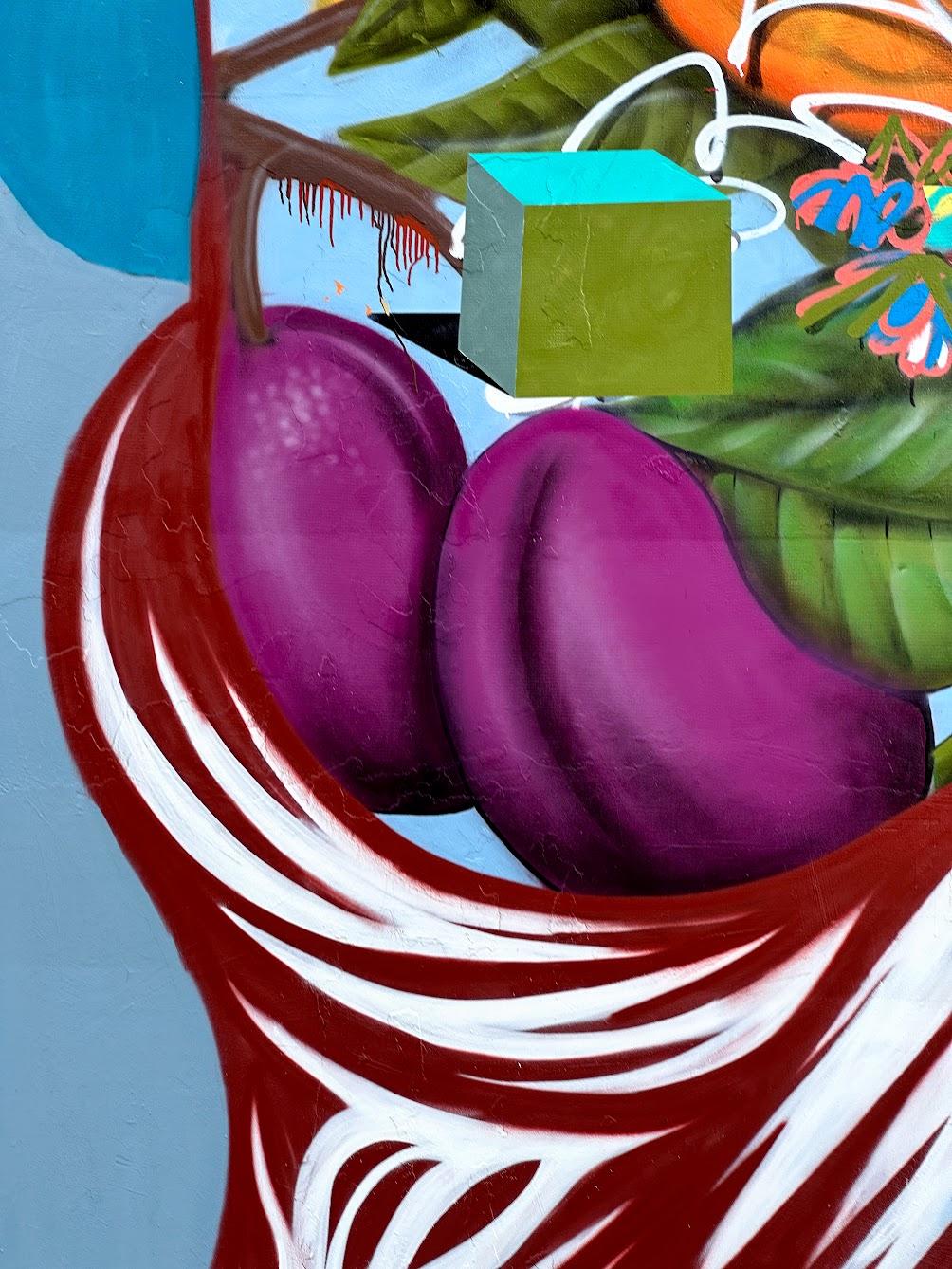
So, I went to the artist’s website. WOW! Her work is fabulous a renaissance, a classic in our new age. She ended up naming this – Sol Aer
The Tate Museum says “The term underground art is used to describe a subculture of art, like graffiti art or comic strip art. Wiki says ” any form of art that operates outside of conventional norms in the art world, part of underground culture.
Resa – Matt, what do you say to those definitions?
Matt – Either definition works. The wiki def is more encompassing to include **Poetry Chapbooks one of which I get in the mail & **Zines(which I was also part of in the 90’s) which surprisingly still exist.
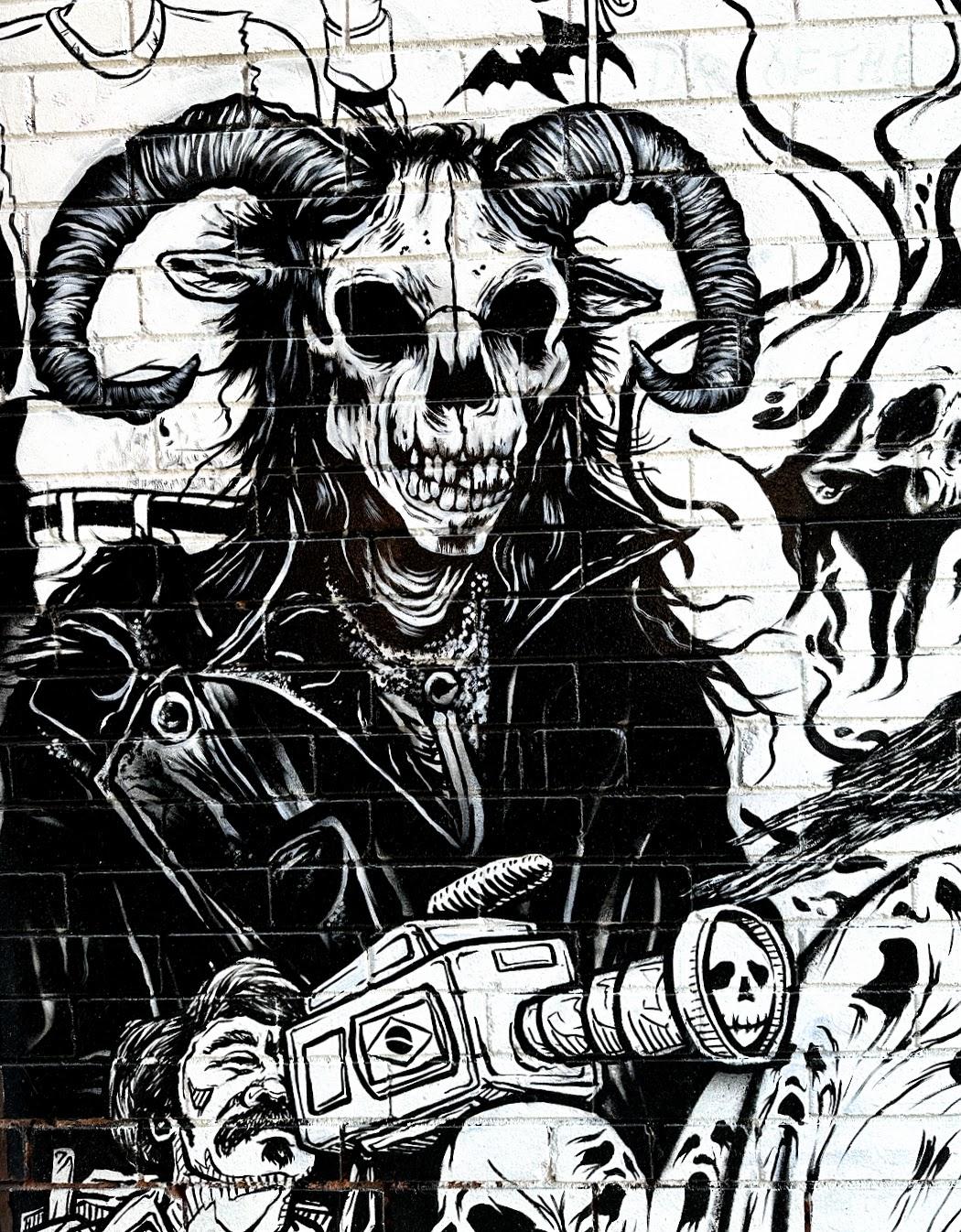
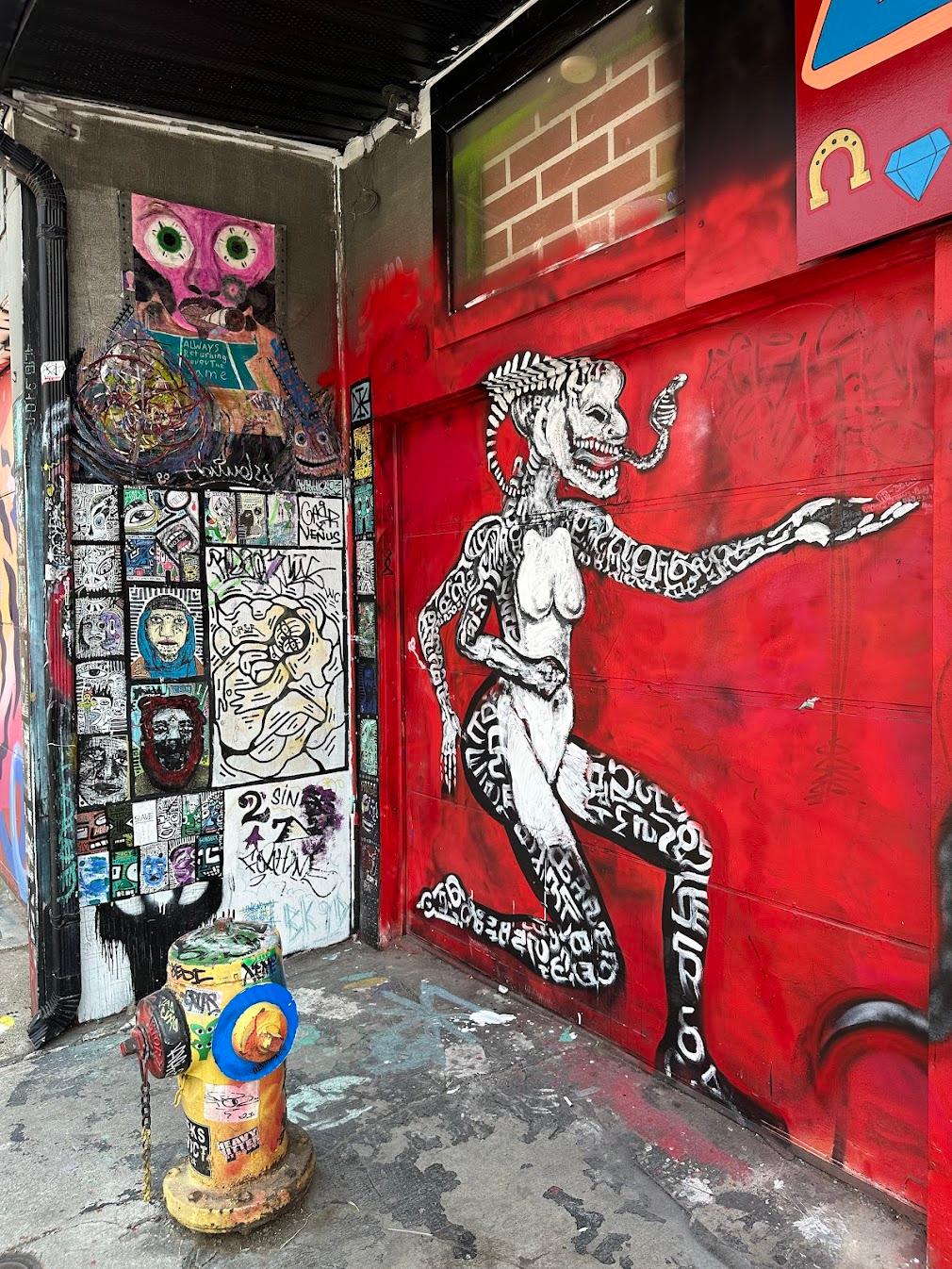
All I did was turn into an alley and was instantly transported into the past. The newest graffiti was 15 years old.
Mr. Natural?
Underground Comix and Publications
COMPARE THE MR. NATURALS
Having recently had a comments chat with Matt aboutunderground comix, I was like OH, Matt would love this alley. I sent him a couple of pix, Mr. Wonderful and the one below.
Matt – Oh cool, those look like the work of Ralph Bakshi & R.Crumb.
Resa– Matt, the R. Crumb work was obvious to me, but I honestly didn’t know who Ralph Bakshi is. I looked him up and was wide-eyed that he directed the Fritz the Cat movie and that Fritz is an R. Crumb character. I guess you knew that?
Matt – My life used to revolve around watching as many movies as I could, I was aware of Fritz the Cat the movie but because it was X-Rated it was never readily available in any movie rental house. Wasn’t until Blockbuster Video did mail rentals in 2004 when I finally had a chance to see Fritz and other cool controversial Bakshi films like Coon Skin & Heavy Traffic.
Resa – When did you discover these 2 artists? How did they influence you?
More characters from the alley
Matt – In regards to Bakshi, I had a book called The Psychotronic Encyclopedia of Film from the 80’s that introduced me to a lot of films that were far from mainstream, and I remember reading about Fritz the cat. This same book introduced me to the early films of John Waters, too.
As for Crumb maybe the late 80’s early 90’s ? I used to frequent comic shops and had an extensive collection of mainstream & underground comix. The underground comix were tucked away and you had to ask to see them. I bought a few that featured the work of R. Crumb.
I can’t pinpoint how these artists were an influence. Influence is strong word. I wrote a 3 part post on artists I admire but that’s not the same as influence. I suoppose there are times when I am trying to push the controversial button with some but not all of my work.
Resa – I loved The Fabulous Furry Freak Brothers comix. Were you also a fan of Gilbert Shelton? Did his work have any effect on you?
Matt – I became a fan of The Fabulous Furry Freak Brothers pretty recently. I just really dug the humour (pot head no less, coming from a never used square like myself)
Resa – You said you get a Poetry Chapbook in the mail . Is it a particular author or publisher? Do you consider online Chapbooks an underground art form?
Matt – I subscribe to punkpoet.net by an author/artist named JB who occasionally snail mails out haiku comics for free. I love getting old school mail. I’ve never come across an online chapbook, unless you mean a poetry blog but it can’t be on a platform like WordPress, it has to be it’s own thing.
There’s still lots happening with **Poetry Chapbooks. Click on the pile beside to learn a bit about them and their history!
Resa – So Matt, please tell us about your experience with Zines? If it’s online, is it still a Zine?
Matt – Again I suppose blogging could come across as a Zine but I don’t know I don’t see using the internet as a means of going against conventional methods to be considered underground in any way. In the 90’s I was active in submitting poetry to multiple small press poetry zines as well as publishing my own (which included comics and short stories as well as poetry.)
**Zine (short for “magazine” or “fanzine”) A self-published booklet created for personal expression. Their history spans from the 1920s Harlem Renaissance, to the 1970s DIY Punk scene, and beyond.
Matt – Sadly I don’t have any of the 6 issue run of “Toxic Shock and other abnormalities of the inner being.” Yeah, quite a mouthful for a title, it was co-edited with 2 different people the first 5 issues done in 1992 with Rob H. and the final 2 done in 1995 with Sara M.
*Some libraries collect Zines. The Boston Public Library has more than 945 Zines.*
Graffiti
“If the paint is not from a spray can, it’s not real art.”
Resa – Supercilious words from hard core graffiti artists, but when it comes to graffiti art and much wall art, I think there’s truth to that. What do you think about that, Matt?
Matt – As opposed to what, like a wheat paste up ? Is Graffiti truly art? I find myself drawn to character based graffiti over throw-ups and tags. Essentially I prefer what is known as street art, ya know.
Resa – Above is a pic of a bunch of tags and throw-ups, from Graffiti Alley. I look at the entire composition, and it looks like a community art piece to me. Does it look like art to you?
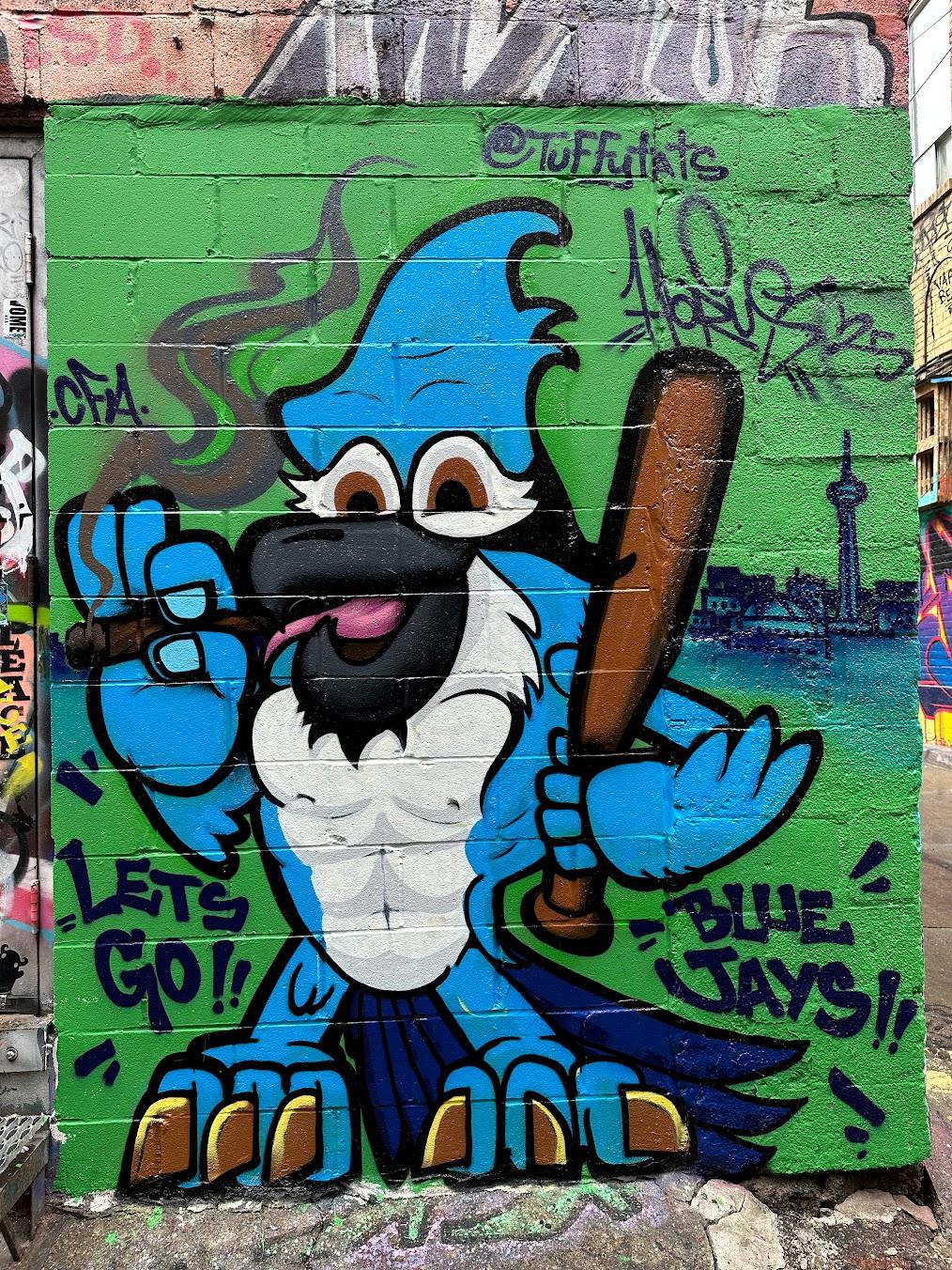
Matt – No, to me it looks hella sketch. Like I’d be looking over my shoulder every minute to make sure I wasn’t gonna get jumped.
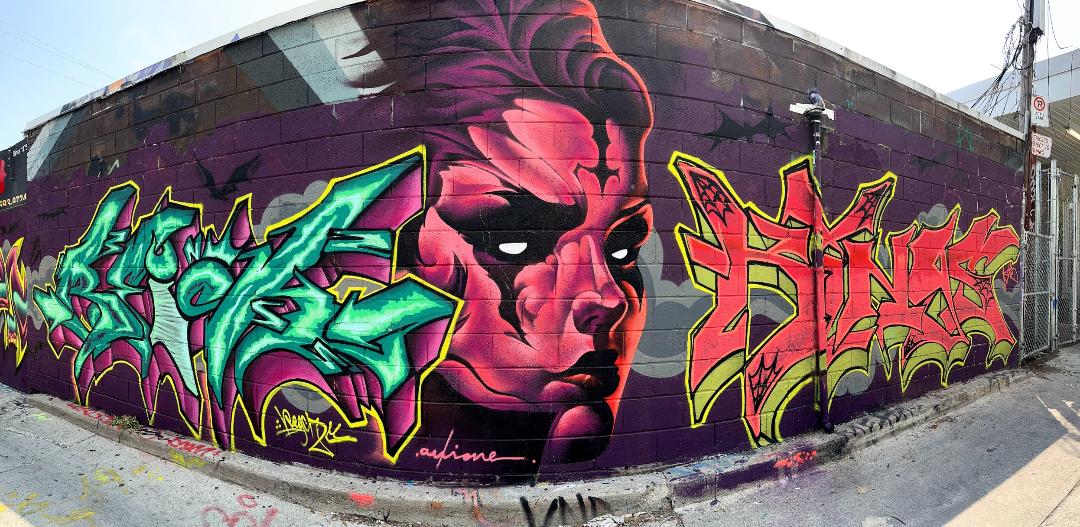
A common classic style of graffiti art is writing, aka burners or lettering.
Resa – The building owners in Graffiti Alley welcome the graffiti. However, if it’s not welcome, if it’s vandalism, is it art? This includes tags, cartoons, lovely artworks or burners .
Matt – Vandalism is vandalism. Any unwanted piece is just plain wrong in my book. Does the crime deserve a hefty penalty to include jail time ? No I think it should be a misdameanor with a hefty fine. But again, vandal graffiti is definitely more befitting as being classified as underground.
Artist: Nick Sweetman
Resa – If there is no underlying political message, is it “true” graffiti art?
Matt – I don’t see that as being a necessity to make it “true” art. Art is pretty subjective, ya know.
An artist acquaintance recently smacked a paste-up on my home. Paste-ups come in many styles.
Paste-up by Andrew 01
Resa – I know it’s not on a wall, but I adore some of your art that seems a paste-up style. Am I right to think that, based on the examples below?
Matt – I suppose maybe you could say that about collage in general but I wouldn’t go as far as to say my work is a pasteup style, because I hadn’t heard of that term until I saw it on yours an another U K. graffiti blog I follow.
Resa – A lot of the alley graffiti artists are Tattoo artists by trade. Are tattoos underground art?
Matt – Tattoos were definitely once Underground, but not anymore. I don’t know when it shifted but I recall only shady characters had prison tattoos and with military personnel it seemed to be a right of passage. Eventually that shifted into metal/punk bands.
But now in the present ? It’s gone mainstream. Hell half the people at my job, which is mostly populated by women, all sport one or more tattoos.
I enjoy the images below. They convey a lot of movement, and feel like a fusion of graffiti street art (not graffiti tags & throw-ups) & cartoon art.
Some of Matt’s art reminds me of street art, some his own unique brand of cartoon art..
Many say AI will be the end of human created art forms for commercial purposes, and beyond.
Could survival instinct drive creators and their arts Underground?
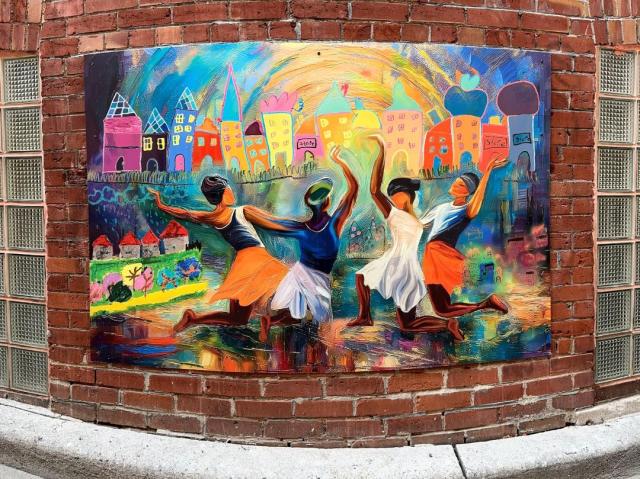
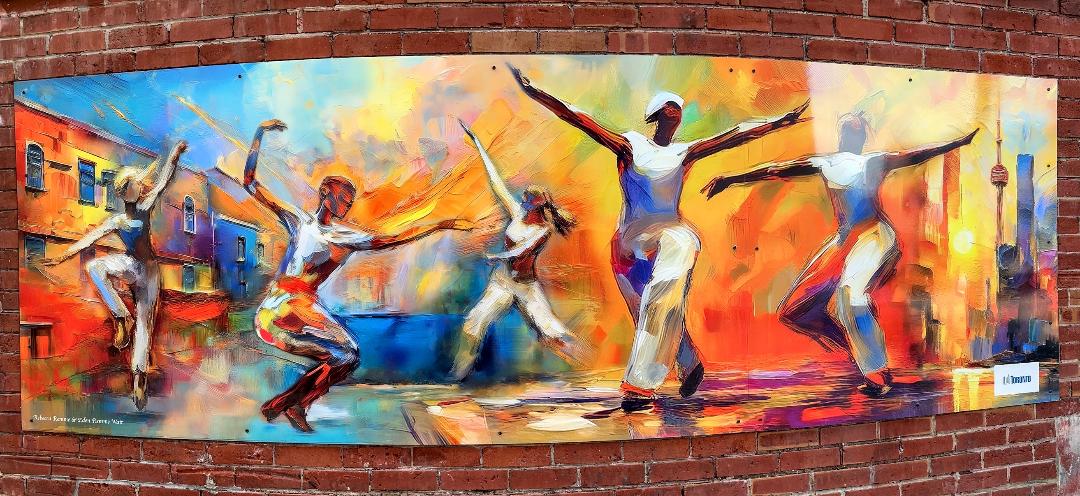
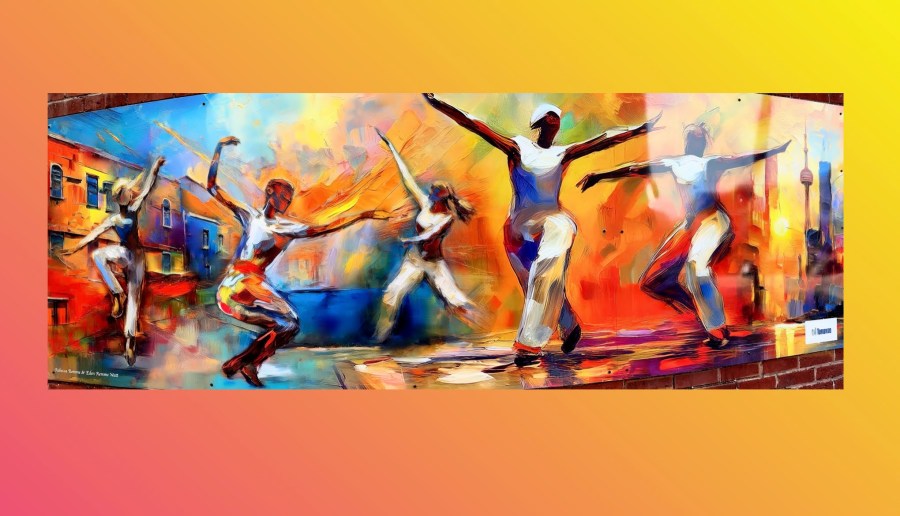
I do not consider Murals to be graffiti art. I consider them to be wall art.
Resa – So, Matt, I found this mural the other day. The colours were fab, and I liked the Day of the Dead theme.
Click on the pic to read about why residents and mural artists are upset about “Fake Art “
Resa – Something bothered me about the art, so I checked around on line when I got home. Turns out it’s an AI generated image printed on a film and applied to the wall. My heart sank.
Muralist Sarah Blostein quickly noticed inconsistencies. Elements like the teeth, hands & guitar strings looked like an algorithm created the work rather than a human artist.
Resa – My 2 part question is -In your opinion, (1) Can any of the arts and its creators survive AI on a commercial level?(2) Is there a possibility of a Renaissance Underground Art movement on the horizon?
Matt – I don’t freelance on a commercial level to be able to answer that question. As A.I. art is less than perfect, I initially was against it, but sometimes use it to accompany poetic work on my blog. As of now I don’t see it as a major threat. As for a Renaissance? Possibly if creators become fed up with how irrelevant they become.
Matt did 3 articles on artists he admired. I chose 4 who have not previously been mentioned in this article, and asked him to comment on them.
ROY LICHTENSTEIN
I was aware of Pop Artists when I was in high school in the 80’s. I was also an avid comic collector. I loved that Lichtenstein didn’t just recreate comic panels with his own wry humour in the thought & dialogue balloons of the character but he also recreated the dot printing process in large format. That aspect of his work made me interested in trying creative techniques. I wish I still had it But I did an ode to Lichtenstien Medium sized acrylic painting and injected my own weird sense of humor into the thought balloon of the woman in distress.
GARY LARSON
Larson’s The Far Side the petfect example of a twisted sense of humour. I’d say both my written and drawn sense of humour was derived from an appreciation of this short lived syndicated comic.
TIFFANY ARPDALEO
Tiff’s art I am in love with. I have a few prints as well as clothing of her abstracts. I tried abstract painting, but they always came out like a mess as opposed to a work of art. I wish I could lay down paint like she does. I am a super fan and super impressed by everything she does.
SALVADOR DALI
Dali being a surrealist was just the epitome of being weird in my opinion. But I didn’t just like his paintings I fell in love with the french surreal silent film he made with Luis Bunell. Un Chien Andalou or An Andalusian Dog. That scene of a close up of a woman’s eyeball being sliced with a straight razor, the sfx from that time period were incredible and a bit of an influence of the short films and animations I made.
Underground Films
Curious, I found Un Chien Andalou,and watched it.
Resa – So Matt, I enjoyed this 20 minute silent film. With all the death, blood and gore in so many popular action films, Iv’e been desensitized. Yet, the eyeball slicing scene is crazy shocking. Why do you think that is?
Matt– I think it’s because of the time period of which the film was made. Practical effects have always been superior to me over C.G.I. What (slicing the eye of a dead slaughterhouse cow) they used to create that illusion done in extreme close up no less, is quite jarring.
Resa – However, I’m not sure I understand the film. What do you make of it?
Matt – It’s meant to be nightmare. To push buttons in people. It is made without a narrative on purpose.
Resa – I searched underground films on line. I was shocked at the results: Pulp Fiction, Fight Club, The Matrix, Mulholland Drive and others I consider big budget films.What do you say to this?
Matt – I saw that so called list of ” Underground” films on IMDB.com but the true definition I found through further research is as follows:
Underground film refers to a category of motion pictures that diverge from mainstream commercial cinema, prioritizing personal artistic vision over broad audience appeal. Often characterized by low budgets and unconventional techniques, these films typically emerge from independent filmmakers and are distributed through alternative venues. Underground films frequently tackle taboo subjects, exploring themes of sexuality, politics, and the supernatural, often using experimental styles that distinguish them from more commercial offerings.
Resa – I thought at least The Blair Witch Project would be mentioned. Apparently that is considered an experimental film, but not underground. Do you think“The Blair Witch Project”is an underground film?
Matt – The actual filming style of Blair Witch, absolutely. But unlike most underground films it became a massive commercial hit, so not entirely ya know.
Andy Warhol made over 600 underground films between 1963 and 1968.
Resa – Sleep is apparently one of, if not the most famous of Andy Warhol’s underground films. What do you think of it? Of Andy’s underground films in general?
Matt – I think they suck. Sleep is a 5 hour film of someone doing just that. A tedious and boring film. I’d rather watch any film by Underground Auter Kenneth Anger which can be at times tedious as well but at least there is variety in his work.
Matt – I met underground filmmaker John Waters 4 times in my life.
Resa – OMG! How did I miss John Waters for this post? Love his films. He was more Underground at the beginning, but even his later more commercial films held much quirkiness.
Matt – I auditioned for the Ricky Lake version of Hairspray in ’87.
Resa – Okay , now that is just plain cool. I shook his hand once. I was in an admiring crowd.
Matt – I met him at a showing of my favorite film of his Female Trouble in 1996 in Philly. He was guest speaker at a local arts business expo in 2004 as well as a talk he did in 2010.
Resa – When I saw Polyester, I laughed myself sick. Divine was hysterical. The budget was as low as the set’s ceiling. The boom mic showed in most shots.
Matt – The dude is filmmaking hero of mine.
Here are 2 of Matt’s underground films I enjoyed and you might, too.
Matt – Ronald was the 3rd and more polished part of a trilogy of shorts I made with some friends in 1987 & 1990. This film from 1999 was an experimental improv film made with local actors & my late parents.
Running time 5 minutes.
Resa –I really like Remembering Ronald, Matt!Suffocation, below, is completely different, and I liked the message.
Matt–The story is about a guy bummed about not being able to get with various women and feeling all depressed till he is visited by a future self and given a scarf that helps relieve his depression.
Some stood up for what they believed in. Some were targeted by hate. Some died young from disease. We walk among you. We will NOT be eradicated. Some of us have become Ghosts, but no matter how hard you refuse to see us, we will remain, Alive, Heard & Seen
You must be logged in to post a comment.