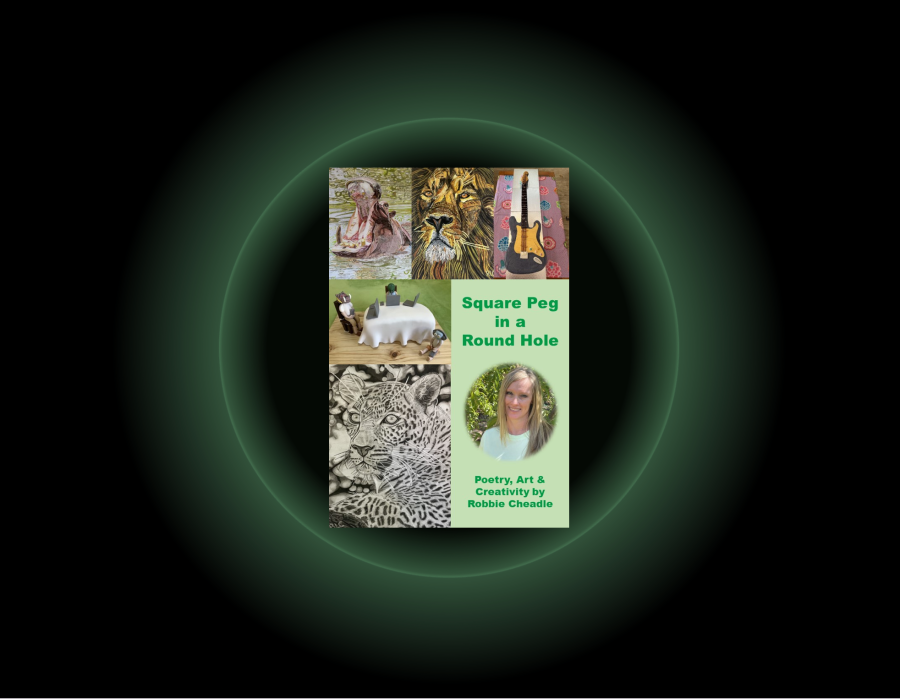
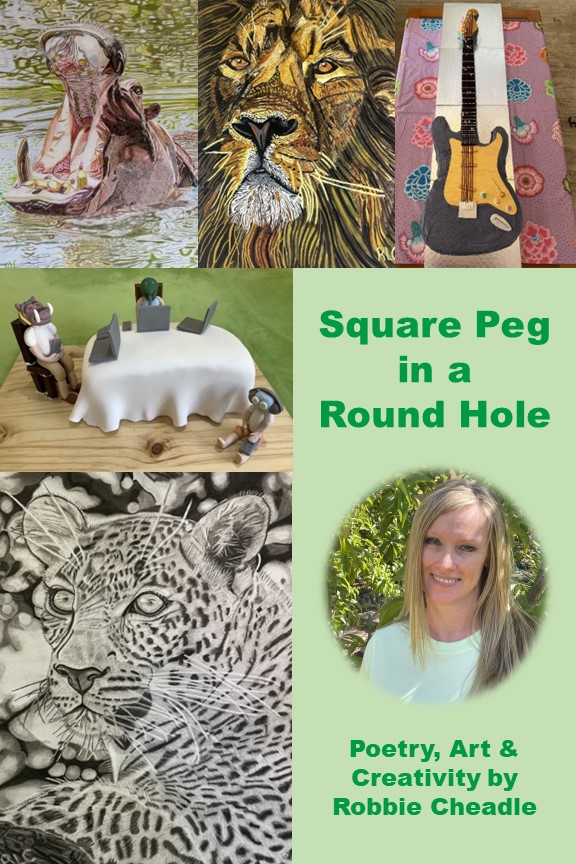
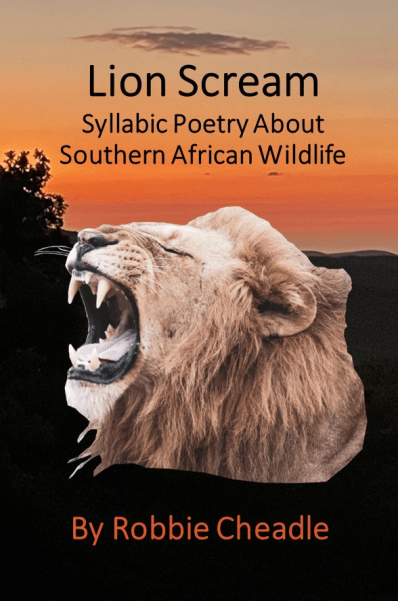
This honest exposé of Africa’s nature highlights Robbie’s love for all flora and fauna.
Writing a review for this book of poetry, photography and art is truly like sticking a square peg in a round hole. It defies categorization. Yes, it is well crafted, entertaining and informative. However, it strikes out beyond those adjectives. It teaches, with heart.
Resa – Near the beginning of the book is a heart touching & humorous free form poem – The Visitor. What bird is depicted, and did you really have this visitor?
Robbie – The visitor is our semi-tame hadeda, Eleanor. She lives on our property with a male bird, although he disappears sometimes and she is always around. I feed her occasionally but not often enough for her to lose her independence as a wild bird. She will wander into my house if she gets the opportunity. I don’t mind her visiting but she can get a little upset if she can’t find her way out again. Then I have to help her. The information in that poem about the loerie birds is also true. We don’t net our fruit trees anymore.
Robbie – There is another poem in the book about our loeries being the fattest birds in the city.
Resa – I was going to ask about that poem.It makes me feel happy. I love it!
Fat Birds (shadorma)
Mangled fruit
Product of guzzling
Plump loeries
Eat and eat
I'll have to build a runway
Fattest birds in town
Resa – Growing up in Canada we had an American TV show called “Wild Kingdom”. Often it depicted the animals of Africa. They were wild, free, mysterious and dangerous. Did you have a nature show like that? Or, how did you learn about African animals?
Robbie –I have never really watched TV. It was late coming to South Africa and I never developed the habit. I always read a lot though, and one of my favourite series was Willard Price’s animal adventure books. I became very interested in the plight of wild animals as a result of these books, although at that time they mainly focused on poaching and the illegal animal trade. Interestingly, Willard Price was a Canadian.
Robbie – Later in my life, National Geographic magazines came to South Africa and I bought them every month. I had piles and piles of them and ended up giving them away each time my family moved house (21 times during my pre-marital years). After I met my husband, we started going to game farms whenever we could afford it. I’ve learned a huge amount from the various guides and game rangers.
Resa – Then, there’s climate change.
Robbie – Climate change started coming to my attention in the ’90s, but I never really thought about it in connection with our wild animals until the early 2000s. Over my adult life to date, more and more animals have become endangered to a point where the list of ‘least concern’ animals is much shorter than the endangered list. Many ‘least concern’ animals are actually in danger of disappearing due to habitat loss. Over the past 15 years, I’ve become a lot more involved in promoting the plight of our animals and doing what I can to help support them.
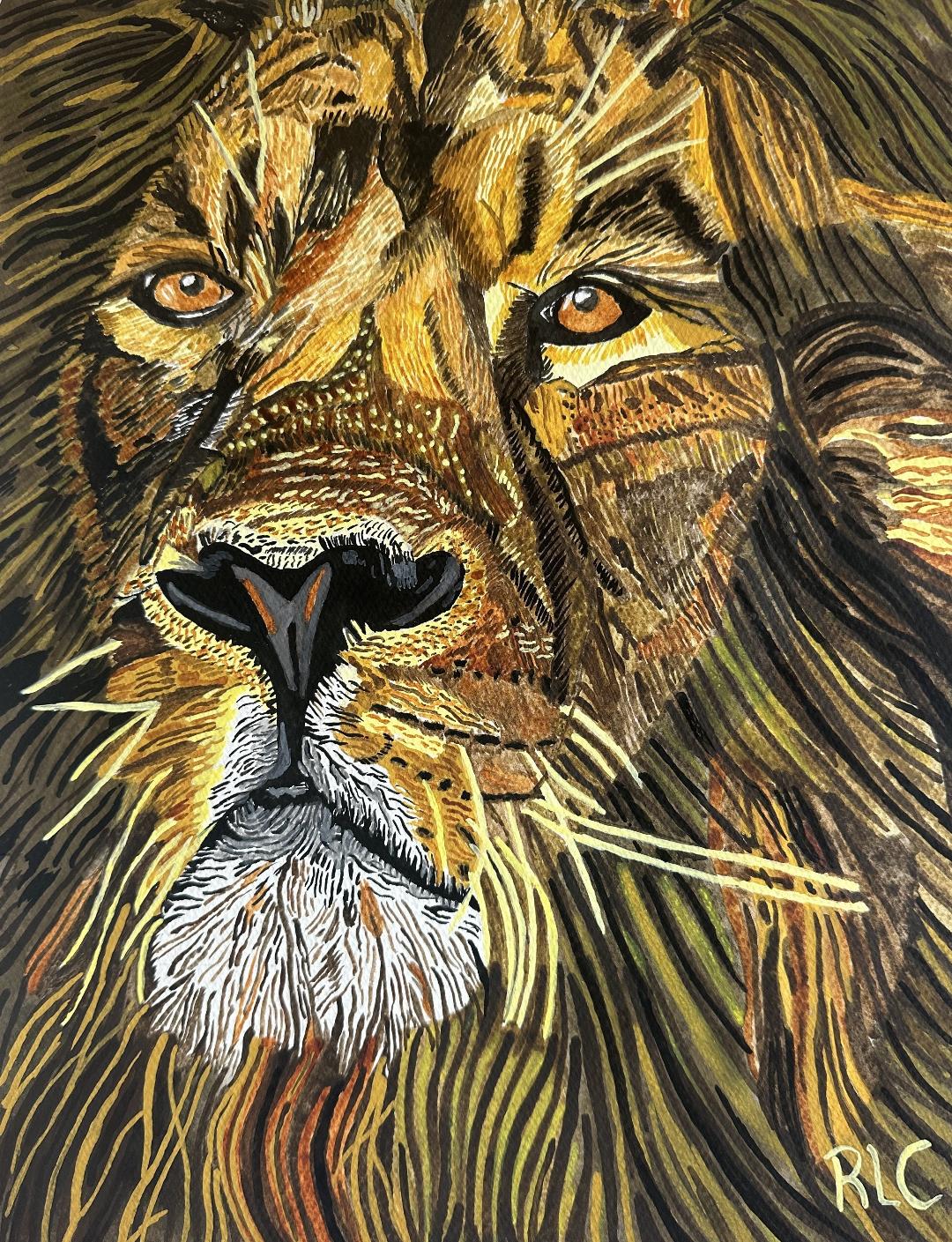
King of the Beasts
“To a Lion” is a contemporary poem, that travels, with images, over 6 pages. The reality of the plight of this majestic animal is beyond what people want to comfortably know. I say the truth hurts, especially when one confronts “Canned Hunting”
Resa – When did you learn about “Canned Hunting”?
Robbie – I despise hunting. I don’t understand it and I don’t support it. Canned hunting came to my attention about 15 years ago when I overheard a few of the guides at a game farm talking about it. I didn’t know the term prior to that. According to World Atlas, there are approximately 7,000 lions held in captivity in between 160 and 200 canned hunting breeding farms in South Africa.
Excerpt from To A Lion
You've seen your peers shot - their heads stuffed and mounted
Victims of canned hunting
Perpetrated by fools who do not appreciate your beauty
Or the vital role you play
In the maintenance of the African ecosystems
And all its amazing creatures
“The Story of the Desperate Salesman”(99 syllable double ennead) and “Nest Selection” (freestyle) are of intrigue to me. The male Weaver bird builds a nest to attract a female. If a female doesn’t accept his nest, he dismantles it. Then he builds another more elaborate than the preceding nest.
Excerpt fromThe Story of the Desperate Salesman
He's been building for days
King of construction
Improving his intricate weaving techniques
Working from dawn to dust
Then comes marketing
This building and dismantling is repeated until a female moves in. Somehow this parallels certain thoughts I have about societies, ergo nations. Lots to say about what this “little bird told me”, but then I’d need to write an essay.
Robbie’s poems & photos took me on a journey that was visual, emotional and introspective. A bonus to the entire experience is I learned a lot about poetic form through example. In brackets beside her poems are the types of poetic structures they are written in.
Ekphrastic Poetry with photograph contributions by Wayne Barnes, photographer
Robbie winds up her poetic offerings inspired by the wildlife photos of Wayne Barnes.
Resa – The tone of the poetry is similar to the first part of your book, but takes on an “I want to be free” vibe, with positive suggestion and encouragement. Am I right to think and feel that?
Robbie– Wayne’s photographs are wonderful. You are exactly right in your summary of the poems written in combination with Wayne’s pictures: they are “I want to be free” expressions and do include positive suggestion and encouragement.
Resa – You’ve used mostly Wayne’s bird shots. Is there a reason for that?
Robbie – I believe that is why I chose so many birds for these combos. I see birds as being free creatures that move about and have the compete freedom of the skies. I’ve always though being a bird would be delightful.
One of Wayne’s stunning bird beauties is at 10 seconds in the video below.
The opening words on the promo video above are from one of Michael Cheadle’s nine poems at the end of the book. His work stands on its own. He is a terrific writer, and I felt his pain. He sent this quote, when I asked about it.
Michael – “Writing poems about my anxieties helps clear them out of my mind.”
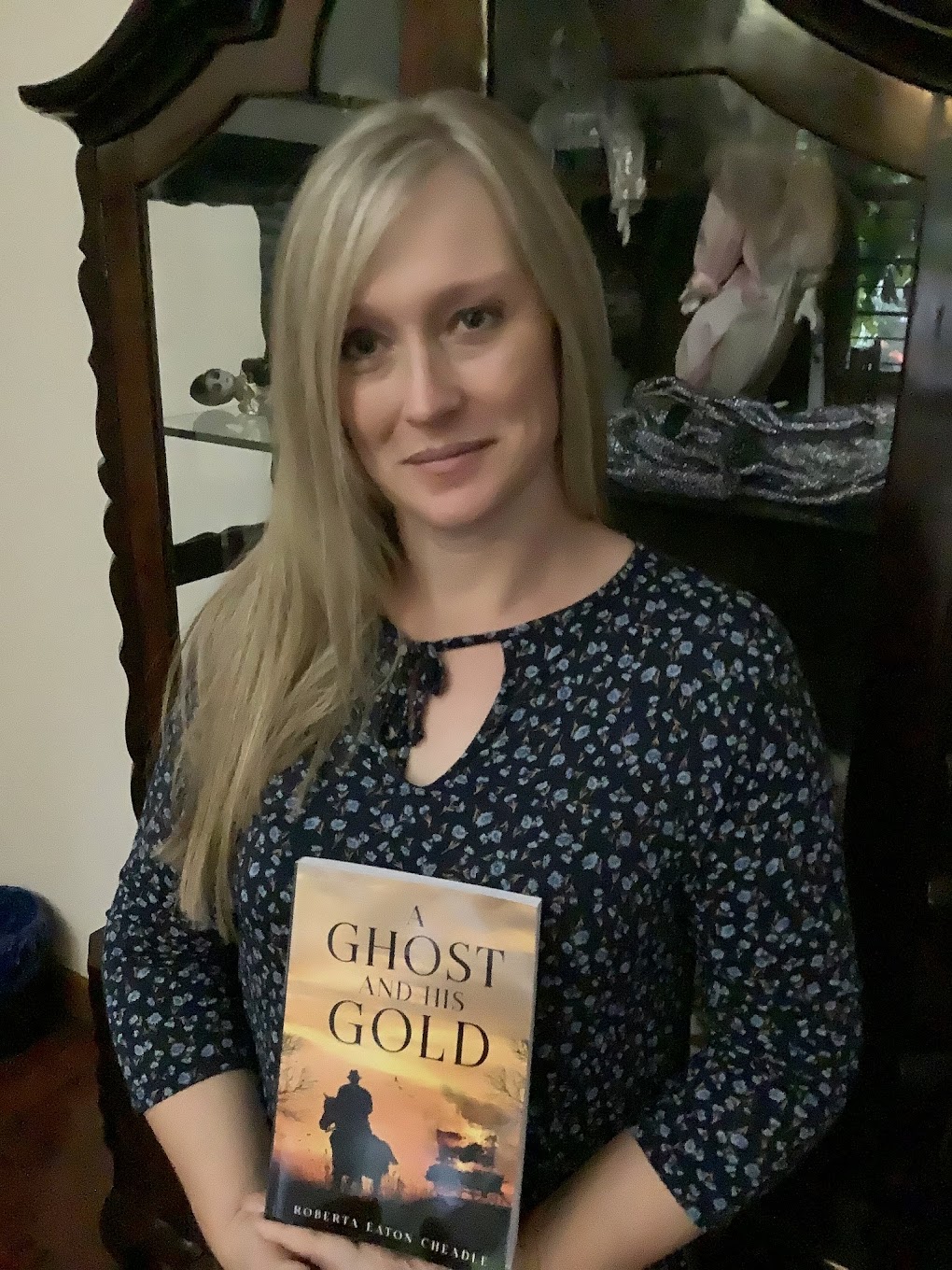
In the photo below, Robbie holds one of her novels, “A Ghost And His Gold”. This book is a superlative read. Read my review! There is so very much to say about Robbie, that you should just go to her about page!
Robbie is a prolific writer. You can find her books on Amazon sites around the globe. Just search “Robbie Cheadle” for children and youth books – “Roberta Eaton Cheadle” for adult books.
I thought I knew what was happening to earth’s animals. Now I know what I knew, but better.
Through the use of syllabic poetry, photography, video and text, Robbie takes us on a learning tour of South Africa’s creatures and their environment. I even learned a new term: Sixth Mass extinction.
I don’t know much about poetic structures, but I know what poetry I like when I read it. I like all of Robbie’s poems, even when the message is haunting.
I also know I love animals. Please enjoy Robbie’s videos! They are only a few seconds long.
Robbie teaches about the BIG FIVE: Rhinos, Lions, Elephants, Leopards and African Buffalo.
Did you know Rhinos cry tears when poachers dehorn them?
It’s sad that when teaching about animals we need to teach also about their impending demise. Back away, or put your head in the sand and be part of the problem!
Did you know there are White Lions? They are not albino, but rather white due to “a recessive trait called leucism.”
Robbie has confirmed that the lion at the foot of the tree in the following video of a “Lion in a Tree”, is a white lion. She also says that she has never seen a lion climb a tree before. Imagine having seen enough lions in your life that you could make that statement?
Living in captivity is necessary for survival of many. This baby leopard is so cute, a delight to witness.
Robbie teaches about the UGLY FIVE: Warthog, Vulture, Wildebeest, Marabou Stork and Hyena.
There are many other mammals included in her book: Cheetahs, Wildebeests, Tigers, Wild Dogs, Hyenas, Jackals, Antelope, Monkeys, Giraffes, Lizards, Flamingos and more. She does not forget insects, sunflowers, bushes, fires and all that contribute.
“The Nutcracker” is a short story at the end of the book that for me tied my experience together. Yes, this book is an experience, not just a read.
I would have gluttonously included all of her videos in this post, but have controlled myself. You can find her African Animal videos on her Youtube Channel.
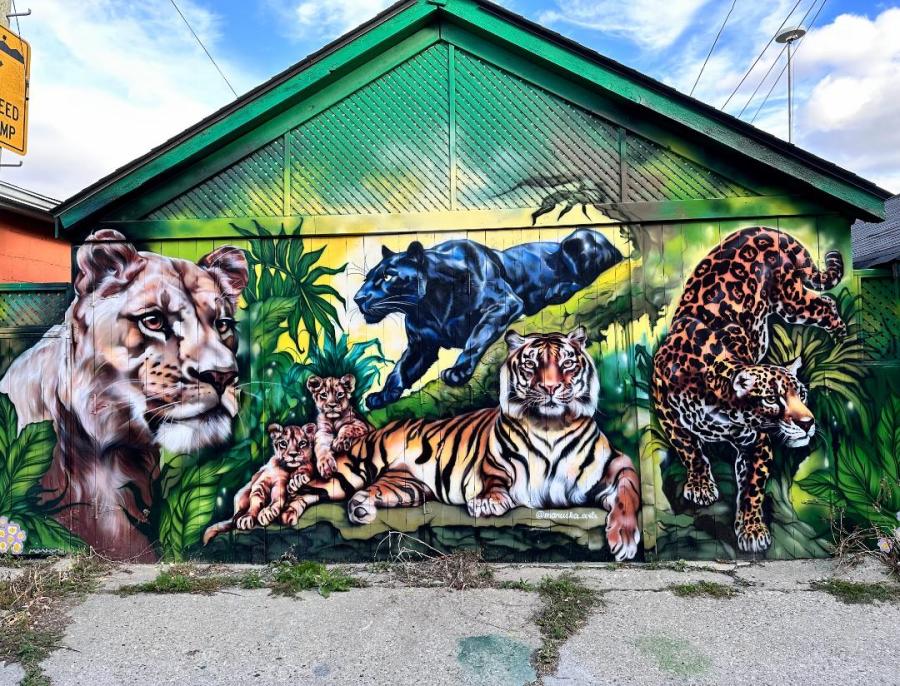
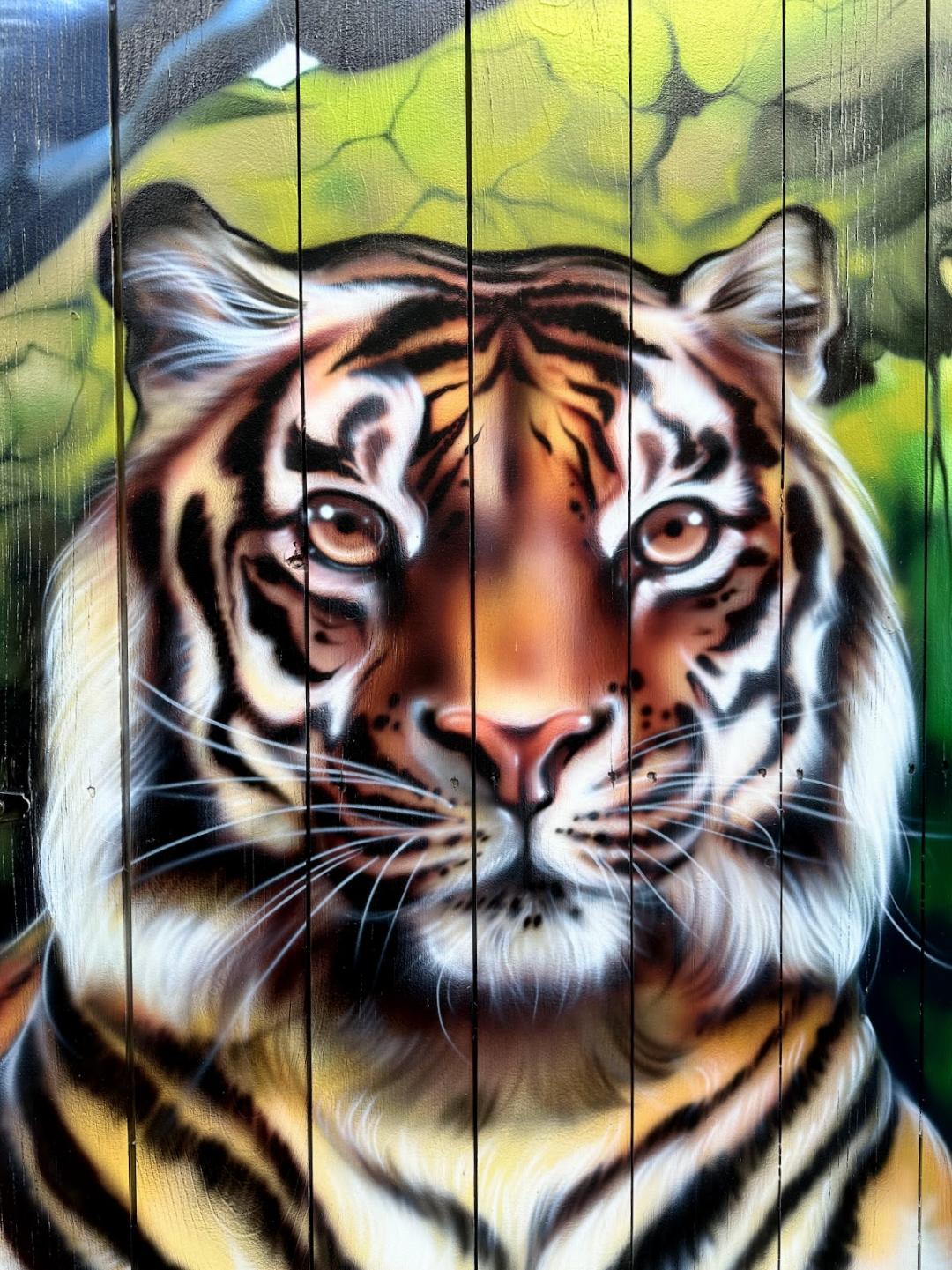
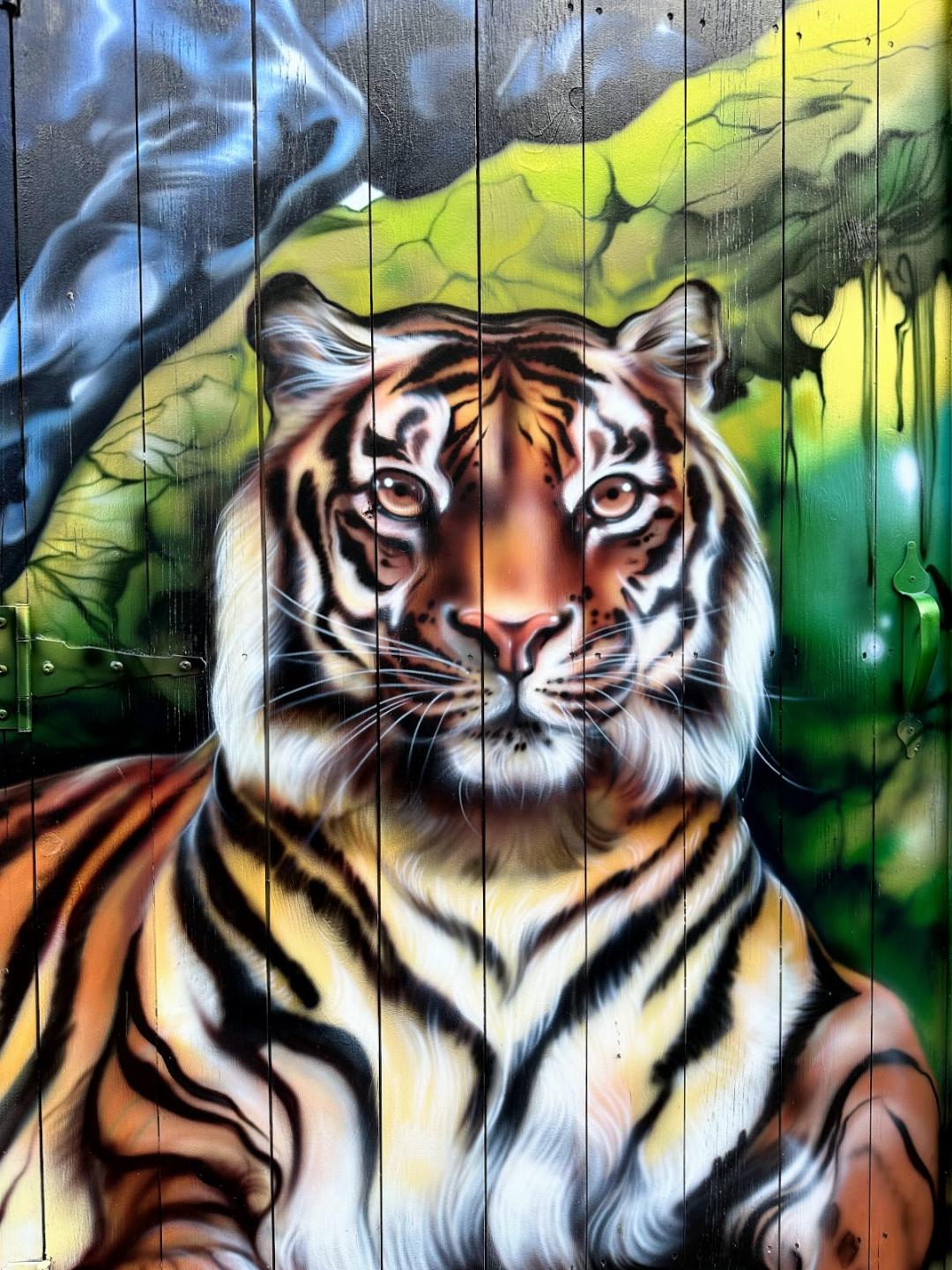
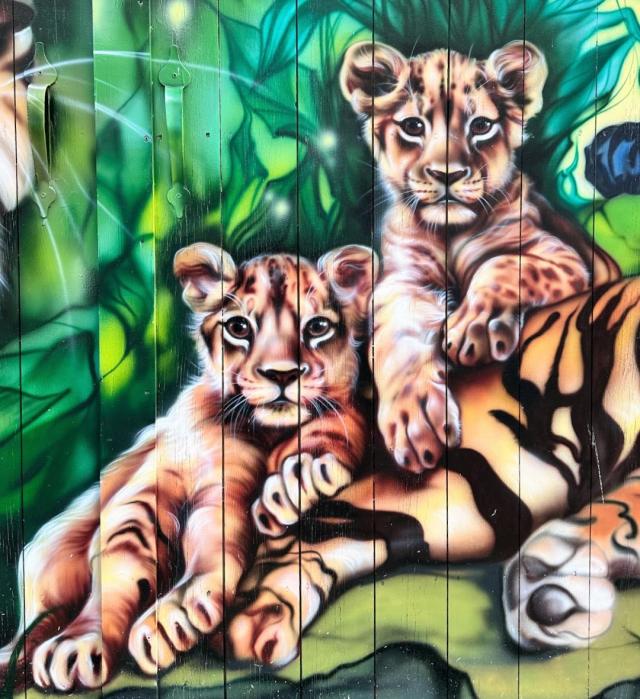
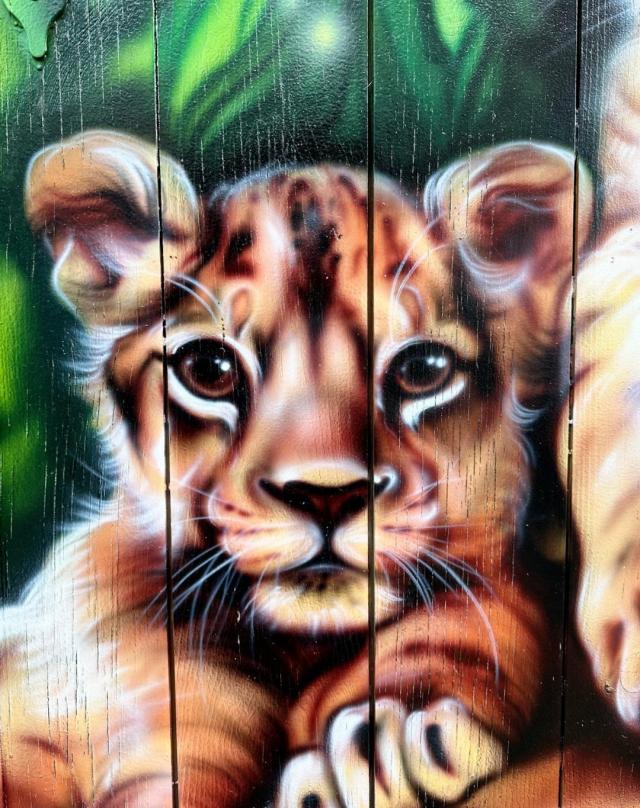
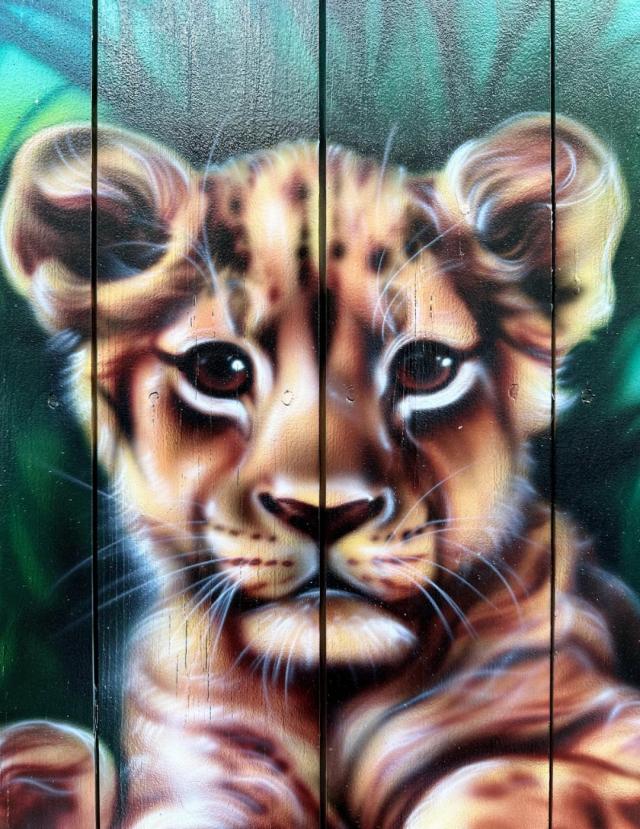
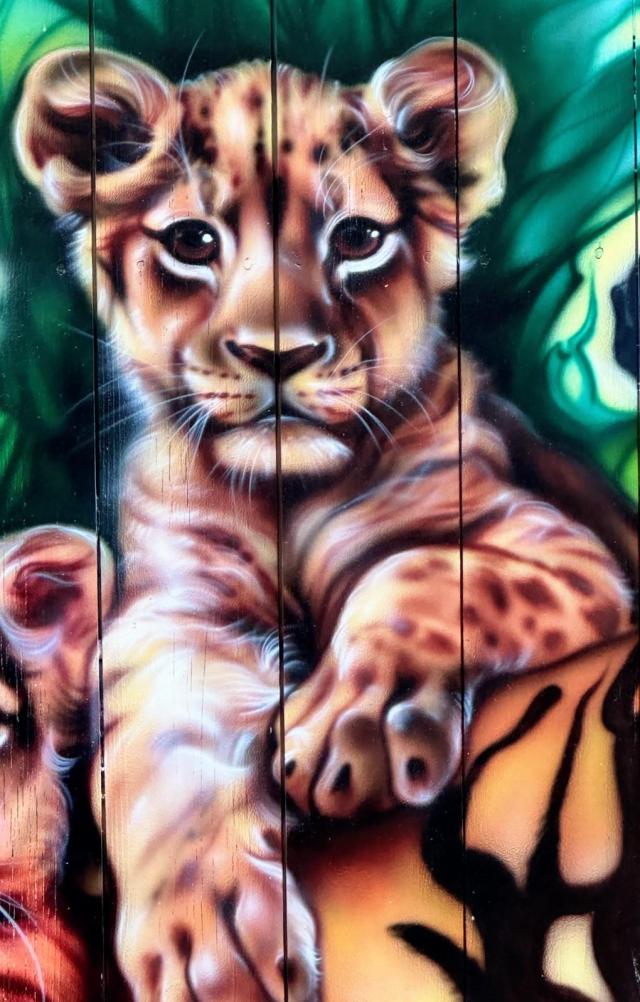
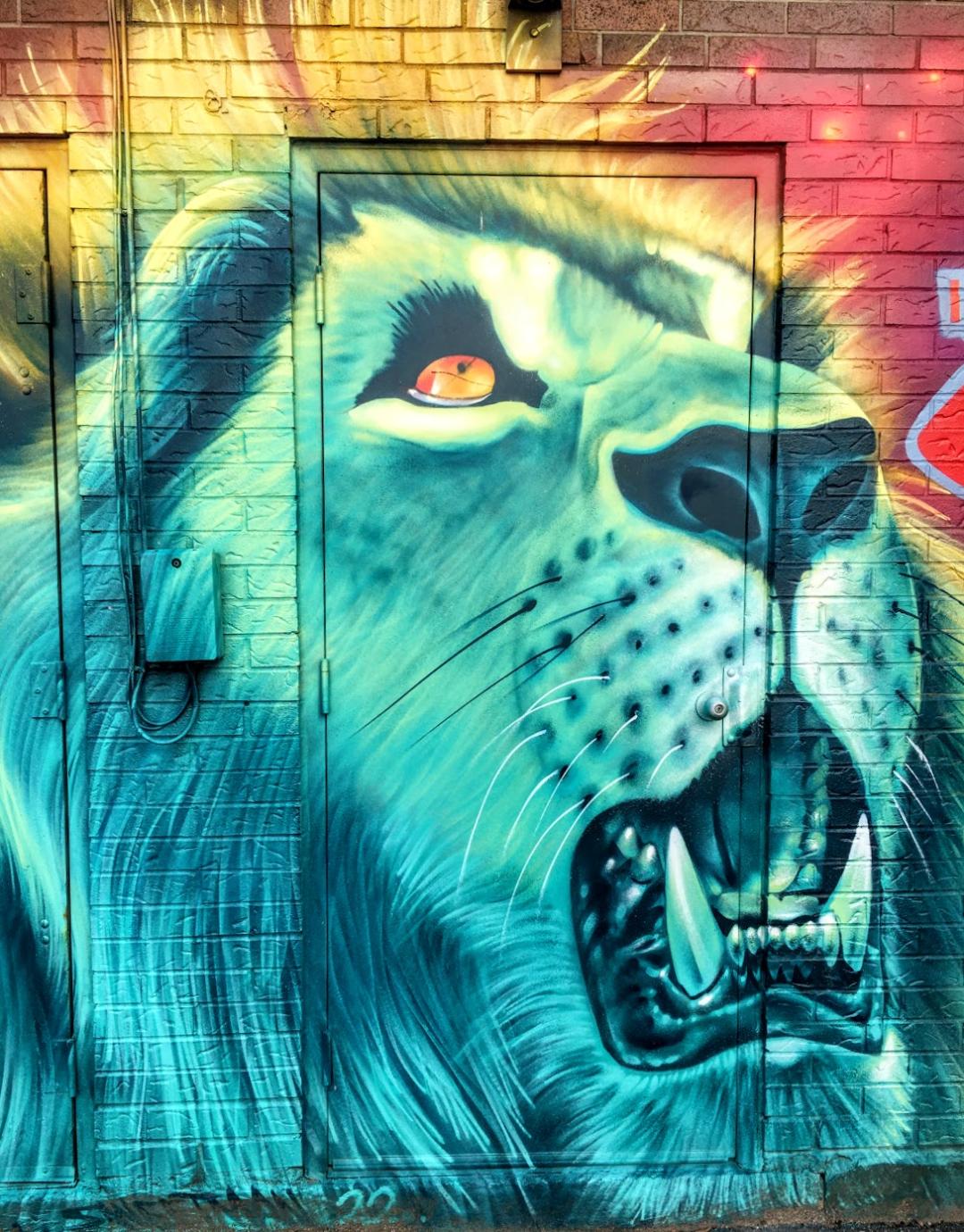
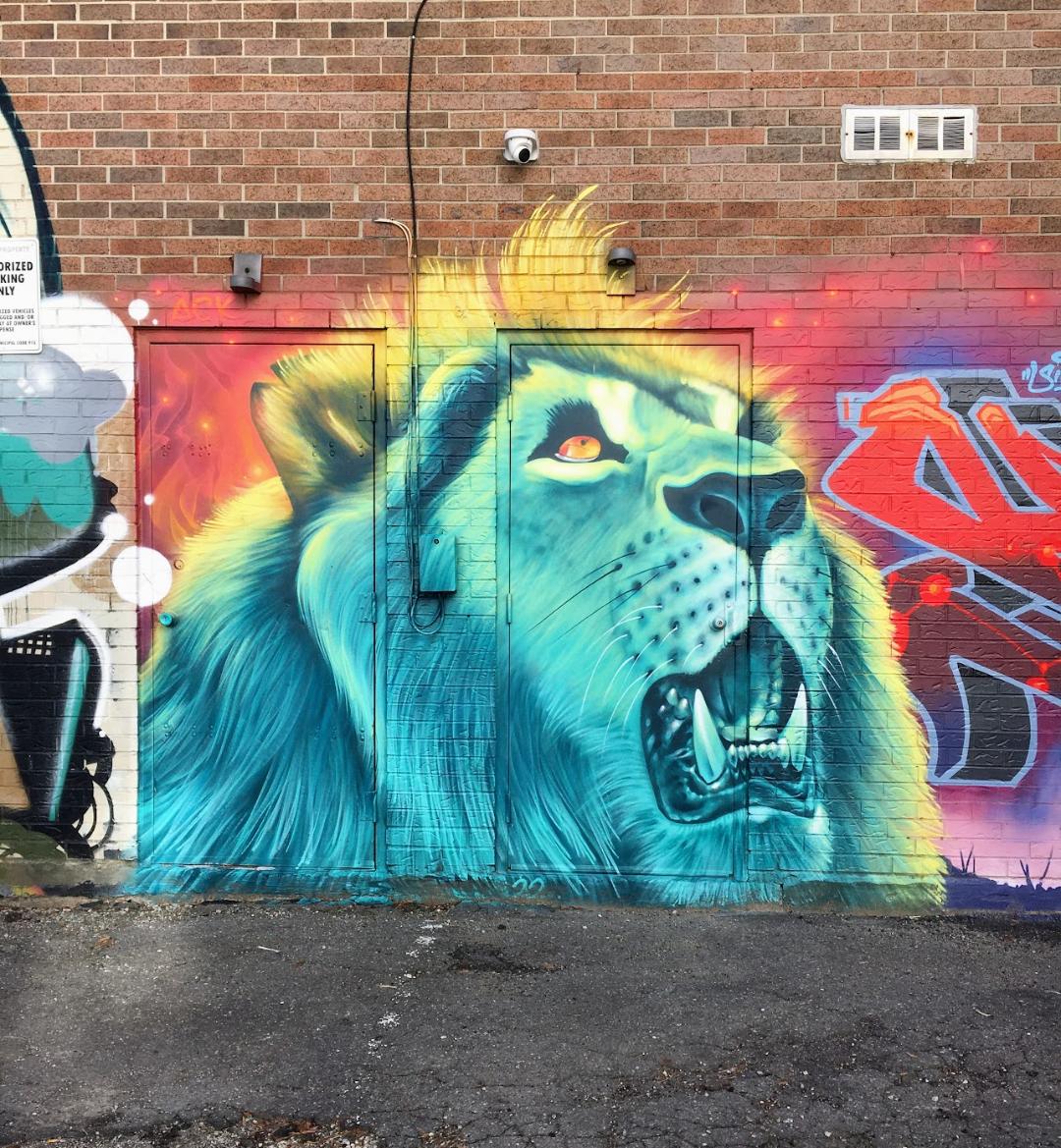
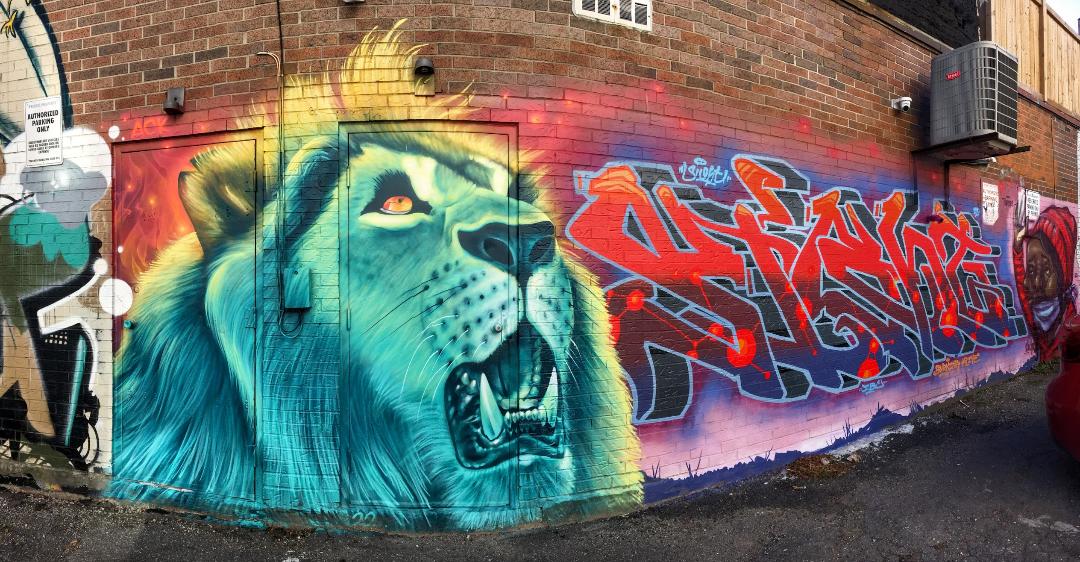
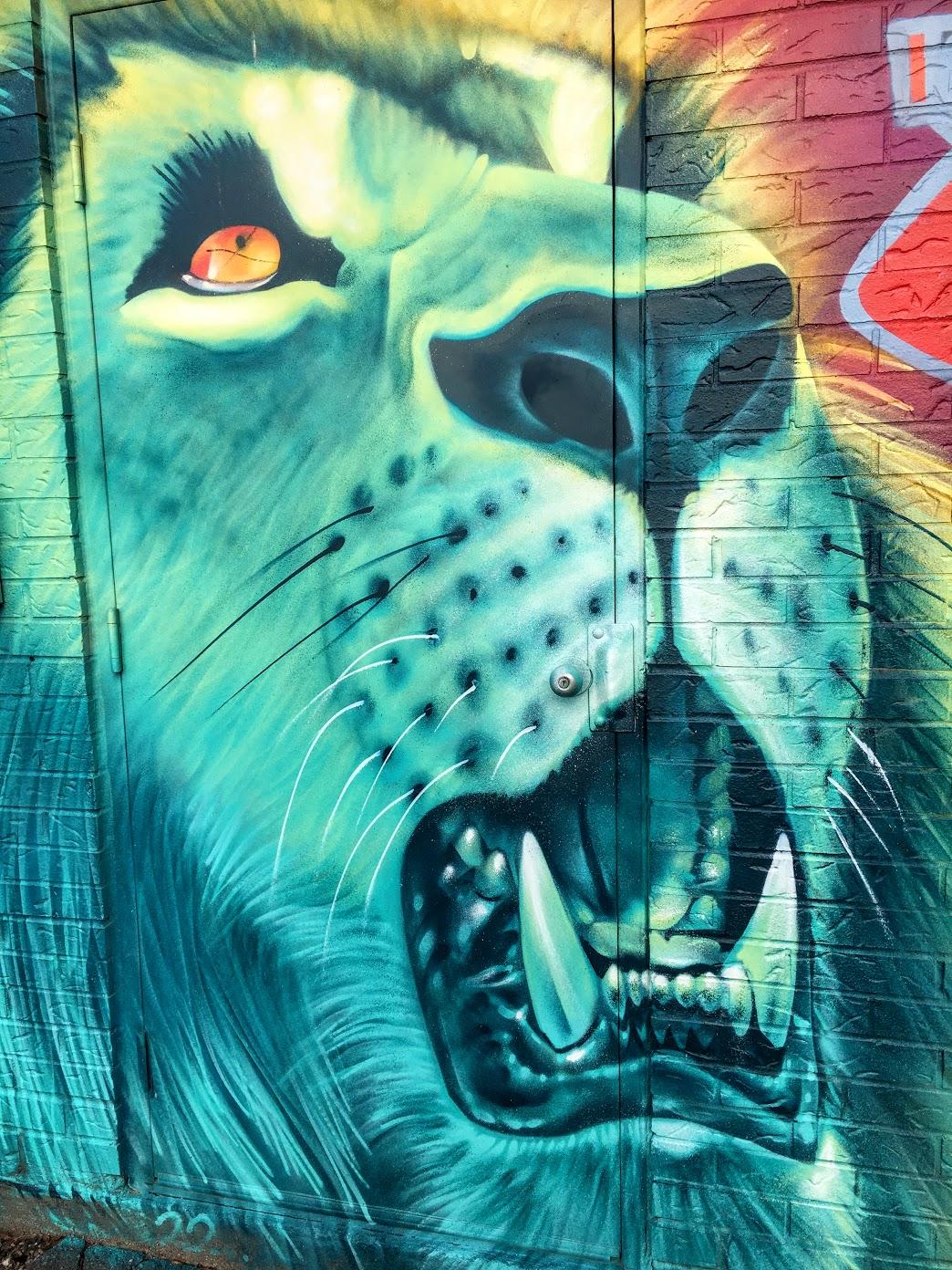
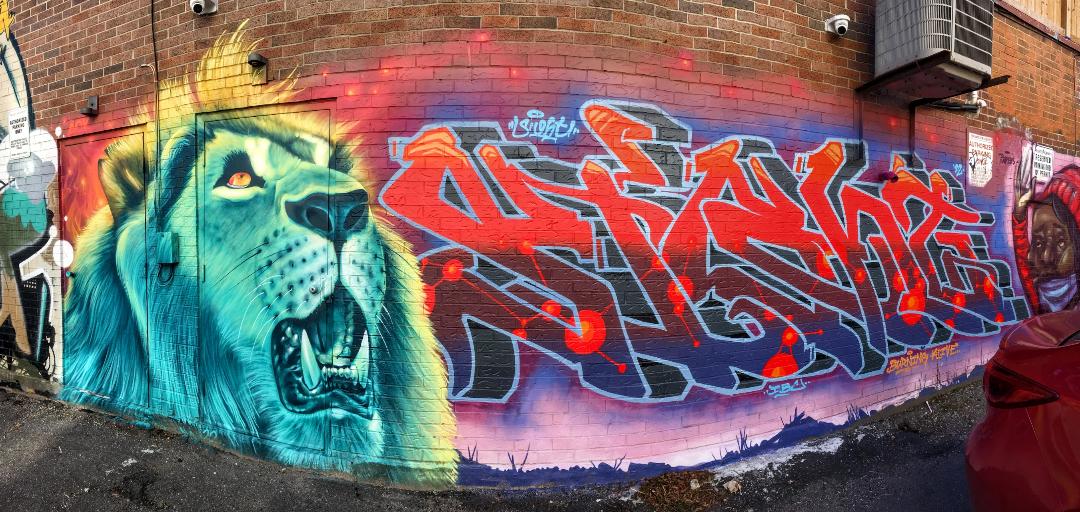
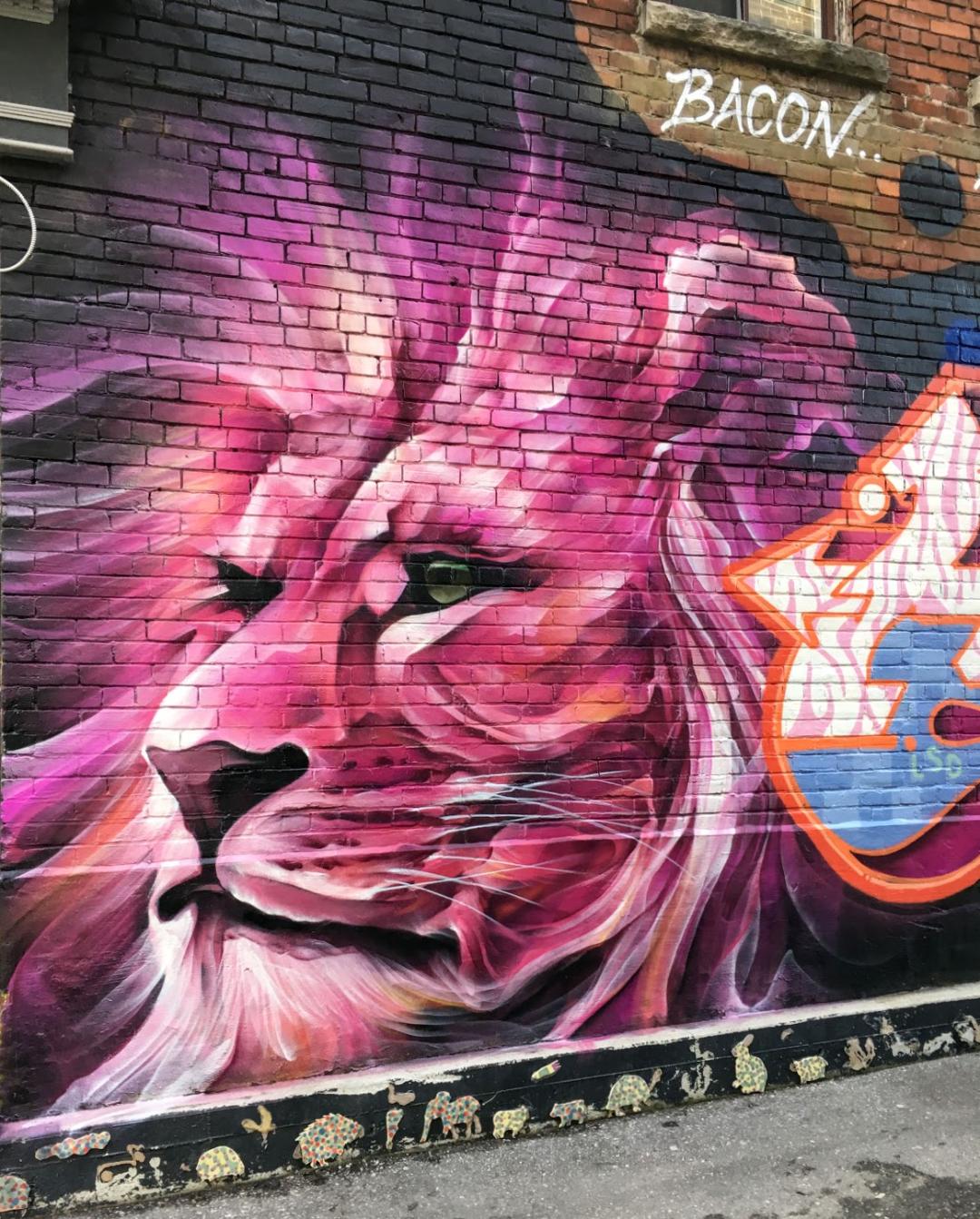
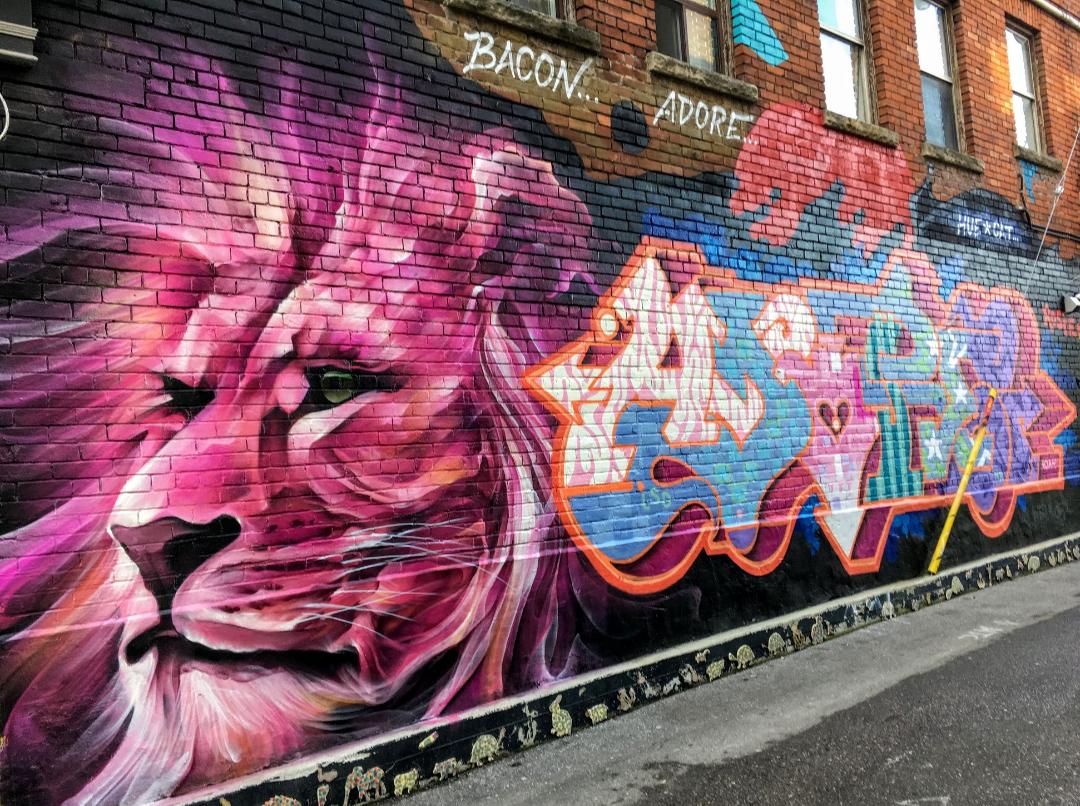
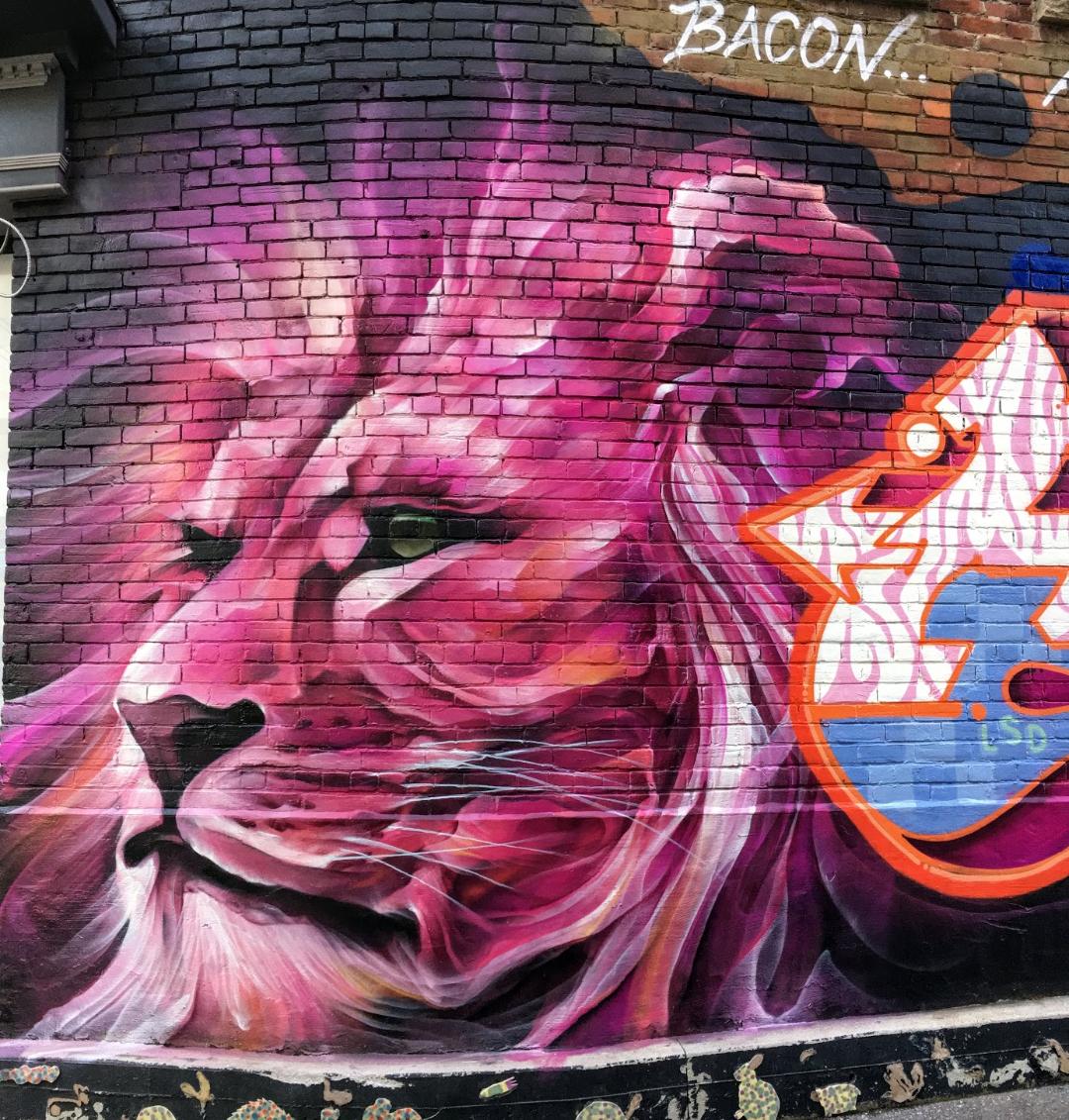
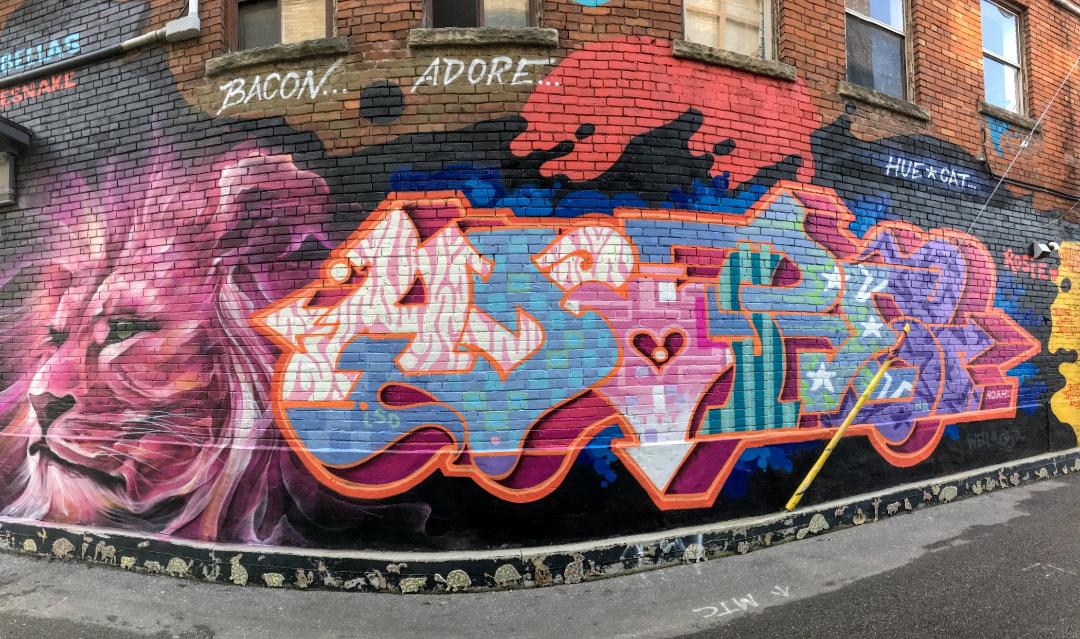
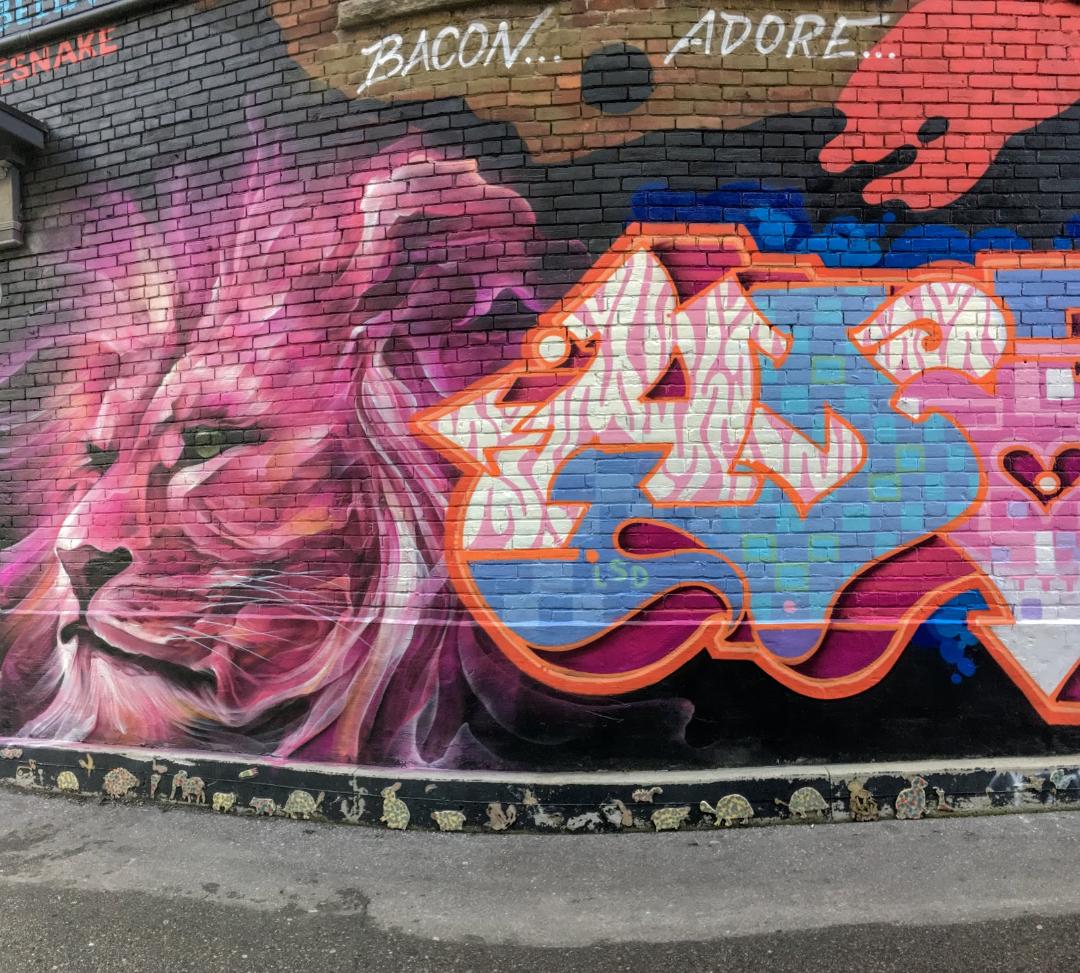
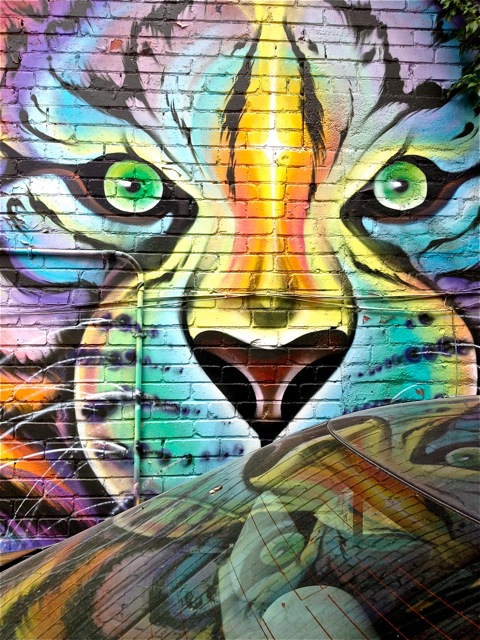
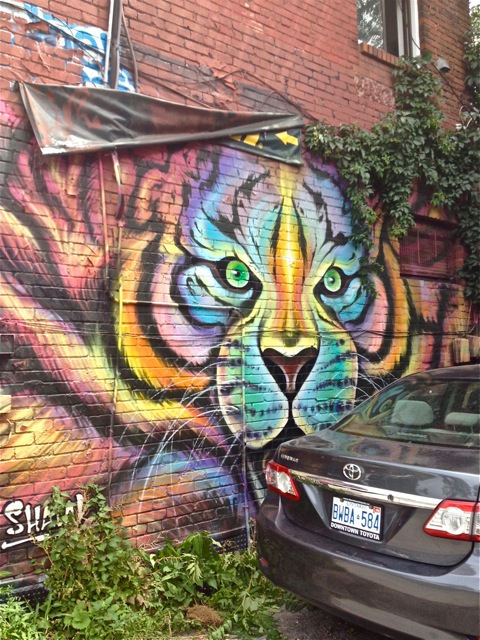
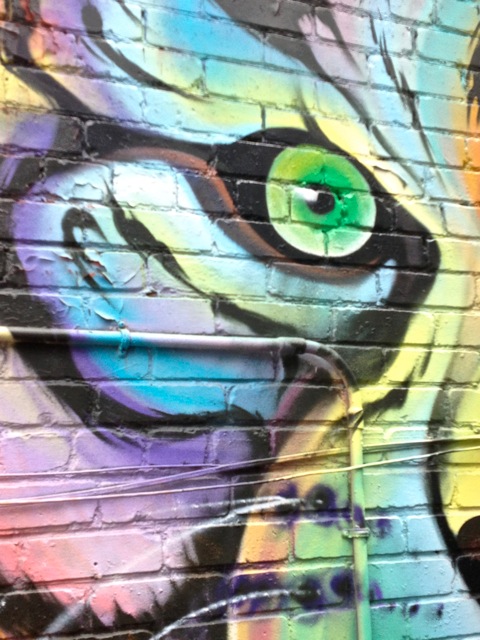
It’s just a small piece in an alley, and I love it!
He lives midst bits and burners.
The burner (writing) to the right of the lion is by Insight. The face on the far right is an Elicsr.
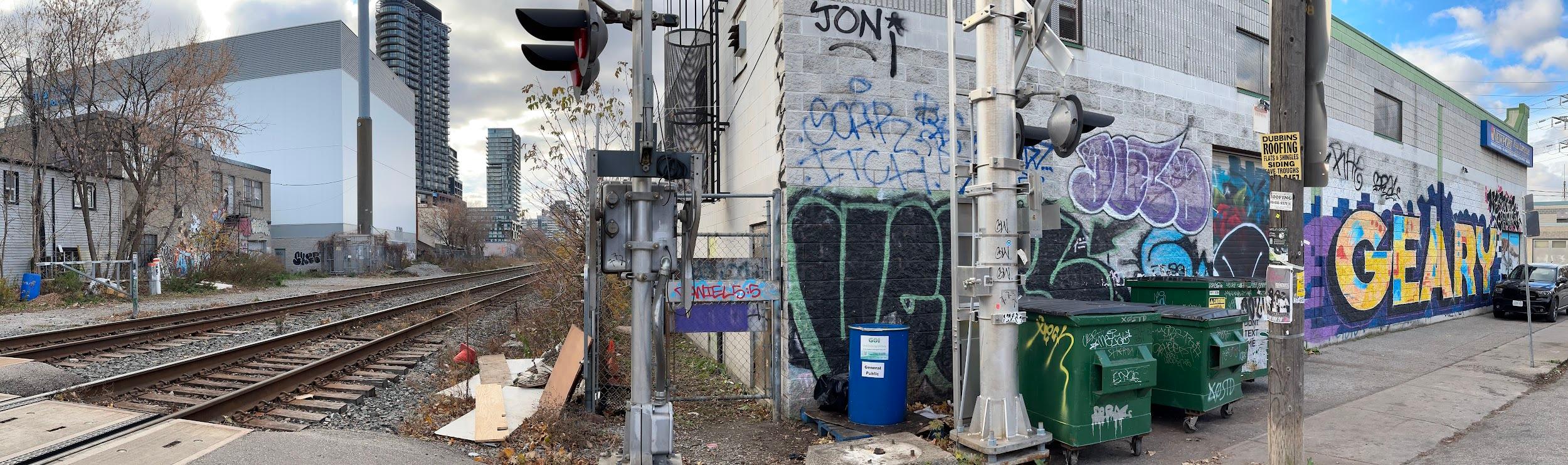
Pics taken by Resa – December 21, 2022
Toronto , Canada
The Artist:
Unsigned, but a guess would be Nick Sweetman
Honestly, I always thought the name of this song was “Lion Eyes”. I’ve used it on a post before, and I was sure it was “Lion Eyes”. Guess I hear and see what I want to.

















 Graffiti Lux Art & More
You must be logged in to post a comment.