“Reworking familiar imagery is just my way of giving history a second look.” – Jesse Mockrin
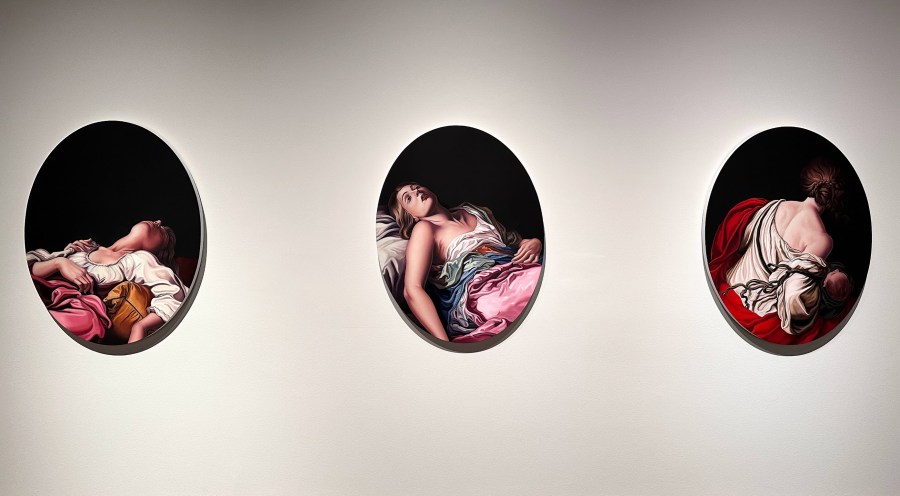
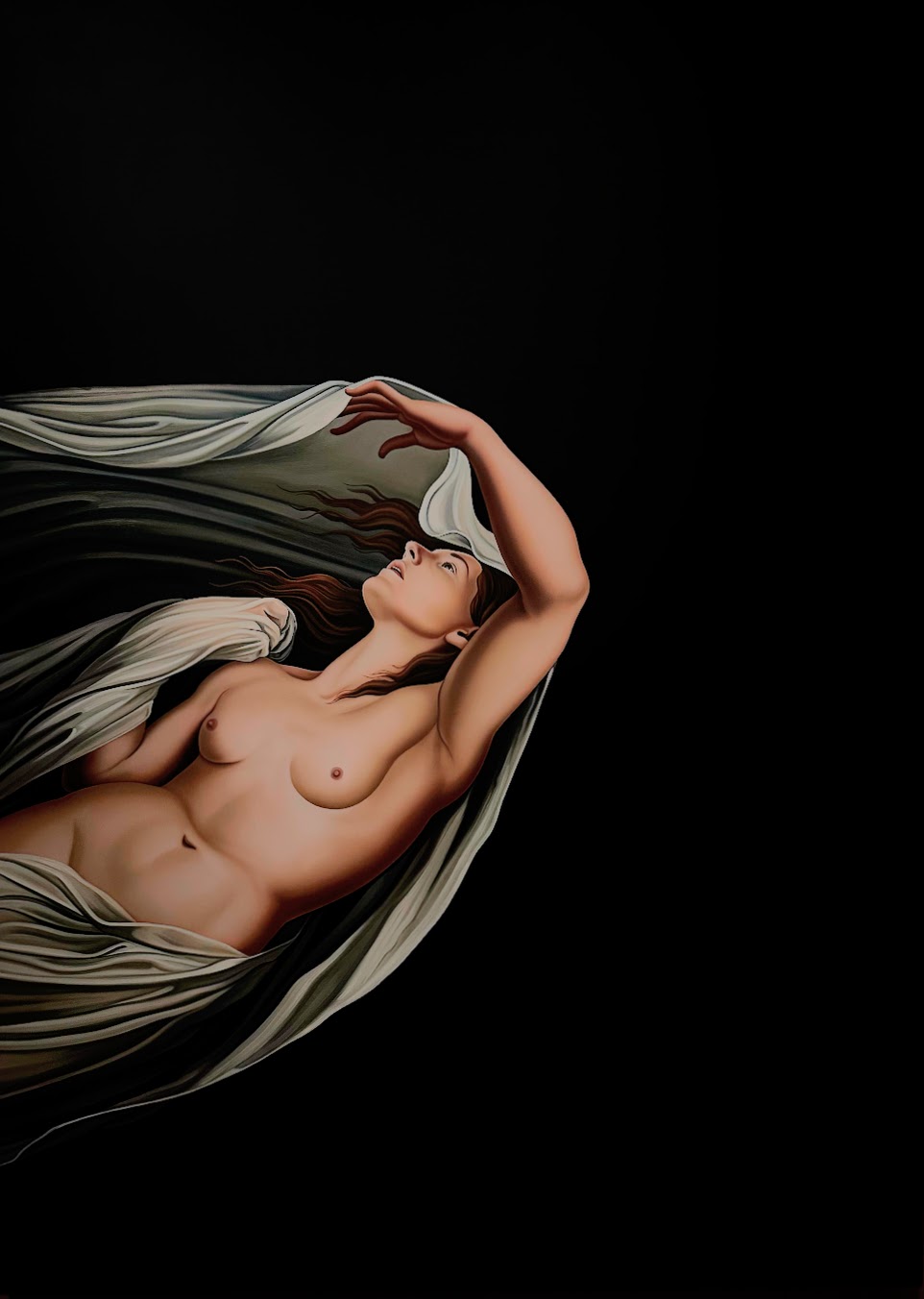
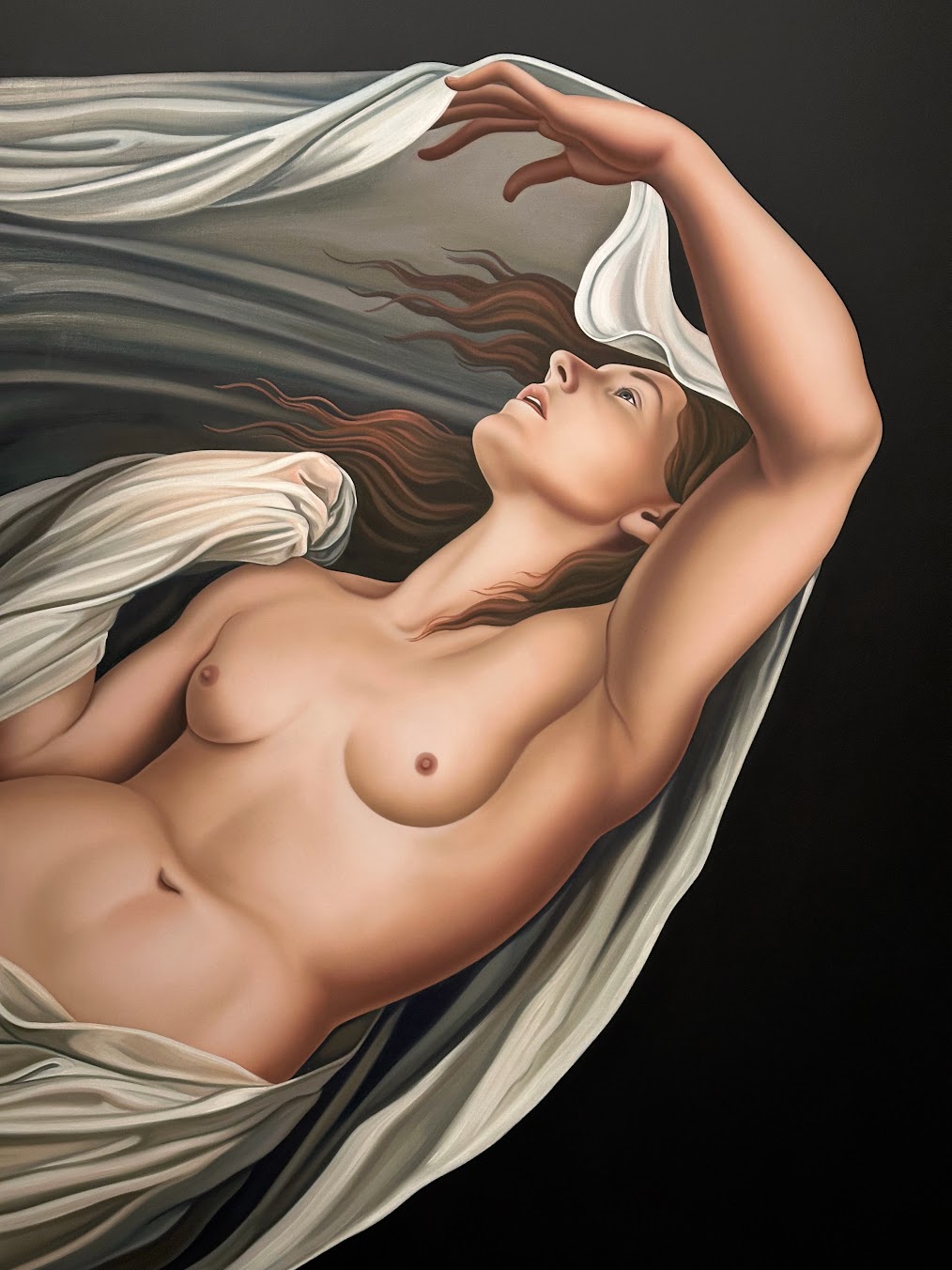
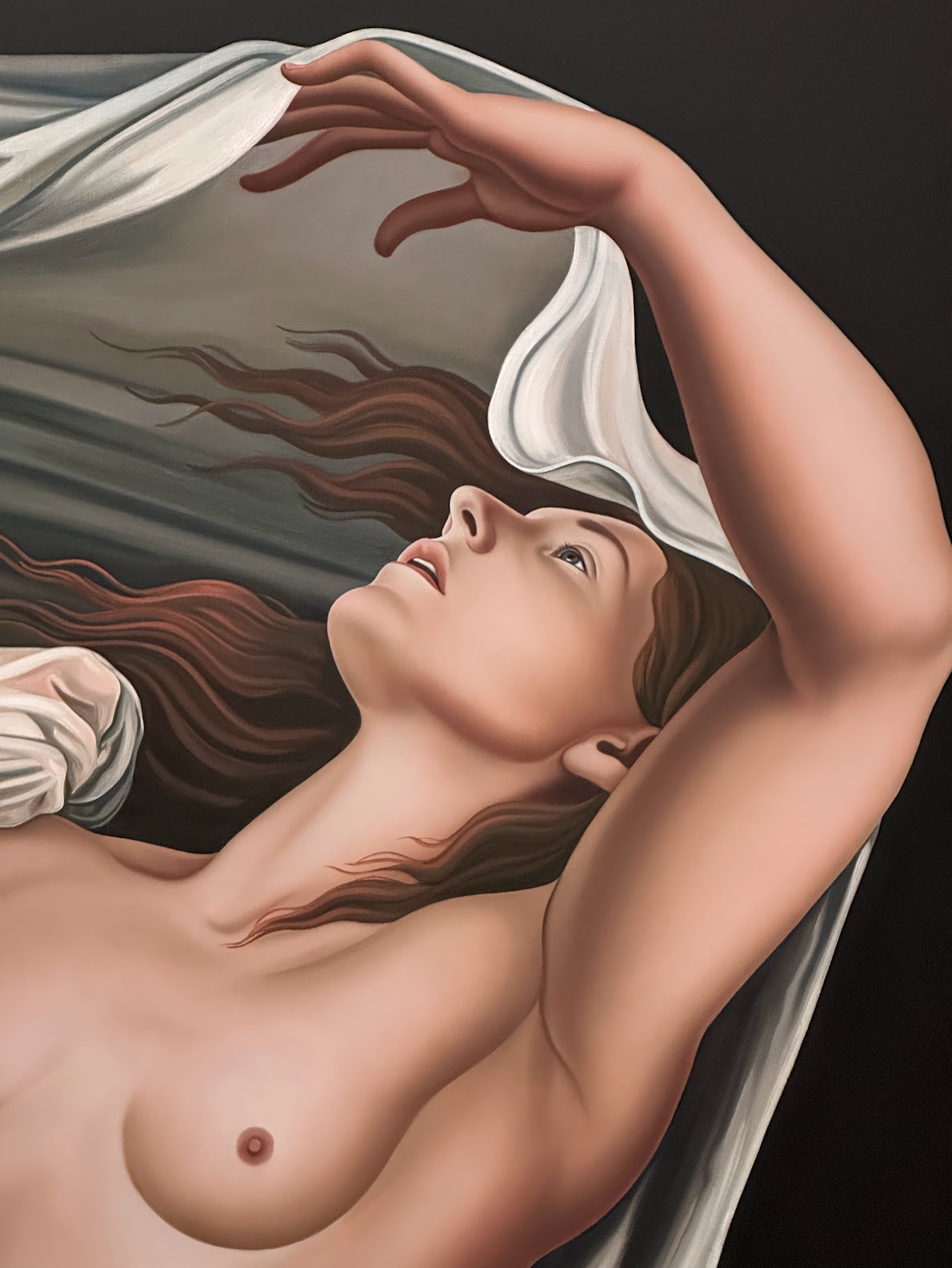
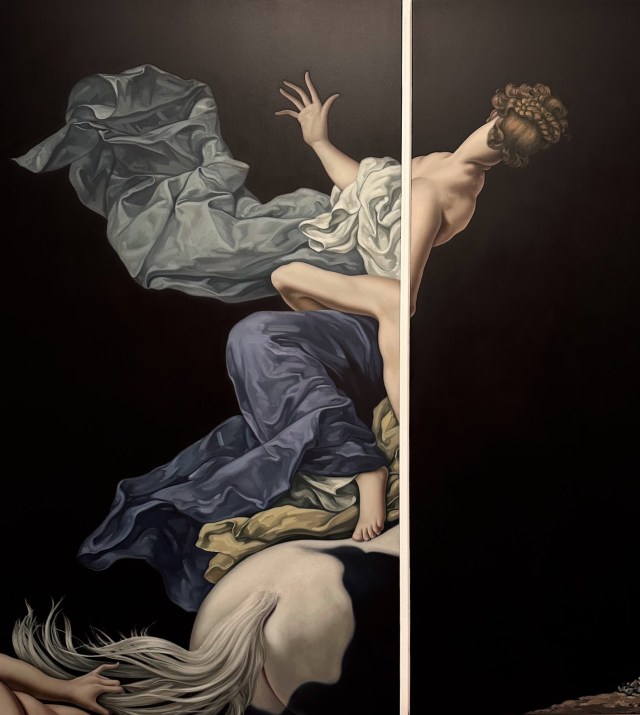
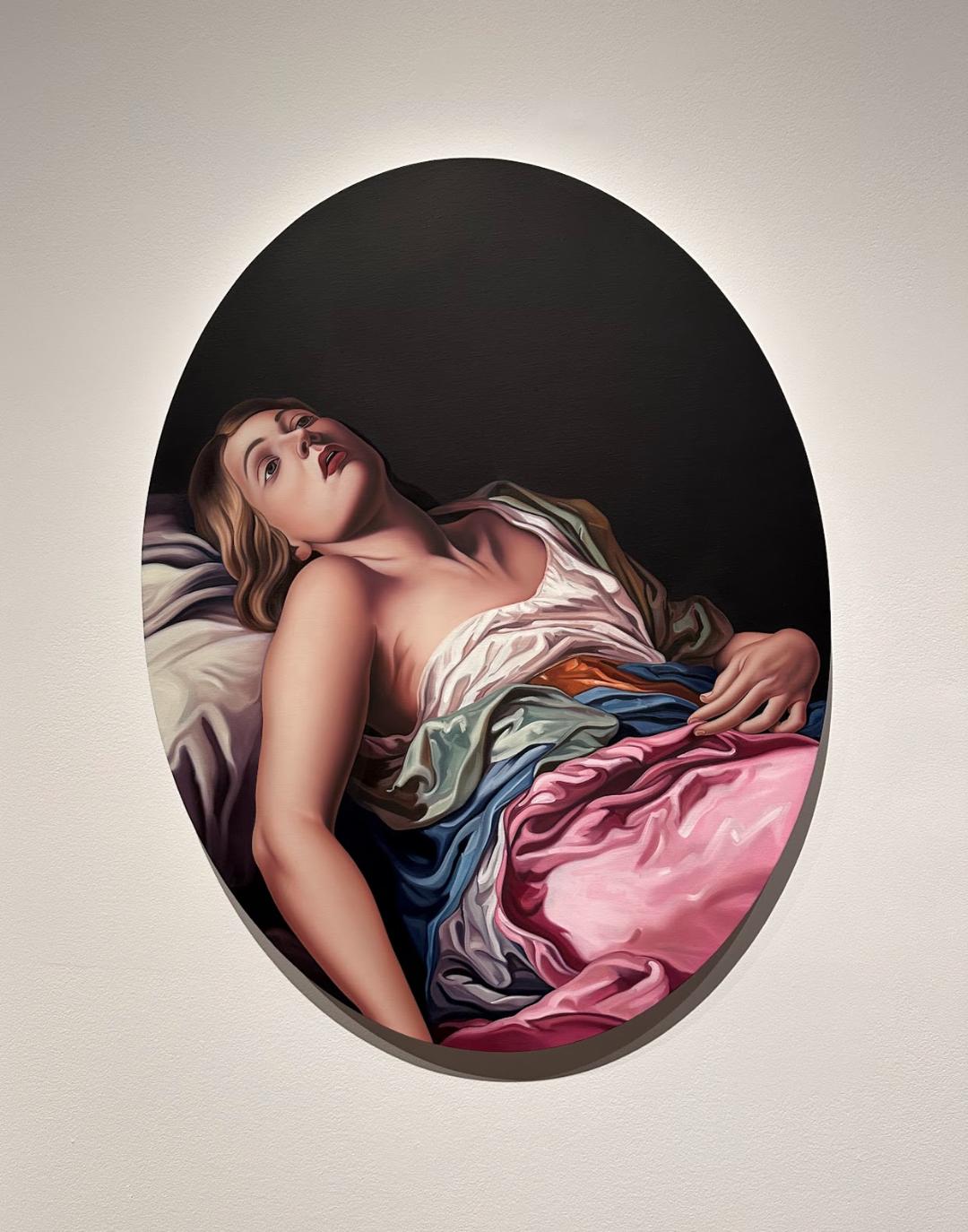
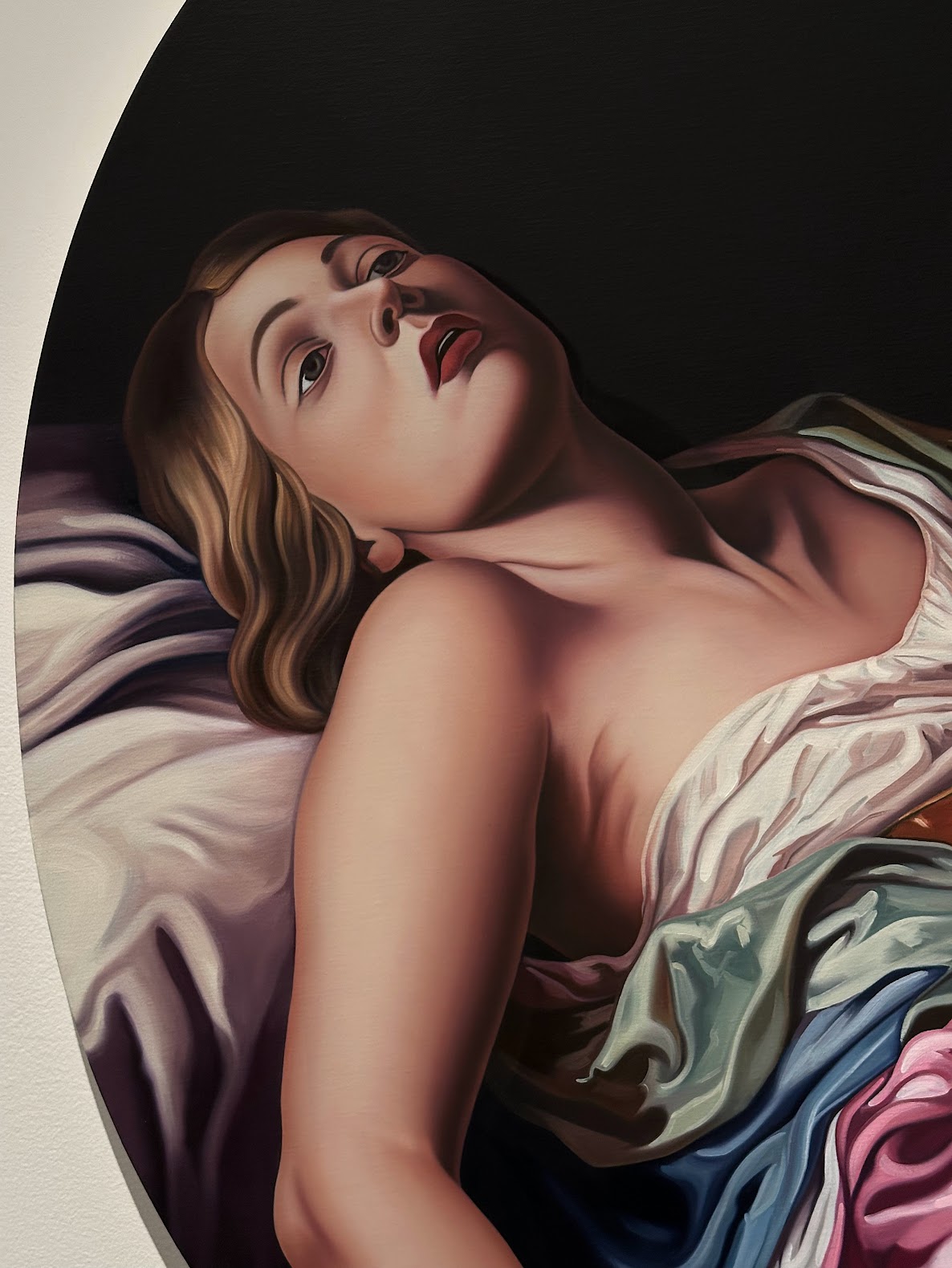
Only Sound Remains – oil on linen
Based in Philadelphia, this artist examines Renaissance and Baroque artists’ art, with an eye on the survival of traditional narratives and beliefs in contemporary society. She then intervenes with her own modern canon.
Jesse Mockrin’s paintings “respond to histories of sexual violence and cruel treatment of women over millennia of myth and story, offering interventions and moments of resistance.”
Collectively, the paintings in ECHO highlight “an ongoing battle for bodily autonomy”.
The above painting is based on the Greek and Roman myth of Echo and Hera.
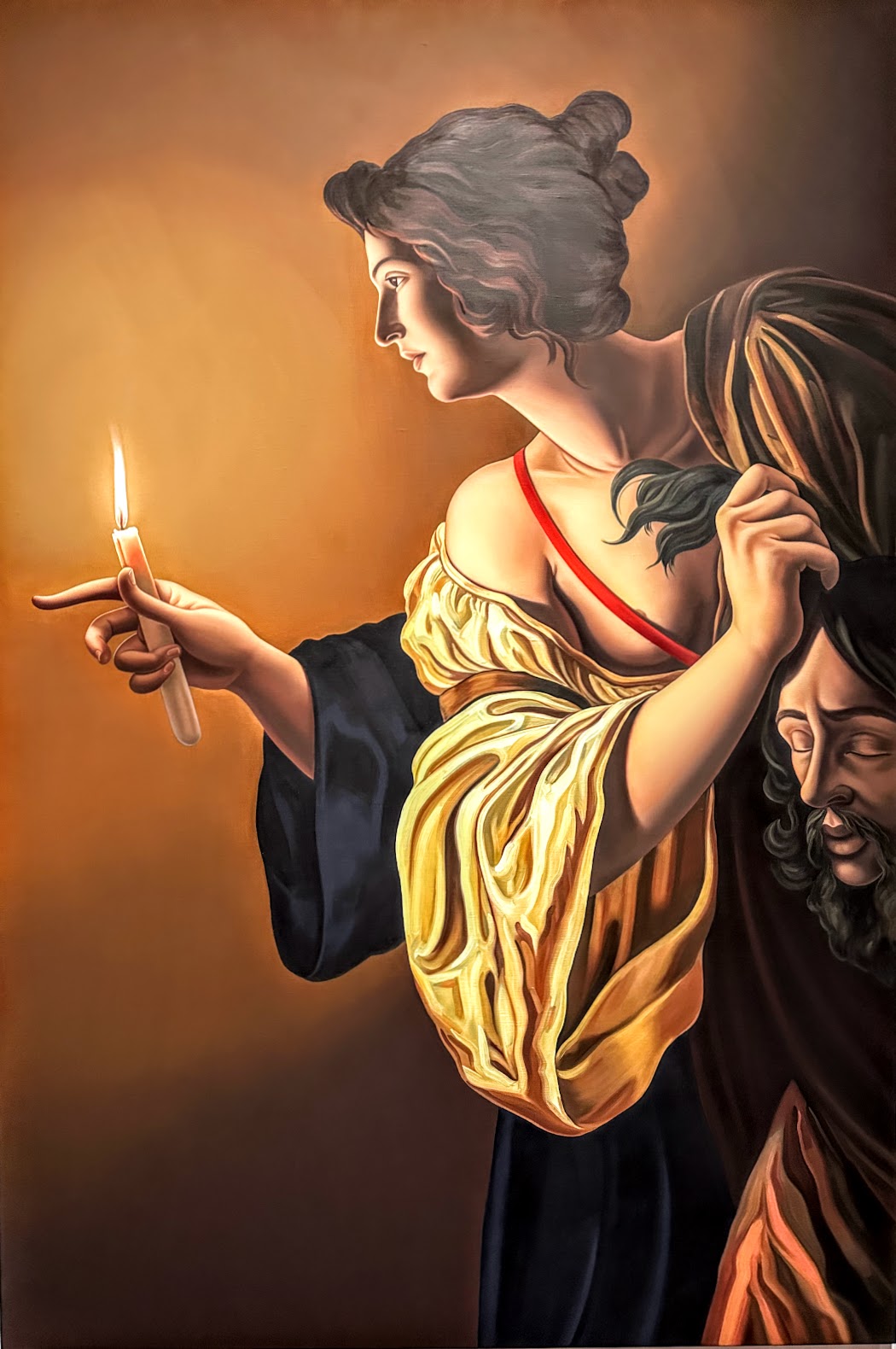
By Her Hand – oil on linen
The biblical widow and heroine, Judith, beheads Assyrian General Holofernes and saves her people. This was a popular subject for artists in the 15 & 1600’s due to the “stark contrast between Judith’s femininity and the aggression of her violence.”
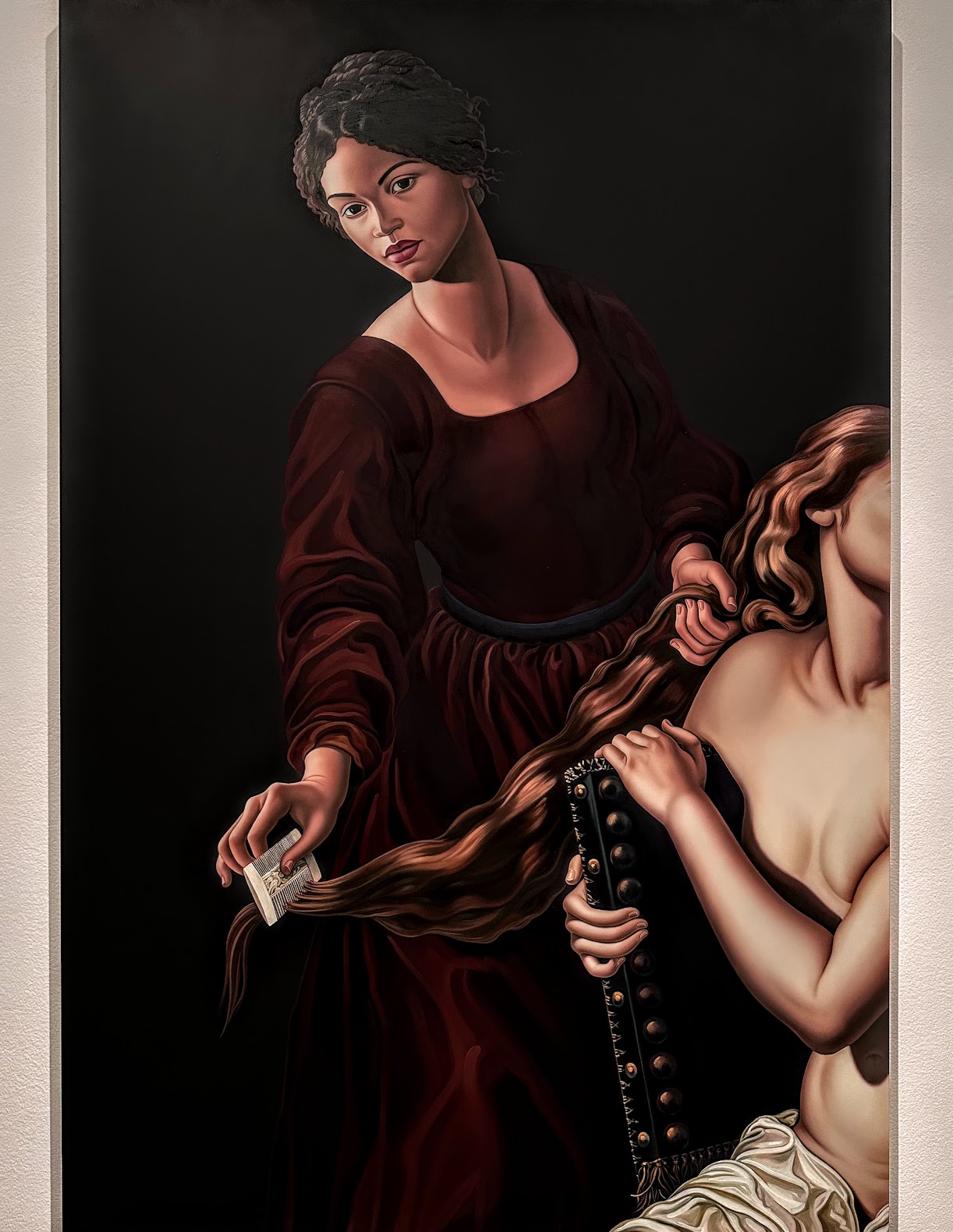
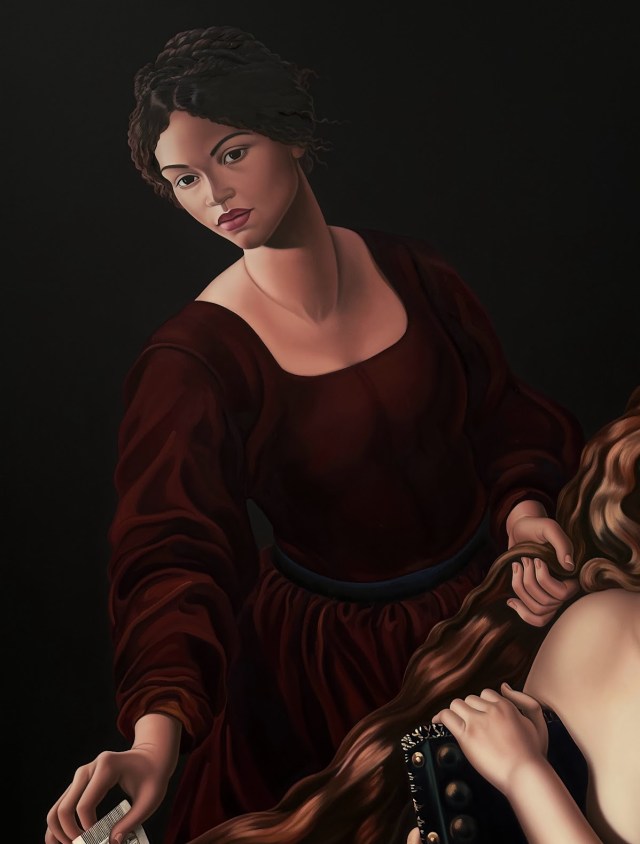
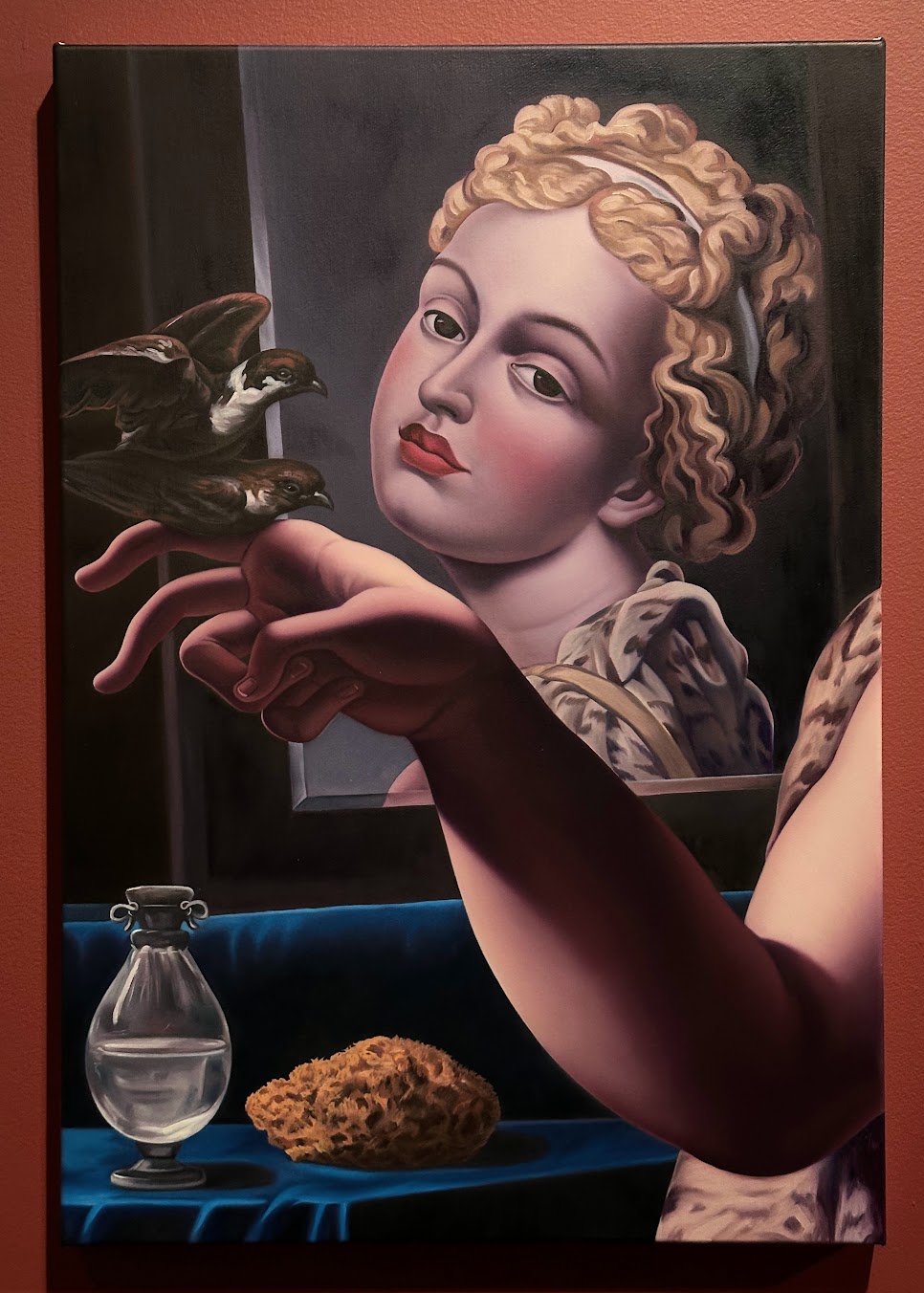
Behold/Beholden – oil on linen
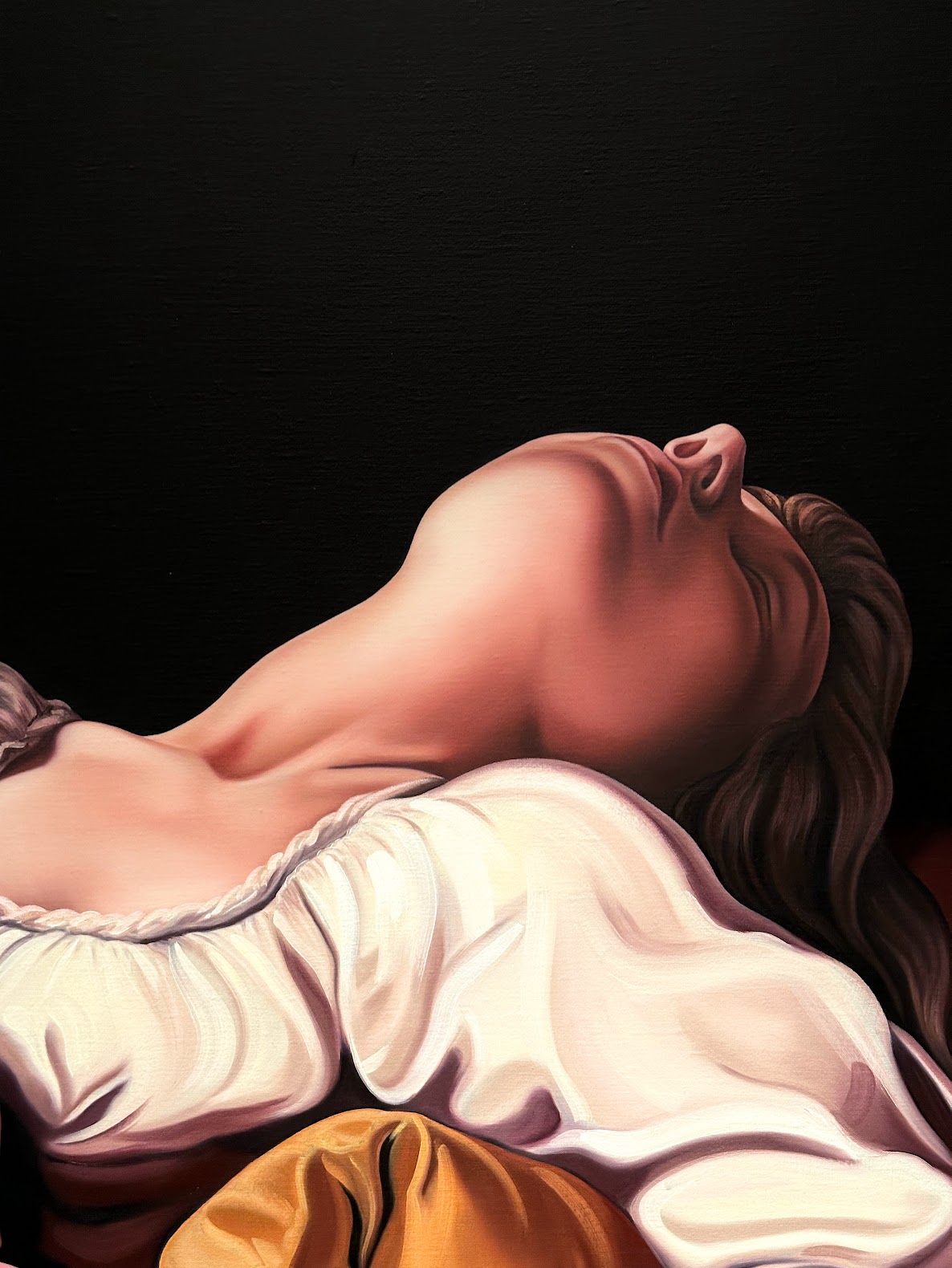
Mockrin builds up thin glazes of oil paint, a European Renaissance developed technique. “she crops her composition sharply, hiding critical elements of a story and leaving conflict unresolved.”
Unvarnished, her paintings have an eerie flatness.
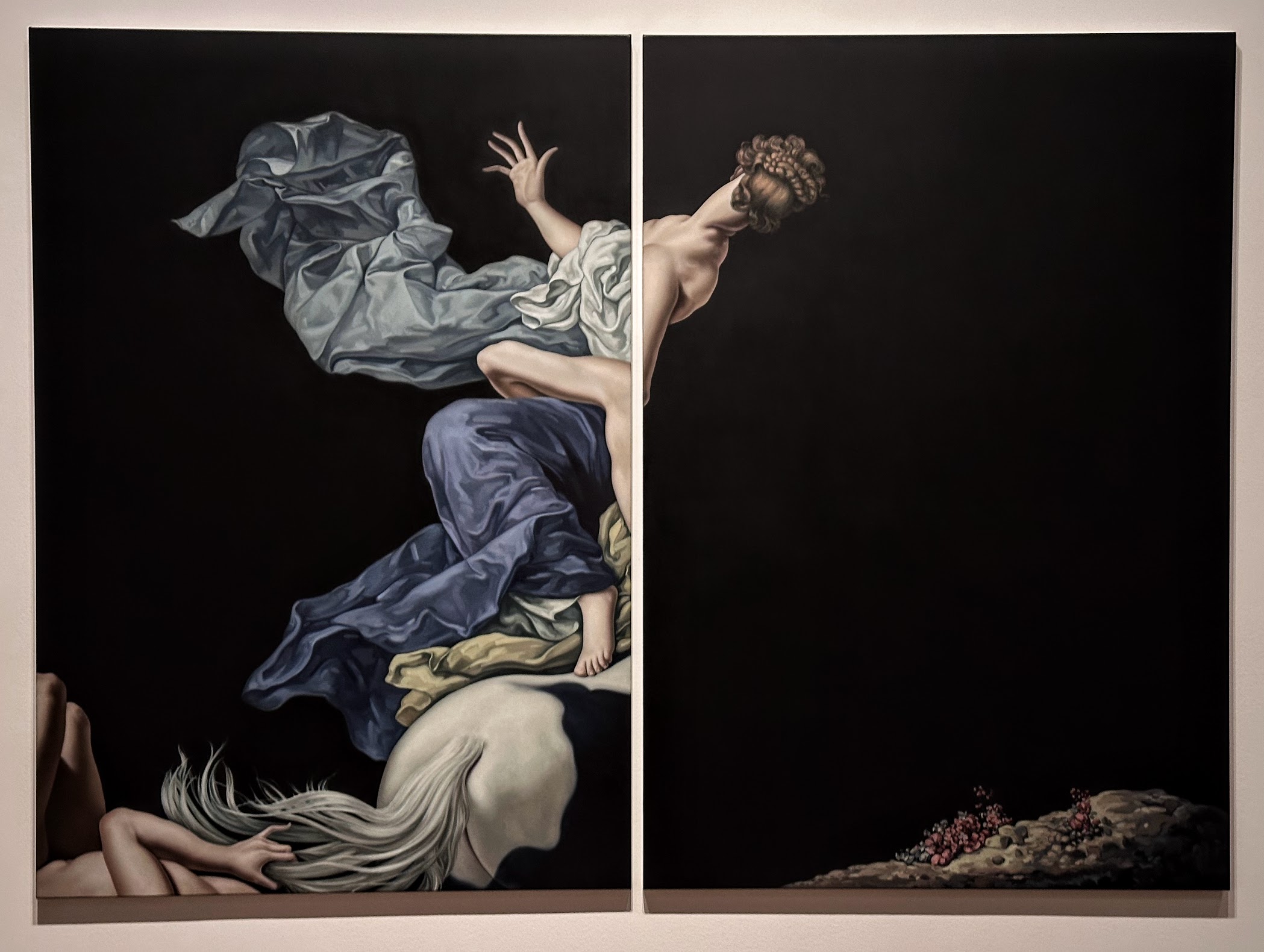
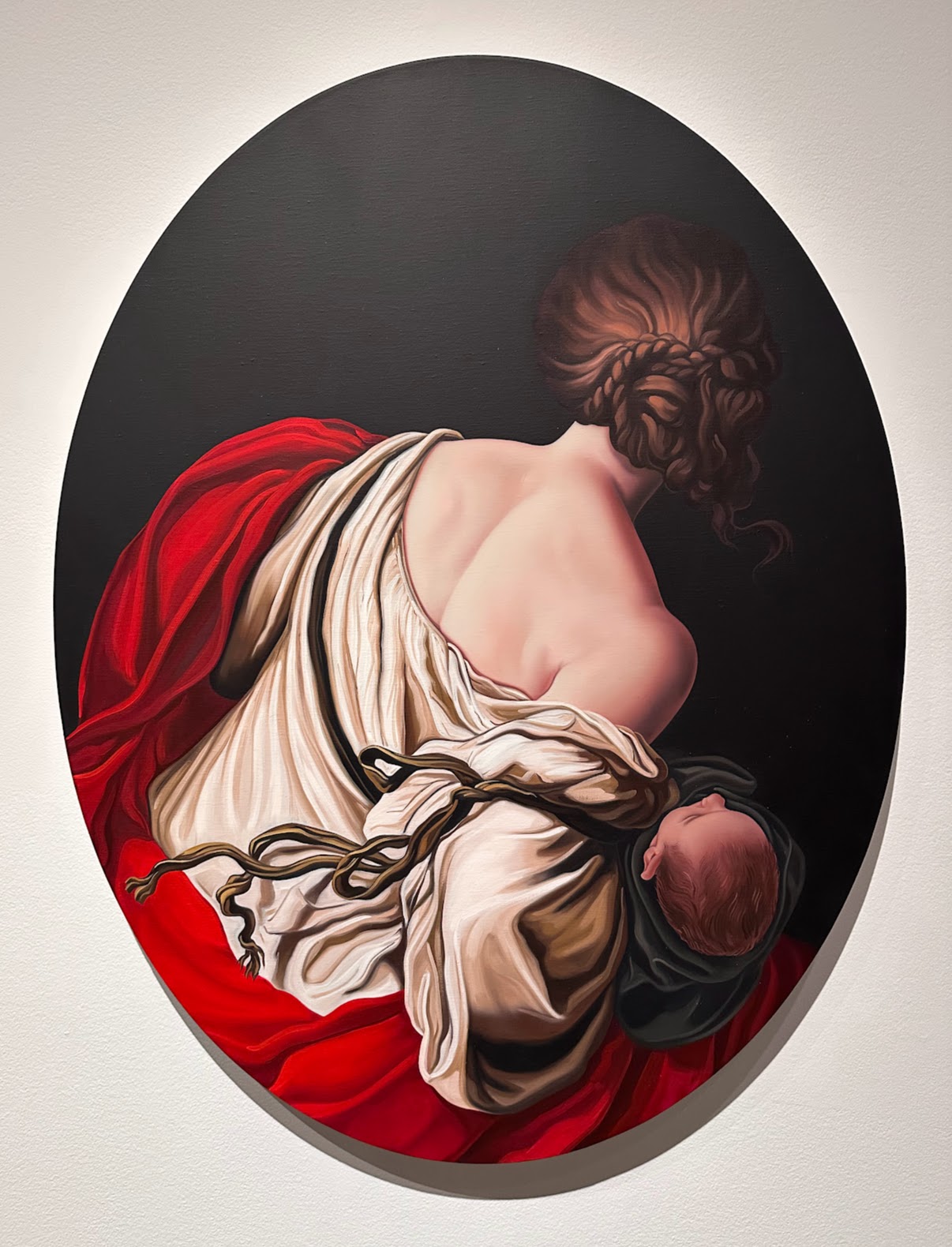
In mid-stream – oil on canvas
“Grasping, pulling, lifting …. I am drawn to the ways that Baroque painters build drama and tension into their compositions.”Jesse Mockrin
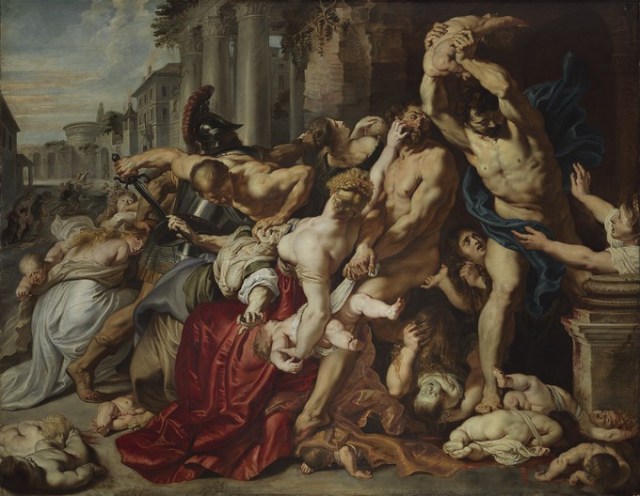
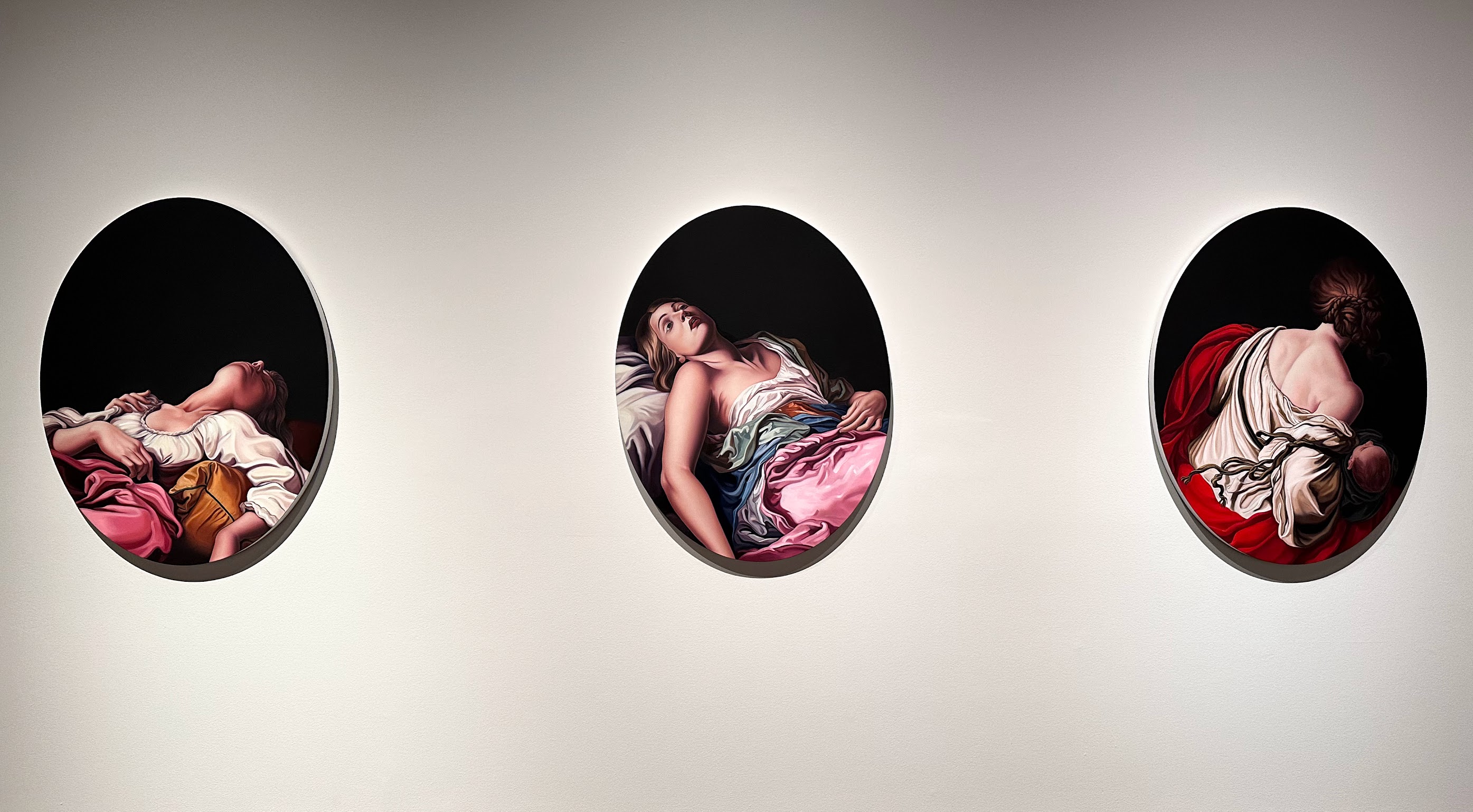
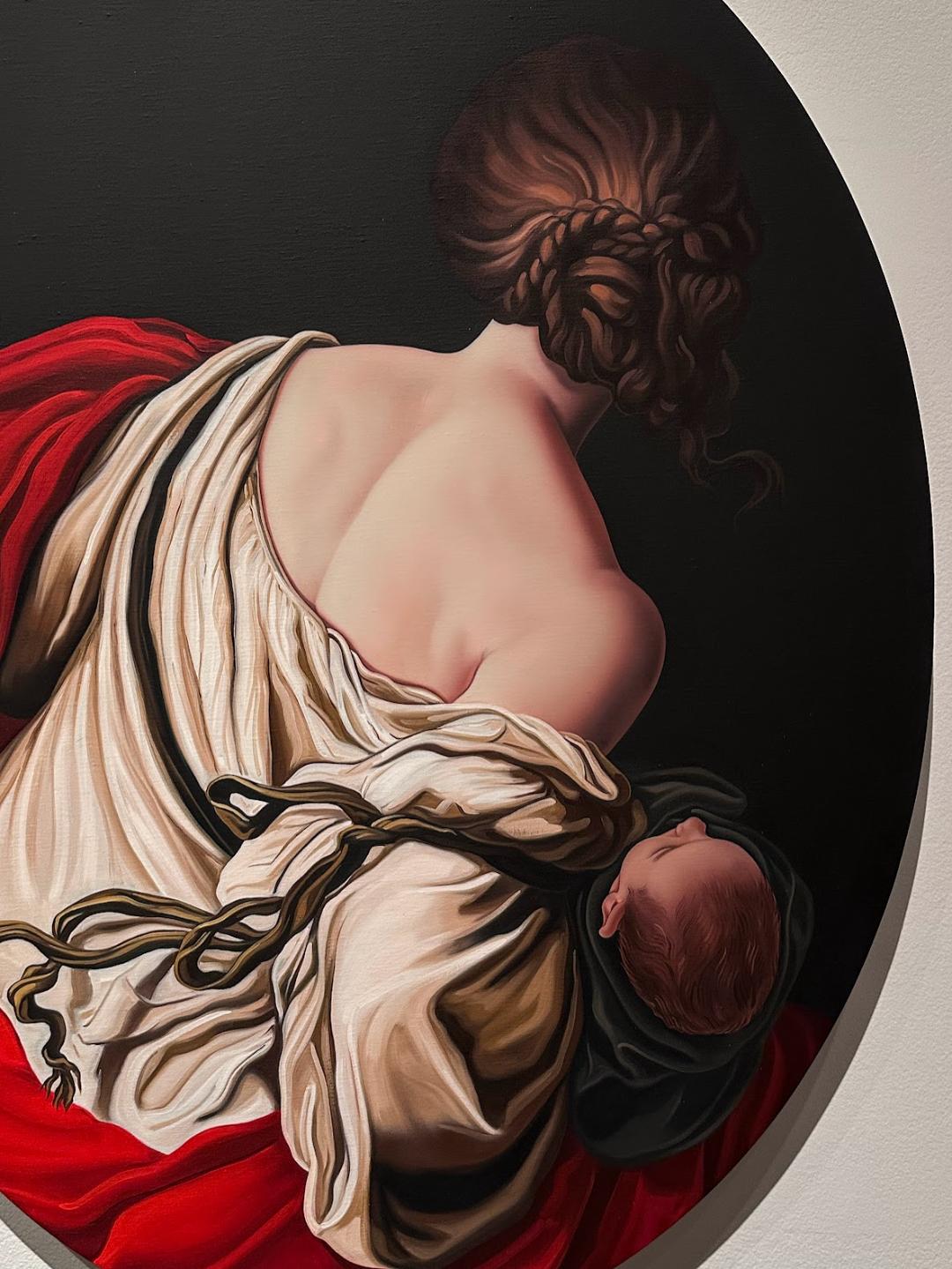
Based on Ruben’s The Massacre of the Innocents, the woman in the right panel is based on one of the mothers protecting her children.
Painted circa 1610, The Massacre of the Innocents resides in the AGO’s collection. The photo on the left is an allowable share from the AGO. Click on the image to visit the page, and a larger version of the masterpiece..
In the Book of Genesis – Rachel and Leah were both married to Jacob.
Leah had many children. After many years of yearning to be a mother, Rachel had 2 sons. She died giving birth to the second child.
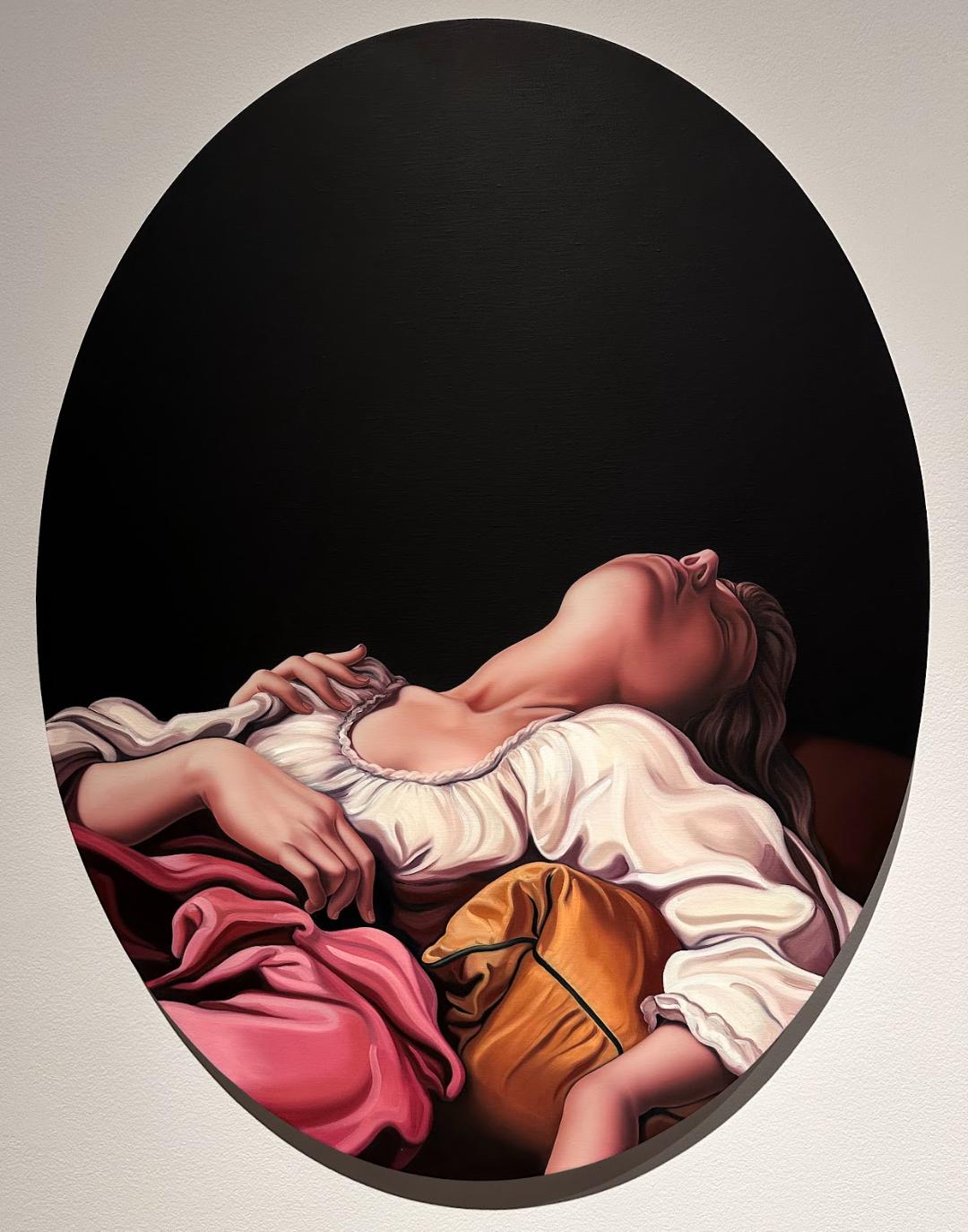
Longing – oil on linen
Lovesick – oil on linen
A cry is heard – oil on linen
“It’s very emotional and very real, her longing for a child and then her tragic death as a result of it.”
“We think we’re not that similar to these characters, but they were just people, same as us.” – Jesse Mockrin
Welcome back to another instalment of Making Her Mark! I’m joined by Rebecca Budd, curator of Chasing Art to discuss how the poor were documented, by female artists.
Resa – Welcome back, Rebecca! As you point out in your introduction, times were changing. Do you have a main take away from your research?
Rebecca – Thank you for the opportunity to participate in this amazing look back into art history, Resa. One key takeaway from my research is how Geertruydt Roghman, Catherine Brandinn, and Maria Louisa Catherine Cecilia Cosway used their artwork to honour the ordinary moments of life. I was inspired by how these artists challenged societal norms and created space for the voices of the underrepresented.
Resa – We’ve had many amazing sisters. Well, let’s have a look at these 3, with art as our window.
16th Century
In the sixteenth century, change was in the air. Northern Europe witnessed a significant cultural shift as the Protestant movement emerged, challenging the established norms of the Catholic Church. This movement advocated for a personal connection with God, eliminating the need for church intercession.
Art responded. Religious imagery became less prominent, as the focus shifted away from traditional depictions of saints and biblical scenes. This transference in artistic focus not only reflects the broader societal changes brought about by the Protestant Reformation but also underscores the importance of recognizing the value of everyday experiences in art.
17th and 18th Century
During the 17th and 18th centuries, the art world was dominated by the portrayal of aristocracy and religious themes, leaving little room for the representation of ordinary people. The prevailing social hierarchy and the patronage system dictated that artists primarily catered to wealthy patrons who commissioned works that glorified their status and achievements. This resulted in a paucity of artworks focusing on the lives and experiences of the common populace, who were often relegated to the background of grand historical or mythological scenes.
Geertruydt Roghman
Dutch – 1625 – 1657
Geetruydt Roghman was born in Amsterdam into a family steeped in artistic tradition. Her upbringing in a creative household, with a father who was an engraver and a great uncle who was a celebrated painter, likely influenced her perspective on art.
A Pioneering Figure
Artists began to explore new themes that reflected the everyday lives of individuals, leading to a rich tapestry of subjects that resonated with the public. Geetruydt Roghman dedicated her work to depicting ordinary women engaged in their daily tasks. Her series not only showcased the realities of their lives but also contributed to a broader understanding of women’s roles in society during the seventeenth century.
Despite her limited output, Geetruydt Roghman’s work offers a glimpse into the lives of women, challenging the norms of her time and highlighting the importance of their stories. This marks her as a pioneering figure in a time when few artists chose to highlight the experiences of women. .
Celebrating Geetruydt Roghman’s Art
Exploring Geetruydt Roghman’s engravings on paper allows us to connect with the essence of humanity, as they capture the nuances of everyday life and the stories of real people who lived before us. These sketches serve as a mirror reflecting our shared experiences, emotions, and struggles, reminding us of the beauty found in simplicity.
By exploring Geetruydt Roghman’s work, we gain understanding into diverse cultures and perspectives, fostering empathy and understanding in a world that often overlooks the significance of the ordinary. Such examination not only celebrates the artist’s talent but also encourages us to appreciate the richness of human existence in all its forms.
I believe that Geetruydt Roghman invites us to appreciate the beauty and significance of the ordinary, enriching the narrative of art history.
“Making Her Mark” exhibition encourages a reevaluation of her work, which advocates for the recognition of everyday life as a worthy subject of artistic exploration.
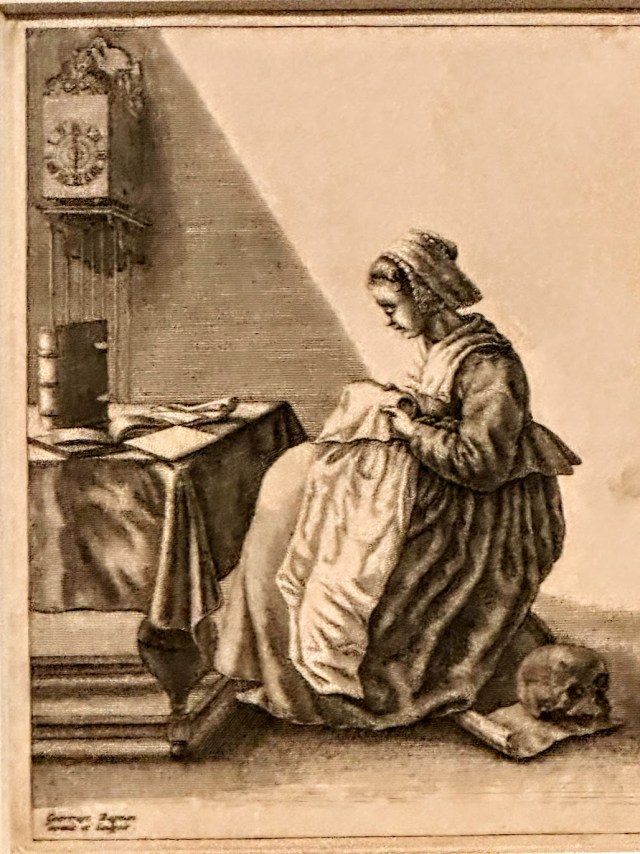
Note how small these engravings on paper are. They are in 8 x 10 frames.
Counter clockwise from the top: Young Girl Sewing – The Dressmakers – Woman Spinning
1640 – 1647
Resa – Amazing art history, Rebecca. Now, on to Catherine Brandinn! You had some difficulty gathering information about her. For a while it looked like all we were going to have to remember her by was her art. Then you discovered Johann Christian Brand‘s name appears alongside hers, which seems to muddy the waters.Do you think this is another case of the disenfranchisement of women in the arts?
Rebecca – I was fascinated by the connection between Catherine Brandinn and Johann Christian Brand, which highlights the complex interplay of gender and recognition in the art world. Without question, Catherine Brandinn’s artistic legacy has often been overshadowed by the presence of Johann Christian Brand, whose name frequently appears alongside hers.
This phenomenon raises important questions about the historical disenfranchisement of women in the arts. The association of Johann with Catherine could suggest a similar pattern, where her identity and artistic achievements are overshadowed by his prominence.
However, I believe that there may be another explanation. Consider that Johann Christian Brand’s recognition may have been a means of validating Catherine’s work. In a time when female artists struggled for acknowledgment, the inclusion of a well-known male figure could lend credibility to her art. Consequently, while Johann’s association with Catherine may complicate her legacy, it could also provide a platform for her art to gain the recognition it deserves.
Resa – You make a good point how difficult it was for women to be recognized in the arts. We may never know of Johann Christian Brand’s intent. However, her art is remembering her, not him.
Catherine Brandinn
Austrian? 18th century
The history of painting has predominantly celebrated the lives of the elite and significant events, often neglecting the stories of ordinary people. This selective representation raises questions about the value placed on different experiences and the narratives that have shaped our understanding of the past. The absence of everyday moments in art suggests a hierarchy of importance, where only the lives of the wealthy and powerful are deemed worthy of immortalization on canvas.
If painters had chosen to depict ordinary moments, our historical narrative would be richer and more inclusive. Imagine a world where scenes of daily life, community gatherings, and simple joys were captured alongside royal portraits and grand battles. Such representations would not only provide a more comprehensive view of society but also highlight the shared human experience, fostering a deeper connection to our collective history.
The transition in art from religious themes and the portrayal of affluent patrons to the representation of ordinary people began during the Renaissance and continued into the Baroque period. This shift marked a significant change in the subject matter of paintings, as artists started to explore the lives of the common man, and the beauty found in everyday activities. The rise of humanism encouraged artists to focus on individual experiences and emotions, leading to a more relatable and accessible form of art that resonated with a broader audience.
Catherine Brandinn portrayed ordinary people, capturing the essence of everyday life through her unique artistic lens. Her work often reflects a deep appreciation for the beauty found in the mundane, showcasing individuals engaged in daily activities. Her name is intricately linked to artist, Johann Christian Brand. This connection raises questions about her identity and the role this artist played in her life. When the artwork of Catherine Brandinn is viewed, Johann Christian’s name often appears alongside hers, suggesting that her narrative is largely defined through her relationship with this artist. This intertwining of identities hints at a deeper story waiting to be uncovered.
Catherine Brandinn’s painting, “Mädel mit Waldholz (Peasant Girl Carrying Wood),” created in 1775, captures a poignant moment in rural life. The artwork portrays a young peasant girl, her delicate frame burdened by a large bundle of wood, symbolizing the labour and resilience of women in agrarian societies. Catherine Brandinn’s use of soft colours in her engravings on paper evokes a sense of warmth and intimacy, inviting us to appreciate the girl’s strength and determination amidst her modest surroundings. The composition of the painting draws attention to the girl’s expression, which reflects a mixture of pride and fatigue.
“Mädel mit Waldholz” stands as a testament to the often-overlooked contributions of women in history. By focusing on the everyday tasks of a peasant girl, Catherine Brandinn elevates her subject to a figure of dignity and importance. This image encourages us to reflect on the narratives of those who have historically been marginalized in the art world and society at large.
Resa – So Rebecca, we move on toMaria Louisa Catherine Cecilia Cosway. You mentioned that in researching Maria Louisa Cosway, you saw lots of her artwork, but not this one particular workHome Industry, that showed at “Making Her Mark”. Do you think I’m crazy to think that we have something special here?
Rebecca – I don’t think you’re crazy at all, Resa. I am beyond thrilled that you were able to capture Home Industry in a photo. You have an amazing ability to find art treasures wherever you go!! Home Industry” is a gem!!
Maria Louisa Catherine Cecilia Cosway
English – 1760 – 1838
Maria Louisa Catherine Cecilia Cosway, an accomplished artist of the late 18th and early 19th centuries, was known for her diverse portfolio that included both prominent figures and ordinary individuals. Born in 1760 in Florence, Italy, she moved to England where she became a prominent portrait painter. Her ability to portray significant historical figures speaks to her talent and the esteem in which she was held in artistic circles.
A Progressive Artist
Maria Cosway’s artistry extended beyond the elite, as she sought to represent the lives of everyday people in her work. This inclination towards inclusivity allowed her to bridge the gap between different social classes, showcasing the beauty and dignity of ordinary life. Through her artwork, she celebrated the humanity of her subjects, making her art accessible and relatable to a broader audience. This commitment to portraying a diverse array of individuals marked her as a progressive artist for her time.
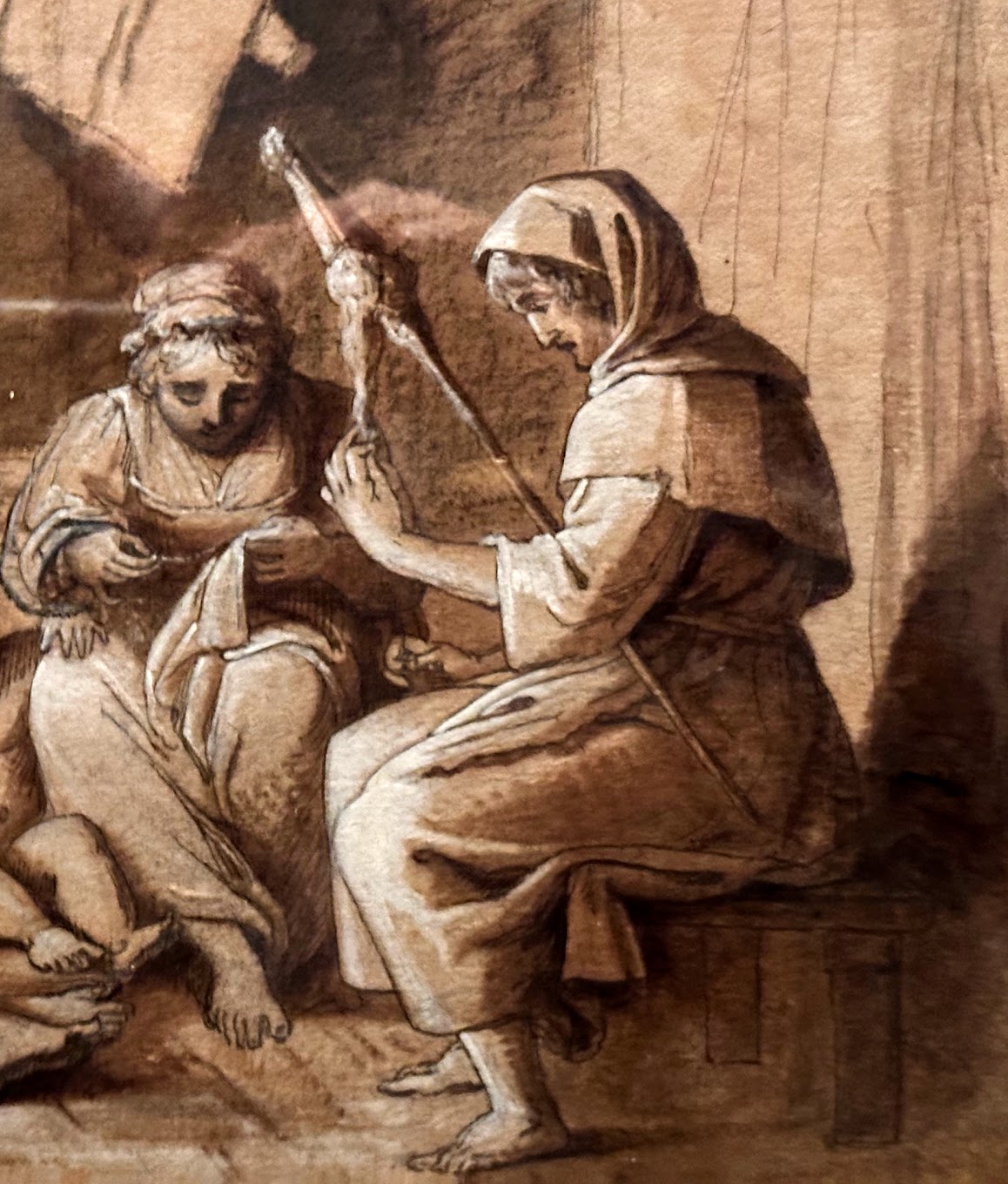
Home Industry tells a story of resilience and the quiet strength found within the home, serving as a reminder of the essential work that occurs beyond the public eye. Through her portrayal, she elevates the mundane to the extraordinary, encouraging us to recognize and honour the stories woven into the tapestry of domestic labour. It is a nostalgic reminder of a time when craftsmanship flourished within the domestic sphere, emphasizing the value of handmade goods and the skills passed down through generations.
Home Industry (1800) Pen and Ink Wash
We are invited to reflect on the importance of labour in a rapidly changing world and consider the implications of progress on the cultural fabric of society. During the late 18th and early 19th centuries, when Maria Cosway created this piece, the landscape of work was undergoing significant transformation due to the onset of industrialization.
Cottage industries, which had long been a staple of rural economies, faced increasing threats from mechanization and factory production.
This piece tells the story of a specific moment in time, evoking a narrative about the challenges faced by families during the industrial revolution. As industrialization encroached upon traditional ways of life, this artwork stands as a testament to the resilience of home-based labourers.
Home Industry also speaks to our time in history and is a relevant reflection on the balance between innovation and tradition.
Resa – Wow! Thank you Rebecca! Your co-hosting here on the “Making Her Mark” series has made it a much richer experience. Still, there’s lots to go. May I be allowed to try and tempt you to co-host another time, no rush, just sometime in the future? I have some juicy topics and artists I can present to you!
Rebecca– Hi Resa! Thank you so much for your kind words! I’ve truly enjoyed co-hosting the “Making Her Mark” series with you, and I would love to collaborate again in the future. Your topics and artist suggestions sound exciting, and I can’t wait to hear more about them. Let’s definitely keep the conversation going!
Resa – Yahoo! You know Rebecca, we might just be artoholics!
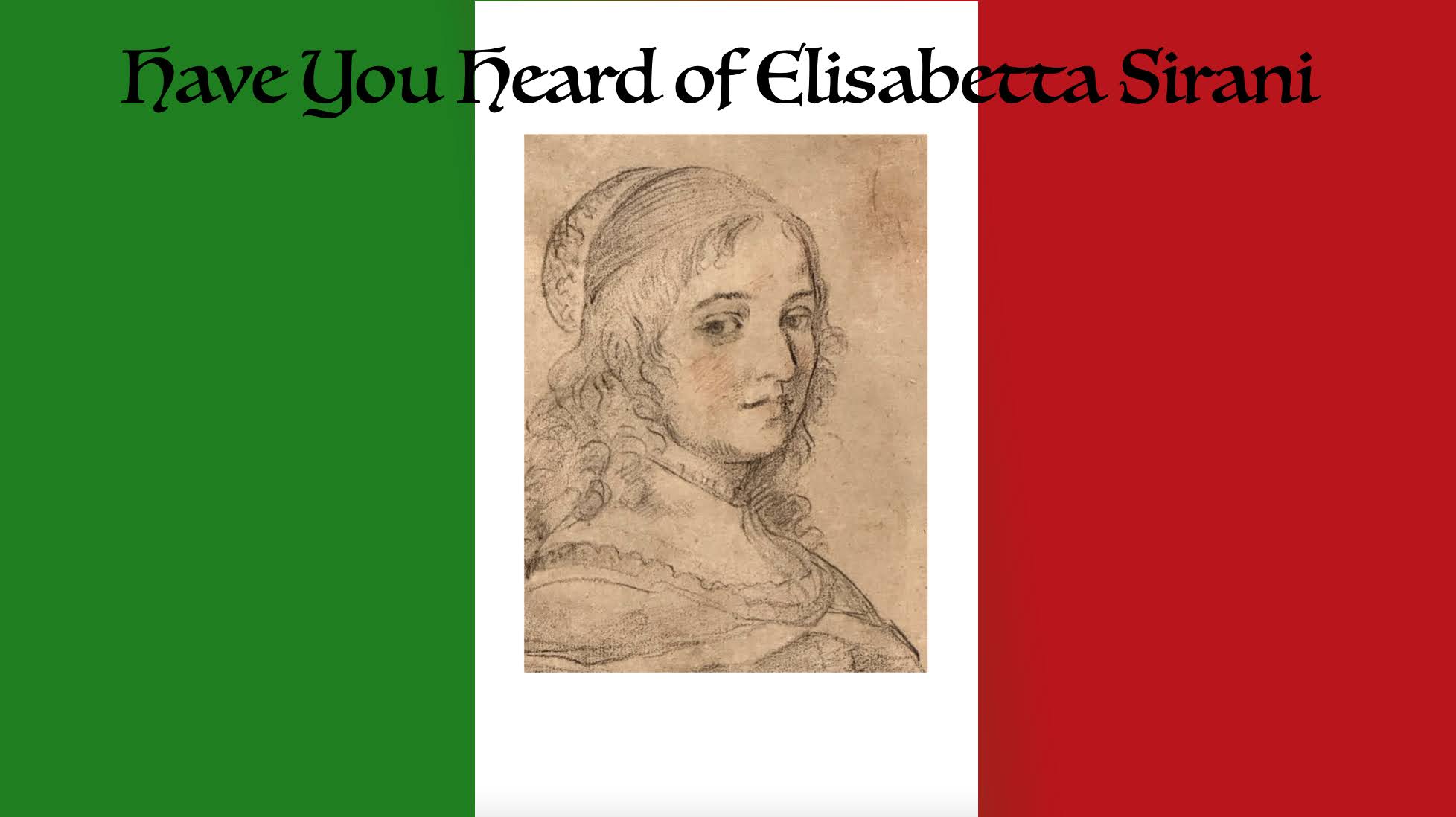
Welcome back to our Self Portraits series! I’m your host, Resa, with co-host Rebecca Budd, curator of Chasing Art. Today We are discussing an artist from the 17th century, Elisabetta Sirani.
Resa – So Rebecca,after all you’ve learned, and passed on to me, I’ve come to think Elisabetta was Bologna’s rockstar in the early mid 1600’s. Sayest thee what to that?
Rebecca – I agree wholeheartedly, Resa. Elisabetta Sirani’s exceptional talent and prolific body of work cement her status as a celebrated artist of her time. Despite the challenges she faced as a female artist in a male-dominated field, Sirani’s enduring legacy as a pioneering Baroque painter reflects her rockstar-like influence on the art world of her era.
Over her 10-year artistic career, Sirani demonstrated exceptional productivity, creating over 200 paintings, 20 etchings, and an extensive collection of drawings. I marvel at her ability to create a life/work balance. At the young age of 19, she took on the responsibilities of managing her father’s workshop, supporting her family, and establishing an art academy to mentor and teach women artists. Elisabetta Sirani was a true rockstar of Bologna in the 17th century. In my opinion, she continues to be a rockstar today!
Resa – Well then, let’s see what you discovered!
Master of Chiaroscuro
Elisabetta Sirani was an Italian Baroque painter born in Bologna in 1638. She was the daughter of the painter Giovani Andrea Sirani, who recognized and nurtured her talent from an early age. Sirani’s artistic skills flourished, and she became known for her exceptional talent in her short life.
Despite facing challenges as a female artist in a male-dominated field, Sirani achieved great success and recognition during her career. She was prolific, producing a large body of work that included historical and biblical scenes, portraits, and allegorical paintings. Sirani’s mastery of chiaroscuro (the treatment of light and shade in drawing and painting) and her ability to depict emotion and narrative in her works garnered admiration from her contemporaries and art enthusiasts.
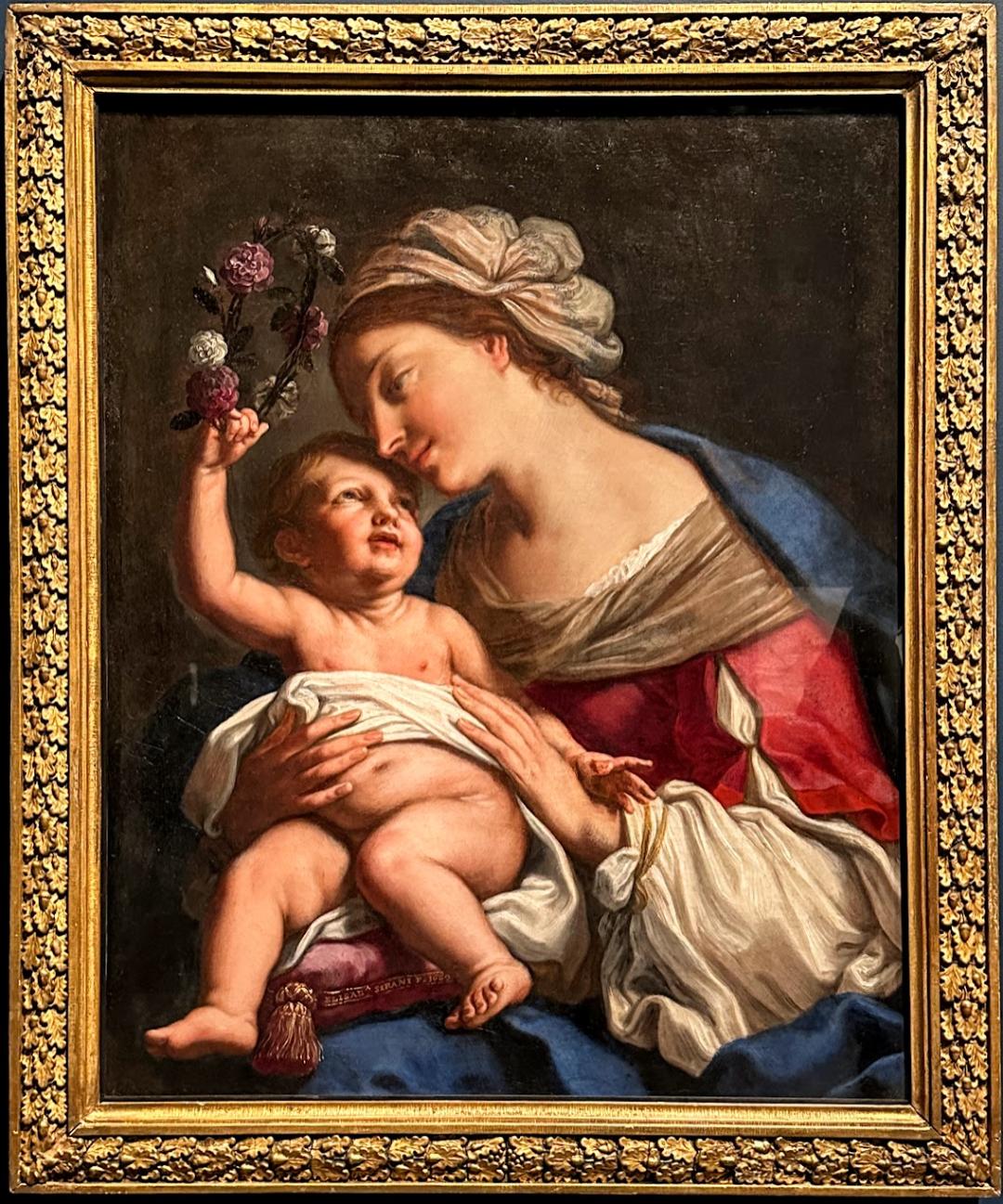
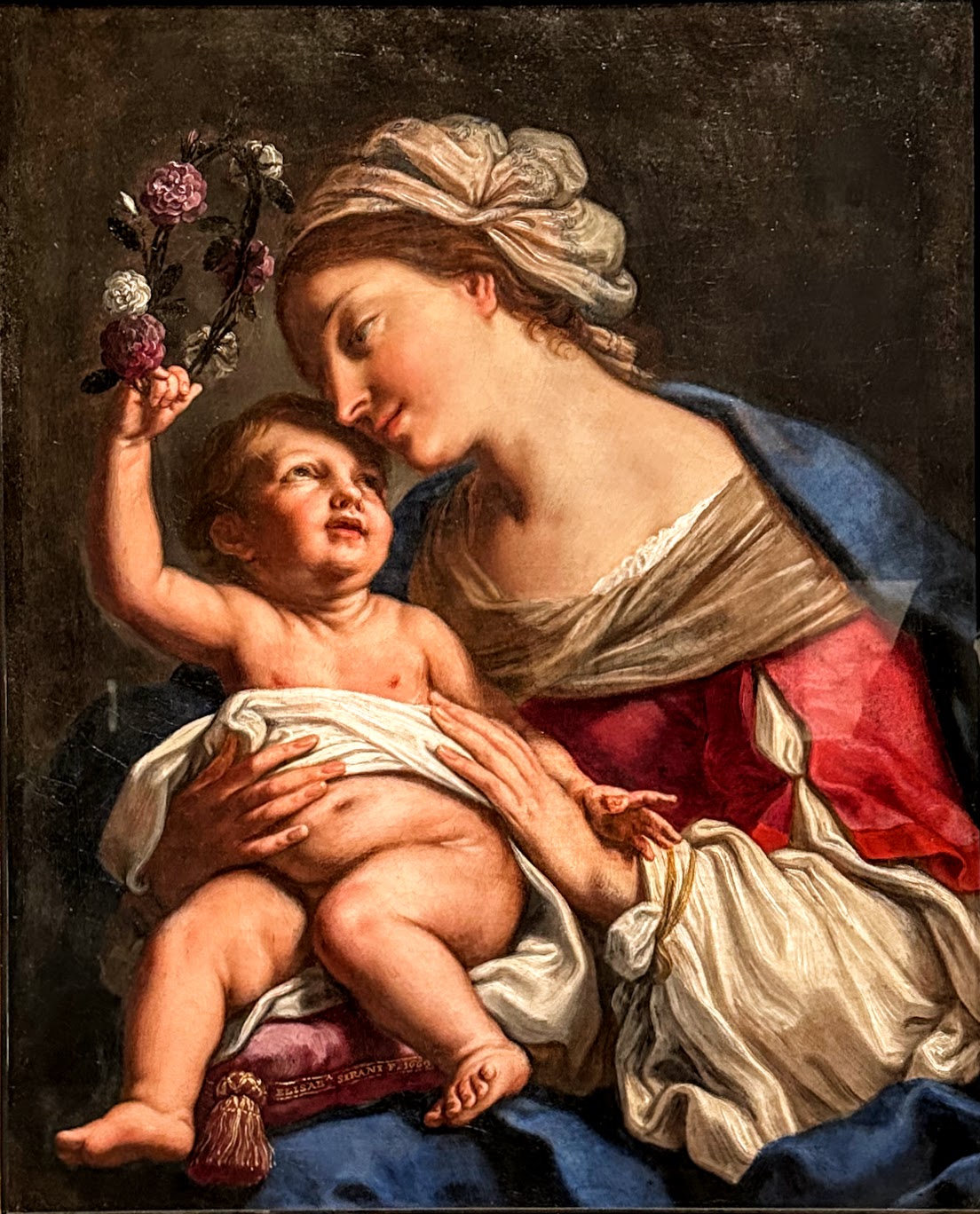
The Virgin Crowned by Christ Child with Roses
A Pioneering Legacy
Elisabetta Sirani’s legacy extends beyond her remarkable talent as a painter. As the successor of her father’s workshop, she also played a crucial role as a teacher, notably contributing to the development of women artists during the Renaissance period. In addition to training her sisters Barbara and Anna Maria, she also instructed at least twelve other young women at the school she established. This pioneering initiative marked the first school of painting for women in Europe outside of a convent, embracing inclusivity regardless of the women’s artistic and social backgrounds.
Elisabetta Sirani’s legacy endures through her remarkable paintings and the influence she had on future generations of artists. She remains celebrated as a pioneering female artist of the Baroque era, showcasing remarkable talent and determination in the face of societal norms.
Resa – “Making Her Mark”even had Elisabetta’s working drawing/study for the above painting. It’s a wonderful complete experience to see both.
Rebecca– I believe the painting, “Virgin Crowned by Christ Child with Roses” is all about love. Elisabetta Sirani imparts a compelling depiction of Mary as a relatable and tender young mother, diverging from the traditional portrayal of the remote Queen of Heaven. In this painting, Mary wears a turban associated with peasant women in Bologna, creating a down-to-earth portrayal. Her adoring gaze at the playful Christ child on her lap exudes a sense of genuine maternal love. Notice how the brushwork is highlighted in the textured representation of the Virgin’s white sleeve, emphasizing its rough and homespun quality. Elisabetta Sirani, with this tender and intimate moment of affection, offers a humanizing perspective of Mary and Jesus.
On the left :
The Virgin Crowned by Christ Child with Roses – 1663 – (red wash with grey chalk on paper)
On the right:
The oil on canvas painting in the same year.
An Untimely Death
Tragically, Eliabetta Sirani’s life was cut short when she passed away at the young age of 27 in August, 1665. Her untimely demise sparked controversy snd speculation. Following her sudden passing, suspicions arose, leading to the trial of her maidservant, Lucia Tolomelli, who was accused of poisoning the talented artist. The circumstances surrounding Sirani’s death led to diverse conjectures, with some attributing it to love-sickness due to her unmarried status, while others cited stress as a contributing factor.
It is widely believed that the true cause of Sirani’s demise was the onset of peritonitis following a ruptured peptic ulcer. This unfortunate event may have been exacerbated by the significant stress she experienced, particularly after being charged with providing for her entire household.
The controversy and diverse interpretations surrounding her passing have added intriguing layers to the legacy of Elisabetta Sirani, portraying a life marked by exceptional talent, determination, and the complexities of the era in which she lived.
A Rockstar Funeral
Elisabetta Sirani’s elaborate funeral reflected the deep respect and admiration held for her in Bologna. The grand ceremony featured an enormous catafalque (a decorated wooden framework supporting the coffin) adorned with a life-sized sculpture of the esteemed artist, as depicted in Malvasia’s biography.
Orations and music composed in her honor by prominent figures from Bologna added a solemn and dignified atmosphere to the proceedings. Following this tribute, she was laid to rest in the Basilica of San Domenico, Bologna, where she joined her father’s teacher, Guido Reni, in a shared tomb
This final resting place solidifies her enduring legacy alongside revered artistic influences, commemorating her exceptional talent and remarkable contributions to the art world.
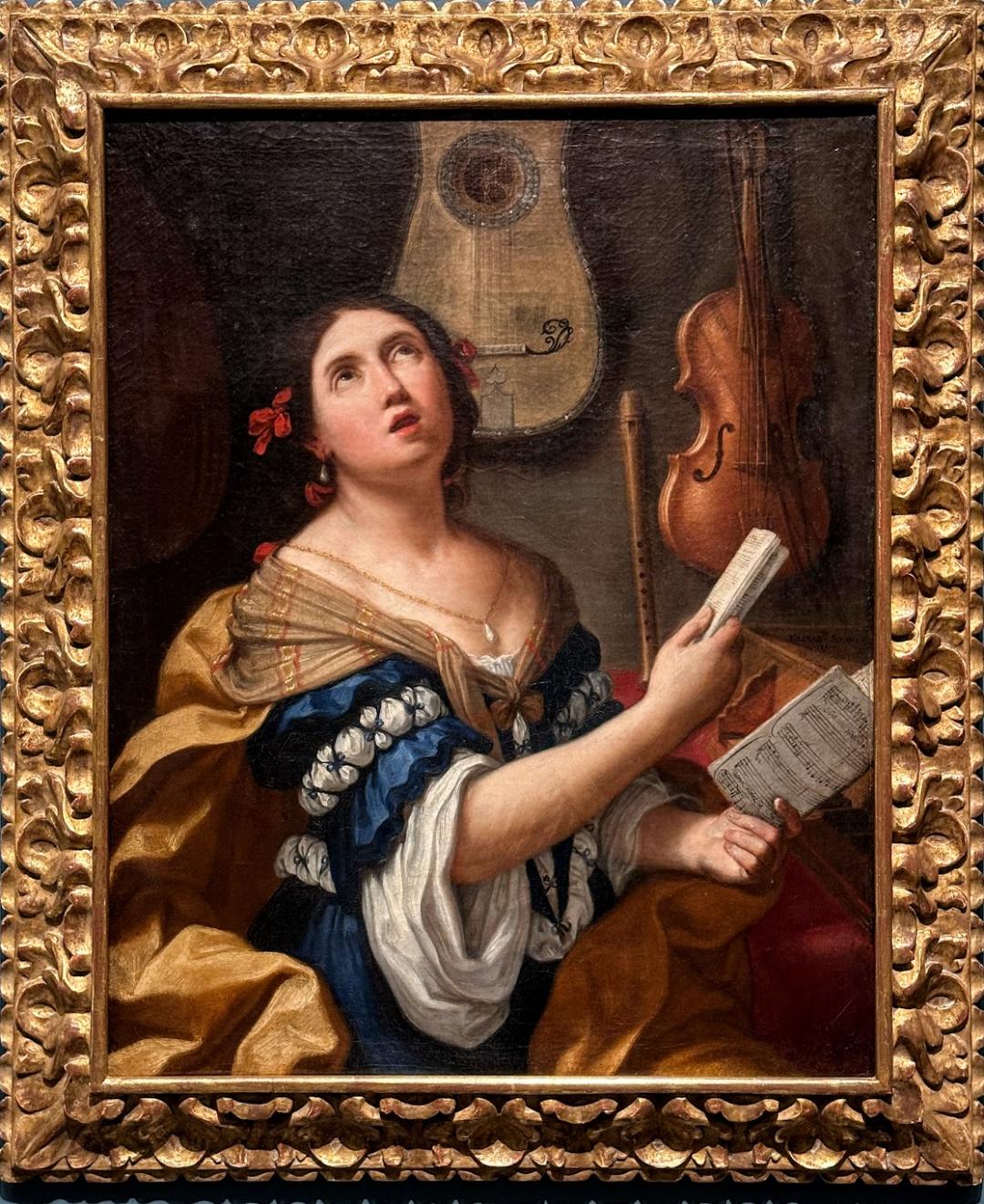
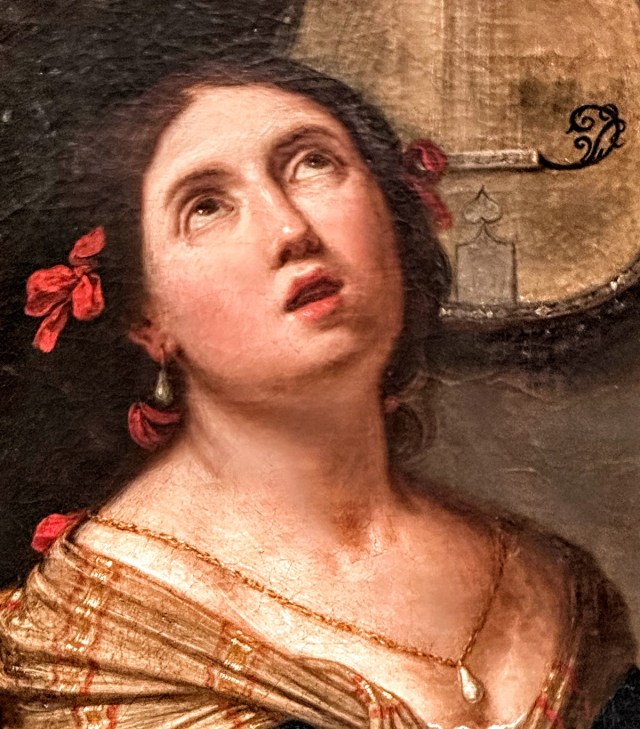
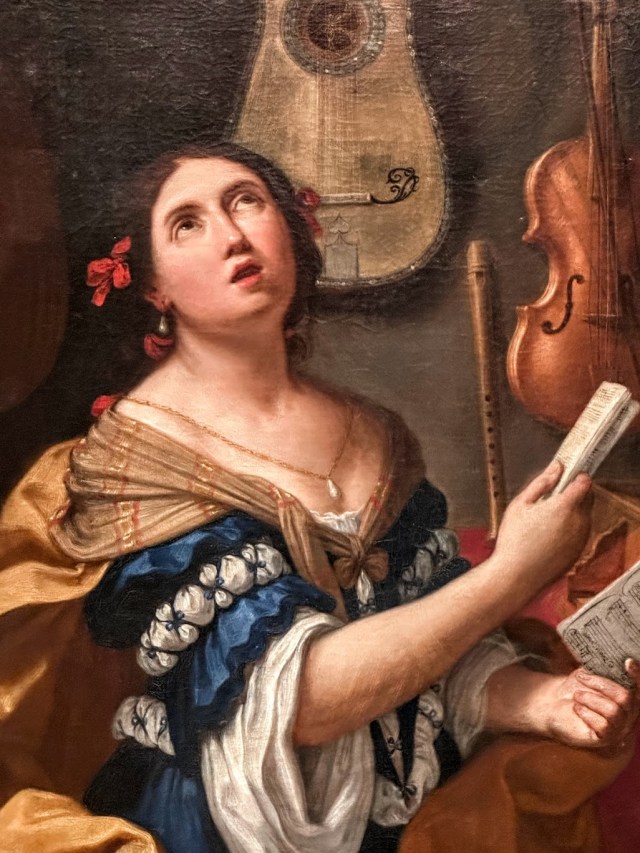
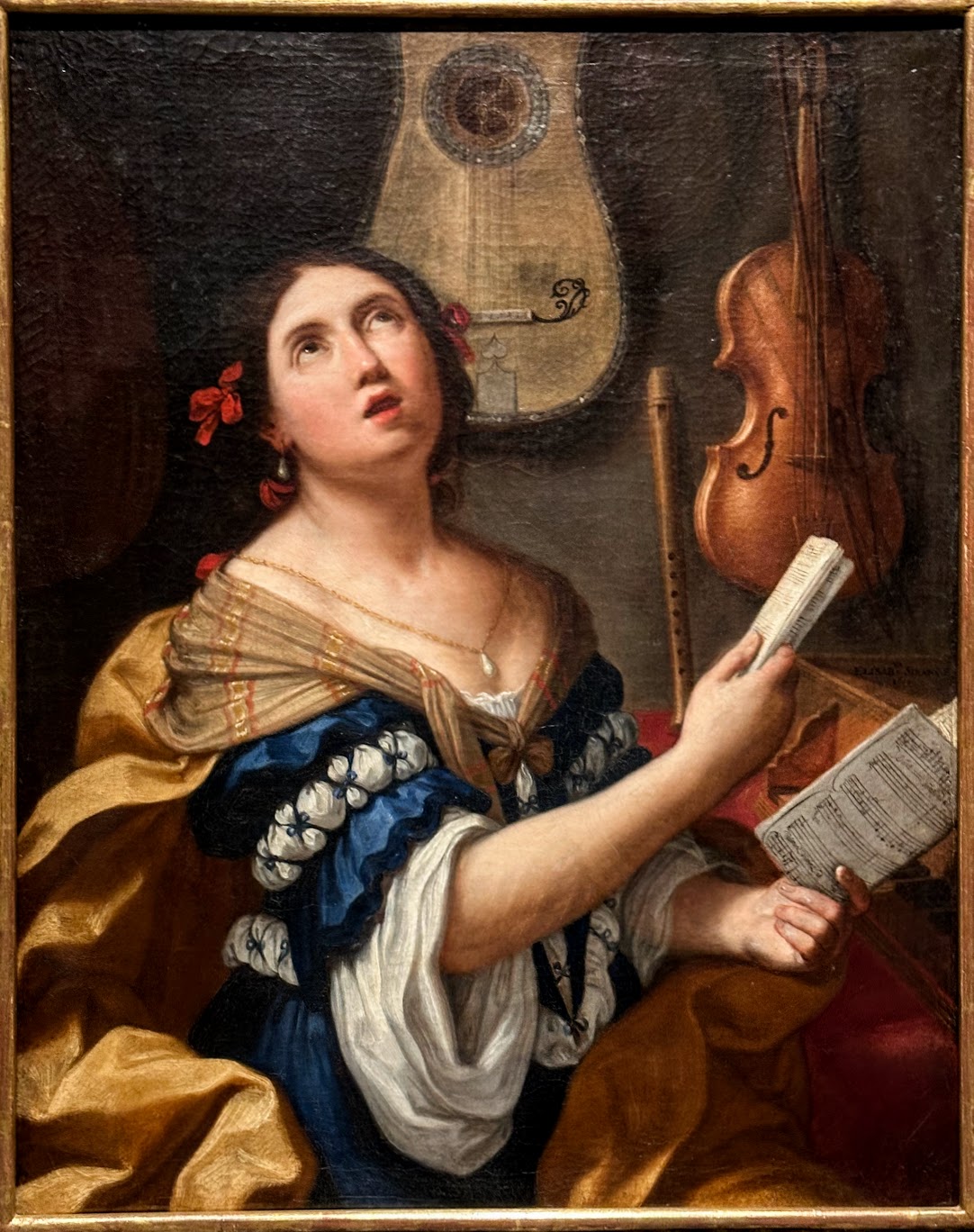
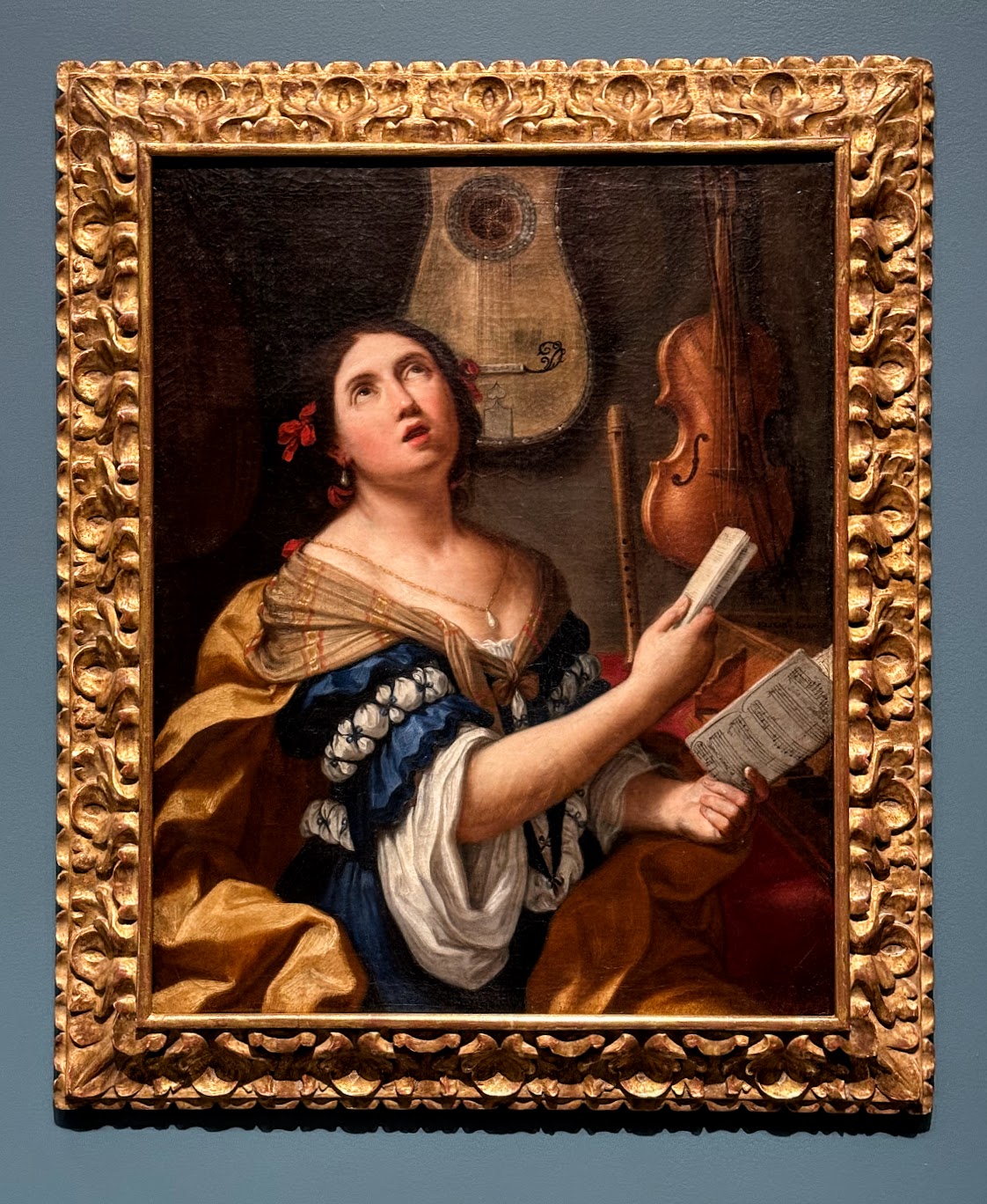
The Personification of Music
Resa – Rebecca, of all the paintings in the“Making Her Mark”exhibition, the Elisabetta Sirani allegorical painting titleThe Personification of Music was, and remains my favourite. Apparently she painted it in exchange for music lessons. I think she belongs inThe Twenty-Seven Club, don’t you?
Rebecca – I did not know that Elisabetta Sirani exchanged her paintings for music lessons, but I am not surprised, given her proficiency as a musician in addition to her exceptional talent as a painter. This exchange speaks to her versatile creativity and passion for various art forms, further solidifying her legacy as a remarkably talented individual in the Baroque era. I agree – she belongs in The Twenty-Seven Club.
Resa – Admittedly I am smitten by this artist. I am also wild about that fact that you are here on this journey through these profiles in exceptionality. Mille Grazie, Rebecca!
Rebecca – Resa, your dedication to artistic endeavours and your profound belief in the power of creativity to enrich our world have truly inspired me. Thank you for including me on this extraordinary journey of self-discovery through Making Her Mark. I look forward to what comes next… “Mille grazie caro amico per averci invitato a unirci virtualmente alla tua Art Gallery of Ontario. Fino alla prossima volta.“
You can also visit Rebecca by listening in on some of her fabulous Tea Toast and Trivia podcasts.
Click the above banner to view & link to Rebecca’s sources. not included in the body of text!
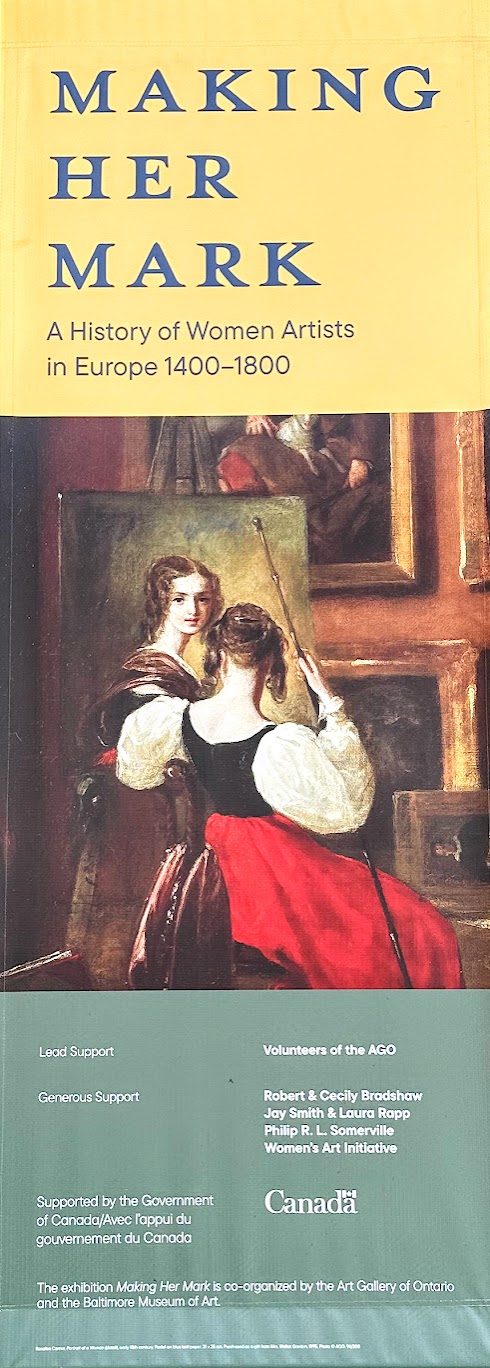
I saw the most inspiring show at the Art Gallery of Ontario.
Elisabetta Sirani (Italian 1638-1665)
Personification of Music – 1659 – oil on canvas – Painted in exchange for music lessons.
It was all European female artists from 1400 – 1800. It included 230 pieces of art: oils, watercolours, chalk, etchings, sketches, tatting, embroidery, quill work and more.
Themes included portraits, self portraits, religion, nudes, still life, nature, home decor and more
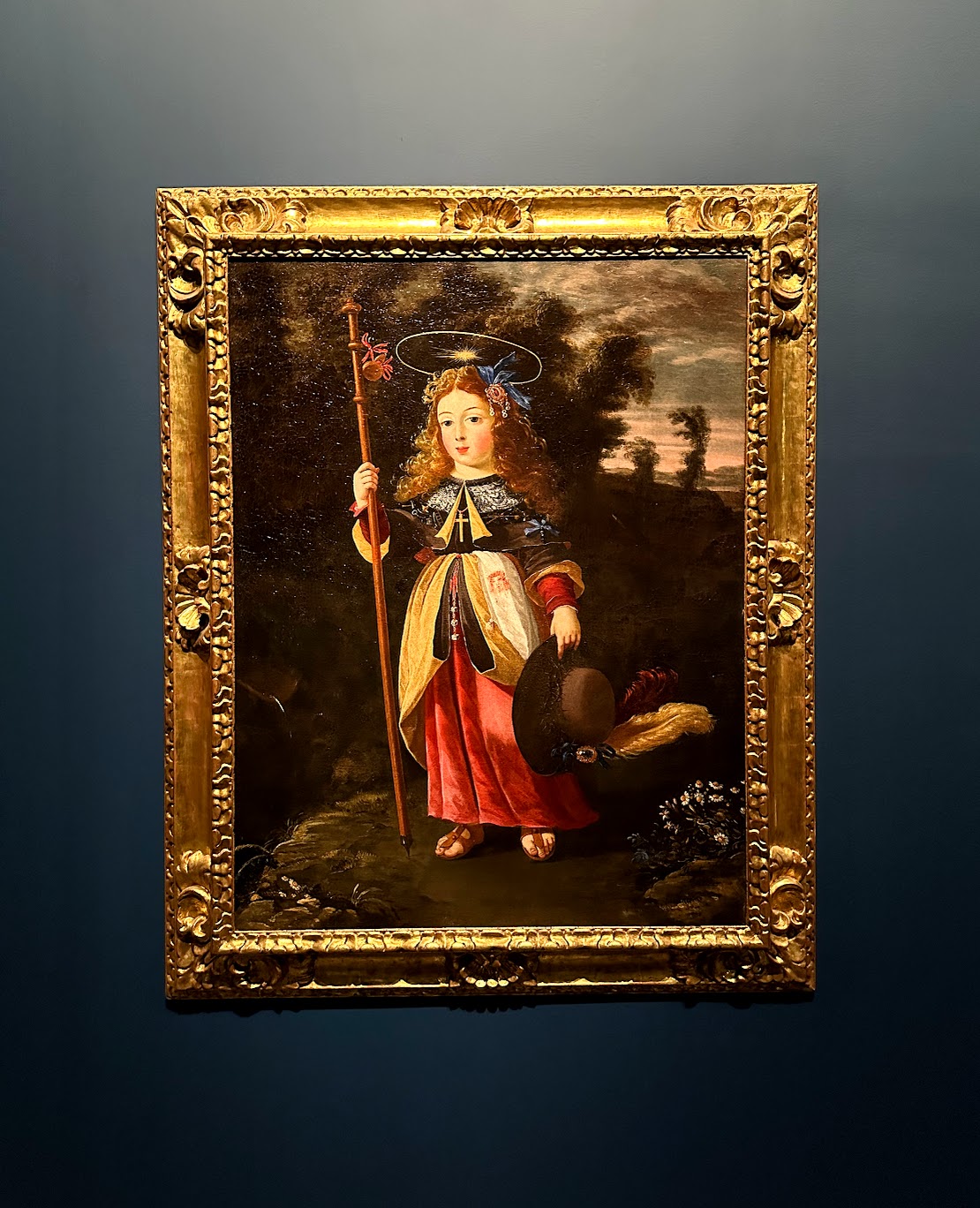
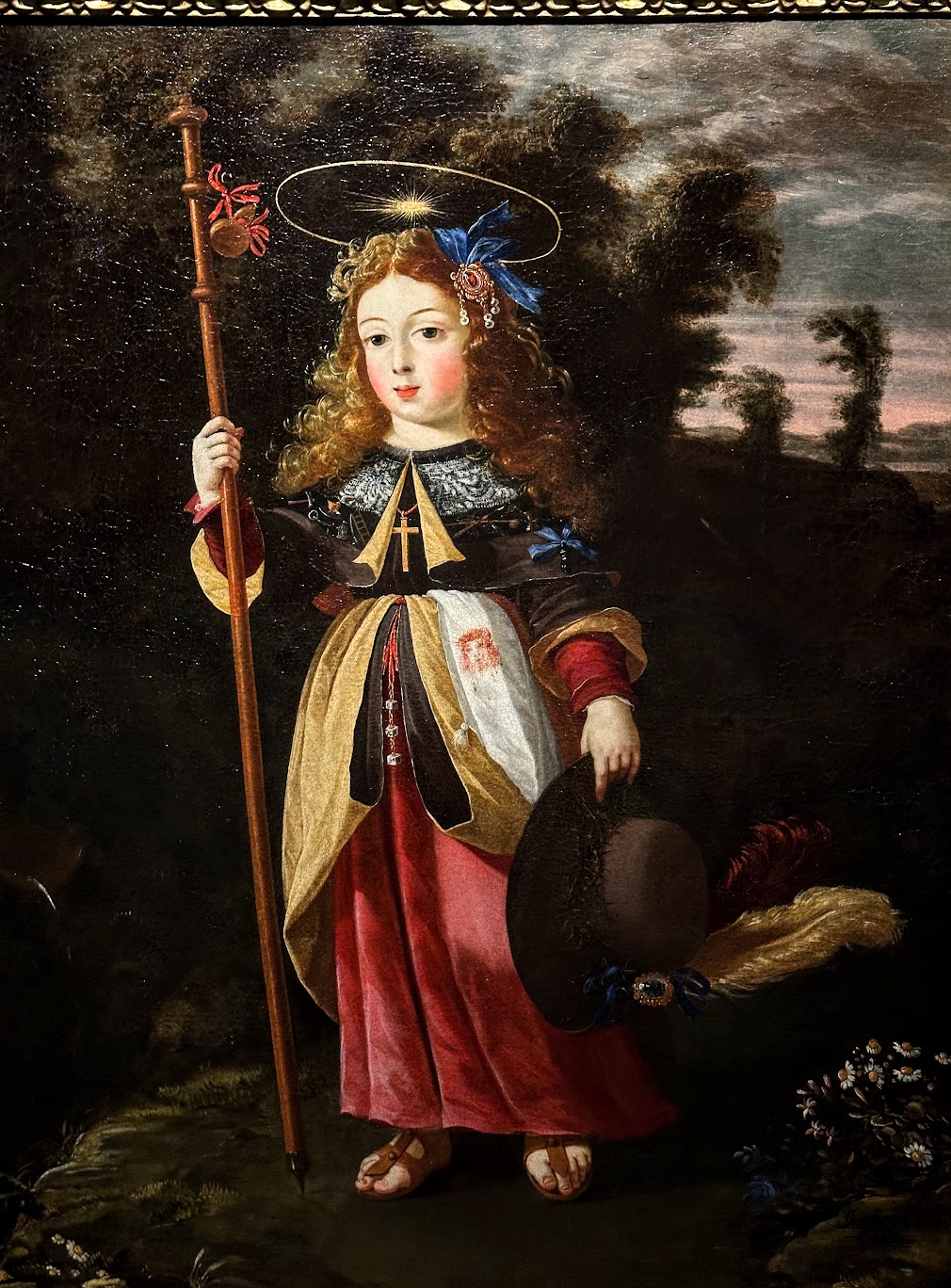
Josefa Ayala (Portuguese circa 1630 – 1684)
The Christ Child as Pilgrim – 1676 – oil on canvas
It is the AGO’s policy that we are allowed to take pics (no tripods, flash or other professional equipment), that we may post on social media and that we do not make money from said photos.
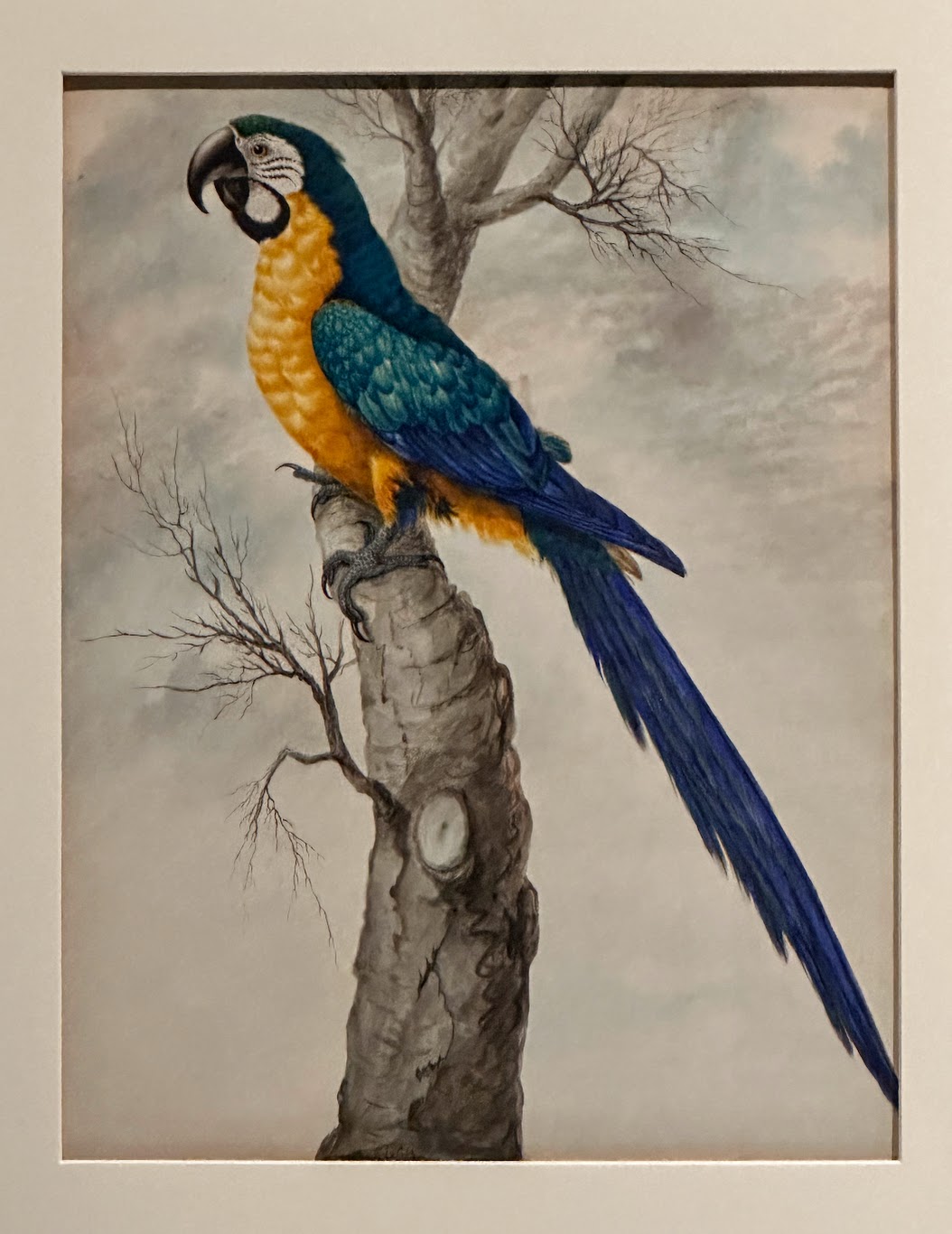
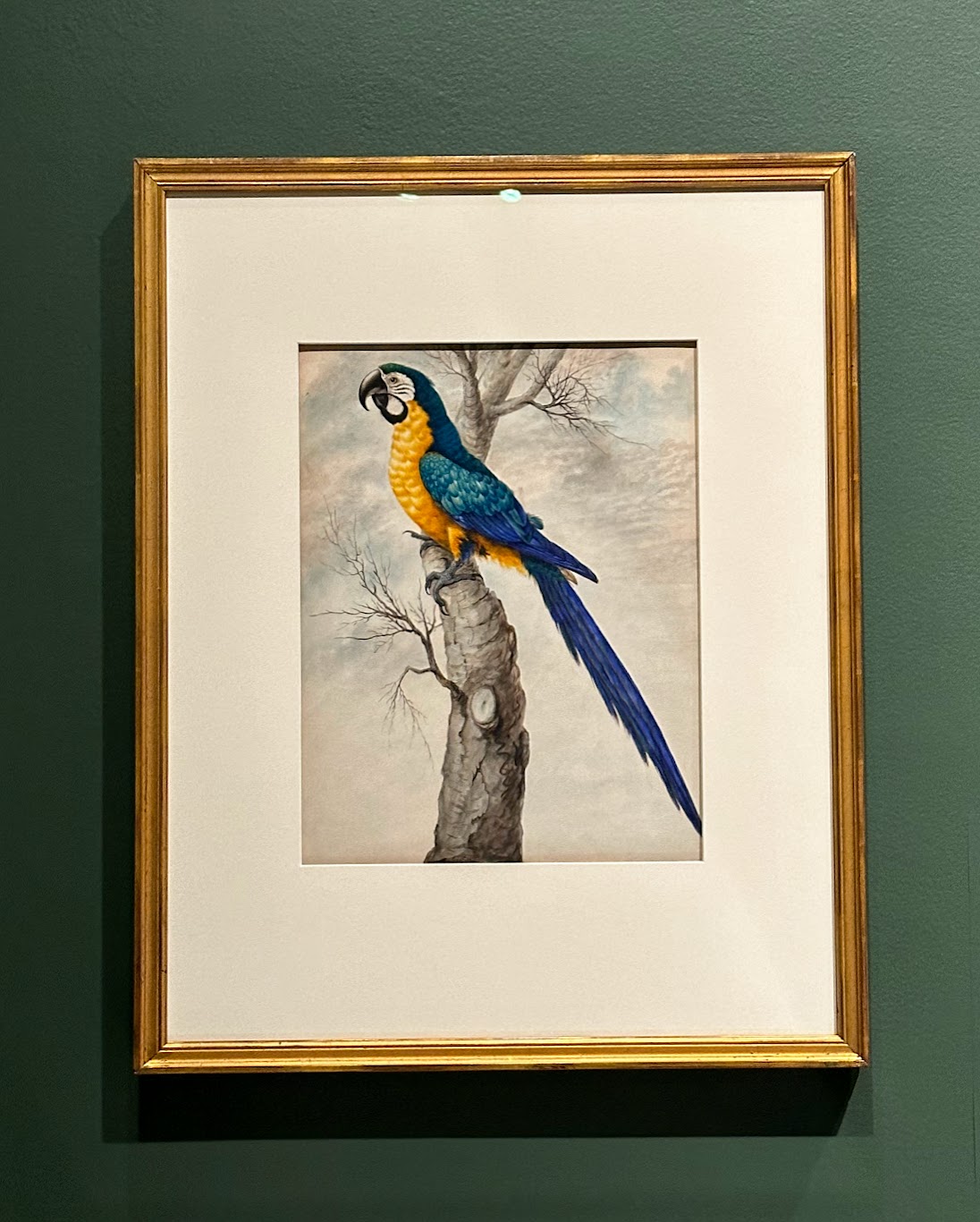
Sarah Stone (English circa 1760 – 1844)
A Blue and Yellow Macaw circa 1789 – watercolour, watercolour glaze & black ink border on paper.
I’ve never taken pics at the AGO before, and did my best despite: lighting in general, lighting reflected in in glass & oil paints & lucite display cabinets, and my unbridled enthusiasm.
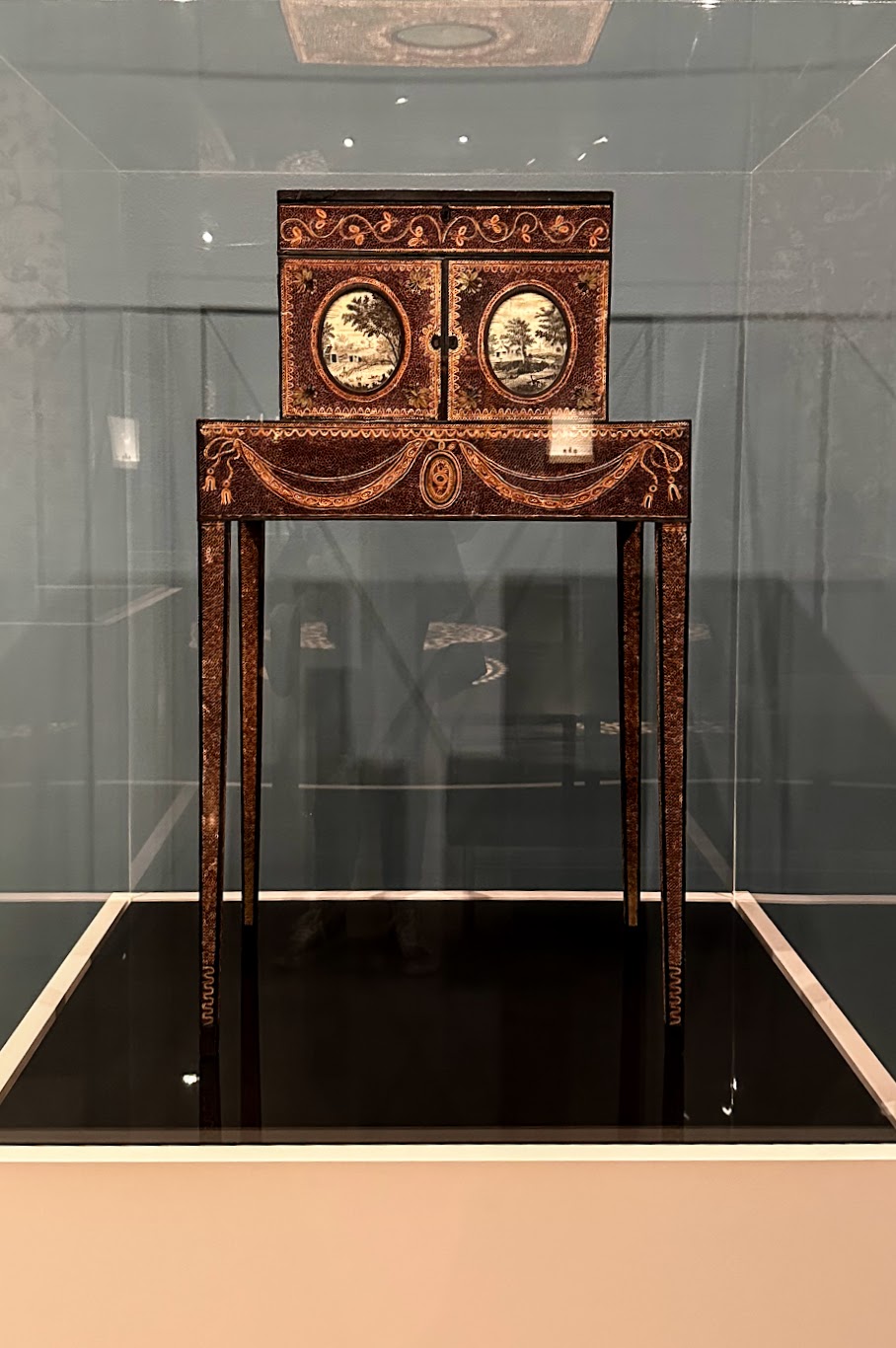
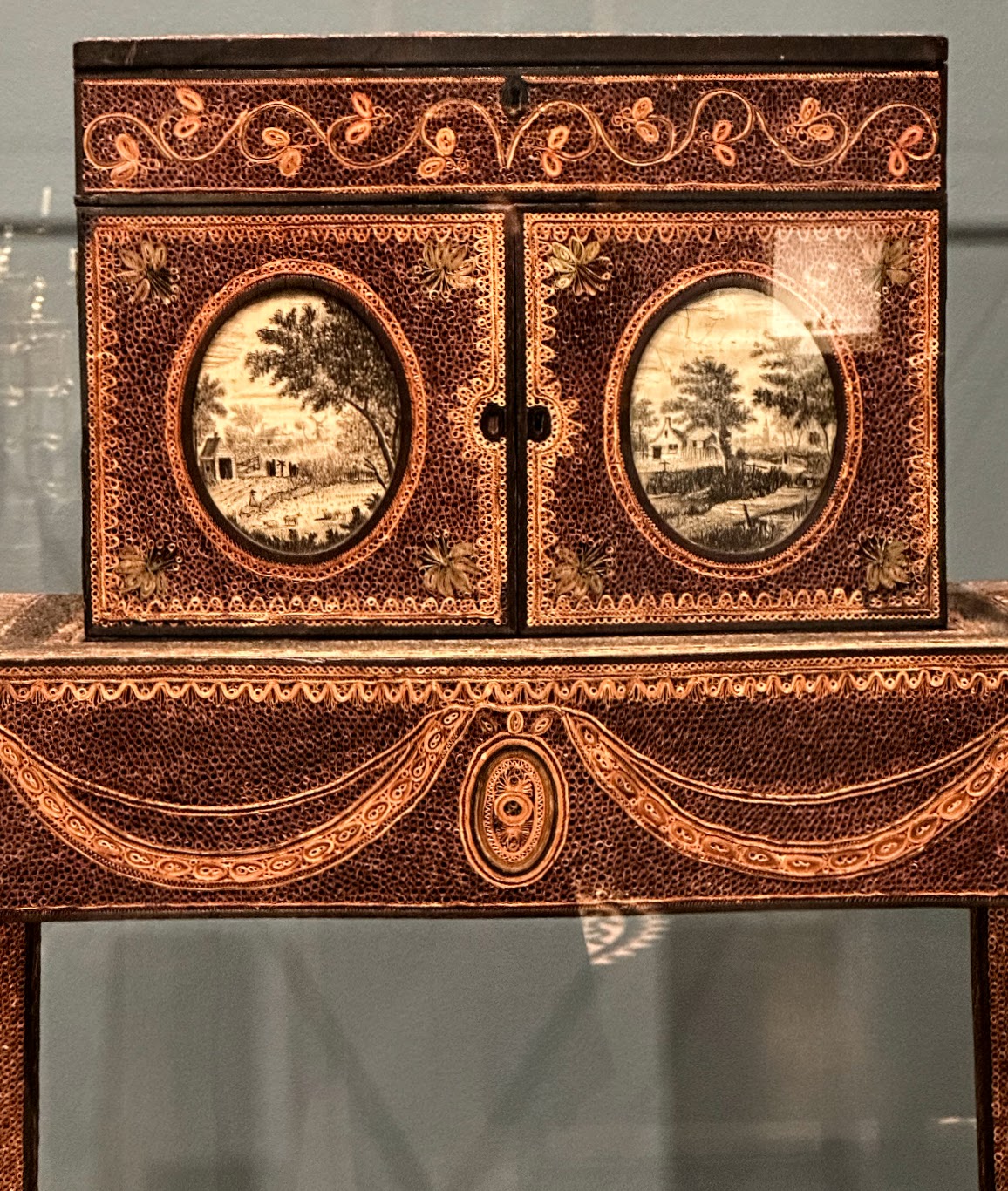
Below is an example of a cabinet encased in the joys of reflections. Thiscabinet is made of water colour and metallic paper, hair (hairwork), and watercolour panels.
Sophia Jane Maria Bonnell (English – circa 1748 – 1841) and Mary Anne Harvey Bonnell (English – 1748 – 1853)
Paper Filigree Cabinet circa 1789
The plan is to show more of the art in categories. However, due to the plethora of photos to comb through, It will happen between street art posts.
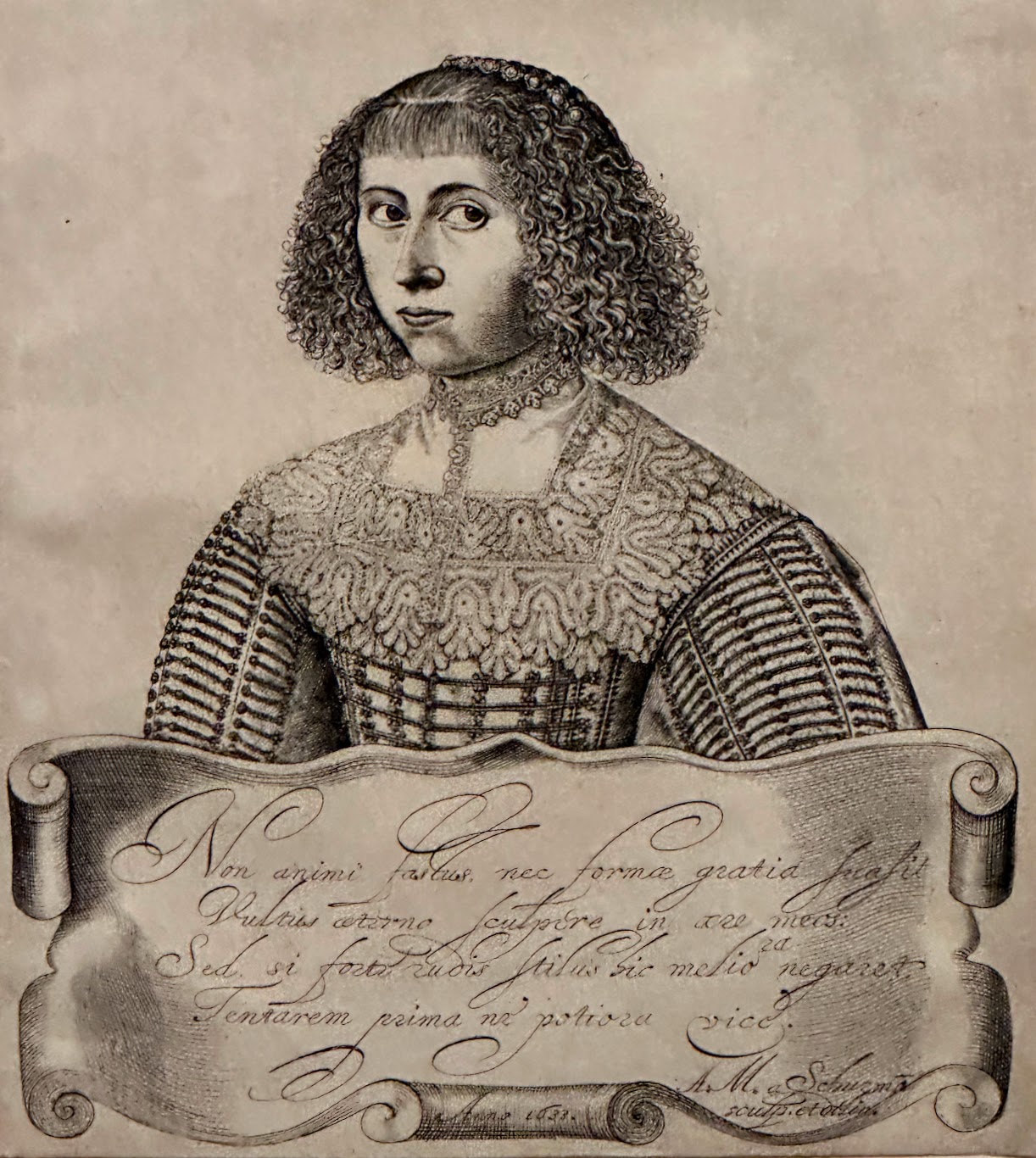
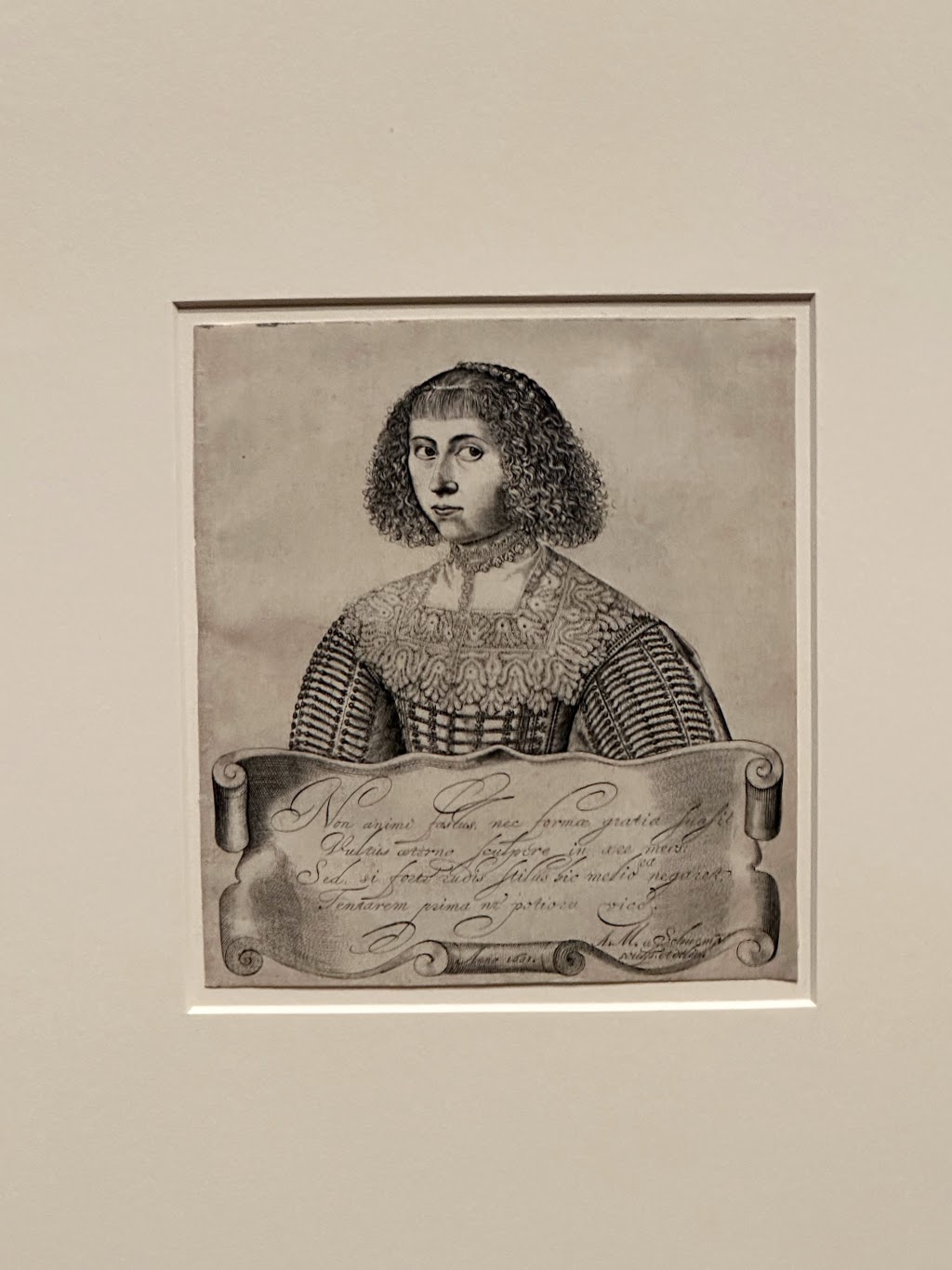
Anna Maria Von Schurman (Dutch 1607- 1678)
Self-Portrait -1633 – engraving on paper
Anna mastered 14 languages. Her proto-feminist treatise The Learned Maid was published in Latin in 1638
One art blogger has agreed to come on as a guest.
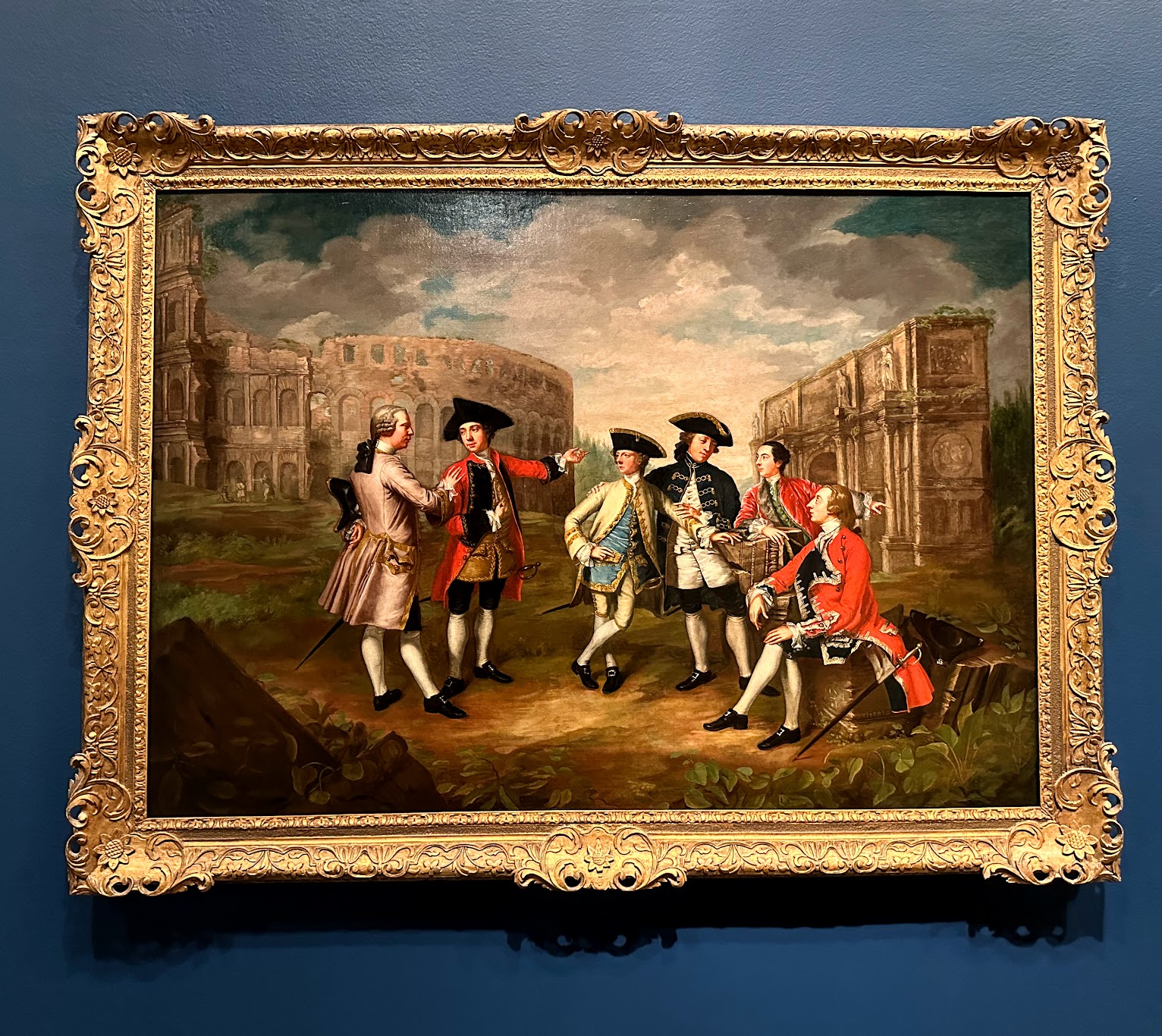
Katherine Read (English 1723 -1778)
British Gentlemen in Rome – circa 1750 – oil on canvas
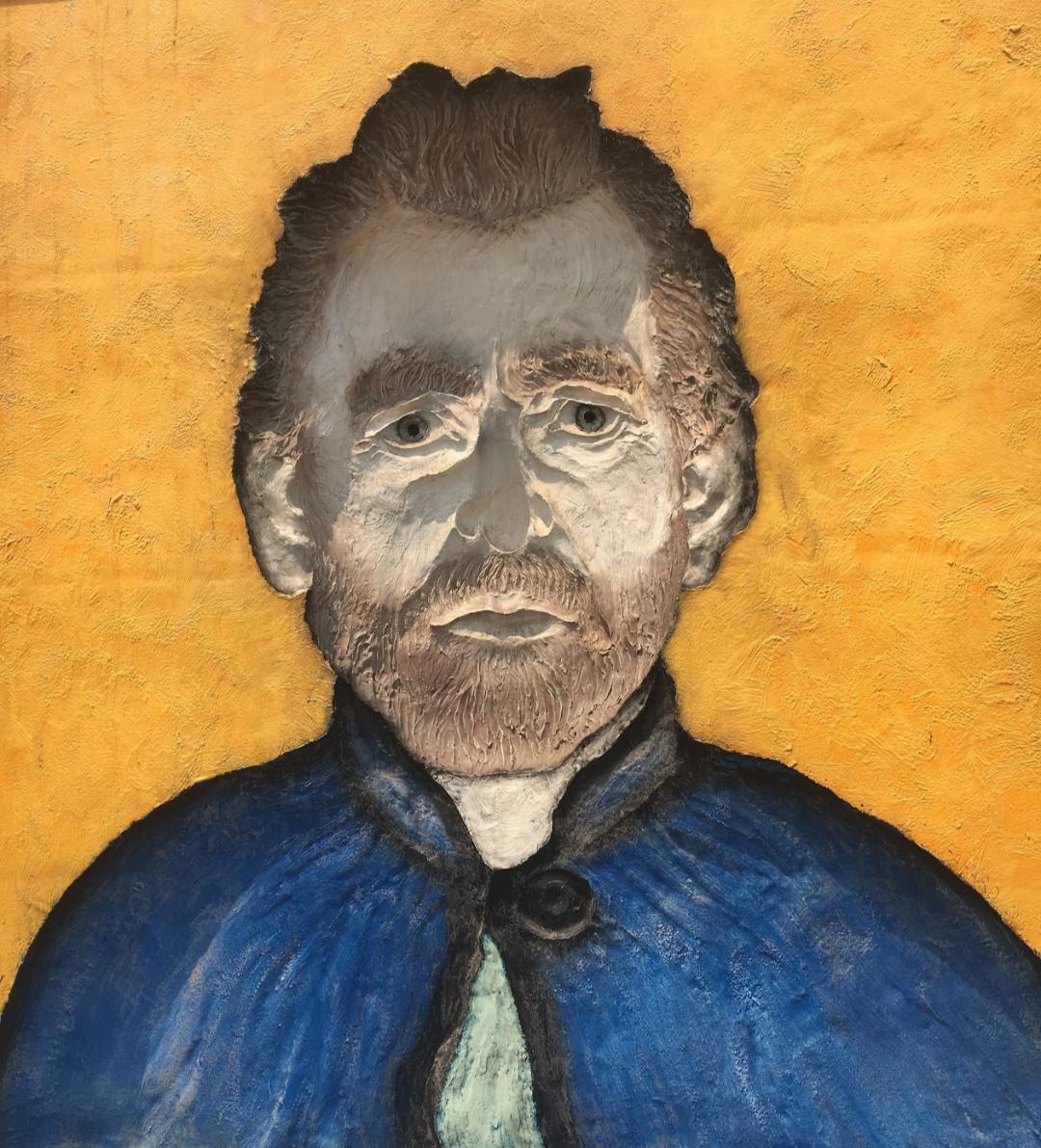
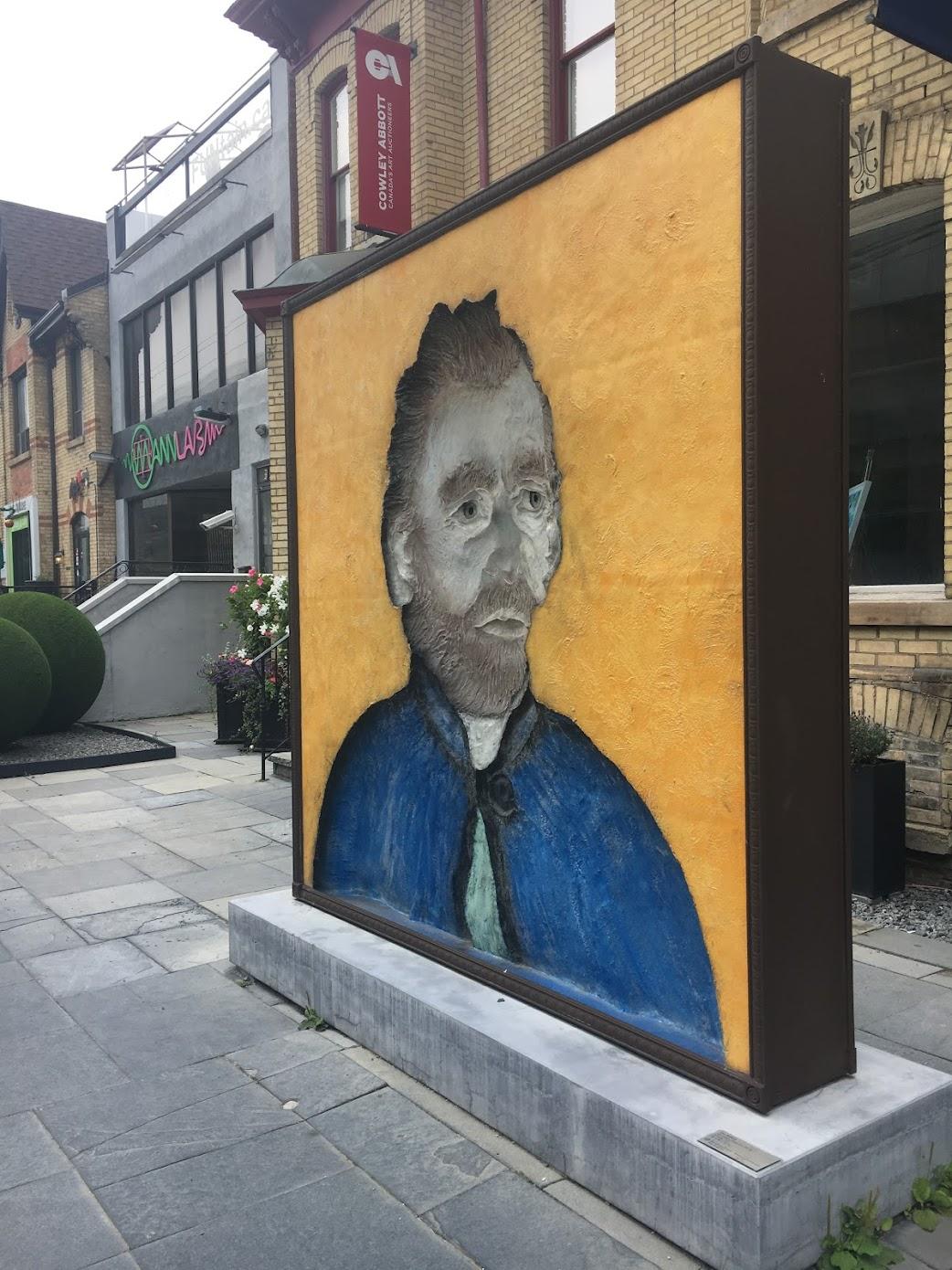
Then serendipity happened! Rebecca interviewed Marina about art in a podcast on Tea Toast and Trivia, on July 19. I found Van Gogh on July 19.
I know you’ll love the podcast. Click on the pic of VG above, and go there!
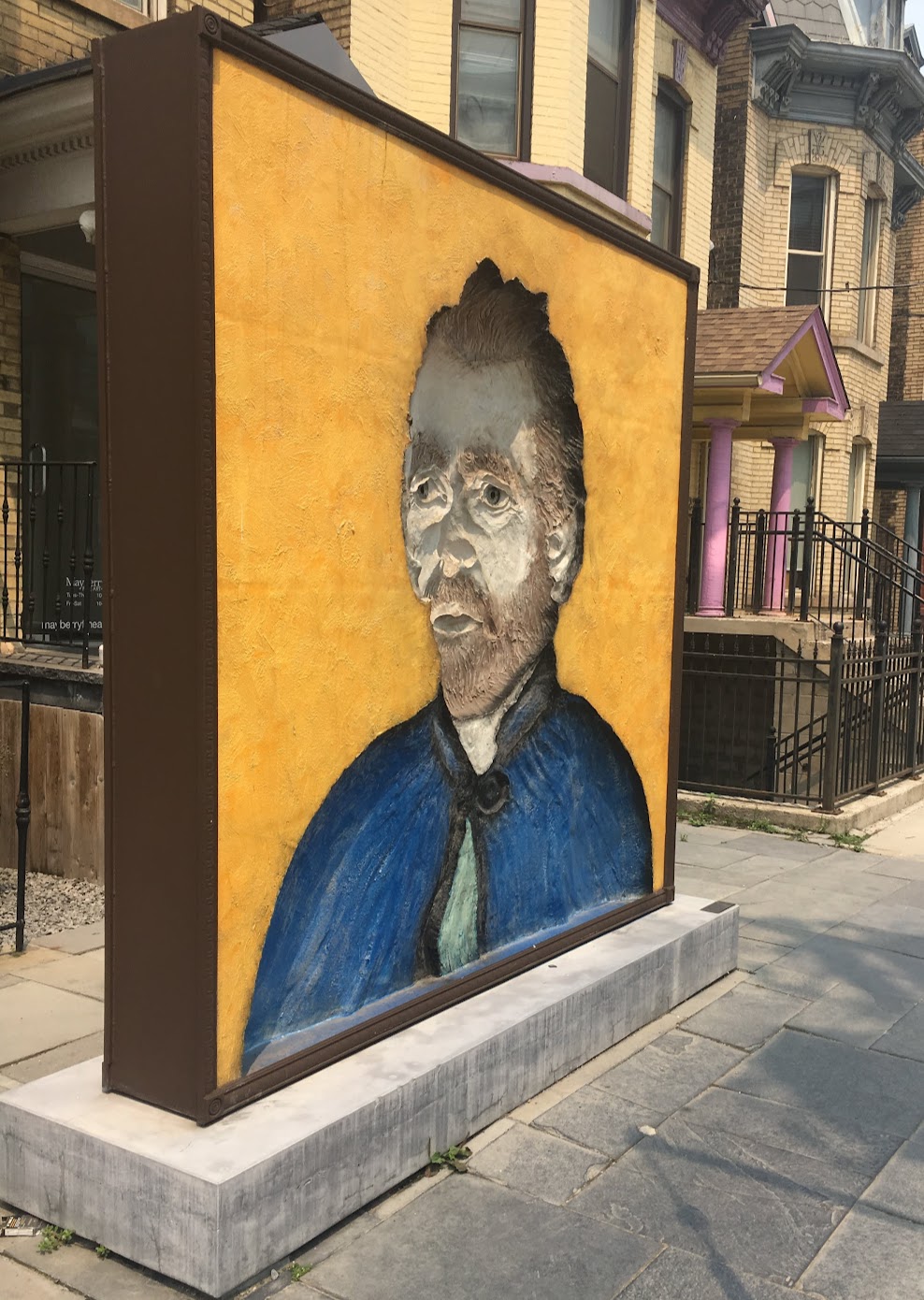
I started at the other side in the 20 second video below.
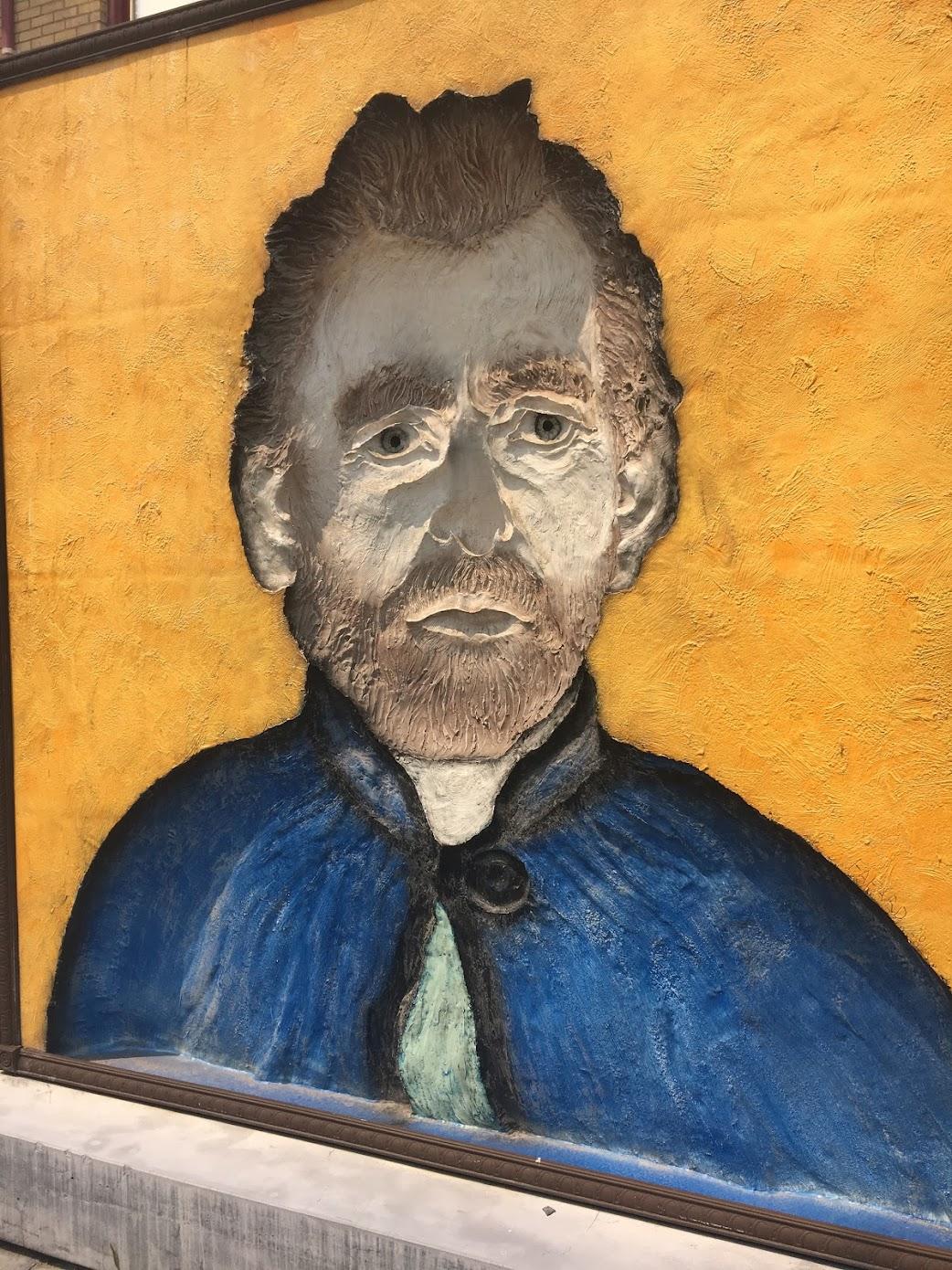
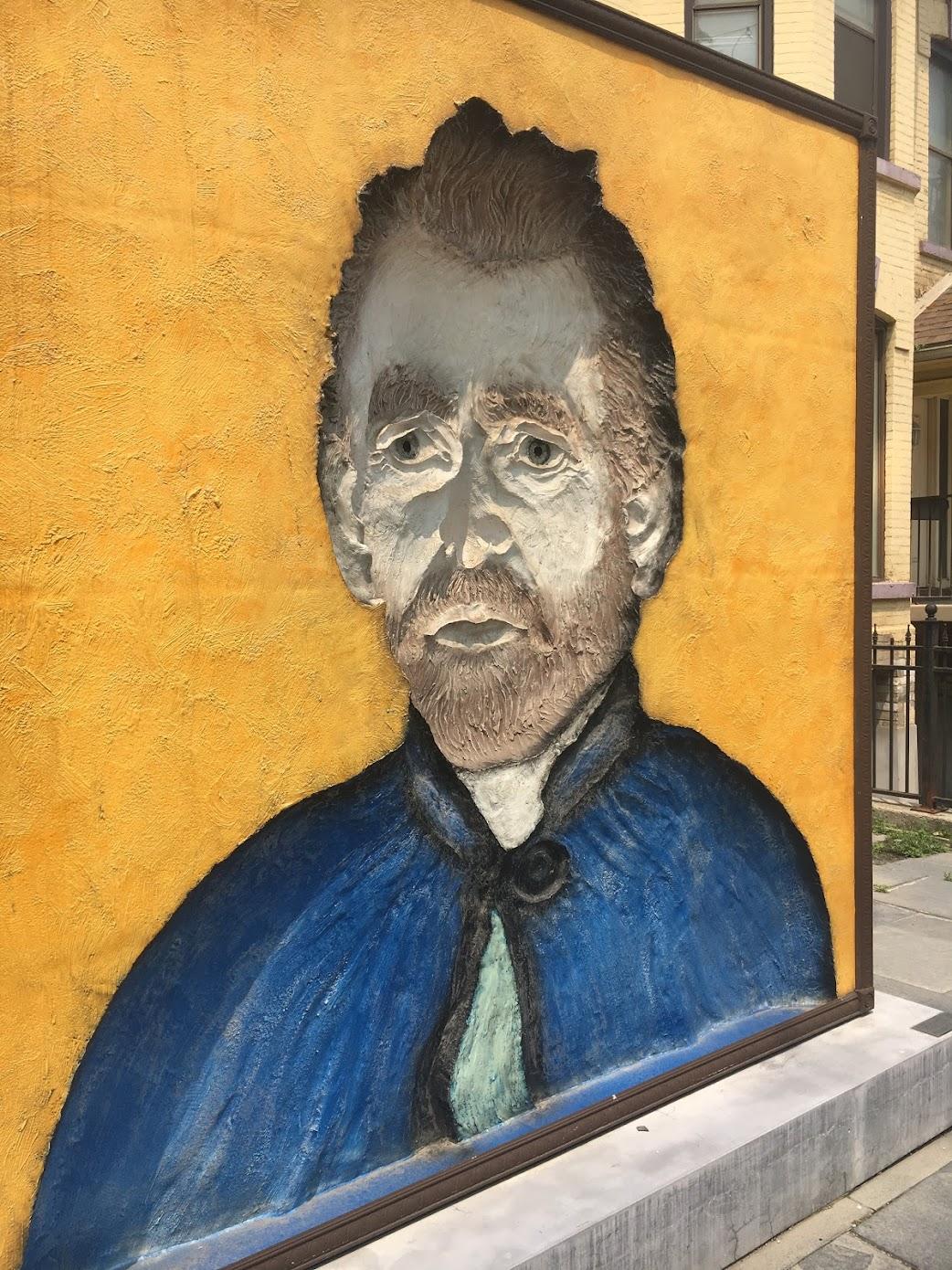
Fascinated, I went up close.
Turns out the part of the face that follows is an indented sculpture, with some paint on it.
This is the only shot I have of this size close up, in an attempt to show you what I mean of an innie sculpture. LOL, I accidentally cut off most of VG’s left ear. Honest, I did not crop!
B O N U S ST R E E T A R T
On my way home yesterday, from another successful Street Art adventure, I looked down at the sidewalk, and there was a spirit of Hera. I think it looks like Hera! Hera is Marina’s sweet puppy dog.




















 Graffiti Lux Art & More
You must be logged in to post a comment.