Poetess Nouveau

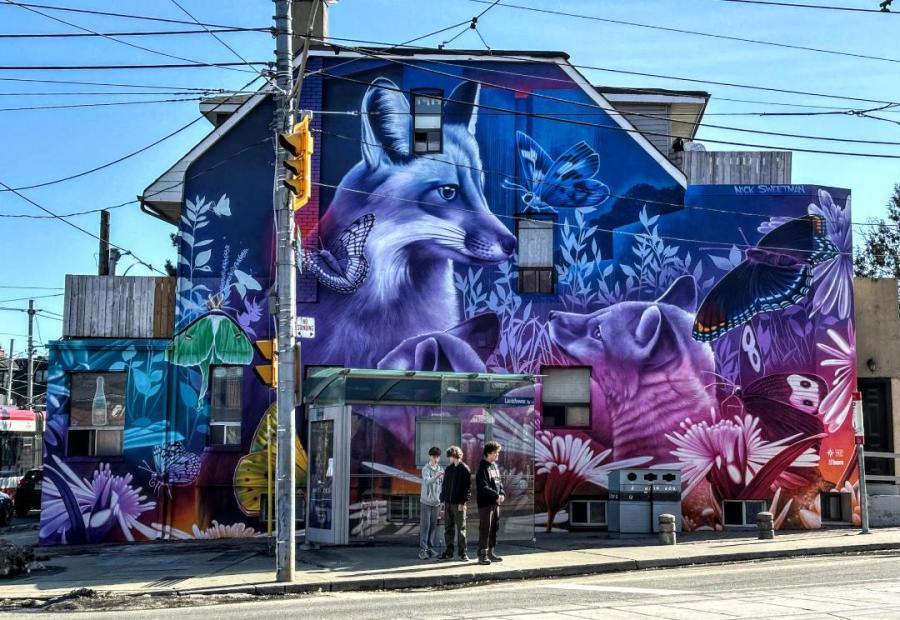
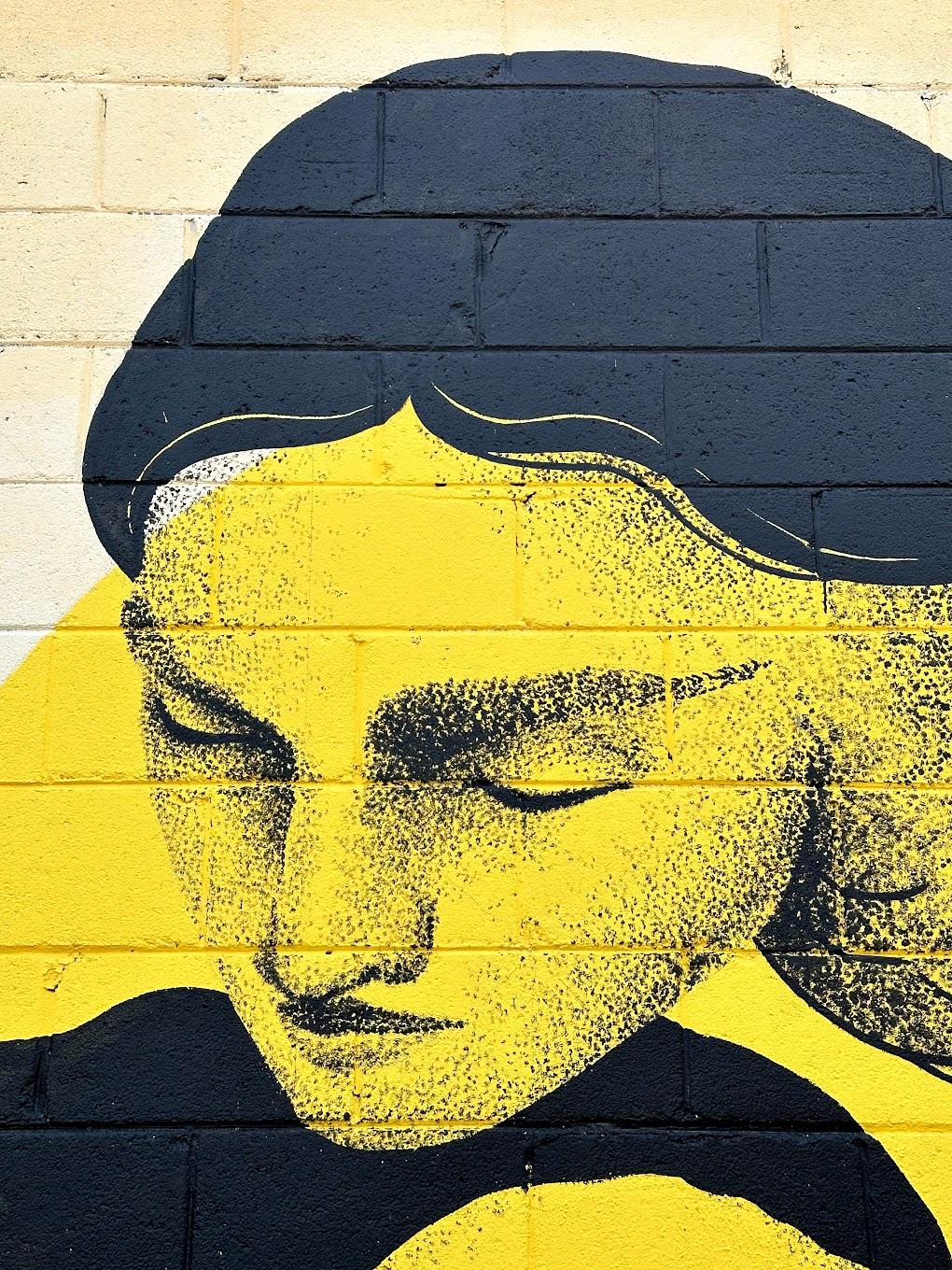
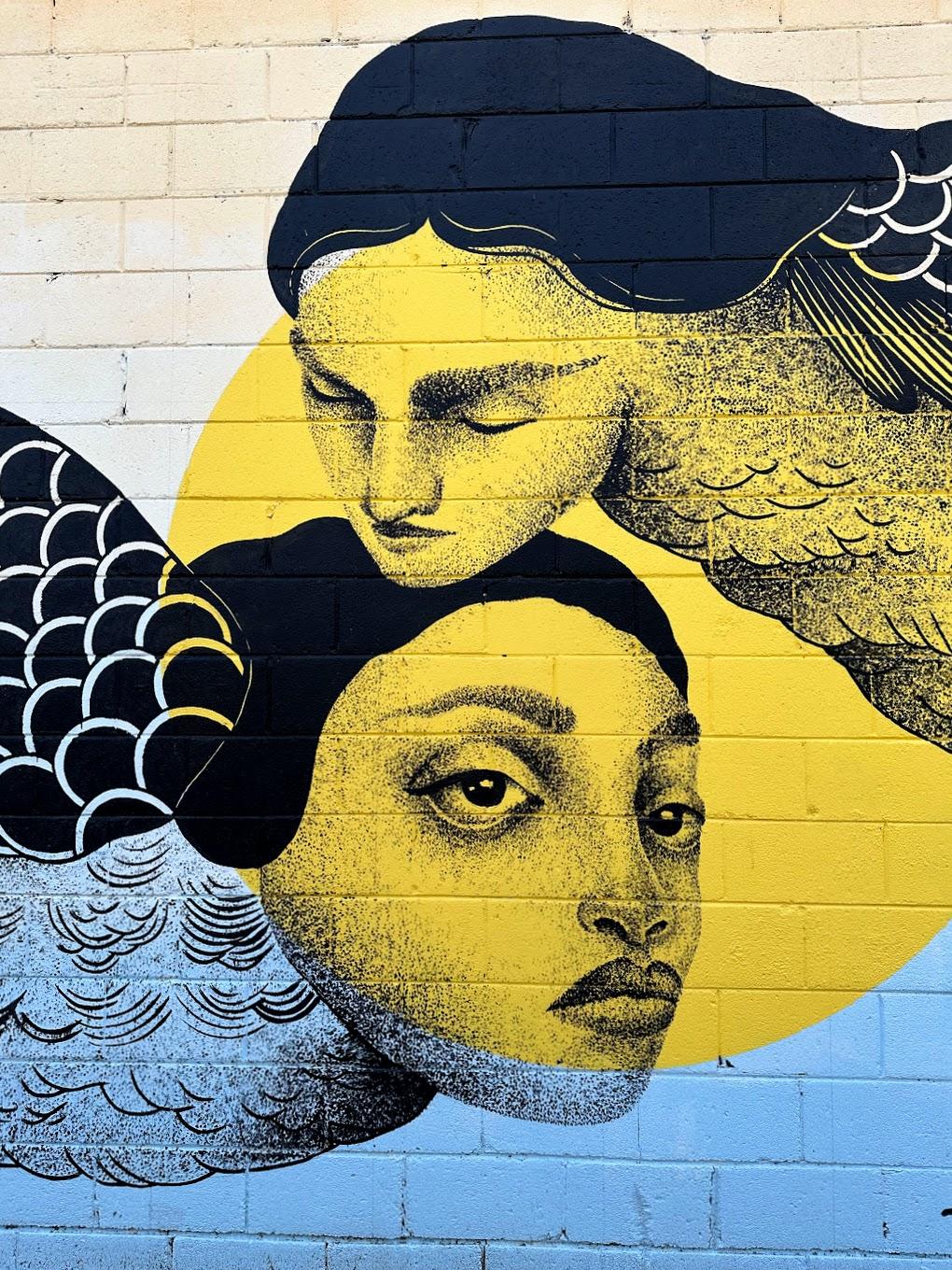
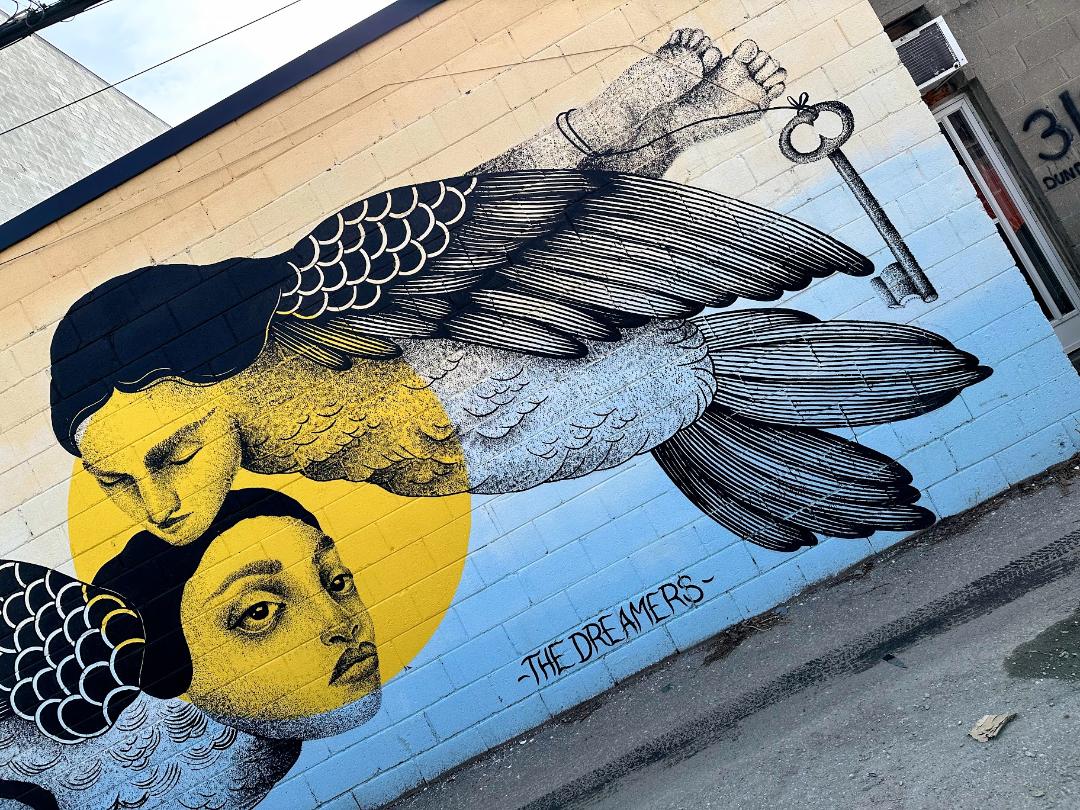
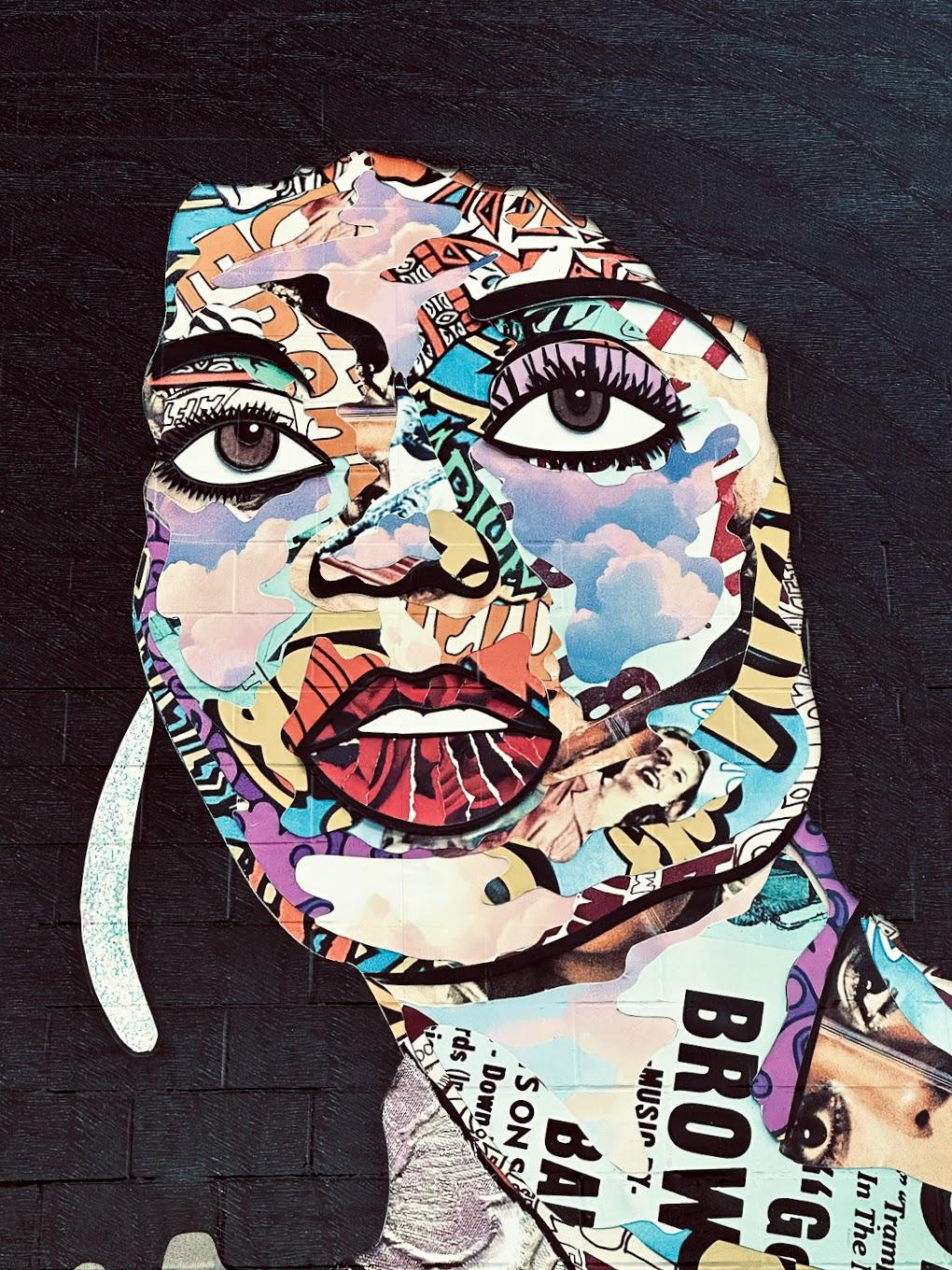
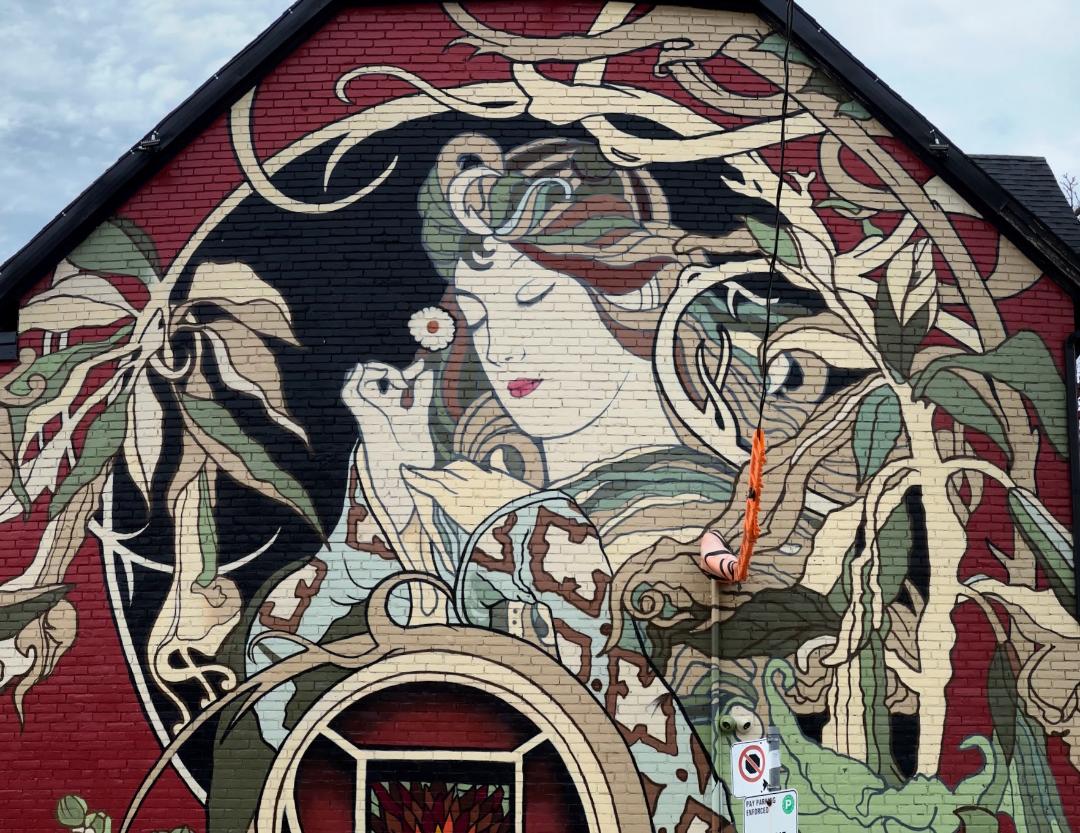
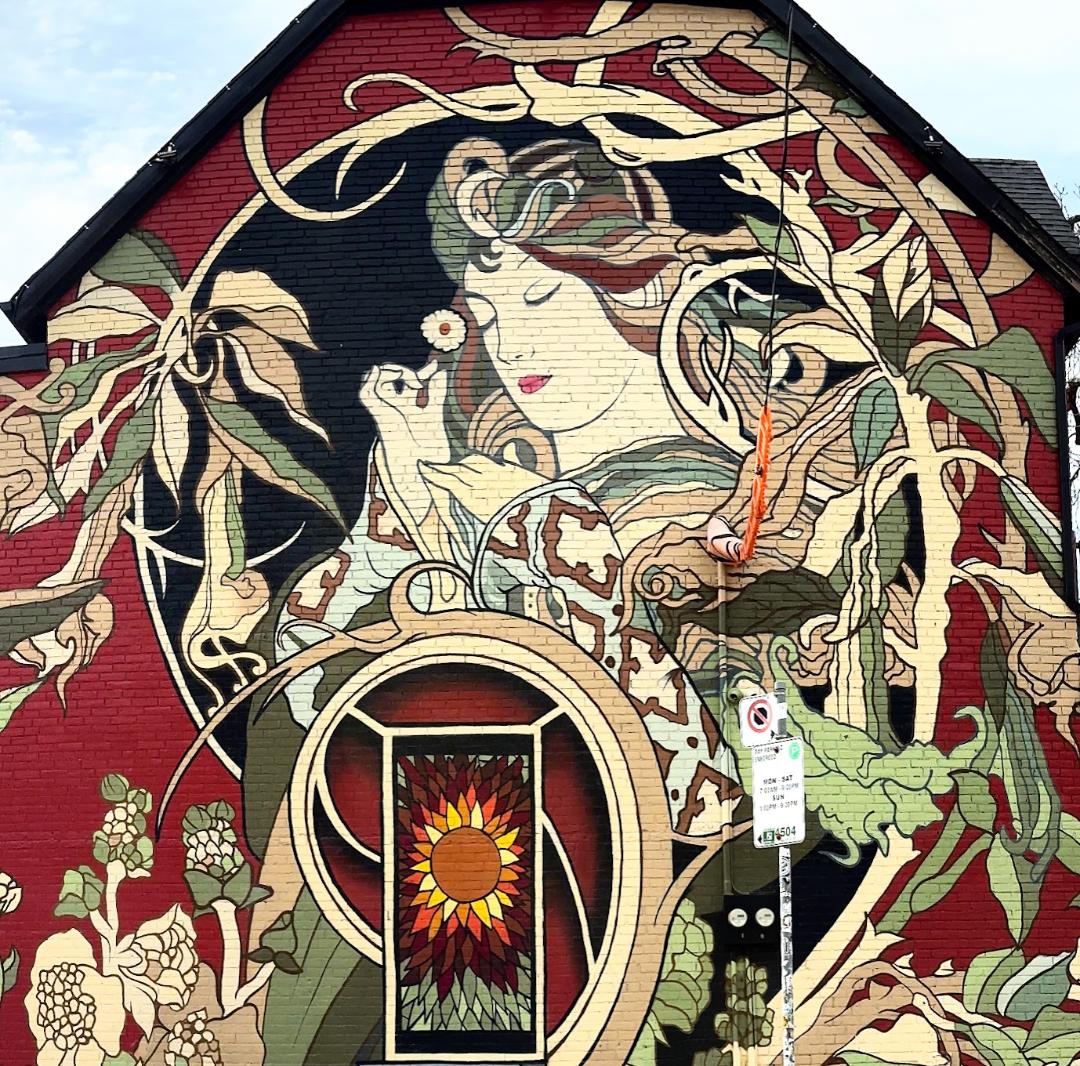
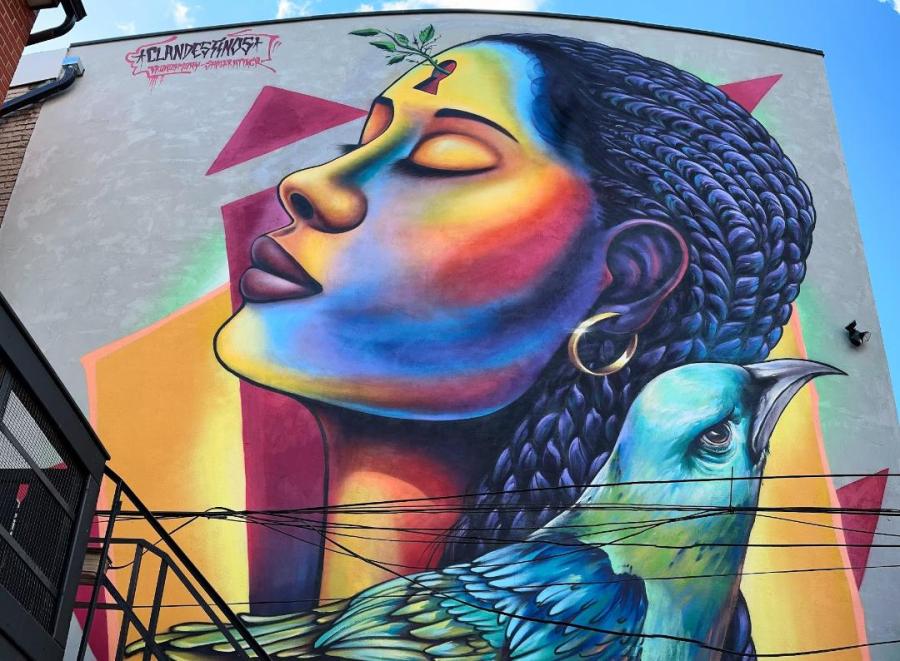
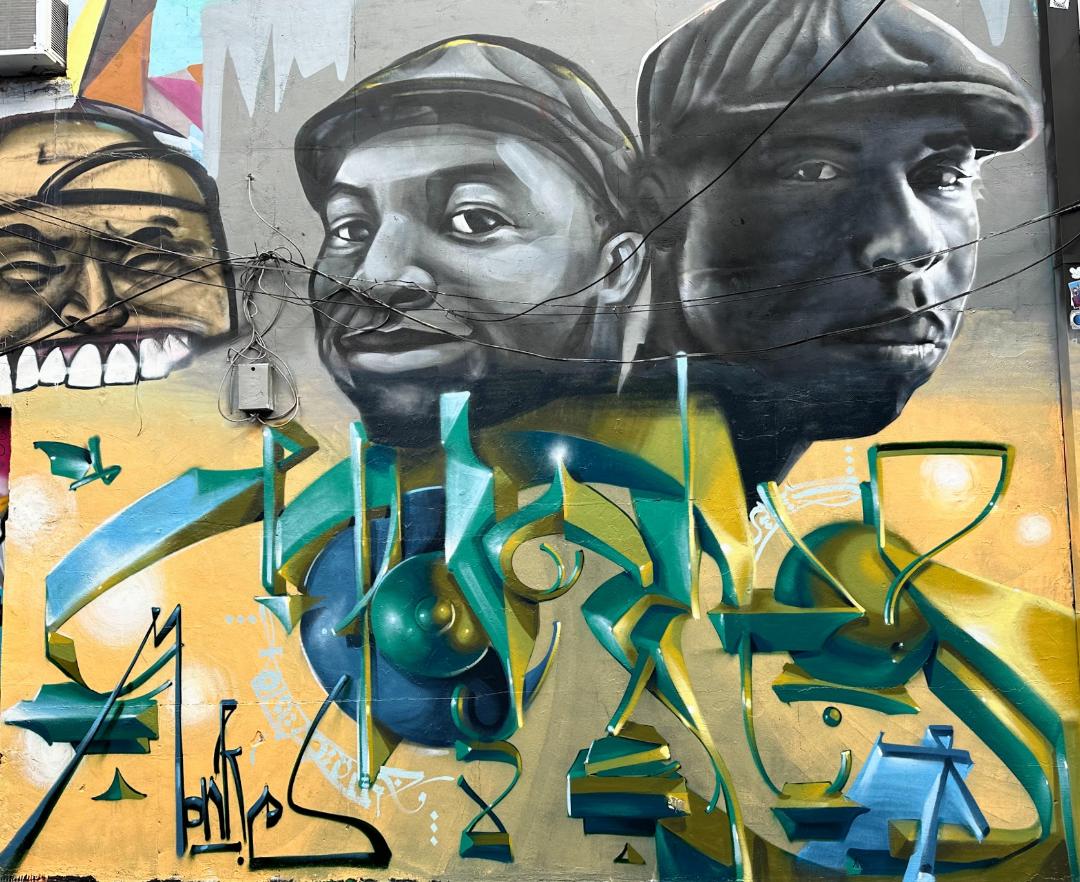
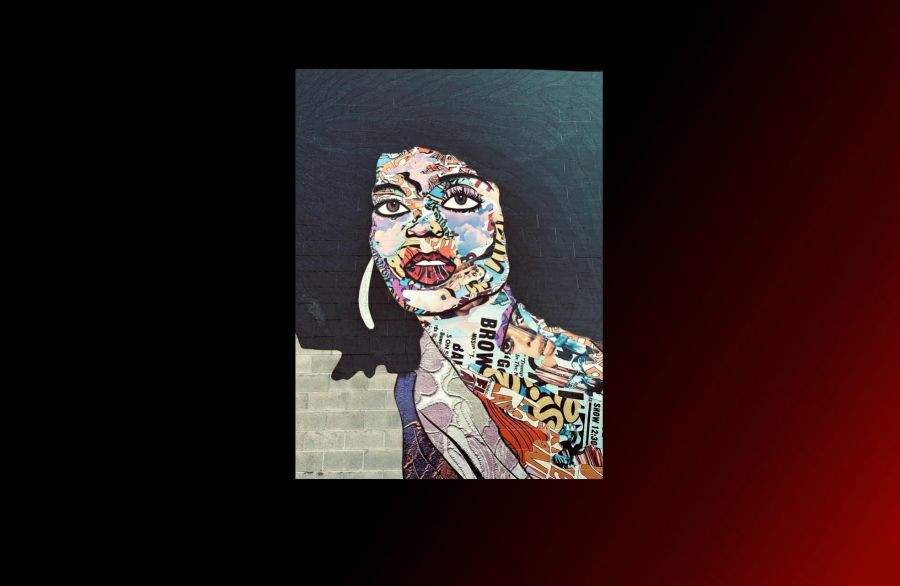
When I laid eyes on this exquisite mural, I immediately thought of poetess Holly – House of Heart.

If you don’t know her bewitching metaphoric prowess, you are missing out!

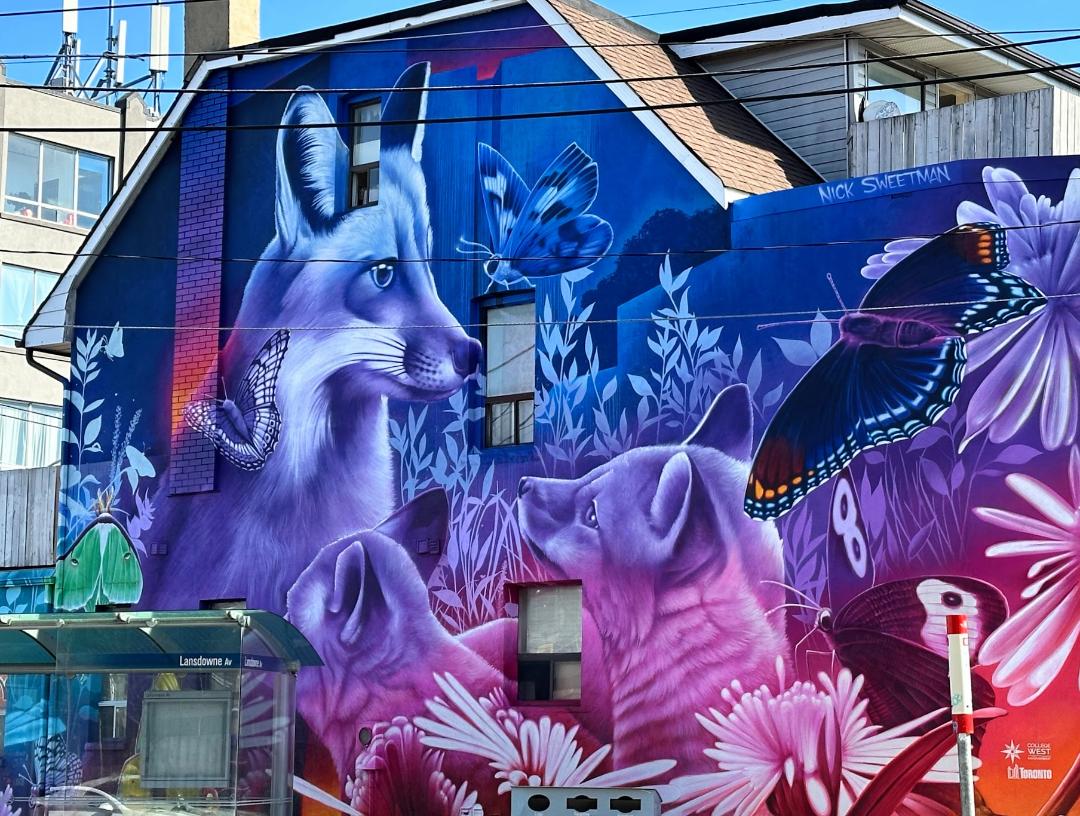
Found in Kensington Market, this remake of Kensington Flower Girl , (posted in 2015) has achieved a much enhanced romantic quality.

The bigger it gets, the better it gets!

Amazing what can be painted on the side of an old house.

A perfect song for this Holly dedicated post is Suzanne by Leonard Cohen, but I have already posted it for her several times.

So, I went behind a door that’s not a door, but a metaphor. This song was there.

No one can stand on a piano and sing like Steve Tyler.

Pics taken by Resa – March 19, 2025

Toronto, Canada

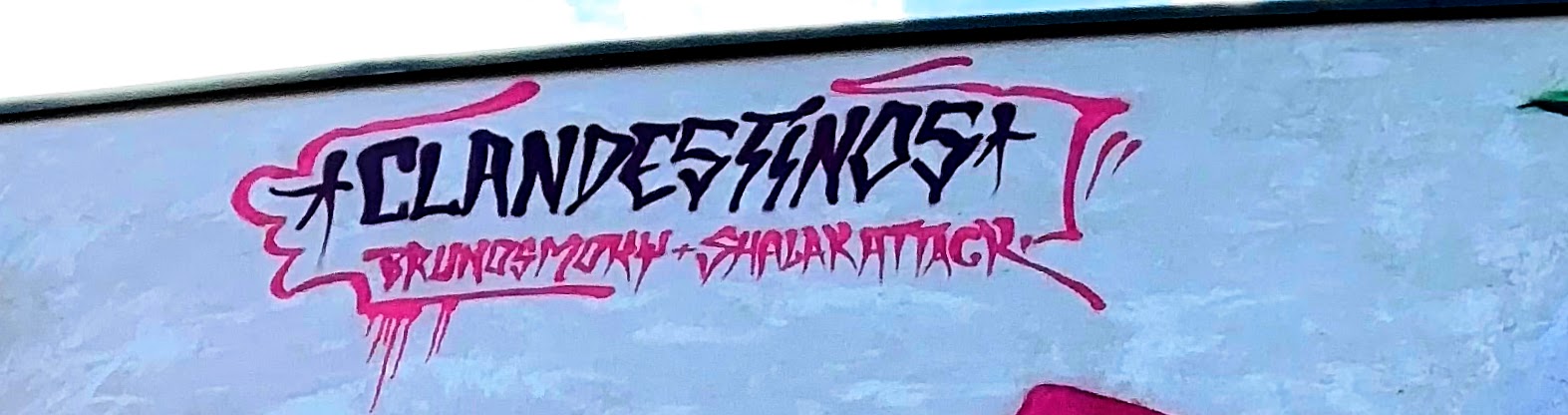
The Artists:

Behind the Wire

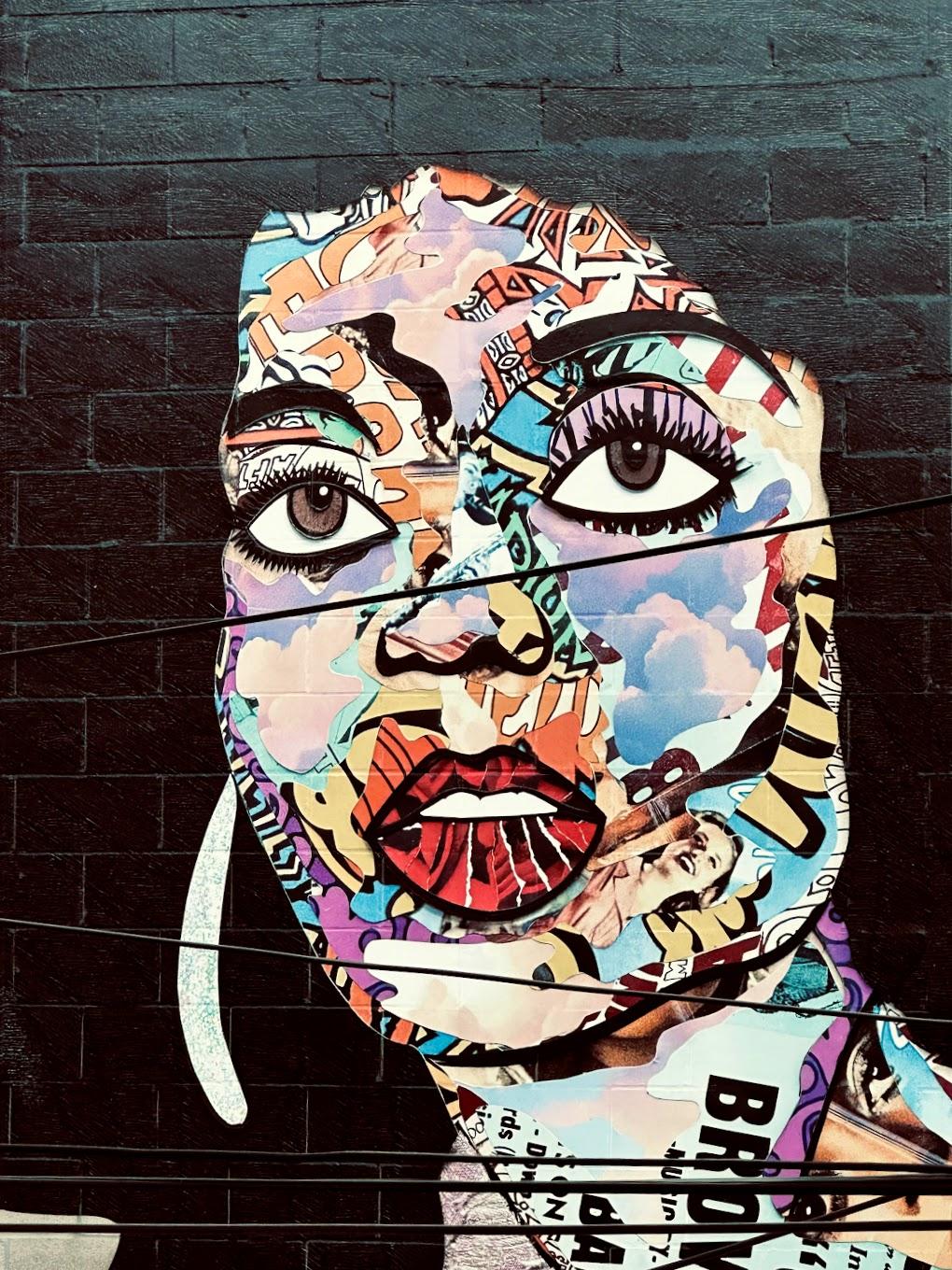
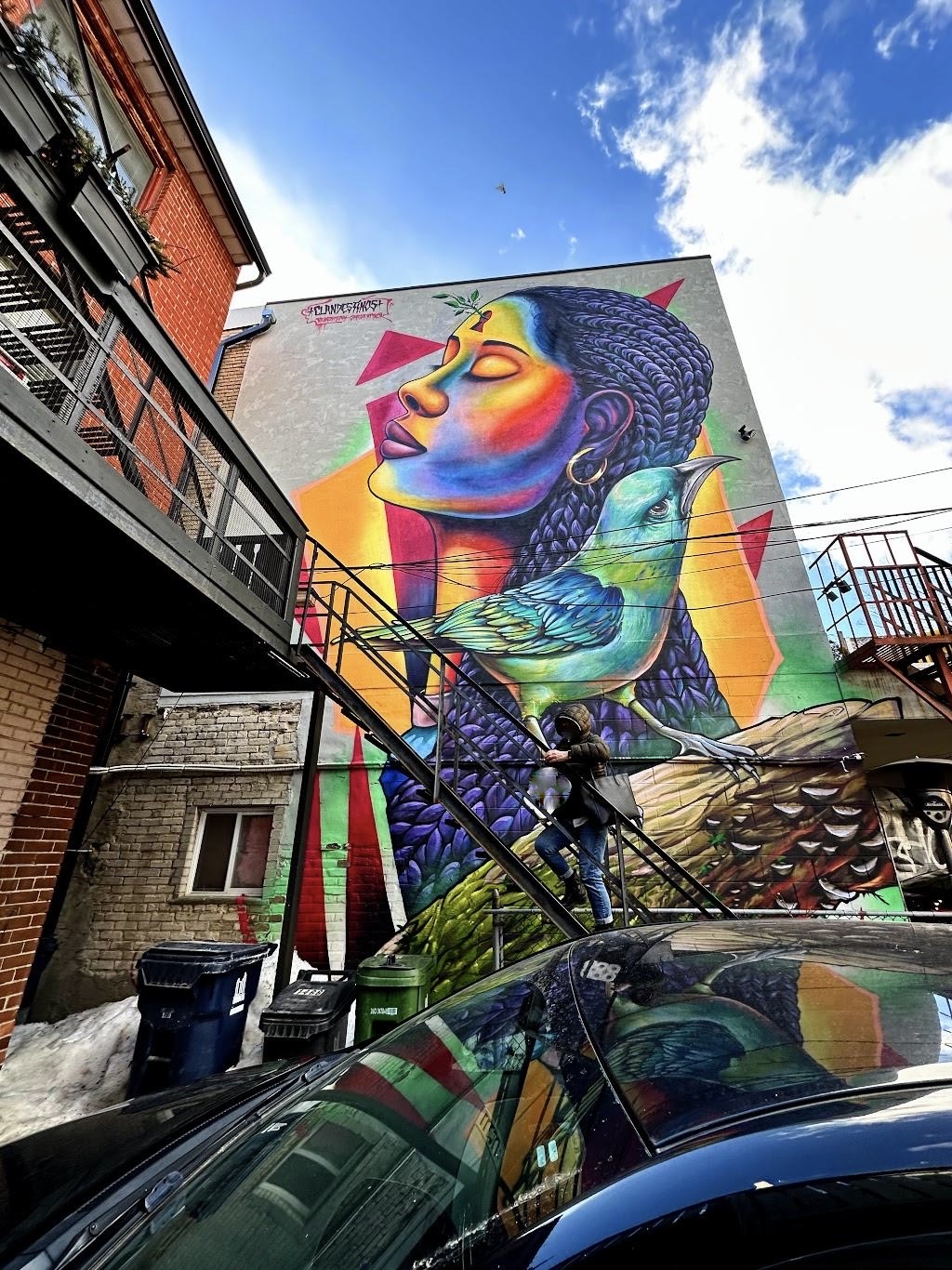
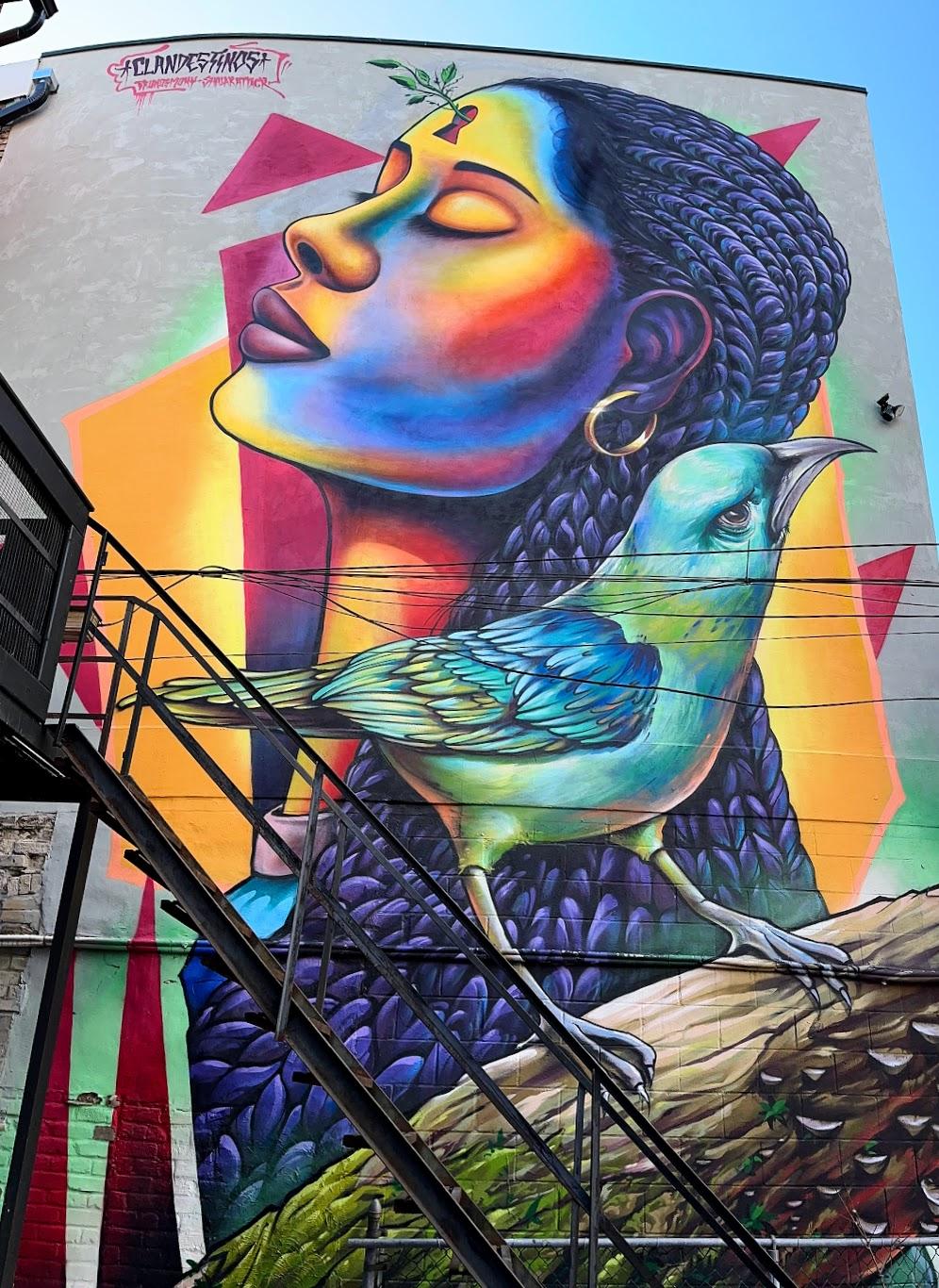
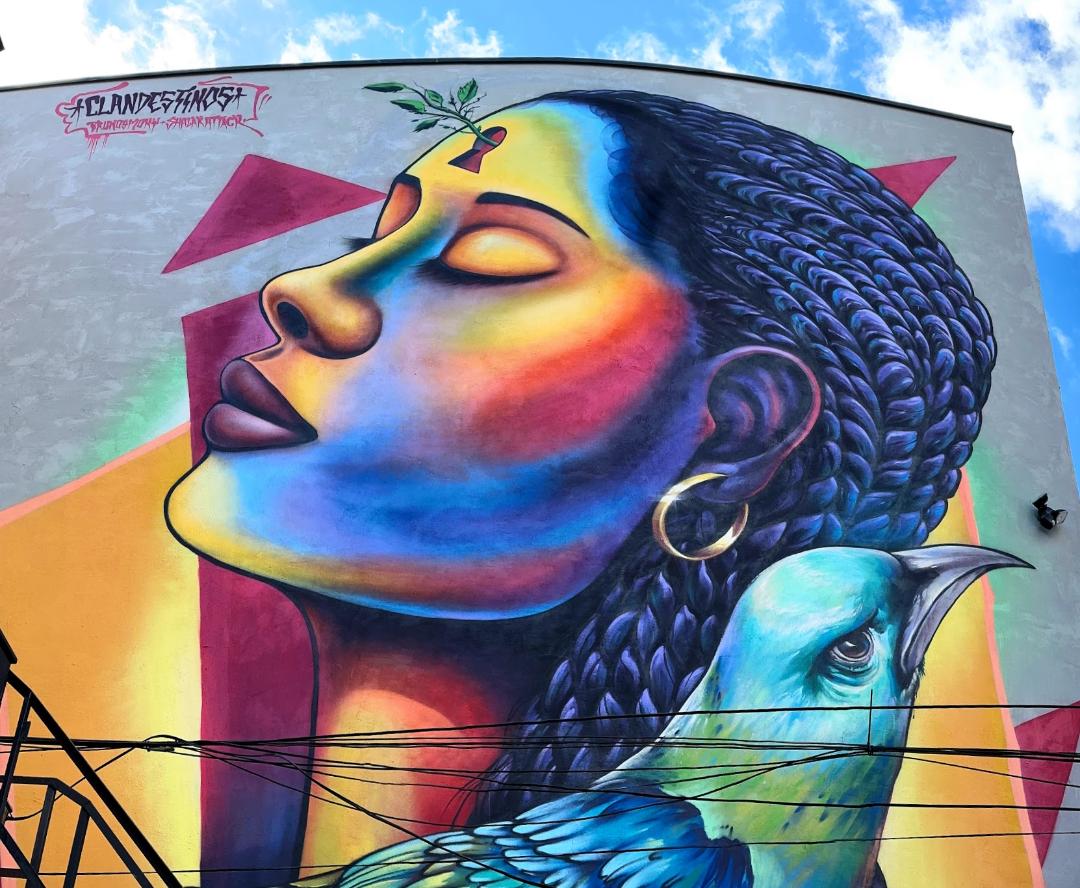
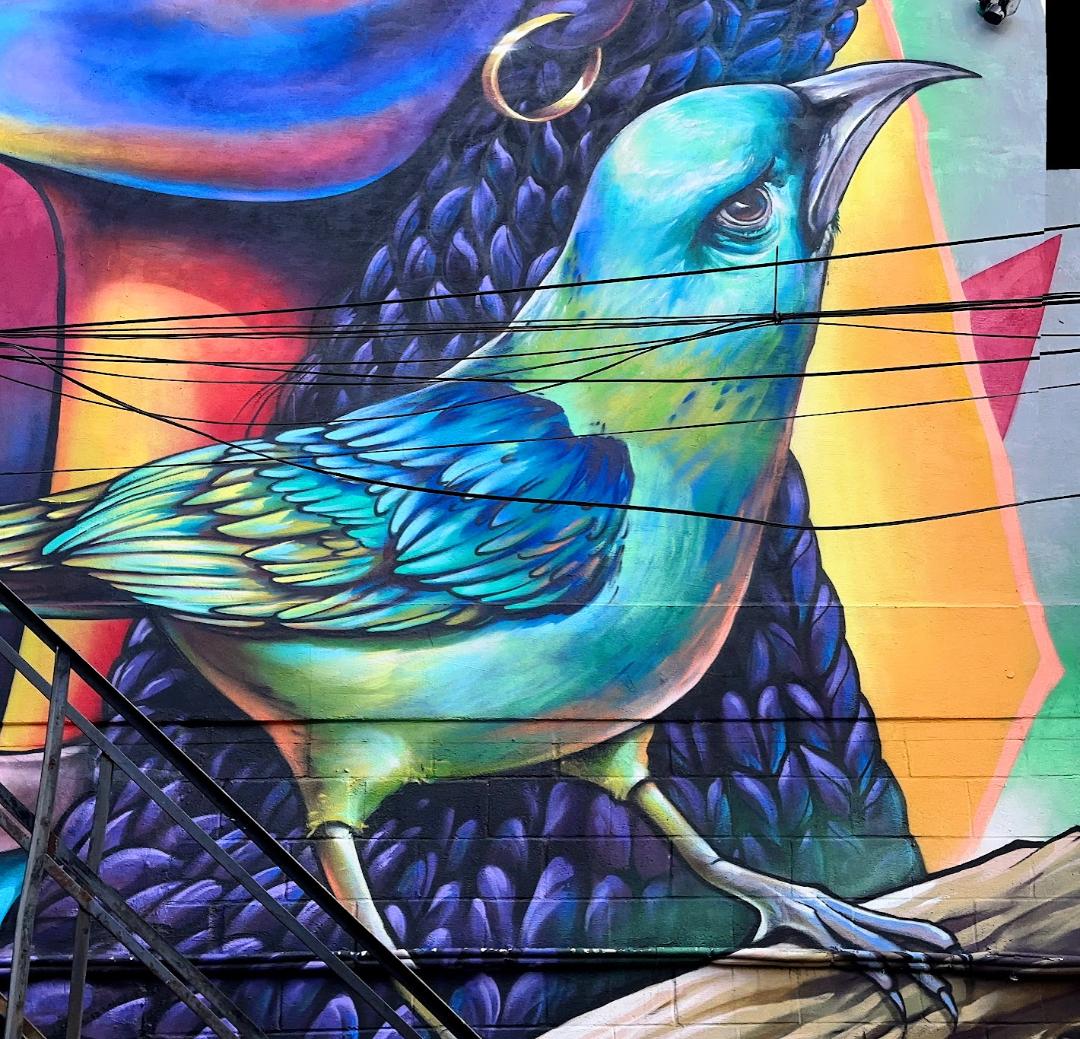
A “Le gasp” moment grabbed me when this fabulous mural appeared in an alley.

Narrow yards, and fences blocking fire escapes that were far enough away to get a great shot without wires, were the bane of this shoot.

Settling into the best spot available, I did my best to capture this magnificent mural.

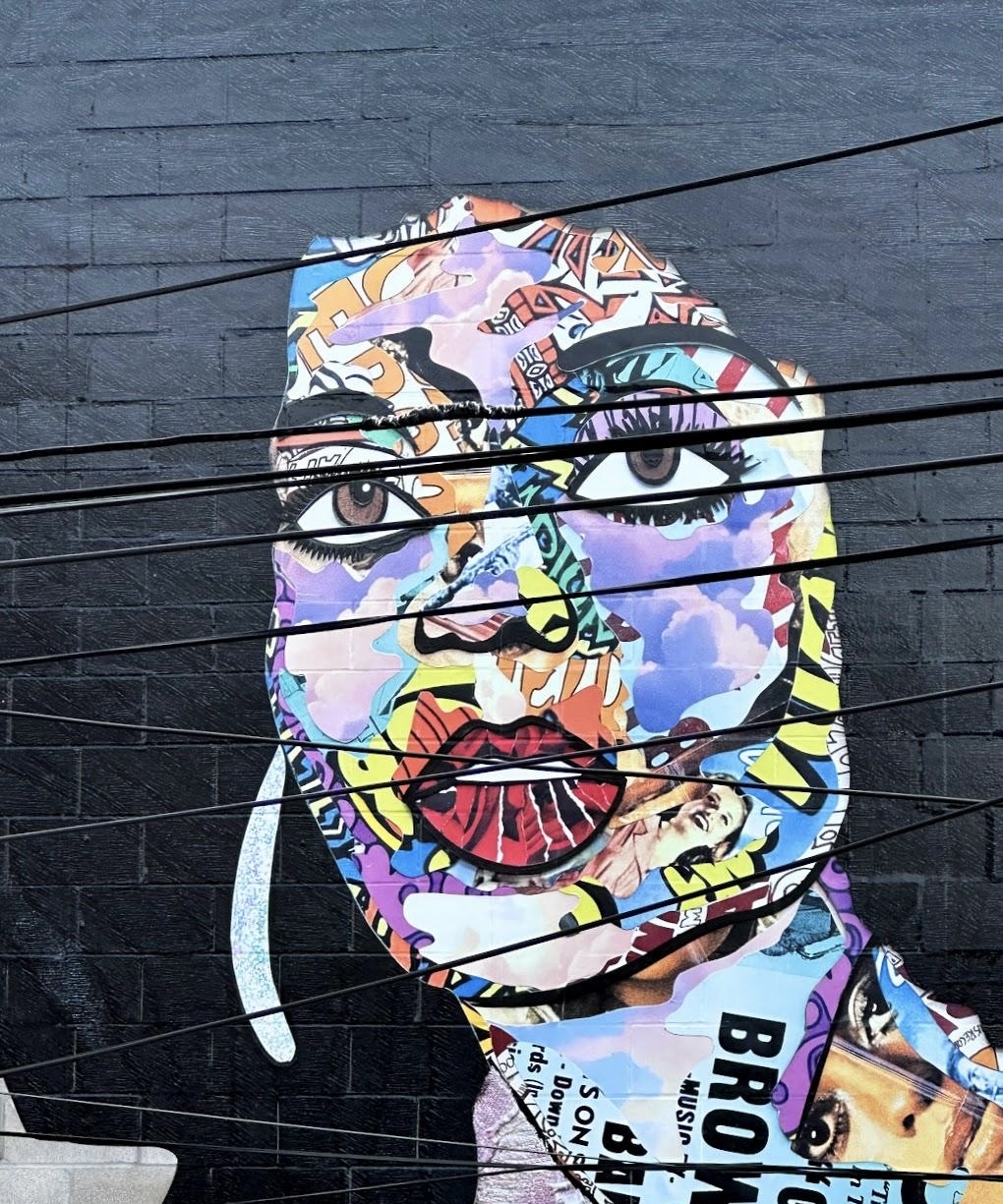
Unable to get rid of the wire, I kept thinking “it’s behind the wire. Isn’t “Behind the Wire”a term?

It means being in a prison camp or refugee camp. Or, it’s about how institutions/governments have an effect on individuals.

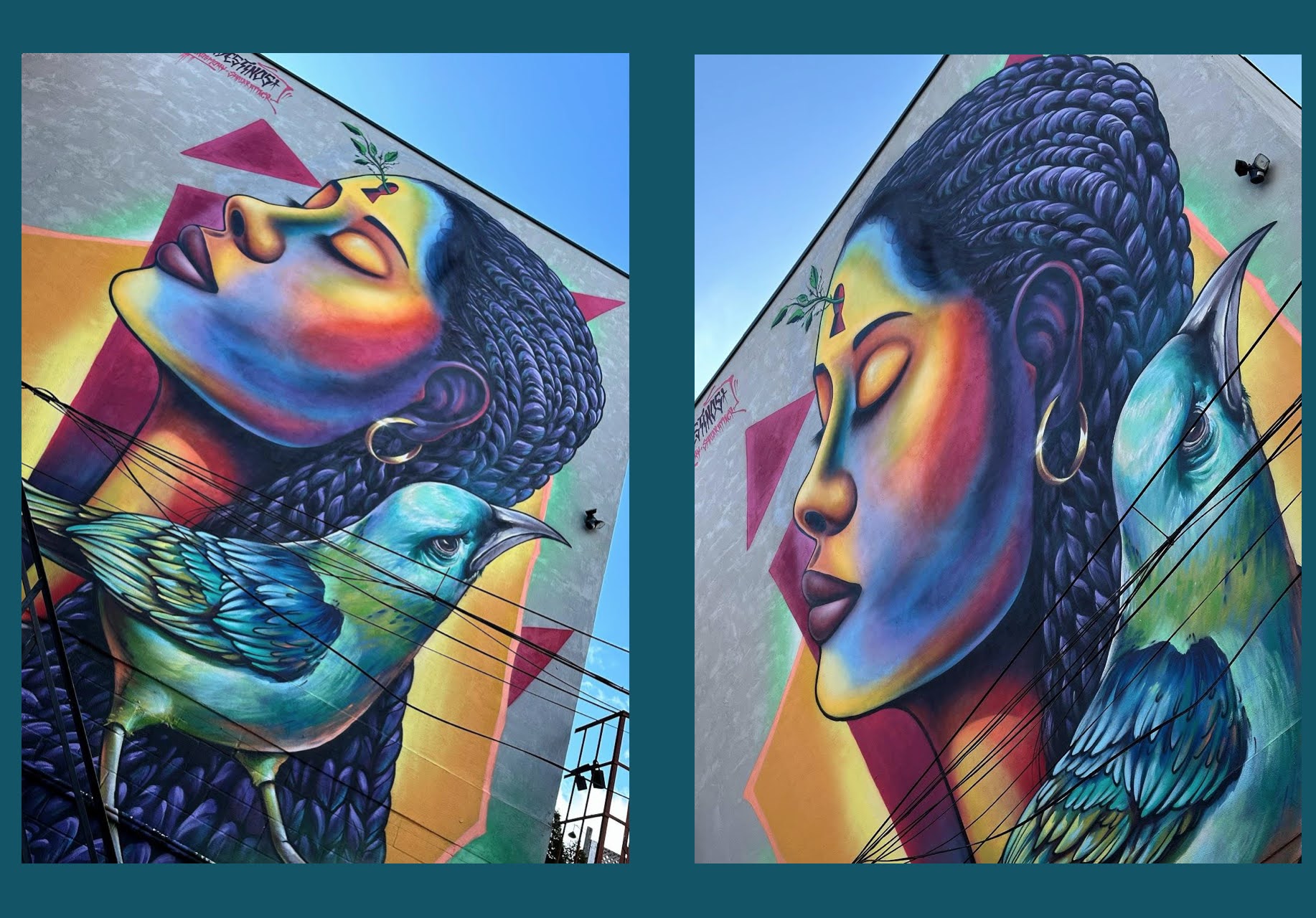
I was intrigued by the lock and twig key in the woman’s forehead. Lots of meaning there.

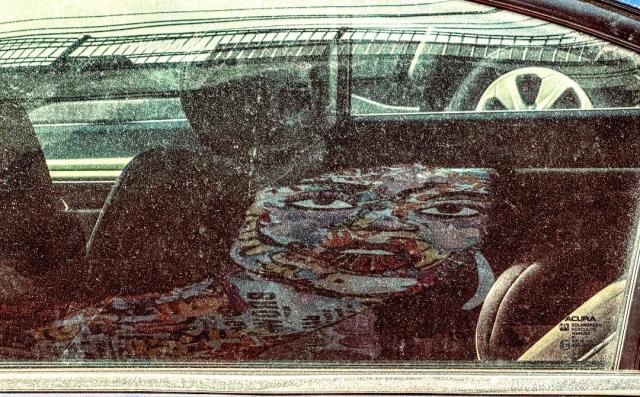
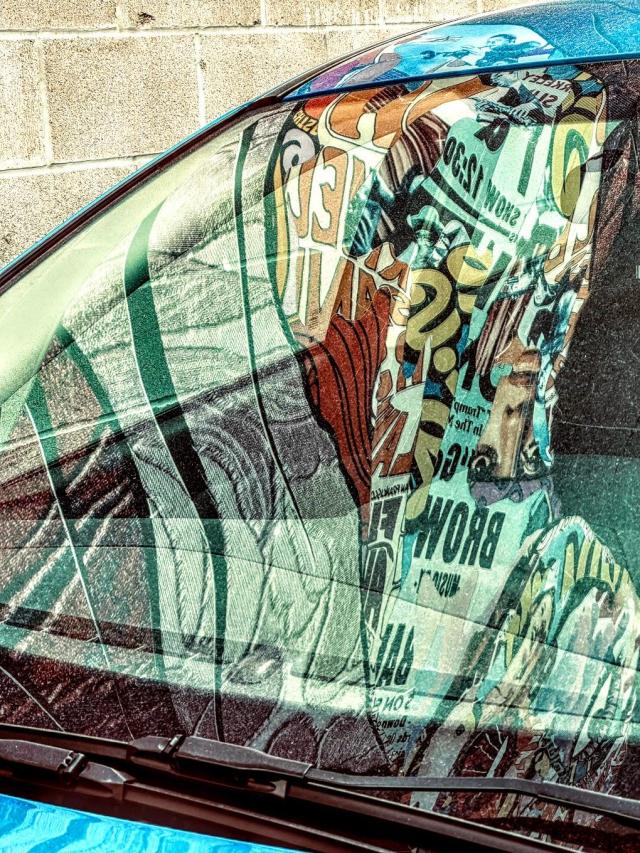
Anyway, I tried capturing angles, and of course reflections in a parked car. Got 3 good ones, in the slideshow below.

Reminder – If you park your car by art, make sure the car is clean!

Pics taken by Resa – March 7, 2025

Toronto, Canada

The Artists:

Abstract Feelings

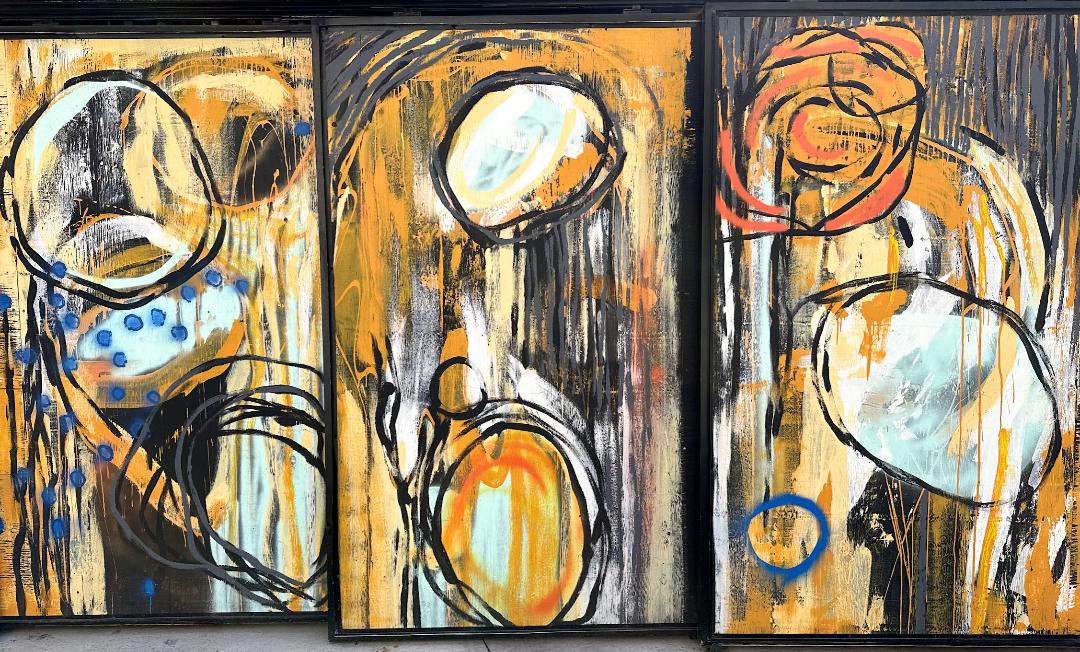
Abstract is the best word I can come up with to describe how I feel these days.

Graffiti Alley

Might as well show off some of the abstract art I’ve collected. A definition is as follows:

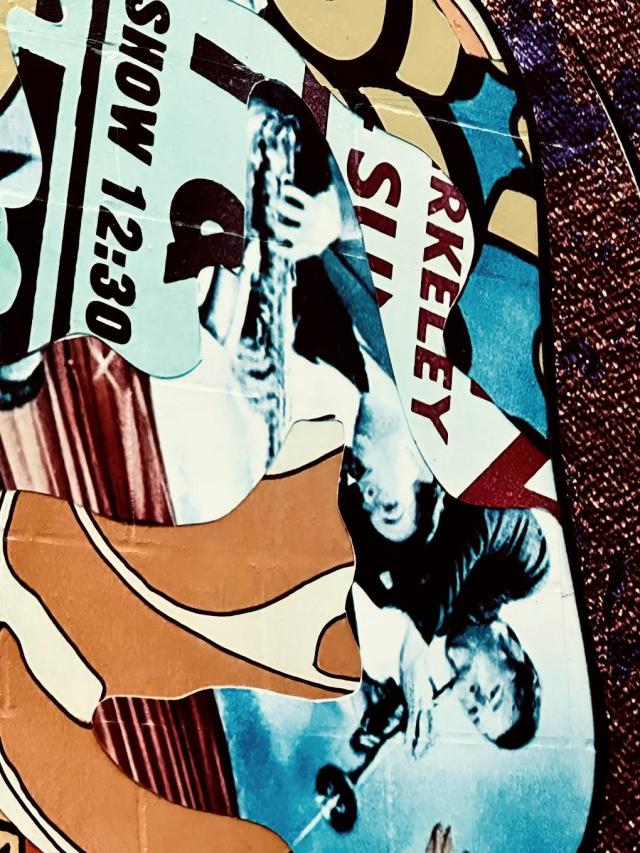
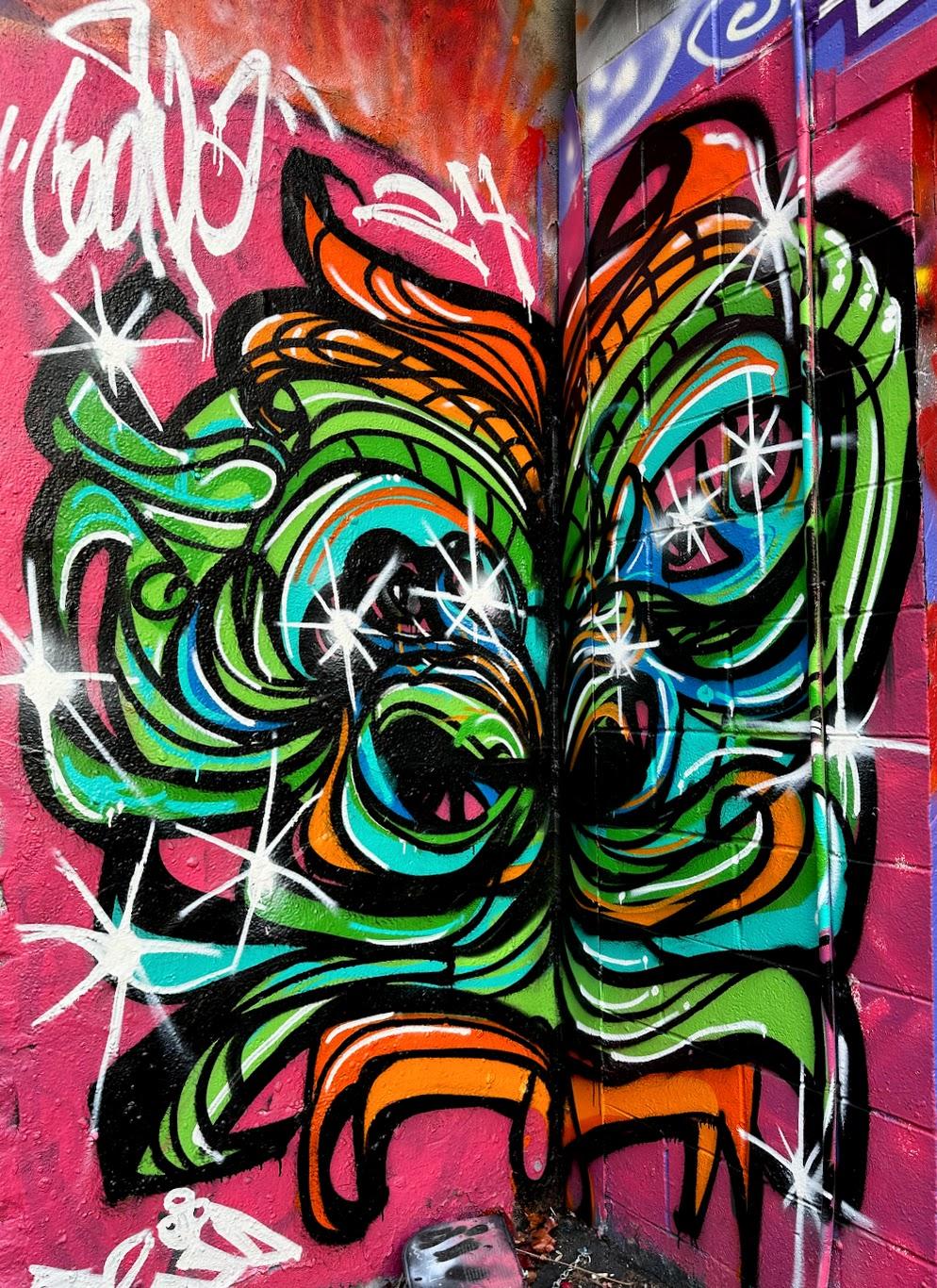
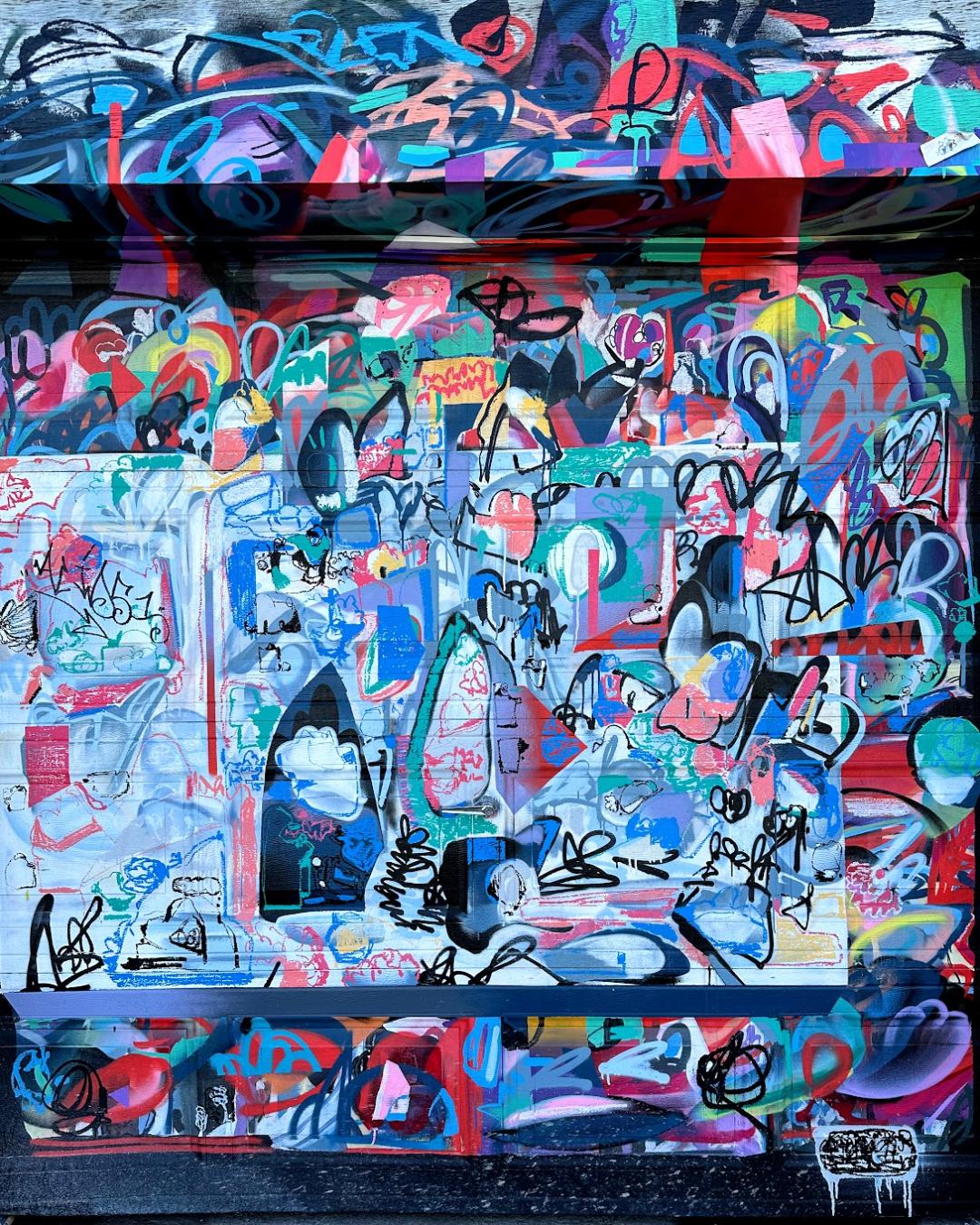
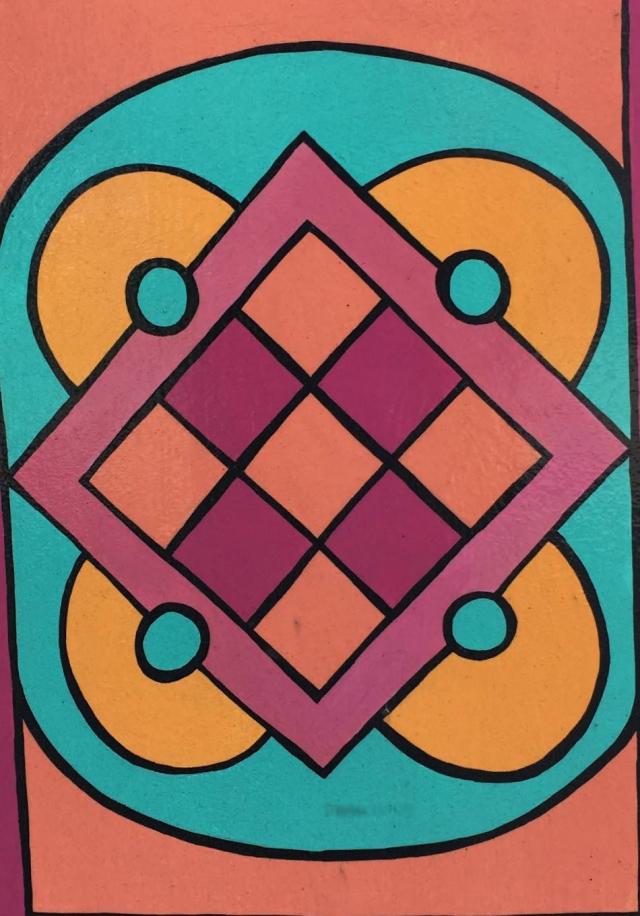
For some reason, this piece called out.

I think it has something to do with the centre sort of 3D geometric breast/shield shape.

As you can see it was painted over other art. The abstract artist allowed some of the previous art to remain.

Chuckling about the teeth (old art) chewing on. the new art.

Alley Gallery

Graffiti Alley isn’t the only alley with art in Toronto. These are from alleys near my home.

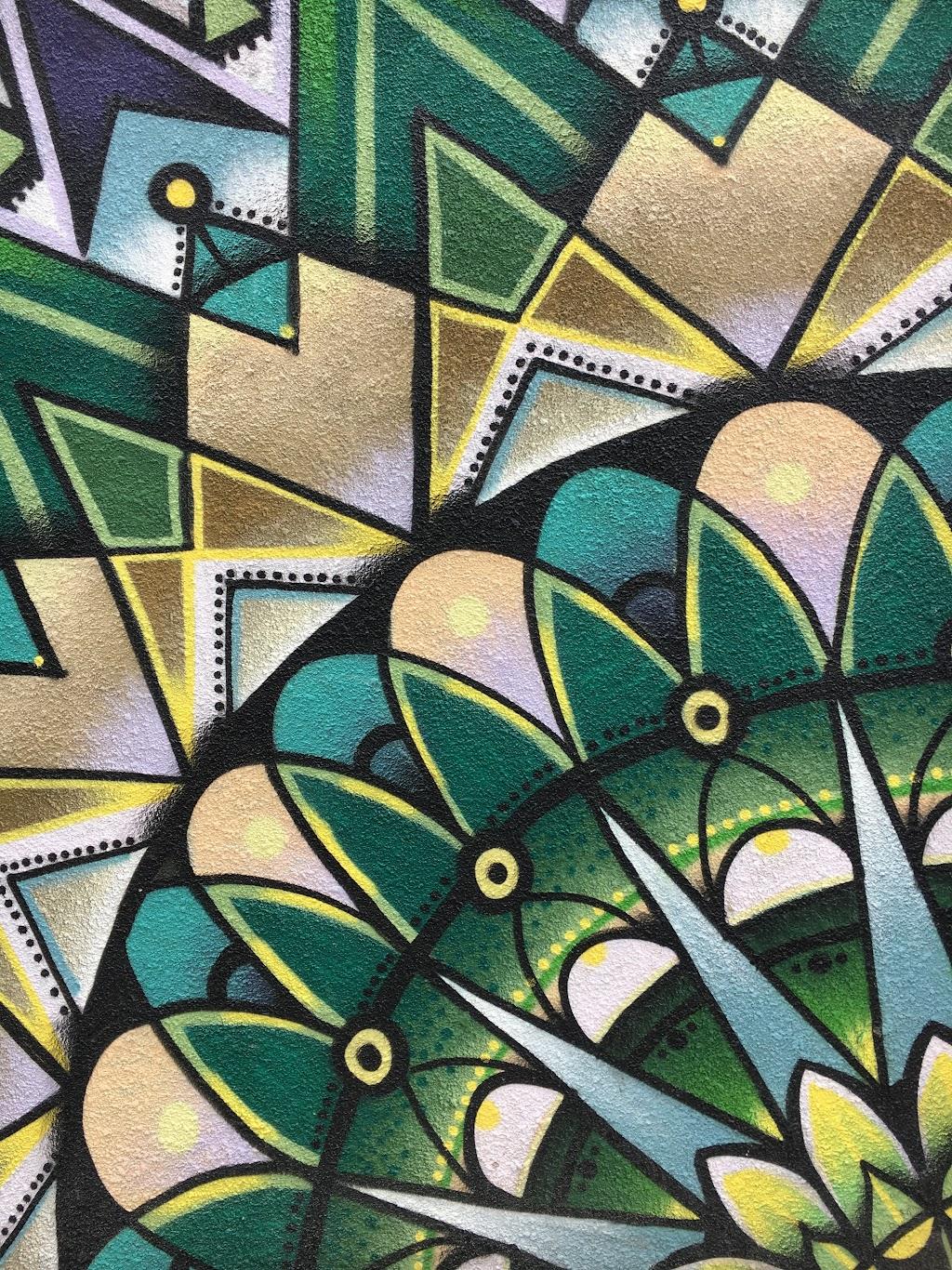
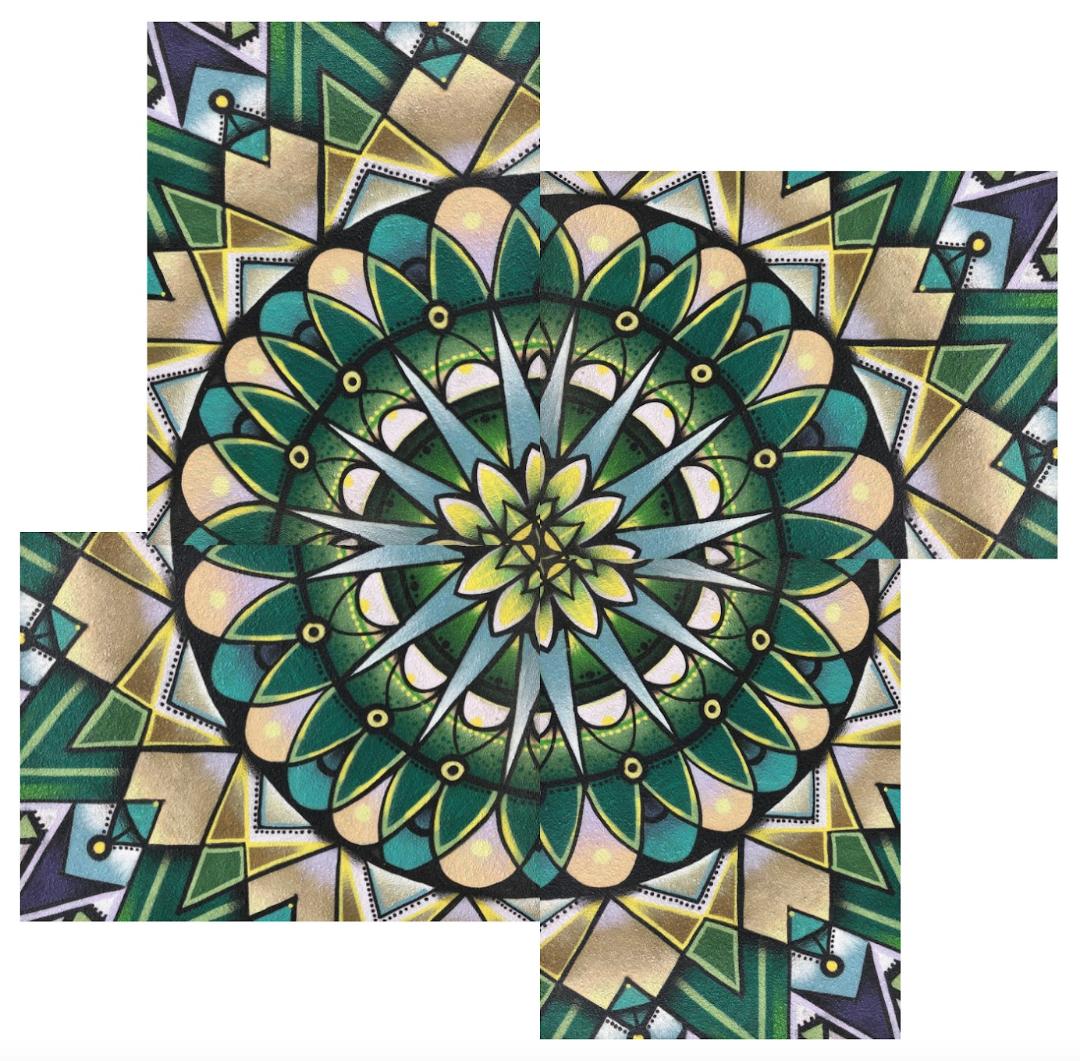
Since first sighting of the wedge below, Graham at Mandala Vihara came to mind.

So, using the rotation feature, I made 4 sides to form a mandala. Only perfect is perfect. This is the best I could do with imperfect.

BY THE WAY: Tiffany Arpdaleo Is an abstract artist I follow on WP. Her art is fabulous.

Below – A car reflects wall art.

This alley fence I pass at least once a week was painted 2 years ago. I took the pic back then. The colours are still holding out.

Garage Doors

A bit further away, but within a 3 hour there and back walk:

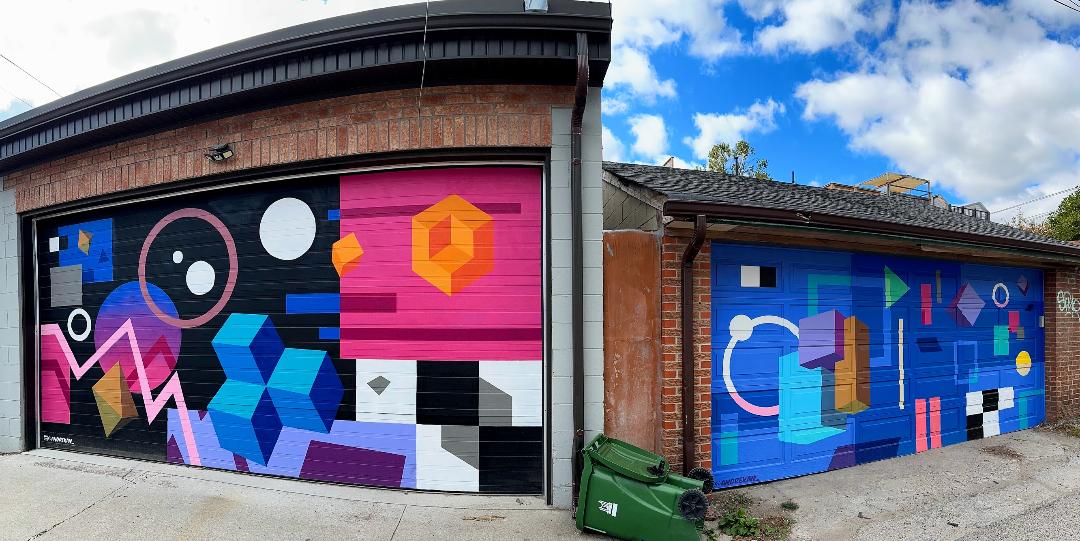
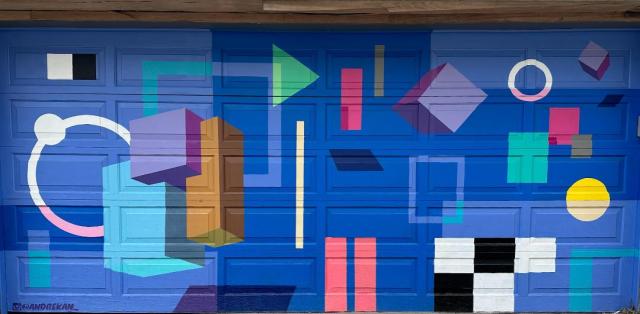
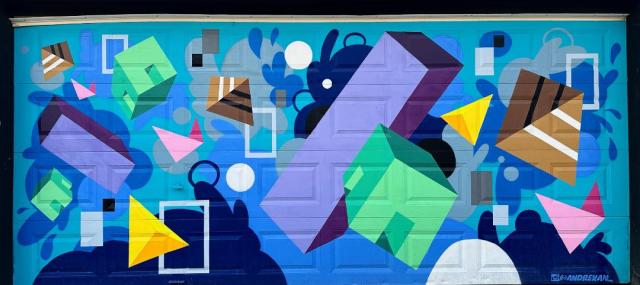
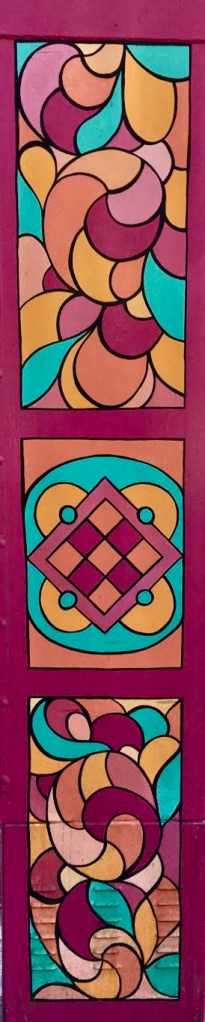
This garage door in 3, parts, makes a cool triptych. A resident came home & parked her car. It was cool how the doors opened. The 3 pieces are featured individually in the slideshow below.

Same artist as the fence at the end of Alley Gallery. There were 4 in 1 alley – in the slideshow.

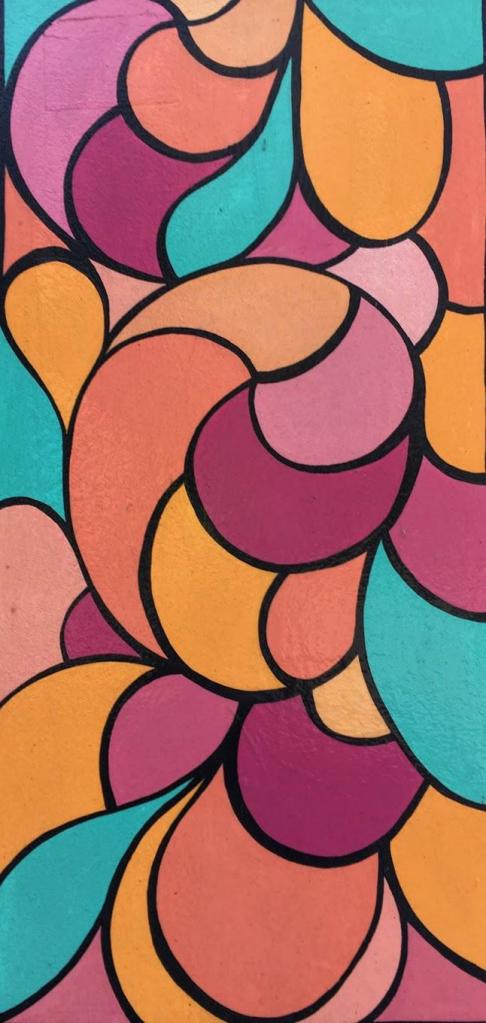
The below artist’s work is popular in the alleys.

This is an old rotting wood garage door. Yay for art!

On the Street

Not swung out at first sight, but it’s grown on me.

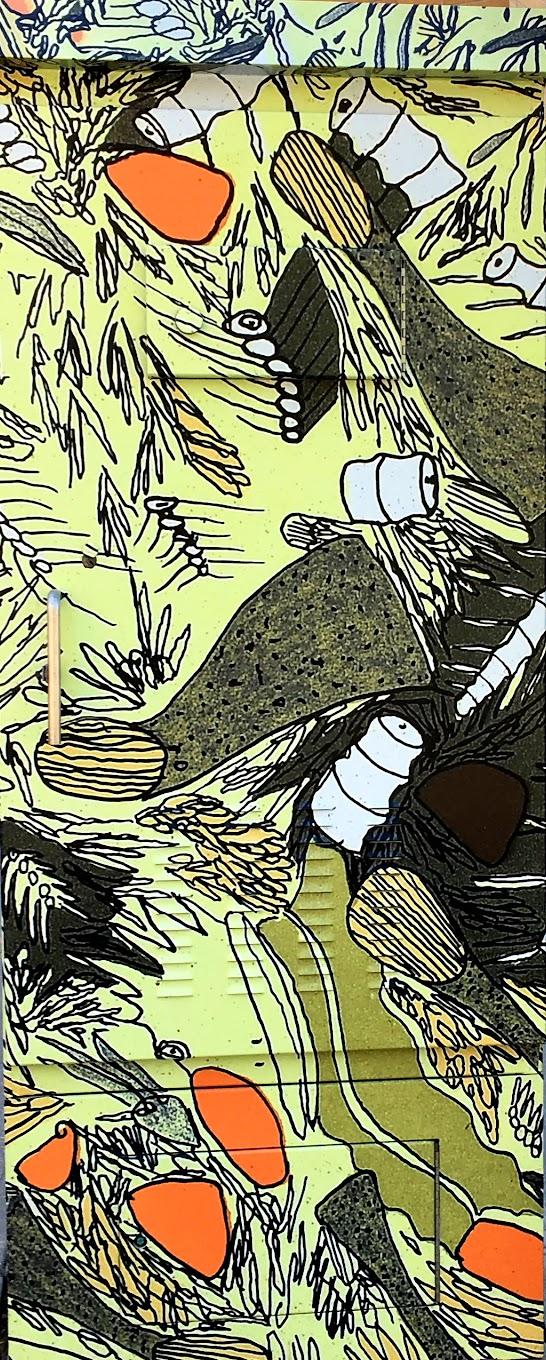
Boxes

I’ve been somewhat neglectful of taking pics of power boxes and Bell boxes. Most are abstract. Pulling my socks up as of NOW!

Below- Tags piled on tags. I’m quite fond of the accidental abstract this non art, art form randomly creates. Still, it defies the definition, which makes me like it even better. Think I’ll call it Rebel Art.

Pics taken by Resa – 2022 – 2025

Toronto, Canada

Some of the Artists:

Funky Town

feat. Lipps

It took several trips to get this piece.

The first time it was like- YAY fresh graf! Then it was what the….?

There were 2 separate metal grill works, no idea what they are for, covering the art. You can see in the pic, I tried to slide one over. It was dead heavy, and the bit you see took me about 5 minutes of grunt work to slide.

I couldn’t just plop it to the ground, as there was a car parked.

Obsessed, I returned every several days, until there were no parked cars. The grills were still there, so I plopped them to the ground.

Jailed – Free

The art had been freed from its jail!

I returned the grills to the upright position prior to departing.

Jailed Reflection

Pics taken by Resa – October 15 & 28, 2024

Toronto, Canada

The Artist:

Graffiti Alley is my Funky Town.

While the Bombs Fell & Art & African Animals

by: Robbie Cheadle

Robbie Cheadle/aka Roberta Eaton Cheadle was at it before, and she’s still at it . Her mission, as far as I can tell, is to draw attention to critical realities with her creative prowess.

Although an earlier book by Robbie (published 2018), I have just read it recently. Well penned by Robbie via her mother’s memories, this book opened my mind’s eye.

ResaHow/when did the 2 of you decide to write this book?

Robbie – My mother has always told me stories about her life as a child growing up during, and after, WW2. There was food rationing and life was hard. The schools had bomb shelters and you had to go into them if the sirens went off.

My mom was young but her older siblings talked about it, as did her parents who lived through two world wars. I decided to write down mom’s memories and she was pleased. It was as simple as that. Mom had quite a bit to do with the book as she read each chapter and gave me changes if I took to much poetic license. It was a fun exercise and I learned a lot more about her childhood during this time.

ResaWhen and/or why did she leave UK for South Africa?

Robbie, aged 9 months, on the deck of the passenger liner that brought her from the UK to South Africa.

Robbie – My mom left the UK for South Africa after my biological father died of a massive heart attack in front of her. I was three months old at the time. We came to South Africa on a passenger liner when I was nine months old. Amazingly, I recently wrote a poem about it.

(The poem was a response to a writing prompt, reblogged below.)

Allow me to digress momentarily to say how happy I am that Robbie wound up in S. Africa, with the animals and loving them. This is her new painting of a leopard, inspired from her recent trip to Sabi Sands.

© Roberta Eaton Cheadle

ResaWhen writing While the Bombs Fell, did the memories come with fond or sad feelings. Perhaps bittersweet?

Robbie – I think the memories about mom’s father and mother are bittersweet. Mom had a free and interesting childhood despite the food shortages. Children could roam around, usually in large packs of mixed ages, and they went swimming, took long walks, climbed trees. I think mom’s childhood was lovely, much nicer than my own children’s as crime and traffic have curtailed freedoms where I live. 

Mom’s father died of appendicitis when she was sixteen. It was quite horrific as his appendix burst and he died of blood poisoning. Mom said she went to visit him in the hospital in Norwich just before he died. He looked so awful she ran away and went home. Her mother died of a heart attack induced by high blood pressure in her early seventies. My mother gave birth to my youngest sister just after her mom died. My aunt didn’t tell her about the death for some time as she didn’t want to upset her post-partum. 

ResaI seem to remember you saying you wrote While the Bombs Fell to help children today to understand about war. Am I correct?

Robbie – Yes, that is correct. Young people are very removed from nature and the realities of life. They spend a significant amount of time in imaginary worlds on-line. I believe that understanding history is important to prevent repetition of the same mistakes. The teaching of history in schools has become very selective now, so I wrote this book to present a civilian child’s perspective of growing up during a world war. Admittedly, it feels as if everyone, including the politicians, have forgotten our collective history currently.

(To the left are 2 of Robbie’s many children’s books, some co-authored with her son, Michael.)

Resa – I think young adults around the world would benefit from this book as well. War is an abstract reality. Yes, we see it on the news all the time, but we are detached from experiencing the reality, and often numb from overexposure. What say you about that?

Robbie – I think that is exactly what I was said above. People are removed from the realities of war because it has become an abstract concept and something that happens far away in other places. I think the computer and other games children and adults play, glamourize war in much the same way as it was glamourized in paintings in past eras. 

Robbie – I like to write about the realities of war and the devastating impact war experiences have on people, civilians at home and the men on the fronts.I explored this same topic in my novel, A Ghost and His Gold. War destroys lives and countries. 

Resa I adore A Ghost and His Gold! Are you currently writing another novel? If not, any plans to?

Robbie – It is currently very busy at work, and this will continue until the end of March, so I won’t get much writing done outside of poetry and blog posts.

ResaWhat is your most recent publication?

Robbie – I published three books last year as follows: Square Peg in a Round Hole, a collection of poems, artworks, and photographs; And the Grave Awaits, a collection of paranormal short stories (a few of which focus on civilians in war situations)
Sesi says goodbye to Granny, a children’s book including photographs and artworks about African elephants as well as some facts about African elephants in the wild.

Robbie – I am working on another anthology of poems for a WordCrafter Poetry Treasures publication. This latest one, book 5 in the series, is called Small Pleasures and the cover is being designed by the talented Teagan Riordain Geneviene.

ResaExcellent, yes, Teagan is fabulous!

Robbie – I have received first round edits on my collection of South Africa based historical short stories and poems. I haven’t made much progress with addressing the suggestions and comments yet as I haven’t had much time.

Filmed by Robbie on her recent visit to Sabi Sands

Robbie – I am also advanced with a new book of my own poetry called, All About Animals. I have some editorial comments on that book which I need to address, and I also need to create the cover. The artwork is done but I need to turn it into a book cover. I am also working on the artwork for Michael and my new children’s books which is about leopards.

Male Leopard – Sabi Sands – 2025 © Roberta Eaton Cheadle

Robbie – I have three other poetry books in various stages of completion, but I generally only publish one a year. I have plenty of time to work on those. I also have a novel about the radium girls and America’s involvement in WW1 that is 2/3rds complete. I need blocks of time to work on a novel so that is waiting. I also have another children’s book outline completed but no artwork as yet.

I have the first four chapters of After the Bombs Fell drafted as well as a middle school book about Alice in Wonderland’s cat, Dinah, in progress. It is all about time for creative projects and I seem to have less and less currently. My youngest son is in his final year of high school so there are a lot of demands, and my father is very ill and that has impacted heavily on my life in several ways.

ResaI am so sorry to hear about your father!

Robbie Went to Japan

While she was there, Robbie found some fabulous street art, and thought of me.

Ginza Street wall art – photo © Robbie Cheadle

You will find other posts about her trip on her blogs, but this one is special to me. It’s not just being thought of, but I believe in the power of art (all the arts), and art in the streets reaches many people that art in galleries never will.

Robbie is a prolific writer. You can find her books on Amazon sites around the globe. Just search “Robbie Cheadle” for children and youth books – “Roberta Eaton Cheadle” for adult books.

Some of her books are also available on KOBO.

Visit Robbie on her blogs:

Roberta Writes and Robbies Inspiration

Robbie has a YouTube Channel  filled with African wildlife videos, readings and cooking videos.

On Robbie’s Unsplash Page find African nature & wildlife for free downloads.

Harbinger

Looks like a Hummingbird on an olive branch,

“To some, sighting a hummingbird signals that challenging times are over and healing can begin.”  

“To others, these tiny fliers are an inspiring sign of hope and good luck.” 

“Hummingbirds also can have a spiritual significance and mean the spirit of a loved one is near.”

The olive branch is a symbol of peace.

I feel there is a great message in this simple wall painting,

… that I found midst a great debris.

Pics taken by Resa – April 19, 2024

Toronto, Canada

The Artist: Nick Sweetman (lower right – 1st pic)

Probably assisted Nick

Hummingbird info source: Birds & Blooms magazine

The Working Poor

Welcome back to another instalment of Making Her Mark! I’m joined by Rebecca Budd, curator of Chasing Art to discuss how the poor were documented, by female artists.

Resa Welcome back, Rebecca! As you point out in your introduction, times were changing. Do you have a main take away from your research?

Rebecca – Thank you for the opportunity to participate in this amazing look back into art history, Resa. One key takeaway from my research is how Geertruydt Roghman, Catherine Brandinn, and Maria Louisa Catherine Cecilia Cosway used their artwork to honour the ordinary moments of life. I was inspired by how these artists challenged societal norms and created space for the voices of the underrepresented.

Resa We’ve had many amazing sisters. Well, let’s have a look at these 3, with art as our window.

16th Century

In the sixteenth century, change was in the air. Northern Europe witnessed a significant cultural shift as the Protestant movement emerged, challenging the established norms of the Catholic Church. This movement advocated for a personal connection with God, eliminating the need for church intercession.

Art responded. Religious imagery became less prominent, as the focus shifted away from traditional depictions of saints and biblical scenes. This transference in artistic focus not only reflects the broader societal changes brought about by the Protestant Reformation but also underscores the importance of recognizing the value of everyday experiences in art.

17th and 18th Century

During the 17th and 18th centuries, the art world was dominated by the portrayal of aristocracy and religious themes, leaving little room for the representation of ordinary people. The prevailing social hierarchy and the patronage system dictated that artists primarily catered to wealthy patrons who commissioned works that glorified their status and achievements. This resulted in a paucity of artworks focusing on the lives and experiences of the common populace, who were often relegated to the background of grand historical or mythological scenes.

Geertruydt Roghman

Dutch – 1625 – 1657

Geetruydt Roghman was born in Amsterdam into a family steeped in artistic tradition. Her upbringing in a creative household, with a father who was an engraver and a great uncle who was a celebrated painter, likely influenced her perspective on art.

A Pioneering Figure

Artists began to explore new themes that reflected the everyday lives of individuals, leading to a rich tapestry of subjects that resonated with the public. Geetruydt Roghman dedicated her work to depicting ordinary women engaged in their daily tasks. Her series not only showcased the realities of their lives but also contributed to a broader understanding of women’s roles in society during the seventeenth century.

Despite her limited output, Geetruydt Roghman’s work offers a glimpse into the lives of women, challenging the norms of her time and highlighting the importance of their stories. This marks her as a pioneering figure in a time when few artists chose to highlight the experiences of women. .

Celebrating Geetruydt Roghman’s Art

Exploring Geetruydt Roghman’s engravings on paper allows us to connect with the essence of humanity, as they capture the nuances of everyday life and the stories of real people who lived before us. These sketches serve as a mirror reflecting our shared experiences, emotions, and struggles, reminding us of the beauty found in simplicity.

By exploring Geetruydt Roghman’s work, we gain understanding into diverse cultures and perspectives, fostering empathy and understanding in a world that often overlooks the significance of the ordinary. Such examination not only celebrates the artist’s talent but also encourages us to appreciate the richness of human existence in all its forms.

I believe that Geetruydt Roghman invites us to appreciate the beauty and significance of the ordinary, enriching the narrative of art history.

“Making Her Mark” exhibition encourages a reevaluation of her work, which advocates for the recognition of everyday life as a worthy subject of artistic exploration.

Note how small these engravings on paper are. They are in 8 x 10 frames.

Counter clockwise from the top: Young Girl Sewing – The Dressmakers – Woman Spinning

1640 – 1647

Resa Amazing art history, Rebecca. Now, on to Catherine Brandinn! You had some difficulty gathering information about her. For a while it looked like all we were going to have to remember her by was her art. Then you discovered Johann Christian Brand‘s name appears alongside herswhich seems to muddy the waters. Do you think this is another case of the disenfranchisement of women in the arts?

Rebecca – I was fascinated by the connection between Catherine Brandinn and Johann Christian Brand, which highlights the complex interplay of gender and recognition in the art world. Without question, Catherine Brandinn’s artistic legacy has often been overshadowed by the presence of Johann Christian Brand, whose name frequently appears alongside hers.

This phenomenon raises important questions about the historical disenfranchisement of women in the arts. The association of Johann with Catherine could suggest a similar pattern, where her identity and artistic achievements are overshadowed by his prominence.

However, I believe that there may be another explanation. Consider that Johann Christian Brand’s recognition may have been a means of validating Catherine’s work. In a time when female artists struggled for acknowledgment, the inclusion of a well-known male figure could lend credibility to her art. Consequently, while Johann’s association with Catherine may complicate her legacy, it could also provide a platform for her art to gain the recognition it deserves.

Resa You make a good point how difficult it was for women to be recognized in the arts. We may never know of Johann Christian Brand’s intent. However, her art is remembering her, not him.

Catherine Brandinn

Austrian? 18th century

The history of painting has predominantly celebrated the lives of the elite and significant events, often neglecting the stories of ordinary people. This selective representation raises questions about the value placed on different experiences and the narratives that have shaped our understanding of the past. The absence of everyday moments in art suggests a hierarchy of importance, where only the lives of the wealthy and powerful are deemed worthy of immortalization on canvas.

If painters had chosen to depict ordinary moments, our historical narrative would be richer and more inclusive. Imagine a world where scenes of daily life, community gatherings, and simple joys were captured alongside royal portraits and grand battles. Such representations would not only provide a more comprehensive view of society but also highlight the shared human experience, fostering a deeper connection to our collective history.

The transition in art from religious themes and the portrayal of affluent patrons to the representation of ordinary people began during the Renaissance and continued into the Baroque period. This shift marked a significant change in the subject matter of paintings, as artists started to explore the lives of the common man, and the beauty found in everyday activities. The rise of humanism encouraged artists to focus on individual experiences and emotions, leading to a more relatable and accessible form of art that resonated with a broader audience.

Catherine Brandinn portrayed ordinary people, capturing the essence of everyday life through her unique artistic lens. Her work often reflects a deep appreciation for the beauty found in the mundane, showcasing individuals engaged in daily activities. Her name is intricately linked to artist, Johann Christian Brand. This connection raises questions about her identity and the role this artist played in her life. When the artwork of Catherine Brandinn is viewed, Johann Christian’s name often appears alongside hers, suggesting that her narrative is largely defined through her relationship with this artist. This intertwining of identities hints at a deeper story waiting to be uncovered.

Catherine Brandinn’s painting, “Mädel mit Waldholz (Peasant Girl Carrying Wood),” created in 1775, captures a poignant moment in rural life. The artwork portrays a young peasant girl, her delicate frame burdened by a large bundle of wood, symbolizing the labour and resilience of women in agrarian societies. Catherine Brandinn’s use of soft colours in her engravings on paper evokes a sense of warmth and intimacy, inviting us to appreciate the girl’s strength and determination amidst her modest surroundings. The composition of the painting draws attention to the girl’s expression, which reflects a mixture of pride and fatigue.

“Mädel mit Waldholz” stands as a testament to the often-overlooked contributions of women in history. By focusing on the everyday tasks of a peasant girl, Catherine Brandinn elevates her subject to a figure of dignity and importance. This image encourages us to reflect on the narratives of those who have historically been marginalized in the art world and society at large.

ResaSo Rebecca, we move on to Maria Louisa Catherine Cecilia Cosway.  You mentioned that in researching Maria Louisa Cosway, you saw lots of her artwork, but not this one particular work Home Industrythat showed at “Making Her Mark”Do you think I’m crazy to think that we have something special here?

Rebecca – I don’t think you’re crazy at all, Resa. I am beyond thrilled that you were able to capture Home Industry in a photo. You have an amazing ability to find art treasures wherever you go!! Home Industry” is a gem!!

Maria Louisa Catherine Cecilia Cosway

English – 1760 – 1838

Maria Louisa Catherine Cecilia Cosway, an accomplished artist of the late 18th and early 19th centuries, was known for her diverse portfolio that included both prominent figures and ordinary individuals. Born in 1760 in Florence, Italy, she moved to England where she became a prominent portrait painter. Her ability to portray significant historical figures speaks to her talent and the esteem in which she was held in artistic circles.

A Progressive Artist

Maria Cosway’s artistry extended beyond the elite, as she sought to represent the lives of everyday people in her work. This inclination towards inclusivity allowed her to bridge the gap between different social classes, showcasing the beauty and dignity of ordinary life. Through her artwork, she celebrated the humanity of her subjects, making her art accessible and relatable to a broader audience. This commitment to portraying a diverse array of individuals marked her as a progressive artist for her time.

Home Industry tells a story of resilience and the quiet strength found within the home, serving as a reminder of the essential work that occurs beyond the public eye. Through her portrayal, she elevates the mundane to the extraordinary, encouraging us to recognize and honour the stories woven into the tapestry of domestic labour. It is a nostalgic reminder of a time when craftsmanship flourished within the domestic sphere, emphasizing the value of handmade goods and the skills passed down through generations.

Home Industry (1800) Pen and Ink Wash

We are invited to reflect on the importance of labour in a rapidly changing world and consider the implications of progress on the cultural fabric of society. During the late 18th and early 19th centuries, when Maria Cosway created this piece, the landscape of work was undergoing significant transformation due to the onset of industrialization.

Cottage industries, which had long been a staple of rural economies, faced increasing threats from mechanization and factory production.

This piece tells the story of a specific moment in time, evoking a narrative about the challenges faced by families during the industrial revolution. As industrialization encroached upon traditional ways of life, this artwork stands as a testament to the resilience of home-based labourers.

Home Industry also speaks to our time in history and is a relevant reflection on the balance between innovation and tradition.

Resa – Wow! Thank you Rebecca! Your co-hosting here on the “Making Her Mark” series has made it a much richer experience. Still, there’s lots to go. May I be allowed to try and tempt you to co-host another time, no rush, just sometime in the future? I have some juicy topics and artists I can present to you!

Rebecca– Hi Resa! Thank you so much for your kind words! I’ve truly enjoyed co-hosting the “Making Her Mark” series with you, and I would love to collaborate again in the future. Your topics and artist suggestions sound exciting, and I can’t wait to hear more about them. Let’s definitely keep the conversation going!

Resa – Yahoo! You know Rebecca, we might just be artoholics!

Click on above banner for source information!

Photos taken by & © Resa McConaghy – May 14, 2024

Art Gallery of Ontario, Toronto, Canada