Portraits of Royalty

painted by: Élisabeth Vigée Le Brun

She painted Queens and Kings. She was the official portrait artist to Marie Antionette. Much has been recorded by and of Élisabeth Vigée Le Brun (1775 -1842).

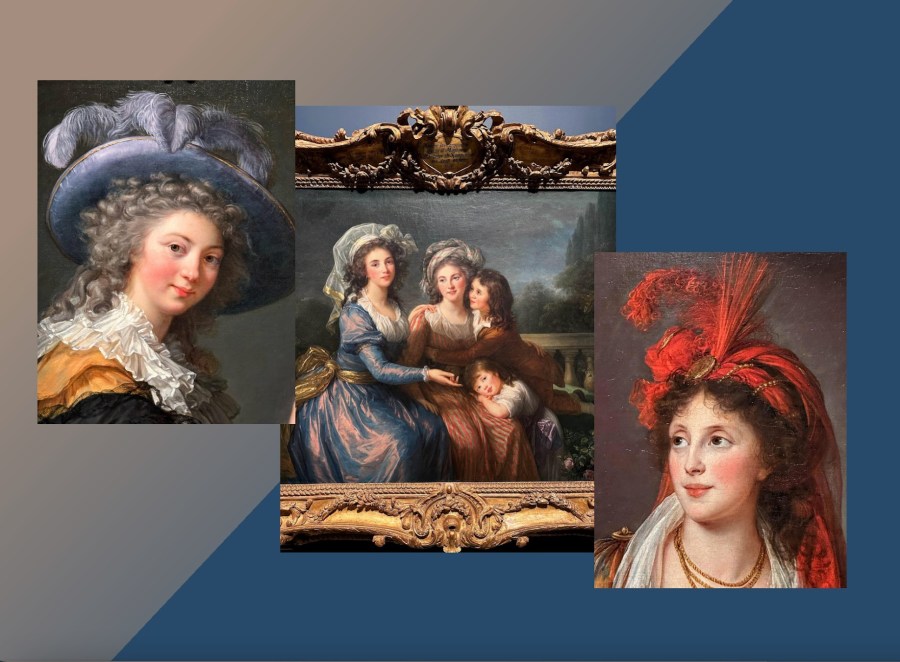
Yet, who are some of the extended royalty whose Vigée Le Brun’s images linger on earth for posterity? I was privy to viewing 3 of Élisabeth Vigée Le Brun’s portraits at the Making Her Mark exhibit. All 3 are of royalty.

This massive painting (4.5 ‘ x 5.1’) painted in 1787, was one of my faves at the exhibit. It was almost like being with living people.

1787 – Oil on canvas

The Marquise de Pezay

There is not much written about The Marquise de Pezay nee: Caroline de Murat, and I cannot find the date of her birth. From an old Auvergne family, she was very beautiful and quite penniless.

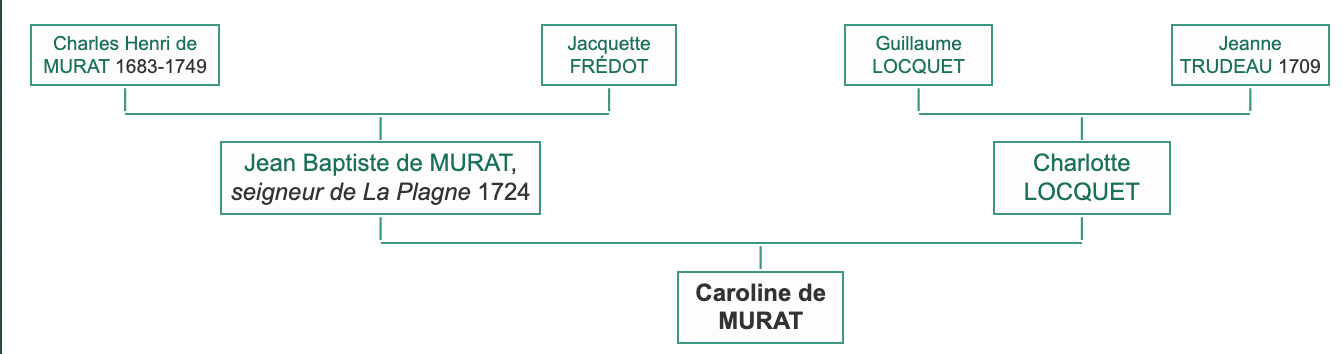
In 1776 she married  Alexandre-Frédéric-Jacques Masson , Marquis de Pezay. The Marquis de Pezay was a French Military officer of distinction, a writer and encyclopedist. In 1777, at only 36 years of age he died at Pezay Castle.

Vigée Le Brun and the Marquise de Pezay both fled Paris in 1789 shortly after the storming of the Bastille.

The Marquise de Pezay found refuge in Lausanne, Switzerland, where she died in 1794.

There is also a record of her in Heidelberg in 1791.

In researching Caroline de Murat, you will also find Caroline Murat is the name of Napoleon Bonaparte’s youngest sister.

Marquise de Rougé 

Nee: Natalie Victurnienne de Rochechouart de Mortemart (1759 -1828). Her father was Jean Victor de Rochechouart de Mortemart. Her mother was Charlotte Nathalie De Manneville.
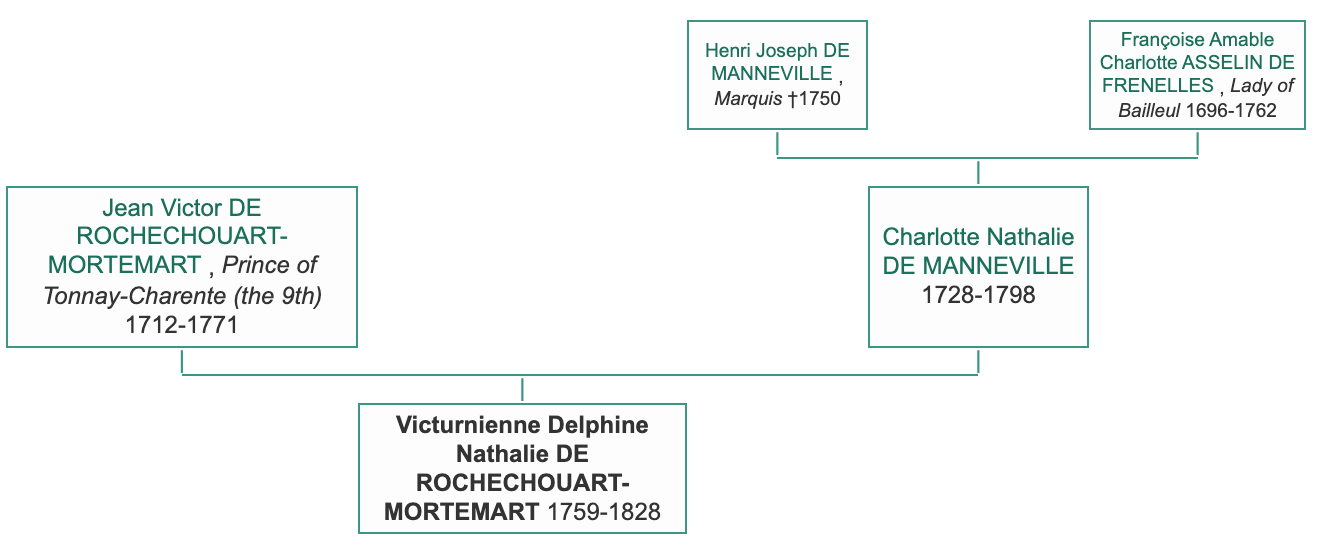
 She wed in 1777 to Bonabes-Jean-Catherine-Alexis de Rougé, the 3rd Marquis de Rougé. Five years later, returning from the West Indies on a battleship, he died.

In 1789 she and her sons left France for Switzerland, but returned to France in 1790. At that time, they lived in seclusion at the Château de Moreuil with her husband’s aunt, the Duchess d’Elbeuf. In 1791, she emigrated to Heidelberg, Germany, along with her children, her mother, and the Marquise de Pezay.

From the Journal of the Emigration -by: Count d’Espinchal (1748 – 1823) while living in Heidelberg, Germany. Published from the original manuscripts in 1812.

“I have found living here since the winter, the Duchess de Mortemart, mother of the Duke and of the Marquis de Mortemart, both of whom are deputies to the Estates-General … and both members of the majority of the conservative nobility. The Marquise de Rougé, their sister, a pretty and amiable widow, is here with her children (she looks more like their sister) … and Mme de Pezay … who is her intimate friend.”

She returned to Paris in 1798. Her lands had been expropriated and sold. So, she took room and board in a home run by former nuns. Her sons joined her in France in 1800. She died on 25 December 1828
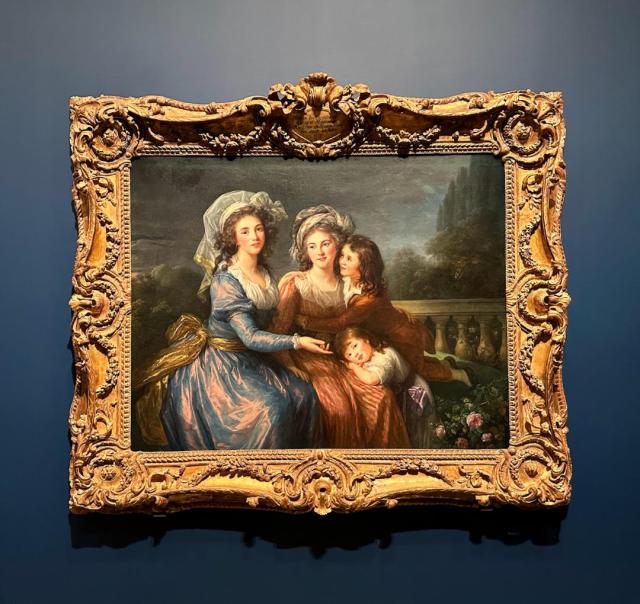
Alexis and Adrien

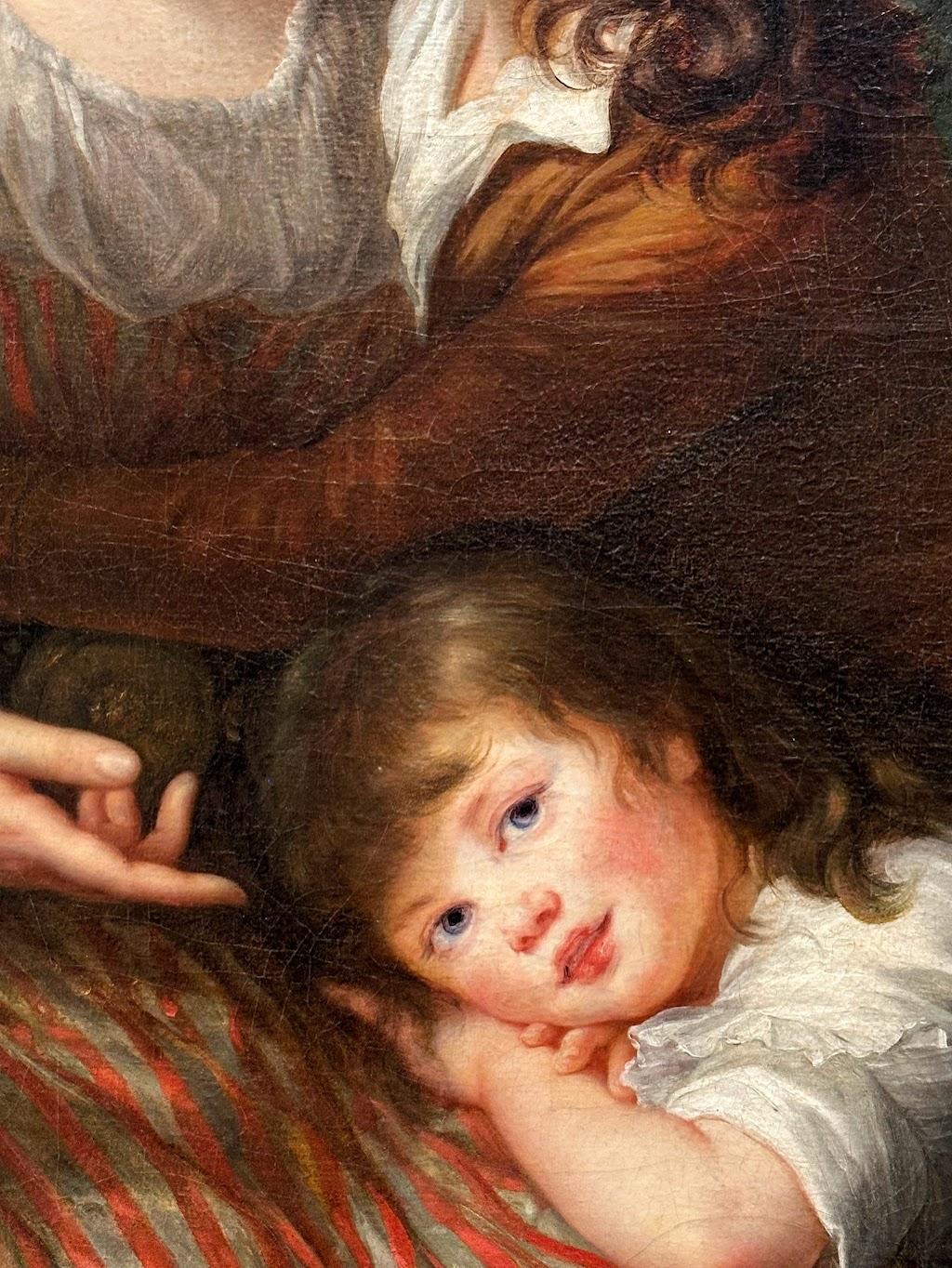
Alexis Bonabes Louis Victurnien, Marquis de Rougé, ( 1778 – 1839) was a French military officer and Statesman.

In April 1804, he married Alexandrine Célestine Zoé Emmanuelle Thimarette de Crussol d’Uzes (1785–1866). They had 6 children.

Adrien Gabriel Victurnien de Rougé (1782 – 1838) was a statesman and distinguished soldier.

In 1809 he married Caroline de Forbin d’Oppède. They had 4 children.

The Comtesse de Cérès

Seems some scallywag royalty wormed its way into Vigée Le Brun’s life.

1794 – Oil on canvas

It appears as though Anne Marie Thérèse de Rabaudy Montoussin (1759 – 1834) married “The Roué himself”, Jean de Barry-Cérès when she was 18.

Jean de Barry-Cérès, from suspect lower nobility, may have added the “de” to his name. That was easy to do back then, and claim you were A somebody. It appears he earned a scrounged living by both legal and so/so illegal means (gambling parlours and pimping) .

Not only does there appear to be only a Jean Barry (no Cérès), but it is somewhat unclear if he did wed Anne Marie Thérèse de Rabaudy Montoussin, who would have been his second wife. Barry’s first wife was Ursule Dalmas de Vernongrese.

Anne Marie Thérèse de Rabaudy Montoussin apparently married “de Barry” when she was eighteen. This portrait was done in 1784. She would have been 25.

De Barry, the Roué, was persona extremely non-grata at the French Court. Yet, Vigée Le Brun befriended the Comtesse de Cérès.

The friendship did not last.

Vigée Le Brun was furious that gossip was accusing her of having an affair with the French Finance Minister, Charles Alexandre de Calonne; gossip fuelled by the actions of Madame de Cérès .

From the memoirs of Élisabeth Vigée Le Brun

“While I was painting her portrait, she did me an atrocious disservice. In her ingratiating way she asked me to lend her my horses and carriage to take her to the theater. 
The next morning I requested my horses for eleven o’clock. Coachman, horses, nothing had come back. I learned that Madame de Cérès had spent the night at the Finance Ministry.”

All assumed the affair was with Vigée Le Brun, as it was her coach that spent the night outside the Finance Ministry.

Élisabeth Vigée Le Brun

I’d like to take a moment here to say how awed I was standing in front of Élisabeth Vigée Le Brun’s paintings. They took my breath away. Rebecca Budd, curator of Chasing Art has, written an outstanding 7 part series on Élisabeth Vigée Le Brun.

Below is the link to the first article. Just click on “NEXT POST” and work your way through this enchanting recounting of a remarkable woman in history, or I might say – Herstory!

Princess Anna Alexandrovna Galitzin

Princess Anna Alexandrovna Galitzin (August 1763 — October 1842) was a Russian aristocrat of Georgian royal origin.
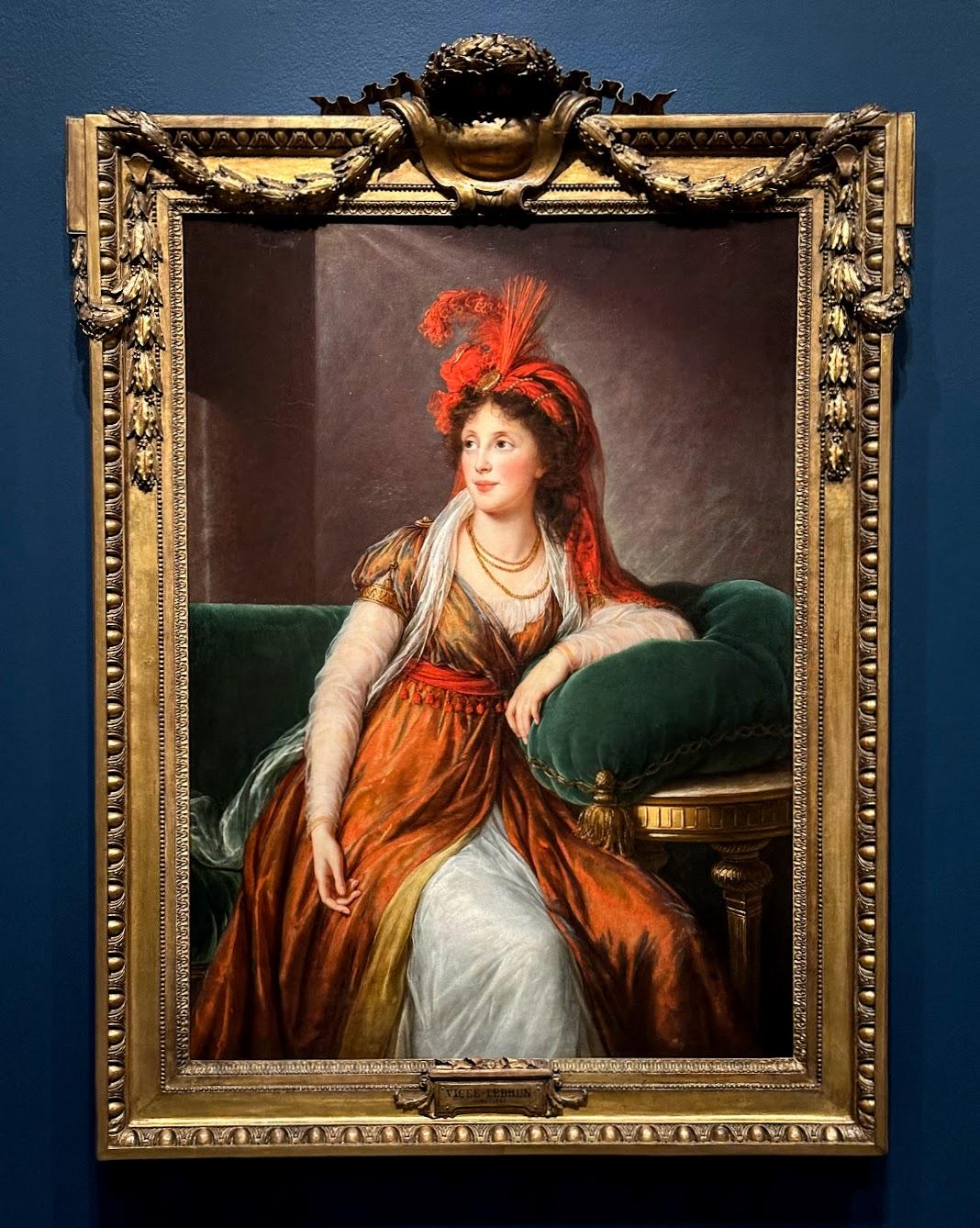
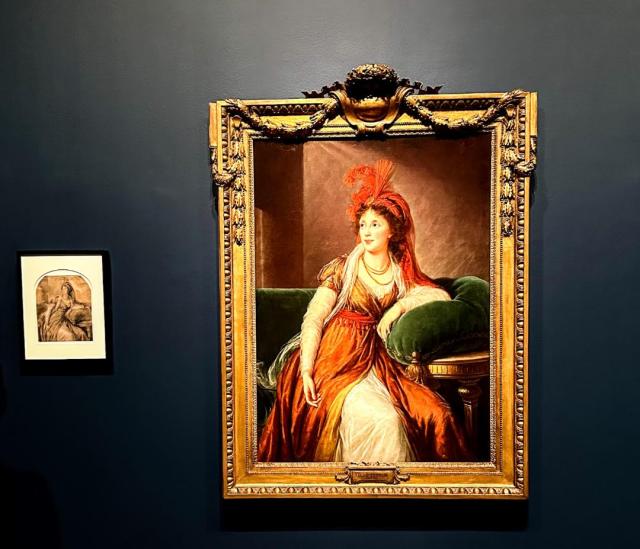
1797 – Oil on canvas

Anna was the daughter of the Tsarevich of Georgia. Growing up in Moscow, she knew a good deal of local power. This power was afforded her, because she was a member of the house of Bagration-Gruzinsky.
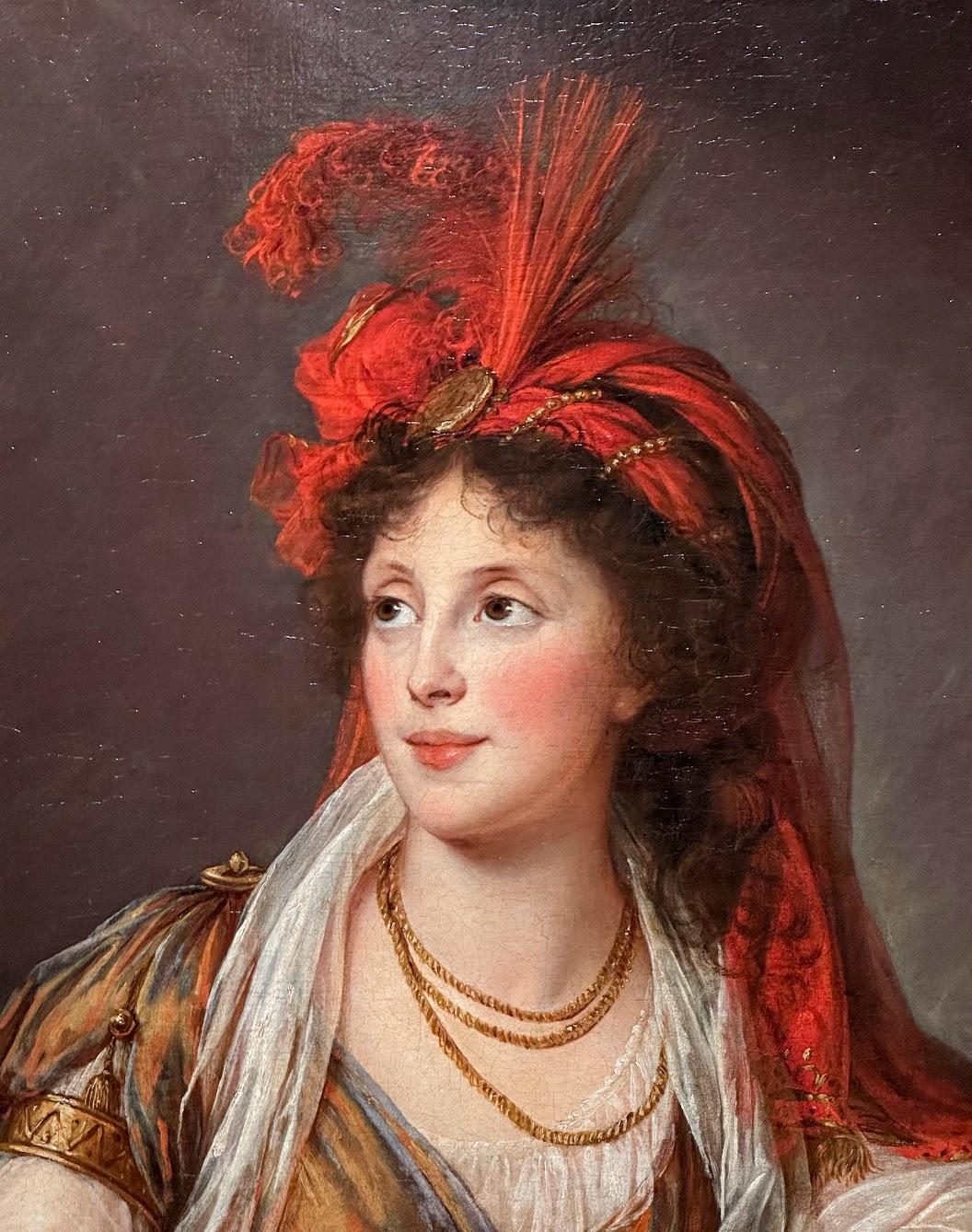
In 1785 she married the illegitimate son of Prince Aleksander Mikhailovich Golitsyn, Alexander Alexandrovich Litsyn. One year after his passing, in 1789, she married her third cousin once removed, Prince Boris Andreevicholitsyn. Together they had 8 children. Her husband died of a stroke in 1822.

Tsar Paul I came to the Russian throne in 1796. In 1798 he promoted Prince Boris to lieutenant general. In 1800, Boris did something to anger a higher ranking officer. The result was that he, Anna and her family were “compelled to retire” to their estate, in the province of Vladimir.
In 1801 Alexander I came to power, and high society of St. Petersburg accepted the family back.

Back in St. Petersburg, Princess Anna hosted a most influential salon.

Vigée Le Brun was charging high prices when Princess Anna commissioned it in 1797. However, money was not an issue. Princess Anna possessed of one of the largest fortunes in the empire.

Also on display was the working drawing, in black and white chalk with stumping on paper.

It seems the gown Princess Anna is wearing was a house dress, nothing fancy. Also, for reasons of modesty, the sheer arm sleeves were apparently added after completion of the portrait.

Thank you for reading another post of “Making Her Mark”

To read all posts just click on the Making Her Mark banner at the top of the side bar!

Please click on the banner below to go to the research links page.
Photos taken by Resa McConaghy – May 14, 2024

Art Gallery of Ontario, Toronto, Canada

The Weight of Snow and Regret

by: Elizabeth Gauffreau


Liz– Thank you for hosting me on my blog tour for The Weight of Snow and Regret, Resa!

Resa – My pleasure, Liz!

Liz – Today I am very excited to shine the spotlight on one of the minor characters in the book, bandleader Sterling D. Weed. But first, here is what The Weight of Snow and Regret is all about.

For over 100 years, no one wanted to be sent to the Sheldon Poor Farm.

By 1968, no one wanted to leave. 

Amid the social turmoil of 1968, the last poor farm in Vermont is slated for closure. By the end of the year, the twelve destitute residents remaining will be dispatched to whatever institutions will take them, their personal stories lost forever.

Hazel Morgan and her husband Paul have been matron and manager at the Sheldon Poor Farm for the past 20 years. Unlike her husband, Hazel refuses to believe the impending closure will happen. She believes that if she just cares deeply enough and works hard enough, the Sheldon Poor Farm will continue to be a safe haven for those in need, herself and Paul included.

On a frigid January afternoon, the overseer of the poor and the town constable from a nearby town deliver a stranger to the poor farm for an emergency stay. She refuses to tell them her name, where she came from, or what her story is. It soon becomes apparent to Hazel that whatever the woman’s story is, she is deeply ashamed of it. 

Hazel fights to keep the stranger with them until she is strong enough to face, then resume, her life—while Hazel must face the tragedies of her own past that still haunt her.

Told with compassion and humor, The Weight of Snow & Regret tells the poignant story of what it means to care for others in a rapidly changing world.

For today’s tour stop, I will introduce you to a character who makes a cameo appearance in the novel, Sterling D. Weed, a historical figure known for being the oldest working bandleader in the state of Vermont. He worked as bandleader until his death in 2005 at age 104. He was also known for having the first integrated swing band in New England. 

Truth be told, I couldn’t resist putting him in the novel. When my late brother George was in high school, he played saxophone in the Enosburg Falls Town Band with Sterling D. Weed as bandleader. In college, George played gigs with Weed’s Imperial Orchestra to earn money to live off-campus. How he loved to tell his Sterlin’ D. Weed stories! 

Weed’s Imperial Orchestra appears in the novel in a brief scene when Hazel and Paul celebrate their first wedding anniversary. The first song they hear is the Weed’s Imperial Orchestra’s theme song, “The Wang Wang Blues.”

Click on the above pic, and a new page will open. You can listen to the music while you read!

Excerpt from “Newlywed” chapter

Hazel turned her attention to the raised stage. Seated behind their music stands, the members of Weed’s Imperial Orchestra wore fancy black suits and bow ties. She’d never seen anyone wear such a fancy suit before, much less a bow tie. Their shoes would be polished to a high shine, even though no one could see them. The man standing on the stage with his back to the dance floor must be Sterling D. Weed himself. When he turned to face the crowded dance floor, Hazel was surprised to see a man of about Paul’s age, smooth-faced, bespectacled, and balding. Except for the fancy suit and the saxophone on a strap around his neck, he looked like her high school algebra teacher.

“Welcome, one and all! The boys and I will start you off this evening with our theme song, a little foxtrot called ‘The Wang Wang Blues.’ If you don’t know the foxtrot, don’t worry. Come out on the dance floor anyway; you’ll pick it up soon enough. And if you don’t, there’s always next week.” He bent over and picked up a clarinet. “Ready, boys? A-one, a-two, a-three.”

The tempo was lively, the notes tumbling from the clarinet sparkling. The melody would not be denied, despite repeated kicks from the bass drum to keep it in check—nor could it keep the crowd in check, as they stepped and glided and twirled.

Sterling D. Weed announced the next song as “Sing, Sing, Sing,” but instead of a sing-along, the drums pounded out a primitive beat, seemingly of their own volition. The crowd cheered, and an explosion of brass blasted from the stage as the dancers flung themselves about the floor. 

Paul’s eyes widened. He mouthed something, grabbed Hazel’s hand, and pointed behind him. 

Outside, he kept hold of her hand and led her to the edge of the lake. “Jeezum. We coulda got killed in there.” He pointed to a large rock. “How about we listen from here?”

Now that she was no longer in danger of being kicked in the head or trampled to death, Hazel was perfectly content to listen to the rest of the song that seemed hell-bent on driving itself off a cliff. 

About Elizabeth Gauffreau

“I am drawn to the inner lives of other people–what they care about, what they most desire, what causes them pain, what brings them joy.”

Click on About to read up on Liz, or on her name in smaller print to visit her blog!

Look at all the places you can buy Liz’s book!

Click on the photo list below. It will take you to a page where all the links are live. I bought mine on Kobo.

I’ve read 3/4 of this special book. I add this music and piece of street art as extras. Read the book and discover why!

Some have said the first Lightnin’ Hopkins video wasn’t available to them. In case it didn’t work for you, here’s another try!

Making Her Mark – Self Portraits III

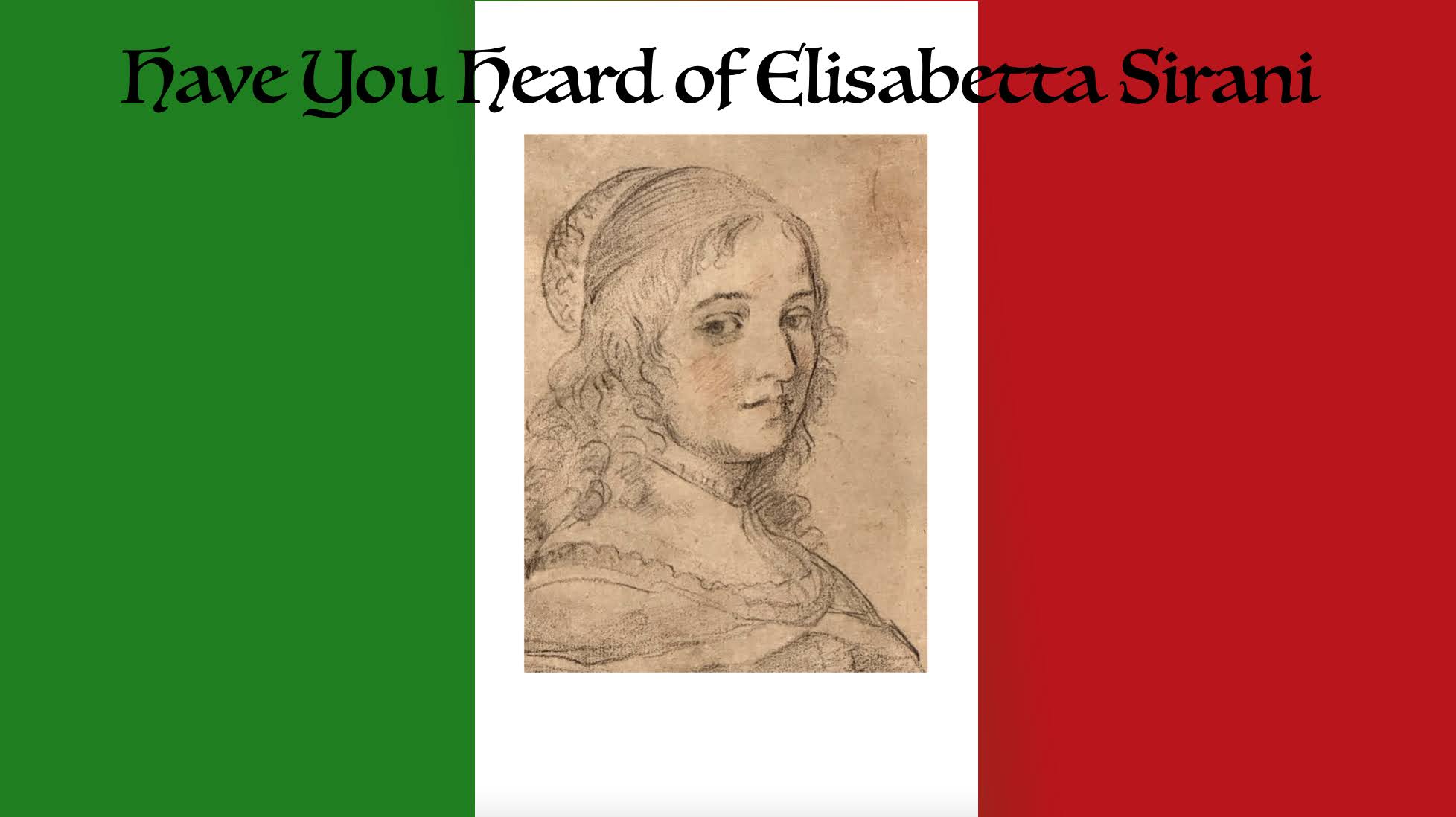
Welcome back to our Self Portraits series! I’m your host, Resa, with co-host Rebecca Budd, curator of Chasing Art. Today We are discussing an artist from the 17th century, Elisabetta Sirani.

Resa So Rebecca, after all you’ve learned, and passed on to me, I’ve come to think Elisabetta was Bologna’s rockstar in the early mid 1600’sSayest thee what to that?

Rebecca – I agree wholeheartedly, Resa. Elisabetta Sirani’s exceptional talent and prolific body of work cement her status as a celebrated artist of her time. Despite the challenges she faced as a female artist in a male-dominated field, Sirani’s enduring legacy as a pioneering Baroque painter reflects her rockstar-like influence on the art world of her era.

Over her 10-year artistic career, Sirani demonstrated exceptional productivity, creating over 200 paintings, 20 etchings, and an extensive collection of drawings. I marvel at her ability to create a life/work balance. At the young age of 19, she took on the responsibilities of managing her father’s workshop, supporting her family, and establishing an art academy to mentor and teach women artists. Elisabetta Sirani was a true rockstar of Bologna in the 17th century. In my opinion, she continues to be a rockstar today!

Resa – Well then, let’s see what you discovered!

Master of Chiaroscuro

Elisabetta Sirani was an Italian Baroque painter born in Bologna in 1638. She was the daughter of the painter Giovani Andrea Sirani, who recognized and nurtured her talent from an early age. Sirani’s artistic skills flourished, and she became known for her exceptional talent in her short life.

Despite facing challenges as a female artist in a male-dominated field, Sirani achieved great success and recognition during her career. She was prolific, producing a large body of work that included historical and biblical scenes, portraits, and allegorical paintings. Sirani’s mastery of chiaroscuro (the treatment of light and shade in drawing and painting) and her ability to depict emotion and narrative in her works garnered admiration from her contemporaries and art enthusiasts.

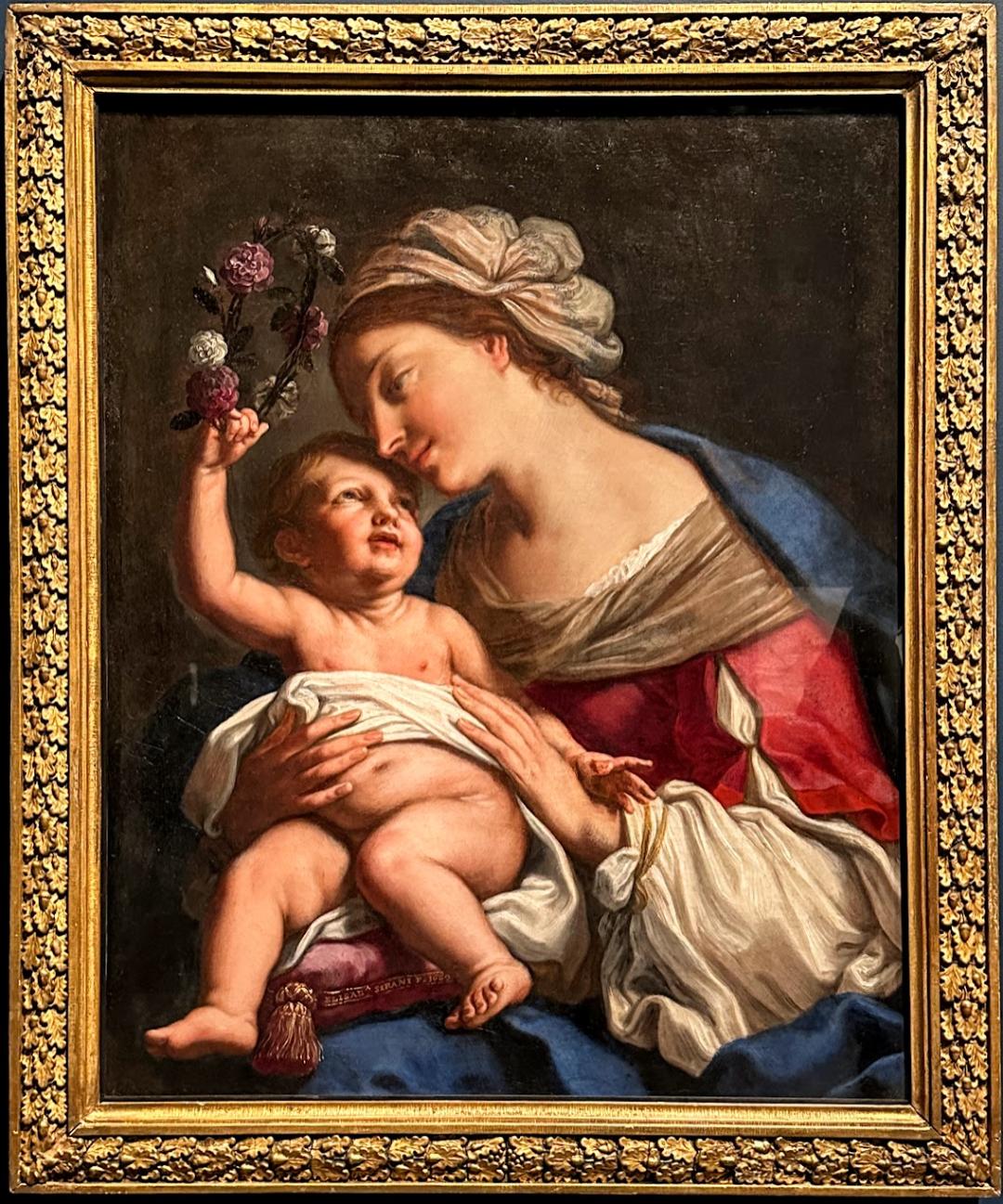
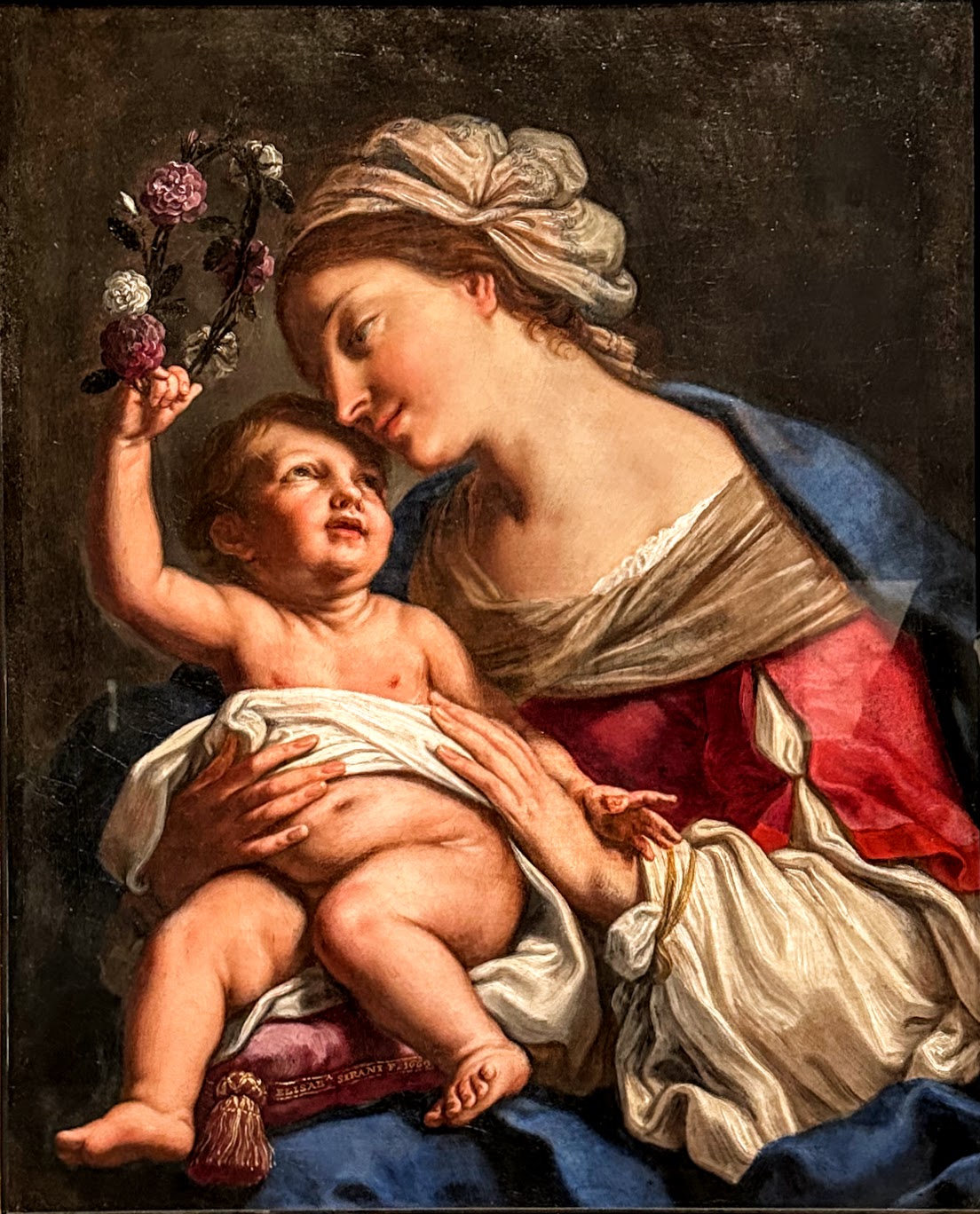
The Virgin Crowned by Christ Child with Roses

A Pioneering Legacy

Elisabetta Sirani’s legacy extends beyond her remarkable talent as a painter. As the successor of her father’s workshop, she also played a crucial role as a teacher, notably contributing to the development of women artists during the Renaissance period. In addition to training her sisters Barbara and Anna Maria, she also instructed at least twelve other young women at the school she established. This pioneering initiative marked the first school of painting for women in Europe outside of a convent, embracing inclusivity regardless of the women’s artistic and social backgrounds.

Elisabetta Sirani’s legacy endures through her remarkable paintings and the influence she had on future generations of artists. She remains celebrated as a pioneering female artist of the Baroque era, showcasing remarkable talent and determination in the face of societal norms.

Resa – “Making Her Mark” even had Elisabetta’s working drawing/study for the above painting. It’s a wonderful complete experience to see both.

Rebecca– I believe the painting, “Virgin Crowned by Christ Child with Roses” is all about love. Elisabetta Sirani imparts a compelling depiction of Mary as a relatable and tender young mother, diverging from the traditional portrayal of the remote Queen of Heaven. In this painting, Mary wears a turban associated with peasant women in Bologna, creating a down-to-earth portrayal. Her adoring gaze at the playful Christ child on her lap exudes a sense of genuine maternal love. Notice how the brushwork is highlighted in the textured representation of the Virgin’s white sleeve, emphasizing its rough and homespun quality. Elisabetta Sirani, with this tender and intimate moment of affection, offers a humanizing perspective of Mary and Jesus.

On the left :

The Virgin Crowned by Christ Child with Roses – 1663(red wash with grey chalk on paper)

On the right:

The oil on canvas painting in the same year.

An Untimely Death

Tragically, Eliabetta Sirani’s life was cut short when she passed away at the young age of 27 in August, 1665. Her untimely demise sparked controversy snd speculation. Following her sudden passing, suspicions arose, leading to the trial of her maidservant, Lucia Tolomelli, who was accused of poisoning the talented artist. The circumstances surrounding Sirani’s death led to diverse conjectures, with some attributing it to love-sickness due to her unmarried status, while others cited stress as a contributing factor.

It is widely believed that the true cause of Sirani’s demise was the onset of peritonitis following a ruptured peptic ulcer. This unfortunate event may have been exacerbated by the significant stress she experienced, particularly after being charged with providing for her entire household.

The controversy and diverse interpretations surrounding her passing have added intriguing layers to the legacy of Elisabetta Sirani, portraying a life marked by exceptional talent, determination, and the complexities of the era in which she lived.

A Rockstar Funeral

Elisabetta Sirani’s elaborate funeral reflected the deep respect and admiration held for her in Bologna. The grand ceremony featured an enormous catafalque (a decorated wooden framework supporting
the coffin) adorned with a life-sized sculpture of the esteemed artist, as depicted in Malvasia’s biography.

Orations and music composed in her honor by prominent figures from Bologna added a solemn and dignified atmosphere to the proceedings. Following this tribute, she was laid to rest in the Basilica of San Domenico, Bologna, where she joined her father’s teacher, Guido Reni, in a shared tomb

This final resting place solidifies her enduring legacy alongside revered artistic influences, commemorating her exceptional talent and remarkable contributions to the art world.

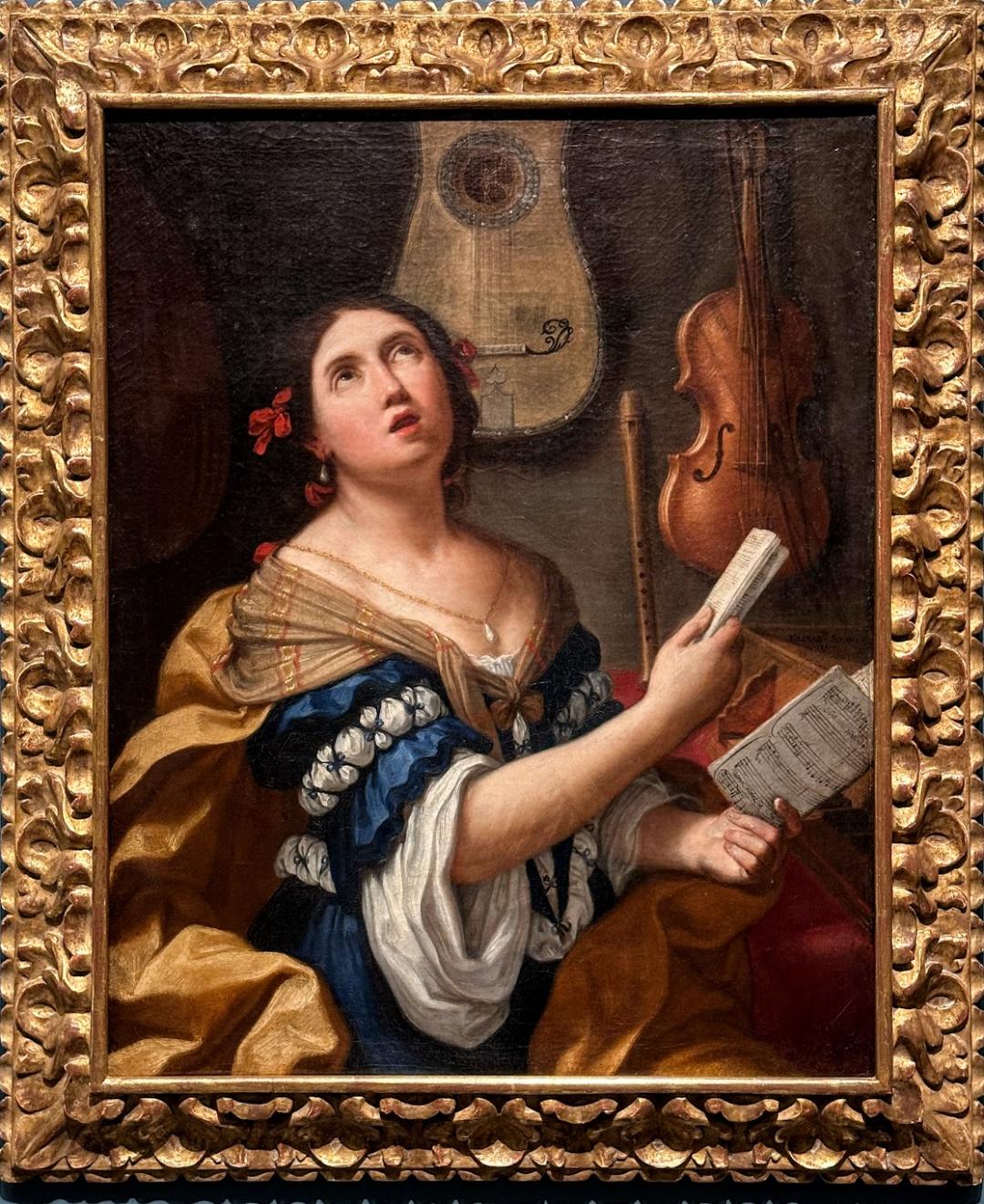
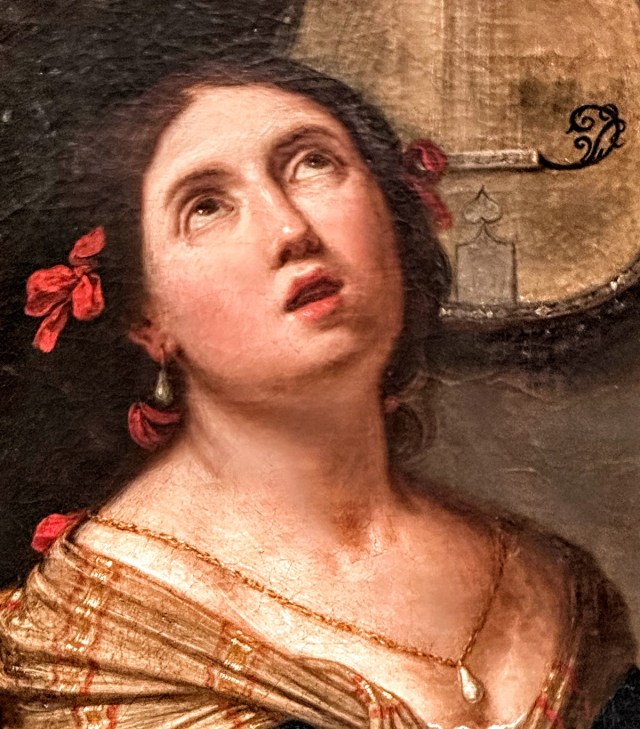
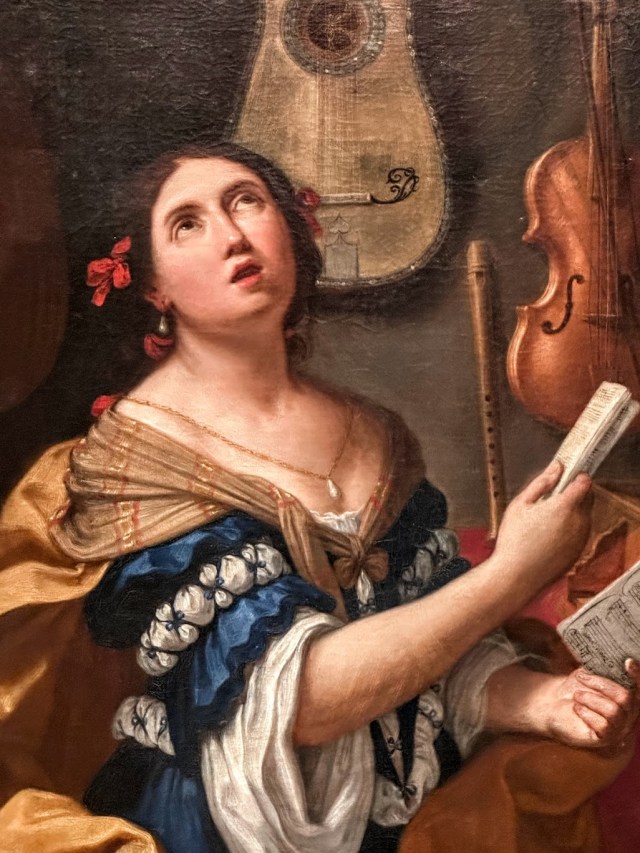
The Personification of Music

Resa – Rebecca, of all the paintings in the “Making Her Mark” exhibition, the Elisabetta Sirani allegorical painting title The Personification of Music was, and remains my favourite. Apparently she painted it in exchange for music lessons. I think she belongs in The Twenty-Seven Club, don’t you?

Rebecca – I did not know that Elisabetta Sirani exchanged her paintings for music lessons, but I am not surprised, given her proficiency as a musician in addition to her exceptional talent as a painter. This exchange speaks to her versatile creativity and passion for various art forms, further solidifying her legacy as a remarkably talented individual in the Baroque era. I agree – she belongs in The Twenty-Seven Club.

Resa – Admittedly I am smitten by this artist. I am also wild about that fact that you are here on this journey through these profiles in exceptionality. Mille GrazieRebecca!

Rebecca – Resa, your dedication to artistic endeavours and your profound belief in the power of creativity to enrich our world have truly inspired me. Thank you for including me on this extraordinary journey of self-discovery through Making Her Mark. I look forward to what comes next…
Mille grazie caro amico per averci invitato a unirci virtualmente alla tua Art Gallery of Ontario. Fino alla prossima volta.

You can also visit Rebecca by listening in on some of her fabulous Tea Toast and Trivia podcasts.

Click the above banner to view & link to Rebecca’s sources. not included in the body of text!

Photos taken by Resa © – May 14, 2024

Art Gallery of Ontario, Toronto, Canada

A Ghost and His Gold – by: Roberta Eaton Cheadle

 The past is lashed to the present. Hereinafter, all that glisters is not gold. 

Roberta Eaton Cheadle’s research into the second Boer War moment of history is exemplary. First lesson –  the motivation for the war was gold.

Then I wondered where Roberta’s impetus to write about the second Boer War came from.

Resa – Were you born in South Africa? 

Roberta – I was born in Knightsbridge in London, but I have lived most of my life in South Africa.

Resa – When did your family move to South Africa? 

My biological father died when I was three months old. My mother came out to South Africa to live with one of her sisters and she met and married my dad, Dean, my adoptive father.  I have three half sisters who were all born here, as were my husband and both of my sons. My husband is a direct descendant of Andries Pretorius. 

Resa – Ah, Andries Pretorius is mentioned in the book.

Roberta – I am proud about that. I am writing a few short stories currently that features Andries Pretorius and the famous Battle of Blood River.

Resa – Fantastic! I read up on Andres Pretorius. Your pride is no wonder, as is your motive for writing on this.

Click on above banner to read about Andries Pretorius

Resa – Whether in the trenches, a besieged town or in the field you have a point of view from characters on both sides that suffer the war. What was you objective in doing this?

Roberta – The short answer is because I wanted to present an unbiased perspective on the war and allow the reader to decide which perspective was the correct one. The historical archives for the British and Boers differ hugely in their perspectives on this war. I decided that I wanted to present both perspectives.

Resa – I appreciate that.

Roberta – It was only when my developmental editor suggested I expand it into a novel that I decided to bring in Estelle and Robert. This leads me to your question and why I wrote from the perspectives of Pieter, Estelle and Robert.

Resa – Yes, Pieter a Boer farmer, and Robert a British soldier. I recall their meeting.

Roberta- Originally, I wanted the third character which evolved into Estelle, to be the native African perspective. I wasn’t able to find enough reliable historical recorded history to include that perspective as a main thread. That is why there are two native African secondary characters. They are there to present as much of the native African perspective as I could dig up. I used some thesis’s written for local University purposes that delved into the ‘Black Concentration Camps’ as they were called at the time.

I also decided against presenting a native African main character because of the debate about cultural appropriation. I didn’t want to get embroiled in that concept. I wanted the book to be a realistic and fair presentation of this war and provide for considerations of all perspectives.

The details included in AGAHG are as reliable as I could manage given the limited recorded history from the native African perspective.

Dear Readers, please don’t think that this tale is all about men in their trenches, in the field and under siege!

There are many strong female personalities. Estelle, Pieter’s daughter is my favourite person from the past. Estelle is the character I remember best. ( and Michelle).  Michelle, in the present day, is an admirable modern woman. As a matter of fact, she is a writer and is researching the Boer War.

Roberta – It interests me that Estelle and Michelle are the most memorable characters for you. For me, it is Pieter, but that is probably because this book started life as a short story which featured just Pieter as the  primary character.

Resa – I think that is because Estelle is such an empathetic character, and represents to me what I would be if war was to hit my land – collateral damage. Michelle is the first one we meet, and it is through her the the modern day and paranormal part of the story is told.

Also, you did a good job with the step mother. She’s not a horrible person, far from it. However, her relationship with Estelle makes her unlikeable in a specific area. 

Roberta – I am glad you don’t think Marta is a horrible person. She was supposed to be a person who was a product of her time and the suffering by the Boers at the hands of the English. Estelle is collateral damage, as were many of the Boer women and children as well as the native Africans who died in the camps. I think it was worse for the native Africans because it wasn’t their war.

Resa –  I want to draw Estelle, as she was before the war. and what she might have looked like on her wedding day, had there been no war. 

So, let me start with my warm up drawings of Estelle. I am examining the character, the reasonable accuracy of the clothing and expression. I did these impressions right after I finished the book. 

This slideshow requires JavaScript.

Resa –  The bonnet is not right for the time and place. However, based on Estelle’s character, I won’t draw her wearing a bonnet. I feel she would be told to wear a bonnet, but then take it off once in the forest gathering wood..

You have described Estelle well in the book, not just her physicality, but her essence. How do you feel about how I’m capturing her age?

Roberta – I think your age profile is correct for Estelle. Girls were raised in a very conservative manner in the Boer community and were very modest and lacking in worldly knowledge.

Resa- So, I tried to get an antique photo feel on my finished drawings using artificial lighting and a bit of editing.

Resa – I wanted the drawing to have movement, but women’s clothes were heavily layered so as not to reveal. I used the wind to blow her apron and hair.
A pinch-pleat ruffle was added just above the bottom of the skirt. That was to weight the skirt and help it not go between the ankles. The bib of the apron is pinned to the blouse, a common apron style then.

Roberta – I am particularly interested in your comment about the ruffles at the bottom of the skirt. I thought they were purely decorative so their practical purpose is new information for me.

Resa – Here’s Estelle’s wedding dress that never was.

Roberta – I love your idea of illustrating how things could have been had there never been a war. Very relevant for our current times too.

I love all of your drawings. It is wonderful that you can draw people like this with all the clothing from a period. I always liked dressmaking and used to make all sorts of dolls dresses when I was a girl. My sisters were talking about them recently and it made me remember.

Resa – You have one non speaking, non human character in your book, the Jacaranda tree. I understand you required a tree with a long lifespan, but why not …. say …. an African Baobab or a Sycamore Fig?
Roberta – I chose a jacaranda tree because they are very pretty and Pretoria is known for them. I had to do research on this point because Jacaranda trees are not native to South Africa and I had to make sure they already existed in Pretoria before the Second Anglo Boer War.

Historical research shows that jacarandas were imported to South Africa round about 1830 and that the first ones were planted in Pretoria in 1888.

Why not the Baobab for which Africa is famous? Simply, it is because Baobab trees don’t grow in Pretoria. They grow in Limpopo Province which is where part of the Kruger National Park is found. The rest of the park is in Mpumalanga Province. The same applies to the Sycamore fig tree, it grows in Limpopo, Mpumalanga and KwaZulu-Natal but not in Pretoria.

Resa – I already know that I want a photo of a Jacaranda tree, hopefully one that you took, for the post. Please send me one, if you have one.

Roberta – I took a splendid picture of a jacaranda tree this morning. I had to stop on the side of a busy road, cross over, and make a spectacle of myself to get this picture. It was worth it.

Resa – EGADS! It’s magnificent!

Roberta – Pretoria, the administrative capital of South Africa, is popularly known as Jacaranda City because of the large number of trees, which turn the city blue and purple when they flower in spring.  

Resa – In terms of feedback from AG&HG, are readers more intrigued by the Boer War, the present day paranormal story or equally both?

Roberta – Based on the reviews this book has received, the history seems to have drawn readers rather than the modern timeline. I am glad about that as the history was the reason for the book. The modern timeline was to jazz it up and make it more compelling and interesting.

Resa – Roberta, Thank you!

Visit Robbie’s Blogs: Roberta Writes & Robbies Inspiration

You can buy A Ghost And His Gold by clicking on the vendors names below.

I bought mine on KOBO

Or Buy it on AMAZON

Search Roberta Eaton Cheadle & Robbie Cheadle on Amazon for more of her books, including anthologies.

Go to TSL Publications Robbie Cheadle Author Page for her children’s books and more. TSL also sells her books under Robbie Cheadle & Roberta Eaton Cheadle on LULU

Burn The Bra

 Hope you will take a moment to read my guest post on “When Women Inspire”. Hey, that’s my bra you see burning!

Today I welcome Resa McConaghy with a guest post on the history of “burn the bra.” Is it a feminist legend? Or a feminist myth instead? In her well-written post, Resa includes discussions of Gloria Steinem’s A Bunny’s Tale, the 1968 Miss America Pageant, the Freedom Trash Can, and more. Oh and that burning bra in the photo above? Resa set it afire to mark the end to her research. Take it away, Resa.

VIA: https://whenwomeninspire.com/2019/04/09/burn-the-bra-feminist-legend-myth/

Comments are closed. Please comment on Christy’s blog!

A Women’s Parliament

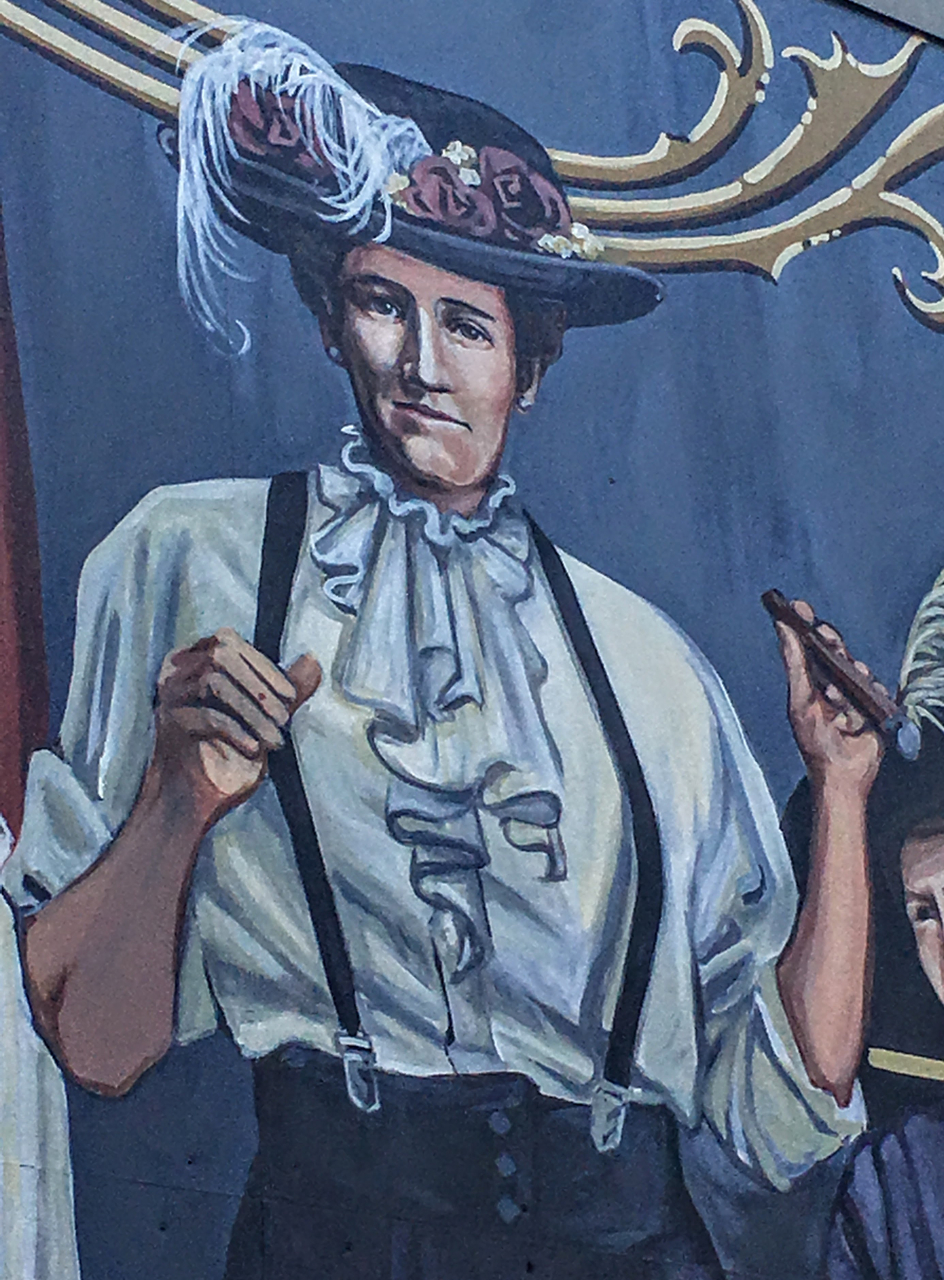
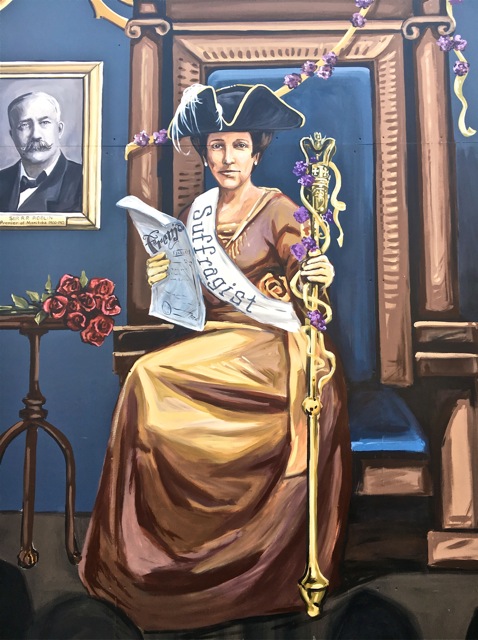
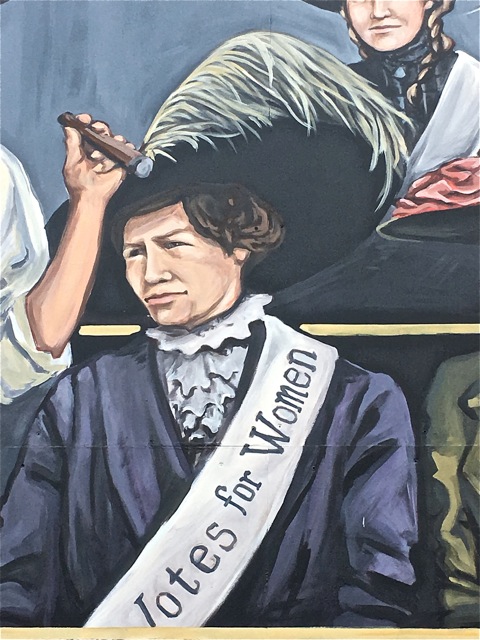
On January 28, 1914, Nellie McClung starred as Manitoba’s suspender snapping and cigar smoking Premier, in a mock parliament at the Walker Theater in Winnipeg, Manitoba.

Artist: Mandy van Leeuwen

This is Post two of “Nellie week” presented by Christy Birmingham of When Women Inspire & I.

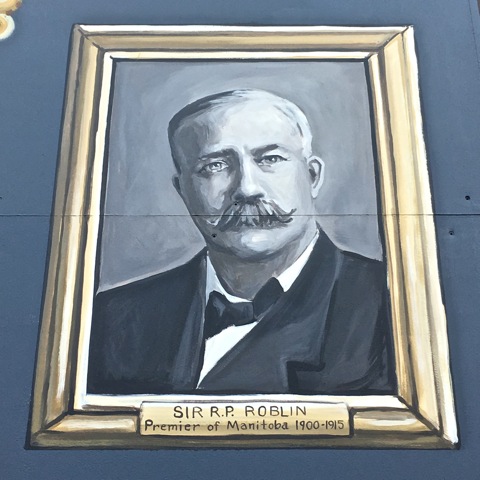
The previous day, January 27, 1914, Nellie and many women of the Political Equality League met with Premier Roblin and the legislative body to request the vote for women.

img_4761
Artist: Mandy van Lueewen

Premier Roblin condescended. He said, “I believe woman suffrage would break up the home and send women to mix up in political meetings.”

Artist: Mandy van Lueewen

This prompted a guerilla “mock parliament” wherein women had the vote, but not men. It was added to that night’s showing of  How They Won The Vote“, a play originally produced in London. It was adapted to fit Winnipeg in 1914.

Artist: Mandy van Lueewen

Vis-a-vis  this amazing mural in Winnipeg, Manitoba, Christy and I take a look at the mock parliament that changed women’s voting rights of yesterday into women’s voting rights of today, in Canada.

nel-3
Artist: Mandy van Leeuwen

It featured: Nellie as  a female Premier Roblin, and her daughter Florence,  as a parliamentary page. As well, it showcased 2 other mother and daughter pairs.

img_46911
Artist: Mandy van Leeuwen

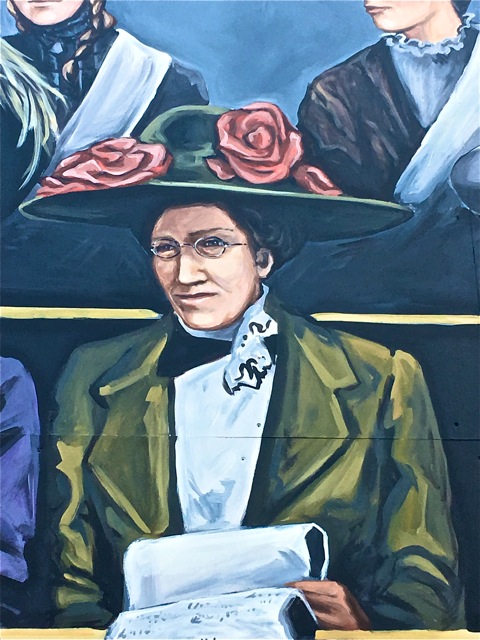
There was Harriet Walker (Minister of Public Works) and her daughter Ruth (a parliamentary page). I am not sure which image is Mrs. Walker.  Mrs. Francis Graham, below,  portrayed Speaker of the House. Her daughter, Miss Alma Graham, was a Clerk.

nel-11
Artist: Mandy van Leeuwen

The following text does not necessarily reflect the ensuing photographs. Dr. Mary Crawford played the Minister of Health and Education…

nel-15
Artist: Mandy van Leeuwen

… Miss Kenneth Haig { Attorney General), Mrs. Lipsett-Skinner (Minister of Agriculture), Miss Francis Beynon (Leader of the Opposition) and Dorothy Milne.

nel-7
Artist: Mandy van Leeuwen

Mrs. Lipsett-Skinner, pleasantly satirical, rejected a bill introducing labor-saving devices. The thought was, if men had spare time on their hands, they could start educating themselves. Next thing, they’d be petitioning for the vote.


nel-8
Artist: Mandy van Leeuwen

Many men were in support of the Suffrage movement, and took part in the play. A delegation of men, headed by R.C. Skinner, came seeking suffrage privileges for the male sex. They had a slogan “We have the brains. Why not let us vote?”

nel-13
Artist: Mandy van Leeuwen

 
The men’s case was ardently presented. The bill was effectively thwarted by Premier McClung, in the same vein (but with comedic overtone) that she and the Women’s Equality League had been dissed the day before.
The audience howled in delight.

nel-12
Artist: Mandy van Leeuwen

To read the transcripts of the awesome “Winnipeg Free Press” review of that hilarious and historic night’s play about a mock parliament published on January 29, 1914 go to:

The Nellie McClung Foundation – Primary Sources Page – “Women Score in Drama and Debate” (4th article down) Apologies for the indirect link.

Artist: Mandy van Leeuwen

In the CBC archives from 1974 , is a video narrated by Beatrice Brighton who as a young girl  attended “A Woman’s Pariament” with  her mother. This is definitely worth a watch!

nel-30
Artist: Mandy van Leeuwen

Although Nellie and her family had moved to Edmonton, she returned to Manitoba to campaign for Liberal leader T. C. Norris in the August 1915 election. He defeated Premier Roblin. On January 28, 1916 Norris delivered his promise, granting full suffrage to the women of Manitoba.

 The third and final installment of “Nellie Week” will be posted on When Women Inspire in 2 days, on December 16.

img_4724123
Artist: Mandy van Leeuwen – Photo & adjustment by Resa

 Pics taken by Resa – October 30 , 2016

Winnipeg, Manitoba
 

The Artist: Mandy van Leeuwen

⭐ Special thanks to: Jen Mosienko, Sari Habiluk & Sharon Jonson ⭐

nel-18

The Nellie McClung Foundation supports and celebrates equal rights for all human  beings, regardless of sex, race or creed.

Artist: Mandy van Leeuwen

This mural at 560 Sargent Avenue is to celebrate 100 years of women voting in Manitoba

nel-20

It is sponsored by: Crestview Pharmacy, Cindy Gilroy, Province of Manitoba/Sports, Culture & Heritage, Winnipeg Building and Decorating, University of Winnipeg,  North American Lumber, West End BIZ, Nellie McLung Foundation, Take Pride Winnipeg, and Winnipeg Foundation

My Funny Afterthoughts

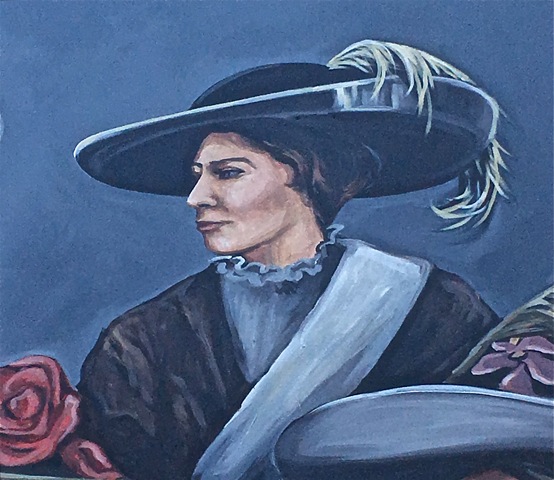
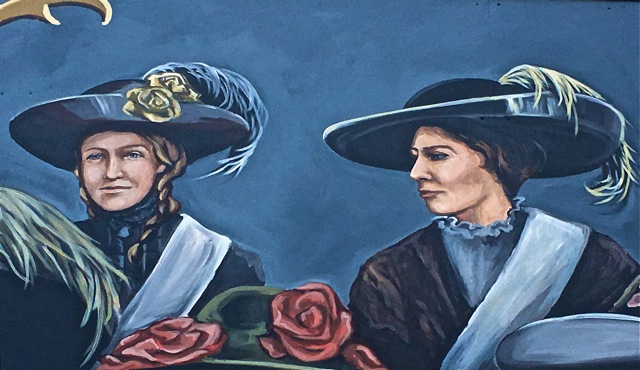
Women had bigger and better hats than men. No wonder men were threatened. (Wink!)

Artist: Mandy van Leeuwen

So many issues! It’s a wonder men ever got the vote! (Wink!)

Artist: Mandy van Leeuwen

100 years later, women still do not have pay equity to men, in Canada! (No wink)

Artist: Mandy van Leeuwen

Lastly, if you love poetry and stories visit Christy on her other blog Poetic Parfait

img_4751123
Artist: Mandy van Leeuwen

Sunnyside Beach Amusement Park – 1922 – 1954

This was a very famous place in it’s day.

Artist: Walter Rushton

In 1923 they had the “Water Nymph’s” Contest. It was advertised in the papers and more men than women showed up.

Artist: Walter Rushton

The Bathing Pavillion you see below is still in existence, although now a fun restaurant on the beach.


SSB #3

Between the Pavillion and Toronto’s now renovated “Palais Royale”, where Count Basie, Duke Ellington and many greats played (Even the Stones played there much later)….


Artist: Walter Rushton

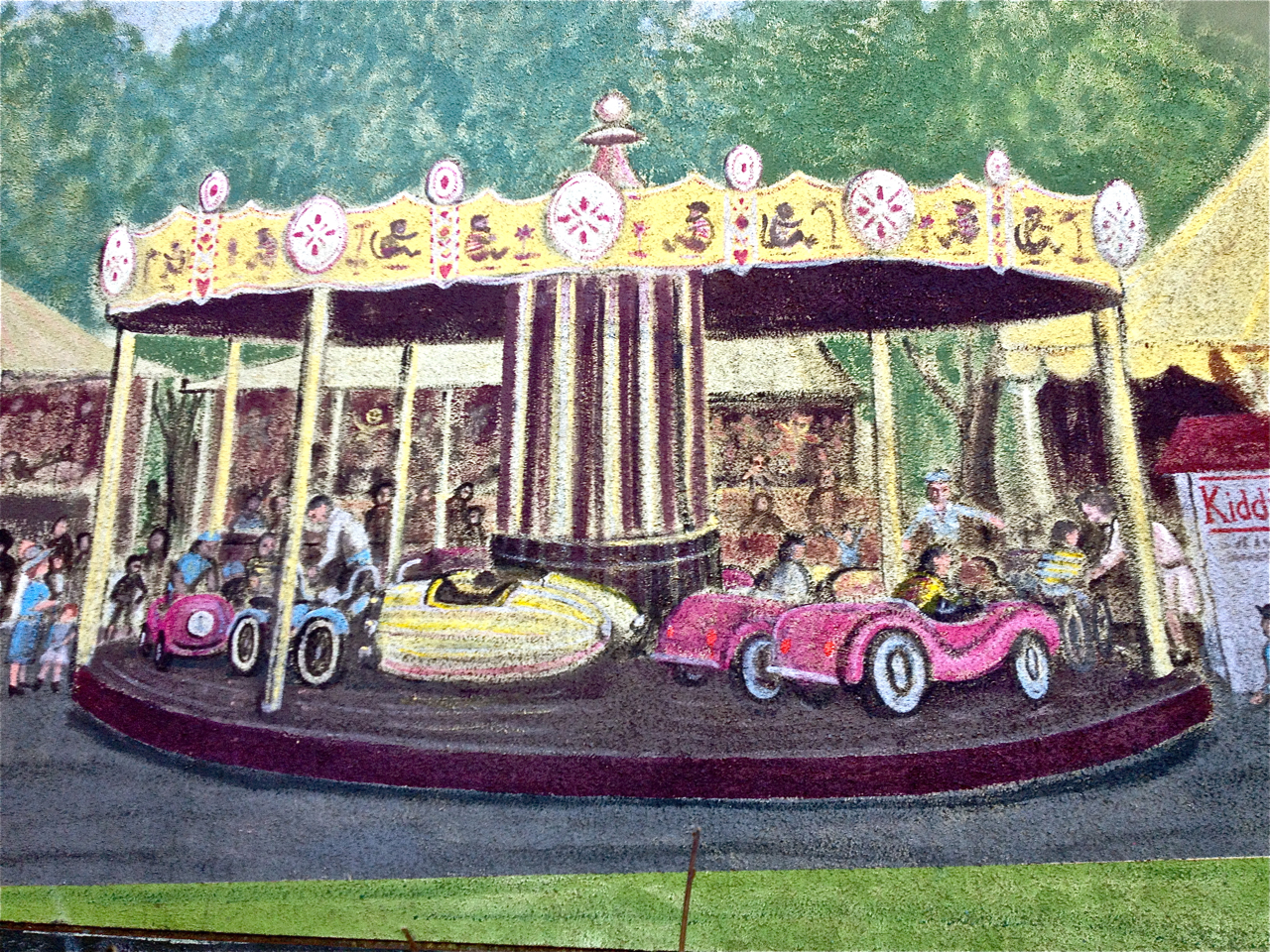
…. was a boardwalk & the most modern midway with rides, games and food. The Roller Coaster was the biggest in the world, and made of wood.

This slideshow requires JavaScript.

The next 2 shots attempt to show the entire mural, but don’t. It’s longer than I could capture.

Artist: Walter Rushton

It’s painted in an Impressionistic style on stucco, which makes for more photography woes. Also it’s at least 12 years faded.

Artist: Walter Rushton

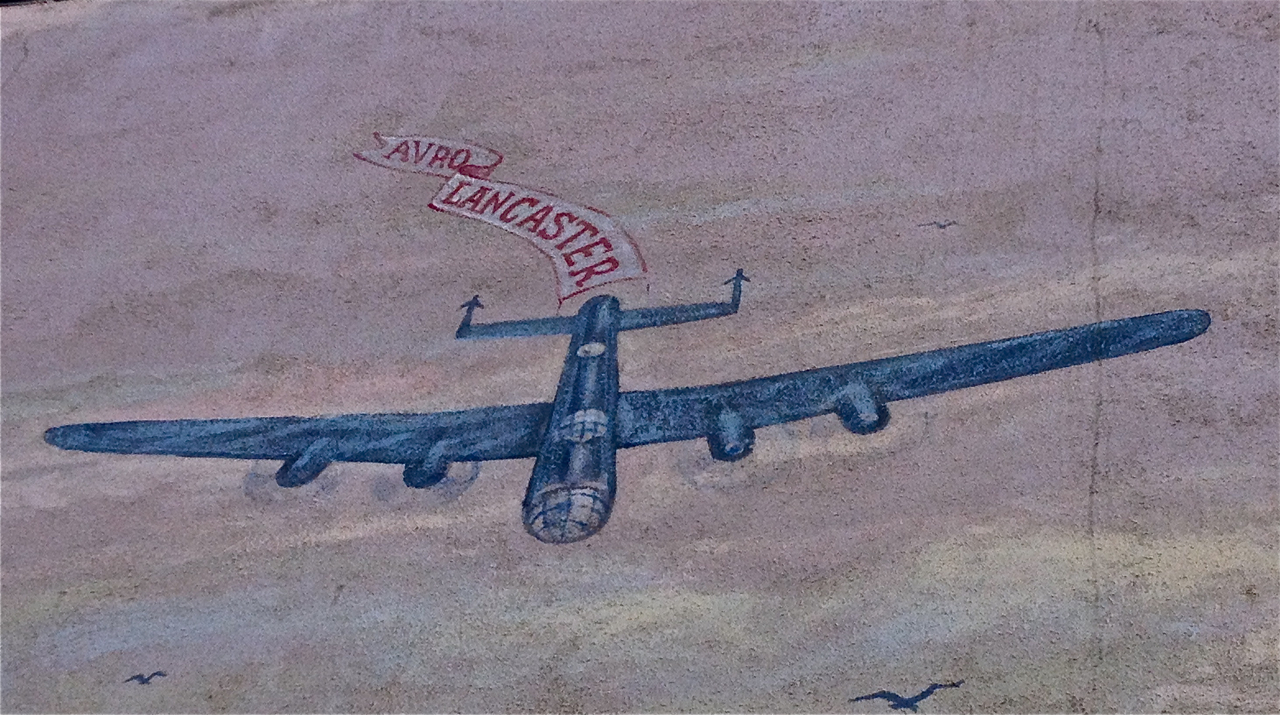
The Beach Park is painted in the center of 3 strips. Above you have an early air show. Below is a painted garden.

Artist: Walter Rushton


It’s bordered by a parkette, and the summer they fill it with  the same flowers that the artist painted on the mural.

This slideshow requires JavaScript.

Many historical writings say  the beloved Toronto Amusement Park was burned down, an act of arson to make way for the Gardner Expressway. I’d love to back in time and spend a day here!

Artist: Walter Rushton

Pics taken by Resa, on October 15, 2012 & March 16, 2014

Toronto, Canada