There had been some cool alley finds on this hot day, but not a real prize.
Then I turned into a shady alley, sweet smelling and comforting.
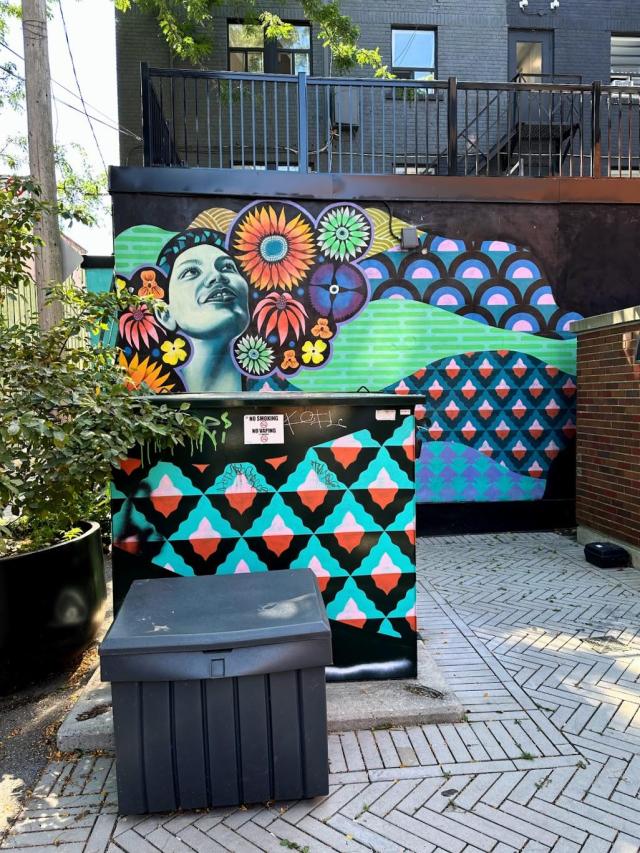
It was a Healing Garden.
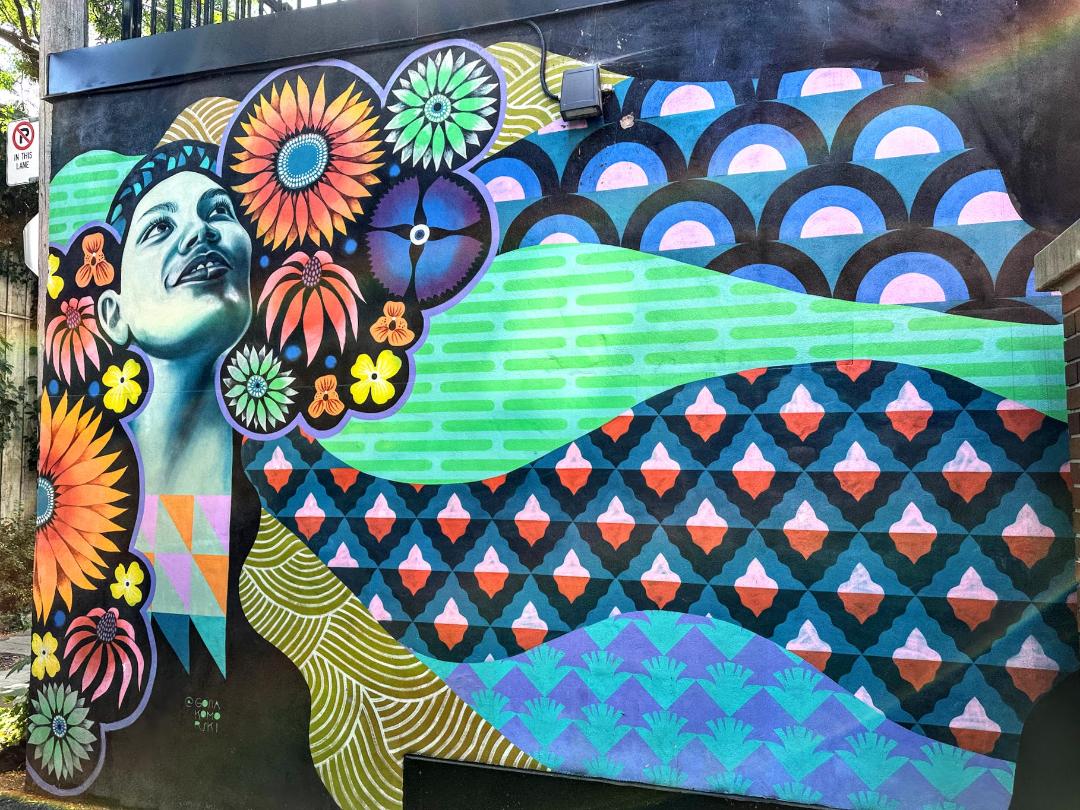
Turns out this alley is one of 2 Healing Gardens. A concept designed by artist Monica Wickeler & Indigenous artist Nyle Miigizi, the alley is filled with native plants and healing medicines. The Anishinaabe Nation’s story of the gift of Jewelweed was handed down to Nyle from his grandmother, Verna Patronella Johnston.
Mural artist Gosia Komorski was hired to paint.
Healing… we can all use some right now.
Best to be whole and positive, as we go into what seems will be a hectic new year.
Now it’s winter, but I fully intend to find the other Healing Garden, in late spring when the herbs are happening.
Pics taken by Resa – August 30, 2024
Toronto, Canada
Mural Artist:
If you click on the document below, you can read about the project. Pardon for the sloppy shot!
This song is not about a Healing Garden, but it feels like one. (Yes, the image is moving!)
Recently, wandering the urban forest, I espied a patch of colour. Turning the corner, a stunning autumn hued tarn with hikers appeared.
Instantly, I thought of Lauren Scott, and her love of country hiking. The next thought was “Isn’t she writing a children’s book? It must be almost finished.”
Well, I asked her. Turns out YES! Cora’s Quest is just released! As we are having an endless postal strike in Canada, I purchased the EBook.
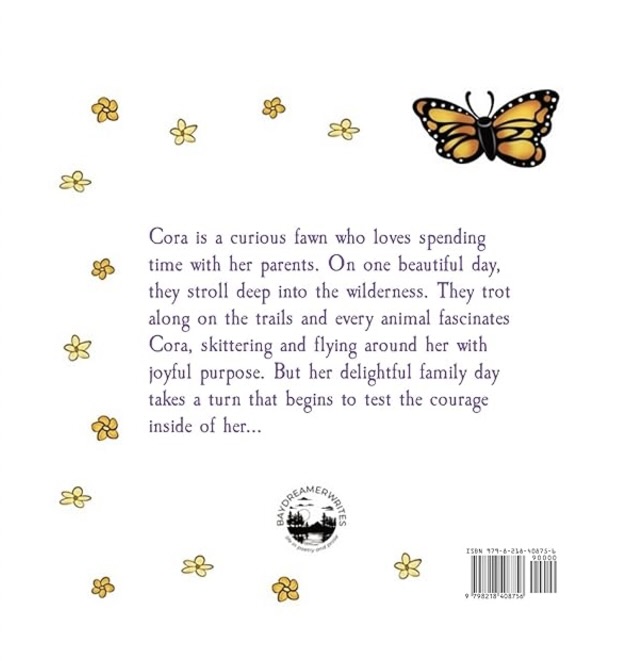
The Blurb
Cora is a curious fawn who loves spending time with her parents. On one beautiful day, they stroll deep into the wilderness. They trot along on the trails, and Cora finds other animals fascinating. They skitter and fly around her with joyful purpose. Every unique sound catches her attention, stirring her curiosity to discover just where that sound came from. But suddenly her delightful family day takes a turn that begins to test the courage inside of her…
I know Lauren is unhappy with how the Ebook formatting came out. She got one from amazon. I got mine from Kobo. Yes, it is not perfect, but it’s all there.
Geared to 2- 5 year old children, this sweet and loving story, complete with enchanting illustrations by Chris Mendez, is the type of book a child might want to hold, carry around or even take to bed.
In this 9th & last post showcasing The Painted House, we finish viewing the exterior. The east side begins with this gorgeous bird.
Then a cool head,
…..leads to a flower with an eye, then continues in Slide Show below.
The flower with eye is before April Showers,
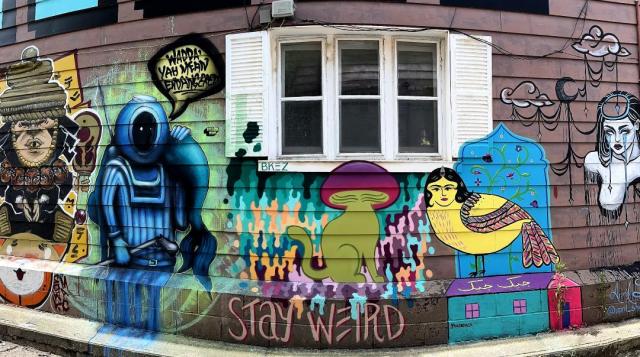
..which is seen far right, then chicken w/head & mushroom cap cat.
Then a diver with Endangered Species, odd guy & fish w/face in stomach..
The guy of ?
Sunflower women is next to the entrance,
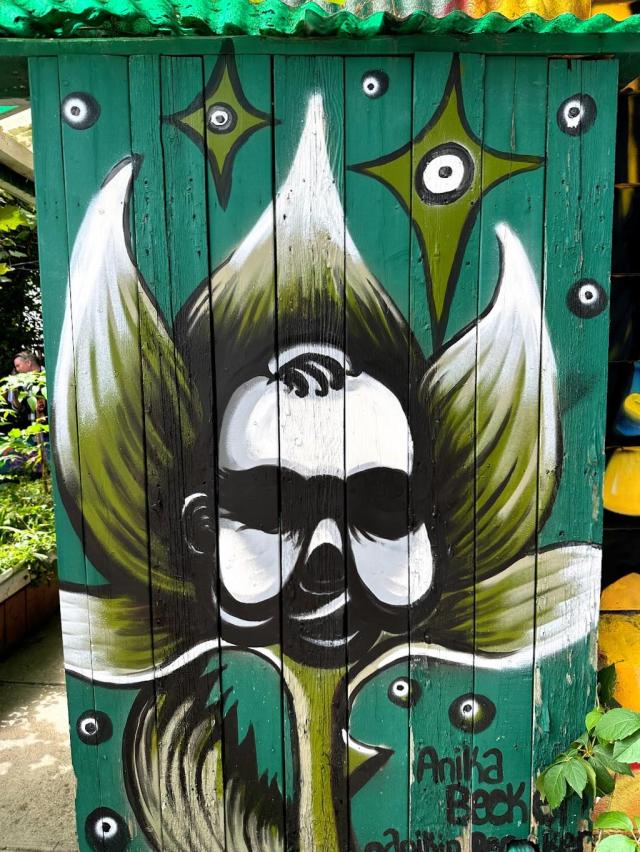
..guarded by thistle head?
I adore the Sunflower Woman.
Enter the backyard by Thistle Head, to find a floral back wall w/skeleton. Note the dog door on far left! This is the entrance to the house, and appeared in Kitchen segment.
The Backyard has its own post. Then we come around to the west side of the house, in Slide Show.
West side.
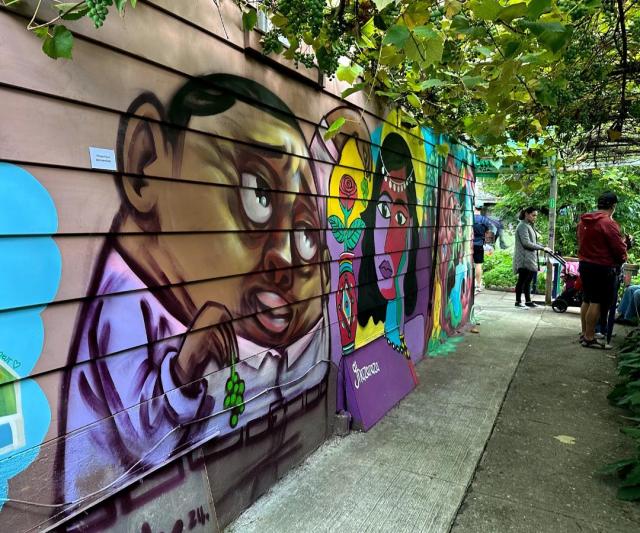
Colourful face (sun came out!)
An Elicser character offers…
Colourful Face some grapes.
The final image is a tropical scene.
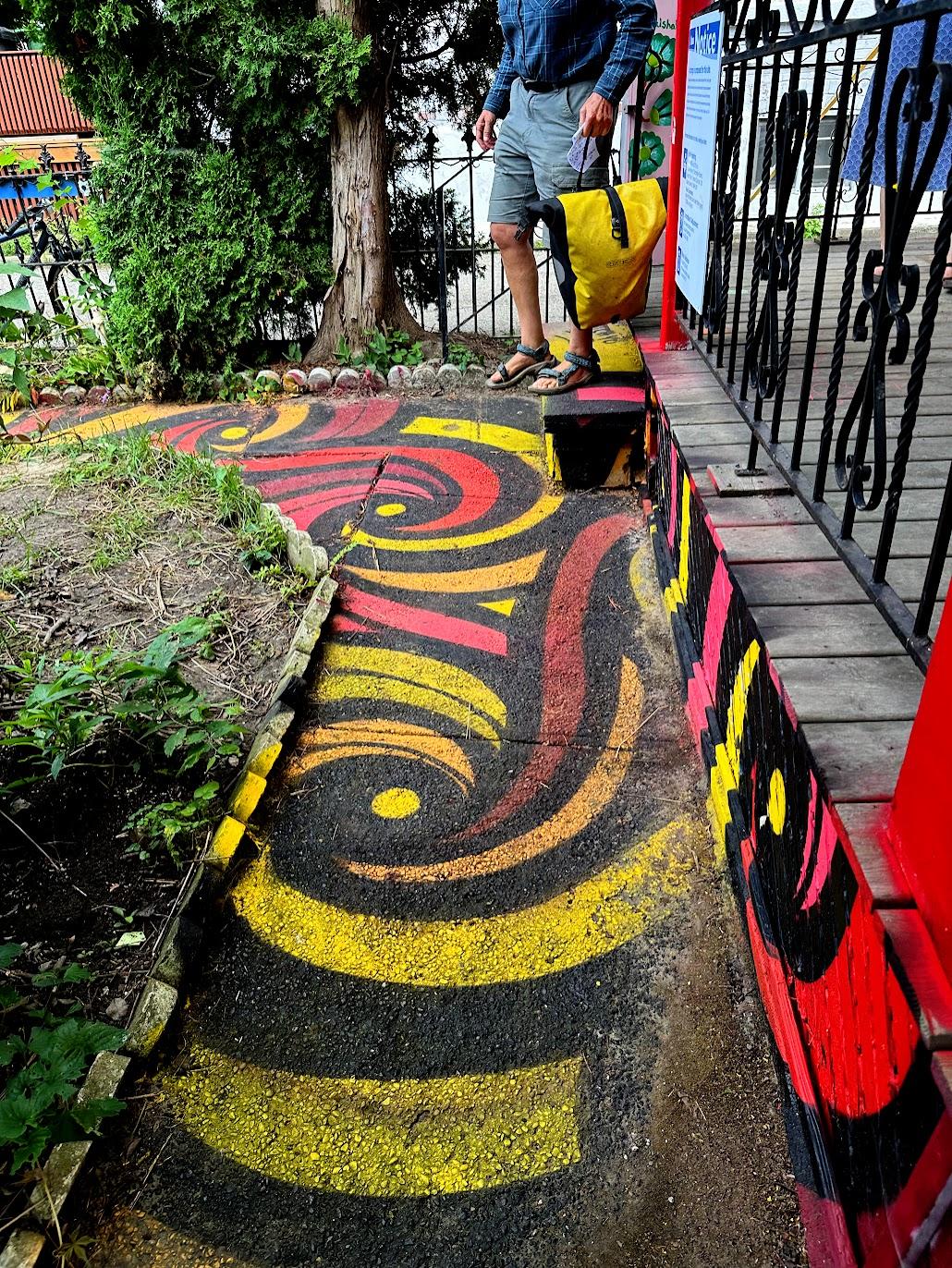
A painted walkway,
..leads us out the front gate. Bye, bye Painted House! You were a lot of fun.
Pics taken by Resa – August 11, 2024
Toronto, Canada
Artists, in order of appearance:
@life_inthestreets
@bkez
@oblsk1
@mac.the.maker
SOWL
@whatismorty
Anika Becker
@nixostreetart
To view all Painted House Posts, Click on the Doors Face on the Sidebar
Resa – So, Rebecca, in this last Self Portraits post, we are headed to the Netherlands, 17th century, to visit another artist that I had never heard of. Had you heard of Judith Leyster before this post?
Rebecca – Yes – just recently. I discovered her when I travelled virtually to the Rijksmuseum. Judith Leyster was featured in their Women of the Rijksmuseum exhibit two years ago. It was an eye-opening experience to discover her work.
Resa – Very Cool, I’m excited to se what you’ve dug up!
Once Forgotten Dutch Master
Judith Leyster, the once-forgotten Dutch master, has experienced a resurgence in recognition. She was commemorated in a Google Doodle, her artwork achieved higher- than-expected prices at auction, and she was featured in the most prestigious chamber of the Rijksmuseum.
Who Was Judith Leyster
A remarkable Dutch painter of the 17th century, Judith Leyster was born 1609, in Haarlem, Netherlands. The daughter of a brewer, she displayed a precocious talent for painting from a young age.
By the age of 24, Leyster had achieved the remarkable feat of becoming a member of the Haarlem painters’ guild, marking her official recognition as a masterful artist. She was one of the rare professional women painters of her time, being one of only two women accepted as a master in Haarlem’s painters’ guild during the entire 17th century Netherlands.
Leyster’s artistic talent quickly gained recognition, and she became known for her lively and expressive compositions, often depicting genre scenes, portraits, and still life paintings. Her work radiated a sense of spontaneity and skillful use of light and shadow, showcasing her technical prowess and innovative approach to painting.
Leyster’s artistic pursuits defied conventions, as she ventured beyond the typical subject matter embraced by Dutch painters of her time. Her work encompassed a diverse range, and she was among the pioneering artists who explored and popularized the domestic genre scene, portraying everyday life with a fresh perspective.
In the early 1630s, before her marriage to the lesser-known artist Jan Miense Moleanaer, Leyster produced some of her most significant works. However, despite her talent and dedication to her craft, her contributions to art history remained largely unrecognized until the late 19th century.
Judith Leyster Rediscovered
The rediscovery of Leyster’s significance in the art world came about during a lawsuit between an art dealer and his vendor.
It was revealed that many works attributed to her contemporary and rumoured rival, the great Dutch painter Frans Hals, were, in fact, Leyster’s creations that had been incorrectly credited. This significant discovery brought long-overdue attention to Leyster’s remarkable talent and her influential role in shaping the Dutch Golden Age of art.
It is remarkable how the true authorship of artworks can be uncovered through careful examination and historical investigation. The discovery of Leyster’s initials hidden beneath a faked signature of Frans Hals in “The Happy Couple” (aka The Carousing Couple) serves as a testament to her enduring impact on art history and the need for ongoing reassessment of attributions.
This revelation not only sheds light on Leyster’s artistic contribution but also prompts a re-evaluation of artworks attributed to her contemporaries. It further underscores the significance of ongoing research in uncovering the often overlooked achievements of pioneering artists.
Resa – When searching for other female artists from the past whose art has been misattributed, I found an intriguing article (July/2024) inDaily Art Magazine. The article cites 5 female artists.
“This systematic misattribution essentially meant the erasure of women from the art historical canon, which eventually resulted in their erasure from history itself.”
Rebecca, do you think it’s possible that as art experts and historians uncover yet more misattributed art that we could see some famous paintings by famous artists, the Rembrandts, Da Vincis, et al being reattributed to women?
Rebecca – You have asked a very insightful question, Resa! It’s certainly possible. As more art is studied works that have been misattributed may be finally recognized as contributions of women artists. It would be a significant shift in how we view art history. I truly believe that we are now embarking on an extraordinary exploration of art history. It gives me great comfort that we are seeking to foster a richer and more equitable understanding of the artistic legacy we inherit. I am glad that you mentioned the Daily Art Magazine. It is one of my go-to places to learn about art.
Judith Leyster’s Self Portrait: A Glimpse into the Artist’s World
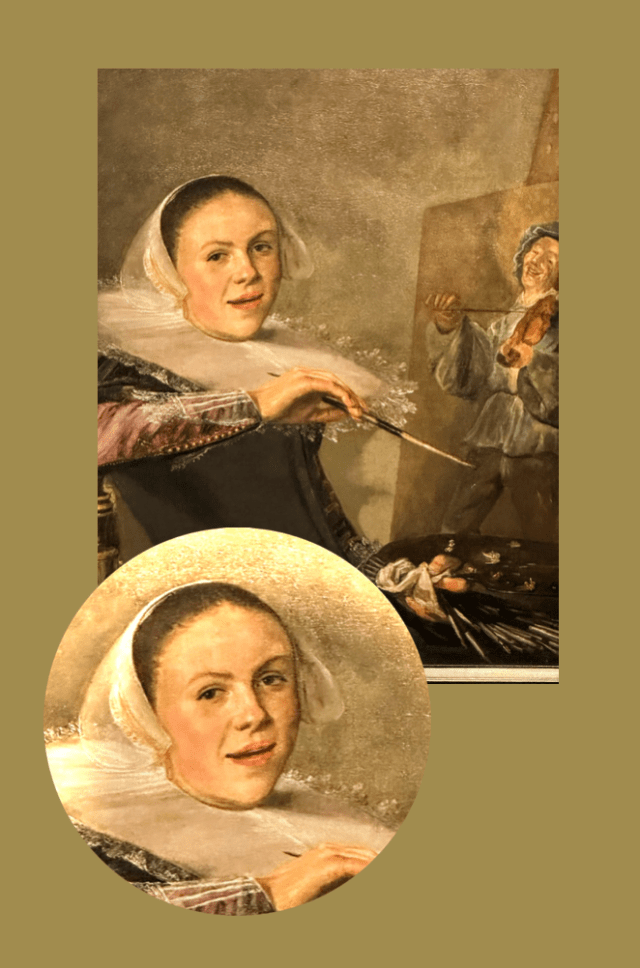
Judith Leyster’s self-portrait offers a glimpse into her life and artistry. Created before her admission to the guild in 1633, the portrait encapsulates a moment of confident creativity and engagement. Leyster’s self-assured expression, characterized by a confident smile and parted lips as if to speak, exudes a sense of self-assurance and mastery. The casual pose, with one arm nonchalantly resting on the back of her chair, hints at the artist’s ease and comfort in her own studio.
It is difficult to photograph art. I captured many works beautifully. However, this painting was the finale of the show, and was heavily lit with warm light.

Shot on an angle, the lighting was evaded, and it seems to be closer to many photos of it. Still, it seems no 2 photos are the same.
The liveliness and freedom evident in Leyster’s brushwork mirror her spirited approach to art, capturing a fleeting pause in her work as she glances toward a potential visitor. This subtle interaction suggests a moment of connection with a viewer, possibly a patron, inviting them to share in the experience of a work in progress.
In this self-portrait, Judith Leyster not only presents herself as a skilled artist but also provides a glimpse into the vibrant and dynamic world of creativity that she inhabited.
Today, Judith Leyster is celebrated for her creative spirit, artistic innovation, and lasting impact on the history of art. Her legacy continues to inspire and engage art enthusiasts and scholars around the world.
Resa – Well, Rebecca, so ends our series on Self Portraits. It’s been a pleasure and an honour having you here withme. Thank You!
I look forward to your return, to discuss some engravings on paper by Catherine Brandinn and Geertruydt Roghman. These are of utmost interest as the images depict the working poor, not a big subject of artists in those times.
Rebecca – Thank you, Resa! It has truly been a privilege to explore these amazing women through “Making her Mark” with you. Your photographs allowed me to virtually experience the joy of viewing these paintings. Thank you for celebrating and honouring these artists. Their resilience and creativity continue to inspire and empower us today, even as they provide a vital legacy for future generations of women in the arts.
I’m eagerly anticipating our next discussion on the engravings by Catherine Brandinn and Geertruydt Roghman, as the portrayal of the working poor offers a unique and important perspective that, I believe, deserves more attention in the art world.
As you say so eloquently, “Art Remembers Us.”
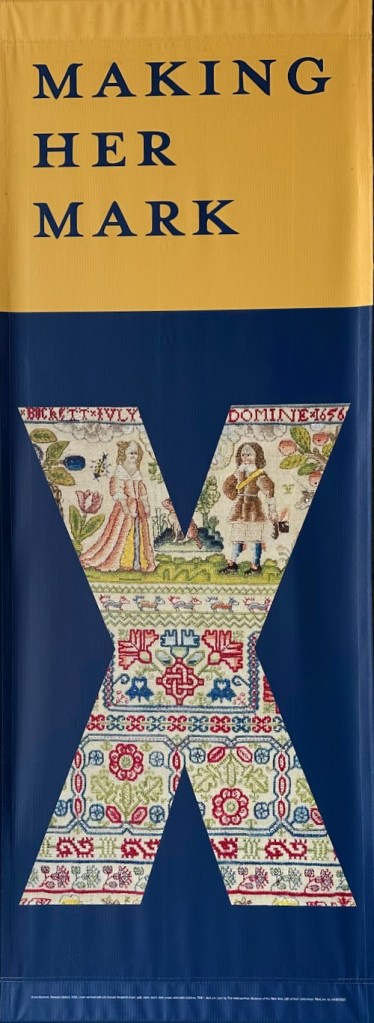
Click on X to see research links& a fabulous video on her
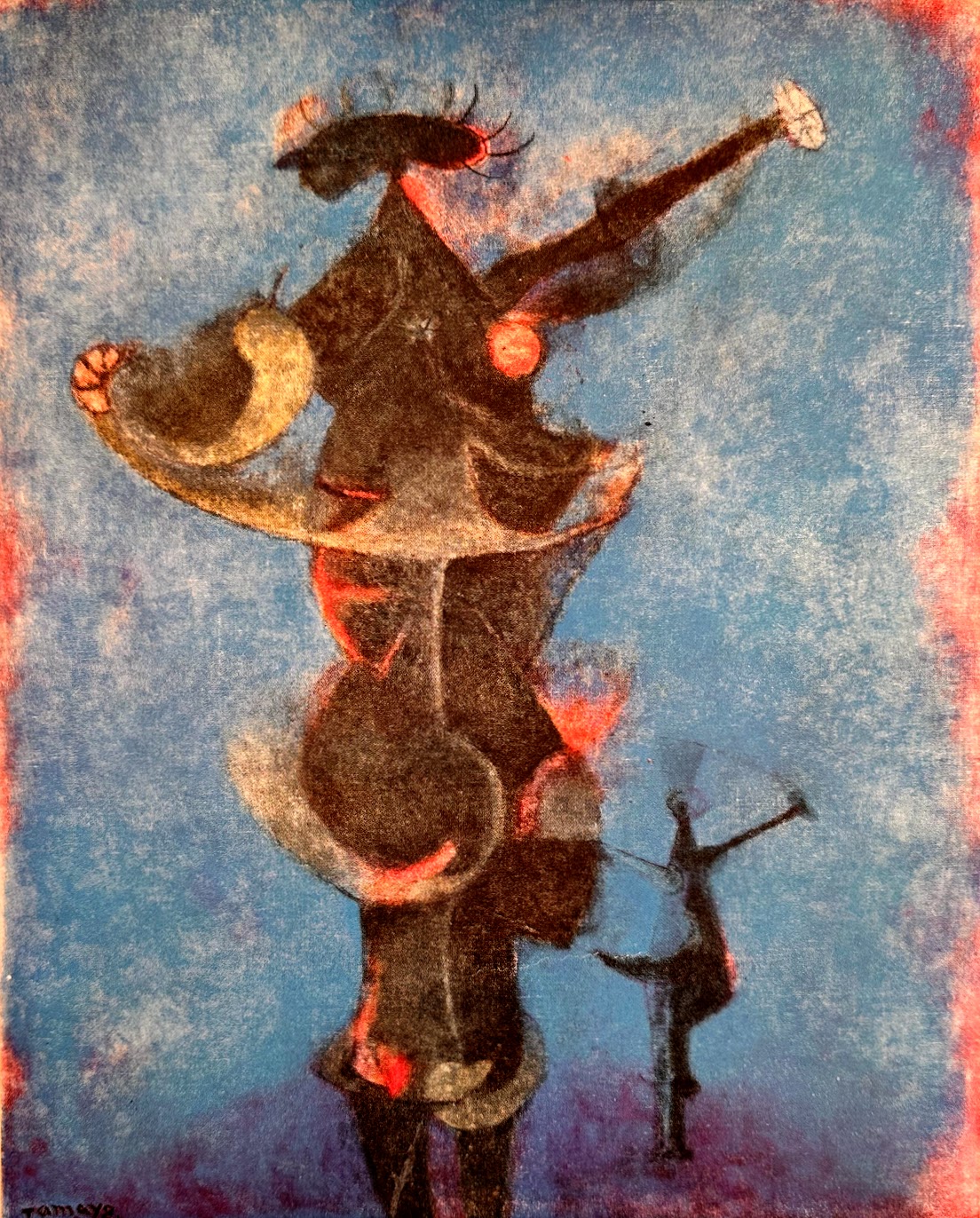
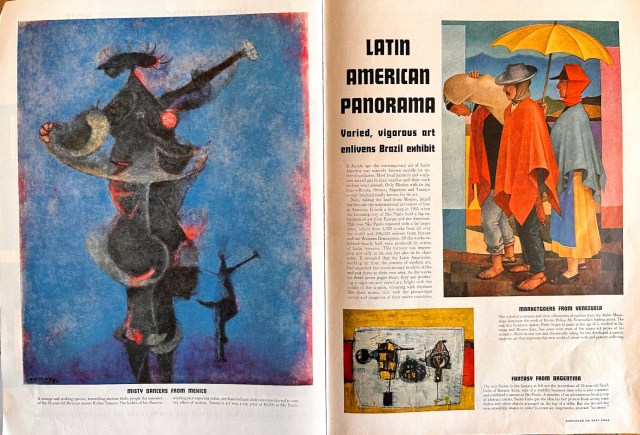
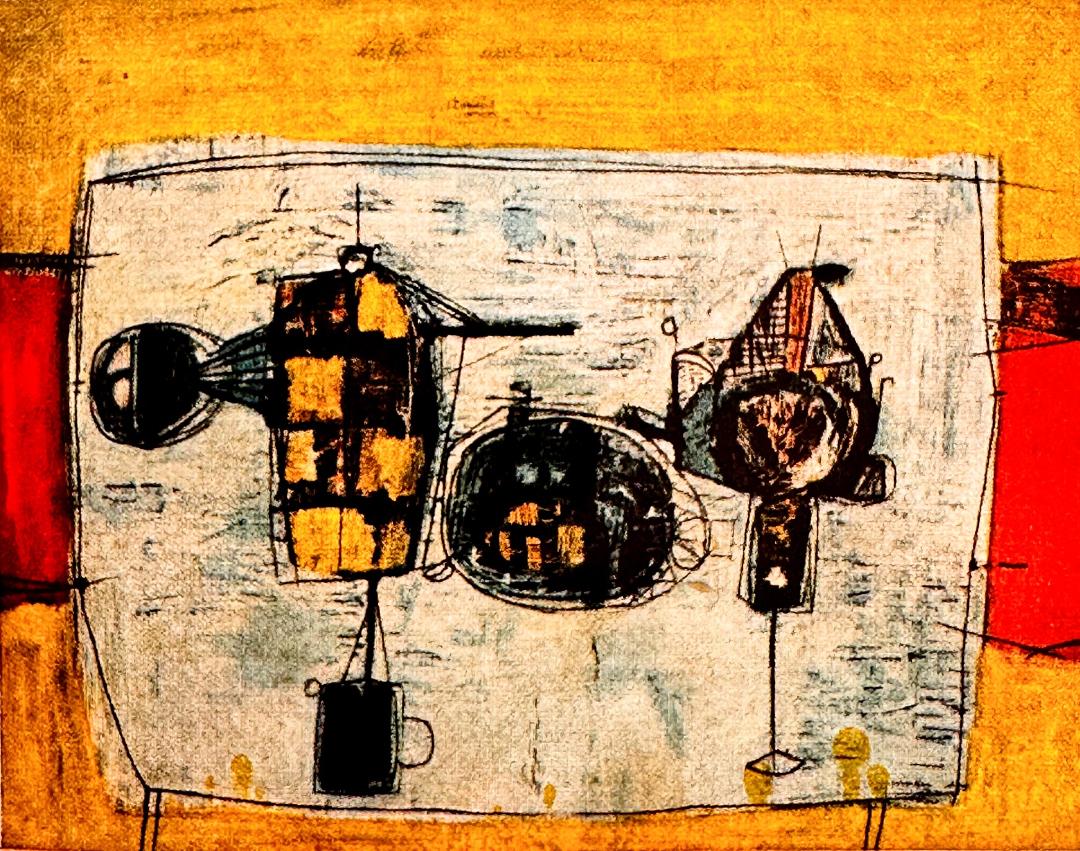
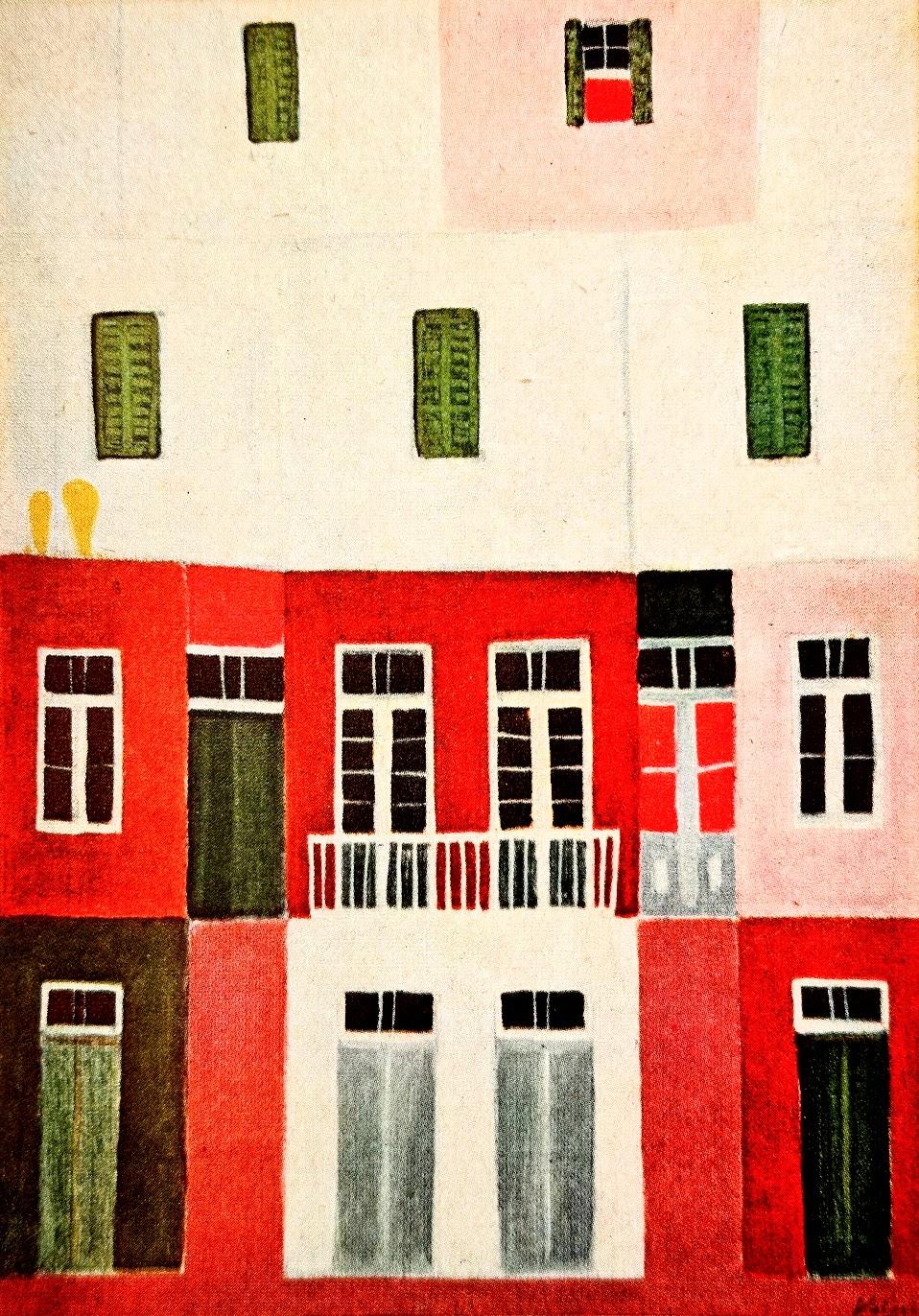
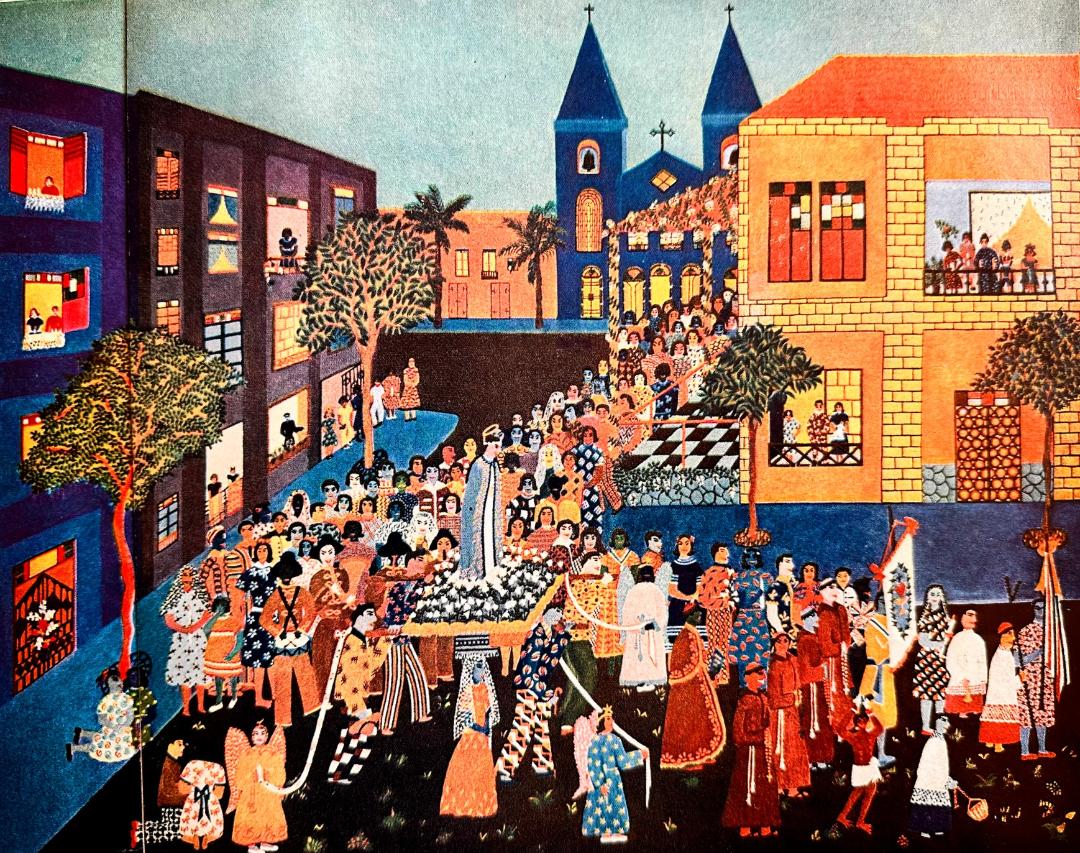
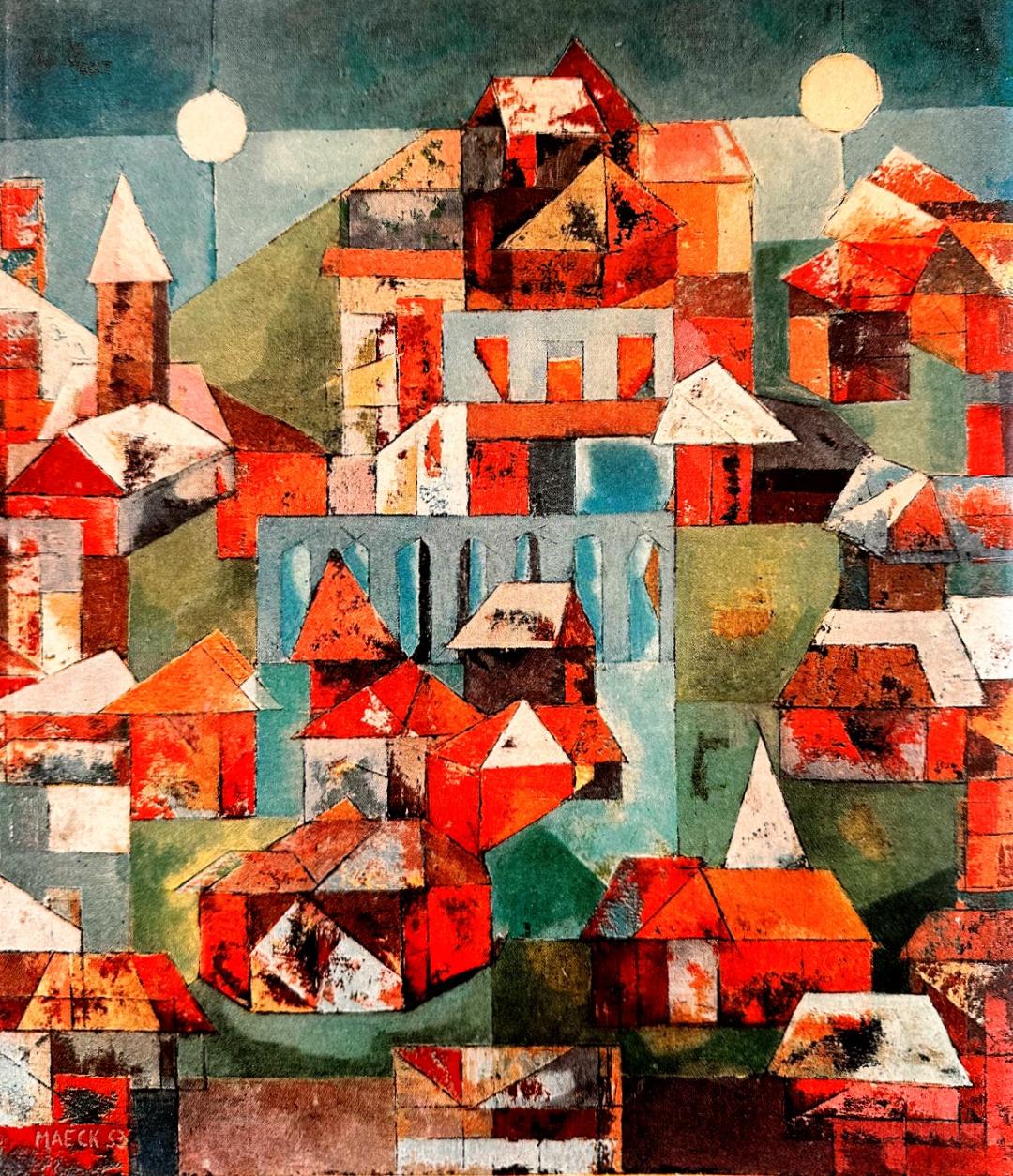
Held in Brazil, in 1954, almost 2,000 works of art out of 4,000, were from Latin American Countries
Marketgoers From Venezuela
Harmony
As this magazine is 70 years there is a lot of fading & yellowing. I turned up the white & blacks points a bit to get a better look.
Hot Sextet From Havana
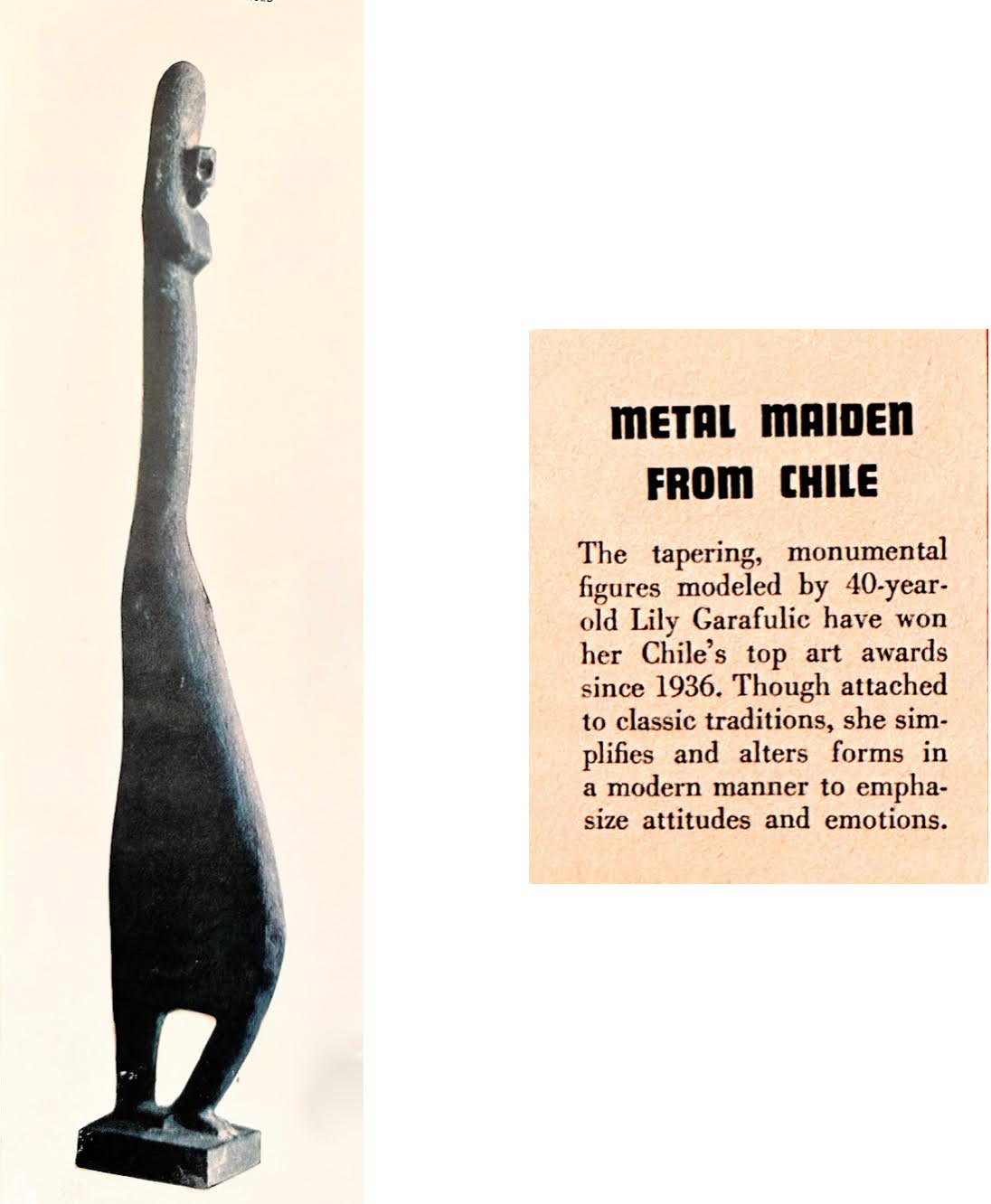
Metal Maiden
Tropic of Cancer
The Embrace
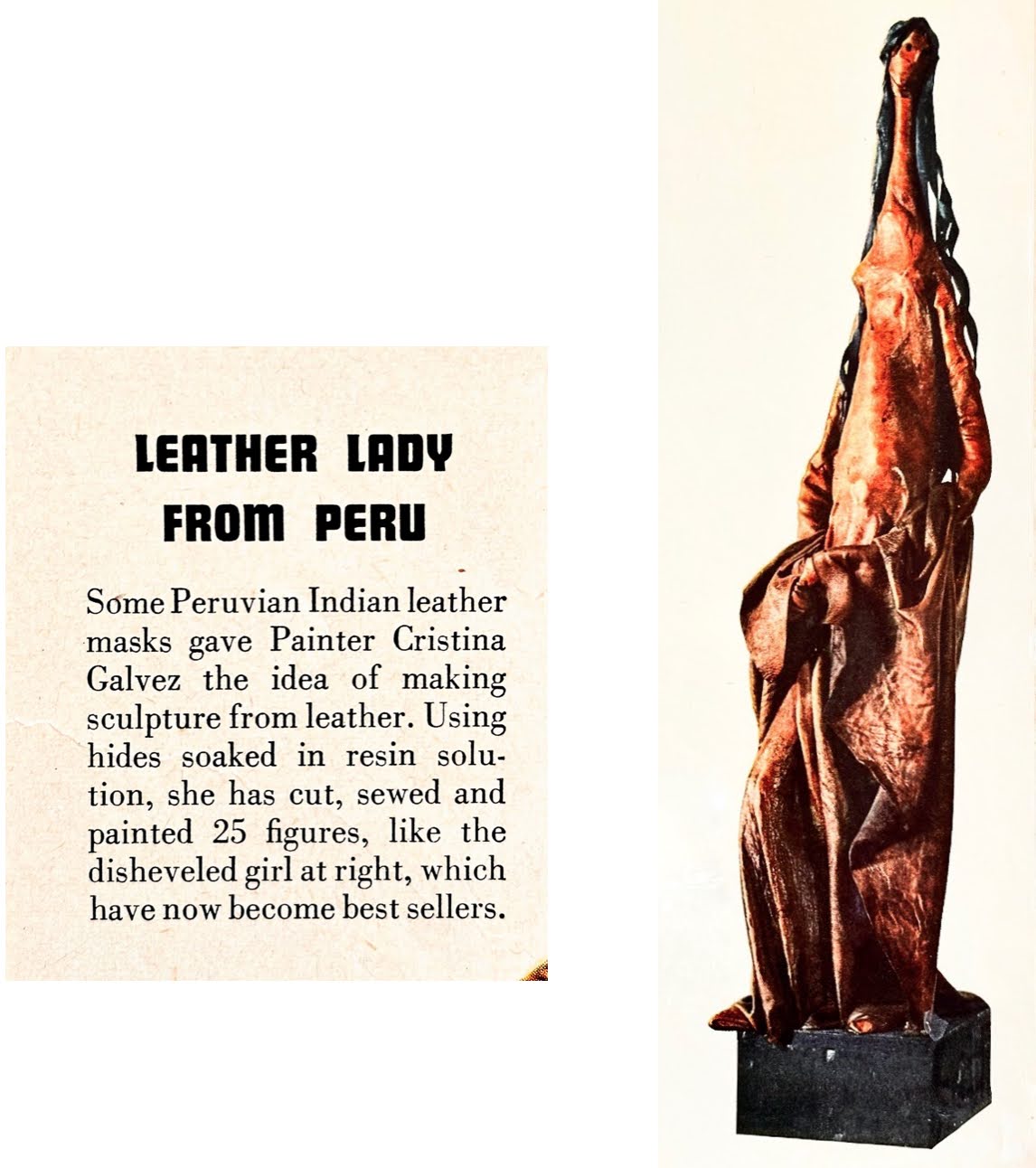
Leather Lady
This article is arranged in the same order as in the magazine LIFE May, 1954. The last page is one image.
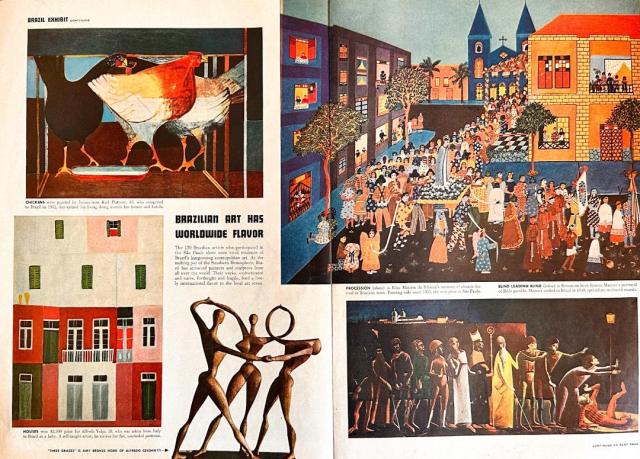
Chickens
Houses
Three Graces
Procession
Blind Leading Blind
Shanties
Here is the cover of the magazine I found this article in. Following is the intro, which is on page 1. I put this out of order, as I wanted to get right to the art.
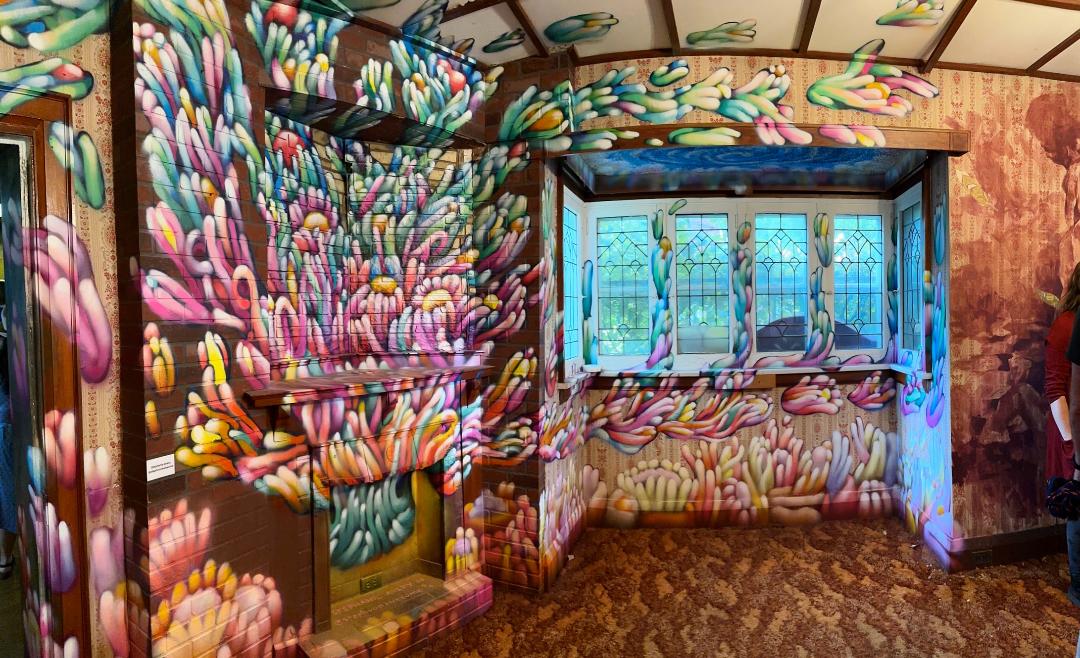
In this second last post of the Painted House, we look at the remainder of the interior.
Main Floor
Bathroom
This is a difficult painting to capture, as the bathroom was about 5′ wide, tops.
I used the zoom-out feature to shoot it.
……which accounts for most of the distortion seen in the slideshow.
Dining Room
Living Room
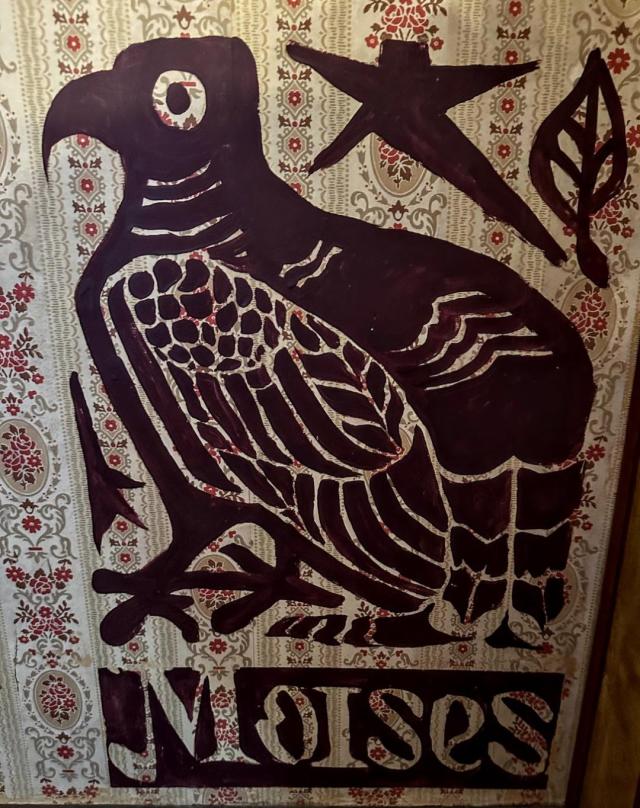
The art was painted over wall paper in the living room. In a couple of pieces, the art was integrated with the wall paper, as seen in. the slideshow.
Second Floor
Bedrooms
This was a Jackson Pollack + (sort of) all over paint with installation. This is a tiny room, and the most popular with the kids.
“Put that back! Don’t touch that! I want this! No, it’s part of the art! Waaaaaa!, Don’t go there! I want the bear! Put the bear back!,etc.”
Not a guy, part of the art.
I got out of that room fast, but not before I nabbed a shot of me in the splattered mirror.
The master bedroom was done in faux stained glass effect, and partly shown in in the post September of The Painted House series. The third bedroom was featured in Bedroom of TPH series
All 8 (9th coming soon) of The Painted House posts are easily available to view by clicking on the diptych doors art, second from the top on the sidebar.
Mike Steeden’s adult historical romance embraces an idea of civilized existence via art, passion, love and peace. Set primarily in post WWII Montmartre, France, the story stakes a solid background in the horror of World War II’s Pacific War, and post WWII England.
Resa – In your books, and in prose on your blog, you often write of war, in particular WWII. I appreciate this, as I feel many have become indifferent to Nazis and white supremacy. Of course there was also the Pacific War aspect to WWII. To what do you owe this interest?
Mike Steeden – When it comes to WWII in my books, it’s all about my dad, a person who lives in my heart for no other reason than being my father. Jim, a tall good-looking man with wavy hair, who at 18 years was likely to become the centre forward for Brentford Football Club. Then ‘bang’, England was at war with the Huns.
Resa – Ahh, I had no idea. Please continue!
Mike – At just nineteen years, dad was captured by the Germans just outside Dunkirk whilst trying to retreat back to the beaches and possible sanctuary. The truck he was driving ran out of fuel just a few miles short of the beachhead. He and his mates were armed, amazingly, with only useless wooden rifles.
(that’s been validated, by the way…as there were not enough real ones to go round, and the Army wanted to make it look like all conscripts were armed.)
In the event, he and his comrades were herded up with the other POWs and, over several months, were marched across Europe to a camp right next door to the Krakow Concentration Camp in Poland, which would be his home for the next five years. His camp was named Stalag V1118 for what that may be worth.
Resa –Afascinatingstory, and we’ll end the post wth the rest of it.
Back to the book – Mike takes the protagonist, Green Eyes, famed French artist Zerach and the post war horror from England to France. It’s a mess in both countries, but France has Paris; specifically Montmartre.Once in Montmartre, Green Eyes, becomes an artists’ model.
Resa – Another topic you like to write about is Montmartre, the art scene and lifestyle therein. Tell me about this?
Mike – Whereas most modern nations are those thought of as ‘science led,’ in France it is ‘art’. It is for that reason I love Paris, the home of creative activity of all artistic kinds. To me, art is everything.
For the sake of it, think of June 1924 in the magical period of the ‘Années folles’. I often dream that I am in ‘The City of Love’, Paris by any other name.
"Overnight, spring has turned to summer, and it is as if the tantalizing romantic May dance of titillation has been fully consumed beneath the clear blue skies of the summer equinox.
There are no shadows under the high sun of noon this day as Shirley, my wife, and I walk the Luxembourg Gardens.
Mike – The region of Montmartre is the home of this planet’s art of all kind. It is there we find Ezra Pound, T S Elliot, Ernest Hemingway, F. Scott Fitzgerald and his wife Zelda, all chatting about Gertrude Stein’s party in Montmartre last evening.
Resa – Why Montmartre? Did you live there at one time?
Mike – Well, it is impressive with wonderful views overlooking Paris itself. Moreover, the town square is busy with a mass of wild street artists and cafés galore where one can grab a cup, take a seat, and linger like a local. Then there is the beauty of the buildings, old but magical. Give us another life and we’ll live there for ever.
When Green Eyes new friend, Charlotte, showed up at her Montmartre home wearing a lilac lace opera coat, I was fascinated by the coat. Green Eyes had to have it. I had to draw it.
Resa – Is this a coat you saw somewhere or did you make it up?
Mike – An odd one is this. I went over the top picturing Charlotte, as I desperately wanted the poor girl to be dressed in style even though that was all she was wearing. Why, I don’t really know; it was just a feeling for humble gratitude, albeit that she’d soon be happily naked thereafter.
‘Panash’ I call it, yet to give such a classic coat (I’m not very clever when thinking these things. I simply see them in my mind!) with captivating sequins, to Green Eyes who she hardly knew at the time, ensured a brand-new friendship, hence the story went on its romantic way.
Charlotte also shows up in an Avant-Garde kimono. As there is no further description, I came up with this, and shot in the morning light’s shadows.
Fascinated by the saga of Mike’s father? Here is the rest, as told by Mike.
Mike – As a prisoner he was, as I understand it, used effectively as slave labour down the coal mines of Silesia. The prisoners were regularly manacled…also validated…and that awful fact came back to haunt him in the nightmares of the dementia of his dotage, the poor sod. Nevertheless, post war and safely home, Jim, a six footer plus and the youngest of ten made it back to England five stone lighter than when he left these shores weighing in at a mere eight stone, yet picked up where he left off and eventually, after his apprenticeship, became an accomplished bricklayer. Sadly with frosted feet due to having no shoes during the war his dream to play for Brentford Football Club never happened.
Another thing, when back in England, Jim discovered his family had spent every last penny of his away…not a kind thing for a young man to take in and not go mad.
There you have, Miss Resa, a true tale that is glued to my heart and books. He wasn’t a bad old boy. He made me a fast bowler at cricket as well as teaching me how to throw darts pretty well. But basically, it was him and him alone who filled my brain with his WW2 torture…hence my stories.”




















































































You must be logged in to post a comment.