After a hiatus from blogging Lauren is back!
I’m thrilled and honoured to be part of Lauren’s return!

After a hiatus from blogging Lauren is back!
I’m thrilled and honoured to be part of Lauren’s return!

A wall was painted for a scene in a movie. After the scene was shot, the wall was painted over. I knew from the first piece, that something was off. Let me know which one you thought was fake in comments. Answer at end of post.


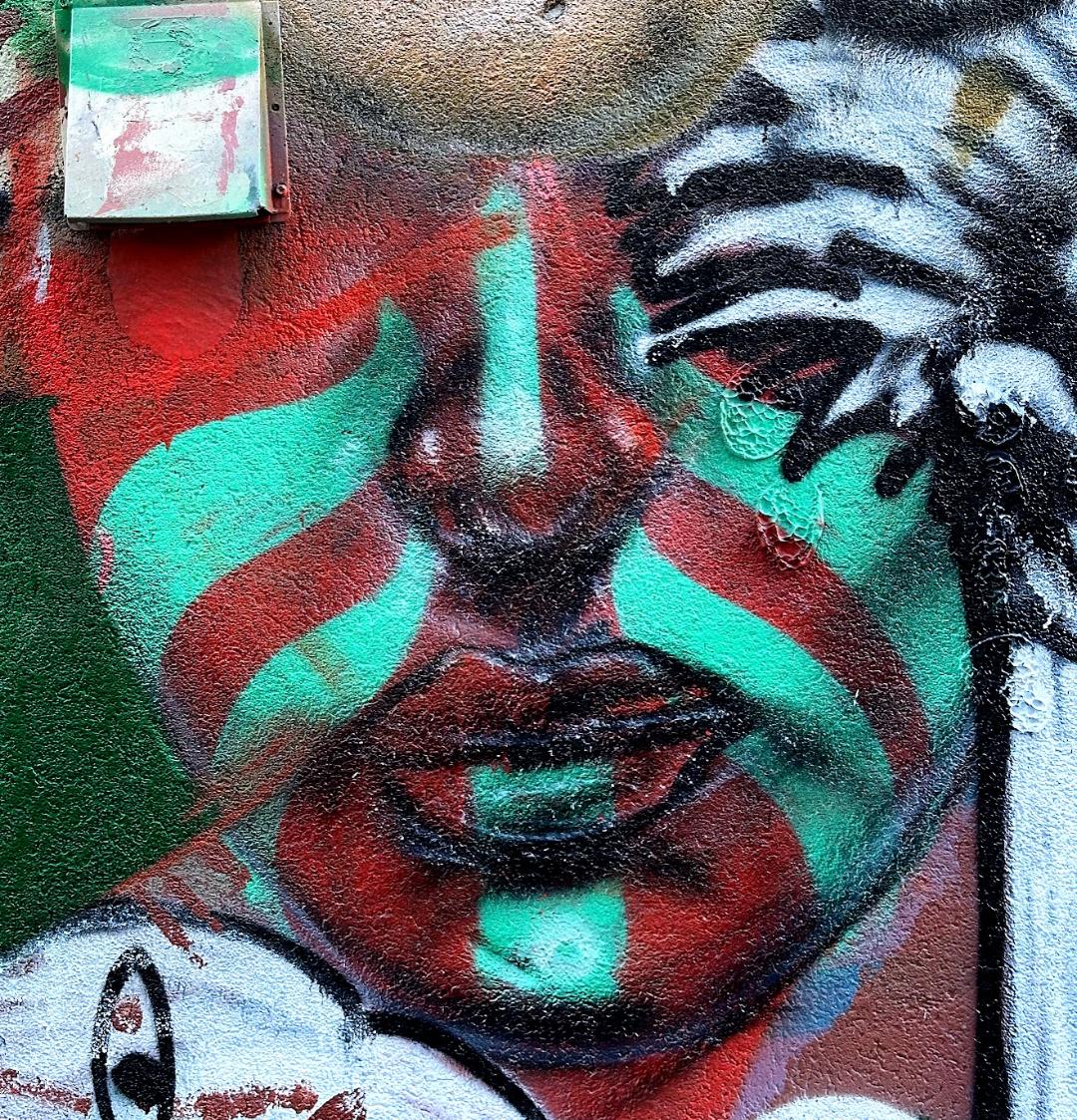

Pics taken by Resa – 2023 & 2024
Toronto, Canada
They shot a movie once, in my hometown
Everybody was in it, from miles around
Out at the speedway, some kind of Elvis thing
Well, I ain't no movie star
But I can get behind anything.

When You Blow at High Dough - The Tragically Hip


I could blame the Toronto traffic.

ARRROOOOO

OR – a lot of other stuff.
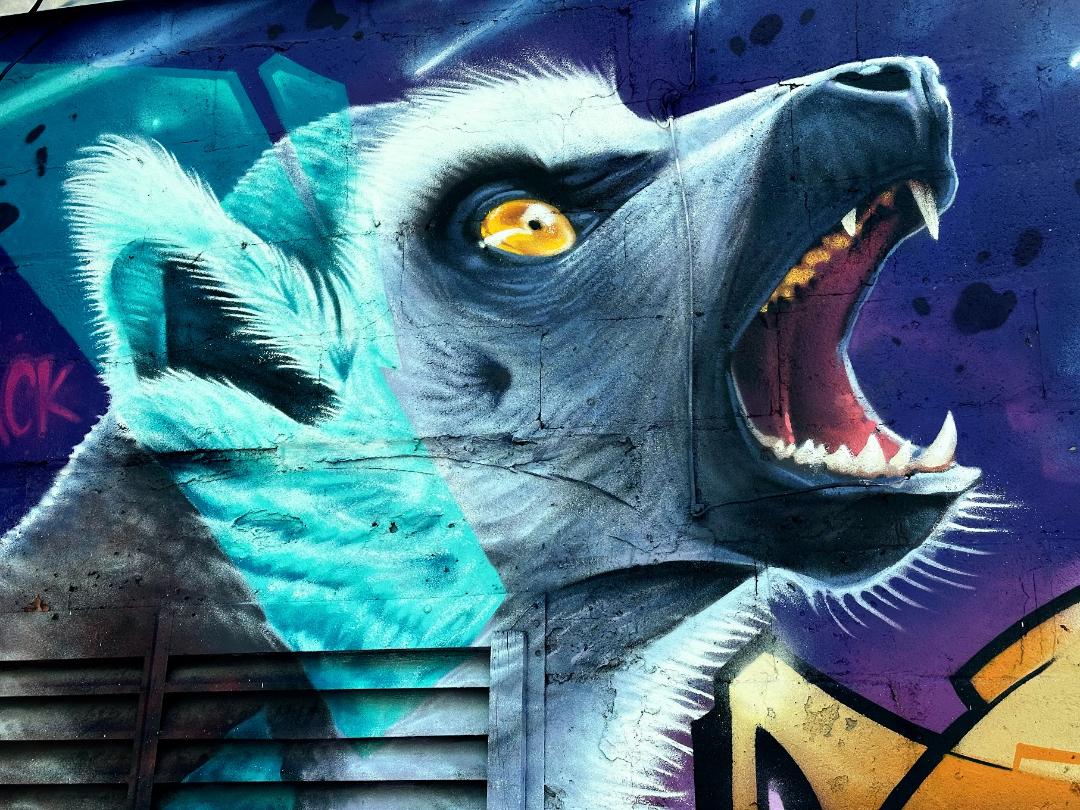
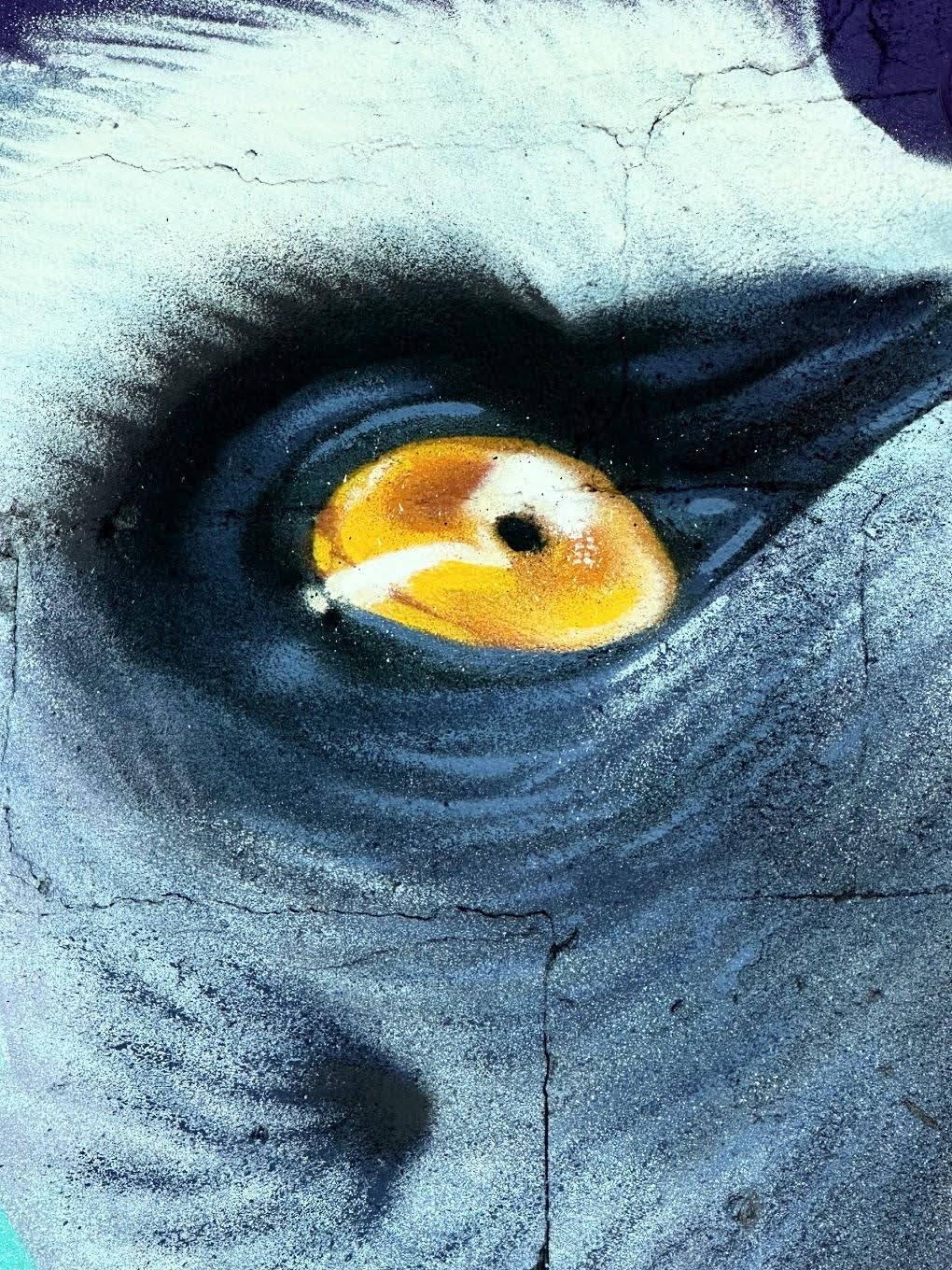
Still, when I found this wolf, I felt a happy thrill.
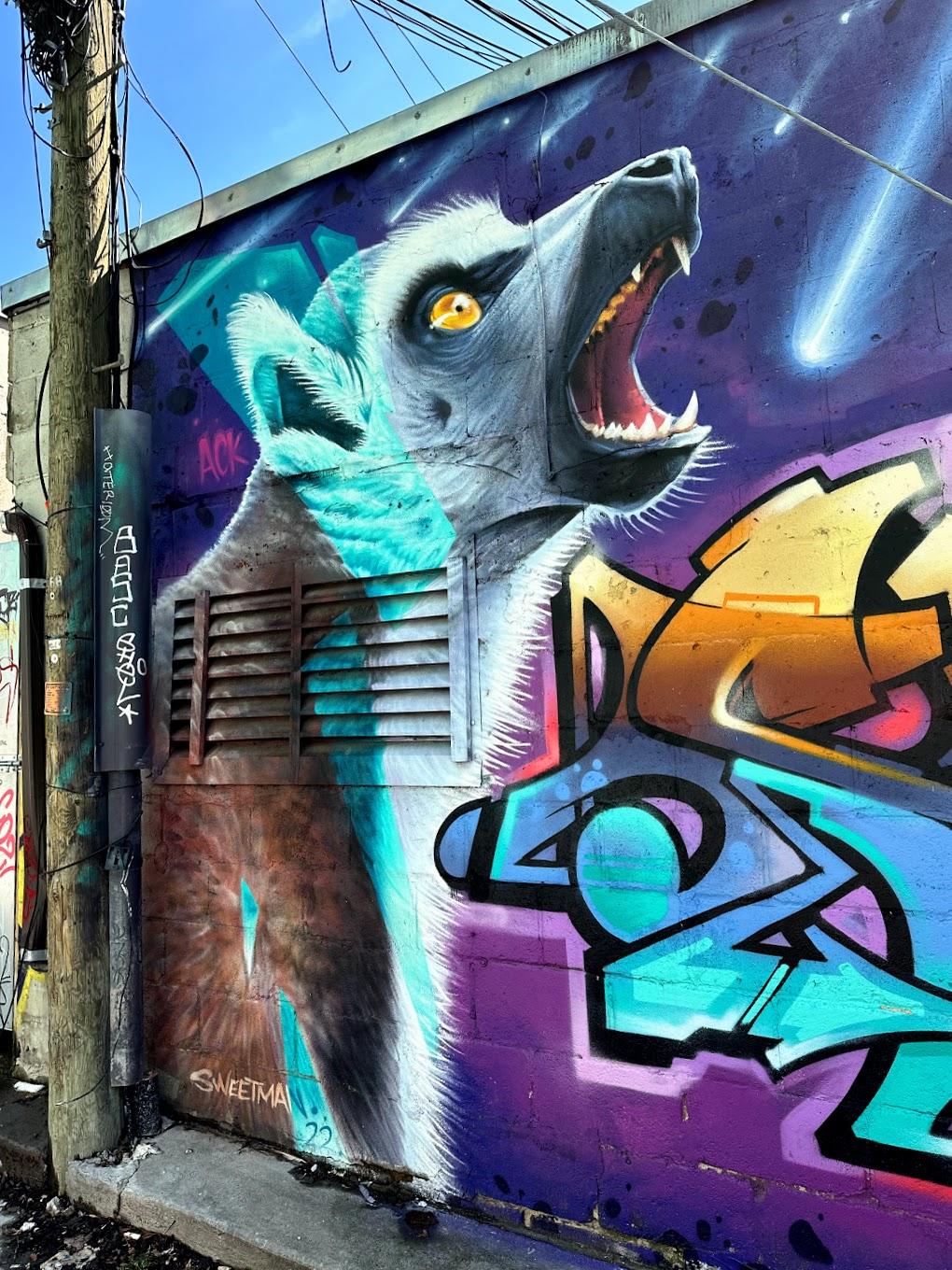
Nothing makes me feel better than art, all art, all of the arts.

Even in a nasty alley, I feel great!

Pics taken by Resa – March 25, 2024
Toronto, Canada
The Artist:

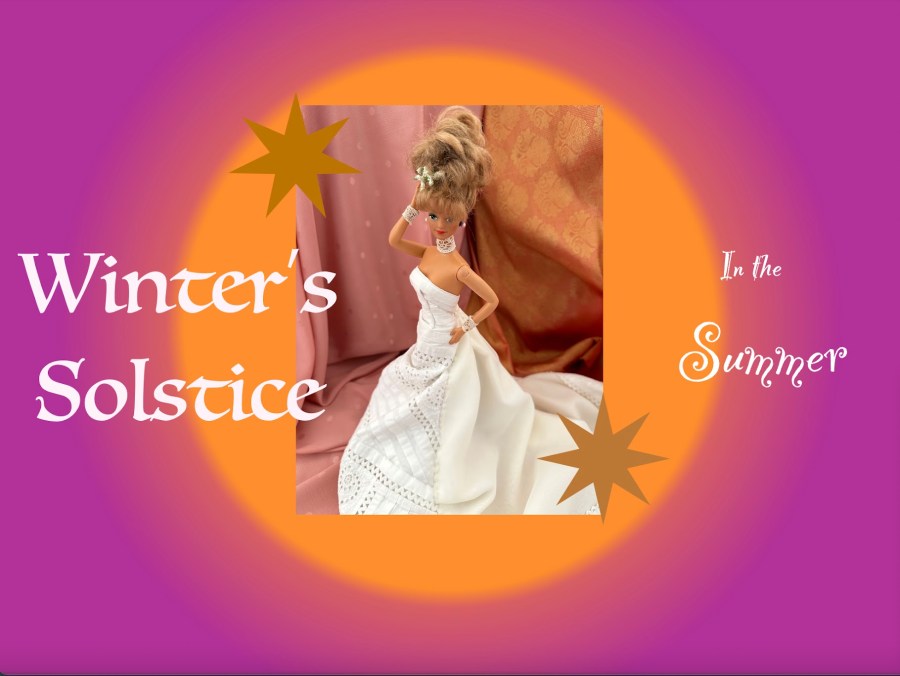
Ecila looked up at the hot summer’s sun.

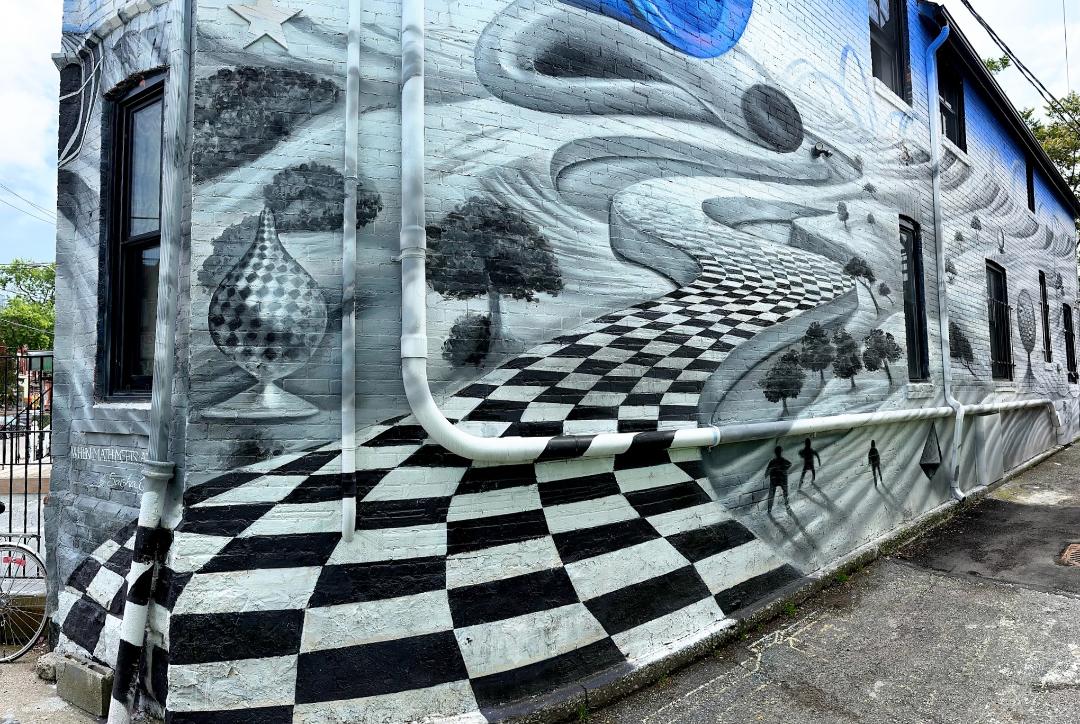
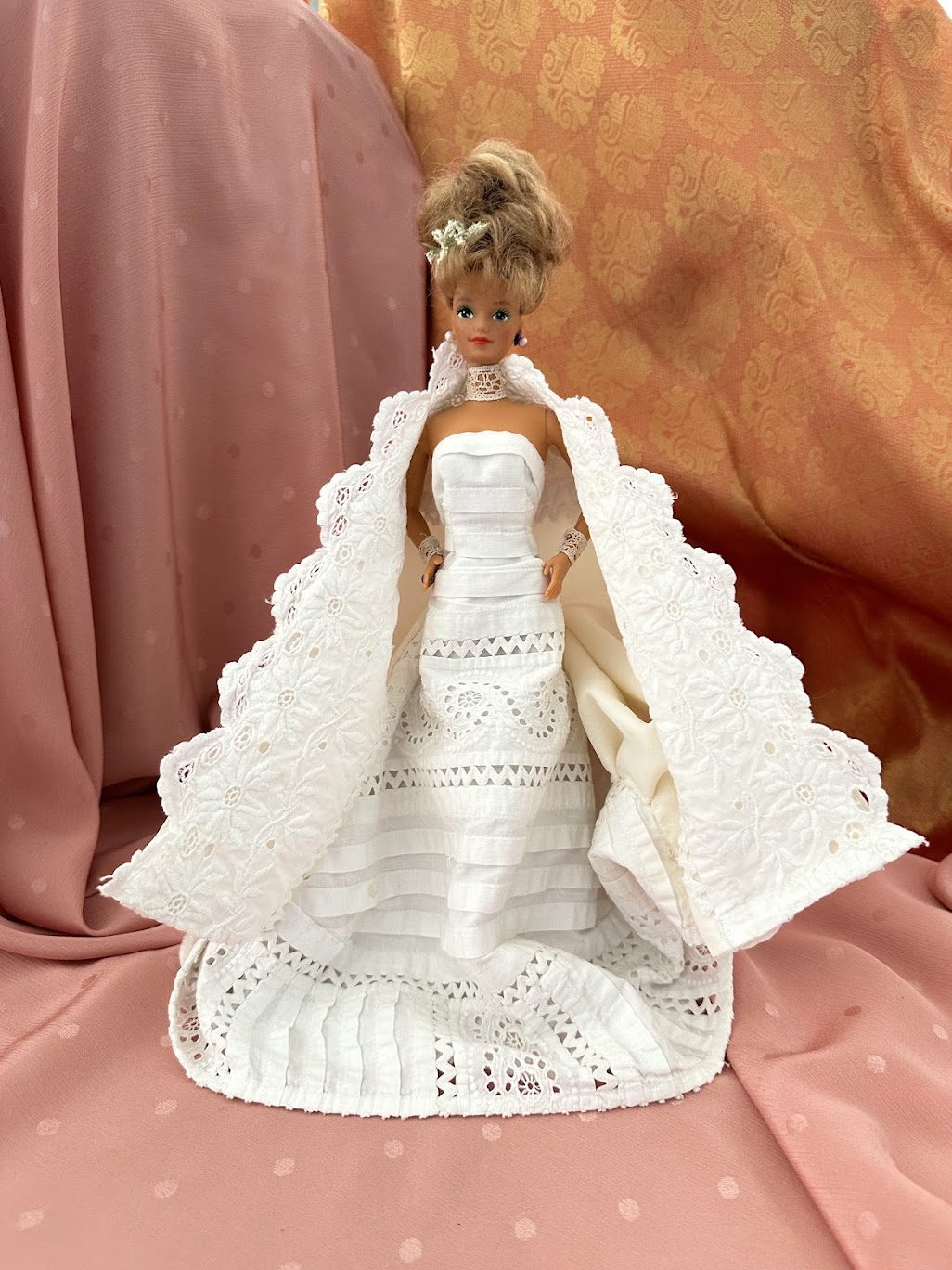
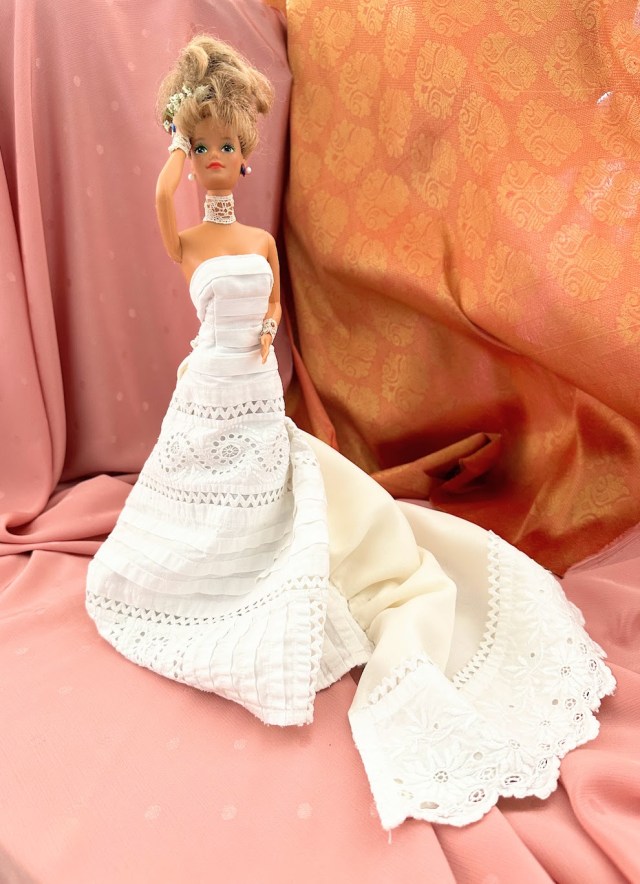
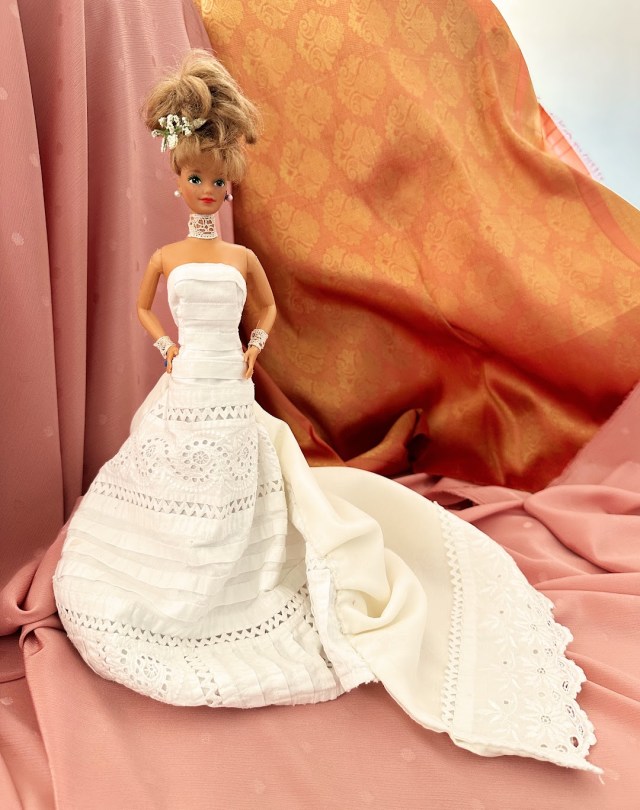
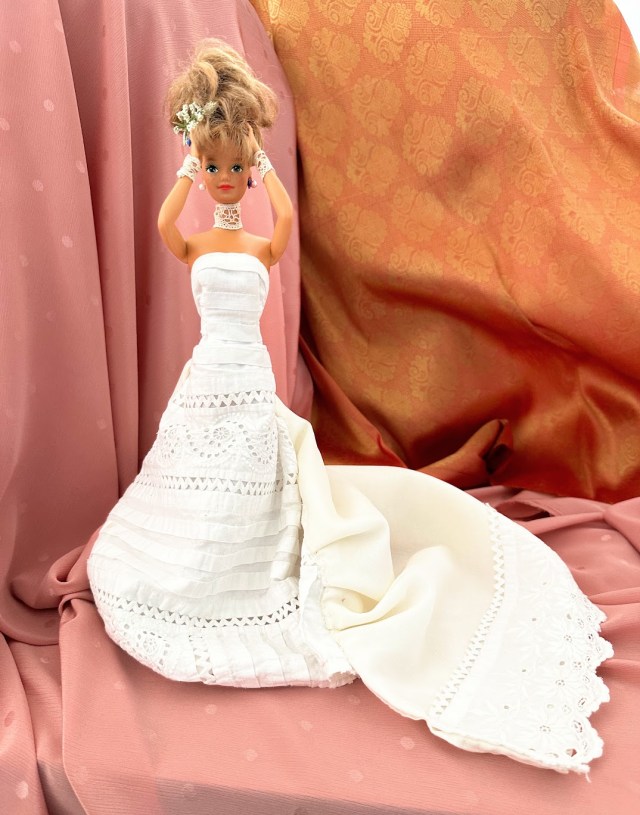
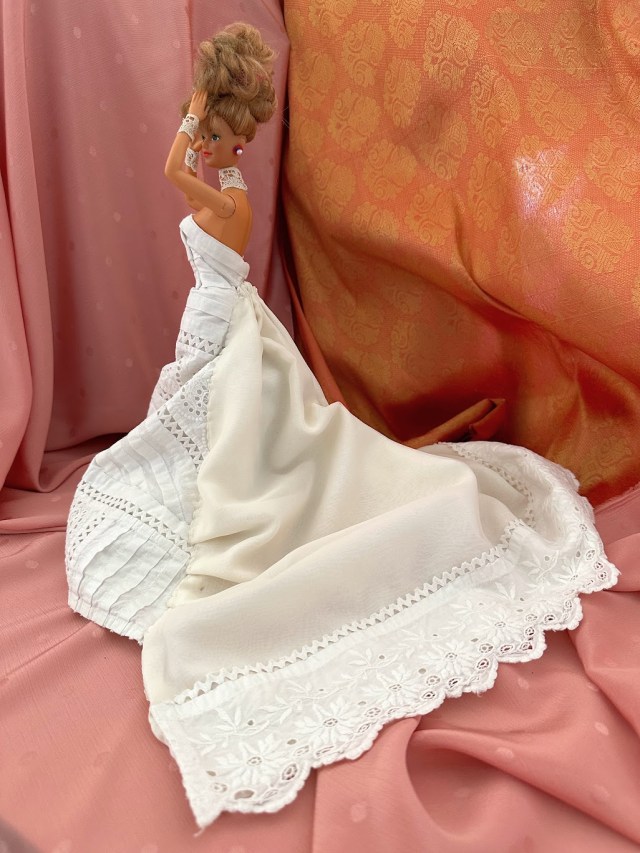
She was on her way to Teagan’s Christmas in July blog party, in a beautiful new gown. Blinded by the light, she accidentally turned left into a mural. Ecila looked around at the black and white world, and saw no way out.
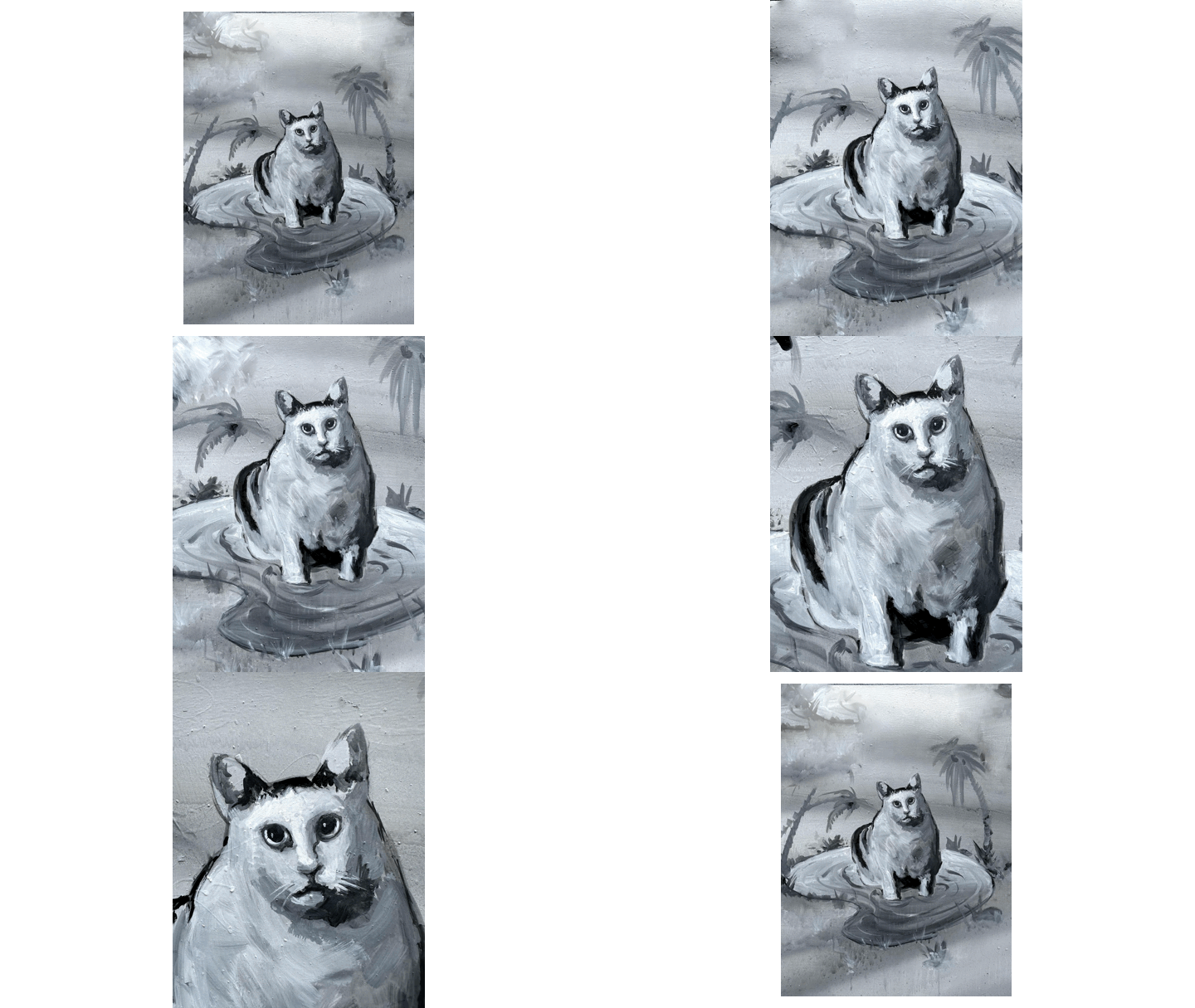
Suddenly there was a black and white cat looming before her. “Who are you?” she asked.
“Why I’m Tac Tac the Water Cat,” he replied, “and you can’t get out the way you came in. You’ll have to go through the Purple Pink Rabbits’ door, in the pink alley.”
“Take this!” said Tac Tac, and he handed Ecila a gold rabbit coin. “Use it wisely. It’s your one chance to get out of here.”

Ecila wandered black and white curves until she saw a pink alley. In the alley was a Purple Pink Rabbit. “Hello! What’s your name, and can you please show me the door out of here?”

“I’m Tibbar,” the rabbit replied, “and yes, the door is at the top of the stairs.”
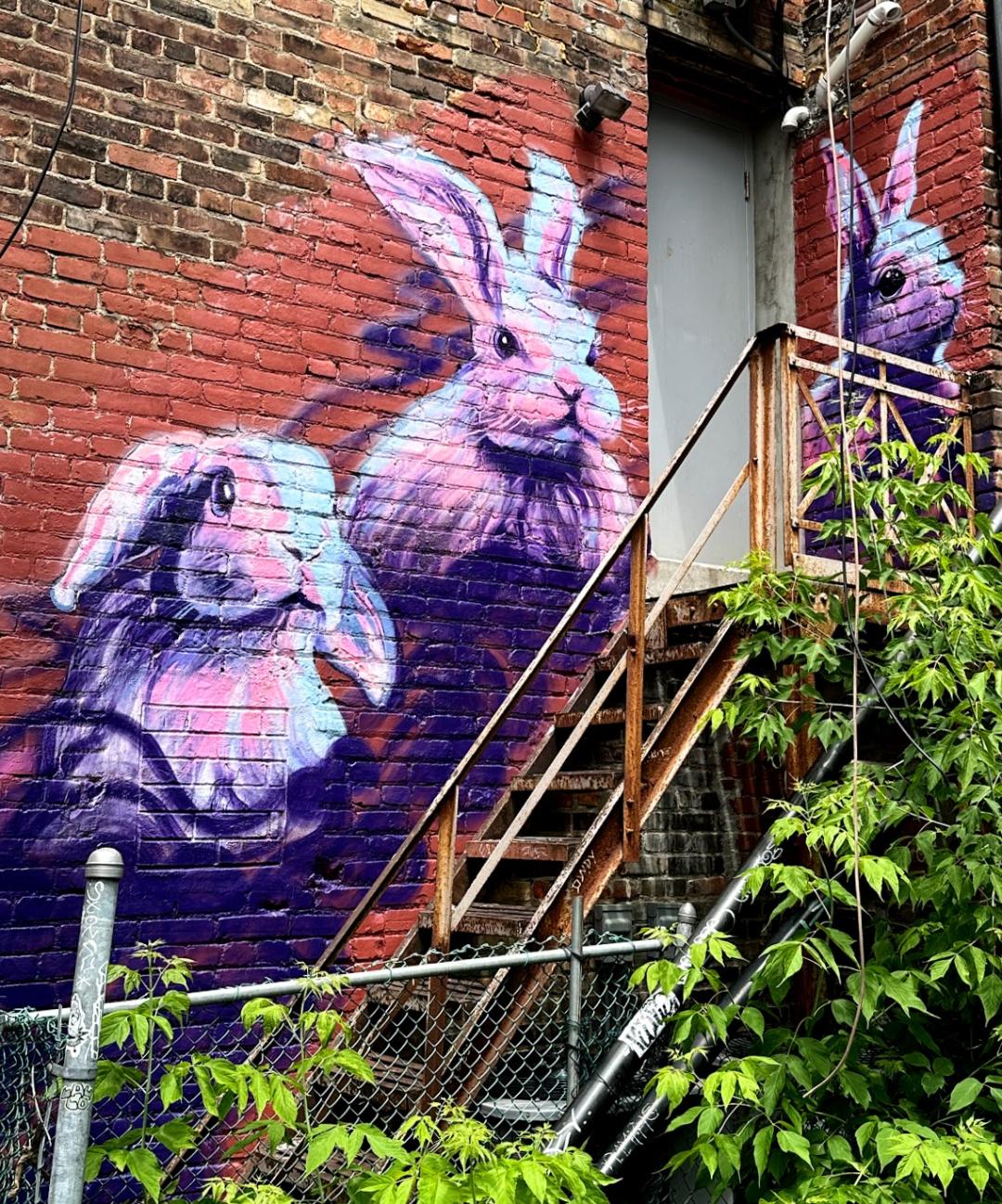
Ecila looked up some stairs guarded by three Purple Pink Rabbits. The door was there!
“But first you’ll have to get past Bugsy, Mugsy and Thugsy. Bugsy and Mugsy charge 5 gold rabbit coins each. Thugsy gets seven.”

“But I have only one gold rabbit coin,” Ecila said looking up at Bugsy.
“Not my problem,” replied Bugsy.

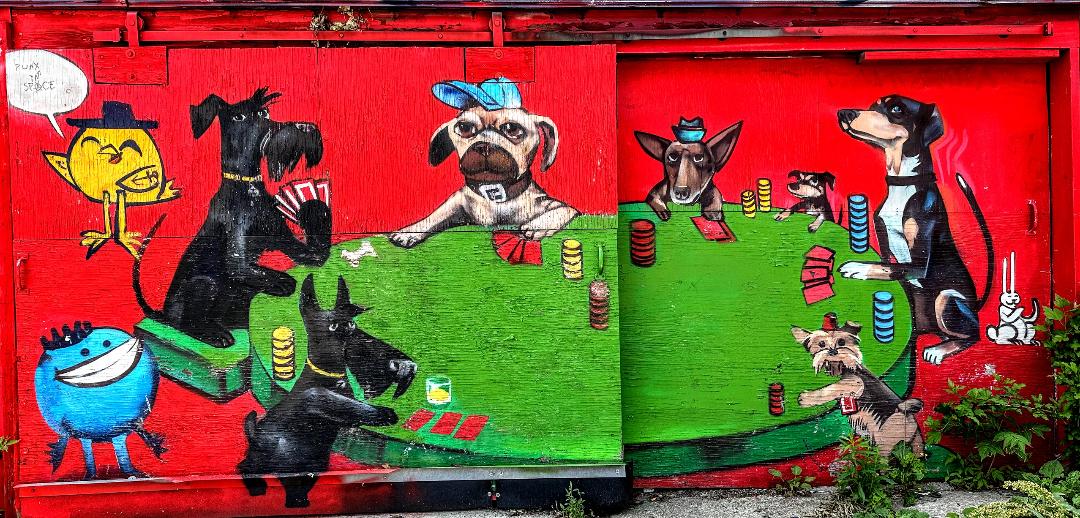
“There’s only one way to make gold rabbit coins here,” offered Mugsy. “You’ll have to play poker with the dogs! The game’s around the corner on an old red wood sliding door.”
Ecila found the dog’s game, draped her tail up to look like a gambler’s cape and threw her gold rabbit coin on the table.
“Chips please!” she demanded cooly.
The dogs howled. They figured she was just a human, and they would relieve her of her gold rabbit coin faster than the first day of winter. A chick in a bolero hat put a small stack of chips on the table for her.
Ecila thought of the wise words from her non uncle Kenny.
After many hours of holding, folding and not counting her chips, Ecila cashed in for 17 gold rabbit coins. She left the extra chips on the table, let down her tail and walked away.

Once out of sight of the dogs, she began running to the Purple Pink Rabbits’ door.

Ecila ran up the stairs tossing gold coins to the rabbits.
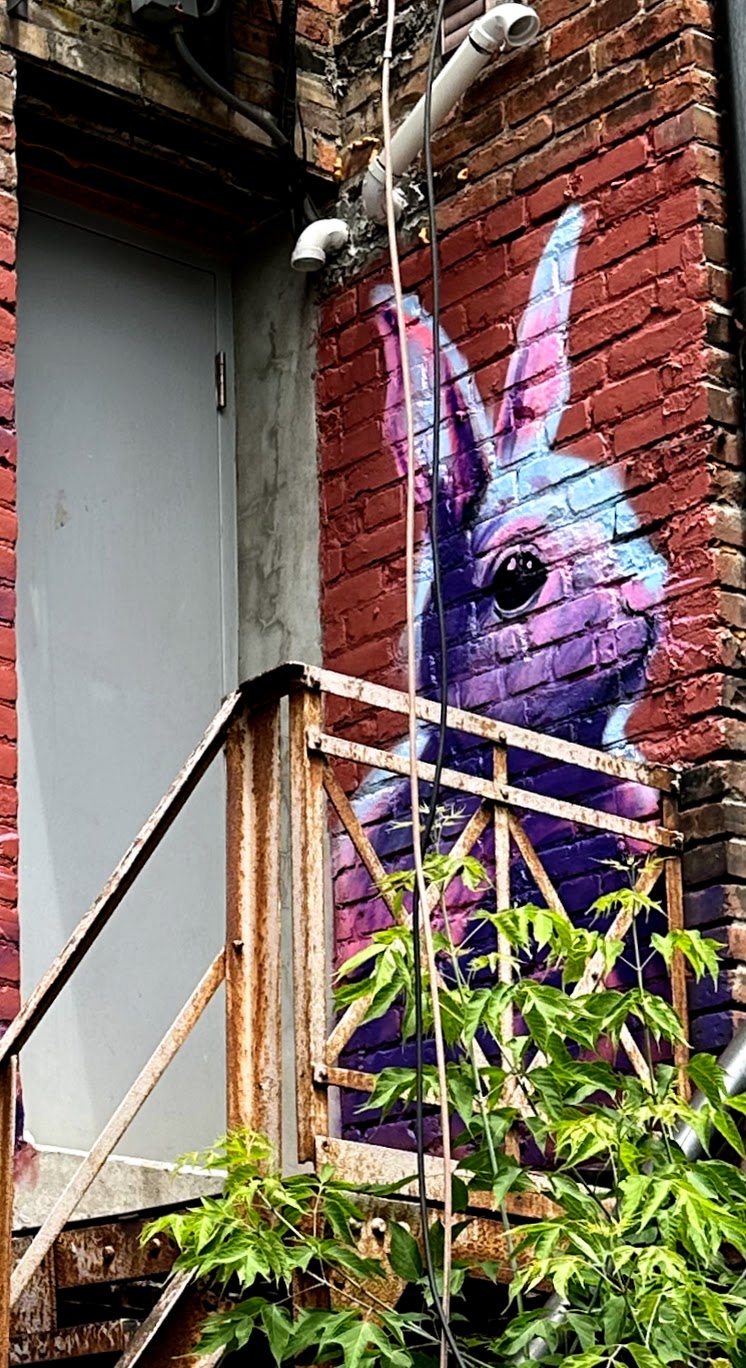
She threw the last 7 coins to Thugsy, and fled out the door. Elica ran all the way toTeagan’s blog hop party, where she made a grand entrance in her new Winter Solstice gown.
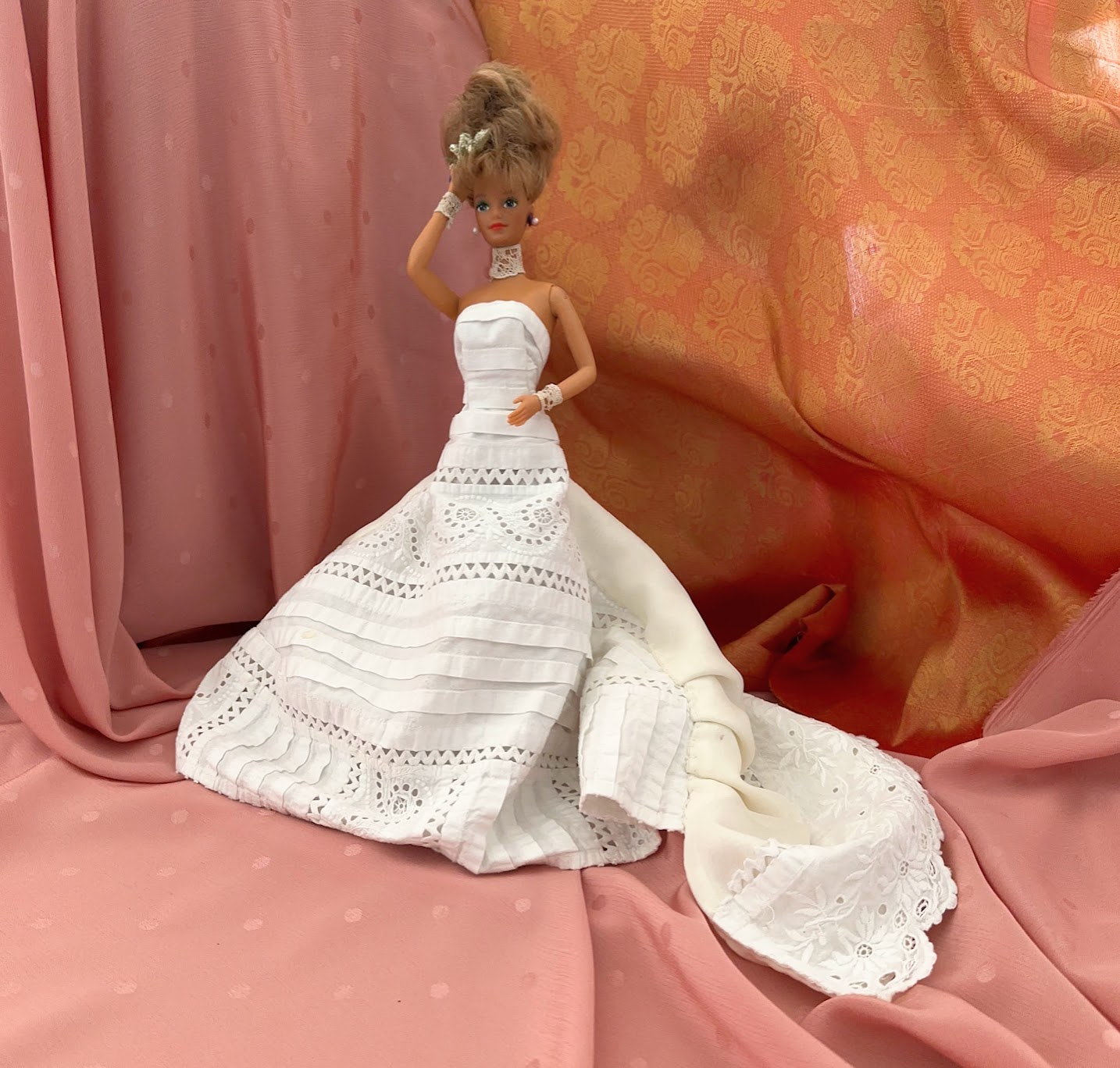
“Sorry I’m late everyone! My hair is mess and well, I can’t even begin to tell you what I’ve been through,” Ecila lightly panted. “Let me just say some cats are water cats, there’s such a thing as Purple Pink Rabbits and the the dog days of summer really are dog days.”

Teagan is holding a Christmas in Summer blog hop party. It doesn’t have to be Christmas, just a winter celebration around that time. Click on her badge above, and read the guidelines!
Winter Solstice gown created © by Resa – July, 2024
Pics of gown and street art © Resa McConaghy- June & July 2024
Story © Resa McConaghy – July 2024
Street Artists:

&
When Math Meets Art 2023 by Sasha Q

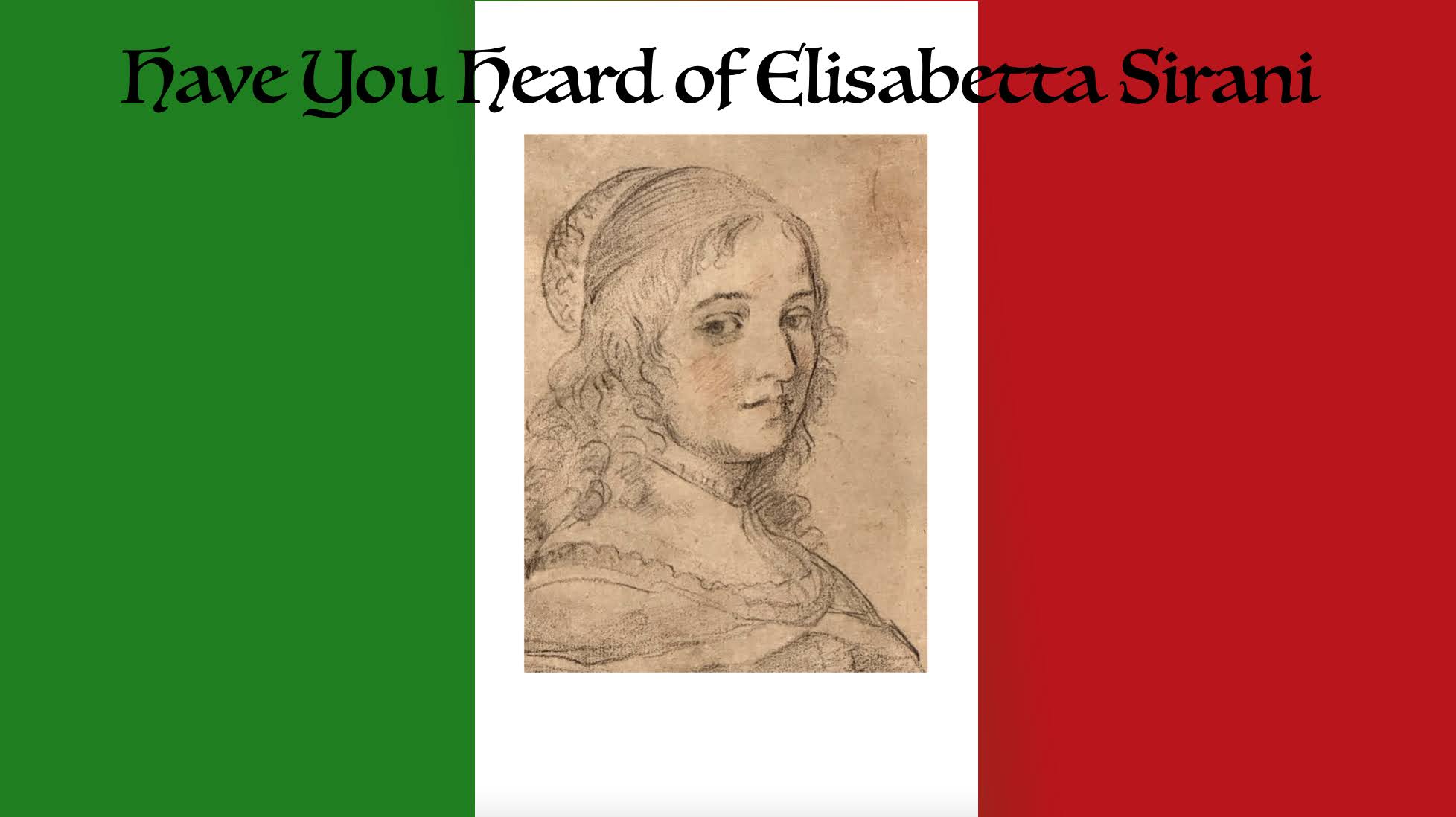
Welcome back to our Self Portraits series! I’m your host, Resa, with co-host Rebecca Budd, curator of Chasing Art. Today We are discussing an artist from the 17th century, Elisabetta Sirani.
Resa – So Rebecca, after all you’ve learned, and passed on to me, I’ve come to think Elisabetta was Bologna’s rockstar in the early mid 1600’s. Sayest thee what to that?
Rebecca – I agree wholeheartedly, Resa. Elisabetta Sirani’s exceptional talent and prolific body of work cement her status as a celebrated artist of her time. Despite the challenges she faced as a female artist in a male-dominated field, Sirani’s enduring legacy as a pioneering Baroque painter reflects her rockstar-like influence on the art world of her era.
Over her 10-year artistic career, Sirani demonstrated exceptional productivity, creating over 200 paintings, 20 etchings, and an extensive collection of drawings. I marvel at her ability to create a life/work balance. At the young age of 19, she took on the responsibilities of managing her father’s workshop, supporting her family, and establishing an art academy to mentor and teach women artists. Elisabetta Sirani was a true rockstar of Bologna in the 17th century. In my opinion, she continues to be a rockstar today!
Resa – Well then, let’s see what you discovered!
Elisabetta Sirani was an Italian Baroque painter born in Bologna in 1638. She was the daughter of the painter Giovani Andrea Sirani, who recognized and nurtured her talent from an early age. Sirani’s artistic skills flourished, and she became known for her exceptional talent in her short life.
Despite facing challenges as a female artist in a male-dominated field, Sirani achieved great success and recognition during her career. She was prolific, producing a large body of work that included historical and biblical scenes, portraits, and allegorical paintings. Sirani’s mastery of chiaroscuro (the treatment of light and shade in drawing and painting) and her ability to depict emotion and narrative in her works garnered admiration from her contemporaries and art enthusiasts.
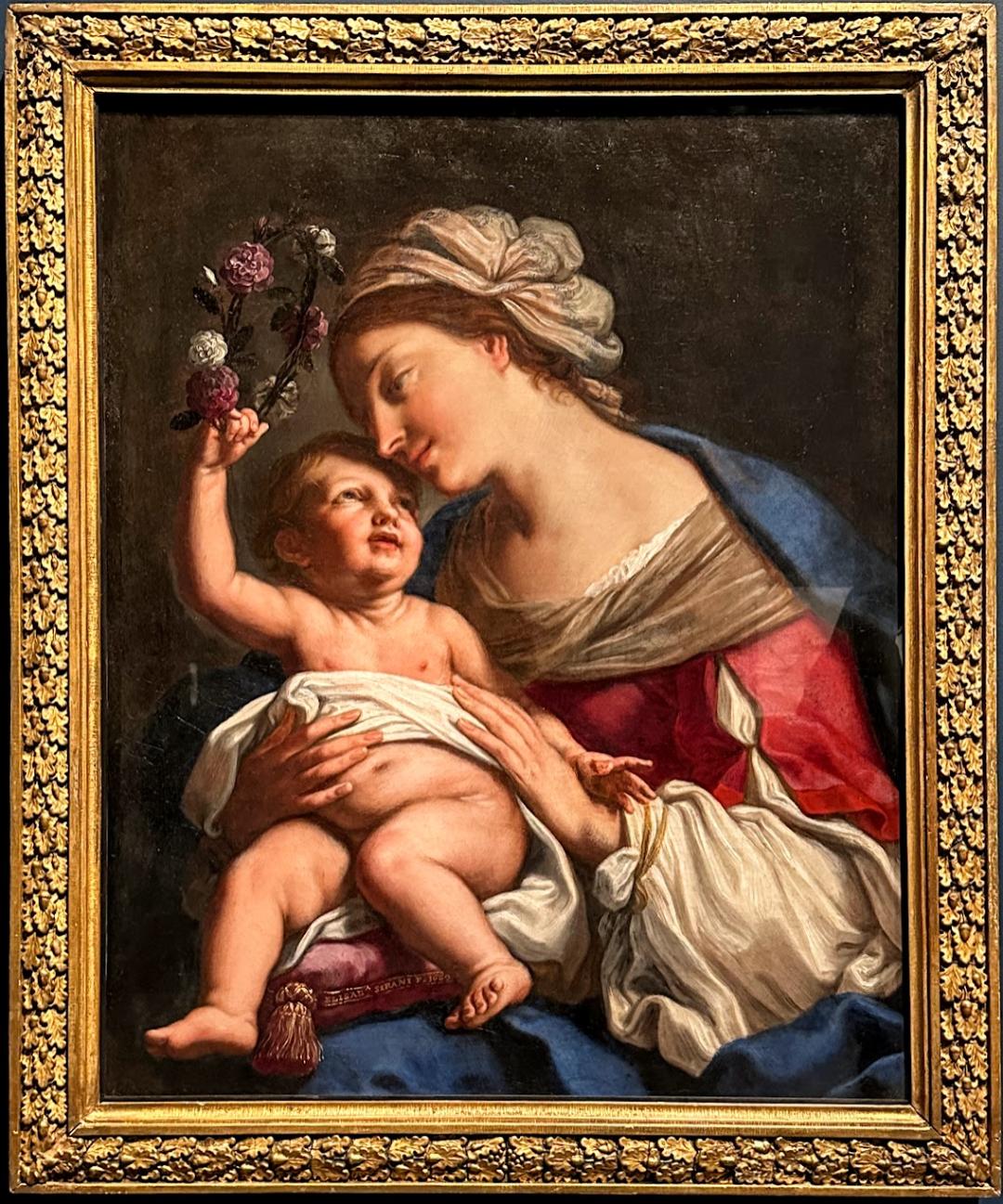
Elisabetta Sirani’s legacy extends beyond her remarkable talent as a painter. As the successor of her father’s workshop, she also played a crucial role as a teacher, notably contributing to the development of women artists during the Renaissance period. In addition to training her sisters Barbara and Anna Maria, she also instructed at least twelve other young women at the school she established. This pioneering initiative marked the first school of painting for women in Europe outside of a convent, embracing inclusivity regardless of the women’s artistic and social backgrounds.
Elisabetta Sirani’s legacy endures through her remarkable paintings and the influence she had on future generations of artists. She remains celebrated as a pioneering female artist of the Baroque era, showcasing remarkable talent and determination in the face of societal norms.


Resa – “Making Her Mark” even had Elisabetta’s working drawing/study for the above painting. It’s a wonderful complete experience to see both.
Rebecca– I believe the painting, “Virgin Crowned by Christ Child with Roses” is all about love. Elisabetta Sirani imparts a compelling depiction of Mary as a relatable and tender young mother, diverging from the traditional portrayal of the remote Queen of Heaven. In this painting, Mary wears a turban associated with peasant women in Bologna, creating a down-to-earth portrayal. Her adoring gaze at the playful Christ child on her lap exudes a sense of genuine maternal love. Notice how the brushwork is highlighted in the textured representation of the Virgin’s white sleeve, emphasizing its rough and homespun quality. Elisabetta Sirani, with this tender and intimate moment of affection, offers a humanizing perspective of Mary and Jesus.

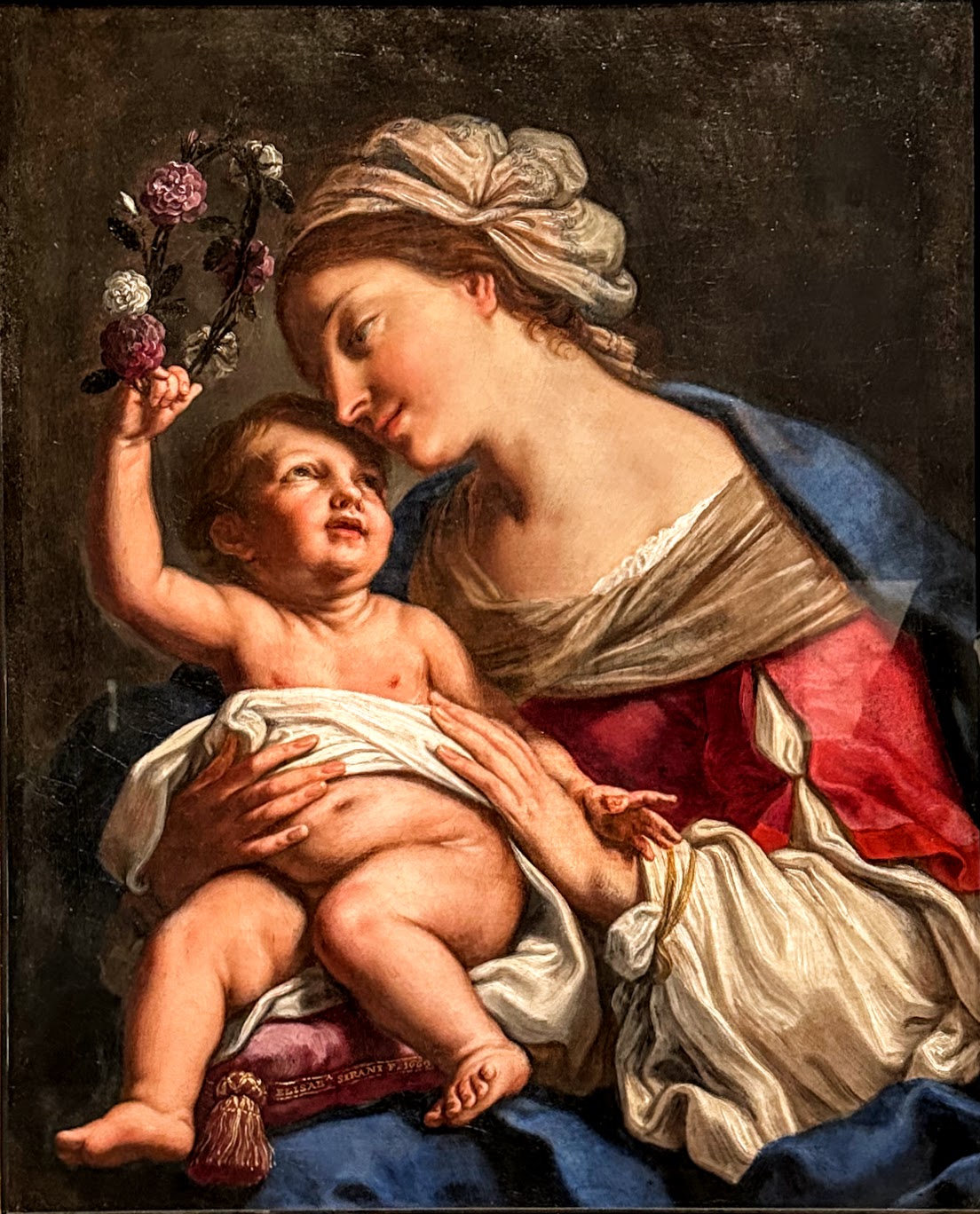
On the left :
The Virgin Crowned by Christ Child with Roses – 1663 – (red wash with grey chalk on paper)
On the right:
The oil on canvas painting in the same year.
Tragically, Eliabetta Sirani’s life was cut short when she passed away at the young age of 27 in August, 1665. Her untimely demise sparked controversy snd speculation. Following her sudden passing, suspicions arose, leading to the trial of her maidservant, Lucia Tolomelli, who was accused of poisoning the talented artist. The circumstances surrounding Sirani’s death led to diverse conjectures, with some attributing it to love-sickness due to her unmarried status, while others cited stress as a contributing factor.
It is widely believed that the true cause of Sirani’s demise was the onset of peritonitis following a ruptured peptic ulcer. This unfortunate event may have been exacerbated by the significant stress she experienced, particularly after being charged with providing for her entire household.
The controversy and diverse interpretations surrounding her passing have added intriguing layers to the legacy of Elisabetta Sirani, portraying a life marked by exceptional talent, determination, and the complexities of the era in which she lived.
Elisabetta Sirani’s elaborate funeral reflected the deep respect and admiration held for her in Bologna. The grand ceremony featured an enormous catafalque (a decorated wooden framework supporting
the coffin) adorned with a life-sized sculpture of the esteemed artist, as depicted in Malvasia’s biography.


Orations and music composed in her honor by prominent figures from Bologna added a solemn and dignified atmosphere to the proceedings. Following this tribute, she was laid to rest in the Basilica of San Domenico, Bologna, where she joined her father’s teacher, Guido Reni, in a shared tomb
This final resting place solidifies her enduring legacy alongside revered artistic influences, commemorating her exceptional talent and remarkable contributions to the art world.
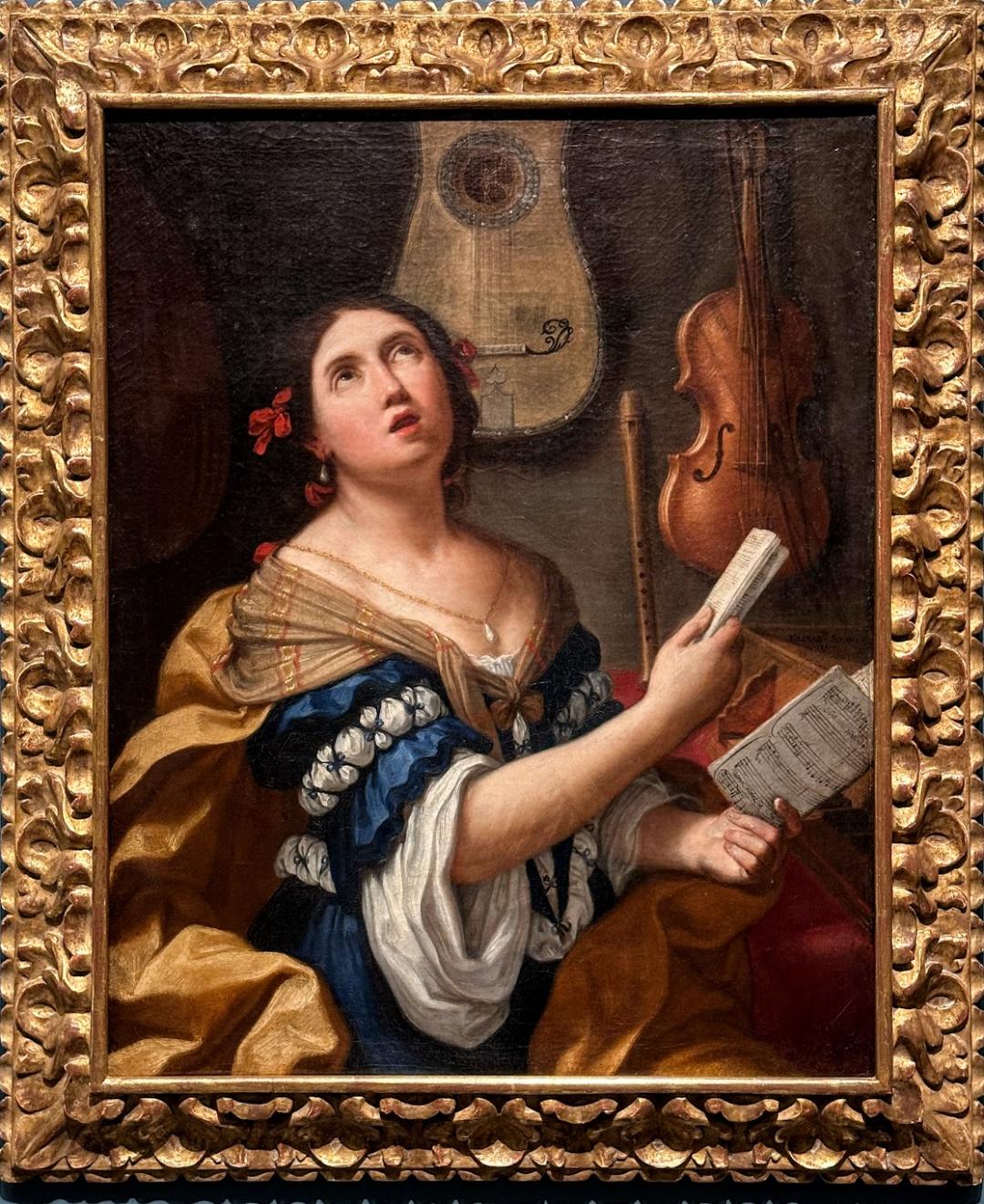
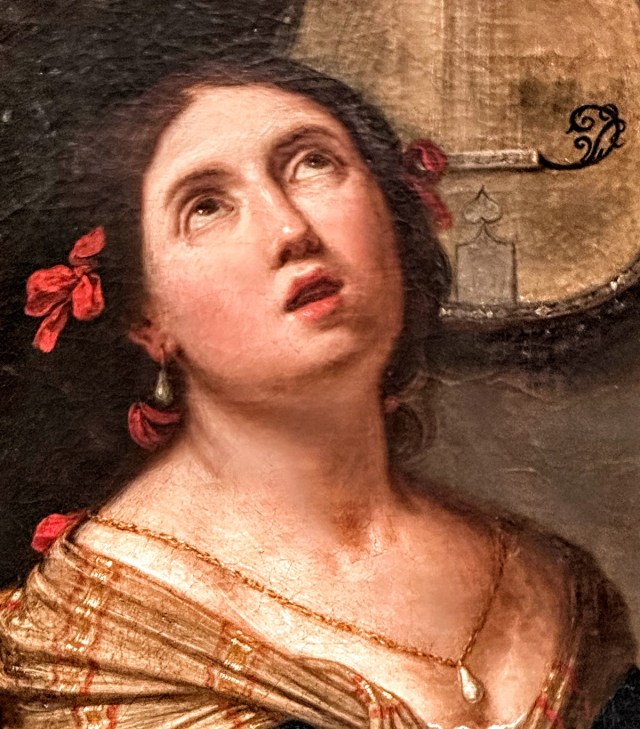
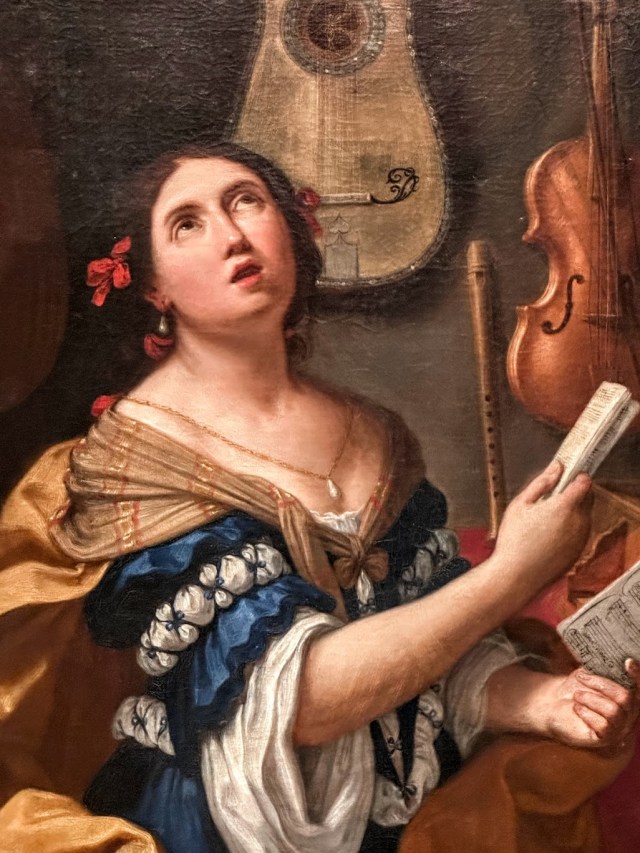
Resa – Rebecca, of all the paintings in the “Making Her Mark” exhibition, the Elisabetta Sirani allegorical painting title The Personification of Music was, and remains my favourite. Apparently she painted it in exchange for music lessons. I think she belongs in The Twenty-Seven Club, don’t you?
Rebecca – I did not know that Elisabetta Sirani exchanged her paintings for music lessons, but I am not surprised, given her proficiency as a musician in addition to her exceptional talent as a painter. This exchange speaks to her versatile creativity and passion for various art forms, further solidifying her legacy as a remarkably talented individual in the Baroque era. I agree – she belongs in The Twenty-Seven Club.
Resa – Admittedly I am smitten by this artist. I am also wild about that fact that you are here on this journey through these profiles in exceptionality. Mille Grazie, Rebecca!
Rebecca – Resa, your dedication to artistic endeavours and your profound belief in the power of creativity to enrich our world have truly inspired me. Thank you for including me on this extraordinary journey of self-discovery through Making Her Mark. I look forward to what comes next…
“Mille grazie caro amico per averci invitato a unirci virtualmente alla tua Art Gallery of Ontario. Fino alla prossima volta.“
You can also visit Rebecca by listening in on some of her fabulous Tea Toast and Trivia podcasts.
Click the above banner to view & link to Rebecca’s sources. not included in the body of text!
Photos taken by Resa © – May 14, 2024
Art Gallery of Ontario, Toronto, Canada
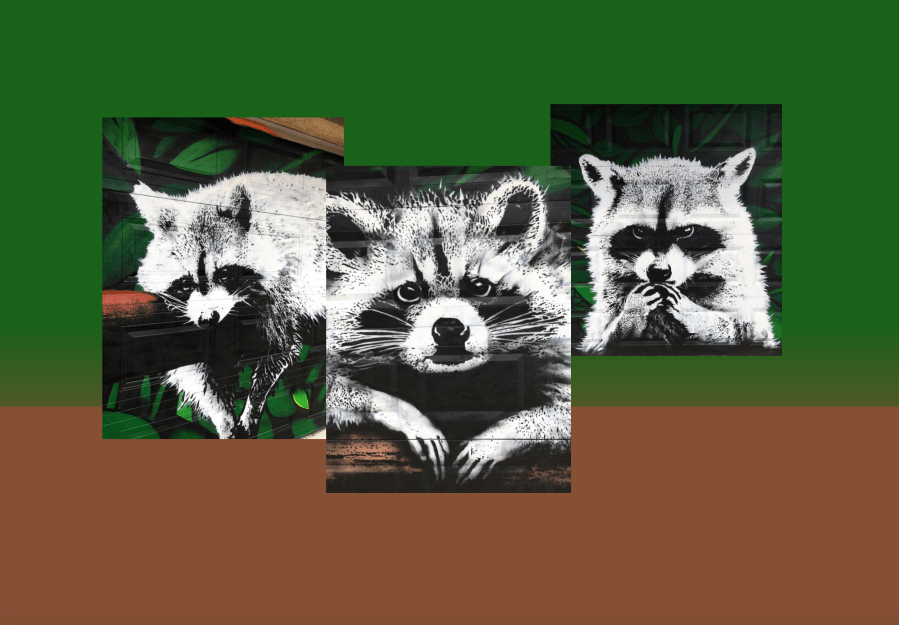
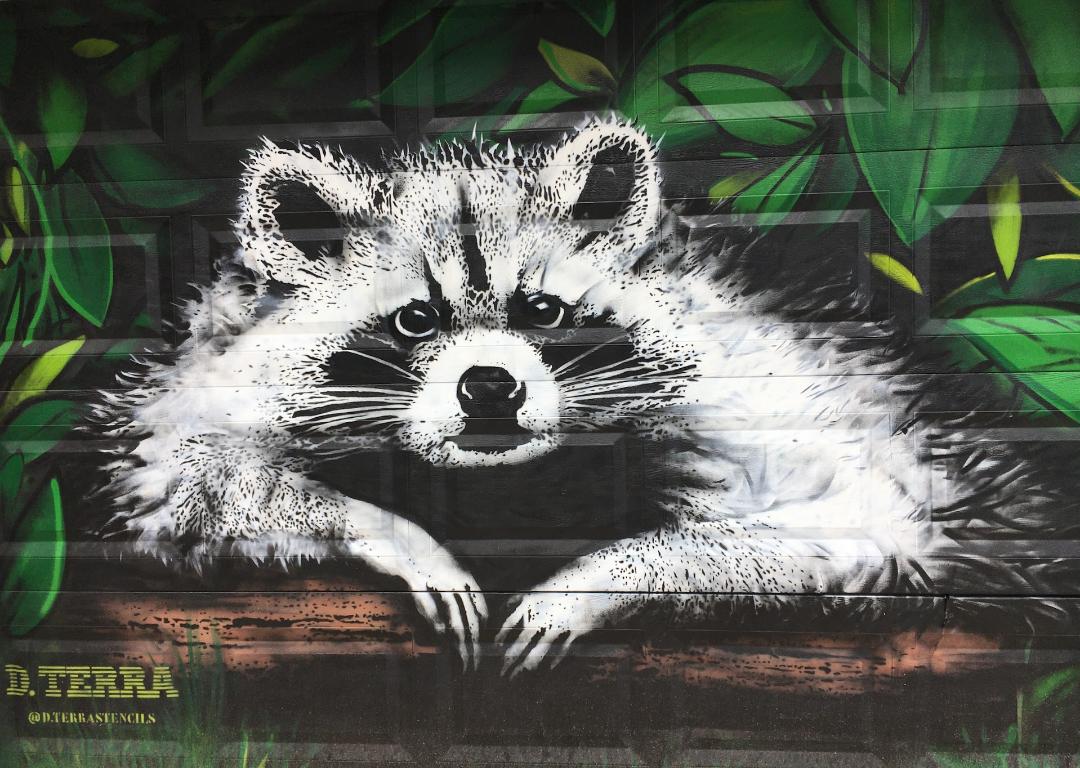
A Rock Star in the world of Rooftops, he single pawedly mutilated a humane mouse trap for the dime sized bit of peanut butter inside of it.

Chillio is known to screech a mean Rap in your yard during mating season, organize climb by garden raids and gain weight.

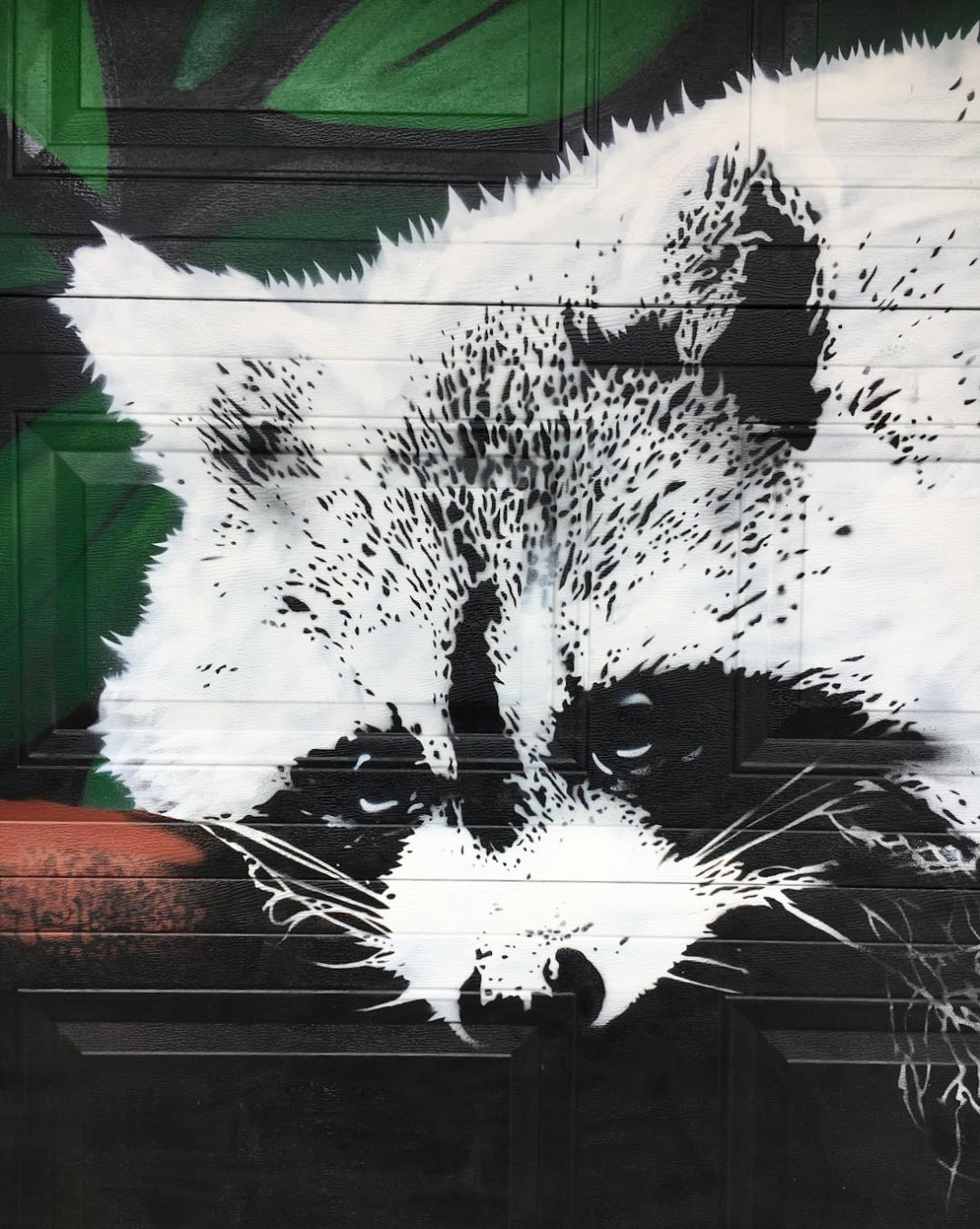
Works as a chimney supervisor, advertising attics. It’s a stressful career, which leads to overconsumption of peanut butter cocktails before wiping out on a branch office.

Mr. Draper is wildly adept at chewing electric wires, gnawing at support beams and building nests out of insulation.
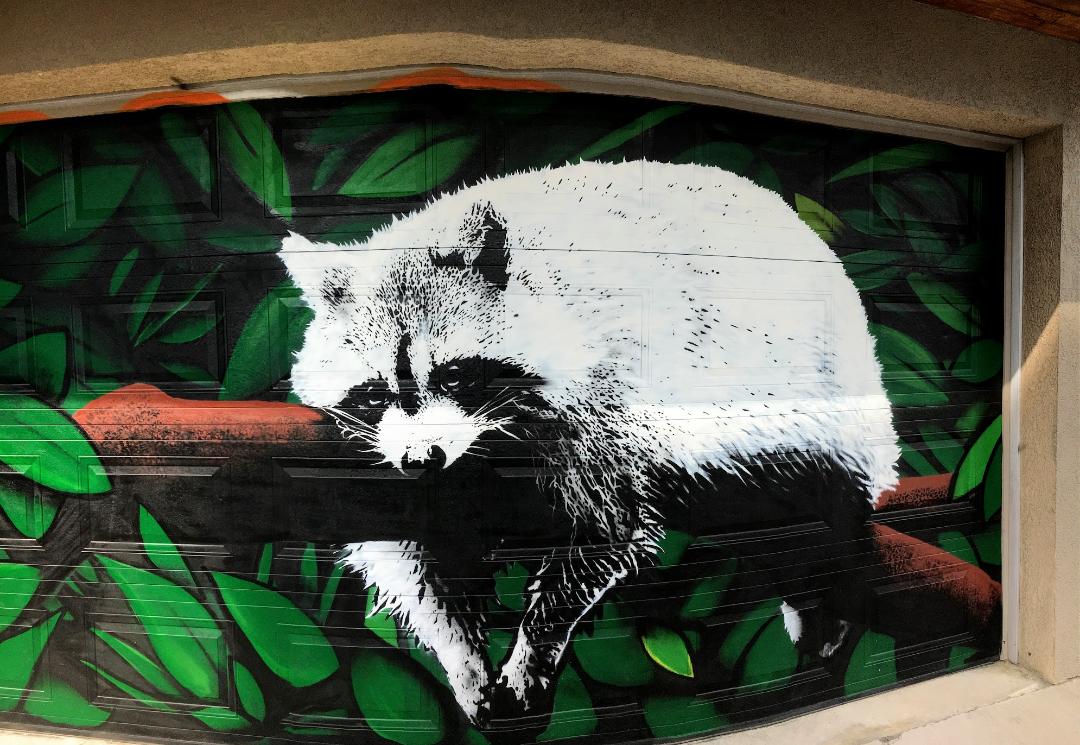

A gourmet raccoon chef, Julia Childe is first cousin, several times removed by evolution, to Julia Child. The garbage can lid has not been invented that can keep this whiz with a whisk out.
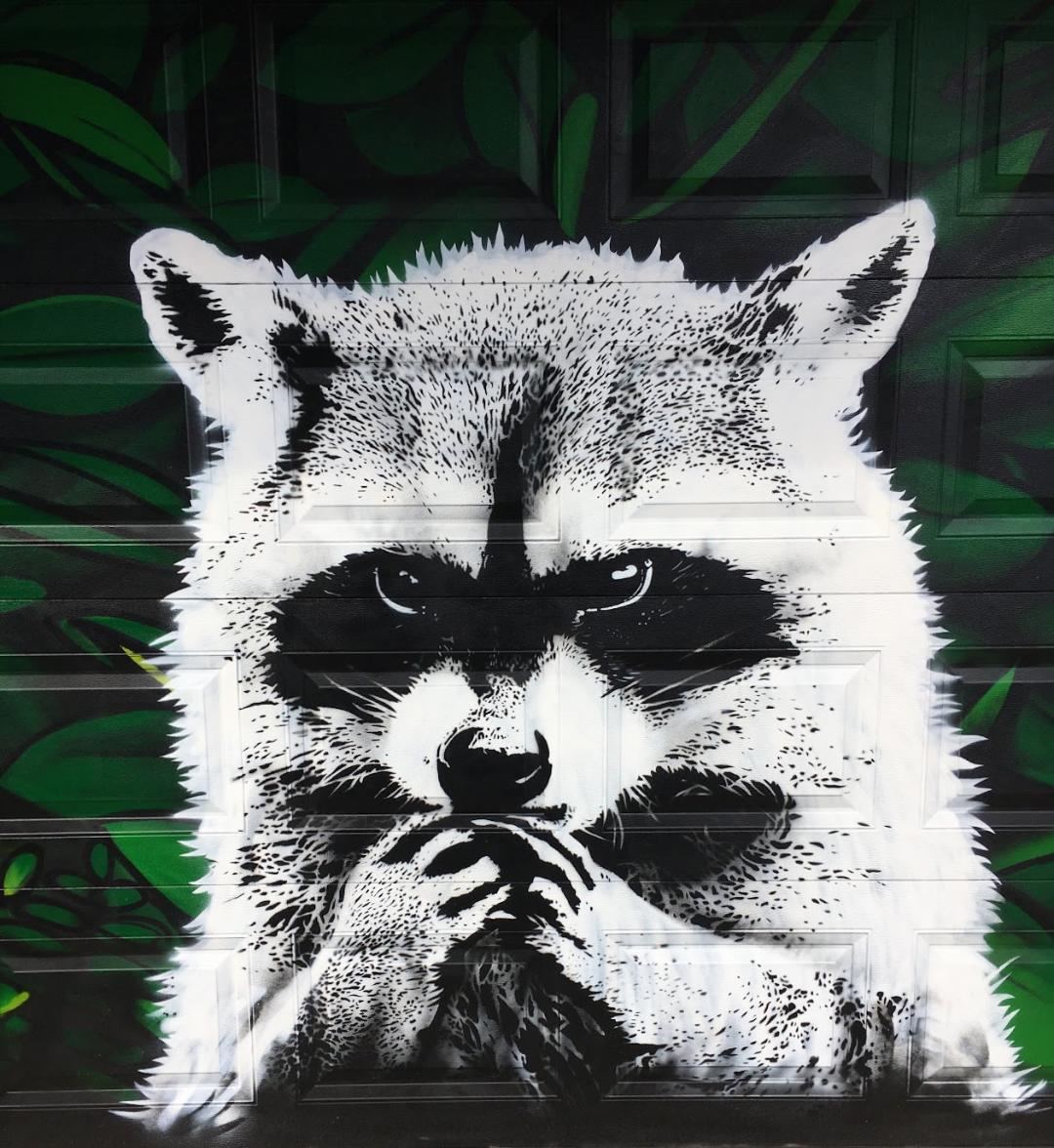
Famous for scraping up a meal from the leftover peanut butter on the insides of a tossed jar in minutes flat, she is a must to cater any raccoon repast.

Pics taken by Resa – July 21 & September 23, 2023
Toronto, Canada
Garage door Artist:

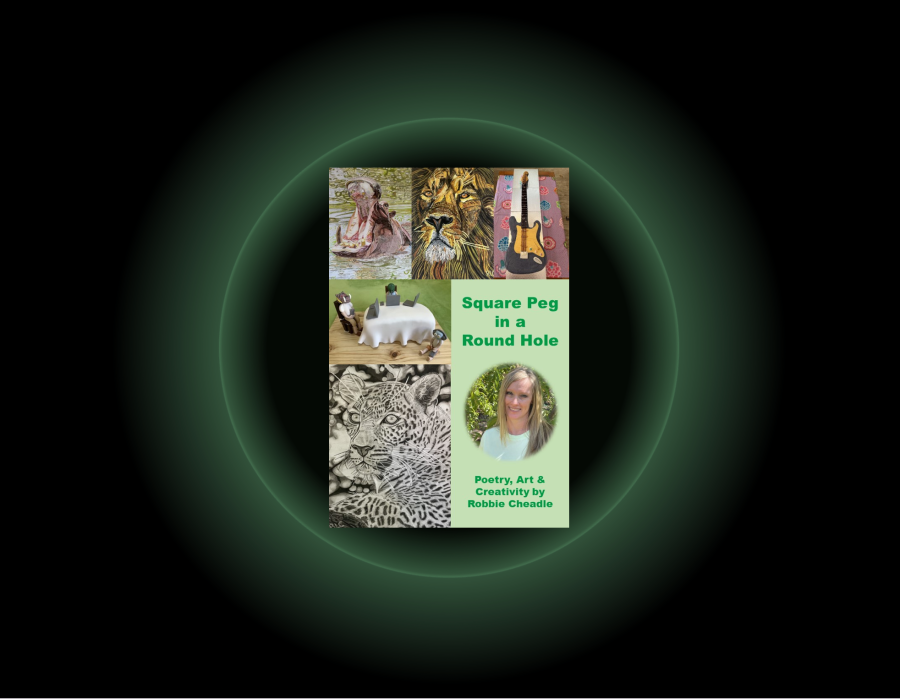
This honest exposé of Africa’s nature highlights Robbie’s love for all flora and fauna.
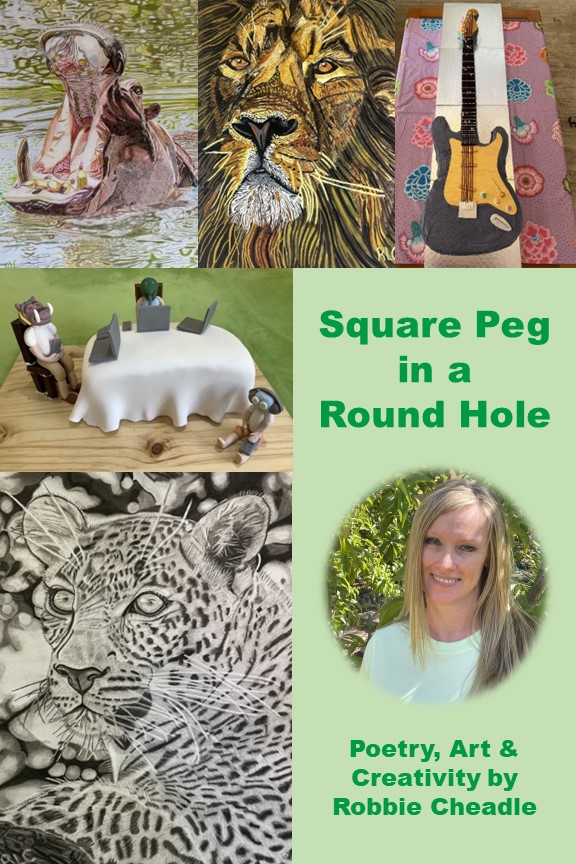
Writing a review for this book of poetry, photography and art is truly like sticking a square peg in a round hole. It defies categorization. Yes, it is well crafted, entertaining and informative. However, it strikes out beyond those adjectives. It teaches, with heart.
Resa – Near the beginning of the book is a heart touching & humorous free form poem – The Visitor. What bird is depicted, and did you really have this visitor?
Robbie – The visitor is our semi-tame hadeda, Eleanor. She lives on our property with a male bird, although he disappears sometimes and she is always around. I feed her occasionally but not often enough for her to lose her independence as a wild bird. She will wander into my house if she gets the opportunity. I don’t mind her visiting but she can get a little upset if she can’t find her way out again. Then I have to help her. The information in that poem about the loerie birds is also true. We don’t net our fruit trees anymore.
Robbie – There is another poem in the book about our loeries being the fattest birds in the city.
Resa – I was going to ask about that poem. It makes me feel happy. I love it!
Fat Birds (shadorma)
Mangled fruit
Product of guzzling
Plump loeries
Eat and eat
I'll have to build a runway
Fattest birds in town
Resa – Growing up in Canada we had an American TV show called “Wild Kingdom”. Often it depicted the animals of Africa. They were wild, free, mysterious and dangerous. Did you have a nature show like that? Or, how did you learn about African animals?
Robbie – I have never really watched TV. It was late coming to South Africa and I never developed the habit. I always read a lot though, and one of my favourite series was Willard Price’s animal adventure books. I became very interested in the plight of wild animals as a result of these books, although at that time they mainly focused on poaching and the illegal animal trade. Interestingly, Willard Price was a Canadian.

Robbie – Later in my life, National Geographic magazines came to South Africa and I bought them every month. I had piles and piles of them and ended up giving them away each time my family moved house (21 times during my pre-marital years). After I met my husband, we started going to game farms whenever we could afford it. I’ve learned a huge amount from the various guides and game rangers.
Resa – Then, there’s climate change.
Robbie – Climate change started coming to my attention in the ’90s, but I never really thought about it in connection with our wild animals until the early 2000s. Over my adult life to date, more and more animals have become endangered to a point where the list of ‘least concern’ animals is much shorter than the endangered list. Many ‘least concern’ animals are actually in danger of disappearing due to habitat loss. Over the past 15 years, I’ve become a lot more involved in promoting the plight of our animals and doing what I can to help support them.
“To a Lion” is a contemporary poem, that travels, with images, over 6 pages. The reality of the plight of this majestic animal is beyond what people want to comfortably know. I say the truth hurts, especially when one confronts “Canned Hunting”
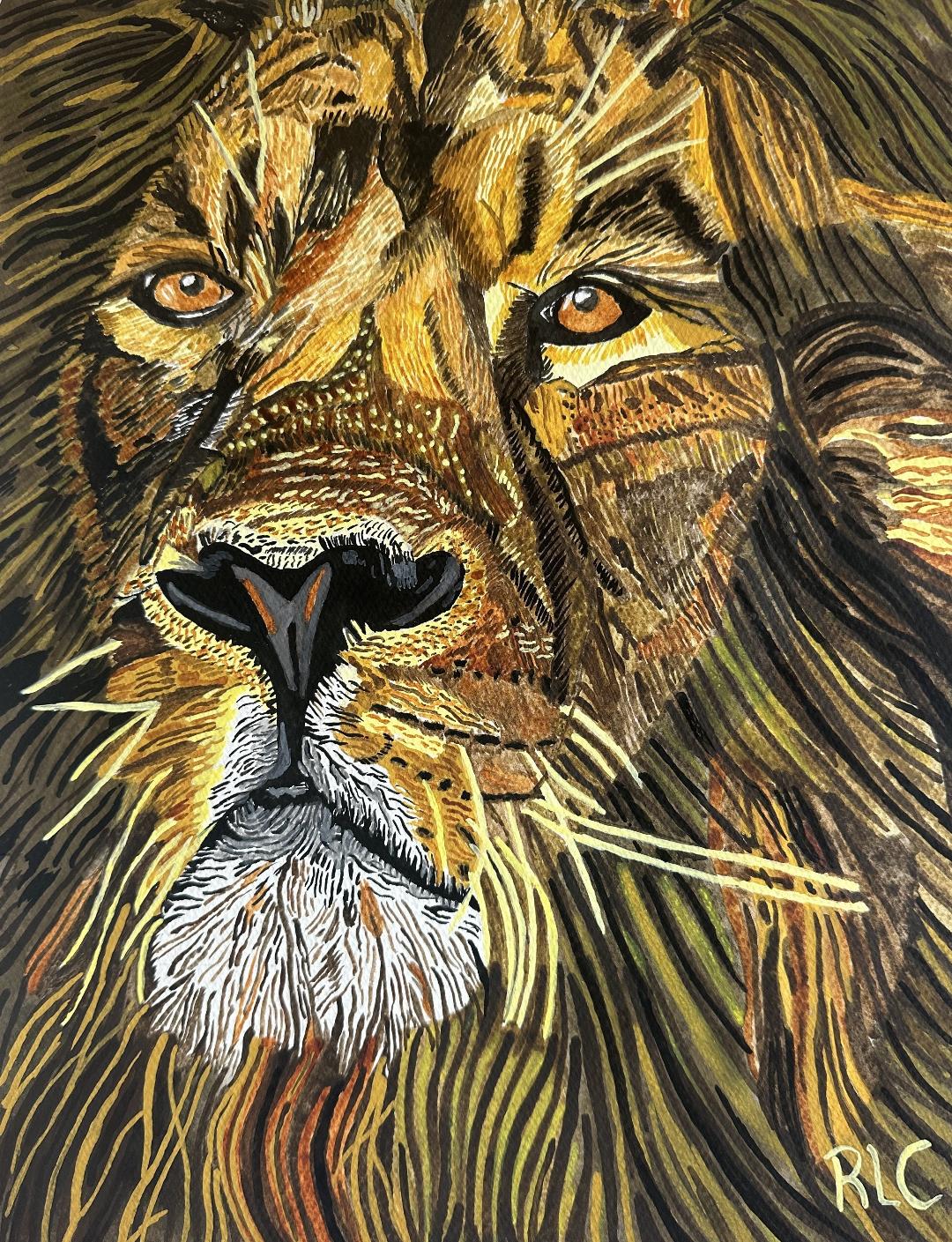
Resa – When did you learn about “Canned Hunting”?
Robbie – I despise hunting. I don’t understand it and I don’t support it. Canned hunting came to my attention about 15 years ago when I overheard a few of the guides at a game farm talking about it. I didn’t know the term prior to that. According to World Atlas, there are approximately 7,000 lions held in captivity in between 160 and 200 canned hunting breeding farms in South Africa.
Excerpt from To A Lion
You've seen your peers shot - their heads stuffed and mounted
Victims of canned hunting
Perpetrated by fools who do not appreciate your beauty
Or the vital role you play
In the maintenance of the African ecosystems
And all its amazing creatures
“The Story of the Desperate Salesman” (99 syllable double ennead) and “Nest Selection” (freestyle) are of intrigue to me. The male Weaver bird builds a nest to attract a female. If a female doesn’t accept his nest, he dismantles it. Then he builds another more elaborate than the preceding nest.

Excerpt from The Story of the Desperate Salesman
He's been building for days
King of construction
Improving his intricate weaving techniques
Working from dawn to dust
Then comes marketing
This building and dismantling is repeated until a female moves in. Somehow this parallels certain thoughts I have about societies, ergo nations. Lots to say about what this “little bird told me”, but then I’d need to write an essay.
Robbie’s poems & photos took me on a journey that was visual, emotional and introspective. A bonus to the entire experience is I learned a lot about poetic form through example. In brackets beside her poems are the types of poetic structures they are written in.
Robbie winds up her poetic offerings inspired by the wildlife photos of Wayne Barnes.
Resa – The tone of the poetry is similar to the first part of your book, but takes on an “I want to be free” vibe, with positive suggestion and encouragement. Am I right to think and feel that?
Robbie– Wayne’s photographs are wonderful. You are exactly right in your summary of the poems written in combination with Wayne’s pictures: they are “I want to be free” expressions and do include positive suggestion and encouragement.
Resa – You’ve used mostly Wayne’s bird shots. Is there a reason for that?
Robbie – I believe that is why I chose so many birds for these combos. I see birds as being free creatures that move about and have the compete freedom of the skies. I’ve always though being a bird would be delightful.
One of Wayne’s stunning bird beauties is at 10 seconds in the video below.
The opening words on the promo video above are from one of Michael Cheadle’s nine poems at the end of the book. His work stands on its own. He is a terrific writer, and I felt his pain. He sent this quote, when I asked about it.
Michael – “Writing poems about my anxieties helps clear them out of my mind.”
In the photo below, Robbie holds one of her novels, “A Ghost And His Gold”. This book is a superlative read. Read my review! There is so very much to say about Robbie, that you should just go to her about page!
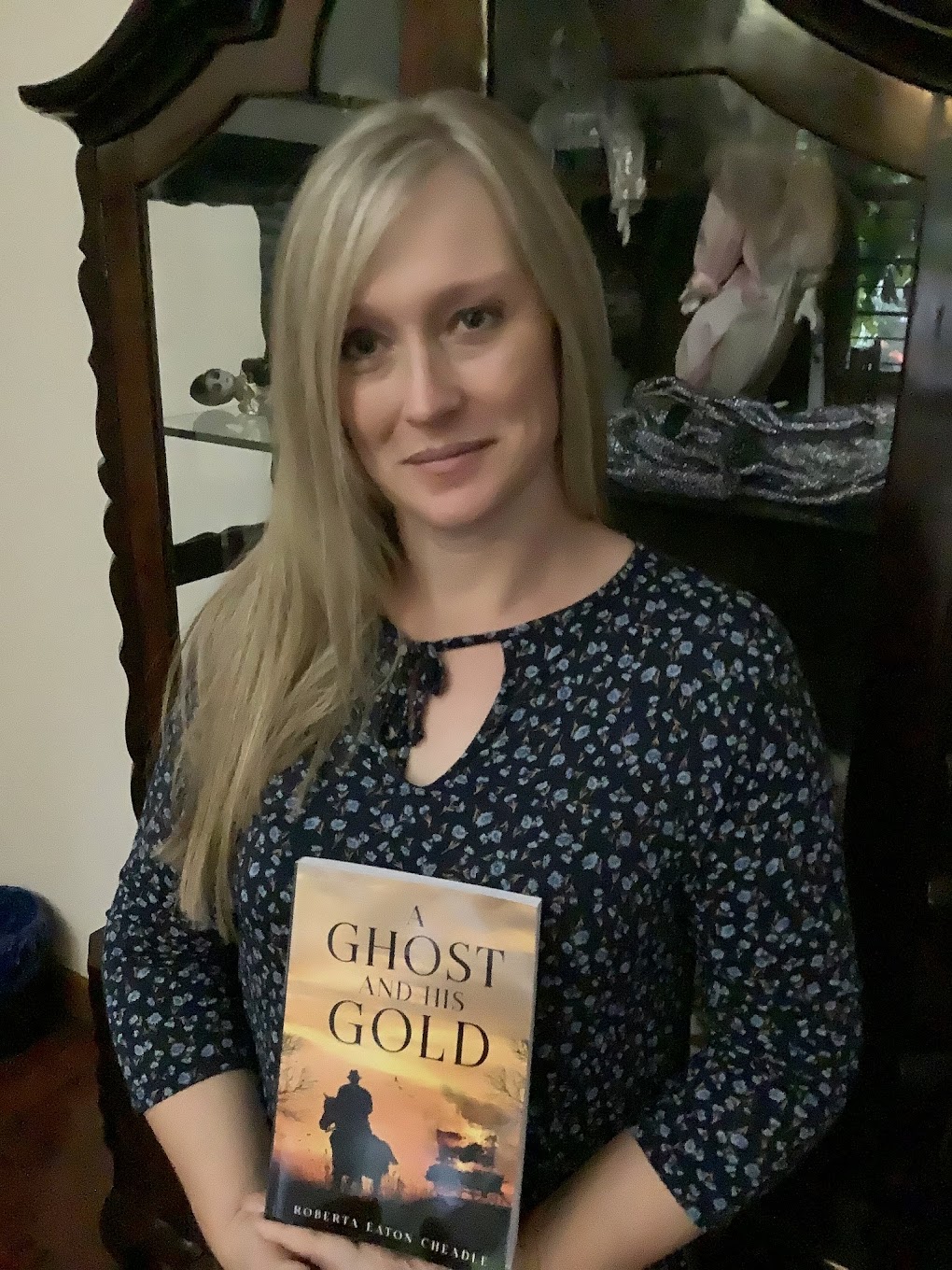
Robbie is a prolific writer. You can find her books on Amazon sites around the globe. Just search “Robbie Cheadle” for children and youth books – “Roberta Eaton Cheadle” for adult books.
Some of her books are also available on KOBO.
Visit Robbie on her blogs:
Roberta Writes and Robbies Inspiration
The videos in this post are from Robbies YouTube Channel On her site there are all kinds of videos of African animals and more.
The stills in the post are by Robbie and you can download them for free on Robbie’s Unsplash Page
The stunning Lion art is © Robbie Cheadle

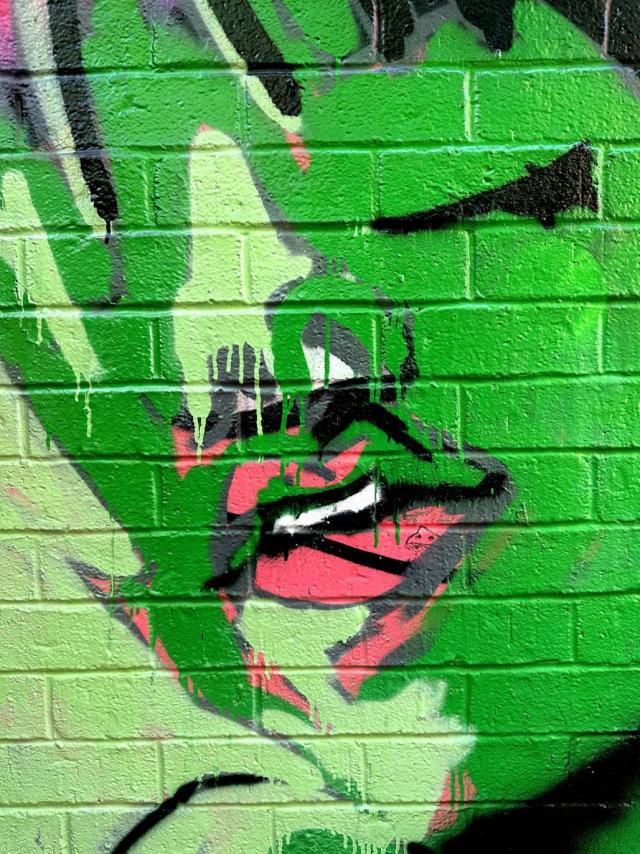
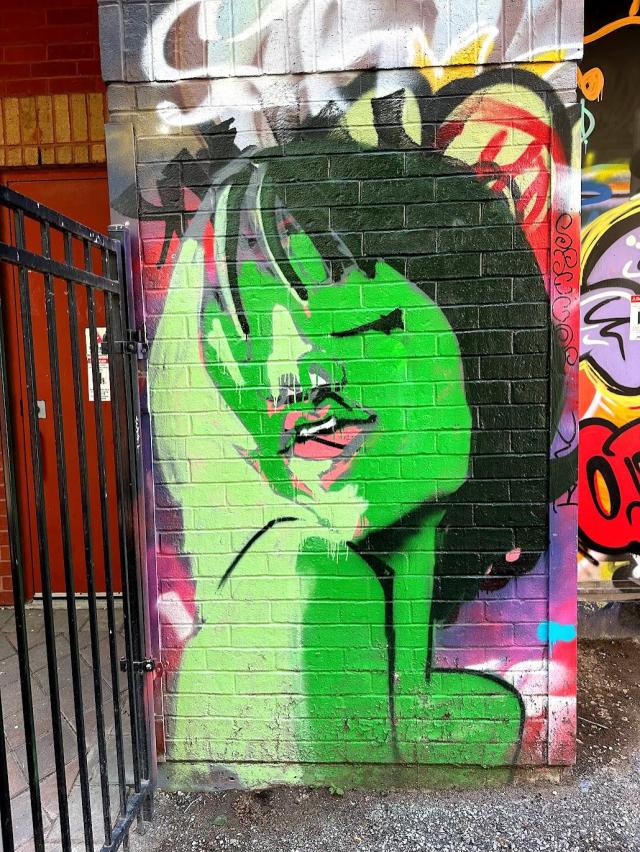

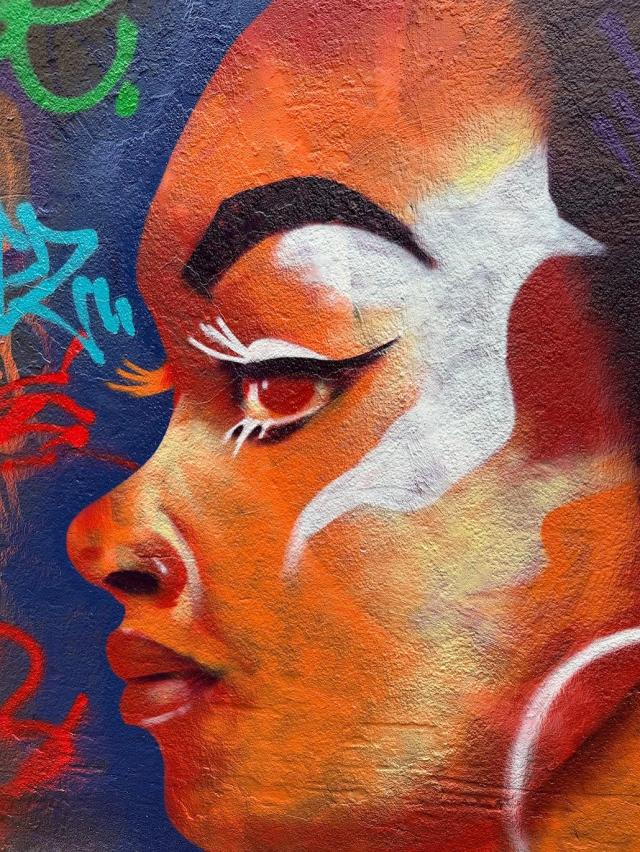

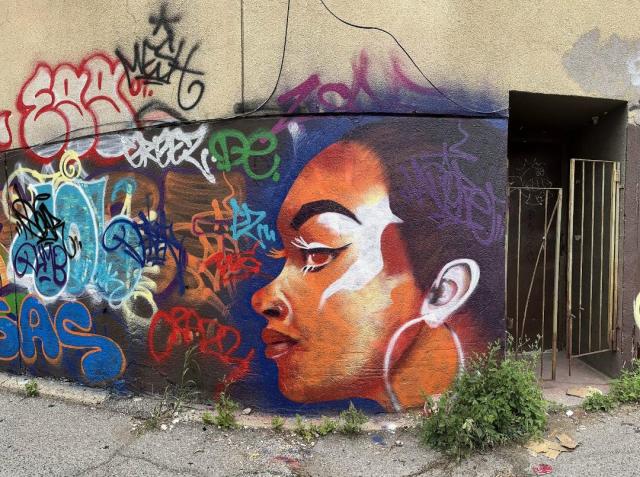




 Graffiti Lux Art & More
You must be logged in to post a comment.