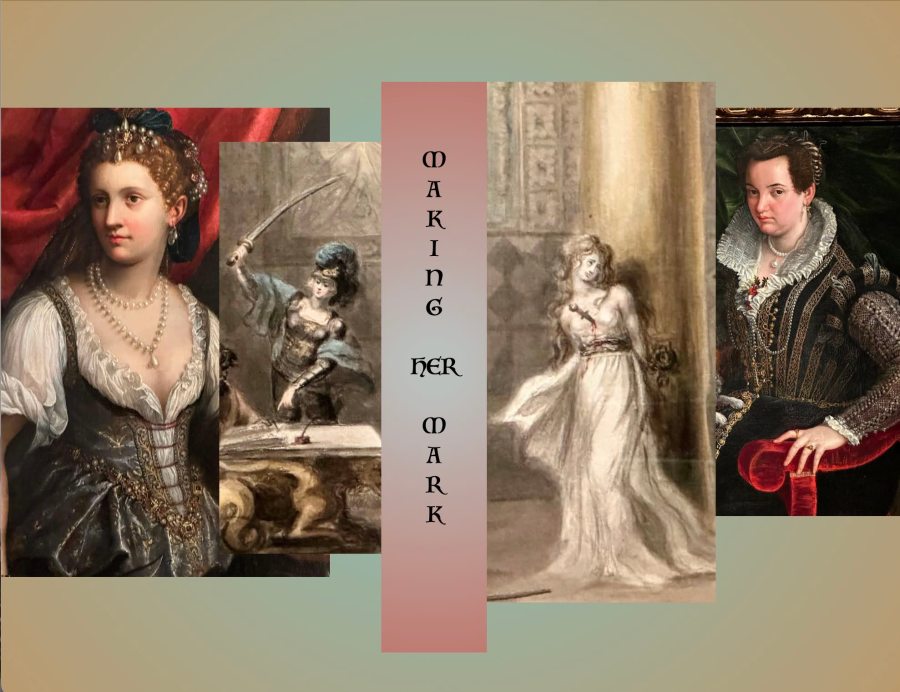
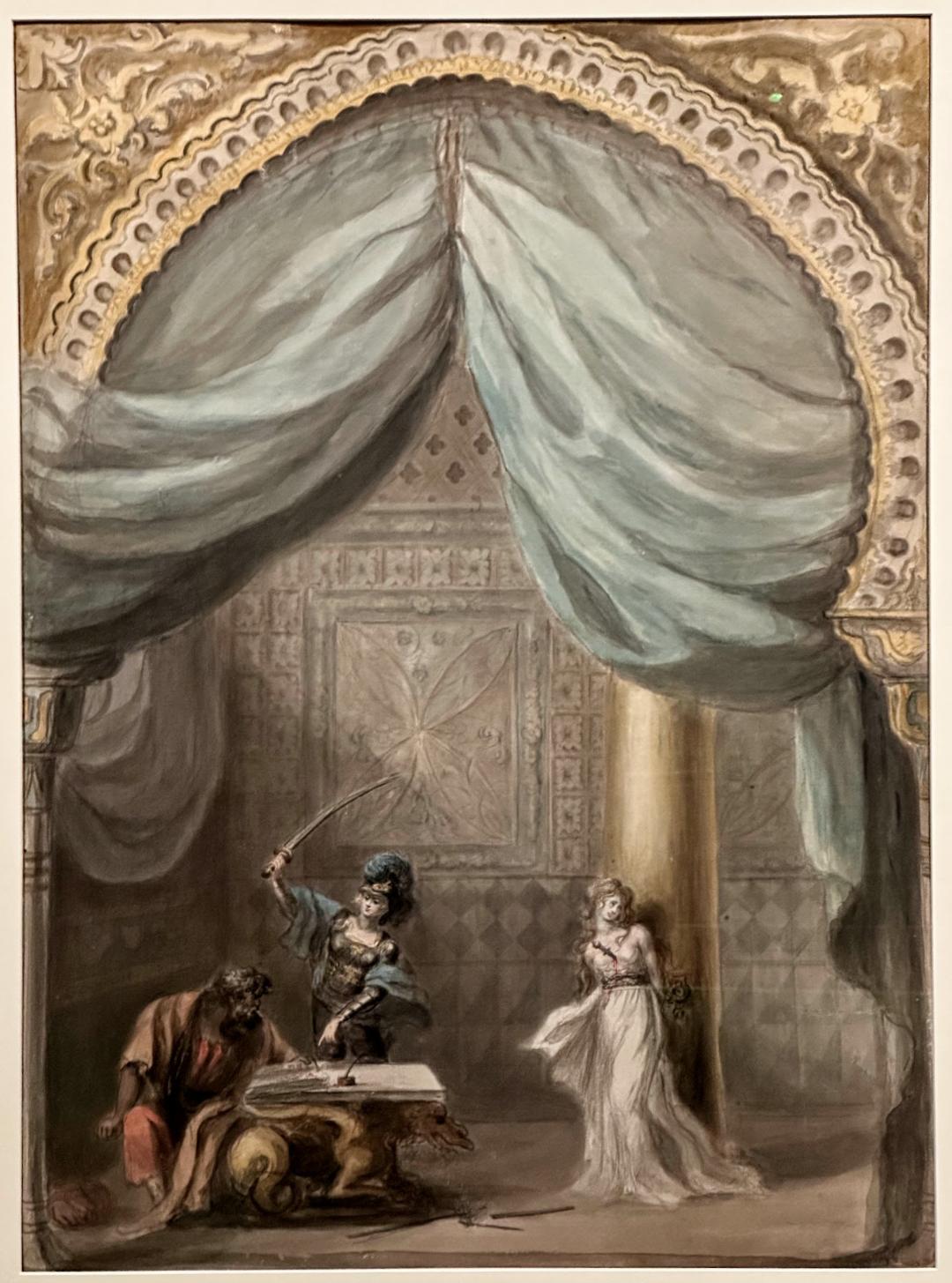
Lady Diana Beauclerk
British (1735 – 1808)
This watercolour is an illustration for Canto XII, verses 30-33, from The Fairie Queen: written by Edmund Spencer.
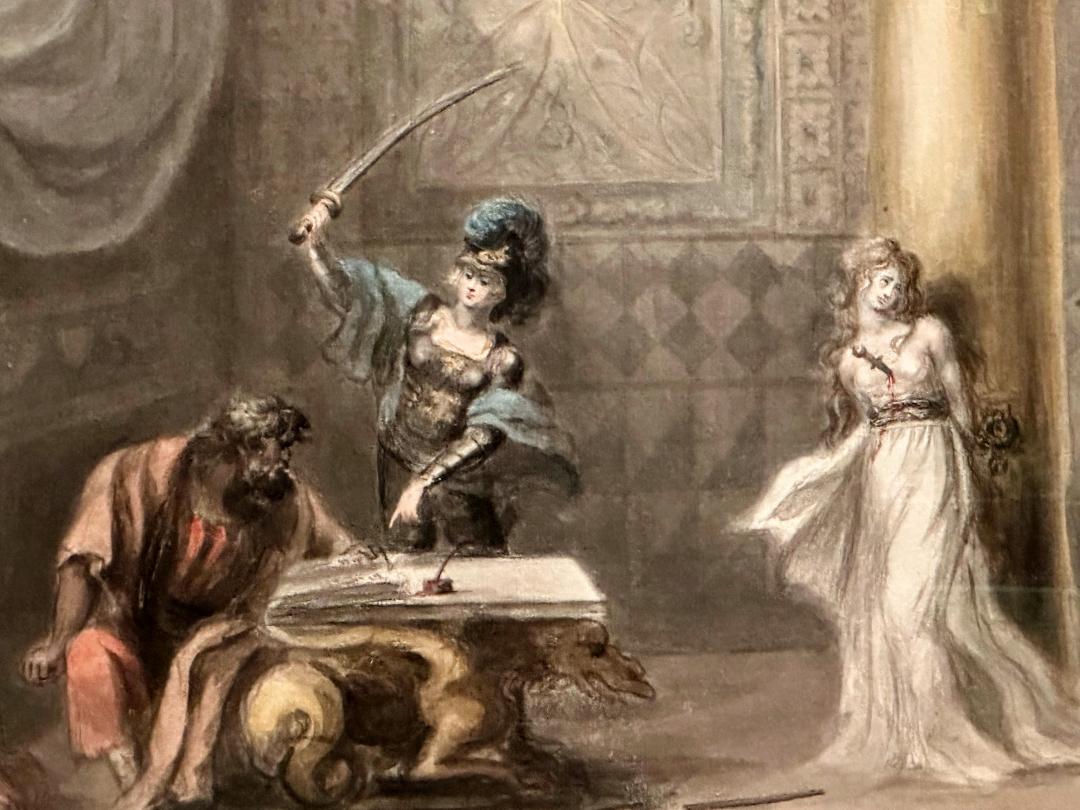
Diana Beauclerk was the daughter of the 3rd Duke of Marlborough and Lady Diana Spencer (Lady-in-Waiting to Queen Charlotte, 1761)
A scandalous figure, she left her husband.
She then had a clandestine affair with Topham Beauclerk, had an illegitimate child, divorced and remarried. Diana wound up having to earn a living with her artistic abilities.
An amateur artist, she was touted as painting in crayons. She worked as an illustrator, did admirable caricatures and created ceramic designs; notably for Wedgewood.
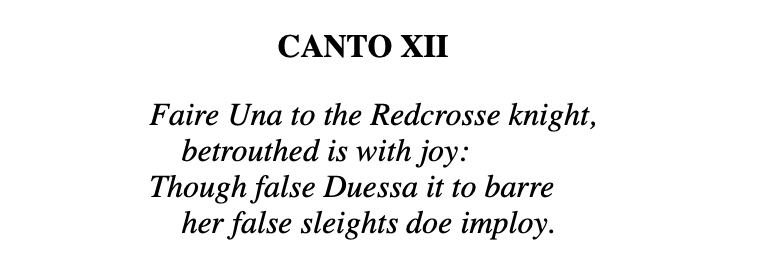
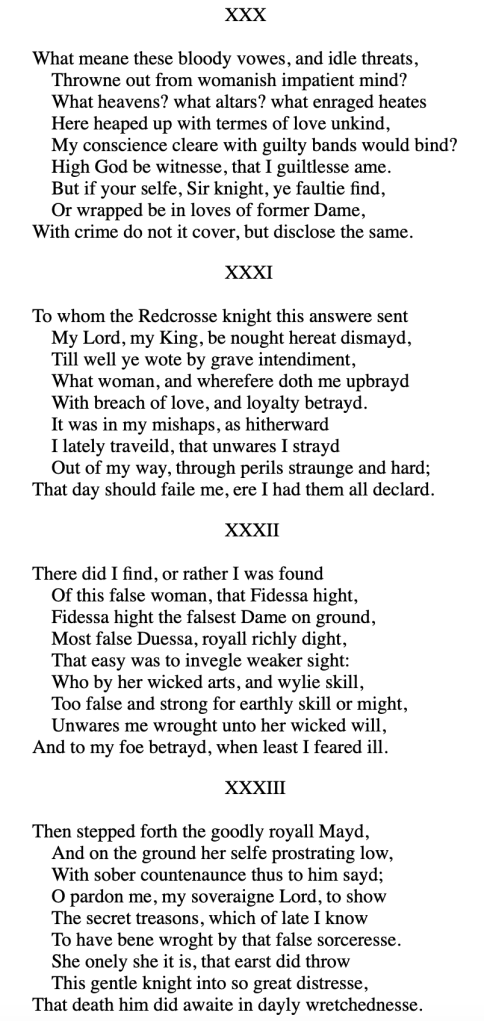
Click on poetry to read it more clearly.
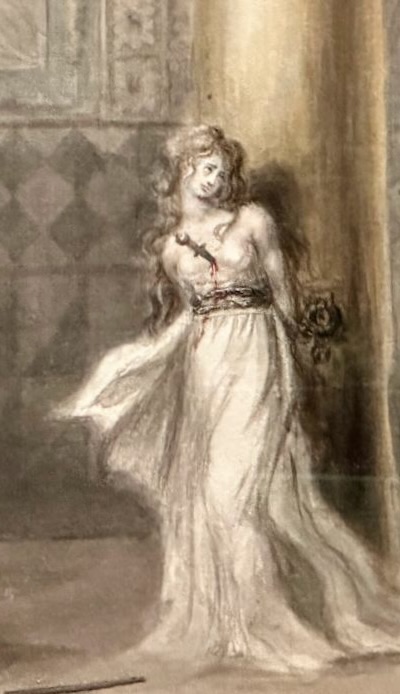
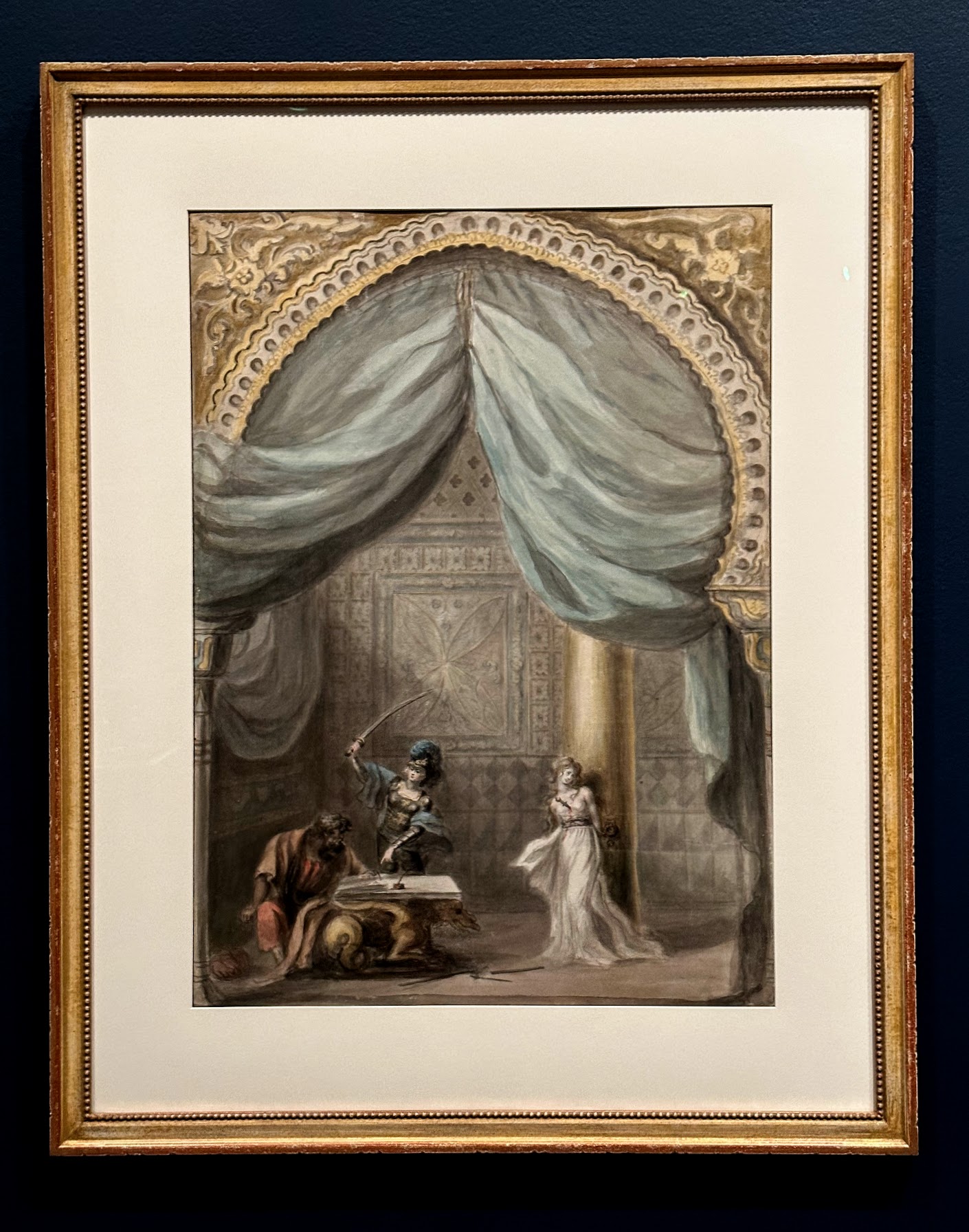
The Fairie Queen is available to download for free from the Project Gutenburg.
Fede Galiza
Italian – (1578 – 1630)
Fede’s father, Nunzio Galizia was a miniature portraitist who taught his daughter. By the age of 12 she was an accomplished artist.
Although she gained prominence in her lifetime, she did not acquire commissions, as her male counterparts did. Largely forgotten, she was rediscovered in the early 20th century.
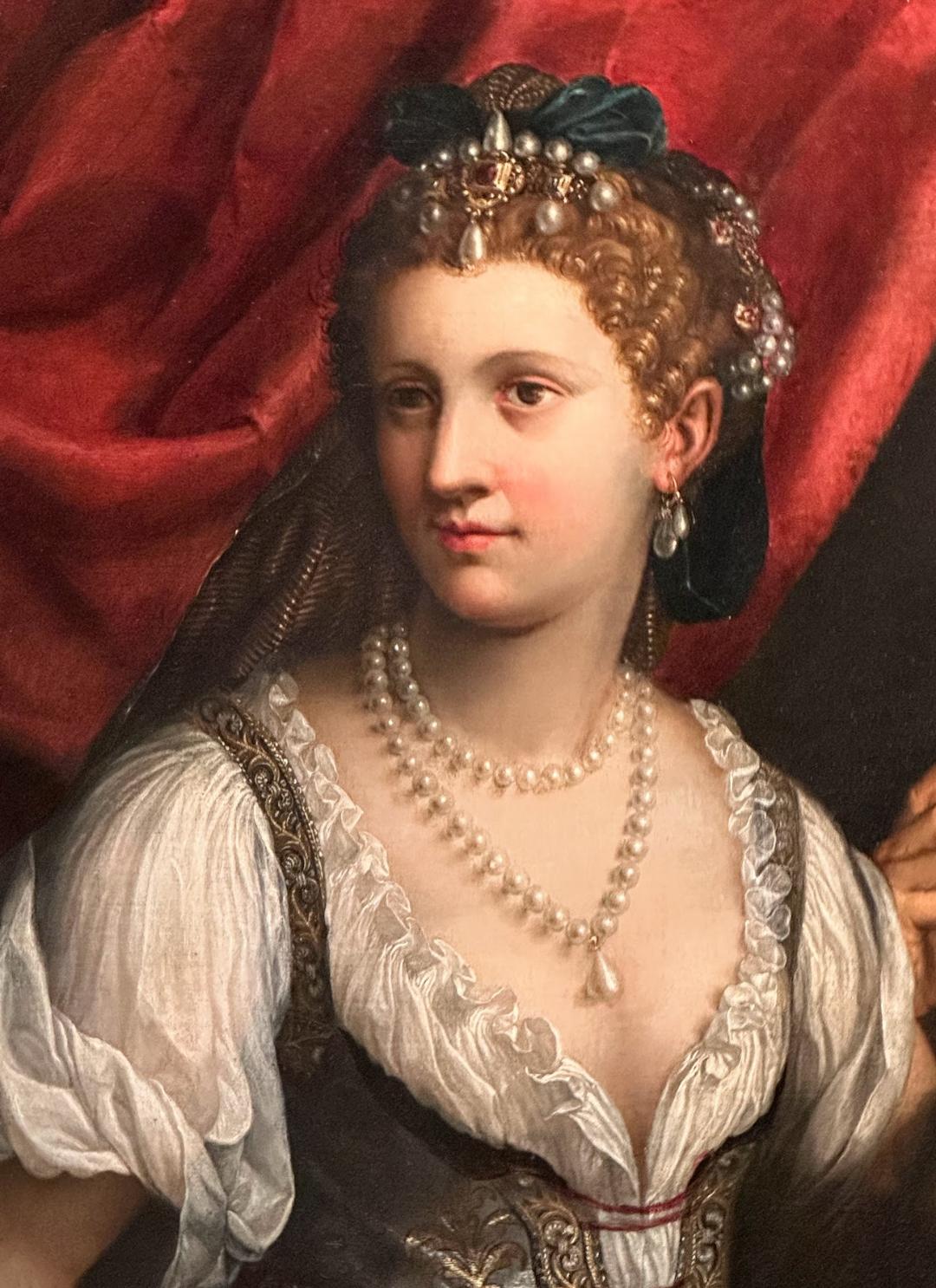
In her lifetime, Galizia painted at least forty-four still lifes, some of which have been sold for millions. These represent about two thirds of her work. She is credited with having helped define early 17th century still life painting
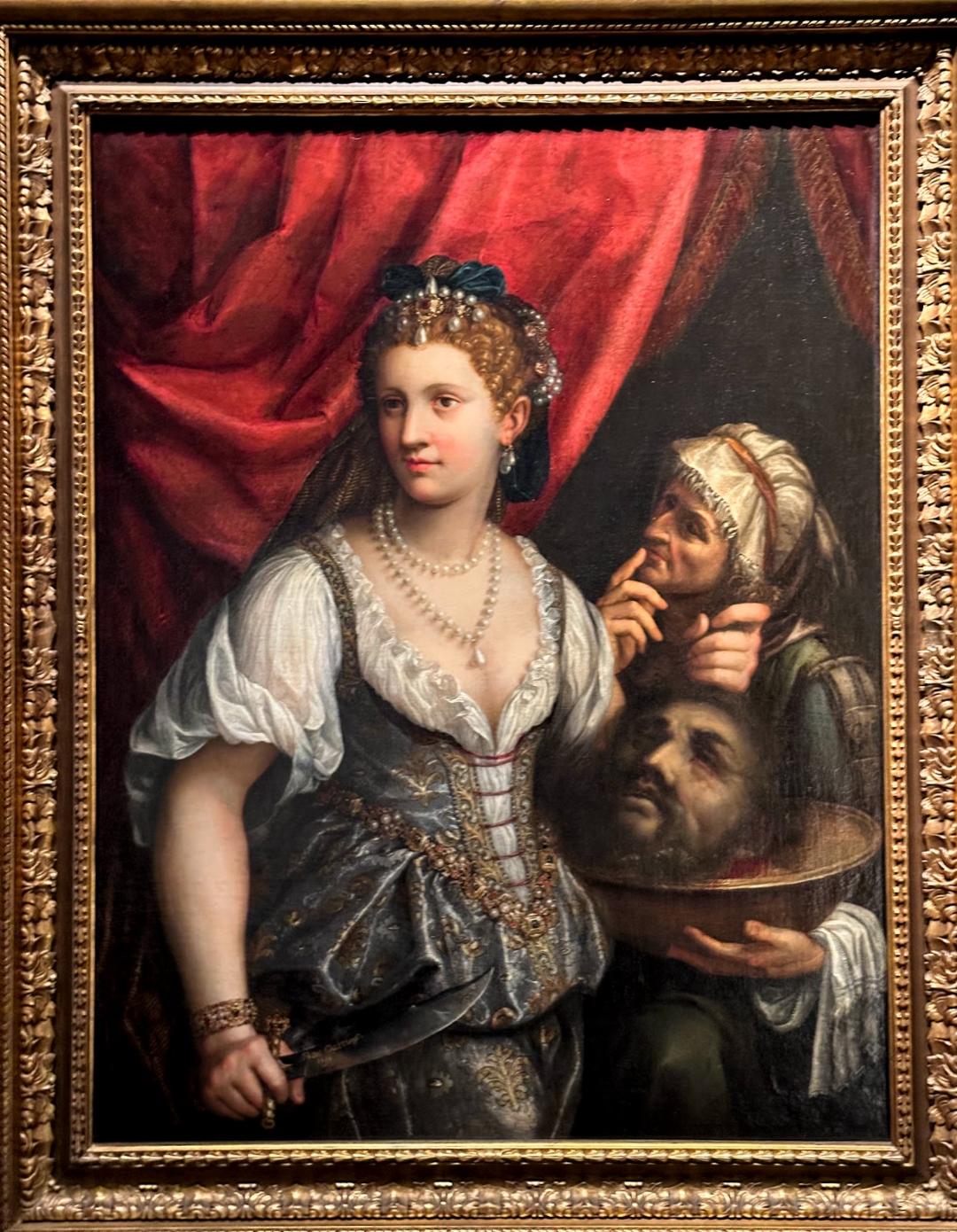
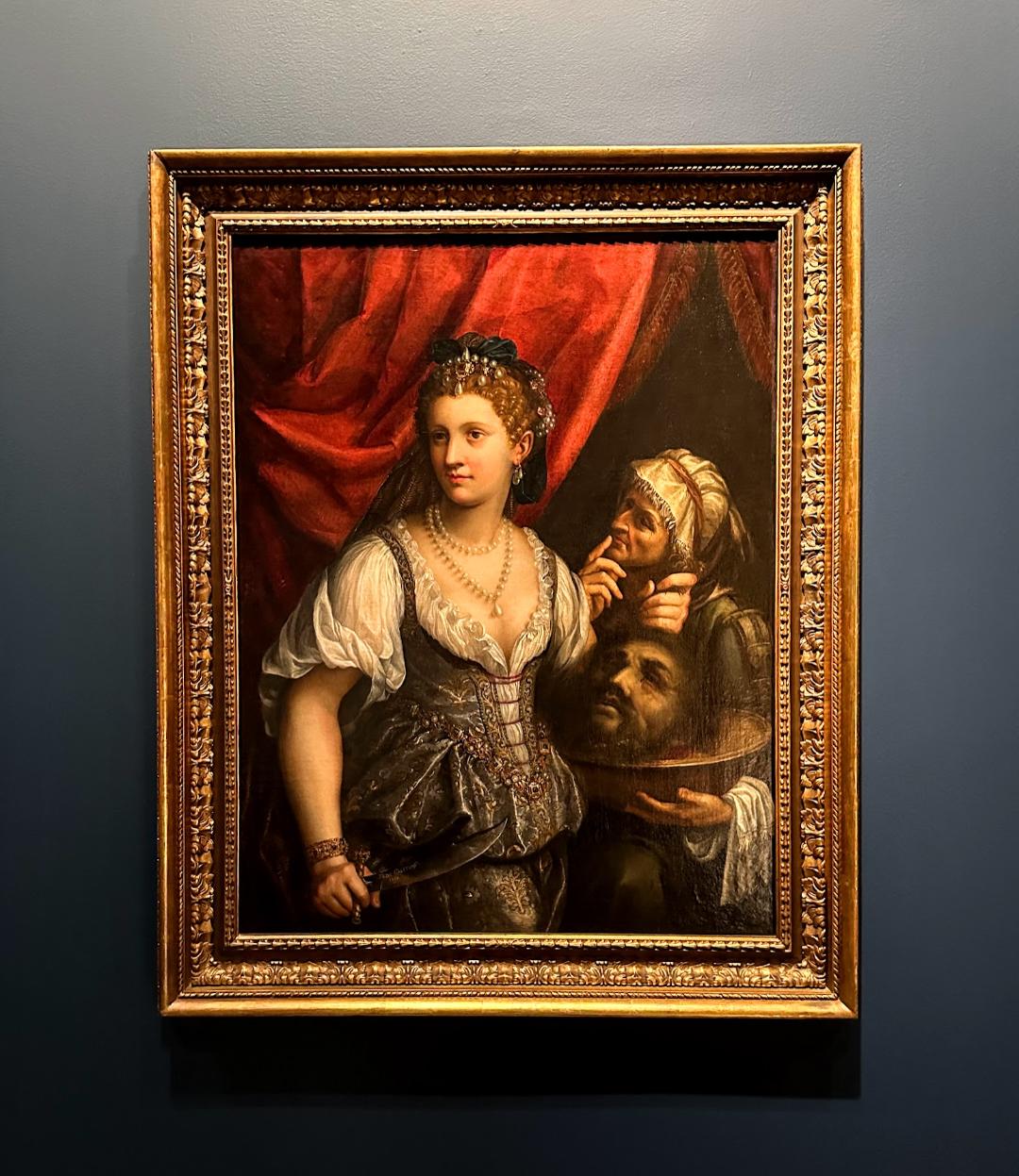
The biblical tale of Judith is possibly the most feminist in art history.
A beautiful Jewish widow, she went with her faithful maid to the Assyrian enemy general Holofernes tent, and seduced him.
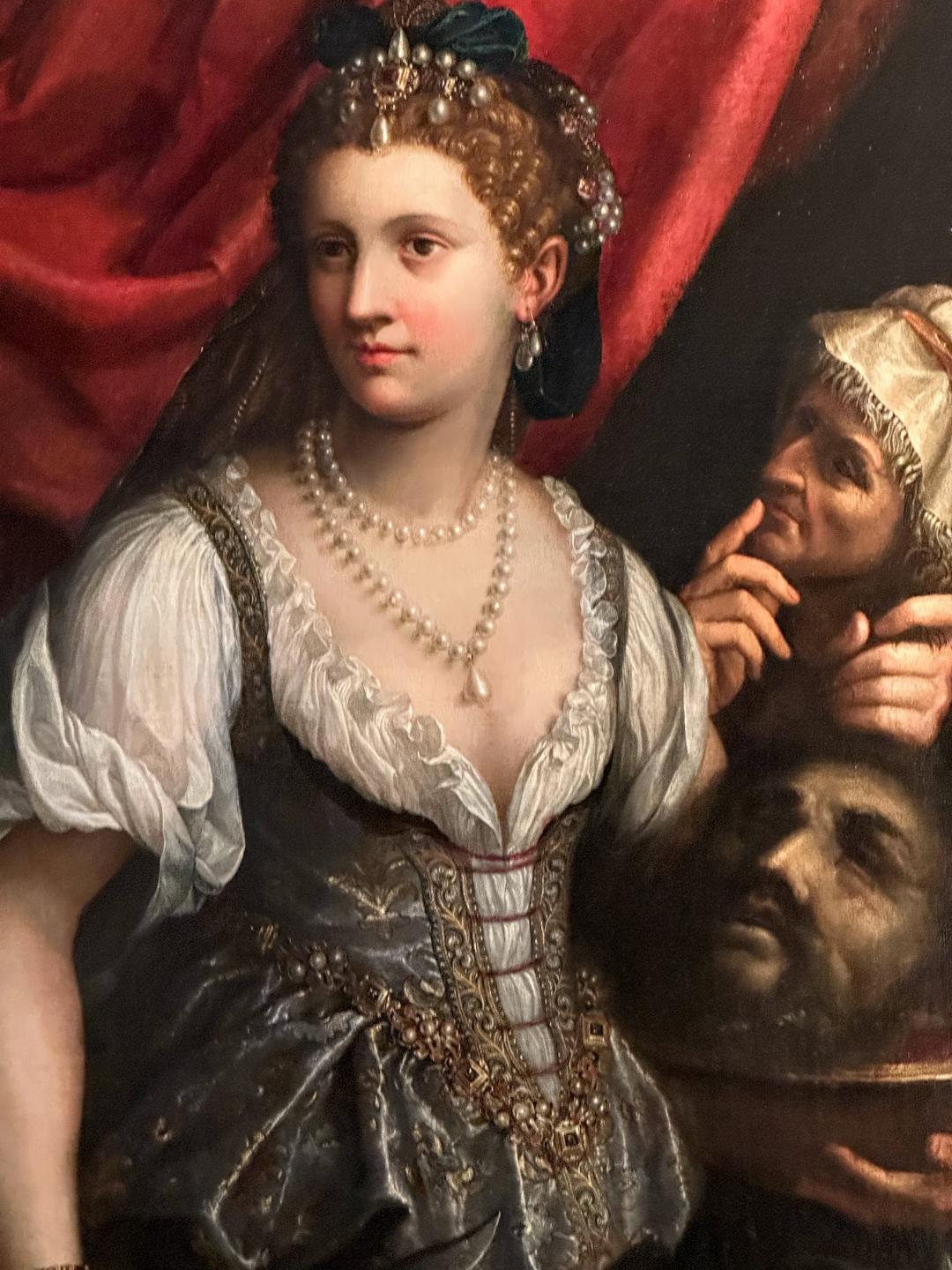
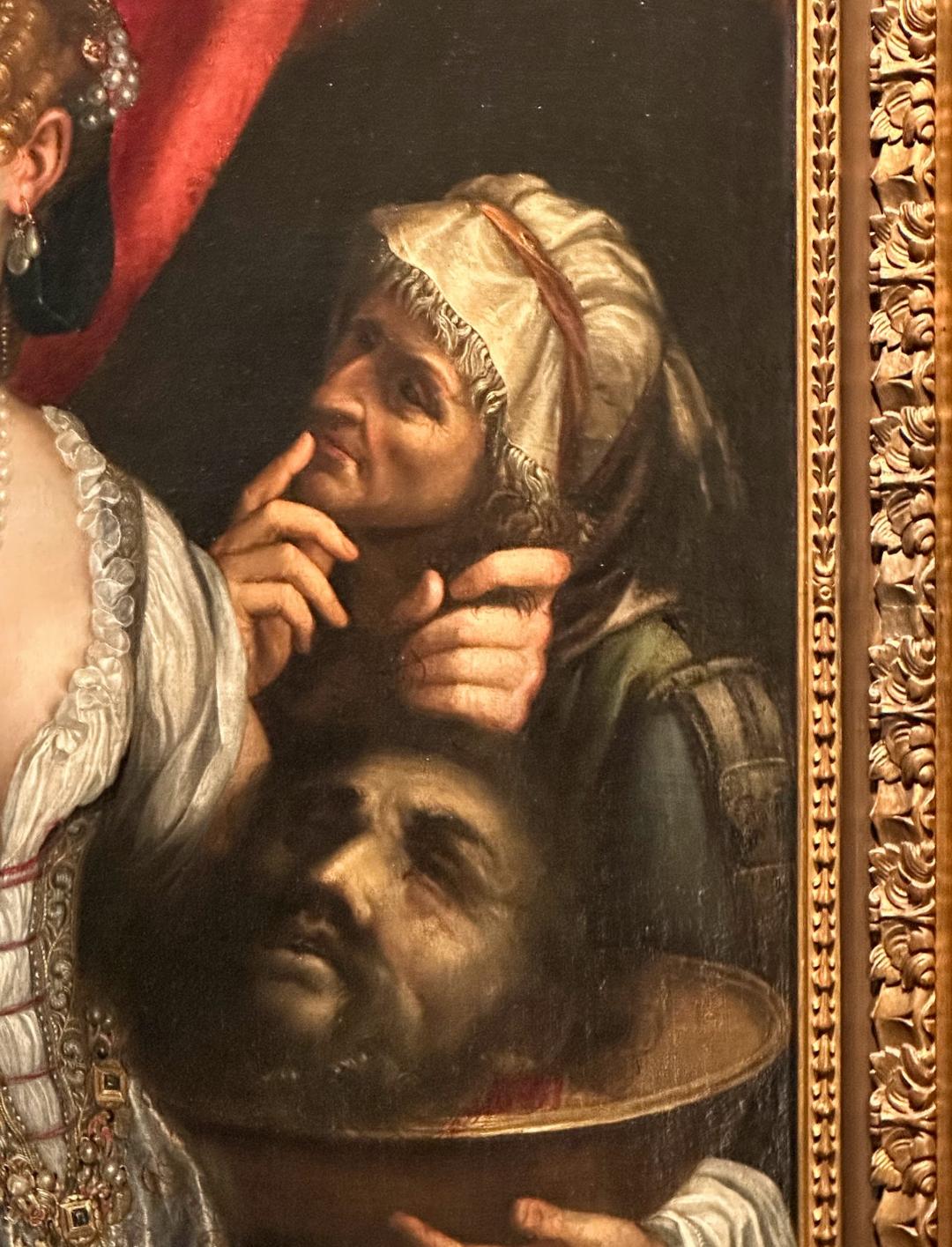
This gained his trust, and she was allowed into his tent freely, thereafter.
One night as he slept drunkenly, Judith decapitated him. She brought his head back to her timorous countrymen.
“Fede Galizia portrayed a calm, bejewelled Judith, with immaculate clothes and accessories at odds with the violence of her act.”
Lavinia Fontana
Italian – (1552 – 1614)
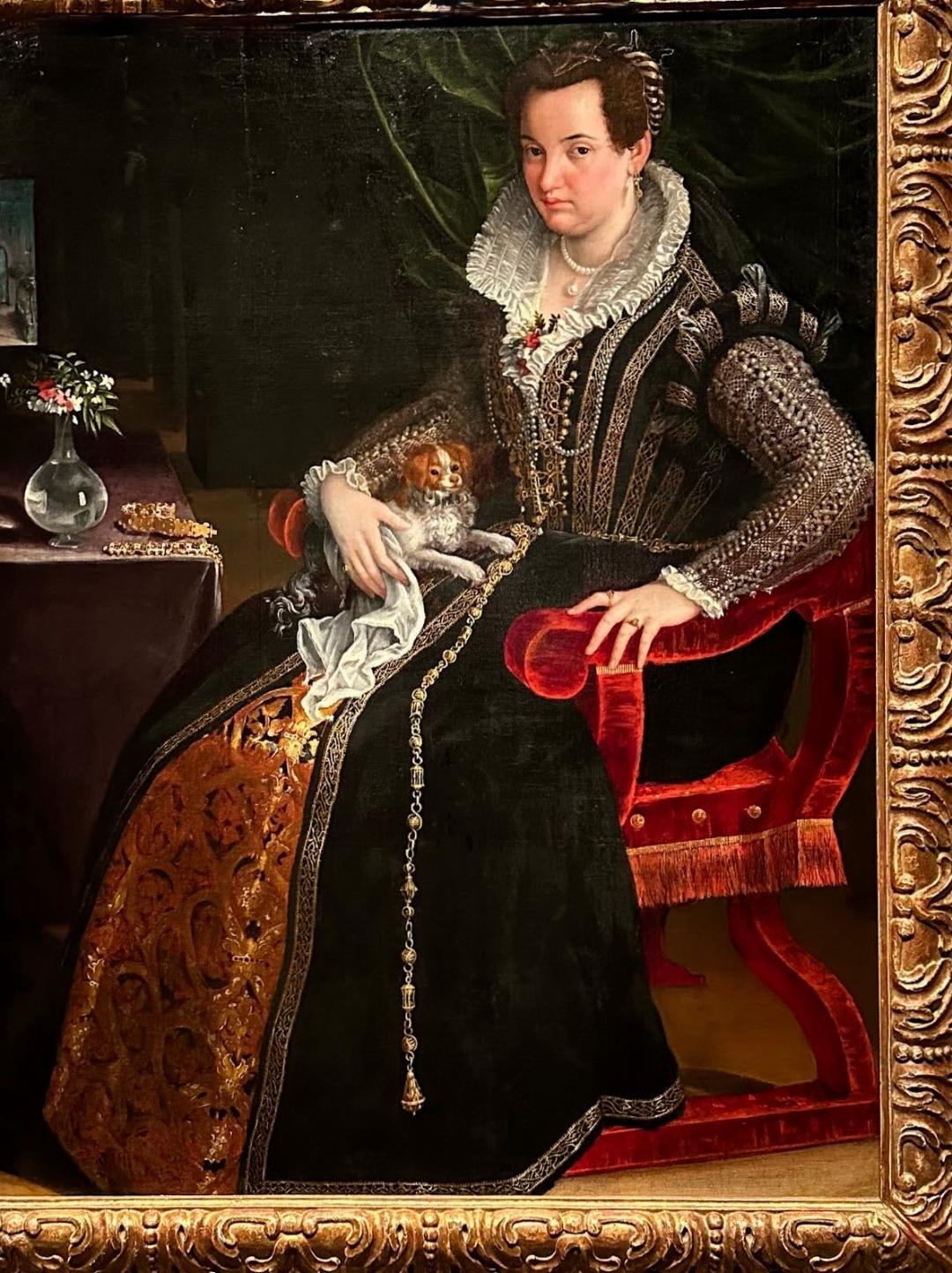
“Like many Renaissance artists, Lavinia Fontana used symbolism to convey messages in her paintings.”
In this painting, the noblewoman’s lap dog (an accessory must of the times) represents her faithfulness.
The juniper blossoms peeking from her neckline represent chasteness.
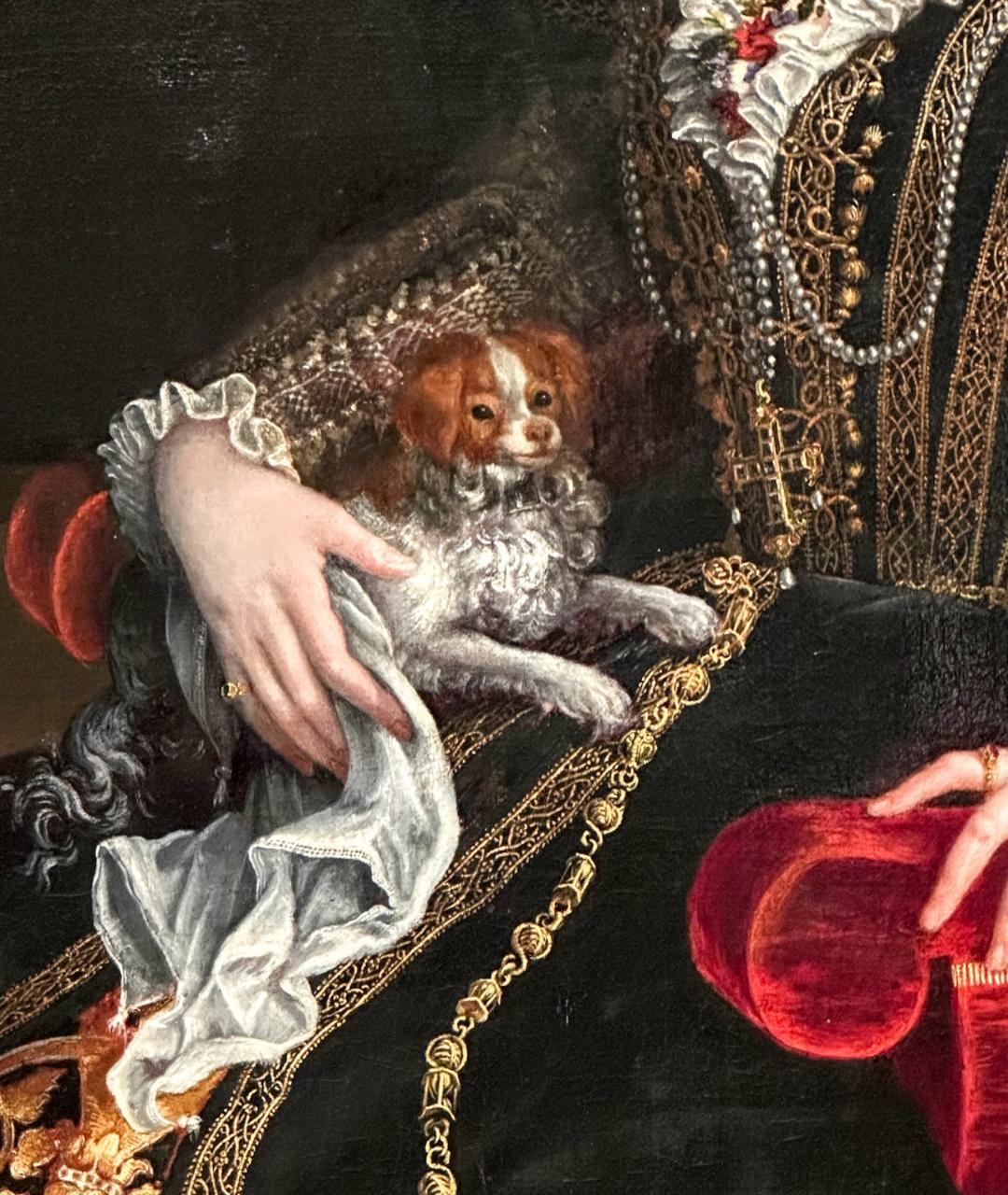
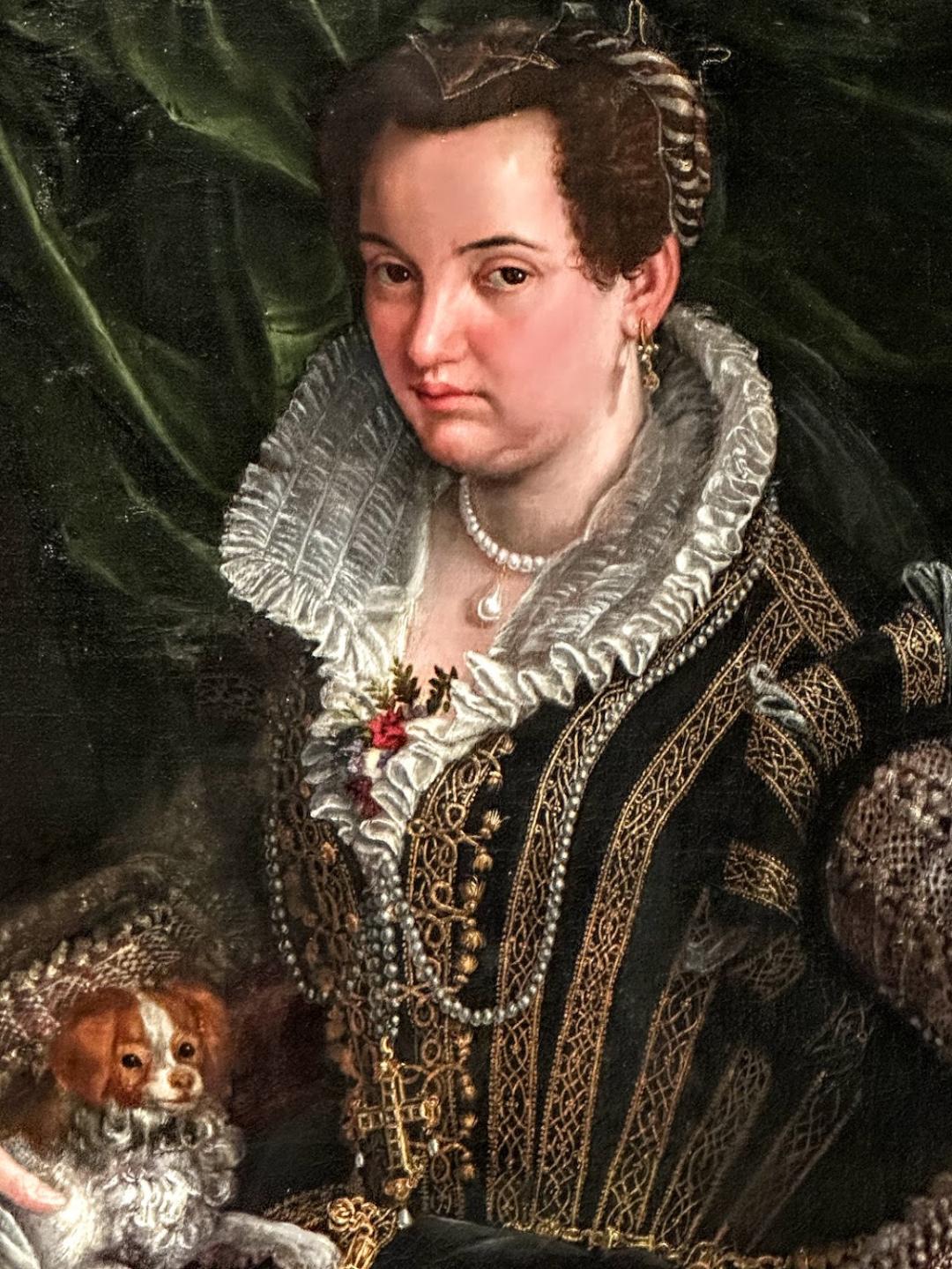
“Fontana also highlighted her sitter’s status through luxurious clothing and accessories.”
Note the pearl necklace, gold embroidered dress and fabulous lace details!
She was a celebrity, who documented not just fashion of the era, but also fashion accessories.
“Alidosi was one of many Bolognese elites who commissioned their portraits from Fontana”.
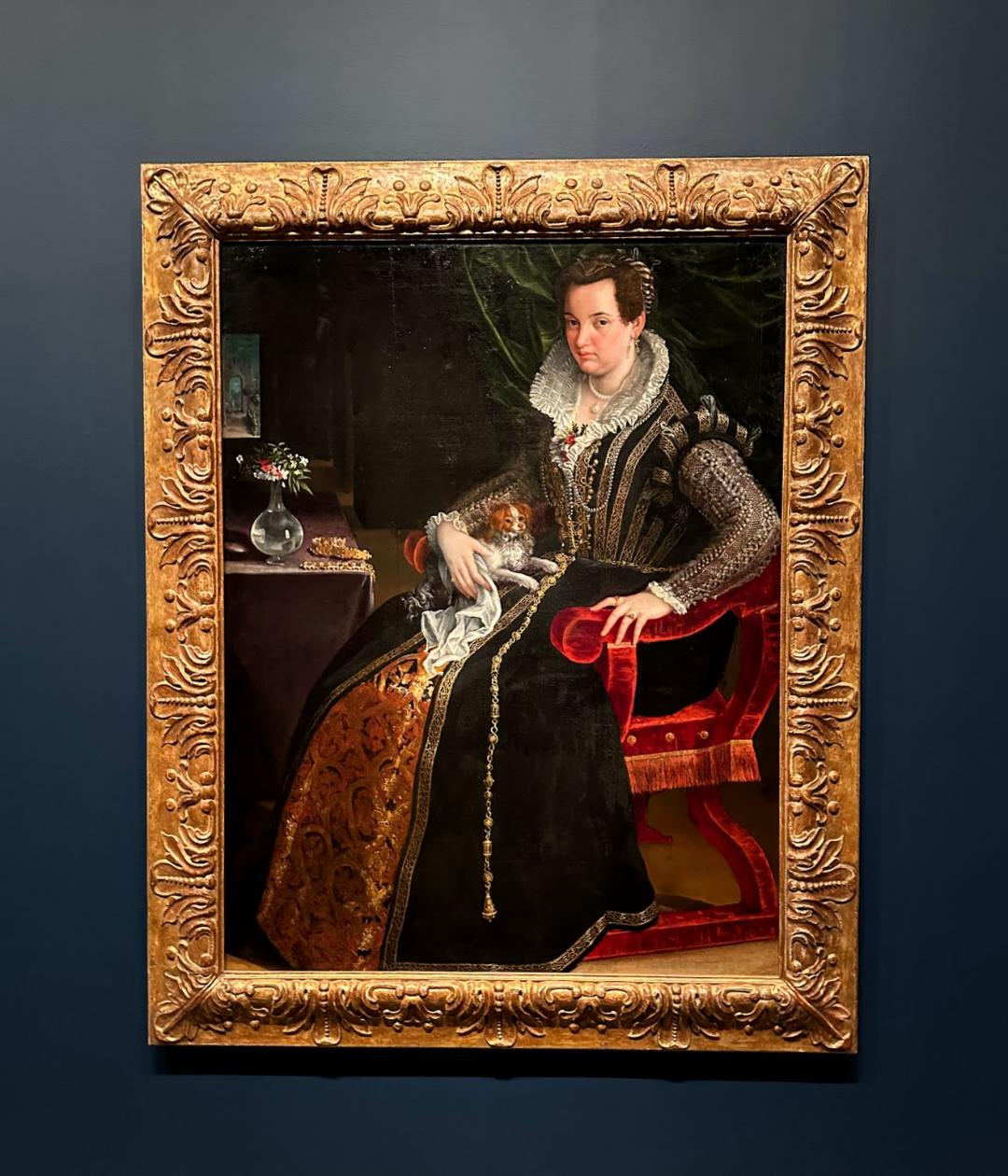
Lavinia Fontana was one of the most successful female artists in Bologna, Italy. Fontana left the largest body of existing art by any woman, who was painting prior to the 1700’s. Although much of her work is recorded but lost, about 150 works remain.
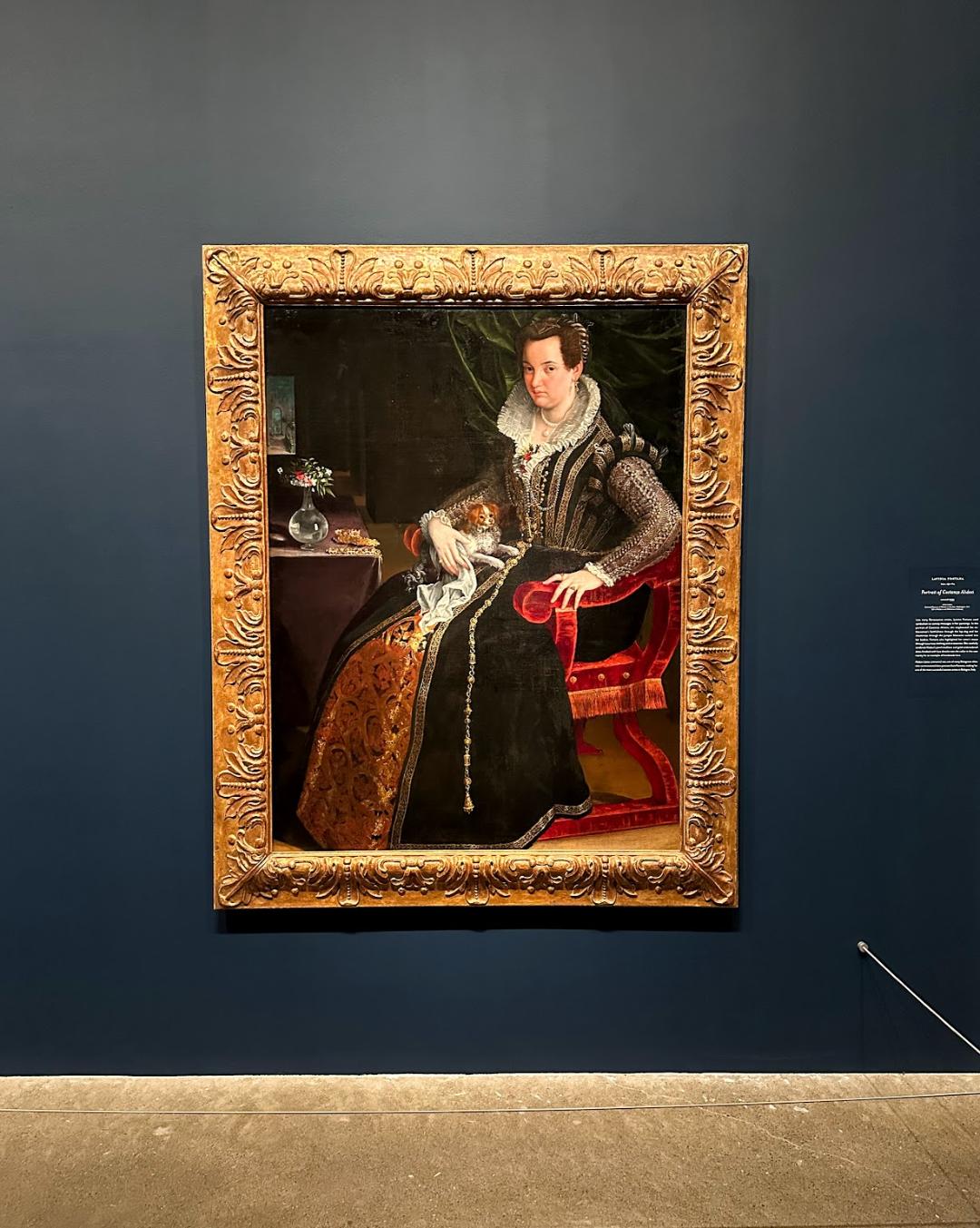
This is a lovely large painting.
As one can see, it sits about 18″ from the floor, and rises high above the information placquard, which is at low eye level.
Lavinia Fontana, was recently covered in an earlier post of Making her Mark. To learn more about her, please head over to the following:
Photos taken by ©️ Resa McConaghy – May 24, 2024
Art Gallery of Ontario, Toronto, Canada
Quotes in bold italics are from the Art Gallery of Ontario display placquards.


Oh, my dear, it shows how unfair the men’s world was—and unfortunately still is. Lady Diana’s painting is intriguing, and Fede Galiza’s tableau is truly a masterpiece! And Lavinia Fontana’s painting represents the intelligence of the women of her era. Well done, Resa; thank you!
👍✌💖🎉💞
Aladin,
You are welcome!
So happy you saw this post.
I have loved every moment of doing this MHM series, and there are still a few posts left to go.
Art was always enjoyable to look at for me, but being passionate about it only happened after I became passionate about street art.
💙💙xoxoxo💙💙
Your beautiful eyes capture the art, and that’s our goal!
🥰❤️🌹
PS: I mistakenly wrote my reply in the wrong place! Sorry!!😁😅
NO WORRIES!
I love the comment, and am happy where ever you wrote i!
❤️🌹xoxoxo❤️🌹
🤗🫂🫂
Wonderful art, Resa. Thank you for sharing. I love the flow of the material in Diana Beauclerk’s work–not so much the faces. 😊
I’d love to see an exhibition with Fede Galizia’s Head of Holofernes side by side with Artemisia Gentileschi’s Judith decapitates Holofernes. As noted Galizia’s Judith seems so calm with the head (there’s a typo in your bold), while Gentileschi’s is in the act. Also, Judith seems to be a very wealthy widow with all her pearls. Pearls are a status symbol.
I love the “lovely large painting” by Lavinia Fontana with all its details depicting her wealth and status. I imagine even the flowers symbolized something. And I wonder if that’s a mirror in the background upper left?
Yay, I’m thrilled you like this post, Merril.
I thought a lot about you when I did this post.
Diana Beauclerk… well she was painting to poetry. You write poetry to paintings.
I would call both ekphrastic arts, but I’m not sure.
Will correct “bold” as soon as I answer this comment. Thank you!
Also, I didn’t realize pearls meant status. Thank you! I would also love to see Gentileschi’s painting next to this one. There is a fab article in Daily Art Magazine that features Judith by 10 artists. It’s crazy who painted this story. Caravaggio’s is as graphic as Gentileschi’s https://www.dailyartmagazine.com/best-judith-head-holofernes-paintings/
Yes..yes.. now that you mention it, it does appear to be a mirror… mirror or possibly a window to another room, the detail in it is WOW. Another thank you!
I always love your posts, Resa! 💙
I think the amount of jewelry would indicate someone wealthy, but apparently pearls especially. Then I thought of all those portraits of Queen Elizabeth ! with the pearls.
Well, you know how I’m fascinated by mirrors–or windows!
That article is great. Thank you for sharing. You’re right about the Caravaggio. I like some of them more than others. 😊
Yay!!! 💙🌹
Do you remember “Blue Roses” from “Glass Menagerie”?
Yes… the pearls. Well they are pretty special, even today. And Queen Elizabeth would deem it so.
Elizabeth II often wore pearls, although not to the extent Elizabeth 1 did.
I wonder if they are hand-me-downs, like other royal jewels?
That article is terrific. Yes, I like some more than others, too. Klimt’s take is quite unique. 💙
I think queens have personal jewels as well as royal jewels.
Klimt’s definitely stood out. I’m not sure if I liked it, but perhaps the point is to be memorable and unique.
Royal jewels…. Therein lies a lot of thought grist for the mill.
Agree about Klimt.
Not sure where your thoughts are going. 😊
Haha! Me either… a big scramble right now.
Hard to think in heat, and our AC is on the fritz. Right now it is working, but was not yesterday from around 4pm to 8 pm. Waiting for the repair guy. I’ve postponed my AGO trip until Tuesday.
122 w/ humidex today. 112 w/o humidex. 112!!!
🥵
Anyway on Tuesday it will COOL to the 90’s. YAY! 🥶
I’m glad your a/c is working some, and I hope the repair person can fix it quickly and soon. Yeah, we have similar heat and humidity. It’s insane!
We have family coming next week, so I hope it will be a little cooler then.
💙
Ooo family! Your grandchild?
Yes! 💙
Woot! Have fun, and many many baby kisses!💙
Thank you!
💙
This beautiful art is breathtaking. Aladin has summed up perfectly how such gifted ladies art was essentially kept in the shadows of male artists at the time . Thankfully , it is recognized as among the finest works by today’s critics. Thank you Resa, for once again sharing the artwork of these women. They deserve to be seen hanging on the walls of the world most prestigious museums and exhibitions.
xoxoxxoxo
It really is sublime art. (as I struggle away with Bowie, a pencil and eraser) LOL.
The detail in these old paintings… pre photography is stunning. It is how we know what clothing looked like, in a detailed way. When I was designing for film, and a period show came up, I used paintings, and contemporary literature from the times to imagine how the clothes would look.
Thank goodness for women documenting women, while men did more important (hmm?) paintings.
Yes, these women are finally getting their place and praise. Let’s keep it moving along!
It is still paintings by men that fetch the highest prices. Last I looked, none of the 100 most expensive paintings were by women.
Loving the art!!!
xoxoxoxoxo
Bowie is a pencil and eraser type of guy. I read where Frida’s art is worth more than Diego’s now. That’s some progress!
xoxoxoxo
Speaking at the dark ages, I saw where a majority of MAGA supporters think women should not be allowed to hold public office and they should do away with the 19th amendment ( women’s right to vote). They are scary as hell and need their butts kicked by women. 😠
SHIP!!!!
What is wrong with them?
Human rights are women’s rights and women’s rights are human rights” – Hillary Clinton
I guess those women are not human… or women.
xoxoxoxo
Hahahaha!!!! A pencil and eraser kinda guy. Lololololol.
Yes, Frida deserves the recognition. She was self taught, and quite unique.
Okay… I’m at that point where I’m going blind, so I sent you an early Bowie (for comment support).
I started a new thread for this new project!
xoxoxoxoxo
I saw the portrait of Judith by Fede Galiza many years ago when I spent two weeks on Florida’s westcoast and visited the John and Mable Ringling Museum of Art at Sarasota. I had a wonderful and interesting time there following the footsteps of one of the greatest Circus Dynasties ever.
Stay safe, dear Resa!
Yes, this painting does live there. Very cool Martha.
The painting is spectacular in real life, and it was terrific that they leant it out for this exhibition on women artists – 1400-1800.
It’s wonderful that you got to go to that museum. I just learned about it when doing this post.
Take care as well, dear Martha! xo
Fascinating women and backstories. I’m glad their art is finally being appreciated.
Thank you Brad!
Yes, these are gorgeous paintings, and the illustration is beautiful and intriguing.
Yes.. I’m glad too. Doing this series on women in the arts (1400 -1800) has been very satisfying. 🌹
😍
Beautiful art and fascinating stories Resa.
Thank you so much for sharing ❤️😊🥰
You are welcome, Maggie! This series on Making Her Mark has been a joy.A few more posts to go! 🌹💪🌹
Your posts are always a joy Resa.
You put so much work into them 🥰❤️
Thank you, Maggie! I do try, just like you!
Art (all the arts) is a human heritage, and we should revel in that.
❤️🌹💙
Agreed Resa ❤️🥰❤️
🌹❦
oh, i simply love all of this, resa!
Yay, I love all this art and these women, too!
Thank you, Beth!
Thank you, Resa, for another fascinating look at the work and lives of earlier women artists. The clothes! The jewels! The restrictions that all that implies. And, the expertise the artists developed to capture their times. Much appreciated!
You are welcome, Cheyenne!
I love working on this series. Maybe 3 posts left to go.
These women are an inspiration. Does anyone paint like that anymore?
Lovely art and interesting information!
It really is wonderful art, and what a joy it was to set my eyes on it in real life.
It’s been rewarding researching all these successful women from the past.
Thank you, Becky!
I’m sure it has been, Resa!
❦🌹
In keeping with their male dominance initiative- protestant translations of the bible do not include the book of Judith! Of course, they do include Salome- but of course that is probably so that they can ridicule her dancing for male pleasure! What a great post in its every minute detail
Wow! Thank you for this info, Violet!
I had no idea about Judith being left out of the protestant version of the bible. I think there is much selectivity, depending on the version of whatever religion.
I love working on this series. I believe this is the 13th…maybe 14th post. About 3 more to go!
These women are inspiring!
A terrific/interesting post, Resa! So many wonderful paintings were created by women who deserved much more renown.
I totally agree, Dave!
This exhibition was to bring all these women out of the dark corners of history, and shine a light on them. It did. 230 pieces were shown. It took almost a decade to put together, yet only showed in 2 cities. What a shame!
Yes, awful that this exhibit wasn’t in MANY cities. 😦
Yet another example of the short shrift paid to women.
Absolutely. 😦
🌹💪🌹
🙂
Your beautiful eyes capture the art, and that’s our goal!
🥰❤️🌹
Aww!!!
XOXOXOXOXO
Thank you so much, dear Resa, for this exquisite tribute to these artists.
In a world dominated by men, they must have struggled mightily to emerge (and I fear their path is fraught with difficulties even today).
You’re welcome, Luisa!
Yes, their world was not easy. AND these were the lucky women. There were 230 displays at the show Making Her Mark, which spotlighted women’s art 1400-1800. Most of them were unknown, often due to a male artist painting his name over theirs.
This is my 13th post on this show.
Sometimes today, it seems like women’s rights are going backwards, especially in the USA. xx
I know, dear Resa, and it’s a horrible feeling.
Thank you so much for your valuable reply, Resa
Thank you to you too, dear Luisa! 🌹❦❦
Excellent tribute.
Thank you dear Tim! xx
Fabulous, Resa. And I love Judith. Always have. A woman on a mission. The artwork is truly amazing. The detail is incredible and it’s shameful that they were erased from history by men. It’s still happening today.
Yes, a woman on a mission!
Agree, seems we just start getting noticed, and the erasure procedure kicks in again.
Sigh!
So very true. This was wonderful.
Wonderful post full of beauty and insights, thanks Resa!! So was the late Princess Diana named after Diana Beauclerk’s mother, Lady Diana Spencer? Love all the paintings, and that lapdog is adorable!
I’m going to the Minneapolis Institute of Art (MIA) in mid-July; I’m gonna see if they have any paintings. by one of these ladies.
That Galiza painting of Judith is stunning! Btw, there’s a small typo here… “Fede Galizia portrayed a clam, bejewelled Judith, with immaculate clothes and accessories at odds with the violence of her act.” I think you meant to say ‘calm’ instead of ‘clam’?
Great post, as always!!
♥❦❧🎨🖌️XOXOXOXO🖼️🖌️♥❦❧
Lady Di… I wondered that myself? Good question, Ruth.
Oooo – MIA Eeeeee I want to go there. Take pics of any paintings with women in gowns. I will be doing a series on Gowns In Art on Art Gowns.
Don’t rush, check for glare.. Sorry… so excited for you.
I’m off to the AGO tomorrow. They are having an exhibition of Impressionist art. Yahoo!
Clam is now calm. Maybe all the pearls threw me off and into a shell. (Attempt at humour)
OH -speaking of gowns, did you watch any of the new season of “Gilded Age”?
Okay… Love ya! ✾𝖃 ❦🤍❦ ~ 🌹 ~ ❦🤍❦ 𝖃✾
Oh Resa, I so enjoyed this! This is my third time on this post!!! I can see how much work has going into the research. You’re not just sharing paintings anymore! You’re following the stories behind them, and that makes all the difference. Thank you for introducing me to Lady Diana Beauclerk. I had no idea she illustrated The Faerie Queene, and I am beyond thrilled that you included the Project Gutenberg link (my go-to place). You know me well enough to know I’ll be wandering down that rabbit hole before long!
I also loved how you connected the artists, the poetry, and the museum information together. It made me feel as though I was discovering them alongside you. Thank you so much for all the time and care you put into your research. It’s inspiring to watch this journey unfold. You have truly made a mark through your posts!!!
Yay!
Thanks Rebecca! Are you still in the rabbit hole?
Well, you turned me on to the Project Gutenberg. What a wonderful thing. Thank you!
Aww.. I made a mark through my posts… .. sinking in … what a beautiful thing you just said to me.
There’s maybe 3 more posts to go. I am so honoured that you were here with me for some of them.
Crazy, but you are always with me at the Art Gallery!
HUGS!
It is so exciting tagging along with you. What a marvelous adventure you are taking us on!!!
Thank you Rebecca!
The gown is coming along fabulously. I am very excited. 💙
So am I!!!!
🌟
I studied “The Fairie Queen” in college. Darned if I can remember a single thing about it. I love the Costanza Alidosi portrait. It is so vivid, the good lady looks as though she could step out of the frame at any moment.
Lol… First I’ve heard of the Fairie Queene. Sounds intriguing, but when I saw how long it was, I stuck with the 4 verses.
OMG – Fontana was an AMAZING painter. Yes, Adilosi looks real.
🙂
What a gallery of women who were far ahead of their times! It’s so impressive to read, made all the more so when you consider the challenges women are still facing in present day. To be able to navigate the ignorance of prevailing traditions and convention and not only that, but to thrive? Yeah, that’s the stuff right there.
Lady Diana was a fun one! I had to do a double take when I read Lady Diana Spencer, LOL. Funny how that worked.
Yes, and we are still coming from behind.
Unfortunately there are many women who buy into patriarchy, and they help keep other women down.
The Lady Di’s are related!
MUAH!
Yes, happens so often. How sad.
I love that they’re related.
MUAH!
MUAH!
MUAH!
Lovely coverage of these talent women, Resa. Your photos are excellent.
Thank you John!
You know I am fussy about my pics, and I will take lots if I have to… from every angle, aperture settings, distances and distance settings. When all that fails… the dreaded angle.
🎨𝖃
Yes, I know. The results are worth it to your loyal followers. 😊X
OX OX!
🐂
🐖
😊X
Another wonderful installment in your Making Her Mark series. I really enjoy how you combine the artwork with the artists’ personal stories and historical context—it brings these remarkable women to life. Fede Galizia’s Judith is especially striking, and Lavinia Fontana’s attention to detail never fails to impress. Thanks for continuing to shine a light on artists who deserve far more recognition.
Thank you so very much!
It has been an enlightening series to write, and brought me much satisfaction. There are several more posts before this exhibition in particular is done.
I will continue to shine a light on female artists, both past and present.
I began a series on Jesse Mockrin, a contemporary artist who shines a light on women’s issues, using her unique style (based on art from the past) to portray the plight of women through history and into today.
I think she and her voice through art is fantastic. I have only done one post… her art is heavy and her voice is loud.
I will be putting a link to all of her posts on my sidebar, right under MHM. Here is post 1 if you are interested. https://graffitiluxandmurals.com/2026/01/24/the-art-of-jesse-mockrin-pt-1/
Hi Resa, you have highlighted three very interesting female artists who achieved despite significant obstacles at the time. I’ve never been able to understand why there has always been inequality between men and women in all aspects of time. After all. A talent is a talent regardless of who the creator is do it doesn’t make sense. Mind you, most human behaviour does not make sense to me.
I agree with all you say Robbie!
Much of human behaviour is at odds with what humanity could be, yesterday, today … and unless mankind finds his higher collective self, tomorrow.
I love all of this art, and if there was any way. to go back in time, I would want to meet them all!
BIG Hugs! xo
Yes, I would be great to talk to these artists.
I like to think, in our own little way, as we proceed with our art project, will will be chatting… connecting with them & their male counterparts via the art. xx
I like this idea. My July artwork is the Great Sphinx of Turin which I saw at the Louvre 😄
Oooooo! Nice!
Such intriguing women, Resa! I loved hearing their backstories and the povotal and oftentimes underappreciated role they played in creativity and art. The Lavinia Fontana one with the wee lapdog is really powerful. There’s something regal and subtly commanding in this large painting, which is captured perfectly by your amazing photographs! 🌺🕊️
Ohh thank you about my photos Ada!
I really do spend time attempting to get the best shots I can. This art (and all art) is so important to humanity that I want to bring the wonderful pieces (classic and modern) that I get to see in real life, the best I can to those who care to look.
Fontana was fantastically talented. So much so that even men could not ignore it. And so the journey continues!
I super love seeing dogs and cats in old art. I can’t express exactly why in words yet, but one day.
Have a wonderful 4th of July, Ada!
🌹❦❦🤍✾
It’s a beautiful post, Resa — fascinating women’s history, not simply art history. Creativity is so often the province of the wealthy. Imagination may be free, but giving it physical form does tend to take money. That was very true back then, but not untrue now either. Try to keep cool…icy beverages, spray-mist bottles (yes even in humidity) LOL, the cats look at me like I’ve utterly lost my mind when I spray myself in the face with the mist bottle, but it feels good! 😀 🐱 Hugs.
Thank you Teagan!
I love all of this art, and the women who painted it.
I appreciate all the women (and men)who worked hard to bring this collection of women’s art (1400-1800) into the spotlight.
I’m into an iced almond milk right now!
H🥶GS
Yummy way to beat the heat. ❤
YES! ❦
Dear Resa
Thanks for all the info.
Great shots of these pictures.
The Fab Four of Cley
🙂 🙂 🙂 🙂
Thank you Klausbernd, and the other Fab Three!
🎨🎨🎨🎨
Fascinating! I had to read the Faerie Queen for English Lit – it’s a whole lot of verse! I had to struggle to stay awake! I love the symbolism in the portraits.
Ahh, you are the second person who has mentioned they had to read “The Fairie Queene” for Lit.
LOL… I barely got through the verses I posted. They sure knew how to write a lengthy sleeper poem back then.
Although, I do quite like “The Lady of Shallot” and one of the Waterhouse paintings on the tale is in our art gallery’s collection. It’s the one where she’s weaving/dreaming by the window, but not looking out. Sublime!
Well, that’s a classic. As you wrote, very interesting for symbolism, but for us too Christian.
The Fab Four of Cley
🙂 🙂 🙂 🙂
Hello Klausbernd.
WP is acting up with comments. I found this and repeats in Spam.
You may have wondered where your comment was, and kept trying.
Anyway, I took all out of Spam and approved them all. This will keep you out of Spam in the future.
Now that they are all approved, I will delete the multiples. Thank you so much for The Fab Four visits!
🤗🤗🤗🤗
You are very welcome, dear Resa.
Quite!
Once you’ve had to read the whole thing it’s hard to forget it! The Lady of Shallot used to be one of my favorite ballads of that time – I guess it still is. And the Pre-Raphelites!
Cool! Mine too!
So much art and literature.
I think it’s so neat that (tad of envy) you studied at Berkley. Is that where you took English Lit?
No regrets, but although I enjoyed swimming the pool of the arts, I hung mostly in the shallow end. I took Fashion Design and Technology.
I live only fifteen minutes from the UC campus – and was a transfer student – I could have never gotten in as a freshman!
Ah.. interesting. Well, Lucky you!
Happy Fourth!
I love the paintings!
Me too! Thank you Jennie!
You’re welcome, Resa!
Thank you so much for this post Resa. I guess the world has never changed.
You are right, Michele.
Man over woman, one religion over another, one race better than another, rich over poor…. ad infinitum.
Discrimination only works in cases such as – should I eat the normal mushroom, or the poison mushroom.
I takeaway so much information when I leave your posts, Resa. Fascinating and interesting, as always! And beautiful! It looks like some things never change, such as women still fighting for equality. Thanks for putting this amazing post together! Hugs! xoxoxoxo
You are welcome, Lauren!
I adore working on articles about women and their achievements.
HUGS xoxoxo
I know you do, and it’s great because women need more recognition! HUGS back atcha! xoxoxoxoxo
HUGS!!! xoxoxoxoxo
💕🌟💕🌟💕😘
🌟💙🌟💙
Forgotten memories. I still think there has been much progress in a century. Or even 50 years: when I went to College in France, my Business school (as all the others) only had 15% women. Today, female enrolment is about 60%.
Yet, nothing is ever certain. And it should be noted that most of 🎃’s firings involved women…
Let’s keep the fight on…
(Did you notice the amount of work that was needed to produce costanza’s dress? 😳)
Costanza’s dress is a work of magnificence.
This is why I adore gowns so much. It’s not the wearing of them, but rather the art and craft of creating the object. They truly are art, an art I can participate in because of my couture training.
✊ For women’s causes
✊ For my country’s sovereignty
Agreed on all points. ✌️
OMG!
Just got home from the art gallery..WOW… I loved it all, and of course was especially mesmerized by certain pieces.
Wowowowowow!
And I got to see and take pics of 8 Rembrandt’s. I like the Impressionists better, but love it all. xx
How nice. Look forward to seeing your posts on that.
Rembrandt can be a bit dark, but his style was quite unique. And led the way to other painters. (Dutch and Flemish painters advanced world art a lot…)
🤗
I’m sending many of the Pics to Robbie to post.
There was a Post Impressionist Salon right next to the Impressionists. It was wonderful. I like the paintings in there more… that’s just me, though.
Posting on Art Gowns Saturday is a painting by Anquetin. It was may fave from the entire day, better (for me) than Monet’s Water Lilies, which were sublime.
Anyway the Anquetin is cloisonnism style. I had to post it right away, because it’s all I could think about after the show.
Art is saving me from the BS going on in our world.
xoxo
I’ll be on the lookout for Robbie and Gowns…
Anquetin now? I don’t think I’ve ever seen any work by him… I’ll explore.
And oh yes, mille fois oui. Art around helps me. This post was so pleasant to make… I am wondering whether I shouldn’t dive into my own sketching to sketch far more than I do. It could help. Possibly.
Meanwhile, happy weekend, Resa. 💕
OMG… this Anquetin piece is special.
Yes, draw! I’m drawing David Bowie’s portrait right now. Taking it slow, very relaxing. Sewing a gown out of curtains, while watching old Perry Masons.
Great escapes.
I adore your artwork. Draw!!! xxx
Great escapes indeed.
Old Perry Masons with Raymond Burr? 👍🏻
Thank you. You’re only too kind. I need to select a few motifs of inspiration and.
🤗
❦🤍❦🌹❦🤍❦🌹
PS. You didn’t go to the expo yet, did you? (Tomorrow Tuesday?)
Heading out shortly! Just catching up comments and emails! xx
Strong women with great stories, Resa. Glad you’re keeping cool xx
Yes, these women rock!
Thanks for popping by Jo! Cool… sort of. Off to the Art Gallery today. It’s very cool in there, as the art is protected with a nice cool temperature! xx
What an incredible gift to share these women artists on History, Resa! The stories are fascinating soap operas in and of themselves. I’m always struck by how accomplished they are at such a young age. I can imagine how much joy it brought you artistically seeing the detailed clothing and accessories of the pearls. How wonderful to see these women finally getting their due credit! Thanks so much for sharing these. The head on the platter was chilling!
My friend/ client has written 4 American History books and owns some art pieces that will be donated to museums someday. She will love this as well!!
Hope all is well… I’ve missed some of your posts but it’s great to catch up!
❤️💕❤️
Hello Cindy!
I’m thrilled you like the post.
This series has meant a lot to me. Our sisters from the past shall be remembered by us, their sisters from their future.
We sisters walking the planet will be who our sisters in the future remember… the legacy of power, independence and beauty we leave them
No worries about when you come around. We visit each other when we can! Adore you! xoxoxo🥰🥰🥰
Hi Resa. I’m loving this empowering series of poignant female artists of the past. The artwork is incredible, along with the mini histories. I enjoyed that little tale about Judith too. 💜💚❌⭕
Thank you dear Debby!
Yes, the art, the women, their history and the tales are fabulous.
It’s sickening that many men want to take all the credit, and hide us away.
We are empowered, and spreading the energy!
𝓧𝕆 𝓧𝕆 💃🏽💙🤍
Right on girl!!!!!!!!!!!!!! Girl power!!!! 😍👩🏻🦰💜💜❌⭕
Yes! XO💃🏽OX💜💃🏽💜
I enjoy these posts, Resa, and your highlighting of women artists. In the 1700s, these women were breaking the mold. That’s powerful. Now their art, what remains, is worth millions. I love it that you add some historical information about them as people/artists too. It makes their artwork all the more interesting. Great post.
Thank you, Diana!
Funny, but as I age I appreciate women more and more. Not that I did not appreciate, but it has taken time to realize just how we were, and still are (esp. in 3rd world countries) not valued…or worse… by patriarchy, religions, etc.
I have been privileged to be born where and when I am. Voting, free speech, thinking I was equal to men, birth control, good health, career… I took much for granted, or with a grain of salt.
I shall shine a light where and when I can.
AND one of the things I love about your stories are the consequential female characters.
Thank you so much for that!
xo❦🤍❦🌹
I share your admiration for women. They/we are stronger and wiser than we are given credit for.
YES!!!~!!