“Reworking familiar imagery is just my way of giving history a second look.” – Jesse Mockrin
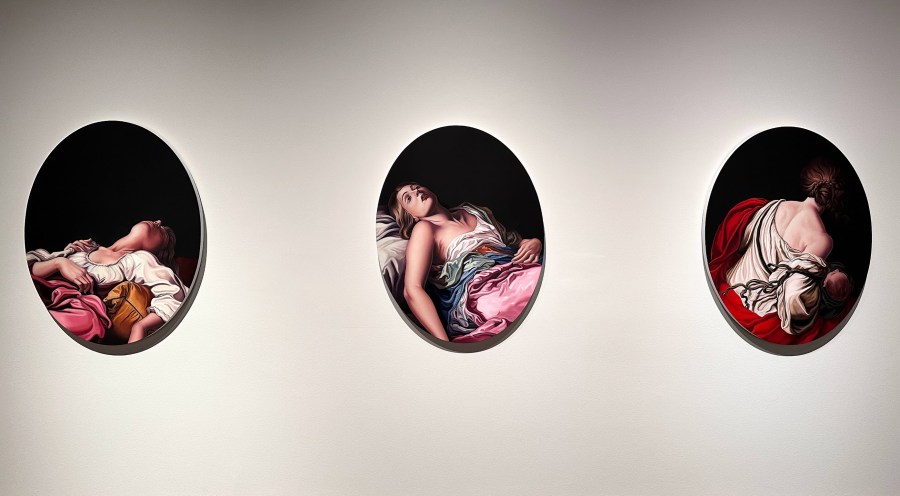
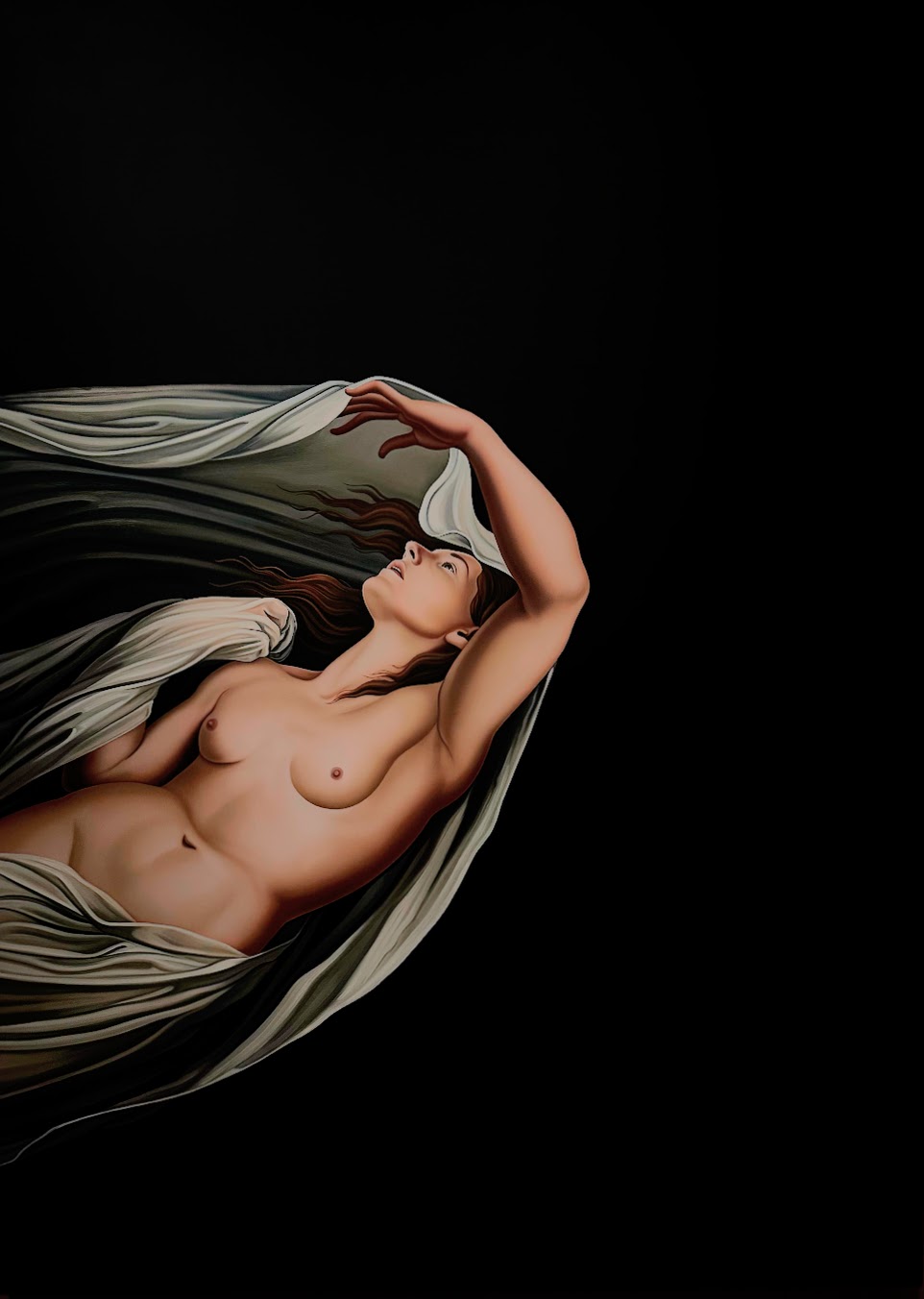
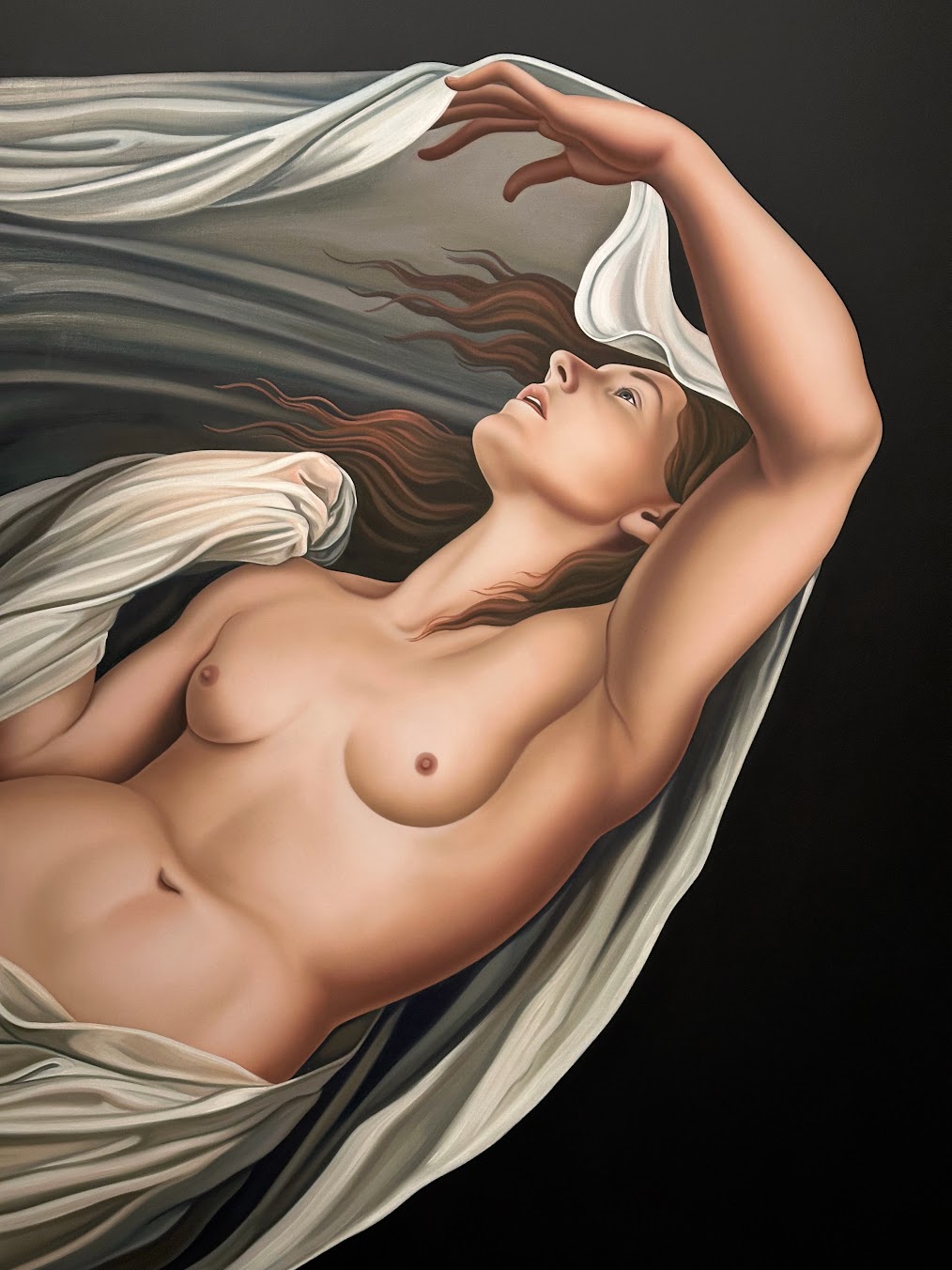
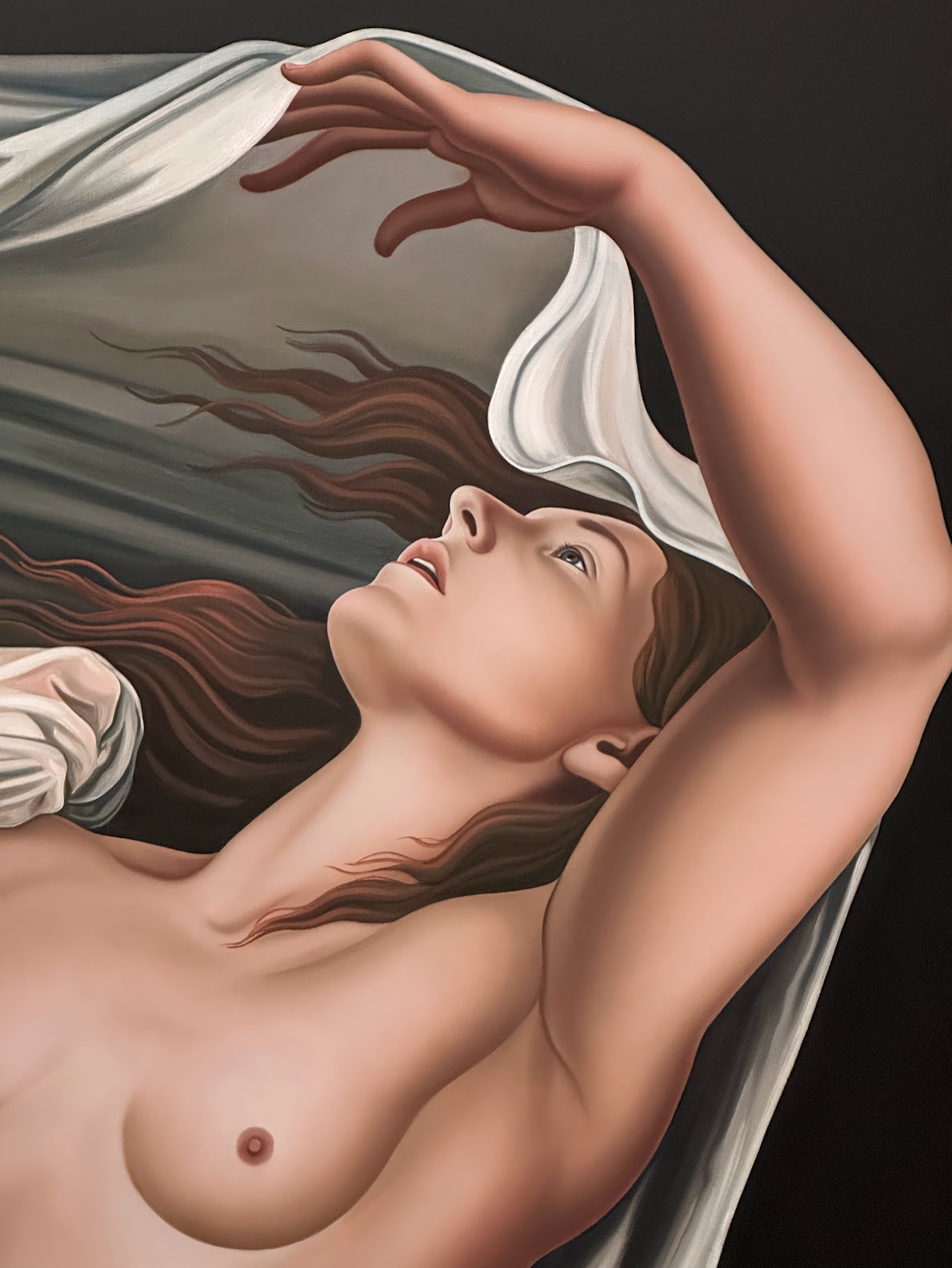
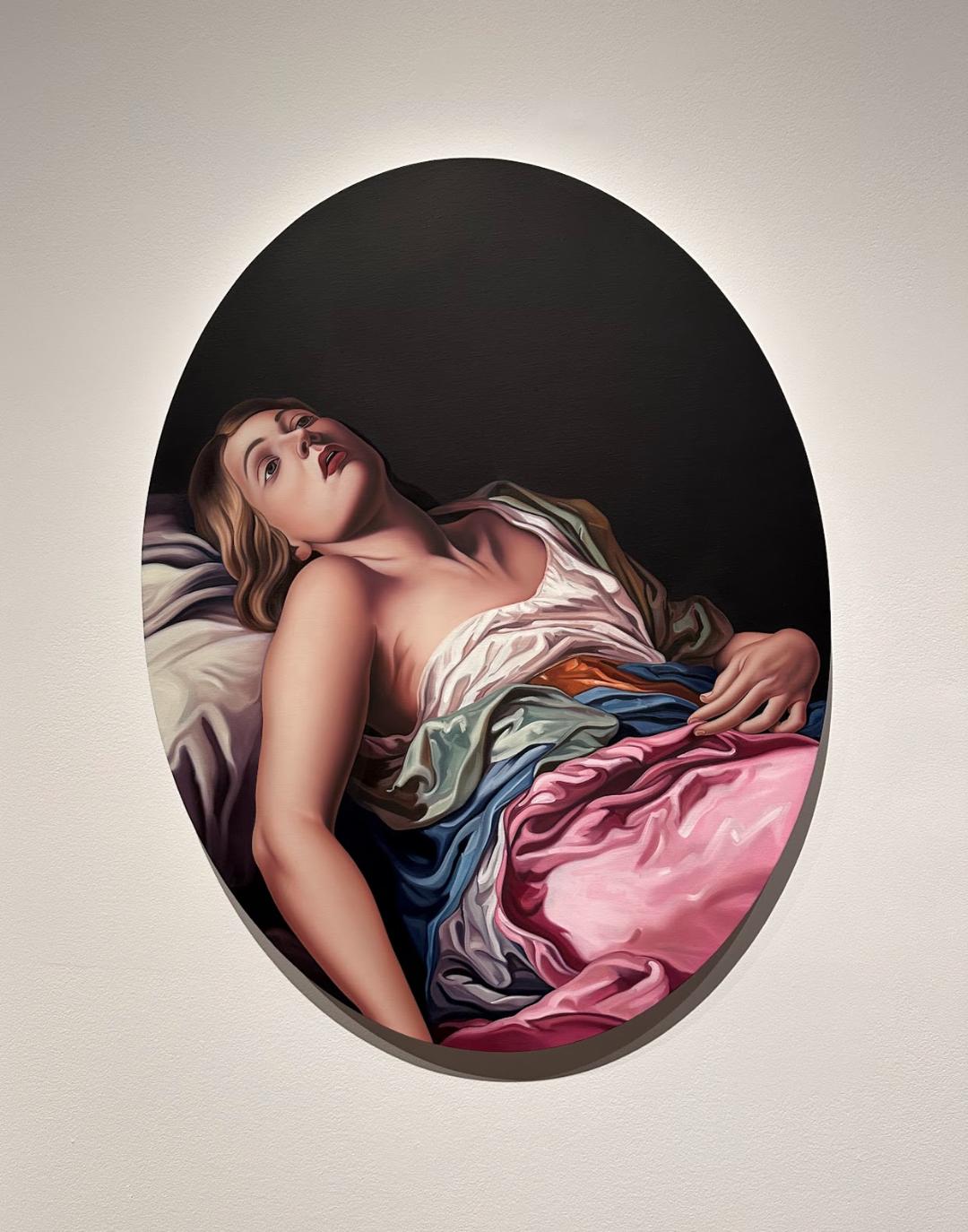
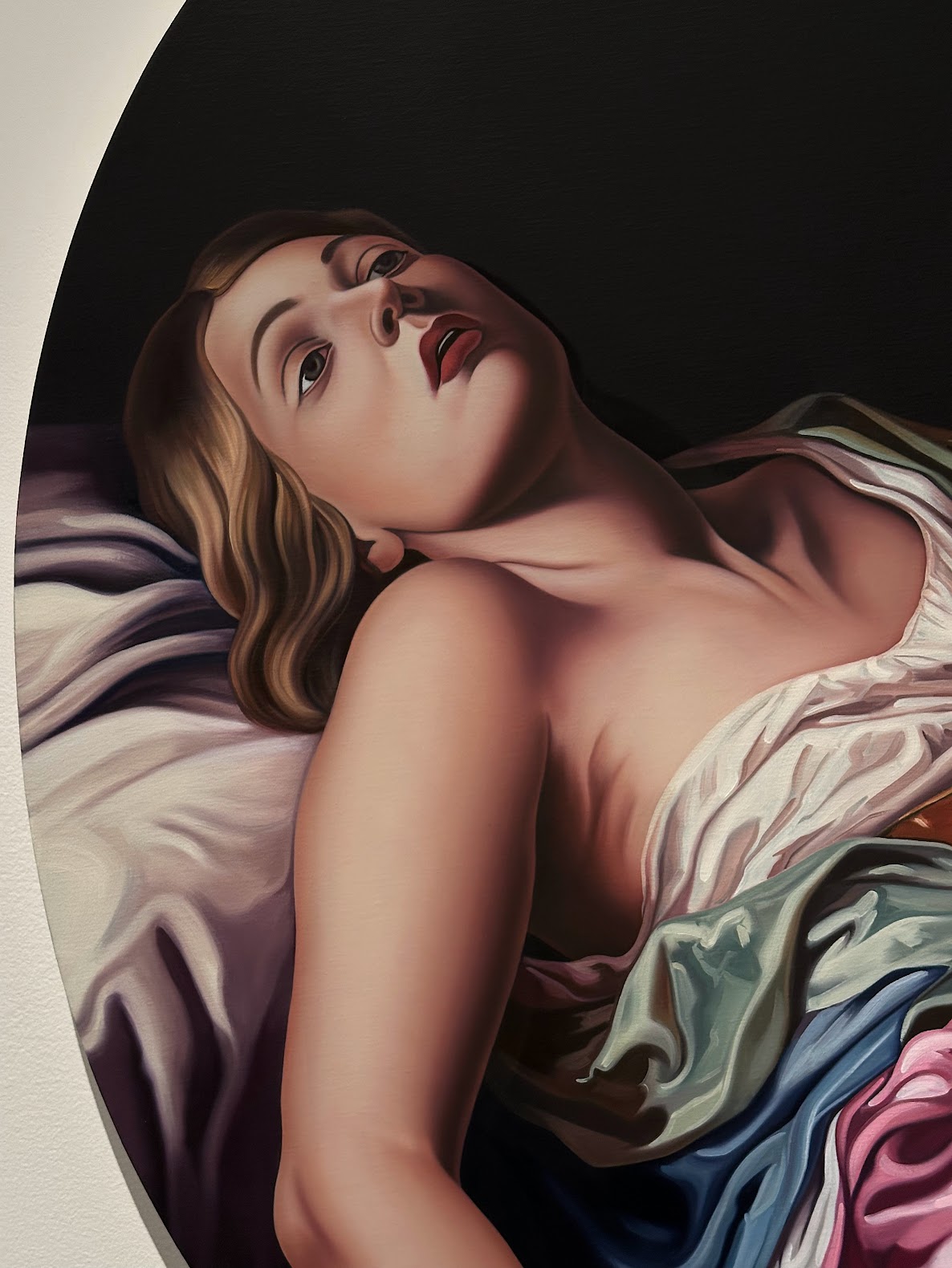
Only Sound Remains – oil on linen
Based in Philadelphia, this artist examines Renaissance and Baroque artists’ art, with an eye on the survival of traditional narratives and beliefs in contemporary society. She then intervenes with her own modern canon.
Jesse Mockrin’s paintings “respond to histories of sexual violence and cruel treatment of women over millennia of myth and story, offering interventions and moments of resistance.”
Collectively, the paintings in ECHO highlight “an ongoing battle for bodily autonomy”.
The above painting is based on the Greek and Roman myth of Echo and Hera.
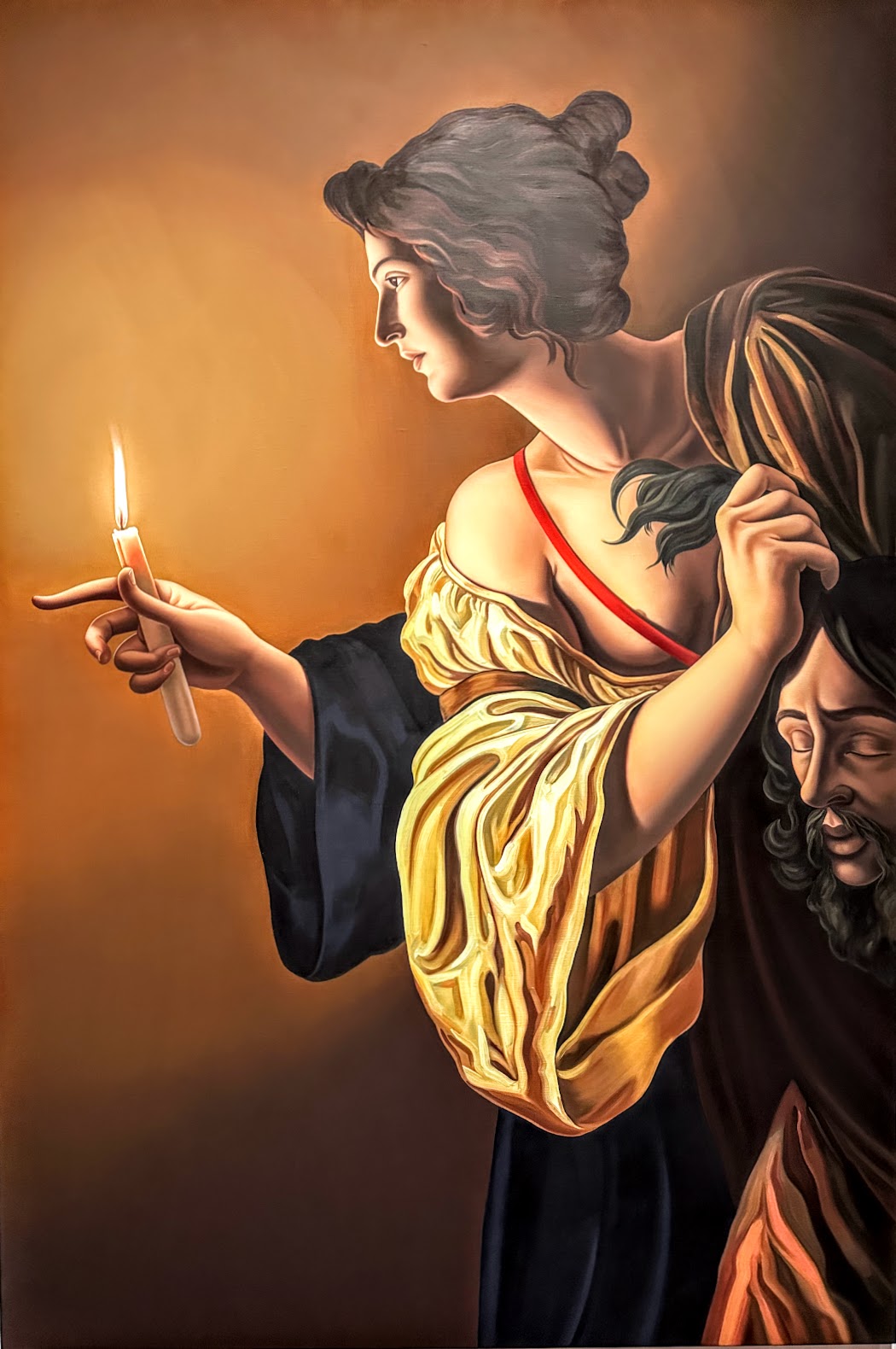
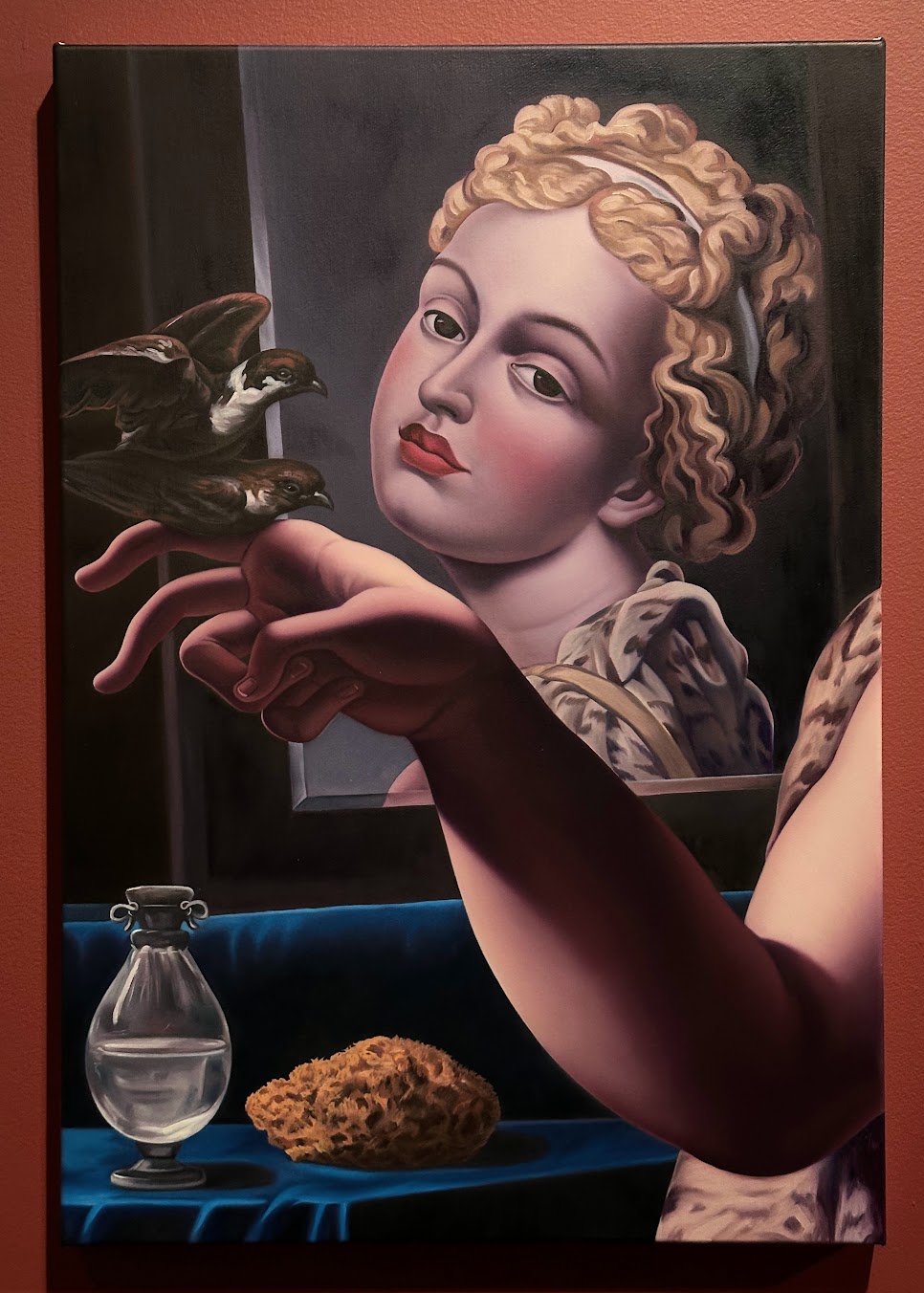
By Her Hand – oil on linen
The biblical widow and heroine, Judith, beheads Assyrian General Holofernes and saves her people. This was a popular subject for artists in the 15 & 1600’s due to the “stark contrast between Judith’s femininity and the aggression of her violence.”
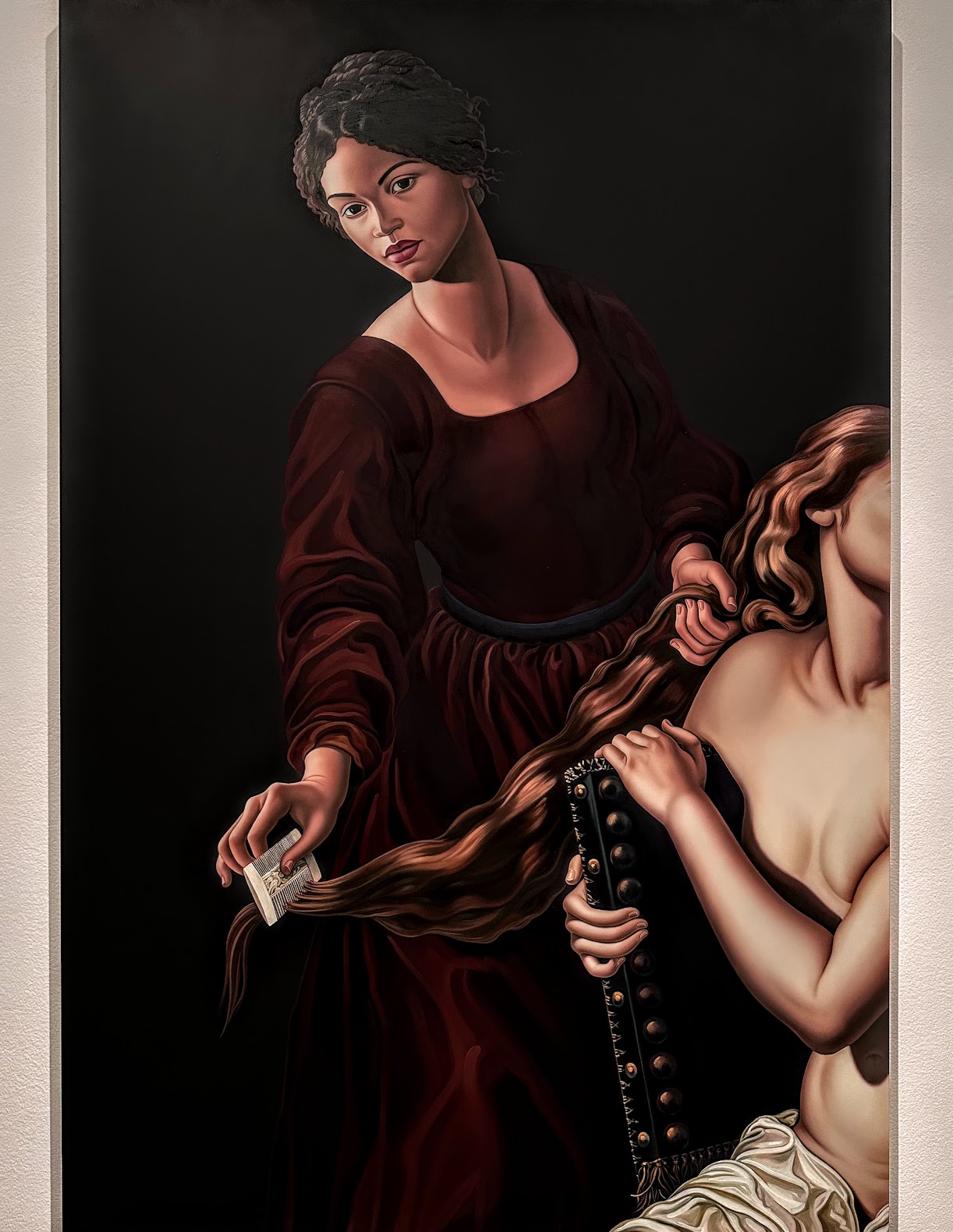
Behold/Beholden – oil on linen
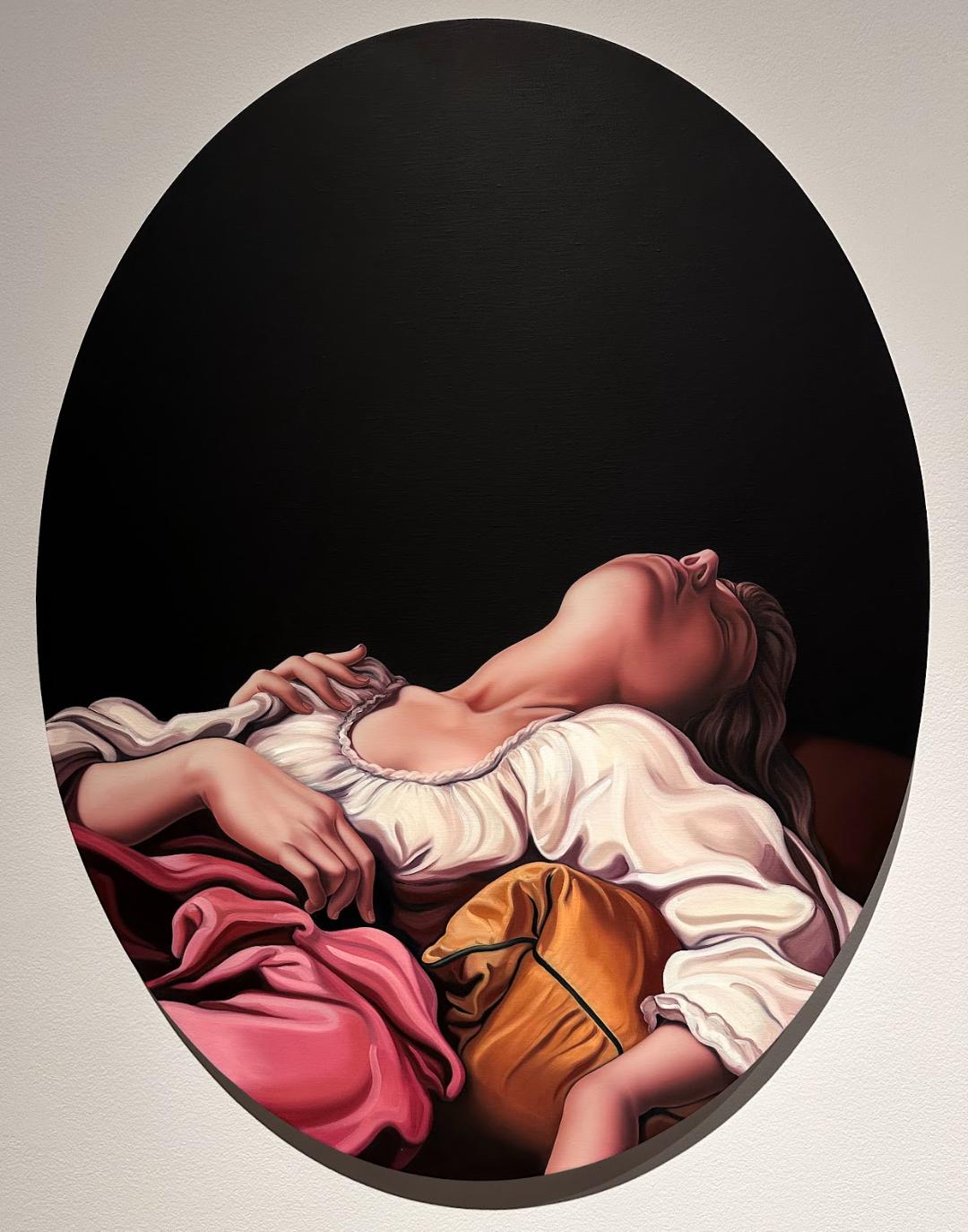
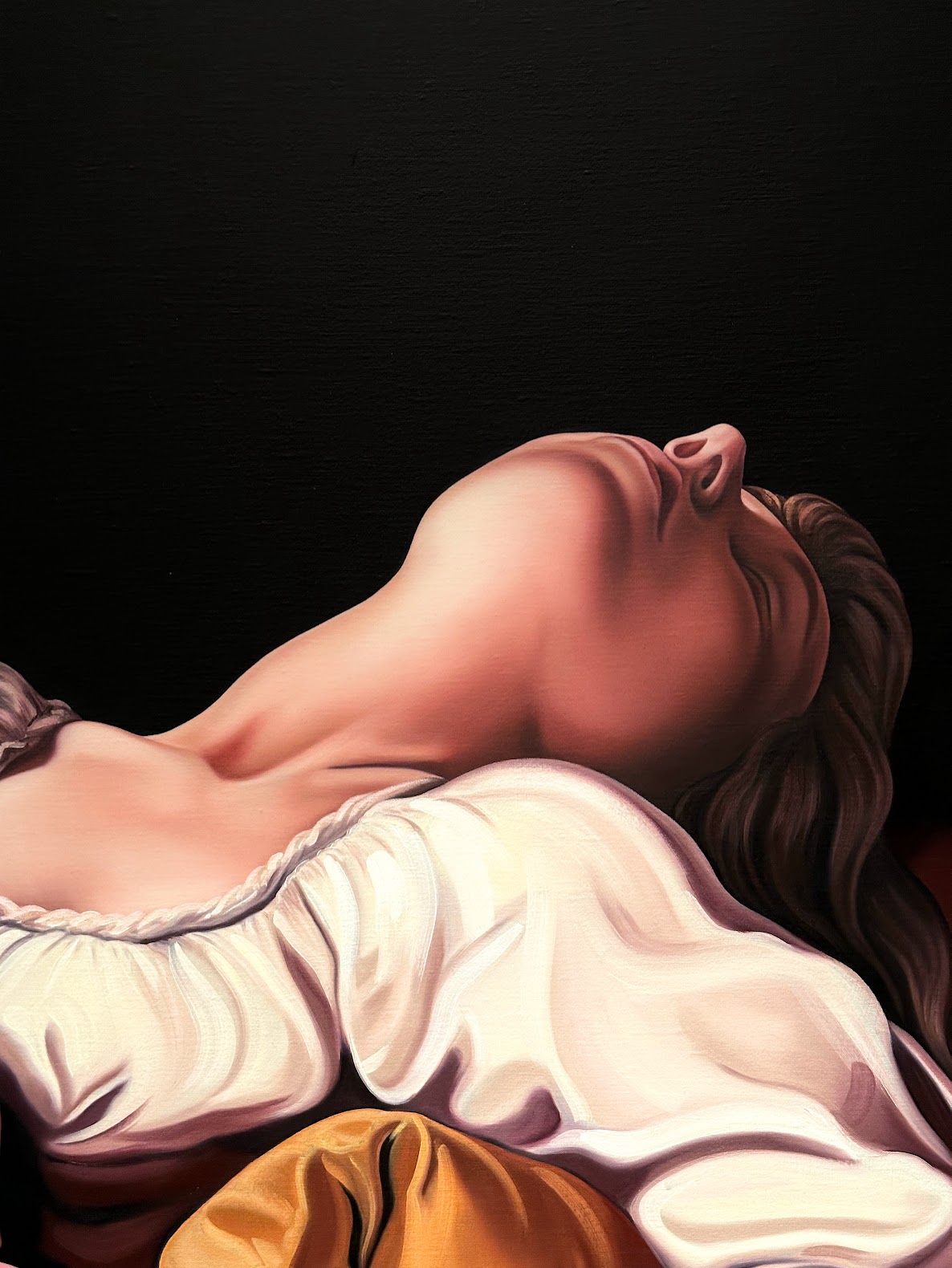
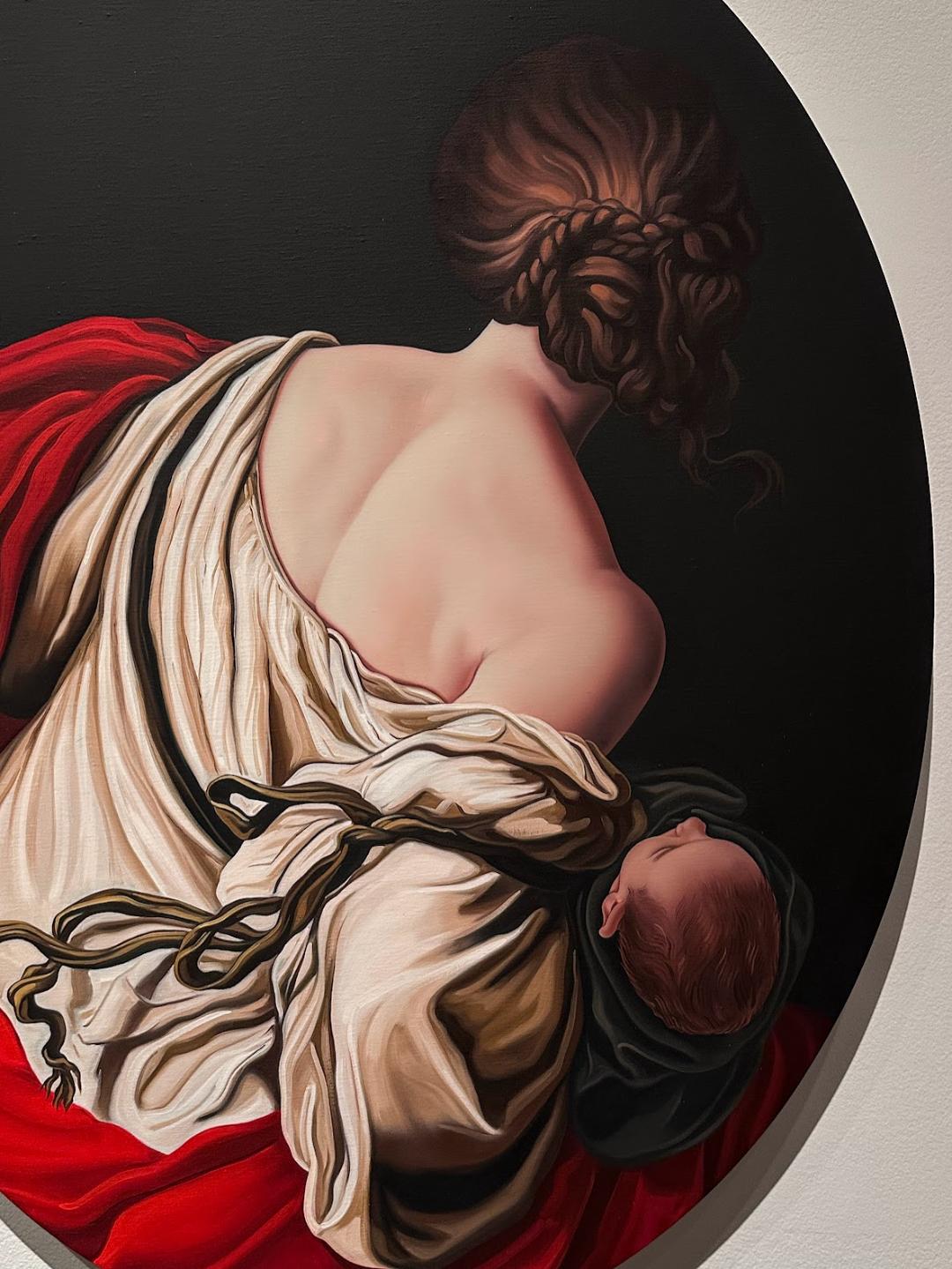
Mockrin builds up thin glazes of oil paint, a European Renaissance developed technique. “she crops her composition sharply, hiding critical elements of a story and leaving conflict unresolved.”
Unvarnished, her paintings have an eerie flatness.
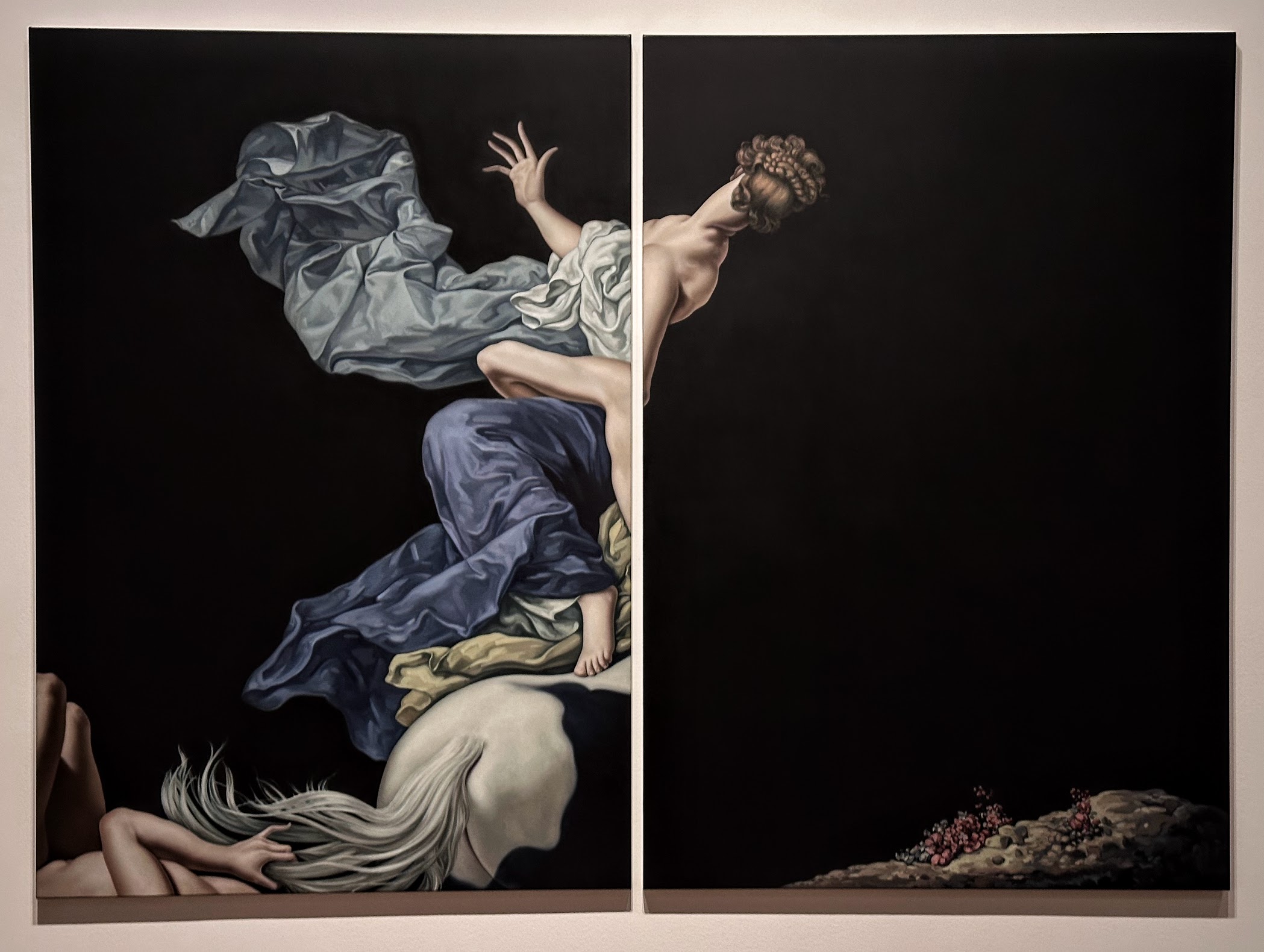
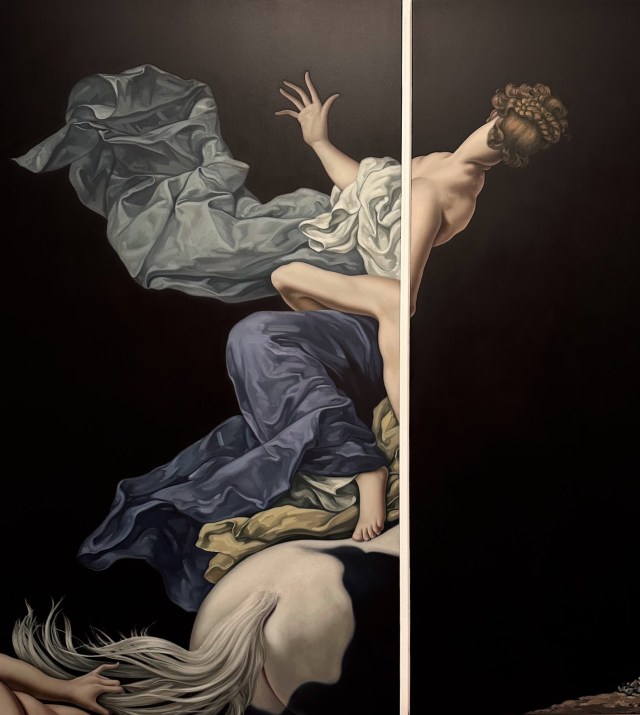
In mid-stream – oil on canvas
“Grasping, pulling, lifting …. I am drawn to the ways that Baroque painters build drama and tension into their compositions.”Jesse Mockrin
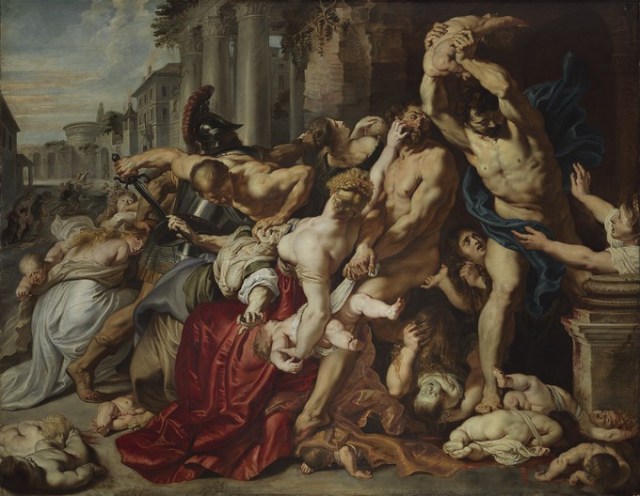
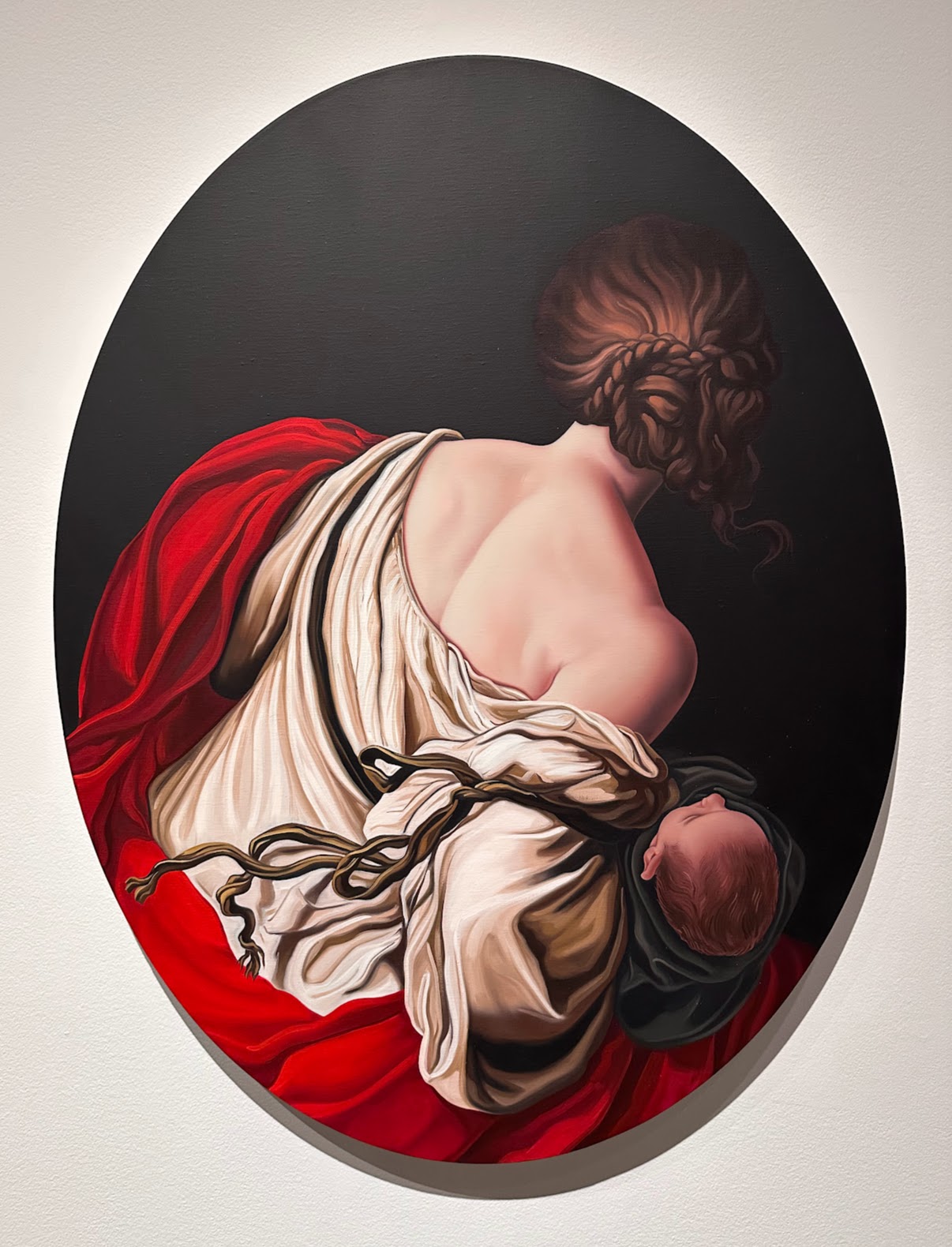
Based on Ruben’s The Massacre of the Innocents, the woman in the right panel is based on one of the mothers protecting her children.
Painted circa 1610, The Massacre of the Innocents resides in the AGO’s collection. The photo on the left is an allowable share from the AGO. Click on the image to visit the page, and a larger version of the masterpiece..
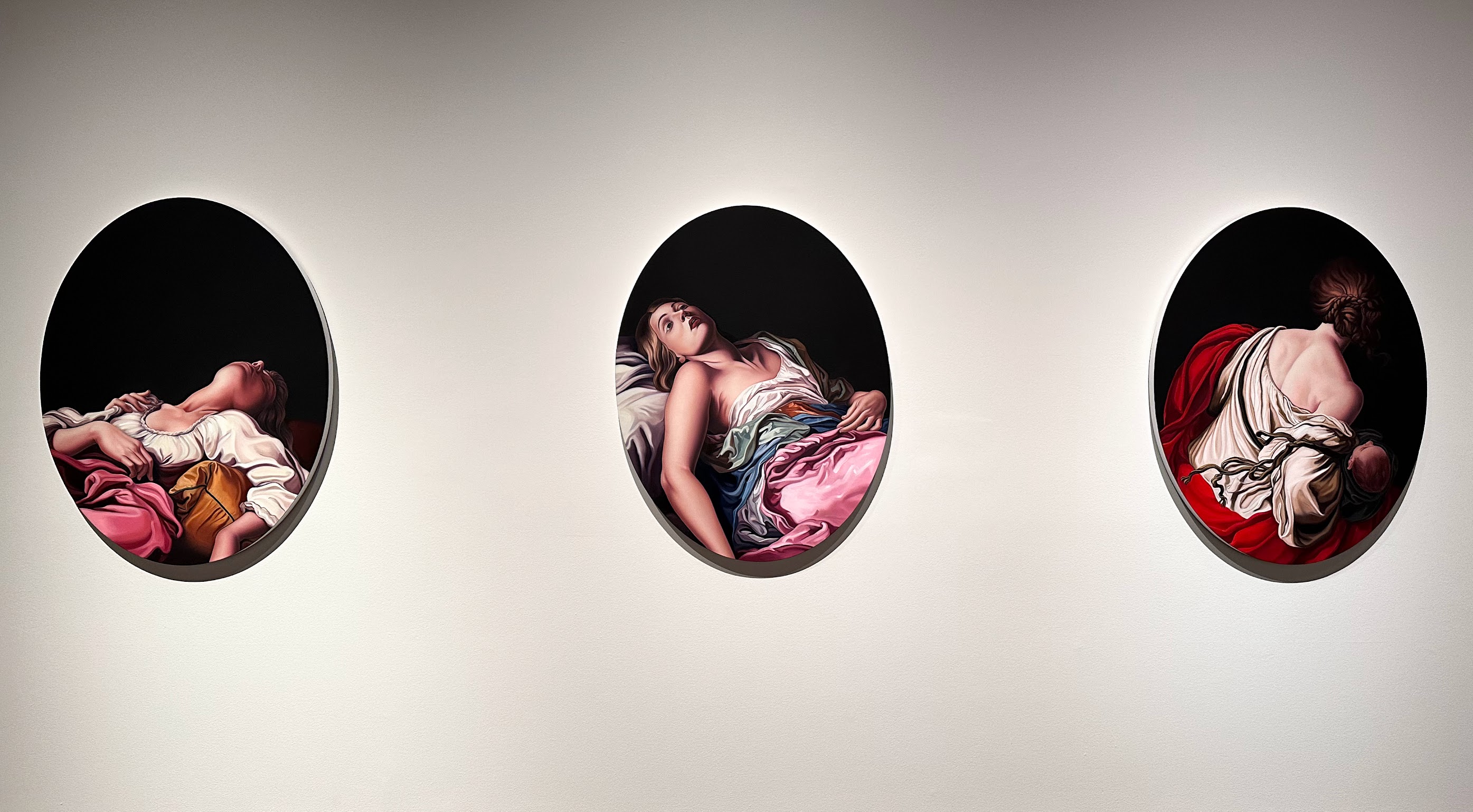
In the Book of Genesis – Rachel and Leah were both married to Jacob.
Leah had many children. After many years of yearning to be a mother, Rachel had 2 sons. She died giving birth to the second child.
Longing – oil on linen
Lovesick – oil on linen
A cry is heard – oil on linen
“It’s very emotional and very real, her longing for a child and then her tragic death as a result of it.”
“We think we’re not that similar to these characters, but they were just people, same as us.” – Jesse Mockrin
They were not royalty, but may have painted for royalty.
Their parents worked for royalty, were politicians, acclaimed artists or important clergy. These aristocrats wielded economic, political, and social influence. They were fortunate ones, before and during the rise of a European middle class due to the industrial revolution.
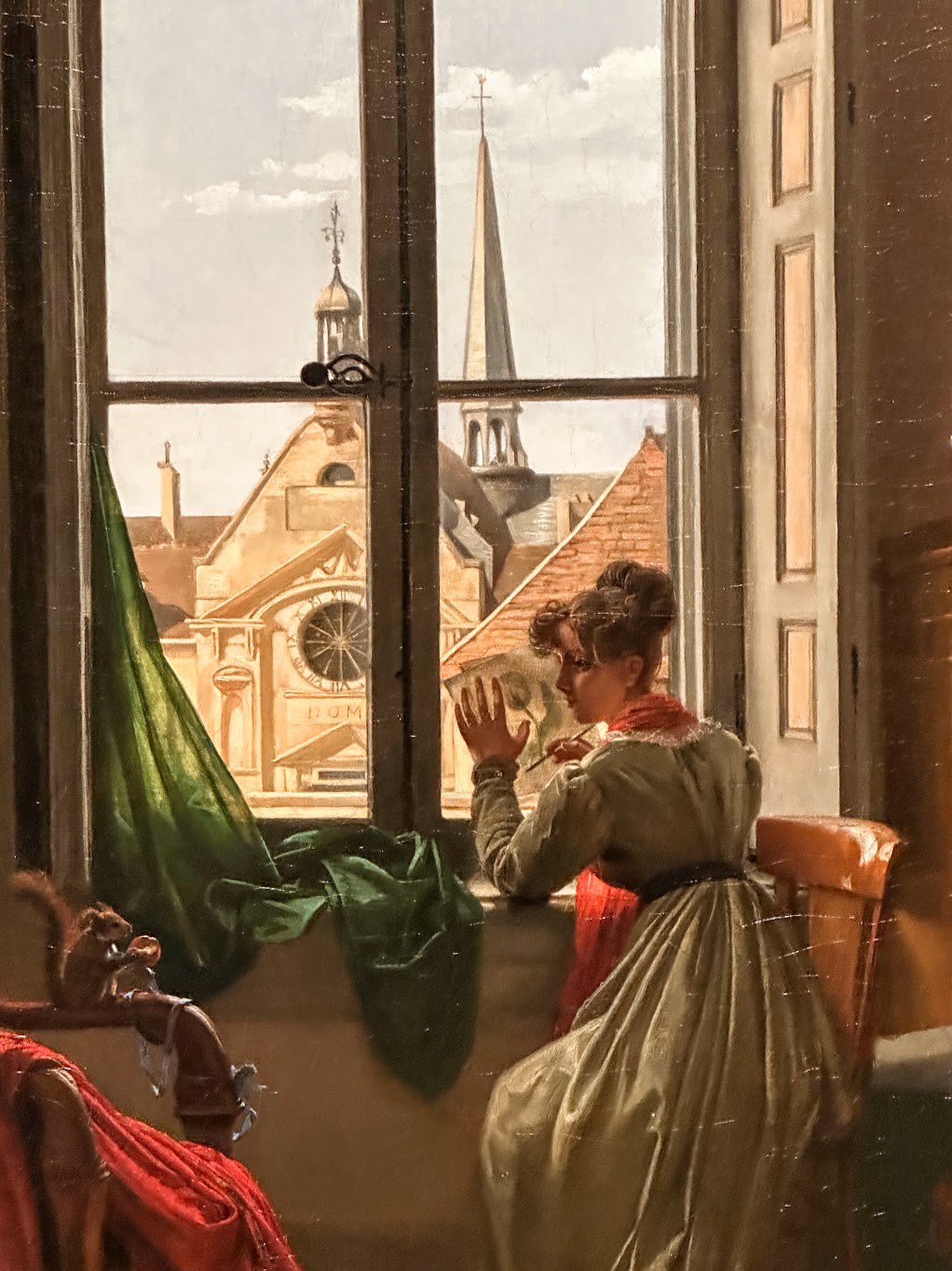
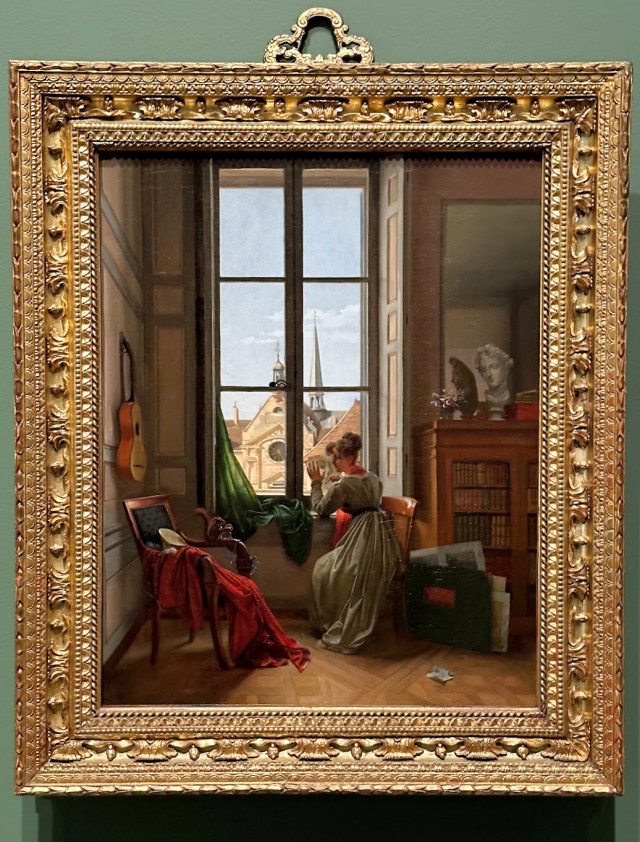
Louise-Adéone Drölling
French – 1797 – 1831
Young Woman Tracing a Flower – Circa 1820-22
Louise-Adéone‘s father, Martin Drölling, and older brother, Michel Martin Drölling, were celebrated artists in their day. At the age of 15 she was encouraged to begin painting.
In 1819, Louise-Adéone married architect Jean-Nicolas Pagnierre. Widowed in 1822, she remarried Nicholas Roch Joubert in 1826. Joubert, chief tax officer of Paris, was the son of politician and former bishop Pierre-Mathieu Joubert. They had two daughters, Adéone Louise Sophie, and Angélique Marie.
Louise-Adéone Drölling, aka Madame Joubert won a Gold Medal from Salon des Amis des Arts, for her above painting; Young Woman Tracing a Flower. Thought be a self portrait, it later became part of the distinguished collection in the Gallery of La Duchesse de Berry.
I have found conflicting dates of her Gold Award – 1824, 1827 or 1831.
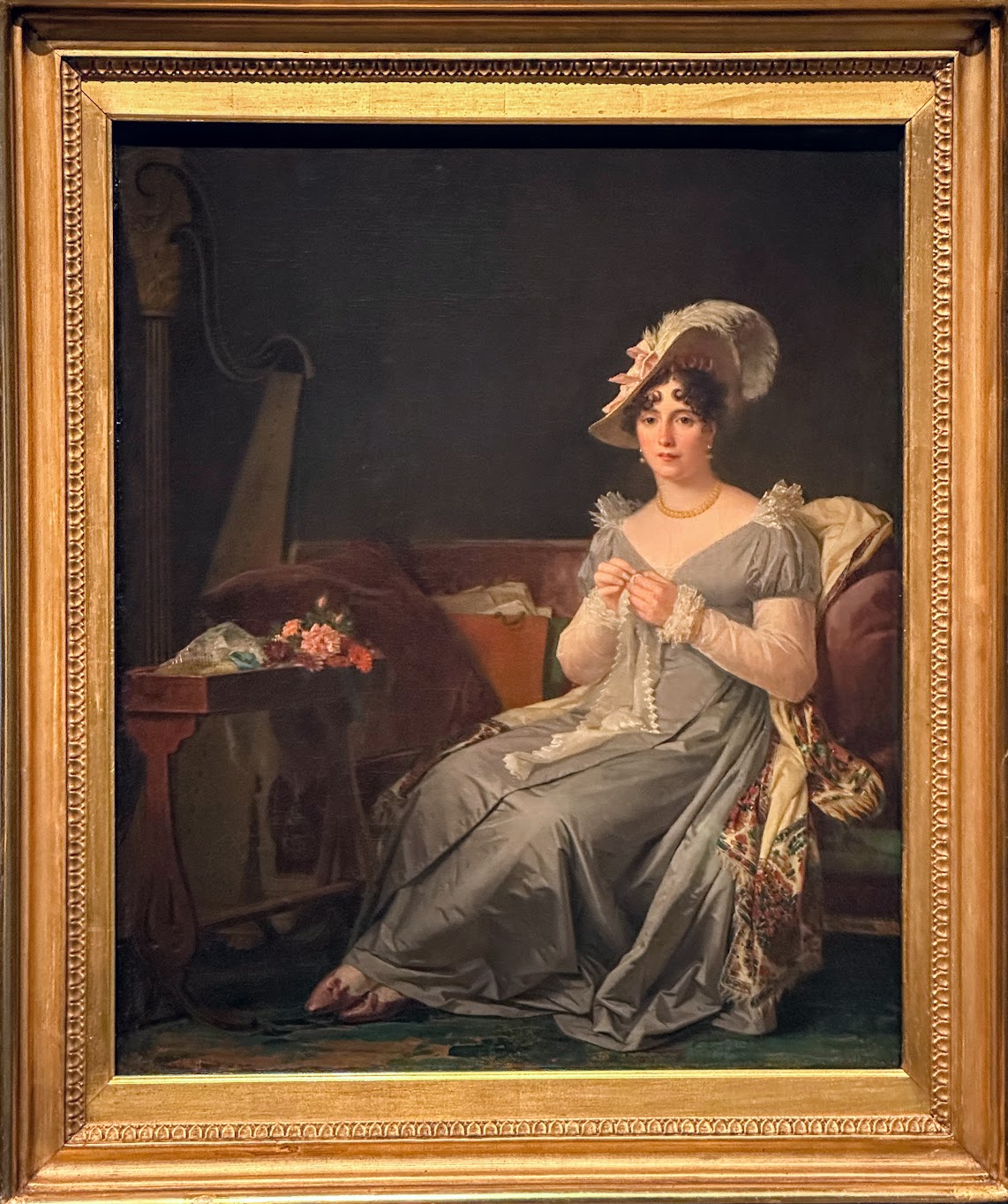
Marguerite Gérard
French – 1761 – 1837
Motherhood Circa 1795-1800
Marguerite Gérard attained much wealth and real estate during her life, despite remaining unmarried.
In 1775 she moved from Grasse to Paris and lived with her sister’s family. Her sister was married to the popular Rococo painter Jean-Honoré Fragonard. Here she had financial freedom and was trained in art as Fragonard’s unofficial apprentice.
By her mid 20’s, Gérard had achieved a signature style.This involved precise details made with subtle and blended brush strokes, inspired by 17th-century Dutch genre paintings. However, she made it her own by focusing on females in intimate domestic settings.
Young Woman Embroidering – Circa 1815-20
In the 1790’s, once the Salons were opened to women, she exhibited often, winning three medals.
Over the course of her successful fifty years, Gérard survived the French Revolution and Napoleonic Wars.
Her paintings were acquired by luminaries such as Napoleon and King Louis XVII.
Her small-scale, portable canvases appealed to many wealthy collectors, who preferred to display her small scale still life and genre paintings in their homes, over large historical canvases.
The numerous engraved versions of Gérard’s paintings made them accessible to less affluent art lovers and helped increase her reputation.
Gérard did not always follow convention, turning down a place at the French Royal Academy.
Catherine Lusurier
French – 1753 – 1781
Portrait of a Woman Drawing
Catherine Lusurier died at the young age of 28 years old. There is not a lot known about her, and only a few known signed paintings are accounted for.
Her mother, Jeanne Callot, was a dressmaker, while her father Pierre was a milliner. Apprenticing under her uncle,Hubert Drouais (1699-1767), her work bears his stylistic influence. Her paintings are predominantly portraits of children and artists.
A Catherine Lusurier work recently headlined Christie’s Old Masters and 19th Century Paintings, selling from a Private Collection. Sold Without Reserve at 3.11 million dollars, it exceeded the pre-sale high estimate.
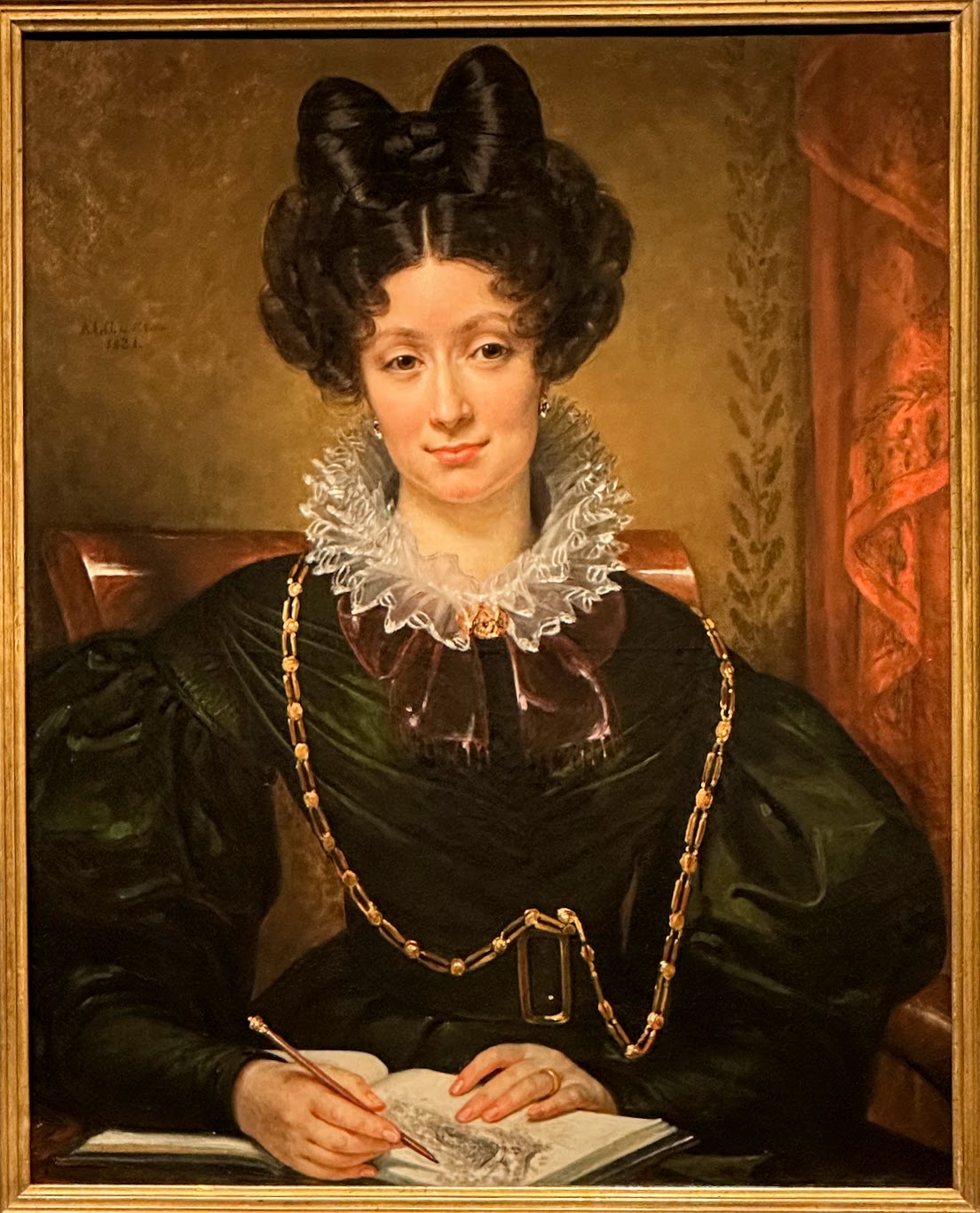
Amélie Legrand de Saint-Aubin
French – 1797 – 1878
Portrait of an Artist Drawing a Landscape in her Sketchbook – 1831
Amélie Legrand de Saint-Aubin, the eldest daughter of Pierre Jean Hilaire Legrand de Saint-Aubin (1772–1839) and Denise Marie Claudine Legrand (1772–1855), was born in Paris. After training and studying in the Women Only Studio with Charles Meynier, Amélie Legrand de Saint-Aubin‘s Rococo style portraits and history paintings grew in popularity.
Portrait of an Artist Drawing a Landscapein her Sketchbook is of a long standing tradition of women artists picturing women painting art.
Political changes from the French Revolution resulted in women being allowed to exhibit in the French Salon. Amélie Legrand de Saint-Aubin went on to exhibit at 17 salons over the course of her career.
Around 1831, she began teaching, offering private lessons. She never married.
“This stunning portrait recently joined the AGO’s permanent collection and made its debut as part of the exhibition Making Her Mark: A History of Women Artists in Europe 1400 – 1800. “
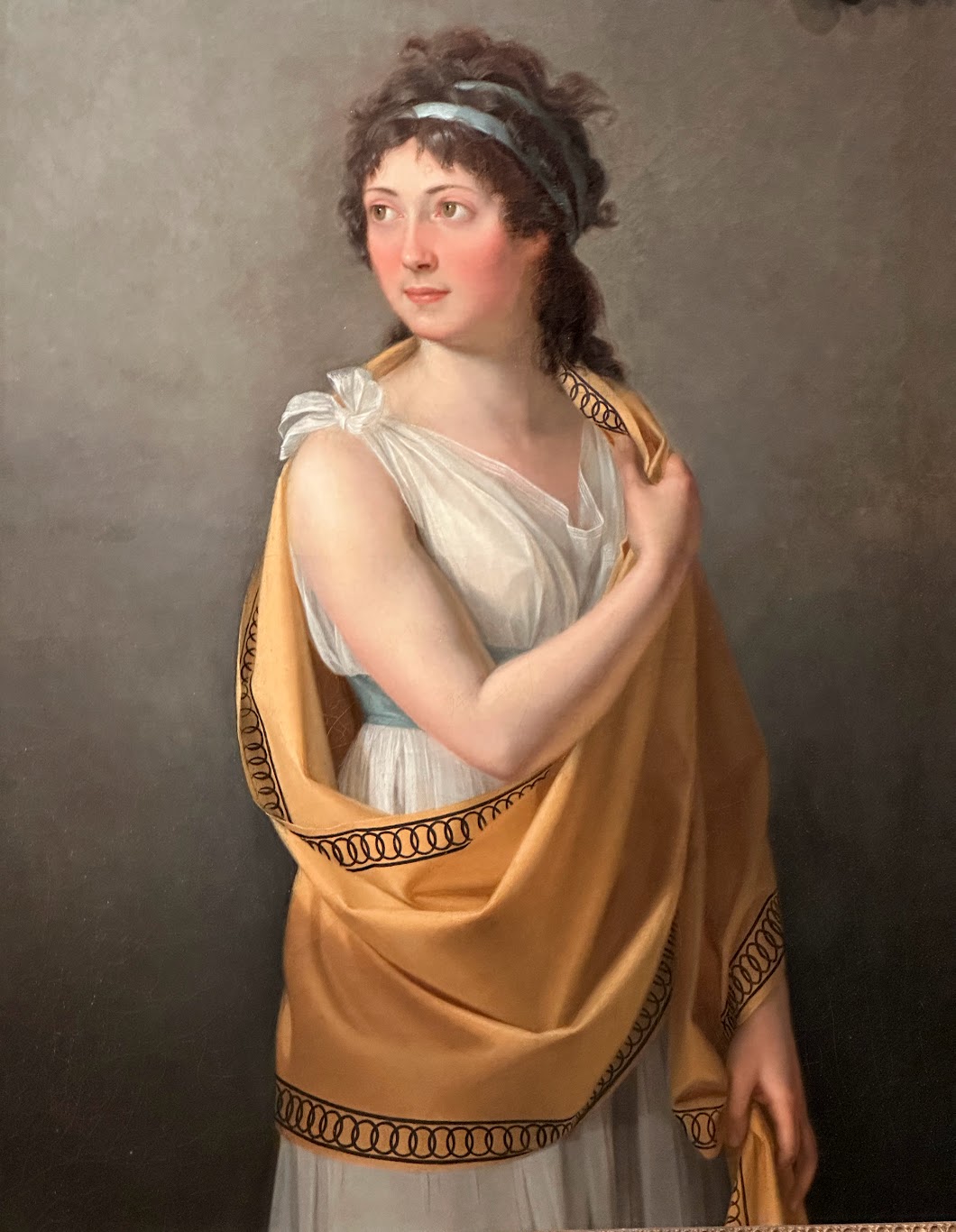
Marie-Guillemine Benoist
French – 1768 – 1826
Portrait of a Lady Circa 1799
Marie-Guillemine was born in Paris. Her mother was Marguerite-Marie Lombard and her father, René Laville-Leroux, a royal administrator for the ancien régime state. Marie and her sister, Baroness Larrey, (1770–1842), studied art from Élisabeth Vigée-Lebrun. Later they studied under Jacques-Louis David.
Her first exhibition was in 1784, at an annual 1 day show in Paris – Exposition de la Jeunesse.
Until the Louvre Salon became open to all exhibitors in 1791, where Benoist was one of 22 women presenting, she showed yearly at the Exposition de la Jeunesse.
At the Salon in 1804, she won a medal, whereby France’s new Emperor, Napoleon Bonaparte, ordered multiple commissions.
Other than her Salon successes, which are in the French state collection, Benoist’s work, including Portrait of a Lady was attributed to a man; in her case, Jacques Louis David.
Like many women artists of her day, their posthumous fate was to be overlooked, forgotten and/or effaced.
Mary Beale
English – 1633 – 1699
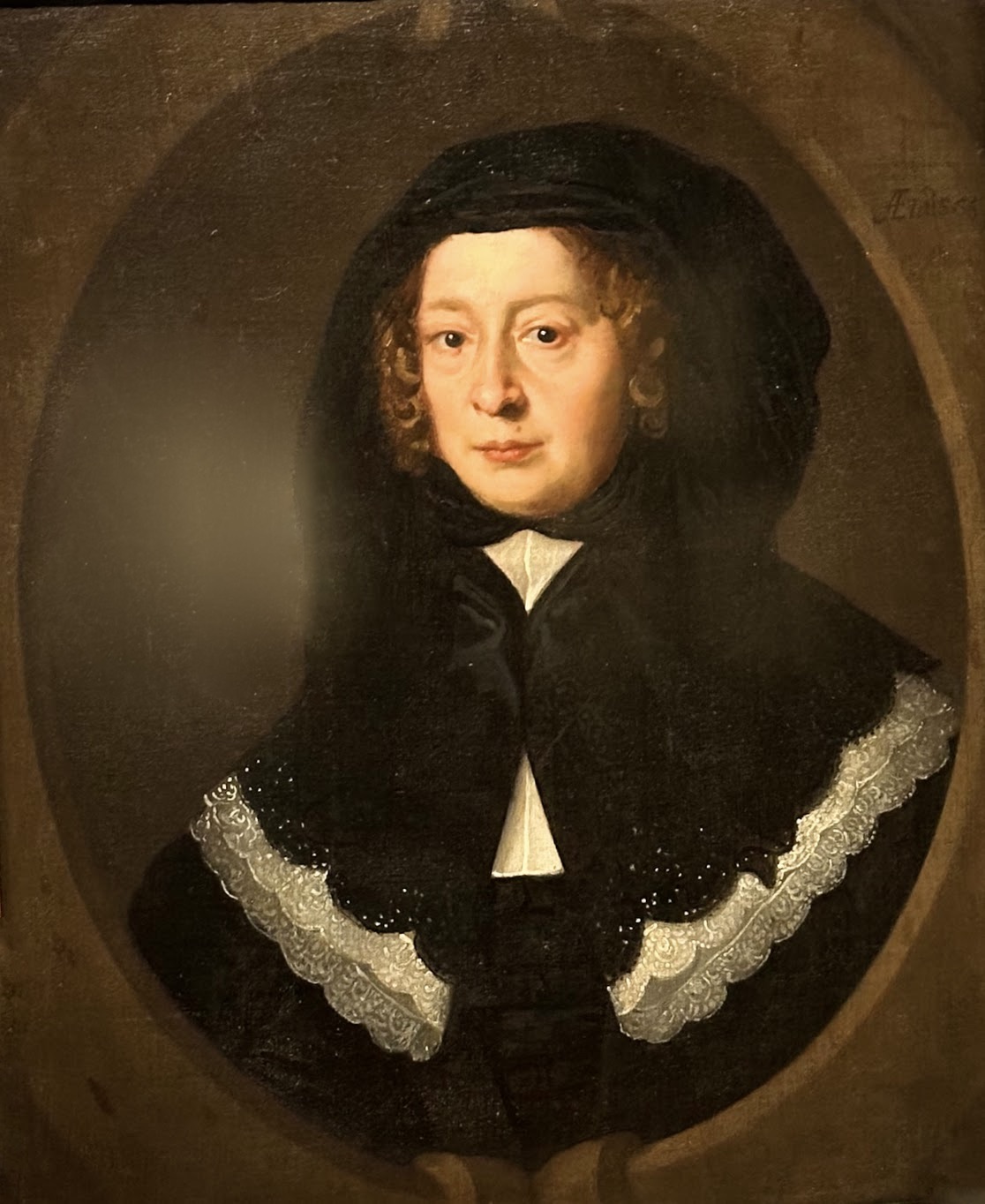
Portrait of a Woman with a Black Hood -Circa 1660
Mary Beale was the daughter of a clergyman, John Cradock, so it seems natural that much of her portraiture is of churchmen. It is not sure who she trained under, but she received considerable guidance from Peter Lely
In London, she moved in intellectual circles. By, and into the 1670s she was in demand as a portrait artist, earning enough money to support her family of four.
After several years of mundane civil service; Mary’s husband, Charles Beale, left his monotonous job to become her full time studio manager.
Much has been learned from the many notebooks he kept.
One example: Charles recorded that in 1677 Mary completed 90 commissioned portraits. There were 31 female sitters and 34 male. The women and girls were mostly either titled or gentry. Men and boys were gentry or of “middling sort.”
Rosalda Carriera
Italian – 1673 – 1757
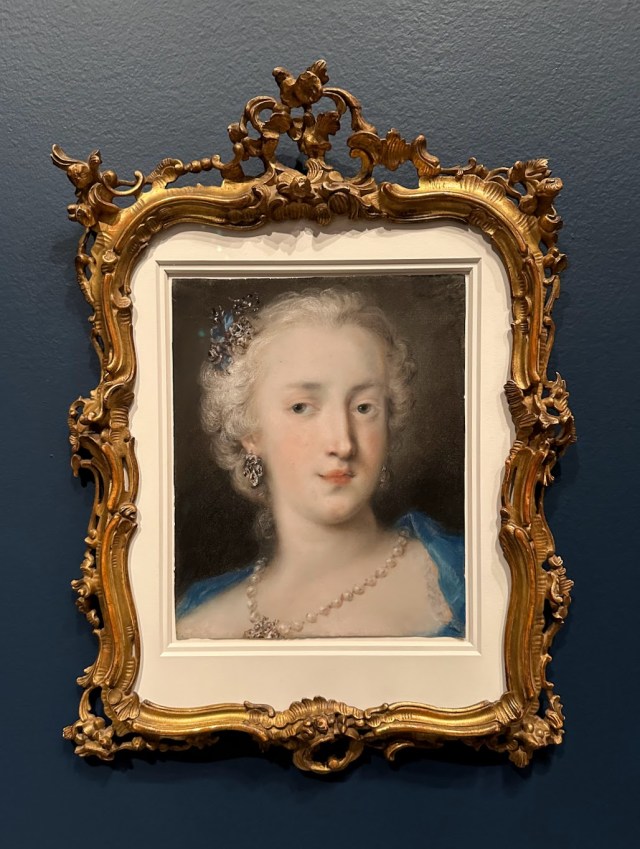
Portrait of a Woman – Circa 1720’s
Rosalba Carriera was born in Venice to Andrea Carriera, a lawyer, and lacemaker, Alba Foresti. Taught to make lace by her mother, little is known of her artistic training. She is renowned for pastel portraiture and allegories.
In 1720, during a stay with French banker Pierre Crozat in Paris, Rosalba created portraits of Louis XV as a child, and members of the French aristocracy. Here she developed a friendship with Antoine Watteau, who influenced her work.
Rosalba is one of the originators of the Rococo style in Italy and France.
Her greatest patron, Augustus III of Poland, collected more than 150 of her pastels. He also sat for her in 1713.
In 1746 she lost her sight, but her work continued to influence many other artists.
I’ve merely highlighted these women’s lives. There is so much more to know about our trailblazing sisters, who went before us.
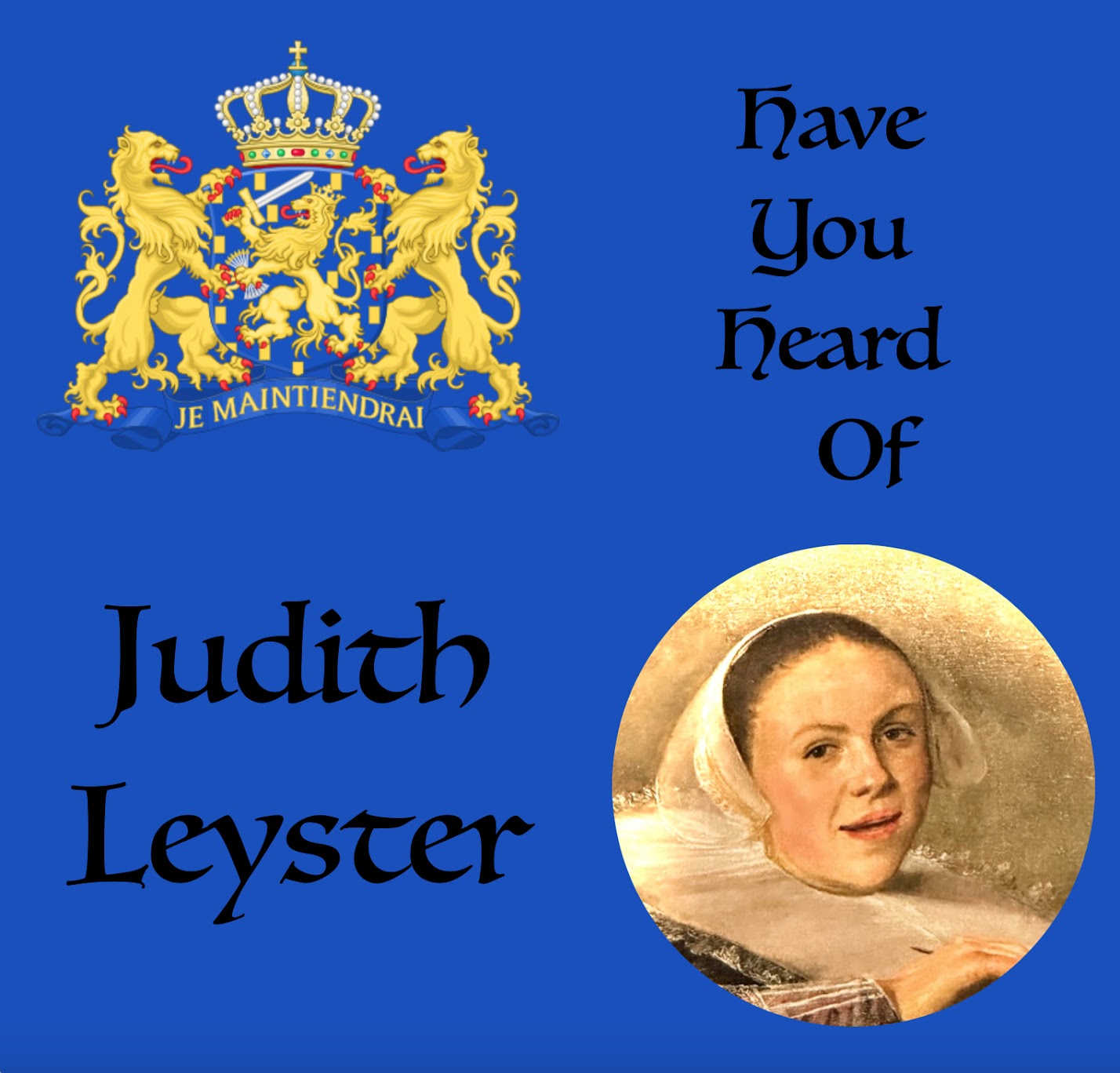
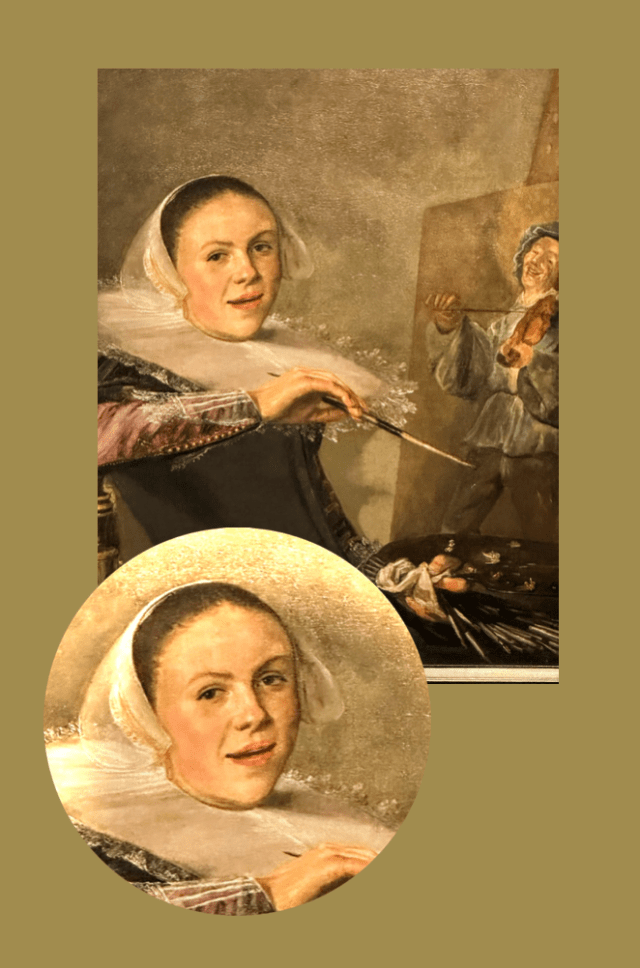
Resa – So, Rebecca, in this last Self Portraits post, we are headed to the Netherlands, 17th century, to visit another artist that I had never heard of. Had you heard of Judith Leyster before this post?
Rebecca – Yes – just recently. I discovered her when I travelled virtually to the Rijksmuseum. Judith Leyster was featured in their Women of the Rijksmuseum exhibit two years ago. It was an eye-opening experience to discover her work.
Resa – Very Cool, I’m excited to se what you’ve dug up!
Once Forgotten Dutch Master
Judith Leyster, the once-forgotten Dutch master, has experienced a resurgence in recognition. She was commemorated in a Google Doodle, her artwork achieved higher- than-expected prices at auction, and she was featured in the most prestigious chamber of the Rijksmuseum.
Who Was Judith Leyster
A remarkable Dutch painter of the 17th century, Judith Leyster was born 1609, in Haarlem, Netherlands. The daughter of a brewer, she displayed a precocious talent for painting from a young age.
By the age of 24, Leyster had achieved the remarkable feat of becoming a member of the Haarlem painters’ guild, marking her official recognition as a masterful artist. She was one of the rare professional women painters of her time, being one of only two women accepted as a master in Haarlem’s painters’ guild during the entire 17th century Netherlands.
Leyster’s artistic talent quickly gained recognition, and she became known for her lively and expressive compositions, often depicting genre scenes, portraits, and still life paintings. Her work radiated a sense of spontaneity and skillful use of light and shadow, showcasing her technical prowess and innovative approach to painting.
Leyster’s artistic pursuits defied conventions, as she ventured beyond the typical subject matter embraced by Dutch painters of her time. Her work encompassed a diverse range, and she was among the pioneering artists who explored and popularized the domestic genre scene, portraying everyday life with a fresh perspective.
In the early 1630s, before her marriage to the lesser-known artist Jan Miense Moleanaer, Leyster produced some of her most significant works. However, despite her talent and dedication to her craft, her contributions to art history remained largely unrecognized until the late 19th century.
Judith Leyster Rediscovered
The rediscovery of Leyster’s significance in the art world came about during a lawsuit between an art dealer and his vendor.
It was revealed that many works attributed to her contemporary and rumoured rival, the great Dutch painter Frans Hals, were, in fact, Leyster’s creations that had been incorrectly credited. This significant discovery brought long-overdue attention to Leyster’s remarkable talent and her influential role in shaping the Dutch Golden Age of art.
It is remarkable how the true authorship of artworks can be uncovered through careful examination and historical investigation. The discovery of Leyster’s initials hidden beneath a faked signature of Frans Hals in “The Happy Couple” (aka The Carousing Couple) serves as a testament to her enduring impact on art history and the need for ongoing reassessment of attributions.
This revelation not only sheds light on Leyster’s artistic contribution but also prompts a re-evaluation of artworks attributed to her contemporaries. It further underscores the significance of ongoing research in uncovering the often overlooked achievements of pioneering artists.
Resa – When searching for other female artists from the past whose art has been misattributed, I found an intriguing article (July/2024) inDaily Art Magazine. The article cites 5 female artists.
“This systematic misattribution essentially meant the erasure of women from the art historical canon, which eventually resulted in their erasure from history itself.”
Rebecca, do you think it’s possible that as art experts and historians uncover yet more misattributed art that we could see some famous paintings by famous artists, the Rembrandts, Da Vincis, et al being reattributed to women?
Rebecca – You have asked a very insightful question, Resa! It’s certainly possible. As more art is studied works that have been misattributed may be finally recognized as contributions of women artists. It would be a significant shift in how we view art history. I truly believe that we are now embarking on an extraordinary exploration of art history. It gives me great comfort that we are seeking to foster a richer and more equitable understanding of the artistic legacy we inherit. I am glad that you mentioned the Daily Art Magazine. It is one of my go-to places to learn about art.
Judith Leyster’s Self Portrait: A Glimpse into the Artist’s World
Judith Leyster’s self-portrait offers a glimpse into her life and artistry. Created before her admission to the guild in 1633, the portrait encapsulates a moment of confident creativity and engagement. Leyster’s self-assured expression, characterized by a confident smile and parted lips as if to speak, exudes a sense of self-assurance and mastery. The casual pose, with one arm nonchalantly resting on the back of her chair, hints at the artist’s ease and comfort in her own studio.
It is difficult to photograph art. I captured many works beautifully. However, this painting was the finale of the show, and was heavily lit with warm light.

Shot on an angle, the lighting was evaded, and it seems to be closer to many photos of it. Still, it seems no 2 photos are the same.
The liveliness and freedom evident in Leyster’s brushwork mirror her spirited approach to art, capturing a fleeting pause in her work as she glances toward a potential visitor. This subtle interaction suggests a moment of connection with a viewer, possibly a patron, inviting them to share in the experience of a work in progress.
In this self-portrait, Judith Leyster not only presents herself as a skilled artist but also provides a glimpse into the vibrant and dynamic world of creativity that she inhabited.
Today, Judith Leyster is celebrated for her creative spirit, artistic innovation, and lasting impact on the history of art. Her legacy continues to inspire and engage art enthusiasts and scholars around the world.
Resa – Well, Rebecca, so ends our series on Self Portraits. It’s been a pleasure and an honour having you here withme. Thank You!
I look forward to your return, to discuss some engravings on paper by Catherine Brandinn and Geertruydt Roghman. These are of utmost interest as the images depict the working poor, not a big subject of artists in those times.
Rebecca – Thank you, Resa! It has truly been a privilege to explore these amazing women through “Making her Mark” with you. Your photographs allowed me to virtually experience the joy of viewing these paintings. Thank you for celebrating and honouring these artists. Their resilience and creativity continue to inspire and empower us today, even as they provide a vital legacy for future generations of women in the arts.
I’m eagerly anticipating our next discussion on the engravings by Catherine Brandinn and Geertruydt Roghman, as the portrayal of the working poor offers a unique and important perspective that, I believe, deserves more attention in the art world.
As you say so eloquently, “Art Remembers Us.”
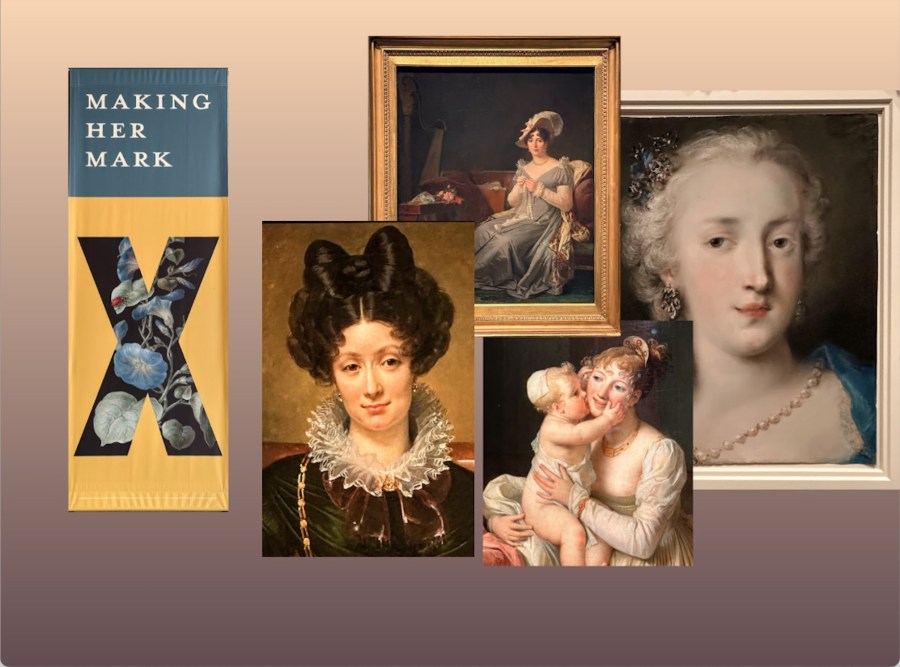
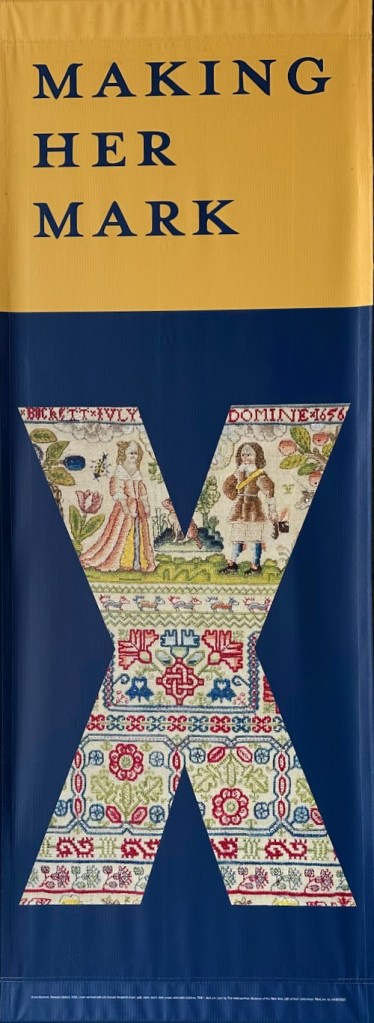
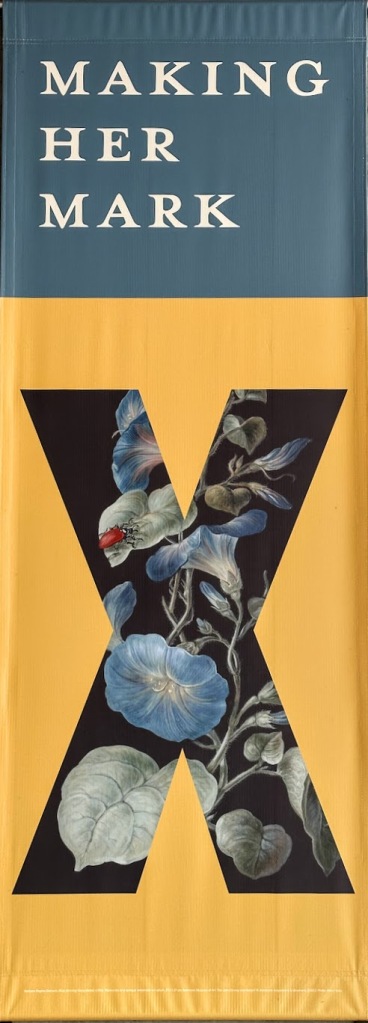
Click on X to see research links& a fabulous video on her
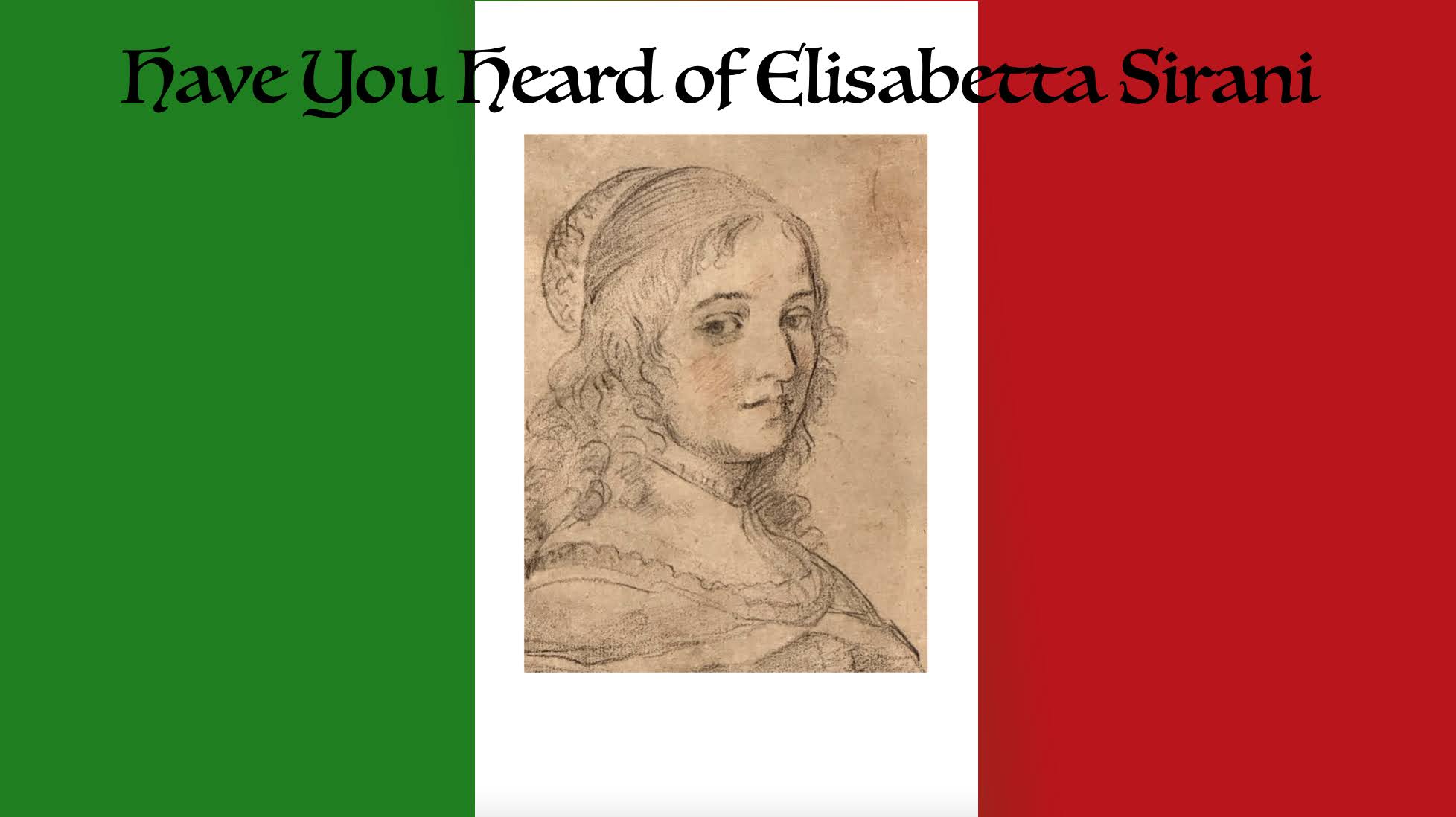
Welcome back to our Self Portraits series! I’m your host, Resa, with co-host Rebecca Budd, curator of Chasing Art. Today We are discussing an artist from the 17th century, Elisabetta Sirani.
Resa – So Rebecca,after all you’ve learned, and passed on to me, I’ve come to think Elisabetta was Bologna’s rockstar in the early mid 1600’s. Sayest thee what to that?
Rebecca – I agree wholeheartedly, Resa. Elisabetta Sirani’s exceptional talent and prolific body of work cement her status as a celebrated artist of her time. Despite the challenges she faced as a female artist in a male-dominated field, Sirani’s enduring legacy as a pioneering Baroque painter reflects her rockstar-like influence on the art world of her era.
Over her 10-year artistic career, Sirani demonstrated exceptional productivity, creating over 200 paintings, 20 etchings, and an extensive collection of drawings. I marvel at her ability to create a life/work balance. At the young age of 19, she took on the responsibilities of managing her father’s workshop, supporting her family, and establishing an art academy to mentor and teach women artists. Elisabetta Sirani was a true rockstar of Bologna in the 17th century. In my opinion, she continues to be a rockstar today!
Resa – Well then, let’s see what you discovered!
Master of Chiaroscuro
Elisabetta Sirani was an Italian Baroque painter born in Bologna in 1638. She was the daughter of the painter Giovani Andrea Sirani, who recognized and nurtured her talent from an early age. Sirani’s artistic skills flourished, and she became known for her exceptional talent in her short life.
Despite facing challenges as a female artist in a male-dominated field, Sirani achieved great success and recognition during her career. She was prolific, producing a large body of work that included historical and biblical scenes, portraits, and allegorical paintings. Sirani’s mastery of chiaroscuro (the treatment of light and shade in drawing and painting) and her ability to depict emotion and narrative in her works garnered admiration from her contemporaries and art enthusiasts.
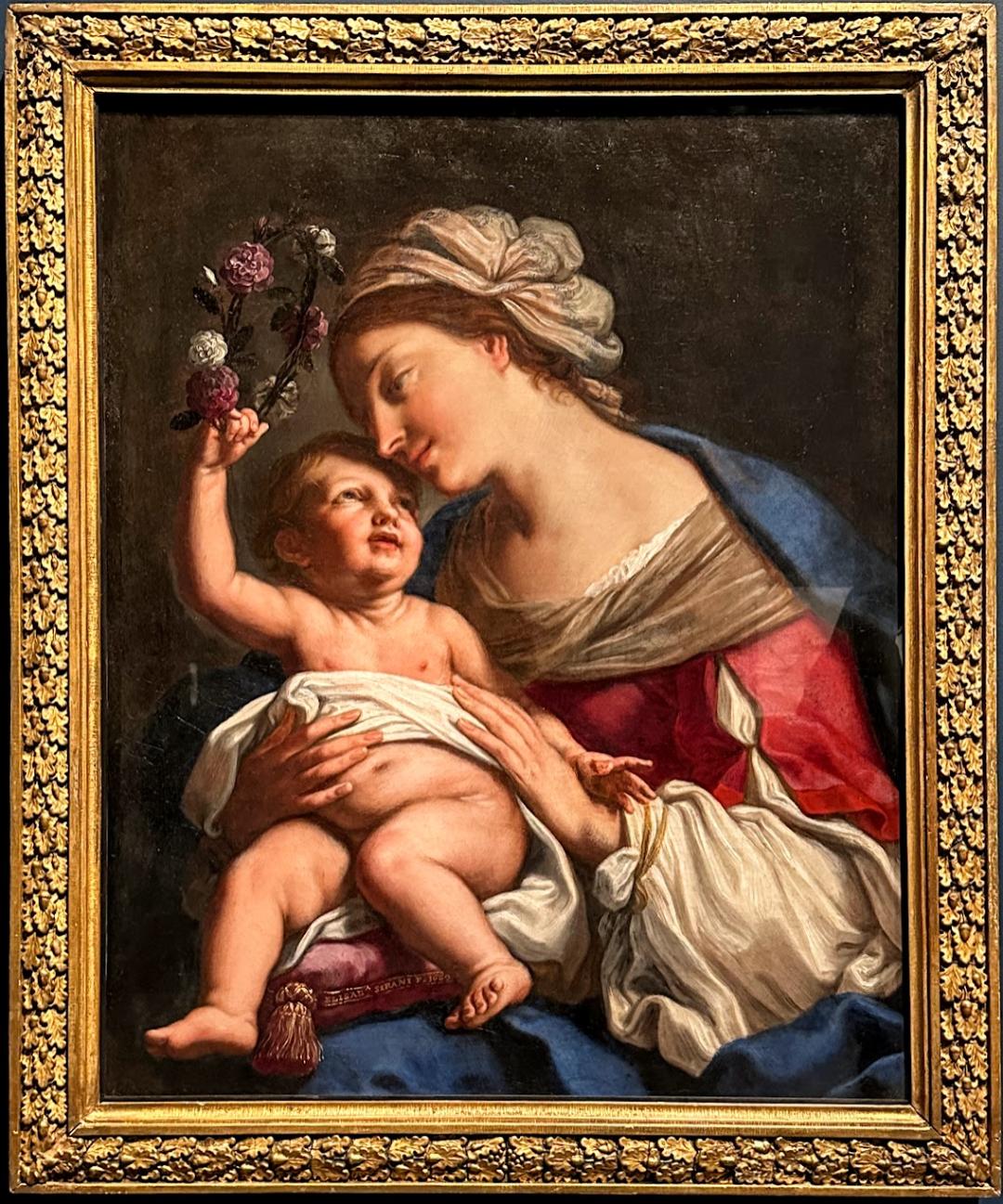
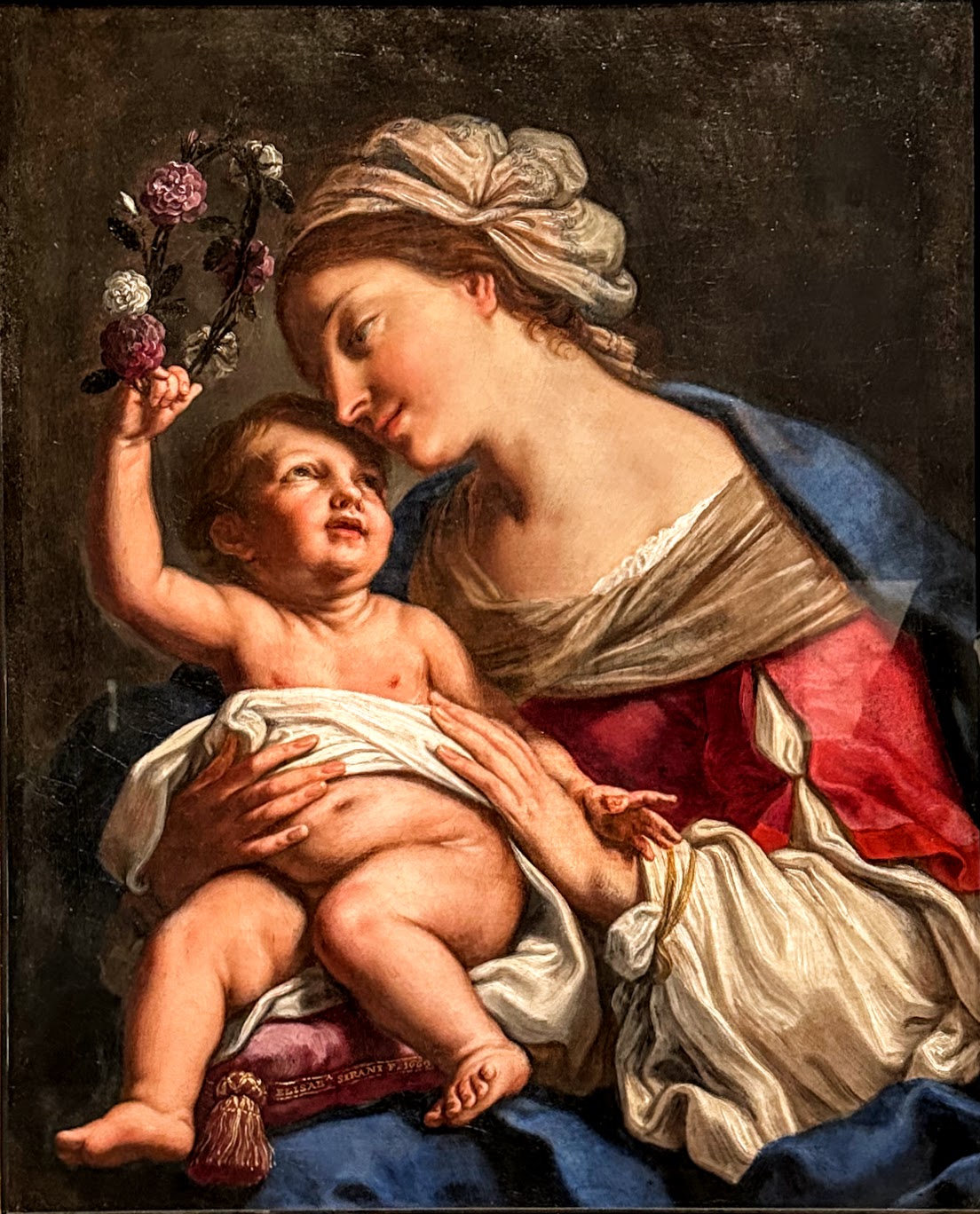
The Virgin Crowned by Christ Child with Roses
A Pioneering Legacy
Elisabetta Sirani’s legacy extends beyond her remarkable talent as a painter. As the successor of her father’s workshop, she also played a crucial role as a teacher, notably contributing to the development of women artists during the Renaissance period. In addition to training her sisters Barbara and Anna Maria, she also instructed at least twelve other young women at the school she established. This pioneering initiative marked the first school of painting for women in Europe outside of a convent, embracing inclusivity regardless of the women’s artistic and social backgrounds.
Elisabetta Sirani’s legacy endures through her remarkable paintings and the influence she had on future generations of artists. She remains celebrated as a pioneering female artist of the Baroque era, showcasing remarkable talent and determination in the face of societal norms.
Resa – “Making Her Mark”even had Elisabetta’s working drawing/study for the above painting. It’s a wonderful complete experience to see both.
Rebecca– I believe the painting, “Virgin Crowned by Christ Child with Roses” is all about love. Elisabetta Sirani imparts a compelling depiction of Mary as a relatable and tender young mother, diverging from the traditional portrayal of the remote Queen of Heaven. In this painting, Mary wears a turban associated with peasant women in Bologna, creating a down-to-earth portrayal. Her adoring gaze at the playful Christ child on her lap exudes a sense of genuine maternal love. Notice how the brushwork is highlighted in the textured representation of the Virgin’s white sleeve, emphasizing its rough and homespun quality. Elisabetta Sirani, with this tender and intimate moment of affection, offers a humanizing perspective of Mary and Jesus.
On the left :
The Virgin Crowned by Christ Child with Roses – 1663 – (red wash with grey chalk on paper)
On the right:
The oil on canvas painting in the same year.
An Untimely Death
Tragically, Eliabetta Sirani’s life was cut short when she passed away at the young age of 27 in August, 1665. Her untimely demise sparked controversy snd speculation. Following her sudden passing, suspicions arose, leading to the trial of her maidservant, Lucia Tolomelli, who was accused of poisoning the talented artist. The circumstances surrounding Sirani’s death led to diverse conjectures, with some attributing it to love-sickness due to her unmarried status, while others cited stress as a contributing factor.
It is widely believed that the true cause of Sirani’s demise was the onset of peritonitis following a ruptured peptic ulcer. This unfortunate event may have been exacerbated by the significant stress she experienced, particularly after being charged with providing for her entire household.
The controversy and diverse interpretations surrounding her passing have added intriguing layers to the legacy of Elisabetta Sirani, portraying a life marked by exceptional talent, determination, and the complexities of the era in which she lived.
A Rockstar Funeral
Elisabetta Sirani’s elaborate funeral reflected the deep respect and admiration held for her in Bologna. The grand ceremony featured an enormous catafalque (a decorated wooden framework supporting the coffin) adorned with a life-sized sculpture of the esteemed artist, as depicted in Malvasia’s biography.
Orations and music composed in her honor by prominent figures from Bologna added a solemn and dignified atmosphere to the proceedings. Following this tribute, she was laid to rest in the Basilica of San Domenico, Bologna, where she joined her father’s teacher, Guido Reni, in a shared tomb
This final resting place solidifies her enduring legacy alongside revered artistic influences, commemorating her exceptional talent and remarkable contributions to the art world.
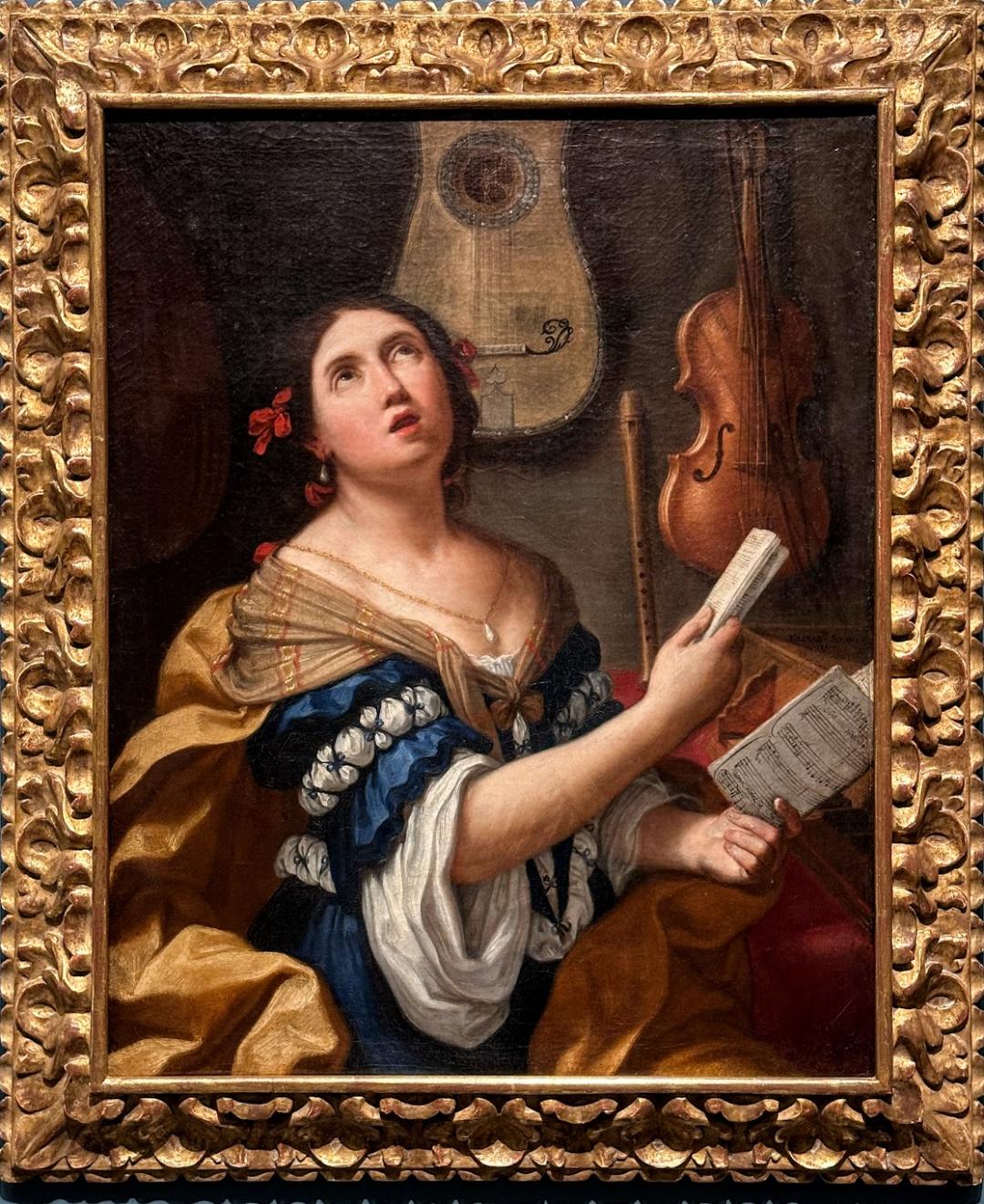
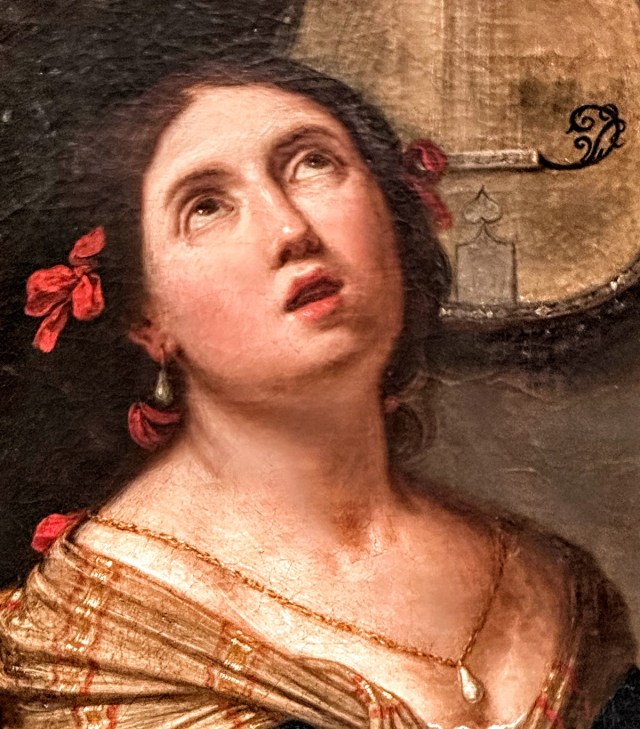
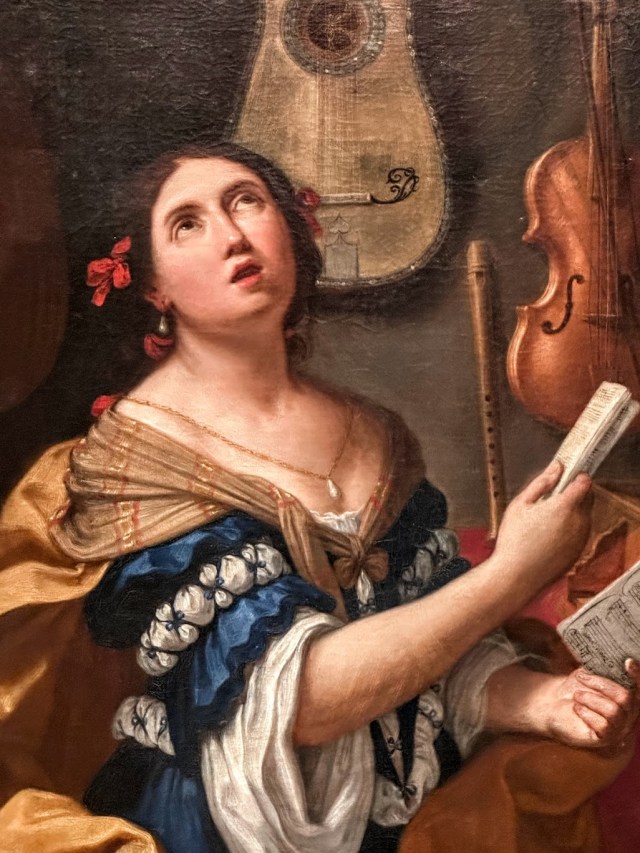
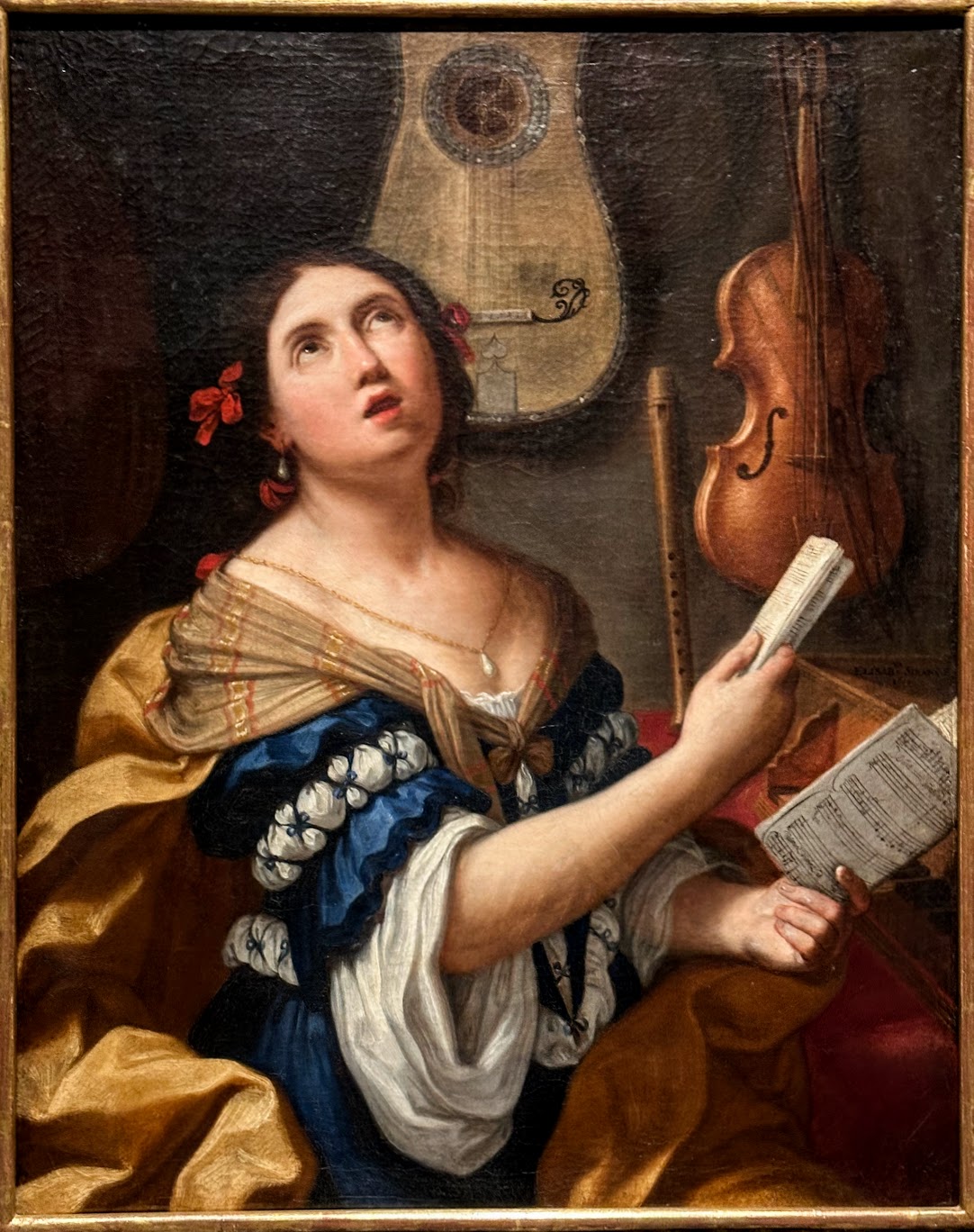
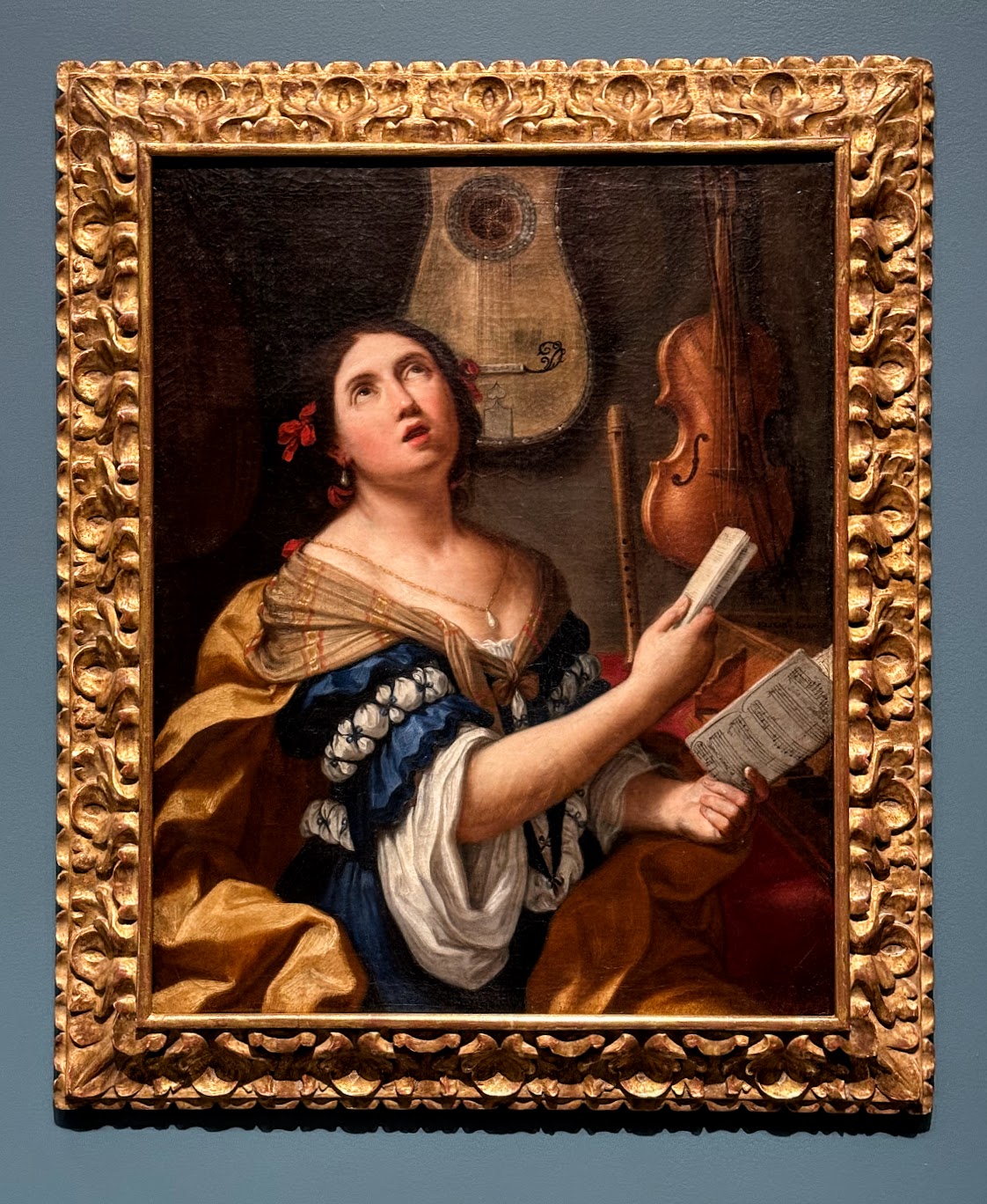
The Personification of Music
Resa – Rebecca, of all the paintings in the“Making Her Mark”exhibition, the Elisabetta Sirani allegorical painting titleThe Personification of Music was, and remains my favourite. Apparently she painted it in exchange for music lessons. I think she belongs inThe Twenty-Seven Club, don’t you?
Rebecca – I did not know that Elisabetta Sirani exchanged her paintings for music lessons, but I am not surprised, given her proficiency as a musician in addition to her exceptional talent as a painter. This exchange speaks to her versatile creativity and passion for various art forms, further solidifying her legacy as a remarkably talented individual in the Baroque era. I agree – she belongs in The Twenty-Seven Club.
Resa – Admittedly I am smitten by this artist. I am also wild about that fact that you are here on this journey through these profiles in exceptionality. Mille Grazie, Rebecca!
Rebecca – Resa, your dedication to artistic endeavours and your profound belief in the power of creativity to enrich our world have truly inspired me. Thank you for including me on this extraordinary journey of self-discovery through Making Her Mark. I look forward to what comes next… “Mille grazie caro amico per averci invitato a unirci virtualmente alla tua Art Gallery of Ontario. Fino alla prossima volta.“
You can also visit Rebecca by listening in on some of her fabulous Tea Toast and Trivia podcasts.
Click the above banner to view & link to Rebecca’s sources. not included in the body of text!
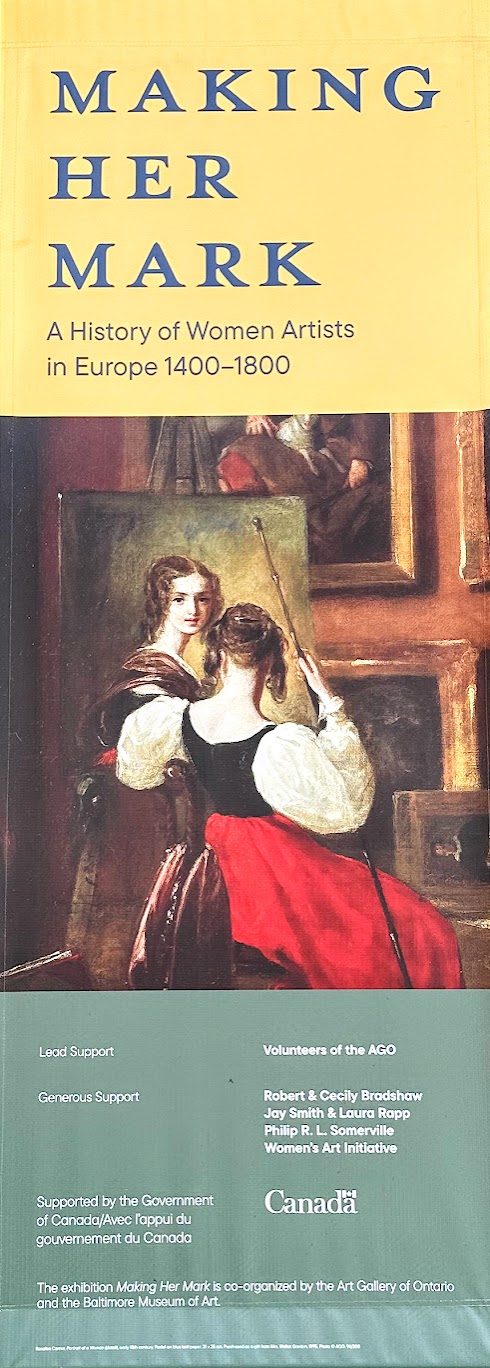
I saw the most inspiring show at the Art Gallery of Ontario.
Elisabetta Sirani (Italian 1638-1665)
Personification of Music – 1659 – oil on canvas – Painted in exchange for music lessons.
It was all European female artists from 1400 – 1800. It included 230 pieces of art: oils, watercolours, chalk, etchings, sketches, tatting, embroidery, quill work and more.
Themes included portraits, self portraits, religion, nudes, still life, nature, home decor and more
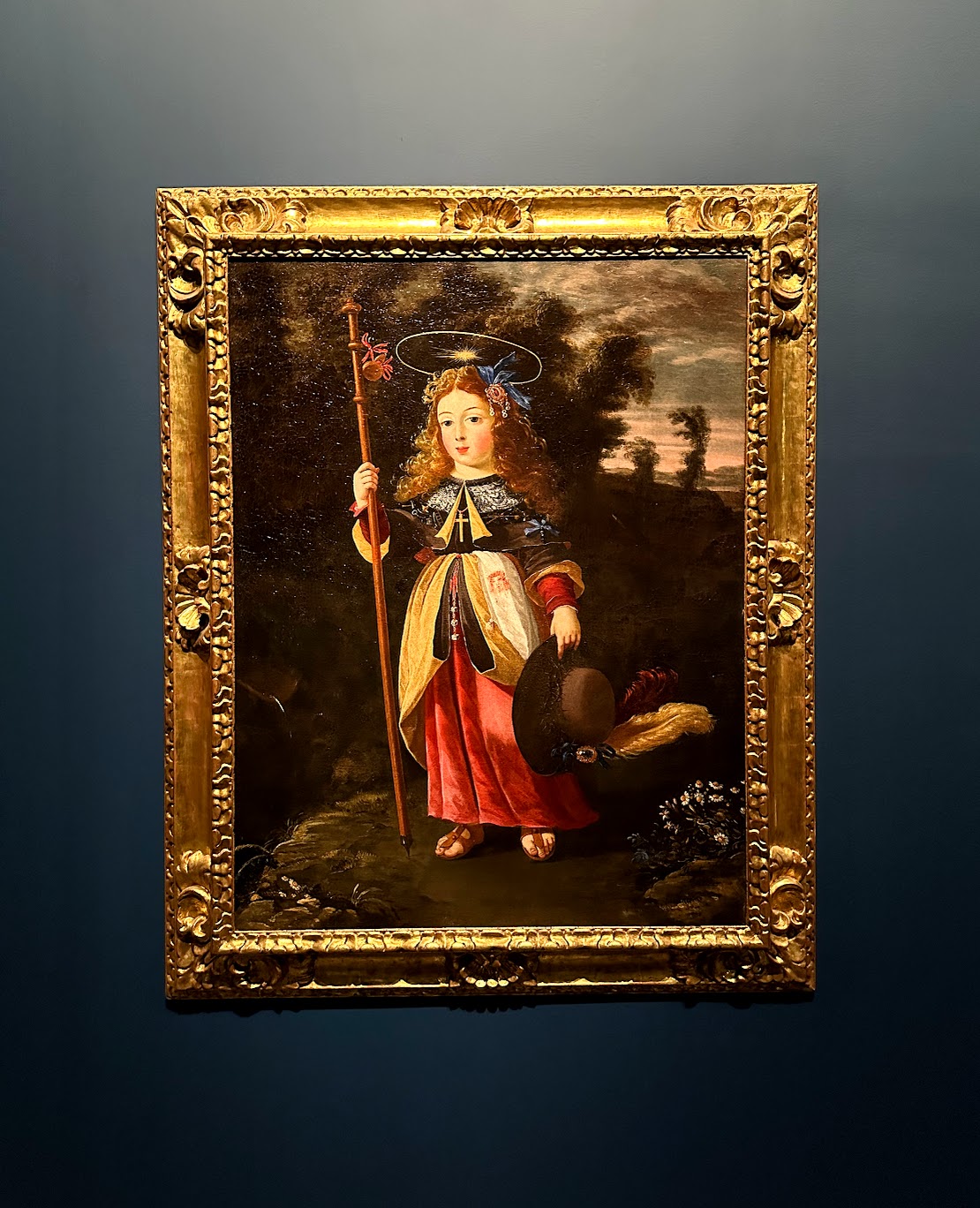
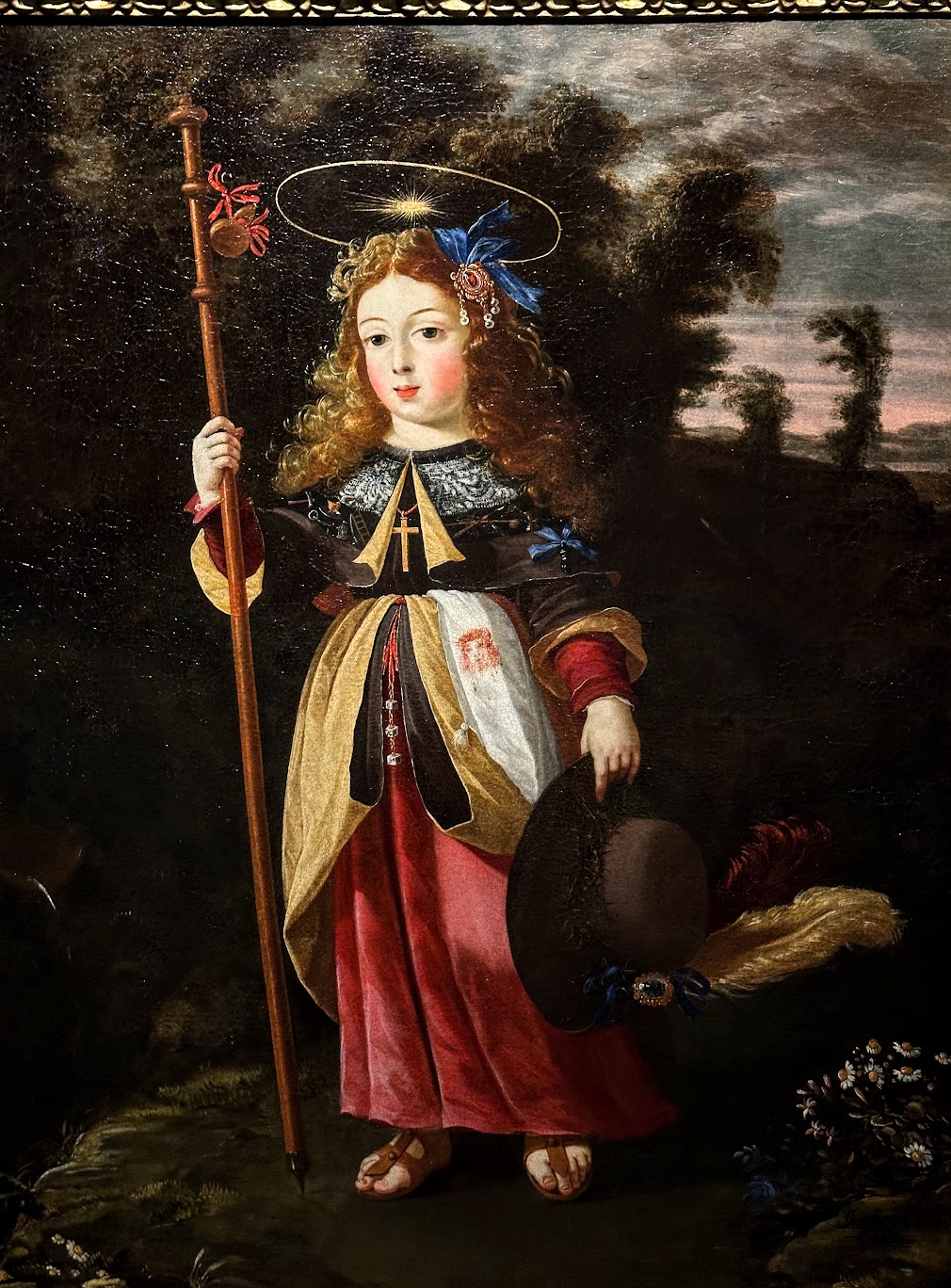
Josefa Ayala (Portuguese circa 1630 – 1684)
The Christ Child as Pilgrim – 1676 – oil on canvas
It is the AGO’s policy that we are allowed to take pics (no tripods, flash or other professional equipment), that we may post on social media and that we do not make money from said photos.
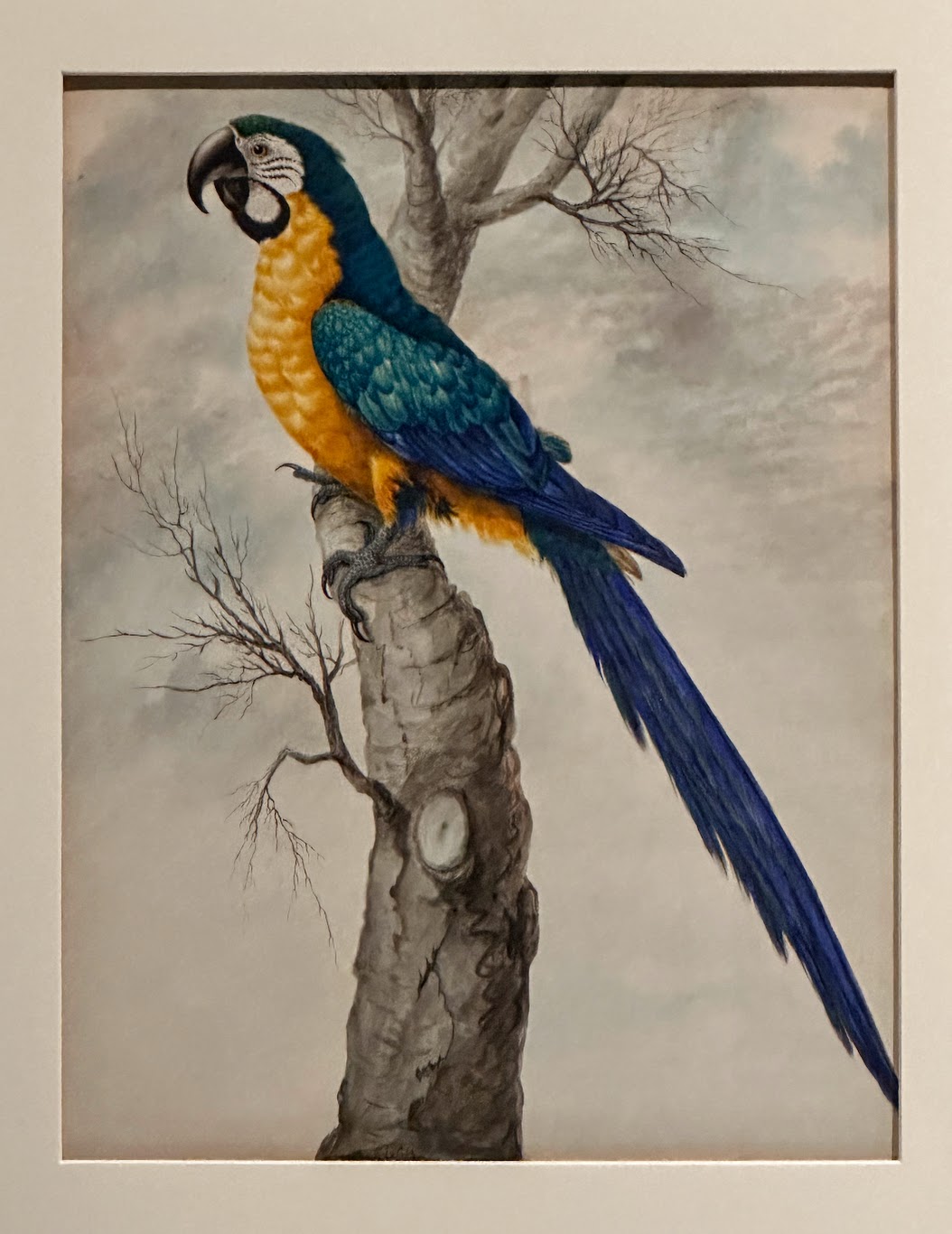
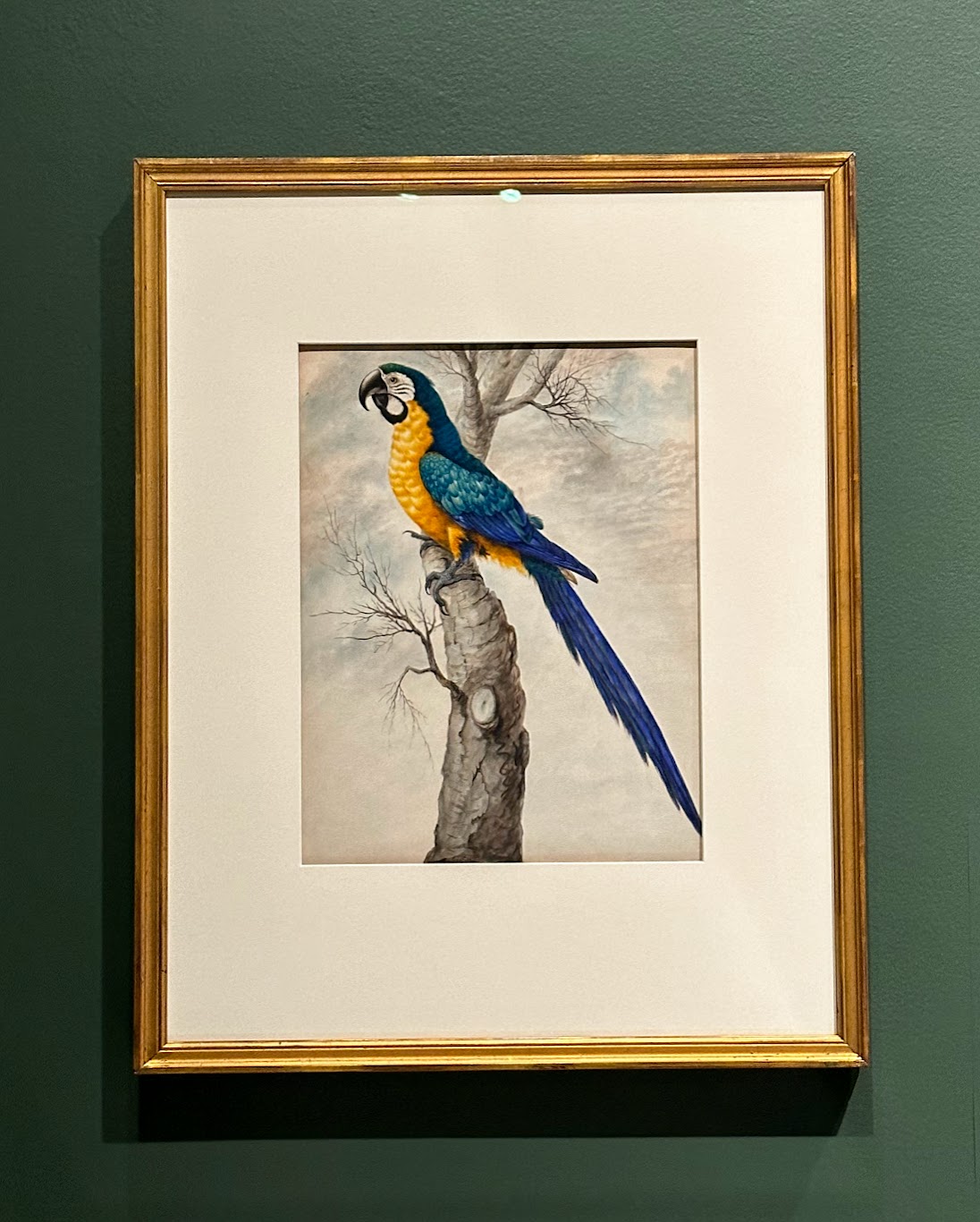
Sarah Stone (English circa 1760 – 1844)
A Blue and Yellow Macaw circa 1789 – watercolour, watercolour glaze & black ink border on paper.
I’ve never taken pics at the AGO before, and did my best despite: lighting in general, lighting reflected in in glass & oil paints & lucite display cabinets, and my unbridled enthusiasm.
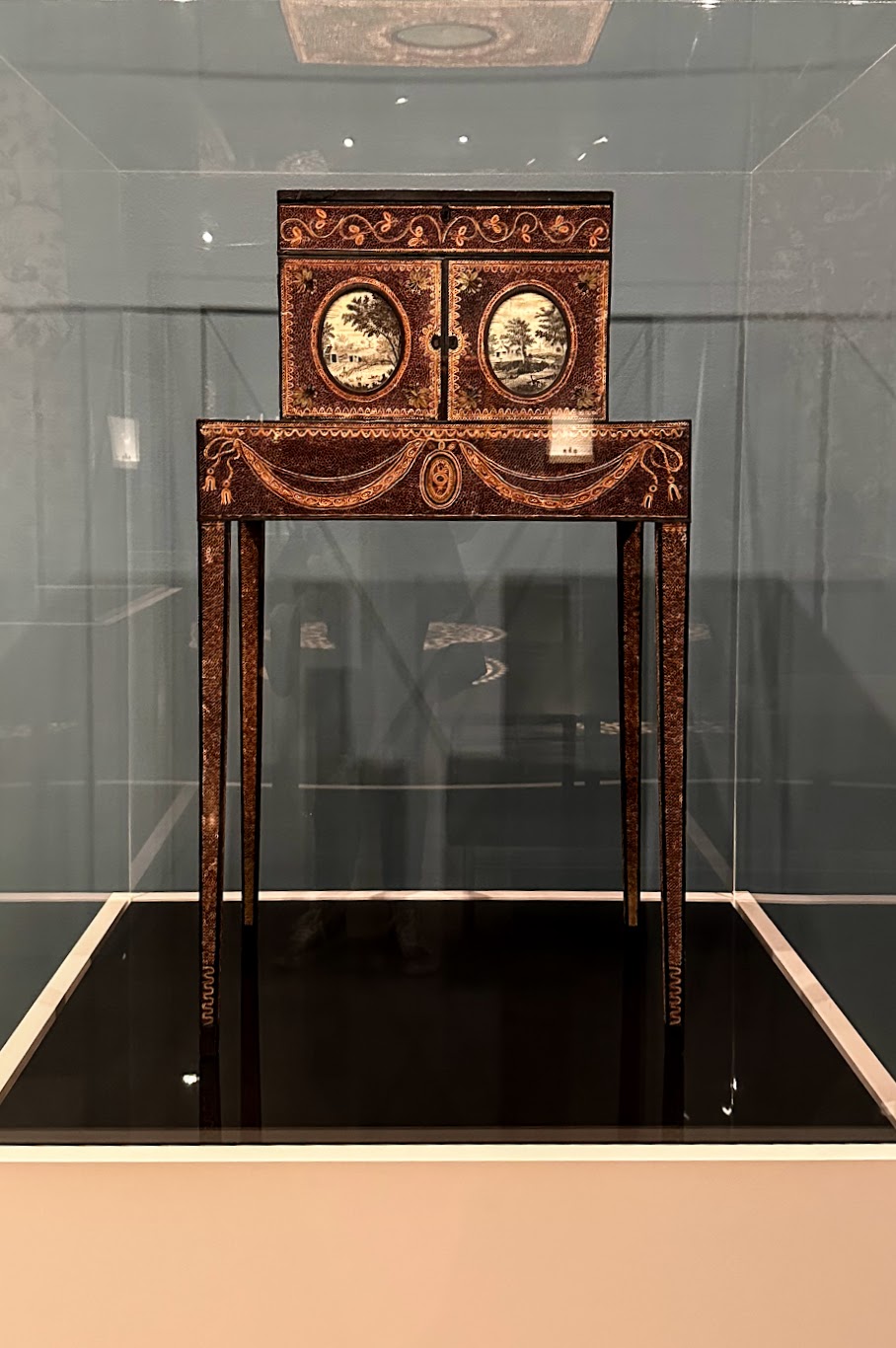
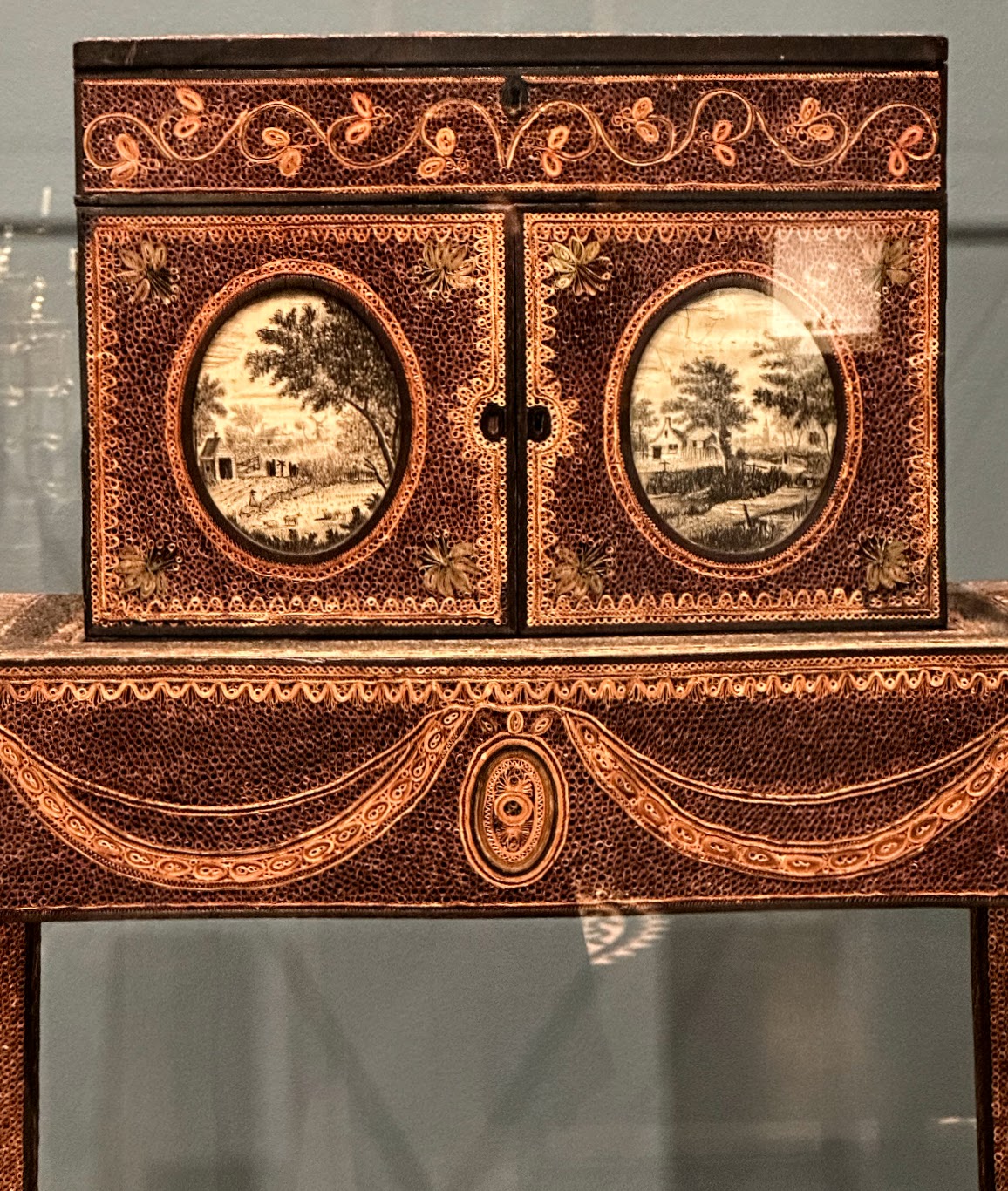
Below is an example of a cabinet encased in the joys of reflections. Thiscabinet is made of water colour and metallic paper, hair (hairwork), and watercolour panels.
Sophia Jane Maria Bonnell (English – circa 1748 – 1841) and Mary Anne Harvey Bonnell (English – 1748 – 1853)
Paper Filigree Cabinet circa 1789
The plan is to show more of the art in categories. However, due to the plethora of photos to comb through, It will happen between street art posts.
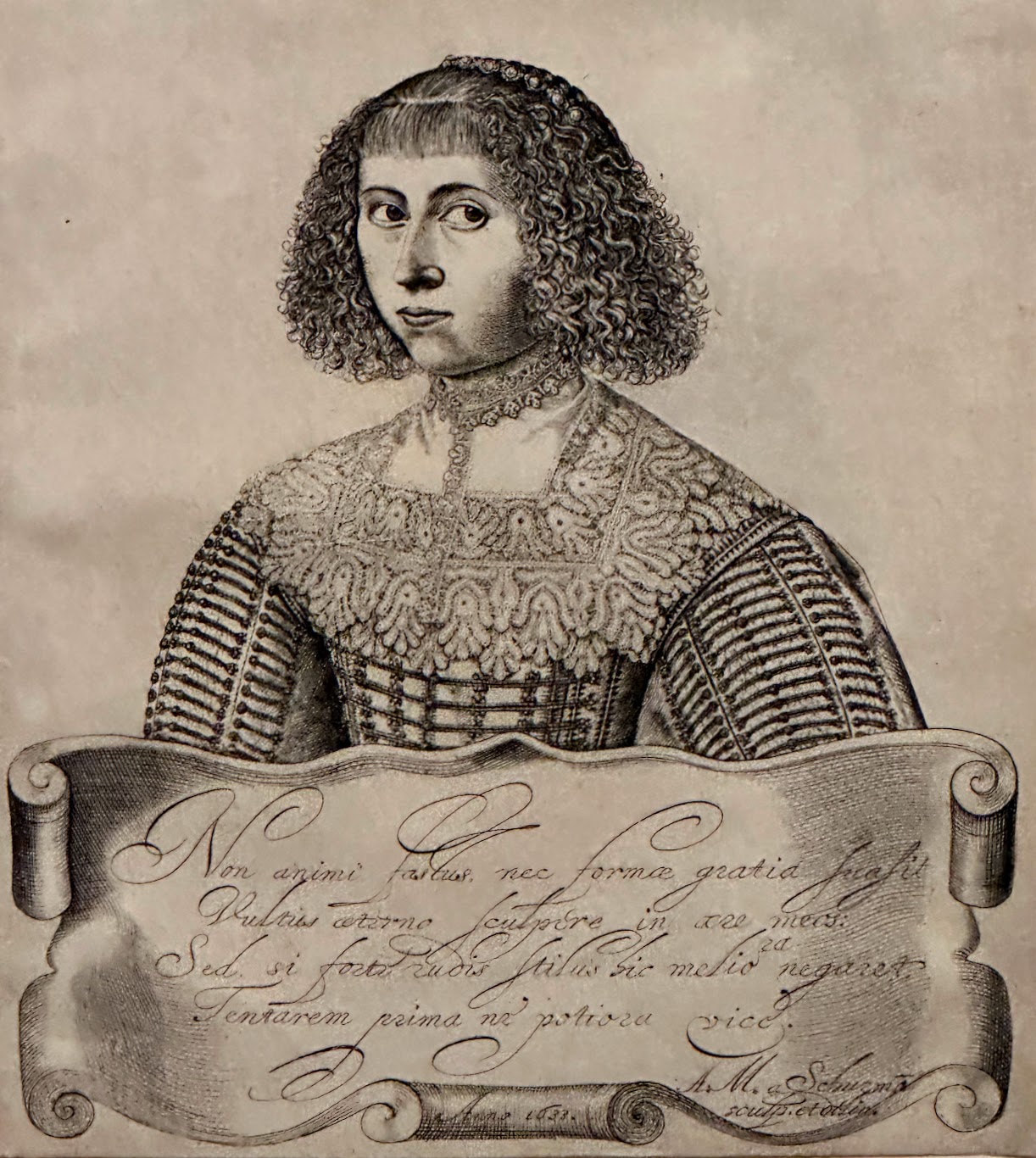
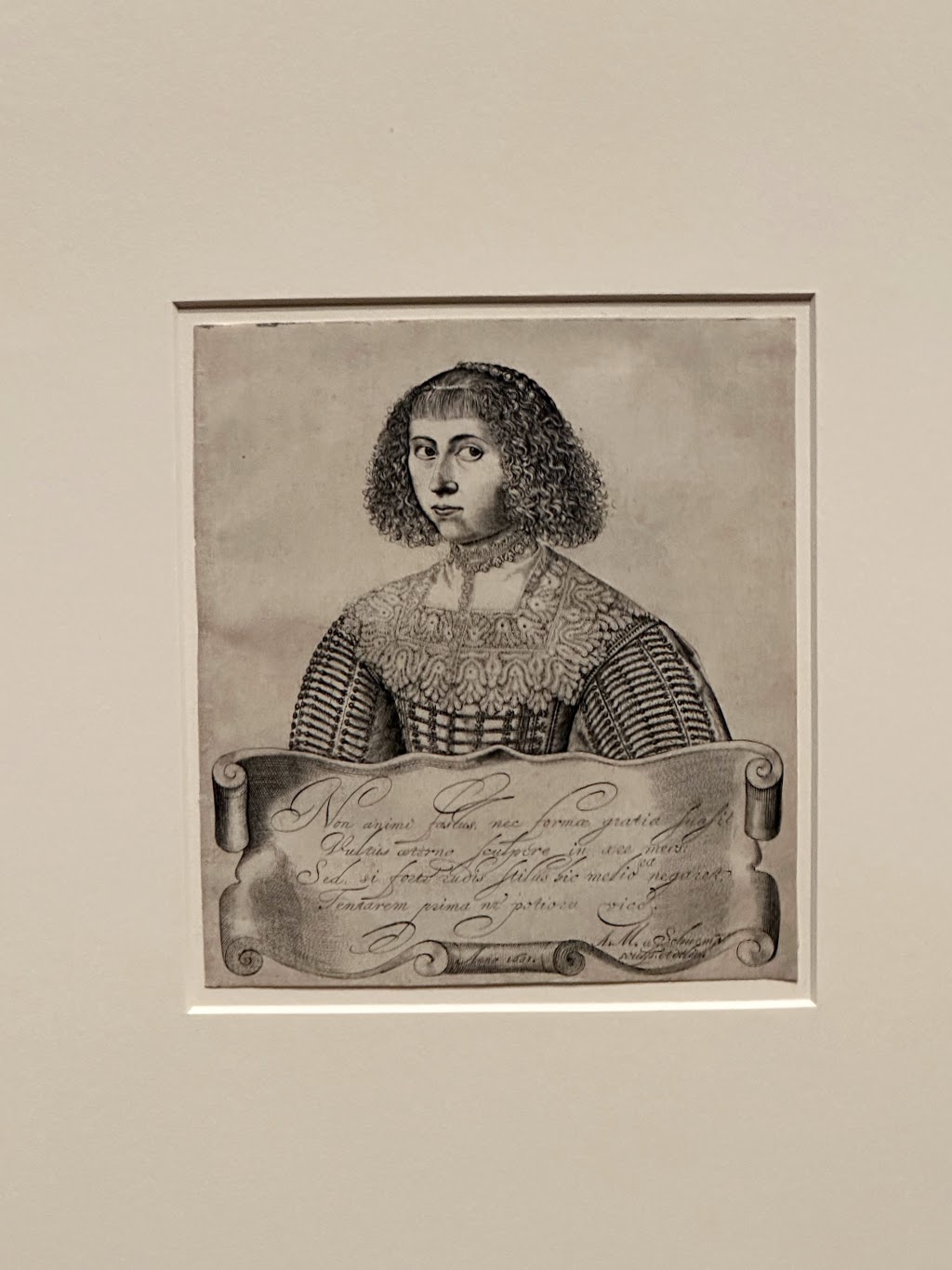
Anna Maria Von Schurman (Dutch 1607- 1678)
Self-Portrait -1633 – engraving on paper
Anna mastered 14 languages. Her proto-feminist treatise The Learned Maid was published in Latin in 1638
One art blogger has agreed to come on as a guest.
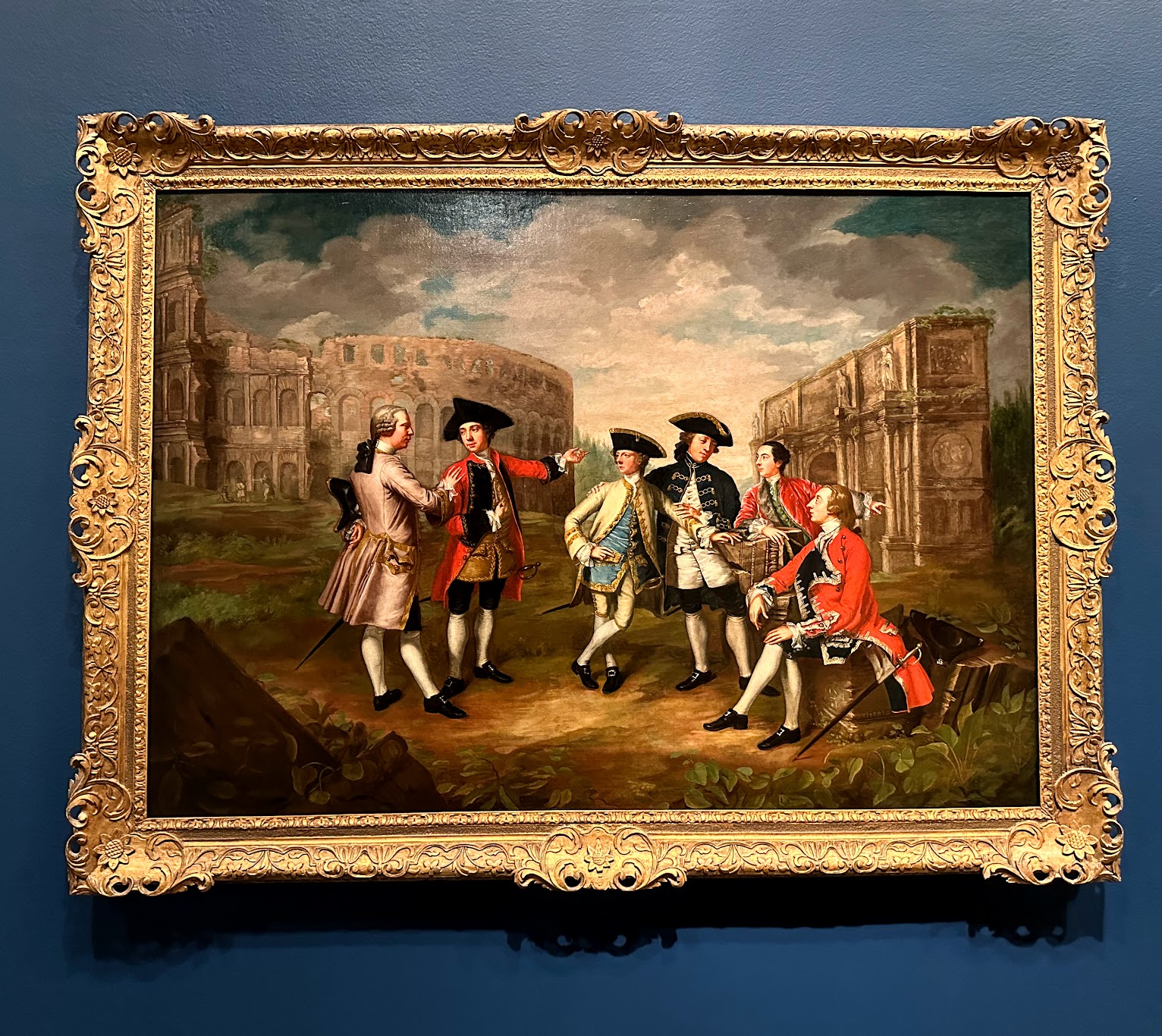
Katherine Read (English 1723 -1778)
British Gentlemen in Rome – circa 1750 – oil on canvas

























 Graffiti Lux Art & More
You must be logged in to post a comment.