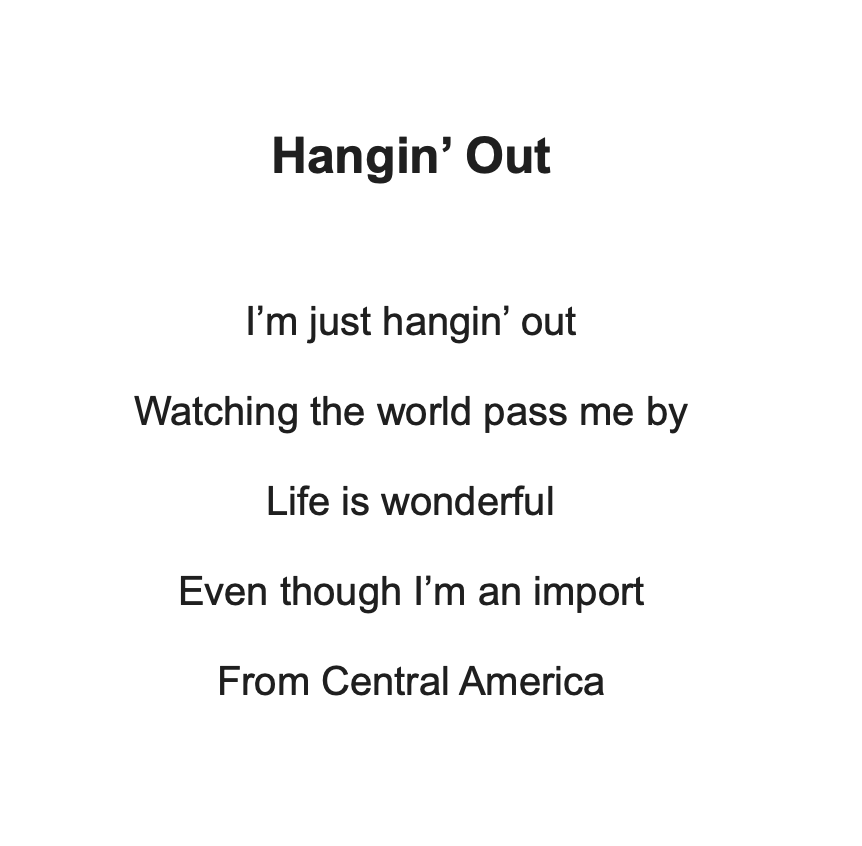
That is a line from one of the poems in Robbie Cheadle’s new book Burning Butterflies.
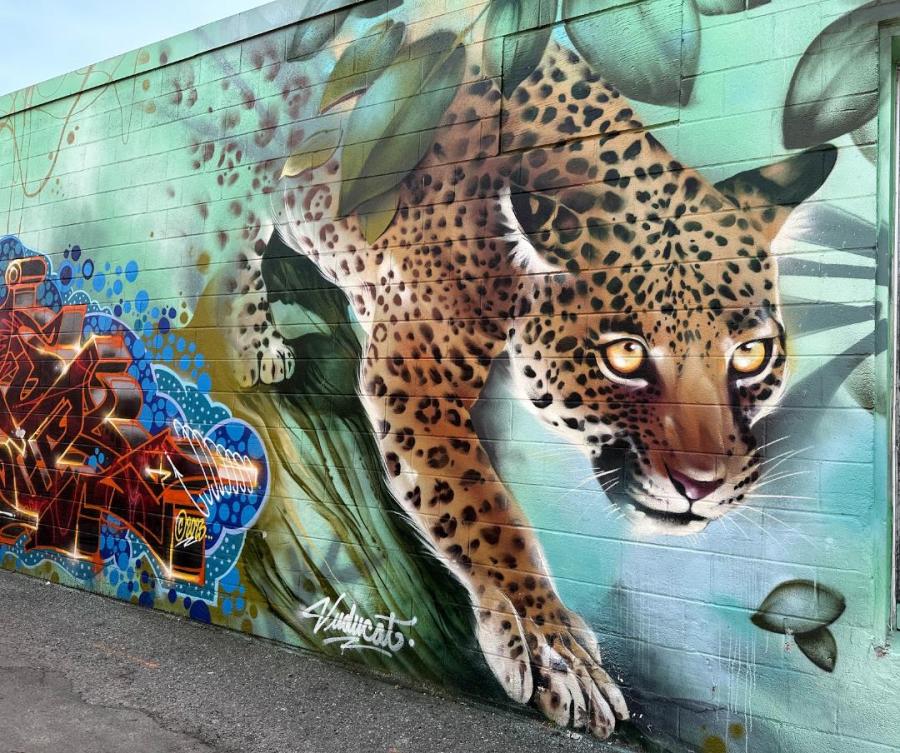
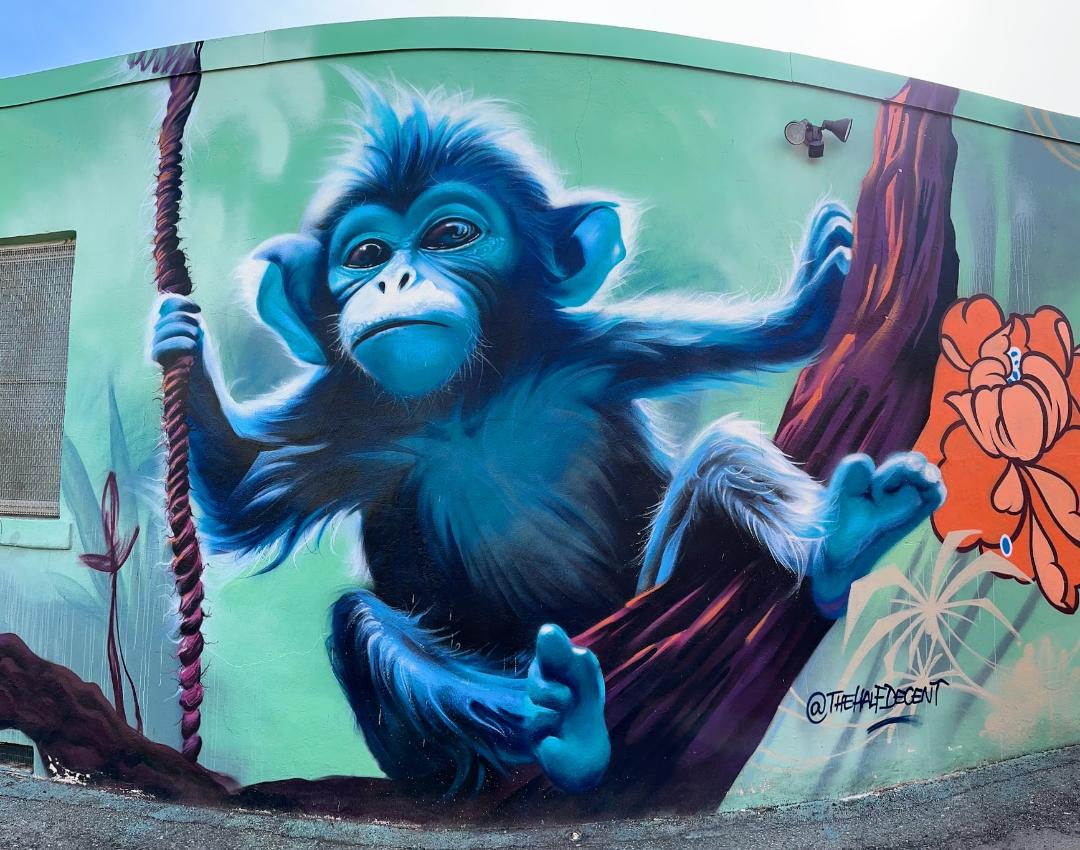
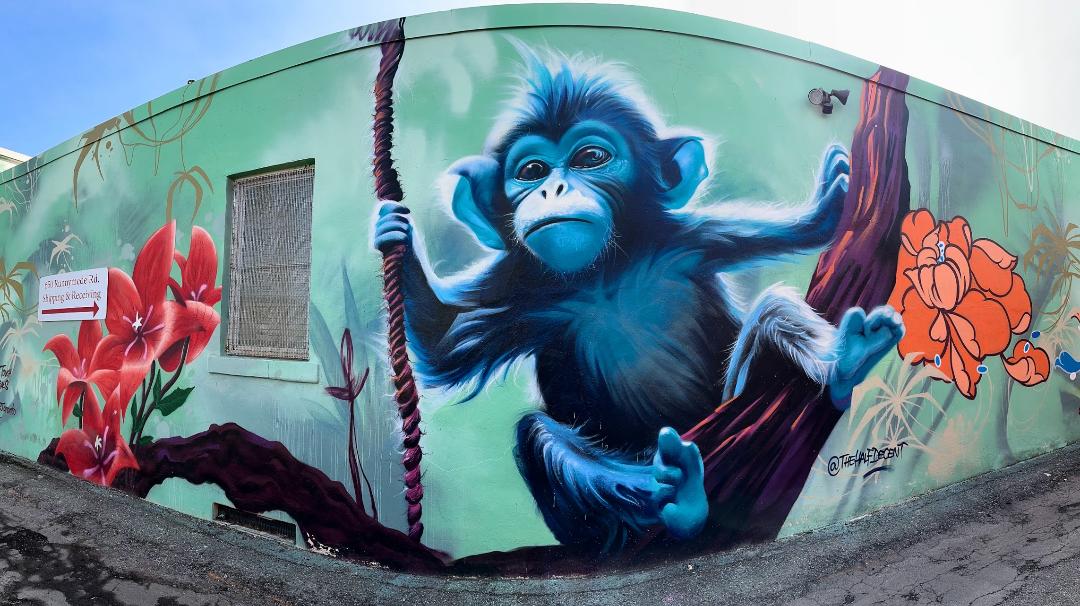
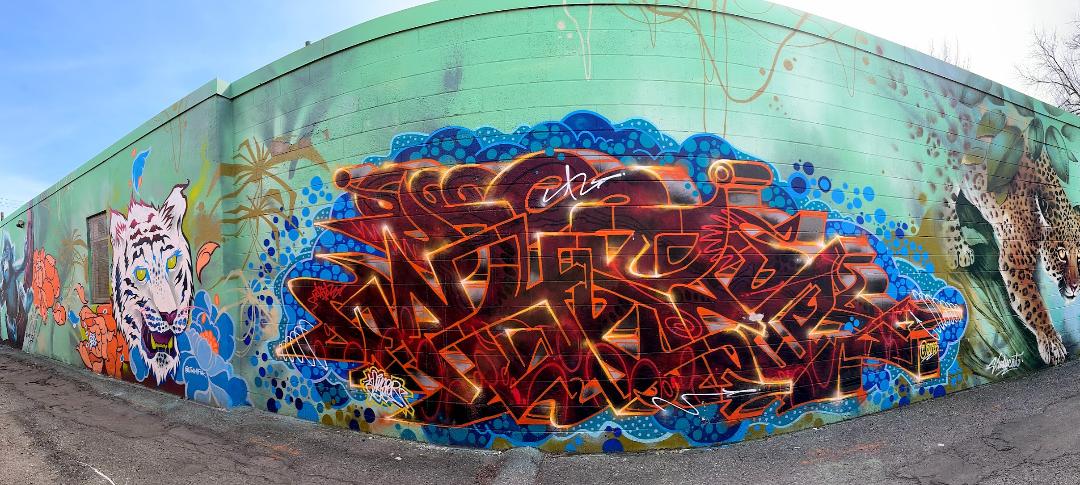
I Found a Wall with a Simian, a Tiger and a Leopard
… and I immediately thought of Robbie.
I have learned a lot about South African animals from her books, photos and videos, so it was natural that I thought of her when I saw this mural.
Did you know that “most of the monkeys are not indigenous to South Africa and were raised as house pets or bred for the pet trade.”
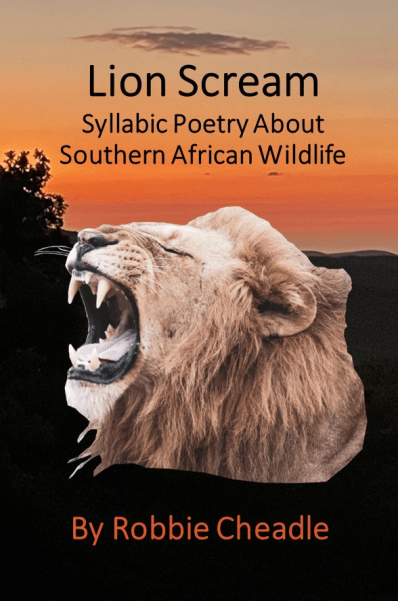
From – Lion Scream
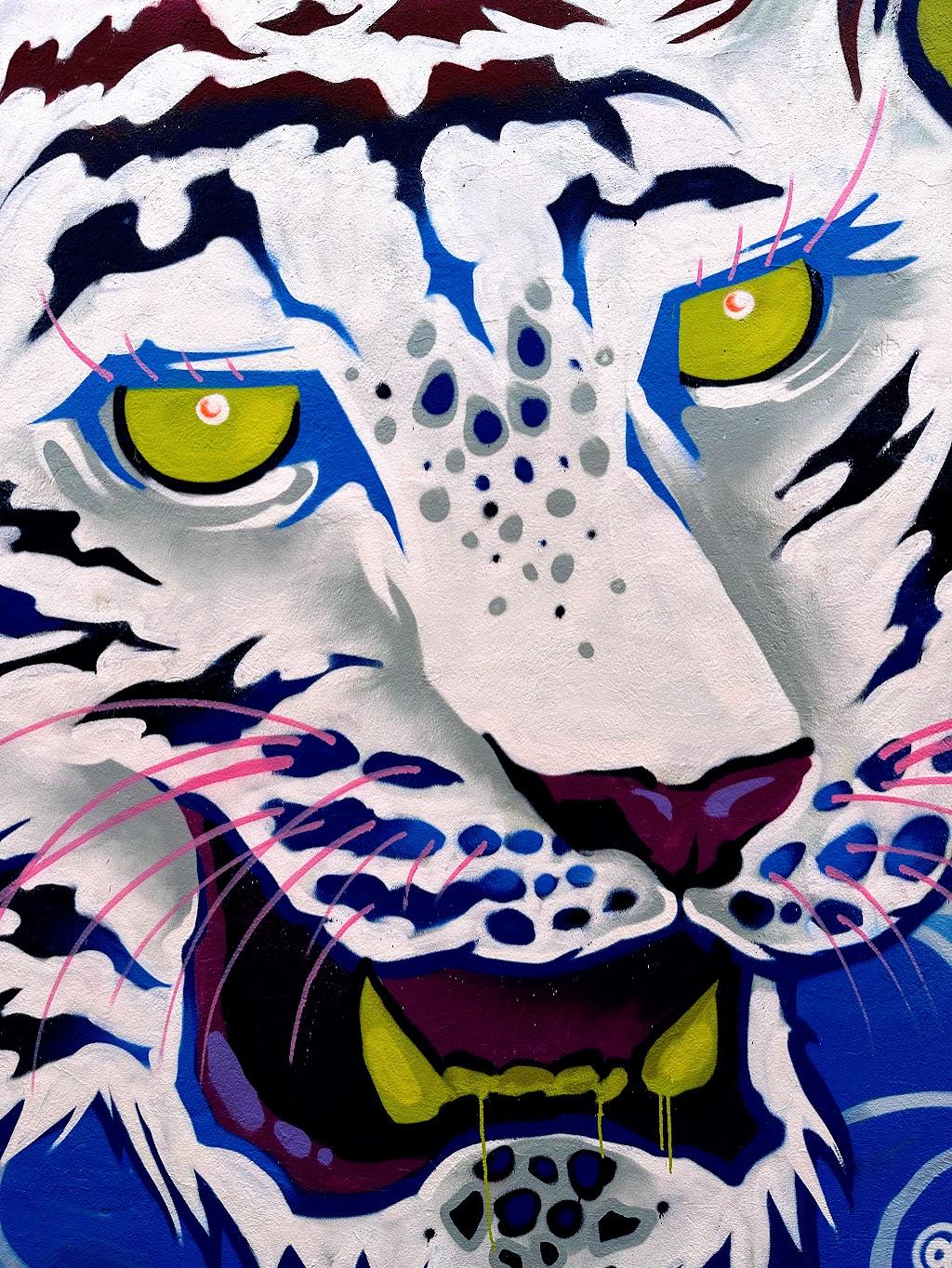
Tigers
…are not from Africa, either.
From – Lion Scream
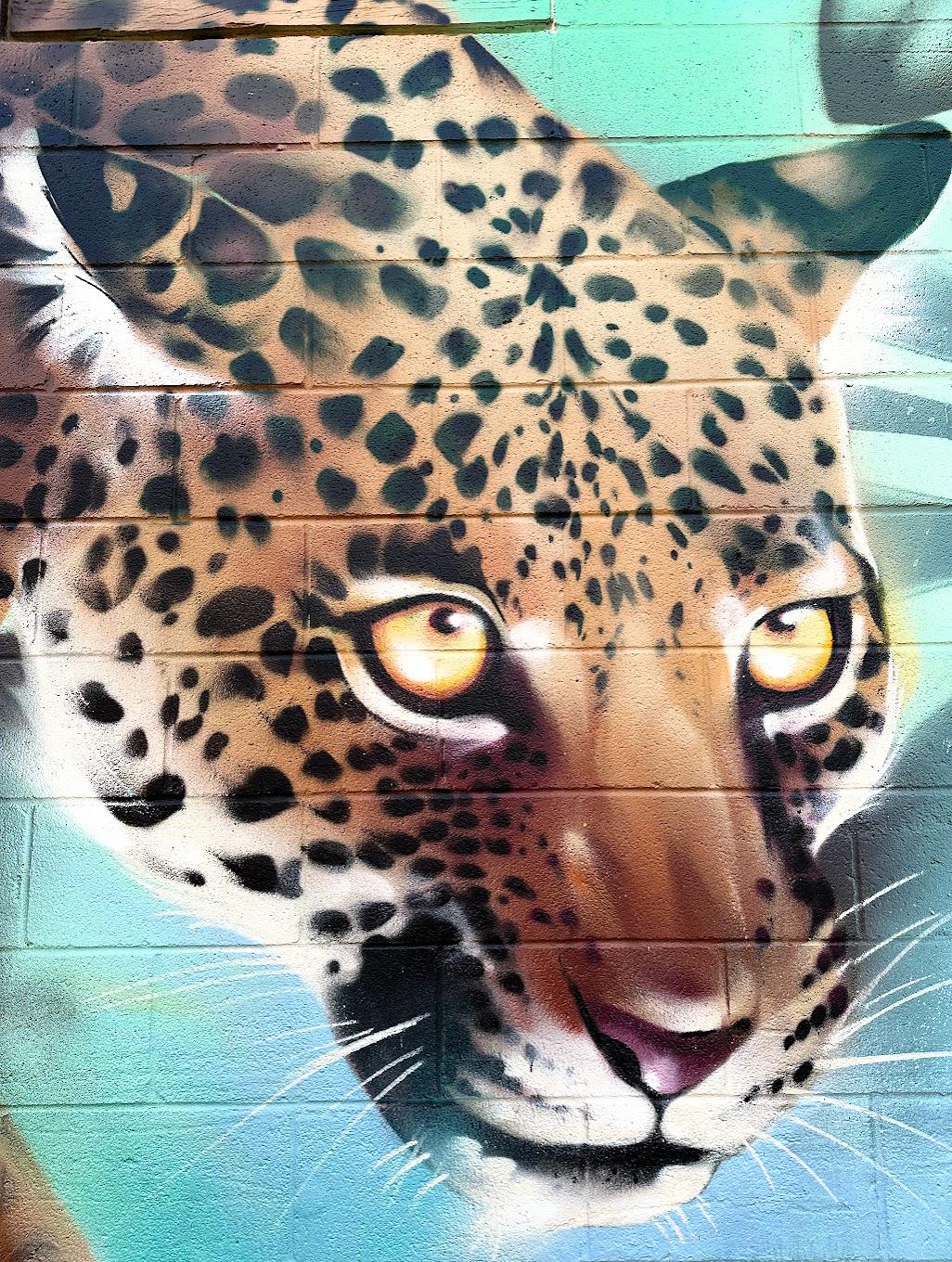
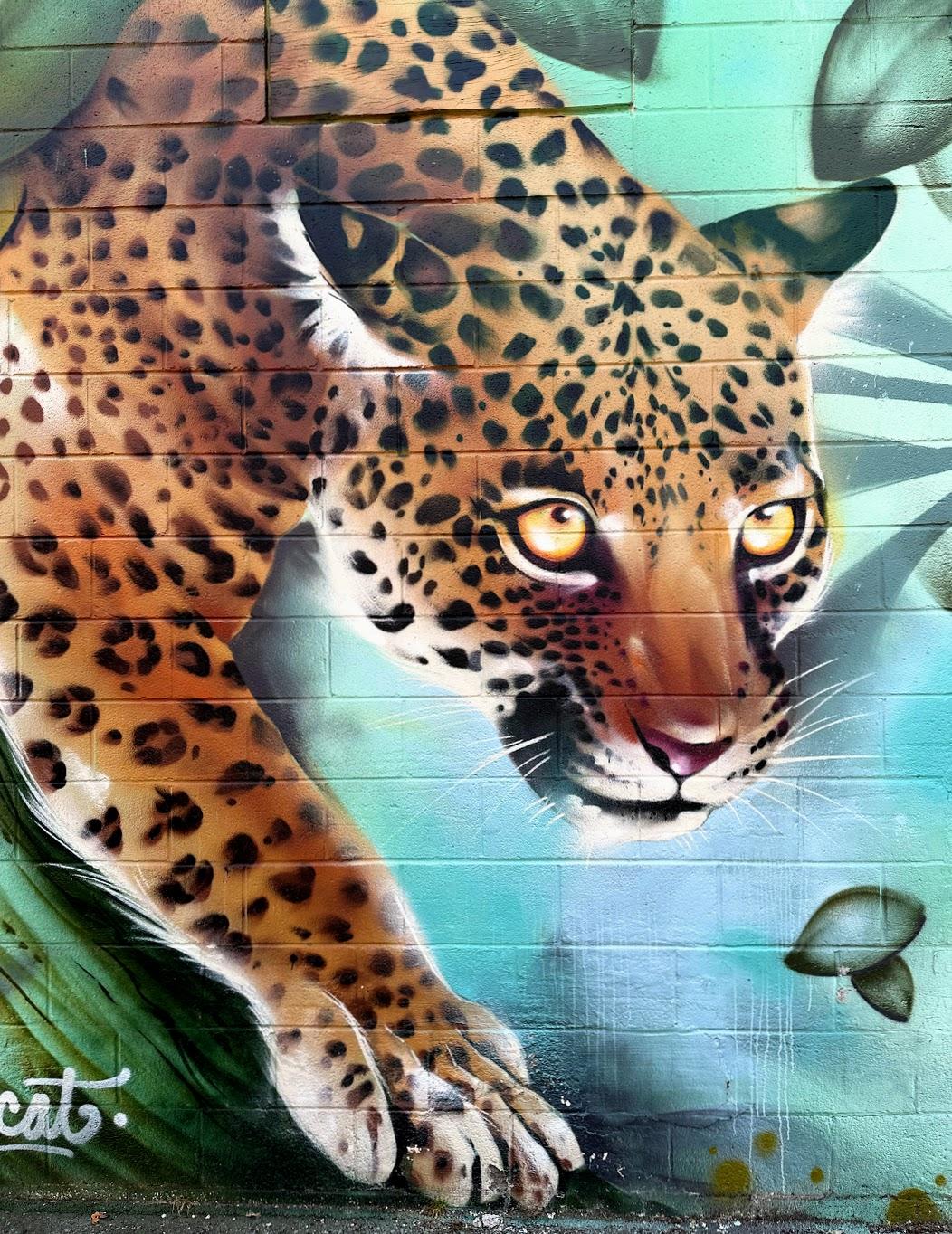
Leopards
…. are however, from Africa!
From – Burning Butterflies
Burning Butterflies is Robbie’s most recent book of poetry and imagery.
Through poetry, photography, art and video, she shares her knowledge of South Africa’s wildlife with us.
Robbie not only teaches us about these fabulous creatures, but tells of their plight in man’s madding world.
About Robbie
South African author, photographer, and artist, Robbie Cheadle, has written and illustrated seventeen children’s books, illustrated a further three children’s books, and written and illustrated four poetry books. Her work has also appeared in poetry and short story anthologies. .
Robbie also has two novels and a collection of short stories published under the name of Roberta Eaton Cheadle and has horror, paranormal, and fantasy short stories featured in several anthologies under this name.
You can find her books on Amazon sites around the globe. Just search “Robbie Cheadle” for children and youth books – “Roberta Eaton Cheadle” for adult books.
This honest exposé of Africa’s nature highlights Robbie’s love for all flora and fauna.
Writing a review for this book of poetry, photography and art is truly like sticking a square peg in a round hole. It defies categorization. Yes, it is well crafted, entertaining and informative. However, it strikes out beyond those adjectives. It teaches, with heart.
Resa – Near the beginning of the book is a heart touching & humorous free form poem – The Visitor. What bird is depicted, and did you really have this visitor?
Robbie – The visitor is our semi-tame hadeda, Eleanor. She lives on our property with a male bird, although he disappears sometimes and she is always around. I feed her occasionally but not often enough for her to lose her independence as a wild bird. She will wander into my house if she gets the opportunity. I don’t mind her visiting but she can get a little upset if she can’t find her way out again. Then I have to help her. The information in that poem about the loerie birds is also true. We don’t net our fruit trees anymore.
Robbie – There is another poem in the book about our loeries being the fattest birds in the city.
Resa – I was going to ask about that poem.It makes me feel happy. I love it!
Fat Birds (shadorma)
Mangled fruit
Product of guzzling
Plump loeries
Eat and eat
I'll have to build a runway
Fattest birds in town
Resa – Growing up in Canada we had an American TV show called “Wild Kingdom”. Often it depicted the animals of Africa. They were wild, free, mysterious and dangerous. Did you have a nature show like that? Or, how did you learn about African animals?
Robbie –I have never really watched TV. It was late coming to South Africa and I never developed the habit. I always read a lot though, and one of my favourite series was Willard Price’s animal adventure books. I became very interested in the plight of wild animals as a result of these books, although at that time they mainly focused on poaching and the illegal animal trade. Interestingly, Willard Price was a Canadian.
Robbie – Later in my life, National Geographic magazines came to South Africa and I bought them every month. I had piles and piles of them and ended up giving them away each time my family moved house (21 times during my pre-marital years). After I met my husband, we started going to game farms whenever we could afford it. I’ve learned a huge amount from the various guides and game rangers.
Resa – Then, there’s climate change.
Robbie – Climate change started coming to my attention in the ’90s, but I never really thought about it in connection with our wild animals until the early 2000s. Over my adult life to date, more and more animals have become endangered to a point where the list of ‘least concern’ animals is much shorter than the endangered list. Many ‘least concern’ animals are actually in danger of disappearing due to habitat loss. Over the past 15 years, I’ve become a lot more involved in promoting the plight of our animals and doing what I can to help support them.
King of the Beasts
“To a Lion” is a contemporary poem, that travels, with images, over 6 pages. The reality of the plight of this majestic animal is beyond what people want to comfortably know. I say the truth hurts, especially when one confronts “Canned Hunting”
Resa – When did you learn about “Canned Hunting”?
Robbie – I despise hunting. I don’t understand it and I don’t support it. Canned hunting came to my attention about 15 years ago when I overheard a few of the guides at a game farm talking about it. I didn’t know the term prior to that. According to World Atlas, there are approximately 7,000 lions held in captivity in between 160 and 200 canned hunting breeding farms in South Africa.
Excerpt from To A Lion
You've seen your peers shot - their heads stuffed and mounted
Victims of canned hunting
Perpetrated by fools who do not appreciate your beauty
Or the vital role you play
In the maintenance of the African ecosystems
And all its amazing creatures
“The Story of the Desperate Salesman”(99 syllable double ennead) and “Nest Selection” (freestyle) are of intrigue to me. The male Weaver bird builds a nest to attract a female. If a female doesn’t accept his nest, he dismantles it. Then he builds another more elaborate than the preceding nest.
Excerpt fromThe Story of the Desperate Salesman
He's been building for days
King of construction
Improving his intricate weaving techniques
Working from dawn to dust
Then comes marketing
This building and dismantling is repeated until a female moves in. Somehow this parallels certain thoughts I have about societies, ergo nations. Lots to say about what this “little bird told me”, but then I’d need to write an essay.
Robbie’s poems & photos took me on a journey that was visual, emotional and introspective. A bonus to the entire experience is I learned a lot about poetic form through example. In brackets beside her poems are the types of poetic structures they are written in.
Ekphrastic Poetry with photograph contributions by Wayne Barnes, photographer
Robbie winds up her poetic offerings inspired by the wildlife photos of Wayne Barnes.
Resa – The tone of the poetry is similar to the first part of your book, but takes on an “I want to be free” vibe, with positive suggestion and encouragement. Am I right to think and feel that?
Robbie– Wayne’s photographs are wonderful. You are exactly right in your summary of the poems written in combination with Wayne’s pictures: they are “I want to be free” expressions and do include positive suggestion and encouragement.
Resa – You’ve used mostly Wayne’s bird shots. Is there a reason for that?
Robbie – I believe that is why I chose so many birds for these combos. I see birds as being free creatures that move about and have the compete freedom of the skies. I’ve always though being a bird would be delightful.
One of Wayne’s stunning bird beauties is at 10 seconds in the video below.
The opening words on the promo video above are from one of Michael Cheadle’s nine poems at the end of the book. His work stands on its own. He is a terrific writer, and I felt his pain. He sent this quote, when I asked about it.
Michael – “Writing poems about my anxieties helps clear them out of my mind.”
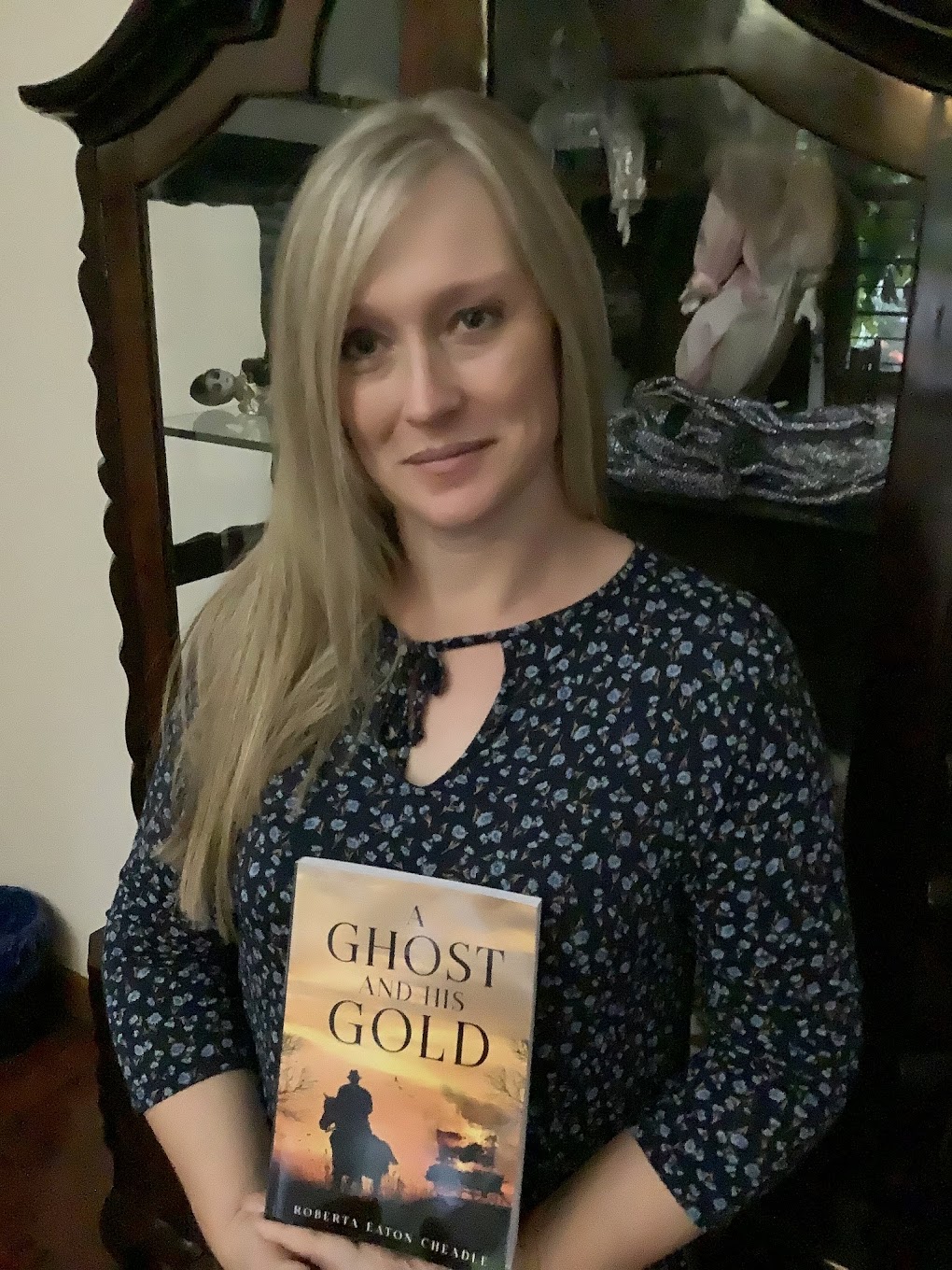
In the photo below, Robbie holds one of her novels, “A Ghost And His Gold”. This book is a superlative read. Read my review! There is so very much to say about Robbie, that you should just go to her about page!
Robbie is a prolific writer. You can find her books on Amazon sites around the globe. Just search “Robbie Cheadle” for children and youth books – “Roberta Eaton Cheadle” for adult books.
Robbie’s cats take on a deeper meaning – the knowledge, respect and caring of all wildlife.
She has photographed, videoed, written story books & poetry, painted, blogged and fondanted her message into the world and into my heart.
Time to shine a star!
The idea to spotlight Robbie’s work began with a post I did on GLAM that featured street art with kittens. (click on the pic below to see the post)
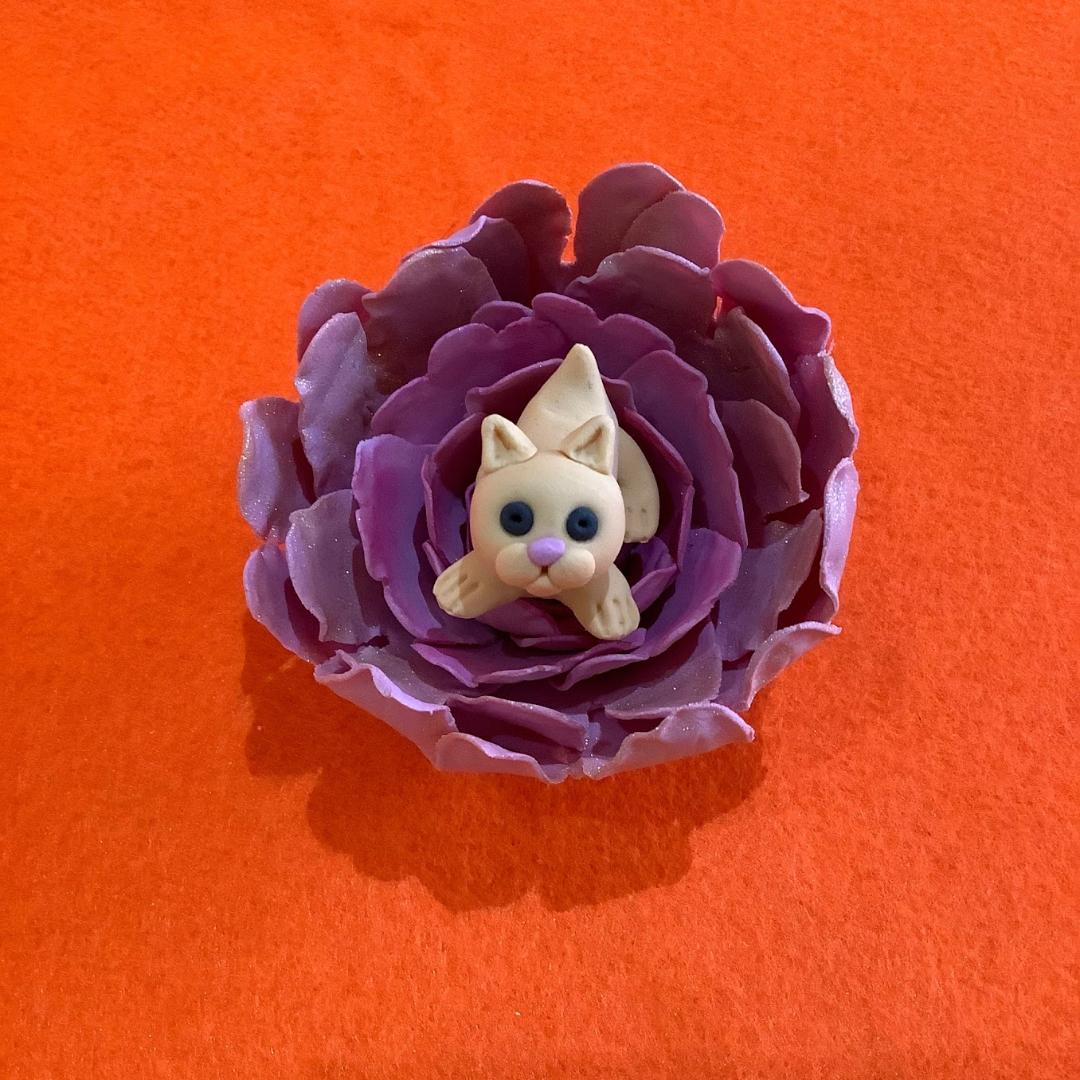
Robbie was then inspired to respond with fondant kittens.
This slideshow requires JavaScript.
This is my response.
Robbie lives in South Africa and has access to seeing its wildlife. The following shots (& more) of hers are available for free atUNSPLASH ROBBIE CHEADLE
This slideshow requires JavaScript.
I have read many of her children’s books. Her books teach and have taught me, an adult. In“Sir Chocolate and the Fondant Five” I learned about the Big Five in Africa.
Do you know who the“Big Five”are?
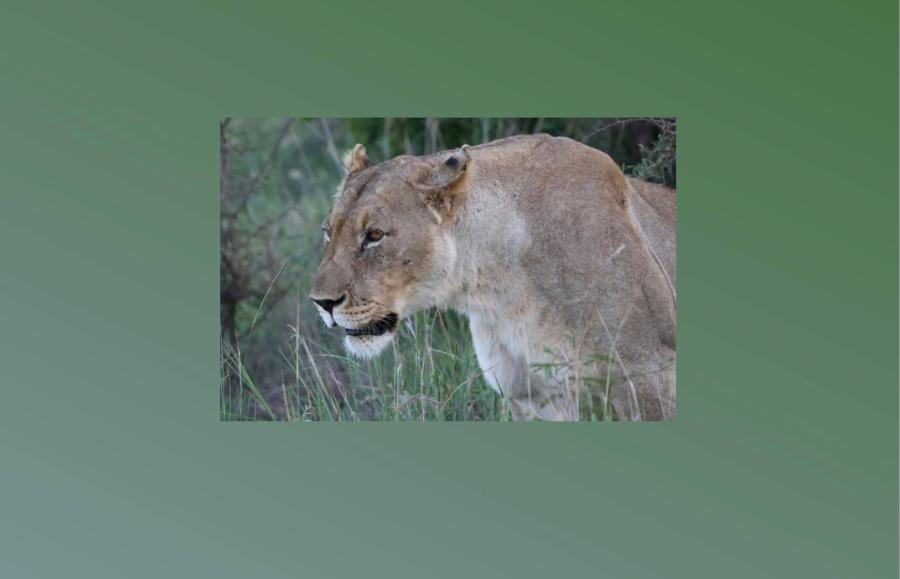
Well, they are the“Lion, Elephant, Leopard, Rhino & Buffalo”. I found these videos on Robbie’s YouTube channel. They are only seconds long, so have a watch!
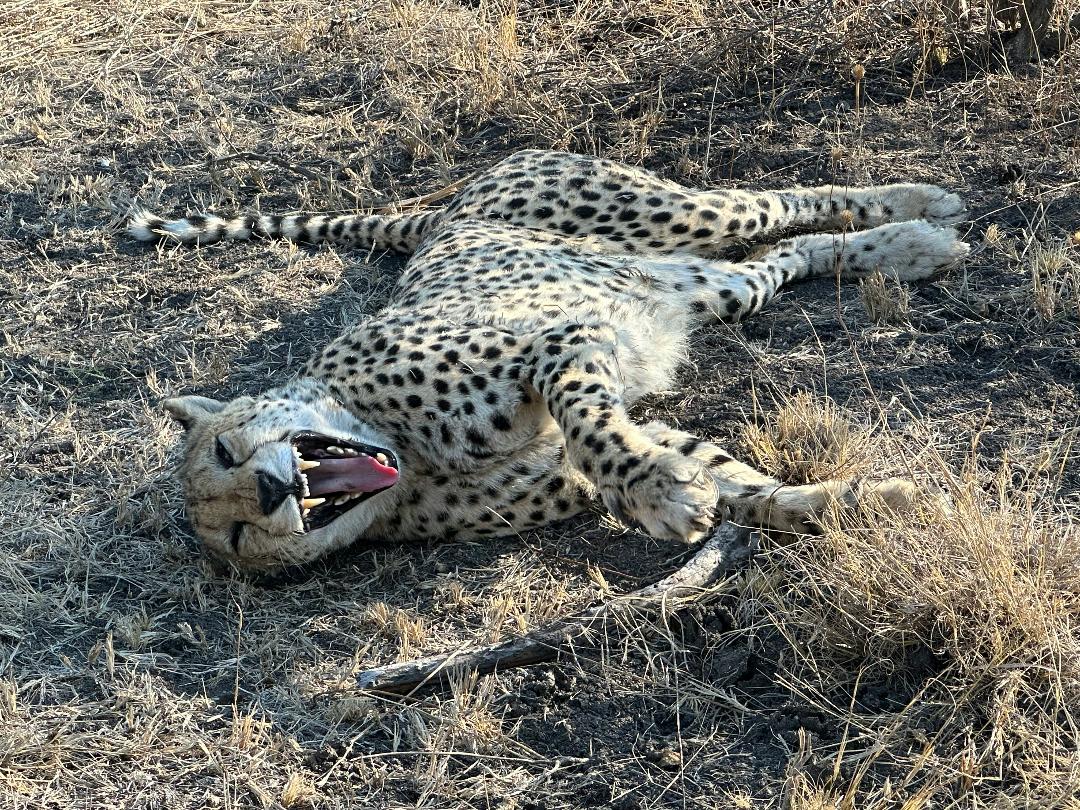
* Note: I couldn’t find a leopard video, so the Cheetahs are filling in.
Robbie’s YouTube Channel is a creative depot, with readings, recipes and animals. There are also videos of monkeys, birds, giraffes, waterbucks, hippos, kudu, zebras, wild dogs, insects and more.
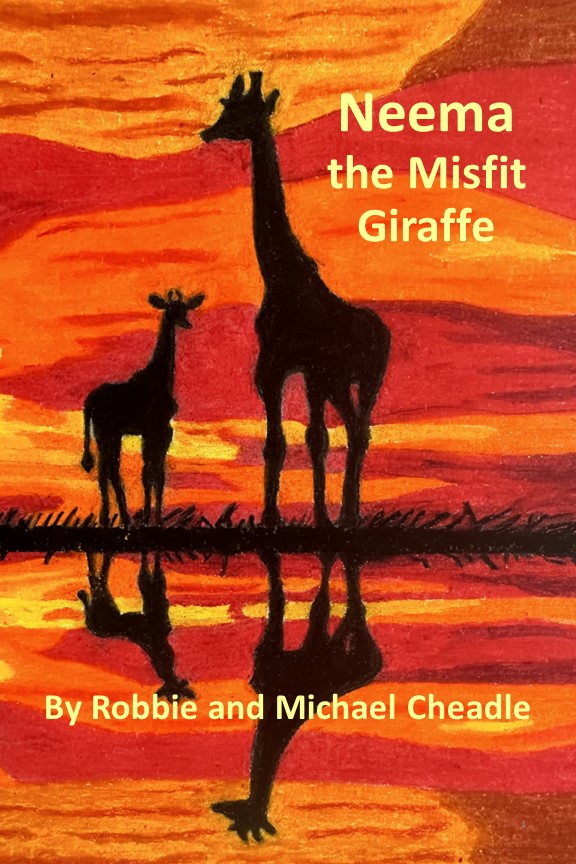
Robbie writes with her son Michael Cheadle, who shares her love of nature and desire to help protect it. I haven’t read “Neema the Misfit Giraffe”, but am bound to.
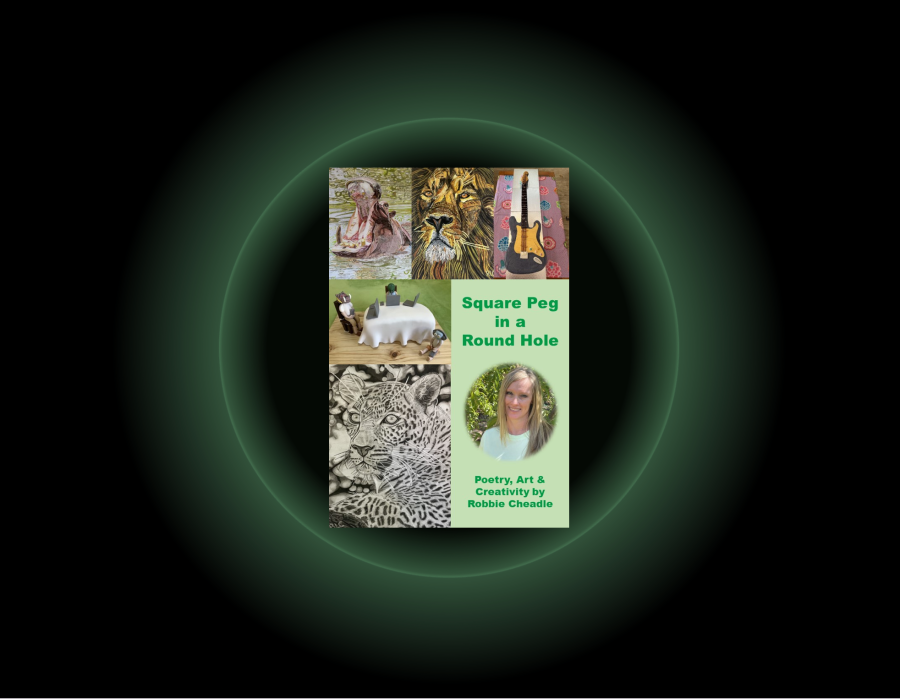
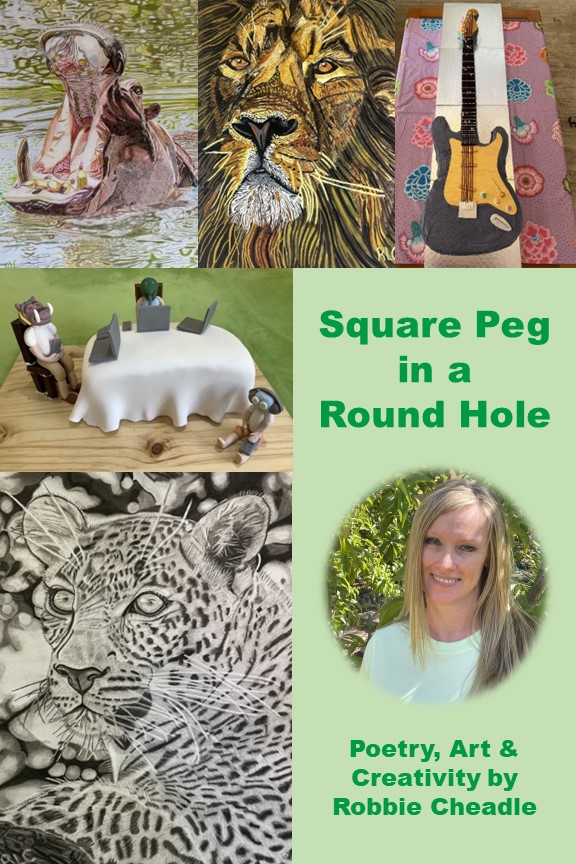
A prolific creator, she will have another book out before I post this. “Square Peg in a Round Hole: Poetry, Art & Creativity”
You can find her books on Amazon sites around the globe. Just search “Robbie Cheadle” for children and youth books – “Roberta Eaton Cheadle” for adult books.
The past is lashed to the present. Hereinafter, all that glisters is not gold.
Roberta Eaton Cheadle’s research into the second Boer War moment of history is exemplary. First lesson – the motivation for the war was gold.
Then I wondered where Roberta’s impetus to write about the second Boer War came from.
Resa – Were you born in South Africa?
Roberta – I was born in Knightsbridge in London, but I have lived most of my life in South Africa.
Resa –When did your family move to South Africa?
My biological father died when I was three months old. My mother came out to South Africa to live with one of her sisters and she met and married my dad, Dean, my adoptive father. I have three half sisters who were all born here, as were my husband and both of my sons. My husband is a direct descendant of Andries Pretorius.
Resa – Ah, Andries Pretorius is mentioned in the book.
Roberta – I am proud about that. I am writing a few short stories currently that features Andries Pretorius and the famous Battle of Blood River.
Resa – Fantastic! I read up on Andres Pretorius. Your pride is no wonder, as is your motive for writing on this.
Click on above banner to read about Andries Pretorius
Resa – Whether in the trenches, a besieged town or in the field you have a point of view from characters on both sides that suffer the war. What was you objective in doing this?
Roberta – The short answer is because I wanted to present an unbiased perspective on the war and allow the reader to decide which perspective was the correct one. The historical archives for the British and Boers differ hugely in their perspectives on this war. I decided that I wanted to present both perspectives.
Resa – I appreciate that.
Roberta – It was only when my developmental editor suggested I expand it into a novel that I decided to bring in Estelle and Robert. This leads me to your question and why I wrote from the perspectives of Pieter, Estelle and Robert.
Resa – Yes, Pieter a Boer farmer, and Robert a British soldier. I recall their meeting.
Roberta- Originally, I wanted the third character which evolved into Estelle, to be the native African perspective. I wasn’t able to find enough reliable historical recorded history to include that perspective as a main thread. That is why there are two native African secondary characters. They are there to present as much of the native African perspective as I could dig up. I used some thesis’s written for local University purposes that delved into the ‘Black Concentration Camps’ as they were called at the time.
I also decided against presenting a native African main character because of the debate about cultural appropriation. I didn’t want to get embroiled in that concept. I wanted the book to be a realistic and fair presentation of this war and provide for considerations of all perspectives.
The details included in AGAHG are as reliable as I could manage given the limited recorded history from the native African perspective.
Dear Readers, please don’t think that this tale is all about men in their trenches, in the field and under siege!
There are many strong female personalities. Estelle, Pieter’s daughter is my favourite person from the past. Estelle is the character I remember best. ( and Michelle). Michelle, in the present day, is an admirable modern woman. As a matter of fact, she is a writer and is researching the Boer War.
Roberta – It interests me that Estelle and Michelle are the most memorable characters for you. For me, it is Pieter, but that is probably because this book started life as a short story which featured just Pieter as the primary character.
Resa – I think that is because Estelle is such an empathetic character, and represents to me what I would be if war was to hit my land – collateral damage. Michelle is the first one we meet, and it is through her the the modern day and paranormal part of the story is told.
Also, you did a good job with the step mother. She’s not a horrible person, far from it. However, her relationship with Estelle makes her unlikeable in a specific area.
Roberta – I am glad you don’t think Marta is a horrible person. She was supposed to be a person who was a product of her time and the suffering by the Boers at the hands of the English. Estelle is collateral damage, as were many of the Boer women and children as well as the native Africans who died in the camps. I think it was worse for the native Africans because it wasn’t their war.
Resa – I want to draw Estelle, as she was before the war. and what she might have looked like on her wedding day, had there been no war.
So, let me start with my warm up drawings of Estelle. I am examining the character, the reasonable accuracy of the clothing and expression. I did these impressions right after I finished the book.
This slideshow requires JavaScript.
Resa – The bonnet is not right for the time and place. However, based on Estelle’s character, I won’t draw her wearing a bonnet. I feel she would be told to wear a bonnet, but then take it off once in the forest gathering wood..
You have described Estelle well in the book, not just her physicality, but her essence. How do you feel about how I’m capturing her age?
Roberta – I think your age profile is correct for Estelle. Girls were raised in a very conservative manner in the Boer community and were very modest and lacking in worldly knowledge.
Resa- So, I tried to get an antique photo feel on my finished drawings using artificial lighting and a bit of editing.
Resa – I wanted the drawing to have movement, but women’s clothes were heavily layered so as not to reveal. I used the wind to blow her apron and hair.
A pinch-pleat ruffle was added just above the bottom of the skirt. That was to weight the skirt and help it not go between the ankles. The bib of the apron is pinned to the blouse, a common apron style then.
Roberta – I am particularly interested in your comment about the ruffles at the bottom of the skirt. I thought they were purely decorative so their practical purpose is new information for me.
Resa – Here’s Estelle’s wedding dress that never was.
Roberta – I love your idea of illustrating how things could have been had there never been a war. Very relevant for our current times too.
I love all of your drawings. It is wonderful that you can draw people like this with all the clothing from a period. I always liked dressmaking and used to make all sorts of dolls dresses when I was a girl. My sisters were talking about them recently and it made me remember.
Resa – You have one non speaking, non human character in your book, the Jacaranda tree. I understand you required a tree with a long lifespan, but why not …. say …. an African Baobab or a Sycamore Fig?
Roberta – I chose a jacaranda tree because they are very pretty and Pretoria is known for them. I had to do research on this point because Jacaranda trees are not native to South Africa and I had to make sure they already existed in Pretoria before the Second Anglo Boer War.
“Historical research shows that jacarandas were imported to South Africa round about 1830 and that the first ones were planted in Pretoria in 1888.“
Why not the Baobab for which Africa is famous? Simply, it is because Baobab trees don’t grow in Pretoria. They grow in Limpopo Province which is where part of the Kruger National Park is found. The rest of the park is in Mpumalanga Province. The same applies to the Sycamore fig tree, it grows in Limpopo, Mpumalanga and KwaZulu-Natal but not in Pretoria.
Resa – I already know that I want a photo of a Jacaranda tree, hopefully one that you took, for the post. Please send me one, if you have one.
Roberta – I took a splendid picture of a jacaranda tree this morning. I had to stop on the side of a busy road, cross over, and make a spectacle of myself to get this picture. It was worth it.
Resa – EGADS! It’s magnificent!
Roberta – Pretoria, the administrative capital of South Africa, is popularly known as Jacaranda City because of the large number of trees, which turn the city blue and purple when they flower in spring.
Resa – In terms of feedback from AG&HG, are readers more intrigued by the Boer War, the present day paranormal story or equally both?
Roberta – Based on the reviews this book has received, the history seems to have drawn readers rather than the modern timeline. I am glad about that as the history was the reason for the book. The modern timeline was to jazz it up and make it more compelling and interesting.
I looked for days through my street art collection. I came up with this beautiful Sunflower that has all of the colors of the flag of South Africa in it.
A mandala is a symbol in Hinduism and Buddhism, representing the Universe. The basic form of most mandalas is a square containing a circle with a center point.
I found this art in a doorway in Ottawa. The artist is unknown to me.
Good-bye Mr. Mandela, the whole world loves you!
Artist: Roberta Hansen
Sunflower pic taken by Resa McConaghy- Ottawa – September 2, 2013
International Village pic taken by: Resa McConaghy – Winnipeg – October 28, 2012

















 Graffiti Lux Art & More
You must be logged in to post a comment.