The Working Poor

Welcome back to another instalment of Making Her Mark! I’m joined by Rebecca Budd, curator of Chasing Art to discuss how the poor were documented, by female artists.

Resa Welcome back, Rebecca! As you point out in your introduction, times were changing. Do you have a main take away from your research?

Rebecca – Thank you for the opportunity to participate in this amazing look back into art history, Resa. One key takeaway from my research is how Geertruydt Roghman, Catherine Brandinn, and Maria Louisa Catherine Cecilia Cosway used their artwork to honour the ordinary moments of life. I was inspired by how these artists challenged societal norms and created space for the voices of the underrepresented.

Resa We’ve had many amazing sisters. Well, let’s have a look at these 3, with art as our window.

16th Century

In the sixteenth century, change was in the air. Northern Europe witnessed a significant cultural shift as the Protestant movement emerged, challenging the established norms of the Catholic Church. This movement advocated for a personal connection with God, eliminating the need for church intercession.

Art responded. Religious imagery became less prominent, as the focus shifted away from traditional depictions of saints and biblical scenes. This transference in artistic focus not only reflects the broader societal changes brought about by the Protestant Reformation but also underscores the importance of recognizing the value of everyday experiences in art.

17th and 18th Century

During the 17th and 18th centuries, the art world was dominated by the portrayal of aristocracy and religious themes, leaving little room for the representation of ordinary people. The prevailing social hierarchy and the patronage system dictated that artists primarily catered to wealthy patrons who commissioned works that glorified their status and achievements. This resulted in a paucity of artworks focusing on the lives and experiences of the common populace, who were often relegated to the background of grand historical or mythological scenes.

Geertruydt Roghman

Dutch – 1625 – 1657

Geetruydt Roghman was born in Amsterdam into a family steeped in artistic tradition. Her upbringing in a creative household, with a father who was an engraver and a great uncle who was a celebrated painter, likely influenced her perspective on art.

A Pioneering Figure

Artists began to explore new themes that reflected the everyday lives of individuals, leading to a rich tapestry of subjects that resonated with the public. Geetruydt Roghman dedicated her work to depicting ordinary women engaged in their daily tasks. Her series not only showcased the realities of their lives but also contributed to a broader understanding of women’s roles in society during the seventeenth century.

Despite her limited output, Geetruydt Roghman’s work offers a glimpse into the lives of women, challenging the norms of her time and highlighting the importance of their stories. This marks her as a pioneering figure in a time when few artists chose to highlight the experiences of women. .

Celebrating Geetruydt Roghman’s Art

Exploring Geetruydt Roghman’s engravings on paper allows us to connect with the essence of humanity, as they capture the nuances of everyday life and the stories of real people who lived before us. These sketches serve as a mirror reflecting our shared experiences, emotions, and struggles, reminding us of the beauty found in simplicity.
By exploring Geetruydt Roghman’s work, we gain understanding into diverse cultures and perspectives, fostering empathy and understanding in a world that often overlooks the significance of the ordinary. Such examination not only celebrates the artist’s talent but also encourages us to appreciate the richness of human existence in all its forms.

I believe that Geetruydt Roghman invites us to appreciate the beauty and significance of the ordinary, enriching the narrative of art history.

“Making Her Mark” exhibition encourages a reevaluation of her work, which advocates for the recognition of everyday life as a worthy subject of artistic exploration.

Note how small these engravings on paper are. They are in 8 x 10 frames.

Counter clockwise from the top: Young Girl Sewing – The Dressmakers – Woman Spinning

1640 – 1647

Resa Amazing art history, Rebecca. Now, on to Catherine Brandinn! You had some difficulty gathering information about her. For a while it looked like all we were going to have to remember her by was her art. Then you discovered Johann Christian Brand‘s name appears alongside herswhich seems to muddy the waters. Do you think this is another case of the disenfranchisement of women in the arts?

Rebecca – I was fascinated by the connection between Catherine Brandinn and Johann Christian Brand, which highlights the complex interplay of gender and recognition in the art world. Without question, Catherine Brandinn’s artistic legacy has often been overshadowed by the presence of Johann Christian Brand, whose name frequently appears alongside hers.

This phenomenon raises important questions about the historical disenfranchisement of women in the arts. The association of Johann with Catherine could suggest a similar pattern, where her identity and artistic achievements are overshadowed by his prominence.

However, I believe that there may be another explanation. Consider that Johann Christian Brand’s recognition may have been a means of validating Catherine’s work. In a time when female artists struggled for acknowledgment, the inclusion of a well-known male figure could lend credibility to her art. Consequently, while Johann’s association with Catherine may complicate her legacy, it could also provide a platform for her art to gain the recognition it deserves.

Resa You make a good point how difficult it was for women to be recognized in the arts. We may never know of Johann Christian Brand’s intent. However, her art is remembering her, not him.

Catherine Brandinn

Austrian? 18th century

The history of painting has predominantly celebrated the lives of the elite and significant events, often neglecting the stories of ordinary people. This selective representation raises questions about the value placed on different experiences and the narratives that have shaped our understanding of the past. The absence of everyday moments in art suggests a hierarchy of importance, where only the lives of the wealthy and powerful are deemed worthy of immortalization on canvas.

If painters had chosen to depict ordinary moments, our historical narrative would be richer and more inclusive. Imagine a world where scenes of daily life, community gatherings, and simple joys were captured alongside royal portraits and grand battles. Such representations would not only provide a more comprehensive view of society but also highlight the shared human experience, fostering a deeper connection to our collective history.

The transition in art from religious themes and the portrayal of affluent patrons to the representation of ordinary people began during the Renaissance and continued into the Baroque period. This shift marked a significant change in the subject matter of paintings, as artists started to explore the lives of the common man, and the beauty found in everyday activities. The rise of humanism encouraged artists to focus on individual experiences and emotions, leading to a more relatable and accessible form of art that resonated with a broader audience.

Catherine Brandinn portrayed ordinary people, capturing the essence of everyday life through her unique artistic lens. Her work often reflects a deep appreciation for the beauty found in the mundane, showcasing individuals engaged in daily activities. Her name is intricately linked to artist, Johann Christian Brand. This connection raises questions about her identity and the role this artist played in her life. When the artwork of Catherine Brandinn is viewed, Johann Christian’s name often appears alongside hers, suggesting that her narrative is largely defined through her relationship with this artist. This intertwining of identities hints at a deeper story waiting to be uncovered.

Catherine Brandinn’s painting, “Mädel mit Waldholz (Peasant Girl Carrying Wood),” created in 1775, captures a poignant moment in rural life. The artwork portrays a young peasant girl, her delicate frame burdened by a large bundle of wood, symbolizing the labour and resilience of women in agrarian societies. Catherine Brandinn’s use of soft colours in her engravings on paper evokes a sense of warmth and intimacy, inviting us to appreciate the girl’s strength and determination amidst her modest surroundings. The composition of the painting draws attention to the girl’s expression, which reflects a mixture of pride and fatigue.

“Mädel mit Waldholz” stands as a testament to the often-overlooked contributions of women in history. By focusing on the everyday tasks of a peasant girl, Catherine Brandinn elevates her subject to a figure of dignity and importance. This image encourages us to reflect on the narratives of those who have historically been marginalized in the art world and society at large.

ResaSo Rebecca, we move on to Maria Louisa Catherine Cecilia Cosway.  You mentioned that in researching Maria Louisa Cosway, you saw lots of her artwork, but not this one particular work Home Industrythat showed at “Making Her Mark”Do you think I’m crazy to think that we have something special here?

Rebecca – I don’t think you’re crazy at all, Resa. I am beyond thrilled that you were able to capture Home Industry in a photo. You have an amazing ability to find art treasures wherever you go!! Home Industry” is a gem!!

Maria Louisa Catherine Cecilia Cosway

English – 1760 – 1838

Maria Louisa Catherine Cecilia Cosway, an accomplished artist of the late 18th and early 19th centuries, was known for her diverse portfolio that included both prominent figures and ordinary individuals. Born in 1760 in Florence, Italy, she moved to England where she became a prominent portrait painter. Her ability to portray significant historical figures speaks to her talent and the esteem in which she was held in artistic circles.

A Progressive Artist

Maria Cosway’s artistry extended beyond the elite, as she sought to represent the lives of everyday people in her work. This inclination towards inclusivity allowed her to bridge the gap between different social classes, showcasing the beauty and dignity of ordinary life. Through her artwork, she celebrated the humanity of her subjects, making her art accessible and relatable to a broader audience. This commitment to portraying a diverse array of individuals marked her as a progressive artist for her time.

Home Industry tells a story of resilience and the quiet strength found within the home, serving as a reminder of the essential work that occurs beyond the public eye. Through her portrayal, she elevates the mundane to the extraordinary, encouraging us to recognize and honour the stories woven into the tapestry of domestic labour. It is a nostalgic reminder of a time when craftsmanship flourished within the domestic sphere, emphasizing the value of handmade goods and the skills passed down through generations.

Home Industry (1800) Pen and Ink Wash

We are invited to reflect on the importance of labour in a rapidly changing world and consider the implications of progress on the cultural fabric of society. During the late 18th and early 19th centuries, when Maria Cosway created this piece, the landscape of work was undergoing significant transformation due to the onset of industrialization.

Cottage industries, which had long been a staple of rural economies, faced increasing threats from mechanization and factory production.

This piece tells the story of a specific moment in time, evoking a narrative about the challenges faced by families during the industrial revolution. As industrialization encroached upon traditional ways of life, this artwork stands as a testament to the resilience of home-based labourers.

Home Industry also speaks to our time in history and is a relevant reflection on the balance between innovation and tradition.

Resa – Wow! Thank you Rebecca! Your co-hosting here on the “Making Her Mark” series has made it a much richer experience. Still, there’s lots to go. May I be allowed to try and tempt you to co-host another time, no rush, just sometime in the future? I have some juicy topics and artists I can present to you!

Rebecca– Hi Resa! Thank you so much for your kind words! I’ve truly enjoyed co-hosting the “Making Her Mark” series with you, and I would love to collaborate again in the future. Your topics and artist suggestions sound exciting, and I can’t wait to hear more about them. Let’s definitely keep the conversation going!

Resa – Yahoo! You know Rebecca, we might just be artoholics!

Click on above banner for source information!

Photos taken by & © Resa McConaghy – May 14, 2024

Art Gallery of Ontario, Toronto, Canada

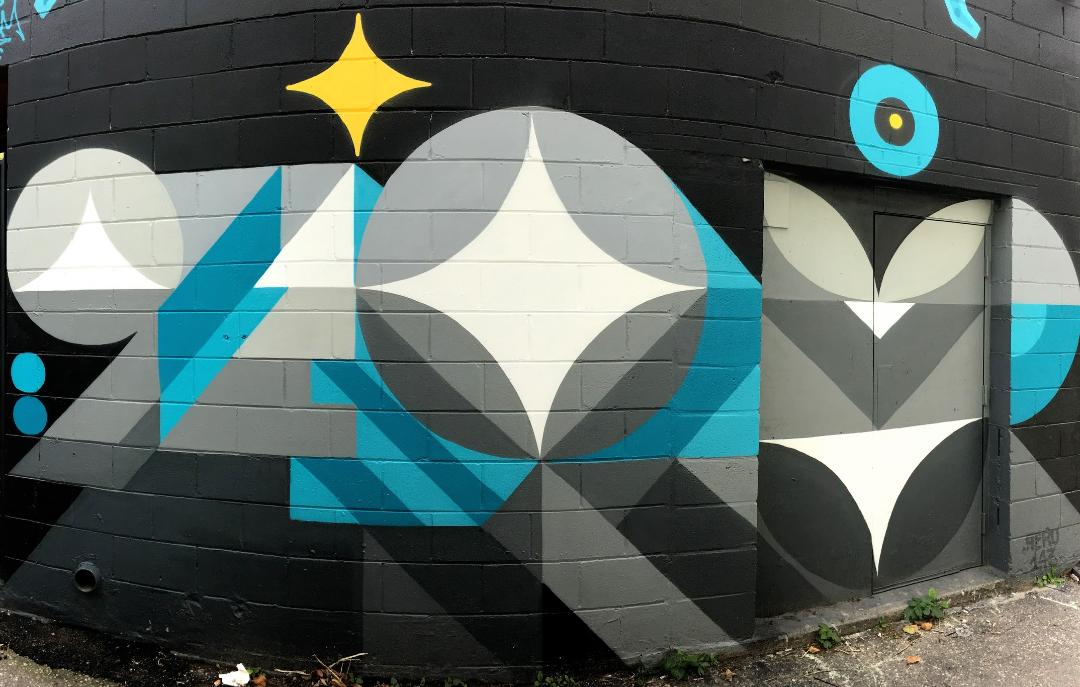
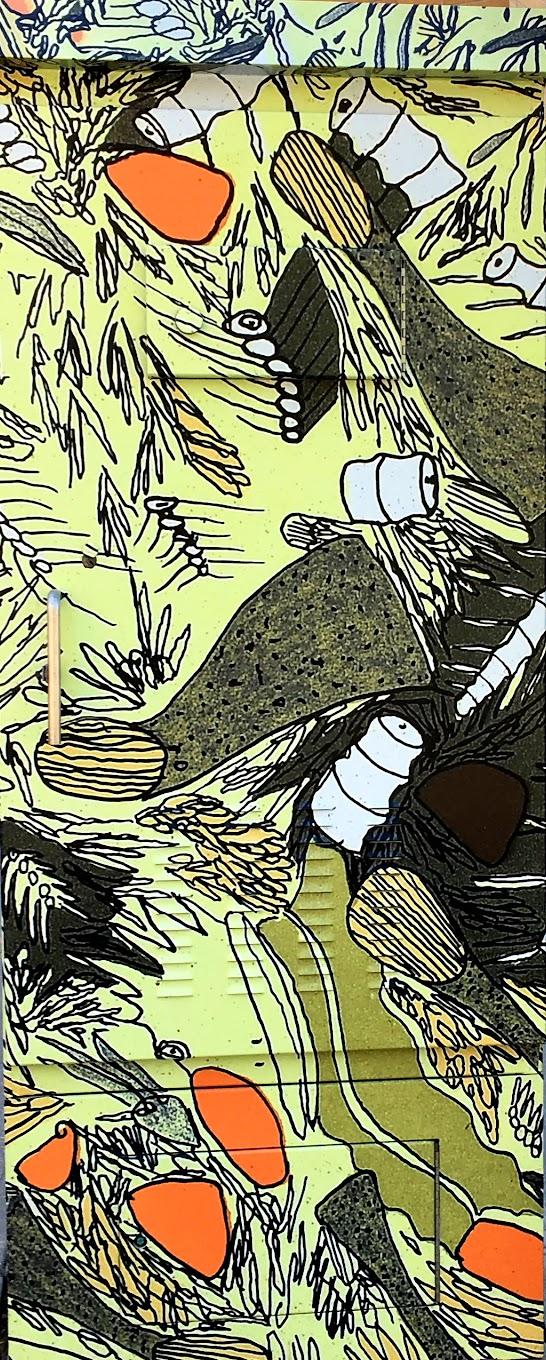
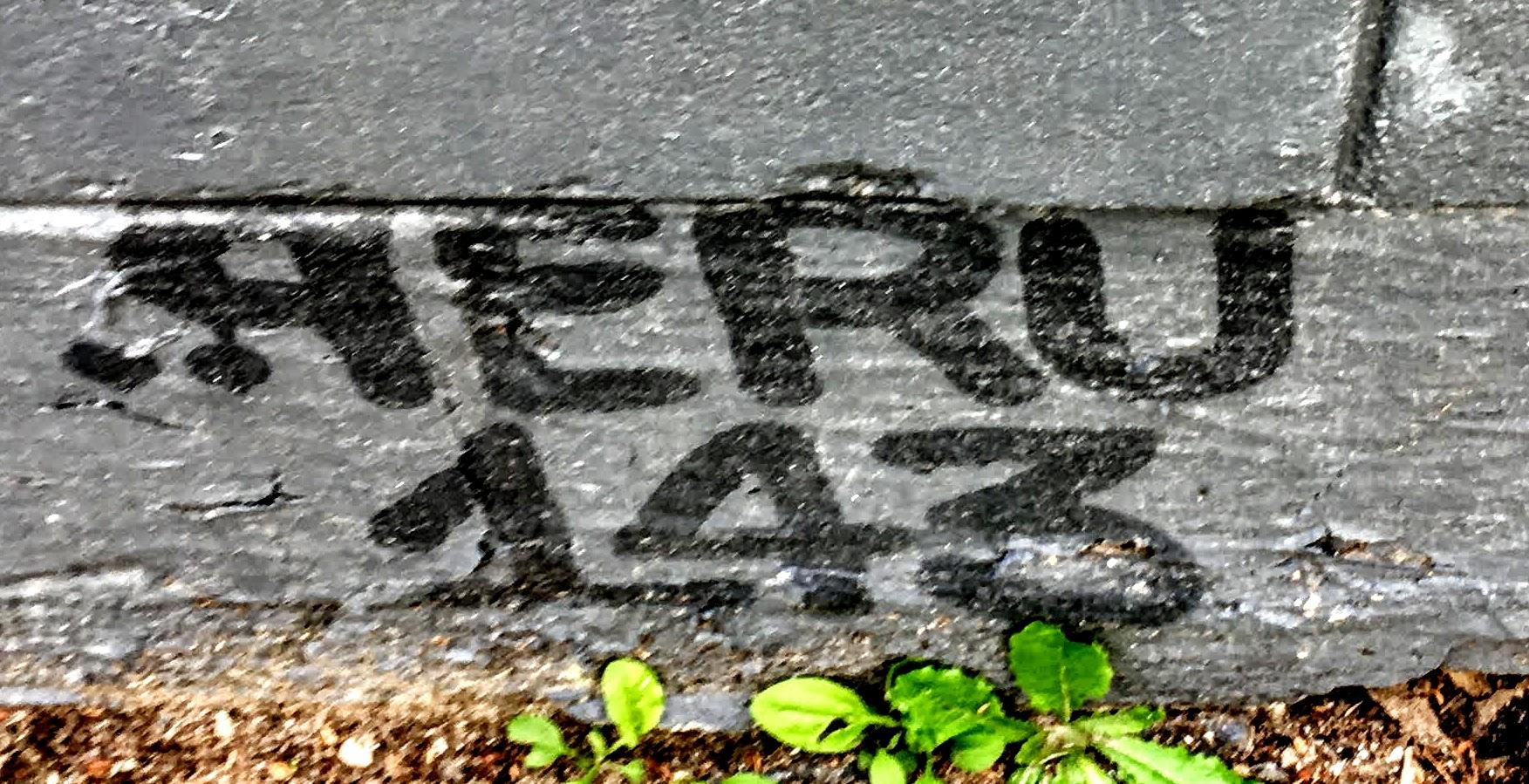
The Hera Box

I know not all dog art I find is Hera, but I think it is!

Hera is Marina’s sweet girl.

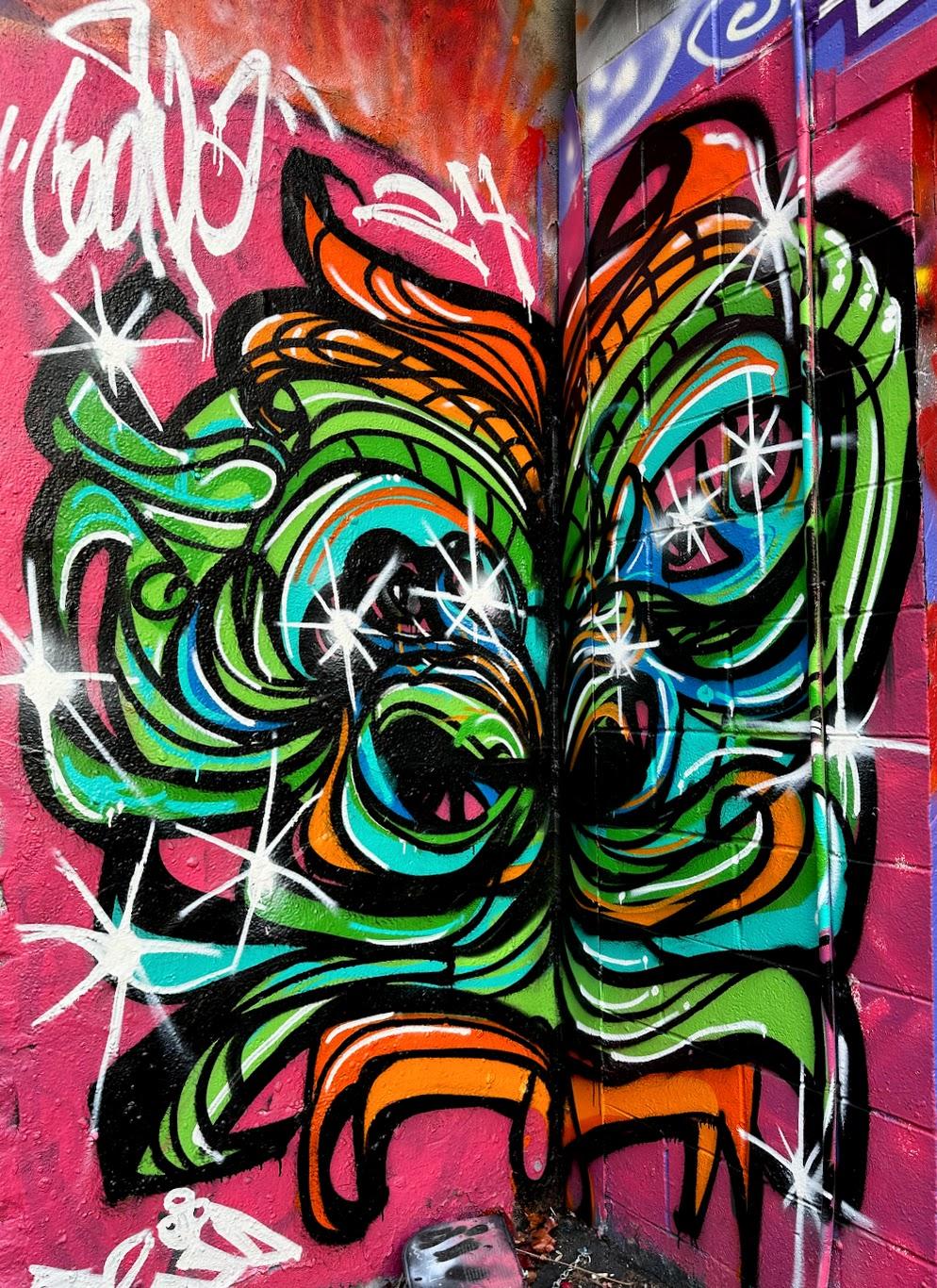
Working our way around the box!

The sun glared on the body of the orange legs guy side. So, I present it 2 pieces, the blob corners the top.

I’m bats for the bat!

Back to the beginning!

Pics taken by Resa- August 29, 2024

Toronto, Canada

The Artist:

BONUS BOX PERFORMANCE

Spiderman has been performing in the streets of Toronto for about 10 years.

I was lucky enough to catch him atop a painted box!

Only 10 seconds!

Muhammad Ali

On February 25, 1964

Cassius Clay, knocked out Sonny Liston for his first world title in boxing.

On March 6, 1964

Cassius Clay changed his name to Muhammad Ali

At the Ali/Liston (1964) fight was a photographer, Neil Leifer.

Leifer took what became an iconic photograph. You can buy a print from the photographer’s website, if you can afford it.

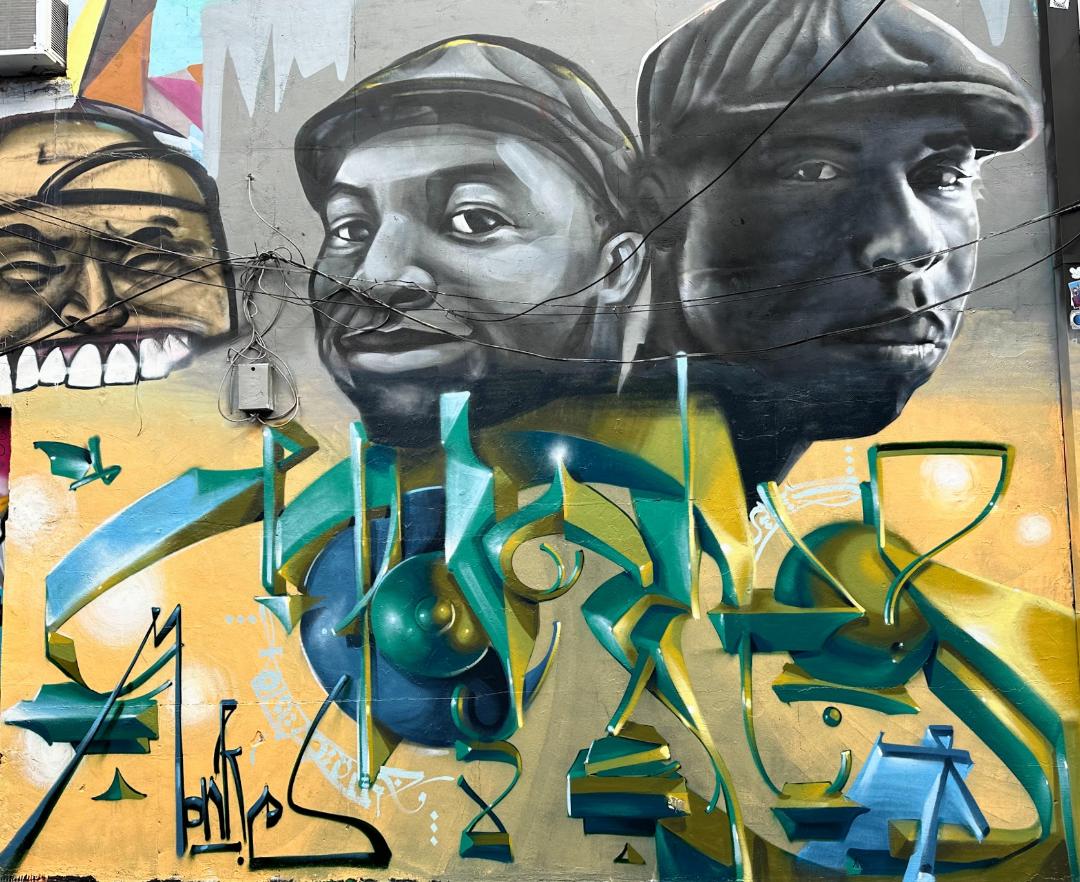
Artist, The Half Decent, painted a massive mural of it in a narrow ally that was impossible to get a straight on shot in.

The above slide show was taken from the most straight across vantage point, the indent for a fire escape.

Float Like A Butterfly, Sting Like A Bee

That is a statement made famous by Ali.

     I designed the costumes for a movie "Strange Justice", a docu-drama of the Anita Hill/Clarence Thomas United States senate hearings. The actor playing Clarence Thomas was Delroy Lindo. 
We were shooting backwards a decade, so I had his suits custom tailored. A suit was ready to be fit the day he arrived for prep. The fitting went well, but he had 1 request. Could I make the pockets really deep, to fit his large hands?


I took hand measurements and sent the alterations to the tailor, with a special note about the pockets. Everything runs on a last minute seat of your pants timing in film. The suit was picked up from the tailor the night before he played.


The morning Delroy played, I got called to his winnie*. He was livid. His hands would not fit into his pockets. They barely made it half way to his wrist. I walked to set with him while he tore a small strip off me. I had failed his simple request.


He didn't play again for 2 more days. So I personally took the suit into the tailor, who had not and still refused to make the pockets bigger. It was a tailoring no-no. I can be quite "assertive" when needed, and the pockets were corrected.

A couple of days after that I got called to his winnie, again. He looked me square in the eyes, and sincerely apologized for his behaviour about the pockets.

I said something like.. aww that's okay.

He said - When someone makes a sincere, honest and heart felt apology to you, you need to sincerely accept the apology, if in fact you are accepting it.

Eyes locked, I said Delroy, I honestly accept your apology, and I thank you for it. He said he appreciated my acceptance. We were best buddies on the shoot after that. He would hold talking on his phone to wish me a good morning, air high fives across a parking lots and always genuine smiles.

On the last day of the shoot, he gave gifts to some of the crew. I still remember him handing me a tiny jewelry box, opening it to find a marquesite & sterling bee brooch inside. I looked up and thanked him, all the while thinking “Sting like a bee- Float like a butterfly, sting like a bee".

I still have the brooch, and I cannot see an image of Ali without thinking of Delroy Lindo, and that honest apologies are 2 sided.

I close with a slideshow of demented angled shots form the narrow alley.

I went back to the alley a second time, as I had the warm filter on, accidentally. The alley was still narrow.

Pics taken by Resa – 2024

Toronto, Canada

The Artist:

winnie*a Winnebago motor home used for stars’ dressing rooms on location shoots.

Ukrainian Mural

In one of my alley wanderings I came upon this fabulous mural, albeit unfinished.

I kept returning. It remained unfinished, but the scaffolding (in slideshow below) kept moving.

On one visit, I met the business owners next door. From them, I learned that the mural had been started about a year and a half earlier, but the artist had been in an accident.

His injuries required lengthy healing, and he had just recently returned to work on the mural.

Finally one day in November, it was finished. I shot over a hundred pics. Unfortunately, I had to return in December.

I told Trent the day had been dark with black clouds, and the pics came out really warm. I would return on a brighter day.

Confession; like an idiot I accidentally had the camera on a warm setting.

All in all I must have returned to the site 8 times.

Returning to the unfinished mural had become like reading a great book, and I was sad when it was finished.

I love intricate murals, as there is so much detail to take pics of.

The slideshow on the right, presents the details I languished in.

I was going to pick a fave, but I kept changing my mind.

At some point I realized it was the back door to the Schevchenko Museum. The sign was always there, but I ignored it because it was all about the mural, for me.

About the Schevchenko Museum

Taras Schevchenko (1814 – 1861) Ukrainian artist, poet & thinker. Once imprisoned by Russia for his views, his rich creative legacy remembers him.

I was dazed by the collection of images and history on the website. I’ll be visiting over the winter months.

Left: Self portrait – click on portrait to visit museum website.

There were always cars parked on the site.

Sometimes they were clean (ish), and I was able to get some cool reflections.

The greenish one at the end is actually reflecting next door artwork.

Thank You to Trent for this Song!

A Million Miles Away

V1
He said, “You’re a threat”
As his tanks gathered on the borderline

He said, “You must be stopped!”
As his missiles started flying

He shook his fist
And his countrymen fell in line

“It’s us or them”
And our babies started dying

Chorus

V2
Another town, another city
Turned to rubble over night

In darken cellars the children
With each bomb blast, shake in fright

Refugees and wounded
Walk and crawl the road of flight

Is anybody out there
To listen to our plight?

Chorus

It’s a million miles away

CHORUS

How’s your work?
And how’s the weather?
How’s your mom and dad?

The traffic sucks
It started raining
So things have been real bad (1)
So things are really bad (2)

My pickup’s dirty
The dog’s on the couch
Tik Tok has been a bore

The football game
On my 80-inch TV
Was postponed for some stupid war
A million miles away


About the Song in Trent’s Words

Another new song, and, yes, another dark one. The four-note motif that runs through the verse might remind you of “Carol of the Bells”. I was thinking of the music that that carol was based on, Shchedryk, a Ukrainian New Years song arranged by composer Mykola Leontovych. Those four notes, though, are thought to be ancient, going back to before Christianity was introduced to Ukraine.

By this motif you may guess that the “he” in the first verse is “Putin” and the country being invaded is “Ukraine”. You are partially right – it is inspired by that war, but the idea is any war, particularly a war where a dominant power invades a lesser one, and how people here can care less about the lives lost. Anyway, I will let the song speak for itself, except that I want to say I think I did a pretty good job channeling my inner “Bob” on the first chorus…

Pics taken by Resa – July – December, 2024

Toronto, Canada

The Artist:

Alley Location Images

Skart

Skateboard & art = Skart

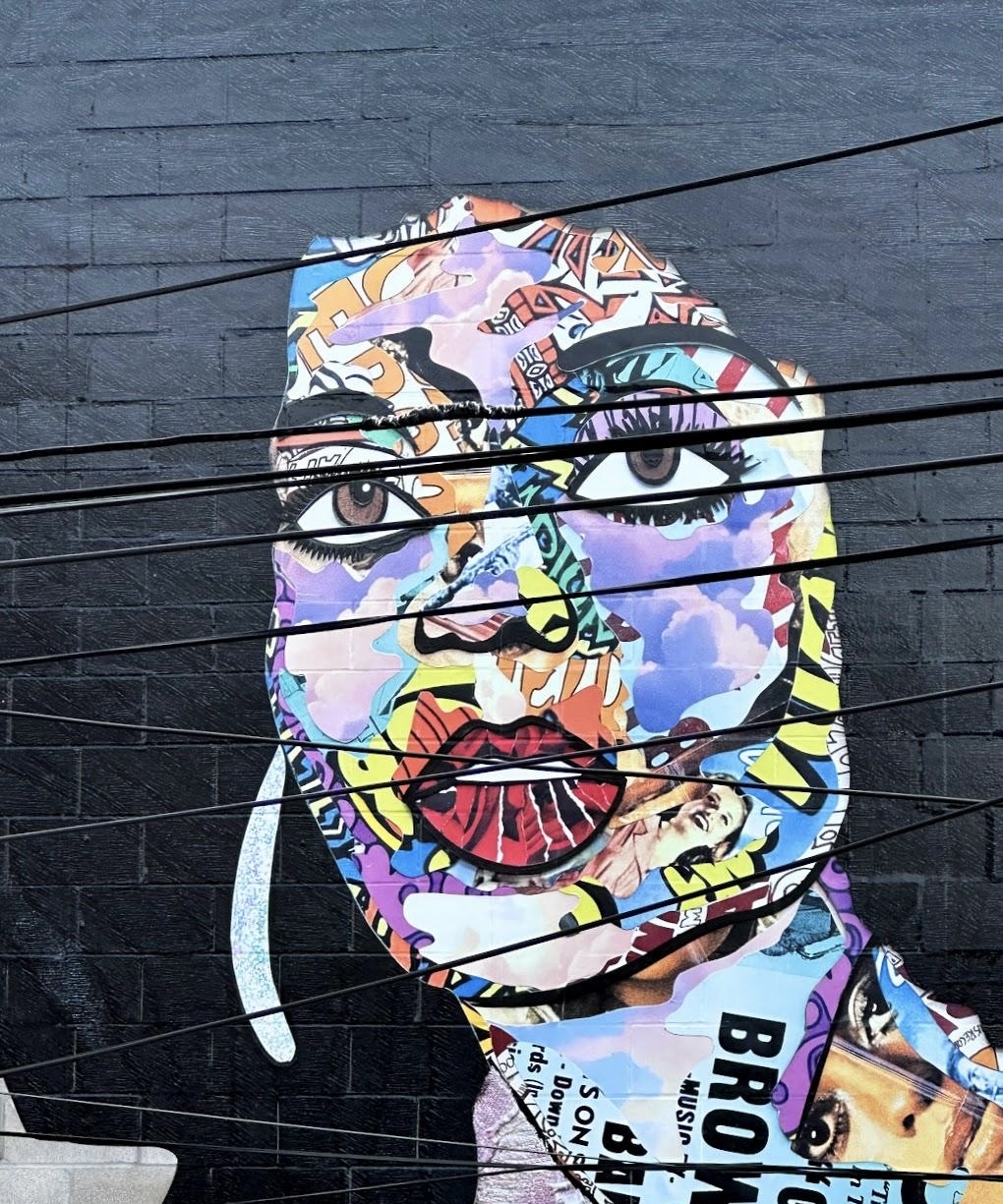
I was almost out of Graffiti Alley..

.. when I noticed these small bits of art.

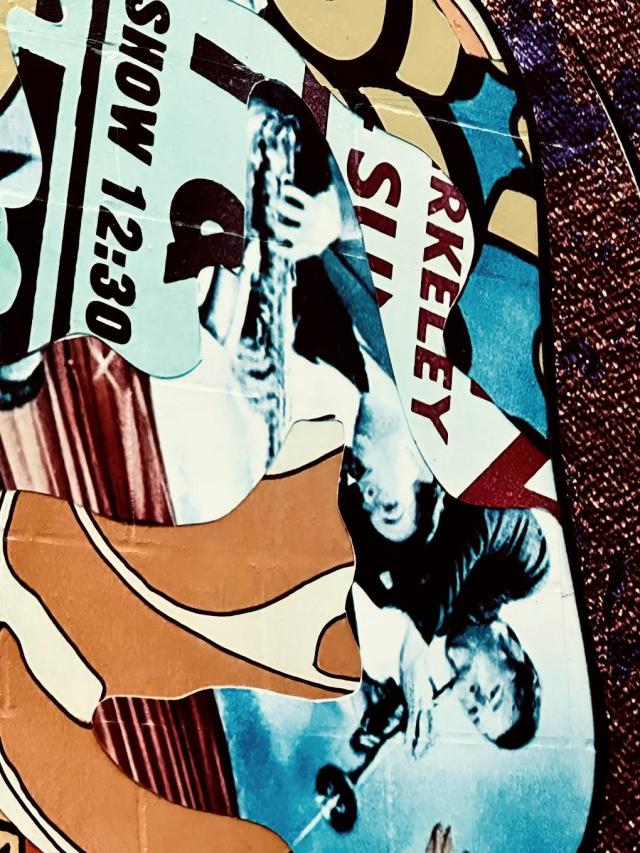
Faces over abstract, on what appeared to be the toe end of skateboards,

were screwed to poles and posts.

It was in the Grarten! Graffiti & Art & Garden = Grarten.

Love it in the Grarten, where art grows like wild flowers, so I went back and found more.


Clad in dirty shoes and shorts
his face streaked with dirt,
he swoops past like a bird in flight
thrilled with disaster to flirt.
***
Like nothing you’ve ever seen before
the skateboard on which he rides,
a platform piled high with recyclables
no one his wild recklessness chides.
***
A pair of dark eyes, wild and bright
glow beneath his unkempt crop,
he takes a sharp corner rather wide
there is no-one to make him stop.
***
We find our pleasures in different ways
it’s human nature to laugh and enjoy,
he’s found a way to make the most of life
treating his load like a favourite toy.


Roberta Eton Cheadle

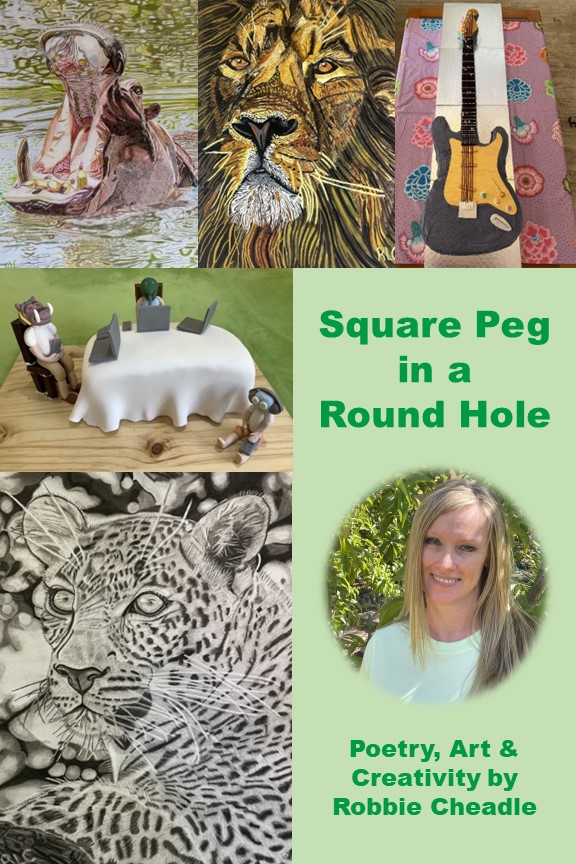
Robbie, who wrote The Silver Lining is a fabulous writer, artist and photographer.

You can skateboard virtually to either of her 2 blog sites. ROBBIE’S INSPIRATION

OR ROBERTA WRITES

Some of the pieces had a cool red and white sticker on them.

I saved my fave piece for last. It was the only face on what looked like a … breadboard?

Now, I think- the heel end of a skateboard?

Pics taken by Resa – September 17, 2024

Toronto, Canada

The Artist: Chris Dyer

Click on pic! Go to website!

Peace 🕊 on Earth

It’s the Only Thing on My Holiday Wish List

As the year draws to a close, I’m excited because days are getting longer, and I have a new Art Gown to share. She’s super special, so pop by Art Gowns on December 27th. It’s a holiday feast for the eyes.

In the meantime I wish all the very best, no matter what you celebrate this December!

Christmas

Holy Family with Saints Margaret and Francis (1578- oil on canvas) – Lavinia Fontana (1552 – 1614) Italian

Hanukkah

As I don’t have a photo of a Menorah, here’s one from Pexels. However, I have a photo of a Tora binder, rimmonim and yad. (below)

Torah binder (1696/97) Simcha, wife of Levi of Buttrio – silk embroidered with silk thread

Kwanza

Kwanzaa – an annual celebration of  African-American culture, culminating in Karamu, a communal feast. (December 26 to January 1)

Yule

Yule is one of the oldest winter solstice festivals, with origins among the ancient Norse thousands of years ago. That would be what the Vikings celebrated.

Well, I don’t have any Vikings, but I just happen to have some VI-QUEENS.

Big thank you’s to my models – Holly, Gigi, Dale, Shey, Marina & Rebecca

There are probably other celebrations/or respects. Best wishes to all! For all here’s Holly’s Tangle-Heart in a magic sky. It’s from © Timothy Price. Thank you for letting me use your photos dear Tim!

Comments are closed, so I can yet again attempt to catch up on visiting blogs.

However, comments will be open on December 27th, on Art Gowns.

Holy Family with Saints Margaret and Francis (1578- oil on canvas) – Lavinia Fontana and Tora binder (Simcha, wife of Levi of Buttrio ) , rimmonim and yad – from Making Her Mark exhibition, Toronto, Canada, 2024. Photos © Resa McConaghy

Kwanza street art pic, VI-QUEENS art & pics, Art Gown & photo © Resa McConaghy.

The Healing Garden

There had been some cool alley finds on this hot day, but not a real prize.

Then I turned into a shady alley, sweet smelling and comforting.

It was a Healing Garden.

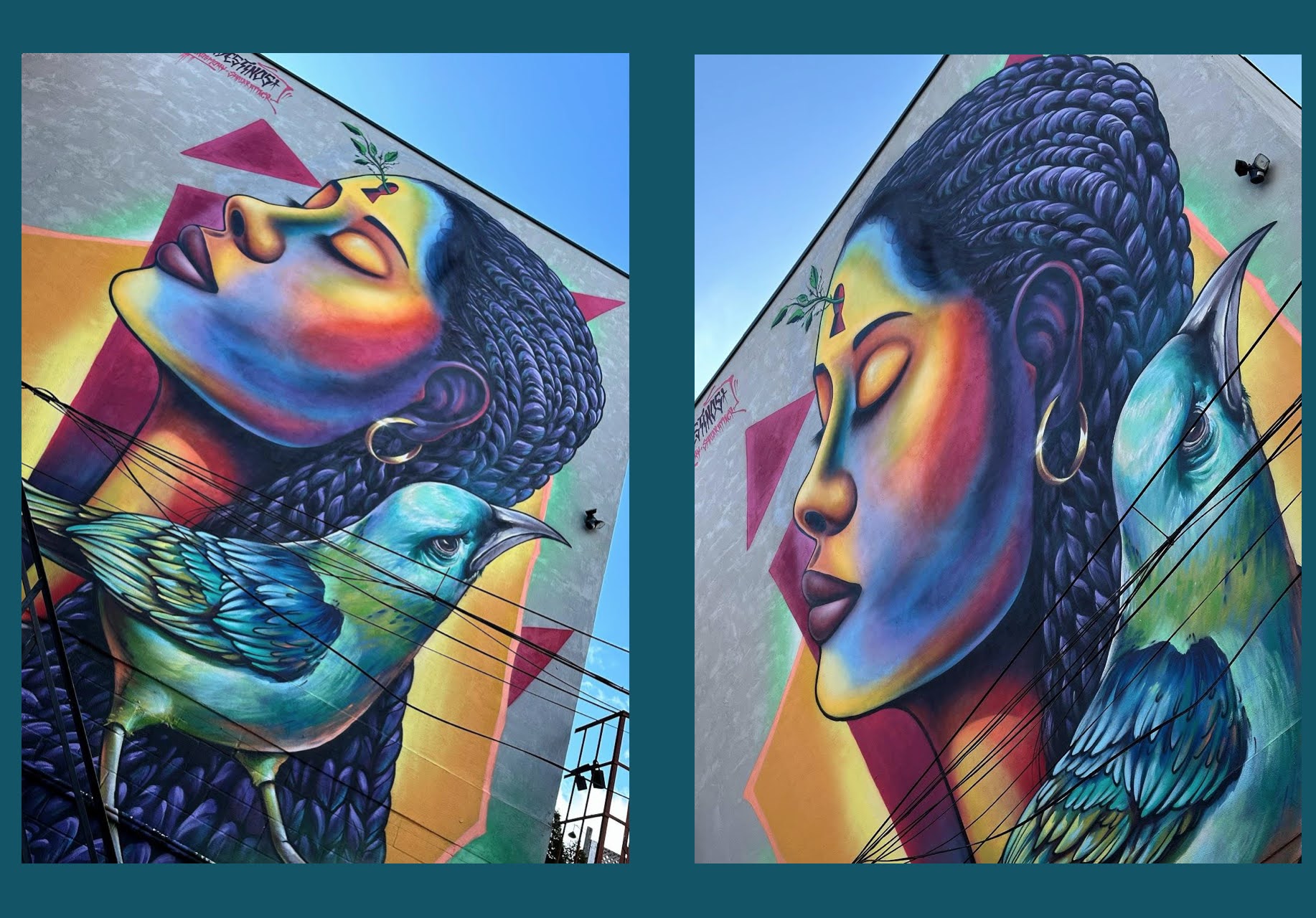
Turns out this alley is one of 2 Healing Gardens. A concept designed by artist Monica Wickeler & Indigenous artist Nyle Miigizi, the alley is filled with native plants and healing medicines. The Anishinaabe Nation’s story of the gift of Jewelweed was handed down to Nyle from his grandmother, Verna Patronella Johnston.

Mural artist Gosia Komorski was hired to paint.

Healing… we can all use some right now.

Best to be whole and positive, as we go into what seems will be a hectic new year.

Now it’s winter, but I fully intend to find the other Healing Garden, in late spring when the herbs are happening.

Pics taken by Resa – August 30, 2024

Toronto, Canada

Mural Artist:

If you click on the document below, you can read about the project. Pardon for the sloppy shot!

This song is not about a Healing Garden, but it feels like one. (Yes, the image is moving!)