A Ghost and His Gold – by: Roberta Eaton Cheadle

 The past is lashed to the present. Hereinafter, all that glisters is not gold. 

Roberta Eaton Cheadle’s research into the second Boer War moment of history is exemplary. First lesson –  the motivation for the war was gold.

Then I wondered where Roberta’s impetus to write about the second Boer War came from.

Resa – Were you born in South Africa? 

Roberta – I was born in Knightsbridge in London, but I have lived most of my life in South Africa.

Resa – When did your family move to South Africa? 

My biological father died when I was three months old. My mother came out to South Africa to live with one of her sisters and she met and married my dad, Dean, my adoptive father.  I have three half sisters who were all born here, as were my husband and both of my sons. My husband is a direct descendant of Andries Pretorius. 

Resa – Ah, Andries Pretorius is mentioned in the book.

Roberta – I am proud about that. I am writing a few short stories currently that features Andries Pretorius and the famous Battle of Blood River.

Resa – Fantastic! I read up on Andres Pretorius. Your pride is no wonder, as is your motive for writing on this.

Click on above banner to read about Andries Pretorius

Resa – Whether in the trenches, a besieged town or in the field you have a point of view from characters on both sides that suffer the war. What was you objective in doing this?

Roberta – The short answer is because I wanted to present an unbiased perspective on the war and allow the reader to decide which perspective was the correct one. The historical archives for the British and Boers differ hugely in their perspectives on this war. I decided that I wanted to present both perspectives.

Resa – I appreciate that.

Roberta – It was only when my developmental editor suggested I expand it into a novel that I decided to bring in Estelle and Robert. This leads me to your question and why I wrote from the perspectives of Pieter, Estelle and Robert.

Resa – Yes, Pieter a Boer farmer, and Robert a British soldier. I recall their meeting.

Roberta- Originally, I wanted the third character which evolved into Estelle, to be the native African perspective. I wasn’t able to find enough reliable historical recorded history to include that perspective as a main thread. That is why there are two native African secondary characters. They are there to present as much of the native African perspective as I could dig up. I used some thesis’s written for local University purposes that delved into the ‘Black Concentration Camps’ as they were called at the time.

I also decided against presenting a native African main character because of the debate about cultural appropriation. I didn’t want to get embroiled in that concept. I wanted the book to be a realistic and fair presentation of this war and provide for considerations of all perspectives.

The details included in AGAHG are as reliable as I could manage given the limited recorded history from the native African perspective.

Dear Readers, please don’t think that this tale is all about men in their trenches, in the field and under siege!

There are many strong female personalities. Estelle, Pieter’s daughter is my favourite person from the past. Estelle is the character I remember best. ( and Michelle).  Michelle, in the present day, is an admirable modern woman. As a matter of fact, she is a writer and is researching the Boer War.

Roberta – It interests me that Estelle and Michelle are the most memorable characters for you. For me, it is Pieter, but that is probably because this book started life as a short story which featured just Pieter as the  primary character.

Resa – I think that is because Estelle is such an empathetic character, and represents to me what I would be if war was to hit my land – collateral damage. Michelle is the first one we meet, and it is through her the the modern day and paranormal part of the story is told.

Also, you did a good job with the step mother. She’s not a horrible person, far from it. However, her relationship with Estelle makes her unlikeable in a specific area. 

Roberta – I am glad you don’t think Marta is a horrible person. She was supposed to be a person who was a product of her time and the suffering by the Boers at the hands of the English. Estelle is collateral damage, as were many of the Boer women and children as well as the native Africans who died in the camps. I think it was worse for the native Africans because it wasn’t their war.

Resa –  I want to draw Estelle, as she was before the war. and what she might have looked like on her wedding day, had there been no war. 

So, let me start with my warm up drawings of Estelle. I am examining the character, the reasonable accuracy of the clothing and expression. I did these impressions right after I finished the book. 

This slideshow requires JavaScript.

Resa –  The bonnet is not right for the time and place. However, based on Estelle’s character, I won’t draw her wearing a bonnet. I feel she would be told to wear a bonnet, but then take it off once in the forest gathering wood..

You have described Estelle well in the book, not just her physicality, but her essence. How do you feel about how I’m capturing her age?

Roberta – I think your age profile is correct for Estelle. Girls were raised in a very conservative manner in the Boer community and were very modest and lacking in worldly knowledge.

Resa- So, I tried to get an antique photo feel on my finished drawings using artificial lighting and a bit of editing.

Resa – I wanted the drawing to have movement, but women’s clothes were heavily layered so as not to reveal. I used the wind to blow her apron and hair.
A pinch-pleat ruffle was added just above the bottom of the skirt. That was to weight the skirt and help it not go between the ankles. The bib of the apron is pinned to the blouse, a common apron style then.

Roberta – I am particularly interested in your comment about the ruffles at the bottom of the skirt. I thought they were purely decorative so their practical purpose is new information for me.

Resa – Here’s Estelle’s wedding dress that never was.

Roberta – I love your idea of illustrating how things could have been had there never been a war. Very relevant for our current times too.

I love all of your drawings. It is wonderful that you can draw people like this with all the clothing from a period. I always liked dressmaking and used to make all sorts of dolls dresses when I was a girl. My sisters were talking about them recently and it made me remember.

Resa – You have one non speaking, non human character in your book, the Jacaranda tree. I understand you required a tree with a long lifespan, but why not …. say …. an African Baobab or a Sycamore Fig?

Roberta – I chose a jacaranda tree because they are very pretty and Pretoria is known for them. I had to do research on this point because Jacaranda trees are not native to South Africa and I had to make sure they already existed in Pretoria before the Second Anglo Boer War.

Historical research shows that jacarandas were imported to South Africa round about 1830 and that the first ones were planted in Pretoria in 1888.

Why not the Baobab for which Africa is famous? Simply, it is because Baobab trees don’t grow in Pretoria. They grow in Limpopo Province which is where part of the Kruger National Park is found. The rest of the park is in Mpumalanga Province. The same applies to the Sycamore fig tree, it grows in Limpopo, Mpumalanga and KwaZulu-Natal but not in Pretoria.

Resa – I already know that I want a photo of a Jacaranda tree, hopefully one that you took, for the post. Please send me one, if you have one.

Roberta – I took a splendid picture of a jacaranda tree this morning. I had to stop on the side of a busy road, cross over, and make a spectacle of myself to get this picture. It was worth it.

Resa – EGADS! It’s magnificent!

Roberta – Pretoria, the administrative capital of South Africa, is popularly known as Jacaranda City because of the large number of trees, which turn the city blue and purple when they flower in spring.  

Resa – In terms of feedback from AG&HG, are readers more intrigued by the Boer War, the present day paranormal story or equally both?

Roberta – Based on the reviews this book has received, the history seems to have drawn readers rather than the modern timeline. I am glad about that as the history was the reason for the book. The modern timeline was to jazz it up and make it more compelling and interesting.

Resa – Roberta, Thank you!

Visit Robbie’s Blogs: Roberta Writes & Robbies Inspiration

You can buy A Ghost And His Gold by clicking on the vendors names below.

I bought mine on KOBO

Or Buy it on AMAZON

Search Roberta Eaton Cheadle & Robbie Cheadle on Amazon for more of her books, including anthologies.

Go to TSL Publications Robbie Cheadle Author Page for her children’s books and more. TSL also sells her books under Robbie Cheadle & Roberta Eaton Cheadle on LULU
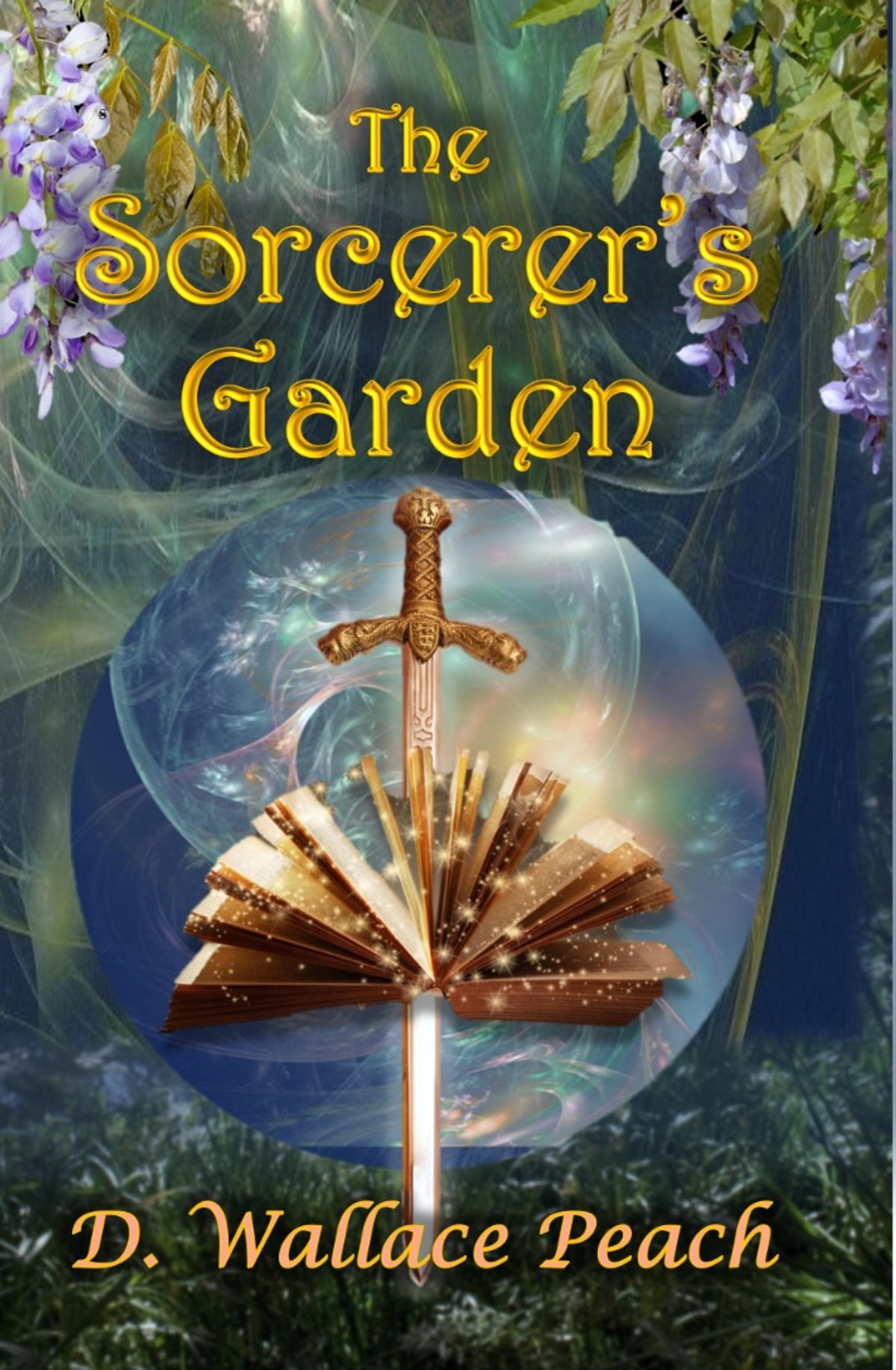
The Sorcerer’s Garden – D. Wallace Peach

Wow! Fantasy adventure, mystery and reality all rolled into one. Lillian might be looking into a crystal ball, but all else can only see what she, the Dreamer, reveals.

Peach has us looking through that crystal ball revealing window, always. Yet, are we looking into a garden filled with verdant life, or from the garden into a darkness? Perhaps death? In fact, the author takes us to both sides & then a third.

The saga opens in a time long ago. Two brothers, Dustin and Cody, slay a fire breathing dragon. It’s a well planned battle, and the brothers emerge heroes.

Peach quickly takes us to a second revealing window. We are in a different time. Place?  I was compelled to ask the author a few questions.

Peach – Well, I haven’t ever visited a catacomb or a crypt, though I’d like to! I tend to collect images randomly from the internet and use them to gather cool details – like the slant of light or the shape of columns or the pattern of tiles on the floor.

The Sorcerer’s Garden was a little different because it takes place in Portland, Oregon, near where I live. I used the Pittock Mansion, a real place, as Dustin and Cody’s mansion home. To prepare for the book, I took a private tour of the building (now a museum) and got to explore the areas the public doesn’t normally get to visit.

I took tons of notes, and collected photos and floor plans. Lillian’s music room in the book is exactly as it looked in the house. The tour included the basement, which was a little creepy and dusty and made for a perfect catacomb.

It was strange and disorienting going there for another tour after I completed the book. I felt like I’d stepped into the pages. I stood in Cody’s room, leaned on the counter where Pagan made coffee, and sat on Lillian’s sofa, looking out her picture window.

Resa – Quite cool, or in more modern words -that’s sick!

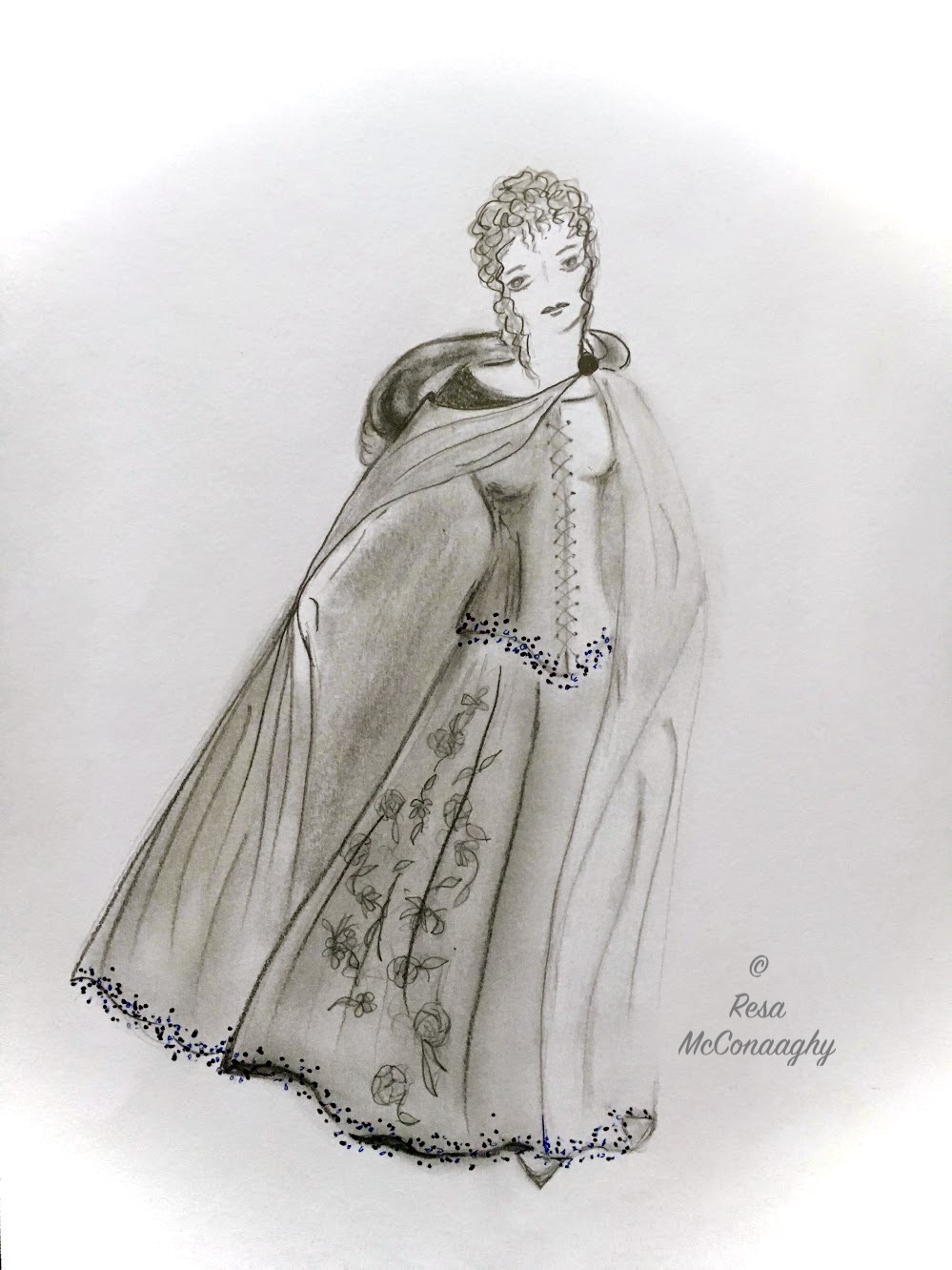
Resa – Our lead character, Madlyn, wears a black gown, the hem trimmed with onyx beads. It’s to a corporate dinner hosted by Dustin, head of the corporation. She is his social co-host. It sounds like a simple classic piece, no frills or poufs. She accessorizes with her mother’s elegant string of pearls.

 When we first see Princess Madlyn, in days of yore and gore, she’s in a black gown, its hem trimmed in onyx. Is she wearing any other jewels? A  different necklace, perhaps? Gloves?

Peach – I love your impressions of her gowns. I always envisioned the gowns as the same, since the story is already starting to overlap with the real world. But I never say that in the book, so her gowns are created by each reader’s imagination.
One of the coolest things about writing is that readers fill in the blanks, not only in clothing but in the general appearance of the characters and the setting. You’re the expert, so let your imagination create. Anything you do will be just right! I might even add some of your details to the book!
Resa – I imagined 2 gowns, as the story proceeded. One is her original black gown, with the addition of shoes and a sweater (scripted). The gown is now torn from horse riding through battles, the sweater disheveled.
Confession! First, I did create a gown that was not scripted. Yet, the era apparent of the story gave me way to come up with this gown. In the end I realize I created a fusion image. The image is Madlyn, The Queen & Lillian the Dreamer, all rolled into one.

So, to the battles. I engage emotionally when I write, so I hold my breath, make faces, grit my teeth, and cry when something bad happens.
My husband used to worry about me sobbing at my laptop, but knows to ignore it now.
I figure I need to immerse myself in a scene emotionally and feel all the feelings, because if I hold back, readers will sense the distance. I don’t feel bad about slaughtering monsters and bad guys, but it does hurt when I bump off characters I’ve grown fond of, and that certainly was the case in the book. The twist at the end changed the story, but in the moment, I was blubbering. I prepare by scheduling big chunks of time for tough scenes. That way I can give in, go where I need to go, process, and finish in one sitting.

Resa – There are some really bad guys in your story. I mean BAD, and not in the cool way.

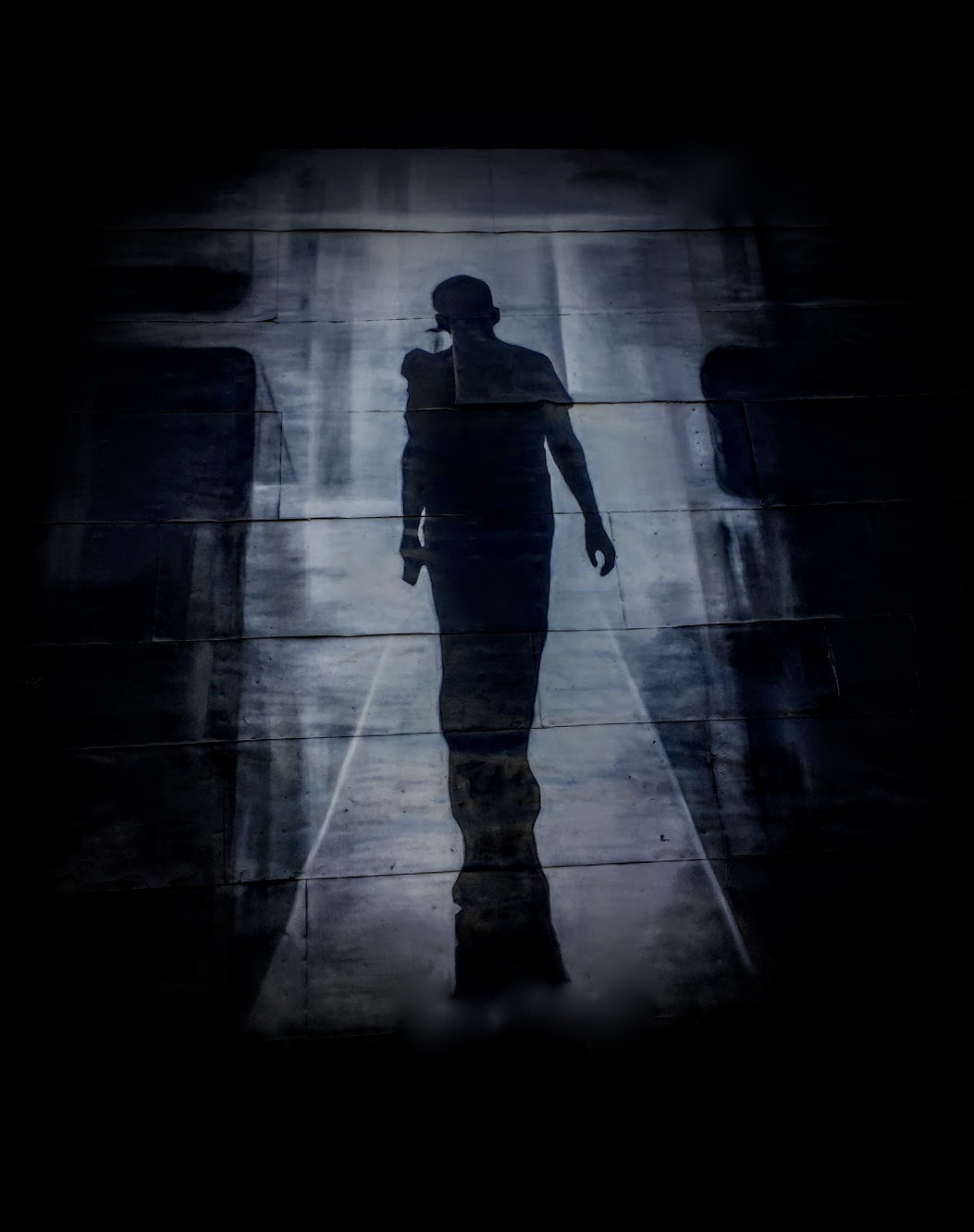
The bad guys start off mean, greedy and willing to give into the Soul Thief. Once they give into the Soul Thief, they physically evolve into individual images of that evil. Peach, I bumped into this piece of alley art. I thought – OMG, it’s Warson, most of the way though his metamorphosis. His hair is evolving into horns, and he’s not dressed. Gross!

We find ourselves at the third revealing window. You’ll want to peer keenly through this window! It seems like there is a third entity, a spirit perhaps, writing another book. Nonetheless, it’s still this book. This is a brilliance of Peach’s writing. I’ve said lots, yet said nothing. You’ll just have to read the book!

This book deserves  all great reviews and accolades. It is in many ways about the age old struggles: peace and love vs. hate and war, bad vs. good; decency vs. cruelty. It is intense. Although good triumphs, it is not without loss. This is also an ancient reality.

A long-time reader, best-selling author D. Wallace Peach started writing later in life after the kids were grown and a move left her with hours to fill. Years of working in business surrendered to a full-time indulgence in the imaginative world of books, and when she started writing, she was instantly hooked.

In addition to fantasy books, Peach’s publishing career includes participation in various anthologies featuring short stories, flash fiction, and poetry. She’s an avid supporter of the arts in her local community, organizing and publishing annual anthologies of Oregon prose, poetry, and photography.

Peach lives in a log cabin amongst the tall evergreens and emerald moss of Oregon’s rainforest with her husband, two owls, a horde of bats, and the occasional family of coyotes.

Visit Diana on her blog!

You can buy D. Wallace Peach’s books on:

Amazon US

Amazon UK

Kobo

All pics of street art taken by Resa – 2019 – 2022

Toronto, Canada

Artists:

Dragon (manipulated) – from a mural by Allan Bender John Nobrega & Stacey Kinder

All other artists unknown

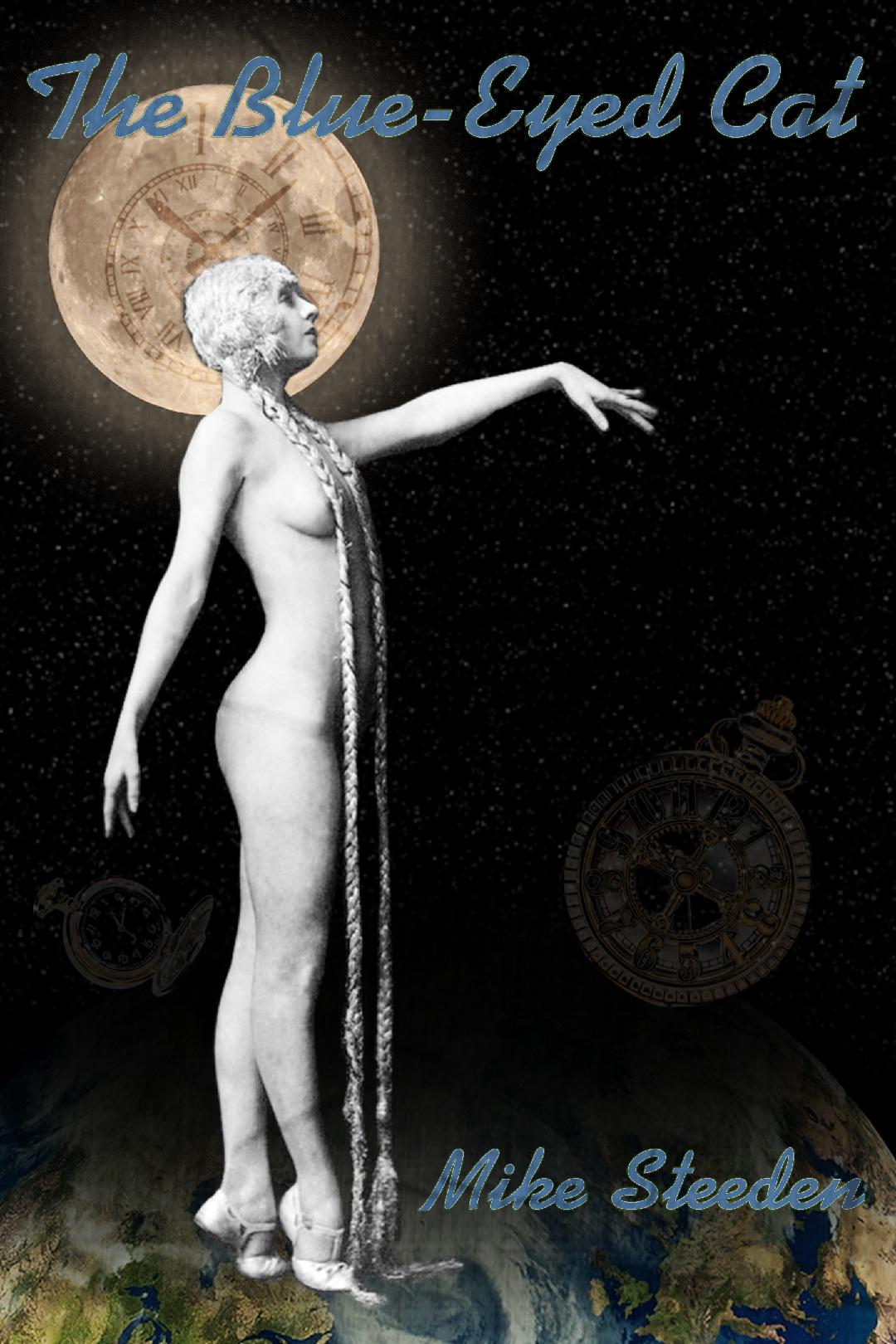
The Blue-Eyed Cat

This tale by Mike Steeden is one of the most imaginative stories I have ever read.

Using street art, I will present a feel that moves along with the book’s official blurb.

‘A book of mind boggling time-travel,

feverish sex, syrupy romance,

ho hum history,

a dark future, The Moon,

Constantinople,

Paris and Berlin,

human consciousness, infinity,

a tongue in cheek take on all things carnal,

art for art’s sake

and three thoroughly mad yet oh so delightful gals’

I drew one a one-eyed blue-eyed cat, for Mike. Mike, Eye’m sure this is nothing you ever imagined. However, after reading “The Blue-Eyed Cat”, which I thoroughly enjoyed,I was inspired to this! Also, I believe the video below is apropos.


Should “The Blue-Eyed Cat” take your fancy it can be found at;

Amazon UK link: THE BLUE-EYED CAT – PAPERBACK
Kindle UK link: KINDLE EDITION
Amazon US link: THE BLUE-EYED CAT – PAPERBACK
Kindle US link: KINDLE EDITION