It was an extreme pleasure to view 2 of Angelica Kauffmann’s paintings at the Making Her Mark exhibit, at the Art Gallery of Ontario (AGO).
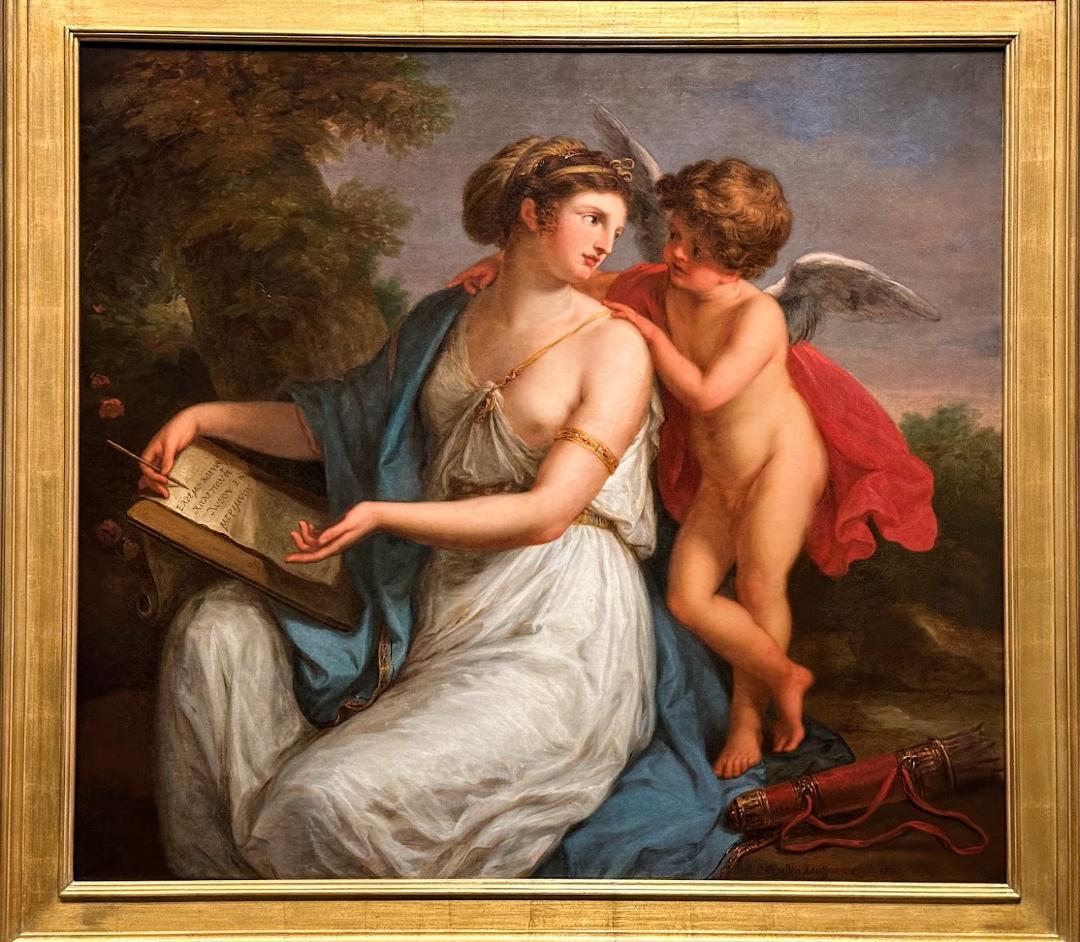
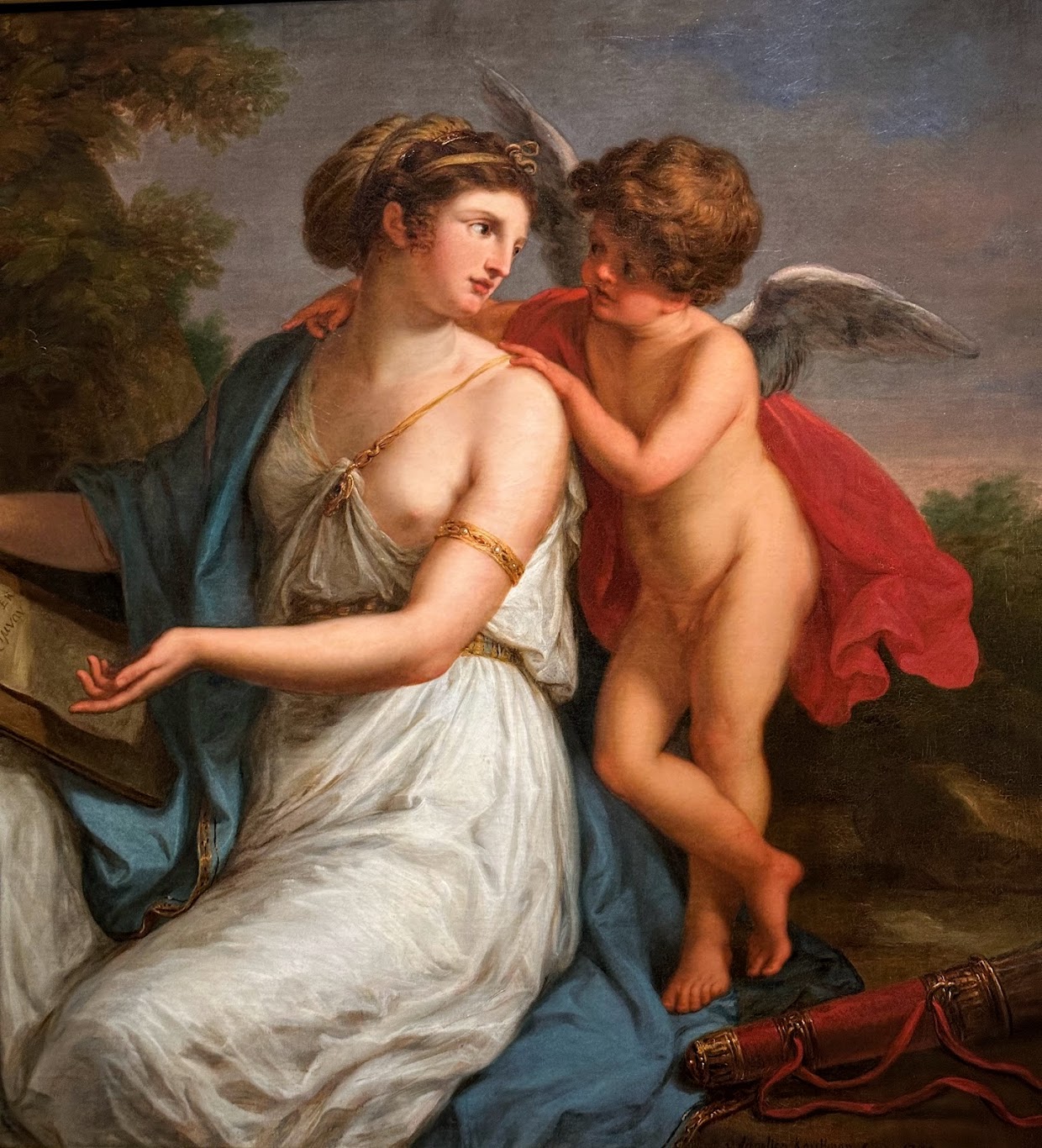
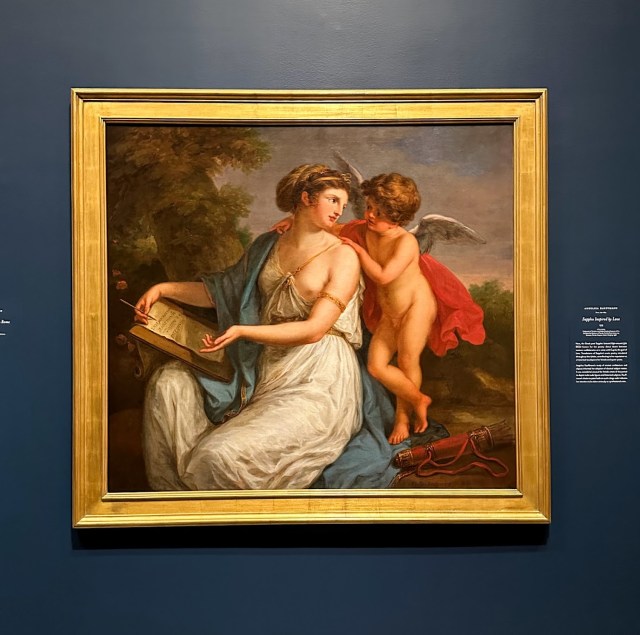
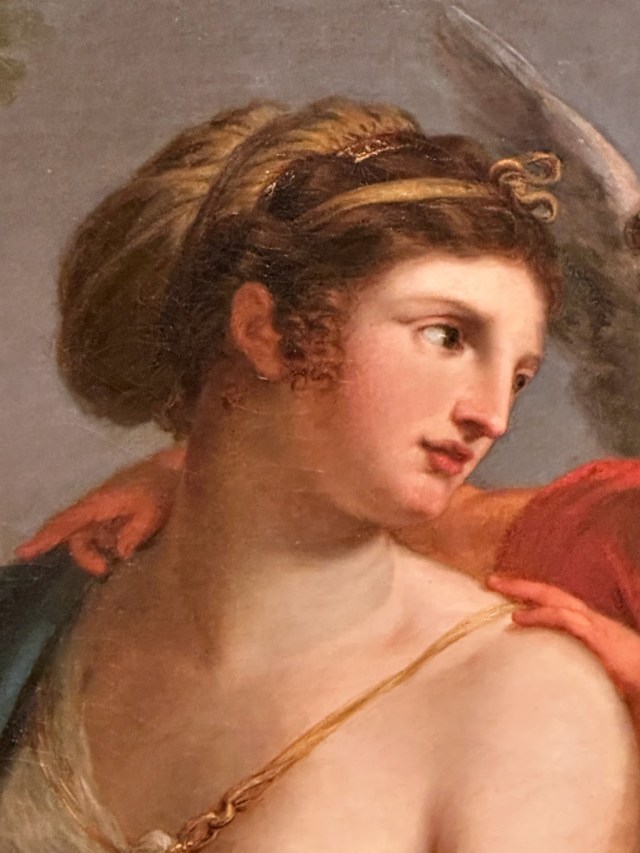
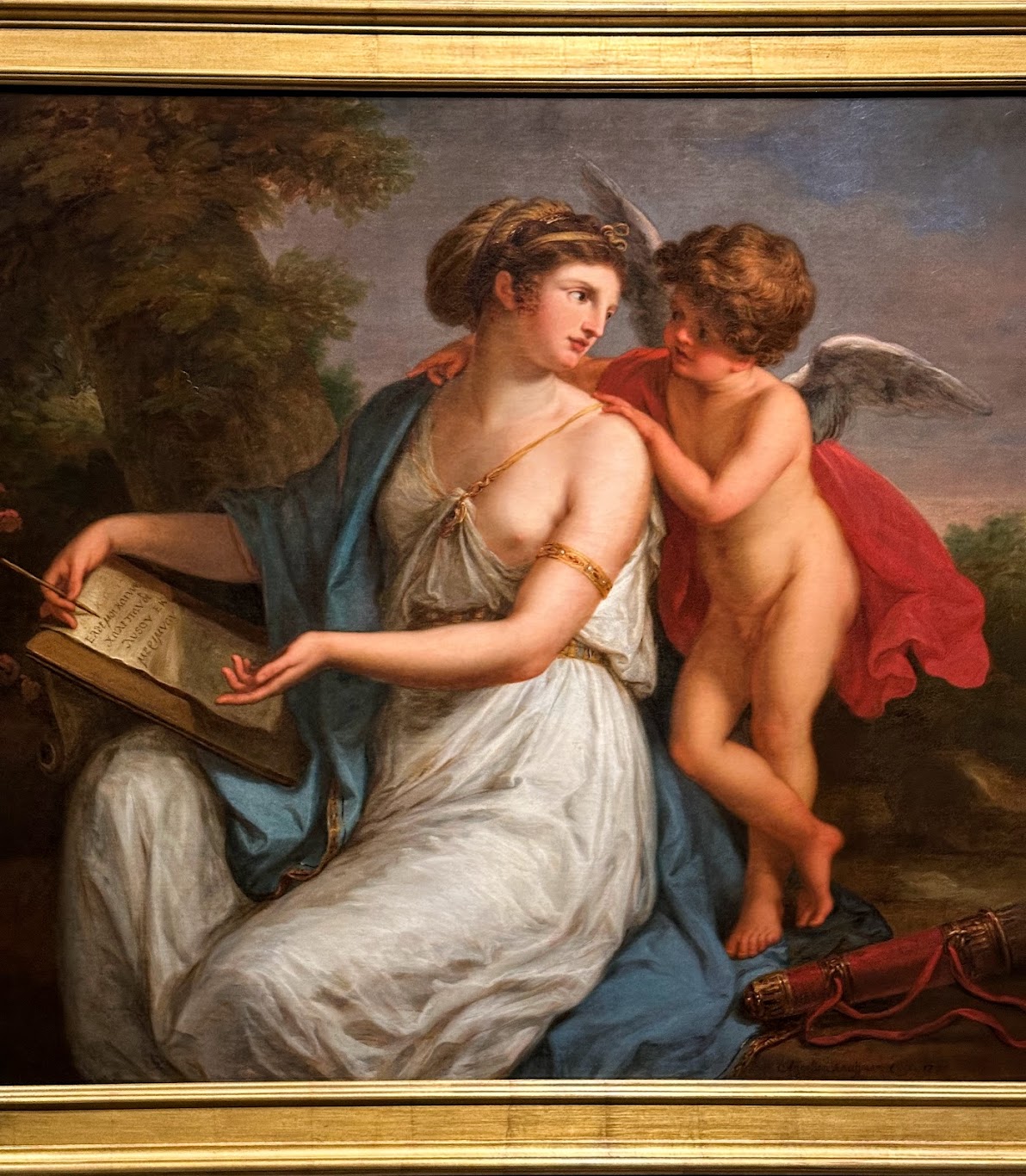
Sappho Inspired by Love
1775 – Oil on Canvas
Born in Switzerland in 1741, Angelica studied under her father, muralist Johann Joseph Kauffman. By 12 years of age she was considered a prodigy, could sing (soprano) and was soon fluent in German, Italian, French and English.
In the early 1760s, a transient life travelling through Switzerland, Austria, and Italy, as her father’s assistant, introduced her to classical and Renaissance art. She also became familiar with the emerging art movement, Neoclassicism.
In this painting-
“the Greek poet Sappho – (around 630-around 570 BCE) – known for her poetry about desire between women – collaborates on a verse with Cupid, the god of love.” -AGO
“Translations of Sappho’s erotic poetry circulated throughout the 1700’s, contributing to her reputation as a historical touchpoint for female and queer poets.” – AGO
In 1765 Angelica was elected to Rome’s Academia di San Luca, in recognition of her works.
Accompanying Lady Wentworth, Angelica moved to London in 1766. Here she became the demanded portraitist for aristocrats and royalty.
In 1767, she married a fraudulent Count Frederick von Horn, clergyman. Later that same year, Angelica found herself abandoned. The imposter had been found out and fled the scene.
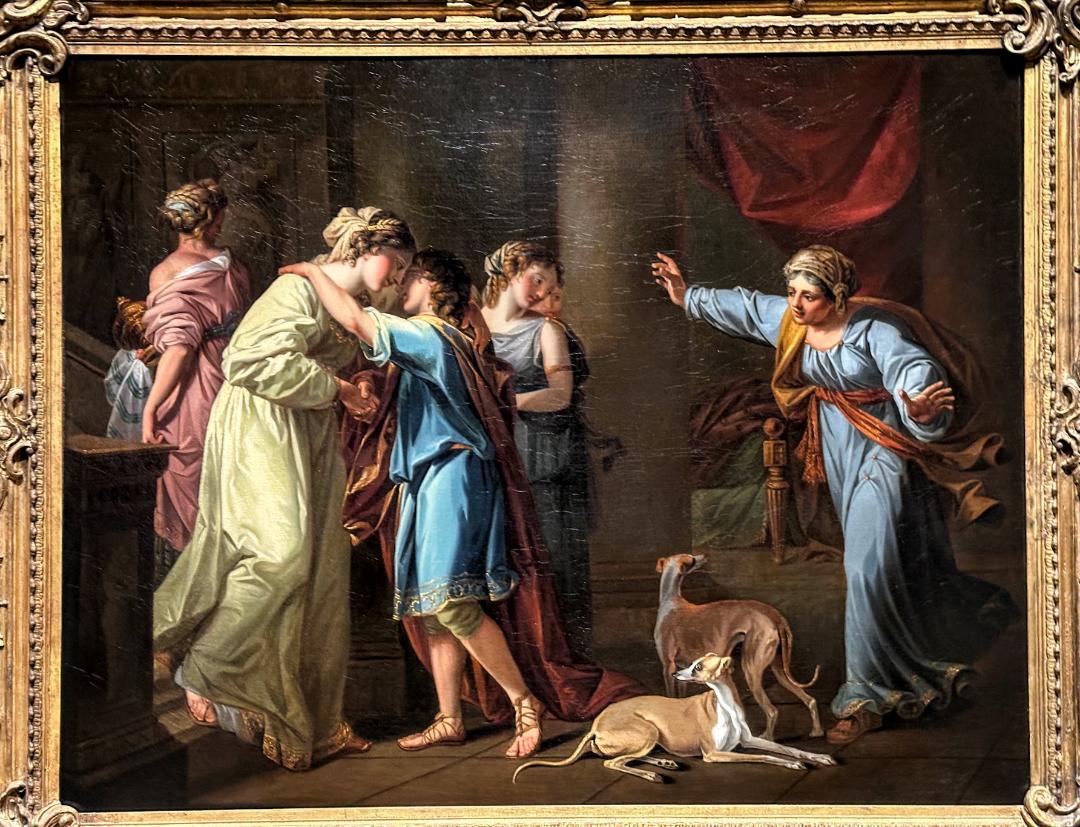
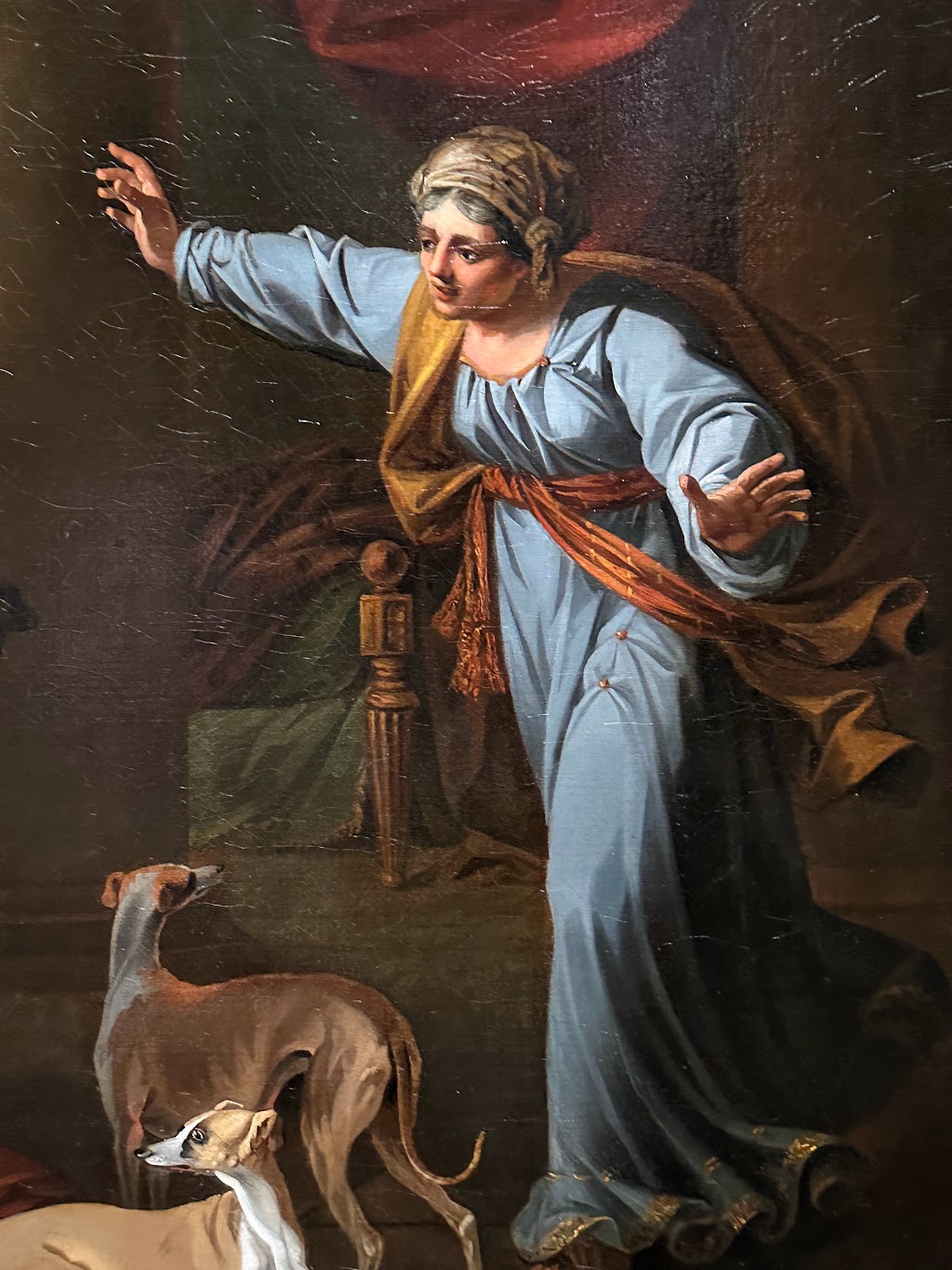
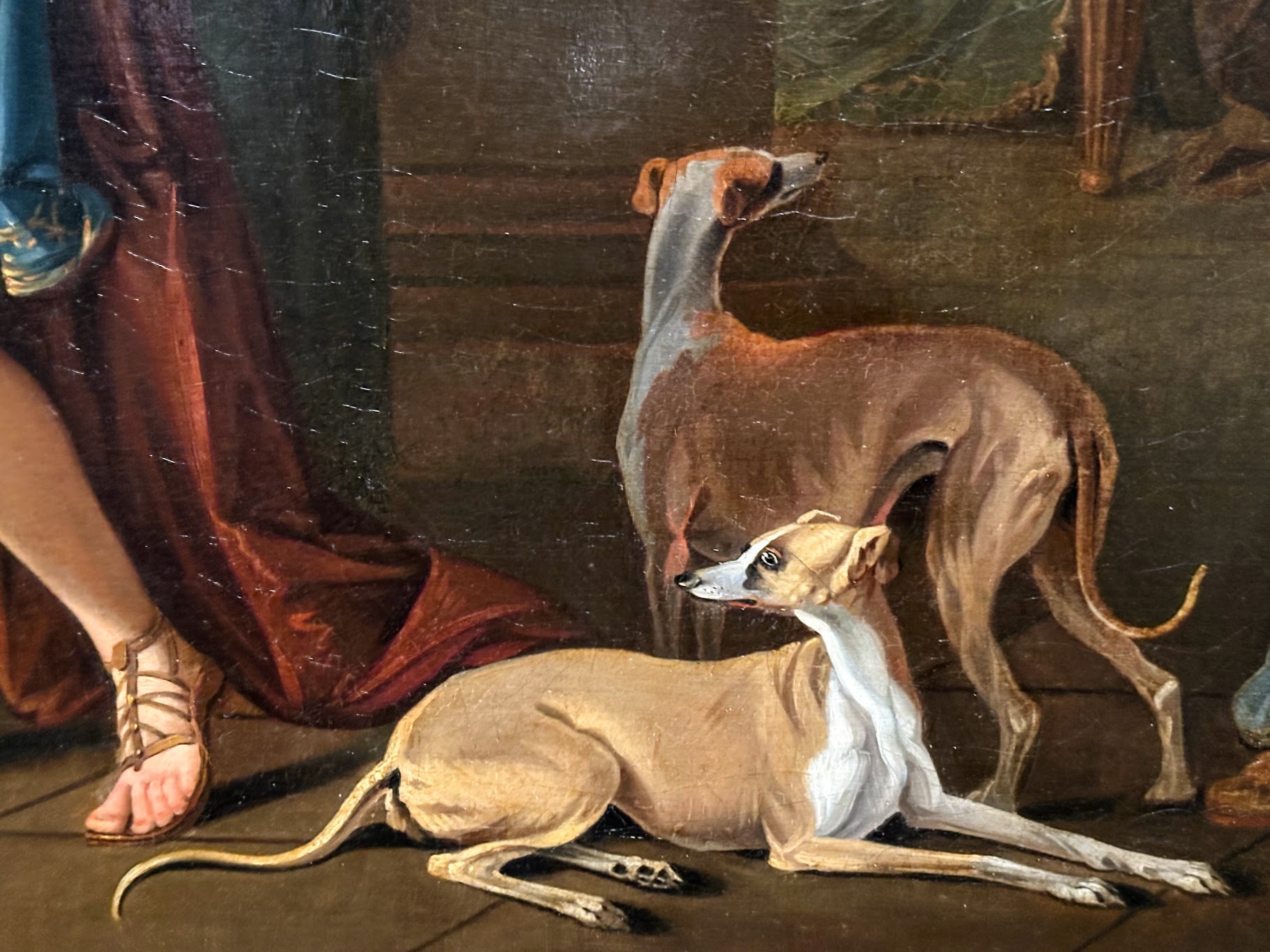
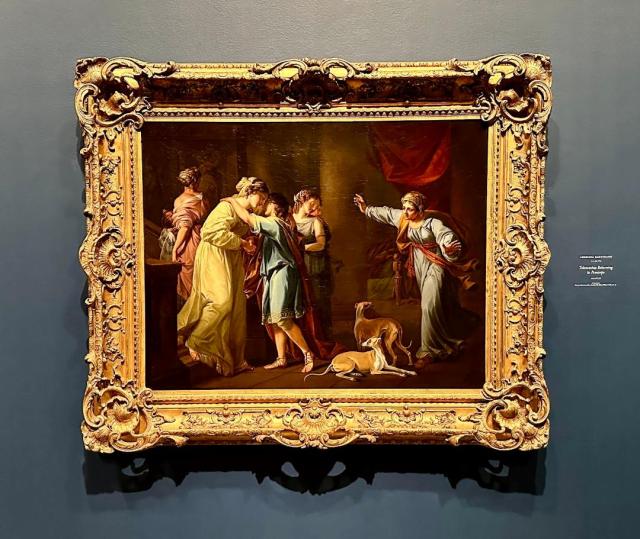
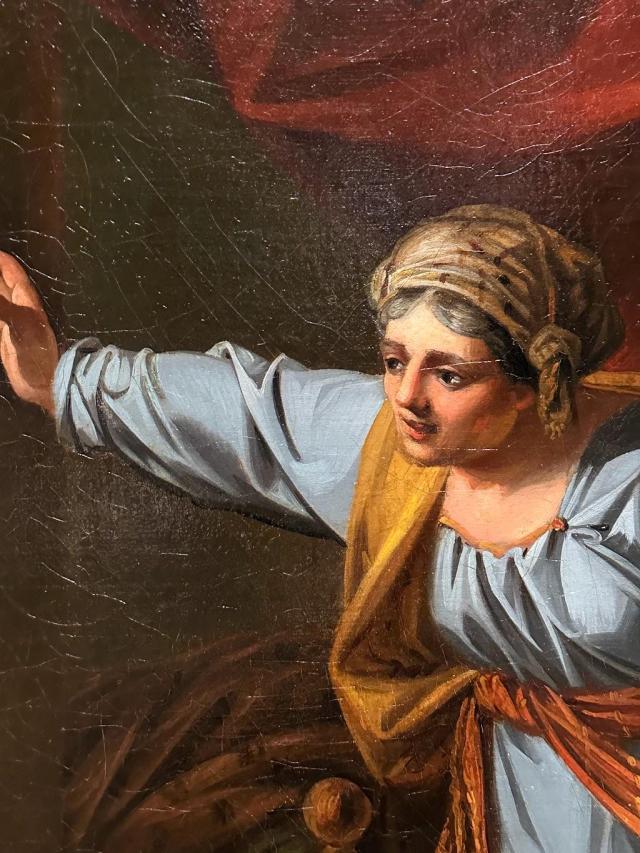
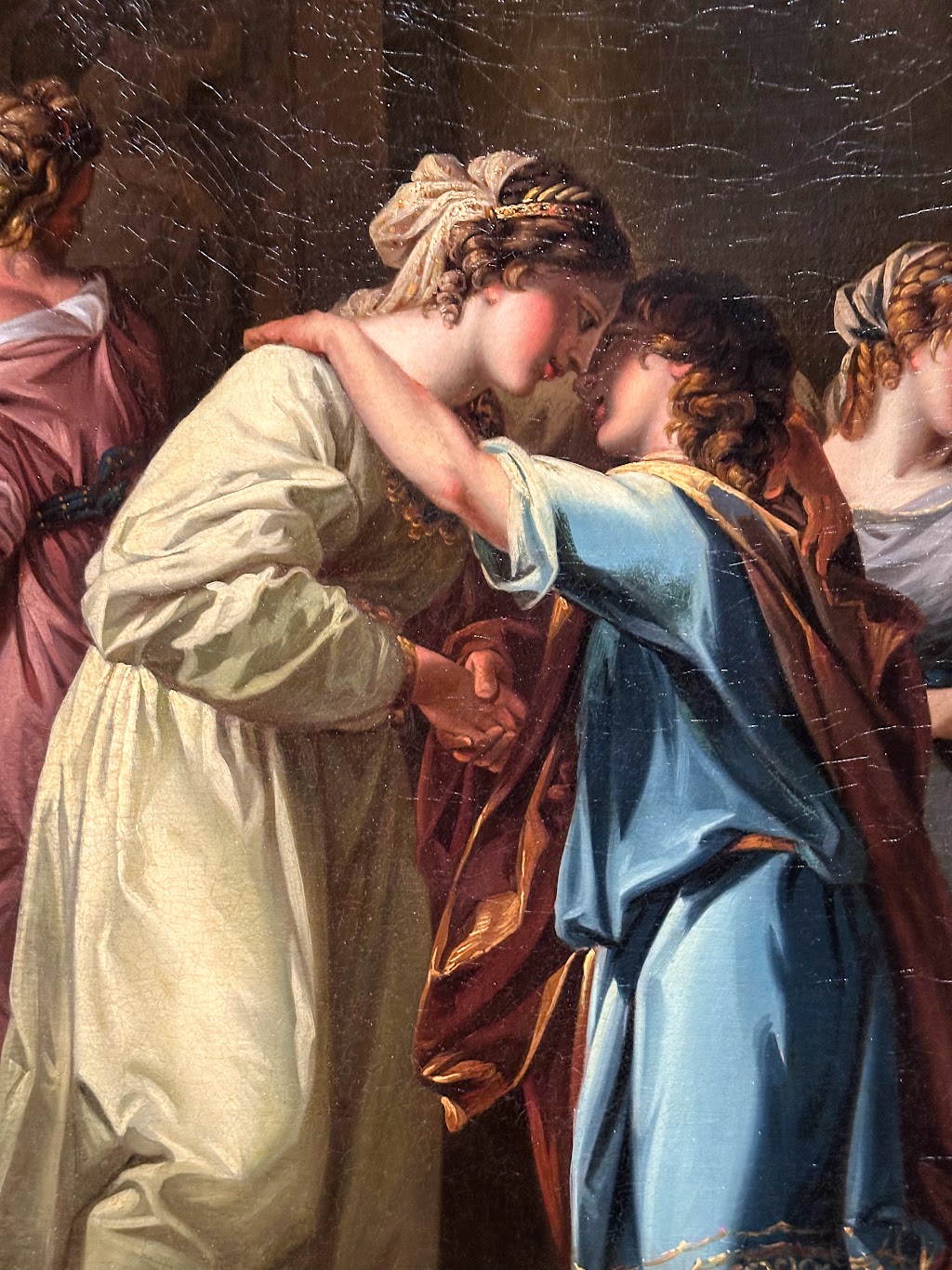
Telemachus Returning to Penelope
circa 1771 -Oil on Canvas
In 1768, Angelica Kauffmann and Mary Moser, became the only female painters among the founding members of London’s Royal Academy of Art. Her work showed regularly at the Academy for the next 16 years.
Angelica formed a personal style of painting women from classical history and mythology. This strong brand of hers evolved from the reality that women were not permitted, excluded from life drawing classes.
In the 1770’s, she became part of a team painting interior designs for Robert Adam. A Scottish architect and designer, he, with his brother James, transformed English Palladian Neoclassicism into the airy, light, elegant Adam decor.
Telemachus, the son of Odysseus and Penelope, is now a man and a warrior. He has aided Odysseus in slaying the unwanted suitors of Penelope, and is back at home in Ithaca.
In 1781, at 39 years of age and after the death of von Horn, she is remarried to the Venetian painter, Antonio Zucchi. He succeeds Angelica’s father as her business manager.
The marriage contract guarantees her the rights to her income.
She retired to Rome in the early 1780s with her husband, Antonio Zucchi.
In 1782 Angelica Kauffman opens an internationally attended studio beside the Spanish Steps (a Baroque stairway in Rome, connecting the Piazza di Spagna with the Trinità dei Monti church.) It becomes the “In Place” for intellects.
In 1787, Angelica Kauffman becomes a dear friend of Johann Wolfgang von Goethe. She paints his portrait and becomes part of Goethe’s innermost circle.
Angelica Kauffmann died in 1807. She had become exceedingly famous by that time; so much so that Antonio Canova (prominent Neoclassical sculptor), directed her funeral. It was inspired by the funeral of the Renaissance master Raphael.
Josefa de Ayala, aka Josefa de Óbidos, was a novelty. She was celebrated after her death; the only woman known to have worked as a painter in Portugal, during that period.
The Christ Child as Pilgrim – 1676– Oil on Canvas
Josepha learned to paint by helping her father, Baltazar Gomes Figueira. In her lifetime, Portugal was monetarily unstable and often at war. However, much of her artwork was for patrons in Coimbra, a wealthy area boasting a university.
At 29 years old, her parents gave written permission for her to be to be a Donzela emancipada. (emancipated woman). She remained unmarried and independent for her entire life.
She received many commissions, during her lifetime. However, Josepha was wealthy from real estate investments and was able to refuse work at the Portuguese court.
She signed many of her artworks, as Salvator Mundi. Thinking this was a male painter attracted clients, and prevented her from being forgotten over time.
Lavinia Fontana
Italian: 1552 -1614
Born in Bologna, died in Rome; Lavinia Fontana painted in the Mannerist style she was taught by her father, Prospero Fontana.
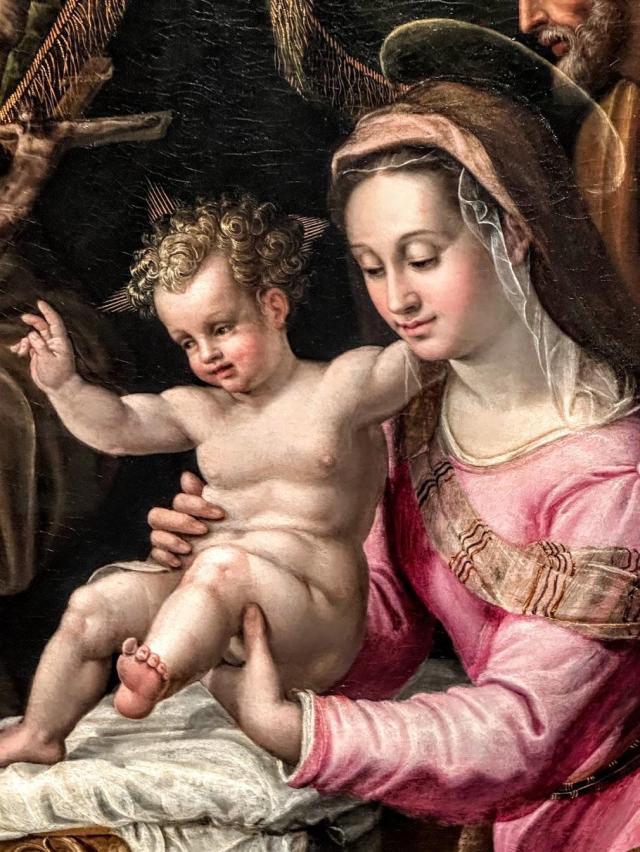
Holy Family with Saints Margaret and Francis – 1578
An important portraitist in the late 16th century, she also produced many religious paintings. Lavinia was celebrated for the vibrant colour and detail of the clothes and jewels her subjects wore. She also became one of the first women to render publicly funded, large scale figure paintings.
In 1577 Fontana married Gian Paolo Zappi. An inferior painter, he pivoted to becoming her business agent.
Some of her paintings are signed with her married name.
Lavinia was the mother of 11 children.
Enjoying the patronage of the family of Pope Gregory XIII, Lavinia painted portraits of much of the elite.
In 1604 she painted the Martyrdom of St. Stephen, for San Paolo Fuori le Mura in Rome. An altarpiece and her largest work, it was destroyed when the basilica burned down, in the fire of 1823.
This is an oil on canvas painting, and there were at least 2 others by Lavinia Fontana in the Making Her Mark exhibit. I’ll show those at another time, with a few more tidbits of her extraordinary life.
In the meantime, should you be interested to learn more about her, you can check out the links at the end of this post, search her online or in libraries.
Barbara Longhi
Italian: 1552 – 1638
Known primarily for her religious paintings, Barbara Longhi’s work can be difficult to differentiate from her father’s work. Her father, Luca Longhi, was a renown painter and miniaturist. Barbara began her art journey, by assisting him with altar pieces.
Virgin Mary & Infant Jesus – ca – 1575-80
She expanded beyond her father’s teachings by studying the works of Parmigianino and Correggio. Barbara painted primarily religious images, including several depictions of Madonna and Child with Renaissance style and features. I’m intrigued that parted drapes exposing landscapes was one of the elements.
Giorgio Vasari commended her for having “purity of line and soft brilliance of colour”.
Her ability to capture human interaction kept her one of the few successful career women of her day.
The Art Gallery of Ontario has obtained this 42.5 × 34 cm. oil on canvas painting for its permanent collection.
” Longhi’s painting, alongside two other gifted paintings by women artists (Mary Ann Alabaster (1805–1879) and Rosa Bonheur (1822–1899)), extends the AGO’s holdings of European Art by female artists three centuries deeper into the past.” – AGO
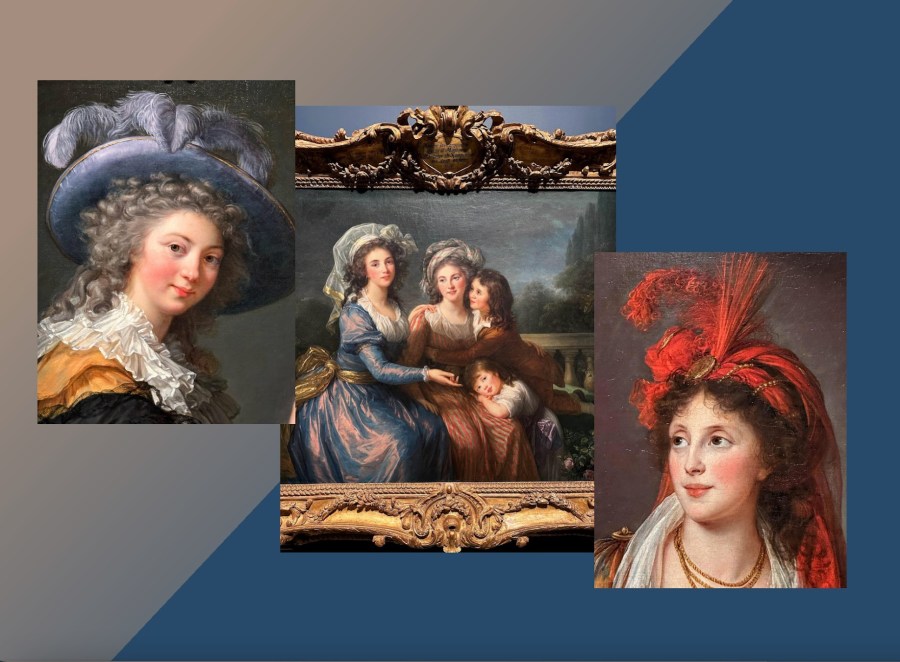
She painted Queens and Kings. She was the official portrait artist to Marie Antionette. Much has been recorded by and of Élisabeth Vigée Le Brun (1775 -1842).
Yet, who are some of the extended royalty whose VigéeLe Brun’s images linger on earth for posterity? I was privy to viewing 3 of Élisabeth Vigée Le Brun’s portraits at the Making Her Mark exhibit. All 3 are of royalty.
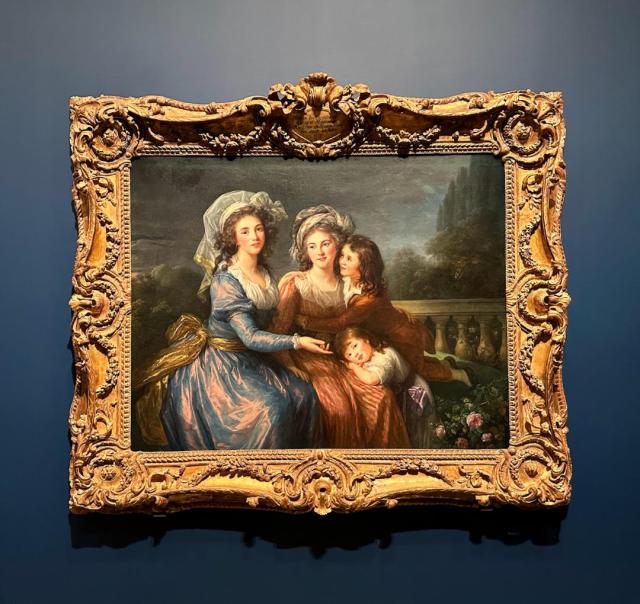
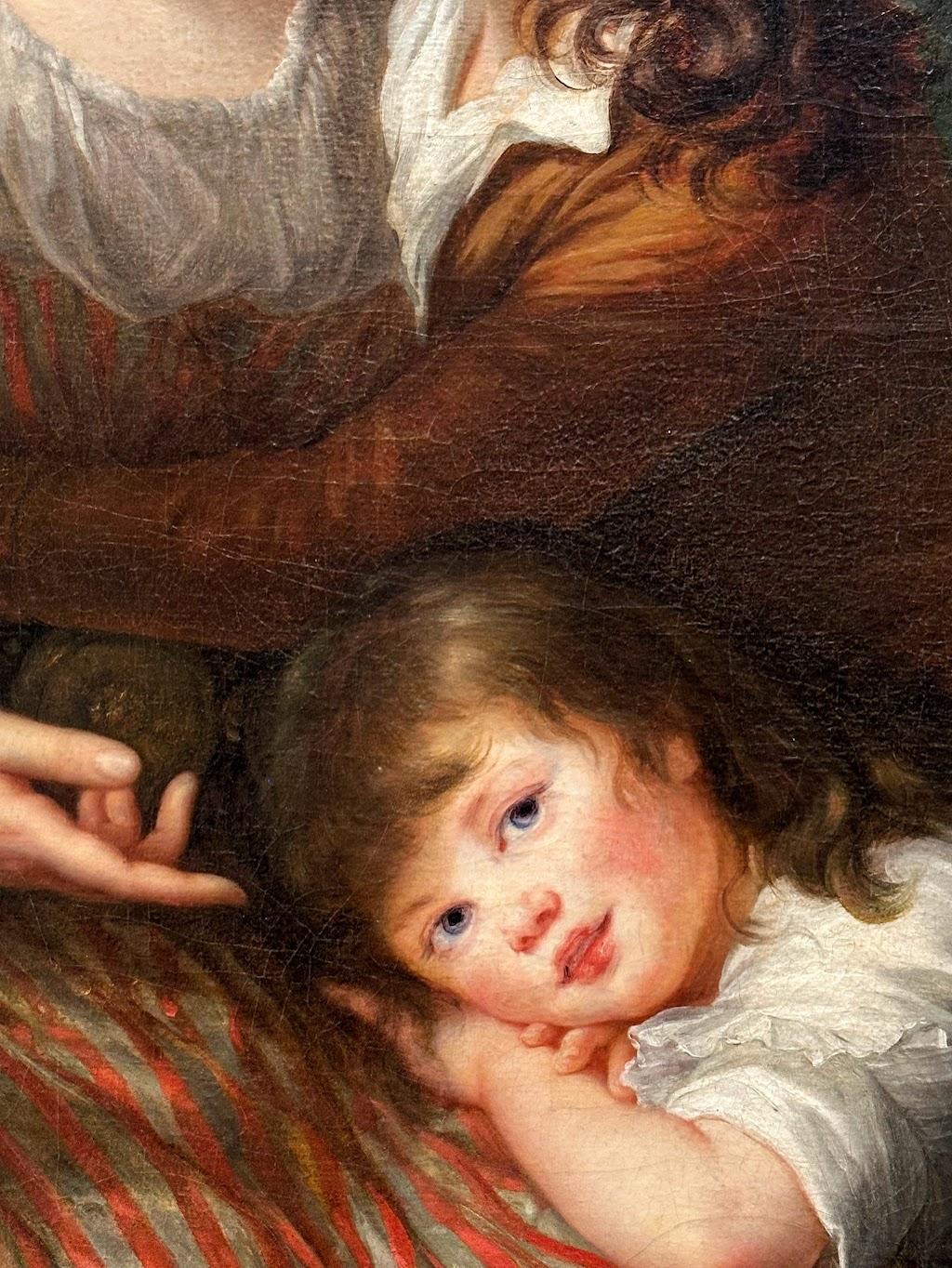
The Marquise de Pezay, and the Marquise de Rougé with Her Sons Alexis and Adrien
This massive painting (4.5 ‘ x 5.1’) painted in 1787, was one of my faves at the exhibit. It was almost like being with living people.
1787 – Oil on canvas
The Marquise de Pezay
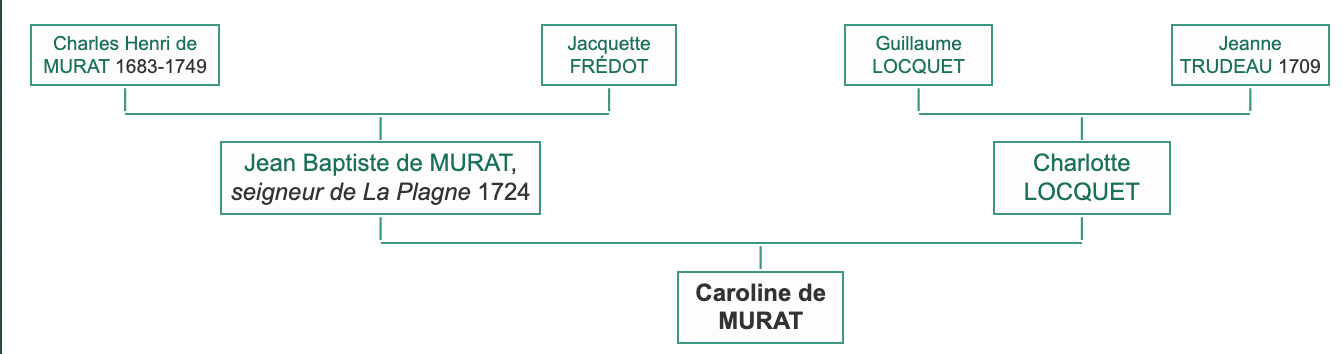
There is not much written about The Marquise de Pezay nee: Caroline de Murat, and I cannot find the date of her birth. From an old Auvergne family, she was very beautiful and quite penniless.
In 1776 she married Alexandre-Frédéric-Jacques Masson , Marquis de Pezay. The Marquis de Pezay was a French Military officer of distinction, a writer and encyclopedist. In 1777, at only 36 years of age he died at Pezay Castle.
Vigée Le Brun and the Marquise de Pezay both fled Paris in 1789 shortly after the storming of the Bastille.
The Marquise de Pezay found refuge in Lausanne, Switzerland, where she died in 1794.
There is also a record of her in Heidelberg in 1791.
In researching Caroline de Murat, you will also find Caroline Murat is the name of Napoleon Bonaparte’s youngest sister.
Marquise de Rougé
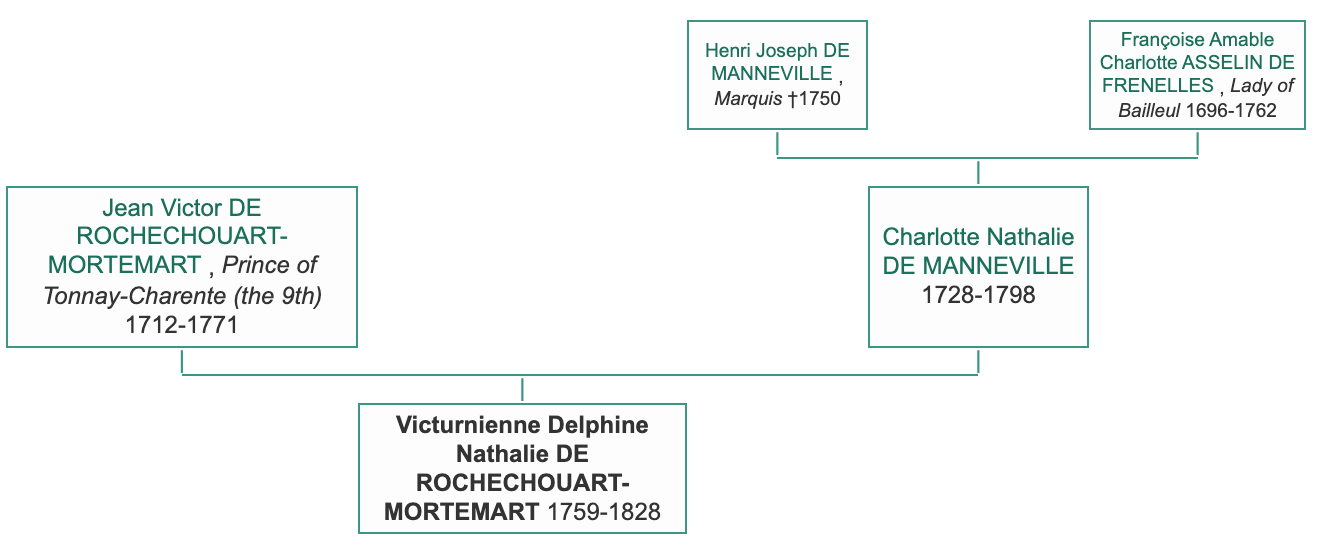
Nee: Natalie Victurnienne de Rochechouart de Mortemart (1759 -1828). Her father was Jean Victor de Rochechouart de Mortemart. Her mother was Charlotte Nathalie De Manneville.
She wed in 1777 to Bonabes-Jean-Catherine-Alexis de Rougé, the 3rd Marquis de Rougé. Five years later, returning from the West Indies on a battleship, he died.
In 1789 she and her sons left France for Switzerland, but returned to France in 1790. At that time, they lived in seclusion at the Château de Moreuil with her husband’s aunt, the Duchess d’Elbeuf. In 1791, she emigrated to Heidelberg, Germany, along with her children, her mother, andthe Marquise de Pezay.
From the Journal of the Emigration -by: Count d’Espinchal (1748 – 1823) while living in Heidelberg, Germany. Published from the original manuscripts in 1812.
“I have found living here since the winter, the Duchess de Mortemart, mother of the Duke and of the Marquis de Mortemart, both of whom are deputies to the Estates-General … and both members of the majority of the conservative nobility. The Marquise de Rougé, their sister, a pretty and amiable widow, is here with her children (she looks more like their sister) … and Mme de Pezay … who is her intimate friend.”
She returned to Paris in 1798. Her lands had been expropriated and sold. So, she took room and board in a home run by former nuns. Her sons joined her in France in 1800. She died on 25 December 1828
Alexis and Adrien
Alexis Bonabes Louis Victurnien, Marquis de Rougé, ( 1778 – 1839) was a French military officer and Statesman.
In April 1804, he married Alexandrine Célestine Zoé Emmanuelle Thimarette de Crussol d’Uzes (1785–1866). They had 6 children.
Adrien Gabriel Victurnien de Rougé (1782 – 1838) was a statesman and distinguished soldier.
In 1809 he married Caroline de Forbin d’Oppède. They had 4 children.
The Comtesse de Cérès
Seems some scallywag royalty wormed its way into Vigée Le Brun’s life.
1794 – Oil on canvas
It appears as though Anne Marie Thérèse de Rabaudy Montoussin (1759 – 1834) married “The Roué himself”, Jean de Barry-Cérès when she was 18.
Jean de Barry-Cérès, from suspect lower nobility, may have added the “de” to his name. That was easy to do back then, and claim you were A somebody. It appears he earned a scrounged living by both legal and so/so illegal means (gambling parlours and pimping) .
Not only does there appear to be only a Jean Barry (no Cérès), but it is somewhat unclear if he did wed Anne Marie Thérèse de Rabaudy Montoussin, who would have been his second wife. Barry’s first wife was Ursule Dalmas de Vernongrese.
Anne Marie Thérèse de Rabaudy Montoussin apparently married “de Barry” when she was eighteen. This portrait was done in 1784. She would have been 25.
De Barry, the Roué, was persona extremely non-grata at the French Court. Yet, Vigée Le Brun befriended the Comtesse de Cérès.
The friendship did not last.
Vigée Le Brun was furious that gossip was accusing her of having an affair with the French Finance Minister, Charles Alexandre de Calonne; gossip fuelled by the actions of Madame de Cérès .
From the memoirs of Élisabeth Vigée Le Brun
“While I was painting her portrait, she did me an atrocious disservice. In her ingratiating way she asked me to lend her my horses and carriage to take her to the theater.
The next morning I requested my horses for eleven o’clock. Coachman, horses, nothing had come back. I learned that Madame de Cérès had spent the night at the Finance Ministry.”
All assumed the affair was with Vigée Le Brun, as it was her coach that spent the night outside the Finance Ministry.
Élisabeth Vigée Le Brun
I’d like to take a moment here to say how awed I was standing in front of Élisabeth Vigée Le Brun’s paintings. They took my breath away. Rebecca Budd, curator of Chasing Art has, written an outstanding 7 part series onÉlisabeth Vigée Le Brun.
Below is the link to the first article. Just click on “NEXT POST” and work your way through this enchanting recounting of a remarkable woman in history, or I might say – Herstory!
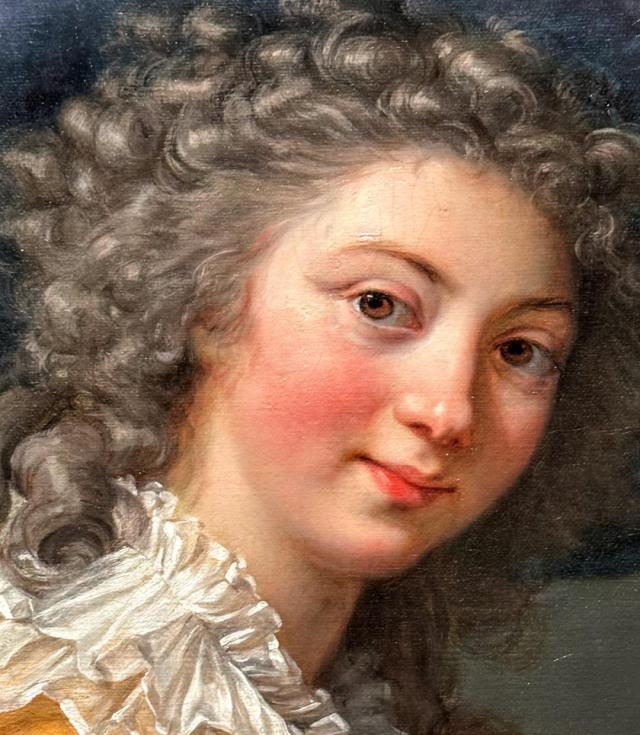
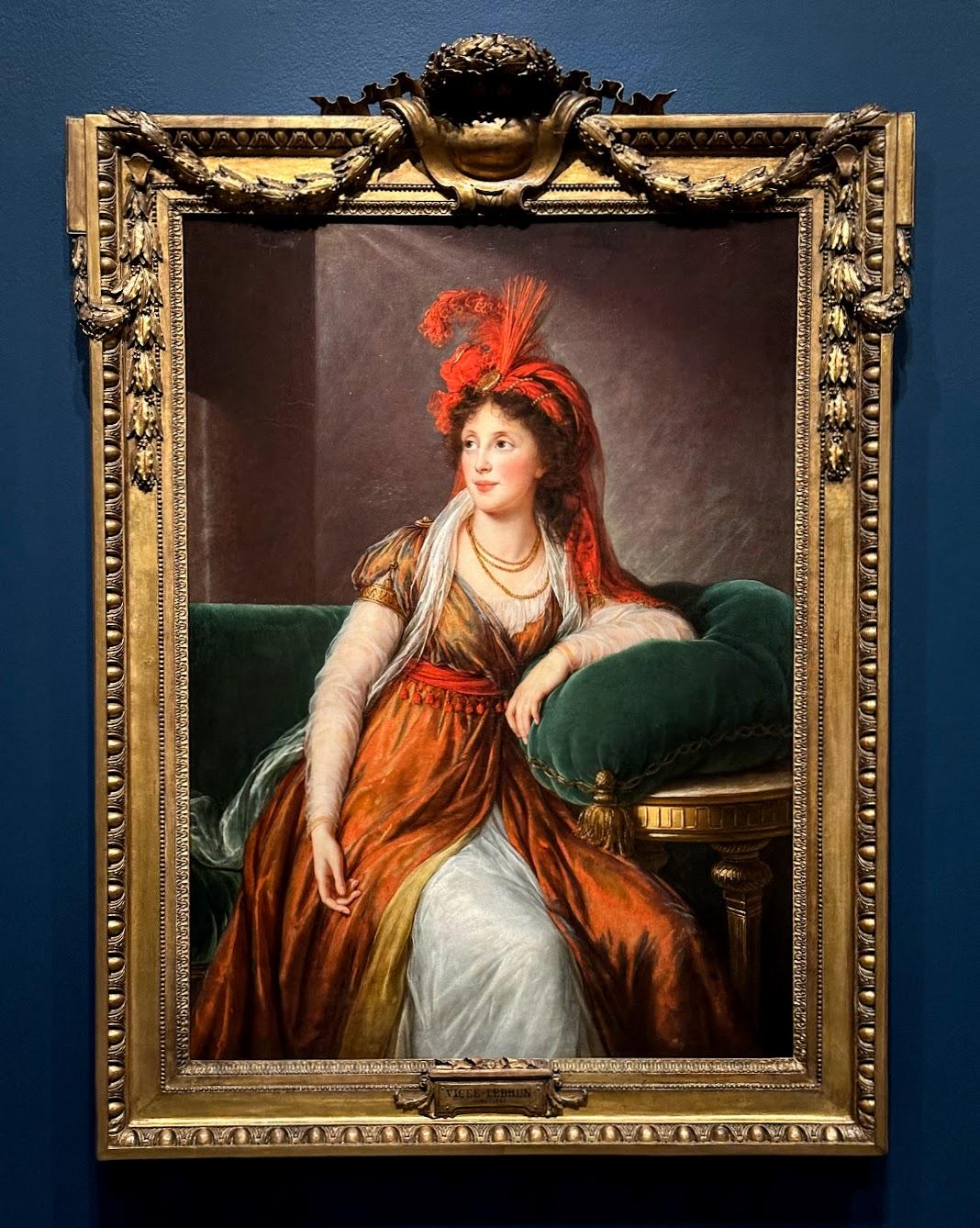
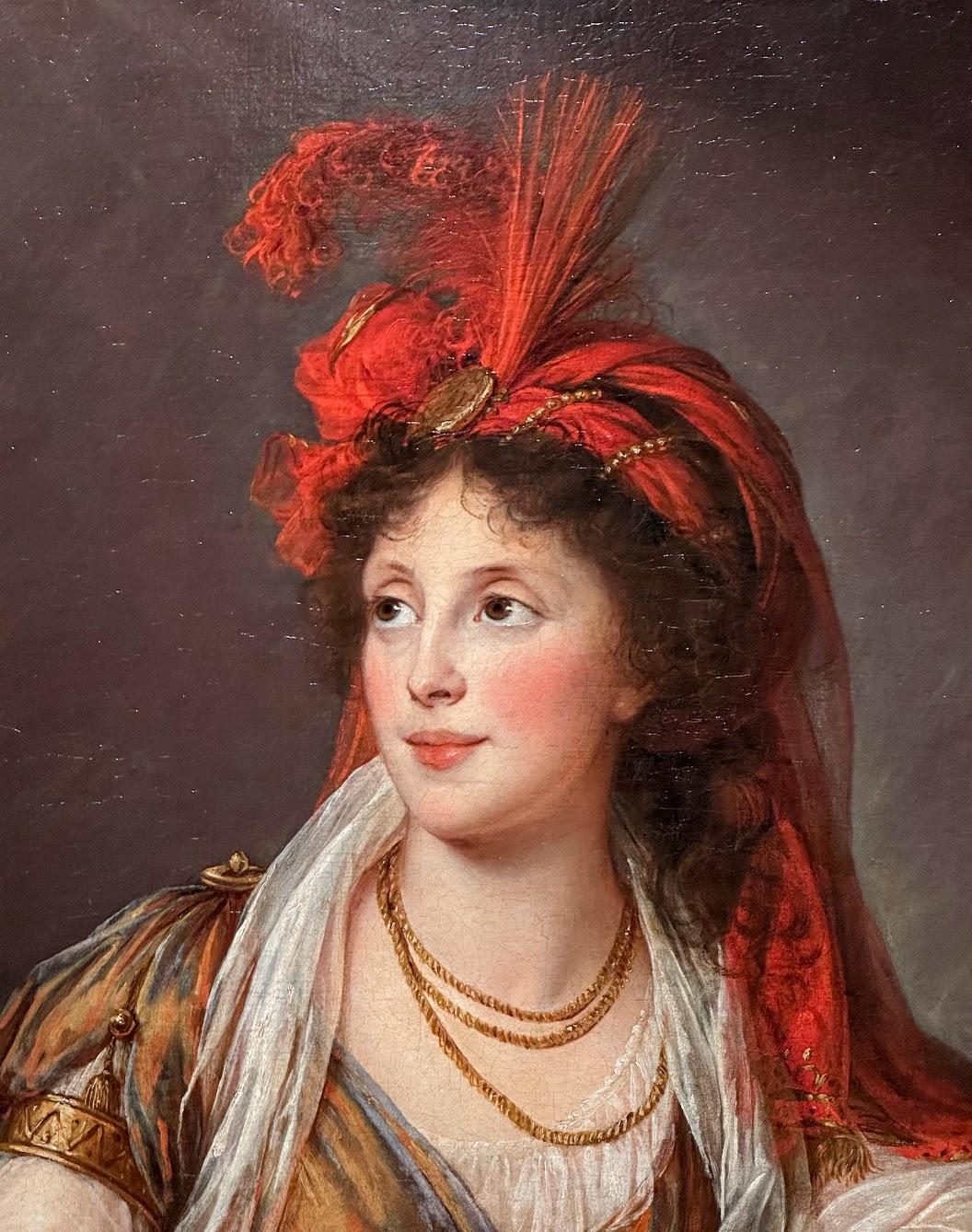
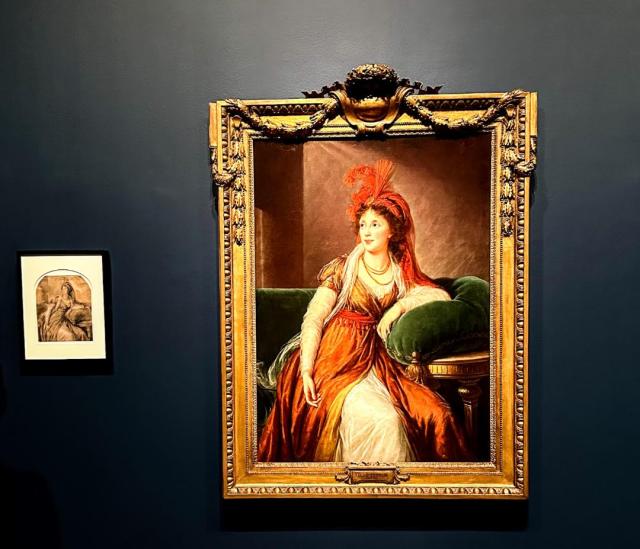
Princess Anna Alexandrovna Galitzin (August 1763 — October 1842) was a Russian aristocrat of Georgian royal origin.
1797 – Oil on canvas
Anna was the daughter of the Tsarevich of Georgia. Growing up in Moscow, she knew a good deal of local power. This power was afforded her, because she was a member of the house of Bagration-Gruzinsky.
In 1785 she married the illegitimate son of Prince Aleksander Mikhailovich Golitsyn, Alexander Alexandrovich Litsyn. One year after his passing, in 1789, she married her third cousin once removed, Prince Boris Andreevicholitsyn. Together they had 8 children. Her husband died of a stroke in 1822.
Tsar Paul Icame to the Russian throne in 1796. In 1798 he promoted Prince Boris to lieutenant general. In 1800, Boris did something to anger a higher ranking officer. The result was that he, Anna and her family were “compelled to retire” to their estate, in the province of Vladimir.
In 1801 Alexander I came to power, and high society of St. Petersburg accepted the family back.
Back in St. Petersburg, Princess Anna hosted a most influential salon.
Vigée Le Brun was charging high prices when Princess Anna commissioned it in 1797. However, money was not an issue. Princess Anna possessed of one of the largest fortunes in the empire.
Also on display was the working drawing, in black and white chalk with stumping on paper.
It seems the gown Princess Anna is wearing was a house dress, nothing fancy. Also, for reasons of modesty, the sheer arm sleeves were apparently added after completion of the portrait.
Thank you for reading another post of “Making Her Mark”
To read all posts just click on the Making Her Mark banner at the top of the side bar!
Please click on the banner below to go to the research links page.
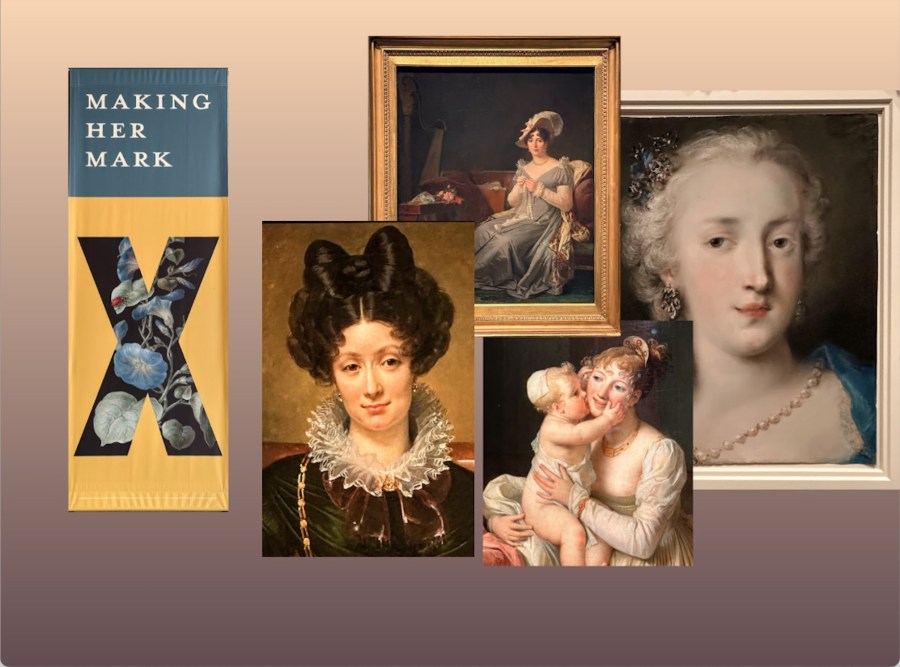
They were not royalty, but may have painted for royalty.
Their parents worked for royalty, were politicians, acclaimed artists or important clergy. These aristocrats wielded economic, political, and social influence. They were fortunate ones, before and during the rise of a European middle class due to the industrial revolution.
Louise-Adéone Drölling
French – 1797 – 1831
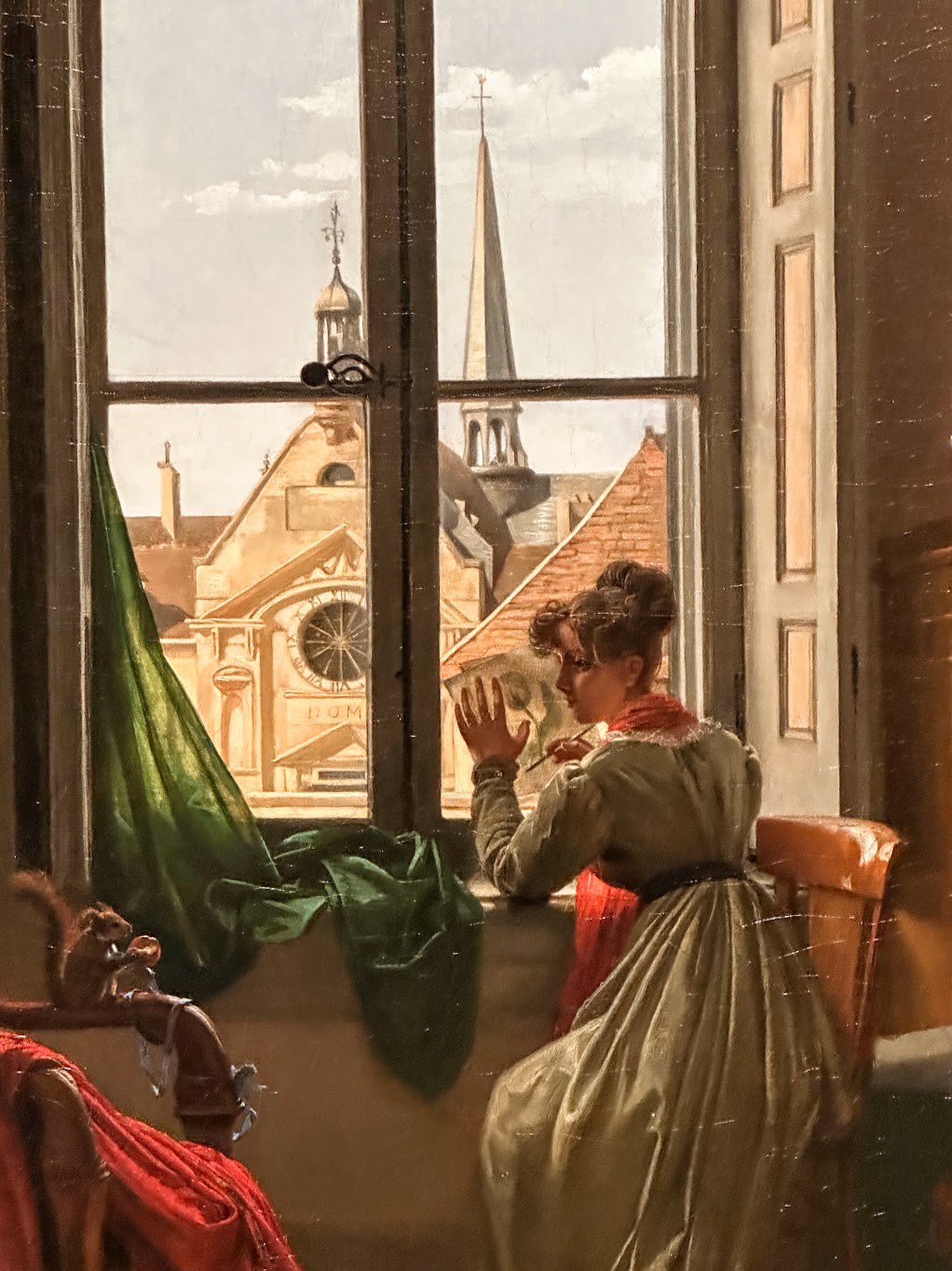
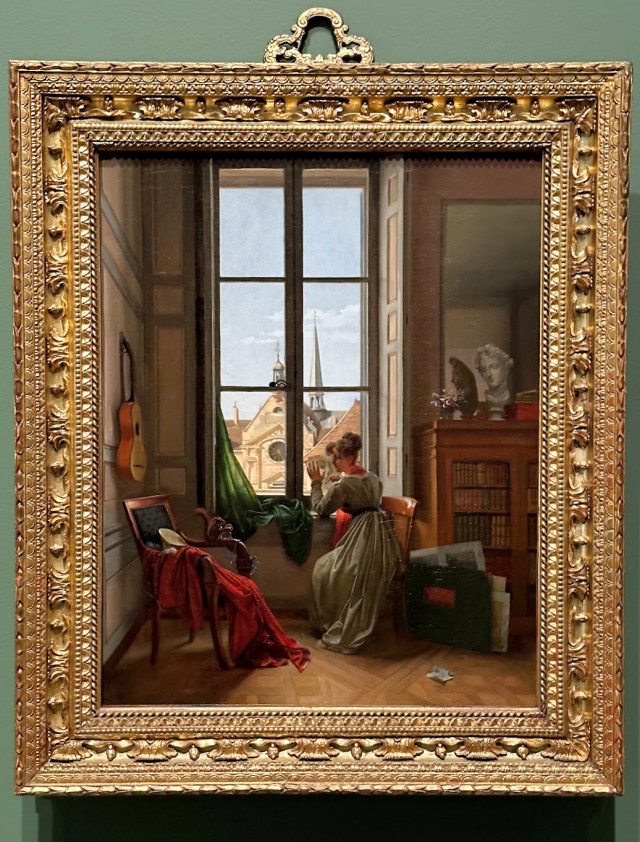
Young Woman Tracing a Flower – Circa 1820-22
Louise-Adéone‘s father, Martin Drölling, and older brother, Michel Martin Drölling, were celebrated artists in their day. At the age of 15 she was encouraged to begin painting.
In 1819, Louise-Adéone married architect Jean-Nicolas Pagnierre. Widowed in 1822, she remarried Nicholas Roch Joubert in 1826. Joubert, chief tax officer of Paris, was the son of politician and former bishop Pierre-Mathieu Joubert. They had two daughters, Adéone Louise Sophie, and Angélique Marie.
Louise-Adéone Drölling, aka Madame Joubert won a Gold Medal from Salon des Amis des Arts, for her above painting; Young Woman Tracing a Flower. Thought be a self portrait, it later became part of the distinguished collection in the Gallery of La Duchesse de Berry.
I have found conflicting dates of her Gold Award – 1824, 1827 or 1831.
Marguerite Gérard
French – 1761 – 1837
Motherhood Circa 1795-1800
Marguerite Gérard attained much wealth and real estate during her life, despite remaining unmarried.
In 1775 she moved from Grasse to Paris and lived with her sister’s family. Her sister was married to the popular Rococo painter Jean-Honoré Fragonard. Here she had financial freedom and was trained in art as Fragonard’s unofficial apprentice.
By her mid 20’s, Gérard had achieved a signature style.This involved precise details made with subtle and blended brush strokes, inspired by 17th-century Dutch genre paintings. However, she made it her own by focusing on females in intimate domestic settings.
Young Woman Embroidering – Circa 1815-20
In the 1790’s, once the Salons were opened to women, she exhibited often, winning three medals.
Over the course of her successful fifty years, Gérard survived the French Revolution and Napoleonic Wars.
Her paintings were acquired by luminaries such as Napoleon and King Louis XVII.
Her small-scale, portable canvases appealed to many wealthy collectors, who preferred to display her small scale still life and genre paintings in their homes, over large historical canvases.
The numerous engraved versions of Gérard’s paintings made them accessible to less affluent art lovers and helped increase her reputation.
Gérard did not always follow convention, turning down a place at the French Royal Academy.
Catherine Lusurier
French – 1753 – 1781
Portrait of a Woman Drawing
Catherine Lusurier died at the young age of 28 years old. There is not a lot known about her, and only a few known signed paintings are accounted for.
Her mother, Jeanne Callot, was a dressmaker, while her father Pierre was a milliner. Apprenticing under her uncle,Hubert Drouais (1699-1767), her work bears his stylistic influence. Her paintings are predominantly portraits of children and artists.
A Catherine Lusurier work recently headlined Christie’s Old Masters and 19th Century Paintings, selling from a Private Collection. Sold Without Reserve at 3.11 million dollars, it exceeded the pre-sale high estimate.
Amélie Legrand de Saint-Aubin
French – 1797 – 1878
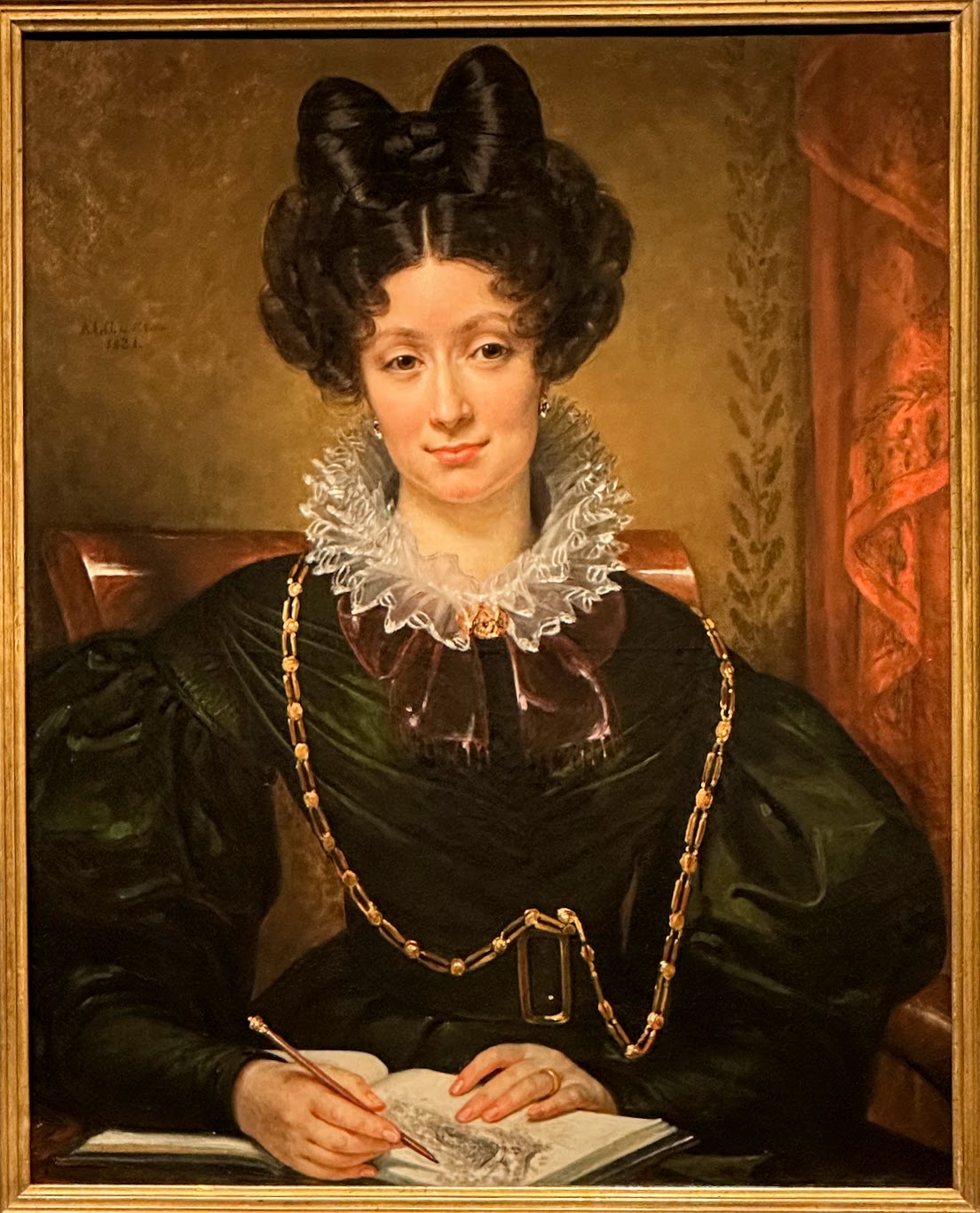
Portrait of an Artist Drawing a Landscape in her Sketchbook – 1831
Amélie Legrand de Saint-Aubin, the eldest daughter of Pierre Jean Hilaire Legrand de Saint-Aubin (1772–1839) and Denise Marie Claudine Legrand (1772–1855), was born in Paris. After training and studying in the Women Only Studio with Charles Meynier, Amélie Legrand de Saint-Aubin‘s Rococo style portraits and history paintings grew in popularity.
Portrait of an Artist Drawing a Landscapein her Sketchbook is of a long standing tradition of women artists picturing women painting art.
Political changes from the French Revolution resulted in women being allowed to exhibit in the French Salon. Amélie Legrand de Saint-Aubin went on to exhibit at 17 salons over the course of her career.
Around 1831, she began teaching, offering private lessons. She never married.
“This stunning portrait recently joined the AGO’s permanent collection and made its debut as part of the exhibition Making Her Mark: A History of Women Artists in Europe 1400 – 1800. “
Marie-Guillemine Benoist
French – 1768 – 1826
Portrait of a Lady Circa 1799
Marie-Guillemine was born in Paris. Her mother was Marguerite-Marie Lombard and her father, René Laville-Leroux, a royal administrator for the ancien régime state. Marie and her sister, Baroness Larrey, (1770–1842), studied art from Élisabeth Vigée-Lebrun. Later they studied under Jacques-Louis David.
Her first exhibition was in 1784, at an annual 1 day show in Paris – Exposition de la Jeunesse.
Until the Louvre Salon became open to all exhibitors in 1791, where Benoist was one of 22 women presenting, she showed yearly at the Exposition de la Jeunesse.
At the Salon in 1804, she won a medal, whereby France’s new Emperor, Napoleon Bonaparte, ordered multiple commissions.
Other than her Salon successes, which are in the French state collection, Benoist’s work, including Portrait of a Lady was attributed to a man; in her case, Jacques Louis David.
Like many women artists of her day, their posthumous fate was to be overlooked, forgotten and/or effaced.
Mary Beale
English – 1633 – 1699
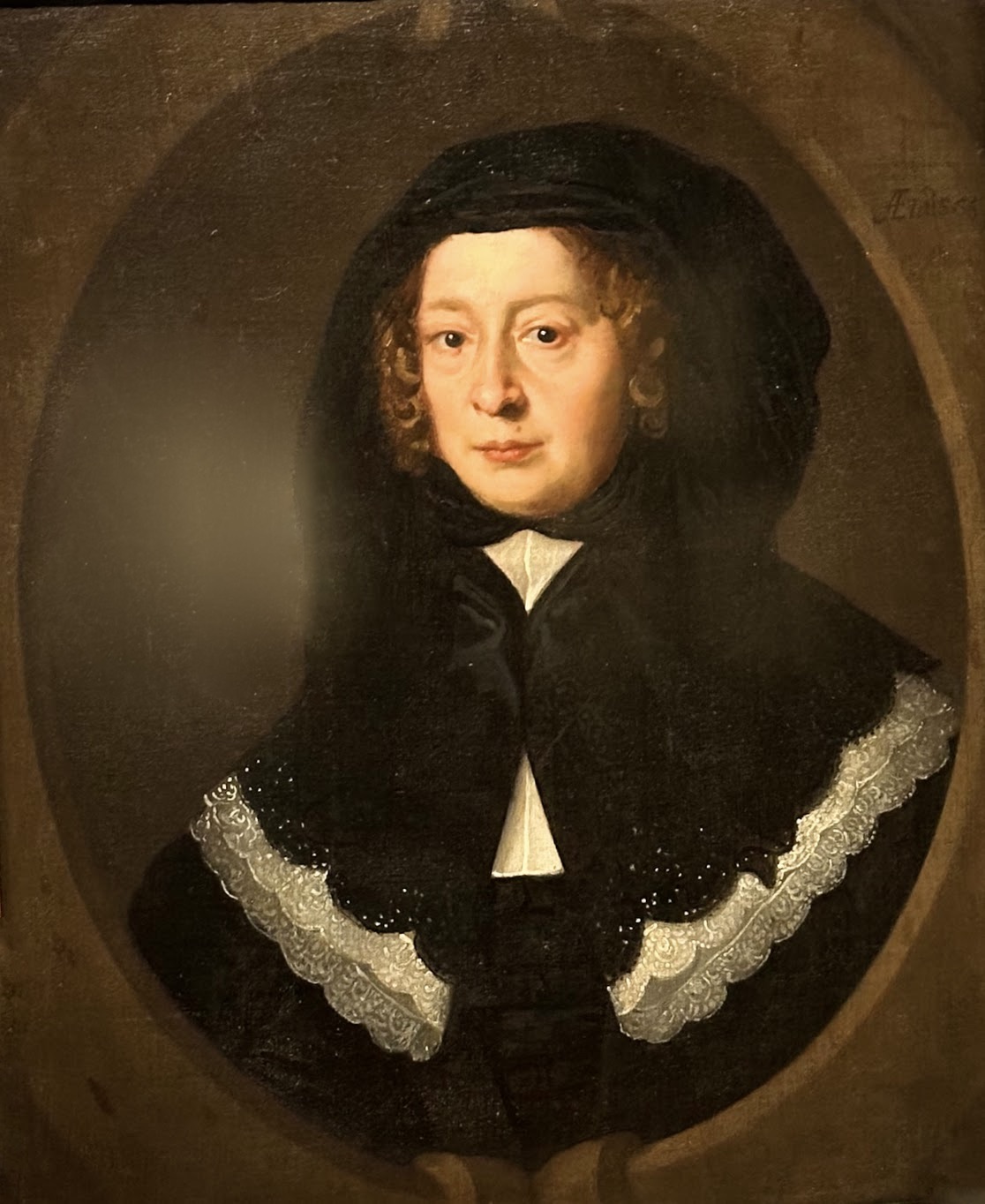
Portrait of a Woman with a Black Hood -Circa 1660
Mary Beale was the daughter of a clergyman, John Cradock, so it seems natural that much of her portraiture is of churchmen. It is not sure who she trained under, but she received considerable guidance from Peter Lely
In London, she moved in intellectual circles. By, and into the 1670s she was in demand as a portrait artist, earning enough money to support her family of four.
After several years of mundane civil service; Mary’s husband, Charles Beale, left his monotonous job to become her full time studio manager.
Much has been learned from the many notebooks he kept.
One example: Charles recorded that in 1677 Mary completed 90 commissioned portraits. There were 31 female sitters and 34 male. The women and girls were mostly either titled or gentry. Men and boys were gentry or of “middling sort.”
Rosalda Carriera
Italian – 1673 – 1757
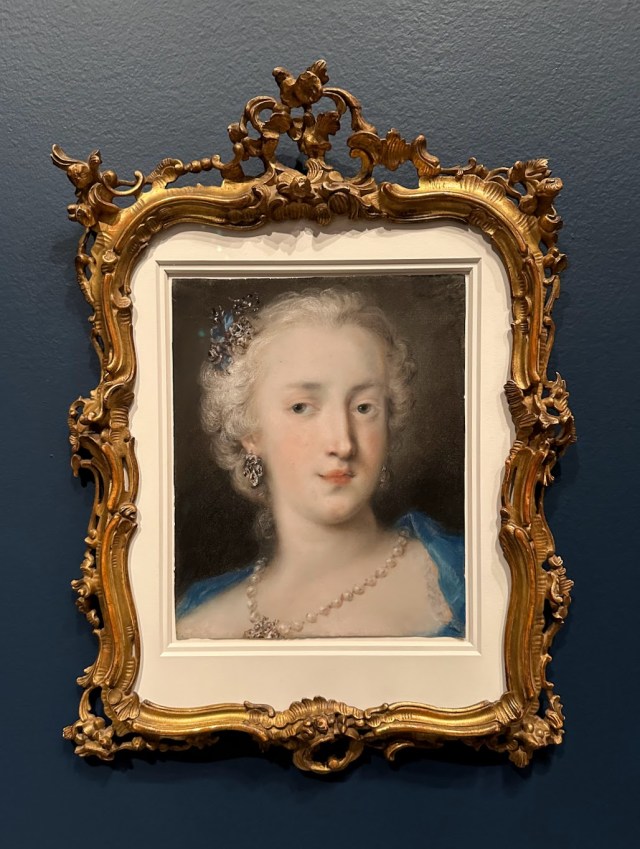
Portrait of a Woman – Circa 1720’s
Rosalba Carriera was born in Venice to Andrea Carriera, a lawyer, and lacemaker, Alba Foresti. Taught to make lace by her mother, little is known of her artistic training. She is renowned for pastel portraiture and allegories.
In 1720, during a stay with French banker Pierre Crozat in Paris, Rosalba created portraits of Louis XV as a child, and members of the French aristocracy. Here she developed a friendship with Antoine Watteau, who influenced her work.
Rosalba is one of the originators of the Rococo style in Italy and France.
Her greatest patron, Augustus III of Poland, collected more than 150 of her pastels. He also sat for her in 1713.
In 1746 she lost her sight, but her work continued to influence many other artists.
I’ve merely highlighted these women’s lives. There is so much more to know about our trailblazing sisters, who went before us.
Welcome back to another instalment of Making Her Mark! I’m joined by Rebecca Budd, curator of Chasing Art to discuss how the poor were documented, by female artists.
Resa – Welcome back, Rebecca! As you point out in your introduction, times were changing. Do you have a main take away from your research?
Rebecca – Thank you for the opportunity to participate in this amazing look back into art history, Resa. One key takeaway from my research is how Geertruydt Roghman, Catherine Brandinn, and Maria Louisa Catherine Cecilia Cosway used their artwork to honour the ordinary moments of life. I was inspired by how these artists challenged societal norms and created space for the voices of the underrepresented.
Resa – We’ve had many amazing sisters. Well, let’s have a look at these 3, with art as our window.
16th Century
In the sixteenth century, change was in the air. Northern Europe witnessed a significant cultural shift as the Protestant movement emerged, challenging the established norms of the Catholic Church. This movement advocated for a personal connection with God, eliminating the need for church intercession.
Art responded. Religious imagery became less prominent, as the focus shifted away from traditional depictions of saints and biblical scenes. This transference in artistic focus not only reflects the broader societal changes brought about by the Protestant Reformation but also underscores the importance of recognizing the value of everyday experiences in art.
17th and 18th Century
During the 17th and 18th centuries, the art world was dominated by the portrayal of aristocracy and religious themes, leaving little room for the representation of ordinary people. The prevailing social hierarchy and the patronage system dictated that artists primarily catered to wealthy patrons who commissioned works that glorified their status and achievements. This resulted in a paucity of artworks focusing on the lives and experiences of the common populace, who were often relegated to the background of grand historical or mythological scenes.
Geertruydt Roghman
Dutch – 1625 – 1657
Geetruydt Roghman was born in Amsterdam into a family steeped in artistic tradition. Her upbringing in a creative household, with a father who was an engraver and a great uncle who was a celebrated painter, likely influenced her perspective on art.
A Pioneering Figure
Artists began to explore new themes that reflected the everyday lives of individuals, leading to a rich tapestry of subjects that resonated with the public. Geetruydt Roghman dedicated her work to depicting ordinary women engaged in their daily tasks. Her series not only showcased the realities of their lives but also contributed to a broader understanding of women’s roles in society during the seventeenth century.
Despite her limited output, Geetruydt Roghman’s work offers a glimpse into the lives of women, challenging the norms of her time and highlighting the importance of their stories. This marks her as a pioneering figure in a time when few artists chose to highlight the experiences of women. .
Celebrating Geetruydt Roghman’s Art
Exploring Geetruydt Roghman’s engravings on paper allows us to connect with the essence of humanity, as they capture the nuances of everyday life and the stories of real people who lived before us. These sketches serve as a mirror reflecting our shared experiences, emotions, and struggles, reminding us of the beauty found in simplicity.
By exploring Geetruydt Roghman’s work, we gain understanding into diverse cultures and perspectives, fostering empathy and understanding in a world that often overlooks the significance of the ordinary. Such examination not only celebrates the artist’s talent but also encourages us to appreciate the richness of human existence in all its forms.
I believe that Geetruydt Roghman invites us to appreciate the beauty and significance of the ordinary, enriching the narrative of art history.
“Making Her Mark” exhibition encourages a reevaluation of her work, which advocates for the recognition of everyday life as a worthy subject of artistic exploration.
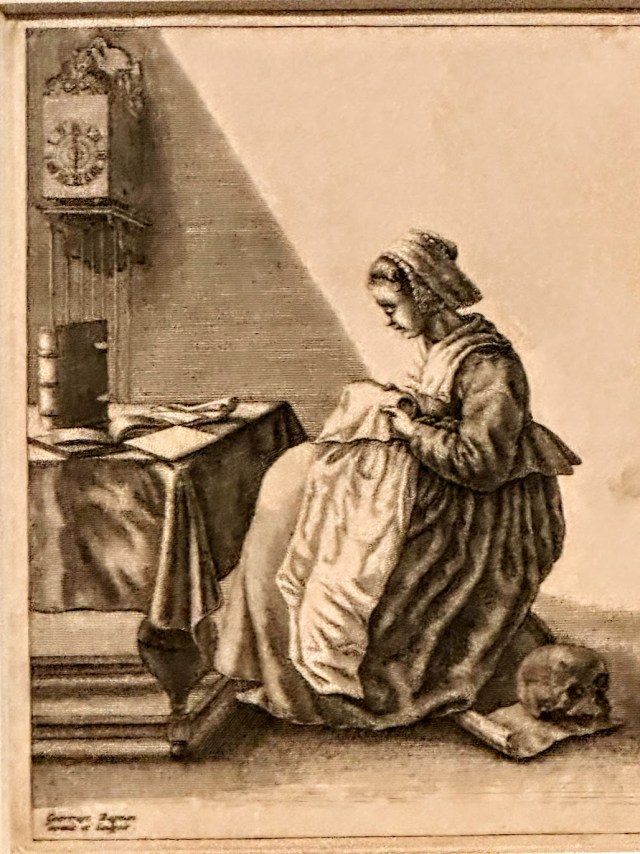
Note how small these engravings on paper are. They are in 8 x 10 frames.
Counter clockwise from the top: Young Girl Sewing – The Dressmakers – Woman Spinning
1640 – 1647
Resa – Amazing art history, Rebecca. Now, on to Catherine Brandinn! You had some difficulty gathering information about her. For a while it looked like all we were going to have to remember her by was her art. Then you discovered Johann Christian Brand‘s name appears alongside hers, which seems to muddy the waters.Do you think this is another case of the disenfranchisement of women in the arts?
Rebecca – I was fascinated by the connection between Catherine Brandinn and Johann Christian Brand, which highlights the complex interplay of gender and recognition in the art world. Without question, Catherine Brandinn’s artistic legacy has often been overshadowed by the presence of Johann Christian Brand, whose name frequently appears alongside hers.
This phenomenon raises important questions about the historical disenfranchisement of women in the arts. The association of Johann with Catherine could suggest a similar pattern, where her identity and artistic achievements are overshadowed by his prominence.
However, I believe that there may be another explanation. Consider that Johann Christian Brand’s recognition may have been a means of validating Catherine’s work. In a time when female artists struggled for acknowledgment, the inclusion of a well-known male figure could lend credibility to her art. Consequently, while Johann’s association with Catherine may complicate her legacy, it could also provide a platform for her art to gain the recognition it deserves.
Resa – You make a good point how difficult it was for women to be recognized in the arts. We may never know of Johann Christian Brand’s intent. However, her art is remembering her, not him.
Catherine Brandinn
Austrian? 18th century
The history of painting has predominantly celebrated the lives of the elite and significant events, often neglecting the stories of ordinary people. This selective representation raises questions about the value placed on different experiences and the narratives that have shaped our understanding of the past. The absence of everyday moments in art suggests a hierarchy of importance, where only the lives of the wealthy and powerful are deemed worthy of immortalization on canvas.
If painters had chosen to depict ordinary moments, our historical narrative would be richer and more inclusive. Imagine a world where scenes of daily life, community gatherings, and simple joys were captured alongside royal portraits and grand battles. Such representations would not only provide a more comprehensive view of society but also highlight the shared human experience, fostering a deeper connection to our collective history.
The transition in art from religious themes and the portrayal of affluent patrons to the representation of ordinary people began during the Renaissance and continued into the Baroque period. This shift marked a significant change in the subject matter of paintings, as artists started to explore the lives of the common man, and the beauty found in everyday activities. The rise of humanism encouraged artists to focus on individual experiences and emotions, leading to a more relatable and accessible form of art that resonated with a broader audience.
Catherine Brandinn portrayed ordinary people, capturing the essence of everyday life through her unique artistic lens. Her work often reflects a deep appreciation for the beauty found in the mundane, showcasing individuals engaged in daily activities. Her name is intricately linked to artist, Johann Christian Brand. This connection raises questions about her identity and the role this artist played in her life. When the artwork of Catherine Brandinn is viewed, Johann Christian’s name often appears alongside hers, suggesting that her narrative is largely defined through her relationship with this artist. This intertwining of identities hints at a deeper story waiting to be uncovered.
Catherine Brandinn’s painting, “Mädel mit Waldholz (Peasant Girl Carrying Wood),” created in 1775, captures a poignant moment in rural life. The artwork portrays a young peasant girl, her delicate frame burdened by a large bundle of wood, symbolizing the labour and resilience of women in agrarian societies. Catherine Brandinn’s use of soft colours in her engravings on paper evokes a sense of warmth and intimacy, inviting us to appreciate the girl’s strength and determination amidst her modest surroundings. The composition of the painting draws attention to the girl’s expression, which reflects a mixture of pride and fatigue.
“Mädel mit Waldholz” stands as a testament to the often-overlooked contributions of women in history. By focusing on the everyday tasks of a peasant girl, Catherine Brandinn elevates her subject to a figure of dignity and importance. This image encourages us to reflect on the narratives of those who have historically been marginalized in the art world and society at large.
Resa – So Rebecca, we move on toMaria Louisa Catherine Cecilia Cosway. You mentioned that in researching Maria Louisa Cosway, you saw lots of her artwork, but not this one particular workHome Industry, that showed at “Making Her Mark”. Do you think I’m crazy to think that we have something special here?
Rebecca – I don’t think you’re crazy at all, Resa. I am beyond thrilled that you were able to capture Home Industry in a photo. You have an amazing ability to find art treasures wherever you go!! Home Industry” is a gem!!
Maria Louisa Catherine Cecilia Cosway
English – 1760 – 1838
Maria Louisa Catherine Cecilia Cosway, an accomplished artist of the late 18th and early 19th centuries, was known for her diverse portfolio that included both prominent figures and ordinary individuals. Born in 1760 in Florence, Italy, she moved to England where she became a prominent portrait painter. Her ability to portray significant historical figures speaks to her talent and the esteem in which she was held in artistic circles.
A Progressive Artist
Maria Cosway’s artistry extended beyond the elite, as she sought to represent the lives of everyday people in her work. This inclination towards inclusivity allowed her to bridge the gap between different social classes, showcasing the beauty and dignity of ordinary life. Through her artwork, she celebrated the humanity of her subjects, making her art accessible and relatable to a broader audience. This commitment to portraying a diverse array of individuals marked her as a progressive artist for her time.
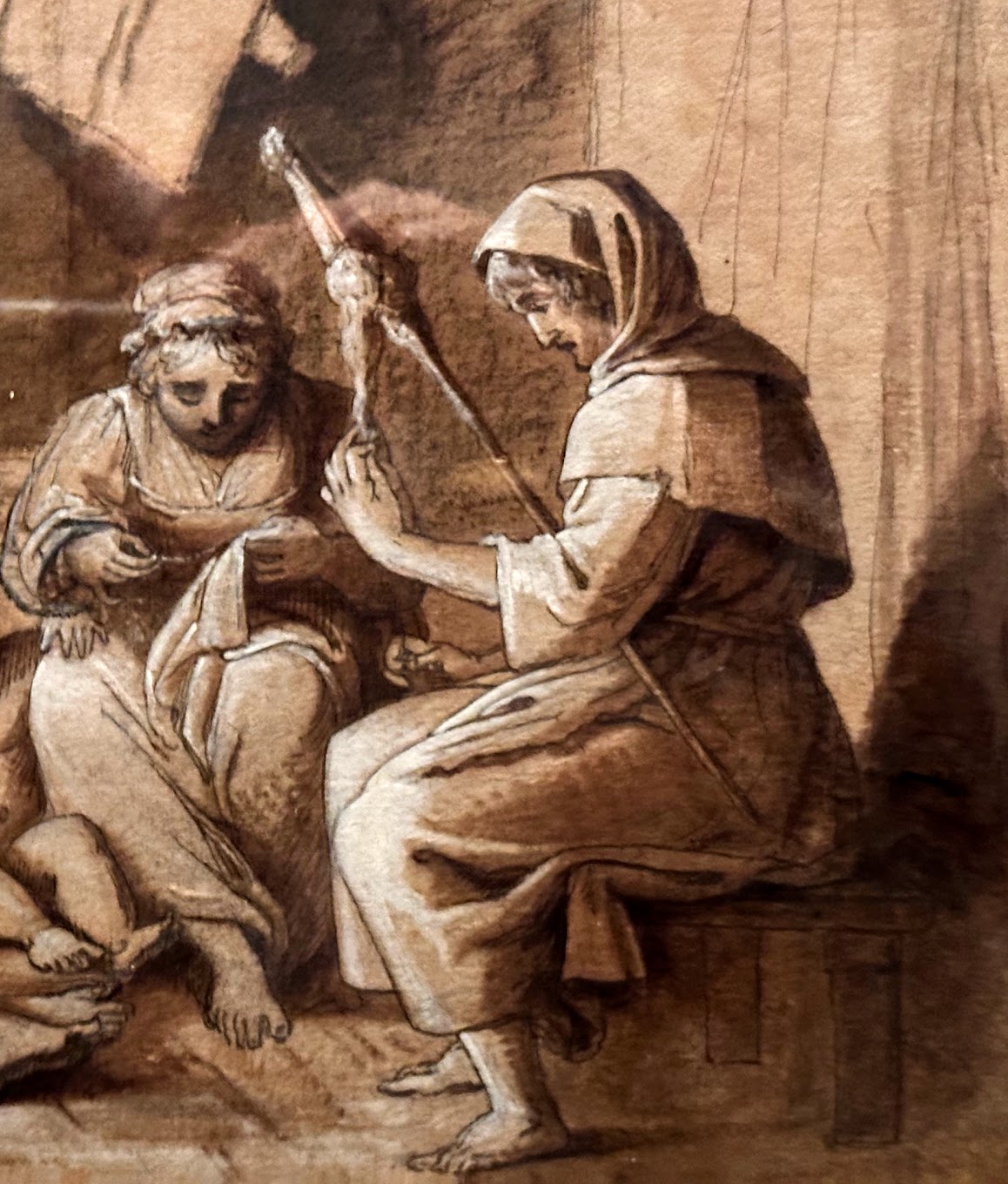
Home Industry tells a story of resilience and the quiet strength found within the home, serving as a reminder of the essential work that occurs beyond the public eye. Through her portrayal, she elevates the mundane to the extraordinary, encouraging us to recognize and honour the stories woven into the tapestry of domestic labour. It is a nostalgic reminder of a time when craftsmanship flourished within the domestic sphere, emphasizing the value of handmade goods and the skills passed down through generations.
Home Industry (1800) Pen and Ink Wash
We are invited to reflect on the importance of labour in a rapidly changing world and consider the implications of progress on the cultural fabric of society. During the late 18th and early 19th centuries, when Maria Cosway created this piece, the landscape of work was undergoing significant transformation due to the onset of industrialization.
Cottage industries, which had long been a staple of rural economies, faced increasing threats from mechanization and factory production.
This piece tells the story of a specific moment in time, evoking a narrative about the challenges faced by families during the industrial revolution. As industrialization encroached upon traditional ways of life, this artwork stands as a testament to the resilience of home-based labourers.
Home Industry also speaks to our time in history and is a relevant reflection on the balance between innovation and tradition.
Resa – Wow! Thank you Rebecca! Your co-hosting here on the “Making Her Mark” series has made it a much richer experience. Still, there’s lots to go. May I be allowed to try and tempt you to co-host another time, no rush, just sometime in the future? I have some juicy topics and artists I can present to you!
Rebecca– Hi Resa! Thank you so much for your kind words! I’ve truly enjoyed co-hosting the “Making Her Mark” series with you, and I would love to collaborate again in the future. Your topics and artist suggestions sound exciting, and I can’t wait to hear more about them. Let’s definitely keep the conversation going!
Resa – Yahoo! You know Rebecca, we might just be artoholics!
Resa – So, Rebecca, in this last Self Portraits post, we are headed to the Netherlands, 17th century, to visit another artist that I had never heard of. Had you heard of Judith Leyster before this post?
Rebecca – Yes – just recently. I discovered her when I travelled virtually to the Rijksmuseum. Judith Leyster was featured in their Women of the Rijksmuseum exhibit two years ago. It was an eye-opening experience to discover her work.
Resa – Very Cool, I’m excited to se what you’ve dug up!
Once Forgotten Dutch Master
Judith Leyster, the once-forgotten Dutch master, has experienced a resurgence in recognition. She was commemorated in a Google Doodle, her artwork achieved higher- than-expected prices at auction, and she was featured in the most prestigious chamber of the Rijksmuseum.
Who Was Judith Leyster
A remarkable Dutch painter of the 17th century, Judith Leyster was born 1609, in Haarlem, Netherlands. The daughter of a brewer, she displayed a precocious talent for painting from a young age.
By the age of 24, Leyster had achieved the remarkable feat of becoming a member of the Haarlem painters’ guild, marking her official recognition as a masterful artist. She was one of the rare professional women painters of her time, being one of only two women accepted as a master in Haarlem’s painters’ guild during the entire 17th century Netherlands.
Leyster’s artistic talent quickly gained recognition, and she became known for her lively and expressive compositions, often depicting genre scenes, portraits, and still life paintings. Her work radiated a sense of spontaneity and skillful use of light and shadow, showcasing her technical prowess and innovative approach to painting.
Leyster’s artistic pursuits defied conventions, as she ventured beyond the typical subject matter embraced by Dutch painters of her time. Her work encompassed a diverse range, and she was among the pioneering artists who explored and popularized the domestic genre scene, portraying everyday life with a fresh perspective.
In the early 1630s, before her marriage to the lesser-known artist Jan Miense Moleanaer, Leyster produced some of her most significant works. However, despite her talent and dedication to her craft, her contributions to art history remained largely unrecognized until the late 19th century.
Judith Leyster Rediscovered
The rediscovery of Leyster’s significance in the art world came about during a lawsuit between an art dealer and his vendor.
It was revealed that many works attributed to her contemporary and rumoured rival, the great Dutch painter Frans Hals, were, in fact, Leyster’s creations that had been incorrectly credited. This significant discovery brought long-overdue attention to Leyster’s remarkable talent and her influential role in shaping the Dutch Golden Age of art.
It is remarkable how the true authorship of artworks can be uncovered through careful examination and historical investigation. The discovery of Leyster’s initials hidden beneath a faked signature of Frans Hals in “The Happy Couple” (aka The Carousing Couple) serves as a testament to her enduring impact on art history and the need for ongoing reassessment of attributions.
This revelation not only sheds light on Leyster’s artistic contribution but also prompts a re-evaluation of artworks attributed to her contemporaries. It further underscores the significance of ongoing research in uncovering the often overlooked achievements of pioneering artists.
Resa – When searching for other female artists from the past whose art has been misattributed, I found an intriguing article (July/2024) inDaily Art Magazine. The article cites 5 female artists.
“This systematic misattribution essentially meant the erasure of women from the art historical canon, which eventually resulted in their erasure from history itself.”
Rebecca, do you think it’s possible that as art experts and historians uncover yet more misattributed art that we could see some famous paintings by famous artists, the Rembrandts, Da Vincis, et al being reattributed to women?
Rebecca – You have asked a very insightful question, Resa! It’s certainly possible. As more art is studied works that have been misattributed may be finally recognized as contributions of women artists. It would be a significant shift in how we view art history. I truly believe that we are now embarking on an extraordinary exploration of art history. It gives me great comfort that we are seeking to foster a richer and more equitable understanding of the artistic legacy we inherit. I am glad that you mentioned the Daily Art Magazine. It is one of my go-to places to learn about art.
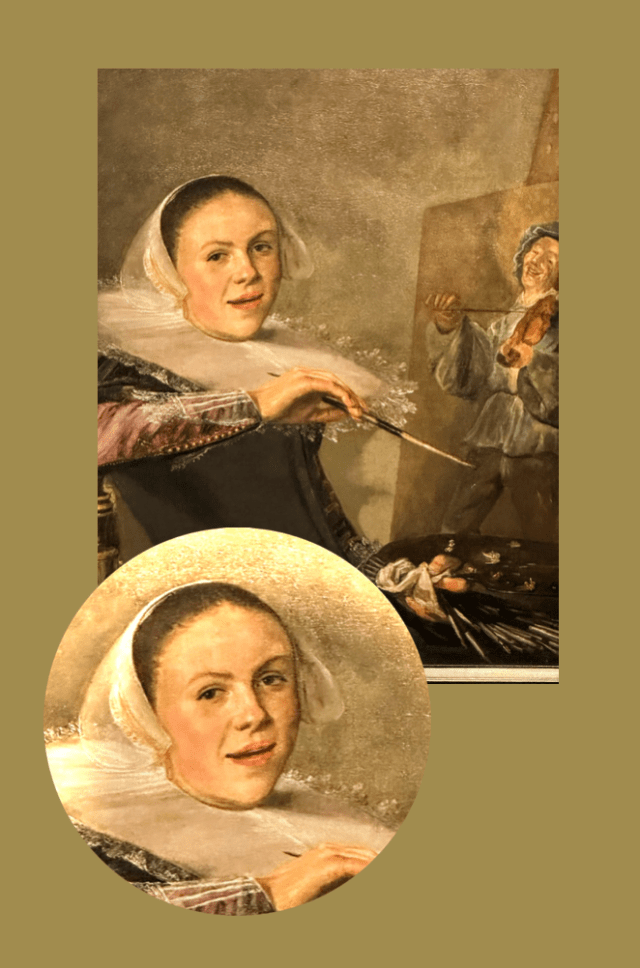
Judith Leyster’s Self Portrait: A Glimpse into the Artist’s World
Judith Leyster’s self-portrait offers a glimpse into her life and artistry. Created before her admission to the guild in 1633, the portrait encapsulates a moment of confident creativity and engagement. Leyster’s self-assured expression, characterized by a confident smile and parted lips as if to speak, exudes a sense of self-assurance and mastery. The casual pose, with one arm nonchalantly resting on the back of her chair, hints at the artist’s ease and comfort in her own studio.
It is difficult to photograph art. I captured many works beautifully. However, this painting was the finale of the show, and was heavily lit with warm light.

Shot on an angle, the lighting was evaded, and it seems to be closer to many photos of it. Still, it seems no 2 photos are the same.
The liveliness and freedom evident in Leyster’s brushwork mirror her spirited approach to art, capturing a fleeting pause in her work as she glances toward a potential visitor. This subtle interaction suggests a moment of connection with a viewer, possibly a patron, inviting them to share in the experience of a work in progress.
In this self-portrait, Judith Leyster not only presents herself as a skilled artist but also provides a glimpse into the vibrant and dynamic world of creativity that she inhabited.
Today, Judith Leyster is celebrated for her creative spirit, artistic innovation, and lasting impact on the history of art. Her legacy continues to inspire and engage art enthusiasts and scholars around the world.
Resa – Well, Rebecca, so ends our series on Self Portraits. It’s been a pleasure and an honour having you here withme. Thank You!
I look forward to your return, to discuss some engravings on paper by Catherine Brandinn and Geertruydt Roghman. These are of utmost interest as the images depict the working poor, not a big subject of artists in those times.
Rebecca – Thank you, Resa! It has truly been a privilege to explore these amazing women through “Making her Mark” with you. Your photographs allowed me to virtually experience the joy of viewing these paintings. Thank you for celebrating and honouring these artists. Their resilience and creativity continue to inspire and empower us today, even as they provide a vital legacy for future generations of women in the arts.
I’m eagerly anticipating our next discussion on the engravings by Catherine Brandinn and Geertruydt Roghman, as the portrayal of the working poor offers a unique and important perspective that, I believe, deserves more attention in the art world.
As you say so eloquently, “Art Remembers Us.”
Click on X to see research links& a fabulous video on her
Resa – So, Rebecca we travel back to the 1600’s Netherlands and find this amazing woman, Anna Maria van Schurman.Are you dizzy from our time travel globe trotting, and your research homework, yet?
Rebecca – Our journey back to the 1600s in the Netherlands was nothing short of extraordinary. Meeting Anna Maria Van Schurman, a remarkable figure of her time, left a lasting impression on me. Her intellect and artistry were truly inspiring, and I felt privileged to witness the world through her eyes. Resa, you orchestrated this incredible adventure, taking me on a whirlwind exploration of history and culture. I am deeply grateful for the memories created during this remarkable experience.
Resa – Aw, thank you Rebecca! Without further ado, here is Anna Maria van Schurman.
“No Pride or Beauty”
Anna Maria van Schurman (November 5, 1607 – May 4, 1678) was a remarkable figure in Dutch history, known for her diverse talents and her advocacy for female education. She was a painter, engraver, poet, classical scholar, philosopher, and feminist writer. She is best remembered for her exceptional learning and her defence of female education.
With outstanding proficiency in multiple disciplines, including art, music, and literature, Van Schurman’s remarkable intellect and dedication to learning set her apart. She left a lasting legacy as the first woman to unofficially study at a Dutch university.
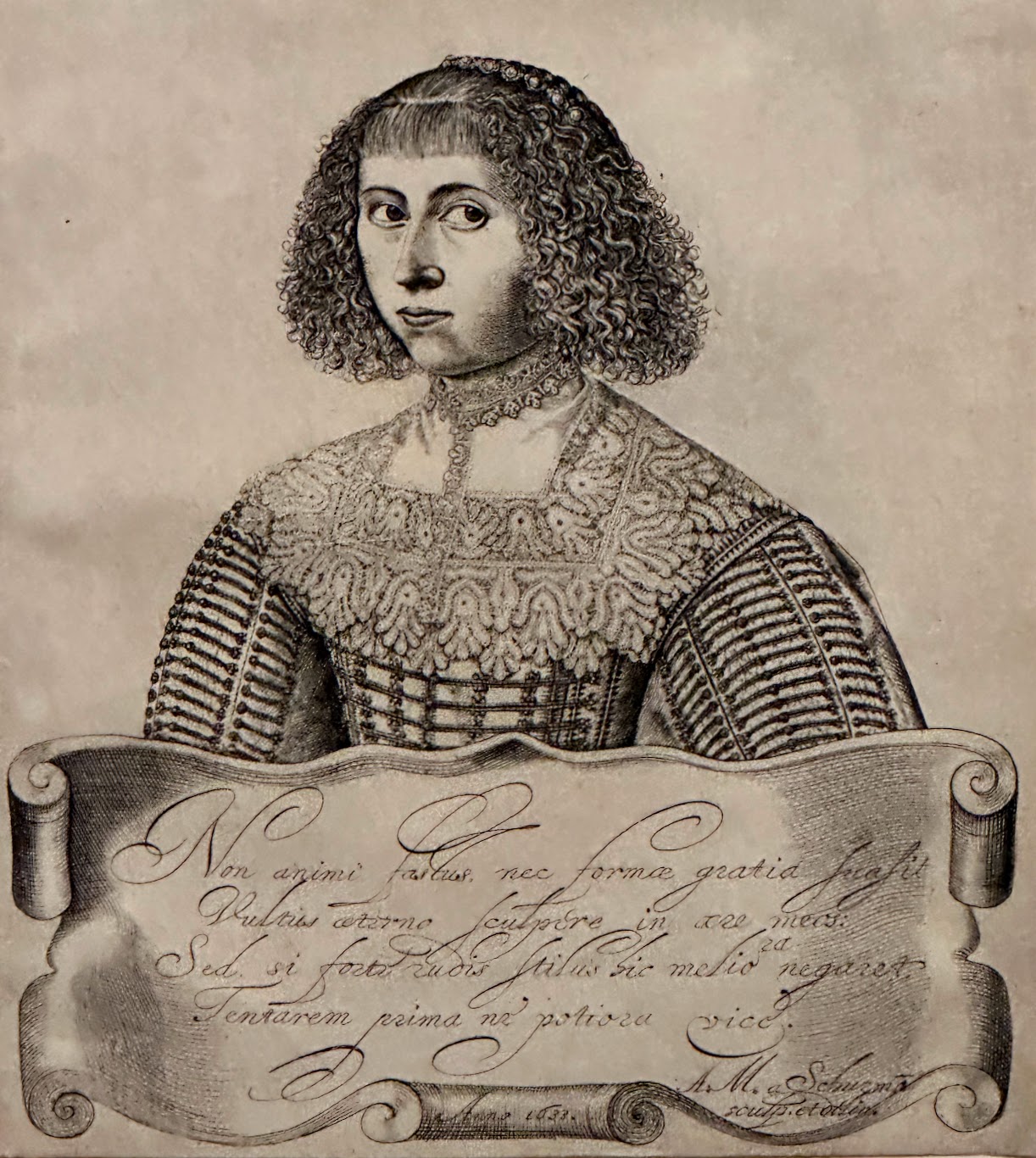
Self Portrait – Age 33 years
No pride or beauty prompted me
to engrave my features in eternal copper;
But if my unpractised graver was not yet capable of producing good work,
I would not risk a more weighty task the first time.
Education and Achievements
Anna Maria van Schurman received a strong classical education from her father, establishing herself as a child prodigy. By the age of seven, she demonstrated exceptional proficiency in reading and translating Latin and Greek. Impressively, by age eleven, she had also acquired proficiency in German, French, Hebrew, English, Spanish, and Italian. Furthermore, she delved into the study of art, ultimately becoming a distinguished artist in the disciplines of drawing, painting, and etching, albeit with few surviving examples of her artwork.
Following her years of fervent advocacy for women’s education, van Schurman was finally extended an invitation to attend the University of Utrecht at the age of 29, marking a significant milestone as the first female student. However, her presence in the university was subject to the stipulation that she conceal herself behind a curtain during classes, a measure taken to prevent any potential distraction for her male counterparts. Despite these challenges, she graduated with a degree in law, consequently becoming the first female to achieve this educational feat.
A polyglot adept in fourteen languages, her linguistic abilities encompassed Latin, Ancient Greek, Biblical Hebrew, Arabic, Syriac, Aramaic, Ethiopic, as well as various contemporary European languages.
Van Schurman’s journey exemplifies her relentless pursuit of knowledge and her groundbreaking contributions to female education.
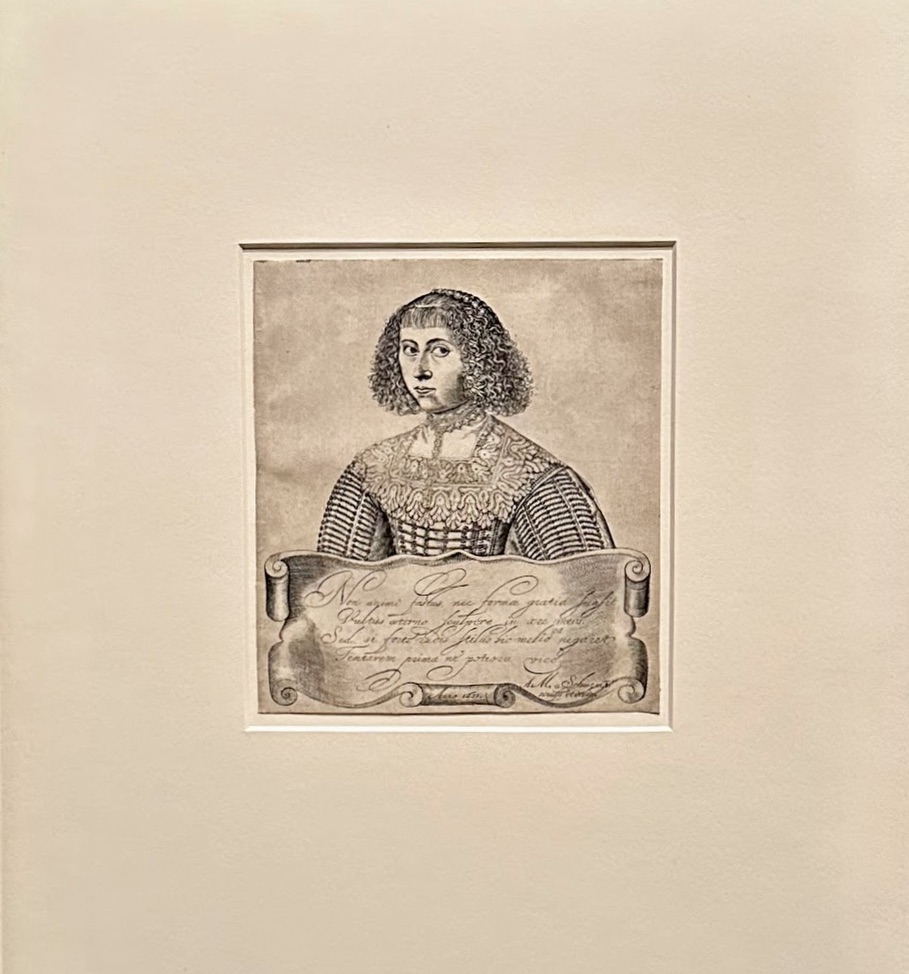
In an 8 x 10 frame next to a 6 X 8 frame in the AGO, one can see how tiny the self portrait is.
Advocacy for Female Education and Intellectual Contributions
Anna Maria van Schurman’s unwavering commitment to advocating for female education and her active participation in intellectual discourse significantly contributed to the advancement of women’s rights and intellectual equality in the Dutch historical context.
One way Anna Maria van Schurman advocated for equal education for women, was through her prolific writings during the 1640s and 50s. In her notable work “Whether the Study of Letters is Fitting for a Christian Woman,” published in 1646, she passionately argued for the educational rights of women, upholding that individuals with aptitude and principles should have the opportunity to pursue learning. She ardently believed in the importance of women receiving comprehensive education across all subjects, provided that it did not impede their responsibilities within the domestic sphere.
Resa – Were you surprised to get an email, while working on this post, with a link to Anna van Schurman’s book The Learned Maid (1659)? I know I sure was.
Rebecca – It was indeed a surprise, Resa! I read that Anna van Schurman’s “The Learned Maid, or, Whether a Maid may be a Scholar” emerged from her extensive correspondence with theologians and scholars throughout Europe, focusing on the crucial topic of women’s education. She argues that educating women not only enriches their lives but also benefits society as a whole! I was astonished by Anna’s progressive stand in a time when women’s education was often discouraged. To state boldly that knowledge is not limited by gender was a courageous endeavour.
Click on the book to read it, photographed page by page!
Notably, van Schurman actively engaged in the dissemination of articles elucidating the intellectual equality between men and women, countering the prevalent notion that women were solely suited for roles as wives and mothers. Her contributions to contemporary intellectual discourse were expansive, involving exchanges with influential cultural figures such as philosopher René Descartes, philosopher Marin Mersenne, and writer Constantin Huygens . These interactions further solidified her influential presence within the intellectual circles of her time.
Later Life and Involvement with Labadism
Toward the end of her life, Anna Maria van Schurman became involved in a contemplative religious sect founded by the Jesuit Jean de Labadie known as Labadism. This mystic offshoot of Catholicism preached the significance of communal property and included the directive to raise children communally. Van Schurman, deeply involved in the sect, became de Labadie’s primary assistant and journeyed with the sect as it traveled. Her association with de Labadie facilitated the publication of her final book “Eucleria,” in 1673, which is considered one of the most comprehensive explanations of Labadism.
Her engagement in Labadism at the later stage of her life showcased her continued pursuit of spiritual and intellectual endeavours, further enriching her diverse legacy.
Resa – I’d never heard of Labadism, until this article. Interestingly, Van Schurman refers to herself as “that incomparable Virgin” on the opening page of “The Learned Maid”. Do you find it odd that such a scholar would join up with a religious offshoot? It sounds like a cult.
Rebecca – That is a very good question, Resa! In her 60s, Anna van Schurman became a prominent figure among the Labadists, a religious group that emerged in the 17th century, characterized by their communal living and strict adherence to a mystical interpretation of Christianity.
While some critics labeled the Labadists as a cult due to their unconventional beliefs and practices, including their rejection of mainstream religious authority and emphasis on personal revelation, supporters viewed them as a genuine spiritual community seeking to live out their faith in a more profound way. The debate over their classification often hinges on the definitions of cult versus legitimate religious movement, reflecting broader societal attitudes towards alternative spiritual paths.
Resa – Rebecca, thank you, thank you for joining me in this series on self-portraits from the MHM exhibition!
Rebecca – This has been a marvellous series, Resa. Your innovative approach entices us all to enter the“rabbit hole”of creativity. When we go back to honour artists, we give honour to our time. And when we give honour to the “now”, we become more creative and give our voice to the future.
Click on the above banner to see Rebecca’s research links!







































 Graffiti Lux Art & More
You must be logged in to post a comment.