There had been some cool alley finds on this hot day, but not a real prize.
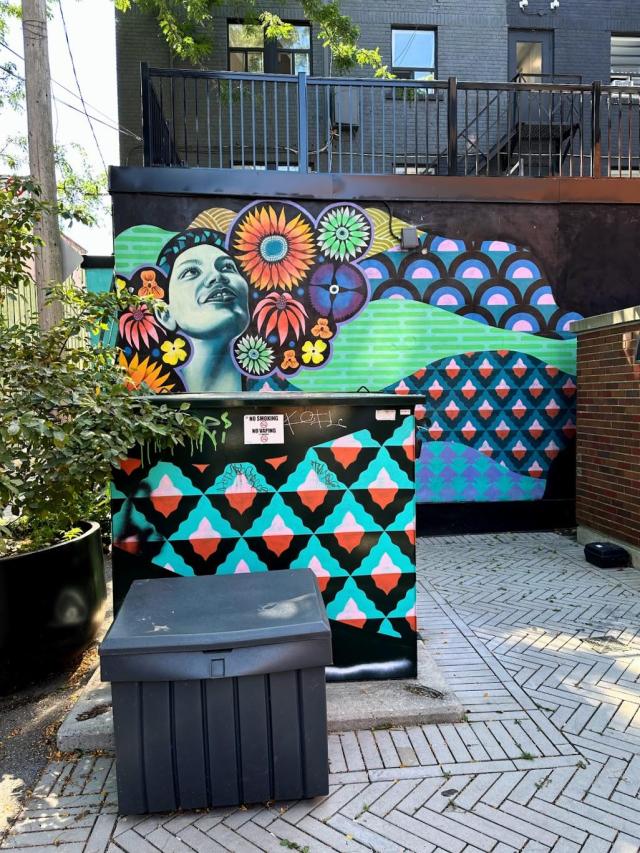
Then I turned into a shady alley, sweet smelling and comforting.
It was a Healing Garden.
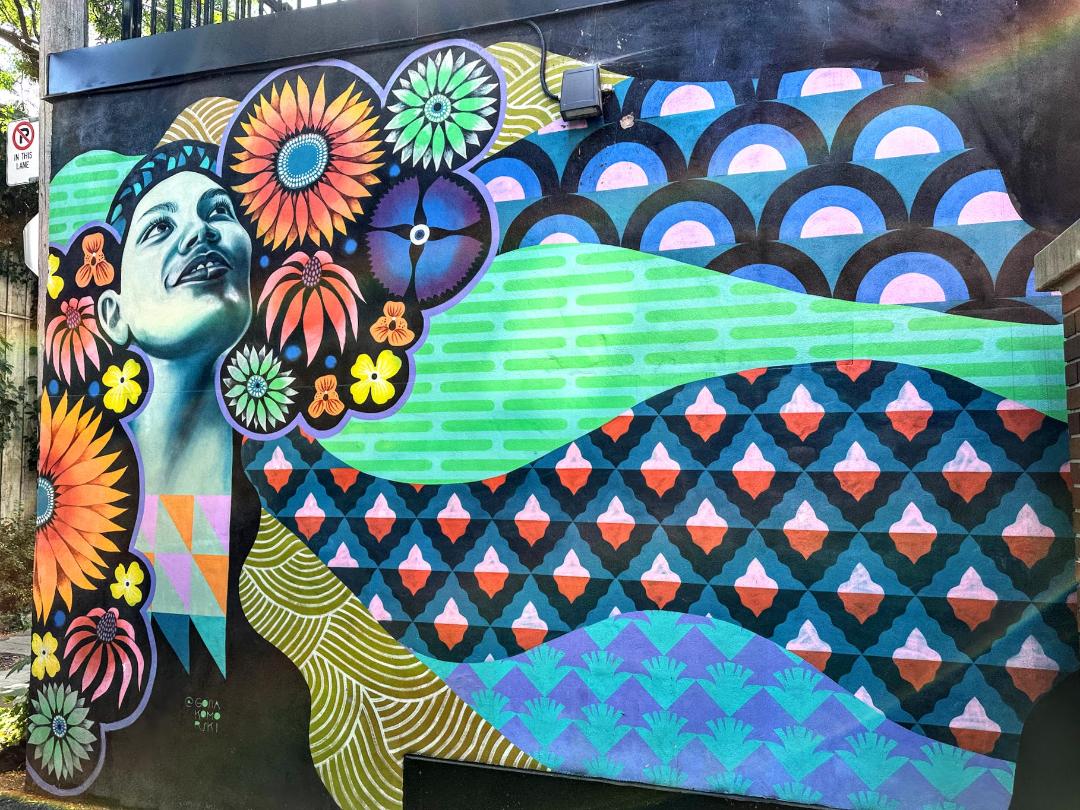
Turns out this alley is one of 2 Healing Gardens. A concept designed by artist Monica Wickeler & Indigenous artist Nyle Miigizi, the alley is filled with native plants and healing medicines. The Anishinaabe Nation’s story of the gift of Jewelweed was handed down to Nyle from his grandmother, Verna Patronella Johnston.
Mural artist Gosia Komorski was hired to paint.
Healing… we can all use some right now.
Best to be whole and positive, as we go into what seems will be a hectic new year.
Now it’s winter, but I fully intend to find the other Healing Garden, in late spring when the herbs are happening.
Pics taken by Resa – August 30, 2024
Toronto, Canada
Mural Artist:
If you click on the document below, you can read about the project. Pardon for the sloppy shot!
This song is not about a Healing Garden, but it feels like one. (Yes, the image is moving!)
My new blog pal, Ruth Maramis, wrote and executive produced “HEARTS WANT”.As I watch it for an enjoyable third time, I have some questions for her.
Resa – The location is fabulous. Tell me about it!
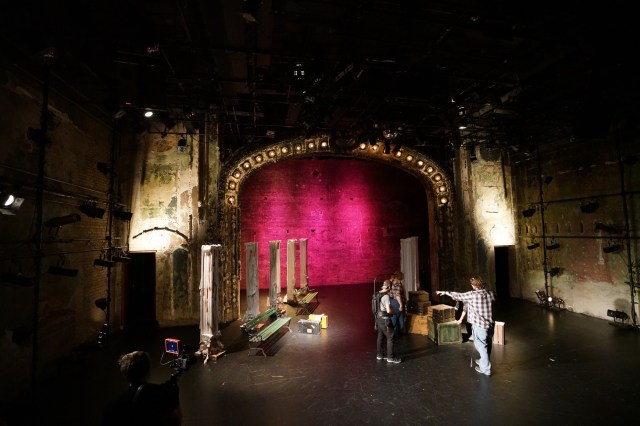
Ruth – It was in a historic, 100+ year-old theatre in Minneapolis, Minnesota, USA., that looks like it’s in Europe. It’s perfect as my story is supposed to take place in England. I set the story in a real place in the UK., a small cathedral city called Chichester in West Sussex, England (about a 1.5-hour drive south of London).
The following clip is 31 seconds long. Not necessary to watch it, but will add context to the conversation.
Logline: Two former lovers who reunite for a play by their terminally ill mentor face the consequences of a secret that could change their lives forever.
Resa – This would make a fab feature. Have you scripted it out as a feature?
Ruth – Yes I have written the full script, as the short was actually born out of a feature-length live script reading with actors.
Resa – As a feature does it have a happier (not necessarily happy) ending?
Ruth – The feature-length script has a hopeful ending, not a perfect ending tied with a big red bow, but it hints that Jacques and Lily are back together. Without giving too much away, it’s book-ended with a stage performance that makes the story come full circle. I envision the story as more than just a romantic drama but also a redemption story for Martin, the playwright whose voiceover is heard at the beginning of the short. He has a much more prominent role in the full story, and it’s he who brought Lily & Jacques together for his play, which is somehow connected to his past.
I love stories of second chances, as we all sometimes need a do-over and a chance to make amends. As a fan of stage performances, there’s something so intriguing about the world of theatre to set a story in.
Resa – The actors playing the two former lovers Lily (Sam Simmons) and Jacques (Peter Christian Hansen), are fabulous. Tell me a bit about them. I see Peter got a Best Actor Nominee at the YES! Let’s Make a Movie Film Festival in Montreal.
Ruth – Oh, believe it or not, Sam is from a nearby town in Sussex, though I had met her here in Minneapolis at a film festival and she had just moved from England a year prior!! Talk about serendipity, there are actually a lot of crazy serendipitous things about my film project!
I met Peter for the first time at the full script reading back in January 2017, four months before we shot the short film! My friend Kirsten suggested him to me for Jacques, as they had worked together in a film before. Both of the leads were playing Jacques and Lily at the reading, and had such great chemistry. Everything happened so fast after the reading at my friend JoJo’s home. (She ended up becoming one of the film’s producers).
Peter is quite a prominent theatre actor here in the Twin Cities, though I didn’t know that until I met him. He’s been in so many local plays; he’s also the artistic director of his own theatre company, Gremlin Theatre, in St. Paul, MN. I’m grateful to have found such terrific actors for the short film. They truly brought my characters to life beautifully!
Resa – As a Costume Designer I must ask, why is Jacques wearing a 1940s pilot bomber jacket and Lily a headscarf?
Ruth – Ok so in my original script, the play that the two main characters reunite in is a 1940s WWII romance drama where he’s a British Royal Air Force pilot, so the costume designer found this RAF sheepskin bomber jacket we could rent from Guthrie Theatre (the largest regional playhouse in the country).
I wanted to give a subtle nod to Gregory Peck in Twelve O’Clock High (I had the biggest crush on him since Spellbound), even though Peck’s character in the WWII movie is American. If you notice that it looks a bit big on Peter Hansen (the lead actor) is because I had to find a jacket that would fit both him and the other actor who plays his character’s understudy, and that guy (Noah Gillet) has a slightly larger frame than Peter’s. Same with his pants, as I had to save cost by renting just one set of costumes instead of two, ha..ha!
As for Lily’s headscarf, because she’s a biracial woman with a large ‘fro. She often had to hide her black identity in the 1940s.
Resa – The neck piece Lily wears at the beginning is too, stunning. It is so fabulous, I couldn’t take my eyes off of it.
Ruth – It’s actually Sam Simmons’ own necklace that she let us borrow for the film. My costume designer Caroline loved it and it paired well with the maroon jumpsuit she had on during that scene.
Due to budget constraints, I asked the actors to provide their own wardrobe for the contemporary scenes.
Resa – Tell me, why is Lily holding a suitcase in the “play”, within the short?
Ruth – The scene that appears in the short film is written as a farewell scene where the two lovers have to go separate ways, hence she was holding a suitcase. We decided not to include any dialog so it would not distract from the story of the film, if that makes sense.
Resa – Total sense!
Hearts Want Streams on Prime
With a 15 minute running time, it is well worth the watch!
Resa – So, What’s next on the agenda for Ruth Maramis?
Ruth – I really enjoyed making short films, but at this point, I really want to focus more on getting HEARTS WANTfeature film off the ground, as that is truly my passion project. I’ve done pretty much everything I could to get it developed, I went to AFM (American Film Market) in 2019 to try to pitch it to executives/financiers, did fundraising events, etc. but so far it’s kind of stalled. I know it’ll get made eventually, and I realize this is a marathon, not a sprint.
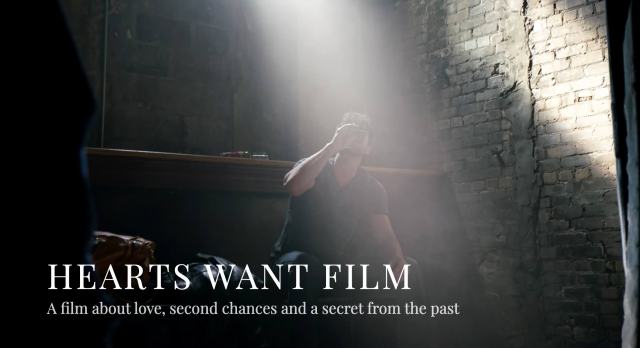
Click on the above banner and check out the HEARTS WANT website, where you canread more about it!
About Ruth
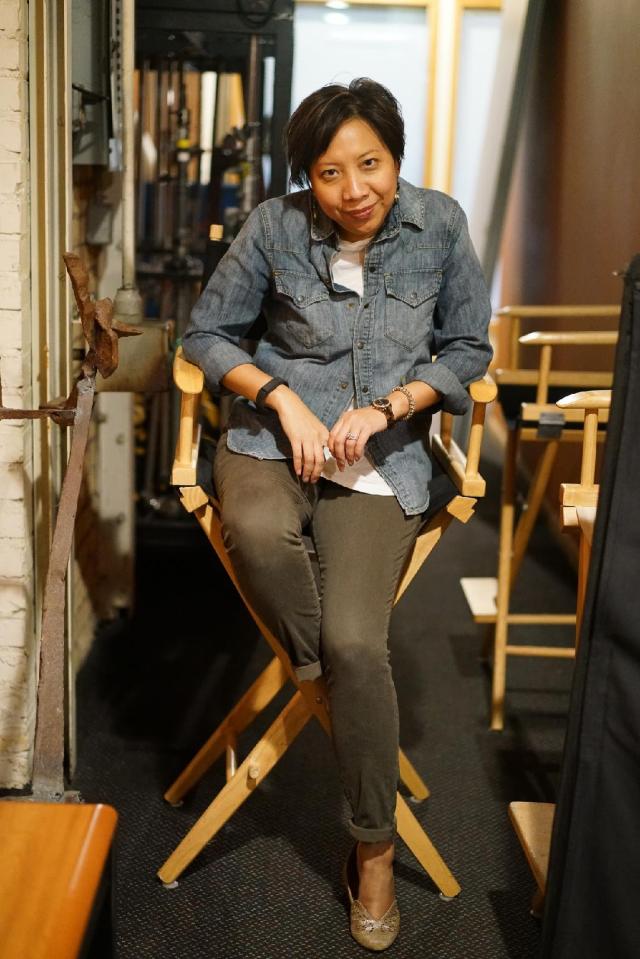
Ruth was born in Jakarta, Indonesia, but has been residing in Twin Cities, Minnesota for the past 30+ years along with her husband Ivan who’s also from Jakarta. She’s been a lover of movies since she was a little girl, and her dad was actually a filmmaker in Indonesia around the time she was born in the 1970s.
Her blog FLIX CHATTER has become my go to for new film reviews. Once in awhile she reviews a vintage movie.
She also participates in the 52 Films By Women challenge as per Women In Film organization. The basic rules are simple: watch 52 films directed by women within the course of one year. Share about the films you’re watching on social media, using the hashtag #52FilmsByWomen to spread the word.
P.S. Tom Bateman is one of the actors on Ruth’s dream list to play the lead male character in “Hearts Want” feature. As the story is set in the UK, she’d love to get British actors for the lead roles.
She is a RottenTomatoes-approved critic, which means her reviews count toward the critics’ Tomatometer. The full review appears on her website, but an excerpt of it appears on the individual Rotten Tomatoes review page, i.e., this one for La Cocina.
Same thing with Cherry Picks, which is a collective of movie and TV recommendations + reviews exclusively from female and non-binary critics.
Big Thank you to Ruth for joining me today, and to all who have taken the time to read!
Recently, wandering the urban forest, I espied a patch of colour. Turning the corner, a stunning autumn hued tarn with hikers appeared.
Instantly, I thought of Lauren Scott, and her love of country hiking. The next thought was “Isn’t she writing a children’s book? It must be almost finished.”
Well, I asked her. Turns out YES! Cora’s Quest is just released! As we are having an endless postal strike in Canada, I purchased the EBook.
The Blurb
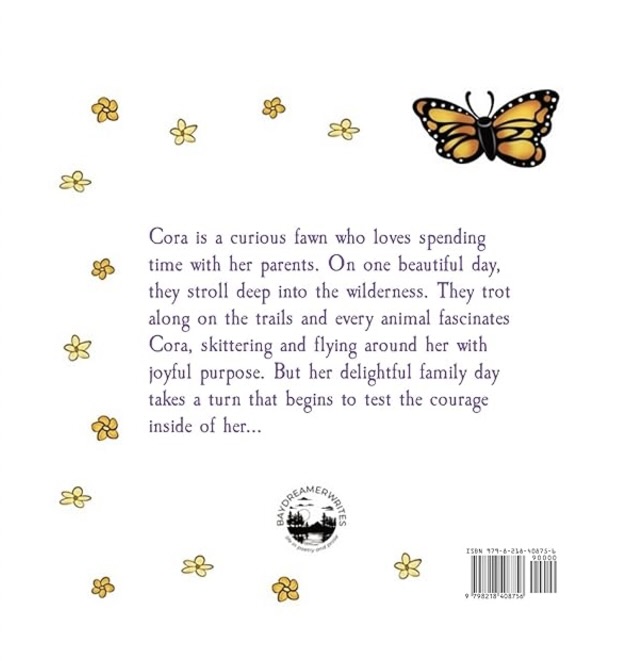
Cora is a curious fawn who loves spending time with her parents. On one beautiful day, they stroll deep into the wilderness. They trot along on the trails, and Cora finds other animals fascinating. They skitter and fly around her with joyful purpose. Every unique sound catches her attention, stirring her curiosity to discover just where that sound came from. But suddenly her delightful family day takes a turn that begins to test the courage inside of her…
I know Lauren is unhappy with how the Ebook formatting came out. She got one from amazon. I got mine from Kobo. Yes, it is not perfect, but it’s all there.
Geared to 2- 5 year old children, this sweet and loving story, complete with enchanting illustrations by Chris Mendez, is the type of book a child might want to hold, carry around or even take to bed.
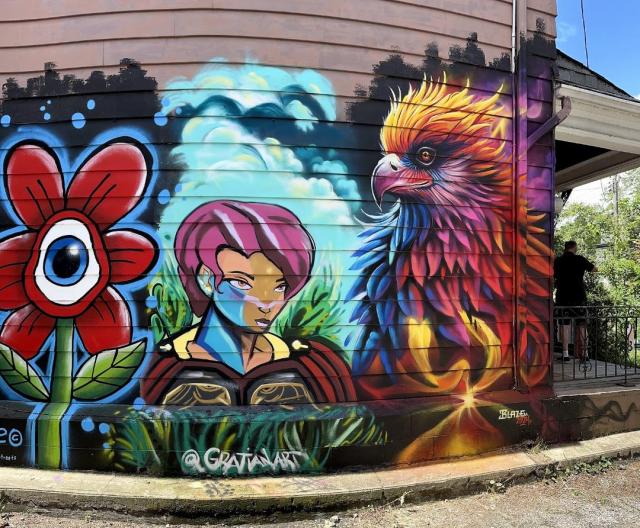
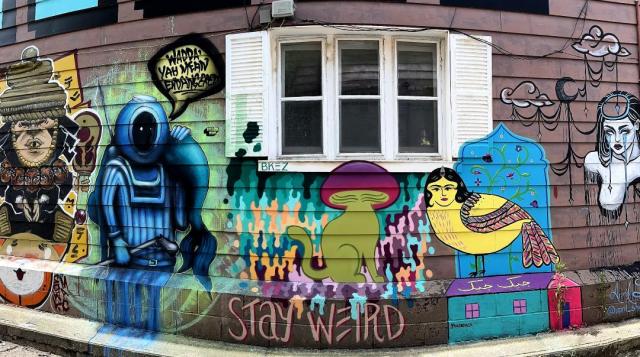
In this 9th & last post showcasing The Painted House, we finish viewing the exterior. The east side begins with this gorgeous bird.
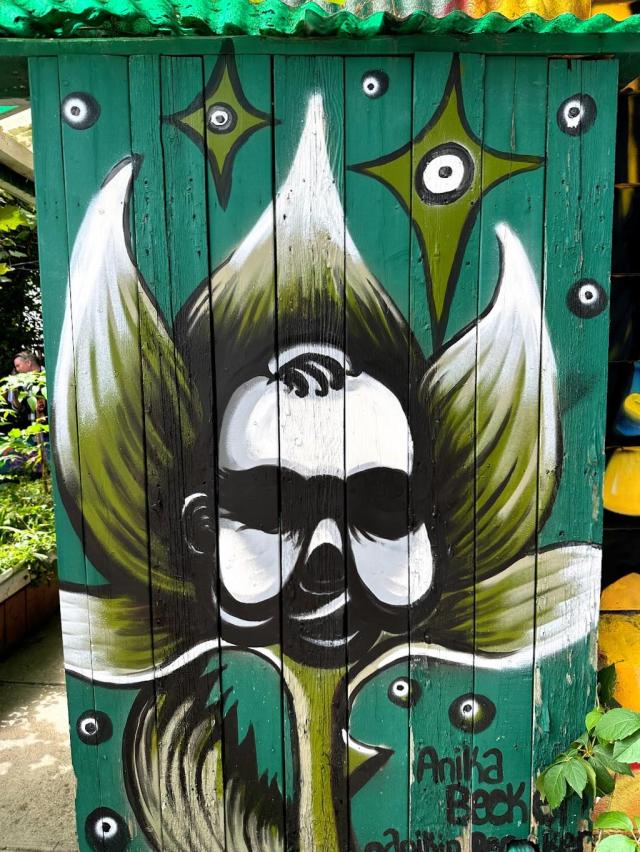
Then a cool head,
…..leads to a flower with an eye, then continues in Slide Show below.
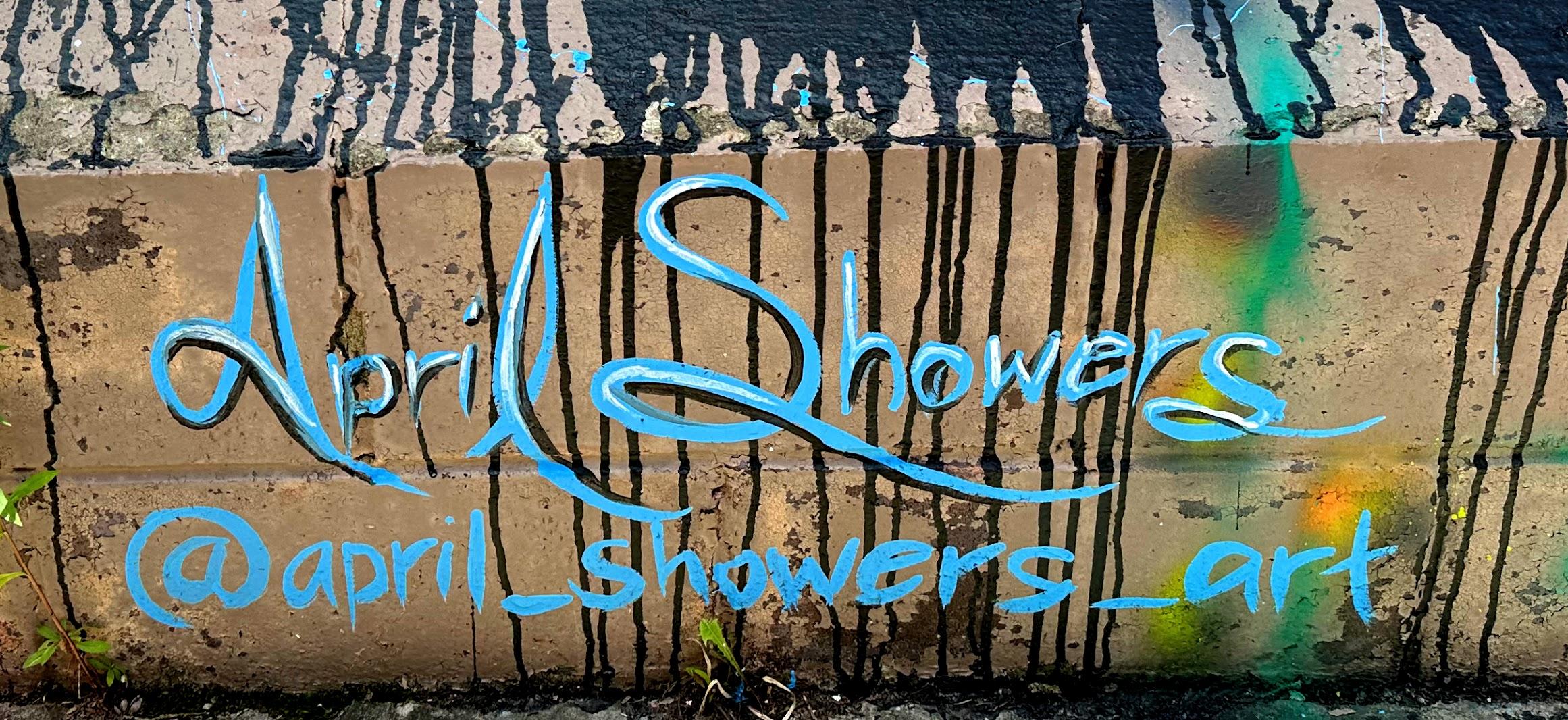
The flower with eye is before April Showers,
..which is seen far right, then chicken w/head & mushroom cap cat.
Then a diver with Endangered Species, odd guy & fish w/face in stomach..
The guy of ?
Sunflower women is next to the entrance,
..guarded by thistle head?
I adore the Sunflower Woman.
Enter the backyard by Thistle Head, to find a floral back wall w/skeleton. Note the dog door on far left! This is the entrance to the house, and appeared in Kitchen segment.
The Backyard has its own post. Then we come around to the west side of the house, in Slide Show.
West side.
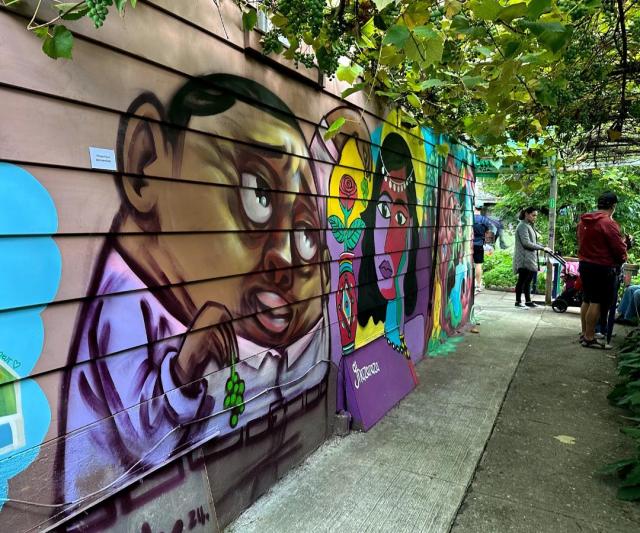
Colourful face (sun came out!)
An Elicser character offers…
Colourful Face some grapes.
The final image is a tropical scene.
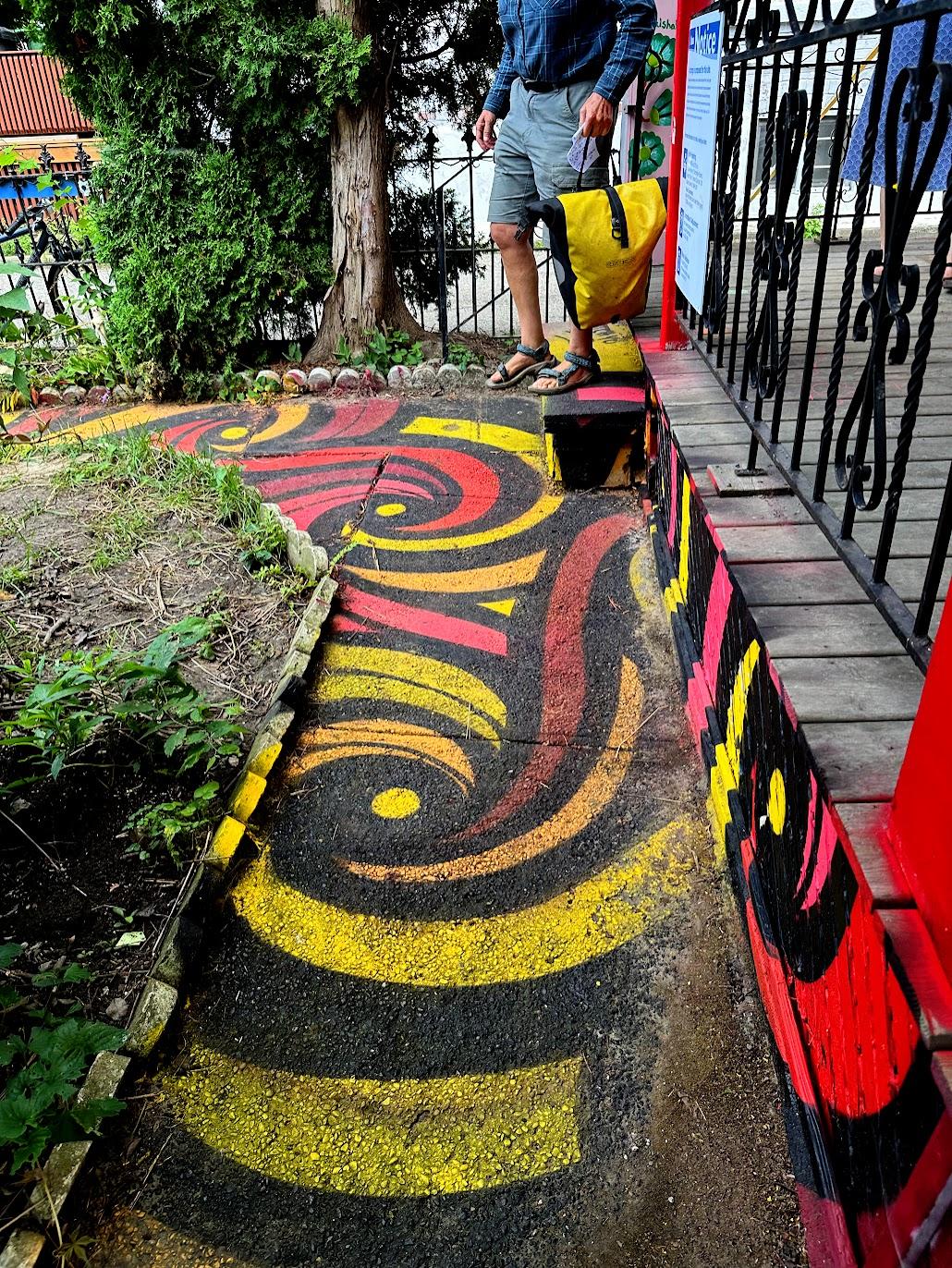
A painted walkway,
..leads us out the front gate. Bye, bye Painted House! You were a lot of fun.
Pics taken by Resa – August 11, 2024
Toronto, Canada
Artists, in order of appearance:
@life_inthestreets
@bkez
@oblsk1
@mac.the.maker
SOWL
@whatismorty
Anika Becker
@nixostreetart
To view all Painted House Posts, Click on the Doors Face on the Sidebar
Resa – So, Rebecca, in this last Self Portraits post, we are headed to the Netherlands, 17th century, to visit another artist that I had never heard of. Had you heard of Judith Leyster before this post?
Rebecca – Yes – just recently. I discovered her when I travelled virtually to the Rijksmuseum. Judith Leyster was featured in their Women of the Rijksmuseum exhibit two years ago. It was an eye-opening experience to discover her work.
Resa – Very Cool, I’m excited to se what you’ve dug up!
Once Forgotten Dutch Master
Judith Leyster, the once-forgotten Dutch master, has experienced a resurgence in recognition. She was commemorated in a Google Doodle, her artwork achieved higher- than-expected prices at auction, and she was featured in the most prestigious chamber of the Rijksmuseum.
Who Was Judith Leyster
A remarkable Dutch painter of the 17th century, Judith Leyster was born 1609, in Haarlem, Netherlands. The daughter of a brewer, she displayed a precocious talent for painting from a young age.
By the age of 24, Leyster had achieved the remarkable feat of becoming a member of the Haarlem painters’ guild, marking her official recognition as a masterful artist. She was one of the rare professional women painters of her time, being one of only two women accepted as a master in Haarlem’s painters’ guild during the entire 17th century Netherlands.
Leyster’s artistic talent quickly gained recognition, and she became known for her lively and expressive compositions, often depicting genre scenes, portraits, and still life paintings. Her work radiated a sense of spontaneity and skillful use of light and shadow, showcasing her technical prowess and innovative approach to painting.
Leyster’s artistic pursuits defied conventions, as she ventured beyond the typical subject matter embraced by Dutch painters of her time. Her work encompassed a diverse range, and she was among the pioneering artists who explored and popularized the domestic genre scene, portraying everyday life with a fresh perspective.
In the early 1630s, before her marriage to the lesser-known artist Jan Miense Moleanaer, Leyster produced some of her most significant works. However, despite her talent and dedication to her craft, her contributions to art history remained largely unrecognized until the late 19th century.
Judith Leyster Rediscovered
The rediscovery of Leyster’s significance in the art world came about during a lawsuit between an art dealer and his vendor.
It was revealed that many works attributed to her contemporary and rumoured rival, the great Dutch painter Frans Hals, were, in fact, Leyster’s creations that had been incorrectly credited. This significant discovery brought long-overdue attention to Leyster’s remarkable talent and her influential role in shaping the Dutch Golden Age of art.
It is remarkable how the true authorship of artworks can be uncovered through careful examination and historical investigation. The discovery of Leyster’s initials hidden beneath a faked signature of Frans Hals in “The Happy Couple” (aka The Carousing Couple) serves as a testament to her enduring impact on art history and the need for ongoing reassessment of attributions.
This revelation not only sheds light on Leyster’s artistic contribution but also prompts a re-evaluation of artworks attributed to her contemporaries. It further underscores the significance of ongoing research in uncovering the often overlooked achievements of pioneering artists.
Resa – When searching for other female artists from the past whose art has been misattributed, I found an intriguing article (July/2024) inDaily Art Magazine. The article cites 5 female artists.
“This systematic misattribution essentially meant the erasure of women from the art historical canon, which eventually resulted in their erasure from history itself.”
Rebecca, do you think it’s possible that as art experts and historians uncover yet more misattributed art that we could see some famous paintings by famous artists, the Rembrandts, Da Vincis, et al being reattributed to women?
Rebecca – You have asked a very insightful question, Resa! It’s certainly possible. As more art is studied works that have been misattributed may be finally recognized as contributions of women artists. It would be a significant shift in how we view art history. I truly believe that we are now embarking on an extraordinary exploration of art history. It gives me great comfort that we are seeking to foster a richer and more equitable understanding of the artistic legacy we inherit. I am glad that you mentioned the Daily Art Magazine. It is one of my go-to places to learn about art.
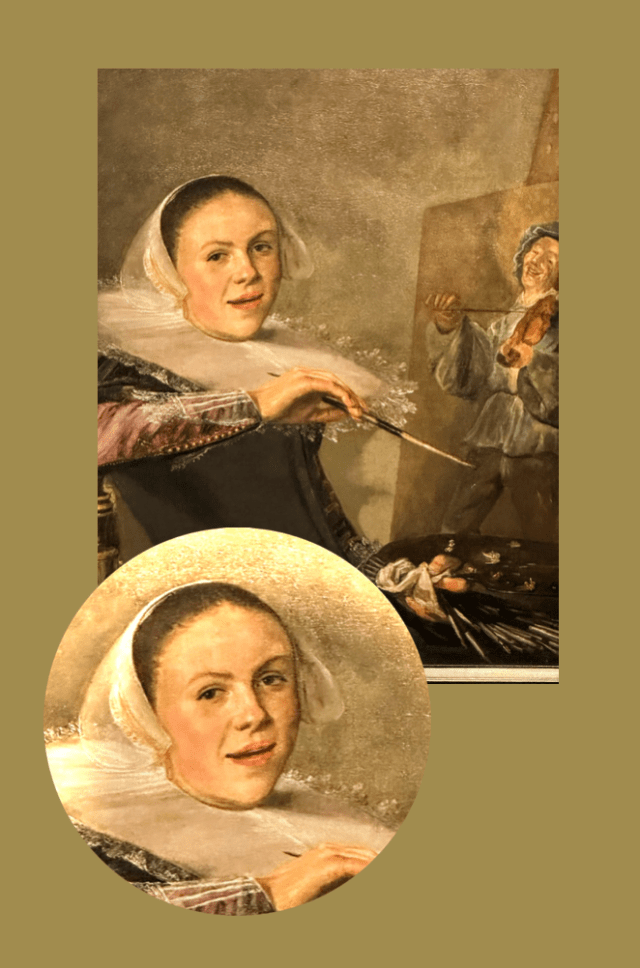
Judith Leyster’s Self Portrait: A Glimpse into the Artist’s World
Judith Leyster’s self-portrait offers a glimpse into her life and artistry. Created before her admission to the guild in 1633, the portrait encapsulates a moment of confident creativity and engagement. Leyster’s self-assured expression, characterized by a confident smile and parted lips as if to speak, exudes a sense of self-assurance and mastery. The casual pose, with one arm nonchalantly resting on the back of her chair, hints at the artist’s ease and comfort in her own studio.
It is difficult to photograph art. I captured many works beautifully. However, this painting was the finale of the show, and was heavily lit with warm light.

Shot on an angle, the lighting was evaded, and it seems to be closer to many photos of it. Still, it seems no 2 photos are the same.
The liveliness and freedom evident in Leyster’s brushwork mirror her spirited approach to art, capturing a fleeting pause in her work as she glances toward a potential visitor. This subtle interaction suggests a moment of connection with a viewer, possibly a patron, inviting them to share in the experience of a work in progress.
In this self-portrait, Judith Leyster not only presents herself as a skilled artist but also provides a glimpse into the vibrant and dynamic world of creativity that she inhabited.
Today, Judith Leyster is celebrated for her creative spirit, artistic innovation, and lasting impact on the history of art. Her legacy continues to inspire and engage art enthusiasts and scholars around the world.
Resa – Well, Rebecca, so ends our series on Self Portraits. It’s been a pleasure and an honour having you here withme. Thank You!
I look forward to your return, to discuss some engravings on paper by Catherine Brandinn and Geertruydt Roghman. These are of utmost interest as the images depict the working poor, not a big subject of artists in those times.
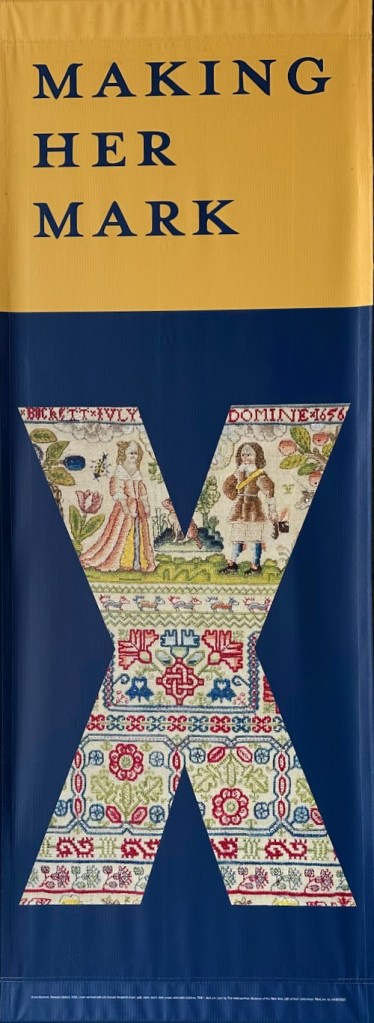
Rebecca – Thank you, Resa! It has truly been a privilege to explore these amazing women through “Making her Mark” with you. Your photographs allowed me to virtually experience the joy of viewing these paintings. Thank you for celebrating and honouring these artists. Their resilience and creativity continue to inspire and empower us today, even as they provide a vital legacy for future generations of women in the arts.
I’m eagerly anticipating our next discussion on the engravings by Catherine Brandinn and Geertruydt Roghman, as the portrayal of the working poor offers a unique and important perspective that, I believe, deserves more attention in the art world.
As you say so eloquently, “Art Remembers Us.”
Click on X to see research links& a fabulous video on her
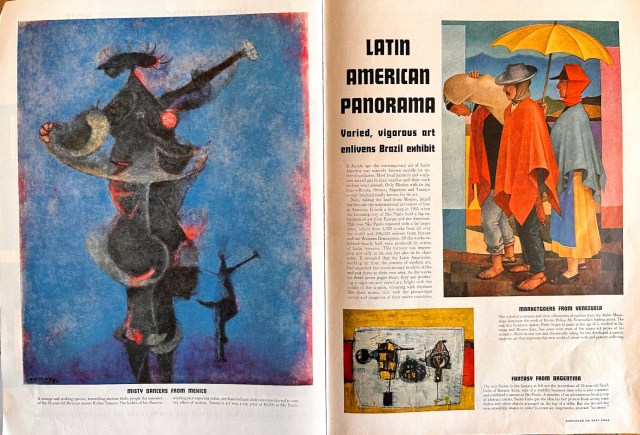
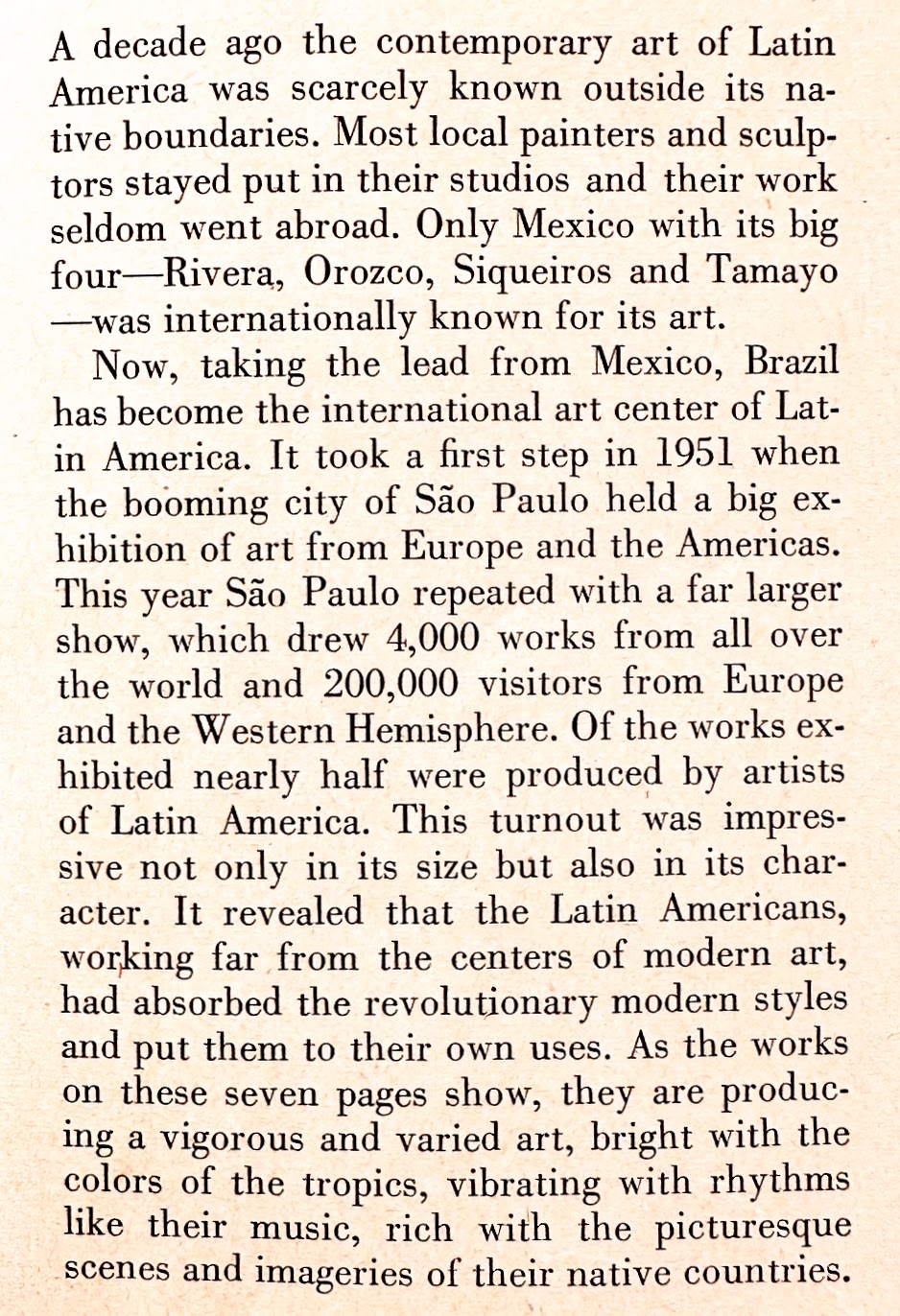
Held in Brazil, in 1954, almost 2,000 works of art out of 4,000, were from Latin American Countries
Marketgoers From Venezuela
Harmony
As this magazine is 70 years there is a lot of fading & yellowing. I turned up the white & blacks points a bit to get a better look.
Hot Sextet From Havana
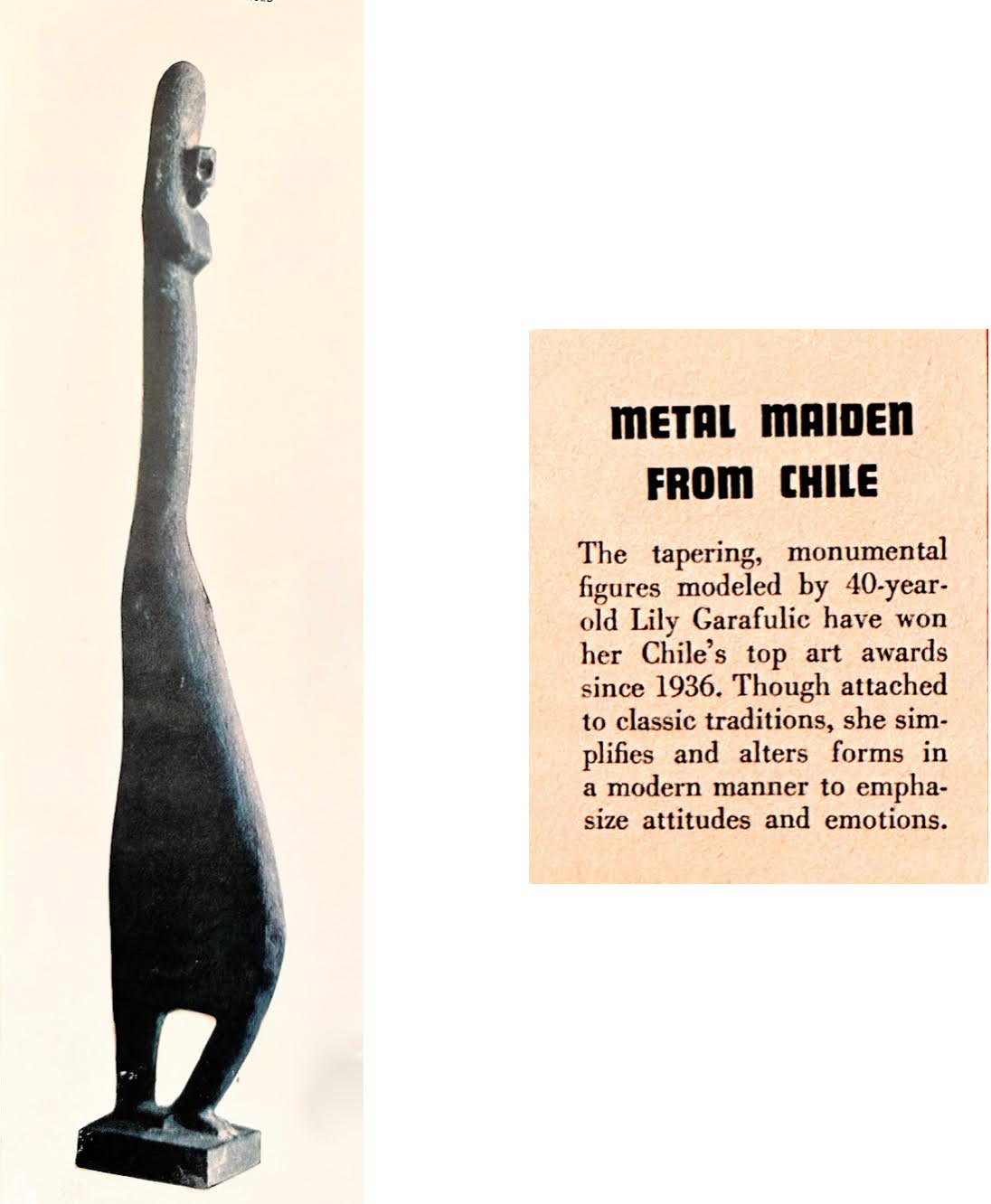
Metal Maiden
Tropic of Cancer
The Embrace
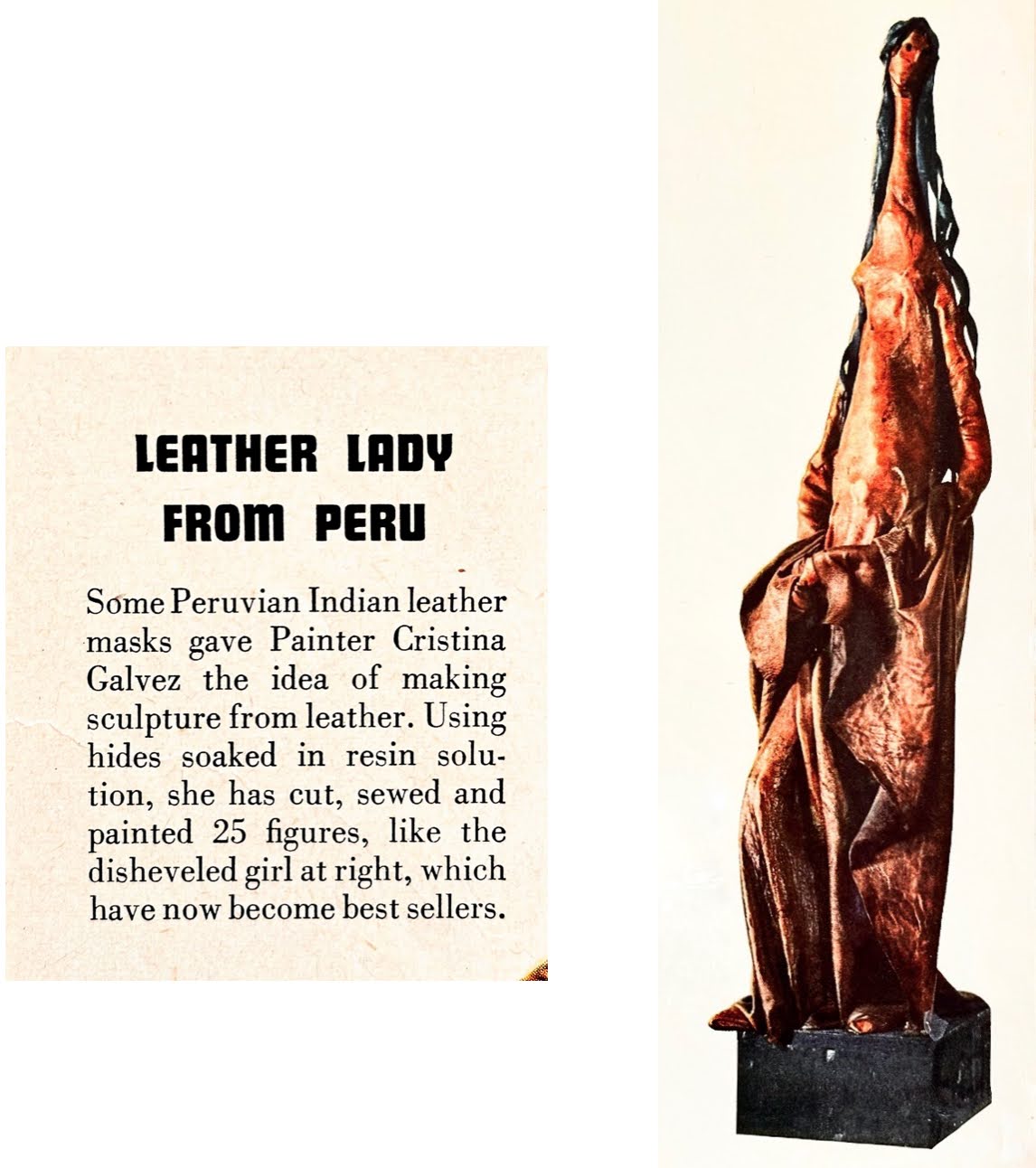
Leather Lady
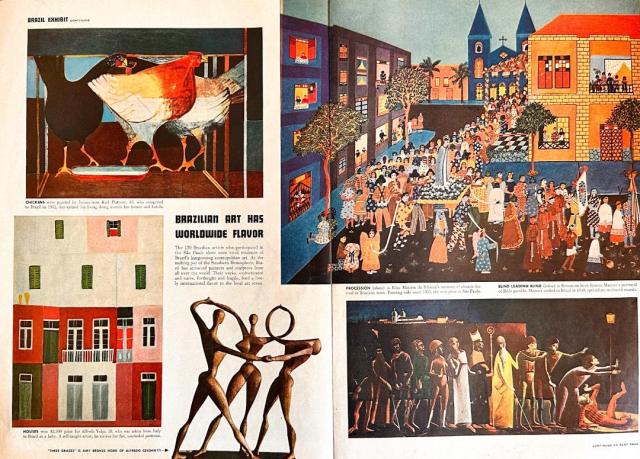
This article is arranged in the same order as in the magazine LIFE May, 1954. The last page is one image.
Chickens
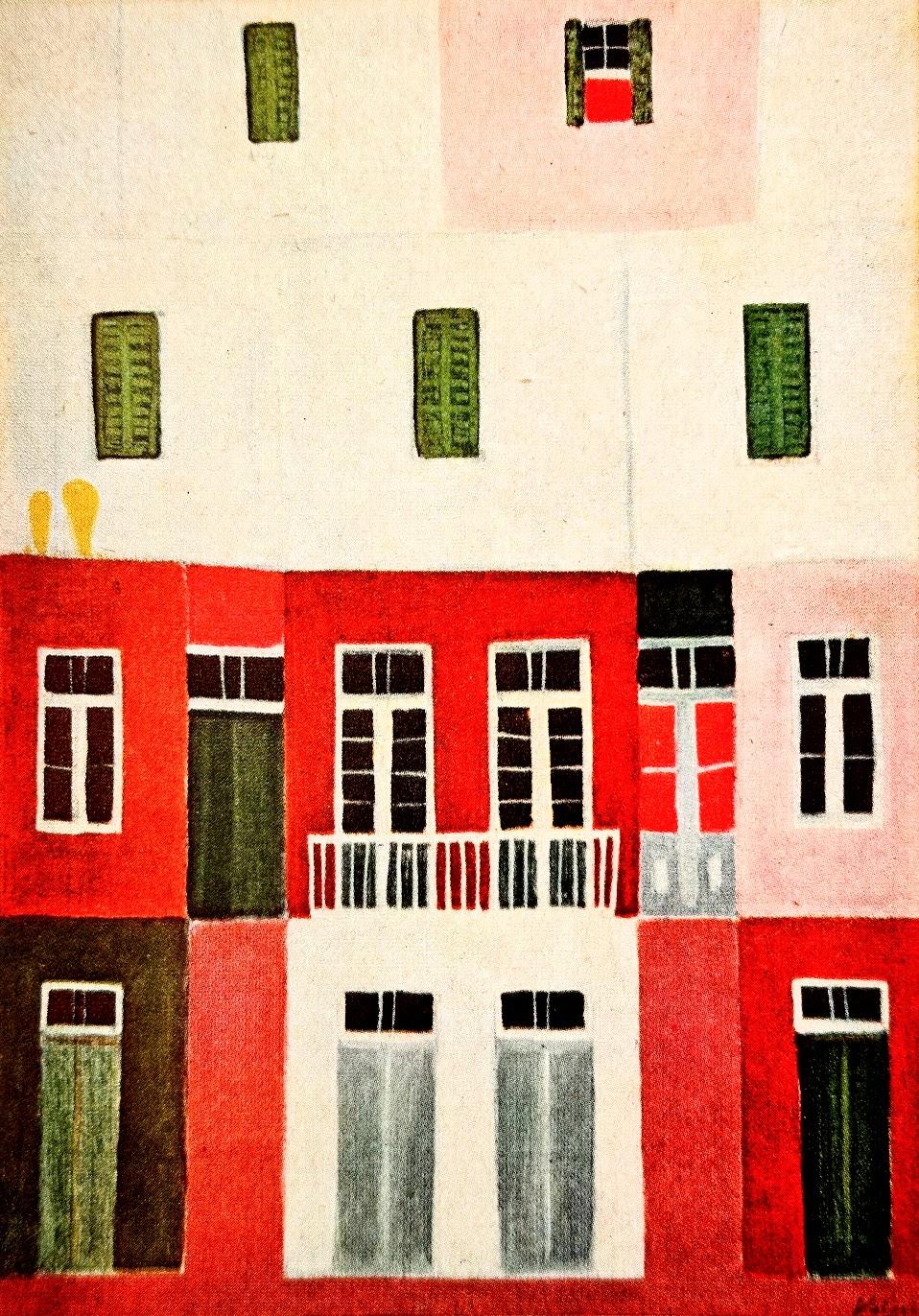
Houses
Three Graces
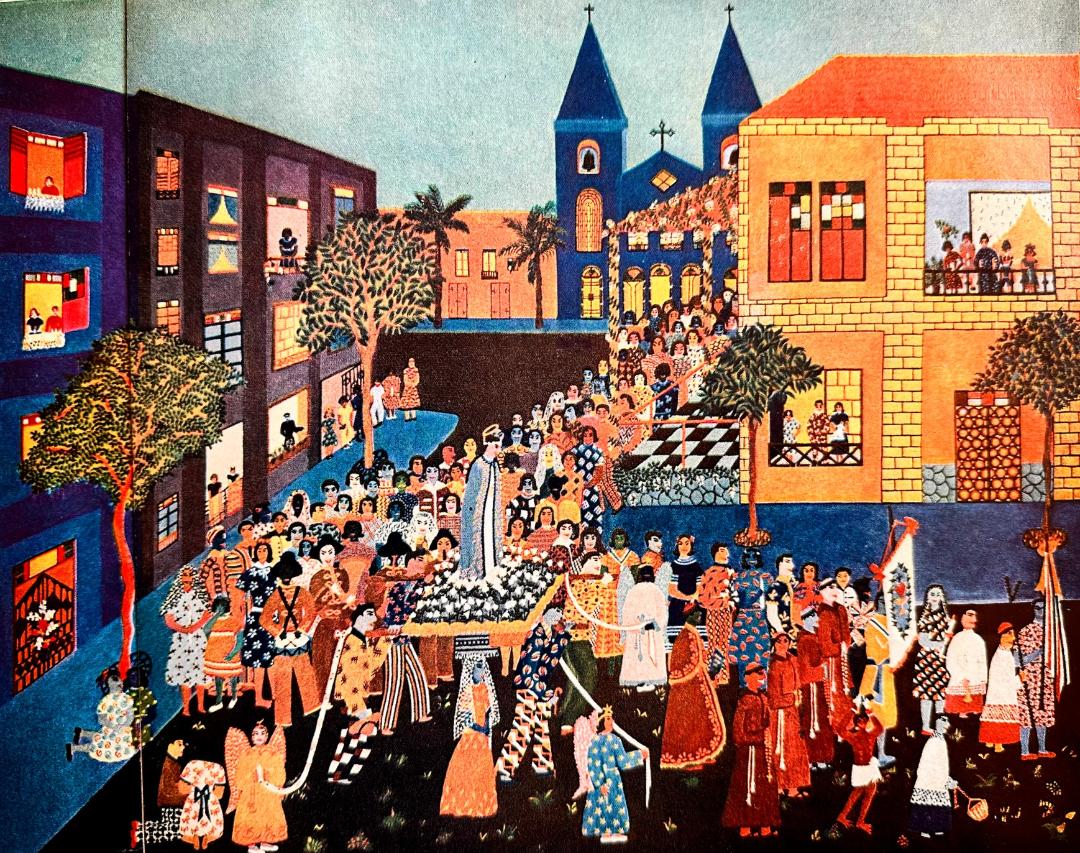
Procession
Blind Leading Blind
Shanties
Here is the cover of the magazine I found this article in. Following is the intro, which is on page 1. I put this out of order, as I wanted to get right to the art.
In this second last post of the Painted House, we look at the remainder of the interior.
Main Floor
Bathroom
This is a difficult painting to capture, as the bathroom was about 5′ wide, tops.
I used the zoom-out feature to shoot it.
……which accounts for most of the distortion seen in the slideshow.
Dining Room
Living Room
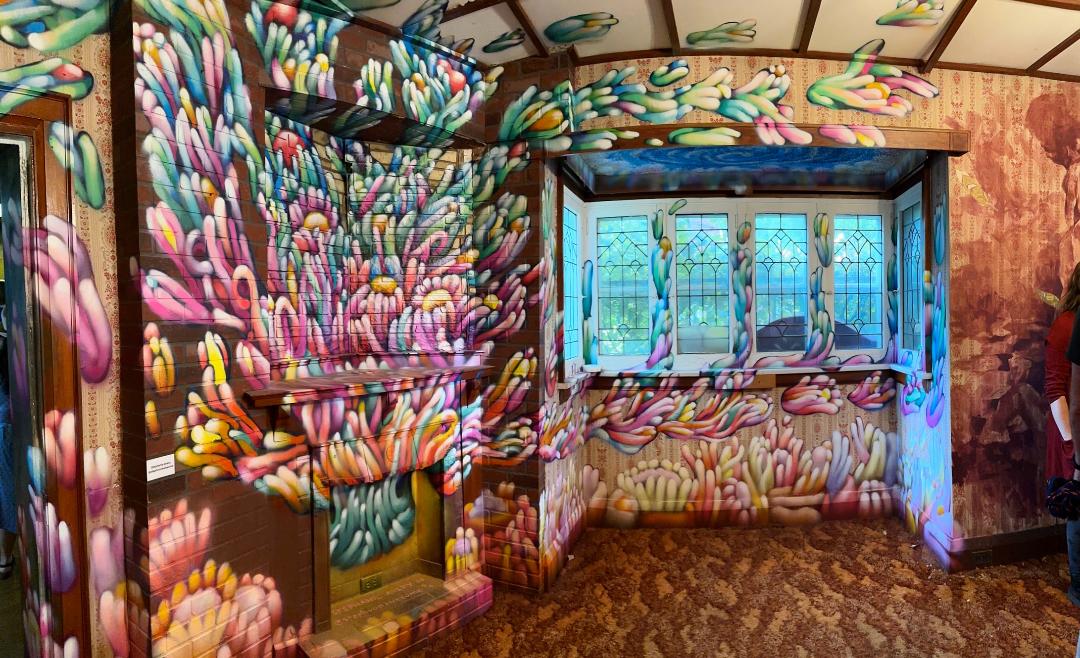
The art was painted over wall paper in the living room. In a couple of pieces, the art was integrated with the wall paper, as seen in. the slideshow.
Second Floor
Bedrooms
This was a Jackson Pollack + (sort of) all over paint with installation. This is a tiny room, and the most popular with the kids.
“Put that back! Don’t touch that! I want this! No, it’s part of the art! Waaaaaa!, Don’t go there! I want the bear! Put the bear back!,etc.”
Not a guy, part of the art.
I got out of that room fast, but not before I nabbed a shot of me in the splattered mirror.
The master bedroom was done in faux stained glass effect, and partly shown in in the post September of The Painted House series. The third bedroom was featured in Bedroom of TPH series
All 8 (9th coming soon) of The Painted House posts are easily available to view by clicking on the diptych doors art, second from the top on the sidebar.























































































 Graffiti Lux Art & More
You must be logged in to post a comment.