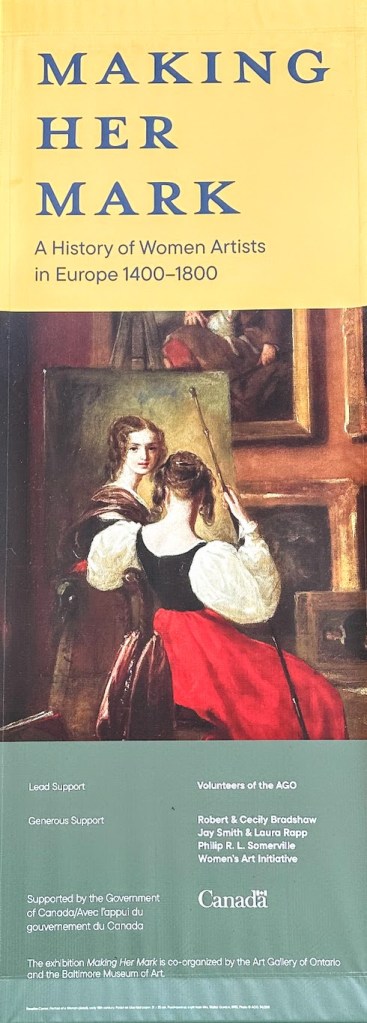
It was an extreme pleasure to view 2 of Angelica Kauffmann’s paintings at the Making Her Mark exhibit, at the Art Gallery of Ontario (AGO).
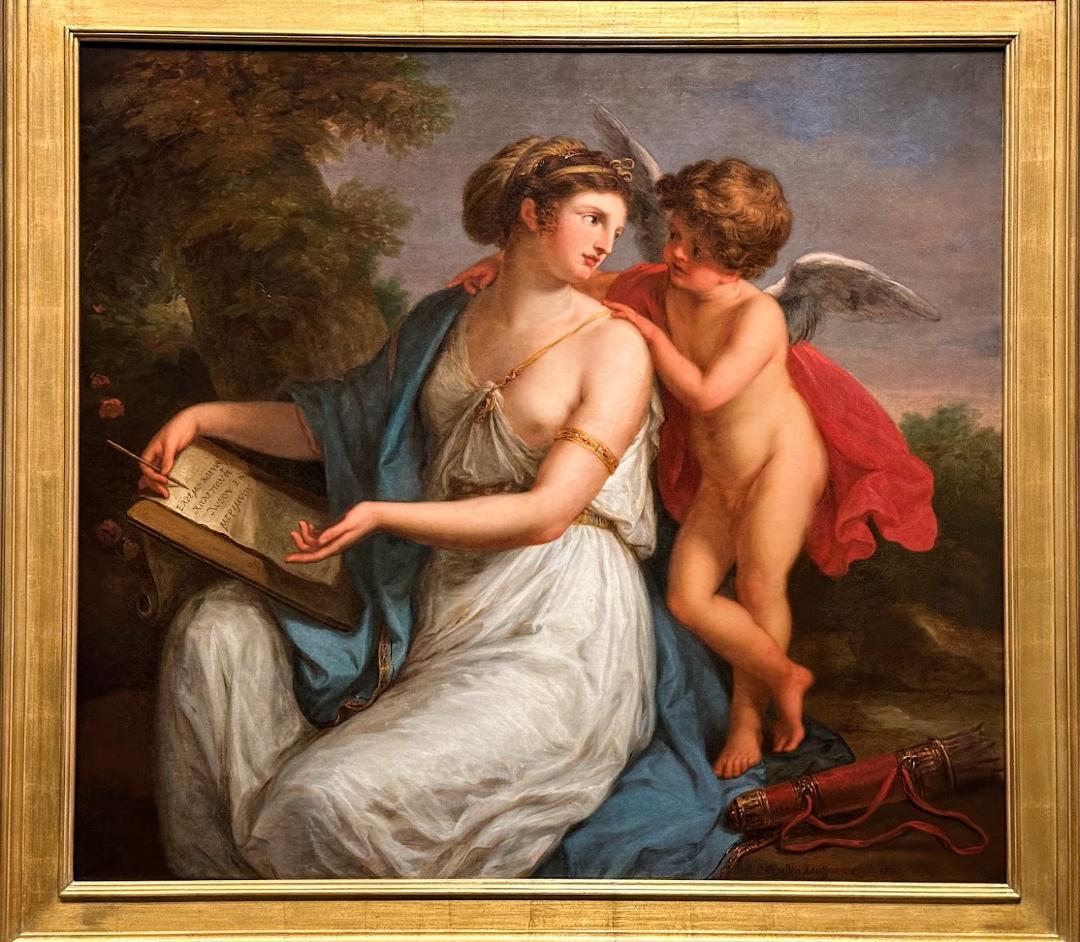
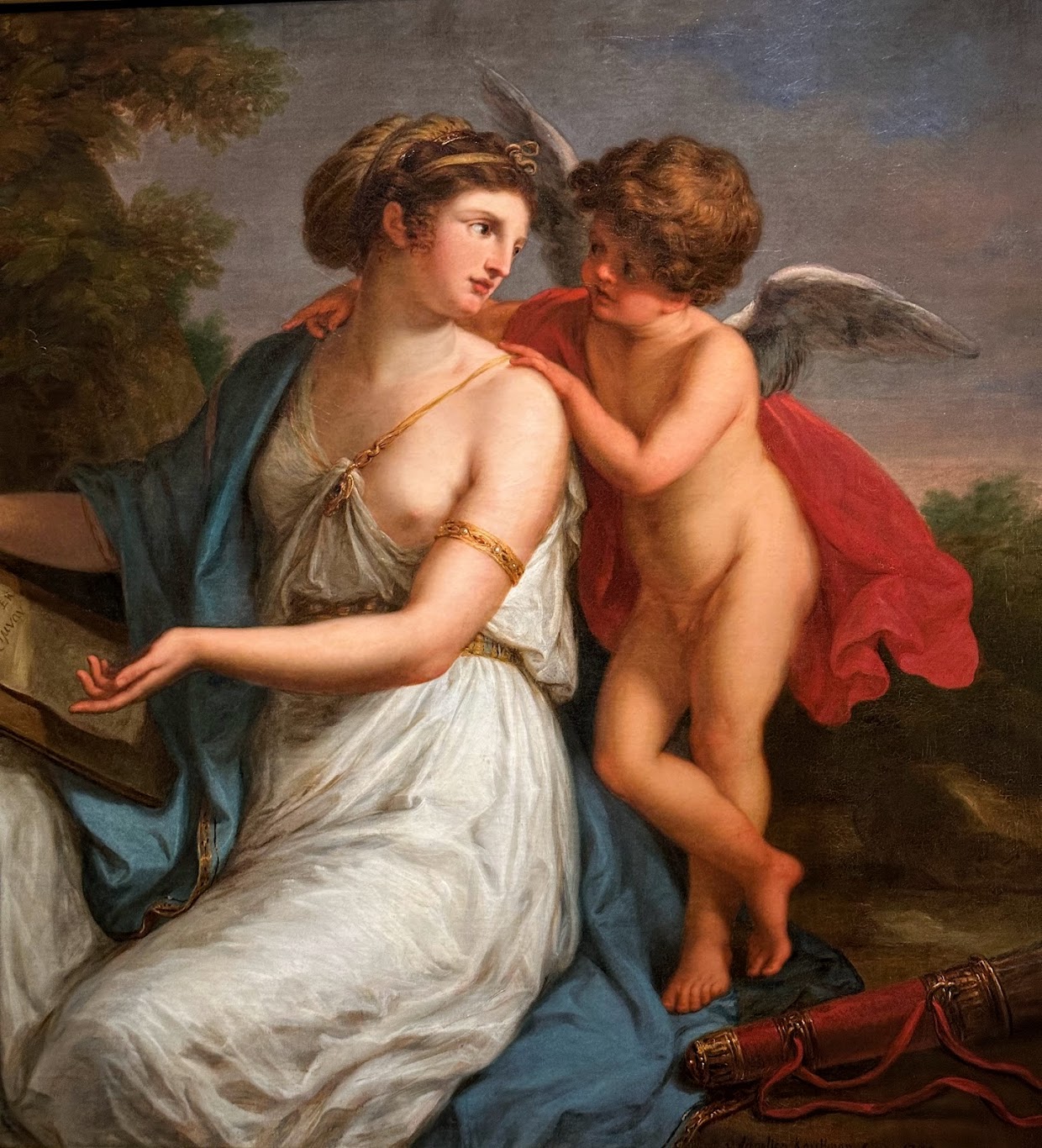
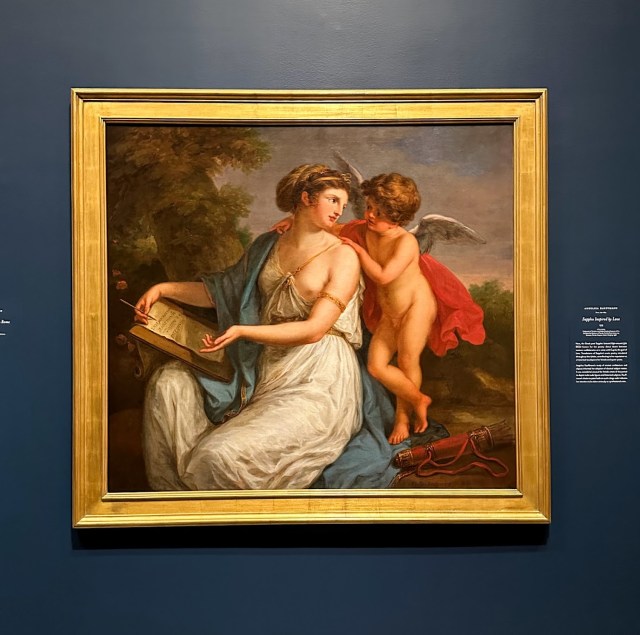
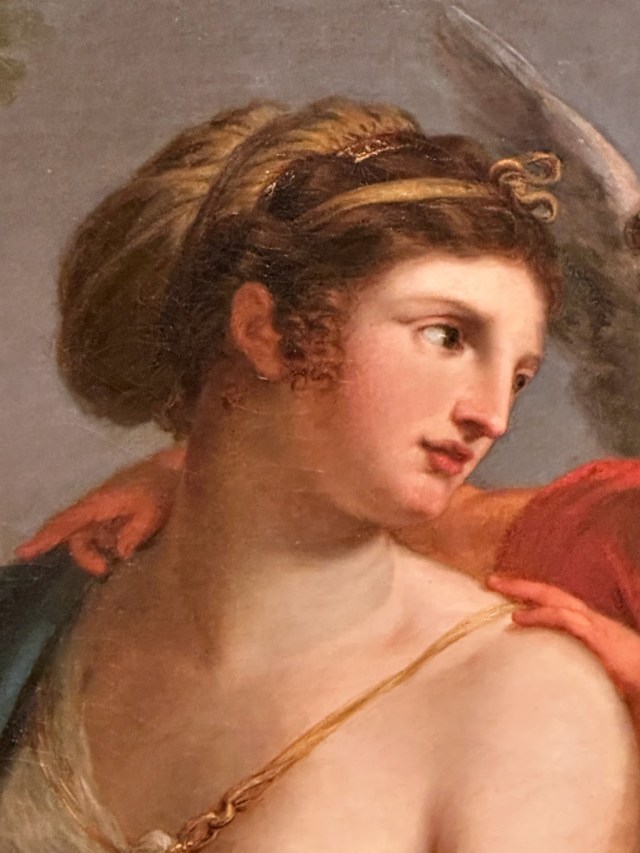
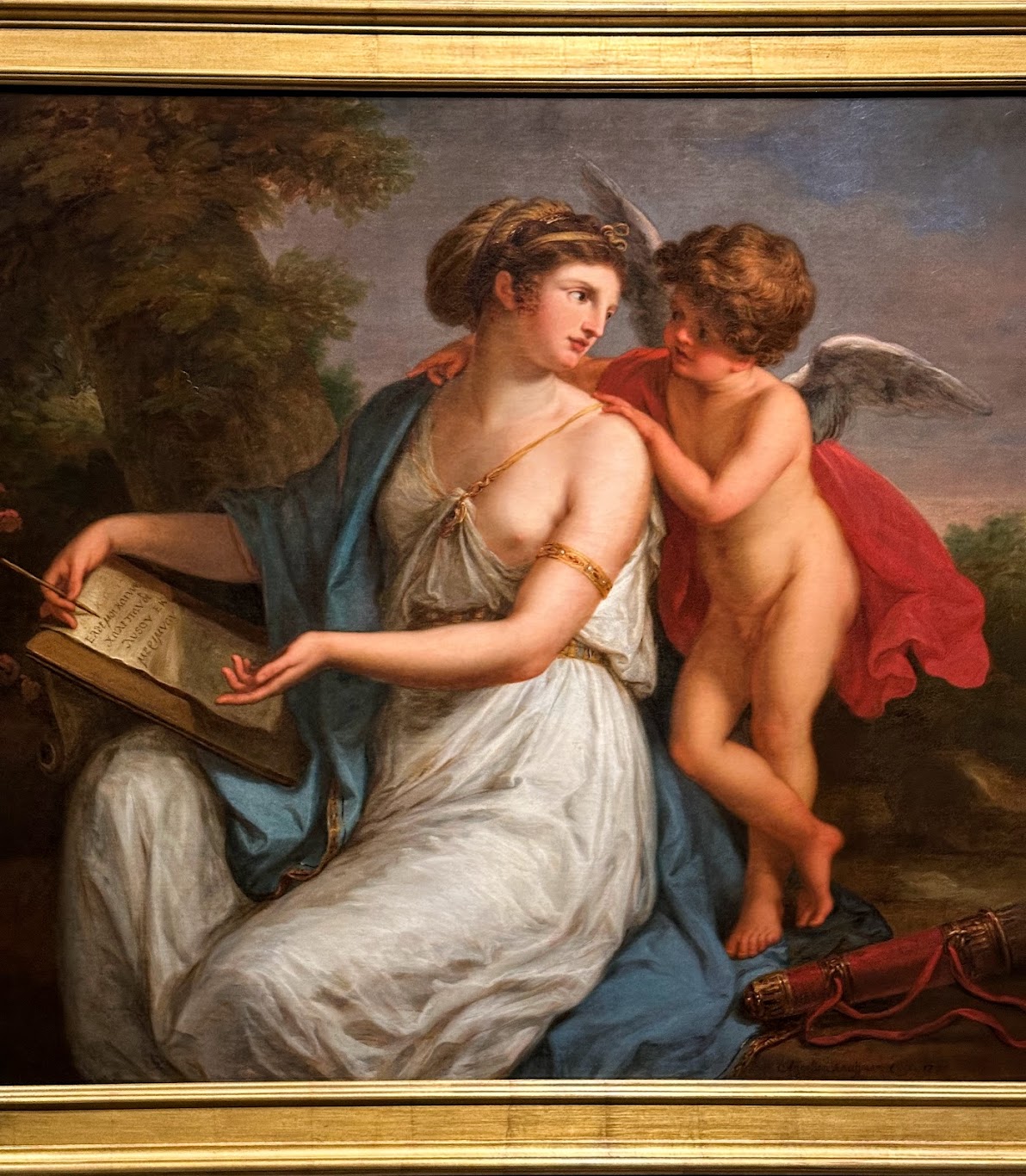
Sappho Inspired by Love
1775 – Oil on Canvas
Born in Switzerland in 1741, Angelica studied under her father, muralist Johann Joseph Kauffman. By 12 years of age she was considered a prodigy, could sing (soprano) and was soon fluent in German, Italian, French and English.
In the early 1760s, a transient life travelling through Switzerland, Austria, and Italy, as her father’s assistant, introduced her to classical and Renaissance art. She also became familiar with the emerging art movement, Neoclassicism.
In this painting-
“the Greek poet Sappho – (around 630-around 570 BCE) – known for her poetry about desire between women – collaborates on a verse with Cupid, the god of love.” -AGO
“Translations of Sappho’s erotic poetry circulated throughout the 1700’s, contributing to her reputation as a historical touchpoint for female and queer poets.” – AGO
In 1765 Angelica was elected to Rome’s Academia di San Luca, in recognition of her works.
Accompanying Lady Wentworth, Angelica moved to London in 1766. Here she became the demanded portraitist for aristocrats and royalty.
In 1767, she married a fraudulent Count Frederick von Horn, clergyman. Later that same year, Angelica found herself abandoned. The imposter had been found out and fled the scene.
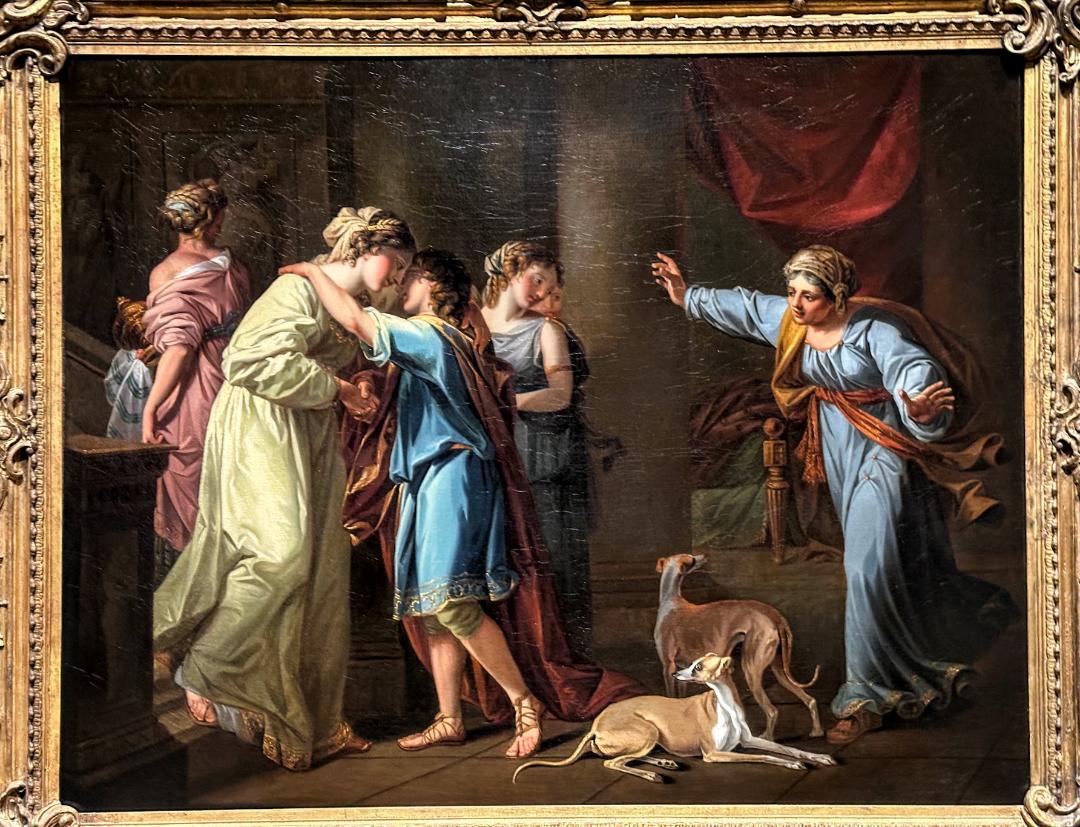
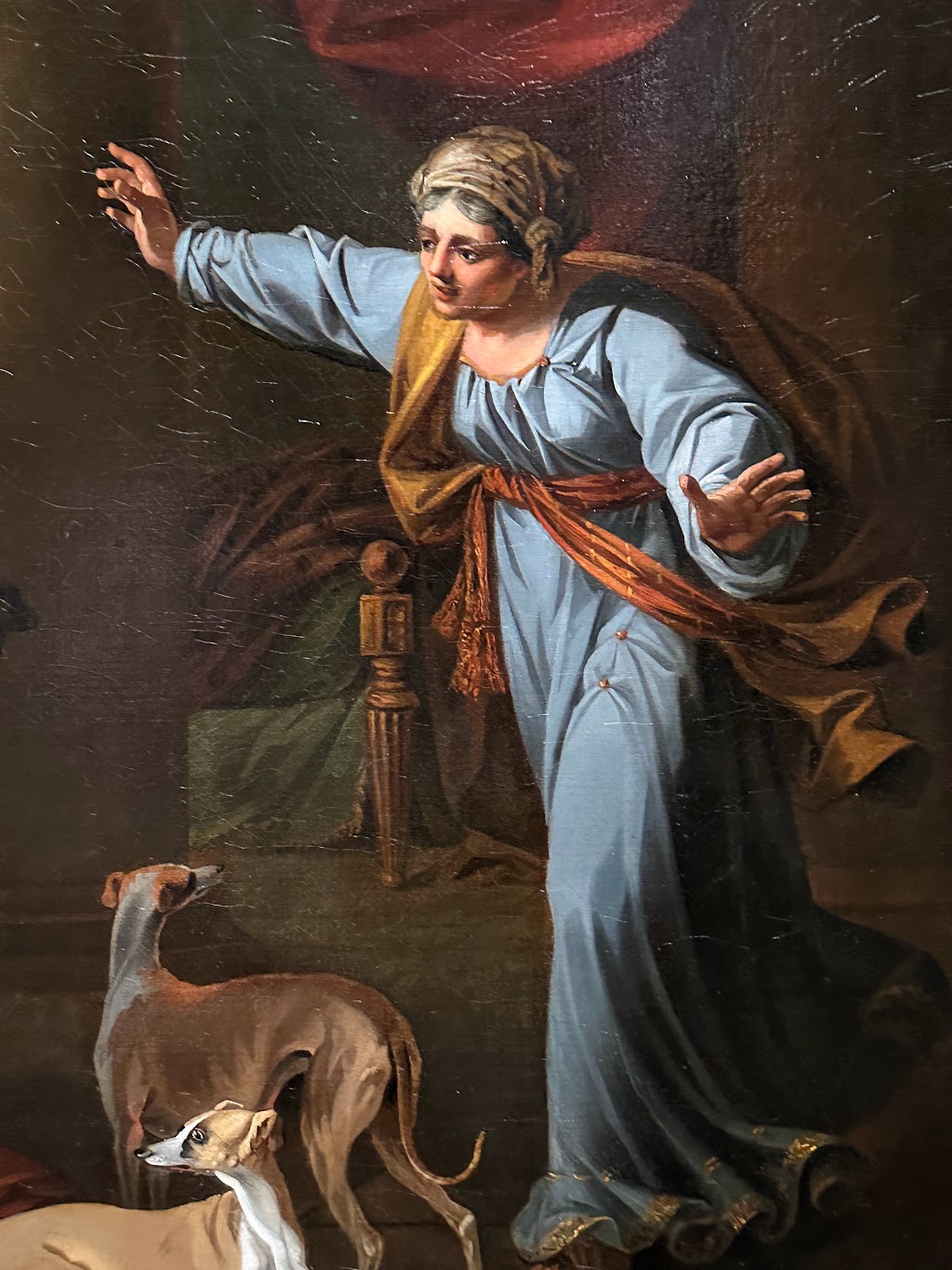
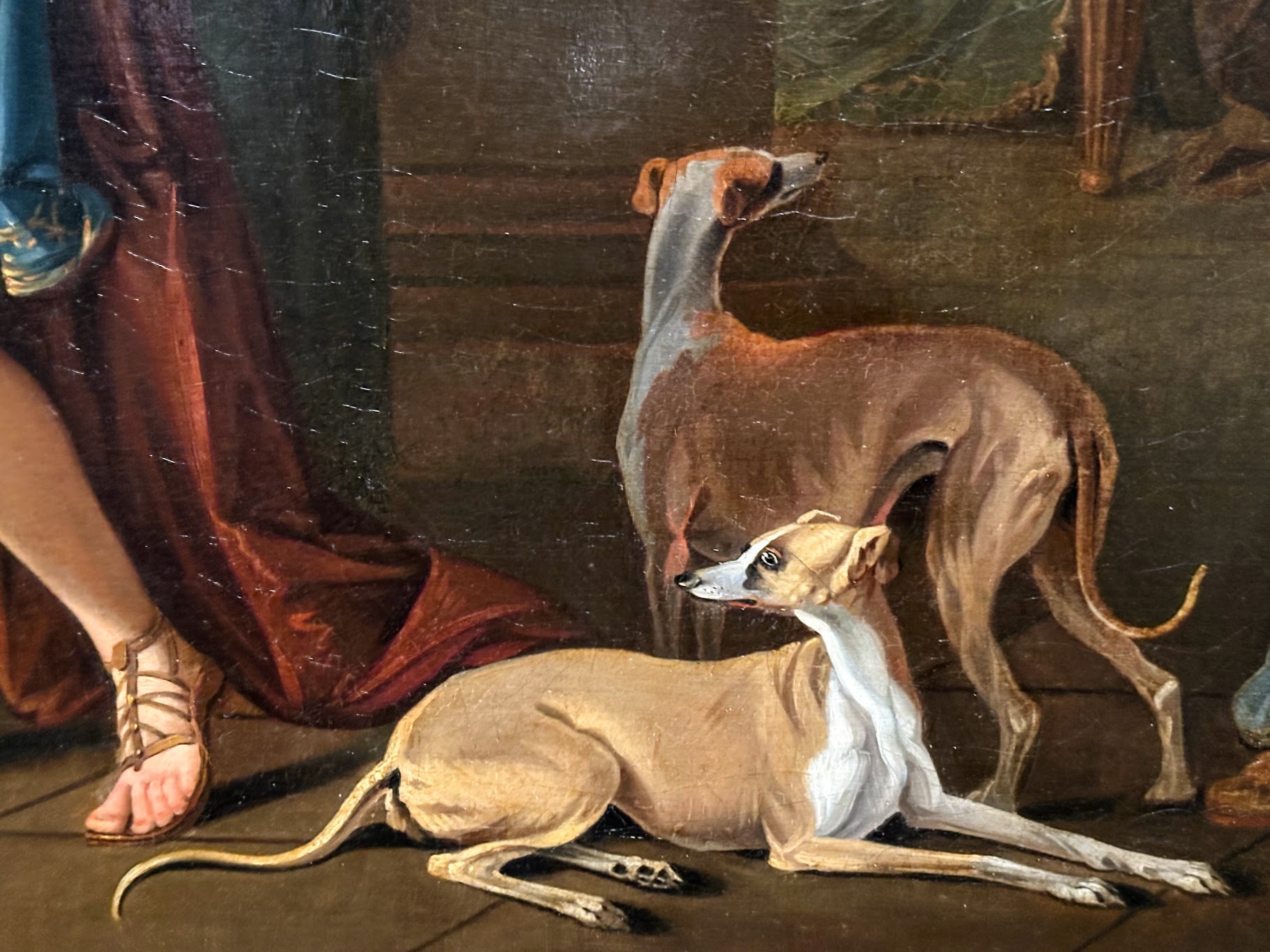
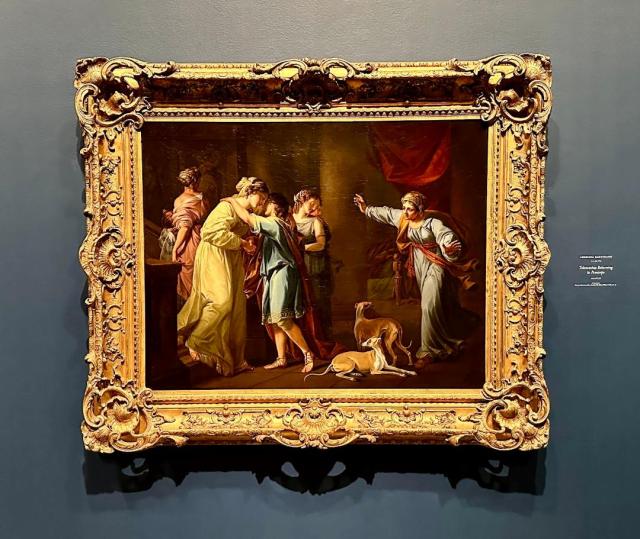
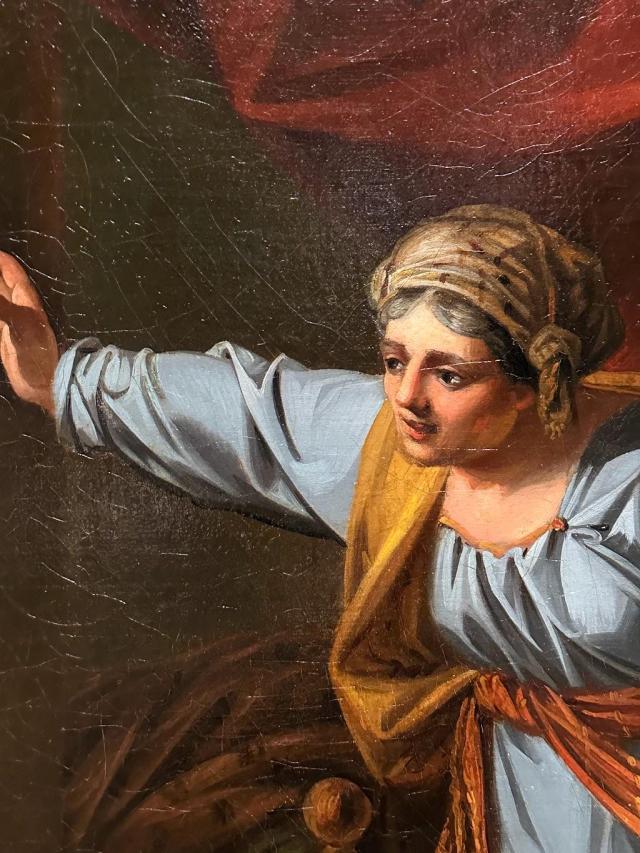
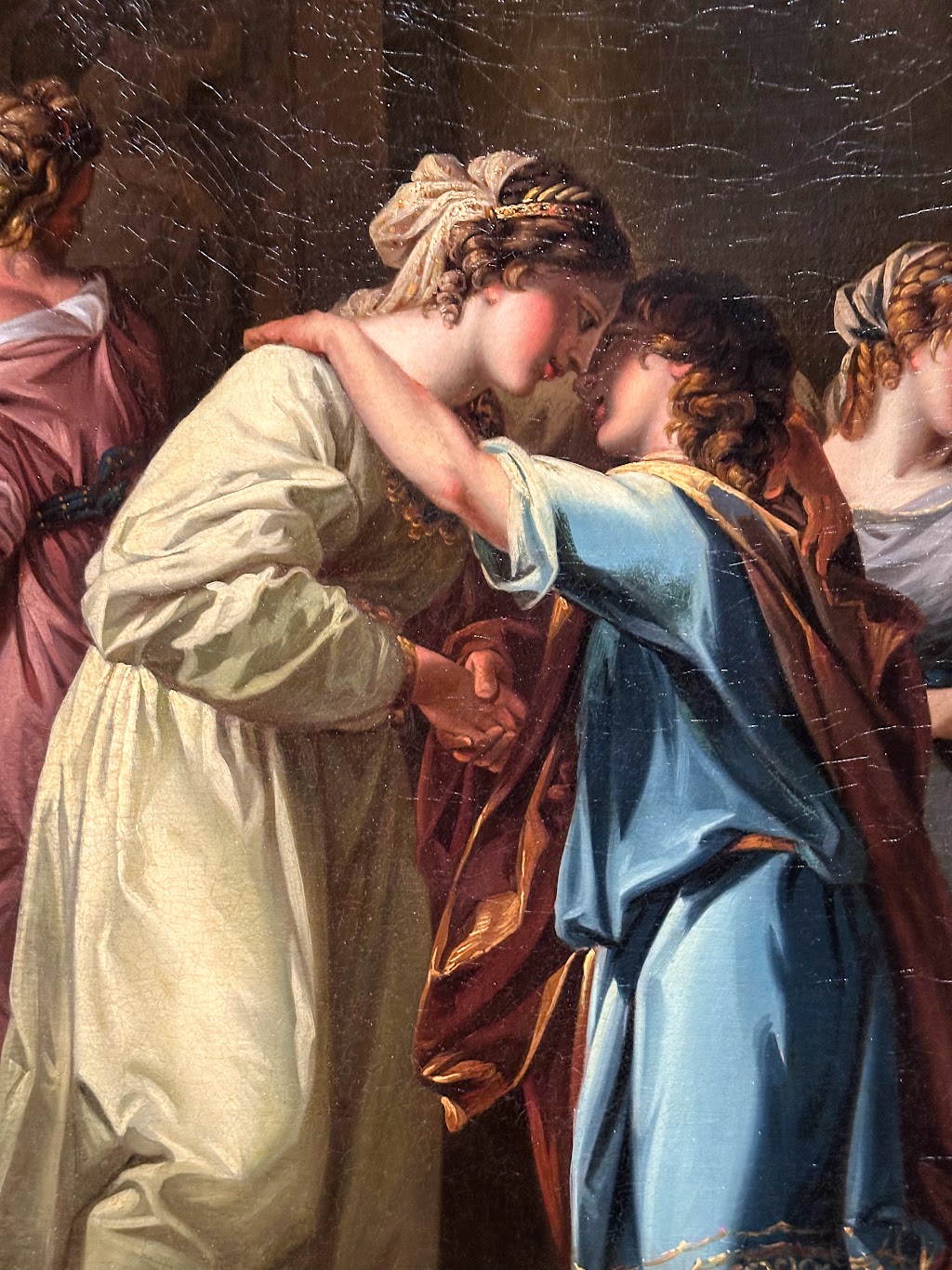
Telemachus Returning to Penelope
circa 1771 -Oil on Canvas
In 1768, Angelica Kauffmann and Mary Moser, became the only female painters among the founding members of London’s Royal Academy of Art. Her work showed regularly at the Academy for the next 16 years.
Angelica formed a personal style of painting women from classical history and mythology. This strong brand of hers evolved from the reality that women were not permitted, excluded from life drawing classes.
In the 1770’s, she became part of a team painting interior designs for Robert Adam. A Scottish architect and designer, he, with his brother James, transformed English Palladian Neoclassicism into the airy, light, elegant Adam decor.
Telemachus, the son of Odysseus and Penelope, is now a man and a warrior. He has aided Odysseus in slaying the unwanted suitors of Penelope, and is back at home in Ithaca.
In 1781, at 39 years of age and after the death of von Horn, she is remarried to the Venetian painter, Antonio Zucchi. He succeeds Angelica’s father as her business manager.
The marriage contract guarantees her the rights to her income.
She retired to Rome in the early 1780s with her husband, Antonio Zucchi.
In 1782 Angelica Kauffman opens an internationally attended studio beside the Spanish Steps (a Baroque stairway in Rome, connecting the Piazza di Spagna with the Trinità dei Monti church.) It becomes the “In Place” for intellects.
In 1787, Angelica Kauffman becomes a dear friend of Johann Wolfgang von Goethe. She paints his portrait and becomes part of Goethe’s innermost circle.
Angelica Kauffmann died in 1807. She had become exceedingly famous by that time; so much so that Antonio Canova (prominent Neoclassical sculptor), directed her funeral. It was inspired by the funeral of the Renaissance master Raphael.
Josefa de Ayala, aka Josefa de Óbidos, was a novelty. She was celebrated after her death; the only woman known to have worked as a painter in Portugal, during that period.
The Christ Child as Pilgrim – 1676– Oil on Canvas
Josepha learned to paint by helping her father, Baltazar Gomes Figueira. In her lifetime, Portugal was monetarily unstable and often at war. However, much of her artwork was for patrons in Coimbra, a wealthy area boasting a university.
At 29 years old, her parents gave written permission for her to be to be a Donzela emancipada. (emancipated woman). She remained unmarried and independent for her entire life.
She received many commissions, during her lifetime. However, Josepha was wealthy from real estate investments and was able to refuse work at the Portuguese court.
She signed many of her artworks, as Salvator Mundi. Thinking this was a male painter attracted clients, and prevented her from being forgotten over time.
Lavinia Fontana
Italian: 1552 -1614
Born in Bologna, died in Rome; Lavinia Fontana painted in the Mannerist style she was taught by her father, Prospero Fontana.
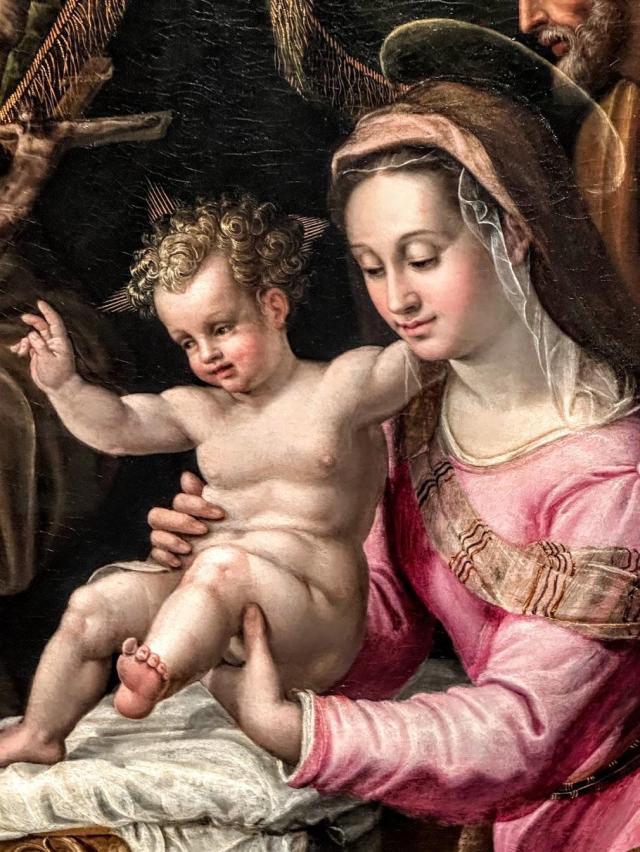
Holy Family with Saints Margaret and Francis – 1578
An important portraitist in the late 16th century, she also produced many religious paintings. Lavinia was celebrated for the vibrant colour and detail of the clothes and jewels her subjects wore. She also became one of the first women to render publicly funded, large scale figure paintings.
In 1577 Fontana married Gian Paolo Zappi. An inferior painter, he pivoted to becoming her business agent.
Some of her paintings are signed with her married name.
Lavinia was the mother of 11 children.
Enjoying the patronage of the family of Pope Gregory XIII, Lavinia painted portraits of much of the elite.
In 1604 she painted the Martyrdom of St. Stephen, for San Paolo Fuori le Mura in Rome. An altarpiece and her largest work, it was destroyed when the basilica burned down, in the fire of 1823.
This is an oil on canvas painting, and there were at least 2 others by Lavinia Fontana in the Making Her Mark exhibit. I’ll show those at another time, with a few more tidbits of her extraordinary life.
In the meantime, should you be interested to learn more about her, you can check out the links at the end of this post, search her online or in libraries.
Barbara Longhi
Italian: 1552 – 1638
Known primarily for her religious paintings, Barbara Longhi’s work can be difficult to differentiate from her father’s work. Her father, Luca Longhi, was a renown painter and miniaturist. Barbara began her art journey, by assisting him with altar pieces.
Virgin Mary & Infant Jesus – ca – 1575-80
She expanded beyond her father’s teachings by studying the works of Parmigianino and Correggio. Barbara painted primarily religious images, including several depictions of Madonna and Child with Renaissance style and features. I’m intrigued that parted drapes exposing landscapes was one of the elements.
Giorgio Vasari commended her for having “purity of line and soft brilliance of colour”.
Her ability to capture human interaction kept her one of the few successful career women of her day.
The Art Gallery of Ontario has obtained this 42.5 × 34 cm. oil on canvas painting for its permanent collection.
” Longhi’s painting, alongside two other gifted paintings by women artists (Mary Ann Alabaster (1805–1879) and Rosa Bonheur (1822–1899)), extends the AGO’s holdings of European Art by female artists three centuries deeper into the past.” – AGO
Welcome back to another instalment of Making Her Mark! I’m joined by Rebecca Budd, curator of Chasing Art to discuss how the poor were documented, by female artists.
Resa – Welcome back, Rebecca! As you point out in your introduction, times were changing. Do you have a main take away from your research?
Rebecca – Thank you for the opportunity to participate in this amazing look back into art history, Resa. One key takeaway from my research is how Geertruydt Roghman, Catherine Brandinn, and Maria Louisa Catherine Cecilia Cosway used their artwork to honour the ordinary moments of life. I was inspired by how these artists challenged societal norms and created space for the voices of the underrepresented.
Resa – We’ve had many amazing sisters. Well, let’s have a look at these 3, with art as our window.
16th Century
In the sixteenth century, change was in the air. Northern Europe witnessed a significant cultural shift as the Protestant movement emerged, challenging the established norms of the Catholic Church. This movement advocated for a personal connection with God, eliminating the need for church intercession.
Art responded. Religious imagery became less prominent, as the focus shifted away from traditional depictions of saints and biblical scenes. This transference in artistic focus not only reflects the broader societal changes brought about by the Protestant Reformation but also underscores the importance of recognizing the value of everyday experiences in art.
17th and 18th Century
During the 17th and 18th centuries, the art world was dominated by the portrayal of aristocracy and religious themes, leaving little room for the representation of ordinary people. The prevailing social hierarchy and the patronage system dictated that artists primarily catered to wealthy patrons who commissioned works that glorified their status and achievements. This resulted in a paucity of artworks focusing on the lives and experiences of the common populace, who were often relegated to the background of grand historical or mythological scenes.
Geertruydt Roghman
Dutch – 1625 – 1657
Geetruydt Roghman was born in Amsterdam into a family steeped in artistic tradition. Her upbringing in a creative household, with a father who was an engraver and a great uncle who was a celebrated painter, likely influenced her perspective on art.
A Pioneering Figure
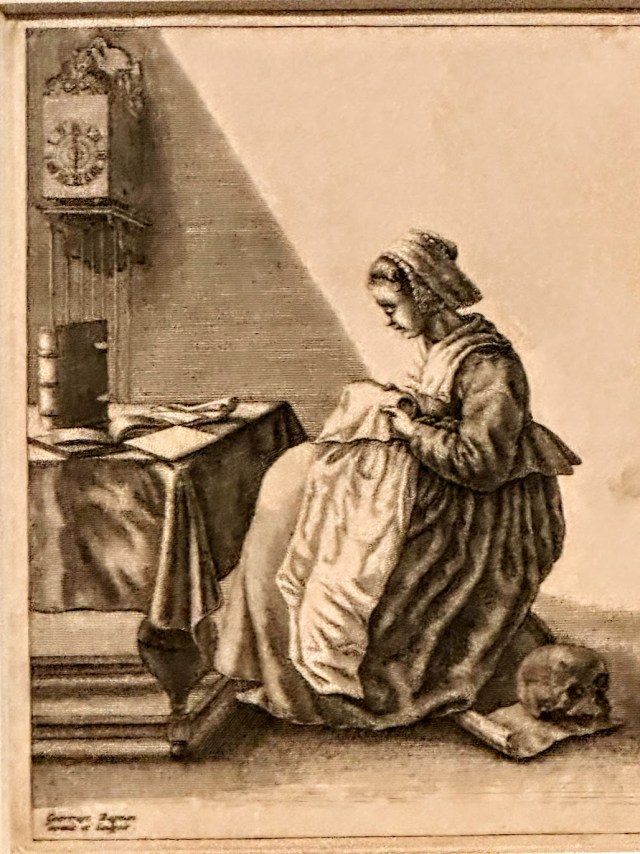
Artists began to explore new themes that reflected the everyday lives of individuals, leading to a rich tapestry of subjects that resonated with the public. Geetruydt Roghman dedicated her work to depicting ordinary women engaged in their daily tasks. Her series not only showcased the realities of their lives but also contributed to a broader understanding of women’s roles in society during the seventeenth century.
Despite her limited output, Geetruydt Roghman’s work offers a glimpse into the lives of women, challenging the norms of her time and highlighting the importance of their stories. This marks her as a pioneering figure in a time when few artists chose to highlight the experiences of women. .
Celebrating Geetruydt Roghman’s Art
Exploring Geetruydt Roghman’s engravings on paper allows us to connect with the essence of humanity, as they capture the nuances of everyday life and the stories of real people who lived before us. These sketches serve as a mirror reflecting our shared experiences, emotions, and struggles, reminding us of the beauty found in simplicity.
By exploring Geetruydt Roghman’s work, we gain understanding into diverse cultures and perspectives, fostering empathy and understanding in a world that often overlooks the significance of the ordinary. Such examination not only celebrates the artist’s talent but also encourages us to appreciate the richness of human existence in all its forms.
I believe that Geetruydt Roghman invites us to appreciate the beauty and significance of the ordinary, enriching the narrative of art history.
“Making Her Mark” exhibition encourages a reevaluation of her work, which advocates for the recognition of everyday life as a worthy subject of artistic exploration.
Note how small these engravings on paper are. They are in 8 x 10 frames.
Counter clockwise from the top: Young Girl Sewing – The Dressmakers – Woman Spinning
1640 – 1647
Resa – Amazing art history, Rebecca. Now, on to Catherine Brandinn! You had some difficulty gathering information about her. For a while it looked like all we were going to have to remember her by was her art. Then you discovered Johann Christian Brand‘s name appears alongside hers, which seems to muddy the waters.Do you think this is another case of the disenfranchisement of women in the arts?
Rebecca – I was fascinated by the connection between Catherine Brandinn and Johann Christian Brand, which highlights the complex interplay of gender and recognition in the art world. Without question, Catherine Brandinn’s artistic legacy has often been overshadowed by the presence of Johann Christian Brand, whose name frequently appears alongside hers.
This phenomenon raises important questions about the historical disenfranchisement of women in the arts. The association of Johann with Catherine could suggest a similar pattern, where her identity and artistic achievements are overshadowed by his prominence.
However, I believe that there may be another explanation. Consider that Johann Christian Brand’s recognition may have been a means of validating Catherine’s work. In a time when female artists struggled for acknowledgment, the inclusion of a well-known male figure could lend credibility to her art. Consequently, while Johann’s association with Catherine may complicate her legacy, it could also provide a platform for her art to gain the recognition it deserves.
Resa – You make a good point how difficult it was for women to be recognized in the arts. We may never know of Johann Christian Brand’s intent. However, her art is remembering her, not him.
Catherine Brandinn
Austrian? 18th century
The history of painting has predominantly celebrated the lives of the elite and significant events, often neglecting the stories of ordinary people. This selective representation raises questions about the value placed on different experiences and the narratives that have shaped our understanding of the past. The absence of everyday moments in art suggests a hierarchy of importance, where only the lives of the wealthy and powerful are deemed worthy of immortalization on canvas.
If painters had chosen to depict ordinary moments, our historical narrative would be richer and more inclusive. Imagine a world where scenes of daily life, community gatherings, and simple joys were captured alongside royal portraits and grand battles. Such representations would not only provide a more comprehensive view of society but also highlight the shared human experience, fostering a deeper connection to our collective history.
The transition in art from religious themes and the portrayal of affluent patrons to the representation of ordinary people began during the Renaissance and continued into the Baroque period. This shift marked a significant change in the subject matter of paintings, as artists started to explore the lives of the common man, and the beauty found in everyday activities. The rise of humanism encouraged artists to focus on individual experiences and emotions, leading to a more relatable and accessible form of art that resonated with a broader audience.
Catherine Brandinn portrayed ordinary people, capturing the essence of everyday life through her unique artistic lens. Her work often reflects a deep appreciation for the beauty found in the mundane, showcasing individuals engaged in daily activities. Her name is intricately linked to artist, Johann Christian Brand. This connection raises questions about her identity and the role this artist played in her life. When the artwork of Catherine Brandinn is viewed, Johann Christian’s name often appears alongside hers, suggesting that her narrative is largely defined through her relationship with this artist. This intertwining of identities hints at a deeper story waiting to be uncovered.
Catherine Brandinn’s painting, “Mädel mit Waldholz (Peasant Girl Carrying Wood),” created in 1775, captures a poignant moment in rural life. The artwork portrays a young peasant girl, her delicate frame burdened by a large bundle of wood, symbolizing the labour and resilience of women in agrarian societies. Catherine Brandinn’s use of soft colours in her engravings on paper evokes a sense of warmth and intimacy, inviting us to appreciate the girl’s strength and determination amidst her modest surroundings. The composition of the painting draws attention to the girl’s expression, which reflects a mixture of pride and fatigue.
“Mädel mit Waldholz” stands as a testament to the often-overlooked contributions of women in history. By focusing on the everyday tasks of a peasant girl, Catherine Brandinn elevates her subject to a figure of dignity and importance. This image encourages us to reflect on the narratives of those who have historically been marginalized in the art world and society at large.
Resa – So Rebecca, we move on toMaria Louisa Catherine Cecilia Cosway. You mentioned that in researching Maria Louisa Cosway, you saw lots of her artwork, but not this one particular workHome Industry, that showed at “Making Her Mark”. Do you think I’m crazy to think that we have something special here?
Rebecca – I don’t think you’re crazy at all, Resa. I am beyond thrilled that you were able to capture Home Industry in a photo. You have an amazing ability to find art treasures wherever you go!! Home Industry” is a gem!!
Maria Louisa Catherine Cecilia Cosway
English – 1760 – 1838
Maria Louisa Catherine Cecilia Cosway, an accomplished artist of the late 18th and early 19th centuries, was known for her diverse portfolio that included both prominent figures and ordinary individuals. Born in 1760 in Florence, Italy, she moved to England where she became a prominent portrait painter. Her ability to portray significant historical figures speaks to her talent and the esteem in which she was held in artistic circles.
A Progressive Artist
Maria Cosway’s artistry extended beyond the elite, as she sought to represent the lives of everyday people in her work. This inclination towards inclusivity allowed her to bridge the gap between different social classes, showcasing the beauty and dignity of ordinary life. Through her artwork, she celebrated the humanity of her subjects, making her art accessible and relatable to a broader audience. This commitment to portraying a diverse array of individuals marked her as a progressive artist for her time.
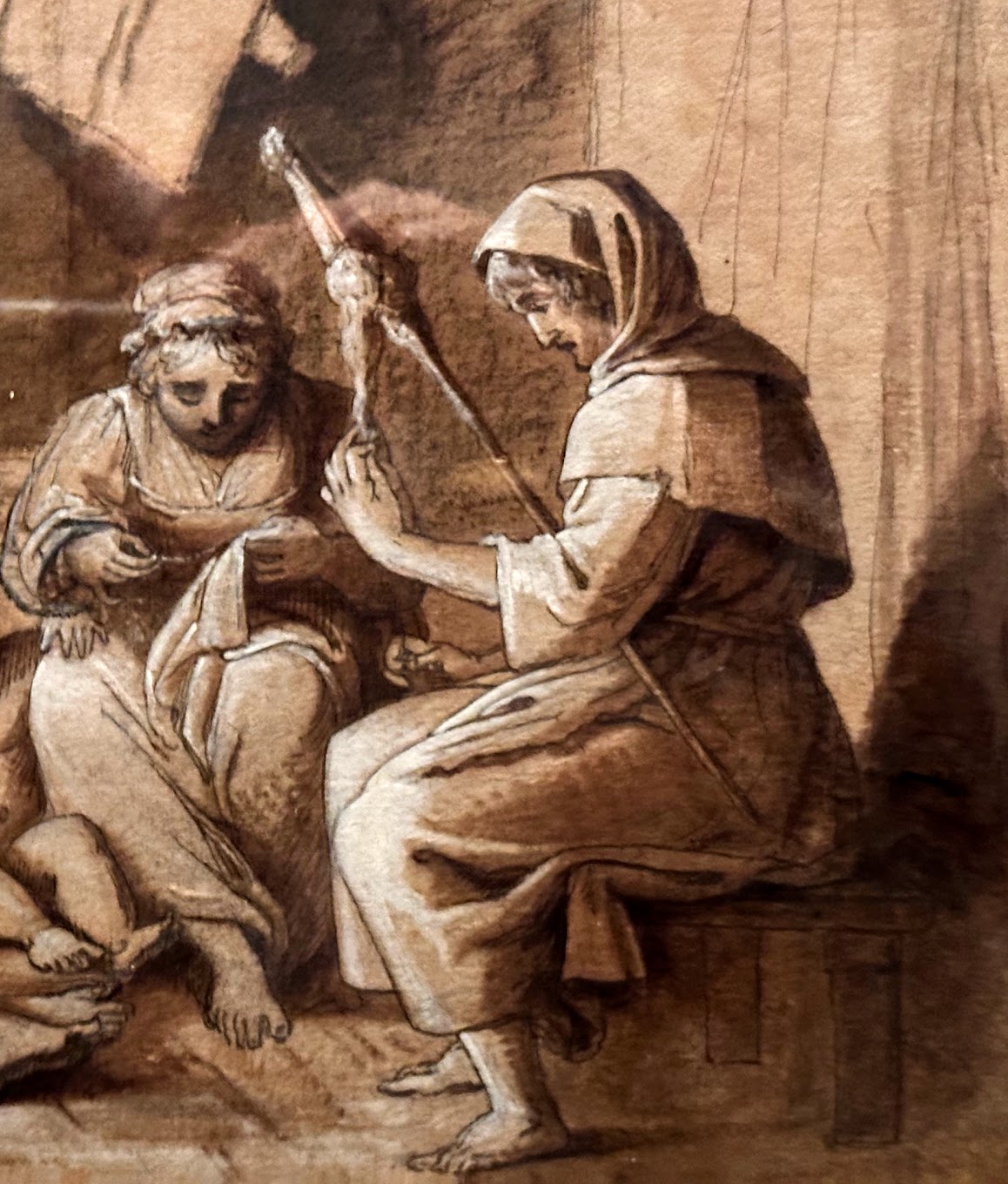
Home Industry tells a story of resilience and the quiet strength found within the home, serving as a reminder of the essential work that occurs beyond the public eye. Through her portrayal, she elevates the mundane to the extraordinary, encouraging us to recognize and honour the stories woven into the tapestry of domestic labour. It is a nostalgic reminder of a time when craftsmanship flourished within the domestic sphere, emphasizing the value of handmade goods and the skills passed down through generations.
Home Industry (1800) Pen and Ink Wash
We are invited to reflect on the importance of labour in a rapidly changing world and consider the implications of progress on the cultural fabric of society. During the late 18th and early 19th centuries, when Maria Cosway created this piece, the landscape of work was undergoing significant transformation due to the onset of industrialization.
Cottage industries, which had long been a staple of rural economies, faced increasing threats from mechanization and factory production.
This piece tells the story of a specific moment in time, evoking a narrative about the challenges faced by families during the industrial revolution. As industrialization encroached upon traditional ways of life, this artwork stands as a testament to the resilience of home-based labourers.
Home Industry also speaks to our time in history and is a relevant reflection on the balance between innovation and tradition.
Resa – Wow! Thank you Rebecca! Your co-hosting here on the “Making Her Mark” series has made it a much richer experience. Still, there’s lots to go. May I be allowed to try and tempt you to co-host another time, no rush, just sometime in the future? I have some juicy topics and artists I can present to you!
Rebecca– Hi Resa! Thank you so much for your kind words! I’ve truly enjoyed co-hosting the “Making Her Mark” series with you, and I would love to collaborate again in the future. Your topics and artist suggestions sound exciting, and I can’t wait to hear more about them. Let’s definitely keep the conversation going!
Resa – Yahoo! You know Rebecca, we might just be artoholics!
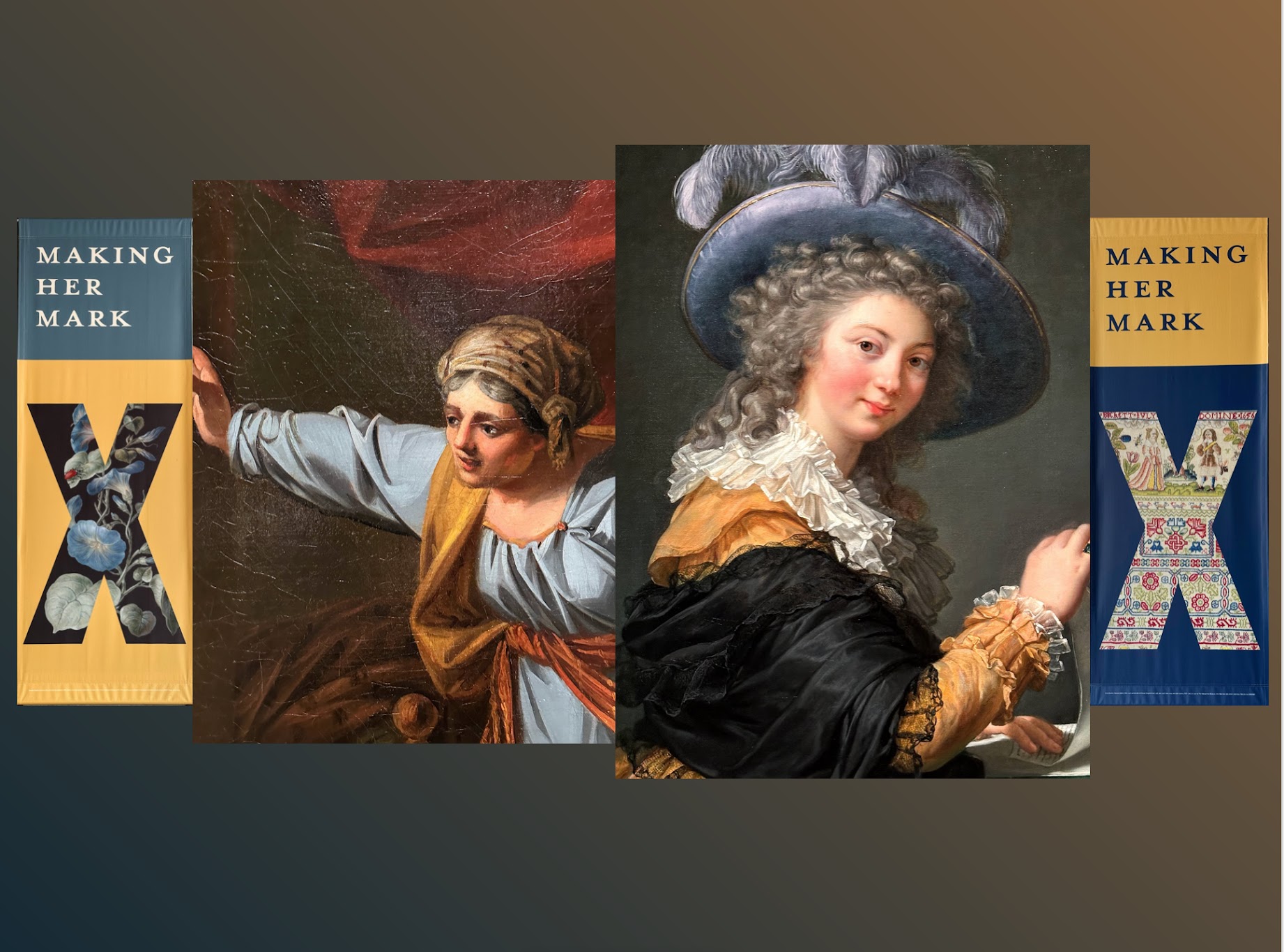
Welcome to the “Making Her Mark” Self Portraits Series! How better can we get to know some of the amazing female artists, from 1400 – 1800, than to introduce them through their own visions of self.
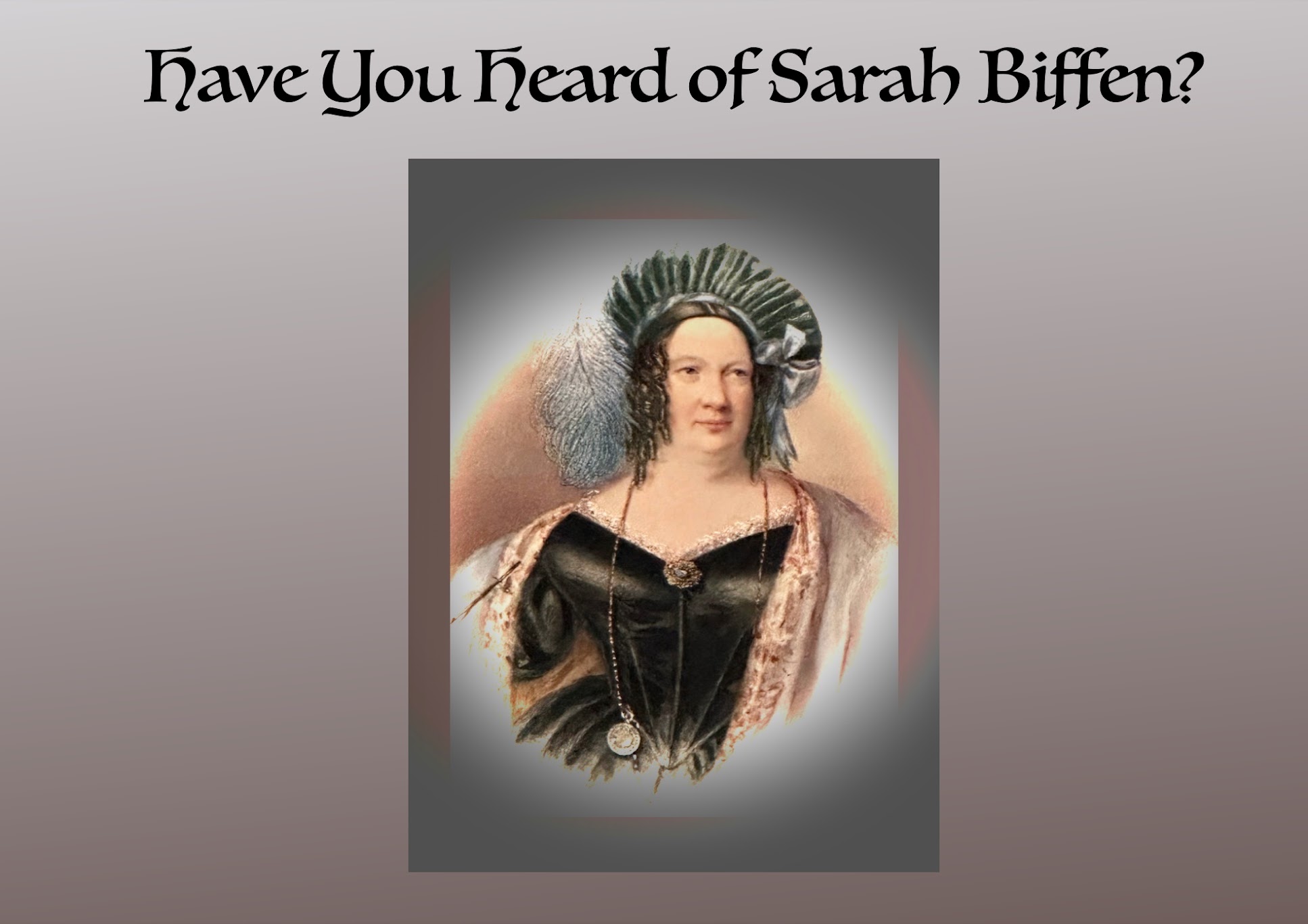
Rebecca: – Resa, I was thrilled to receive your invitation to participate in the Self Portraits segments of your “Making Her Mark” virtual event. What better way to begin this journey of discovery than with the artist, Sarah Biffin. I confess this was the first time I heard her name, which can be spelled either Sarah Biffin or Sarah Biffen.
Resa: So Rebecca, now that you’ve heard her name, I’m excited to hear what you have discovered.
The Remarkable Journey of Sarah Biffin
Born with a disability, Sarah Biffin’s remarkable journey from sideshow attraction to an artist patronized by royalty remained little known until recent years. Despite her initial challenges, her early talent blossomed into outstanding artistic ability, leading to recognition and patronage by the aristocracy. Her story serves as a true testament to the transformative power of opportunity and mentorship, showcasing the incredible potential that lies within each individual.
Born on October 25, 1784 in East Quantoxhead, Somerset, Sarah was the third of five children born to Henry Biffin, a farm labourer who later became a shoemaker, and Sarah Perkins. The baptism register noted that Sarah was born with a rare condition known as phocomelia, rendering her without arms or legs. At the age of 25, she was reported to be approximately 3 feet tall.
When she was 20, Sarah was exhibited as an attraction by a travelling showman at fairs throughout England. Even without formal training, crowds were impressed by how she used her mouth to sew, write and paint watercolours and portrait miniatures.
And then…. serendipity smiled and transformed Sarah’s destiny.
Sarah Biffin’s life was undeniably impacted by a twist of fate. It was at the St Bartholomew’s Fair of 1808 that George Douglas, 16th Earl of Morton (1761-1827) noticed her. This serendipitous encounter changed the trajectory of Sarah’s life in a profound and inspiring manner.
His sponsorship of Sarah Biffin, an artist born with a rare disability, enabled her to receive art lessons from renowned painter William Craig of the Royal Academy of Arts. Notably, George Douglas is remembered for his patronage of the arts and his support of individuals with exceptional talent.
As a result of the Earl of Morton’s support, Sarah’s artistic skills developed considerably. By the time she reached her 30s and 40s, she had become an extraordinarily talented artist, often considered to be as good as the best portrait miniaturists of her time. This period marked a significant ascent in her artistic prowess, solidifying her legacy as a remarkable and influential artist.
Patronage, Marriage& Legacy
Sarah’s exceptional artistic talent earned her prestigious commissions, including from the Royal Family, leading to her widespread popularity and acclaim. This royal patronage elevated her status and contributed to her flourishing career as an artist.
On September 6, 1824, Sarah entered into marriage with Stephen Wright in Kilton, Somerset. Despite the eventual end of the marriage, Sarah continued to exhibit under her married name in the years that followed.
Sarah’s influence extended beyond the realm of art, as she was prominently featured in the works of renowned author Charles Dickens. Dickens referenced her in several literary works, including “Nicholas Nickleby,” “Martin Chuzzlewit,” “Little Dorrit,” and “A Plated Article,” underscoring her cultural significance and enduring legacy.
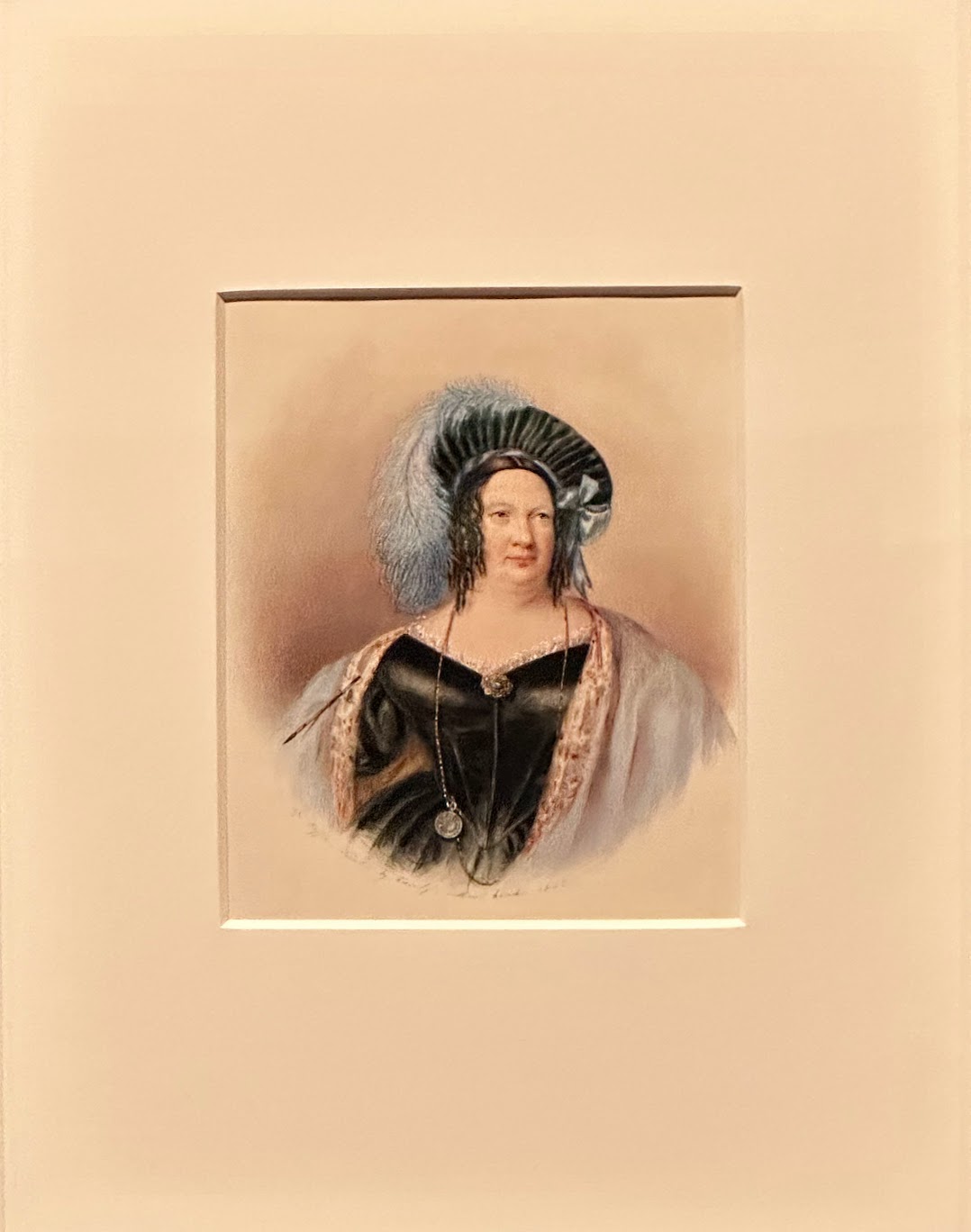
Sarah’s Last Self-Portrait
Resa – Rebecca, what an honour it is to have seen this portrait in real life. I took one close up within the glass free board frame, and one how it was on the wall. It’s a real treat to not have to look through glass.I hope my photography does it justice.
Rebecca – Your photos allowed me to step through the screen and join you virtually at the AGO. It was as if I were viewing the paintings in person.
Resa – Rebecca, I am so happy you are here! Thank you for joining me!
Rebecca – Thank you, Resa, for the invitation to join you on this profound “art” journey. I am thrilled to be sharing “Making Her Mark” with you. Thank you for your extraordinary vision of creativity within our complex, evolving world. You have redefined the art world through your unparalleled leadership, emphasizing compassion and hope as guiding principles. Your profound understanding of art’s transformative power has inspired me and countless individuals, fostering a deeper appreciation for the inherent beauty and significance of artistic expression.
Resa – Thank you, Rebecca! Graciously and humbly.
I hope you all enjoyed this close up feature on Sarah Biffen. A million thank you’s to Rebecca Budd for joining me, with her fabulous research, in this Self Portraits series. Rebecca and I will be back with further instalments highlighting other women who made her mark with art.
Click on the banner above to view some of the site links Rebecca found and used for her research. The Artnet link reveals many of Sarah’s works. Unfortunately none are for sale
Visit Rebecca at CHASING ART! Here you will also find links to her other blogs and Podcast Tea, Toast and Trivia
Photos of Sarah Biffen’s self portrait taken by Resa – May 14, 2024













 Graffiti Lux Art & More
You must be logged in to post a comment.