
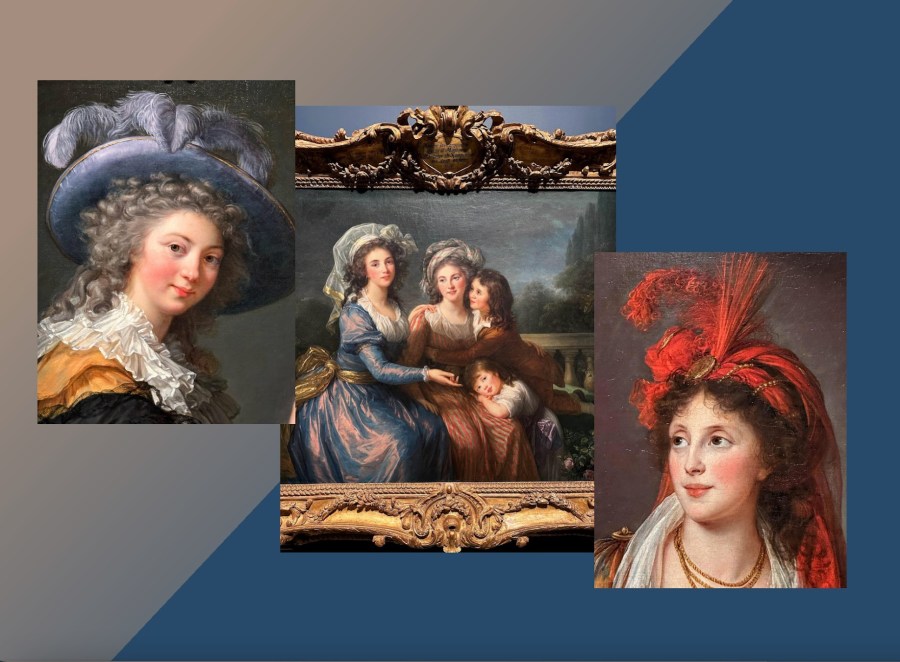
painted by: Élisabeth Vigée Le Brun
She painted Queens and Kings. She was the official portrait artist to Marie Antionette. Much has been recorded by and of Élisabeth Vigée Le Brun (1775 -1842).
Yet, who are some of the extended royalty whose Vigée Le Brun’s images linger on earth for posterity? I was privy to viewing 3 of Élisabeth Vigée Le Brun’s portraits at the Making Her Mark exhibit. All 3 are of royalty.
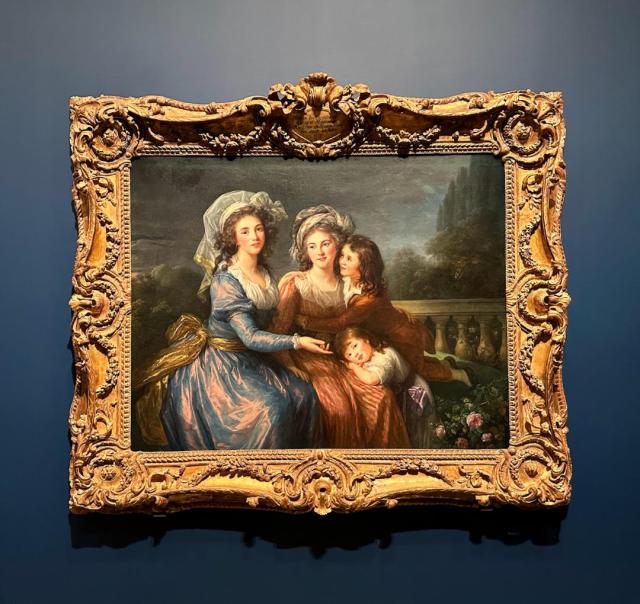
The Marquise de Pezay, and the Marquise de Rougé with Her Sons Alexis and Adrien
This massive painting (4.5 ‘ x 5.1’) painted in 1787, was one of my faves at the exhibit. It was almost like being with living people.

The Marquise de Pezay
There is not much written about The Marquise de Pezay nee: Caroline de Murat, and I cannot find the date of her birth. From an old Auvergne family, she was very beautiful and quite penniless.

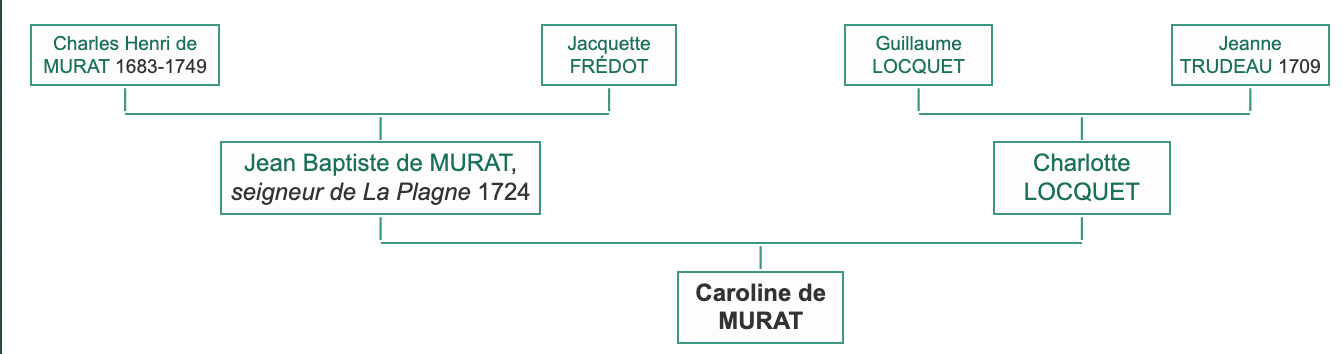
In 1776 she married Alexandre-Frédéric-Jacques Masson , Marquis de Pezay. The Marquis de Pezay was a French Military officer of distinction, a writer and encyclopedist. In 1777, at only 36 years of age he died at Pezay Castle.

Vigée Le Brun and the Marquise de Pezay both fled Paris in 1789 shortly after the storming of the Bastille.
The Marquise de Pezay found refuge in Lausanne, Switzerland, where she died in 1794.
There is also a record of her in Heidelberg in 1791.
In researching Caroline de Murat, you will also find Caroline Murat is the name of Napoleon Bonaparte’s youngest sister.
Marquise de Rougé
Nee: Natalie Victurnienne de Rochechouart de Mortemart (1759 -1828). Her father was Jean Victor de Rochechouart de Mortemart. Her mother was Charlotte Nathalie De Manneville.
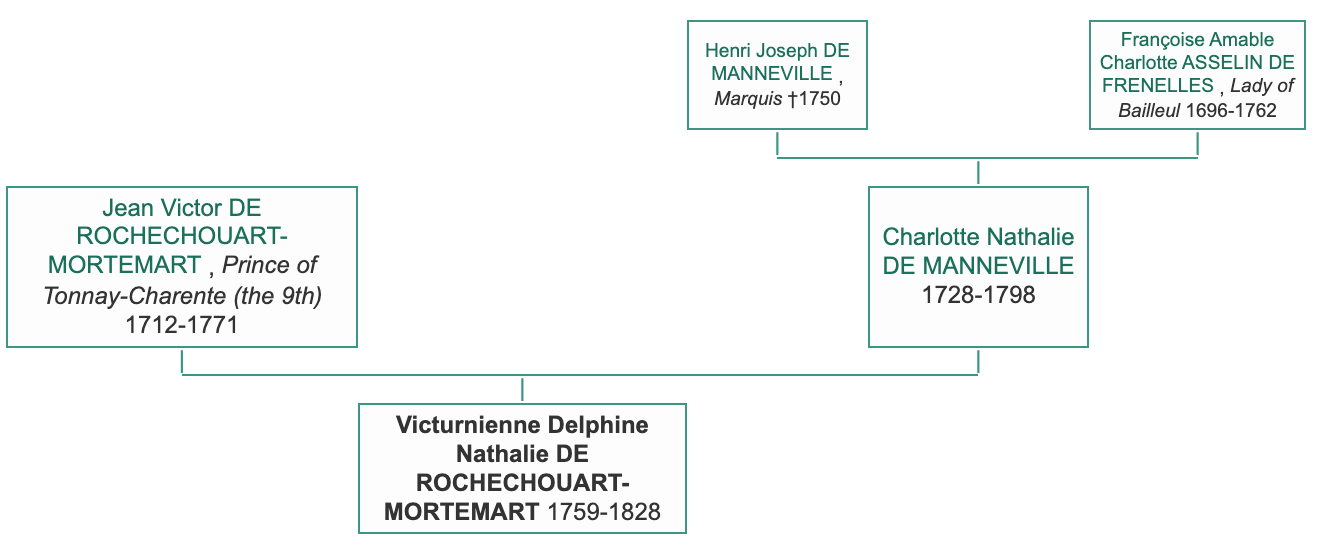
She wed in 1777 to Bonabes-Jean-Catherine-Alexis de Rougé, the 3rd Marquis de Rougé. Five years later, returning from the West Indies on a battleship, he died.

In 1789 she and her sons left France for Switzerland, but returned to France in 1790. At that time, they lived in seclusion at the Château de Moreuil with her husband’s aunt, the Duchess d’Elbeuf. In 1791, she emigrated to Heidelberg, Germany, along with her children, her mother, and the Marquise de Pezay.
From the Journal of the Emigration -by: Count d’Espinchal (1748 – 1823) while living in Heidelberg, Germany. Published from the original manuscripts in 1812.
“I have found living here since the winter, the Duchess de Mortemart, mother of the Duke and of the Marquis de Mortemart, both of whom are deputies to the Estates-General … and both members of the majority of the conservative nobility. The Marquise de Rougé, their sister, a pretty and amiable widow, is here with her children (she looks more like their sister) … and Mme de Pezay … who is her intimate friend.”
She returned to Paris in 1798. Her lands had been expropriated and sold. So, she took room and board in a home run by former nuns. Her sons joined her in France in 1800. She died on 25 December 1828
Alexis and Adrien

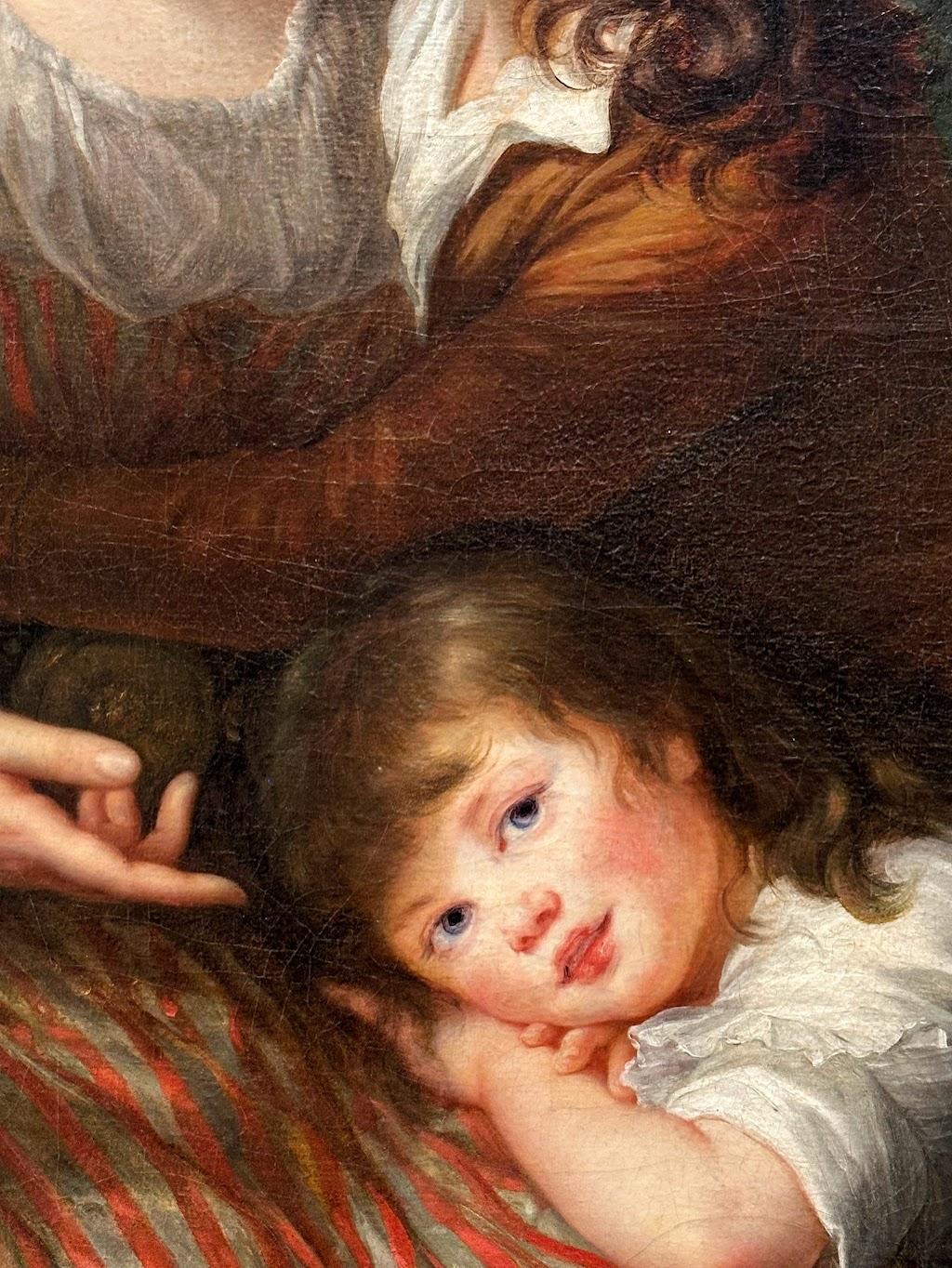
Alexis Bonabes Louis Victurnien, Marquis de Rougé, ( 1778 – 1839) was a French military officer and Statesman.
In April 1804, he married Alexandrine Célestine Zoé Emmanuelle Thimarette de Crussol d’Uzes (1785–1866). They had 6 children.
Adrien Gabriel Victurnien de Rougé (1782 – 1838) was a statesman and distinguished soldier.
In 1809 he married Caroline de Forbin d’Oppède. They had 4 children.
The Comtesse de Cérès
Seems some scallywag royalty wormed its way into Vigée Le Brun’s life.

It appears as though Anne Marie Thérèse de Rabaudy Montoussin (1759 – 1834) married “The Roué himself”, Jean de Barry-Cérès when she was 18.

Jean de Barry-Cérès, from suspect lower nobility, may have added the “de” to his name. That was easy to do back then, and claim you were A somebody. It appears he earned a scrounged living by both legal and so/so illegal means (gambling parlours and pimping) .
Not only does there appear to be only a Jean Barry (no Cérès), but it is somewhat unclear if he did wed Anne Marie Thérèse de Rabaudy Montoussin, who would have been his second wife. Barry’s first wife was Ursule Dalmas de Vernongrese.
Anne Marie Thérèse de Rabaudy Montoussin apparently married “de Barry” when she was eighteen. This portrait was done in 1784. She would have been 25.
De Barry, the Roué, was persona extremely non-grata at the French Court. Yet, Vigée Le Brun befriended the Comtesse de Cérès.
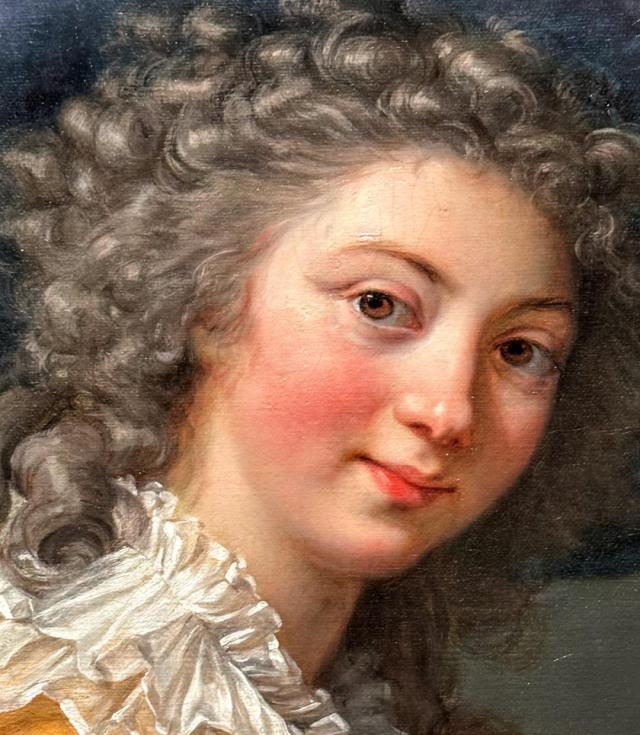
The friendship did not last.
Vigée Le Brun was furious that gossip was accusing her of having an affair with the French Finance Minister, Charles Alexandre de Calonne; gossip fuelled by the actions of Madame de Cérès .

From the memoirs of Élisabeth Vigée Le Brun
“While I was painting her portrait, she did me an atrocious disservice. In her ingratiating way she asked me to lend her my horses and carriage to take her to the theater.
The next morning I requested my horses for eleven o’clock. Coachman, horses, nothing had come back. I learned that Madame de Cérès had spent the night at the Finance Ministry.”
All assumed the affair was with Vigée Le Brun, as it was her coach that spent the night outside the Finance Ministry.
Élisabeth Vigée Le Brun
I’d like to take a moment here to say how awed I was standing in front of Élisabeth Vigée Le Brun’s paintings. They took my breath away. Rebecca Budd, curator of Chasing Art has, written an outstanding 7 part series on Élisabeth Vigée Le Brun.
Below is the link to the first article. Just click on “NEXT POST” and work your way through this enchanting recounting of a remarkable woman in history, or I might say – Herstory!
Princess Anna Alexandrovna Galitzin
Princess Anna Alexandrovna Galitzin (August 1763 — October 1842) was a Russian aristocrat of Georgian royal origin.
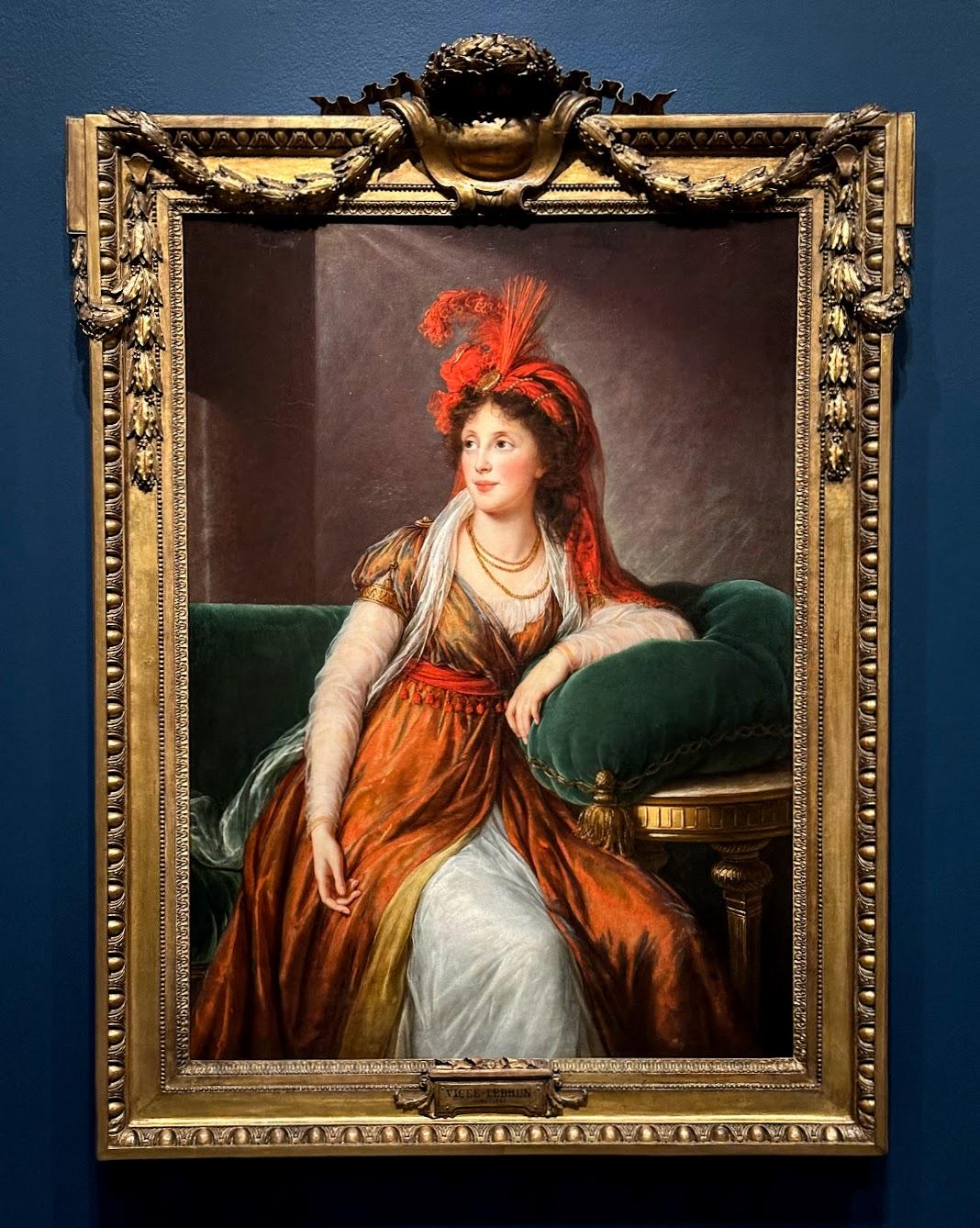
Anna was the daughter of the Tsarevich of Georgia. Growing up in Moscow, she knew a good deal of local power. This power was afforded her, because she was a member of the house of Bagration-Gruzinsky.
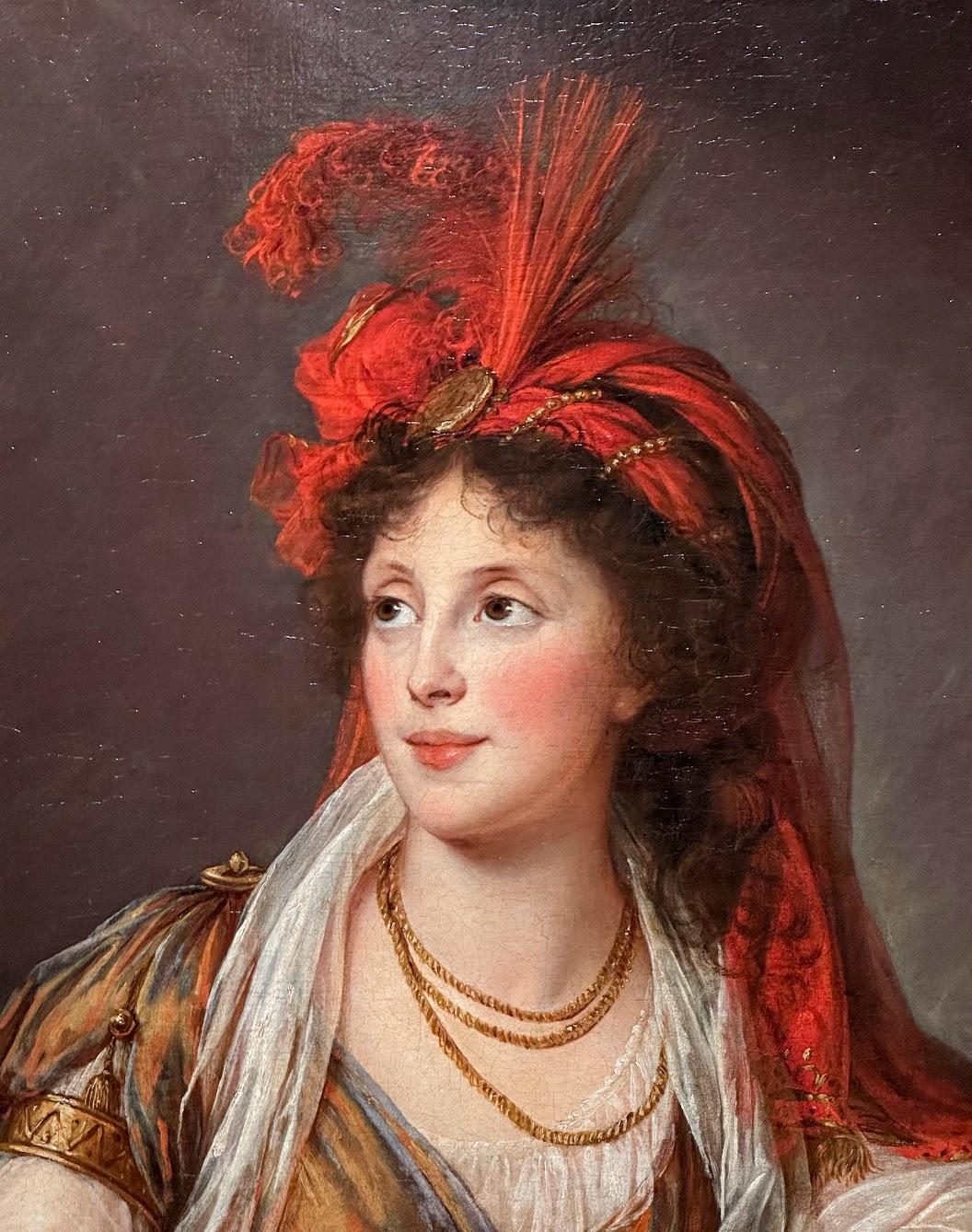
In 1785 she married the illegitimate son of Prince Aleksander Mikhailovich Golitsyn, Alexander Alexandrovich Litsyn. One year after his passing, in 1789, she married her third cousin once removed, Prince Boris Andreevicholitsyn. Together they had 8 children. Her husband died of a stroke in 1822.

Tsar Paul I came to the Russian throne in 1796. In 1798 he promoted Prince Boris to lieutenant general. In 1800, Boris did something to anger a higher ranking officer. The result was that he, Anna and her family were “compelled to retire” to their estate, in the province of Vladimir.
In 1801 Alexander I came to power, and high society of St. Petersburg accepted the family back.
Back in St. Petersburg, Princess Anna hosted a most influential salon.
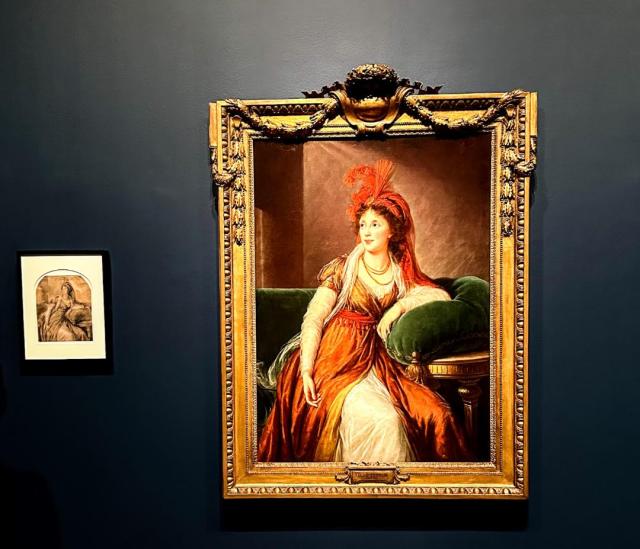
Vigée Le Brun was charging high prices when Princess Anna commissioned it in 1797. However, money was not an issue. Princess Anna possessed of one of the largest fortunes in the empire.
Also on display was the working drawing, in black and white chalk with stumping on paper.
It seems the gown Princess Anna is wearing was a house dress, nothing fancy. Also, for reasons of modesty, the sheer arm sleeves were apparently added after completion of the portrait.

Thank you for reading another post of “Making Her Mark”
To read all posts just click on the Making Her Mark banner at the top of the side bar!
Please click on the banner below to go to the research links page.
Photos taken by Resa McConaghy – May 14, 2024
Art Gallery of Ontario, Toronto, Canada
 Graffiti Lux Art & More
You must be logged in to post a comment.