How does one review a heart, soul and mind book like this? Does one say it’s well written? It answers very human questions in an ordinary way that all can understand? Many of us will go through this, so it’s a helpful read?
A Journey Through Loss
Written by D.G.Kaye, after the death of her husband, the love of her life; this helpful book speaks from the pain of experience. She is not a therapist, nor a psychiatrist, nor a professional healer of any sort. And she is right up front about that fact.
In her own words “I devoured books on everything from grief to the afterlife, always striving to make sense of the roller coaster ride I was on,”
I think the best way to impart something more of this book is to speak directly to D. G.
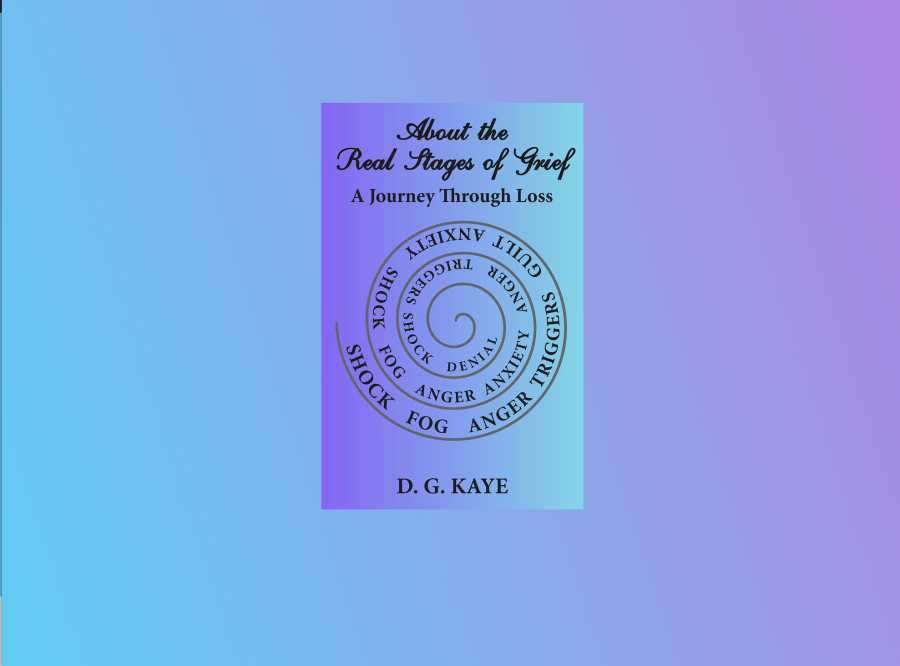
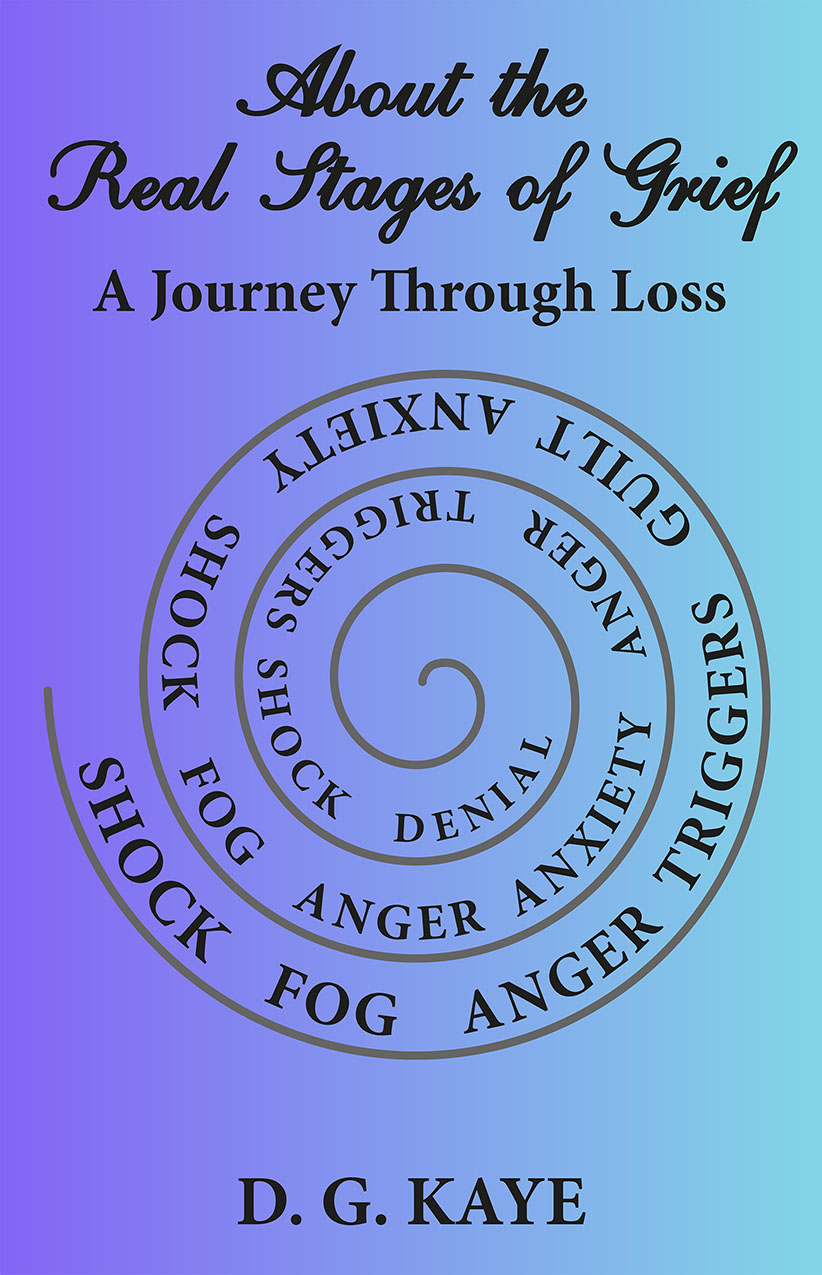
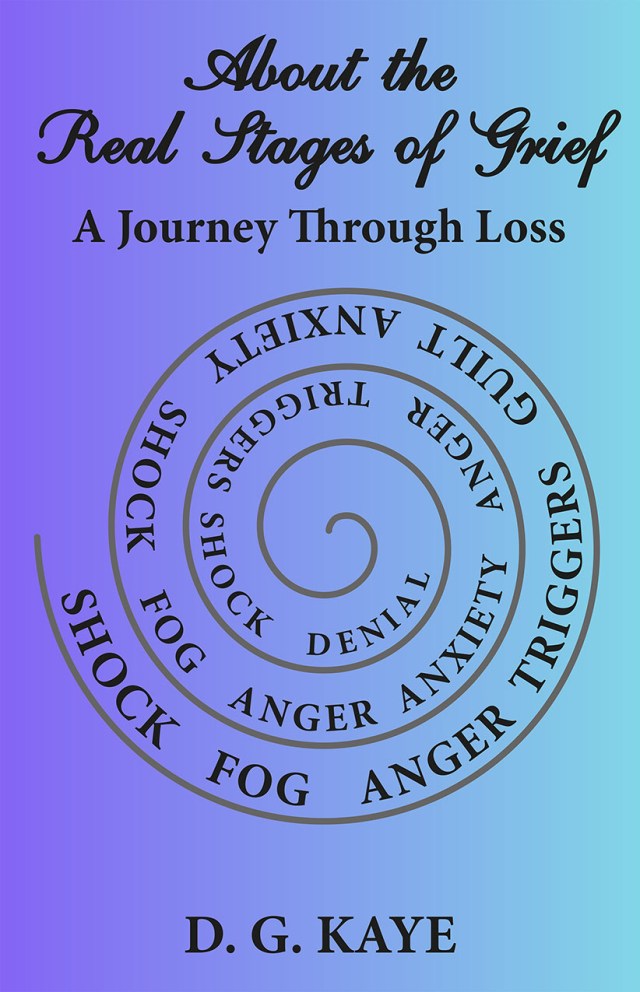
Resa – The cover of your book has the words: Shock, Fog, Anger, Triggers, Guilt, Anxiety and Denial swirling in a circle. At first I thought the words were repeating in order, but upon a closer look, I realize that they are not in any order, but do repeat.How did you come up with it? Why the words are not in any order?
D.G. – For this cover, the concept came to me immediately.
Grief is like an ongoing spiral with ups and downs. The words inside are just some of the phases grievers experience. The fact that the words are in no particular order and some not repeated is precisely how grief works.
We may visit phases over and over again through time, and some may dissipate with time. Thus, the grief spiral is far from linear but, more chaotic.
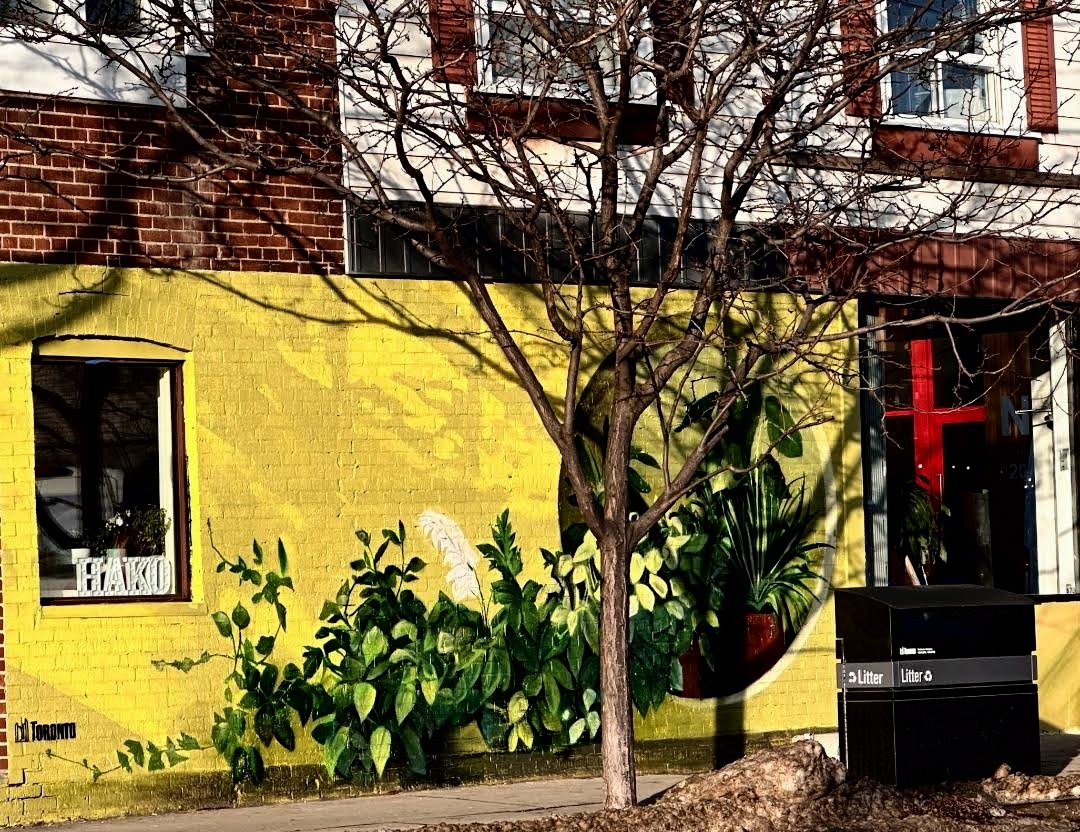
It was above 0c and cloudy out, not a peep of sun in the sky. A perfect day to shoot a shadow free piece of wall art, that seemed perfect for this post. It was only a 20 minute walk to get there.
Suddenly, as I arrived, it became a sunny day with nary a cloud in the sky. There was a barren tree’s shadow over the painting. I shot it anyway. To me, there is something poetic in this image, that relates to grief – something about the shadow.
Resa – Debby, can you see why I think that? Can you put it into words?
D.G. – Oh wow Resa. I love the shot with the tree’s shadow. If I were to relate it to grief I would say that when you love deep, it’s like carrying sunshine in your heart. And when you lose that love of your life, despite all the horribleness, there will be days when the obstinate clouds clear and the sun shines through, although the shadow of grief is never too far away.
Resa – Perfectly, poetically and profound said.
After the pics were taken, there was still not a cloud in the sky. So, I hopped on a streetcar, heading home. About 3 stops later, Suddenly, it clouded over. There was nary a crack of sun to find.
Resa – This seemed mystical to me, Debby. Does this touch you, or am I just a sentimentalfool?
D.G. – Oh no Resa, you may be sentimental – like me, but no fool. I love that you were working on this post and came across these poignant images in your travels.
Remembering that grief is love with nowhere to go, the image reminds that even without sunshine, the shadow of love always sticks with us. Not to mention, it reminds me of the Tree of Life – rain or shine, we are branches off the Tree of Life where memories live deep within, sometimes shadowed, but always there.
In the book D.G. writes:
“In the aftermath comes the loss of us. Our grief replaces replaces the lives we once knew.”
Resa – Has writing this book been cathartic? Has it helped you to replace that life lost, with a new life?
D.G. – In some ways this book was cathartic to write, but in many other ways, it was difficult to write; because to write, dredging the info up meant remembering moments that could take my breath away and have me leaving the computer for an emotional break.
In no way did writing this book help to replace that ‘life lost’, as nothing ever could. That life is no longer tangible, but seared in my heart.
But, the book offers a lot of understanding of the trials and tribulations of the process of grieving through time, understanding that it’s difficult to let go of a life you’re familiar with when it’s snatched from you, with the importance of eventually finding our way back into a new way of living.
Thank you to D.G. Kaye (Debby to her pals) for her time answering my questions! Debby, I appreciate this more than I can say!
Meet D.G. Kaye
Congratulations to Debby for being officially in the top 5% of Goodreads Reviewers!
About the Real Stages of Grief is available world wide at Amazon.
Click on book cover to go to the purchase page on Amazon.com
“Personally, I don’t believe there is any cure for grief. It’s not a disease that we will get over and feel better about tomorrow. Rather, it’s a new addition to our lives, one we must become acquainted with.” – D. G. Kaye
Pics taken by Resa – 2023 – 2025
Toronto, Canada
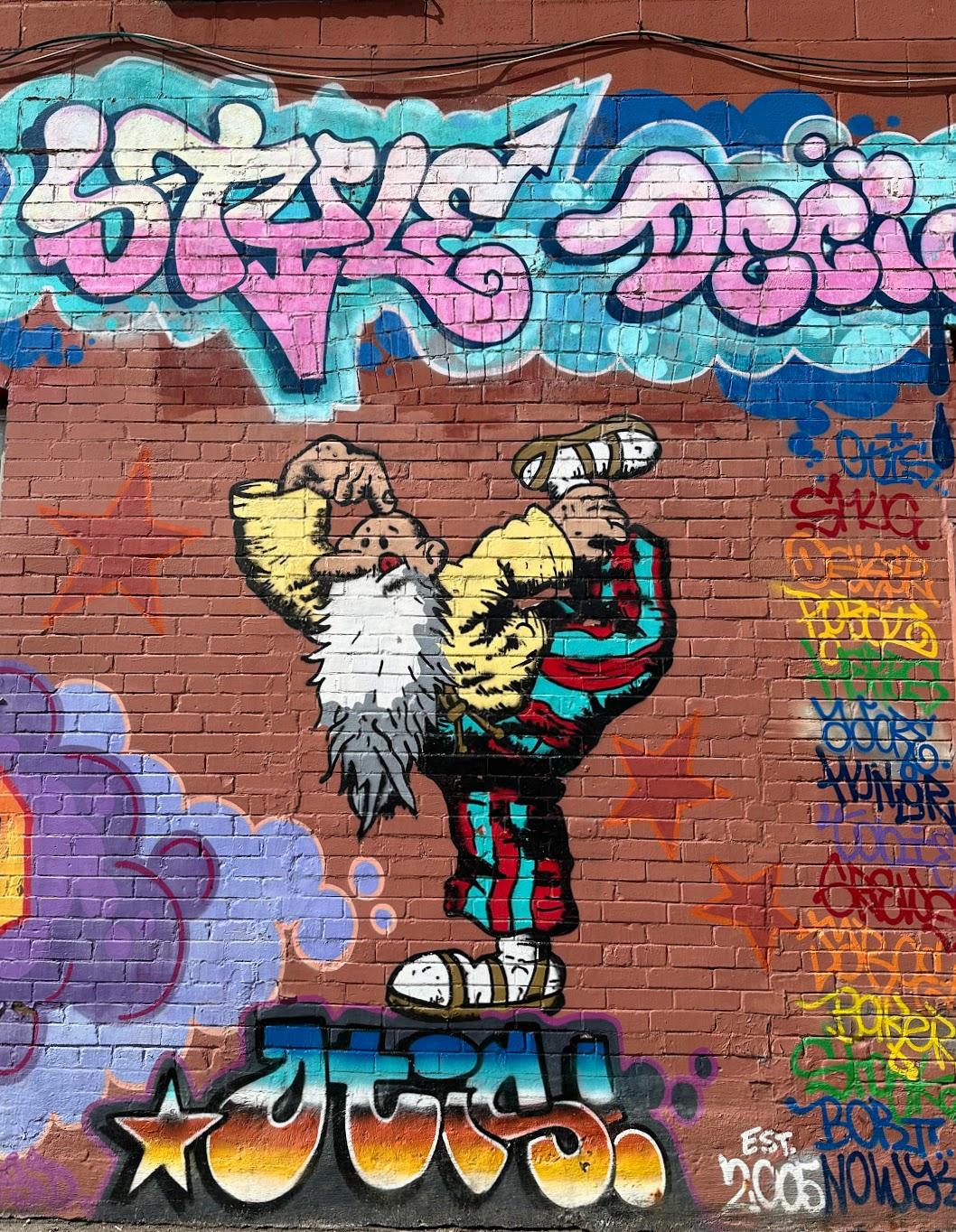
The artists in vertical order:
The Dreamers, Julia Praza, One Day Creates, Unknown, Blackburn, Unknown, Chris Perez, Vizla Bacon, Blazeworks, Adrain Corne
The Tate Museum says “The term underground art is used to describe a subculture of art, like graffiti art or comic strip art. Wiki says ” any form of art that operates outside of conventional norms in the art world, part of underground culture.
Resa – Matt, what do you say to those definitions?
Matt – Either definition works. The wiki def is more encompassing to include **Poetry Chapbooks one of which I get in the mail & **Zines(which I was also part of in the 90’s) which surprisingly still exist.
All I did was turn into an alley and was instantly transported into the past. The newest graffiti was 15 years old.
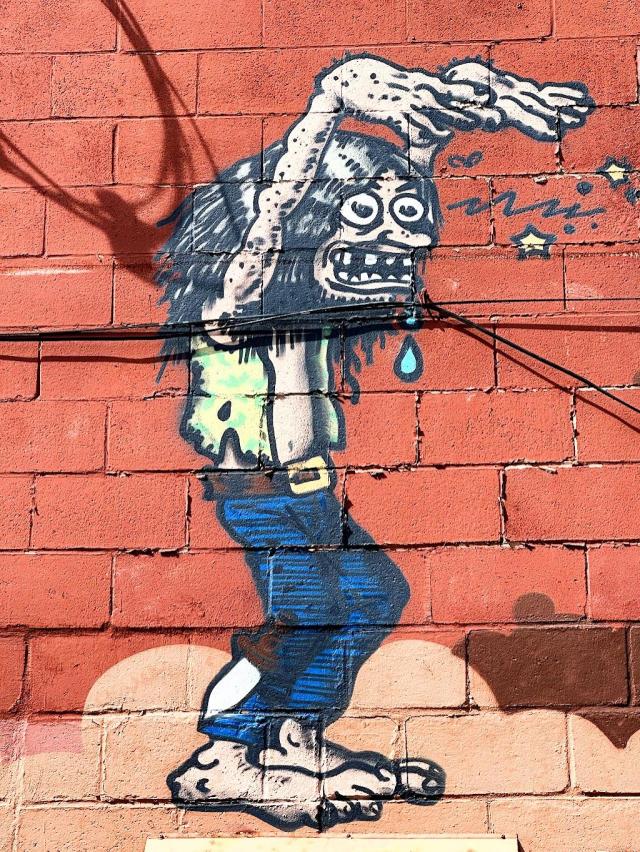
Mr. Natural?
Underground Comix and Publications
COMPARE THE MR. NATURALS
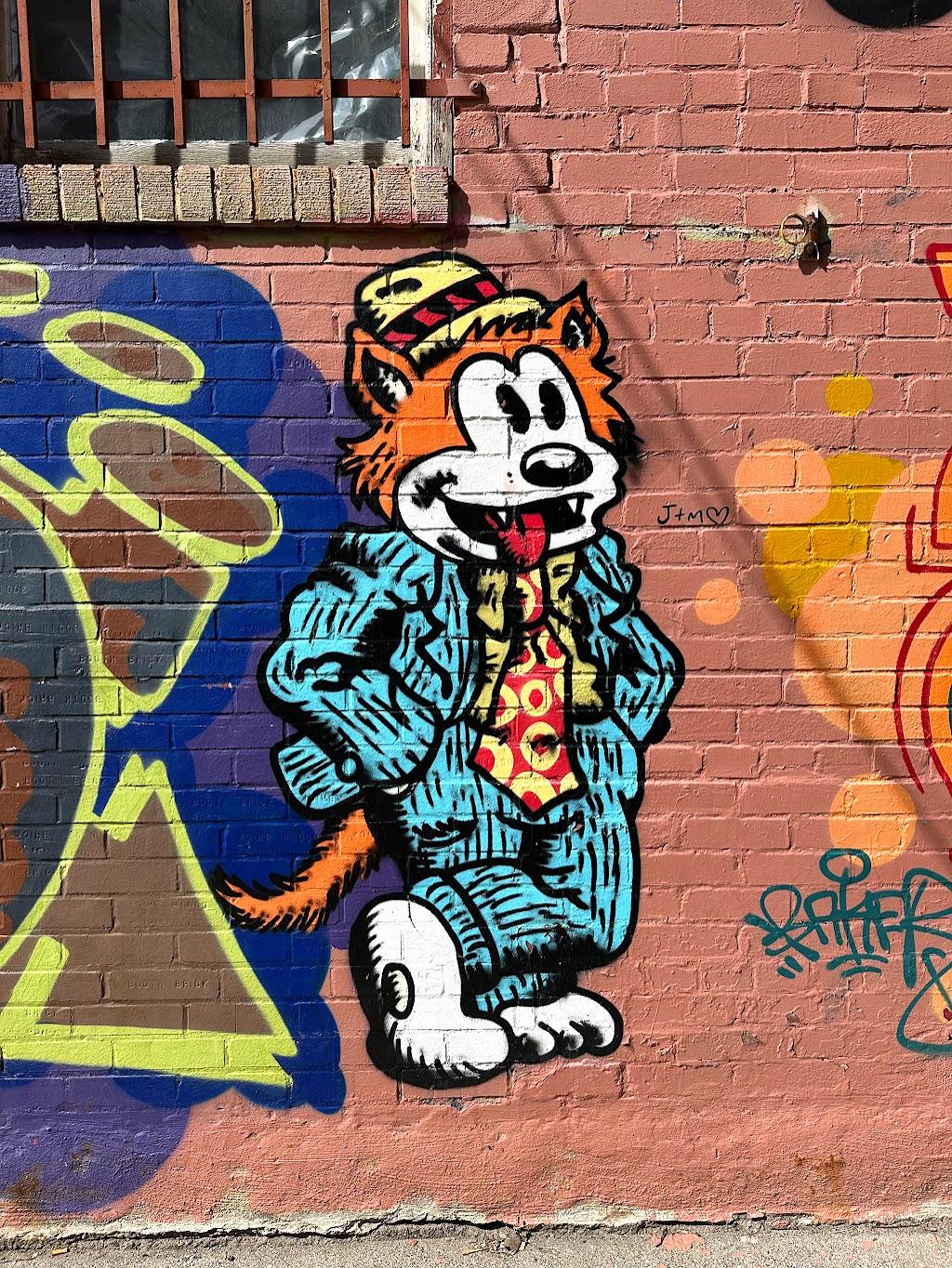
Having recently had a comments chat with Matt aboutunderground comix, I was like OH, Matt would love this alley. I sent him a couple of pix, Mr. Wonderful and the one below.
Matt – Oh cool, those look like the work of Ralph Bakshi & R.Crumb.
Resa– Matt, the R. Crumb work was obvious to me, but I honestly didn’t know who Ralph Bakshi is. I looked him up and was wide-eyed that he directed the Fritz the Cat movie and that Fritz is an R. Crumb character. I guess you knew that?
Matt – My life used to revolve around watching as many movies as I could, I was aware of Fritz the Cat the movie but because it was X-Rated it was never readily available in any movie rental house. Wasn’t until Blockbuster Video did mail rentals in 2004 when I finally had a chance to see Fritz and other cool controversial Bakshi films like Coon Skin & Heavy Traffic.
Resa – When did you discover these 2 artists? How did they influence you?
More characters from the alley
Matt – In regards to Bakshi, I had a book called The Psychotronic Encyclopedia of Film from the 80’s that introduced me to a lot of films that were far from mainstream, and I remember reading about Fritz the cat. This same book introduced me to the early films of John Waters, too.
As for Crumb maybe the late 80’s early 90’s ? I used to frequent comic shops and had an extensive collection of mainstream & underground comix. The underground comix were tucked away and you had to ask to see them. I bought a few that featured the work of R. Crumb.
I can’t pinpoint how these artists were an influence. Influence is strong word. I wrote a 3 part post on artists I admire but that’s not the same as influence. I suoppose there are times when I am trying to push the controversial button with some but not all of my work.
Resa – I loved The Fabulous Furry Freak Brothers comix. Were you also a fan of Gilbert Shelton? Did his work have any effect on you?
Matt – I became a fan of The Fabulous Furry Freak Brothers pretty recently. I just really dug the humour (pot head no less, coming from a never used square like myself)
Resa – You said you get a Poetry Chapbook in the mail . Is it a particular author or publisher? Do you consider online Chapbooks an underground art form?
Matt – I subscribe to punkpoet.net by an author/artist named JB who occasionally snail mails out haiku comics for free. I love getting old school mail. I’ve never come across an online chapbook, unless you mean a poetry blog but it can’t be on a platform like WordPress, it has to be it’s own thing.
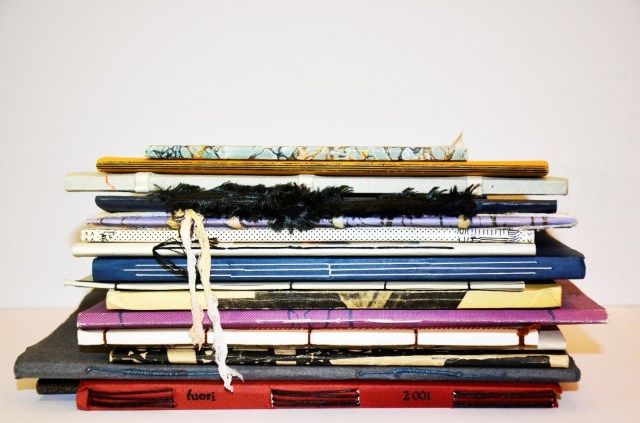
There’s still lots happening with **Poetry Chapbooks. Click on the pile beside to learn a bit about them and their history!
Resa – So Matt, please tell us about your experience with Zines? If it’s online, is it still a Zine?
Matt – Again I suppose blogging could come across as a Zine but I don’t know I don’t see using the internet as a means of going against conventional methods to be considered underground in any way. In the 90’s I was active in submitting poetry to multiple small press poetry zines as well as publishing my own (which included comics and short stories as well as poetry.)
**Zine (short for “magazine” or “fanzine”) A self-published booklet created for personal expression. Their history spans from the 1920s Harlem Renaissance, to the 1970s DIY Punk scene, and beyond.
Matt – Sadly I don’t have any of the 6 issue run of “Toxic Shock and other abnormalities of the inner being.” Yeah, quite a mouthful for a title, it was co-edited with 2 different people the first 5 issues done in 1992 with Rob H. and the final 2 done in 1995 with Sara M.
*Some libraries collect Zines. The Boston Public Library has more than 945 Zines.*
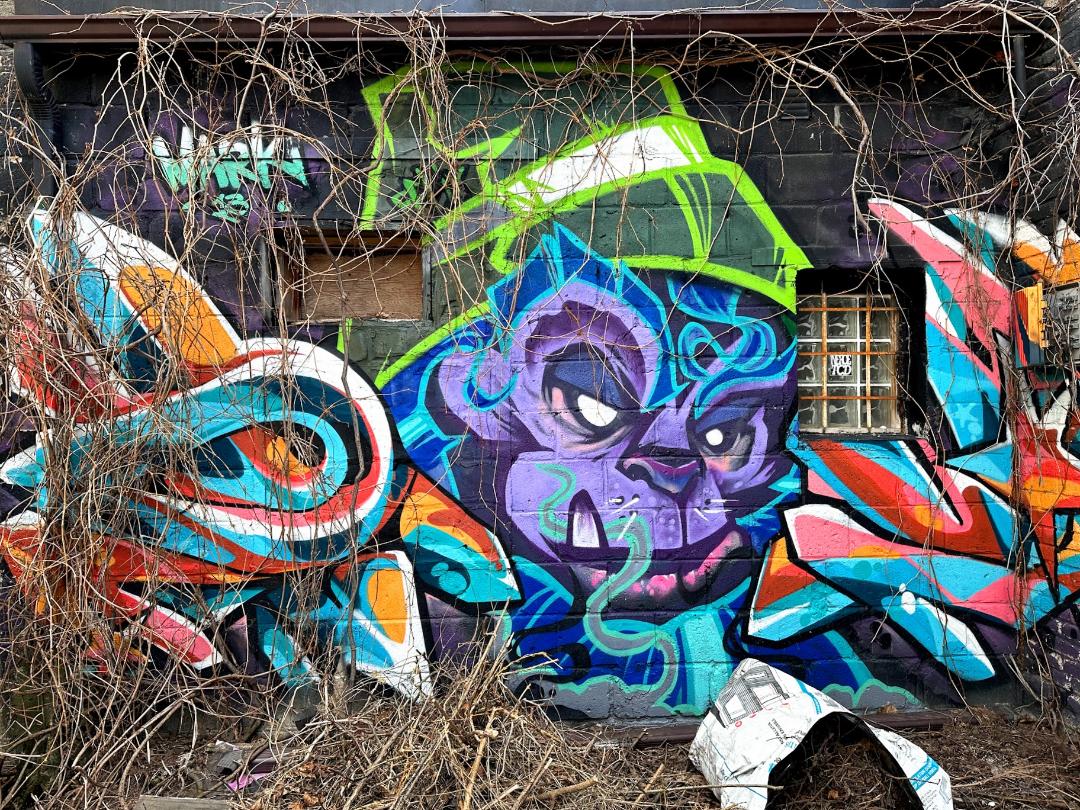
Graffiti
“If the paint is not from a spray can, it’s not real art.”
Resa – Supercilious words from hard core graffiti artists, but when it comes to graffiti art and much wall art, I think there’s truth to that. What do you think about that, Matt?
Matt – As opposed to what, like a wheat paste up ? Is Graffiti truly art? I find myself drawn to character based graffiti over throw-ups and tags. Essentially I prefer what is known as street art, ya know.
Resa – Above is a pic of a bunch of tags and throw-ups, from Graffiti Alley. I look at the entire composition, and it looks like a community art piece to me. Does it look like art to you?
Matt – No, to me it looks hella sketch. Like I’d be looking over my shoulder every minute to make sure I wasn’t gonna get jumped.
A common classic style of graffiti art is writing, aka burners or lettering.
Resa – The building owners in Graffiti Alley welcome the graffiti. However, if it’s not welcome, if it’s vandalism, is it art? This includes tags, cartoons, lovely artworks or burners .
Matt – Vandalism is vandalism. Any unwanted piece is just plain wrong in my book. Does the crime deserve a hefty penalty to include jail time ? No I think it should be a misdameanor with a hefty fine. But again, vandal graffiti is definitely more befitting as being classified as underground.
Artist: Nick Sweetman
Resa – If there is no underlying political message, is it “true” graffiti art?
Matt – I don’t see that as being a necessity to make it “true” art. Art is pretty subjective, ya know.
An artist acquaintance recently smacked a paste-up on my home. Paste-ups come in many styles.
Paste-up by Andrew 01
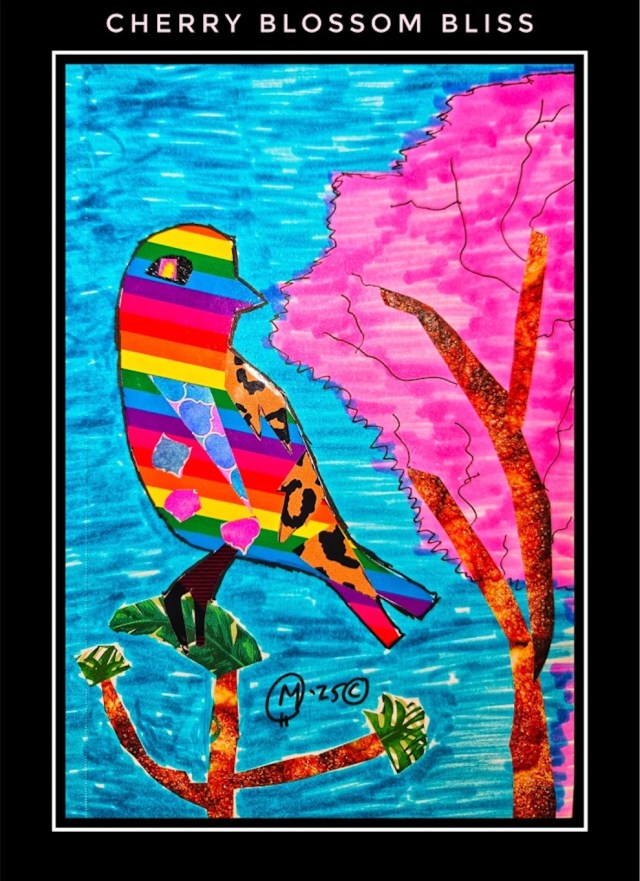
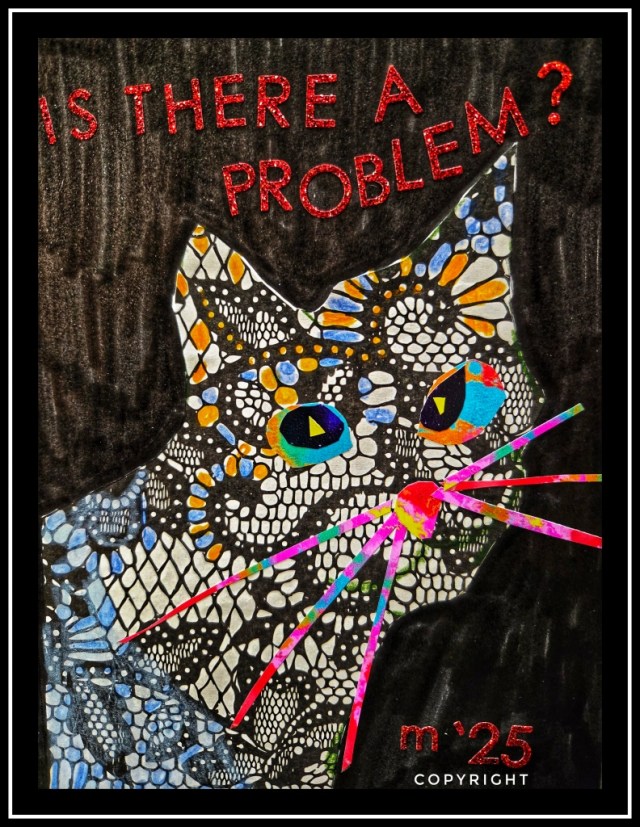
Resa – I know it’s not on a wall, but I adore some of your art that seems a paste-up style. Am I right to think that, based on the examples below?
Matt – I suppose maybe you could say that about collage in general but I wouldn’t go as far as to say my work is a pasteup style, because I hadn’t heard of that term until I saw it on yours an another U K. graffiti blog I follow.
Resa – A lot of the alley graffiti artists are Tattoo artists by trade. Are tattoos underground art?
Matt – Tattoos were definitely once Underground, but not anymore. I don’t know when it shifted but I recall only shady characters had prison tattoos and with military personnel it seemed to be a right of passage. Eventually that shifted into metal/punk bands.
But now in the present ? It’s gone mainstream. Hell half the people at my job, which is mostly populated by women, all sport one or more tattoos.
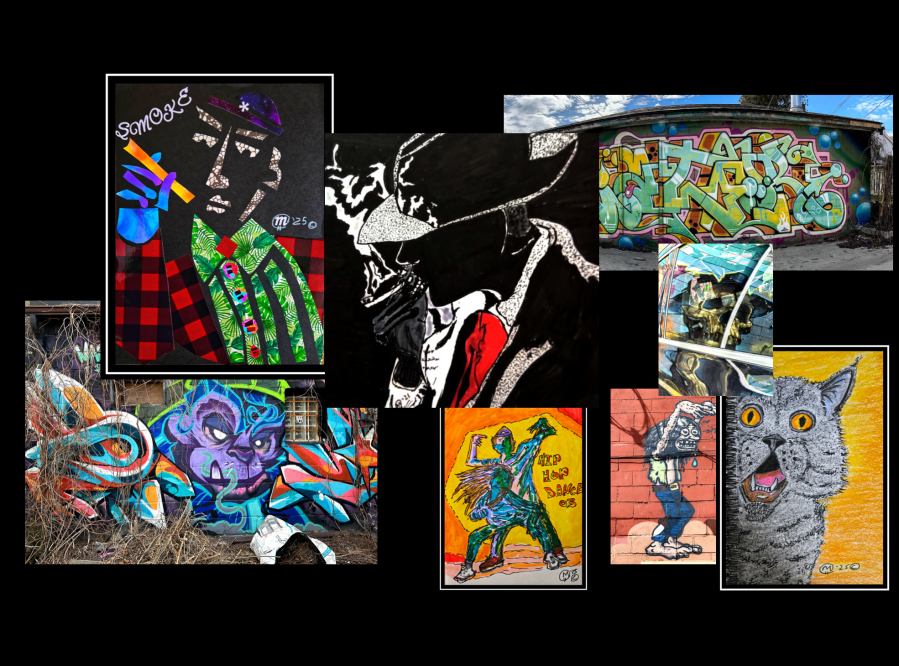
I enjoy the images below. They convey a lot of movement, and feel like a fusion of graffiti street art (not graffiti tags & throw-ups) & cartoon art.
Some of Matt’s art reminds me of street art, some his own unique brand of cartoon art..
Many say AI will be the end of human created art forms for commercial purposes, and beyond.
Could survival instinct drive creators and their arts Underground?
I do not consider Murals to be graffiti art. I consider them to be wall art.
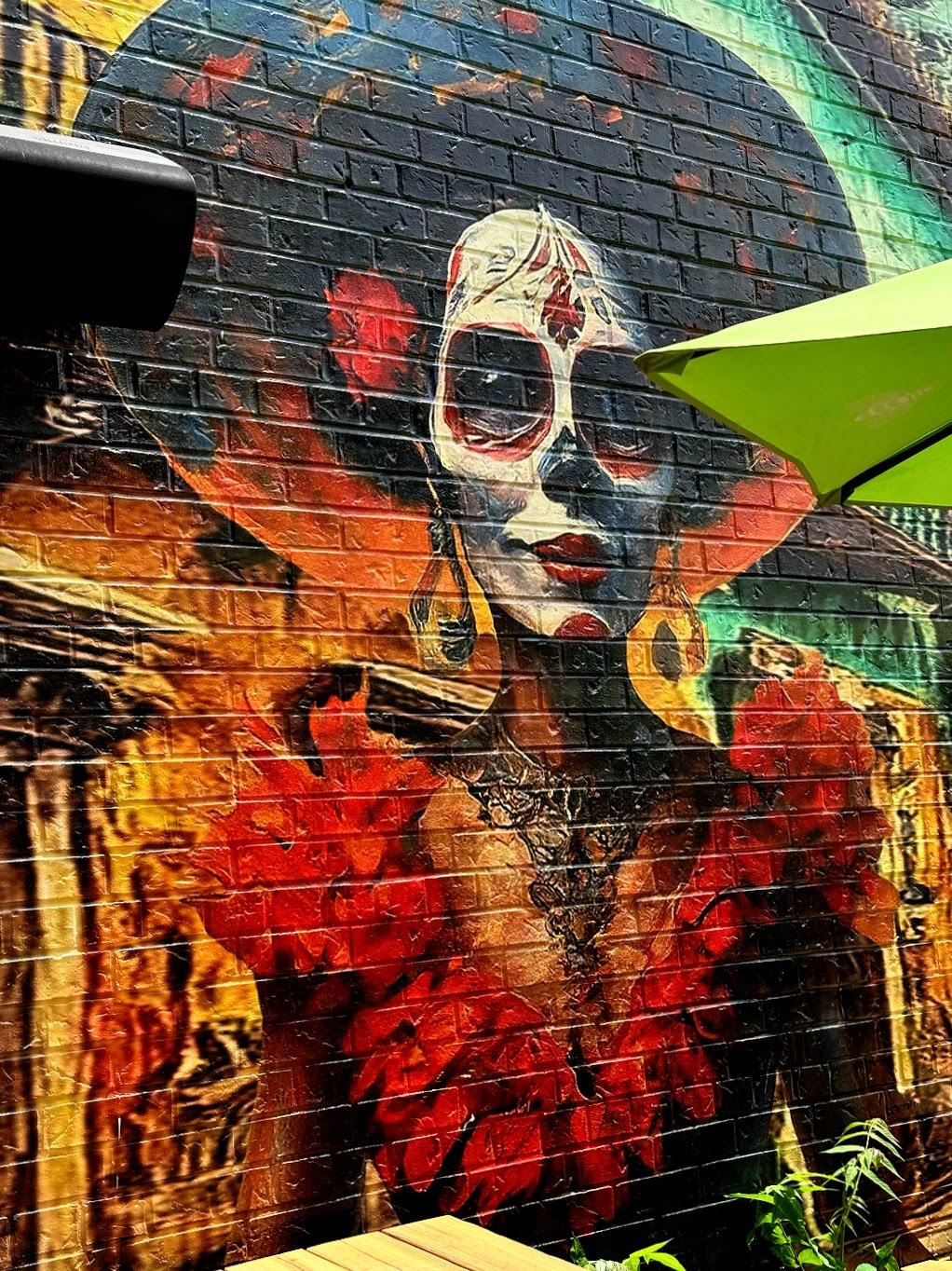
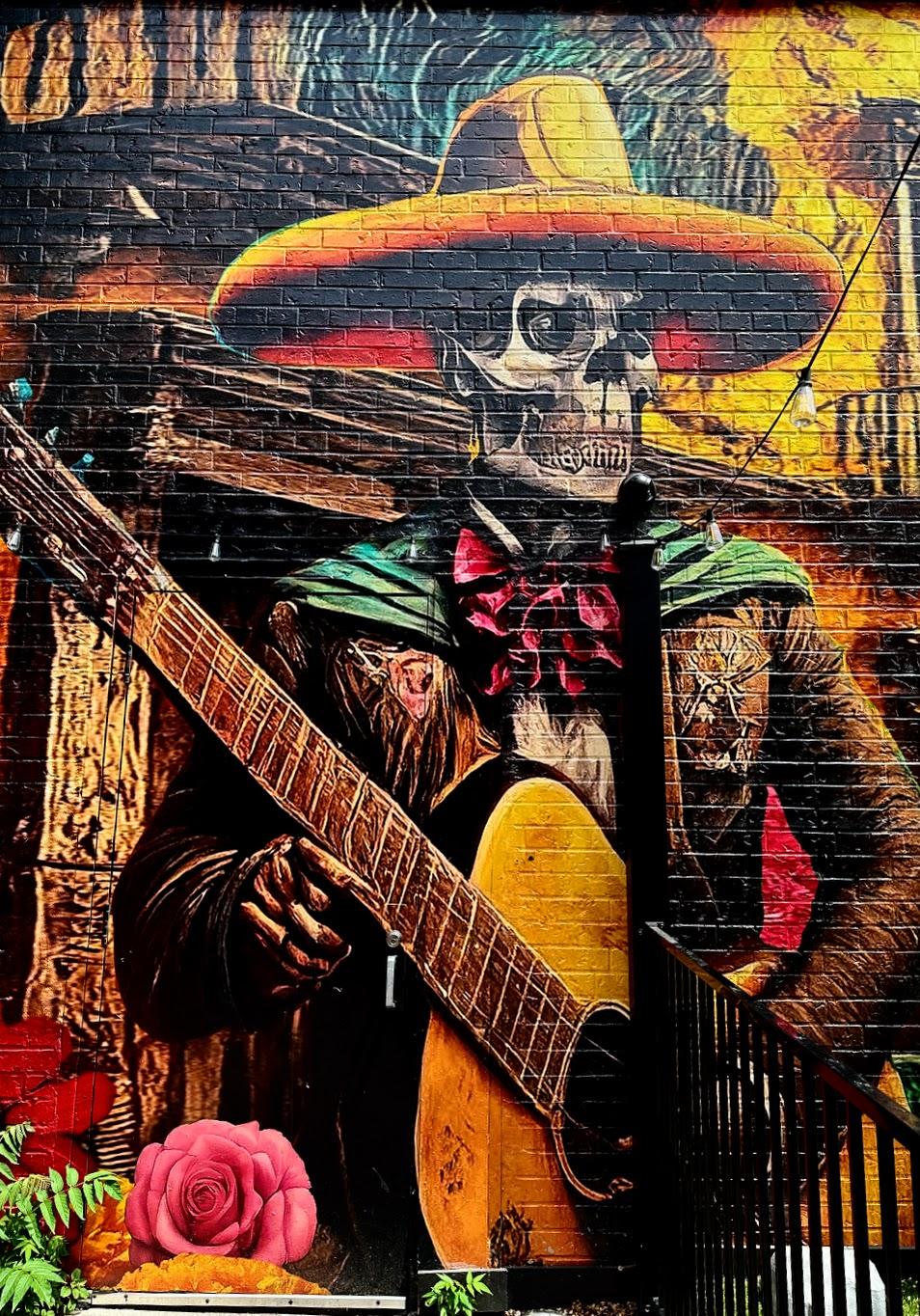
Resa – So, Matt, I found this mural the other day. The colours were fab, and I liked the Day of the Dead theme.
Click on the pic to read about why residents and mural artists are upset about “Fake Art “
Resa – Something bothered me about the art, so I checked around on line when I got home. Turns out it’s an AI generated image printed on a film and applied to the wall. My heart sank.
Muralist Sarah Blostein quickly noticed inconsistencies. Elements like the teeth, hands & guitar strings looked like an algorithm created the work rather than a human artist.
Resa – My 2 part question is -In your opinion, (1) Can any of the arts and its creators survive AI on a commercial level?(2) Is there a possibility of a Renaissance Underground Art movement on the horizon?
Matt – I don’t freelance on a commercial level to be able to answer that question. As A.I. art is less than perfect, I initially was against it, but sometimes use it to accompany poetic work on my blog. As of now I don’t see it as a major threat. As for a Renaissance? Possibly if creators become fed up with how irrelevant they become.
Matt did 3 articles on artists he admired. I chose 4 who have not previously been mentioned in this article, and asked him to comment on them.
ROY LICHTENSTEIN
I was aware of Pop Artists when I was in high school in the 80’s. I was also an avid comic collector. I loved that Lichtenstein didn’t just recreate comic panels with his own wry humour in the thought & dialogue balloons of the character but he also recreated the dot printing process in large format. That aspect of his work made me interested in trying creative techniques. I wish I still had it But I did an ode to Lichtenstien Medium sized acrylic painting and injected my own weird sense of humor into the thought balloon of the woman in distress.
GARY LARSON
Larson’s The Far Side the petfect example of a twisted sense of humour. I’d say both my written and drawn sense of humour was derived from an appreciation of this short lived syndicated comic.
TIFFANY ARPDALEO
Tiff’s art I am in love with. I have a few prints as well as clothing of her abstracts. I tried abstract painting, but they always came out like a mess as opposed to a work of art. I wish I could lay down paint like she does. I am a super fan and super impressed by everything she does.
SALVADOR DALI
Dali being a surrealist was just the epitome of being weird in my opinion. But I didn’t just like his paintings I fell in love with the french surreal silent film he made with Luis Bunell. Un Chien Andalou or An Andalusian Dog. That scene of a close up of a woman’s eyeball being sliced with a straight razor, the sfx from that time period were incredible and a bit of an influence of the short films and animations I made.
Underground Films
Curious, I found Un Chien Andalou,and watched it.
Resa – So Matt, I enjoyed this 20 minute silent film. With all the death, blood and gore in so many popular action films, Iv’e been desensitized. Yet, the eyeball slicing scene is crazy shocking. Why do you think that is?
Matt– I think it’s because of the time period of which the film was made. Practical effects have always been superior to me over C.G.I. What (slicing the eye of a dead slaughterhouse cow) they used to create that illusion done in extreme close up no less, is quite jarring.
Resa – However, I’m not sure I understand the film. What do you make of it?
Matt – It’s meant to be nightmare. To push buttons in people. It is made without a narrative on purpose.
Resa – I searched underground films on line. I was shocked at the results: Pulp Fiction, Fight Club, The Matrix, Mulholland Drive and others I consider big budget films.What do you say to this?
Matt – I saw that so called list of ” Underground” films on IMDB.com but the true definition I found through further research is as follows:
Underground film refers to a category of motion pictures that diverge from mainstream commercial cinema, prioritizing personal artistic vision over broad audience appeal. Often characterized by low budgets and unconventional techniques, these films typically emerge from independent filmmakers and are distributed through alternative venues. Underground films frequently tackle taboo subjects, exploring themes of sexuality, politics, and the supernatural, often using experimental styles that distinguish them from more commercial offerings.
Resa – I thought at least The Blair Witch Project would be mentioned. Apparently that is considered an experimental film, but not underground. Do you think“The Blair Witch Project”is an underground film?
Matt – The actual filming style of Blair Witch, absolutely. But unlike most underground films it became a massive commercial hit, so not entirely ya know.
Andy Warhol made over 600 underground films between 1963 and 1968.
Resa – Sleep is apparently one of, if not the most famous of Andy Warhol’s underground films. What do you think of it? Of Andy’s underground films in general?
Matt – I think they suck. Sleep is a 5 hour film of someone doing just that. A tedious and boring film. I’d rather watch any film by Underground Auter Kenneth Anger which can be at times tedious as well but at least there is variety in his work.
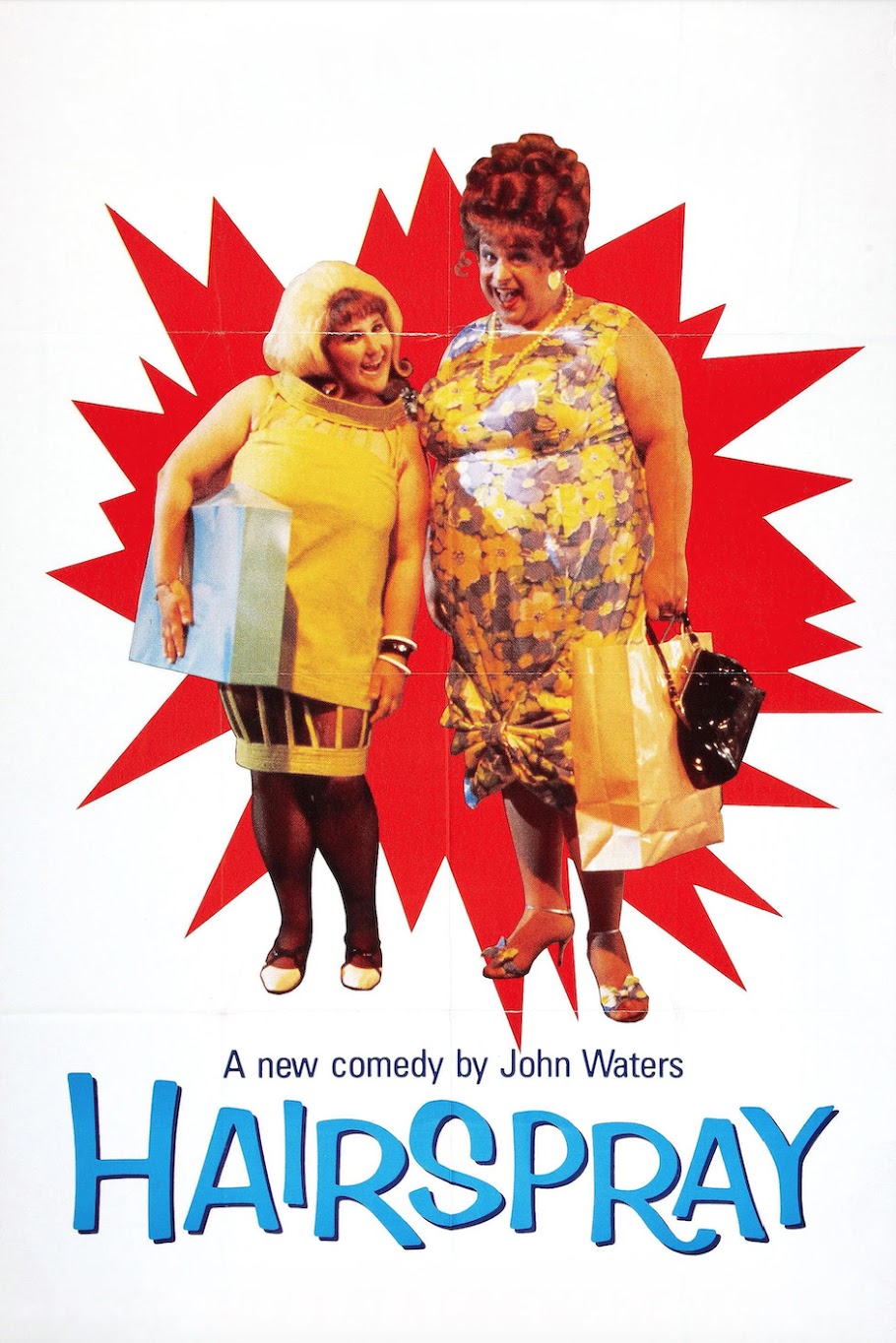
Matt – I met underground filmmaker John Waters 4 times in my life.
Resa – OMG! How did I miss John Waters for this post? Love his films. He was more Underground at the beginning, but even his later more commercial films held much quirkiness.
Matt – I auditioned for the Ricky Lake version of Hairspray in ’87.
Resa – Okay , now that is just plain cool. I shook his hand once. I was in an admiring crowd.
Matt – I met him at a showing of my favorite film of his Female Trouble in 1996 in Philly. He was guest speaker at a local arts business expo in 2004 as well as a talk he did in 2010.
Resa – When I saw Polyester, I laughed myself sick. Divine was hysterical. The budget was as low as the set’s ceiling. The boom mic showed in most shots.
Matt – The dude is filmmaking hero of mine.
Here are 2 of Matt’s underground films I enjoyed and you might, too.
Matt – Ronald was the 3rd and more polished part of a trilogy of shorts I made with some friends in 1987 & 1990. This film from 1999 was an experimental improv film made with local actors & my late parents.
Running time 5 minutes.
Resa –I really like Remembering Ronald, Matt!Suffocation, below, is completely different, and I liked the message.
Matt–The story is about a guy bummed about not being able to get with various women and feeling all depressed till he is visited by a future self and given a scarf that helps relieve his depression.
Some stood up for what they believed in. Some were targeted by hate. Some died young from disease. We walk among you. We will NOT be eradicated. Some of us have become Ghosts, but no matter how hard you refuse to see us, we will remain, Alive, Heard & Seen
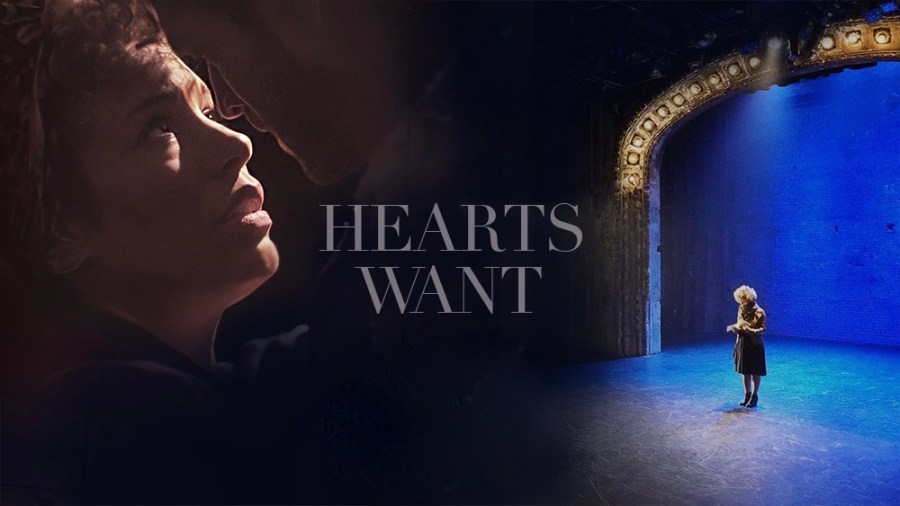
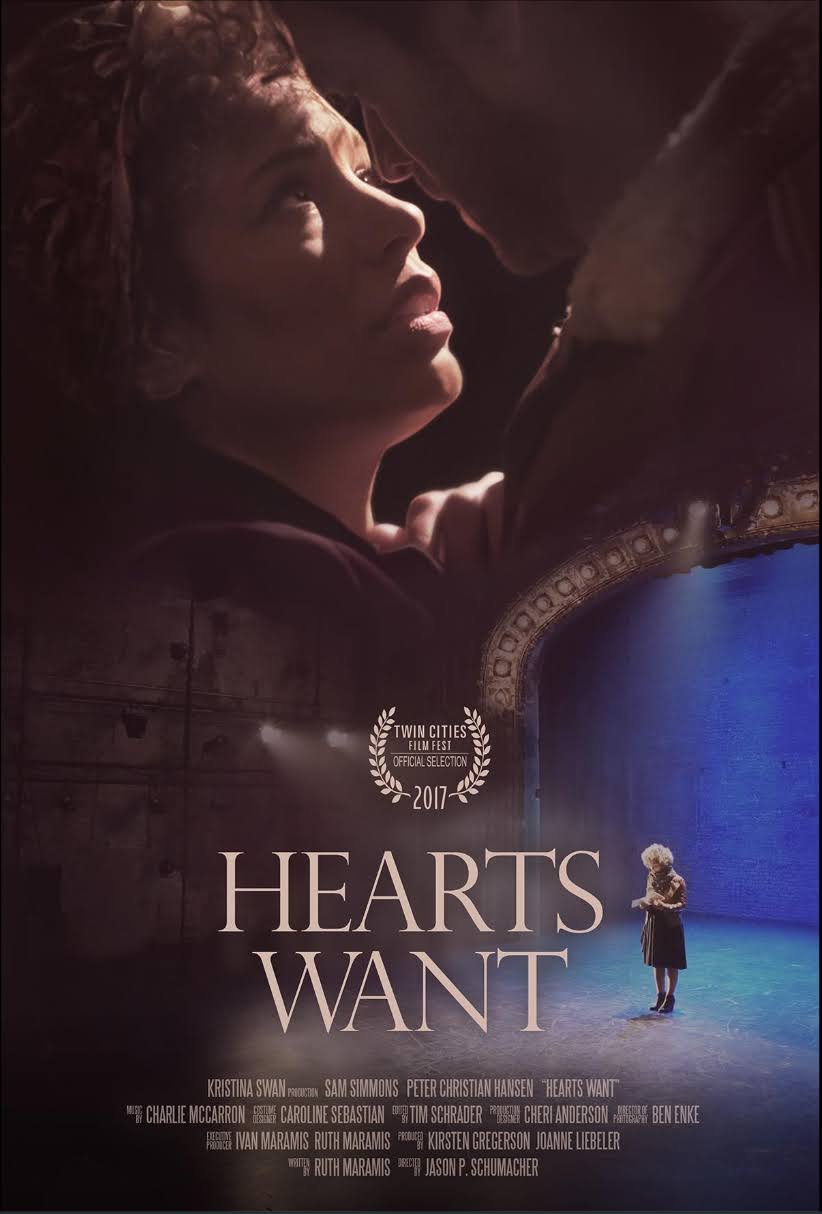
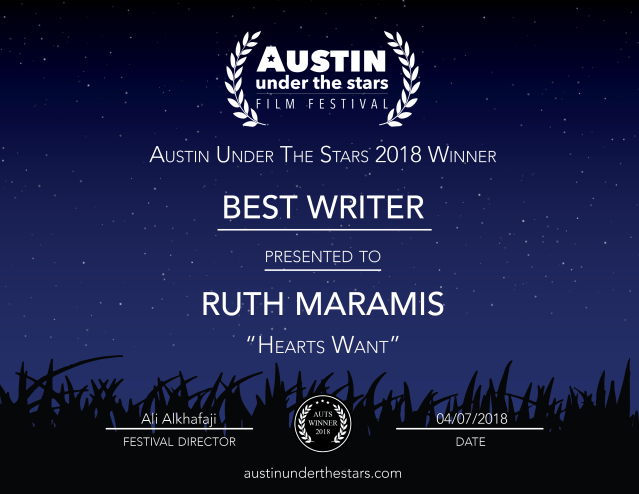
My new blog pal, Ruth Maramis, wrote and executive produced “HEARTS WANT”.As I watch it for an enjoyable third time, I have some questions for her.
Resa – The location is fabulous. Tell me about it!
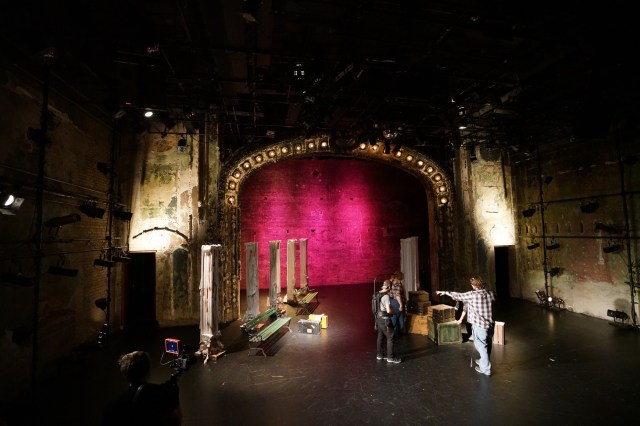
Ruth – It was in a historic, 100+ year-old theatre in Minneapolis, Minnesota, USA., that looks like it’s in Europe. It’s perfect as my story is supposed to take place in England. I set the story in a real place in the UK., a small cathedral city called Chichester in West Sussex, England (about a 1.5-hour drive south of London).
The following clip is 31 seconds long. Not necessary to watch it, but will add context to the conversation.
Logline: Two former lovers who reunite for a play by their terminally ill mentor face the consequences of a secret that could change their lives forever.
Resa – This would make a fab feature. Have you scripted it out as a feature?
Ruth – Yes I have written the full script, as the short was actually born out of a feature-length live script reading with actors.
Resa – As a feature does it have a happier (not necessarily happy) ending?
Ruth – The feature-length script has a hopeful ending, not a perfect ending tied with a big red bow, but it hints that Jacques and Lily are back together. Without giving too much away, it’s book-ended with a stage performance that makes the story come full circle. I envision the story as more than just a romantic drama but also a redemption story for Martin, the playwright whose voiceover is heard at the beginning of the short. He has a much more prominent role in the full story, and it’s he who brought Lily & Jacques together for his play, which is somehow connected to his past.
I love stories of second chances, as we all sometimes need a do-over and a chance to make amends. As a fan of stage performances, there’s something so intriguing about the world of theatre to set a story in.
Resa – The actors playing the two former lovers Lily (Sam Simmons) and Jacques (Peter Christian Hansen), are fabulous. Tell me a bit about them. I see Peter got a Best Actor Nominee at the YES! Let’s Make a Movie Film Festival in Montreal.
Ruth – Oh, believe it or not, Sam is from a nearby town in Sussex, though I had met her here in Minneapolis at a film festival and she had just moved from England a year prior!! Talk about serendipity, there are actually a lot of crazy serendipitous things about my film project!
I met Peter for the first time at the full script reading back in January 2017, four months before we shot the short film! My friend Kirsten suggested him to me for Jacques, as they had worked together in a film before. Both of the leads were playing Jacques and Lily at the reading, and had such great chemistry. Everything happened so fast after the reading at my friend JoJo’s home. (She ended up becoming one of the film’s producers).
Peter is quite a prominent theatre actor here in the Twin Cities, though I didn’t know that until I met him. He’s been in so many local plays; he’s also the artistic director of his own theatre company, Gremlin Theatre, in St. Paul, MN. I’m grateful to have found such terrific actors for the short film. They truly brought my characters to life beautifully!
Resa – As a Costume Designer I must ask, why is Jacques wearing a 1940s pilot bomber jacket and Lily a headscarf?
Ruth – Ok so in my original script, the play that the two main characters reunite in is a 1940s WWII romance drama where he’s a British Royal Air Force pilot, so the costume designer found this RAF sheepskin bomber jacket we could rent from Guthrie Theatre (the largest regional playhouse in the country).
I wanted to give a subtle nod to Gregory Peck in Twelve O’Clock High (I had the biggest crush on him since Spellbound), even though Peck’s character in the WWII movie is American. If you notice that it looks a bit big on Peter Hansen (the lead actor) is because I had to find a jacket that would fit both him and the other actor who plays his character’s understudy, and that guy (Noah Gillet) has a slightly larger frame than Peter’s. Same with his pants, as I had to save cost by renting just one set of costumes instead of two, ha..ha!
As for Lily’s headscarf, because she’s a biracial woman with a large ‘fro. She often had to hide her black identity in the 1940s.
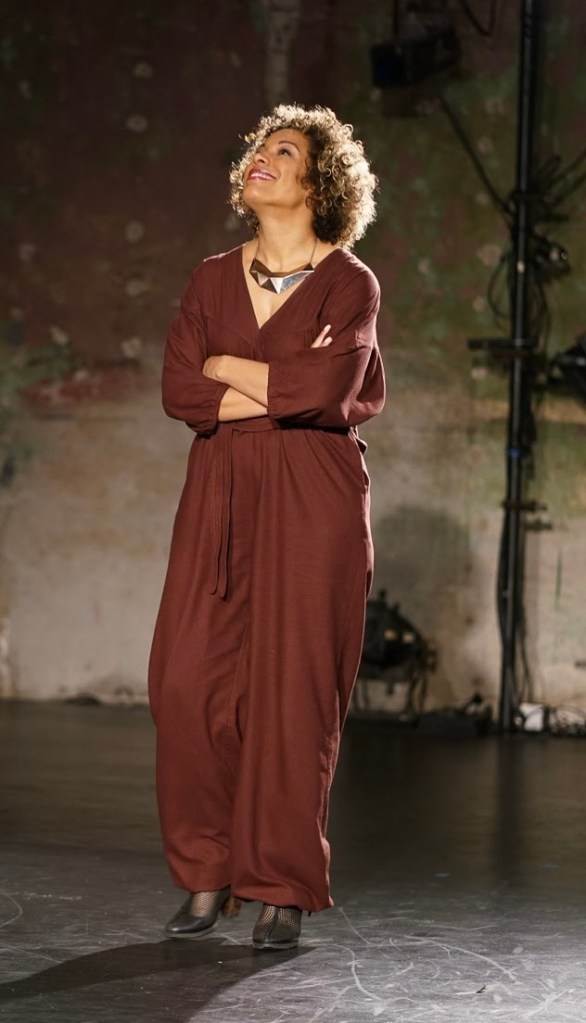
Resa – The neck piece Lily wears at the beginning is too, stunning. It is so fabulous, I couldn’t take my eyes off of it.
Ruth – It’s actually Sam Simmons’ own necklace that she let us borrow for the film. My costume designer Caroline loved it and it paired well with the maroon jumpsuit she had on during that scene.
Due to budget constraints, I asked the actors to provide their own wardrobe for the contemporary scenes.
Resa – Tell me, why is Lily holding a suitcase in the “play”, within the short?
Ruth – The scene that appears in the short film is written as a farewell scene where the two lovers have to go separate ways, hence she was holding a suitcase. We decided not to include any dialog so it would not distract from the story of the film, if that makes sense.
Resa – Total sense!
Hearts Want Streams on Prime
With a 15 minute running time, it is well worth the watch!
Resa – So, What’s next on the agenda for Ruth Maramis?
Ruth – I really enjoyed making short films, but at this point, I really want to focus more on getting HEARTS WANTfeature film off the ground, as that is truly my passion project. I’ve done pretty much everything I could to get it developed, I went to AFM (American Film Market) in 2019 to try to pitch it to executives/financiers, did fundraising events, etc. but so far it’s kind of stalled. I know it’ll get made eventually, and I realize this is a marathon, not a sprint.
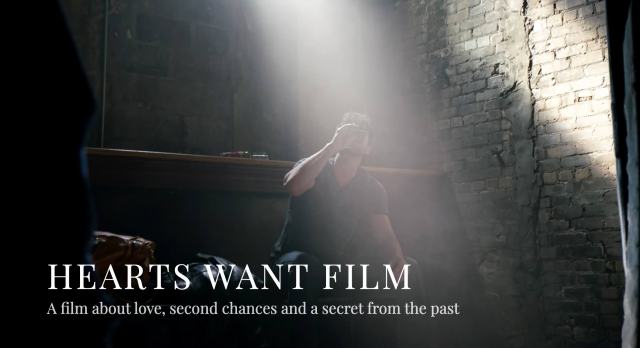
Click on the above banner and check out the HEARTS WANT website, where you canread more about it!
About Ruth
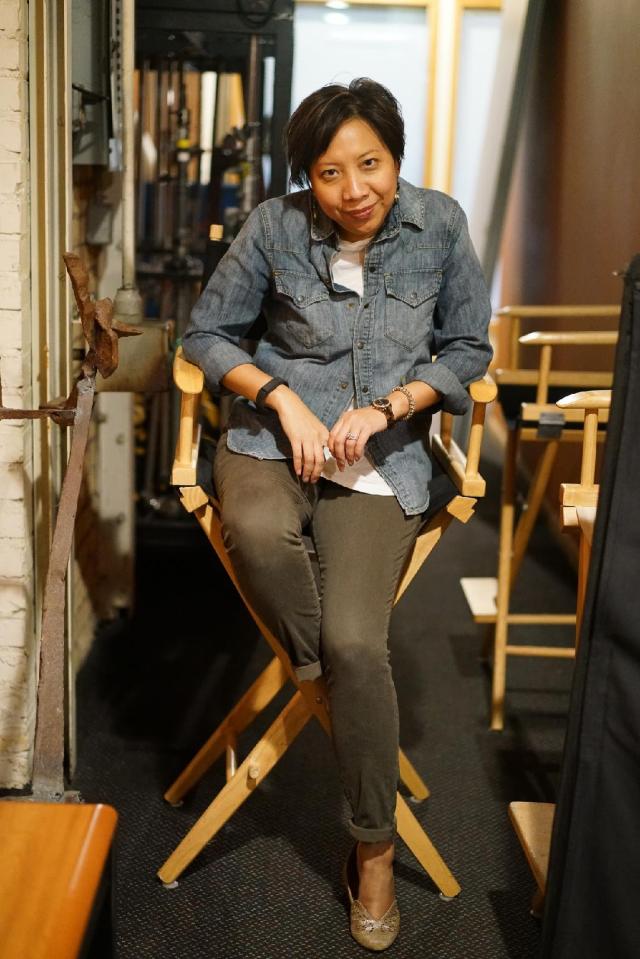
Ruth was born in Jakarta, Indonesia, but has been residing in Twin Cities, Minnesota for the past 30+ years along with her husband Ivan who’s also from Jakarta. She’s been a lover of movies since she was a little girl, and her dad was actually a filmmaker in Indonesia around the time she was born in the 1970s.
Her blog FLIX CHATTER has become my go to for new film reviews. Once in awhile she reviews a vintage movie.
She also participates in the 52 Films By Women challenge as per Women In Film organization. The basic rules are simple: watch 52 films directed by women within the course of one year. Share about the films you’re watching on social media, using the hashtag #52FilmsByWomen to spread the word.
P.S. Tom Bateman is one of the actors on Ruth’s dream list to play the lead male character in “Hearts Want” feature. As the story is set in the UK, she’d love to get British actors for the lead roles.
She is a RottenTomatoes-approved critic, which means her reviews count toward the critics’ Tomatometer. The full review appears on her website, but an excerpt of it appears on the individual Rotten Tomatoes review page, i.e., this one for La Cocina.
Same thing with Cherry Picks, which is a collective of movie and TV recommendations + reviews exclusively from female and non-binary critics.
Big Thank you to Ruth for joining me today, and to all who have taken the time to read!
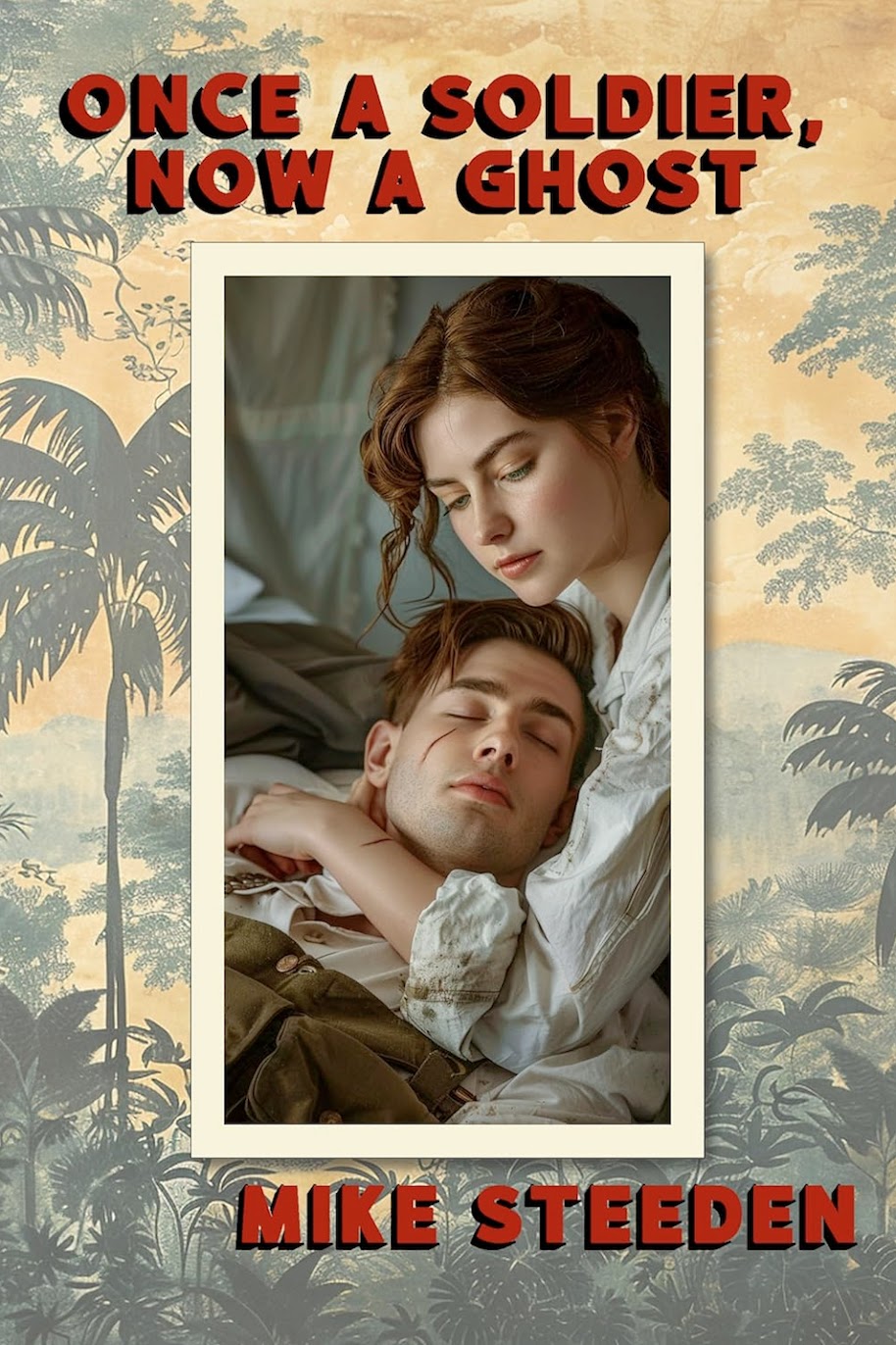
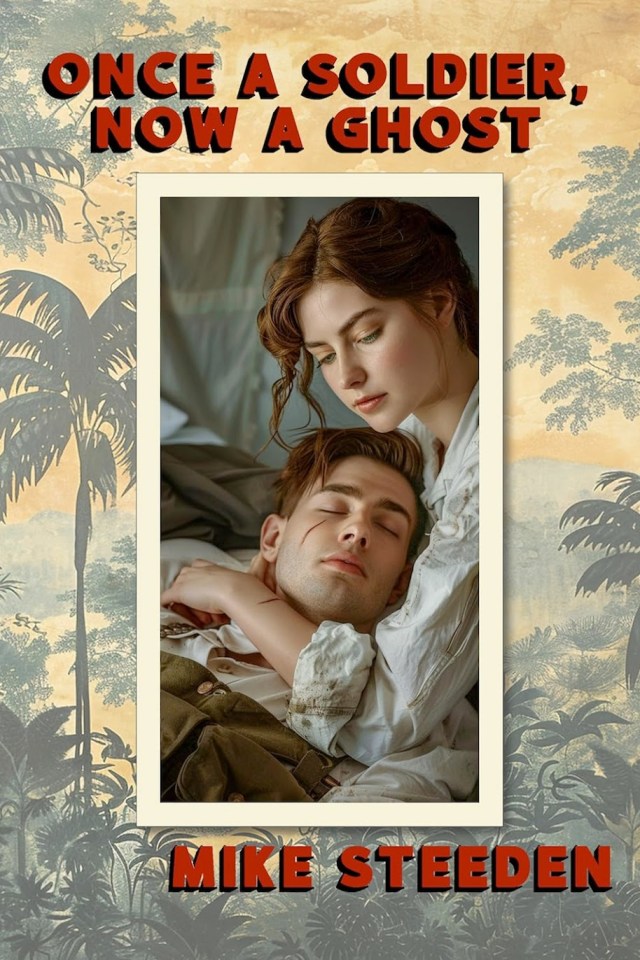
Mike Steeden’s adult historical romance embraces an idea of civilized existence via art, passion, love and peace. Set primarily in post WWII Montmartre, France, the story stakes a solid background in the horror of World War II’s Pacific War, and post WWII England.
Resa – In your books, and in prose on your blog, you often write of war, in particular WWII. I appreciate this, as I feel many have become indifferent to Nazis and white supremacy. Of course there was also the Pacific War aspect to WWII. To what do you owe this interest?
Mike Steeden – When it comes to WWII in my books, it’s all about my dad, a person who lives in my heart for no other reason than being my father. Jim, a tall good-looking man with wavy hair, who at 18 years was likely to become the centre forward for Brentford Football Club. Then ‘bang’, England was at war with the Huns.
Resa – Ahh, I had no idea. Please continue!
Mike – At just nineteen years, dad was captured by the Germans just outside Dunkirk whilst trying to retreat back to the beaches and possible sanctuary. The truck he was driving ran out of fuel just a few miles short of the beachhead. He and his mates were armed, amazingly, with only useless wooden rifles.
(that’s been validated, by the way…as there were not enough real ones to go round, and the Army wanted to make it look like all conscripts were armed.)
In the event, he and his comrades were herded up with the other POWs and, over several months, were marched across Europe to a camp right next door to the Krakow Concentration Camp in Poland, which would be his home for the next five years. His camp was named Stalag V1118 for what that may be worth.
Resa –Afascinatingstory, and we’ll end the post wth the rest of it.
Back to the book – Mike takes the protagonist, Green Eyes, famed French artist Zerach and the post war horror from England to France. It’s a mess in both countries, but France has Paris; specifically Montmartre.Once in Montmartre, Green Eyes, becomes an artists’ model.
Resa – Another topic you like to write about is Montmartre, the art scene and lifestyle therein. Tell me about this?
Mike – Whereas most modern nations are those thought of as ‘science led,’ in France it is ‘art’. It is for that reason I love Paris, the home of creative activity of all artistic kinds. To me, art is everything.
For the sake of it, think of June 1924 in the magical period of the ‘Années folles’. I often dream that I am in ‘The City of Love’, Paris by any other name.
"Overnight, spring has turned to summer, and it is as if the tantalizing romantic May dance of titillation has been fully consumed beneath the clear blue skies of the summer equinox.
There are no shadows under the high sun of noon this day as Shirley, my wife, and I walk the Luxembourg Gardens.
Mike – The region of Montmartre is the home of this planet’s art of all kind. It is there we find Ezra Pound, T S Elliot, Ernest Hemingway, F. Scott Fitzgerald and his wife Zelda, all chatting about Gertrude Stein’s party in Montmartre last evening.
Resa – Why Montmartre? Did you live there at one time?
Mike – Well, it is impressive with wonderful views overlooking Paris itself. Moreover, the town square is busy with a mass of wild street artists and cafés galore where one can grab a cup, take a seat, and linger like a local. Then there is the beauty of the buildings, old but magical. Give us another life and we’ll live there for ever.
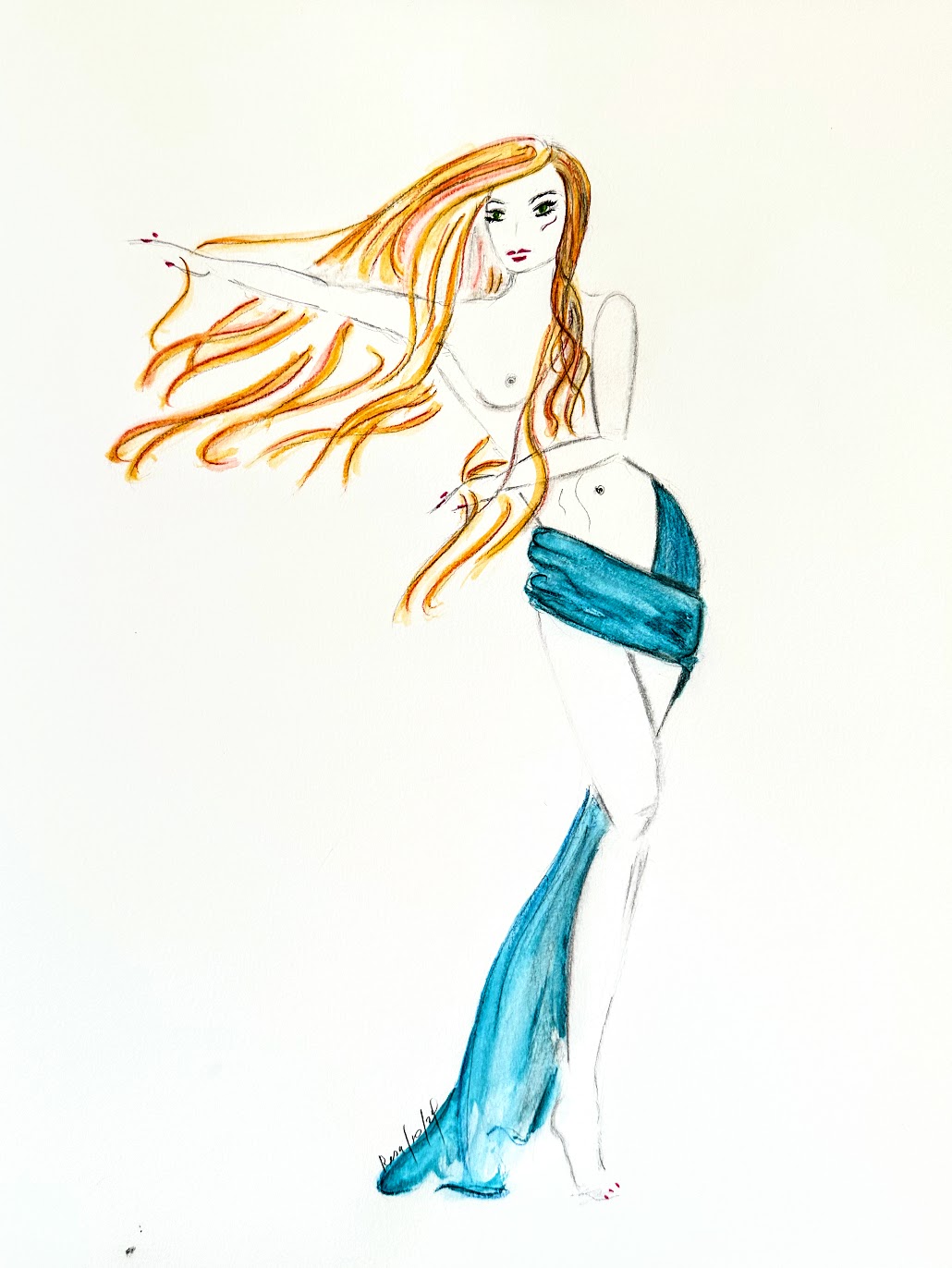
When Green Eyes new friend, Charlotte, showed up at her Montmartre home wearing a lilac lace opera coat, I was fascinated by the coat. Green Eyes had to have it. I had to draw it.
Resa – Is this a coat you saw somewhere or did you make it up?
Mike – An odd one is this. I went over the top picturing Charlotte, as I desperately wanted the poor girl to be dressed in style even though that was all she was wearing. Why, I don’t really know; it was just a feeling for humble gratitude, albeit that she’d soon be happily naked thereafter.
‘Panash’ I call it, yet to give such a classic coat (I’m not very clever when thinking these things. I simply see them in my mind!) with captivating sequins, to Green Eyes who she hardly knew at the time, ensured a brand-new friendship, hence the story went on its romantic way.
Charlotte also shows up in an Avant-Garde kimono. As there is no further description, I came up with this, and shot in the morning light’s shadows.
Fascinated by the saga of Mike’s father? Here is the rest, as told by Mike.
Mike – As a prisoner he was, as I understand it, used effectively as slave labour down the coal mines of Silesia. The prisoners were regularly manacled…also validated…and that awful fact came back to haunt him in the nightmares of the dementia of his dotage, the poor sod. Nevertheless, post war and safely home, Jim, a six footer plus and the youngest of ten made it back to England five stone lighter than when he left these shores weighing in at a mere eight stone, yet picked up where he left off and eventually, after his apprenticeship, became an accomplished bricklayer. Sadly with frosted feet due to having no shoes during the war his dream to play for Brentford Football Club never happened.
Another thing, when back in England, Jim discovered his family had spent every last penny of his away…not a kind thing for a young man to take in and not go mad.
There you have, Miss Resa, a true tale that is glued to my heart and books. He wasn’t a bad old boy. He made me a fast bowler at cricket as well as teaching me how to throw darts pretty well. But basically, it was him and him alone who filled my brain with his WW2 torture…hence my stories.”
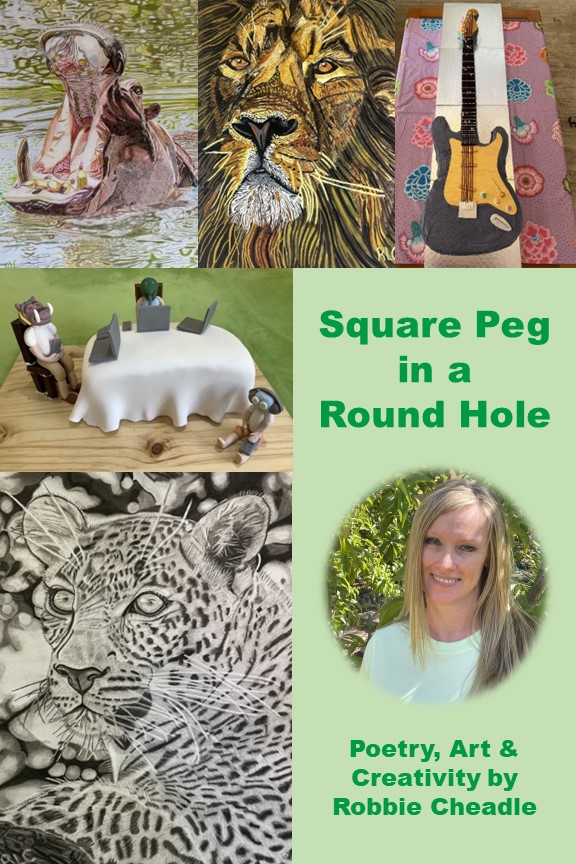
This honest exposé of Africa’s nature highlights Robbie’s love for all flora and fauna.
Writing a review for this book of poetry, photography and art is truly like sticking a square peg in a round hole. It defies categorization. Yes, it is well crafted, entertaining and informative. However, it strikes out beyond those adjectives. It teaches, with heart.
Resa – Near the beginning of the book is a heart touching & humorous free form poem – The Visitor. What bird is depicted, and did you really have this visitor?
Robbie – The visitor is our semi-tame hadeda, Eleanor. She lives on our property with a male bird, although he disappears sometimes and she is always around. I feed her occasionally but not often enough for her to lose her independence as a wild bird. She will wander into my house if she gets the opportunity. I don’t mind her visiting but she can get a little upset if she can’t find her way out again. Then I have to help her. The information in that poem about the loerie birds is also true. We don’t net our fruit trees anymore.
Robbie – There is another poem in the book about our loeries being the fattest birds in the city.
Resa – I was going to ask about that poem.It makes me feel happy. I love it!
Fat Birds (shadorma)
Mangled fruit
Product of guzzling
Plump loeries
Eat and eat
I'll have to build a runway
Fattest birds in town
Resa – Growing up in Canada we had an American TV show called “Wild Kingdom”. Often it depicted the animals of Africa. They were wild, free, mysterious and dangerous. Did you have a nature show like that? Or, how did you learn about African animals?
Robbie –I have never really watched TV. It was late coming to South Africa and I never developed the habit. I always read a lot though, and one of my favourite series was Willard Price’s animal adventure books. I became very interested in the plight of wild animals as a result of these books, although at that time they mainly focused on poaching and the illegal animal trade. Interestingly, Willard Price was a Canadian.
Robbie – Later in my life, National Geographic magazines came to South Africa and I bought them every month. I had piles and piles of them and ended up giving them away each time my family moved house (21 times during my pre-marital years). After I met my husband, we started going to game farms whenever we could afford it. I’ve learned a huge amount from the various guides and game rangers.
Resa – Then, there’s climate change.
Robbie – Climate change started coming to my attention in the ’90s, but I never really thought about it in connection with our wild animals until the early 2000s. Over my adult life to date, more and more animals have become endangered to a point where the list of ‘least concern’ animals is much shorter than the endangered list. Many ‘least concern’ animals are actually in danger of disappearing due to habitat loss. Over the past 15 years, I’ve become a lot more involved in promoting the plight of our animals and doing what I can to help support them.
King of the Beasts
“To a Lion” is a contemporary poem, that travels, with images, over 6 pages. The reality of the plight of this majestic animal is beyond what people want to comfortably know. I say the truth hurts, especially when one confronts “Canned Hunting”
Resa – When did you learn about “Canned Hunting”?
Robbie – I despise hunting. I don’t understand it and I don’t support it. Canned hunting came to my attention about 15 years ago when I overheard a few of the guides at a game farm talking about it. I didn’t know the term prior to that. According to World Atlas, there are approximately 7,000 lions held in captivity in between 160 and 200 canned hunting breeding farms in South Africa.
Excerpt from To A Lion
You've seen your peers shot - their heads stuffed and mounted
Victims of canned hunting
Perpetrated by fools who do not appreciate your beauty
Or the vital role you play
In the maintenance of the African ecosystems
And all its amazing creatures
“The Story of the Desperate Salesman”(99 syllable double ennead) and “Nest Selection” (freestyle) are of intrigue to me. The male Weaver bird builds a nest to attract a female. If a female doesn’t accept his nest, he dismantles it. Then he builds another more elaborate than the preceding nest.
Excerpt fromThe Story of the Desperate Salesman
He's been building for days
King of construction
Improving his intricate weaving techniques
Working from dawn to dust
Then comes marketing
This building and dismantling is repeated until a female moves in. Somehow this parallels certain thoughts I have about societies, ergo nations. Lots to say about what this “little bird told me”, but then I’d need to write an essay.
Robbie’s poems & photos took me on a journey that was visual, emotional and introspective. A bonus to the entire experience is I learned a lot about poetic form through example. In brackets beside her poems are the types of poetic structures they are written in.
Ekphrastic Poetry with photograph contributions by Wayne Barnes, photographer
Robbie winds up her poetic offerings inspired by the wildlife photos of Wayne Barnes.
Resa – The tone of the poetry is similar to the first part of your book, but takes on an “I want to be free” vibe, with positive suggestion and encouragement. Am I right to think and feel that?
Robbie– Wayne’s photographs are wonderful. You are exactly right in your summary of the poems written in combination with Wayne’s pictures: they are “I want to be free” expressions and do include positive suggestion and encouragement.
Resa – You’ve used mostly Wayne’s bird shots. Is there a reason for that?
Robbie – I believe that is why I chose so many birds for these combos. I see birds as being free creatures that move about and have the compete freedom of the skies. I’ve always though being a bird would be delightful.
One of Wayne’s stunning bird beauties is at 10 seconds in the video below.
The opening words on the promo video above are from one of Michael Cheadle’s nine poems at the end of the book. His work stands on its own. He is a terrific writer, and I felt his pain. He sent this quote, when I asked about it.
Michael – “Writing poems about my anxieties helps clear them out of my mind.”
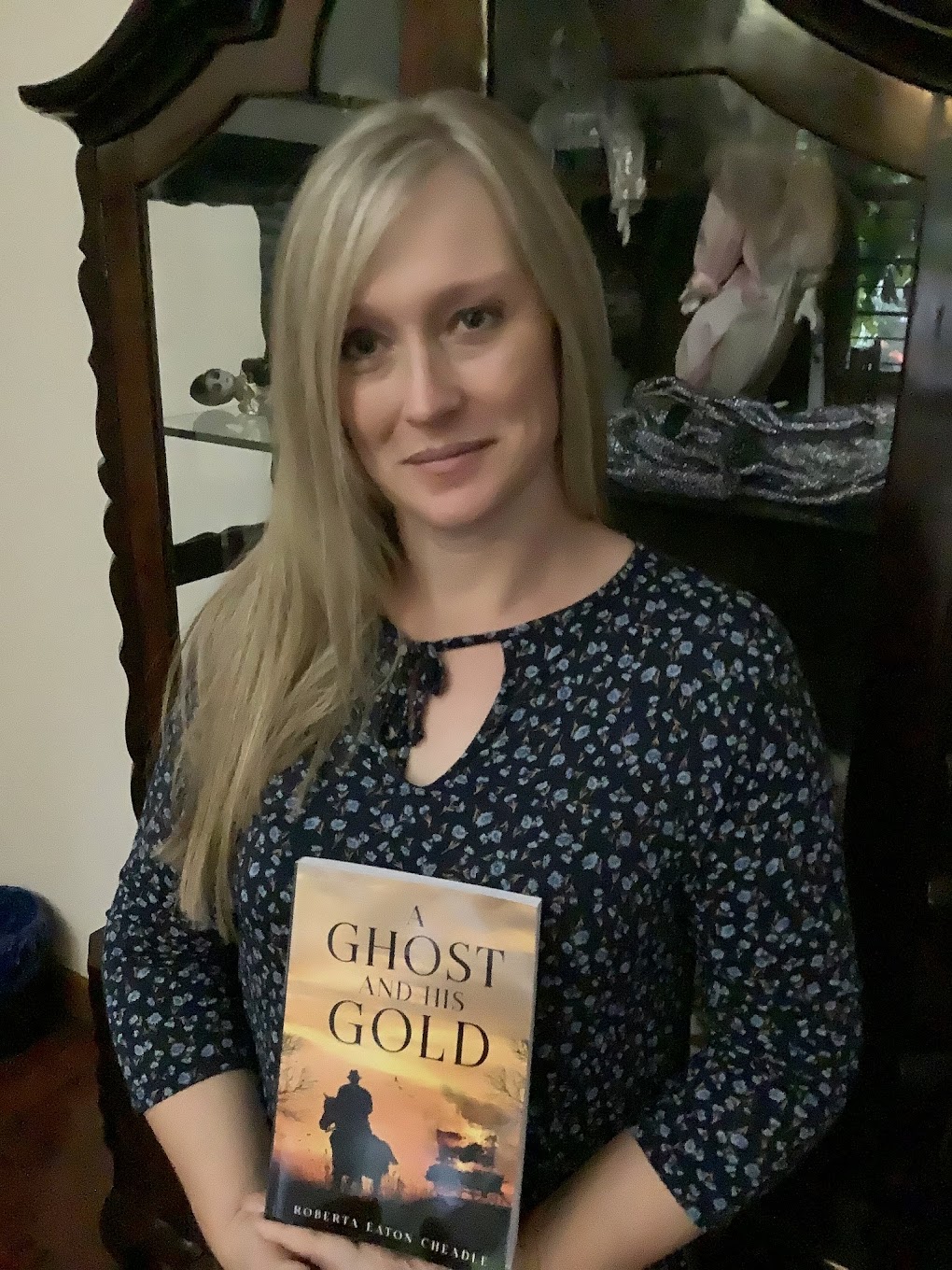
In the photo below, Robbie holds one of her novels, “A Ghost And His Gold”. This book is a superlative read. Read my review! There is so very much to say about Robbie, that you should just go to her about page!
Robbie is a prolific writer. You can find her books on Amazon sites around the globe. Just search “Robbie Cheadle” for children and youth books – “Roberta Eaton Cheadle” for adult books.
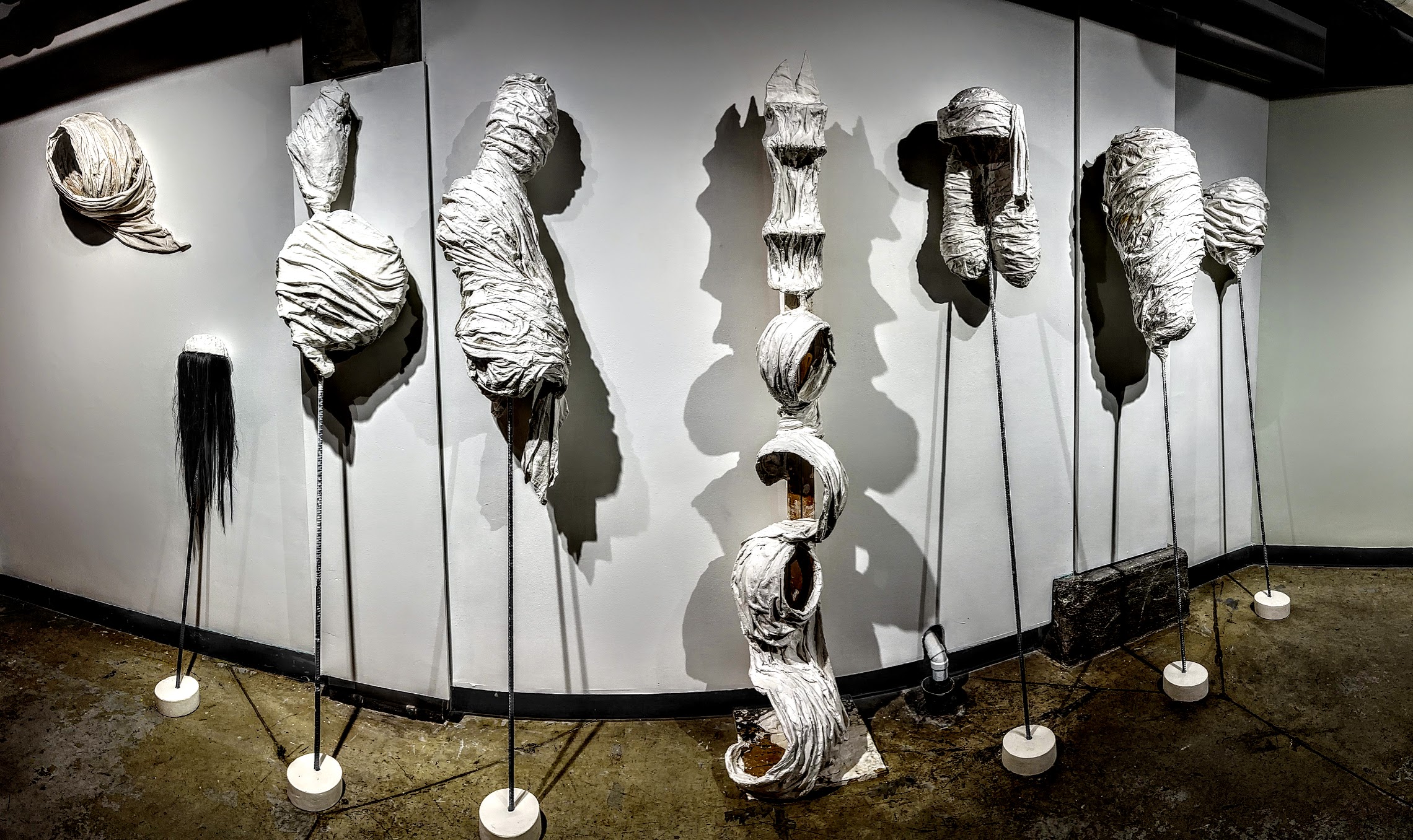
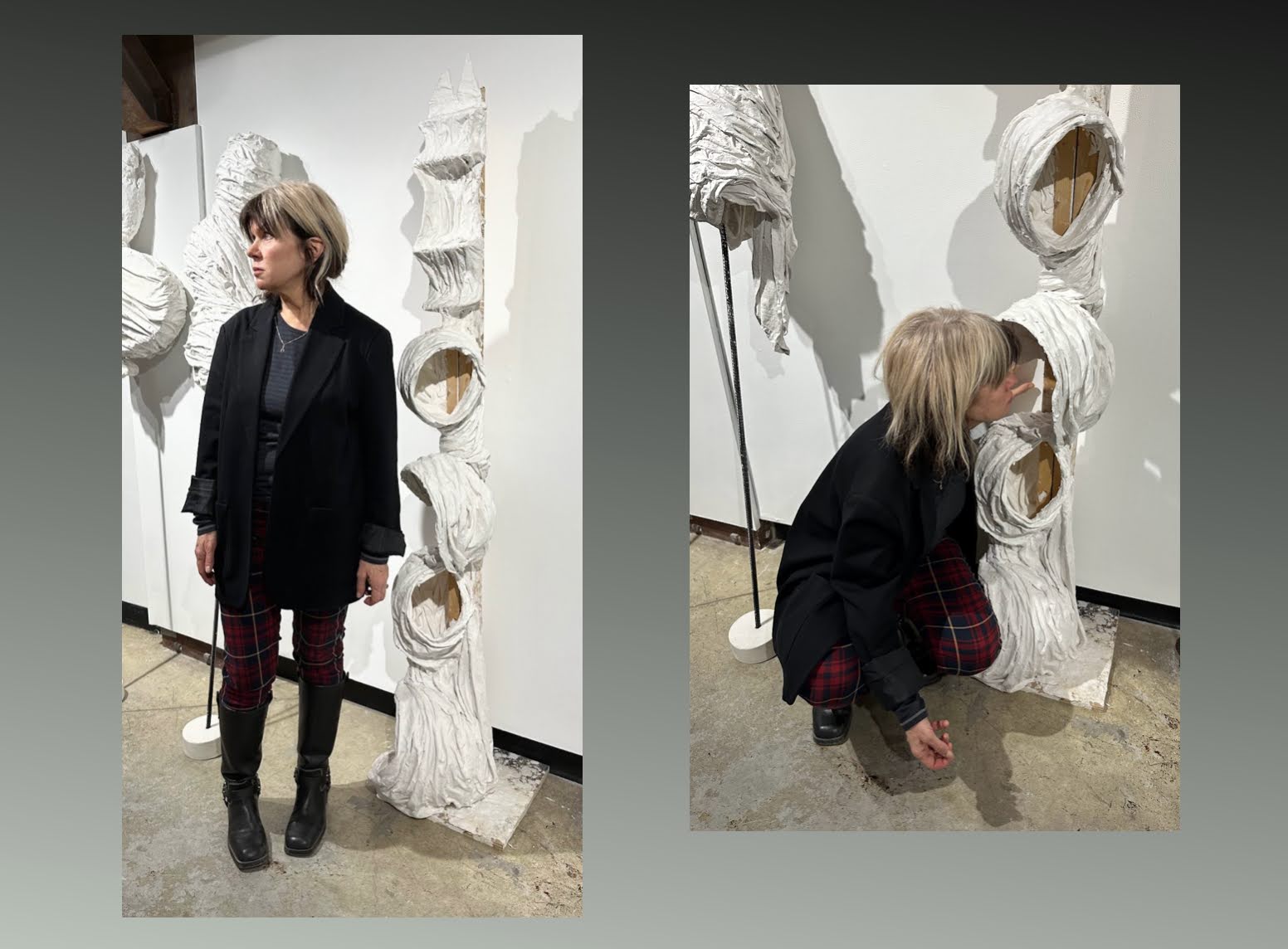
This truly unique and fascinating collection of sculptures has caught my imagination.
It’s found in the temporary space of John B. Aird Gallery, housed in the Artscape building at 906 Queen W. during renovations of its home at MacDonald block.
Artist Adrienne Trent (pictured below) says, “the focus of installation work is not usually about sales, unless to a museum”.
Therefore she is able to project her mind’s eye without the yoke of commerciality. Hers is an honest exposé of “art for art’s sake”.
About 2 years ago, photos of Adrienne’s art was fed into an AI program. It came up with the image you see below. She decided to create an actual sculptural collection based on what she saw.
Below is the result. So, a reflection is added to the mirror of art imitating life and/or life imitating art : Art – imitating artificial intelligence imitating art imitating life that is possibly life imitating art, ad infinitum.
Adrienne created the sculptures using gesso plaster and old curtains from The Goodwill.
This slideshow requires JavaScript.
When I asked Adrienne how she came up with the title “Burdens”; she replied that she was at home when asked, on the spot, for the working title. She looked around her home, and answered “Burdens”.
Although not raised in the house she bought as an adult, it had been in her family for 6 generations. This has kept her reticent to fully renovate the original heritage. That respect was a burden. The name stuck.
John B. Aird Gallery is one of the few avant garde galleries to show in Toronto. For me it was a breath of fresh air, after strolling through certain posh downtown galleries where there’s seemingly a second coming of Andy Warhol, and commercialized street art on canvas.
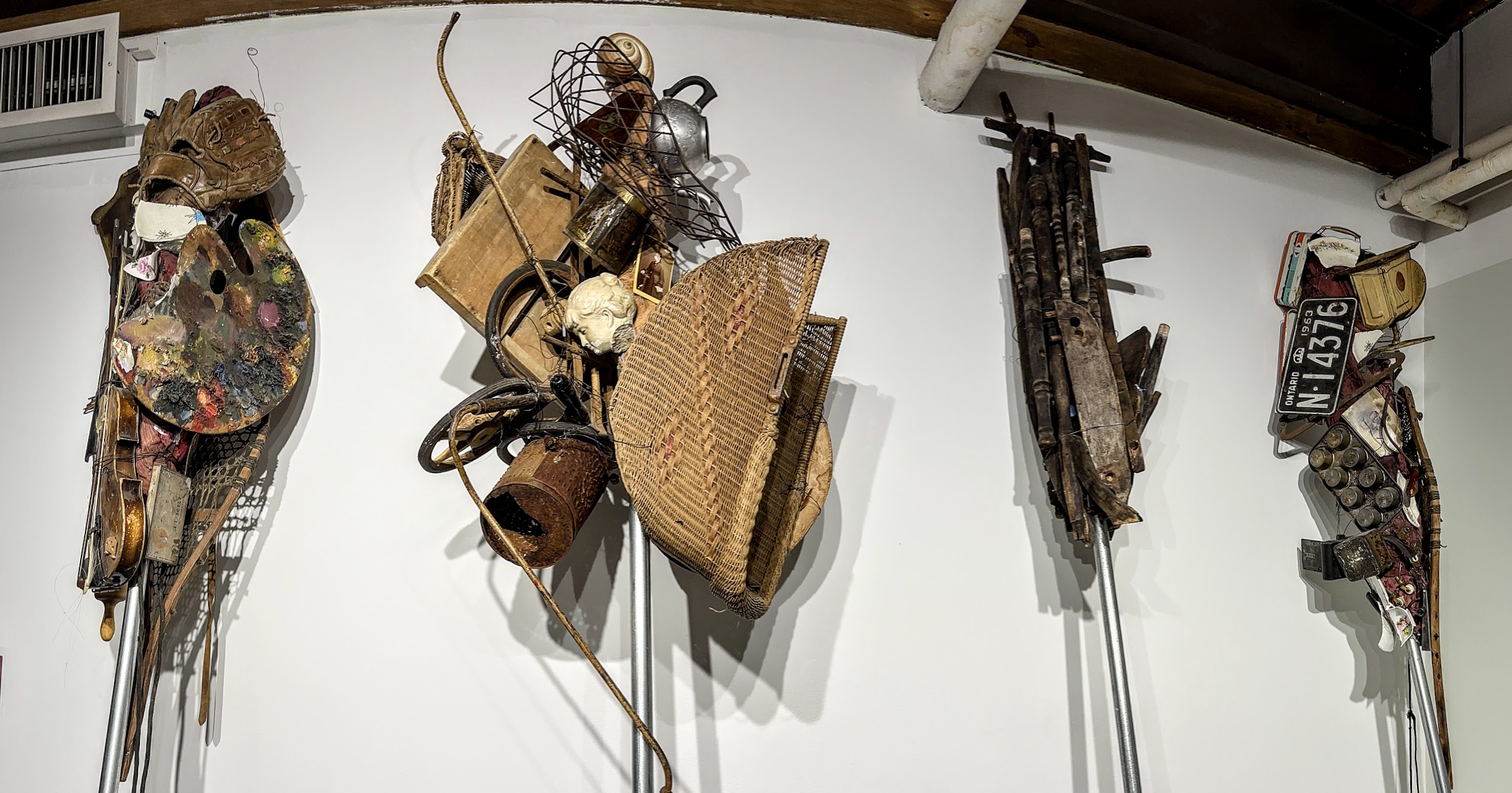
The collection of 4 at the rear of the room is sustainable art from an earlier show. I love this. Some of the items include:
An old used easel, baskets, snowshoe, baseball mitt, license plate, violin, muffin tin, plaster head, rusty can, broken chair, wheel of sorts and is that a paper cup?
The show runs until March 23, 2024. Go on a Saturday, and Adrienne will be there to talk with.
This delightful series of Children’s books teaches many things: kindness, community, acceptance, environment and more.
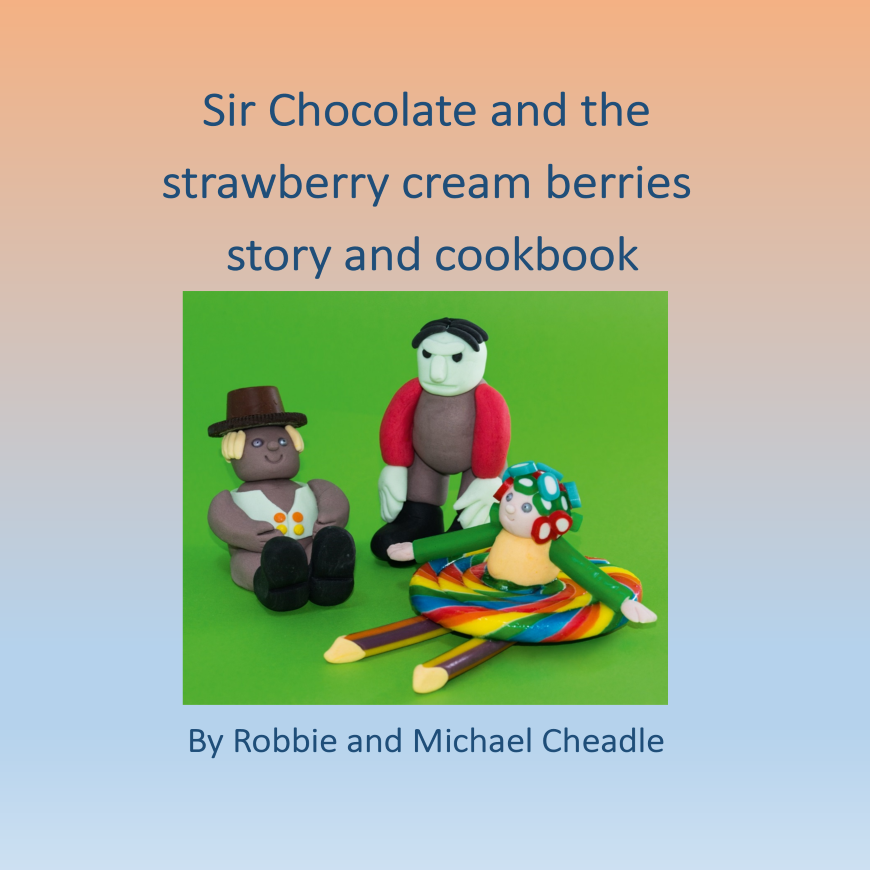
Resa – I believe the above is the first book in the series.
Robbie – It is the first book in the series. It was the first children’s book my publisher, TSL Publications, published too, so it was a learning curve for all of us.
Resa – On page 22 there’s a roaring fire. It looks delicious. What is it made out of?
Robbie – Ah yes, that fire was fun to make (and eat). The logs are made of a chocolate bar we get in South Africa called a Flake. It is quite crumbly and does look like it’s made of wood.
The fire is made from yellow buttercream piped using a large star nozzle and the earth is made from crushed, dark Oreos. Very delicious.
Resa – So, your son and husband are both named Michael!
(This is a bit embarrassing, but I thought Robbie wrote these books with her husband.)
Robbie – My husband’s name is Terence. Both my sons have Dean as a second name which is my father’s first name. It is a family name that has been passed down for a number of generations.
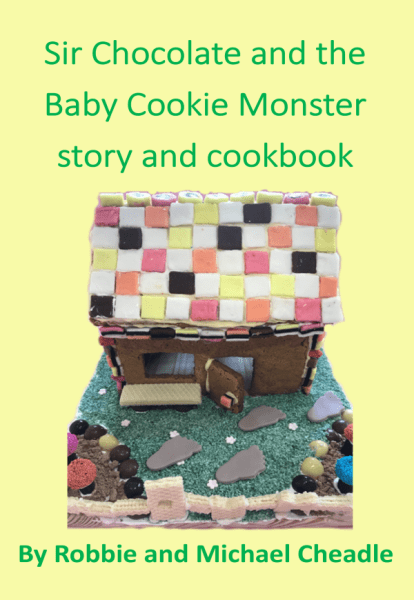
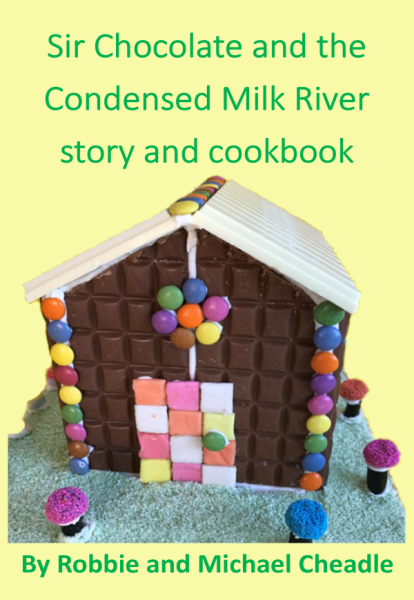
Resa – “Sir Chocolate and the sugar dough bees” is quite pertinent and important in my mind. Bees are so important to our survival. Did you and Michael do this tale as a teaching story?
🐝🐝🐝🐝🐝
Robbie – Yes, all the books have a subtle teaching point about teamwork, friendship, acceptance or the environment. The Sugar Dough Bees and The Condensed Milk River are both about environmental issues and I have been pleased that lots of the children do pick up on them. It shows that the schools and their parents are giving them good guidance about our planet and looking after it.
Resa – Yes, last night I read “The Condensed Milk River”. It’s great that you feature environmental issues.
Resa – Your son was 10 when you wrote these books based on some of his ideas. That was in 2016. He must be 16 – 17 now. Does he still help with ideas?
Robbie – Michael is turned 17 on Monday, 30 January. He does still help with ideas for the stories, he has a wonderful imagination. Most of the Sir Chocolate books were written in 2014 and 2015 although I am only publishing some of them now.
I haven’t had to change them much as we still like the stories. My artwork has grown though and I’ve tackled more difficult projects like fondant dogs and a gingerbread caravan.
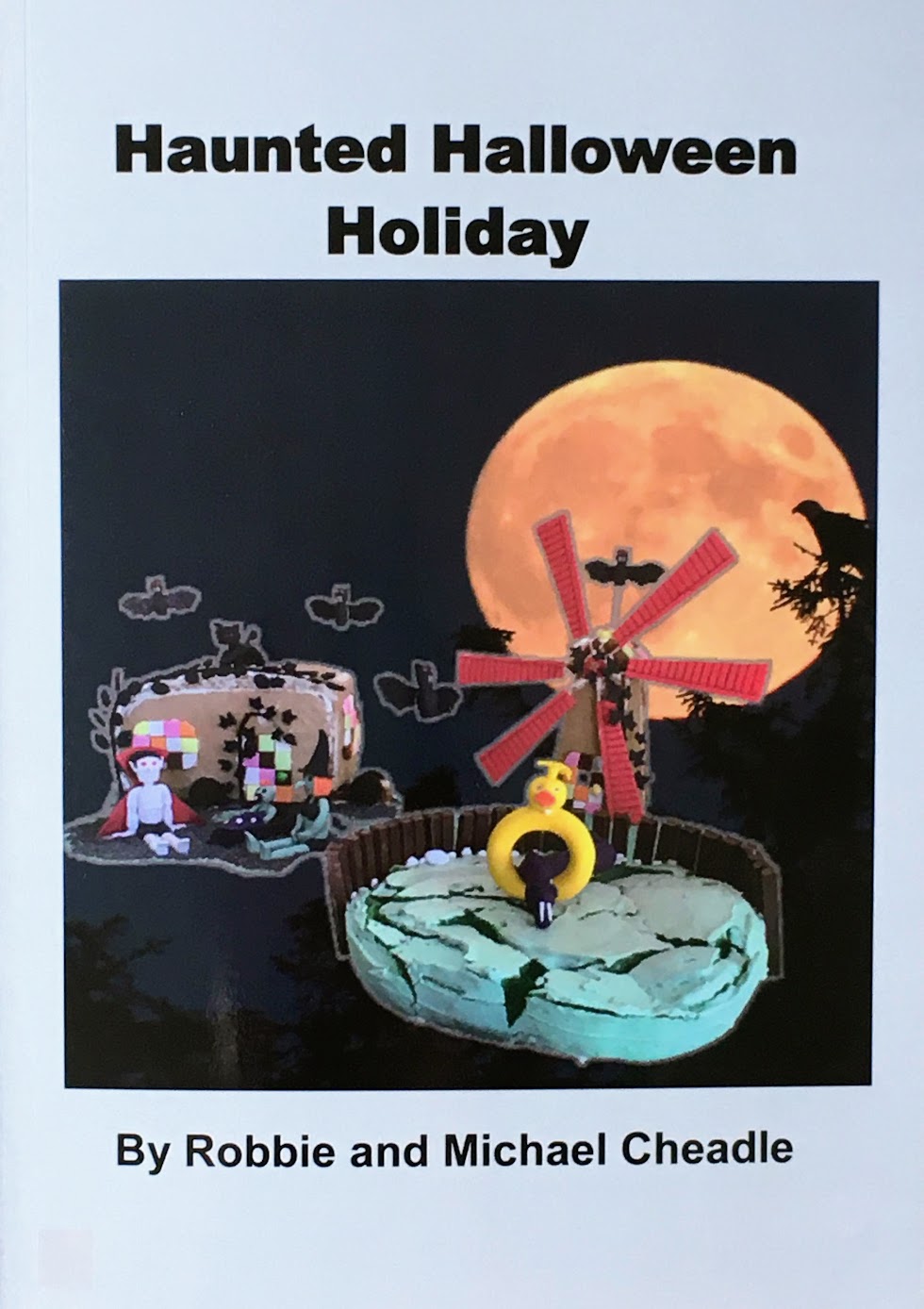
Michael assisted with a number of the ideas and themes for Haunted Halloween Holiday which we wrote and published last year.
He is very open minded and there is a strong theme of acceptance of difference in that book. A Vampire (Count Sugular) is married to a witch (Witch Honey) and their male baby is a banshee (I’ve only heard of female banshees before). I have been delighted to see child readers picking up on this and making remarks about a vampire married to a witch.
Resa – I see in “The Sugar Crystal Caves” that the recipes are not cooked or baked, but are created out of biscuits, wafers and other already made treats that are glued together with icing sugar.
This seems fun for younger children, that are not ready to bake, even with mom’s help. Is this what you intended?
Robbie – The instructions on how to make boats, cars, and other fun things from biscuits and icing was just an idea I had when I wrote that particular book. I had been remembering making sugar crystals and racing cars out of boudoir biscuits when I was a kid and I wanted to share that knowledge. I don’t think kids are shown how to do these sorts of activities any more and they are such fun. I did a few of these activities with my Sunday School class and they loved it. Biscuit art is an alternative to baking and is also a fun and bonding exercise for children and caregivers.
This particular book has done well with the pre-schools. I think the biscuit art is easier for teachers to do with their classes than baking.
Resa – I like the biscuit art. It’s like food LEGO. Kids get that.
What a great suggestion – biscuit art is like Lego. I didn’t think of it like that but your are right, it is all about construction.
Resa – In “Sir Chocolate and the Fondant Five”, you teach about African animals. It seems there is more to this than just teaching about animals. After all, they have to be saved from the lazy elves. What was your & Michael’s objective in this story?
Robbie – The objective of this particular book was partly to teach children about the “Big Five African Animals”, but it was also about teamwork and formulating a plan to solve a difficult problem. Sir Chocolate and the other animals all work together to find and rescue the Fondant Five. They derive a plan and implement it.
Resa – After I read “Sir Chocolate and the Ice Cream Fairies”, I thought….. Kindness and understanding bring personal rewards. Am I on the mark here?
Robbie –This little book had a few subtle themes. Obviously, colours was one, as well as different flavours and tastes and being adventurous about different taste combinations. Kindness and being helpful and thoughtful if people are sick are unable to attend to their jobs and needs for a period, was also a theme.
Resa – In “Chocolate Fudge Saves the Sugar Dog”, Sir Chocolate’s son is the hero. You teach about some dogs, but there is more. Tell me about the main lesson in this book!
Robbie – Chocolate Fudge is intended to be a good example to children. He is smiley, always polite to teachers, and does his work and achieves good marks. The dogs, on the other hand, are naughty and undisciplined. They chase the ducks and scare the frog. When Lord Humbug calls for the little dog who is struggling in the water, he doesn’t listen, but choses to carry on playing. As a result of his disobedience, he ends up in trouble and nearly drowning. Chocolate Fudge is brave and becomes a hero by saving the little dog.
I’ve also read “Haunted Halloween Holiday”. I reviewed it on my Hallowe’en post. Click on the book cover & go to that post. Scroll to near the end and find the review!
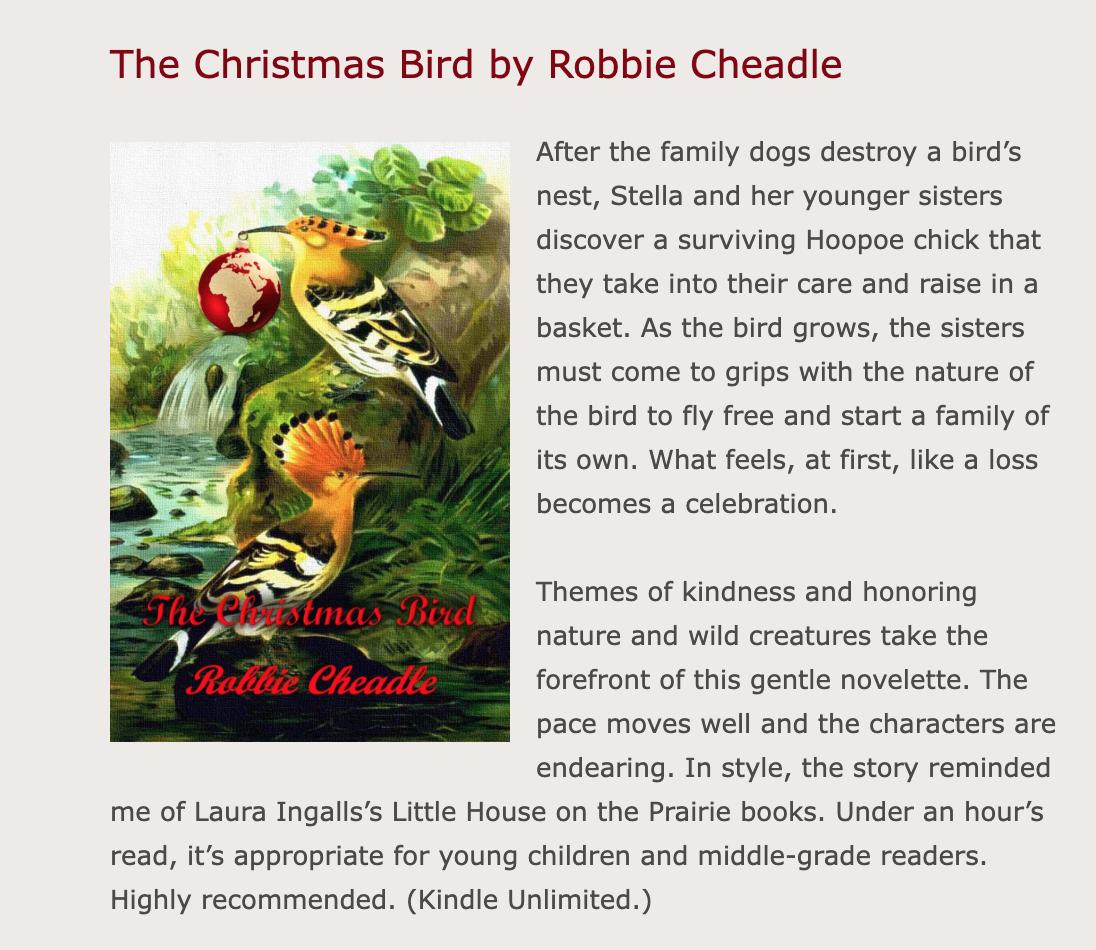
Diana from “Myths of the Mirror”blog reviewed Robbie’s new children’s Christmas story. Click on the above image, and go to the page of reviews. Diana writes the best book reviews!
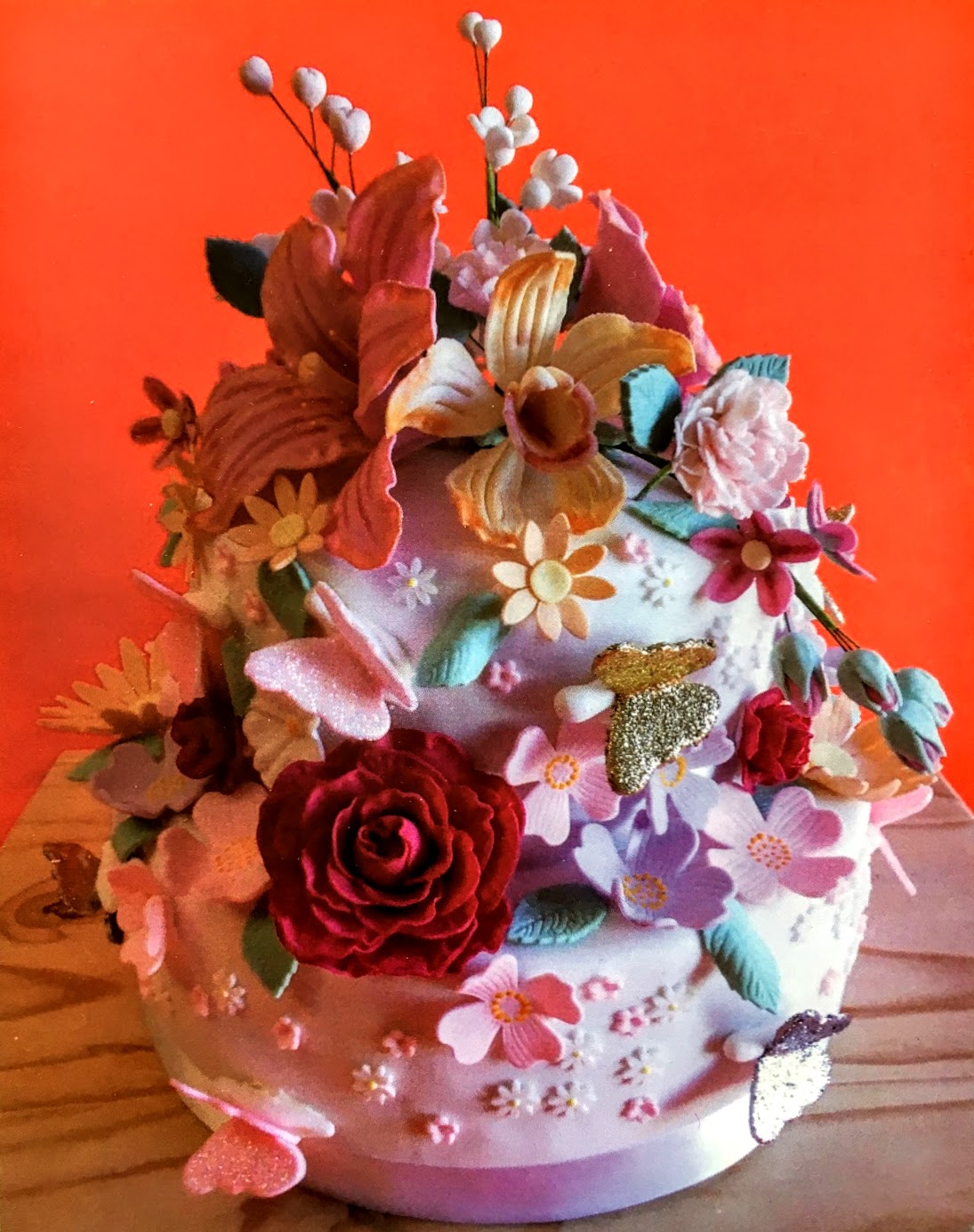
Resa – I adore all of your fondant characters & cake castles & scenes etc. Personally, your fondant flowers blow my mind. Is the day lily on the shortbread in “the strawberry cream berries” a fondant or real flower?
Robbie – Yes, that flower is made from fondant. It is a wired flower which means that I run a narrow piece of florists wire through the base of each petal when I made them (each petal is made separately, of course). When they are dry, I then twist the wires together to form the flower. Wired flowers are challenging to make.
I modelled the pink one you referred to on a similar coloured flower in our garden. I love animals, birds, flowers and nature in all its shapes and forms. I usually study flowers, and other creatures for a few weeks before I attempt to model one. I like to get the small details right in each creation.
Resa – Robbie, I’m all into details. Thank you for patiently answering my many questions. It allowed me to write a detailed post on the marvellous creation of a son and his mother.
To learn about making fondant sculptures from Robbie, click on the cake above!
On top of everything there are recipes to go with the stories. Most are classic treats. Robbie shows us how to make Choc Chip Cookie & Choc Cupcakes.
The videos are edited by Gregory Cheadle, Michael’s brother older by 3 years.
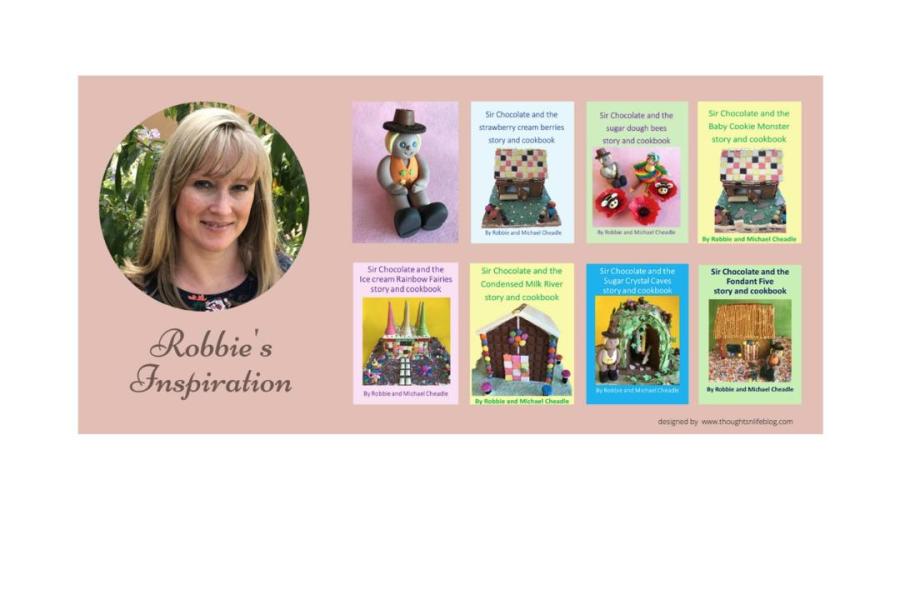
Click on Robbie’s profile above, and go to her books on Amazon.

















































 Graffiti Lux Art & More
You must be logged in to post a comment.