Solstice, Hanukkah, Christmas, Kwanza – whatever you celebrate, or don’t, have a good one!
This is posting on the Solstice, so I put it first. Hanukkah ends the next day. Then it’s Christmas, then Kwanza.
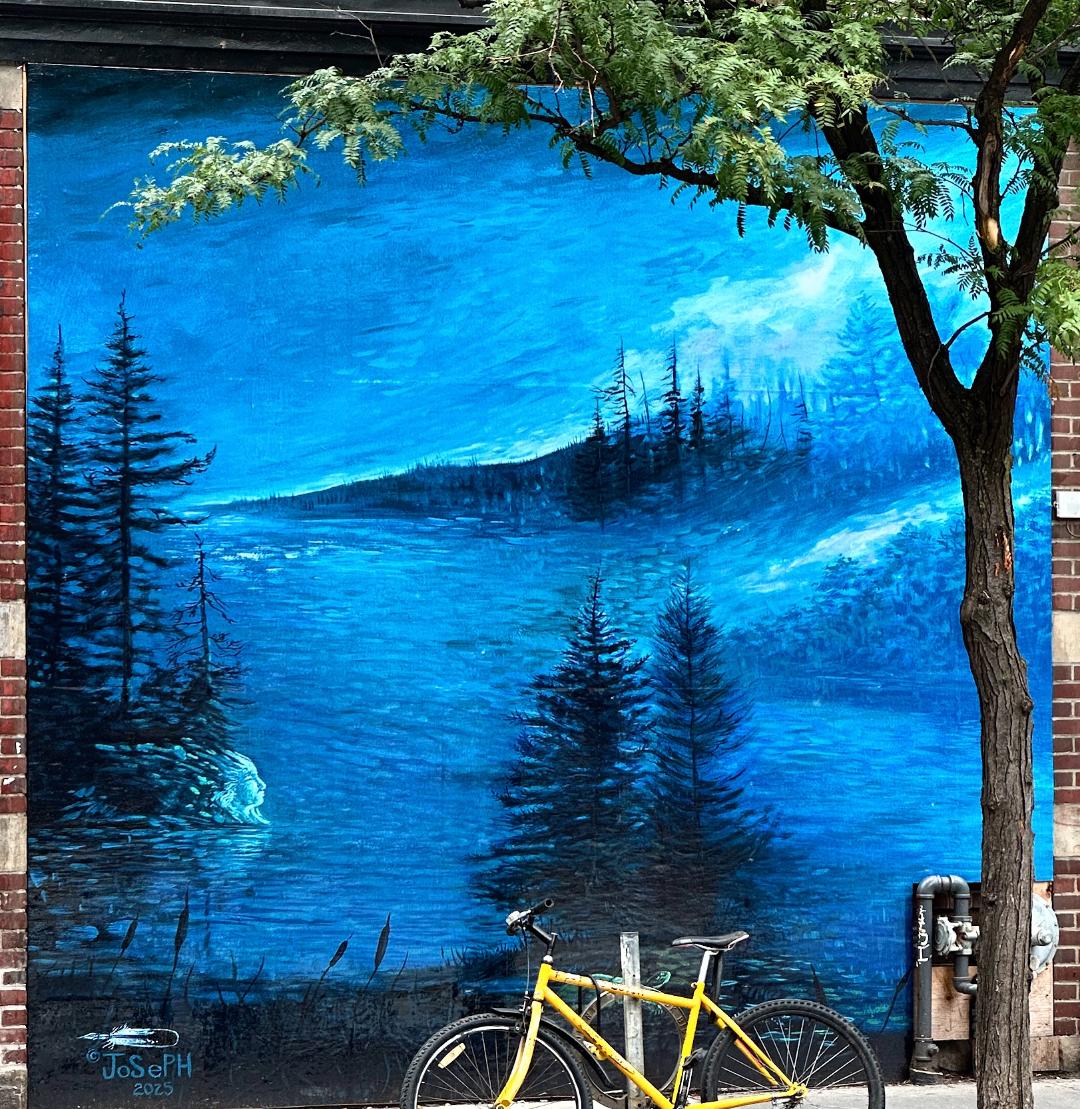
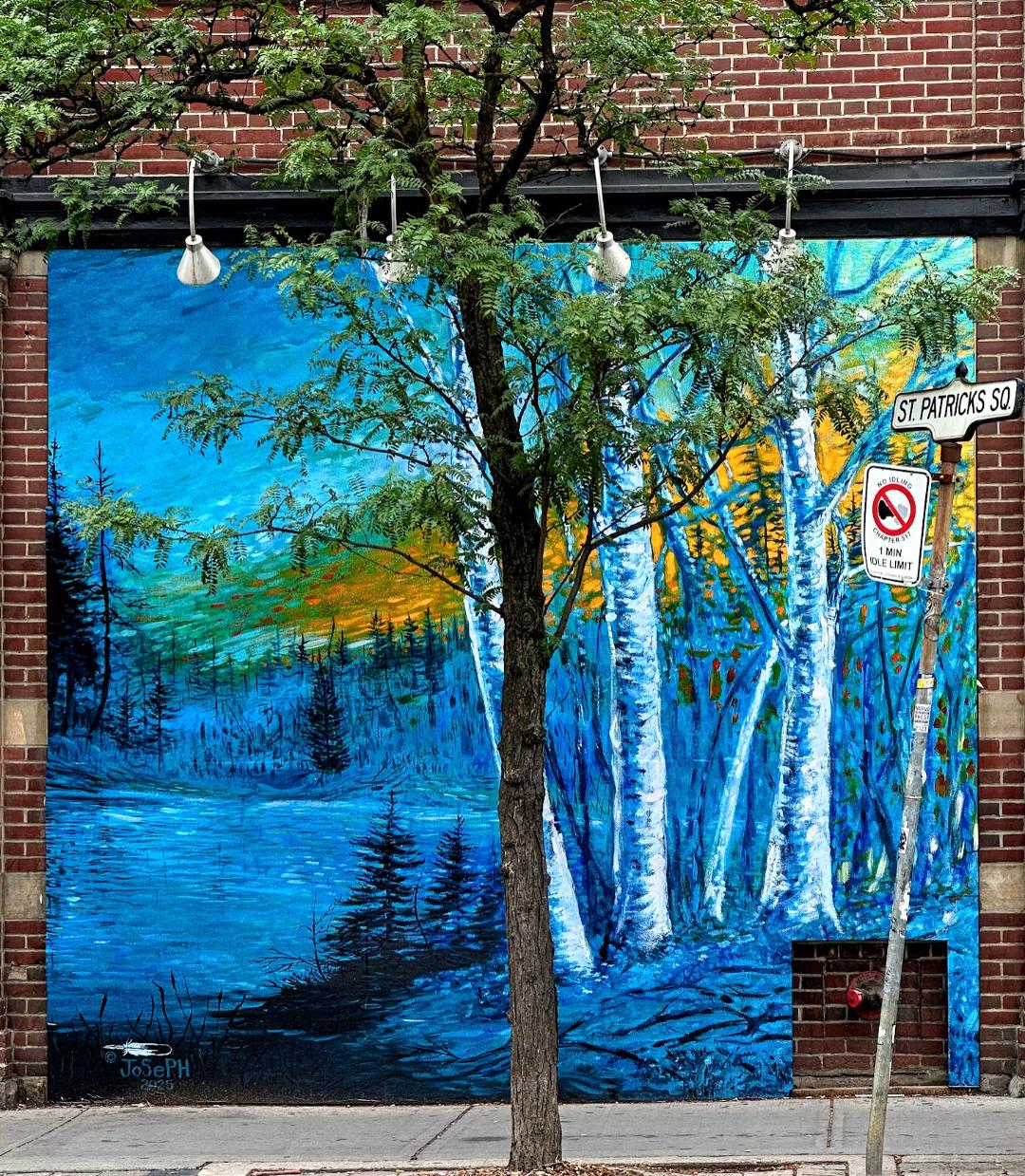
It began with a spotting from the streetcar. On an unused building, there are 2 wonderful nature scenes. They are what Trent (rip) named “Indoor Outdoor Art”. Painted in a studio, then coated with a clear protective coating, the paintings are finally adhered to a building.
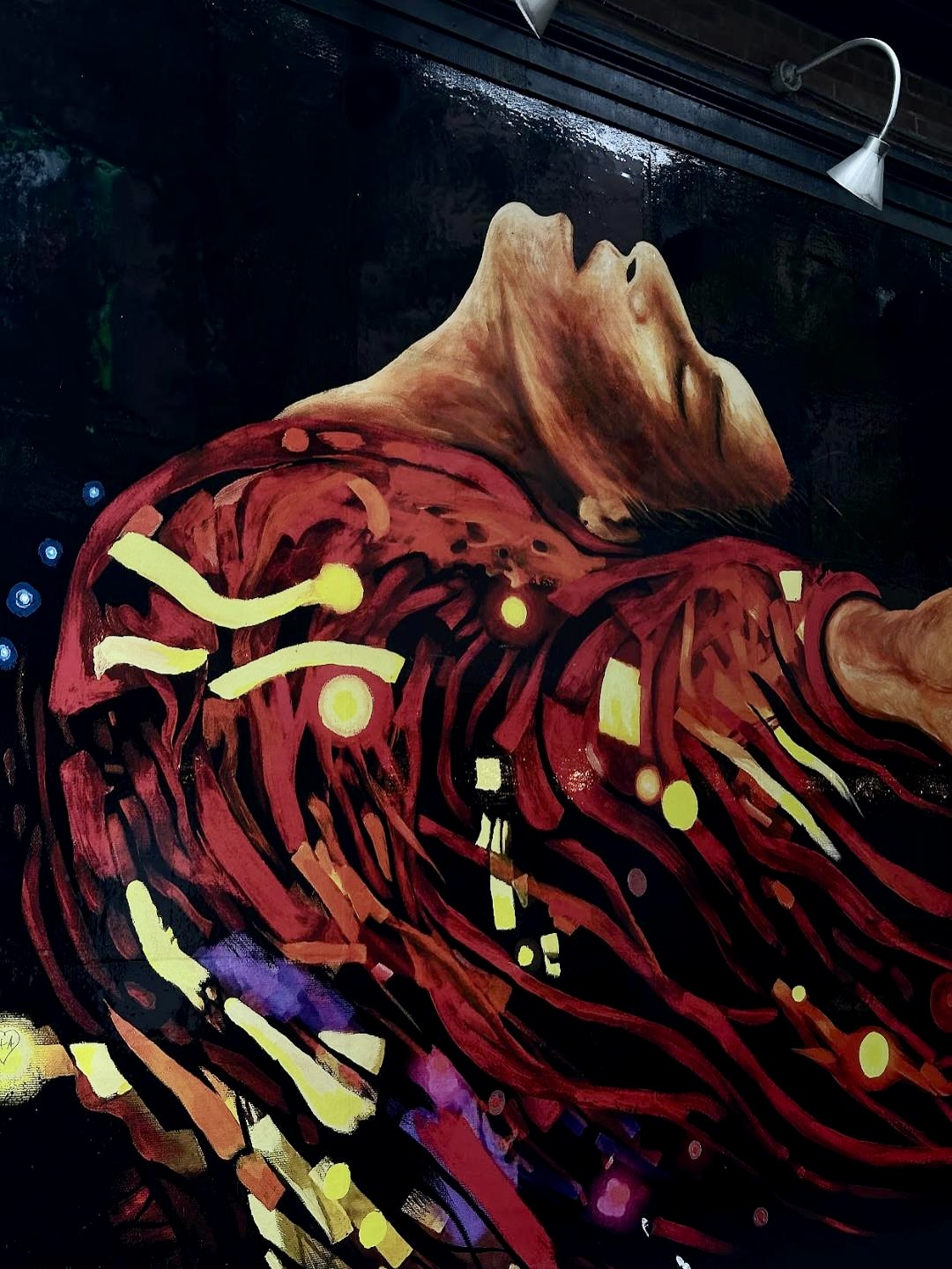
The beautiful spirit woman drove me nuts to return on the first cloudy day. Due to the sun, (even on a cloudy day) the protective coating and the black background, I could not capture any images of the woman (my fave part) without reflections.
Left: cloudy day/ normal aperture opening. Right: black cloud day/ aperture closed amap
I returned twice more. The last time it was black sky. Even at that, the reflections were stubborn, so I closed the aperture to the extent the camera allowed. A dead on shot of her face close up, was difficult.
The reflections made me crazy, so I hit the black point in editing and got this.
This image is on the east side of the building. There is a narrow path between it, and the patio of the restaurant next door.
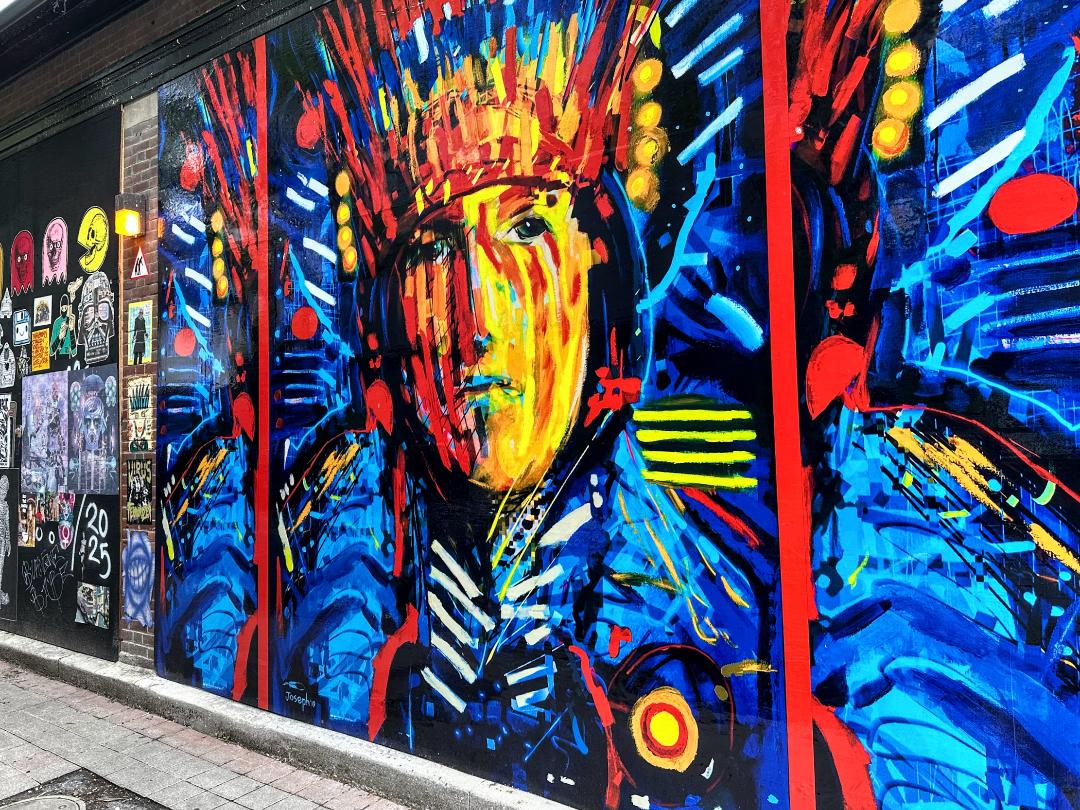
On the west side of the building, is the man spirit painting. It too is along a narrow path, but was easier to capture due to the angle of the sun, and not having a black background.
His colours are fantastic.
Pics taken by Resa – July & October, 2025
Toronto, Canada
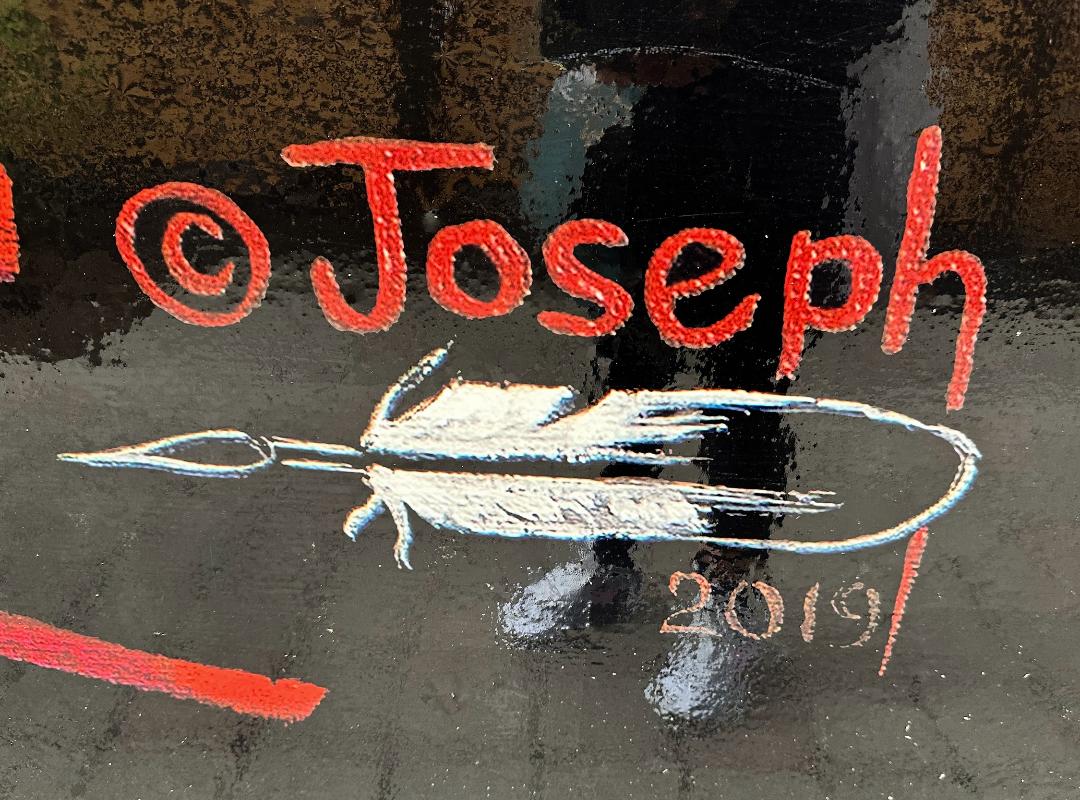
The Artist: Joseph Sagaj is a Canadian indigenous artist, Anishnaabe of the Sturgeon Clan from the remote community of Neskantaga.
You can see my feet and legs reflected in the signature.
This head appears emerging out of the trees and into the water in the first scenic shot of the post!
This is my last post on GLAM this year. My old computer died, and now I need to spend some time catching up visiting!
Josefa de Ayala, aka Josefa de Óbidos, was a novelty. She was celebrated after her death; the only woman known to have worked as a painter in Portugal, during that period.
The Christ Child as Pilgrim – 1676– Oil on Canvas
Josepha learned to paint by helping her father, Baltazar Gomes Figueira. In her lifetime, Portugal was monetarily unstable and often at war. However, much of her artwork was for patrons in Coimbra, a wealthy area boasting a university.
At 29 years old, her parents gave written permission for her to be to be a Donzela emancipada. (emancipated woman). She remained unmarried and independent for her entire life.
She received many commissions, during her lifetime. However, Josepha was wealthy from real estate investments and was able to refuse work at the Portuguese court.
She signed many of her artworks, as Salvator Mundi. Thinking this was a male painter attracted clients, and prevented her from being forgotten over time.
Lavinia Fontana
Italian: 1552 -1614
Born in Bologna, died in Rome; Lavinia Fontana painted in the Mannerist style she was taught by her father, Prospero Fontana.
Holy Family with Saints Margaret and Francis – 1578
An important portraitist in the late 16th century, she also produced many religious paintings. Lavinia was celebrated for the vibrant colour and detail of the clothes and jewels her subjects wore. She also became one of the first women to render publicly funded, large scale figure paintings.
In 1577 Fontana married Gian Paolo Zappi. An inferior painter, he pivoted to becoming her business agent.
Some of her paintings are signed with her married name.
Lavinia was the mother of 11 children.
Enjoying the patronage of the family of Pope Gregory XIII, Lavinia painted portraits of much of the elite.
In 1604 she painted the Martyrdom of St. Stephen, for San Paolo Fuori le Mura in Rome. An altarpiece and her largest work, it was destroyed when the basilica burned down, in the fire of 1823.
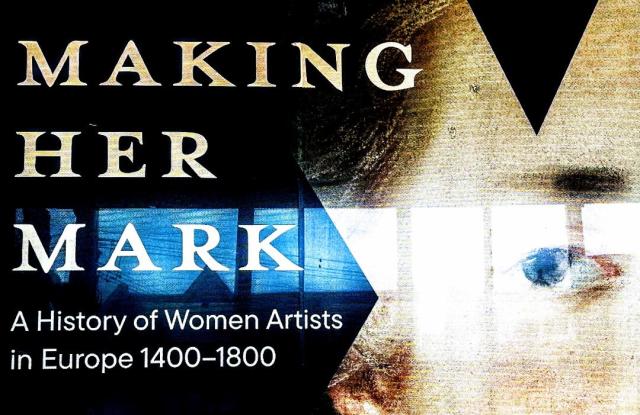
This is an oil on canvas painting, and there were at least 2 others by Lavinia Fontana in the Making Her Mark exhibit. I’ll show those at another time, with a few more tidbits of her extraordinary life.
In the meantime, should you be interested to learn more about her, you can check out the links at the end of this post, search her online or in libraries.
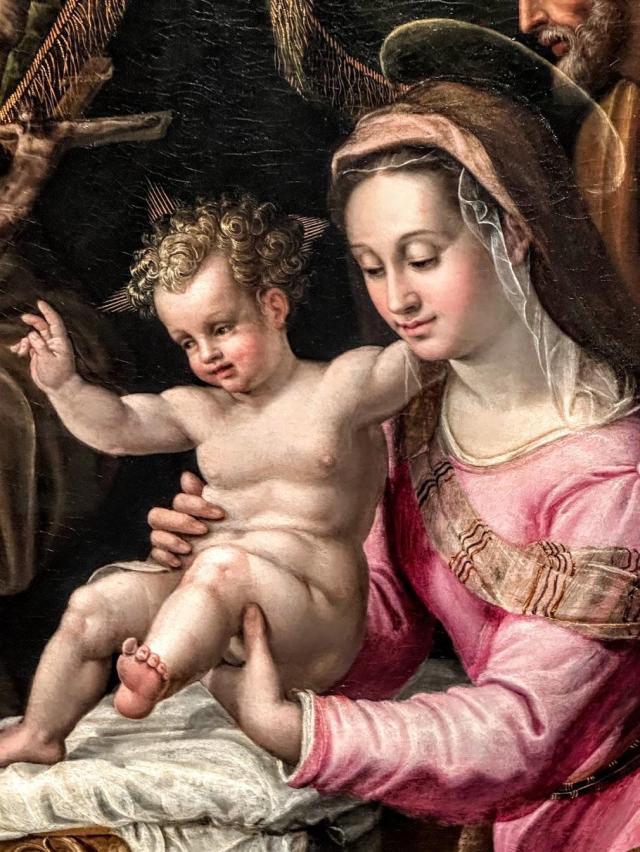
Barbara Longhi
Italian: 1552 – 1638
Known primarily for her religious paintings, Barbara Longhi’s work can be difficult to differentiate from her father’s work. Her father, Luca Longhi, was a renown painter and miniaturist. Barbara began her art journey, by assisting him with altar pieces.
Virgin Mary & Infant Jesus – ca – 1575-80
She expanded beyond her father’s teachings by studying the works of Parmigianino and Correggio. Barbara painted primarily religious images, including several depictions of Madonna and Child with Renaissance style and features. I’m intrigued that parted drapes exposing landscapes was one of the elements.
Giorgio Vasari commended her for having “purity of line and soft brilliance of colour”.
Her ability to capture human interaction kept her one of the few successful career women of her day.
The Art Gallery of Ontario has obtained this 42.5 × 34 cm. oil on canvas painting for its permanent collection.
” Longhi’s painting, alongside two other gifted paintings by women artists (Mary Ann Alabaster (1805–1879) and Rosa Bonheur (1822–1899)), extends the AGO’s holdings of European Art by female artists three centuries deeper into the past.” – AGO
"but I have moved on to drawing and painting,
which now dominate my artistic life."

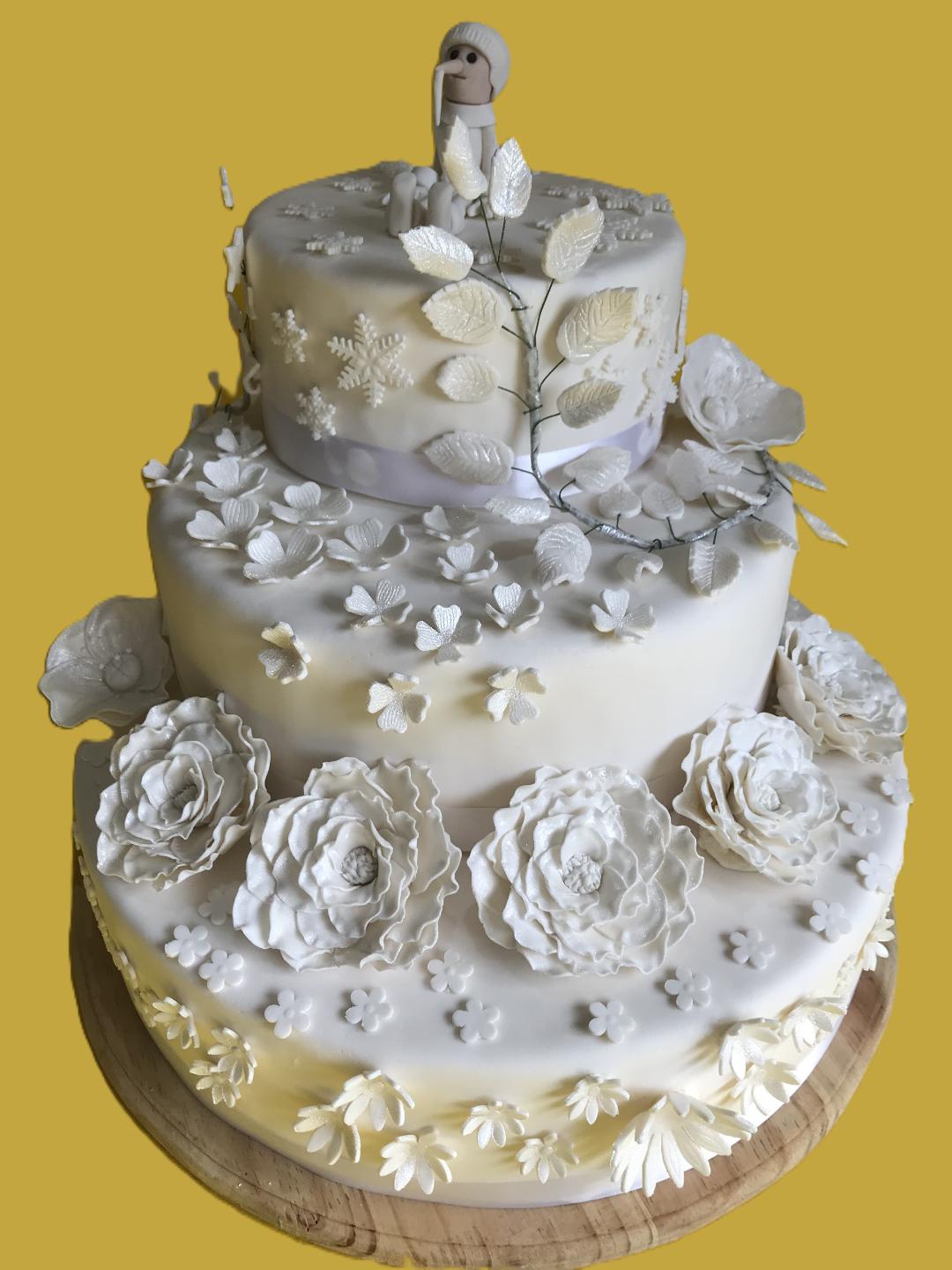
"This book is a celebration of my cake and fondant art phase of life"
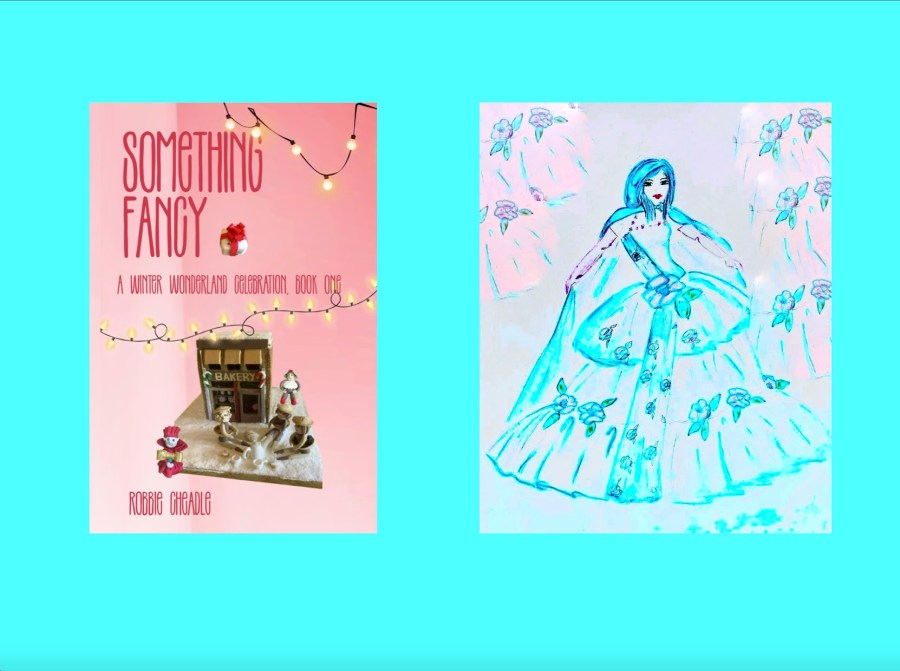
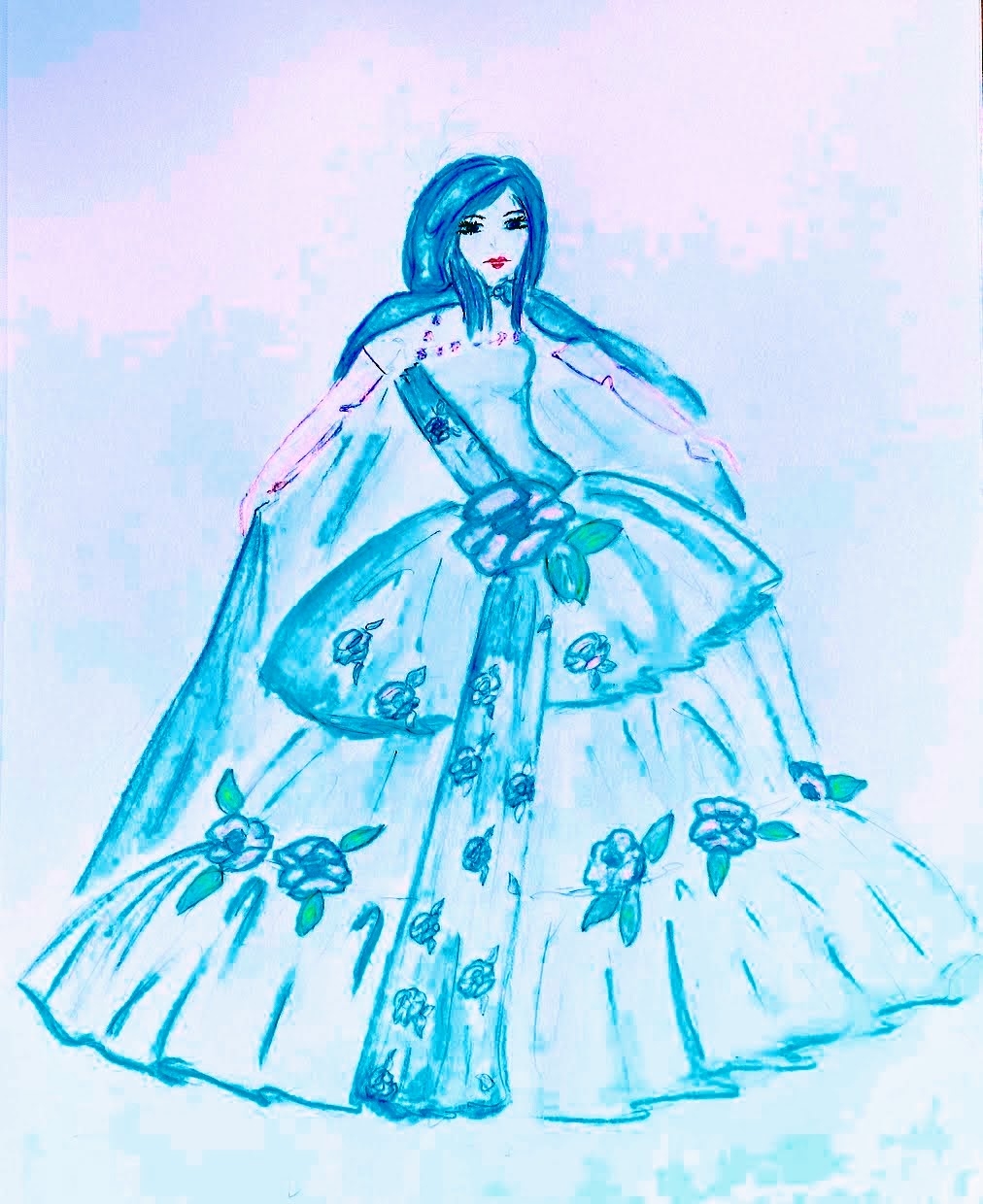
And what a fantastic phase it was! Just check out her “Jack Frost” cake above! I was so inspired, I drew the “Jacquie Frost” Art Gown below.
I’m just learning how to do white, so did a rendition of icy-blue white with window frost effect.
Of course there’s more to the book than cakes! There’s recipes and background history of both how fancy desserts and their recipes came to be, with a focus on:
Christmas Cakes
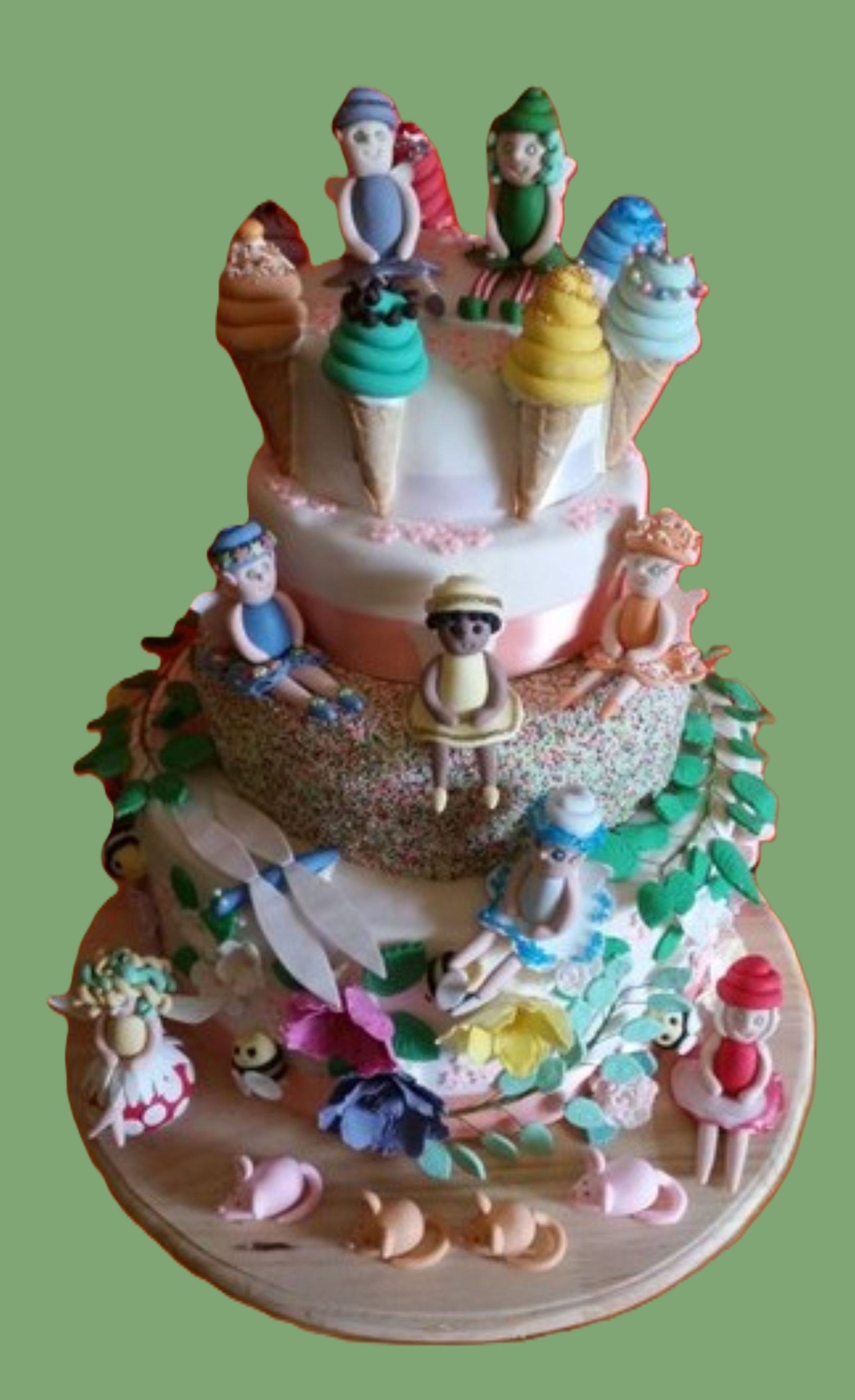
Okay, so that’s another kind of cake, but it is Christmas soon, and I just had to show off Robbie’s Tiered Rainbow Fairies Christmas Cake!
Which leads me to another Art Gown drawing inspired by the above cake; The Rainbow Fairies’ Art Gown.
Robbie says – “The ice cream fairies cake is a very happy one for me.”
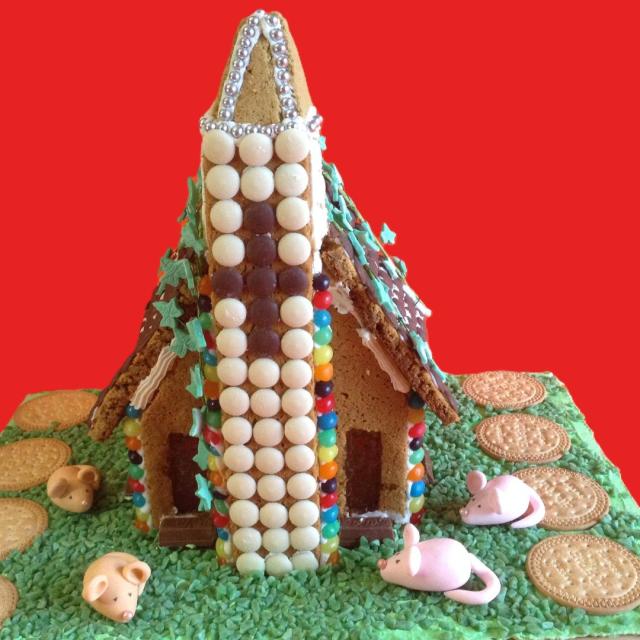
If there is anything that could be constructed out of gingerbread, Robbie has engineered it.
To the left is her gingerbread Chapel.
To our right, is her gingerbread Windmill.
There are a lot of gingerbread creations in the book, but these two are the inspiration for my Gingerbread Art Gown, below.
Ginger models the Gingerbread Art Gown.
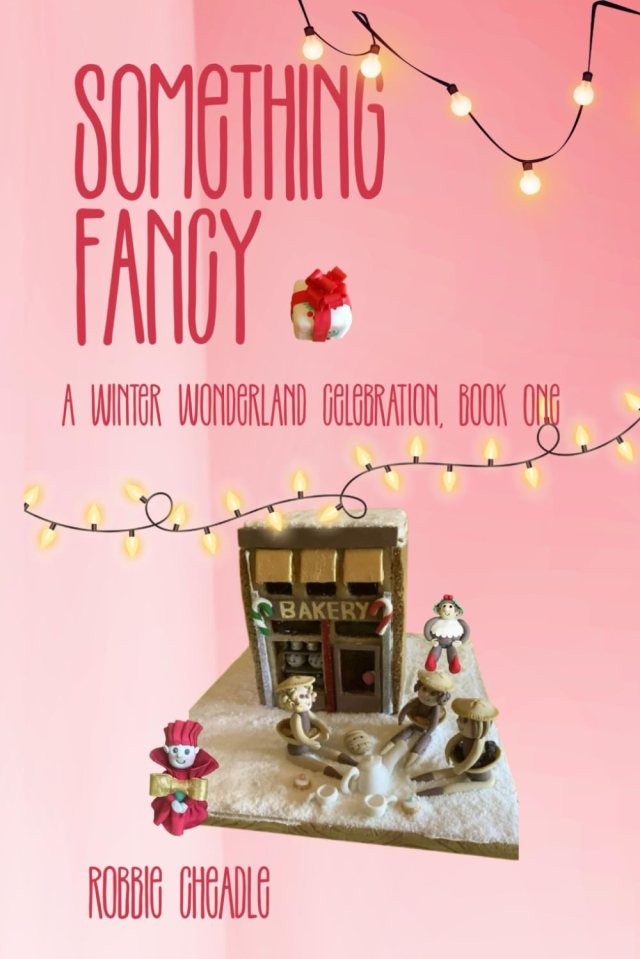
This lovely 100+ page book can set you up nicely for the oncoming holiday season, or any celebration that comes your way.
About Robbie Cheadle
South African author, photographer, and artist, Robbie Cheadle, has written and illustrated seventeen children’s books, illustrated a further three children’s books, and written and illustrated four poetry books. Her work has also appeared in poetry and short story anthologies. .
Robbie also has two novels and a collection of short stories published under the name of Roberta Eaton Cheadle and has horror, paranormal, and fantasy short stories featured in several anthologies under this name.
OR – Just click on Something Fancy above, and go directly to its Amazon page!
Something Fancy is available in book or ebook formats!
You can find her books on Amazon sites around the globe. Just search “Robbie Cheadle” for children and youth books – “Roberta Eaton Cheadle” for adult books.



















 Graffiti Lux Art & More
You must be logged in to post a comment.